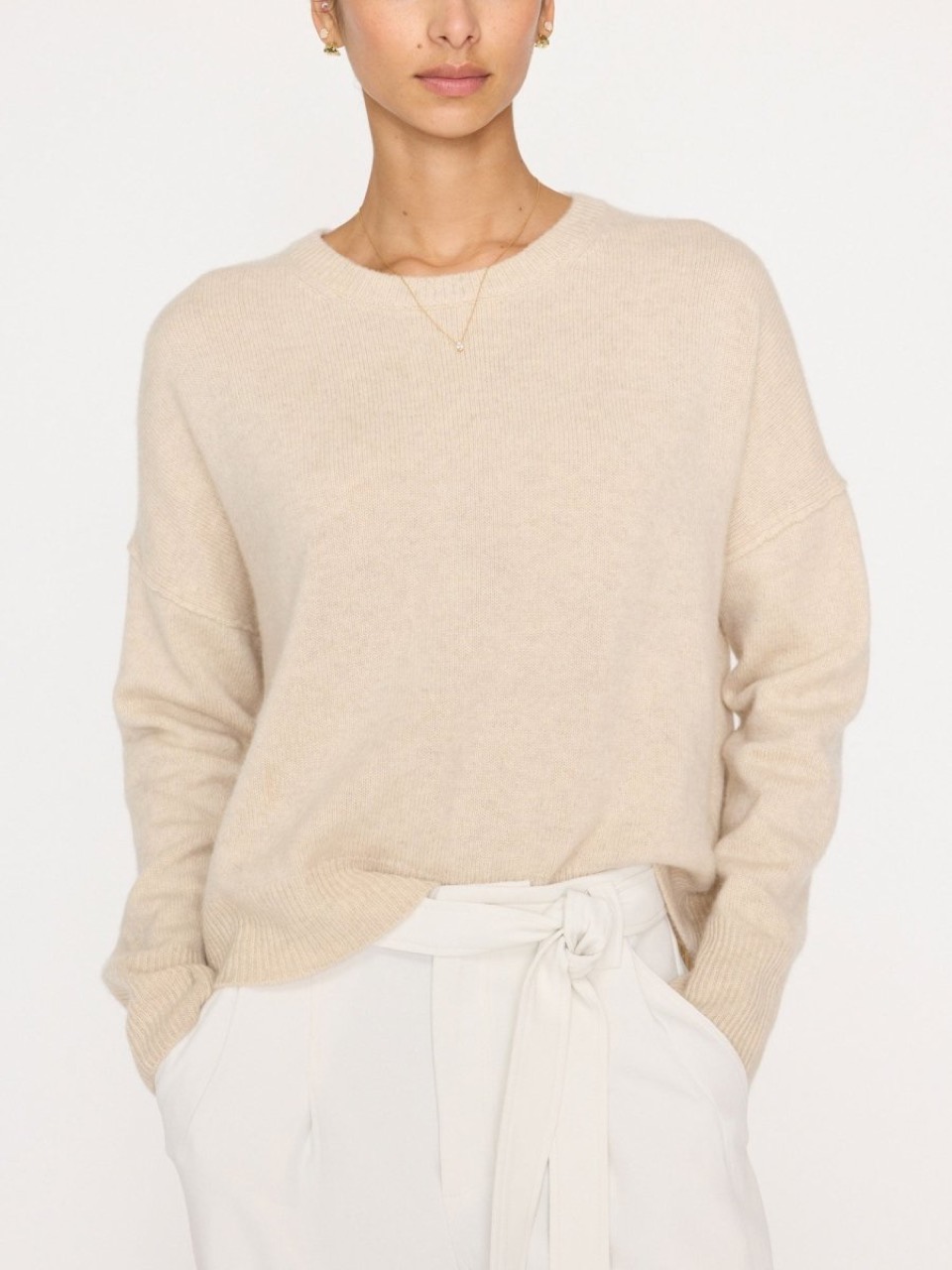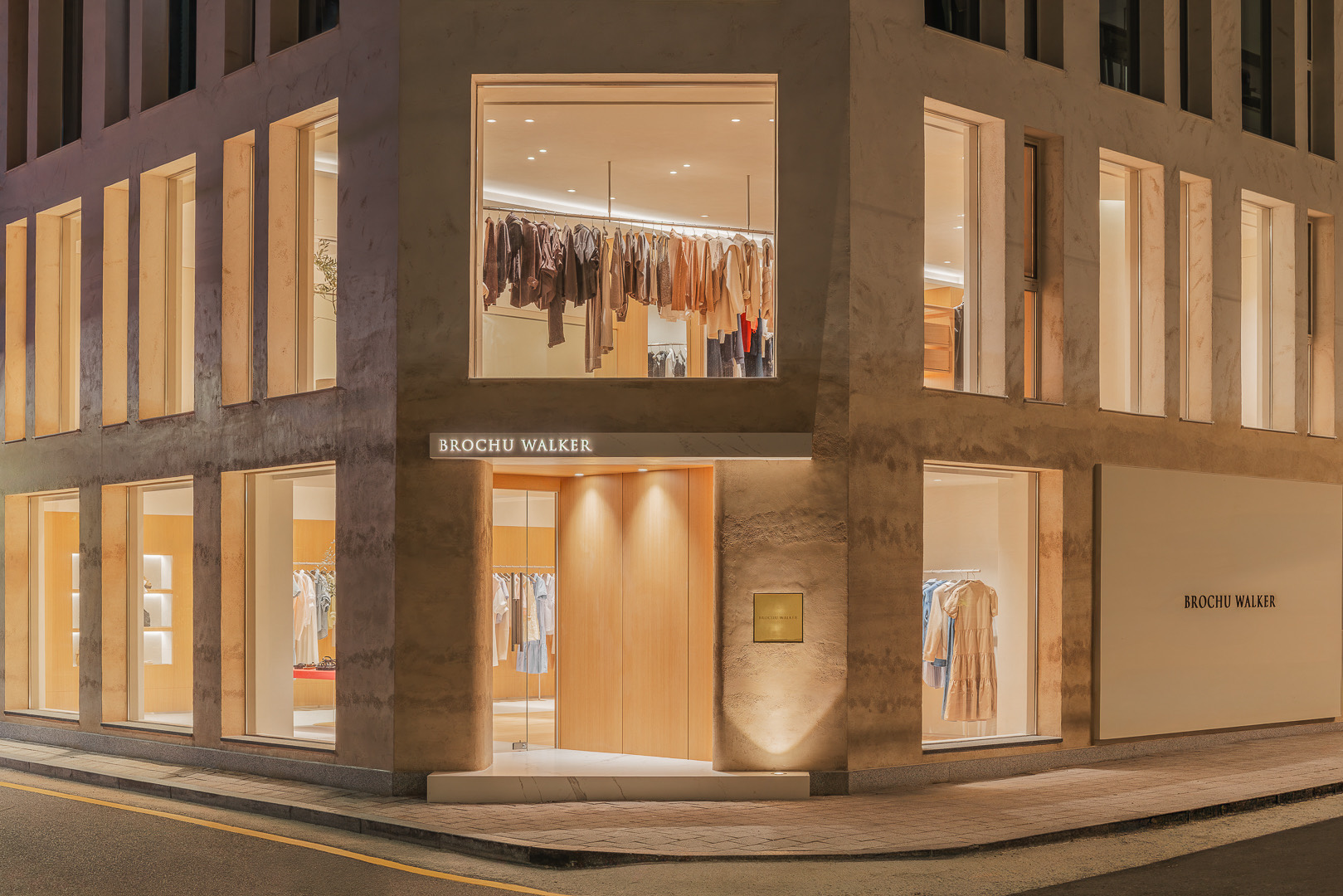
A knitwear brand out of Los Angeles opened its first store abroad at Dosan Park in Seoul. 664.3 square meters across five floors. Only two of those floors carry product. Every store this company holds in the United States is a small boutique in a wealthy small town, and it has none in Manhattan.
1.On July 18, Brochu Walker opened Maison Seoul at 26 Apgujeong-ro 42-gil, Gangnam-gu, Seoul. 664.3 square meters, about 201 pyeong, five floors. It is the first store the company has named a maison and its first store outside the United States. At the invitation event three days earlier on the 15th, the actor Cha Joo-young, chosen as the first Korean ambassador, and the violinist Danny Koo attended.
2.Five floors, and two of them sell. The rest went to a private VIP suite and to styling and fitting. The company started in Los Angeles in 2008, and Karine Dubner bought it in 2013 and rebuilt it as the cashmere knitwear brand it is now.
3.There are five stores in the United States. Carmel and Montecito in California, Westport in Connecticut, Southampton in New York, Buckhead Village in Atlanta. All wealthy small towns, with none in Manhattan and none in central Los Angeles. A company that followed its customers to wherever they spend the summer put its first big-city store in Seoul.
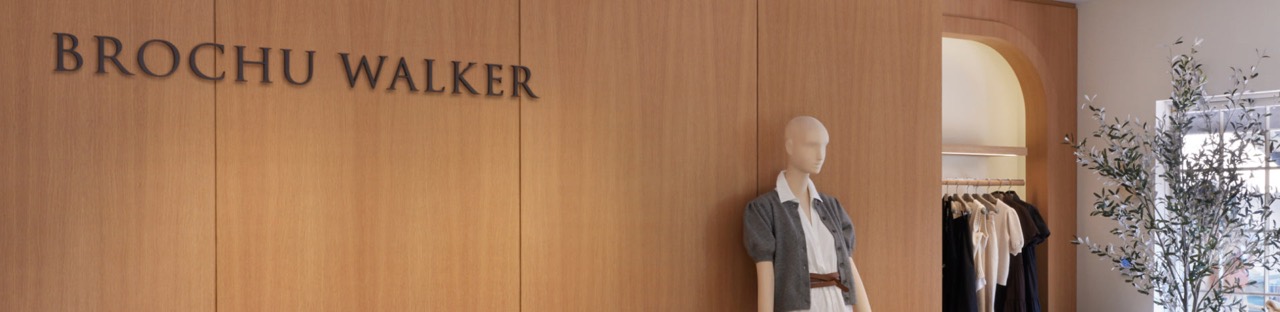
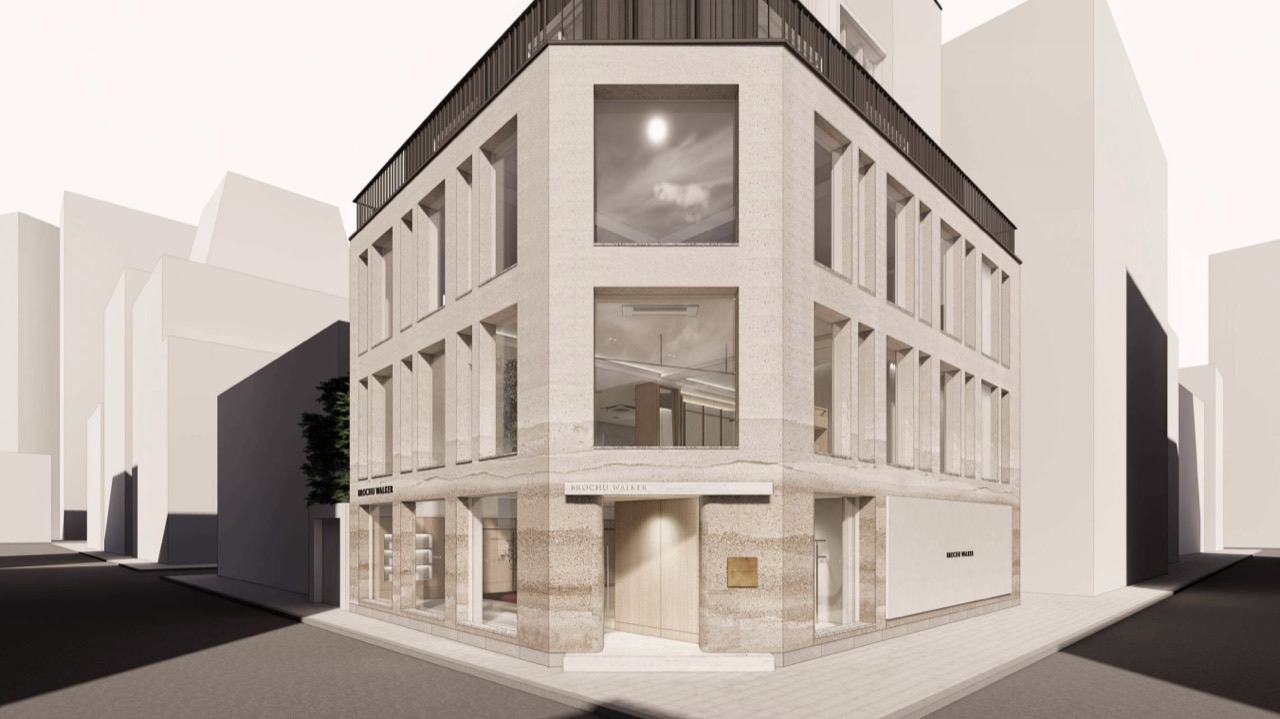
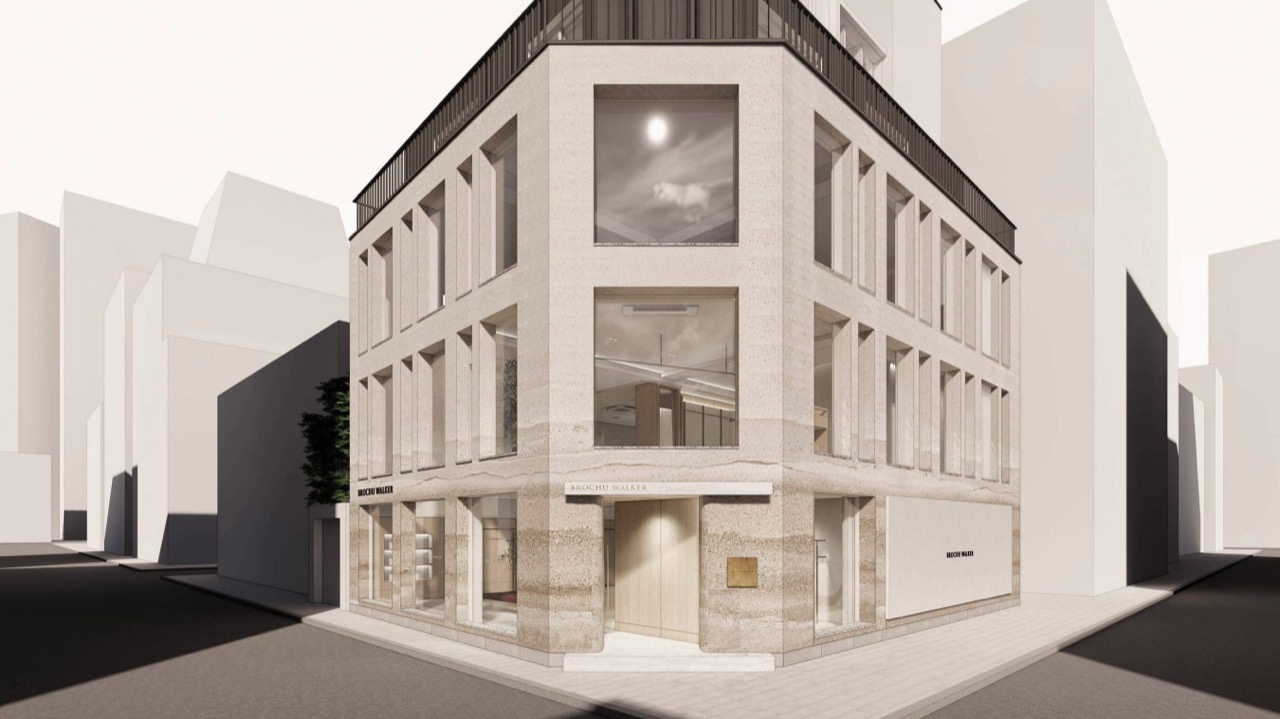
4.The space was built by Blurker Design Studio in Seoul together with Dubner. The facade stucco was mixed specially rather than bought ready-made, and because the surface does not fall perfectly smooth, the wall holds a little light on a grey day. The material at the center of the ground floor is red lacquer. The company says it was taken from a Korean lacquerware tradition reaching back before the Joseon period, and mirrors and doors in red lacquer carry custom bronze hardware.
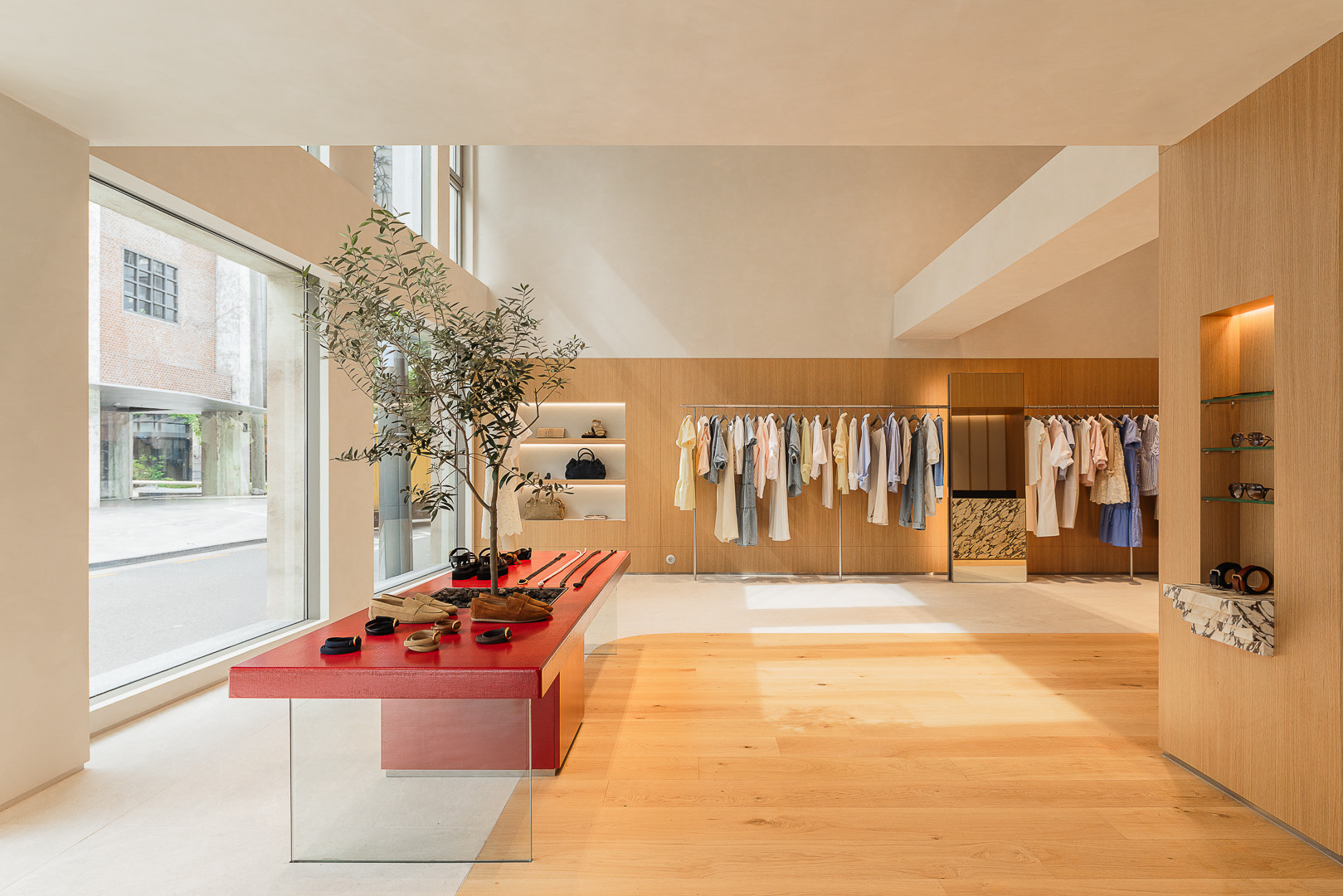
5.A cashmere chandelier made for this site by the artist Ko So-mi hangs from the second floor ceiling. A company that sells cashmere wove a light out of cashmere, and rather than bouncing light like glass, the yarn eats it and lets it fall. Italian marble and quartz, natural oak, olive wood and grasscloth wallpaper fill the rest.
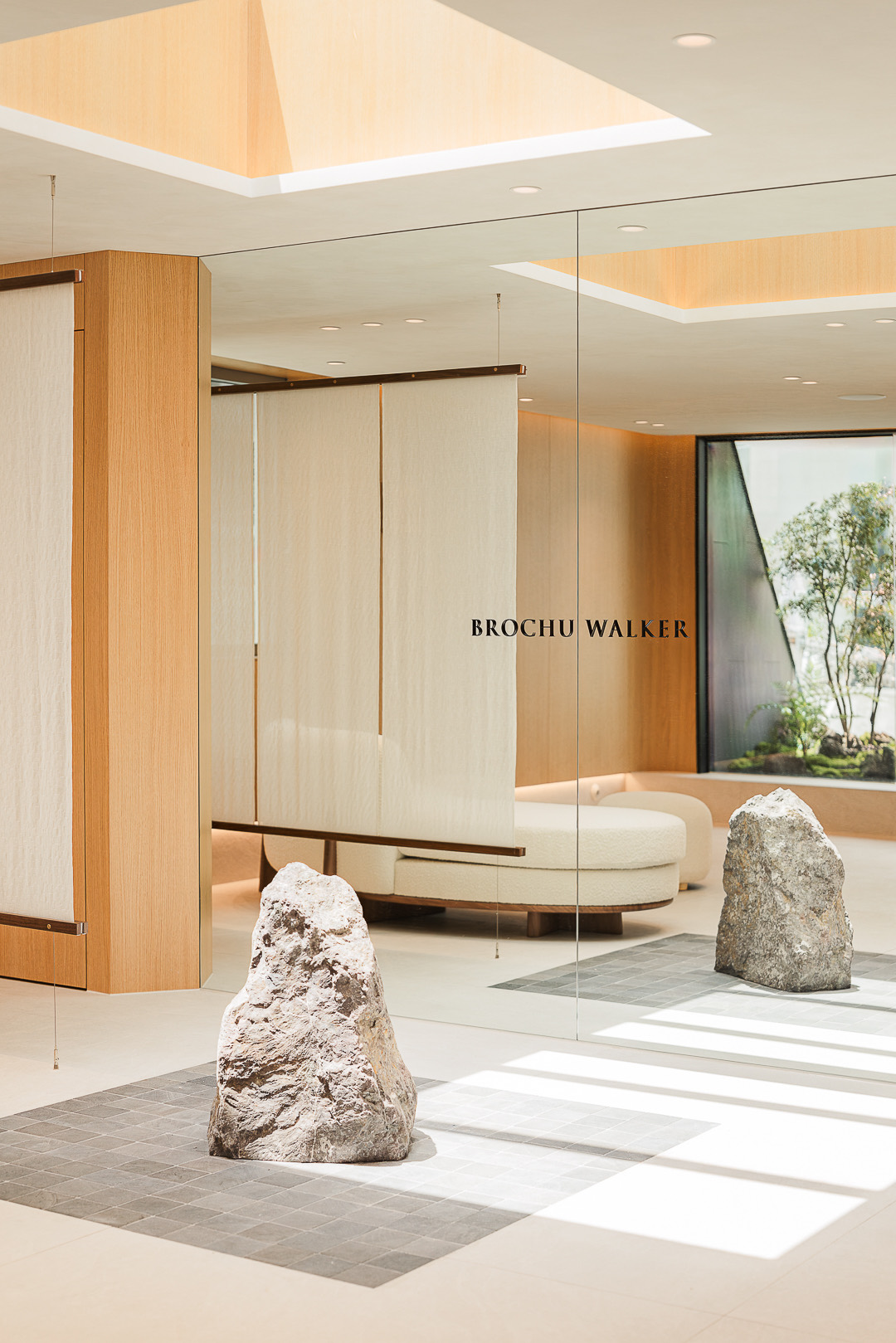
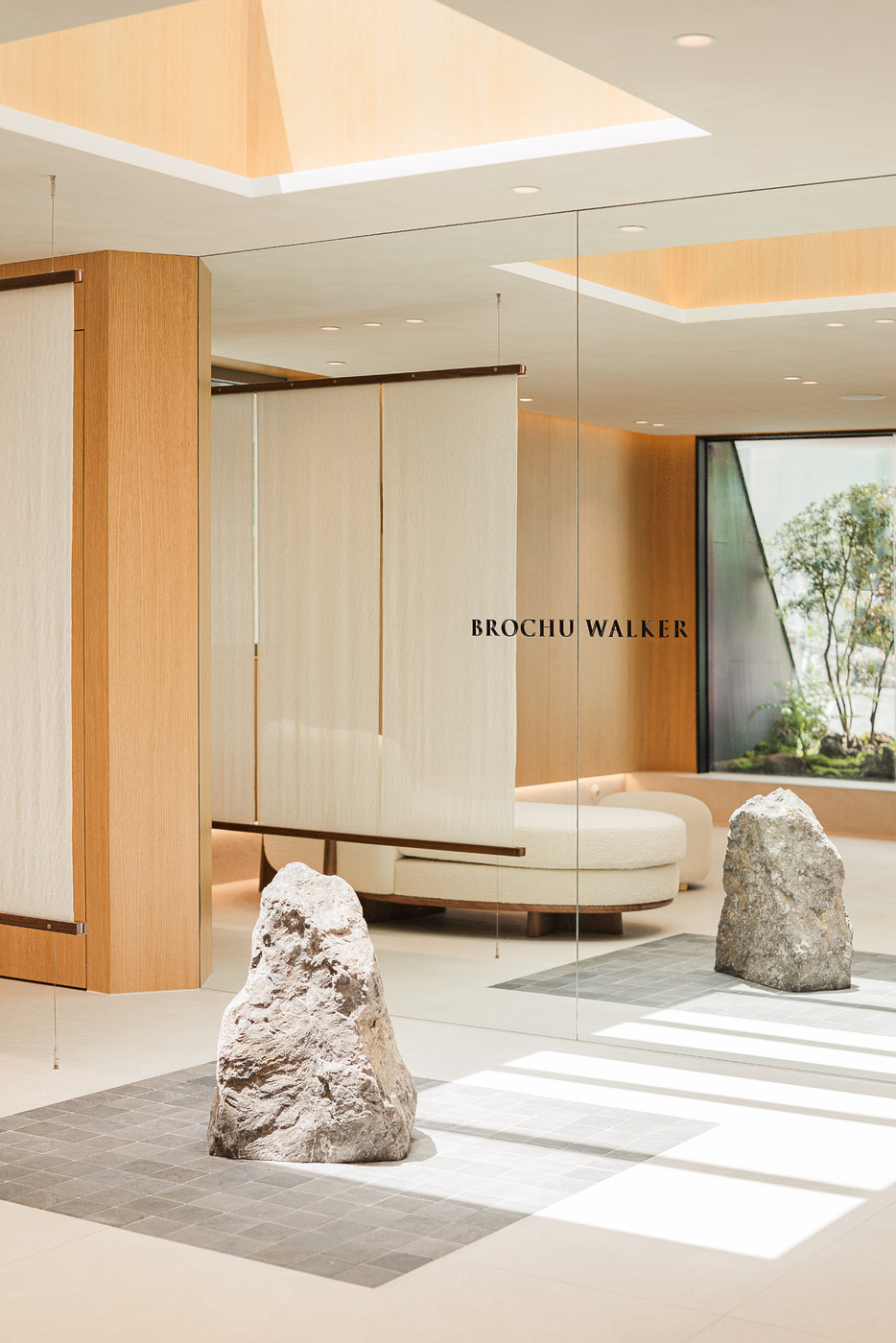
6.A single stone chosen at a Korean quarry was brought into the VIP suite, with a ceramic column by the artist Lee Myung-jin standing beside it. The fitting room is wrapped in hanji. Hanji passes light while scattering it, so the edge of the shadow around someone trying clothes on goes soft, and why a brand selling silhouette chose this material only registers once you stand at the mirror.
7.Why Seoul. The first answer is in the nature of what this brand sells. Clothes without a logo sell only where there are eyes that recognize them, and those eyes take a market several years to grow. Hyundai Department Store recorded quiet luxury brands rising 32.8% year on year from September to November 2025. In a market already trained to pay more for clothes with the logo removed, explaining the brand costs less.
8.The second answer is the street. Land transaction prices around Dosan Park rose from 210 to 220 million won per 3.3 square meters in 2021 to 320 to 450 million in 2025. Up 69% in four years. Over the same period, large stores arrived on this street, the first Korean flagship of the French outdoor brand Aigle, Dr. Martens, Bibiaia and Polnua. Brands came first and land prices followed.
9.The third answer is a face. Almost at the same time as entering Korea, the brand named the actor Cha Joo-young its first ambassador. Consider what buying the same recognition in the United States would cost and the arithmetic follows. In a market with a small territory and concentrated media, one face reaches the whole country, and how much that efficiency weighed in choosing the site of the first Asian store is not something the company has said.

10.Now the money. Average rent in the Dosan Park district is 460,000 won per 3.3 square meters, and even inside the same district it ranges more than fivefold, from the 200,000s to the 1.1 million range. Ground floor and upper floor values differ. Put 40 pyeong on each floor and set 900,000 won on the ground floor, 450,000 on the second and 220,000 from the third up, and it comes to around 80 million won a month. Not terms the company disclosed but an estimate worked back from district averages.
11.With two selling floors, the area taking money is 80 pyeong. Divide 80 million won a month by those 80 pyeong and one selling pyeong carries a million won in rent. Apply the common standard of rent at 20% of revenue and required revenue is 400 million won a month. This brand's average online order runs in the 600 dollar range, which at 1,400 won to the dollar is 840,000 won, so it needs 480 orders a month, about sixteen a day.
12.Sixteen a day is not an impossible number. But it only works if one selling pyeong makes 5 million won a month, a density seen in department store luxury units and rare on a street. That this calculation does not sit comfortably is itself the key to reading this store. The three floors taking no money were never sitting in the revenue account to begin with.
13.Trace the line and this form is grammar the European houses used. Dress the store like a home, divide roles by floor, keep a room upstairs for appointment customers. It cuts selling area and grows dwelling area, raising what one person spends in exchange, and carrying that usually takes a brand of considerable revenue.
14.This company's weight class is not there. Seventy-two percent of revenue comes from online, and the remaining 28% from wholesale accounts like Neiman Marcus and Nordstrom and some 230 multi-brand stores. Dubner's stated long-term target is 10 to 15 stores and 200 million dollars a year, and setting it as a target means being below it now. For reference, LEMAIRE went from 10 million euros to 100 million in five years, and TOTEME passed 300 million euros in 2024. Read it as an online company testing its first brand house, and Seoul made that test cheapest. Take the same five floors in SoHo or Beverly Hills and neither the rent nor the construction period compares with this street.
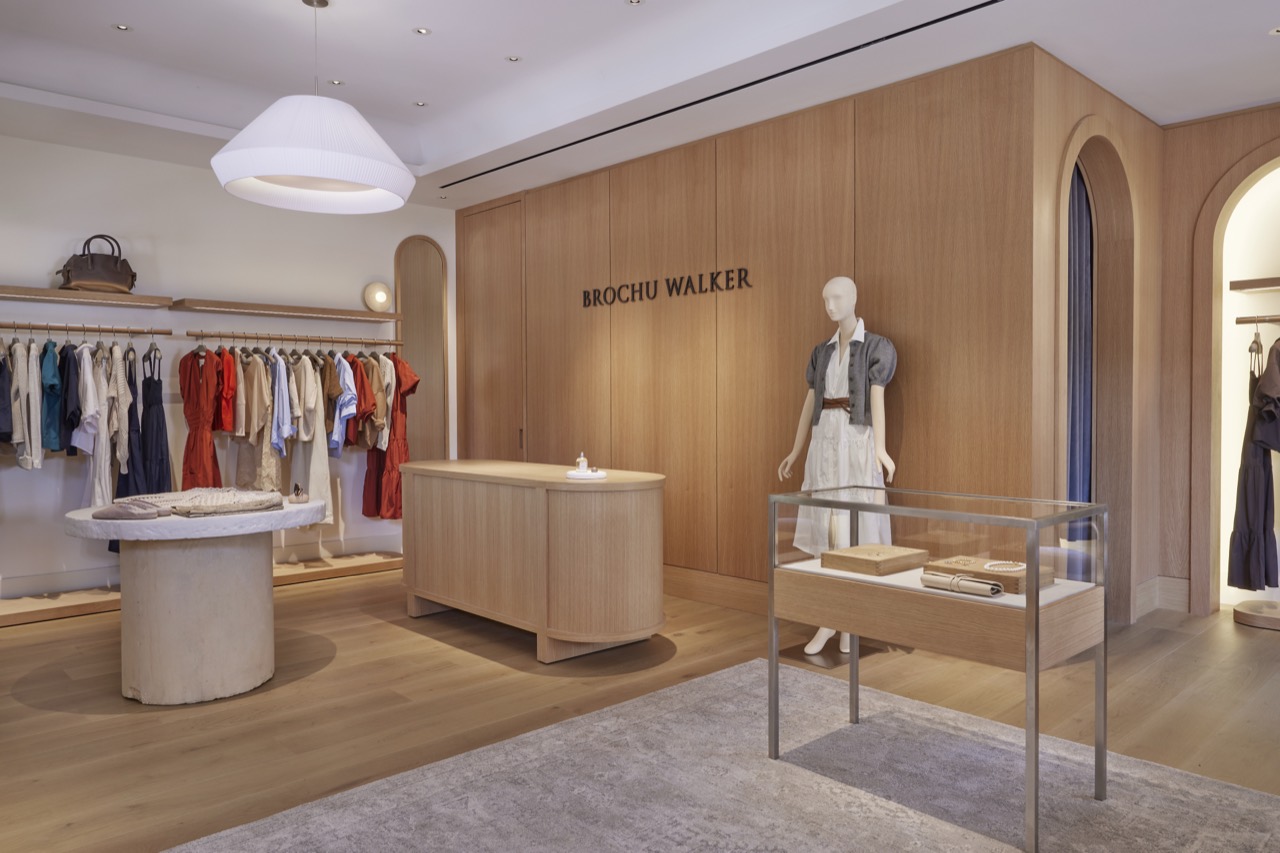
15.An online knitwear brand from Los Angeles took 201 pyeong across five floors at Dosan Park and hung product on two of them. The number to keep is neither five nor 201 but 40%, the share of area that takes money. Copy this structure in Korea and it snags at the contract rather than the design, because a top site on this street carries key money of up to 500 million won on the floor alone, and that key money is charged the same on floors that make no revenue. The decision to leave floors empty is carried by the brand, not the landlord.