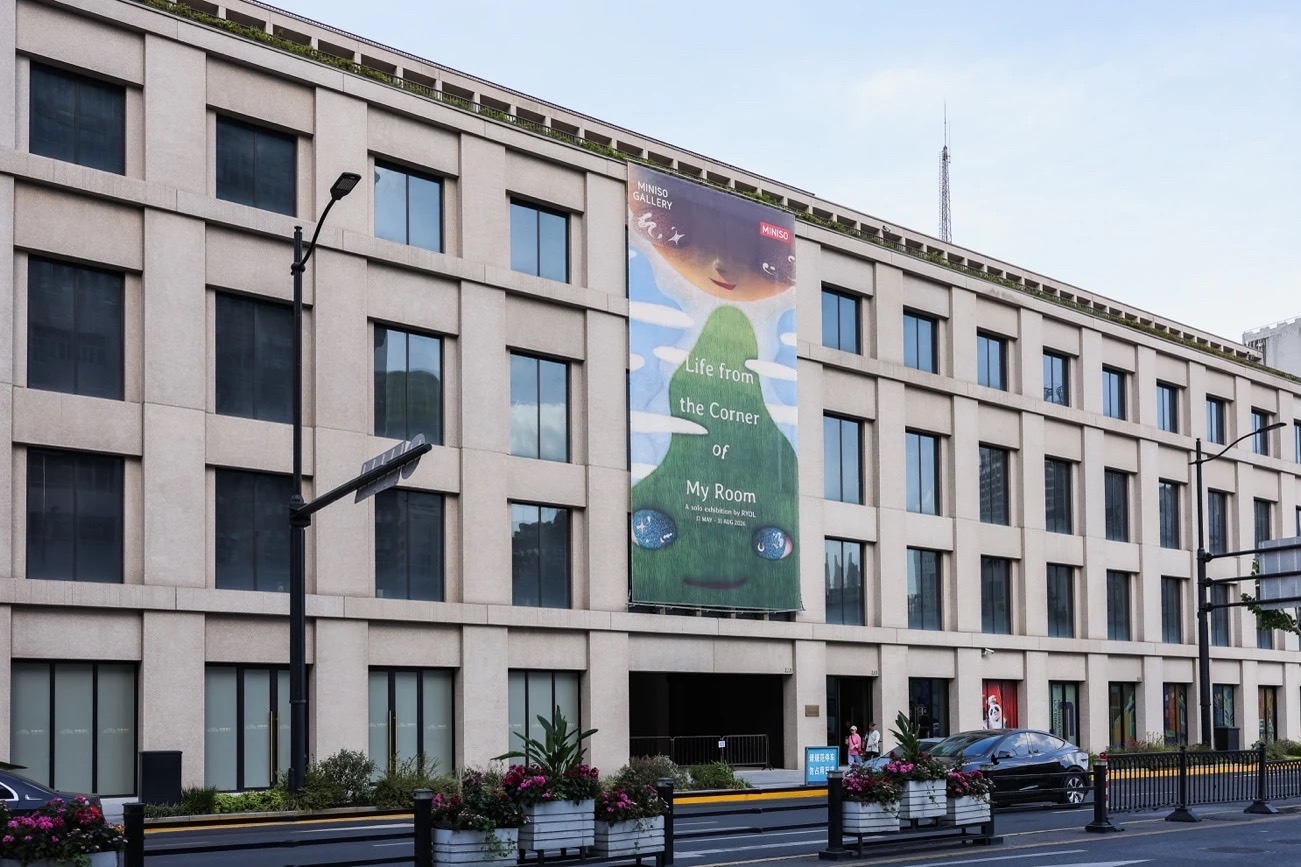
A gallery has opened inside a hundred-year-old former city hall on the Shanghai Bund. Admission is free. It was not put there by an art foundation or a dealer but by a variety chain that runs 8,485 stores worldwide. The reason sits inside the income statement, in the single fastest-growing cost line.
1.On 17 May, MINISO Gallery opened in the former municipal government building at 201 Hankou Road, Shanghai. The first show is a solo exhibition by the Indonesian artist Ryo Laksamana, 「Life from the Corner of My Room」, running to 31 August. Paintings, sculpture and installation. Admission is not charged.
2.MINISO sells makeup brushes, slippers and plush toys. At the end of 2025 it had 8,485 stores, 3,583 of them outside China. Last year's revenue was RMB 21.44 billion, about KRW 4.18 trillion at 195 won to the yuan. That company has opened a curated exhibition space and says it has signed Laksamana as the first artist under a global exclusive contract.
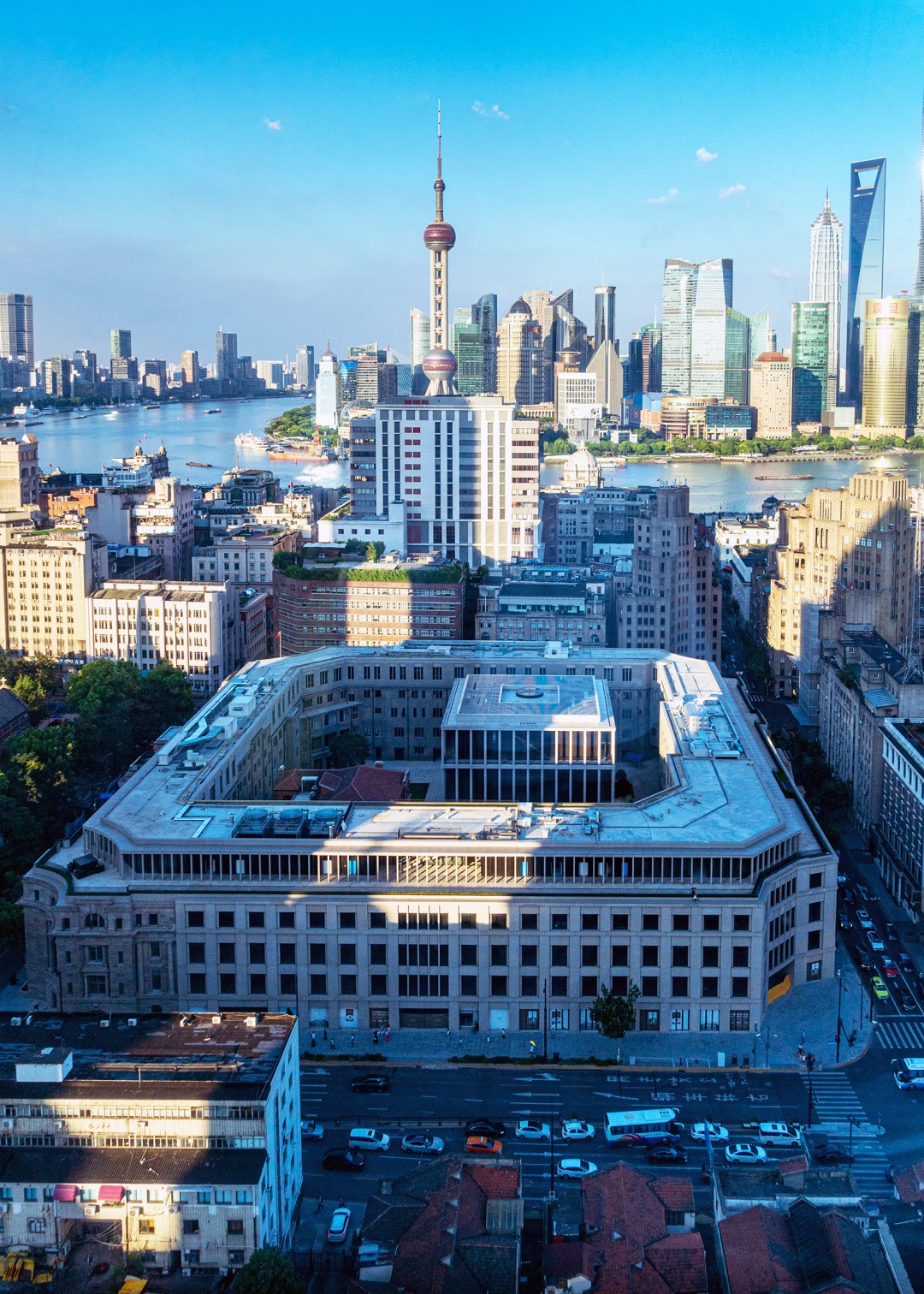
3.Start with the address. The former municipal government building went up in 1922 as the headquarters of the International Settlement's Municipal Council, and Shanghai people still call it Lao Shifu. Work inside the granite shell began in 2015 and finished in May 2024. The plan splits 42,000 square metres above ground and 26,000 below into 70 percent office, 20 percent culture and 10 percent retail, and the space MINISO took is that 20 percent share of culture. A variety goods company raised its hand for a slot the landlord had to fill.
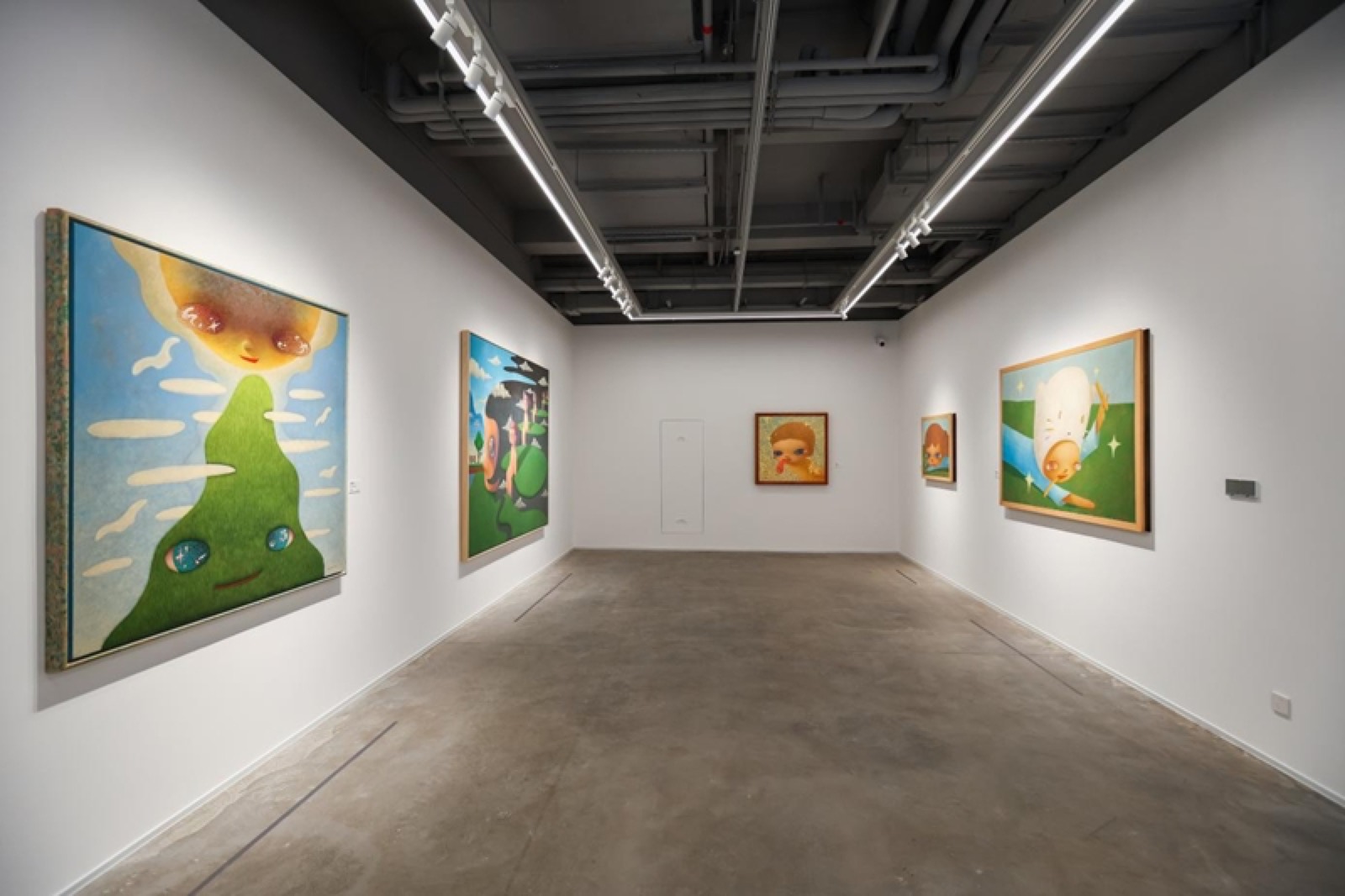
4.The exhibition space itself follows gallery grammar. The company says lighting, circulation and wall treatment were set to museum standards, and it has not published the floor area or the number of levels. White partition walls stand under the point where hundred-year-old moulding turns at the edge of the ceiling, and on them hang figures whose eyes take up half the face.
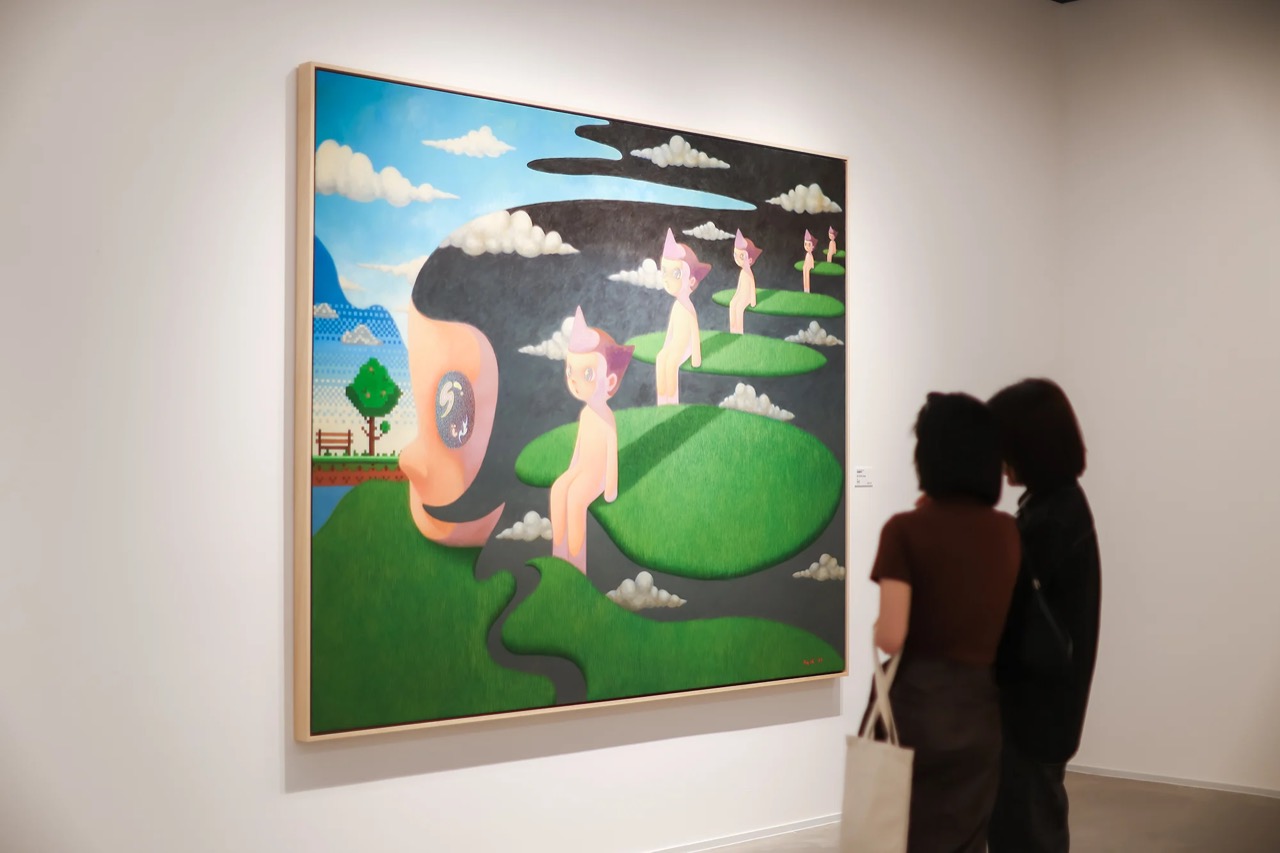
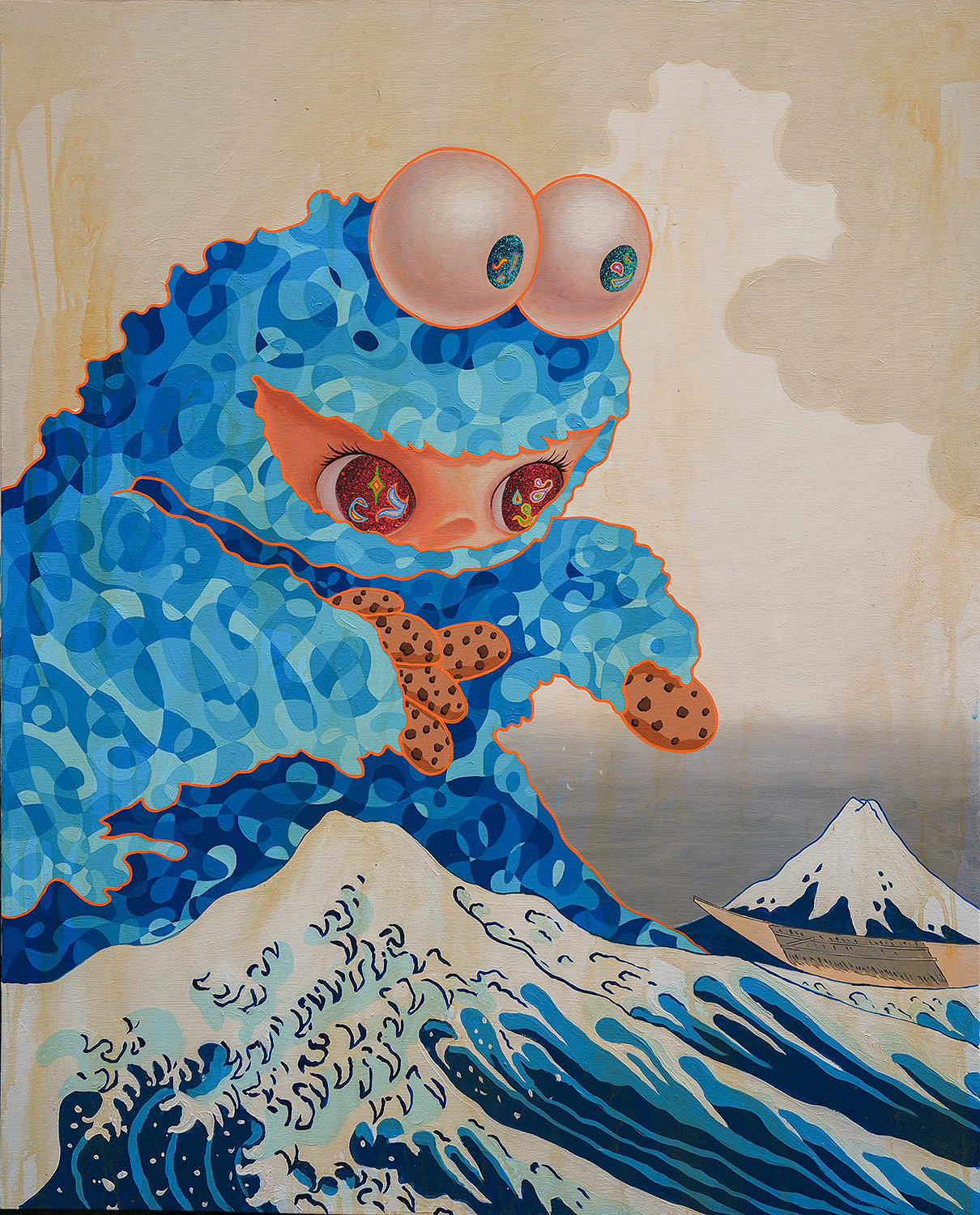
5.The people Laksamana paints carry an adult's expression on a child's face, and they do not sit easy after a while. The style is called pop surrealism, and it sells better on a merchandise shelf than in a gallery. Another way to put it is that he paints faces that come off cleanly as characters.
6.So what is this gallery for? Most of what MINISO has sold over the past ten years carried someone else's face. Disney, Sanrio, Barbie, Harry Potter. Few companies know as precisely that putting a character on a shelf doubles the sales of the same mug. The trouble is that the face is not theirs.
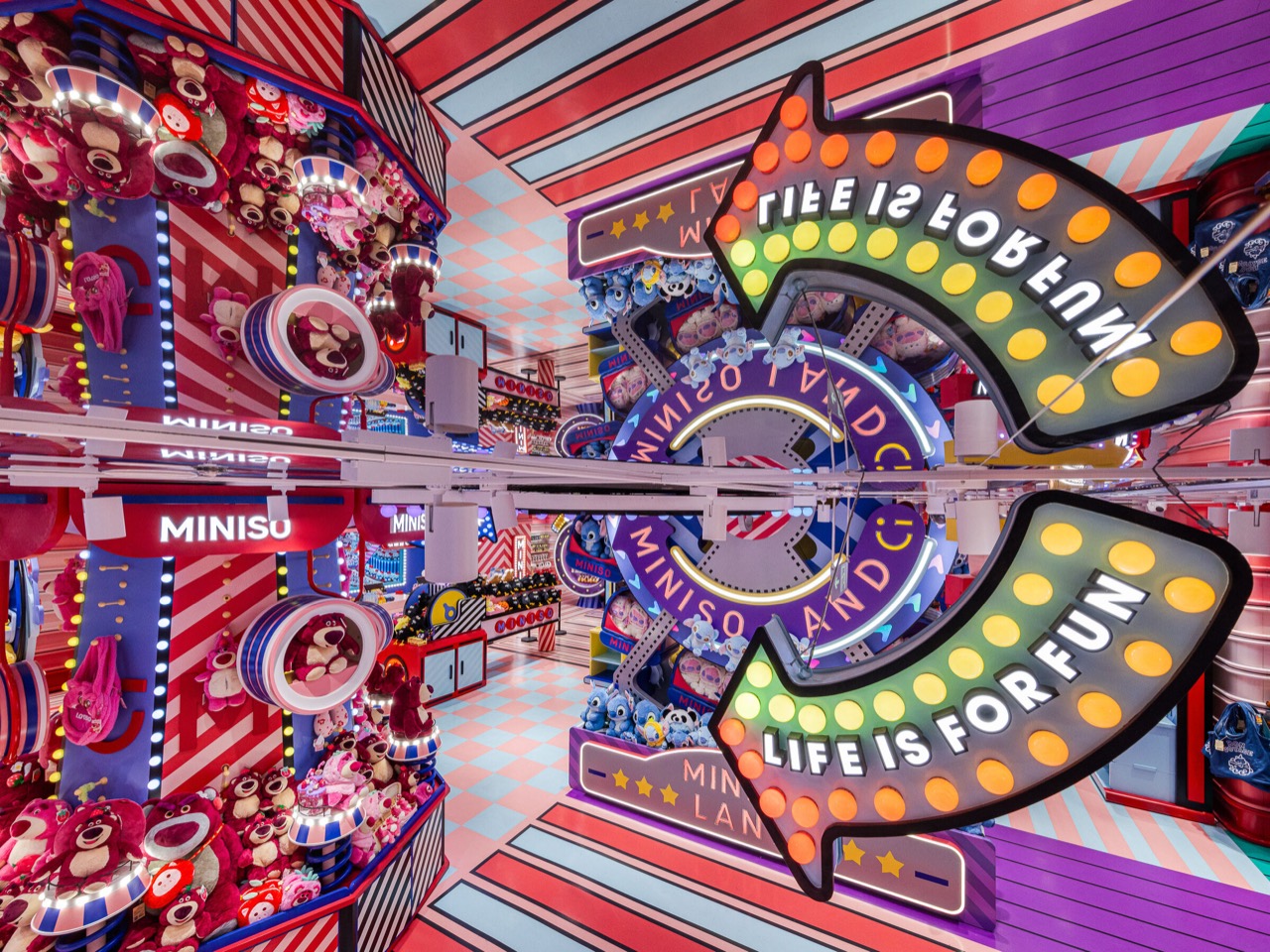
7.Borrowing a character costs money. Korean merchandising deals usually put royalties at 5 to 10 percent of that product's sales, and for a company running variety goods on costs of one or two hundred won a unit, those few points move the margin table. Licensing cost in the December 2025 quarter rose 107 percent from a year earlier, up to about 3 percent of revenue. The first quarter of 2026 added another 42 percent.
8.Gross margin climbed from 41.2 percent in 2023 to 44.9 in 2024 and 45.0 in 2025, hitting 46.4 in that December quarter. Then it fell 0.9 points to 43.3 percent in the first quarter of 2026, and the adjusted net margin narrowed to 9.7 percent. The company pointed to the overseas share and the new product mix, and the fastest-growing line in that same statement was the IP fee.
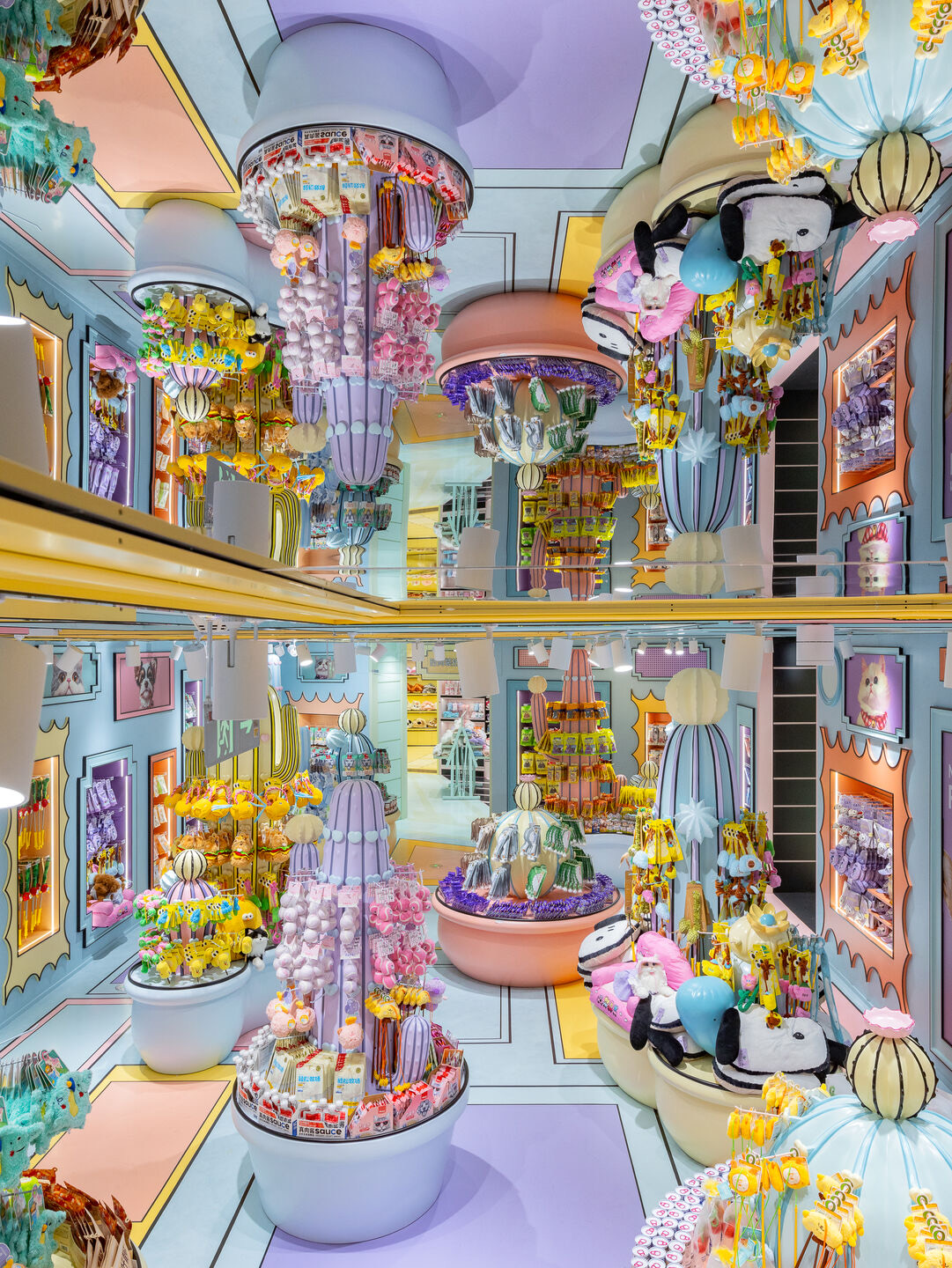
9.There is one comparison in the same market. POP MART turned over RMB 37.12 billion in 2025, up 184.7 percent in a year. Gross margin around 67 percent. LABUBU alone sold RMB 14.16 billion, and that line carried a gross margin of 72.1 percent. In 2024, 85.3 percent of POP MART's revenue came from artist IP it had signed itself, with borrowed IP at 12.3 percent.
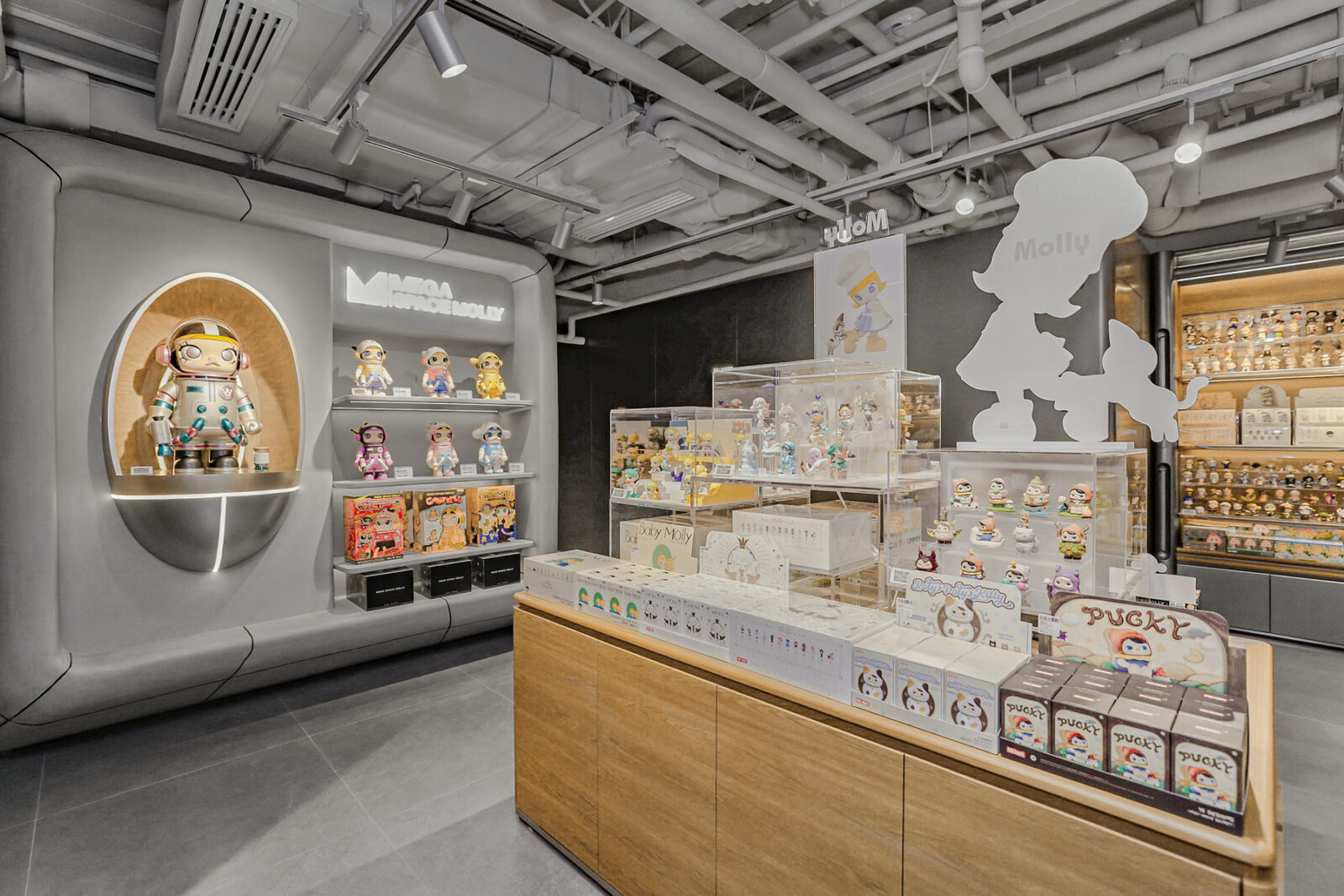
10.The gap between the two gross margins is 22 points. Lay that gap over MINISO's revenue last year and it comes to RMB 4.7 billion, KRW 920 billion. Variety goods and art toys differ in ticket size and turnover, so the whole gap cannot be handed to IP, and this is a figure I ran to get a sense of scale. Even so, the distance between a borrowed face and an owned one runs close to a trillion won, and that is a number this management sees every month.
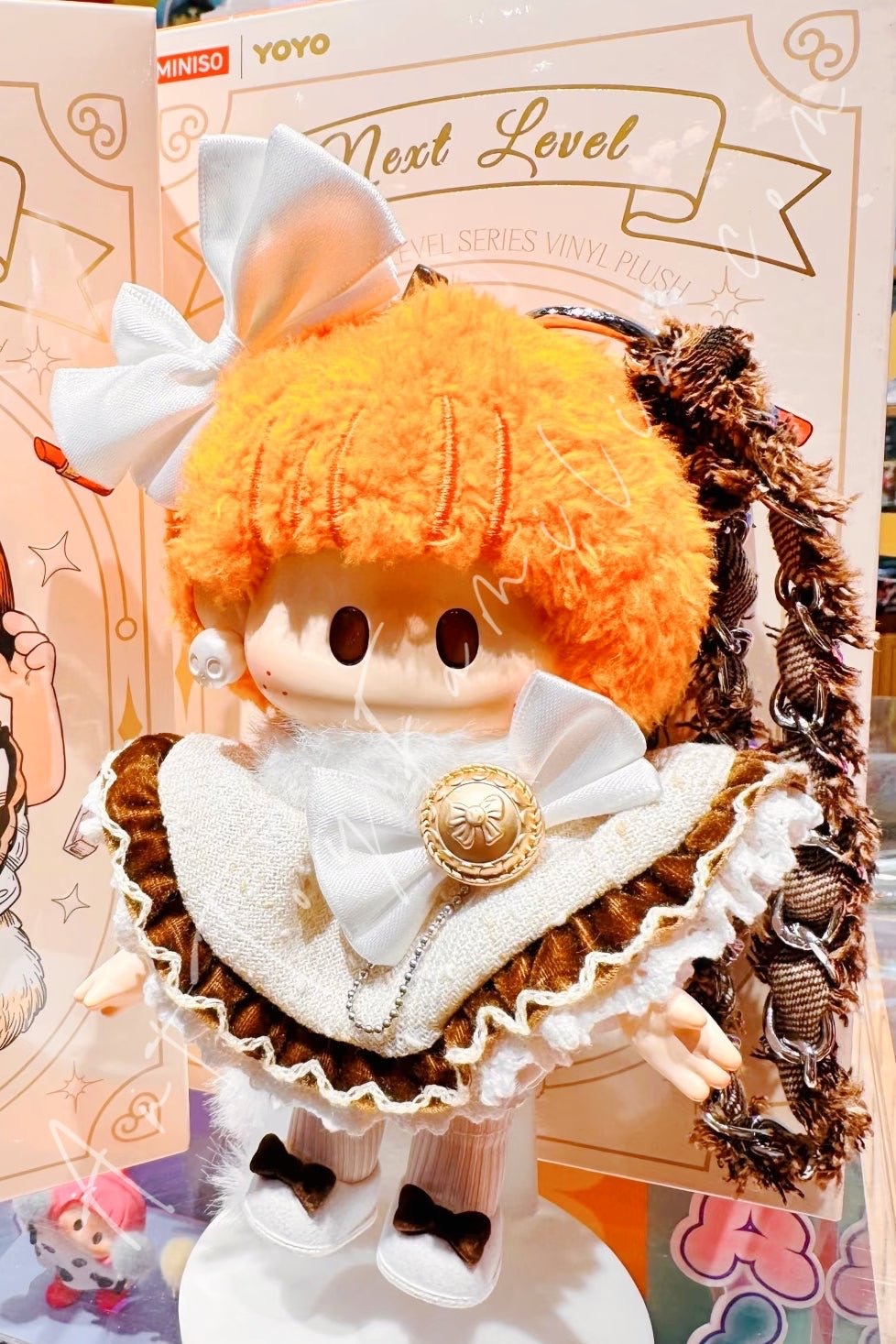
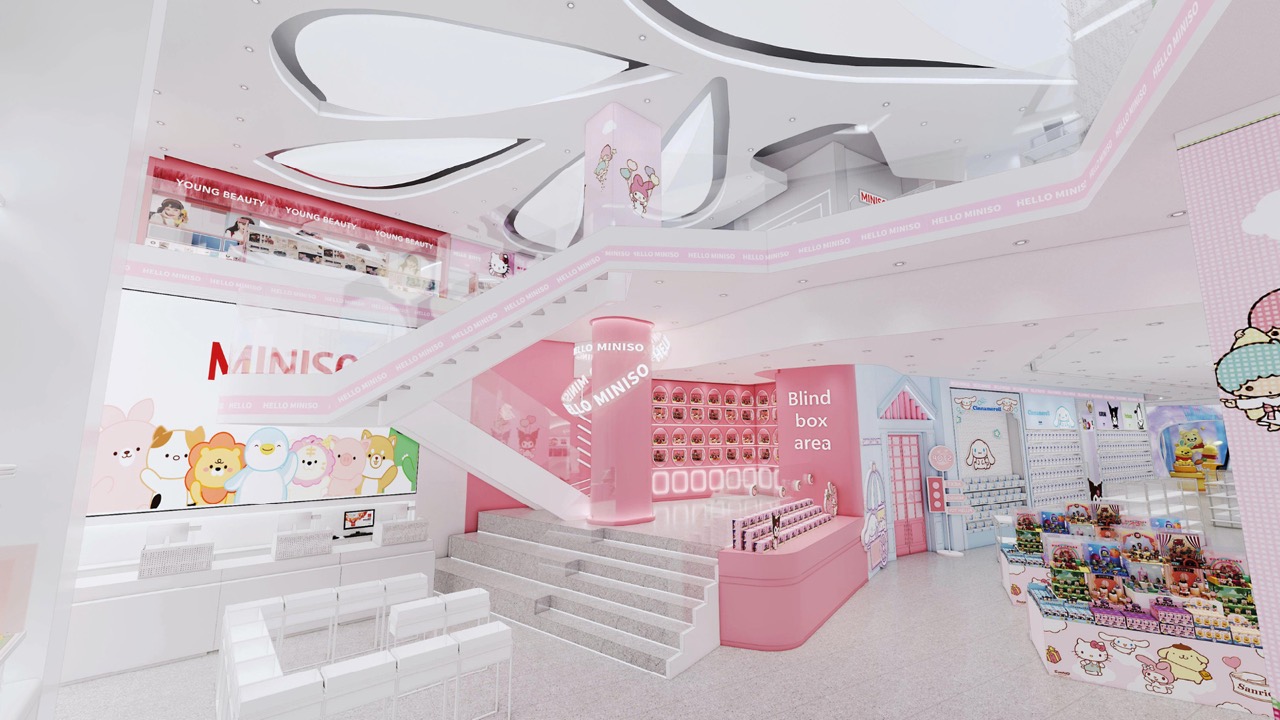
11.So it started making its own characters. YOYO, released in June 2025, passed RMB 100 million in half a year, and the company says it had signed 18 trendy art IPs by March 2026. The target is 10,000 stores within three years with 80 percent of them turned into character-led stores. What chairman Ye Guofu put to the partner assembly was a move from retail company to IP operator.
12.Follow the lineage and the reason for a gallery appears. POP MART did not draw LABUBU. The Hong Kong artist Kasing Lung created the character, and commercial rights passed over when he signed an exclusive licence with POP MART in 2019. Copyright still sits with the artist. Six years later that one contract became a RMB 14.16 billion line, and the artist's share is estimated at USD 10 million to 25 million.
13.What MINISO wants to buy is that contract. Instead of chasing deals one at a time, though, it decided to buy the place where deals get made. A free exhibition space earns nothing, and it is where an artist who has no price yet holds a first solo show, and where that artist gets met first. The company says it will take the format from Shanghai to Hong Kong, Beijing, Tokyo, Paris and New York, six cities in all.
14.Bend the line here. The conclusion that owning IP is the answer is wobbling on POP MART's side too. Revenue concentrated in one character pushed the share price down after the 2025 results, and every earnings call now brings the question of what the next character is. A borrowed face costs a fee and can be dropped. An owned face costs no fee, and when it cools there is nowhere to move. That is why what MINISO wants from a gallery is not one character but a pipe that keeps artists flowing in.
15.A variety goods company running 8,485 stores opened a free gallery in a hundred-year-old government building, and behind it sits a licensing bill that doubled in a year. The number to keep is 22 points, the margin gap between a company selling borrowed faces and one selling faces it owns. A Korean retailer following this order trips first on the contract form rather than the exhibition rent, because Korean character merchandising runs on one-off deals sliced by item and term, so the retailer keeps no stake when a character grows. Before building a place to meet artists first, decide what gets shared once they are met.