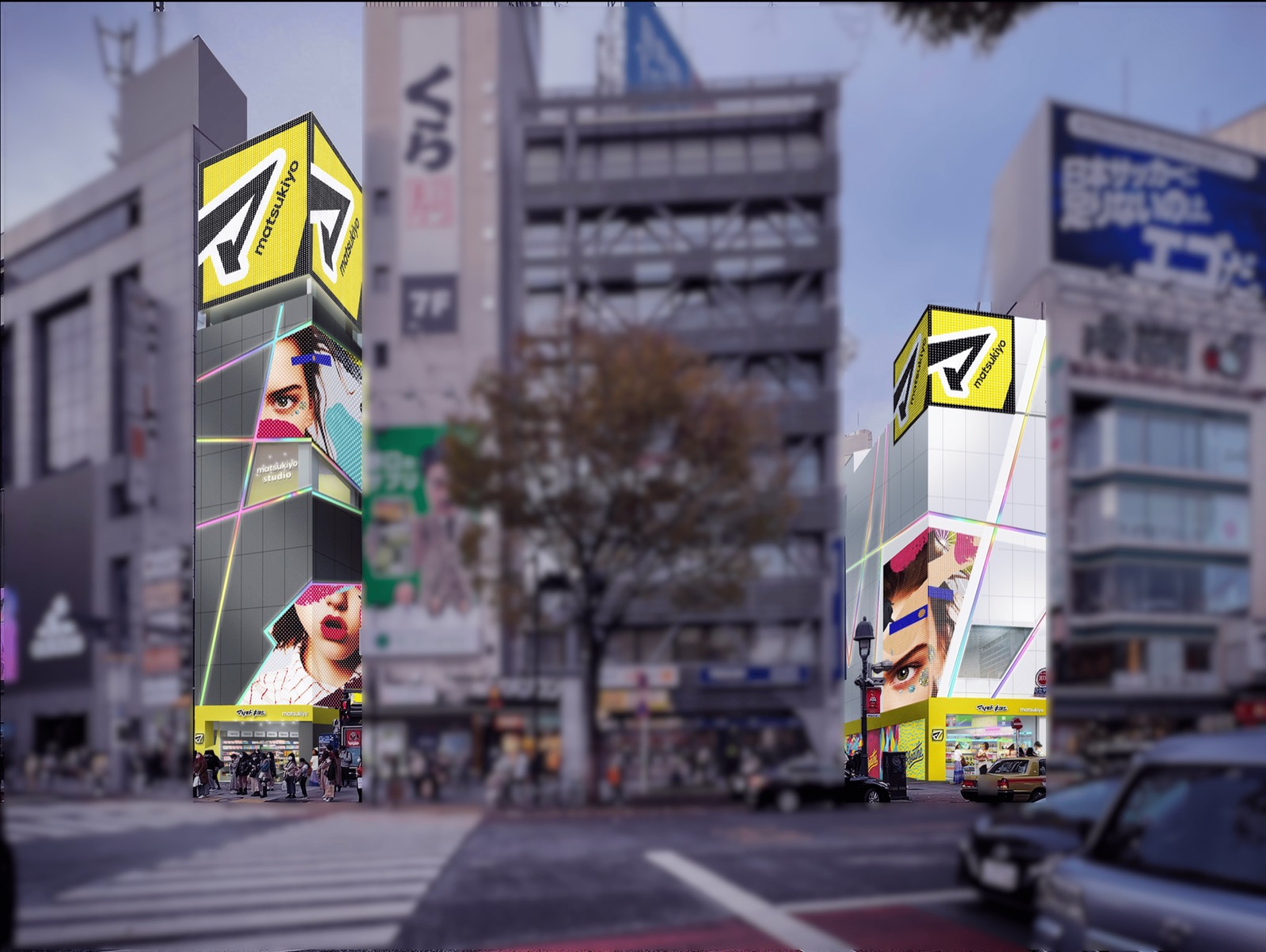
An 84-tsubo drugstore opened this March. Less than a minute's walk away, the same company had already been running an 80-tsubo drugstore for two and a half years. One is white, the other black. The company says the two stores are not eating each other's sales.
1.March 7, 2026, at 22-3 Udagawacho, Shibuya, Tokyo. Matsumotokiyoshi opened SHIBUYA SCRAMBLE FLAG. The sales floor runs roughly 278 square metres, or 84 tsubo, across three levels from the first basement to the second floor. It carries about 13,400 items, 95 percent of them health and beauty. The site it gutted and rebuilt was the Shibuya Part1 store, open since 1995.
2.There is one more store under the same brand less than a minute away on foot. SHIBUYA DOGENZAKA FLAG, at 23-4 Udagawacho. It opened on September 29, 2023, with a floor of about 264 square metres, 80 tsubo, and 10,500 items. The company calls the pair twin towers and says cannibalisation is not a concern. Let the shopper pick which door to walk through.
3.The new store is built on white, with an angel as the motif on its facade. The older one runs on black, with a devil. Eighty-four tsubo and eighty, white and black, angel and devil. Inside a single trade area the same company speaks to the shopper twice.
4.Look at the address once more. The 2026 official land price at 23-3 Udagawacho is 35.3 million yen per square metre, or 116.69 million yen per tsubo. It is the most expensive point in Shibuya Ward. The black store sits on the lot right beside it and the white one is inside the same block. The ward's commercial average is 30.73 million yen per tsubo, so this ground runs close to four times that.
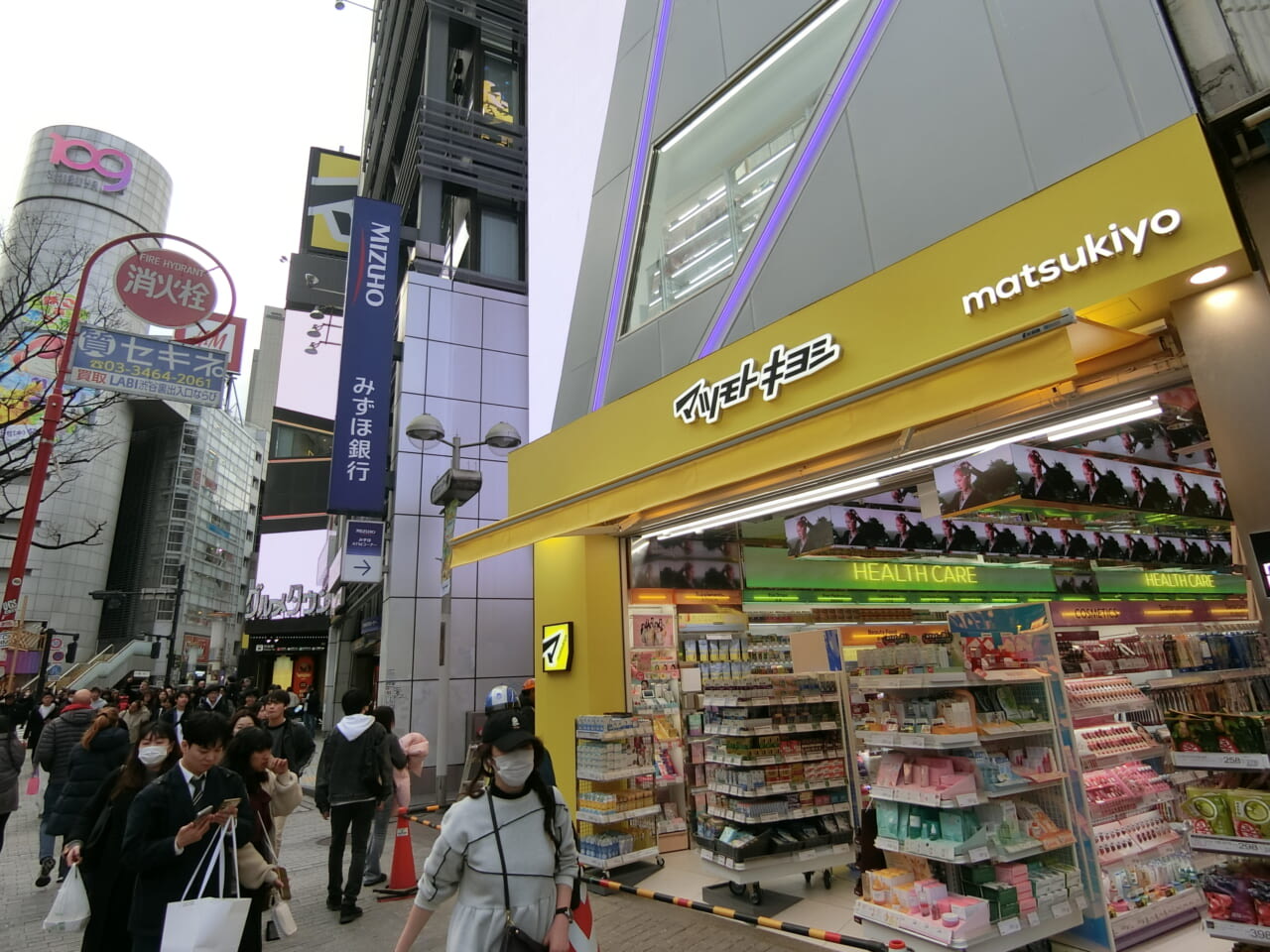
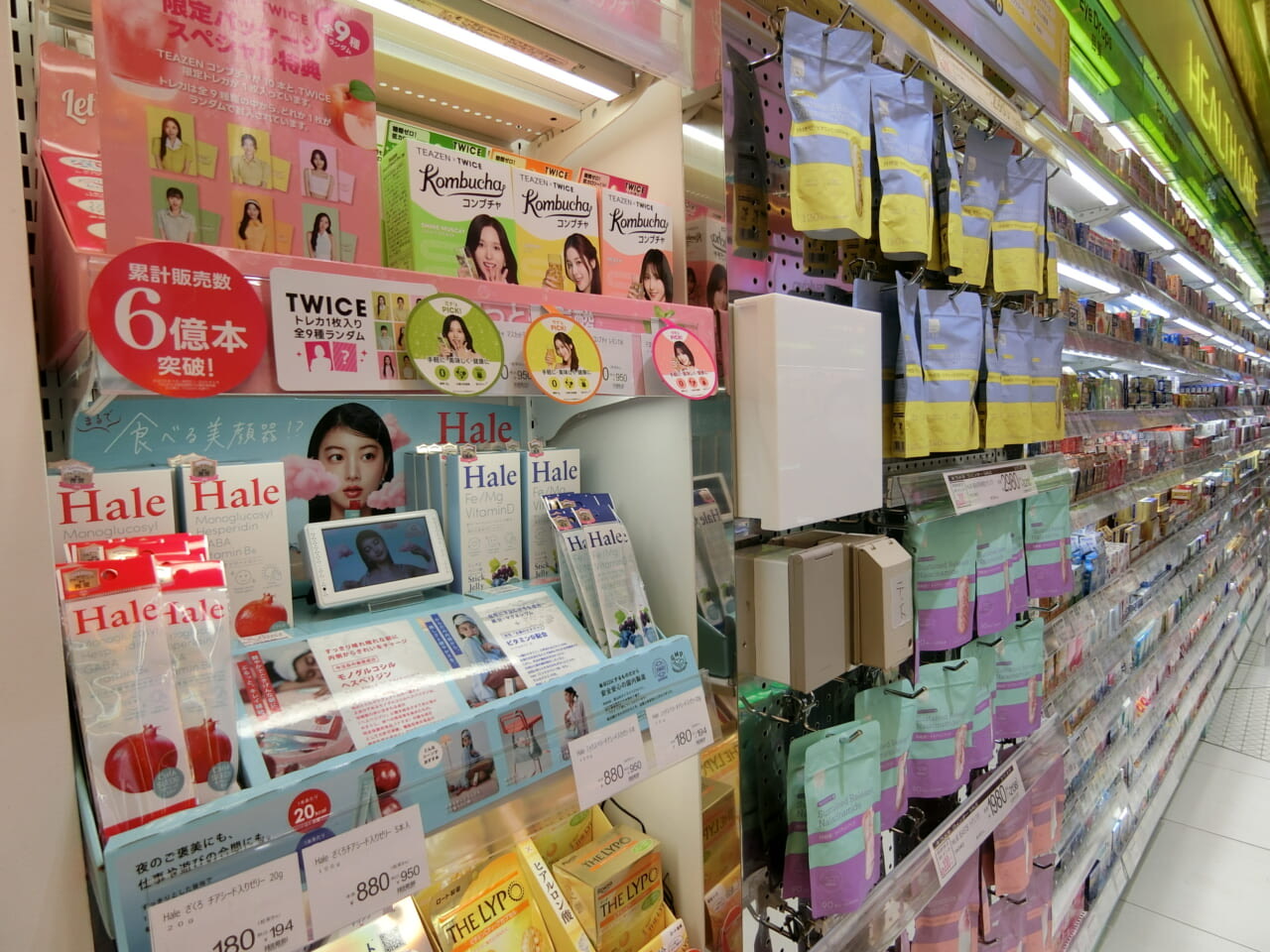
5.The first floor holds medicines, health foods, hygiene products and seasonal goods. The ceiling is mirrored and the bands above the shelves are neon. HEALTH CARE, BEAUTY CARE and Supplements float in green and yellow, and the mirror adds a second, inverted set of the same words. Wheeled display units stand along both sides of the narrow aisle, tightening it further.
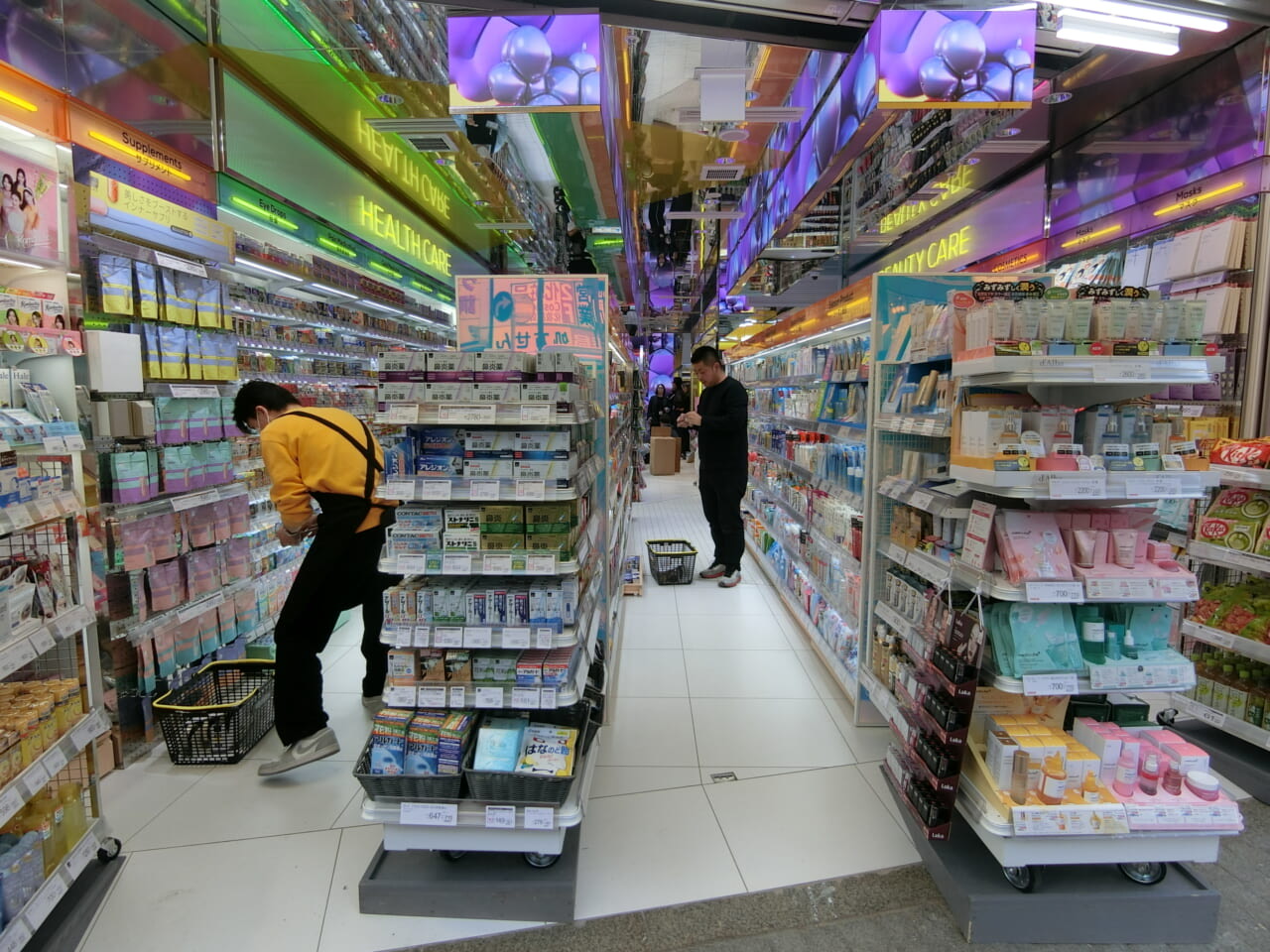
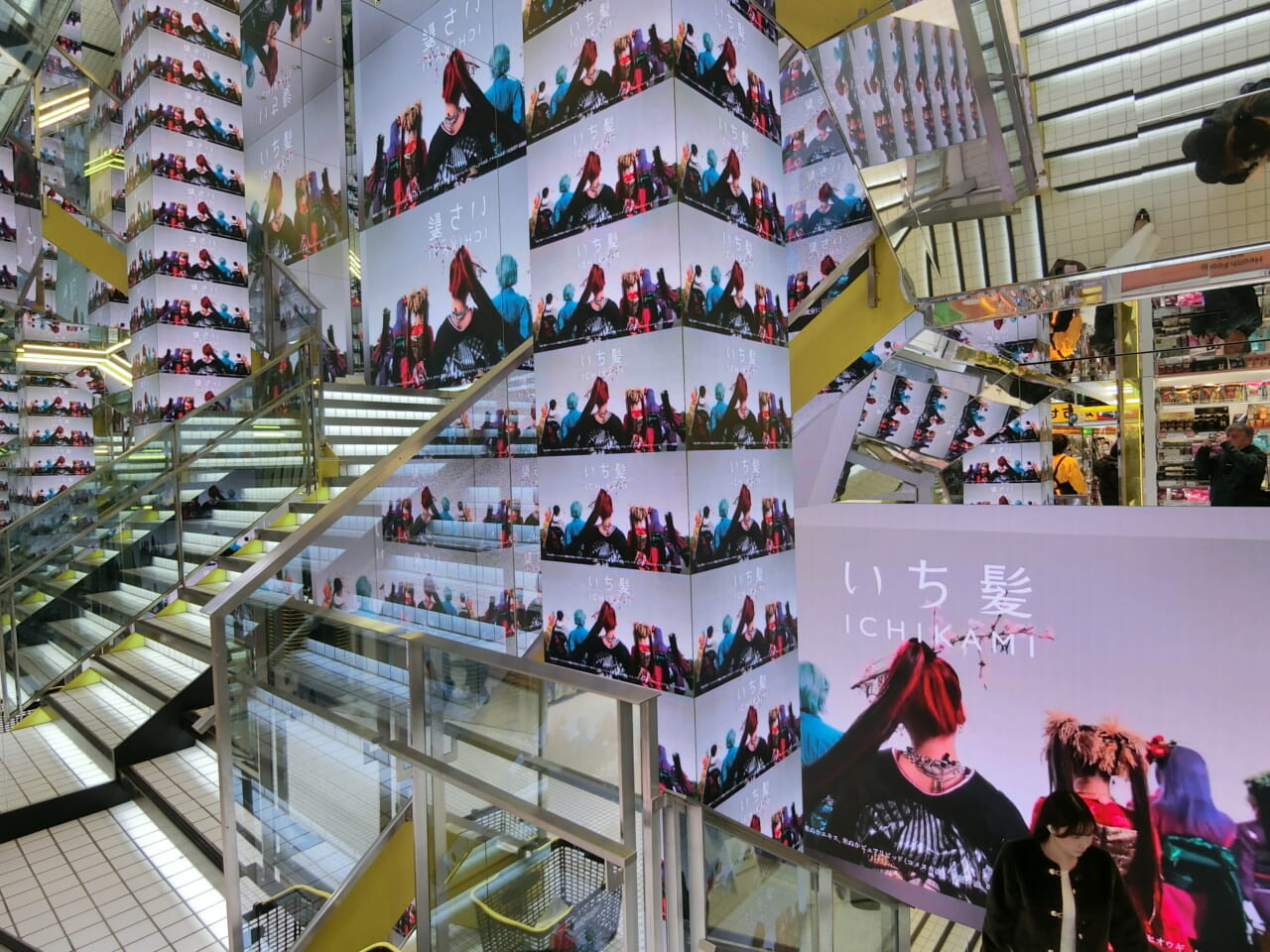
6.Stairs and LEDs tie the levels together. A column of signage 60 centimetres wide runs 10 metres up, and two 11-metre LED panels hang from the ceiling to pull shoppers inward. The ceiling by the stairs and the undersides of the signage are mirrored too, so one advertisement appears to stretch into dozens above and below. That is why 84 tsubo does not read as 84 tsubo.
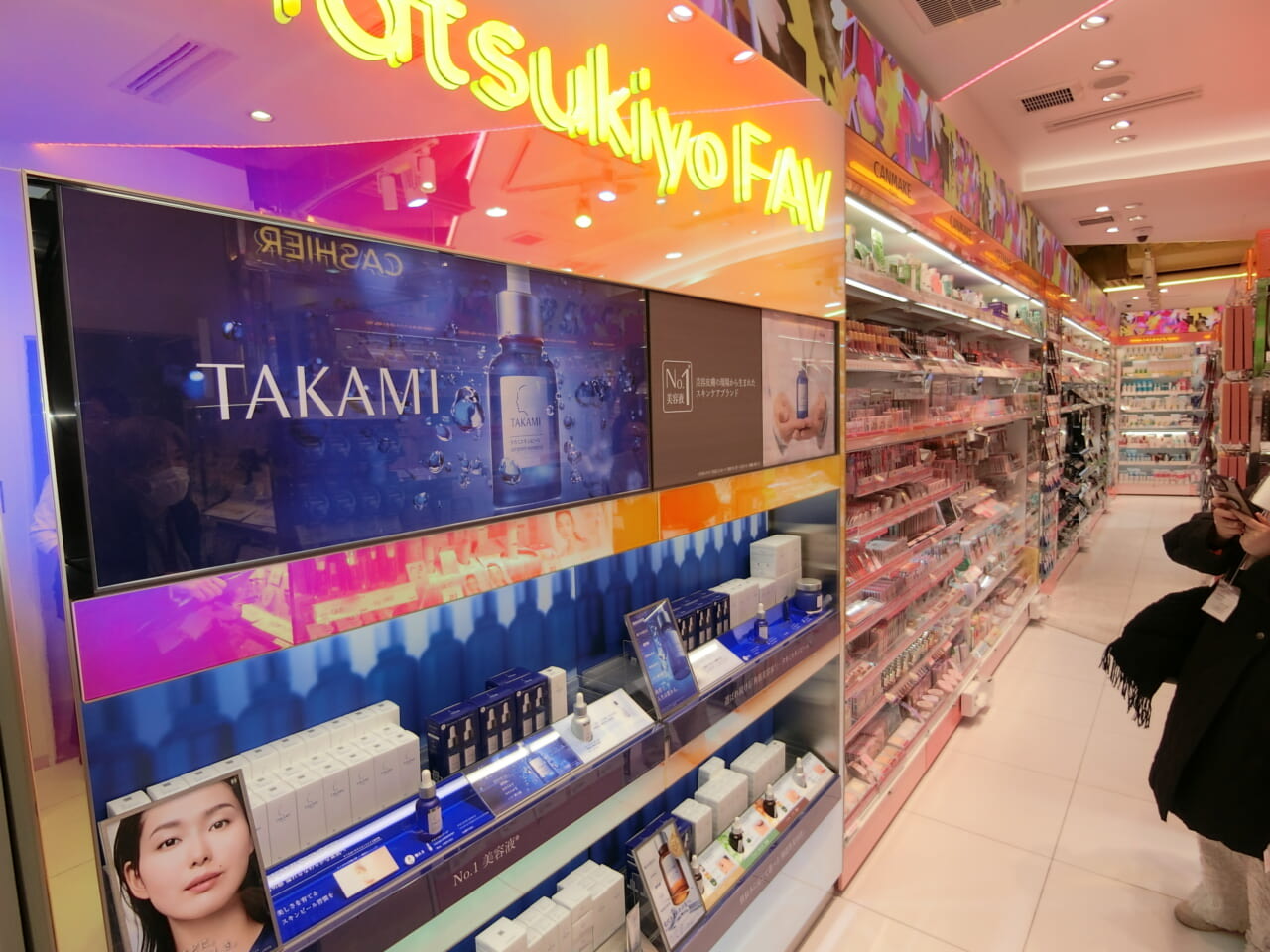
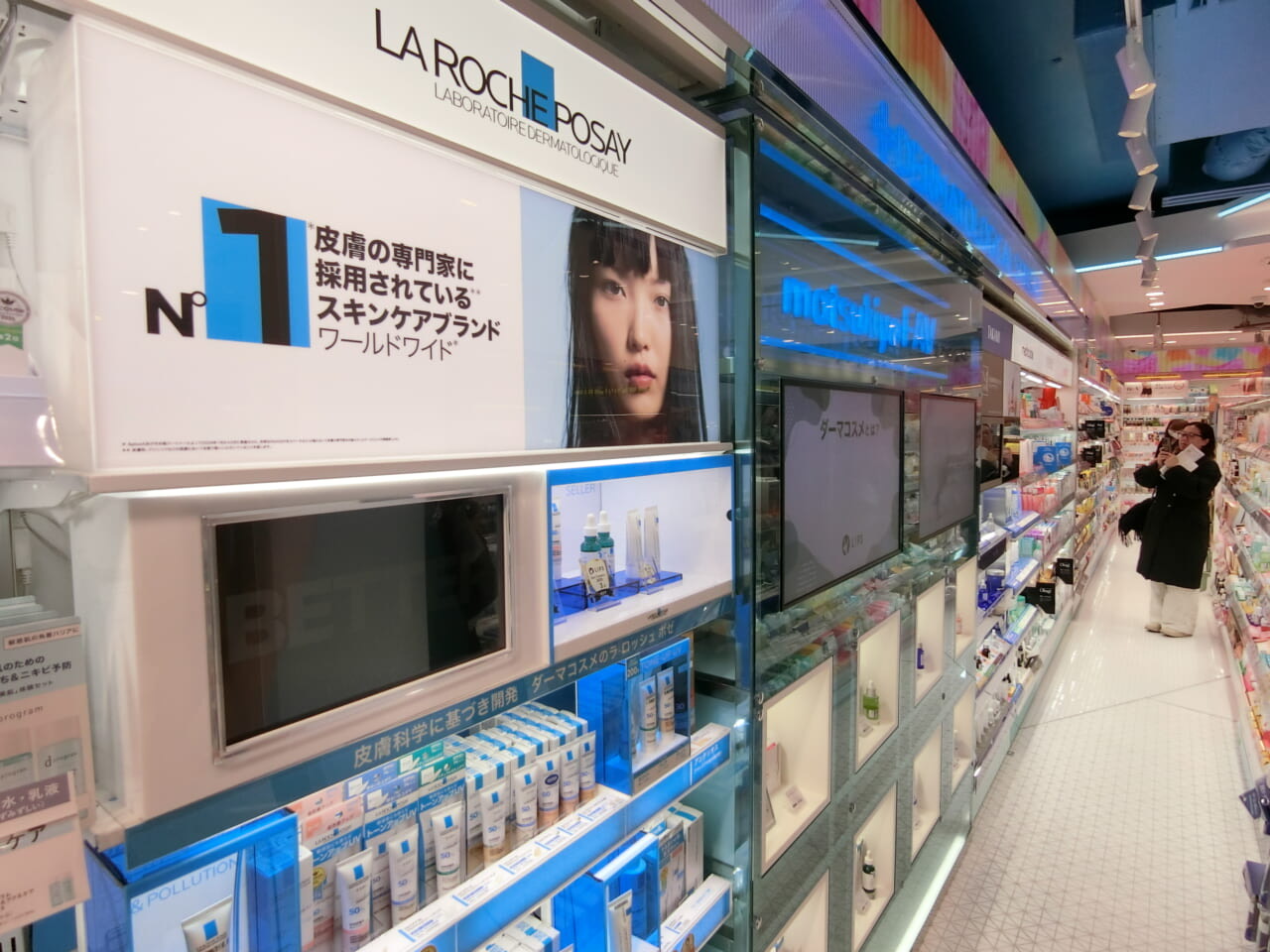
7.The first basement carries skincare, toiletries and men's cosmetics. TAKAMI went into the dermo-cosmetics fixture, a first for a drugstore, and La Roche-Posay took the bay beside it. Screens above the fixture run a video explaining what dermo-cosmetics are. With only two or three units per glass compartment, it reads less like a drugstore shelf than a department store counter.
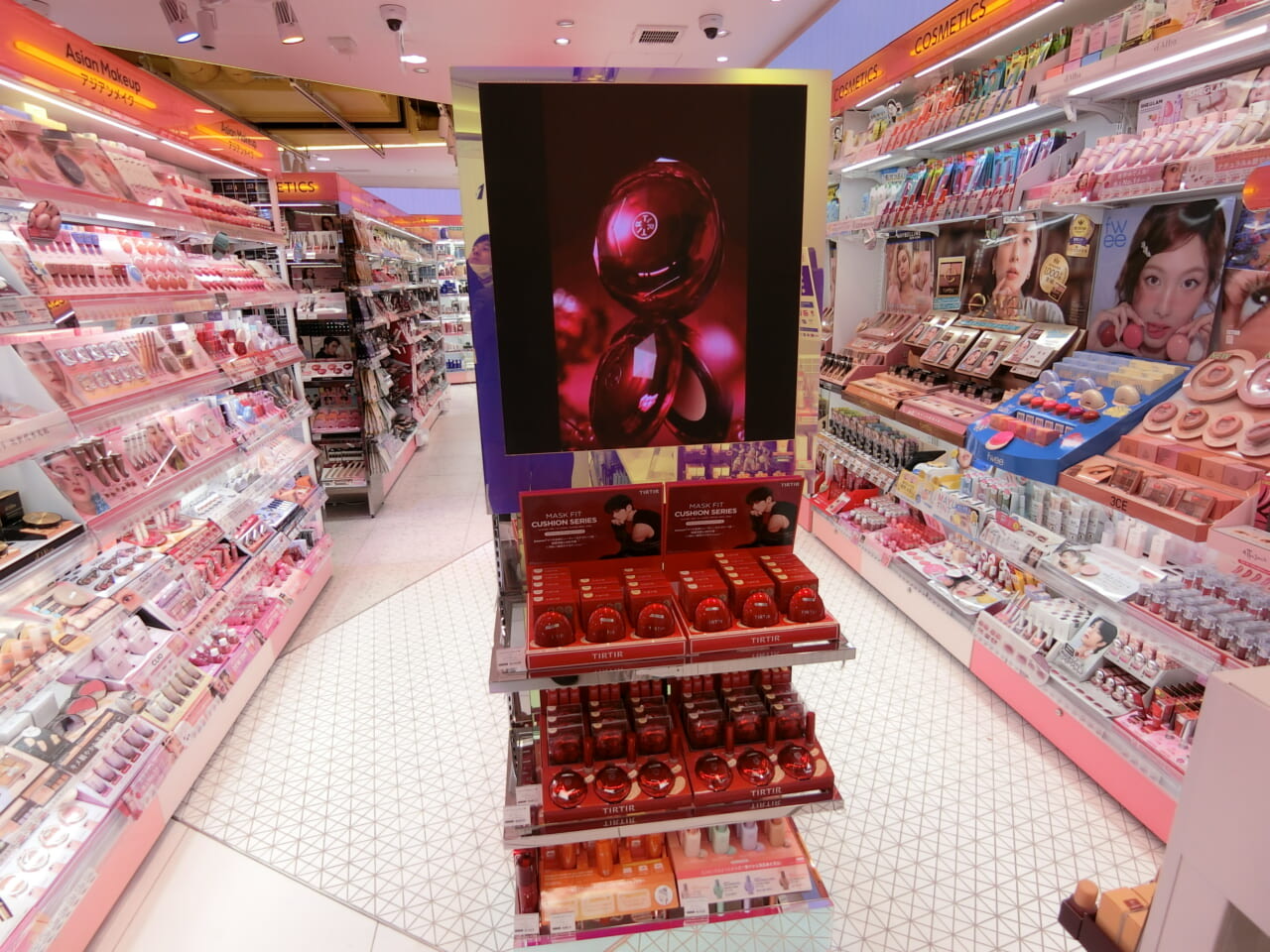
8.The second floor is makeup. The Korean brand assortment roughly doubled, and a sign reading Asian Makeup hangs at the head of the aisle. TIRTIR cushion packs take three tiers of the island fixture down the middle, while 3CE and CLIO line the wall. Two pop-up bays change stock every month.
9.Density is what this store sells. Thirteen thousand four hundred items across 84 tsubo works out to 160 per tsubo. The black store runs 10,500 across 80 tsubo, or 131. The number of things a shopper brushes past in thirty steps is the entertainment, and that entertainment is what produces the impulse buy at the register. In a small footprint, density is not a weakness but a product.
10.The buyer is a woman in her teens or twenties. In Japan that age group buys its first cosmetics not at a department store or a select shop but at a drugstore. On top of that sit inner-beauty products, the ones sold on caring for the body from inside. The TEAZEN kombucha fixture comes with a TWICE trading card, and a round red pop above it claims 600 million bottles sold to date. What is sold is kombucha; what is bought may be the card.
11.The store doubles as a billboard. Signage at both shops is wired to run the same footage at the same time, and the upper floors of the black store hold a hair salon, a shooting studio and an art gallery. Live commerce and video content are shot in that studio. Sell while filming, then hang the footage back on the LEDs outside.
12.Now the company's numbers. Matsukiyo Cocokara & Company posted 1,117.4 billion yen in revenue for the fiscal year ended March 2026, up 5.3 percent, with operating profit of 84.9 billion yen and an operating margin of 7.6 percent. Health and beauty accounts for 72.4 percent of sales and private brands have climbed to 14.8 percent. The group runs 3,618 stores; divide revenue by store count and one store does a little over 300 million yen a year.
13.Work back through the rent and the load these two stores carry becomes visible. Ground-floor street retail in Shibuya Ward averages 43,830 yen per tsubo per month, and Dogenzaka 1-chome, the highest area, runs 150,000. Second floor and above averages 37,764. Split 84 tsubo across the levels and monthly rent lands between 5 million and 7.5 million yen. Hold rent at 10 percent of sales and this one store has to turn 600 million to 900 million yen a year, two to three times the group average store.
14.Foreign shoppers are a smaller line than they look. Duty-free is about 4 percent of company sales, less than half the 12 percent it was before the pandemic. Mainland Chinese customers fell away and Taiwan and Thailand filled the gap. On top of that, Japan switches its duty-free scheme to a refund model on November 1. Shoppers will pay the tax at the register and get it back after customs confirms export, so the feeling of 10 percent coming off in front of the shelf disappears.
15.It started as a pharmacy in Chiba in 1932. The company became a drugstore chain when it opened a self-service store in Ueno Ameyoko in 1987, and reached the one-trillion-yen tier by merging with Cocokara Fine in October 2021. Stacking several stores into one trade area, though, is something Seoul pushed first. Olive Young runs nine stores in Myeongdong alone, split by function into global services, experience, a K-pop zone and luggage storage. The second largest store in the country is here too, spreading about 1,000 brands and 15,000 items across roughly 950 tsubo. Foreign customers account for 28 percent of its offline sales.
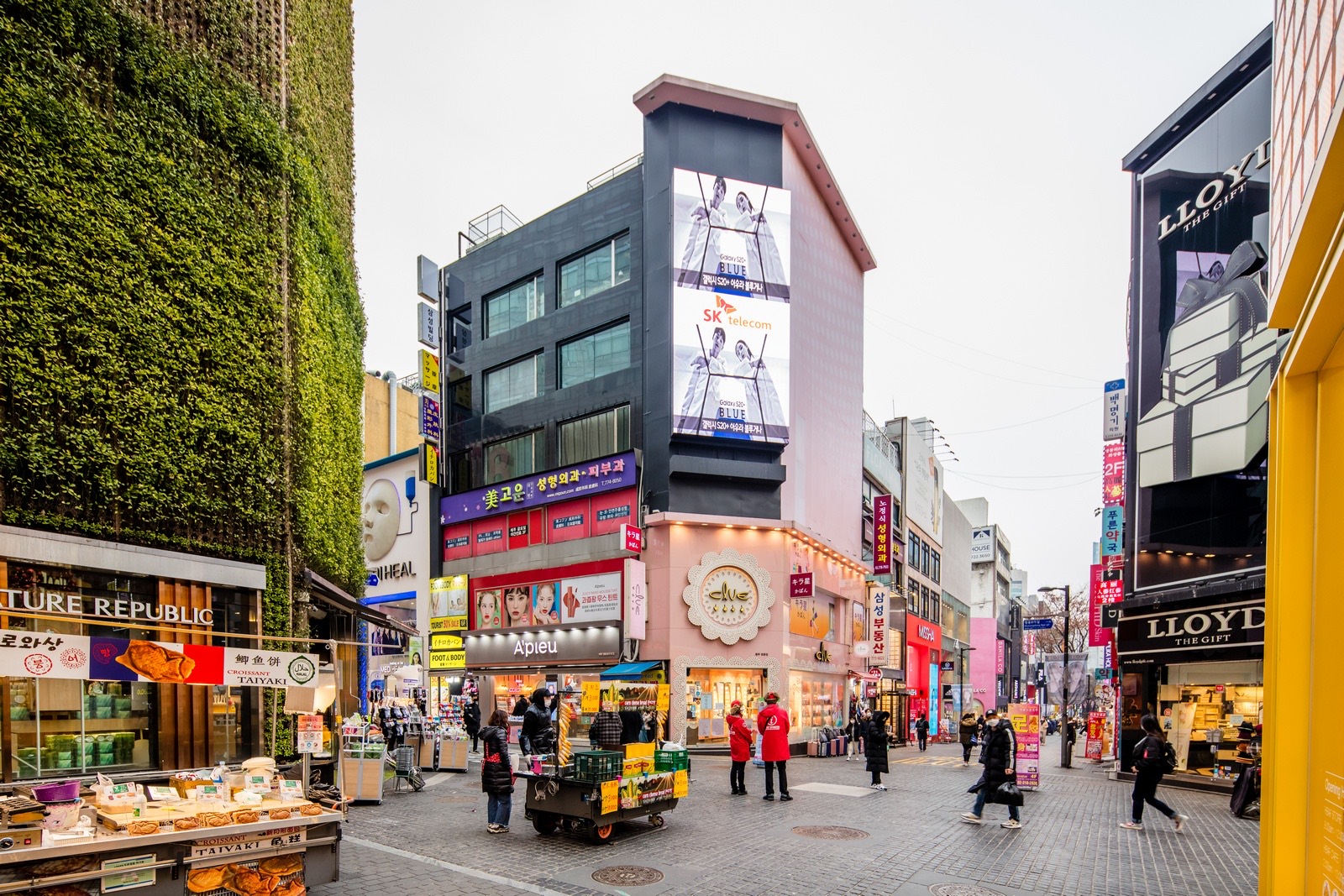
16.An 84-tsubo store went up new, and the 80-tsubo store a minute's walk away stayed as it was. The combined 164 tsubo sits on ground worth 116.69 million yen per tsubo, and what carries that price is a product density of 160 items per tsubo. Anyone trying the same thing in Korea hits assortment first, not the trade area and not the rent. Japanese drugstores lay medicines, a licensed category, down as the anchor and stack cosmetics on top; health and beauty stores in Korea cannot sell over-the-counter medicines. With no anchor there is no way to split two stores by category, and all that is left is splitting them by size and service. The nine in Myeongdong were divided that way not by taste but by pharmacy law.