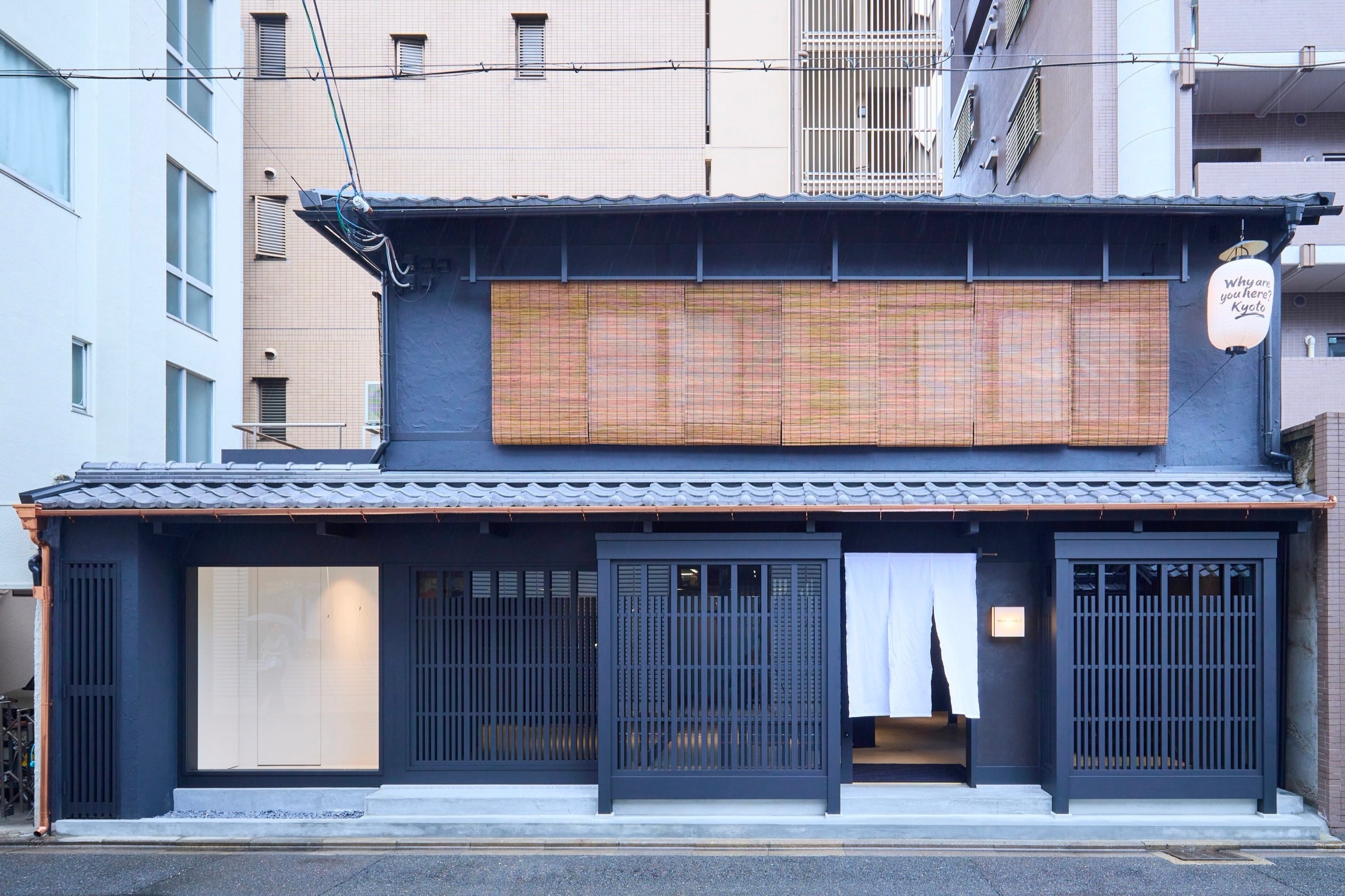
Why are you here.....?, the Osaka select shop, opened its third store on 8 August on Fuyacho-dori in Kyoto's Nakagyo ward. A two-storey wooden machiya was reworked to hold THE ROW and VUJA DÉ. Its operator, Sanki Shoji, moved to a holding company structure on 1 July and split the business into five companies. This house opened 38 days later.
1.The address is 38-1 Benkeiishi-cho, Fuyacho-dori Sanjo-agaru, Nakagyo-ku, Kyoto. Why are you here.....? Kyoto opened on 8 August. Hours run from 11am to 8pm, closed Wednesdays. One block north of Sanjo-dori. From the tourist crush on Kawaramachi it sits about a three-minute walk inward.
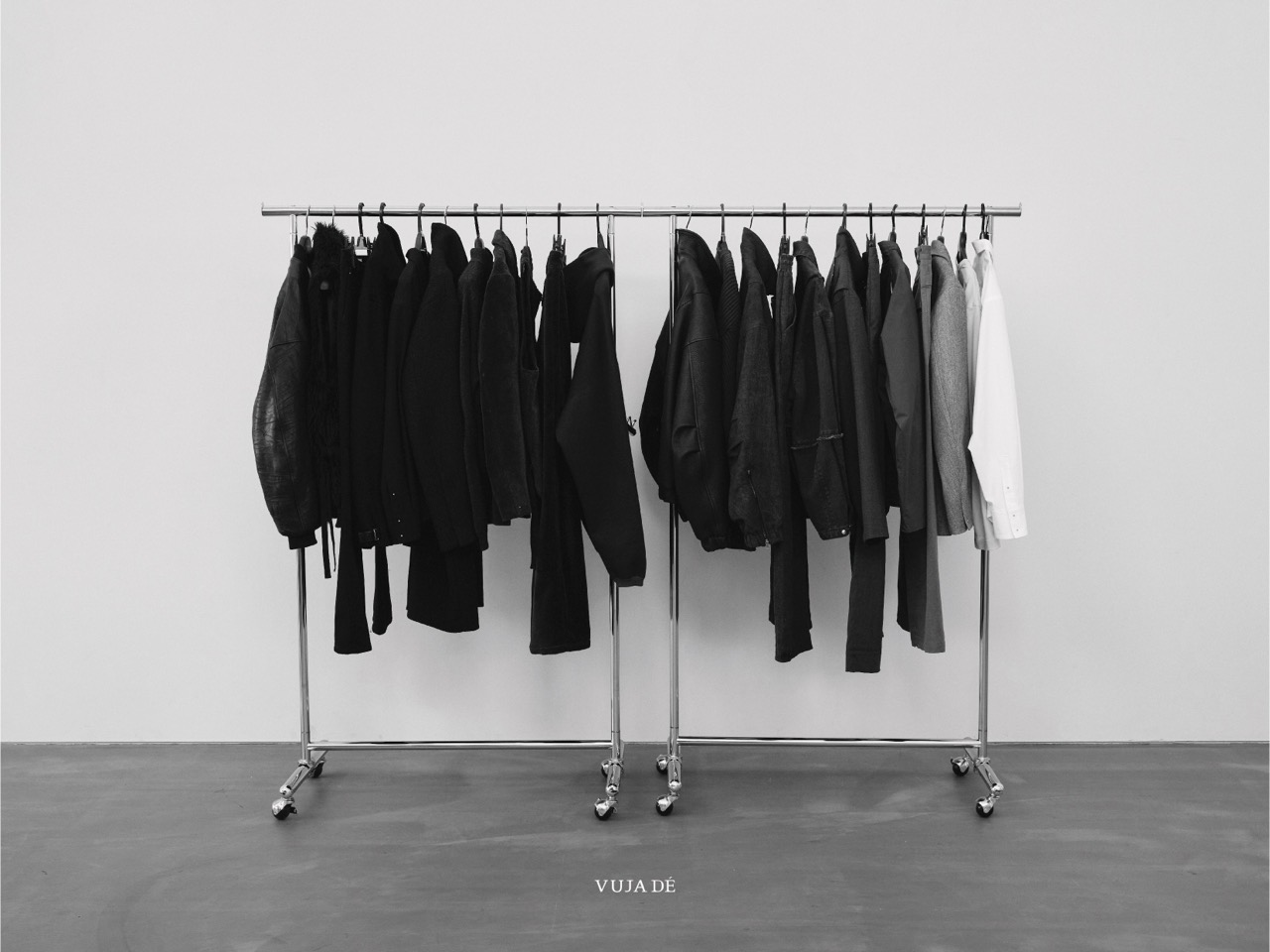
2.The labels on the racks are THE ROW, VUJA DÉ, Enfants Riches Déprimés and OMAR AFRIDI. The operator says the picking was done by each brand's stance and craft rather than by genre. The original store opened in Minami-Senba, Osaka in 2000, and on its 20th anniversary, 8 August 2020, a second store of roughly 250 square metres opened toward Midosuji.
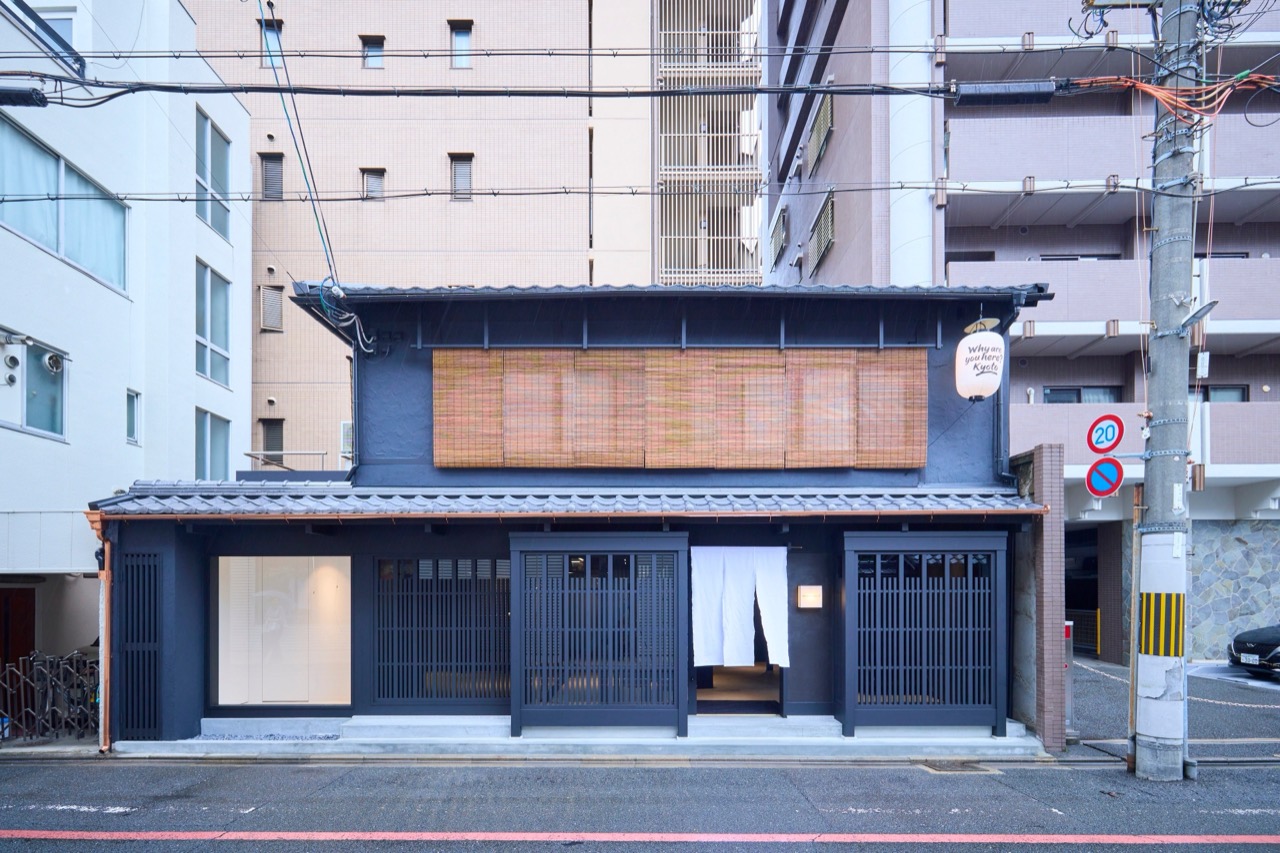
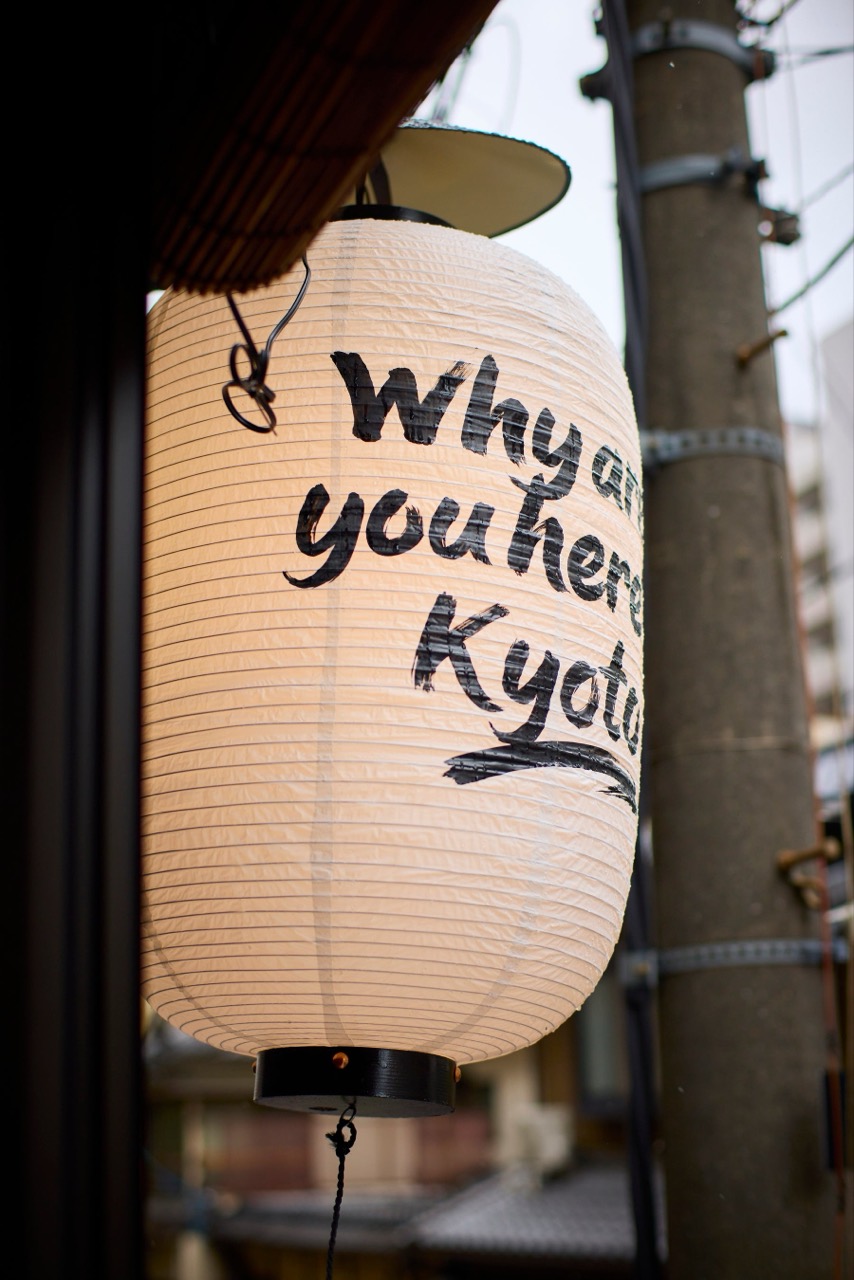
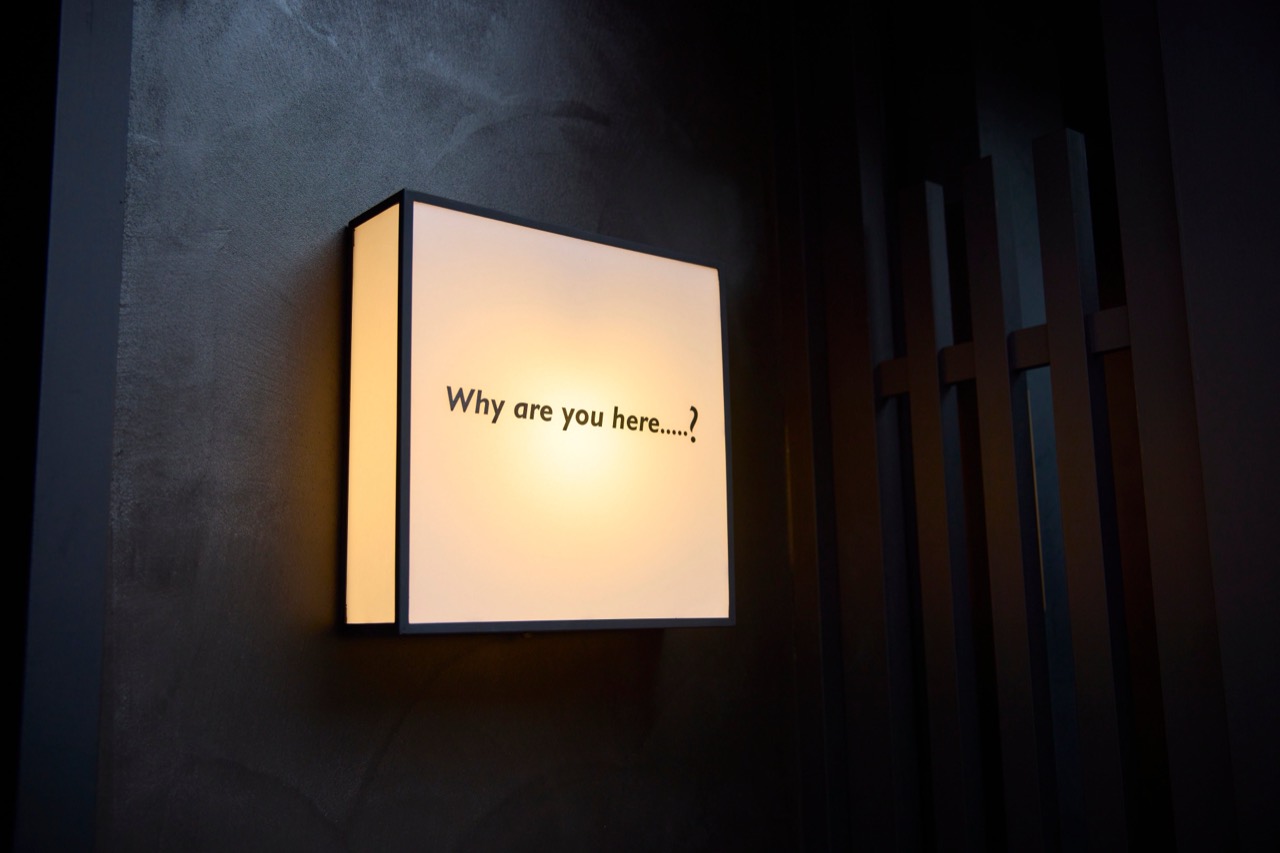
3.The building is a two-storey wooden machiya. Tiled eaves and vertical lattice screens were kept and the entire exterior painted deep navy, with reed blinds lowered over the upper windows. A single white noren hangs at the entrance. A paper lantern brushed with the shop name hangs from the right eave, and that lantern is the only sign this house has.
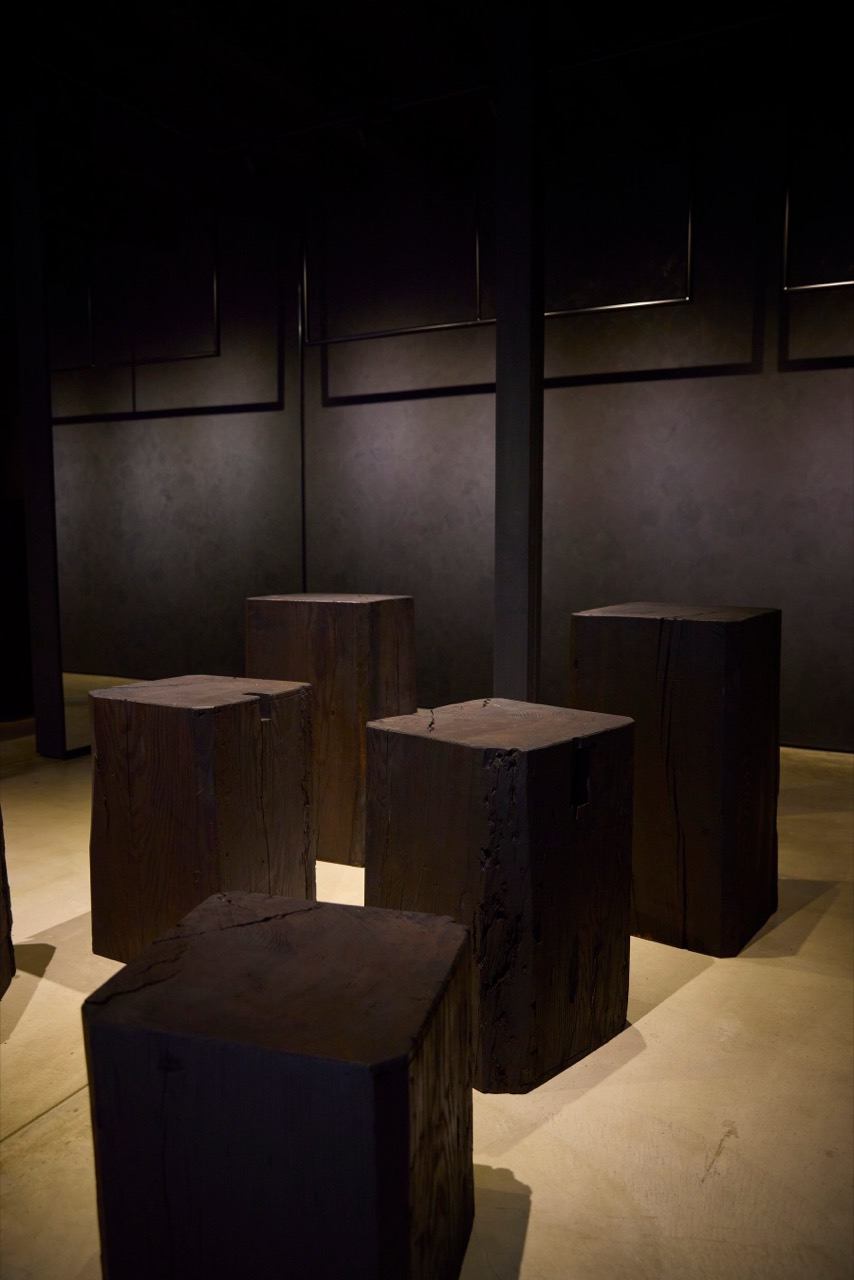
4.Step into the ground floor and wood registers before clothing. Blackened columns and beams are left exposed, the walls are plastered, the floor is cement screed. The hanging rail is one thin line high on the wall. Six plinths cut from salvaged timber stand in the middle of the floor. More area is covered by light than by merchandise.
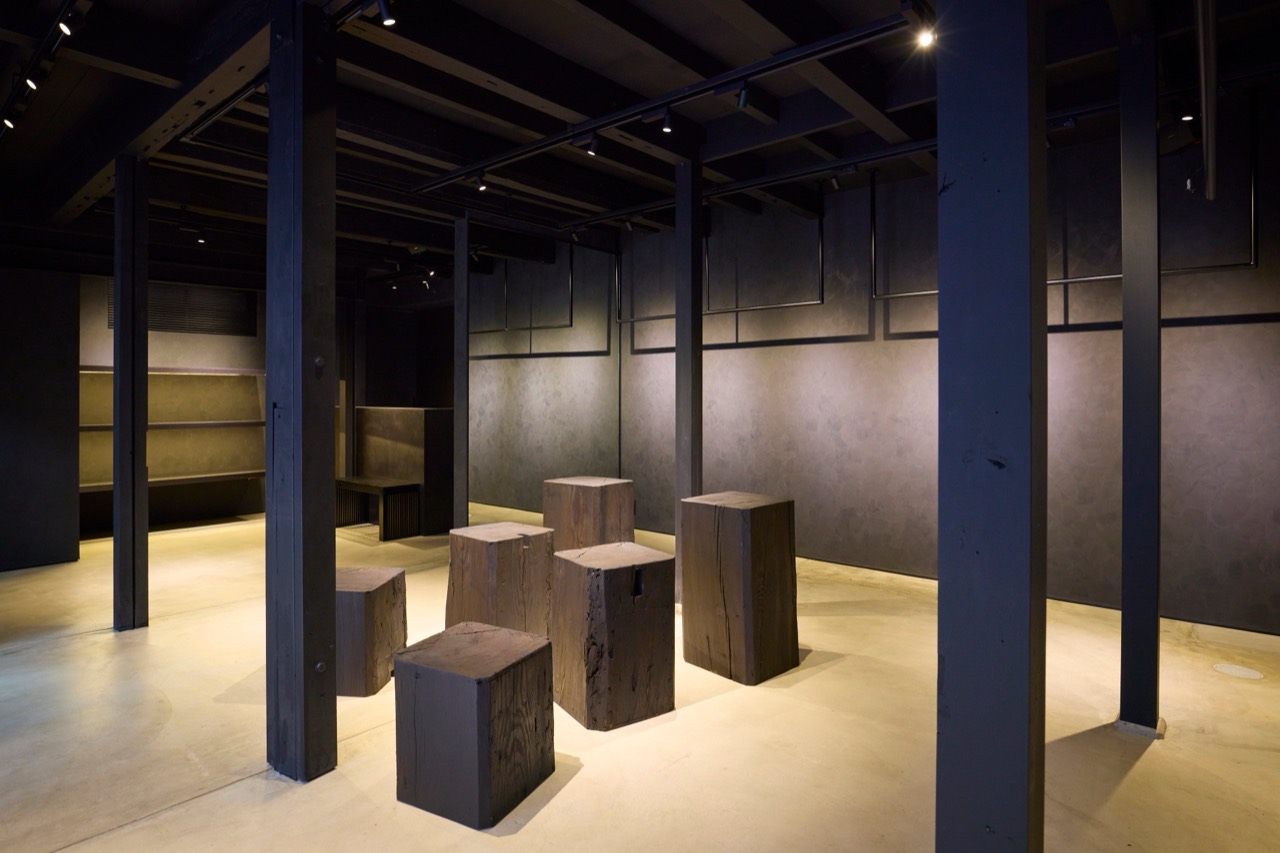
5.The plinths were barely worked. Saw marks and split grain remain and the corners run uneven, with one spotlight dropping onto each. Against the black wall the red in the timber comes up and the shadows lie long across the floor. Before the clothes arrive, this room does not read as a shop.
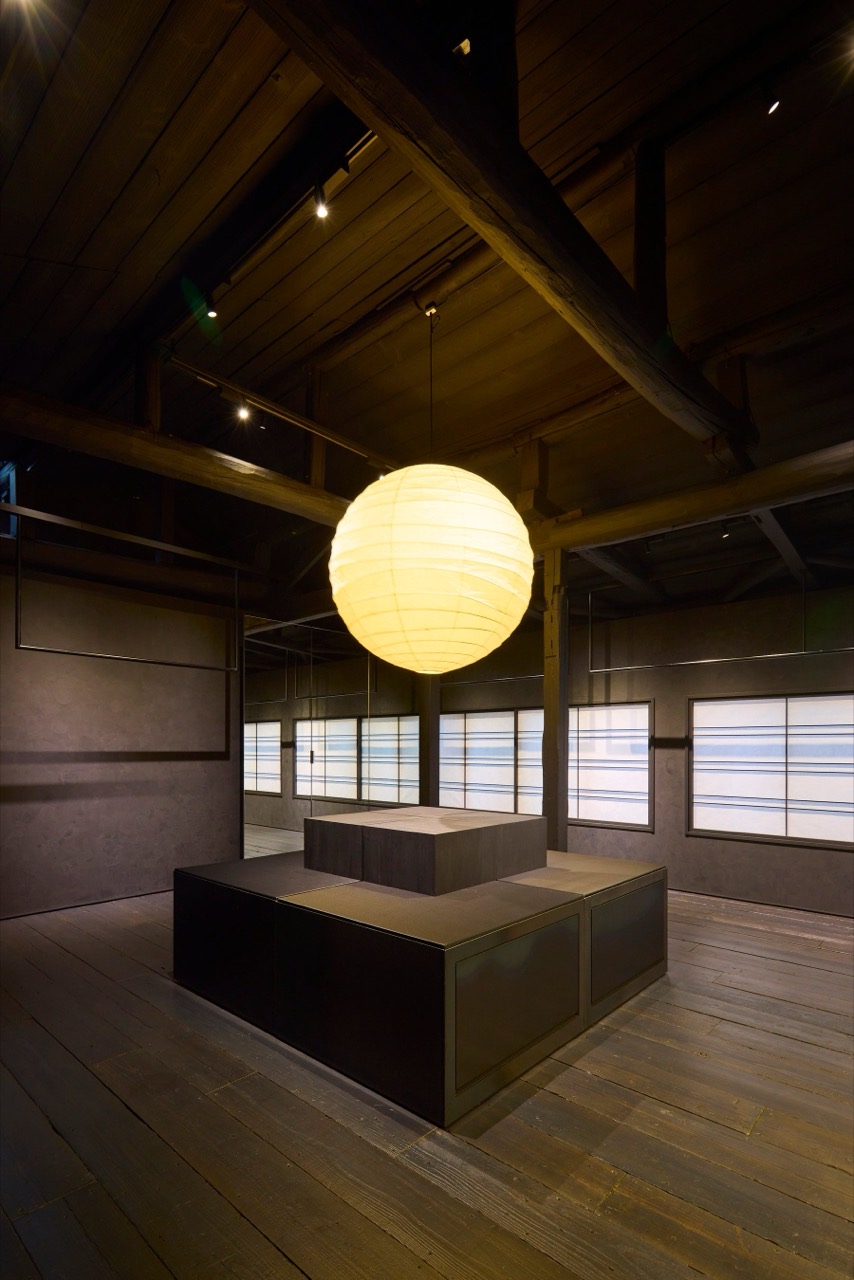
6.The upper floor is emptier still. Beams and rafters are fully exposed, the worn floorboards were kept as found, and light through the shoji washes the walls white. A single large paper lantern hangs low over one low plinth. The plan gives room to stand and look before it gives room to hang.
7.Opening day ran on a clock. Reservations for the Kyoto-only bag and belt opened at 1pm, and the VUJA DÉ designer stood in the store at the same hour. From 5pm to 8pm, a reception. KOMĀ poured matcha, a ceramicist's work was set among the clothes, and buyers took home an original T-shirt or tote.
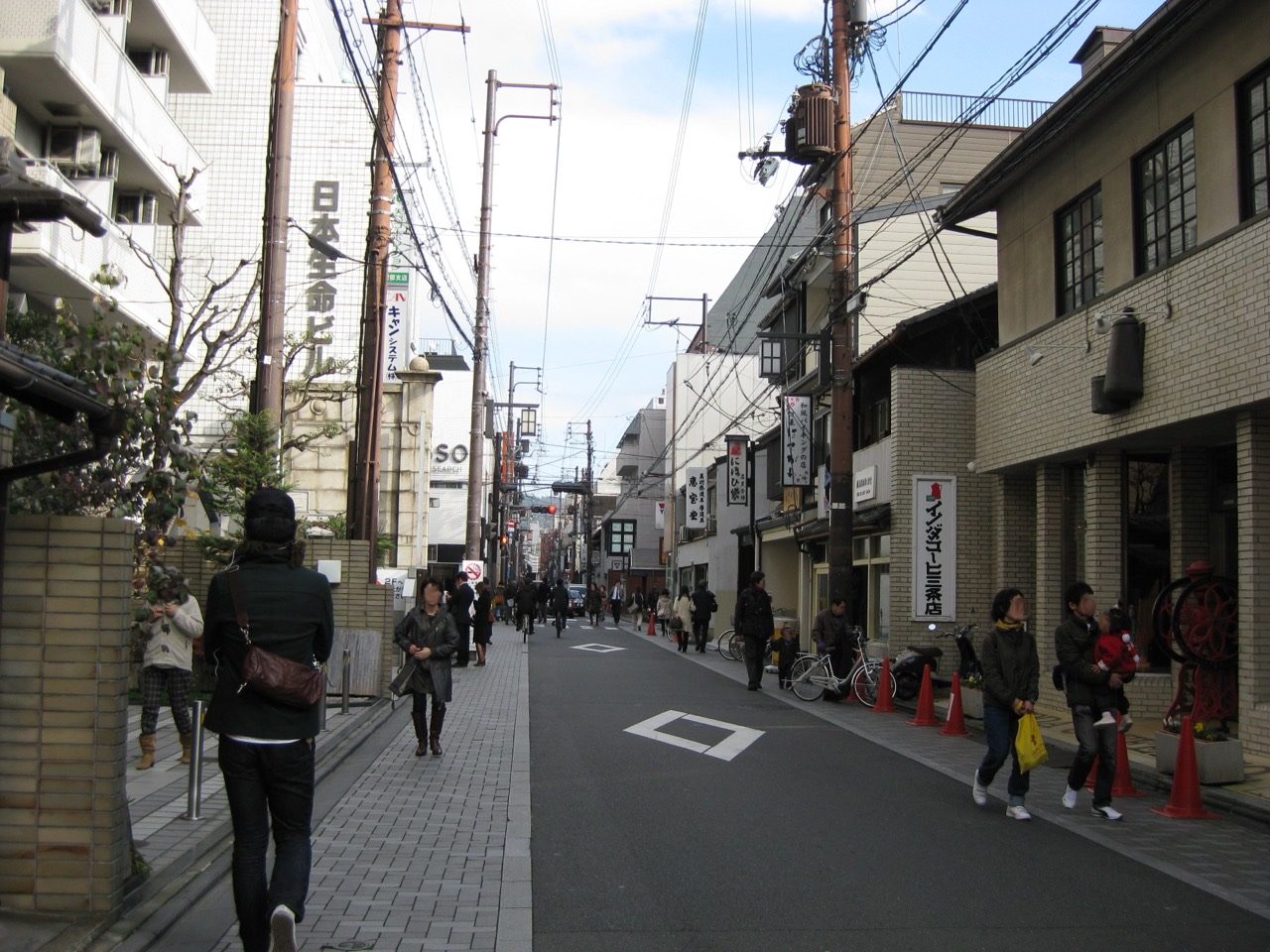
8.So where has a Kyoto resident been buying clothes at this price. Department stores. Takashimaya and Daimaru hold the Shijo crossing from both sides, and high-end select shops at street level have long belonged to Osaka and Kobe. Anyone in Kyoto wanting to see THE ROW had to board the Hankyu. This store removes those 40 minutes.
9.Avoiding the main street is also arithmetic. Street-level rents at Shijo Kawaramachi are the highest in Kyoto, and the people who reach that spot are drifting along a tourist route. Customers of a high-end select shop do not drift in. They know the name and come looking. Serve only customers who arrive on purpose and a cheaper back street fits better.
10.Emptying the displays follows the same arithmetic. There is no winning against online on unit count, and this company's own online store carries far more of the same brands. What separates a store from online is density, not quantity. How few things sit on those six plinths is what explains their price, and the longer a customer stands in front of them the higher the average ticket climbs.
11.Street-level rents in central Kyoto run between 15,000 and 50,000 yen per tsubo per month. Around Shijo Kawaramachi they climb to between 20,000 and 70,000. A street one block in, like Fuyacho-dori, sits at the bottom of that band. The floor area has not been disclosed, but putting 50 tsubo across both floors at 20,000 yen gives a rent of about 1 million yen a month.
12.The real structure here is importing, not retail. Sanki Shoji is a wholesaler that brings in more than thirty mostly European brands and passes them to department stores and select shops. Alexander Wang, Missoni, JW Anderson, Simone Rocha and Marine Serre sit on that import list. Wholesale returns a little under half of retail; sell it in your own store and the gap stays inside the company.
13.The company posted 9.2 billion yen in revenue for the year to June 2019, and after absorbing its subsidiary Knightsbridge International that August it projected 10.8 billion for the following year. An Italian food importer was bought around the same time. Recent results, though, are poor. Its statutory settlement notice shows a net loss of 345.88 million yen for the year to June 2024. A weak yen pushed up the landed cost of European goods, and department stores closing their edited floors lands straight on an import wholesaler.
14.The 1 July restructuring came out of that. Fashion retail, food importing, catering and media were split into five separate companies, one of them Sanki Shoji Fashion Company, capitalised at 50 million yen. It handles both European imports and retail. Put the wholesale contract and the shop inside one legal entity and the cost of goods drops one more notch: a select shop typically buys at around 50% of retail, so folding in the import agency margin makes a gross margin above 55% no stretch.
15.Lay the numbers out and the house makes sense. Rent of 1 million yen, two sales staff at 600,000, and 420,000 for construction spread over ten years, for fixed costs of 2.02 million yen a month. At a 55% gross margin the break-even is 3.67 million yen a month, and in a store where one THE ROW knit runs past 200,000 yen, an average ticket of 150,000 means 25 buyers a month. Over 26 trading days that is 0.9 people a day. On a back street where nobody walks past, that weakness stops being one.
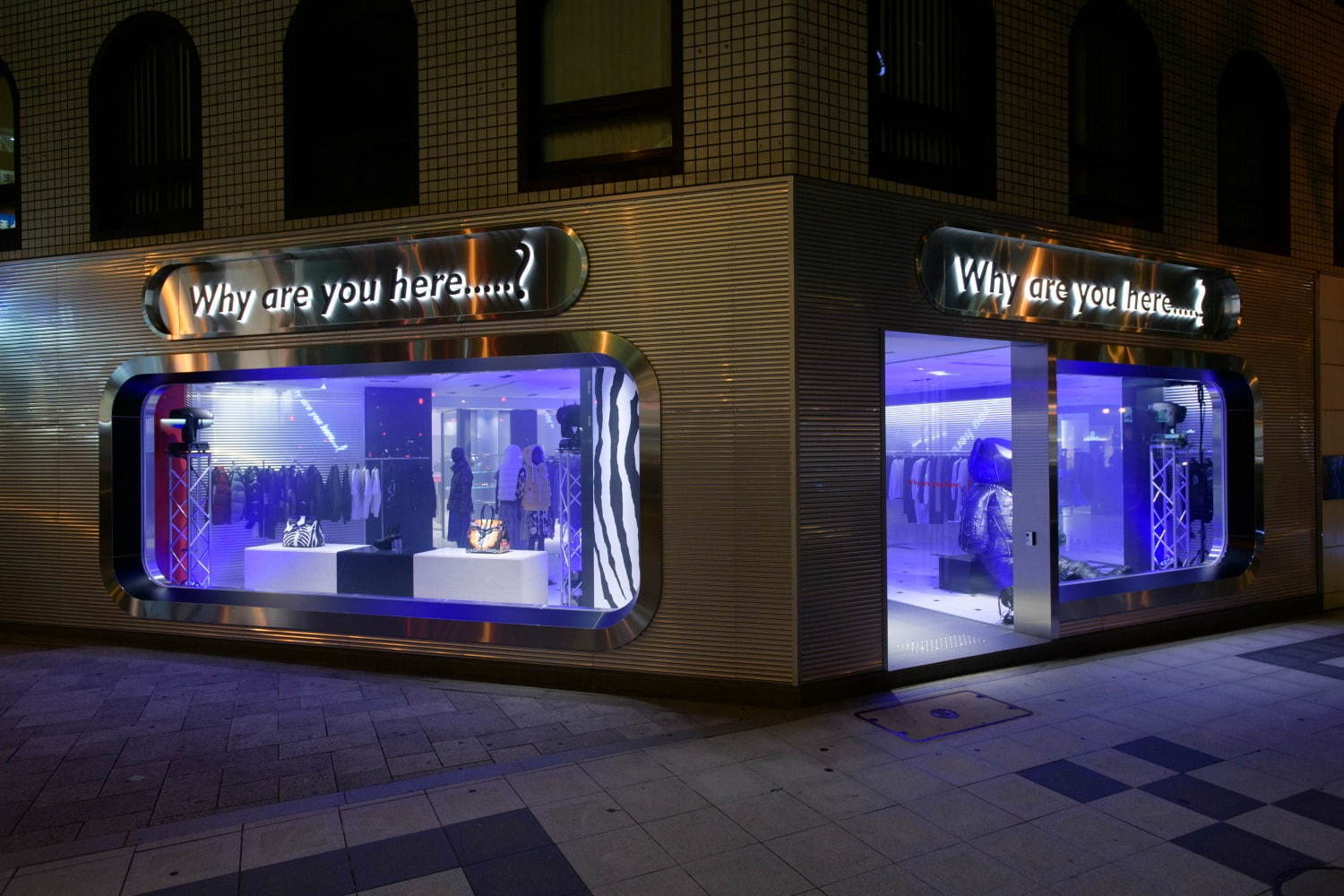
16.Japanese apparel wholesalers opening their own stores is a decade-old movement. As department stores closed edited floors and gave the space to brand-run counters, wholesalers lost their shelf, and the one road left was selling under their own name. A select shop run for 26 years in Osaka was that exit, built early. The date of the second store six years ago and the date of this opening are both 8 August, which is not chance. That second store, though, wrapped a Midosuji corner in metal and lit its windows purple. The same company picked the opposite register six years on.
17.Reading Kyoto as a tourist play catches only half of it. Kyoto sits within an hour of Osaka and Kobe, and the customer this store wants is the one trying to save that hour. Tourists open their wallets on the main street; they do not walk one block in. Skipping the main street reads as tourist revenue being left out of the sums.
18.A company importing more than thirty European brands posted a loss, split itself into five entities, and 38 days later reworked a two-storey wooden house on a Kyoto back street into its third store. Fixed costs of 2.02 million yen a month covered by 25 buyers leave no reason to stand on a main street. Doing this in Korea catches first at the import contract. Overseas brands arriving here usually come with a domestic distributor already attached or a department store listing as a condition, which pushes cost of goods past 60% and never opens the door at 0.9 people a day. Saving rent on a back street only works for a company holding the margin at the import stage.