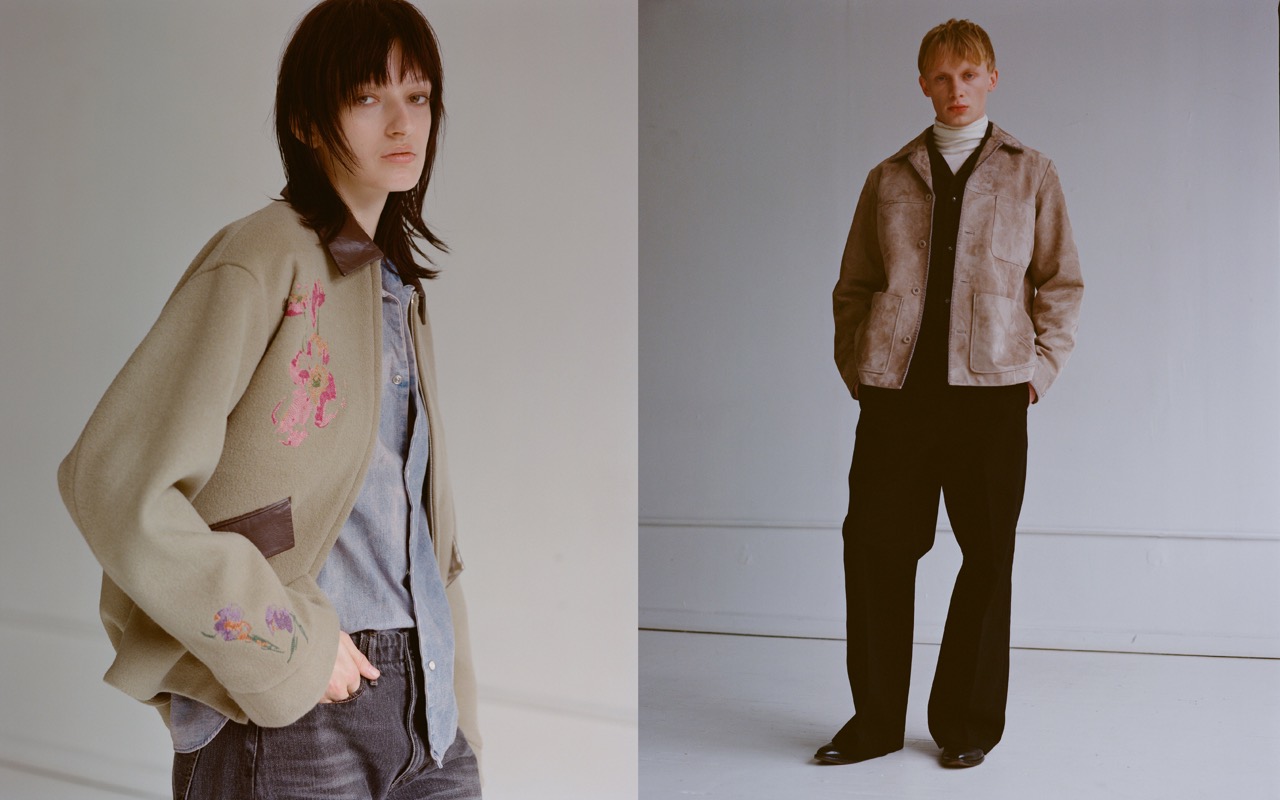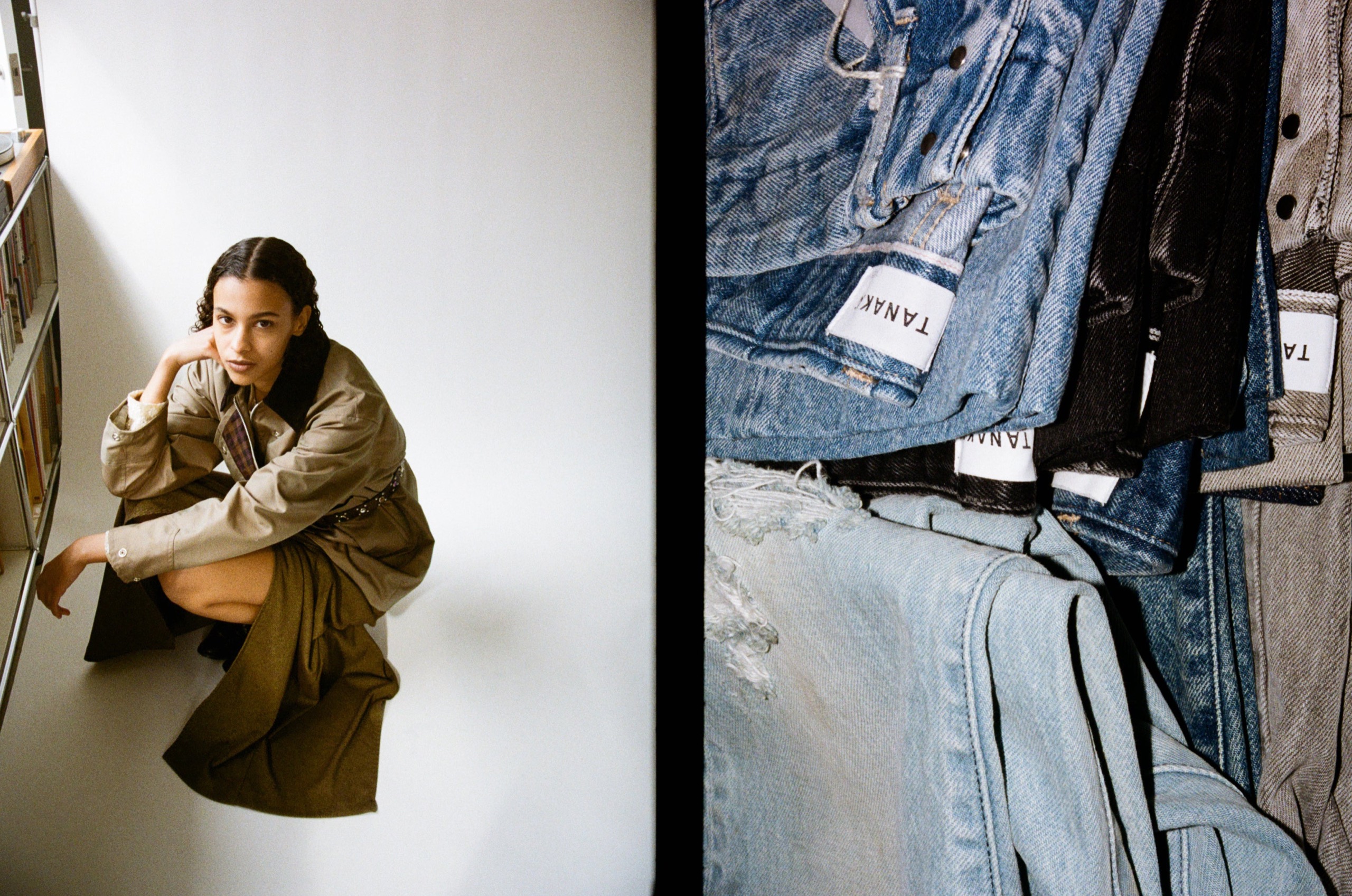
A three-story building in Jingumae 2-chome, Shibuya, Tokyo. TANAKA ATELIER STORE opened there at noon today. Only the middle floor sells clothes. The ground floor is a studio, the third is a workroom. This is a brand whose denim runs 47,300 yen a pair and already sits in more than 100 stores worldwide. So why open one of its own, and why put it upstairs instead of at street level?
1.The address is 2-15-10 Jingumae, second floor. Doors open at noon and close at eight, with Tuesday the single day off. Three floors taken whole, and selling confined to one of them. A building an artist used to occupy, now divided by function.
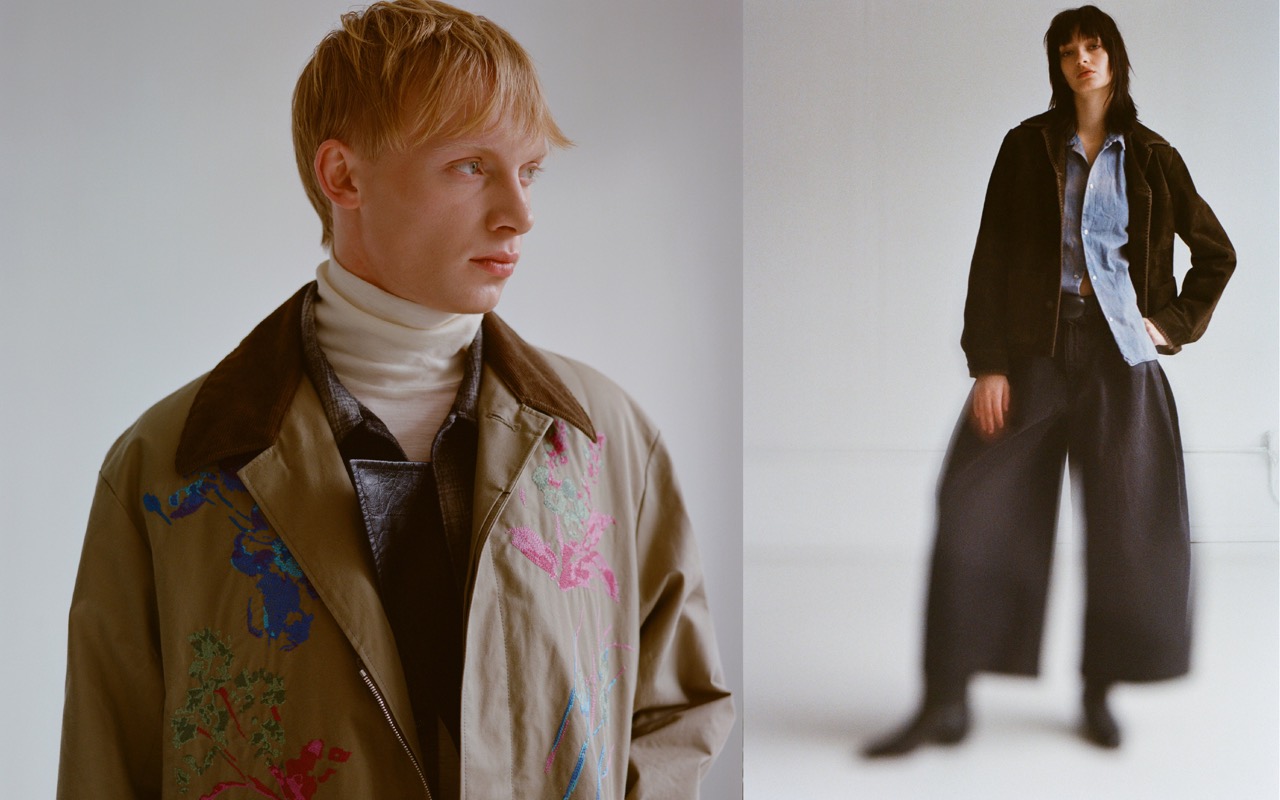
2.TANAKA started in New York in 2017. Sayori Tanaka founded it. She came through Yohji Yamamoto, then moved to Uniqlo, where she led the womenswear global design team across the Tokyo, Shanghai and New York offices. Akira Kuboshita joined as director in 2020. Tanaka grew up in Niigata, where her father painted in oils and designed kimono textiles and her grandfather built Japanese gardens.
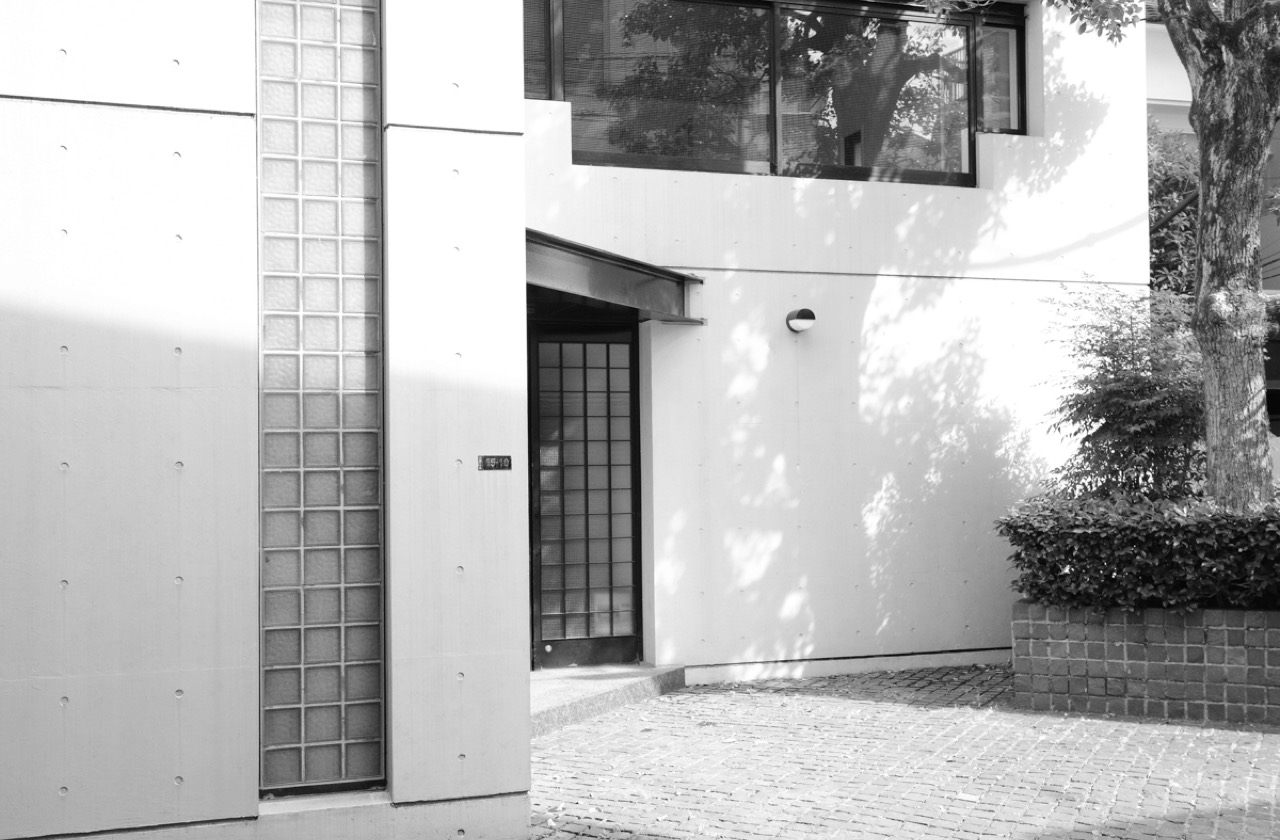
3.The building itself is unusual. A single vertical band of glass block sits in the exposed concrete wall, and the black-gridded glass door beside it leads to the interior stairs. A low brick planter fronts the entrance, and one large tree throws shade across the wall. There is no sign. This is a place you find because you already know it.
4.The first directly operated store came in May 2023, in Minami-Aoyama. Second floor of an old apartment building across from the Nezu Museum, with ARTS & SCIENCE on the ground floor of the same address. That shop opened Friday through Sunday, three days a week. Now it runs six. Selling hours have doubled.
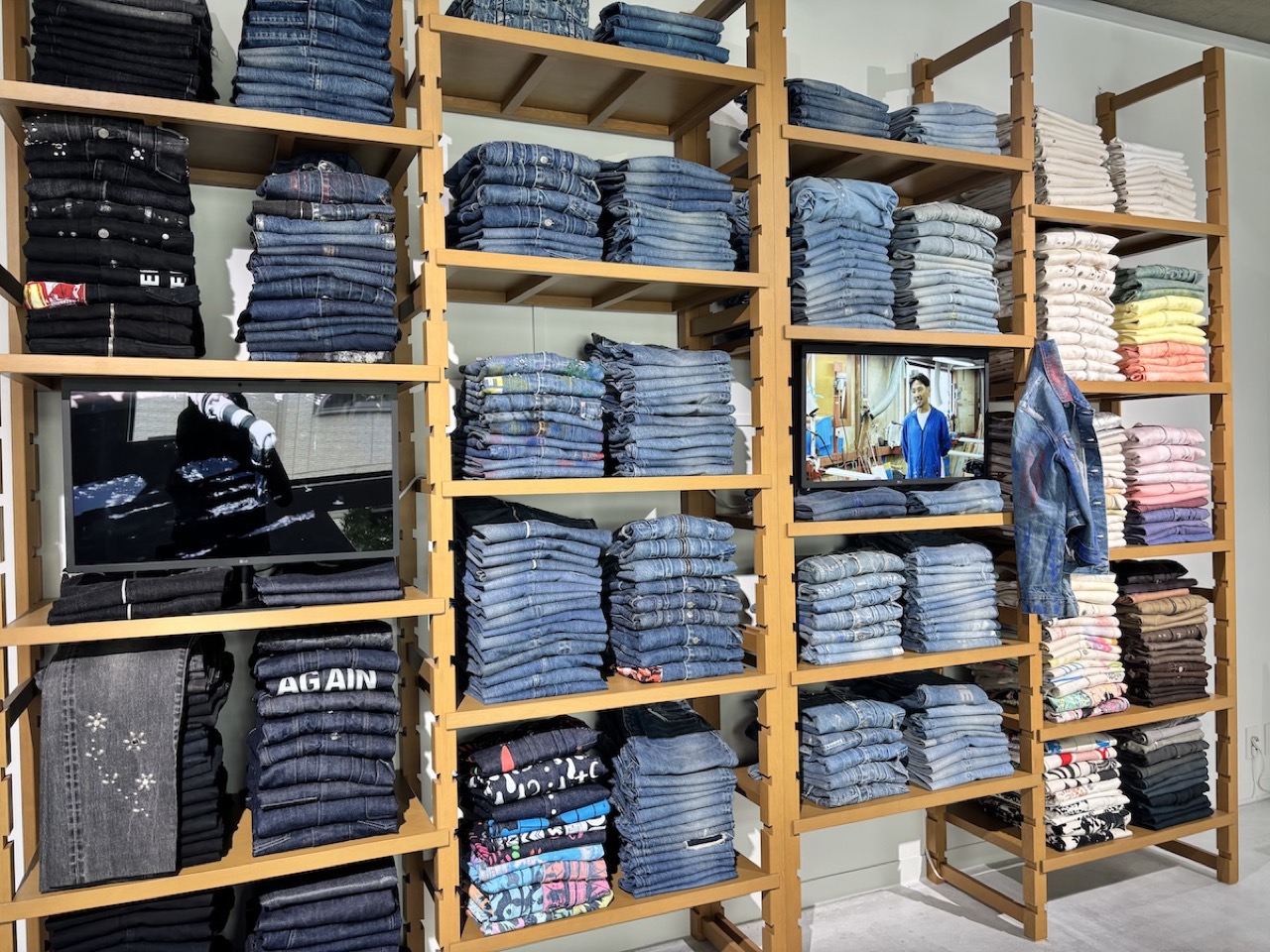
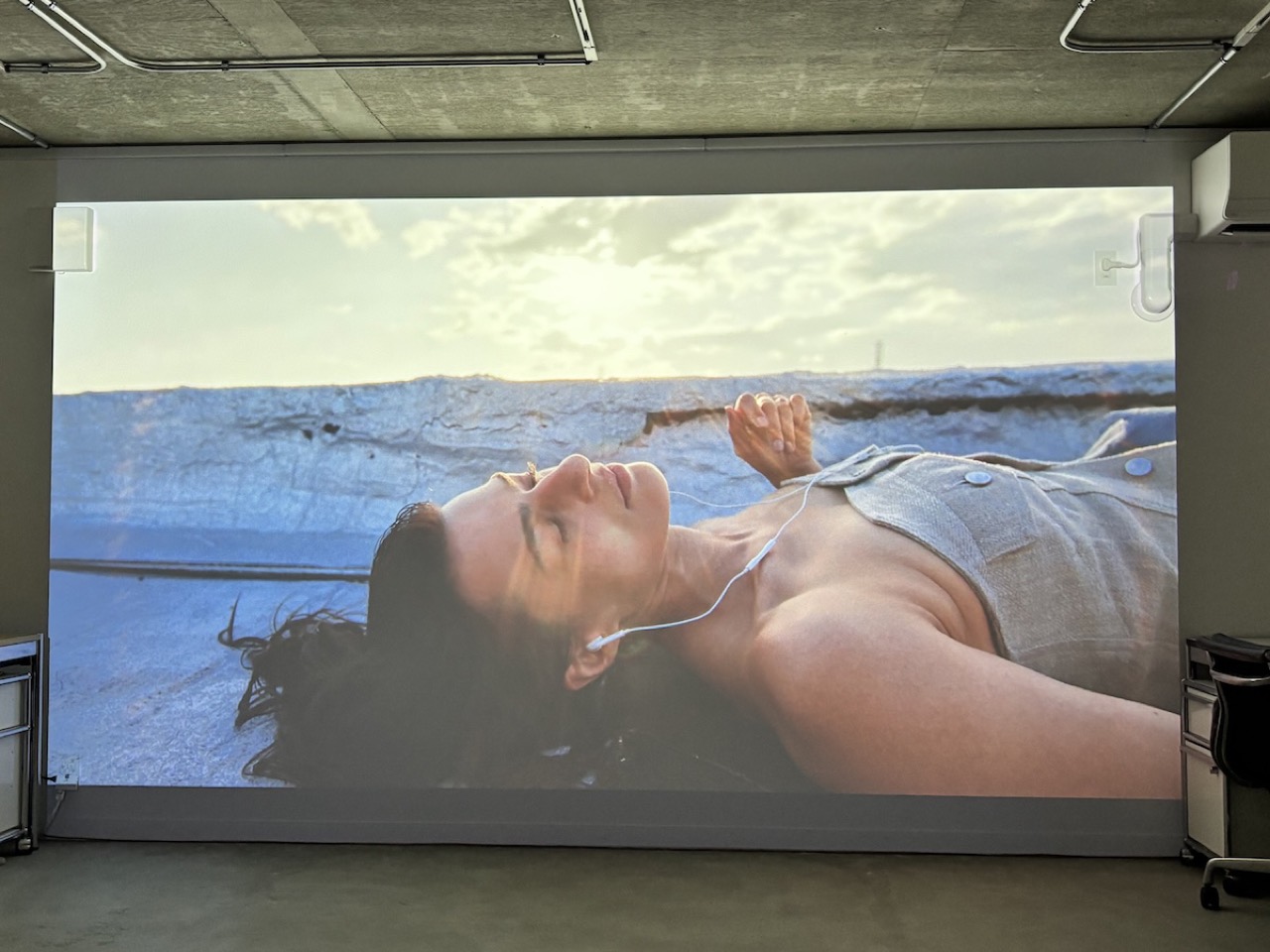
5.Climb to the second floor and wooden shelving fills the walls, denim folded and stacked by shade. From deep indigo to something close to white, the first year of the brand and the current one sit on a single wall. Monitors are set into the gaps between shelves, playing footage shot inside the mills.
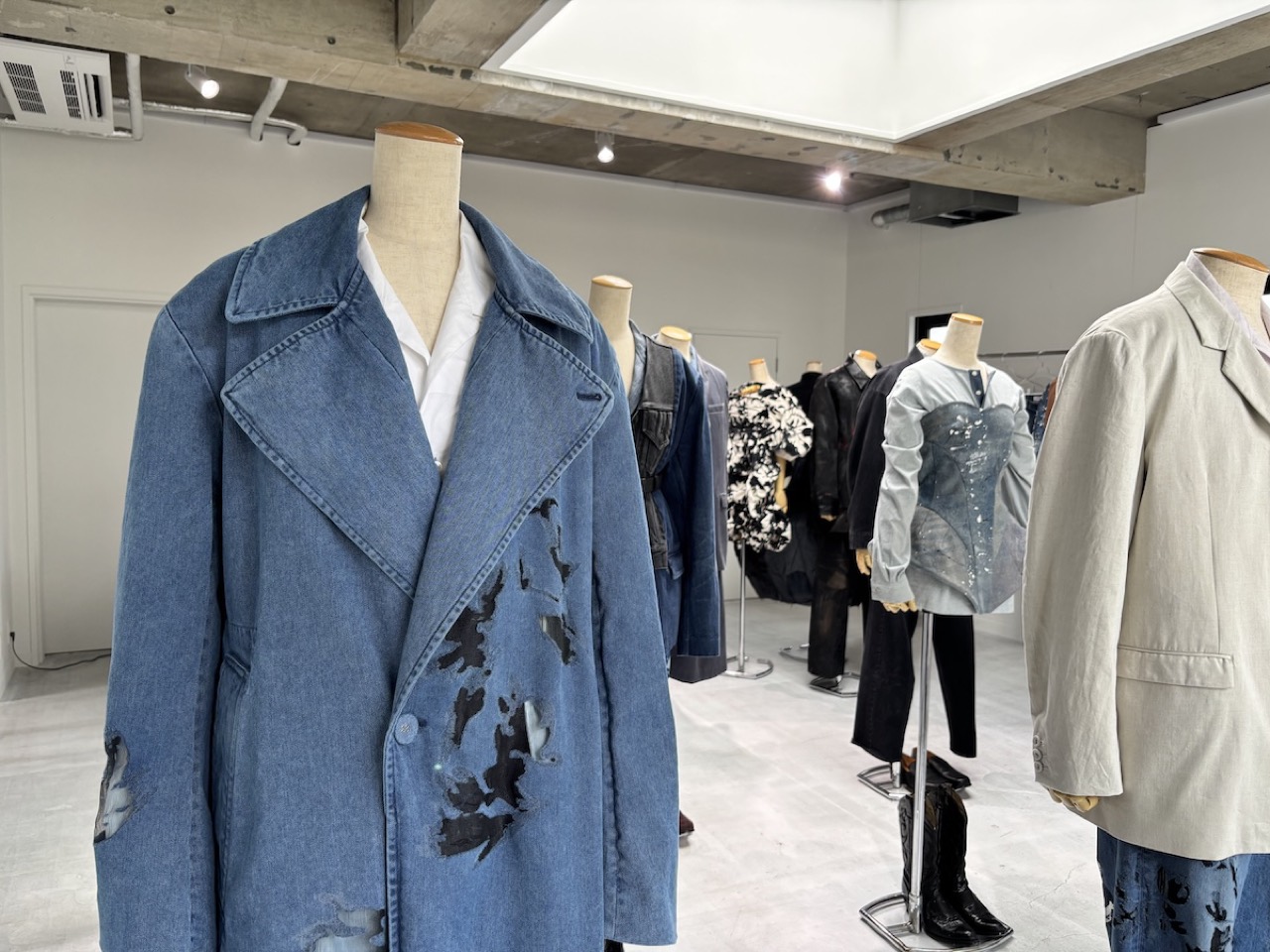
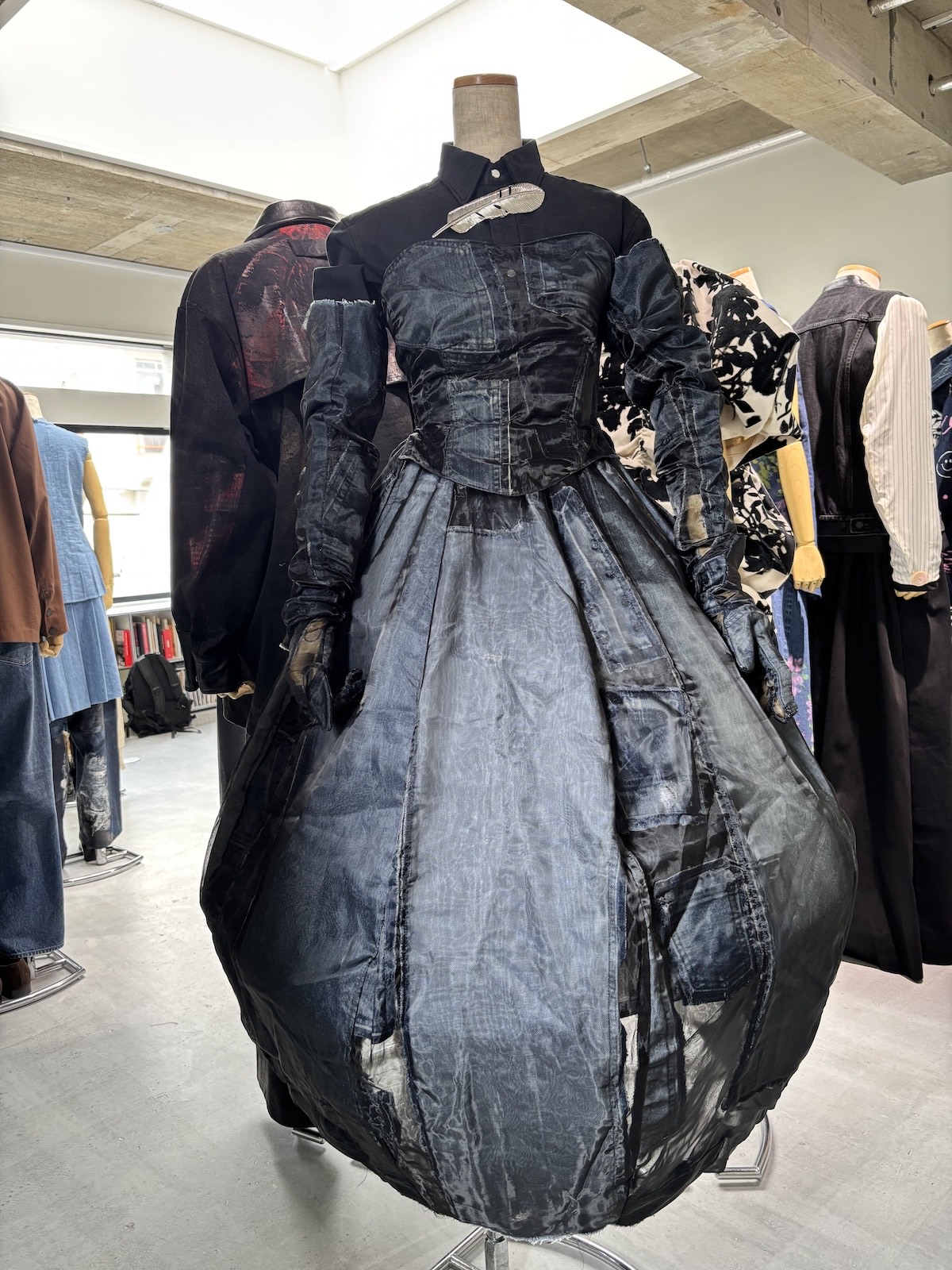
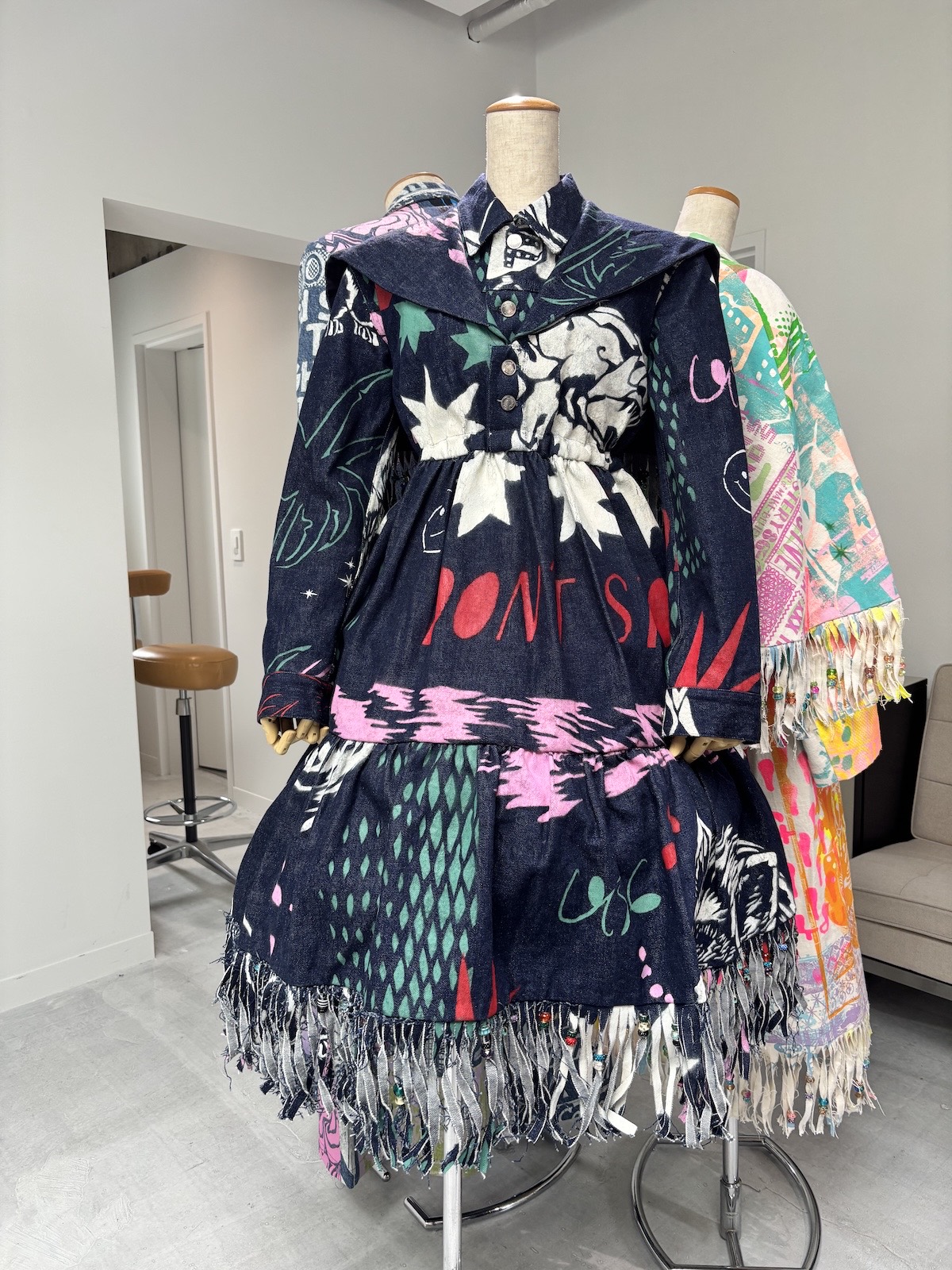
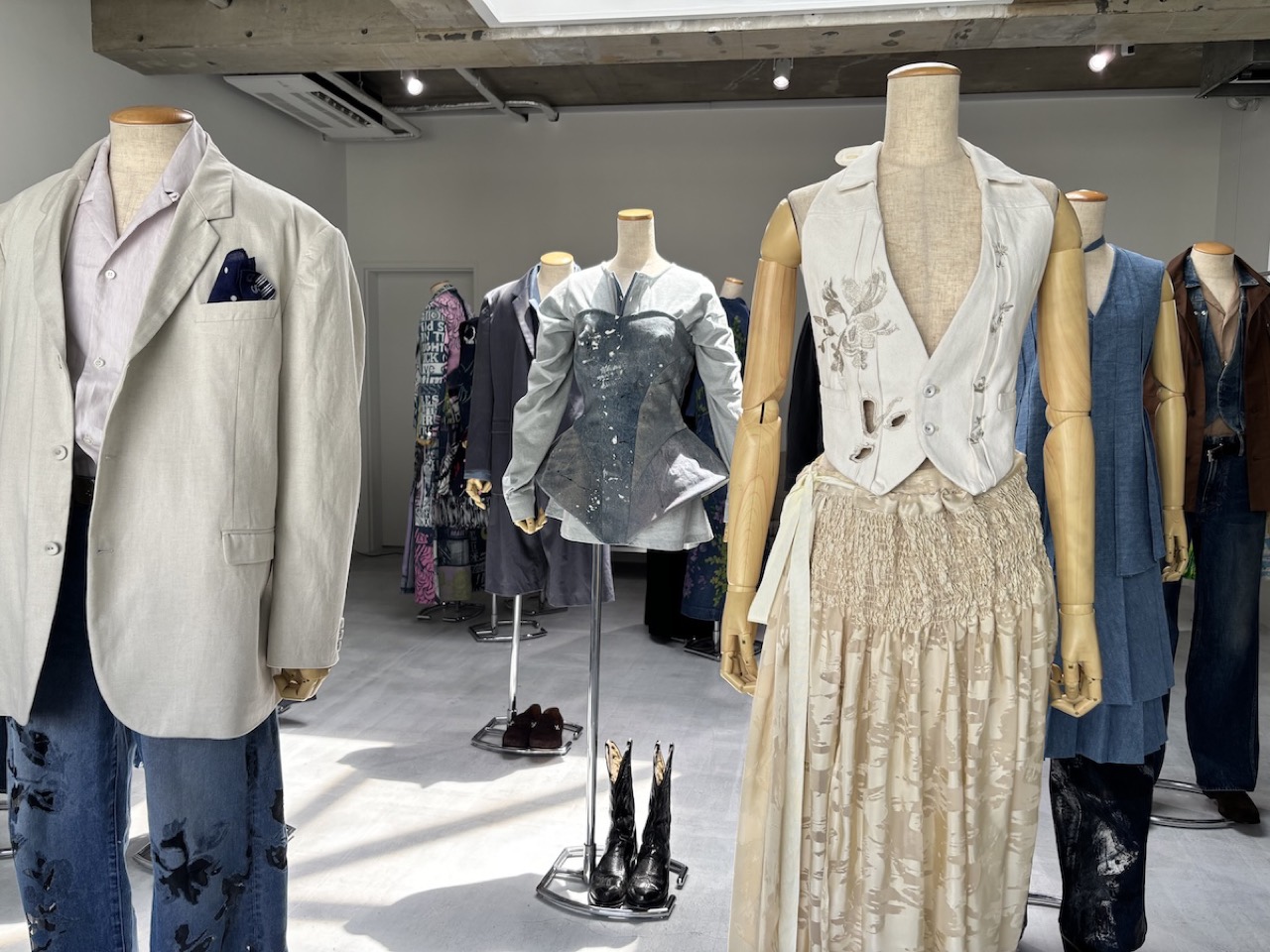
6.The clothes treat denim the way a tailor treats suiting. Black stains bleed across an indigo coat, a corseted top is cut in denim, a dress builds volume by layering black denim over black denim. This is not what a jeans company makes. It is closer to a Paris collection with the material swapped out for denim.
7.The brand already sells through more than 100 doors worldwide. It hangs at Bergdorf Goodman in New York and goes into UNITED ARROWS in Tokyo. Outlets were never what it lacked.
8.What it lacked was something else. A pair of denim hanging in someone else's shop competes with the pair beside it on price alone. Nobody there can explain why it costs 50,000 yen. Wholesale sells the garment. It does not sell the reason for the number.
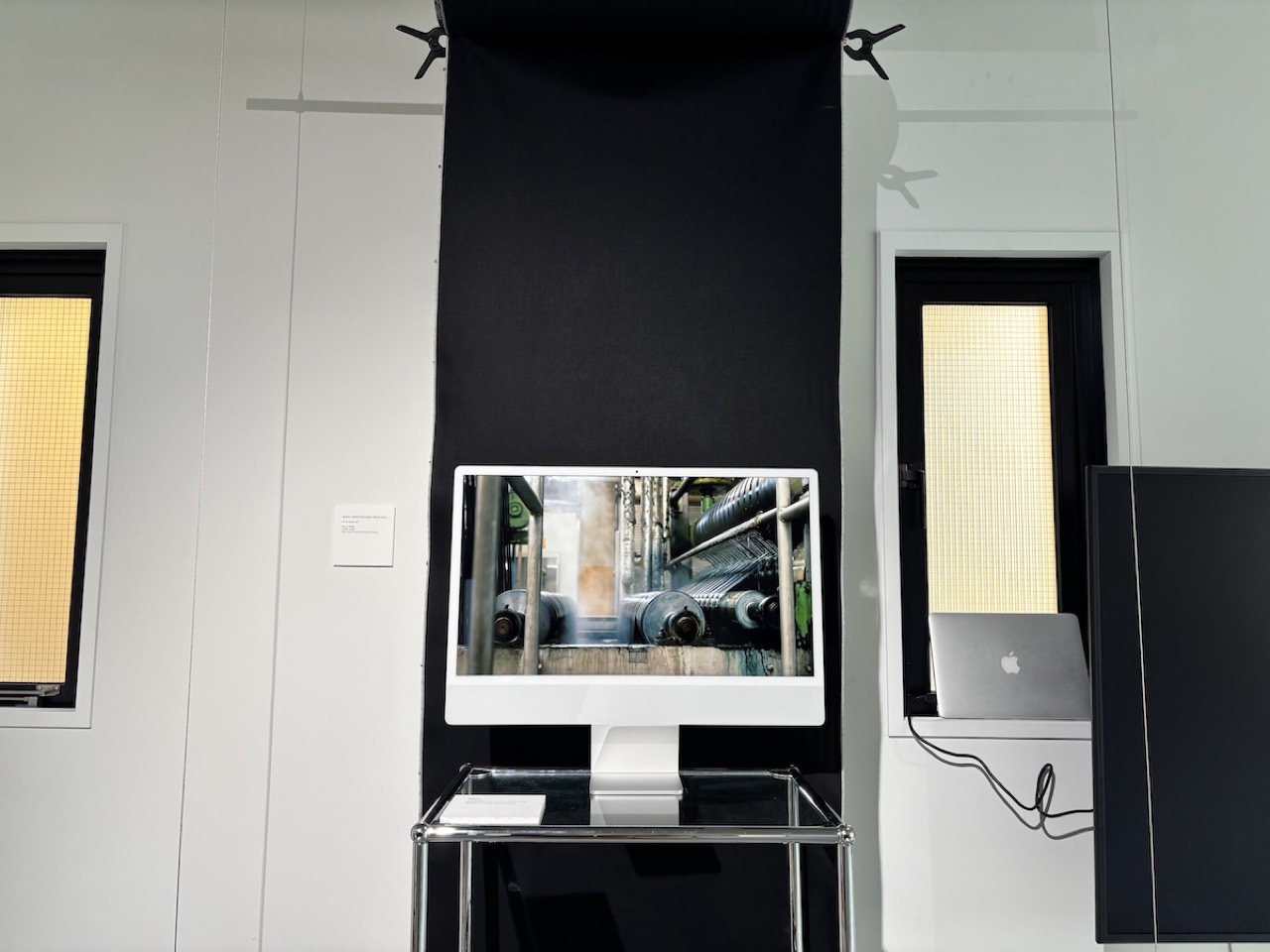
9.Two companies supply that reason. The fabric comes from Kaihara in Fukuyama, Hiroshima. It spins, weaves and finishes under one roof, a rare arrangement, holds more than half the domestic Japanese denim fabric market, and has supplied Levi's since 1973. Tanaka says the blue comes from dye alone, with no finishing process behind it.
10.Washing and finishing go to Nishie Denim in Ibara, Okayama. It opened in 1960 as a laundry, began washing and abrading denim in 1965, and has now handled more than 100 million garments. Wastewater, the company says, is filtered back to drinkable standard.
11.A pair of denim trousers, 47,300 yen. Japanese brands typically hand goods to other retailers at around 55 percent of retail. At that ratio the wholesale route returns roughly 26,000 yen, while the same garment sold in-house returns the price on the tag.
12.Street-level space in Jingumae 2-chome runs about 40,000 yen per tsubo a month. Prime ground floor on Omotesando, a few minutes' walk away, runs 54,000, which puts this address at the edge of that district. And what the brand took is not street level but the floor above. How much does one flight up save you? In Tokyo the second floor typically trades at about half the ground floor.
13.So this shop is not built to cover its rent through sales. It takes a portion of what was going out through wholesale, sells it directly, and pays for the building with the difference. Two garments a day covers the rent on all three floors. The office and the workroom had to sit somewhere anyway, and one selling floor now pays for them.
14.Japan's denim regions went through this structure long ago. Mills in Okayama and Hiroshima wove the best fabric in the world and still could not charge garment prices under their own names, supplying other labels and competing by the meter. Ibara alone concentrates weaving, sewing and finishing plants, and almost none of them has opened a shop in central Tokyo.
15.Tanaka went the other way. Rather than bring the region to Tokyo, she brought its story. Spinning frames from Fukuyama and water from Ibara run as video on a second-floor wall in Jingumae, with 50,000-yen denim hanging in front of them. The price a mill name could never command, charged under a garment name instead.
16.A ten-year-old brand out of New York took a three-story building on a Tokyo back street, put selling on one floor, and filled the rest with making. An extra 21,285 yen per garment underwrites that decision. In Korea the building comes first. Fitting an office, a workroom and a shop into one structure means finding a mix of neighborhood-facility and business-facility zoning, and small buildings in Seoul's main retail districts already carry a different tenant on every floor, while whole-building vacancies cluster among aging detached houses. The mill footage is no easier. Fabric and finishing companies have to agree to put their names on screen, and Korean sewing and finishing work sits deep in subcontracting, where names rarely travel outside.