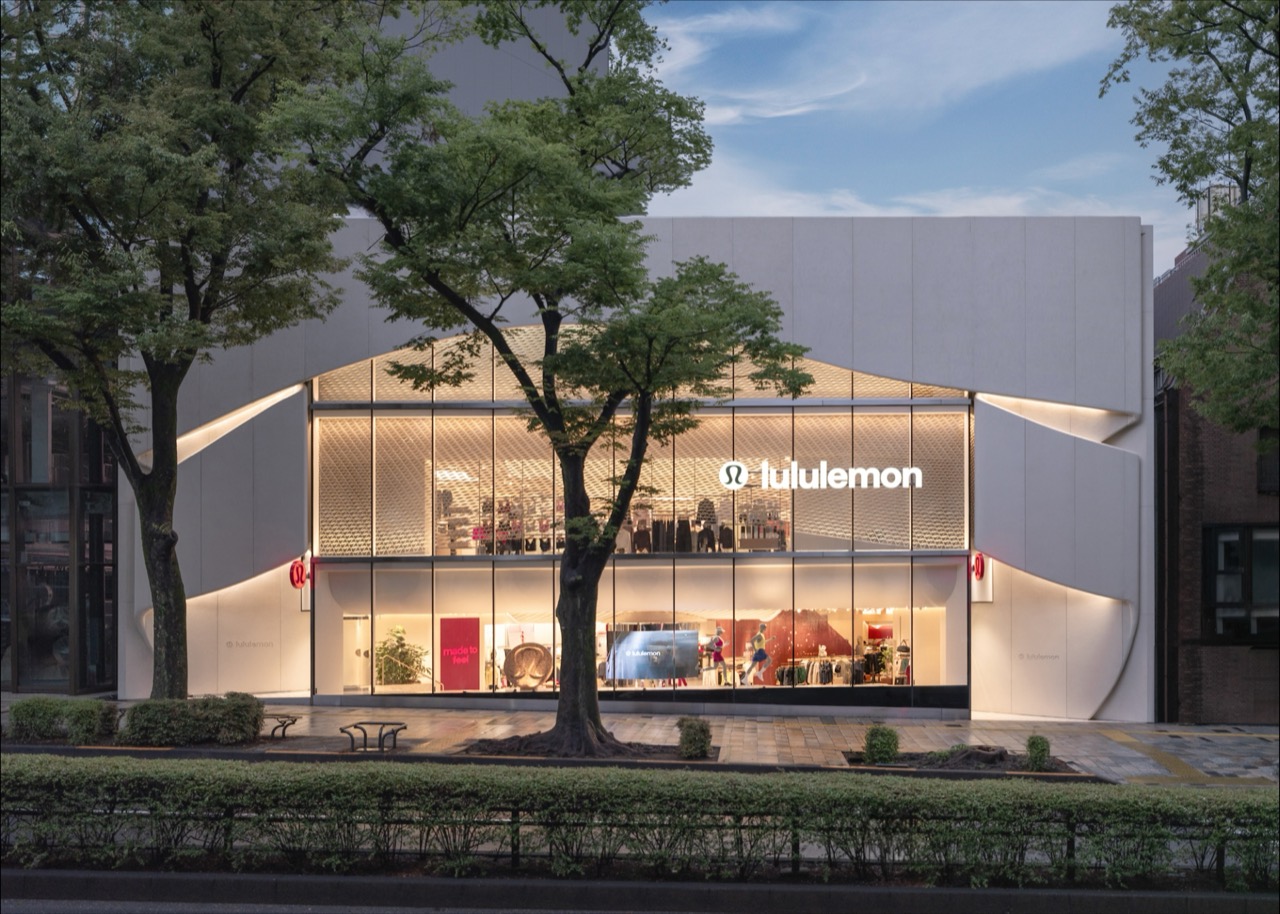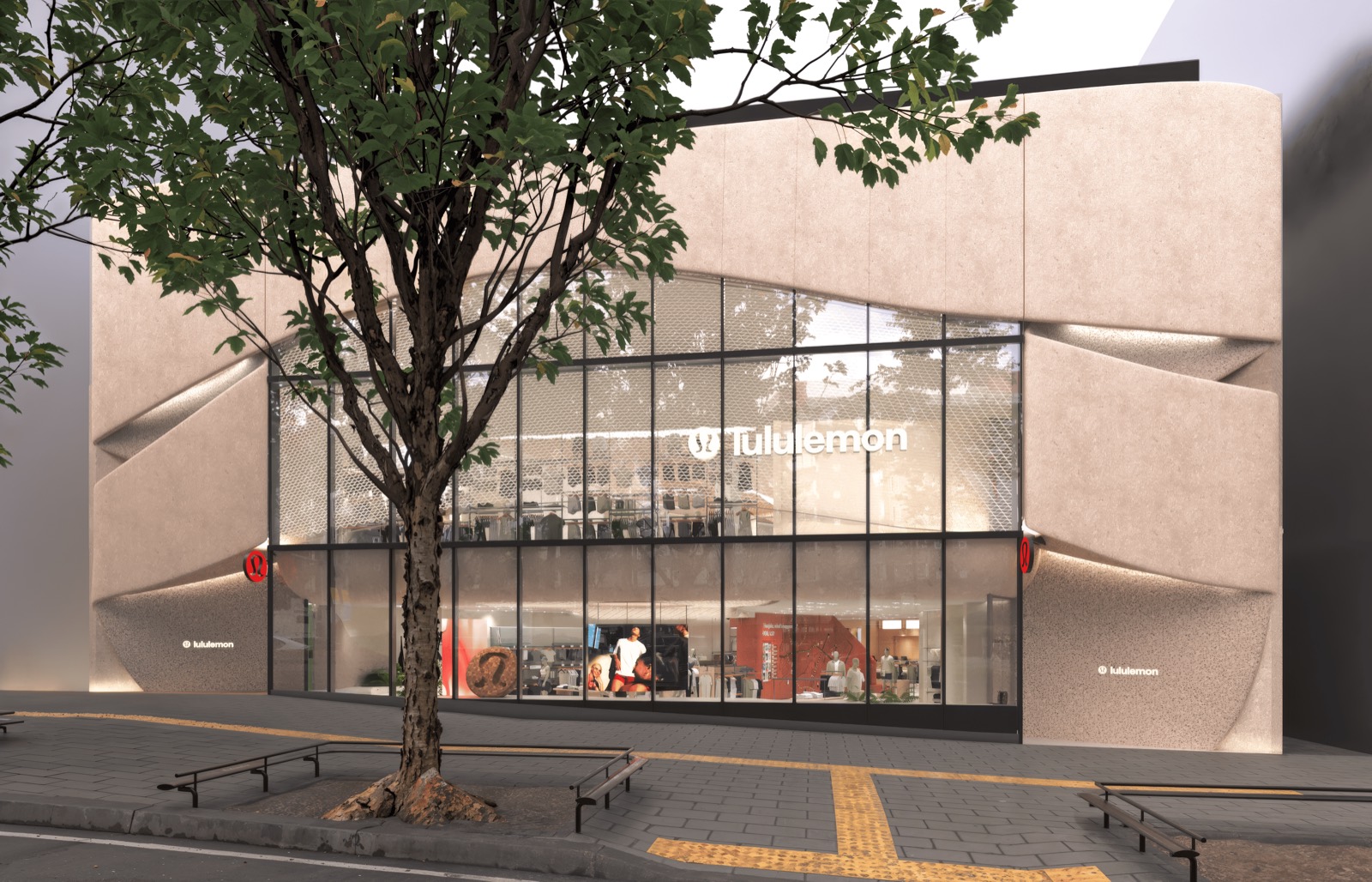
YM SQUARE OMOTESANDO, facing Omotesando avenue at 1-13-12 Jingumae, Shibuya-ku, Tokyo. On August 19 the Canadian yoga-wear brand lululemon opened its first global flagship in Japan here. 1,220.23 square metres over two floors. The 811 company-operated stores this brand runs worldwide average roughly 260 square metres each. Why would a company that has told investors North America will fall by a high single digit this year go and build something four and a half times its own average in Tokyo?
1.Two selling floors. Women's and men's performance wear, the cash desk and the engraving counter sit on the ground floor; casual lines and fitting rooms went upstairs. Doors open at 10:30 and close at 20:00. The store was designed in-house rather than handed to an outside practice. This is the first place in Japan to get the retail standard the brand rebuilt last year.
2.The brand's first Japanese store opened in GINZA SIX in 2017, and nine years later the count stands at 13. Two or three a year. Harajuku is not the next slot in that line; it is a different kind of object.
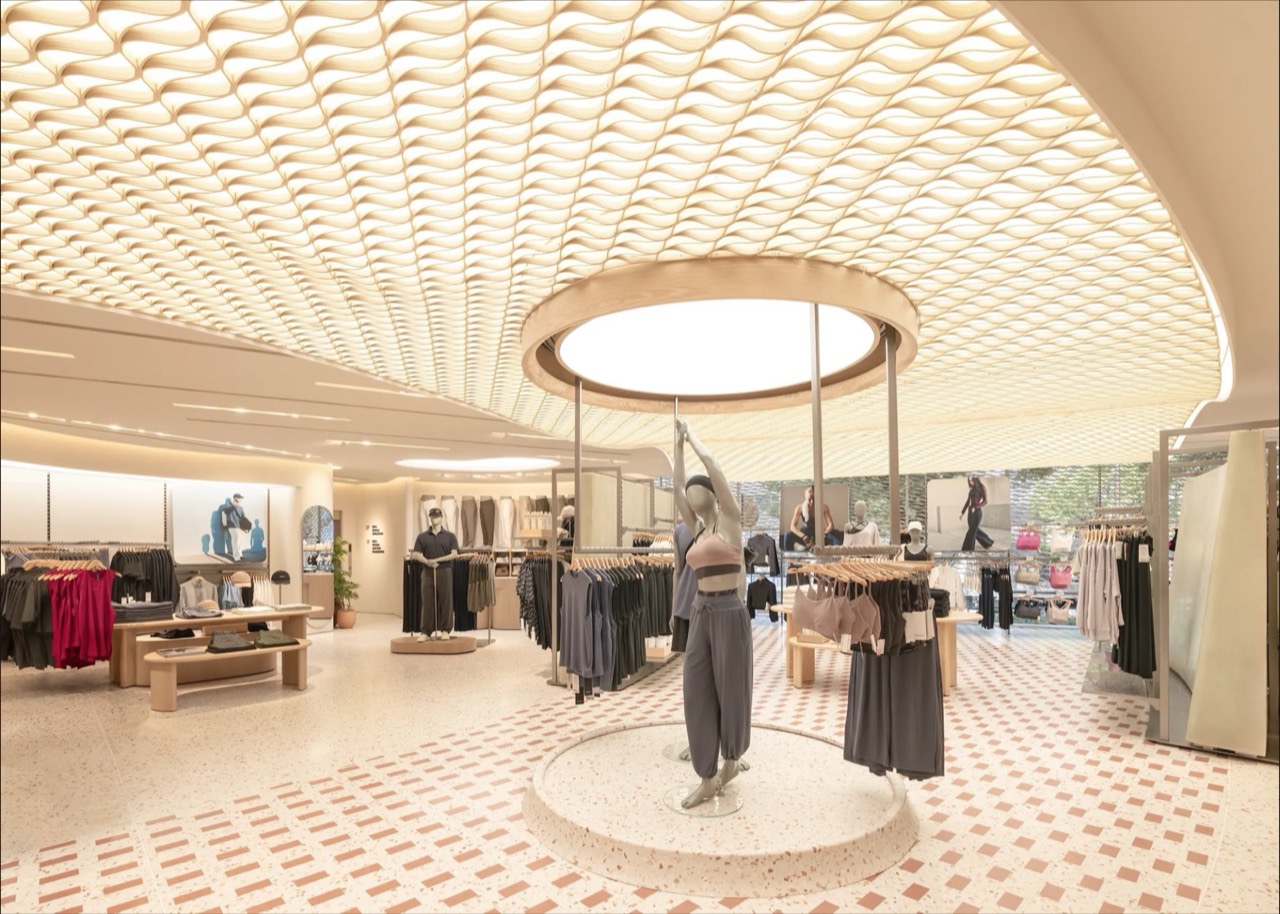
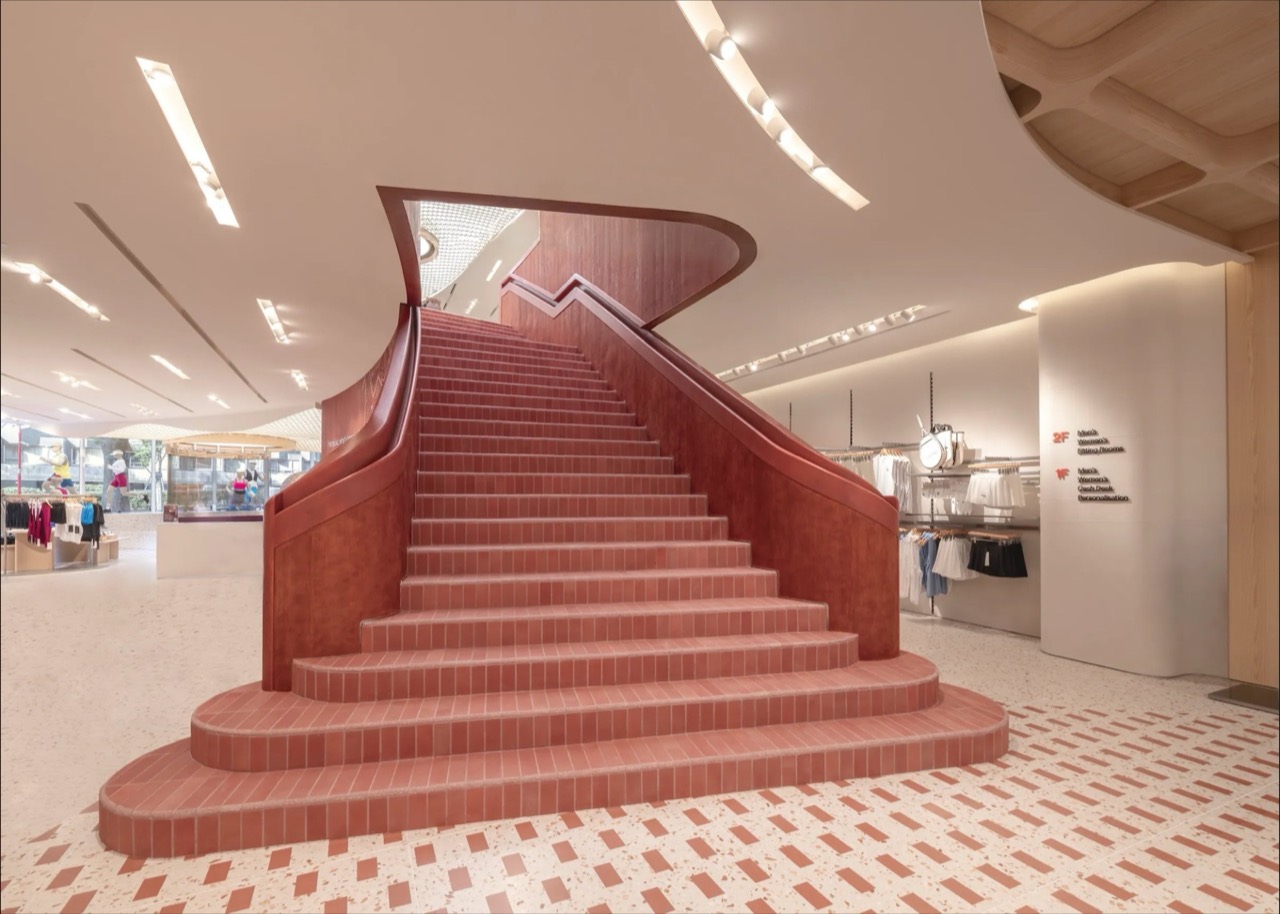
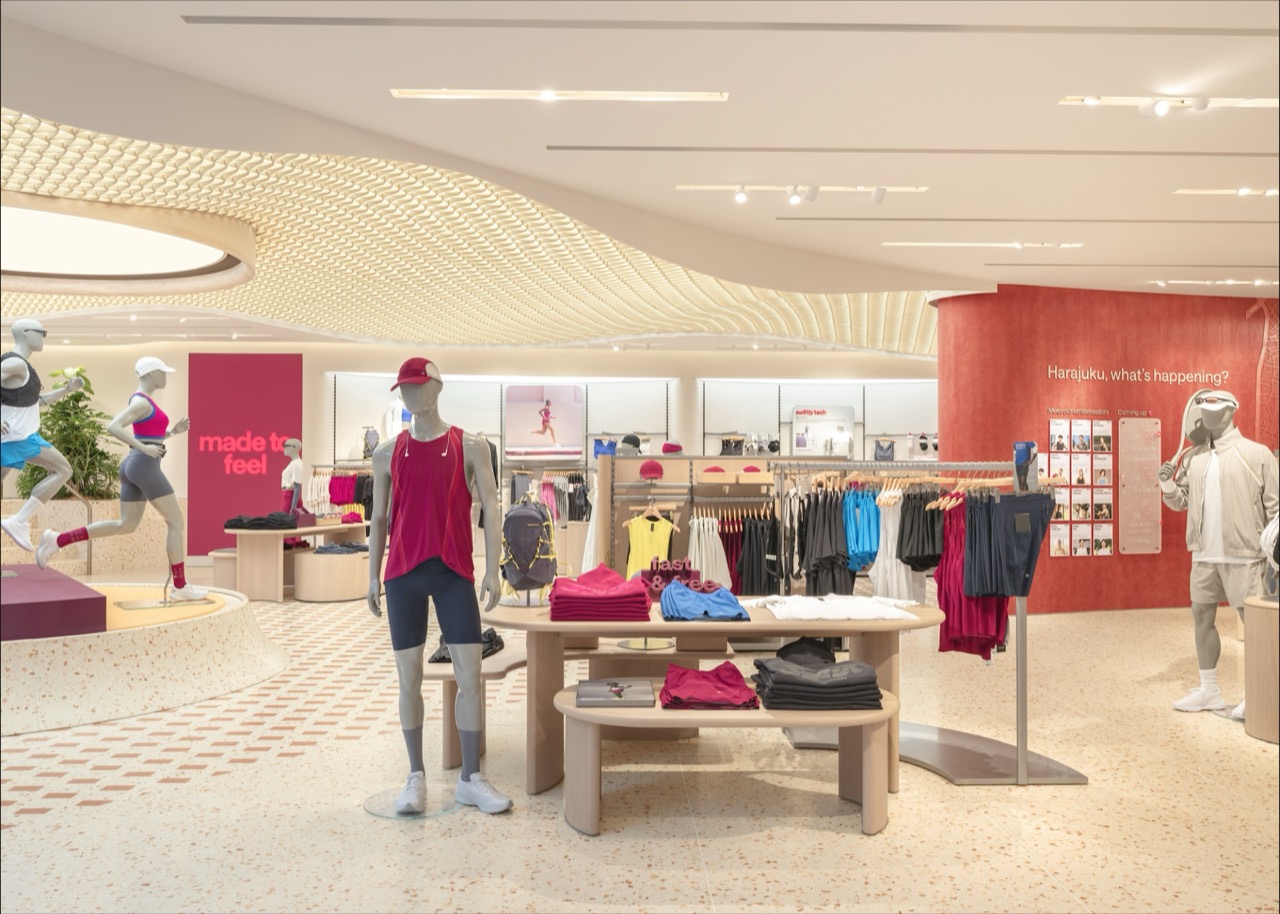
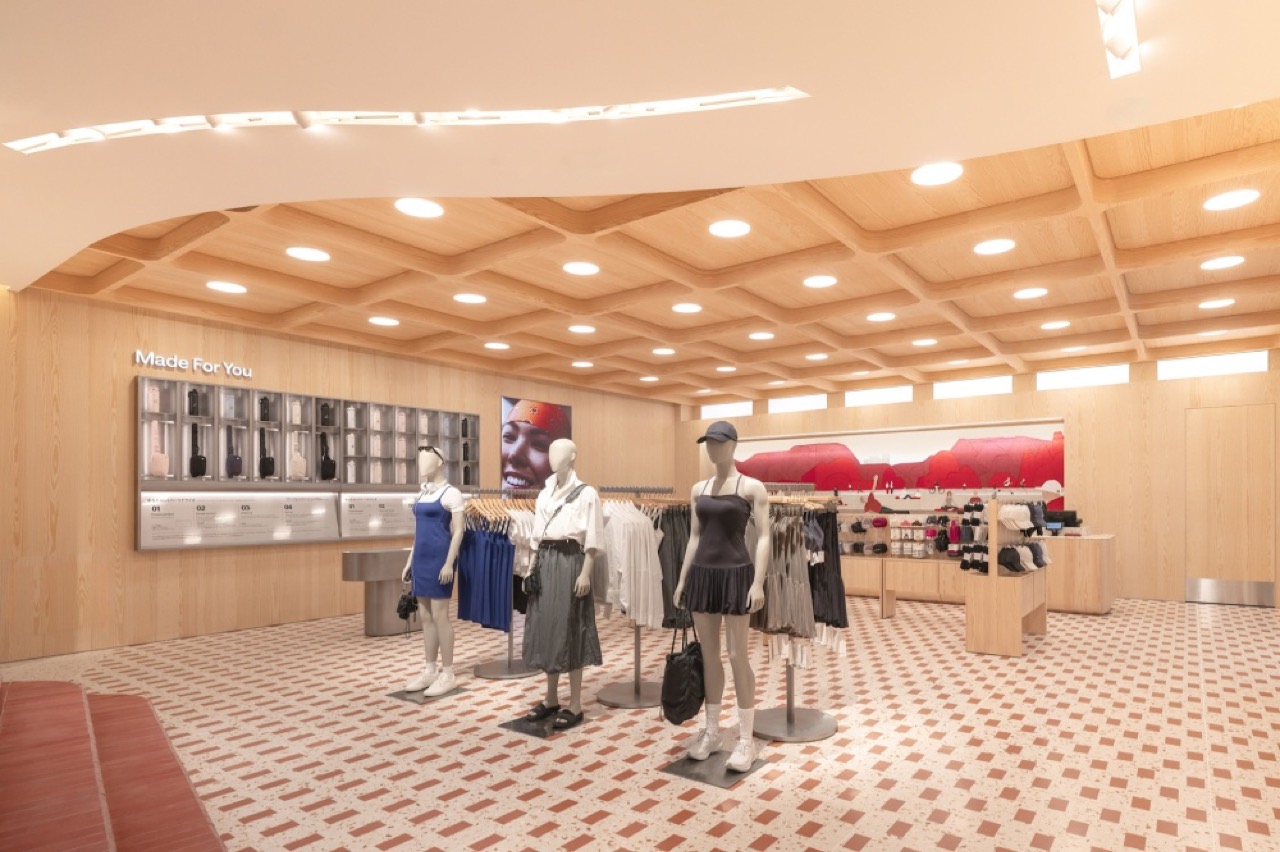
3.The ceiling gets your attention first. Timber battens are stacked into a wave that runs across the room, with light pushed into every gap. At the centre a round fixture hangs from a wooden ring, dropped well below the ceiling, and the floor is white terrazzo studded with orange squares in a grid. Rails and tables are timber too, and there is not a single black metal shelf of the sort every sportswear shop owns.
4.The back wall of the ground floor is red. "Harajuku, what's happening?" is set in white on a deep brick-coloured curve, with the faces of 12 local ambassadors below it. Beside them, a handwritten schedule board. A run at 7:45 on August 23, Yoyogi Park on the 27th, one more on the 30th.
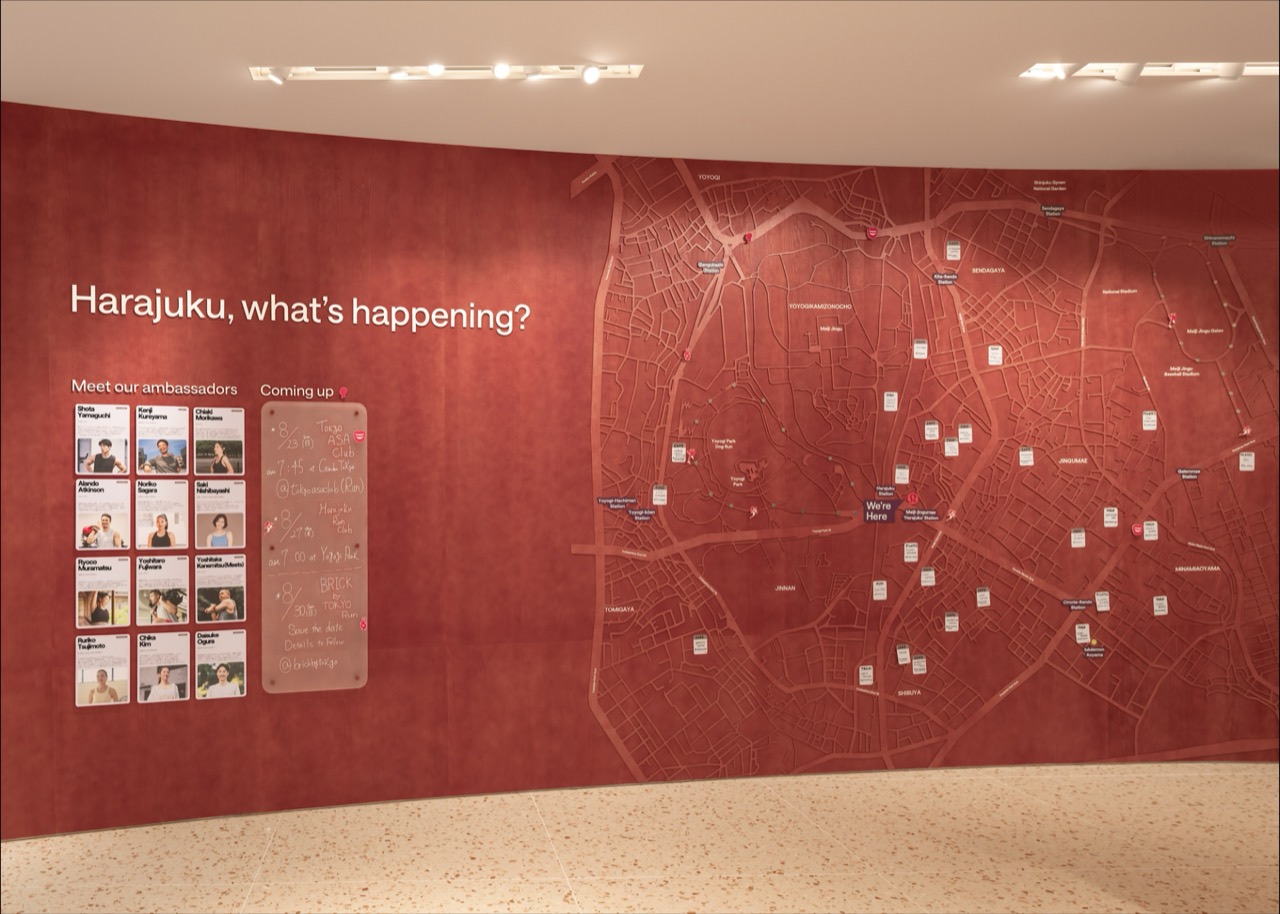
5.The right half of that wall is a map. Yoyogi Park, Meiji Jingu and the streets of Jingumae are carved into the surface, with pins in cafes, pilates studios and running routes. A drawing that treats the store as a starting point rather than a destination. The stair linking the two floors is the same red, tiled down to the risers, with only the handrail in dark red timber, and wide enough for three or four people abreast.
6.Clothes are not the only thing on sale here. So are the people you run with at seven in the morning. That is precisely the method the brand used when it started in Vancouver in 1998: hand clothes to yoga instructors, let them teach free classes in the store, then sell to whoever showed up. An advertising budget moved onto the instructor and the shop floor. Twenty-eight years later that wall stands again in Tokyo as 12 ambassadors and a schedule board.
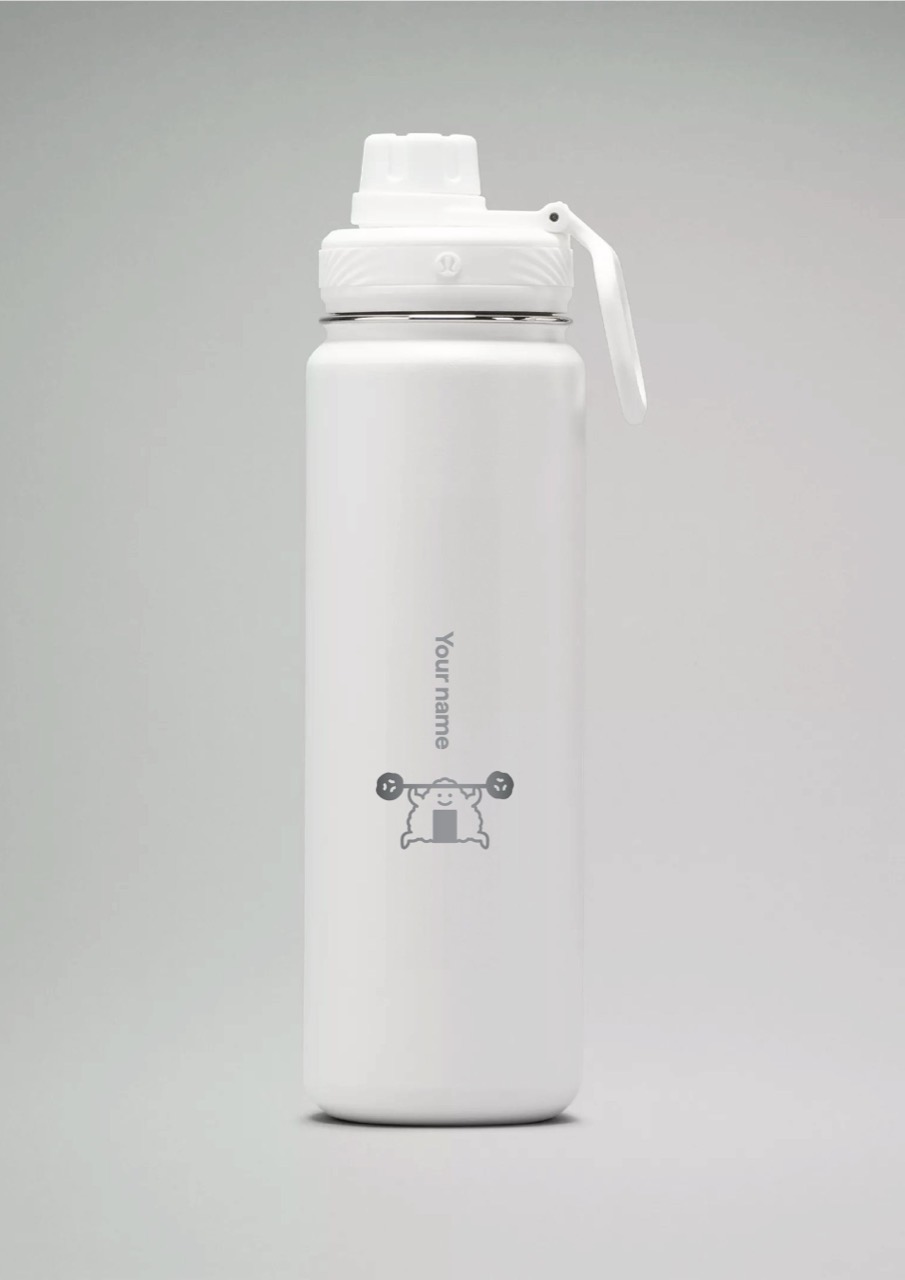
7.An engraving counter sits beside the cash desk. Names are pressed into belt bags and letters and drawings cut into insulated bottles, a service the company says is a first for Japan. One of the sample motifs is a rice ball lifting a barbell. Drawn for Tokyo only.
8.The value of engraving lies somewhere other than service. An item with a name on it is hard to return and moves badly on the resale market. For a brand that has started leaning on discounts, this is one of the few ways left to add value without cutting price. Markdowns rose 60 basis points last year and fourth-quarter gross margin came down to 54.9 percent.
9.The way local makers were brought in is worth a look too. In the ground-floor window, Torafu Architects and Karimoku Furniture stacked timber from the Meiji Jingu forest into a logo object; by the cash desk hangs a collage of Yoyogi Park that illustrator Taku Bannai built from Awagami Factory's Awa washi. In the second-floor fitting area, a yoga pose woven by Maito Otake from second-hand clothes collected around Harajuku.
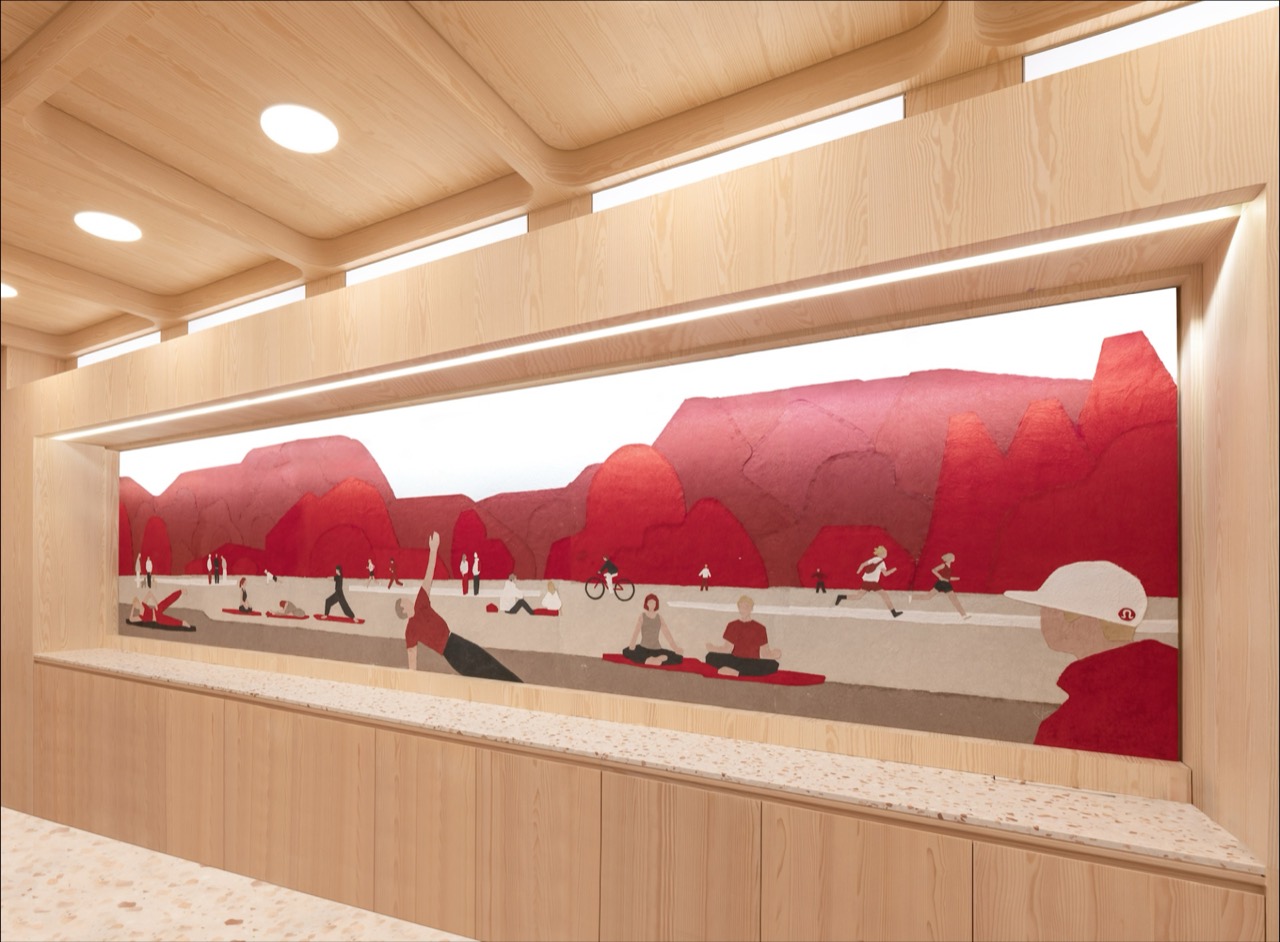
10.These three pieces do two jobs. They get photographed, and they leave the impression that the brand belongs here. When a Canadian company opens on the most tourist-heavy street in Tokyo, the second point is what gets doubted first, and forest timber and Awa washi read as the answer to that doubt.
11.Look at the company's position and the urgency behind this store shows. Revenue last fiscal year was 11.1 billion dollars across 811 company-operated stores. The guidance for this year, though, is flat to down 1 percent. North America down a high single digit.
12.Tariffs landed on top of that. First-quarter gross margin fell 410 basis points, of which 280 came from tariffs, by the company's own account. A stretch where selling more in America leaves less behind. That leaves only two boxes where growth can be reported, China Mainland and the rest of the world, and Japan sits inside the second one.
13.Run the rent and you can see what this floor area costs. Ground-floor street units around Omotesando and Meiji-dori traded at about 54,000 yen per tsubo a month in the second half of last year. 1,220 square metres is 369 tsubo, or roughly 185 per floor. Apply that rate to the ground floor and under half of it upstairs and monthly rent lands in the 14 million yen range. The lease terms are not public, so this far is an estimate.
14.Sales per square foot at this company ran 1,426 dollars last year, three or four times the US mall average. That figure was built by 79-tsubo stores, though, and 369 tsubo is a different proposition. Grow the footprint and the ambassador wall, the map and the sculptures take space that would otherwise hold clothes. Even at half the average, rent comes to 12.5 percent of sales, which is not a bad number in apparel but not a comfortable one either.
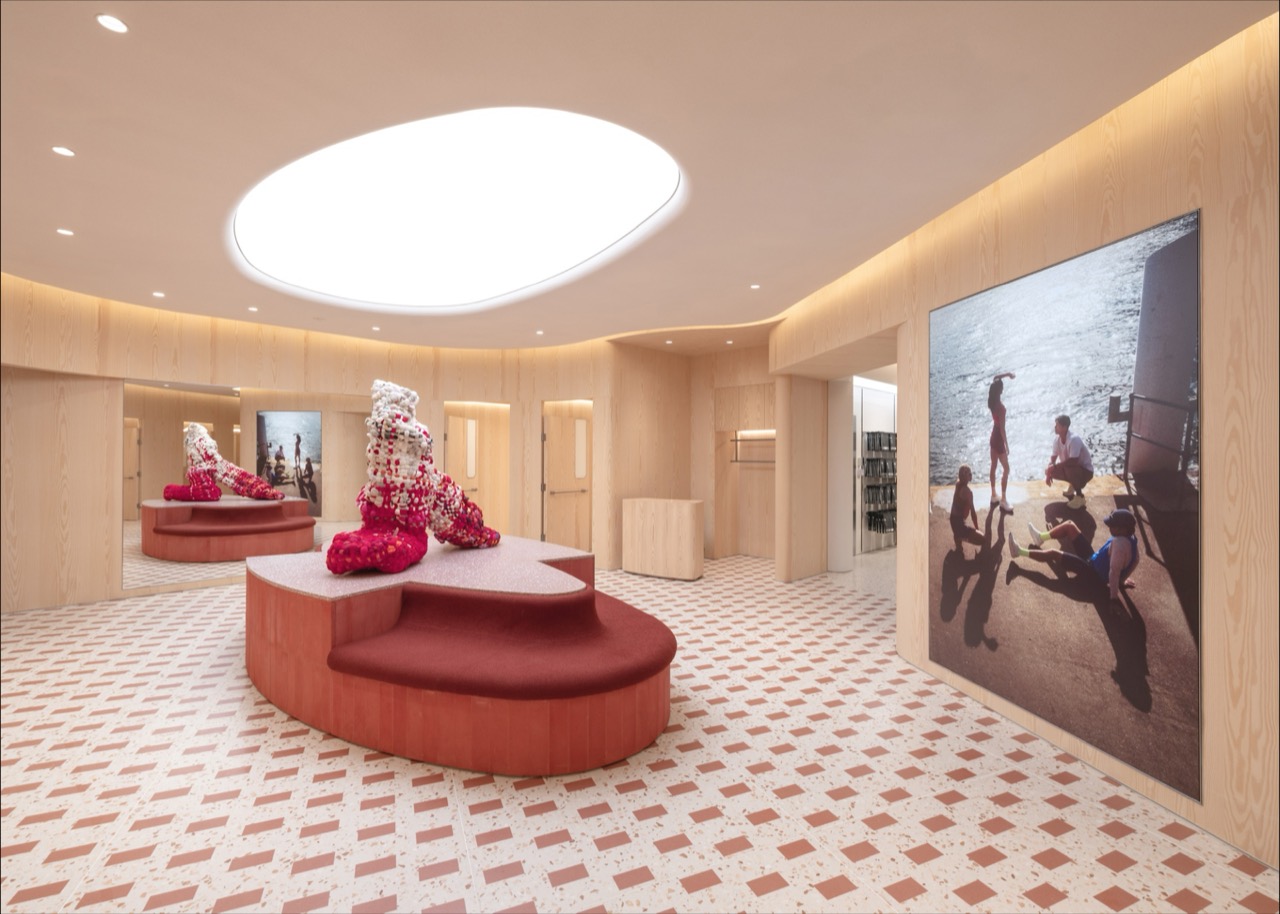
15.Sports brands have been putting big stores on Harajuku and Omotesando for more than twenty years. Nike and adidas both stacked floors on this street, and those stores were laid out to show as many shoes and garments as possible. What lululemon spent differently on the same street is floor area. A whole wall went to this week's running schedule, and the space in front of the second-floor fitting rooms holds a sculpture instead of stock.
16.Opening pace stayed the same; only the size changed. Open one store at four and a half times the usual scale instead of four or five small ones and the total rent comes out similar while what people remember does not. Do this in Korea and the money leaks first not at the rent line but at the operating costs behind it. Taking 369 tsubo across two floors in a prime Seoul district adds key money on top of the deposit, and the moment a store runs its own running club, instructor wages and event insurance enter selling expenses. Gathering people in a park needs permission from the authority that manages it. Clear all of that and one question remains. Do you actually have 12 people to put on the wall?