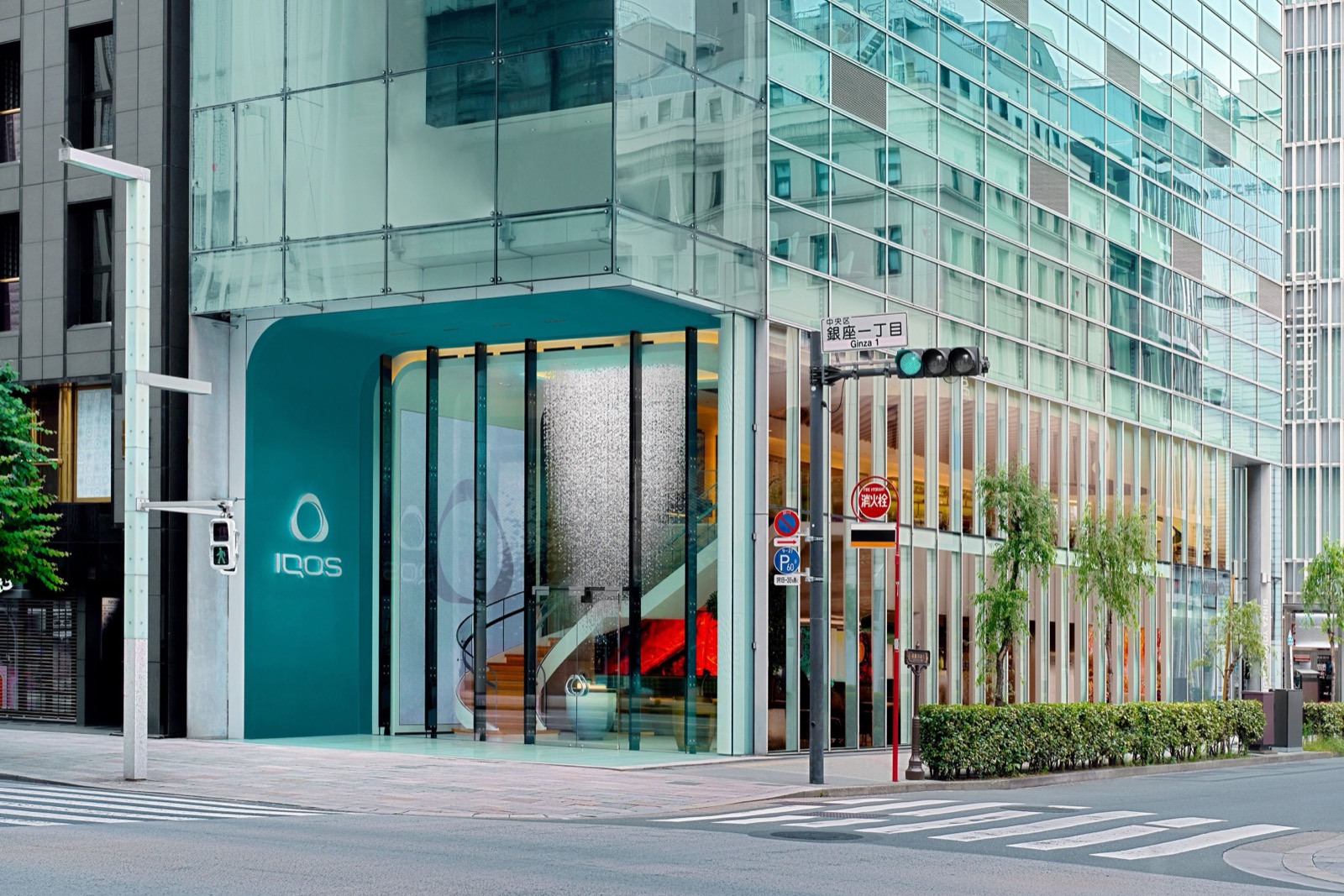
IQOS Flagship Ginza opened at 11am yesterday across two floors totalling 517 sqm. The selling floor is the smaller one, 187 sqm downstairs, while the larger 330 sqm above it admits only registered members. In a country where tobacco companies cannot appear on television or radio, two thirds of the floor area sits behind no cash register. This is why.
1.On a corner in Ginza 1-chome stands a building squared off in glass. The Ginza YOMIKO Building, floors one and two, is where IQOS Flagship Ginza started trading yesterday. It is the first store Philip Morris International has opened under the IQOS name as a global flagship, and five days earlier, on 30 August, the IQOS Store that had been running elsewhere in Ginza shut its doors.
2.The way the floors are split catches you first. The ground floor, holding product and the service counter, is 187 sqm. The 330 sqm above it admits IQOS members only: registration completed, device registered, aged 20 or over. The bigger floor is the one with no till.
3.Set the company's numbers beside that and the split starts to make sense. PMI booked $40 billion in revenue last year, 42 percent of it from smoke-free products, and that share reached 43 percent in the first quarter of this year. IQOS alone now clears $10 billion a year and has passed Marlboro inside the company. Adults using the device worldwide: 30.8 million.
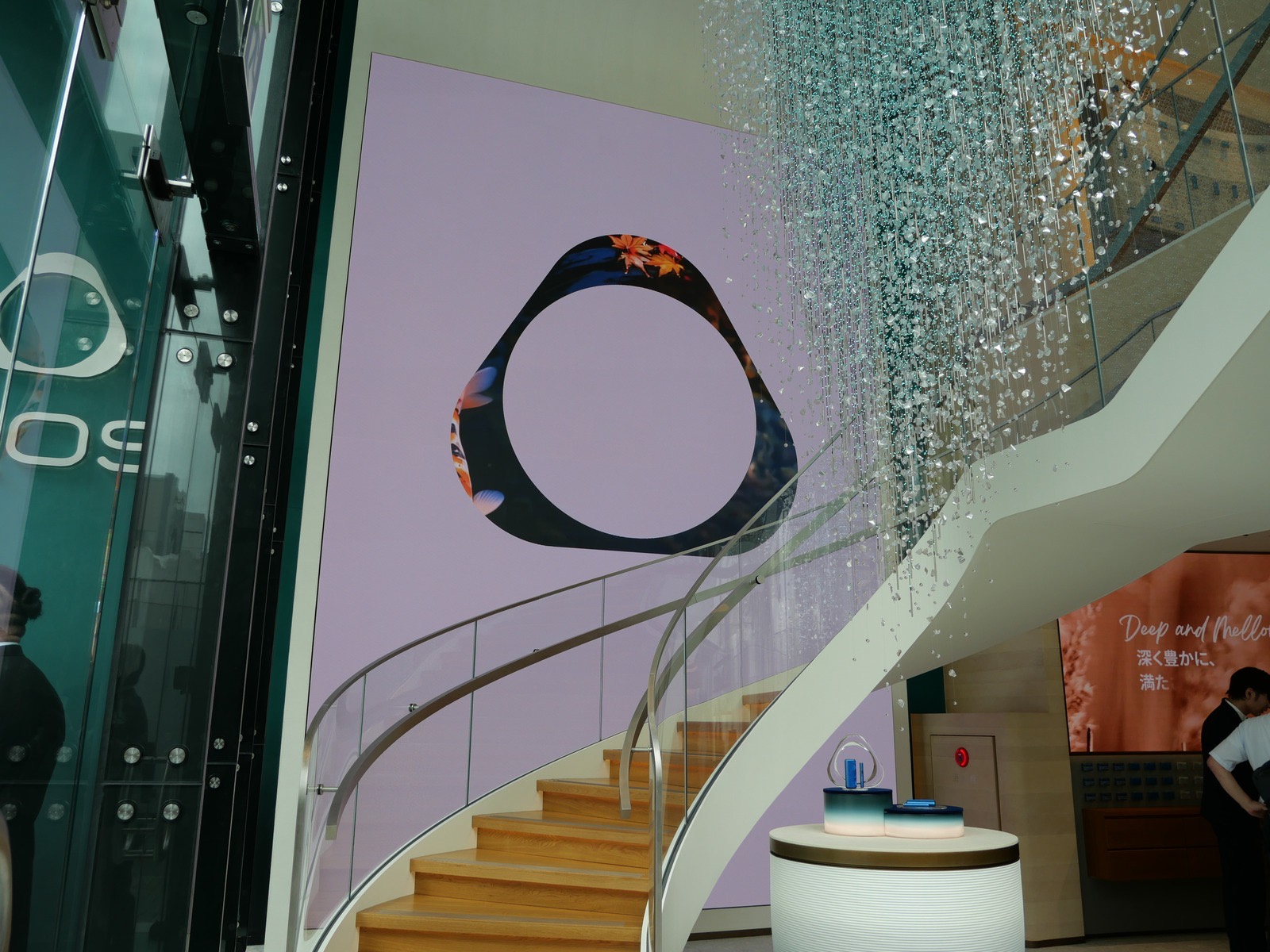
4.Push the glass door and you face a staircase. Glass beads pour down from the ceiling and sway along the handrail, and behind them a pale violet wall screen carries the logo. The seven-metre chandelier titled "FLUX - Nagare -" is the work of Takahiro Matsuo, an artist who builds with light. What a visitor sees first is not a display case. It is the way up.
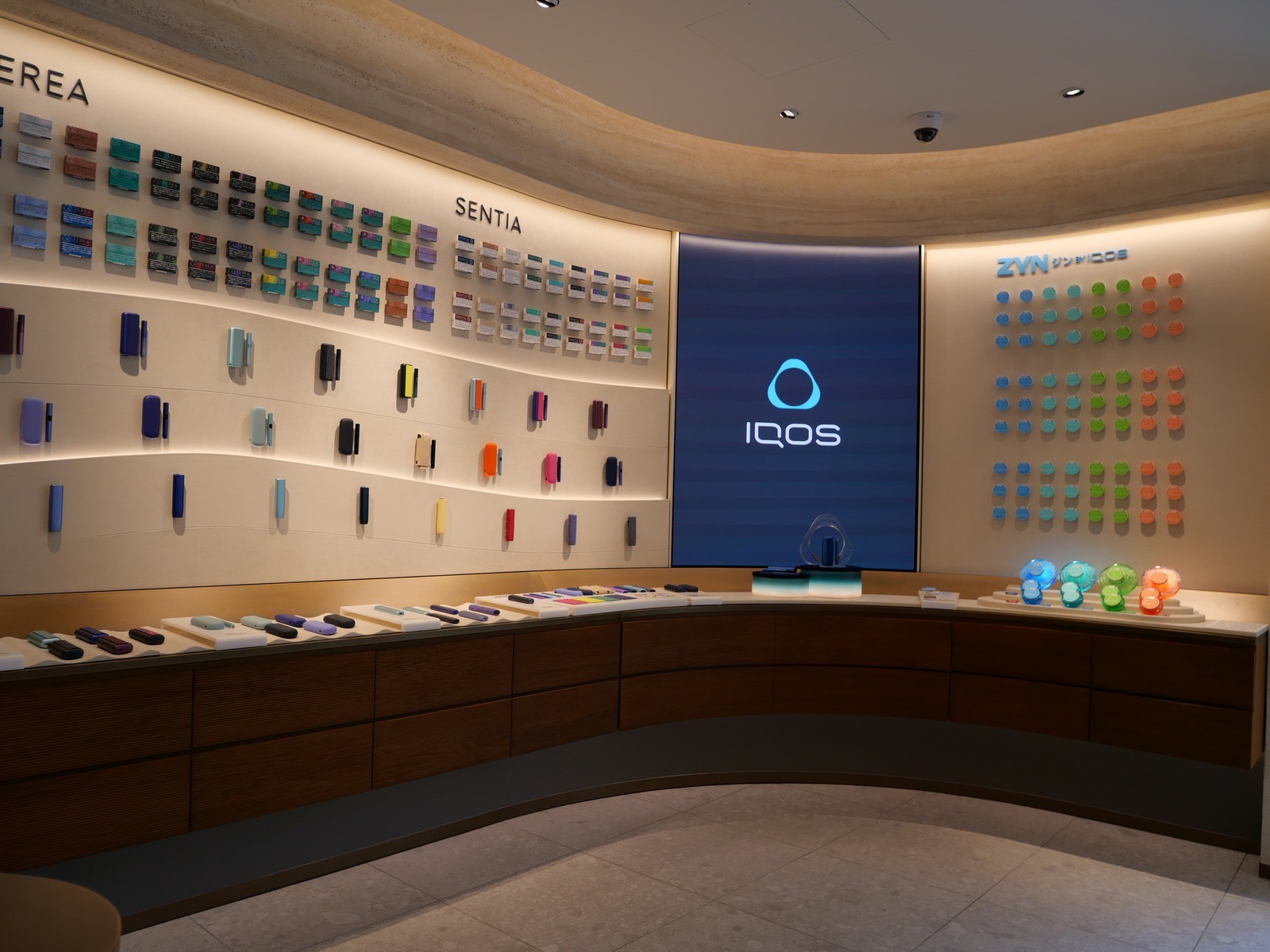
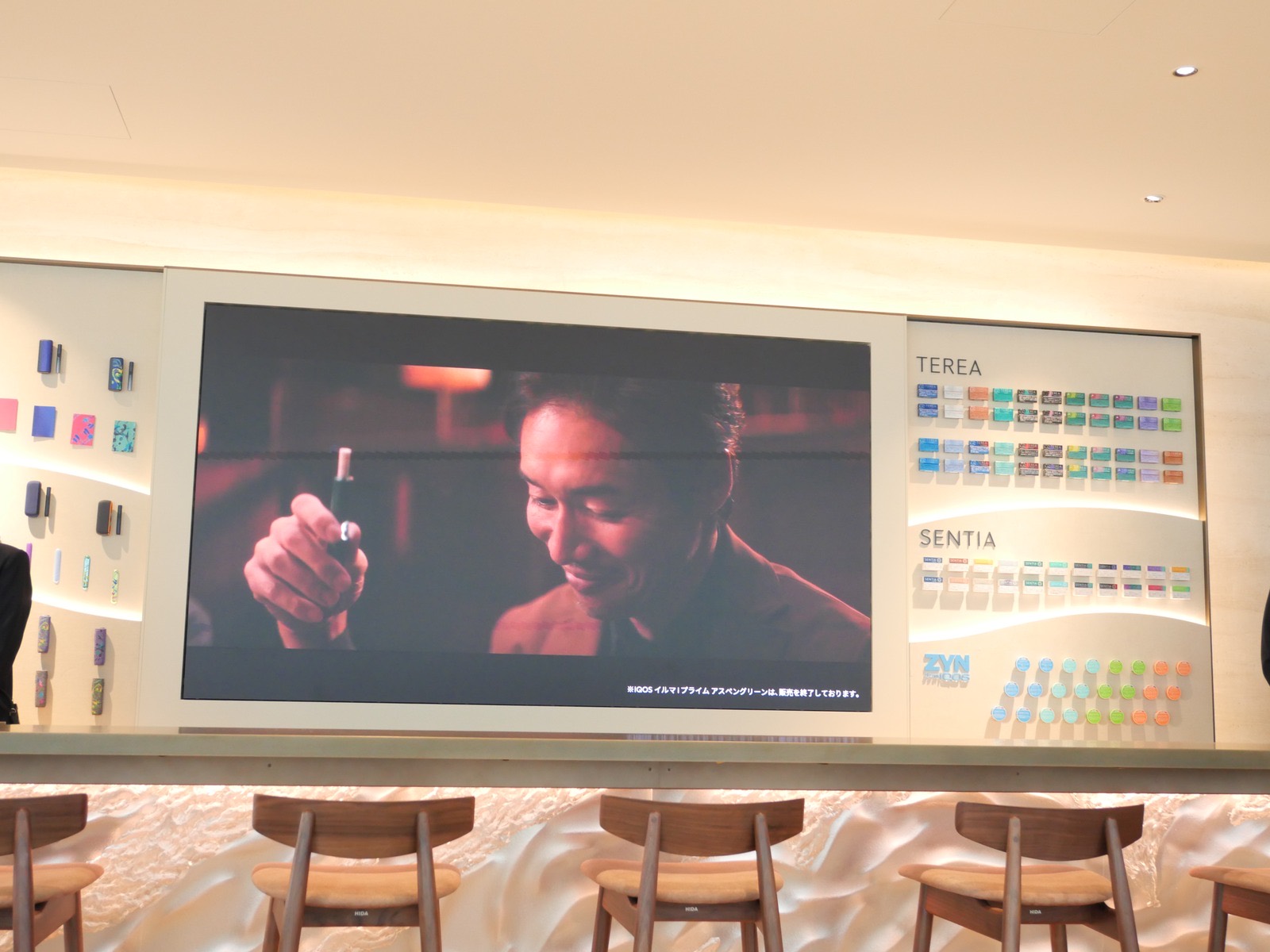
5.The inner wall downstairs curves, and three rows run across it: TEREA, SENTIA and ZYN by IQOS. The first two are sticks for the device, the third a pouch tucked under the upper lip. Distribution of the pouch only widened into Tokyo in May, and four stronger variants added in August took the range to twelve. Laid out in the wooden drawers below the wall: device colours.
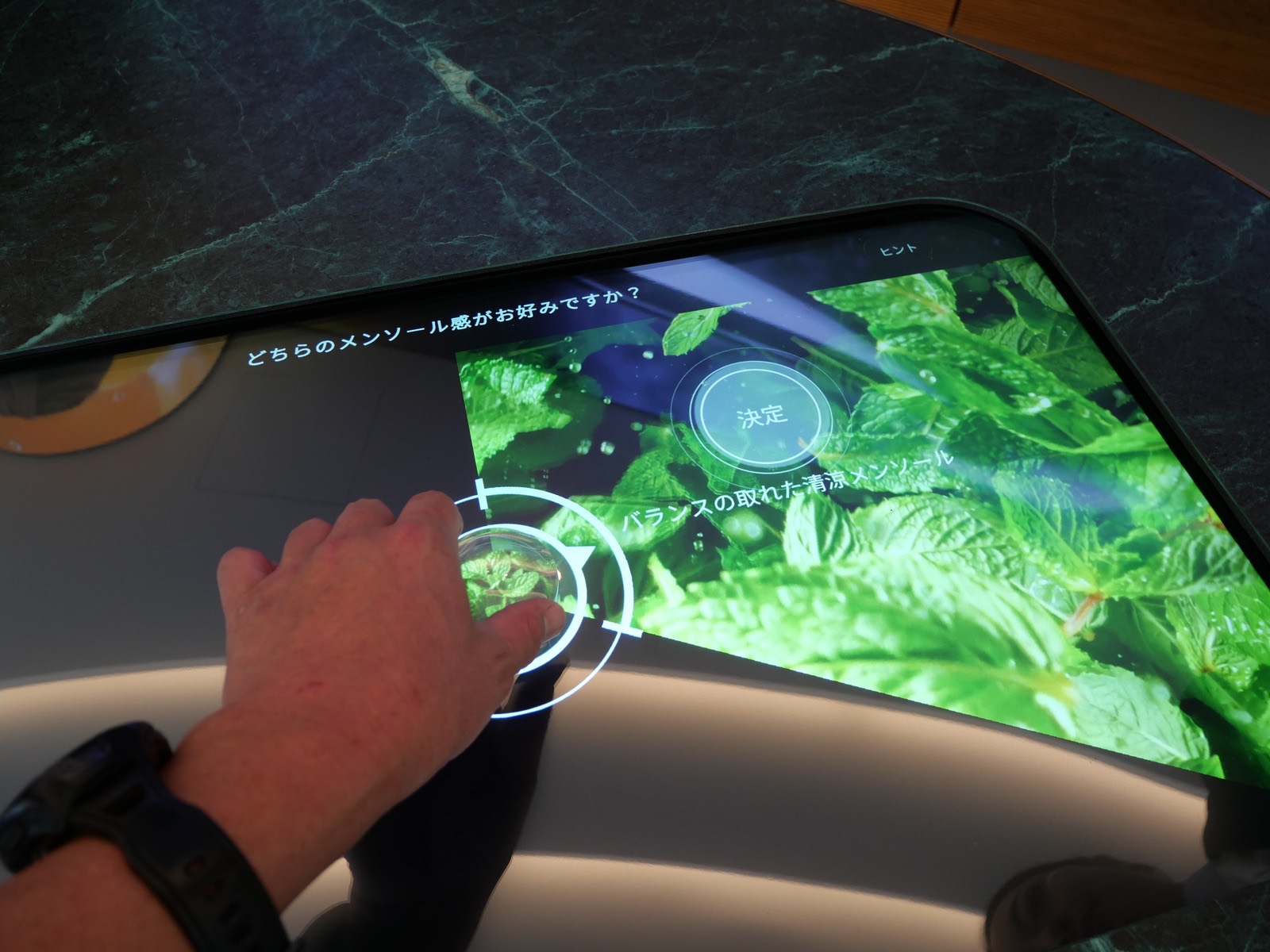
6.Across from that wall, a screen is sunk flush into dark marble. Touch it and it asks how much menthol you like, mint leaves fill the surface, and your answer narrows 45 sticks down to a handful. The company describes it as a device working on smell, sight and sound at once.
7.In Japan, tobacco cannot appear on television or radio. The Tobacco Institute of Japan's voluntary code settles that, and a magazine may carry an ad only where more than 90 percent of readers are adults. Heated products fall under the same treatment, so the legal channels this company has for speaking to its users come down to its stores and its own website. The 517 sqm is retail floor and media buy at once.
8.Regulation splits by object. Sticks and pouches count as tobacco under the Tobacco Business Act, so their retail price is authorised by the Minister of Finance and must be charged exactly as set, while the heating device is classed with pipes and kiseru as smoking apparatus, outside that frame. Devices can be discounted, sticks cannot be cut by a single yen.
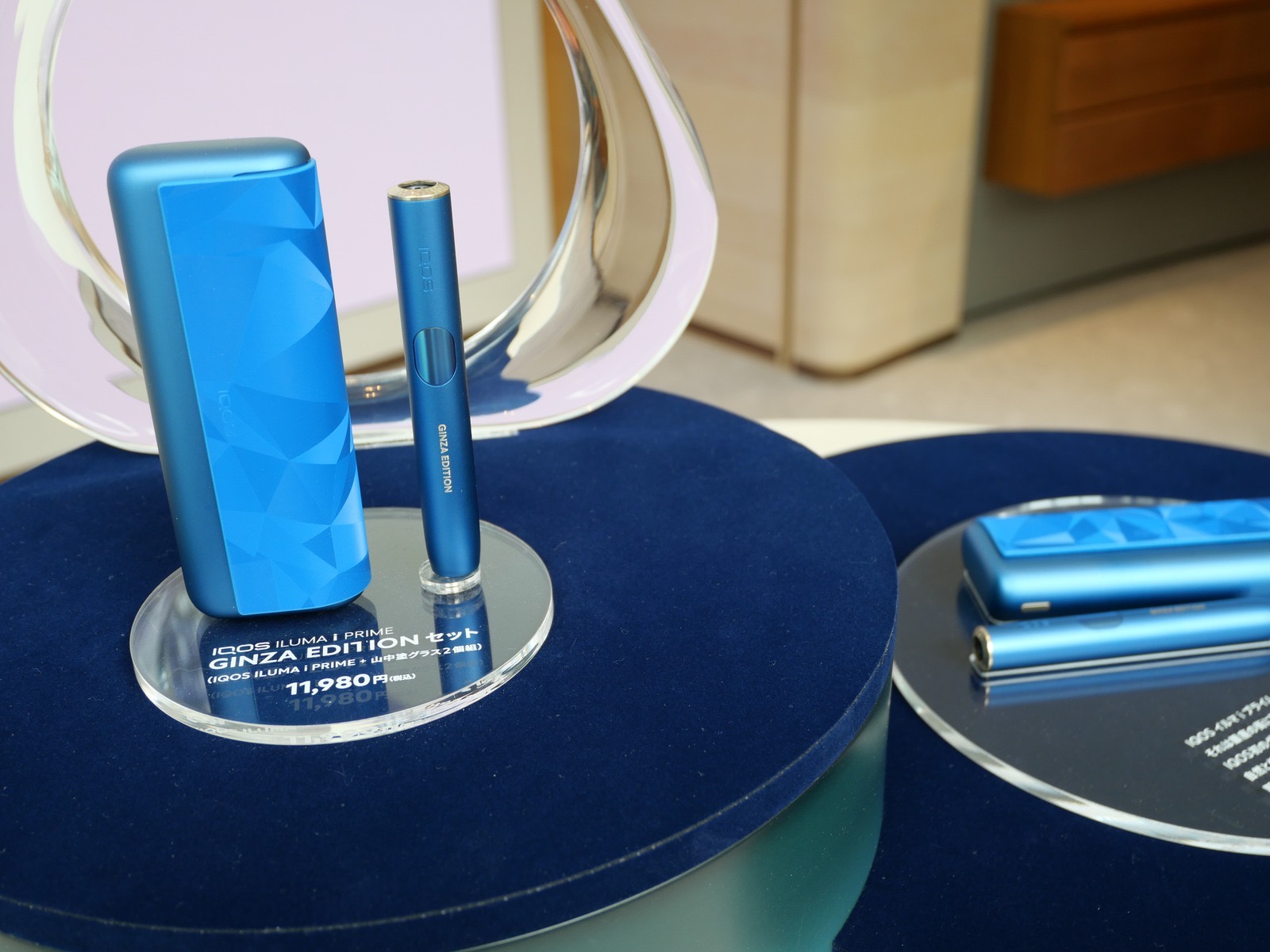
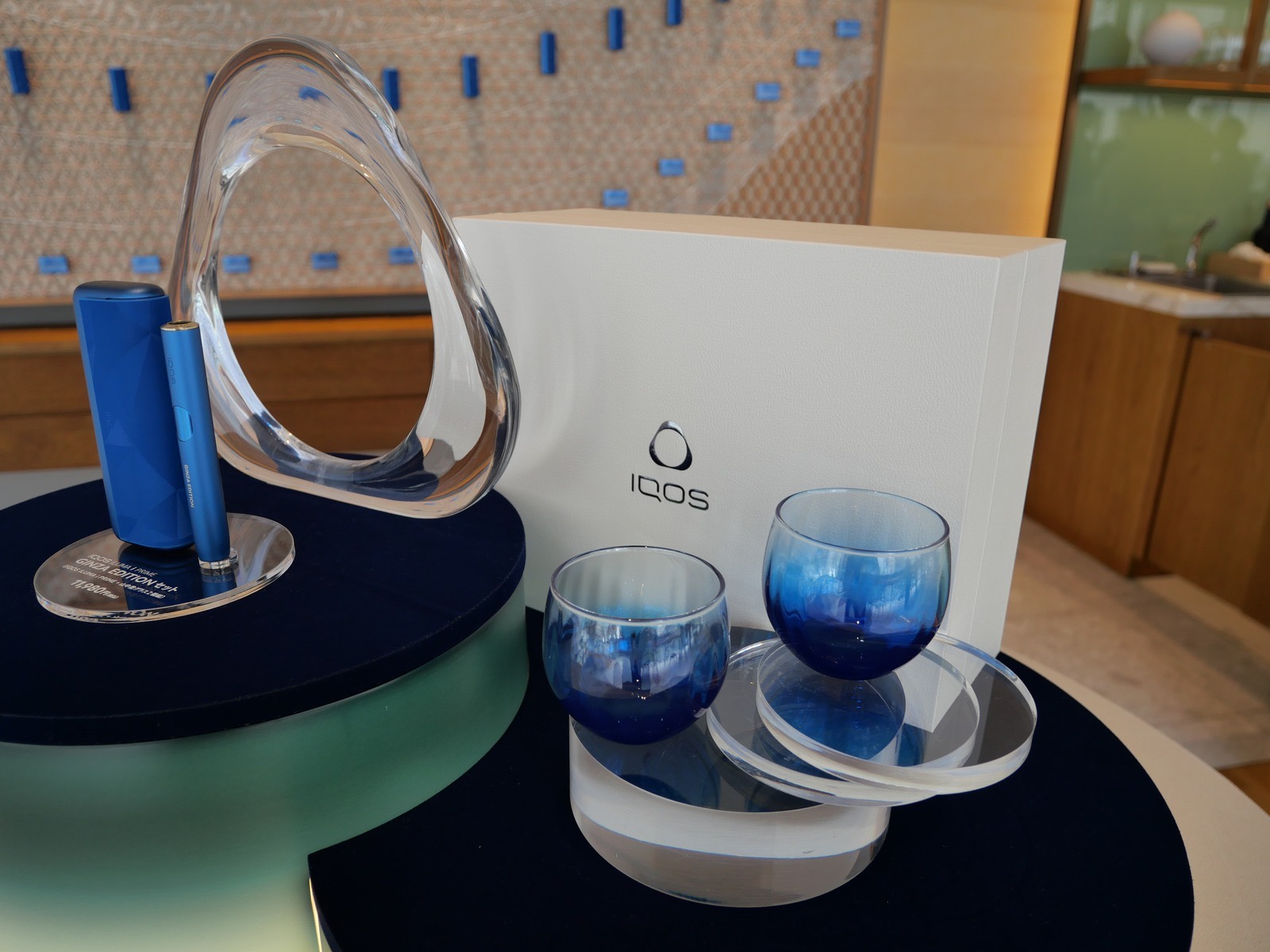
9.So what stands at the front of the store is the device. An IQOS ILUMA i PRIME lists at 9,980 yen, or 7,980 yen with the summer discount. The Ginza limited set, sold only through opening week, runs 11,980 yen in an edition of 1,814, a number taken from the address at Ginza 1-8-14. The box holds two glasses made by a Yamanaka lacquerware workshop, each set carrying a serial number.
10.Ground-floor rent in Ginza has climbed to 280,000 yen per tsubo, roughly 3.3 sqm, a month. Apply that to the 56.6 tsubo downstairs and put the second floor at a third of it, since it fronts no street, and monthly rent for this store lands near 25 million yen. That figure is a market estimate, not a number the company has given. So what covers a fixed cost approaching 300 million yen a year? Not device margin.
11.The sticks cover it. A pack of TEREA went from 580 yen to 620 yen with April's tax rise and moves to 640 yen next month. Someone on a pack a day spends close to 230,000 yen a year. The 8,000 yen device does not cover a fortnight of that person's sticks. What the store sells is not hardware but the years of consumables that follow it, and that arithmetic is what pays for 517 sqm.
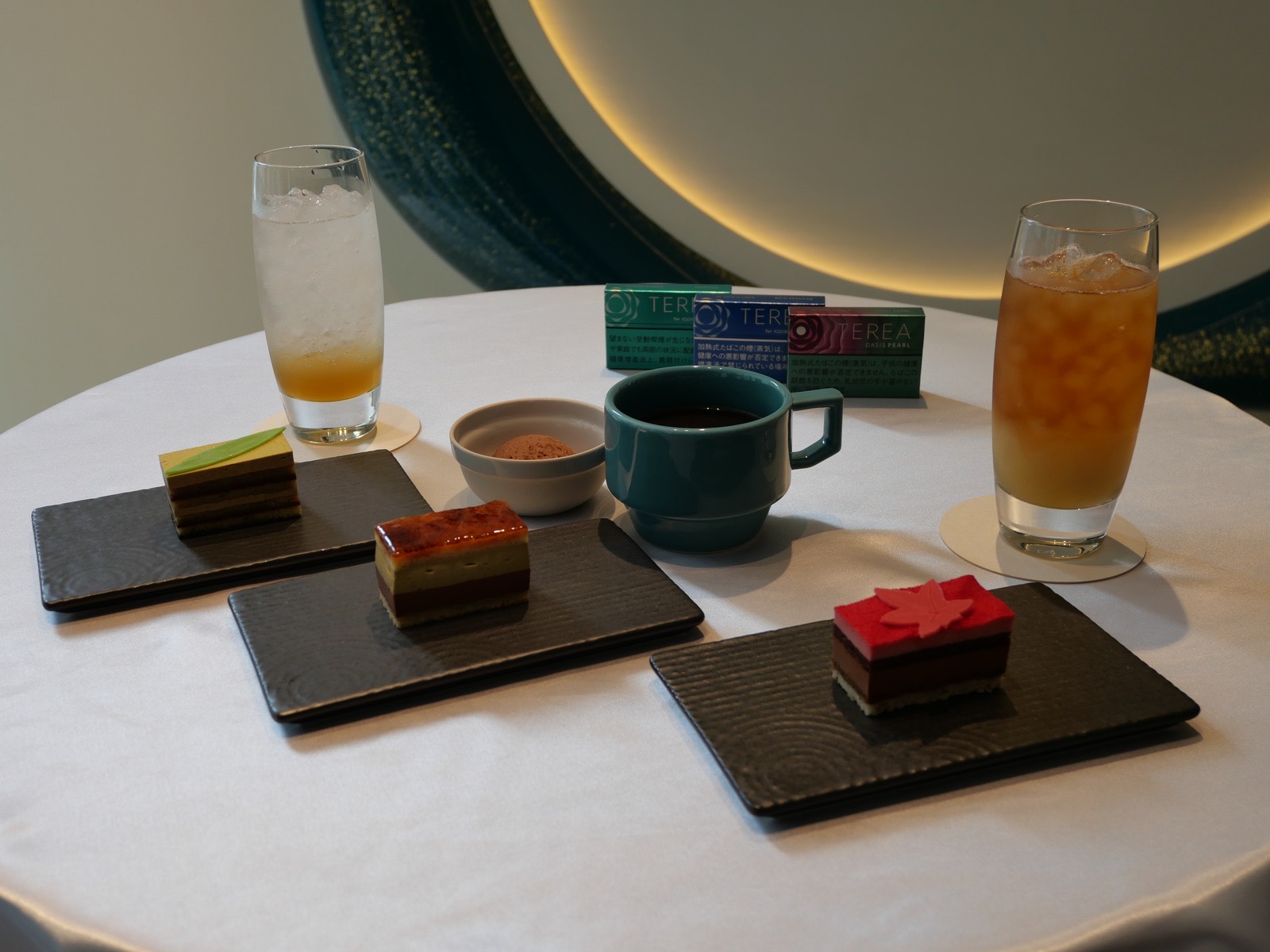
12.Upstairs there is no till, but there are glasses. Pairing drinks matched to the sticks and seasonal Japanese sweets go out, and through opening week the menu carries confections by Sadaharu Aoki, the pastry chef who built his shop in Paris. Further in sits a room where a 270-degree screen turns through the seasons. None of what changes hands here books as revenue.
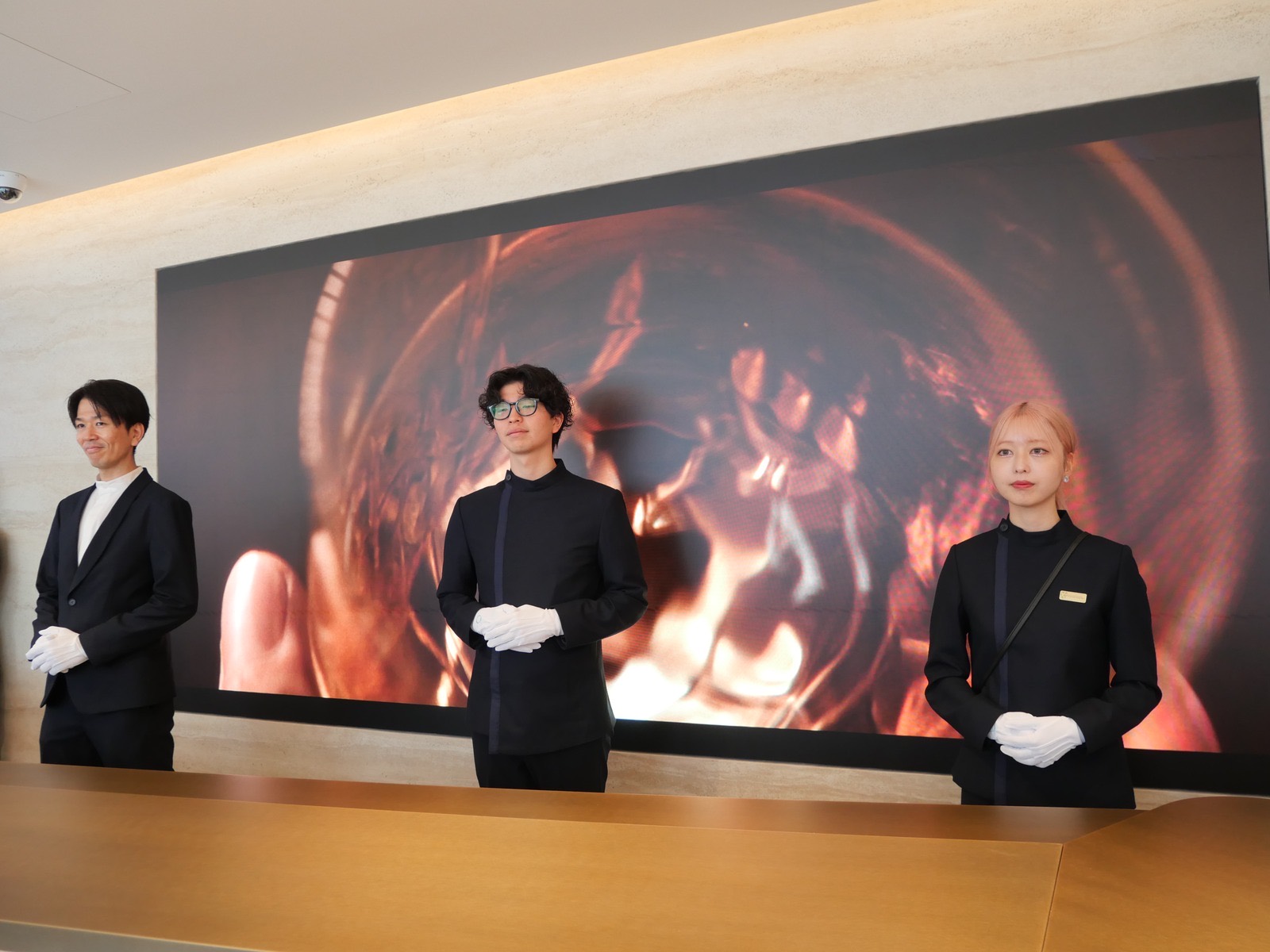
13.Behind the ground-floor counter stand staff in black uniforms and white gloves. Device registration, repairs and replacements are handled here, and the desk closes at 7.30pm. Japan has only four IQOS Stores in total. A great deal rests on this one address.
14.Heated products already account for 53 percent of nicotine consumption in Japan, and IQOS holds close to 70 percent of that. Its share of total nicotine hit a record 34.9 percent. Yet a Japanese survey this year put the IQOS share down almost five points on last year. glo HILO and Ploom AURA took that ground.
15.Using a store in place of advertising is not new. Apple and Nike, though, can say whatever they like outside their stores and this company cannot, so the same format carries different weight. Emptying the larger Ginza floor into a members lounge in a year when share slipped looks closer to moving budget from winning new customers to holding the ones already spending. If the reason to switch is the price of one device, the reason to stay is the 230,000 yen that person spends in a year.

16.A company with no media to advertise in took 517 sqm on Ginza 1-chome and opened the larger floor to members only. The most honest number here is that split: 330 of 517 sqm. Anyone attempting the same thing in Korea stops at the glass facade. The National Health Promotion Act allows tobacco advertising material only inside a licensed retailer and bars it from being visible from outside the premises, so a product wall and a lit logo behind full-height glazing never gets built. What a business outside tobacco can take from this is the floor split. Keeping the selling floor small and giving the larger floor to people who have already bought is worth working through wherever repeat purchase carries most of the revenue.