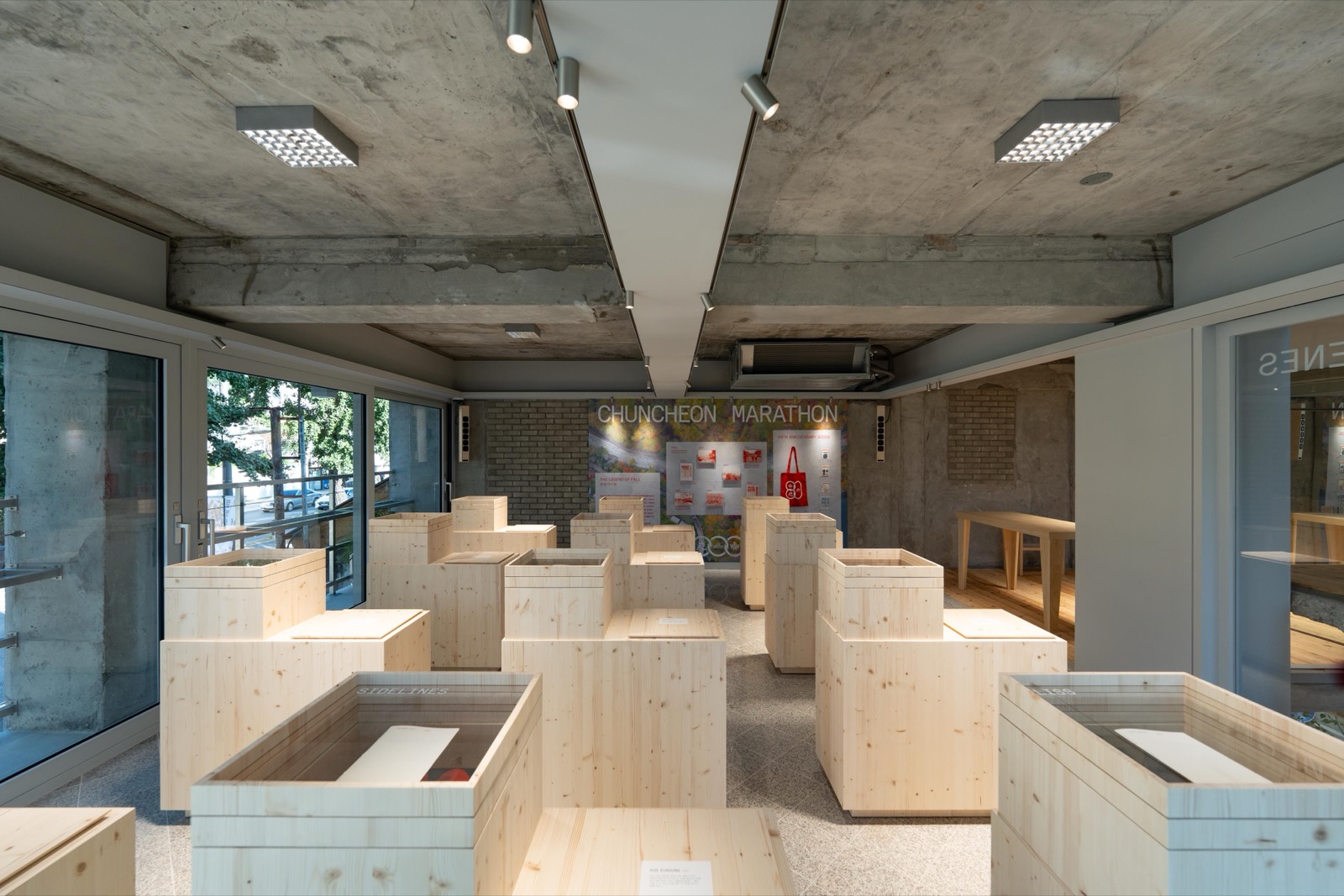
PRO-SPECS Seochon Flagship opened yesterday at 42 Jahamun-ro, Jongno-gu, Seoul. The building once held a store from the same brand, and the company kept it rather than tearing it down. Yet for the first month the shop is not selling clothes or shoes. It is hanging photographs. An exhibition marking the 80th running of the Chuncheon Marathon occupies both floors until October 5. The brand division of the company behind it has posted three straight years of falling revenue and a widening operating loss.
1.The opening date was September 7, 2026, at 42 Jahamun-ro in Jongno-gu. The building sits west of Gyeongbokgung Palace on a tree-lined avenue, four storeys tall, and the brand occupies the lower two. Because a PRO-SPECS store had stood here before, the company says it left the original structure intact and added only what the shop needed. Doors open at noon and close at 8 p.m. Floor area was not disclosed.
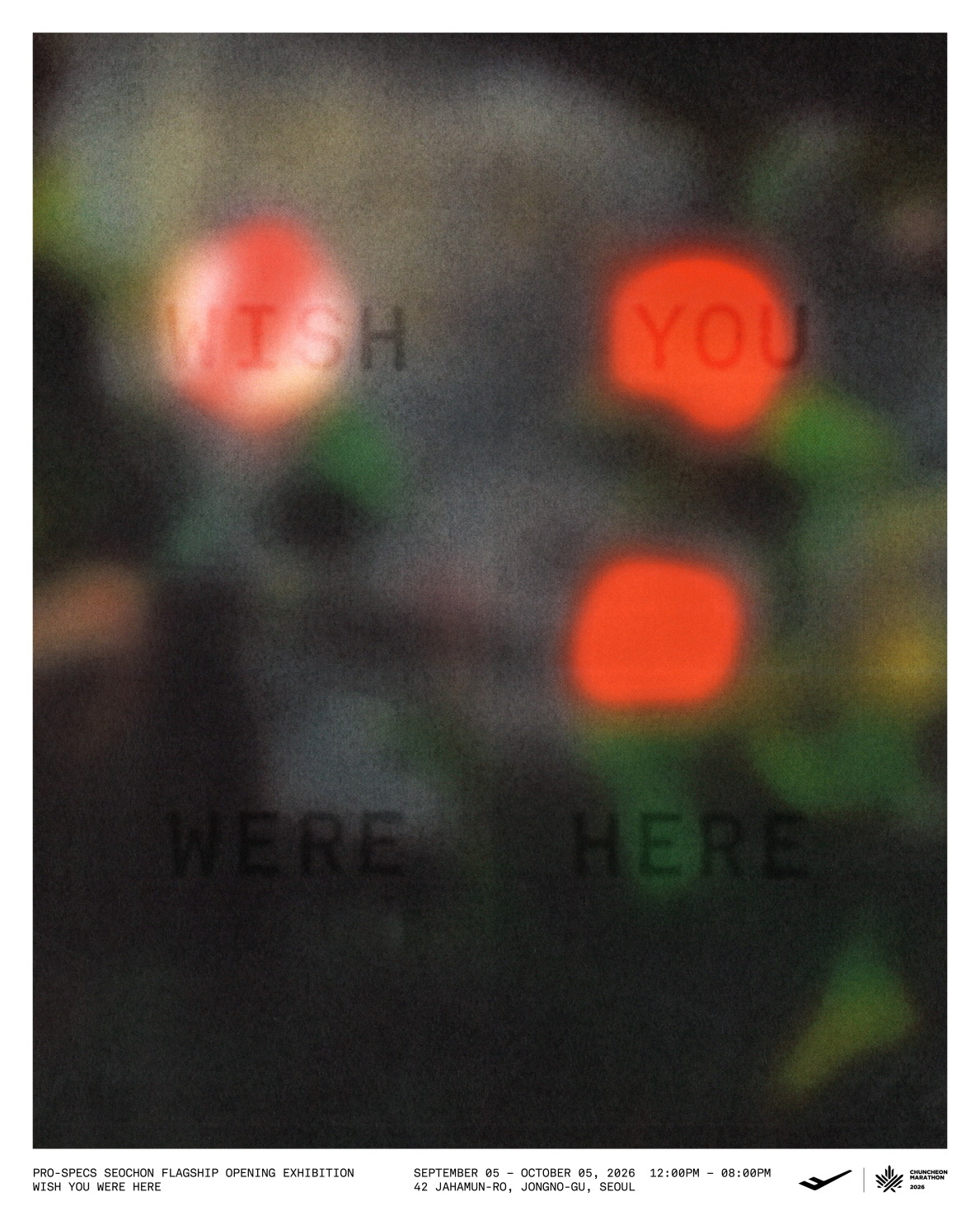
2.The first thing announcing the opening is a photography show, not merchandise. It is titled Wish You Were Here and runs from September 5 to October 5. The Chuncheon Marathon, organised by the Chosun Ilbo, Sports Chosun and the Korean Athletics Federation, reaches its 80th edition this year. New-season product arrives only after the show closes, the company says.
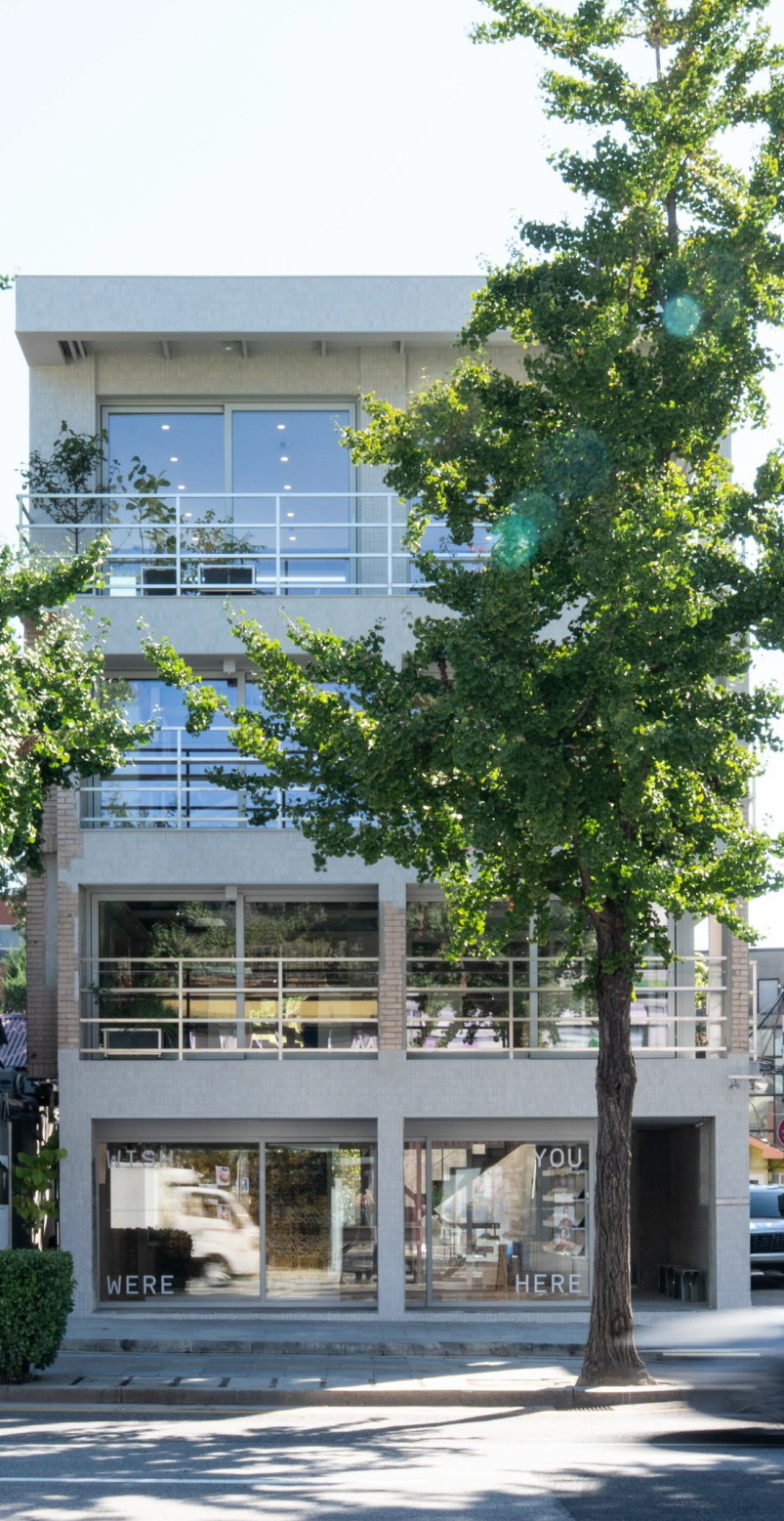
3.The space was designed by Studio COM. Exposed concrete frame and terrazzo floor were left as found, with a minimum of white steel framing set on top. Almost nothing new was applied, so the original surface meets your hand wherever you touch. Terrazzo does not swallow footsteps. A brand that sells shoes kept a floor that keeps the sound of walking.
4.The ground floor was laid out so people can move in and out freely, with part of the facade glazed floor to ceiling. You see in from the street and out from inside. The exposed concrete ceiling carries past the glass, so to a passer-by the line between shop and alley reads faintly. The company gave its reason for choosing Seochon in similar terms: a neighbourhood where residents' daily errands and visitors' outings run together.
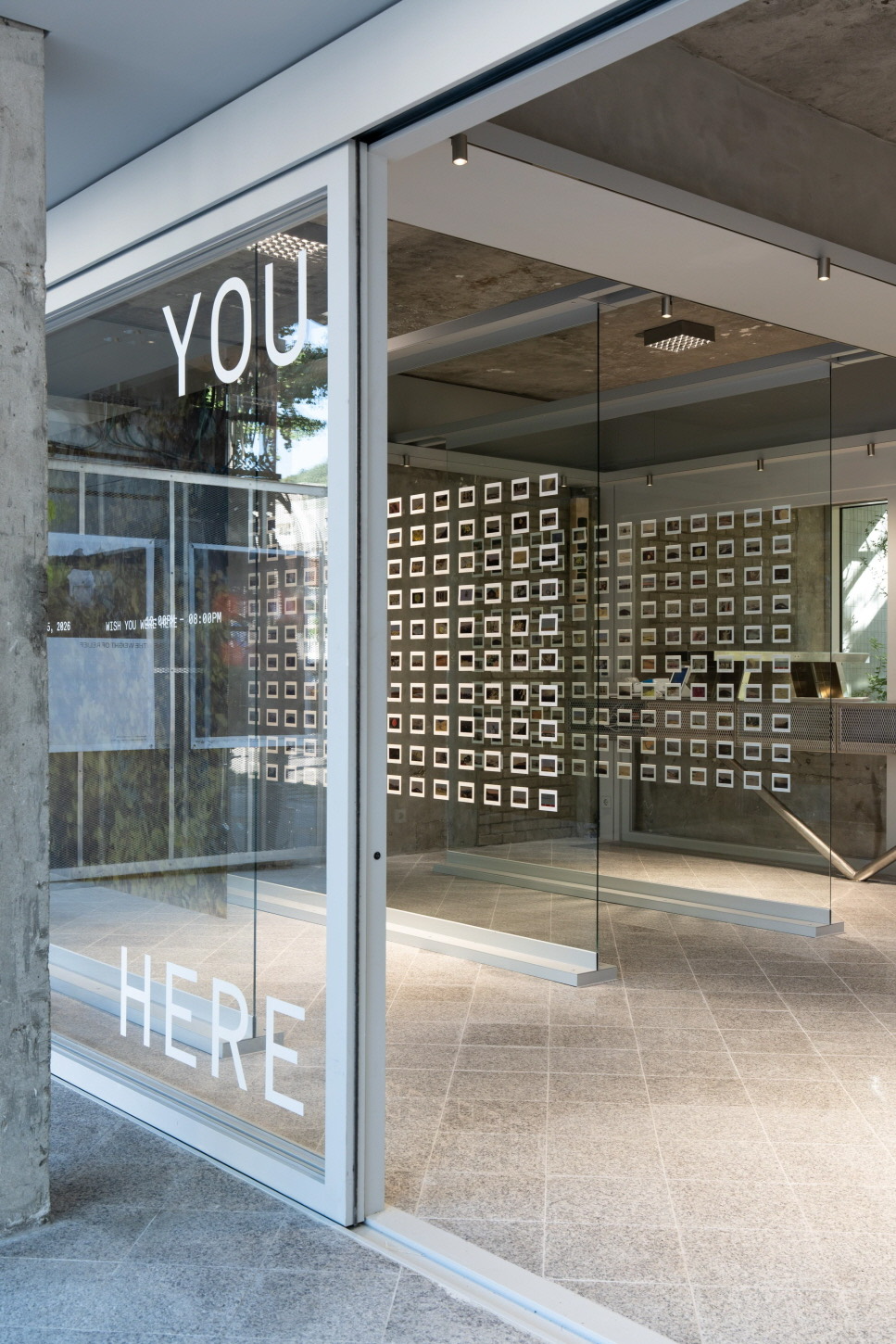
5.The show is not a table of finishing times. Work shot on slide film by photographer Jang Su-in fills one ground-floor wall, hundreds of small film mounts fixed in a grid so you must step close to read them one by one. Upstairs, objects and stories from twelve runners lie inside timber cases. Hwang Young-cho, the 1992 Barcelona Olympic marathon champion, and former national runner Kwon Eun-ju are among the twelve, and what the show puts first is not the medals but the people and landscapes met while running. Visitors can also write a postcard.
6.Korea's running population is estimated to have passed ten million, and the running-shoe market has grown to roughly one trillion won. The share of people who say they have jogged rose from 23% in 2021 to 32% in 2023. While the market swelled, this brand's revenue went the other way, falling from 129 billion won in 2024 to 95.2 billion won in 2025. The wave came in and only this boat drifted back.
7.Of those ten million, how many actually enter a race. Far more people run without timing themselves. In that market the sentence the brand adopted this spring was Sports for All, and an exhibition that hangs postcards and personal objects instead of medals is how that sentence becomes a room. What sits in the brand's storeroom is a record; what sells now is closer to memory.
8.It was not always like this. PRO-SPECS was launched in 1981 by Kukje Corporation as a domestic Korean sports brand, and the double-wing F logo has been in use since 1976. A race at its 80th edition and a brand at 45 years now share a wall, though the only link the two had was a sponsorship contract. Stretching that link into a story is what this exhibition does.

9.The numbers the operator disclosed for its brand division read like this. Revenue of 166.1 billion won in 2023, 150.1 billion in 2024, 113.2 billion in 2025. Operating losses over the same years: 9.4 billion, 13.6 billion, 16.4 billion. Revenue lost nearly a third in three years while the loss grew 1.7 times. The company blamed weak sales of the autumn and winter range launched ahead of the rebrand, plus a delay in shifting distribution toward profitability.
10.Carrying those books, it picked one of the fastest-rising rent streets in Seoul. Ground-floor shops in Seochon now sit between 10 million and the mid-20 millions of won a month, roughly four times the 5 million won line that traders recall from three years ago. One renewal this spring, reported in April, moved a tenant from 15 million to 30 million won.
11.The month of the exhibition is effectively a month with no sales. Put rent at 20 million won, add staff and service charges, and the month costs somewhere around 30 million won. That is a figure taken from local market rates, not from the company. Set against last year's 16.4 billion won operating loss at the brand division it is under 0.2%, and the same money would not buy a week of media advertising. One building turned into a month-long advertisement.
12.The brand has sponsored the Chuncheon Marathon since 2023 and has extended the contract by three more years, through 2028. The 80th-edition package bundles the race entry with a commemorative badge, a bag and a carbon racing shoe. Attaching a pair of shoes to demand that is already committed converts far more reliably than putting the same shoes on a shelf and waiting.
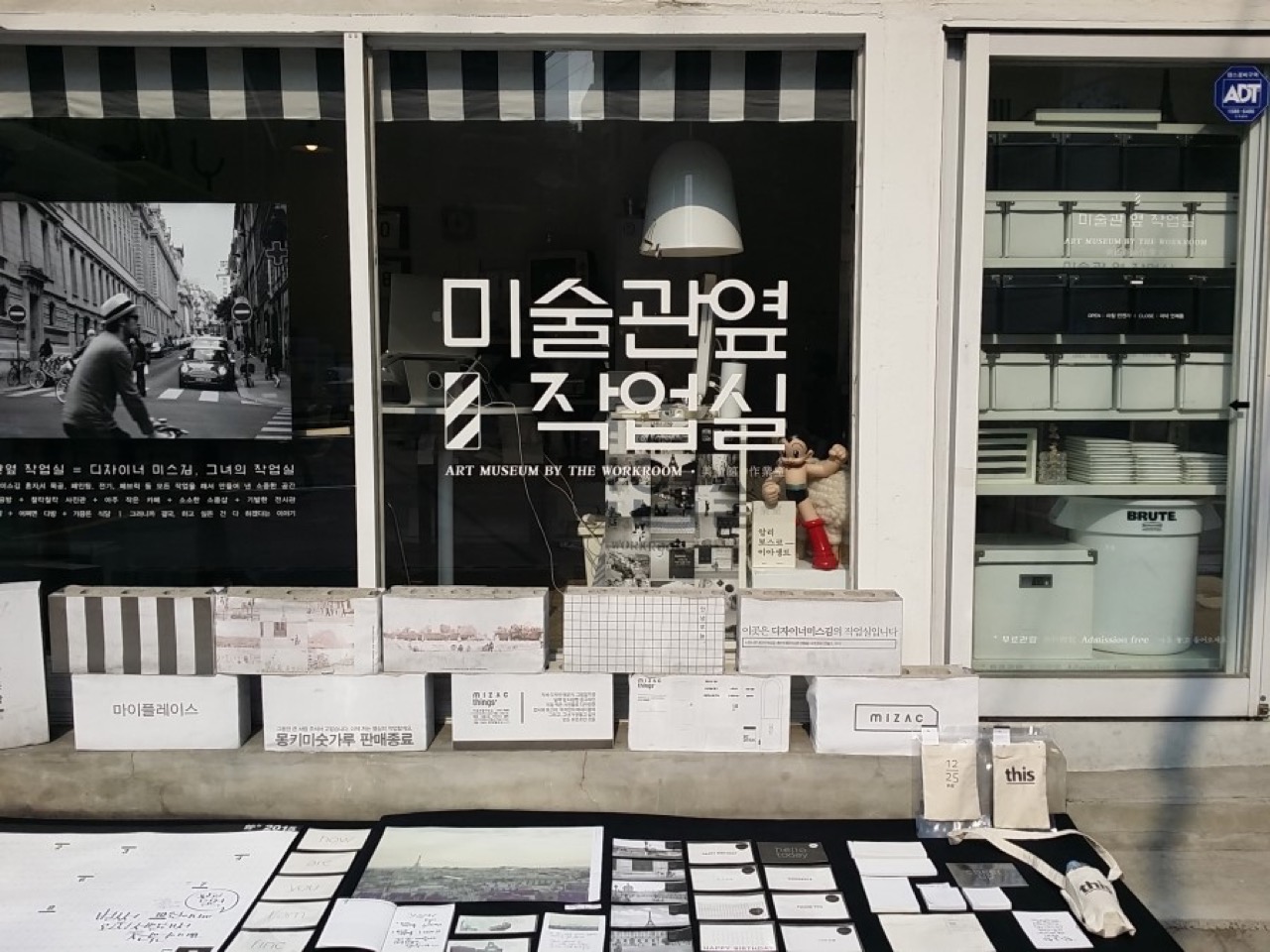
13.Sports brands are not new here either. Adidas Performance and Salomon arrived first, and the outdoor brand Montbell followed. Over the past few years Seochon has turned from a lane of restaurants and workshops into a district priced by fashion and beauty tenants. One record shows the pace: a restaurant building sold for 3.8 billion won, around 150 million won per pyeong.
14.Montbell, which came earlier, belongs to the same company. Two signs in one neighbourhood, two different report cards. Montbell's revenue slipped from 21.1 billion to 18 billion won last year but its operating loss narrowed from 3.3 billion to 1 billion, credited to a switch to direct importing. One arm shrank revenue and shrank the loss with it; the other saw both get worse. This store is the second one's answer.
15.A 45-year-old Korean sports brand has taken back two floors of a building it once occupied and given the first month to photographs of a marathon in its 80th year, rather than to product. Revenue fell from 129 billion to 95.2 billion won in a single year, and the reply to that is an exhibition rather than a rail of stock. What trips up a store like this in Korea is the length of the lease. Filling a shop with content takes at least two or three years to pay back, and on a street where rent has quadrupled in three years the renewal talk arrives before the five-year term ends. When rent climbs faster than brand equity accumulates, the equity accrues to the landlord.