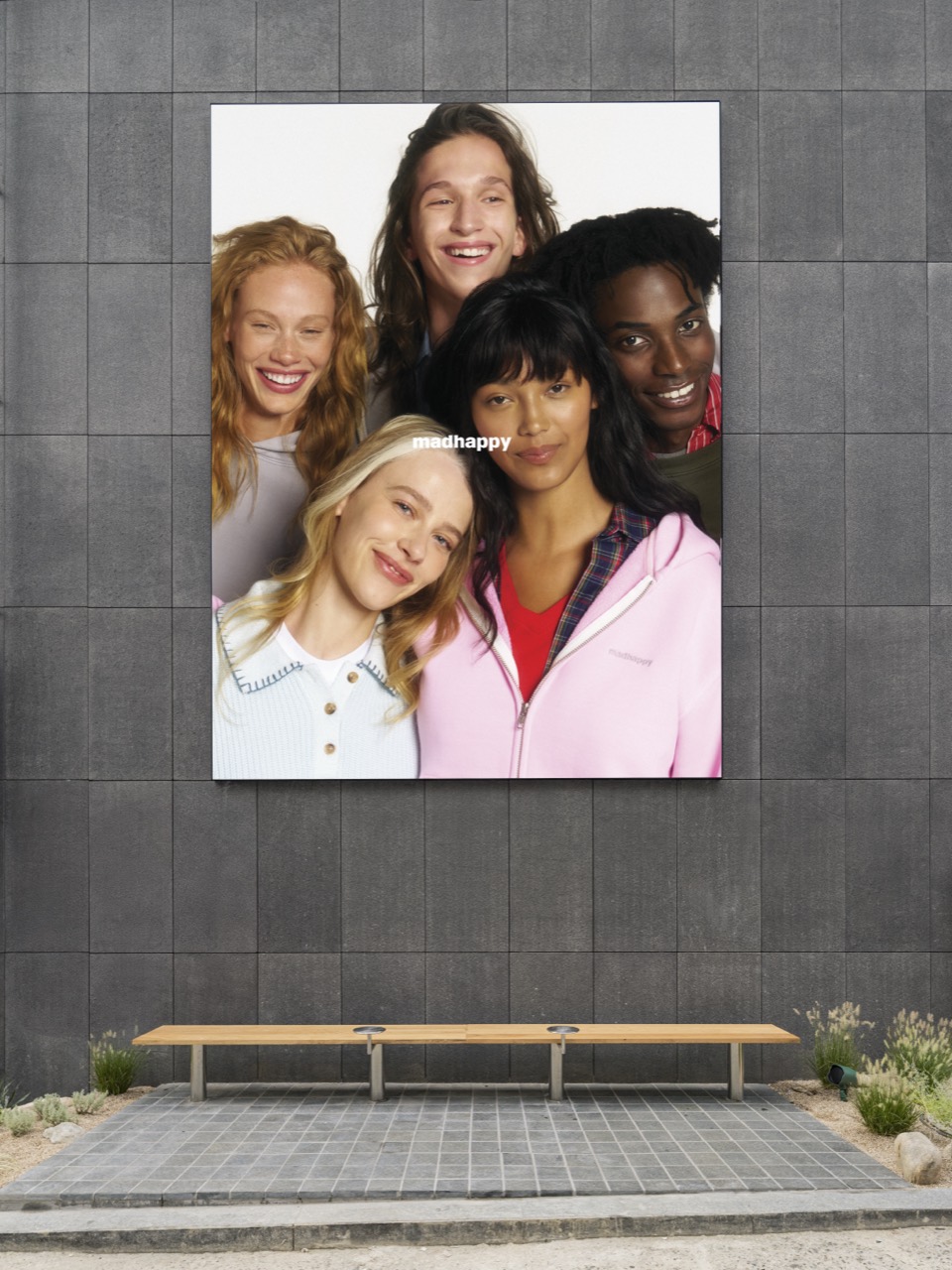
Los Angeles casualwear brand Madhappy has opened its first store in Seoul, on a side street by Dosan Park. It is a 316㎡ ground floor, about 96 pyeong, and the first thing you see when you walk in is a pair of sofas, not a clothing rail. This is a company that grew by running some twenty pop-ups over eight years and selling out on release day. Now it has taken a floor where rent, even at the district average, comes to KRW 44 million a month (about USD 32,000), and the first thing it laid down was somewhere to sit for a long time.
1.It opened on Saturday, September 5. After West Hollywood, New York, Tokyo and Malibu, it is the fifth permanent store, and the second outside the US after Tokyo. All 316㎡ sit on the ground floor. The headquarters came in directly, with no Korean distributor.
2.Brothers Peiman Raf and Noah Raf founded it in LA in 2017 with two friends. The signature product is a USD 175 fleece hoodie. The company sells clothes with the words mental health and optimism attached, so it runs a separate foundation that gives 1% of net sales to mental health organizations and publishes a quarterly, Local Optimist.
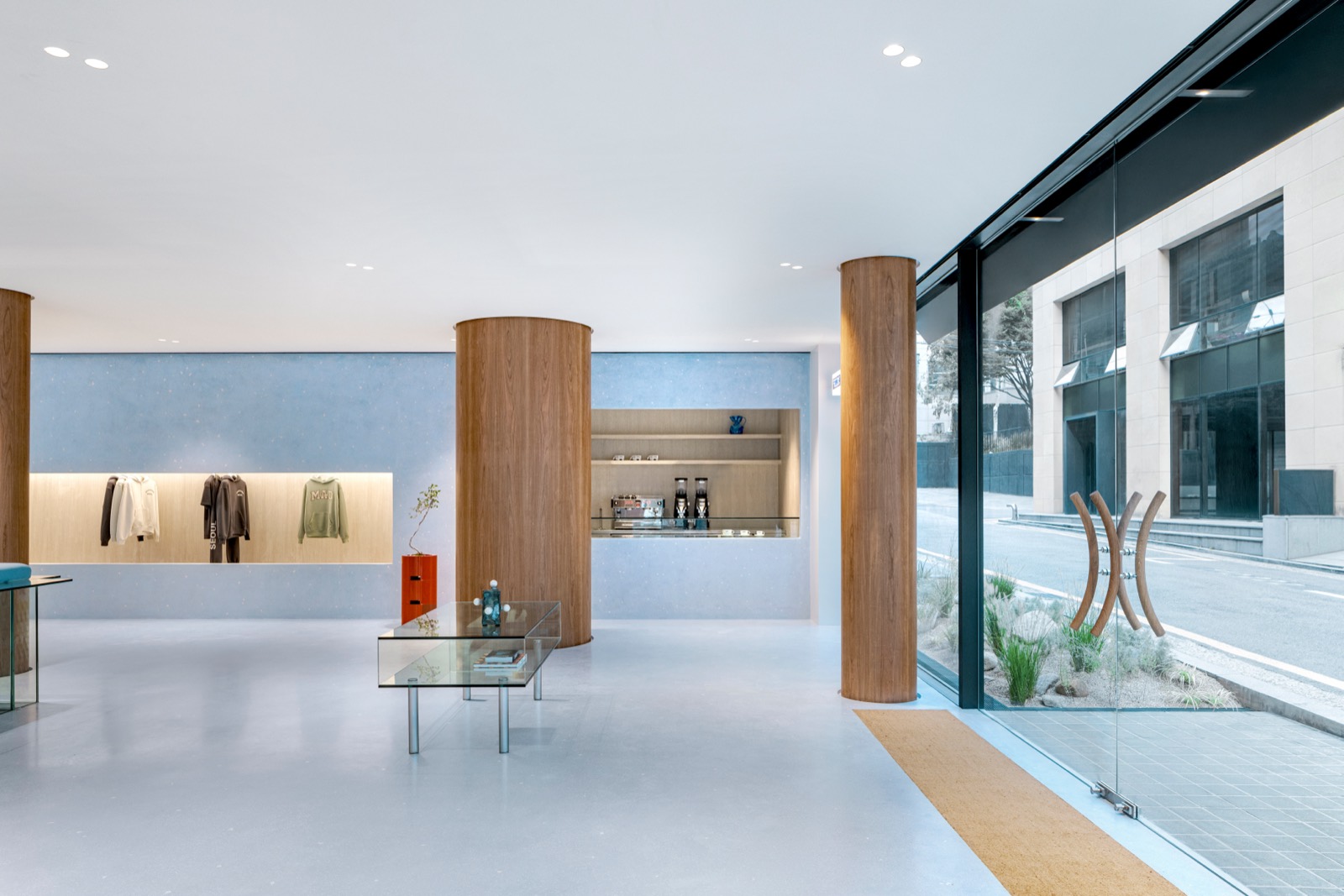
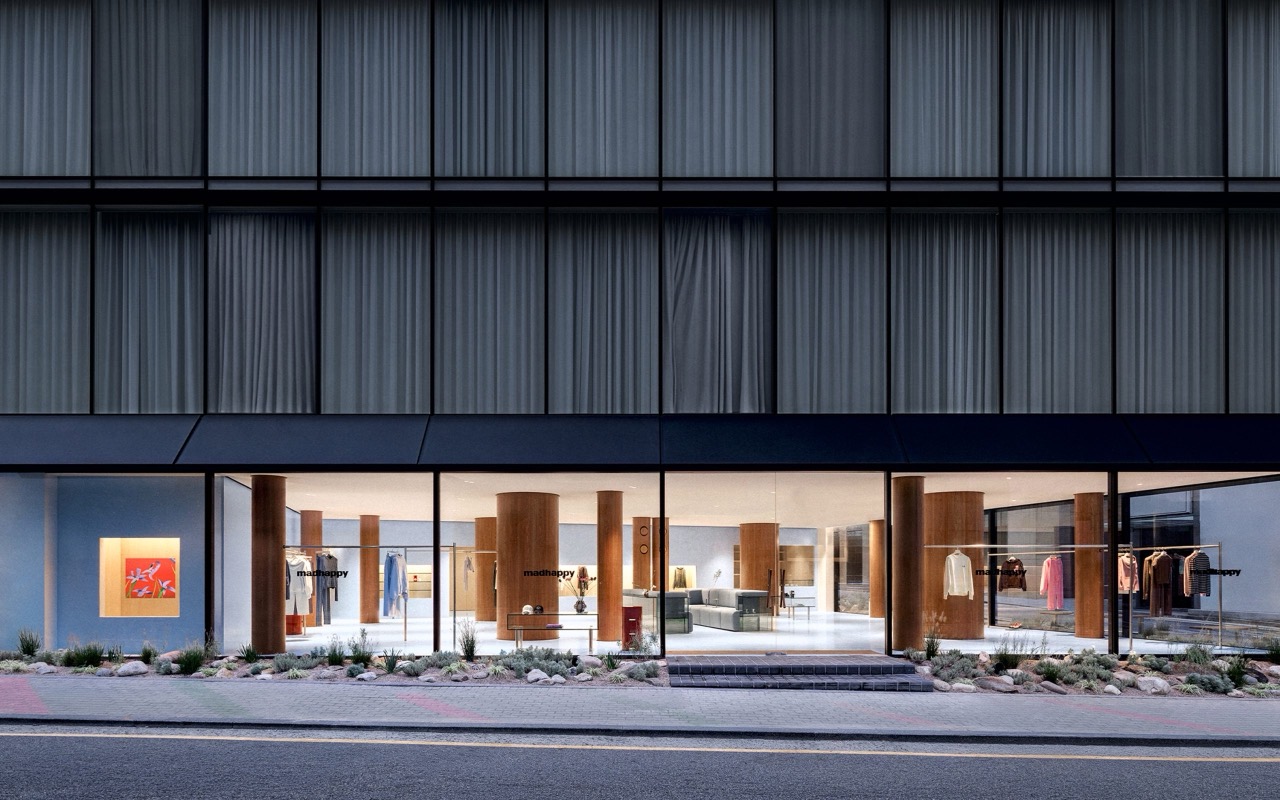
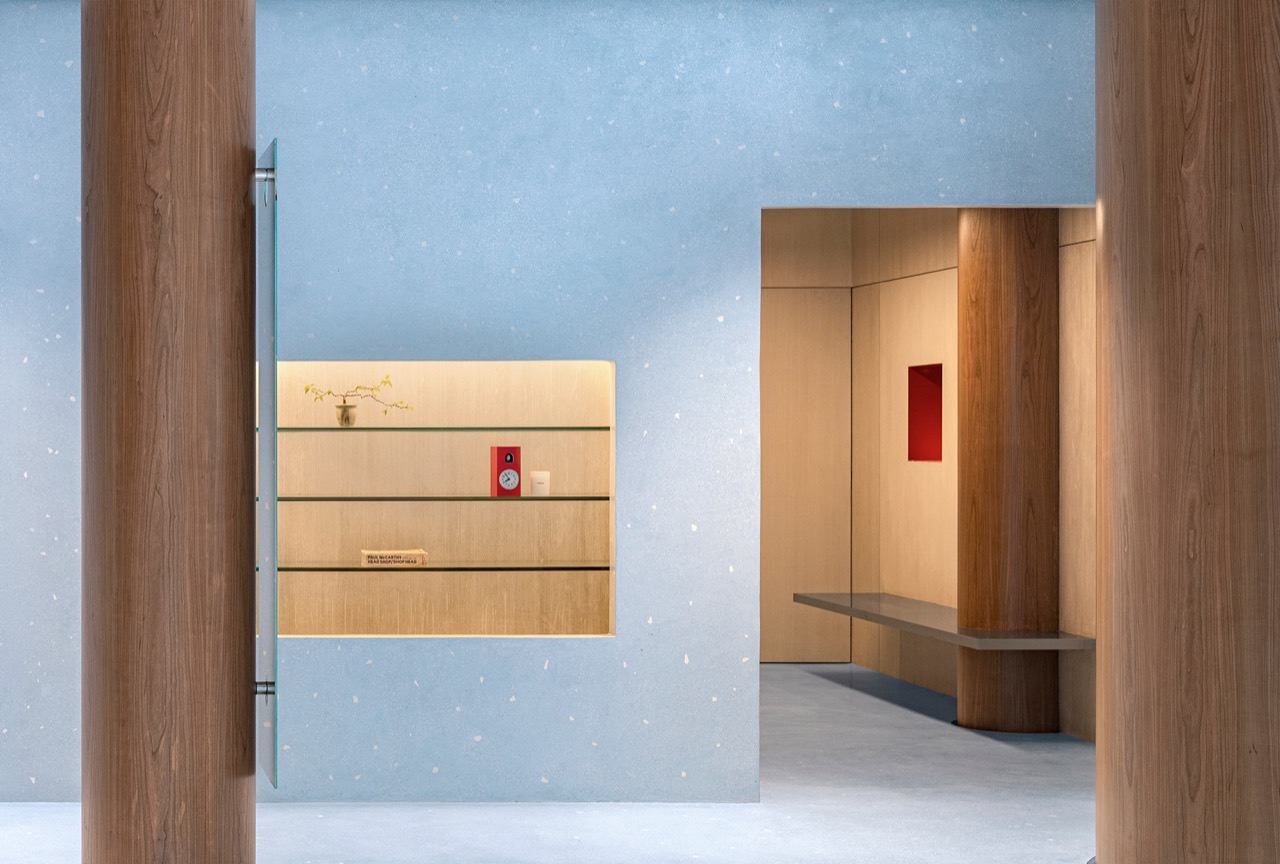
3.The design was done with LA studio PlayLab. Instead of dividing the store with partitions, they raised timber columns like a forest. Some are the building's original columns and the rest are new. The spacing of the columns separates the sales floor, the café and the seating. Three sides are glass from floor to ceiling, so you can see in from the street.
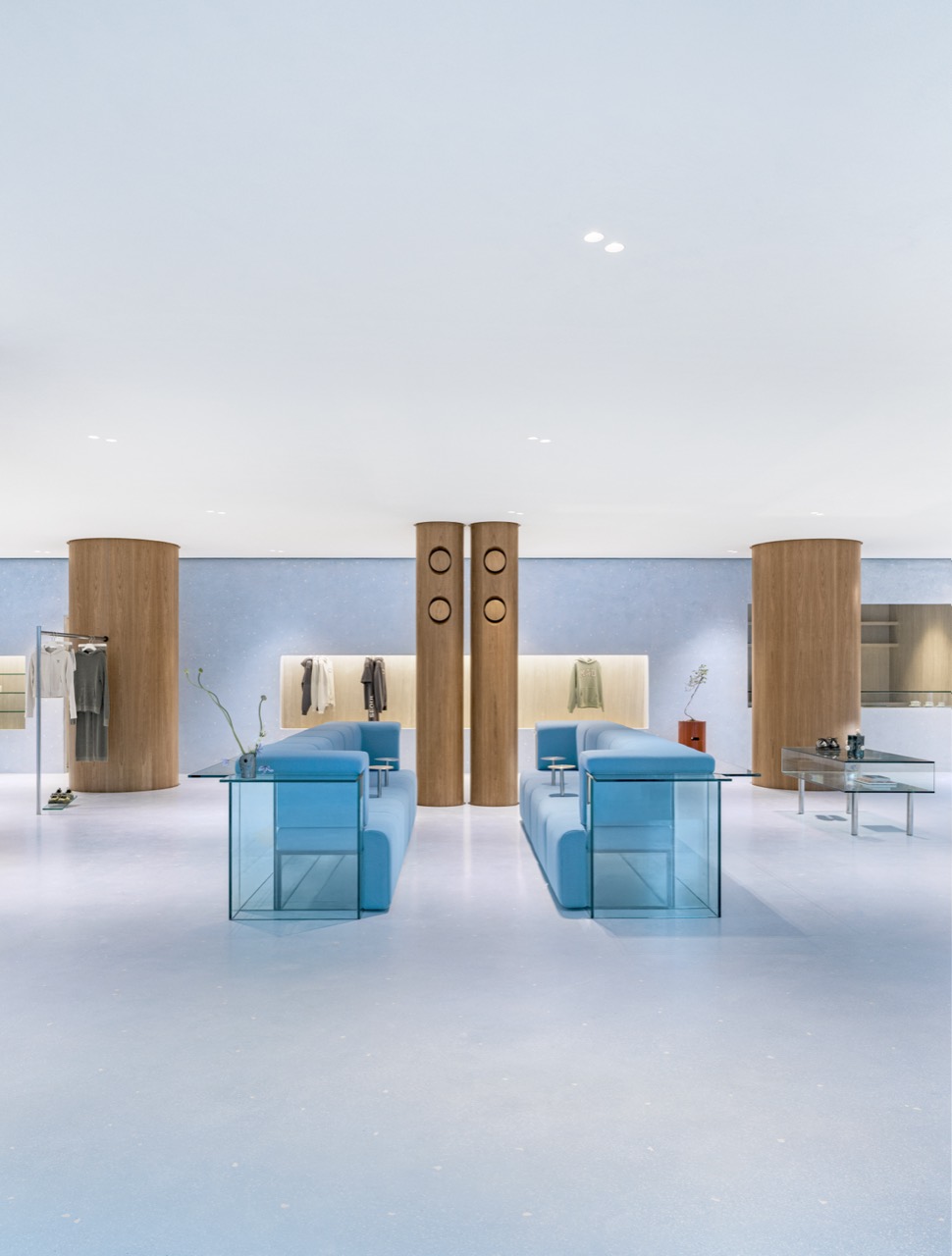
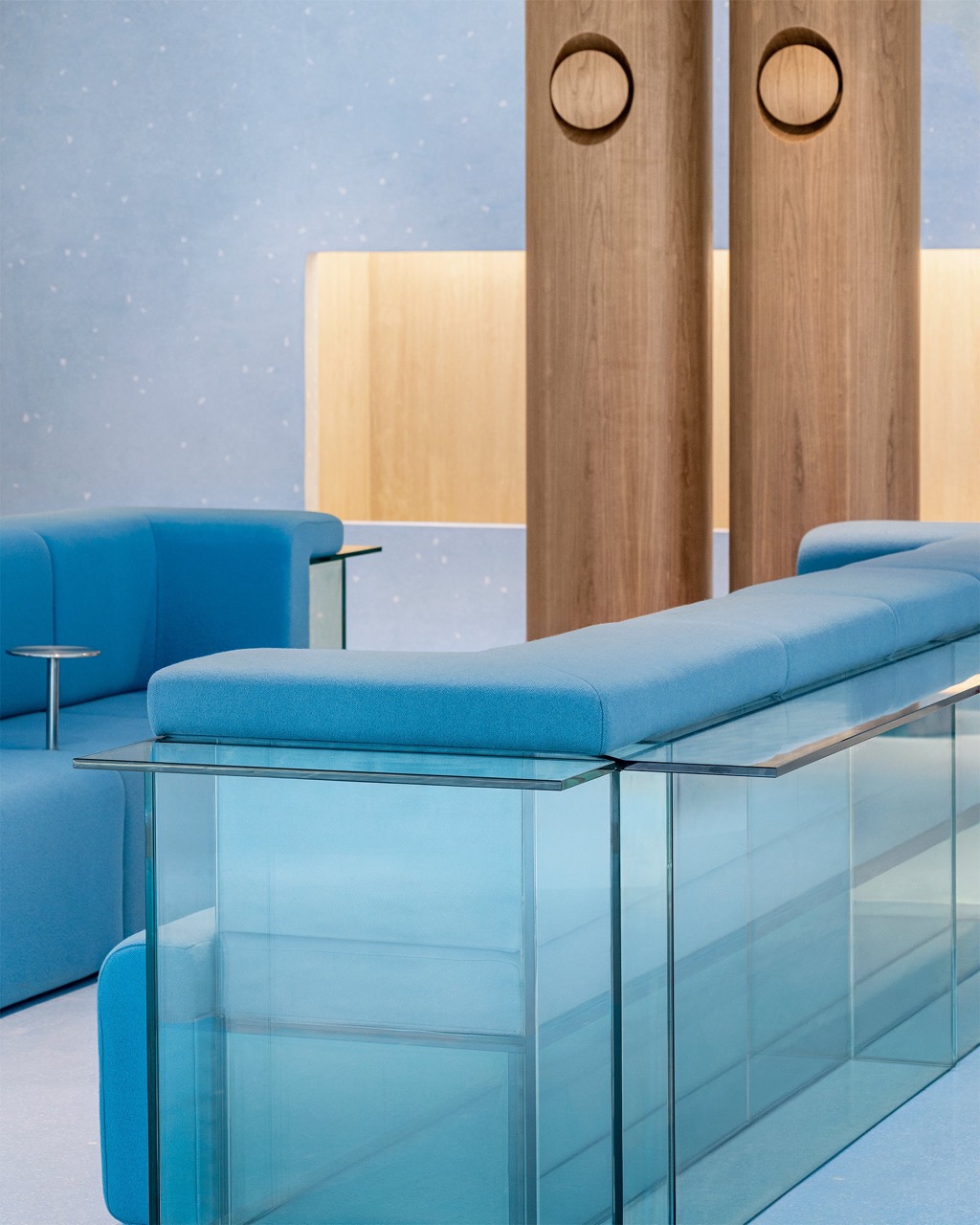
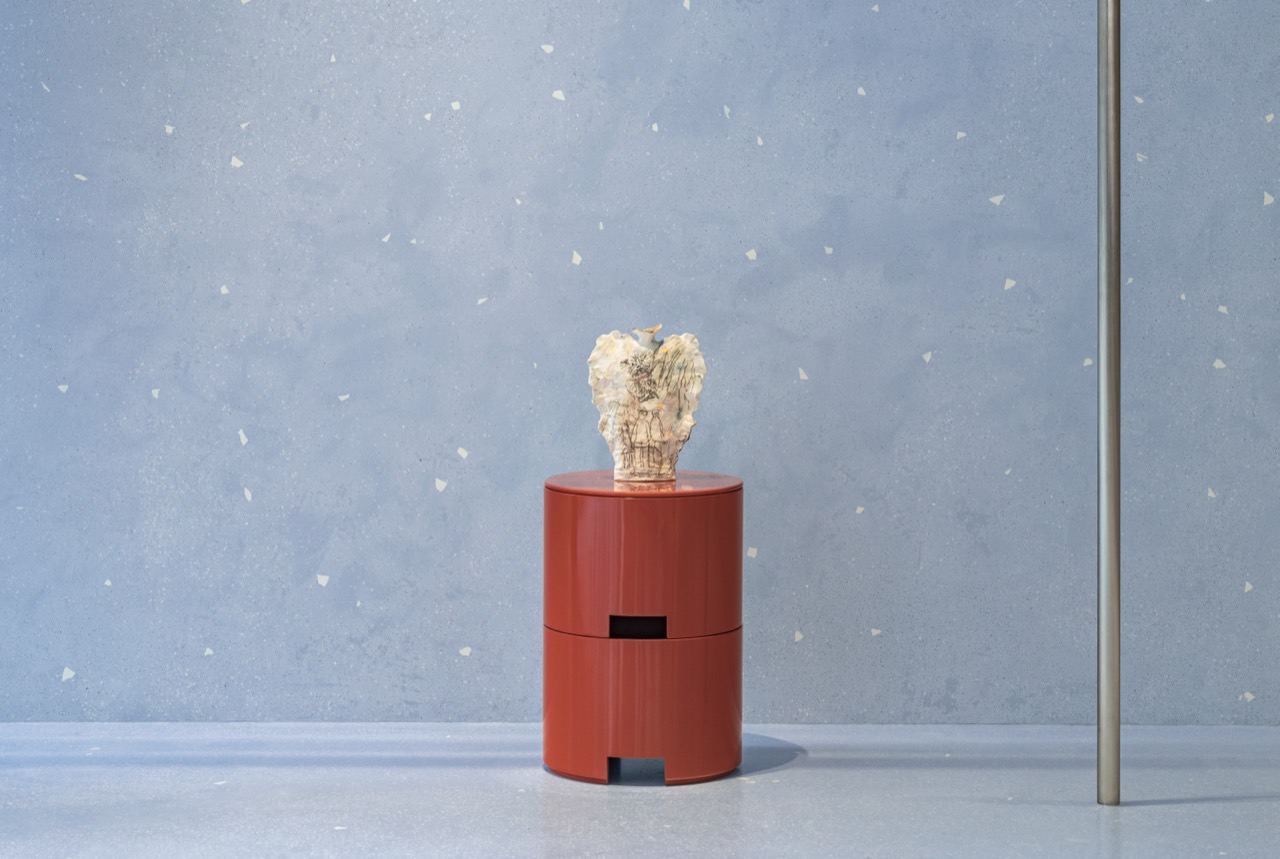
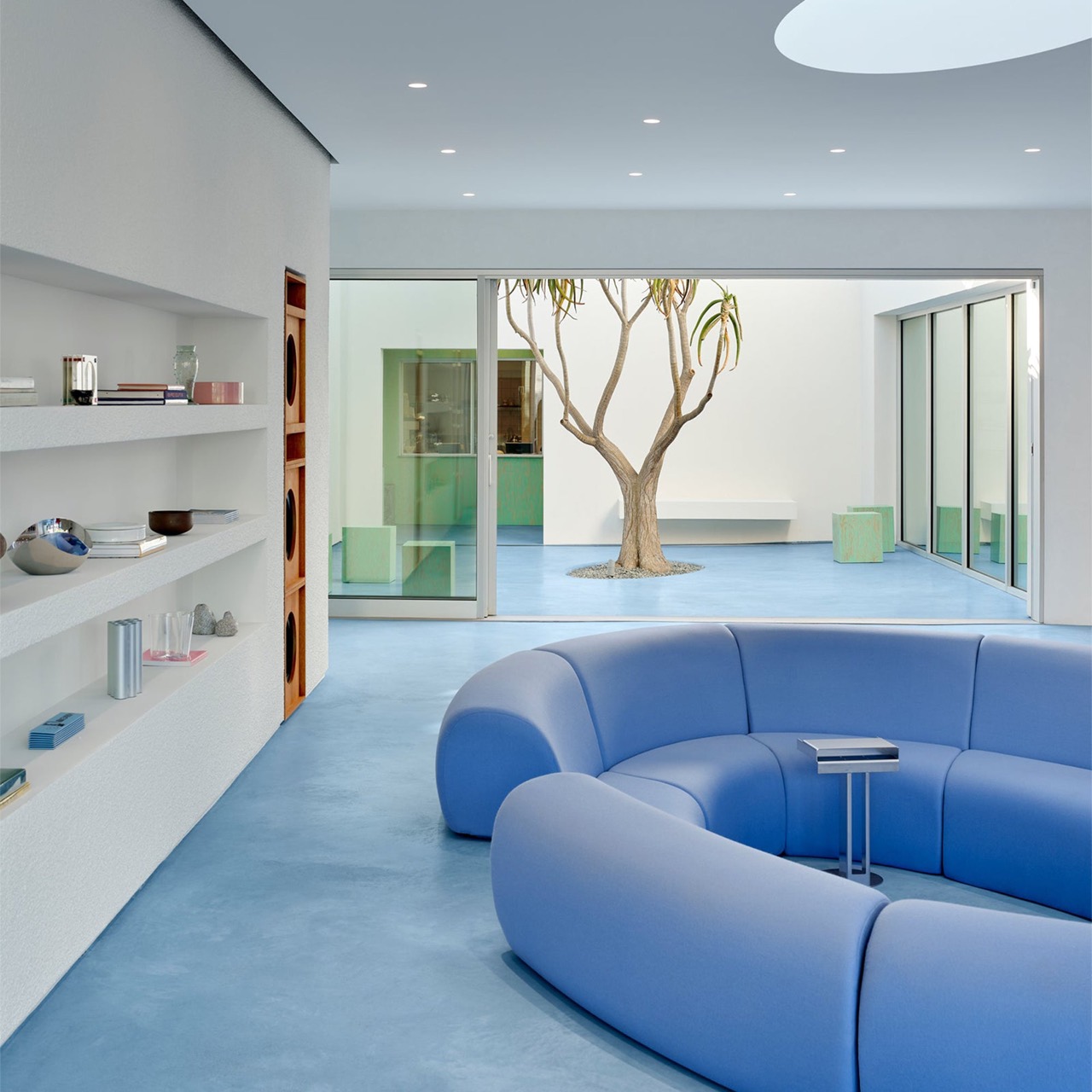
4.Floors and walls are poured pale blue terrazzo. Terrazzo is stone chips mixed into cement, poured and then ground, so it has no joints, and that blue flecked with white stone runs from the floor over the corner and straight up the wall. The round holes in the two central columns are speakers. In front of them sit two sofas, blue fabric on clear glass bases. Fitting rooms and plinths are finished in red lacquer. In a room of only blue and wood, that red is where the eye stops.
5.Drinks come from Pantry, the in-store café. LA's LOQUAT COFFEE made a blend just for this store, Seoul's Maison M'O supplies pastries and ZENZERO supplies gelato. Rather than build a kitchen, the store stocks goods from shops that already have a name. Beside the building, a small gravel garden and a wooden bench.
6.Why put seating ahead of clothes? Over the past year, card transactions in the Dosan Park district fell 4.0% from the year before, while spending per transaction rose 8.2%. Fewer people come, and those who come spend more. On a street like this, how long you can hold the one person who walks through the door shows up at the till.
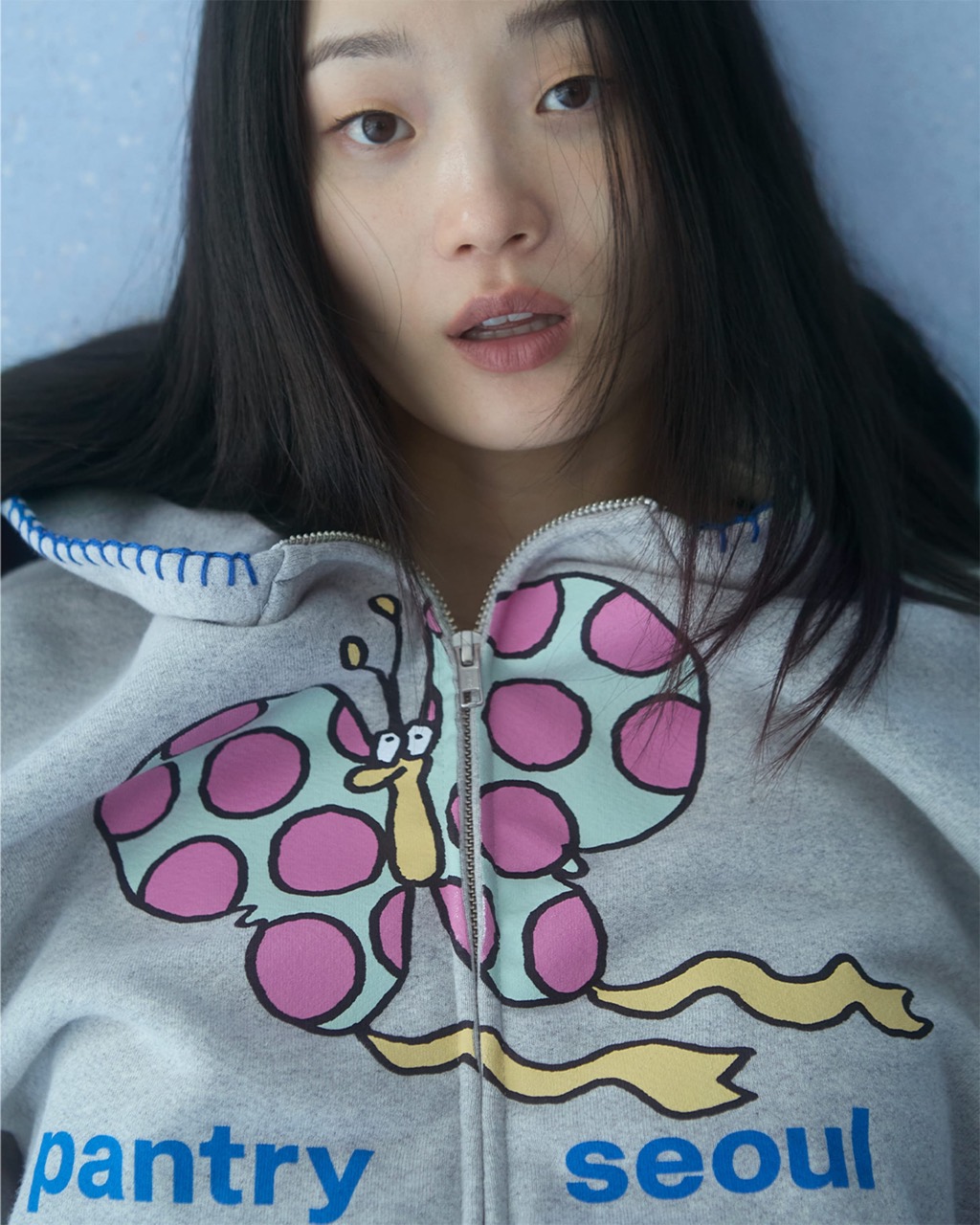
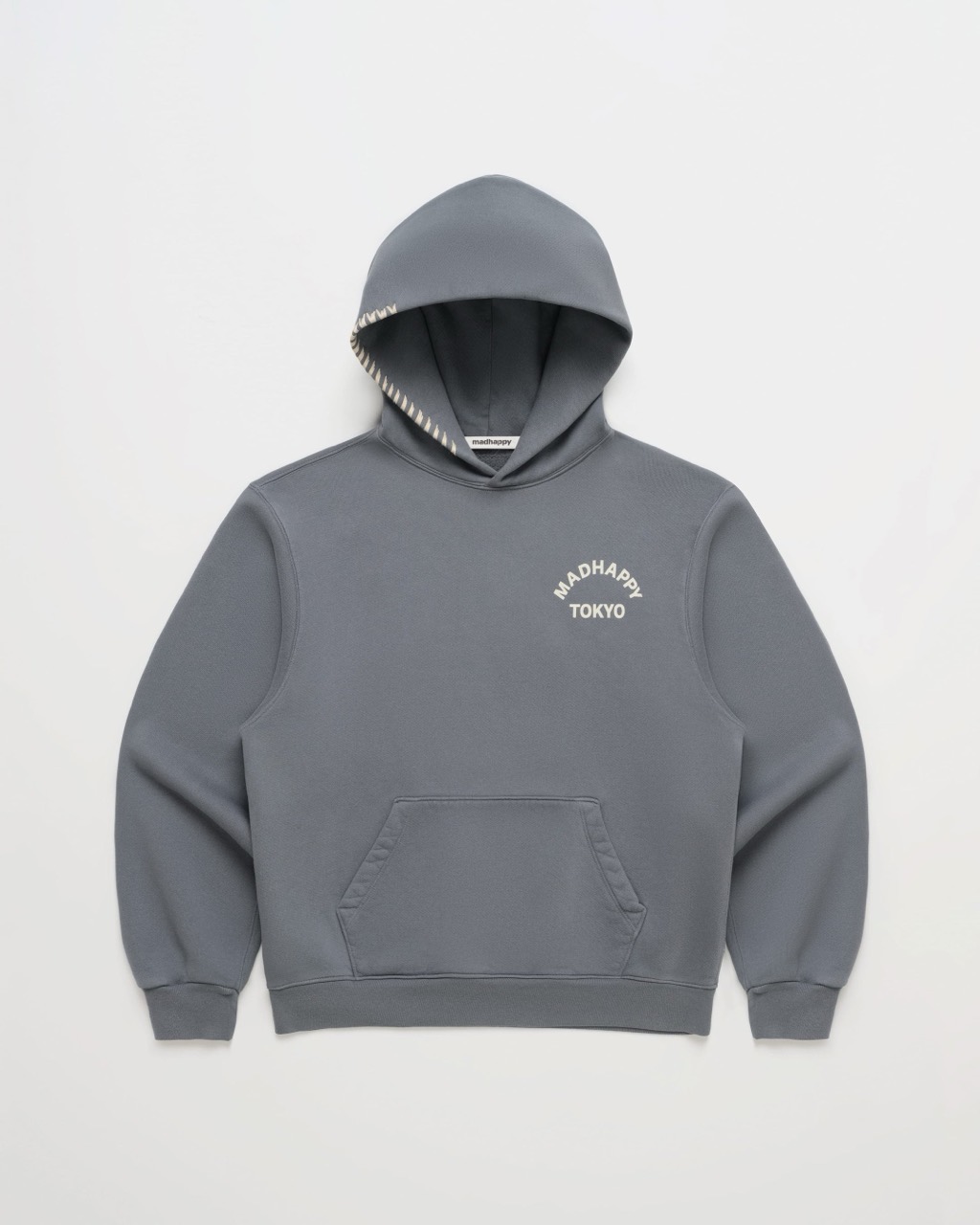
7.Some goods hang only in the Seoul store. One is a zip hoodie printed with pantry seoul across the chest. The Tokyo store also sells exclusive hoodies printed MADHAPPY TOKYO from ¥38,500, more than 30% above the USD 175 US price of the basic hoodie even with tax taken out. It is the pop-up method, making things you can only buy if you show up that day, carried into a permanent store.
8.The name spread in Korea when photos circulated of BLACKPINK's Jennie wearing one of the brand's collaboration hoodies. In an interview, Noah Raf said 65% of customers are women. Before the opening, the first to drop by, pick out clothes and film a video was singer Jeon Somi.
9.The rent for this space has not been disclosed. Alsquare puts the Dosan Park district average at KRW 460,000 per 3.3㎡ a month, which over 96 pyeong comes to KRW 44 million a month. Within the same district rents run from the KRW 200,000s to the 1.1 millions, and the stretches where flagships cluster sit well above average.
10.To keep rent within 15% of sales, the store has to sell KRW 294 million a month even at the average rate. Count one transaction as KRW 300,000, roughly a hoodie, and that is 33 a day. Put another way, it needs more than 30 transactions a day, each nearly four times the district average. Set the ground-floor rate at 1.5 times the average and it becomes 49 a day.
11.How much of those 96 pyeong actually holds clothes? Garments hang only in timber shelves cut into the walls and on a few rails, while the center is taken by sofas, glass tables and plinths with sculptures. The more selling space you give up, the more each garment on the wall has to earn. The city exclusives and the café are set up to fill that gap.
12.This company did not grow by signing long leases. Its first pop-up was in Aspen, hometown of co-founder Mason Spector, and over eight years it ran some twenty pop-ups across the US. By the founders' account, everything sold out on release day. Since LVMH Luxury Ventures bought a minority stake in 2019, it has taken no more outside money, and it says it has been profitable since 2020.
13.The money earned that way is now going into long leases. Last year Noah Raf said about eight permanent stores were in the works. E-commerce research firm ECDB estimates 2024 sales on the brand's own website at USD 10.4 million, about KRW 14.5 billion. The KRW 3.5 billion a year the Seoul store needs at the average rate is about a quarter of that.
14.The sofa did not start in Seoul. The first permanent store, 260㎡ on Melrose Avenue in West Hollywood, also put a sky-blue circular sofa at its center, and the store that opened on Cat Street in Harajuku, Tokyo in October 2025 was 230㎡. The second overseas store is larger than the first store back home in LA.
15.Foreign brands lined up on this street first. Alo Yoga opened its first Asian flagship here in July 2024, and Stüssy has run a directly operated store nearby since that autumn. Over the same period, land prices per 3.3㎡ rose from the low KRW 200 millions in 2021 to as much as KRW 450 million in 2024. As foreign brands gathered, land prices jumped, and the higher land price becomes the rent of the next brand to arrive.
16.An LA brand that grew on pop-ups took 96 pyeong of ground floor at Dosan Park and gave the middle of it to sofas and a café. Even at the average rate, it needs 33 transactions of KRW 300,000 a day to keep rent within 15% of sales. A Korean brand bringing a café like this into its store faces two more pieces of paperwork. Brewing coffee requires a separate café business registration under Korea's food sanitation law, and if an outside shop runs it under its own name, it becomes a sublease that needs the landlord's consent. Without a sublease clause in the lease, that counter cannot open.