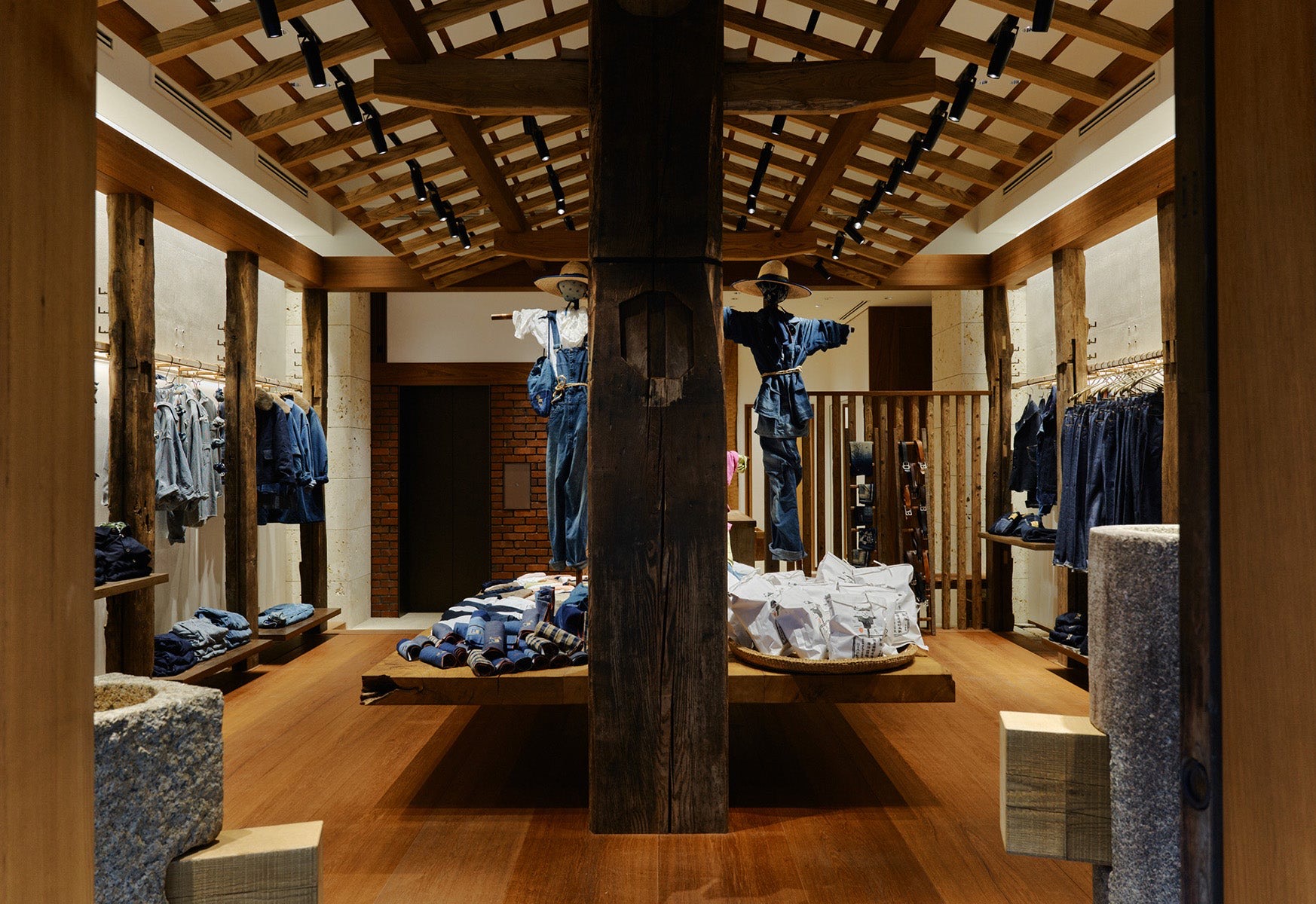
Japanese denim brand 45R moved its Ginza main store and reopened it on September 8. A shop that occupied a single floor of about 73 square meters (22 tsubo) now fills an entire four-story building. On the ground floor stand two chestnut pillars taken from a house several centuries old. The operating company publicly pledged to reach 10 billion yen in sales by 2030, and the very next year its books showed 10.3 billion yen.
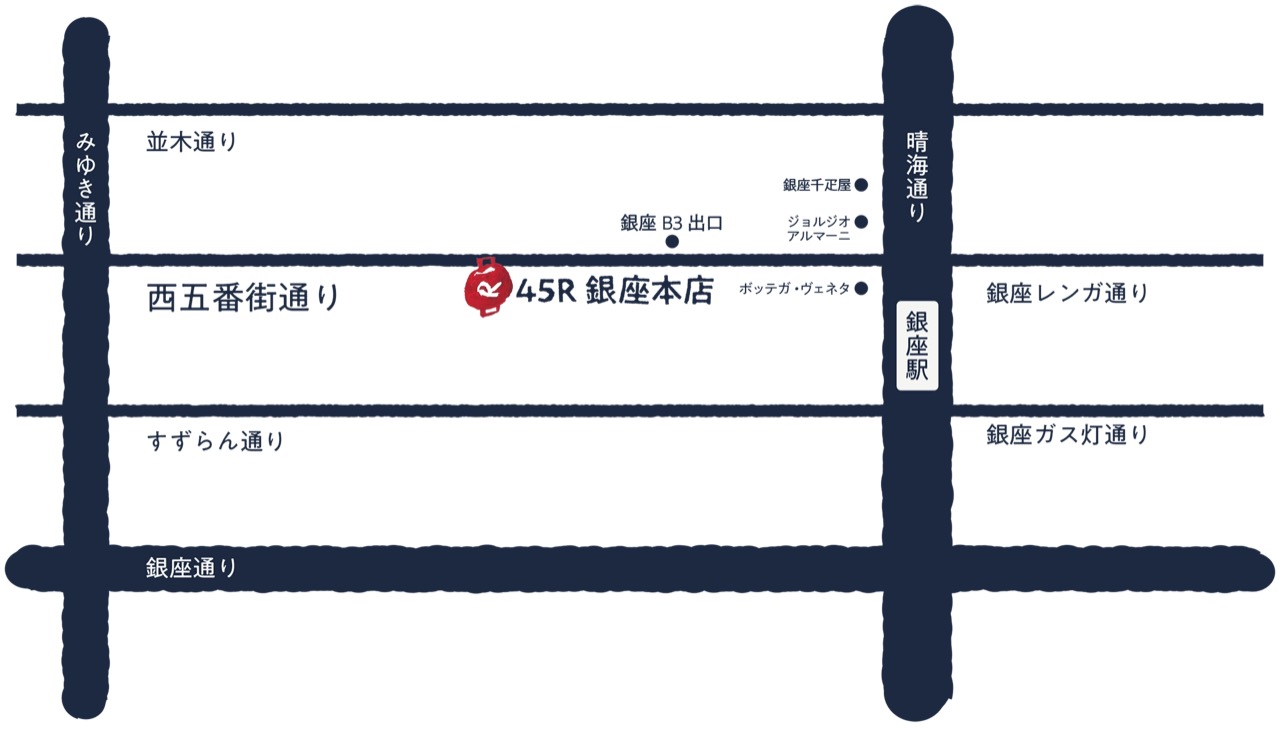
1.On September 8, 45R moved its Ginza main store to the Seiko Ginza 5-chome Building on Nishi-Gobangai. It takes the whole four-story building. Turn right out of Exit B3 of Ginza Station and it is right there. For the first three days only visitors with reservations were let in, and every customer who bought something went home with a tenugui towel made of indigo-dyed khadi, the hand-spun cotton of India.
2.The old Ginza store, opened in November 2012 near Namiki-dori in Ginza 3-chome, was a single ground-floor shop of about 22 tsubo. It ran for 14 years, closed on February 14 this year, and stayed dark for seven months. The new address sits on a back street running east to west between Namiki-dori and Harumi-dori, and where that street meets Harumi-dori, Giorgio Armani and Bottega Veneta hold the corner. When the old store opened in 2012, its denim sold for 20,000 to 38,000 yen.
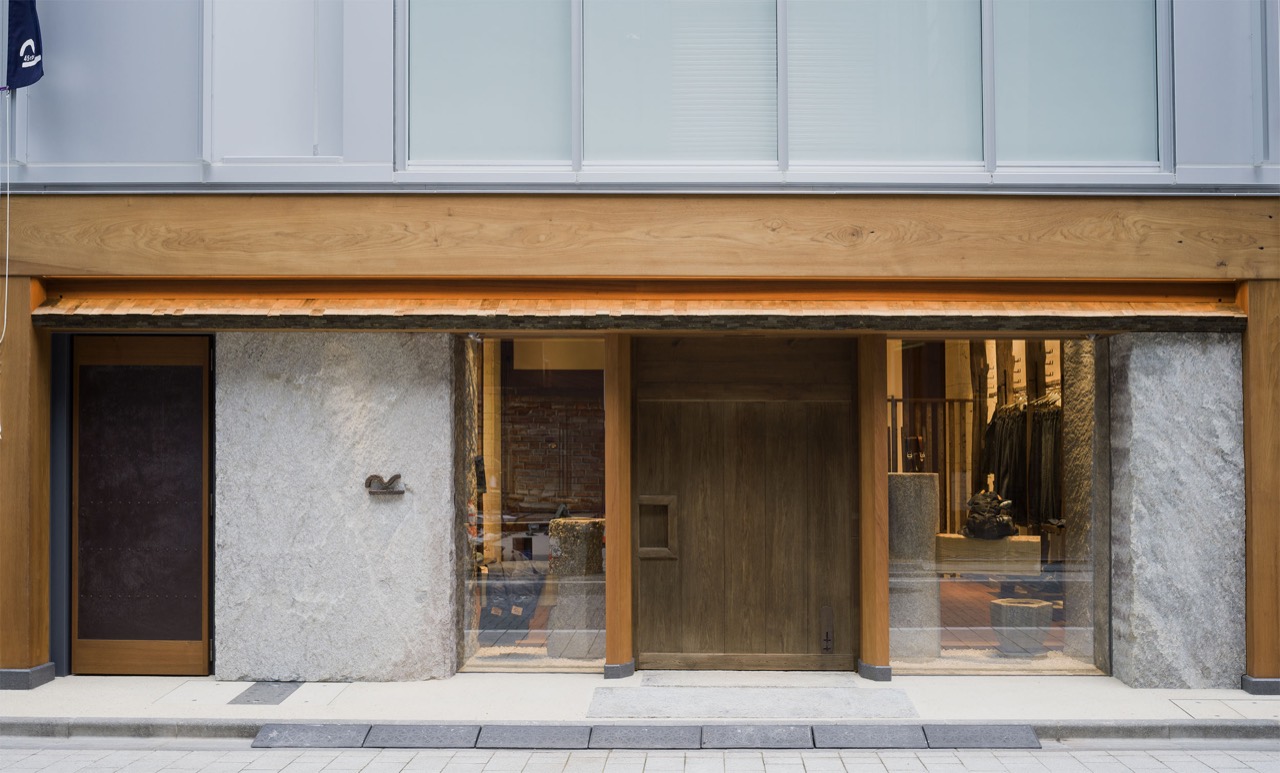
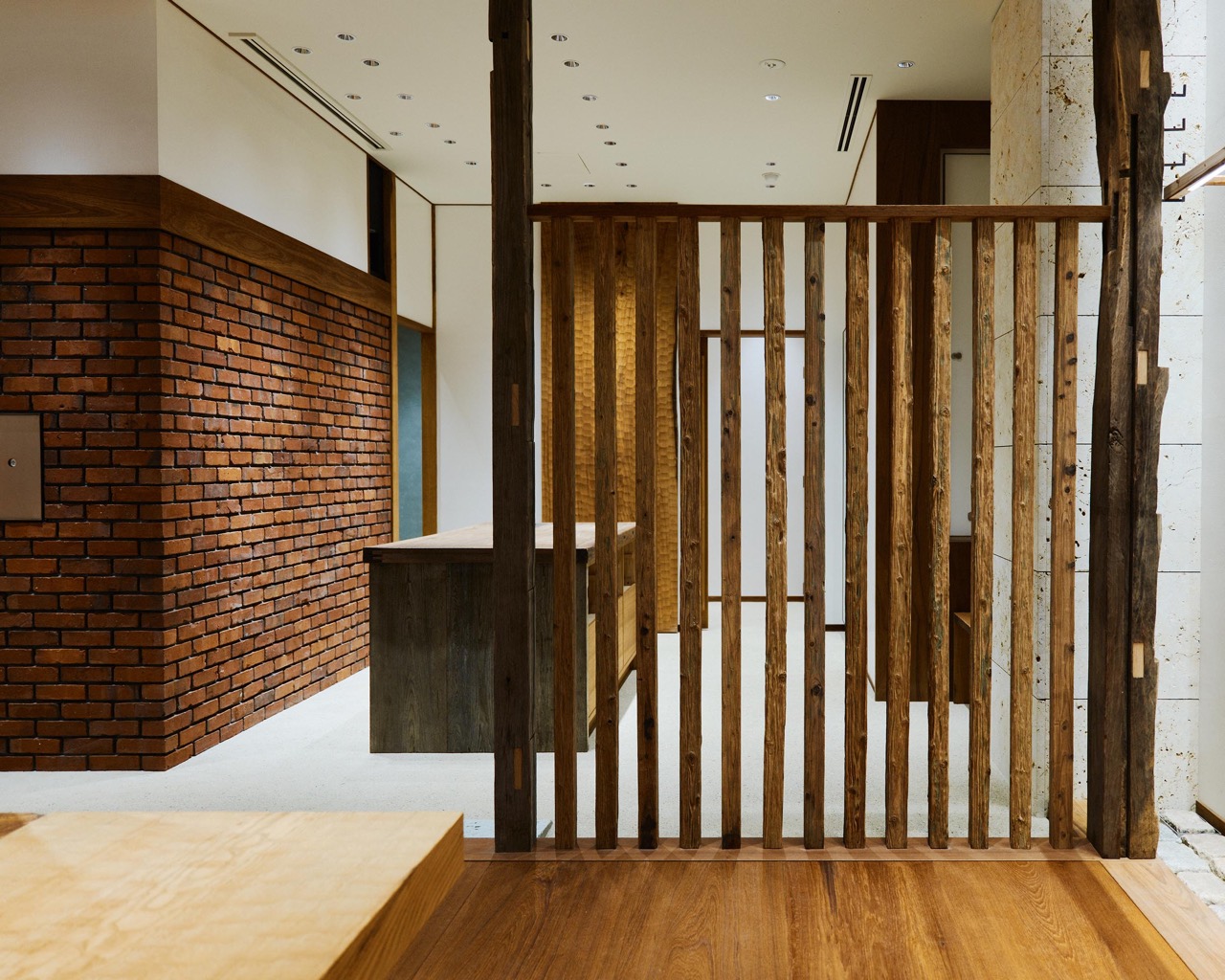
3.The ground floor is called Kuri no Ma, the chestnut room. Chestnut salvaged from old Japanese buildings that stood for hundreds of years forms the two daikoku-bashira pillars at the center, and the same wood clads the back wall and the display platforms. The shikuchi, grooves where other members once locked into the timber in its former house, were left open rather than filled. Construction and the choice of timber went to Sankakuya, a Kyoto collective of sukiya carpenters.
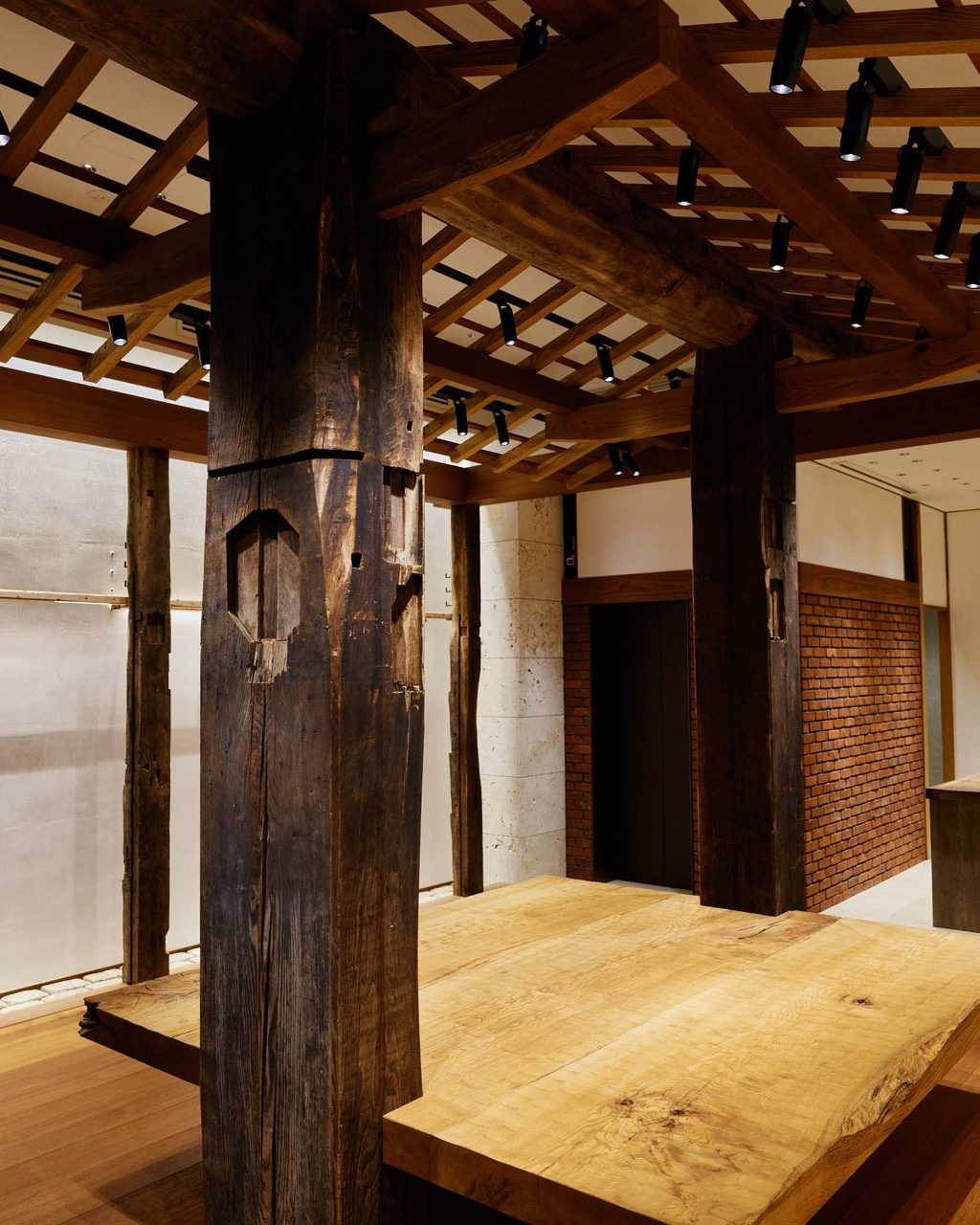
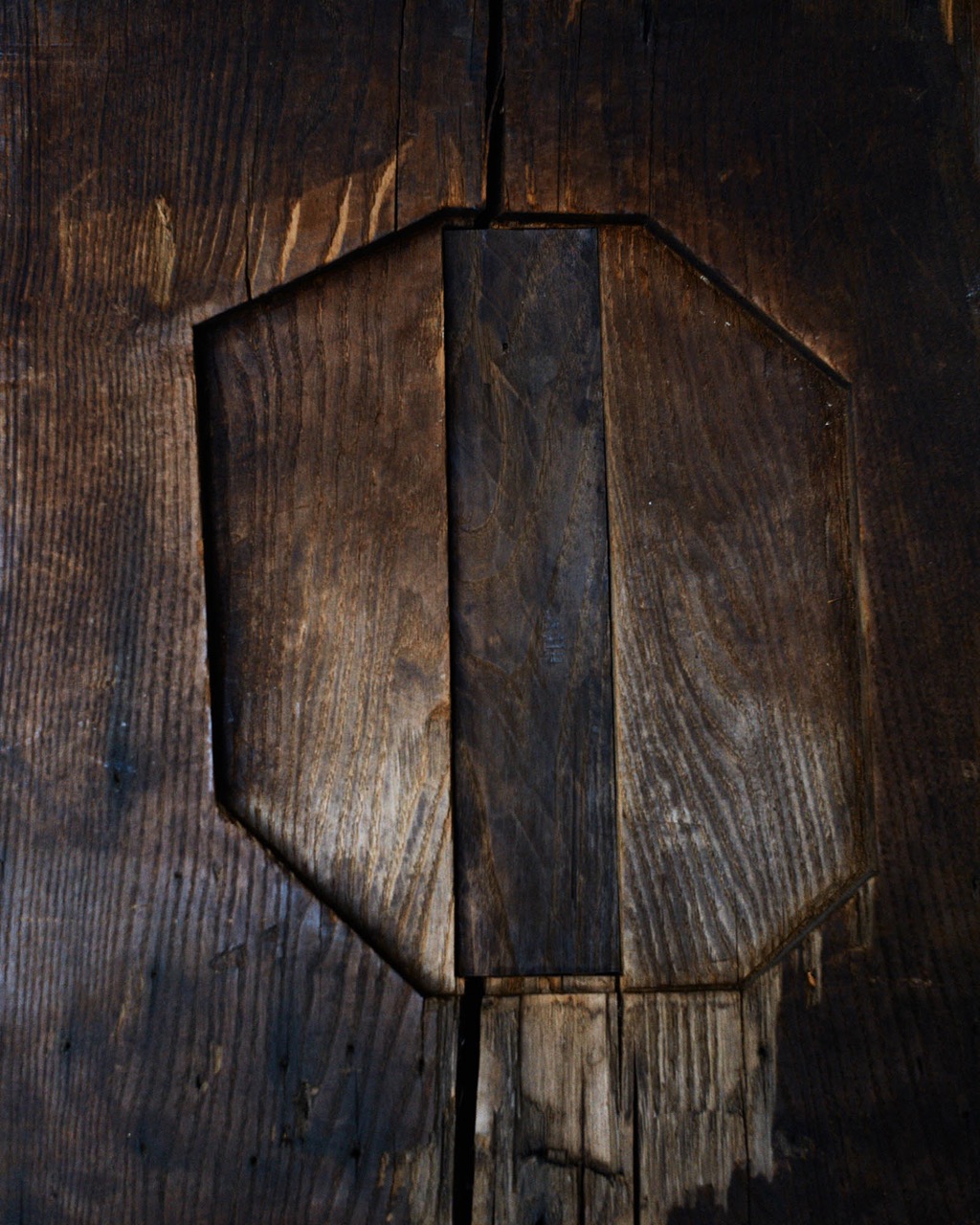
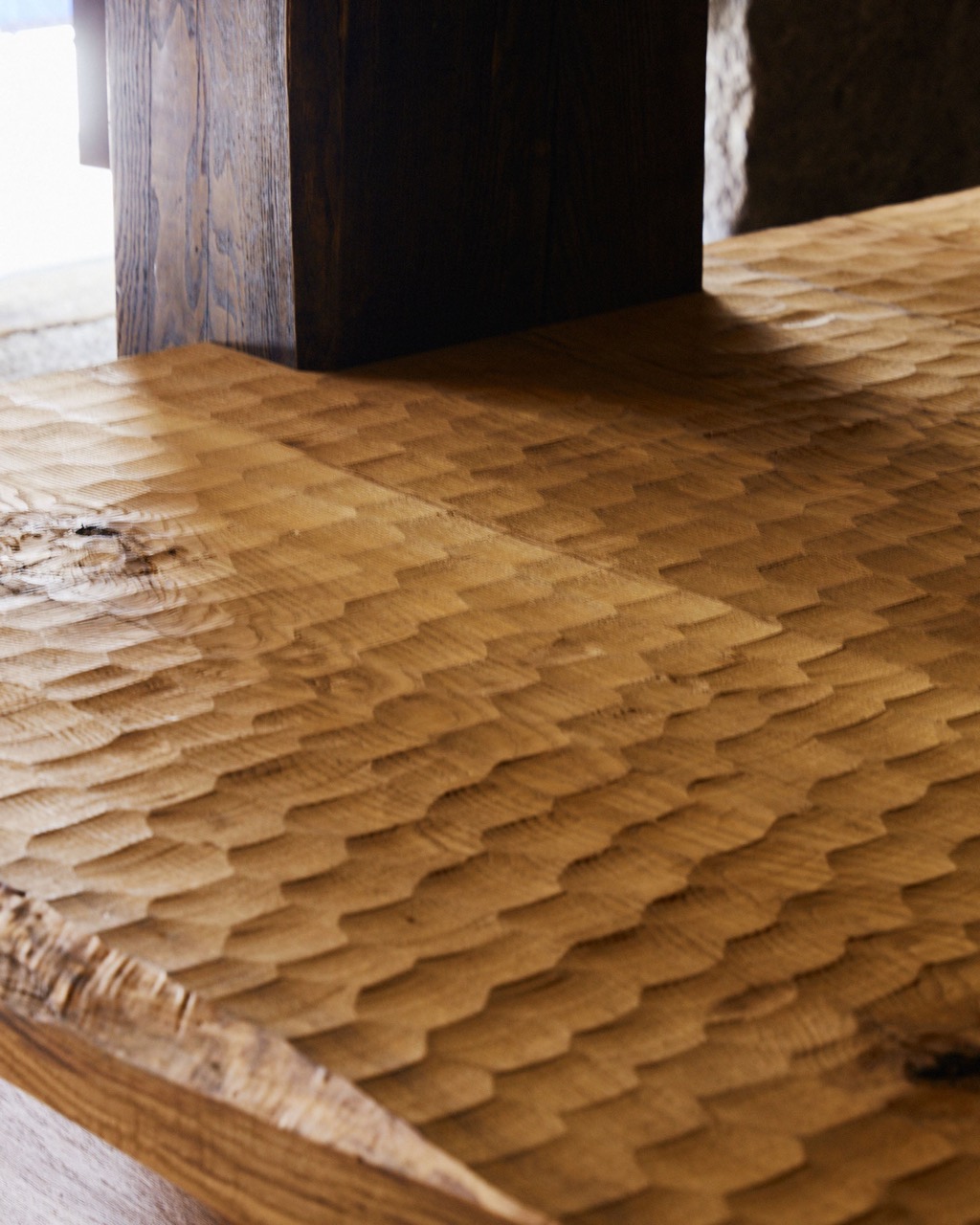
4.The tops of the display platforms carry a naguri finish, scooped one stroke at a time with an adze, so a palm pushed across them catches on every scale-like mark. The boards that hold stacks of jeans were never planed smooth. The middle of the shop is left open as a place to sit around, like an irori hearth, and an old storehouse door has been taken off its hinges and laid flat as a table. The fitting rooms and benches ring that space.
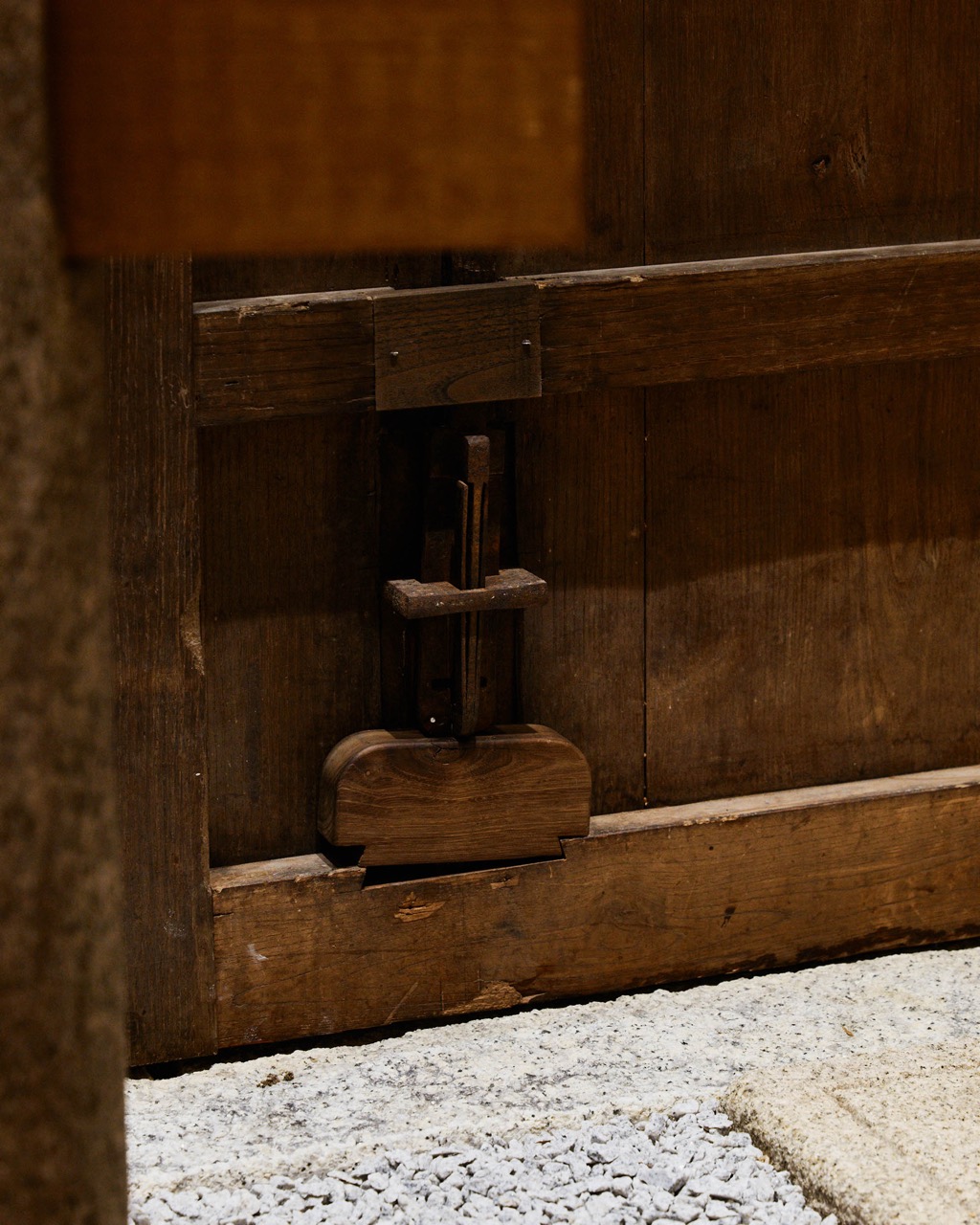
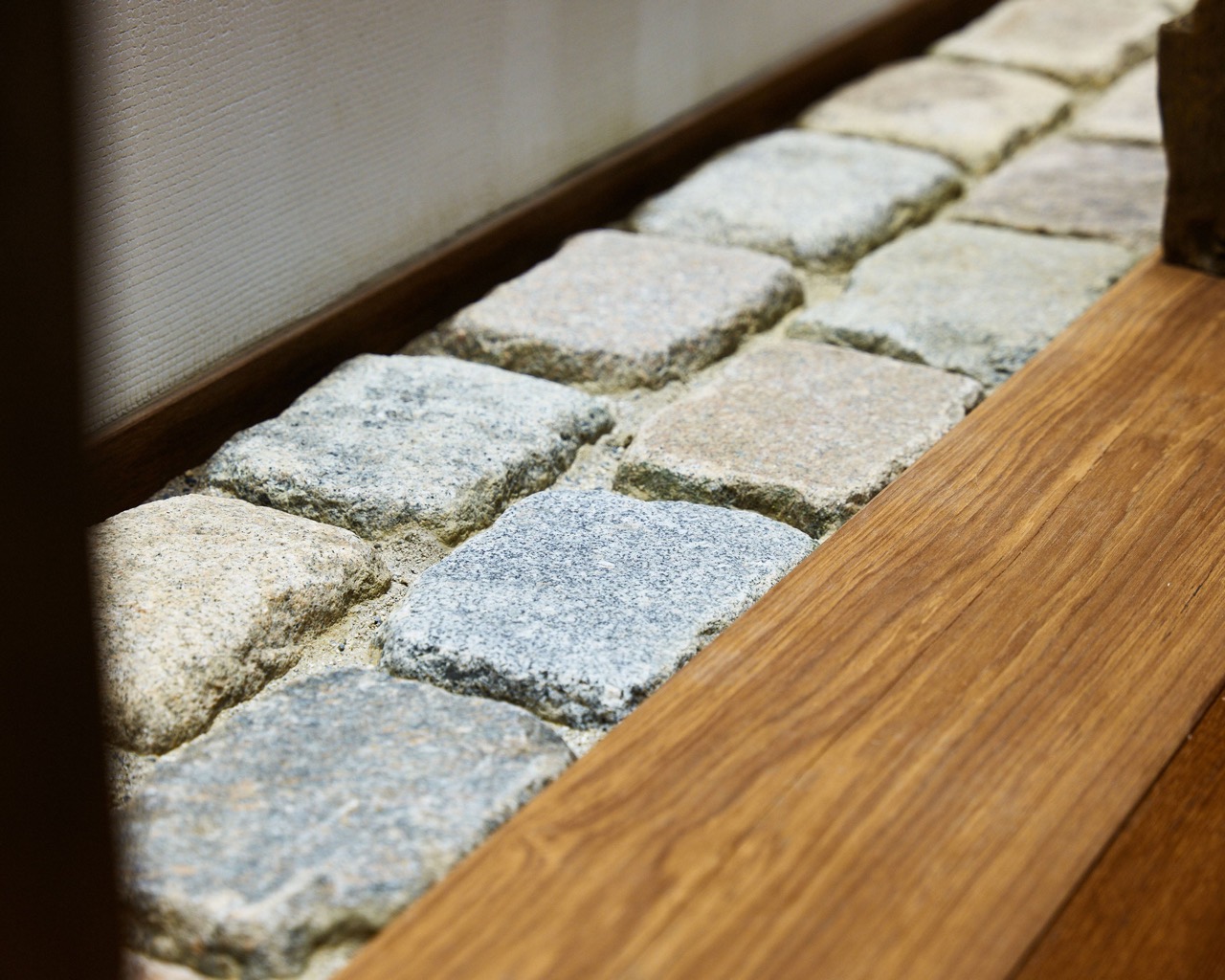
5.Not every material is Japanese. The beam of nearly 8 meters across the front and the floorboards are teak, laid like a yacht deck. Stone from Windsor Castle in England paves the approach to the door, and the corner wall is built of stone from Fukushima. The stonework fell to the Anoshu, a Shiga masons' guild carrying on the techniques once used for castle walls. The company describes this floor with three words: clothing, earth, wood.
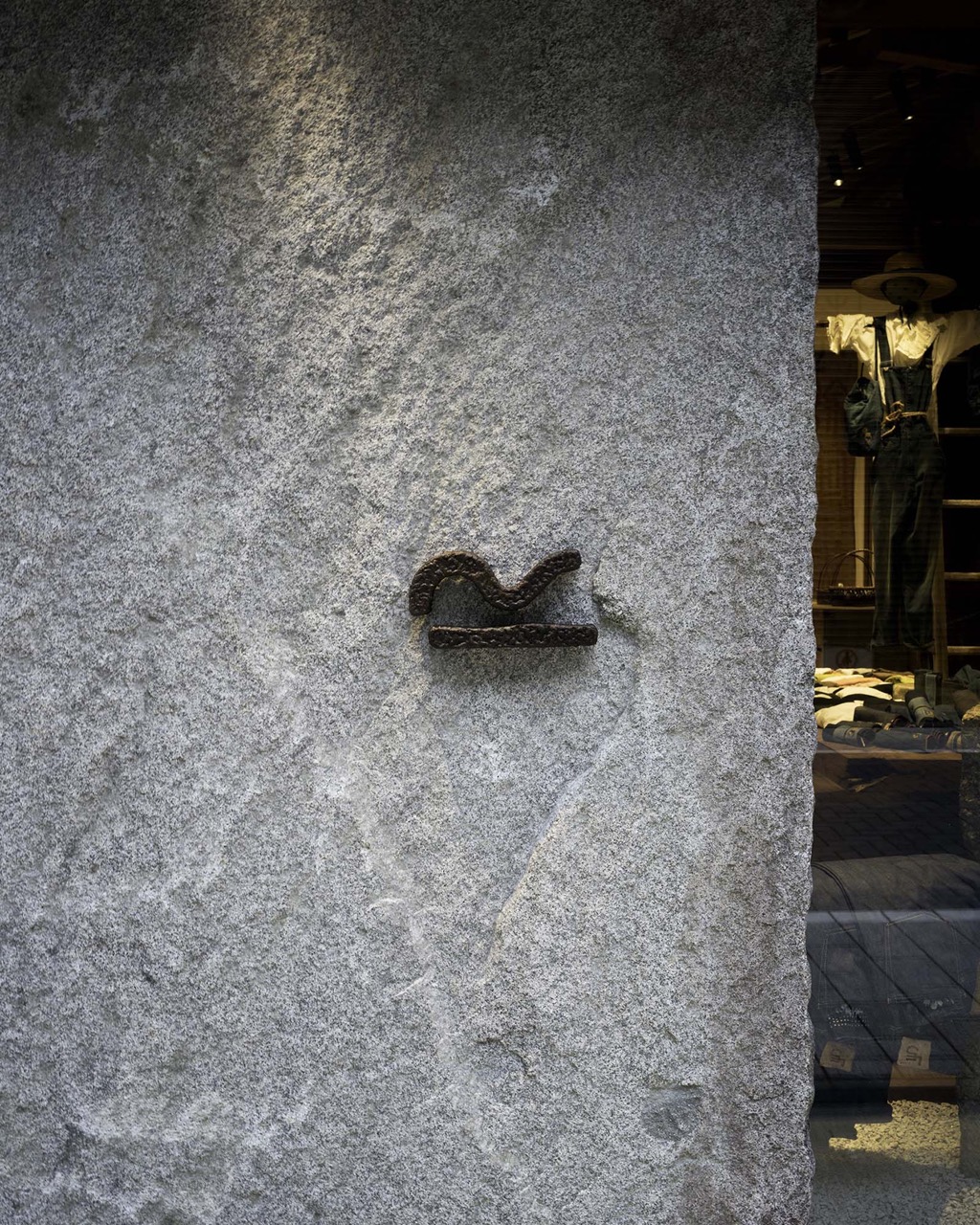
6.Each upper floor has its own name. The second floor, Kyokumen no Ma, is wrapped in curved walls and hangs the seasonal collection. The third floor, Ai no Ma, has hinoki floorboards laid in a checkerboard and plastered walls, and sells only the indigo line Ai Shokunin Iroiro 45. The fourth floor, Chabatei, is a gallery and tea room holding ceramics, lacquerware and woodwork. T-shirts and bandanas on the ground floor, the most expensive clothes on the third.
7.The company has said in its own words why it holds on to indigo. In a declaration to reach 10 billion yen in sales, filed with the Organization for Small & Medium Enterprises and Regional Innovation on its February 2024 figures, it wrote that imitating and reproducing American clothing alone makes it hard to stand apart from vintage. Most jeans are dyed with synthetic indigo derived from petrochemicals, which needs no indigo farming. The sukumo 45R has taken up is a natural dye made by fermenting indigo leaves for months, and the declaration itself lists color variation from lot to lot as a problem to solve.
8.What a customer buys here is the time a garment has passed through. A long process cannot be conveyed by explanation, so the company turned that time into pillars, a door and stone and set them on the ground floor. Handing out a single indigo-dyed cloth as an opening gift comes from the same reasoning. The store is listed as tax-free, yet it closes at 6:30 p.m., an hour and a half earlier than the Ginza department stores that stay open until 8.
9.Sales at the operating company, 45rpm studio, grew 11 percent, from 9.3 billion yen in the year ended February 2024 to 10.3 billion yen in the year ended February 2025. That is a little over 95 billion won. The 10 billion yen the declaration aimed to reach by 2030 was passed in the very next set of results. The next target is 15 billion yen by 2034. Starting from 10.3 billion, growth of just over 4 percent a year gets there.
10.There are 38 stores in Japan and 23 overseas. Of the Japanese ones, 6 are street-level stores, 30 sit in department stores and malls, and 2 are online shops. Overseas, 4 are in the United States, 3 in Europe and 16 in Asia. Dividing sales simply by the 59 physical stores gives a little over 170 million yen each, and dividing by 347 employees gives about 30 million yen per person (estimate).
11.What lifts the average spend is the indigo line on the third floor. According to WWD Japan, its denim starts at 150,000 yen and the more expensive down jackets top 500,000 yen. A dedicated 122-square-meter store that opened in SoHo, New York, in October 2024 recorded an average spend of 650,000 yen on opening day and 450,000 yen across that month. A pair costs between 4 and more than 7 times the denim sold in Ginza in 2012.
12.Ginza store rents keep setting new records. CBRE put the expected contract rent for ground-floor space on Ginza's high street at 298,000 yen per tsubo per month in the second quarter of 2026, with vacancy at 0 percent for six straight quarters. Nishi-Gobangai is a back street off Chuo-dori, so rents there are lower, and 45R's lease terms have not been disclosed. Applying the high-street rate to just the 22 tsubo of the old store comes to 6.56 million yen a month, or 79 million yen a year (estimate). The rent on a single ground floor approaches half of what an average store sells in a year.
13.So as a sales outlet, this building hardly adds up. Instead, the declaration lists a separate growth measure: a showcase store that speaks to the world. The same document names where the money goes: a sukumo plant in Fukushima, dye works in Fukushima and Tokyo, and a hands-on workshop in Fukushima with lodging attached. The money goes into the upstream process, from indigo farming to dyeing, and in Ginza the company built the window that displays the result. It is also the company in which the Cool Japan Fund invested more than 800 million yen in 2017, its first investment in a fashion business.
14.The eye for materials has not changed in 14 years. The old Ginza store of 2012 also had solid single-board wood floors, earthen walls plastered by a craftsman from Awaji Island, and a window wall clad in chestnut. Back then the chestnut was one wall. Now it is the two pillars standing at the center of the ground floor. Sankakuya also built the Kyoto store on Sanjo-dori, which 45R describes as the most historic of its street-level stores in Japan.
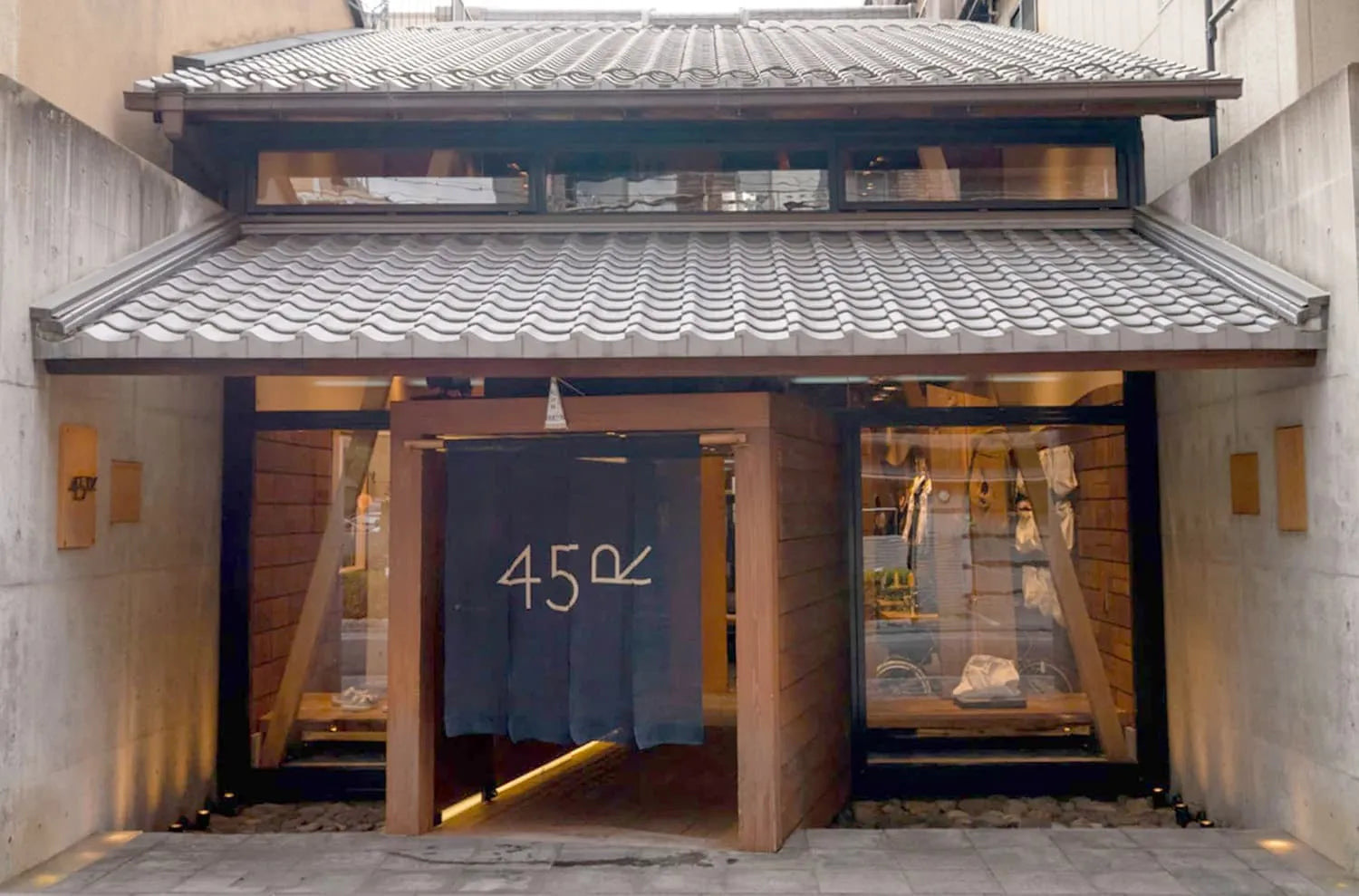
15.The company that wrote in its declaration that reproductions cannot beat vintage still stacks T-shirts and jeans on the ground floor, where most customers come and go. Under their feet lie stone from an English castle and teak boards. The ground floor takes the entry price point on the way to indigo, and the price of a single garment rises with every floor. The four floors of the building are the price list.
16.45R closed its 22-tsubo Ginza shop and opened four floors seven months later, and in the meantime the company's sales reached 10.3 billion yen, passing its declared target five years early. Anyone trying to build a shop from old timber and earthen walls in Korea first runs into the rules on interior finishes. Korea's Building Act requires flame-retardant performance for wall and ceiling finishes in retail facilities, so leaving old timber exposed as it is brings fire-retardant treatment and test certificates, and construction cost and schedule grow accordingly.