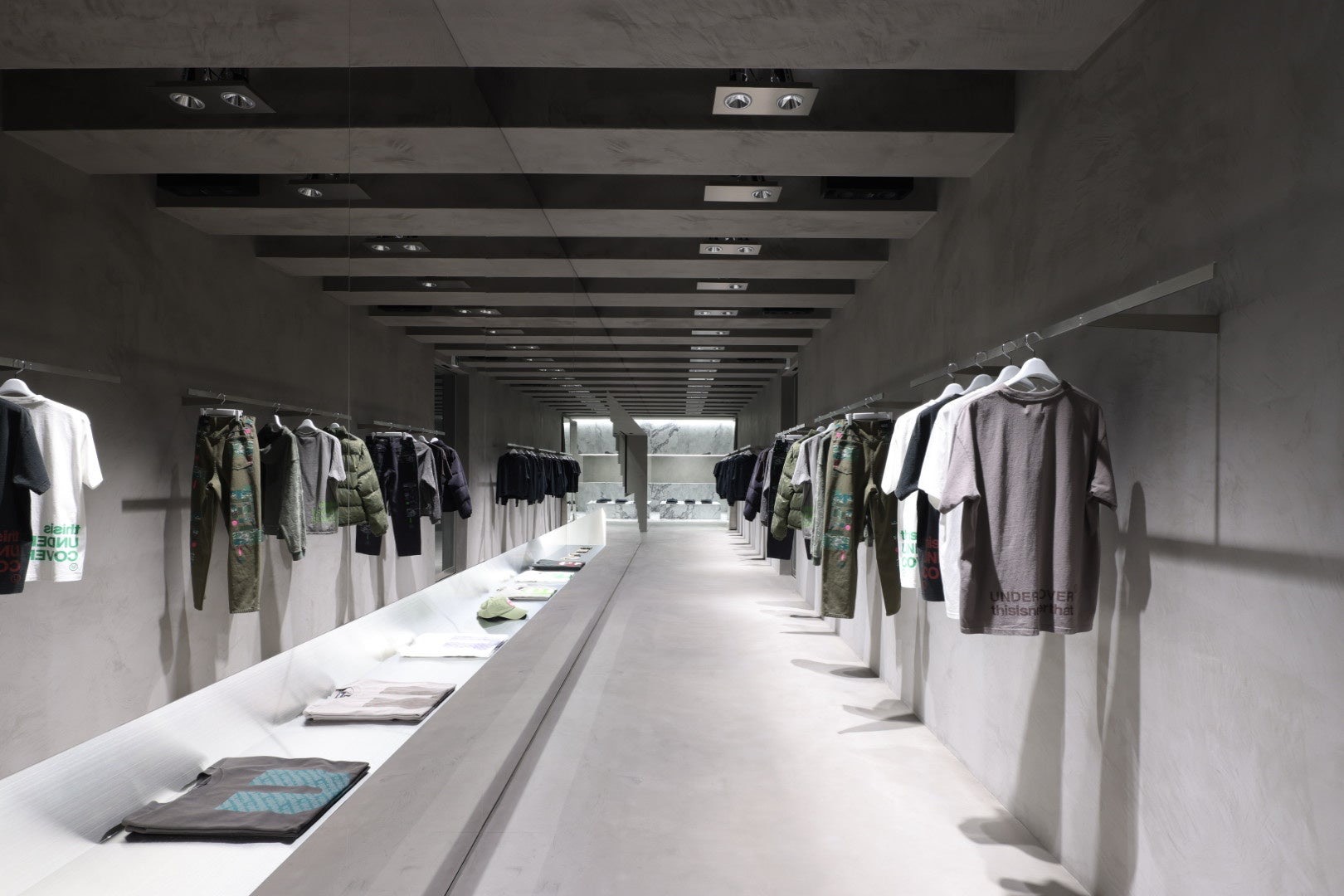
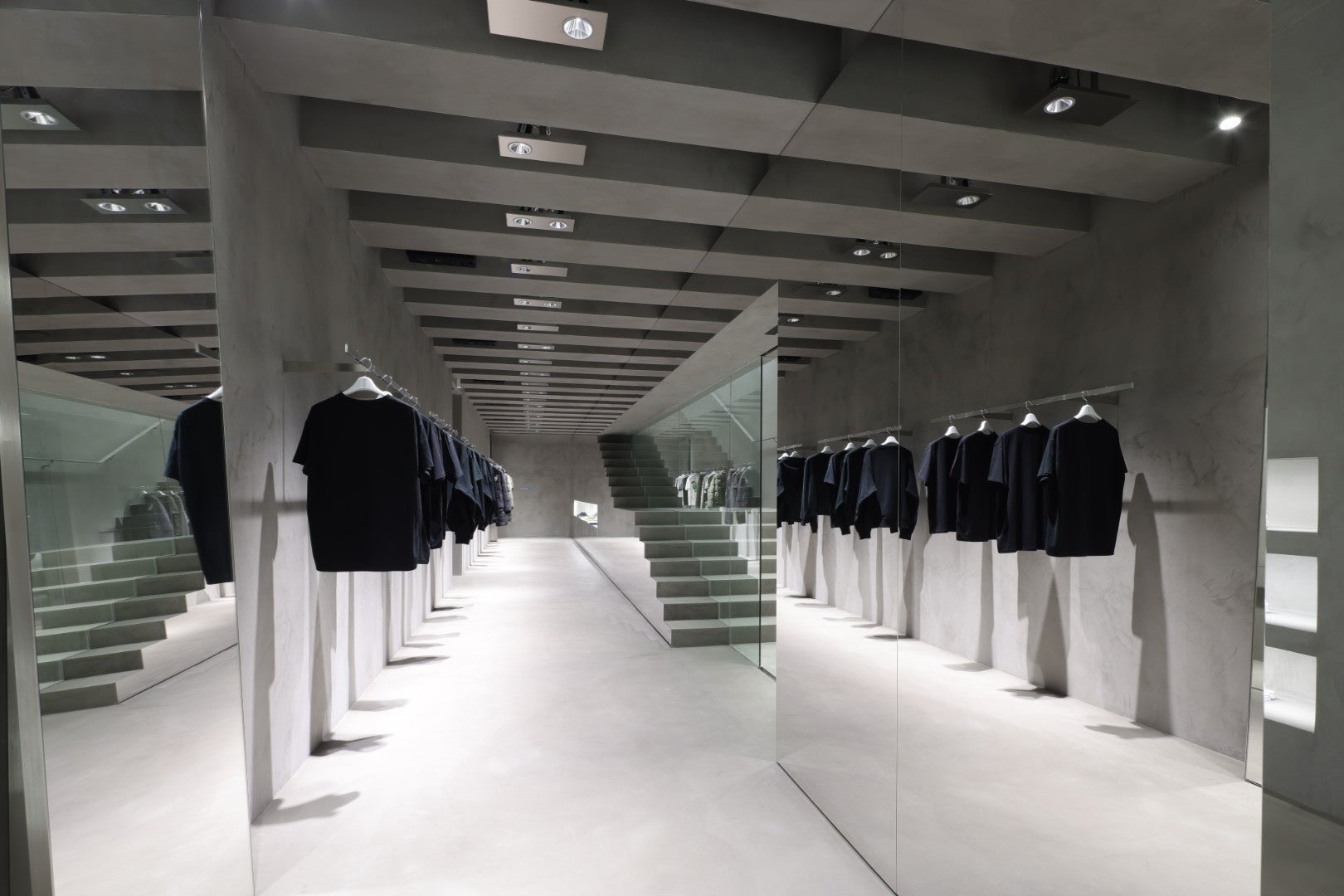
Seoul streetwear label thisisneverthat opened a two-floor flagship in Udagawacho, Shibuya, on September 19. At the entrance it put up an LED wall 13.4 m wide, and on the ground floor it slotted clothes into gaps in the wall all the way to the back, 25 m in. It is the brand's third directly run store in Japan alone.
1.The address is 10-3 Udagawacho, Shibuya-ku. Open from noon to 8 pm. It follows Harajuku in 2022 and Minami-Horie in Osaka in November 2024, making it the third flagship in Japan, and the interior was designed by Masamichi Katayama of Wonderwall. Floor area was not disclosed.
2.The brand was started in Seoul in 2010 by three friends. Its operator, JKND, booked KRW 85.6 billion in revenue in 2025, up 17.8% on the year. Two limited lines went up for the opening. SHIBUYA BLACK tees and hoodies, with body and logo both in black, run from ¥8,800 to ¥18,700, and the UNDERCOVER collaboration, which includes a vintage-washed denim down jacket, tops out at ¥57,200.
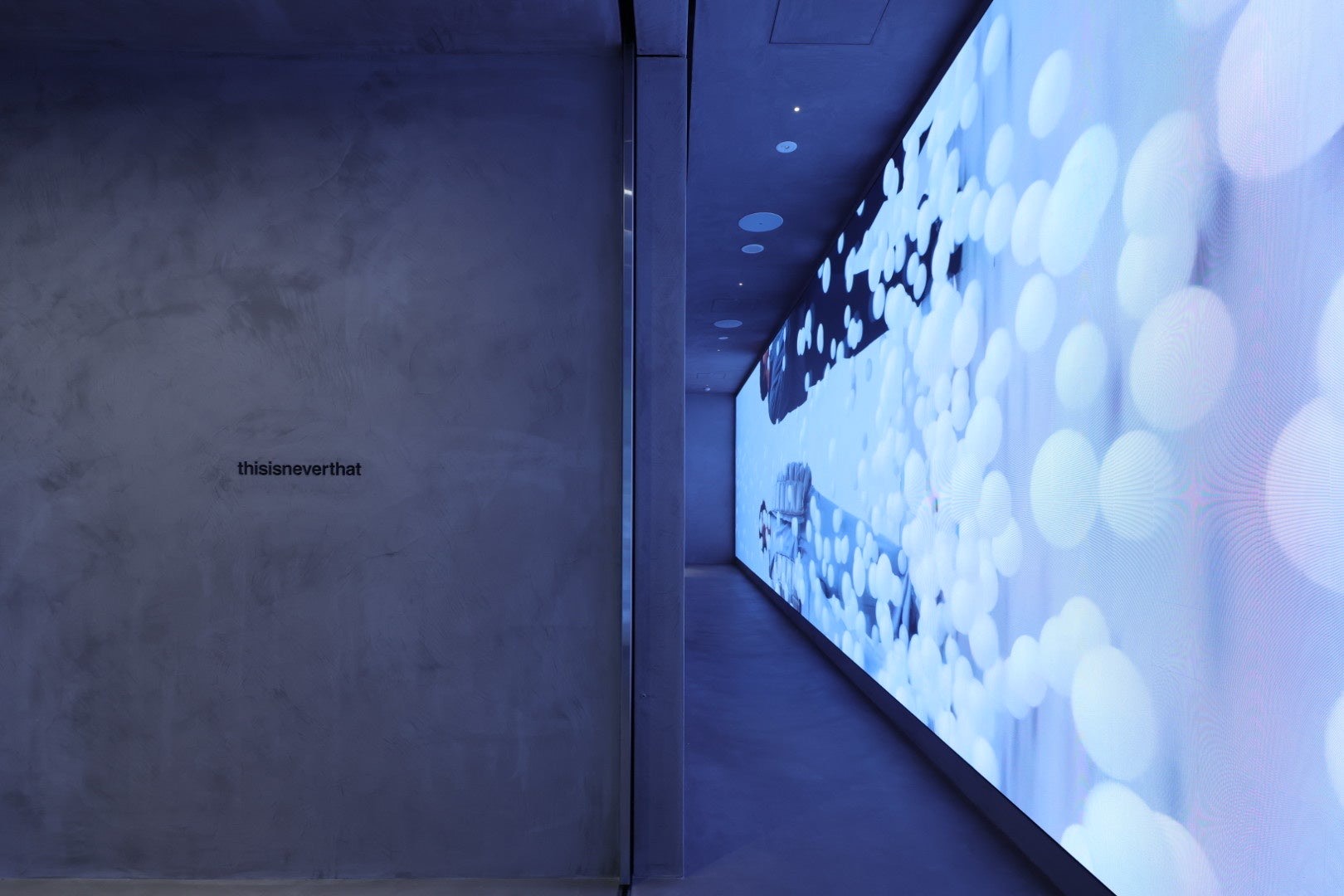
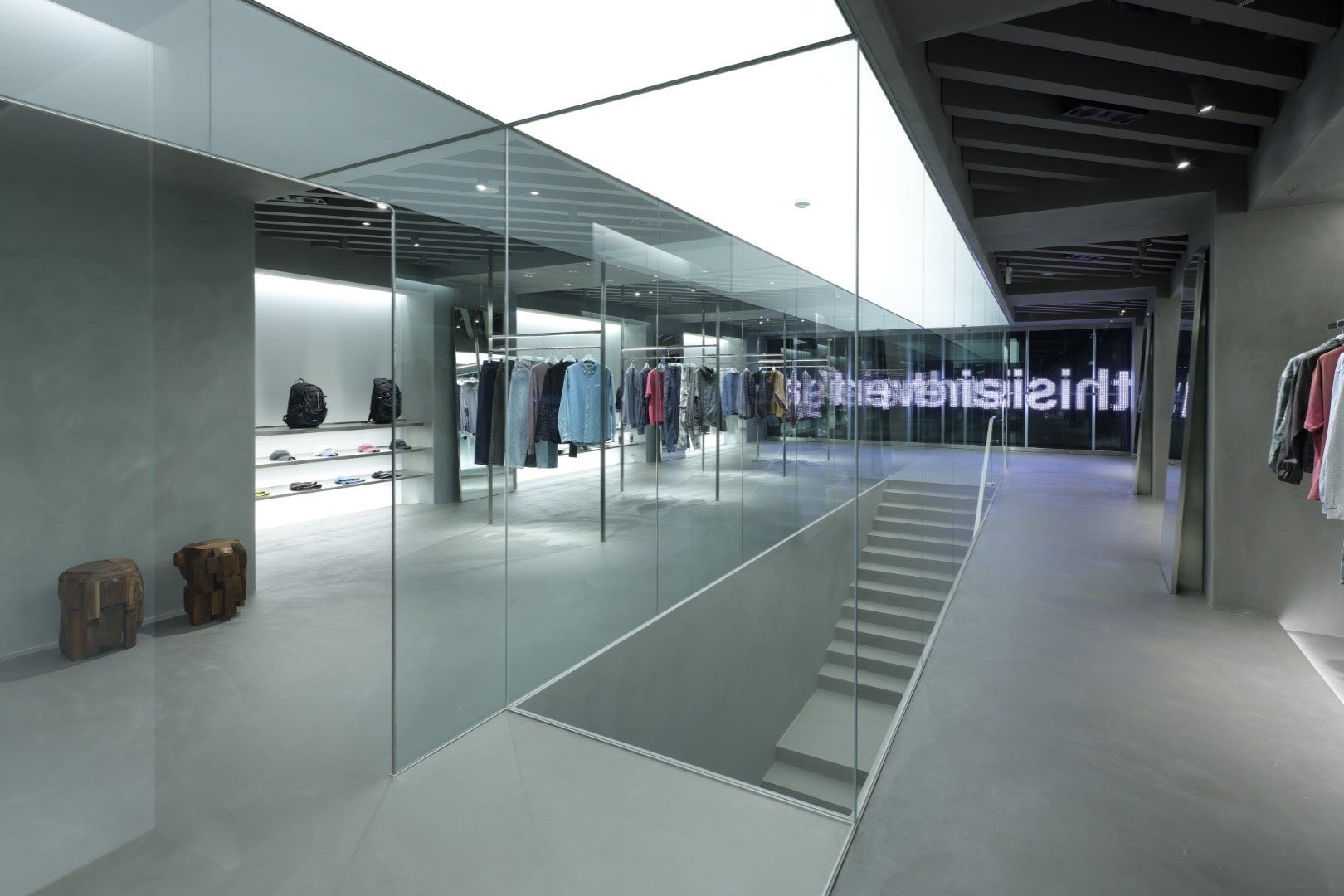
3.Walk in and a screen comes before any clothing. On the left is a concrete wall with a single small logo; on the right an LED wall, 13.4 m wide and 3 m high, runs the length of the corridor. No product appears until you reach the end of it.
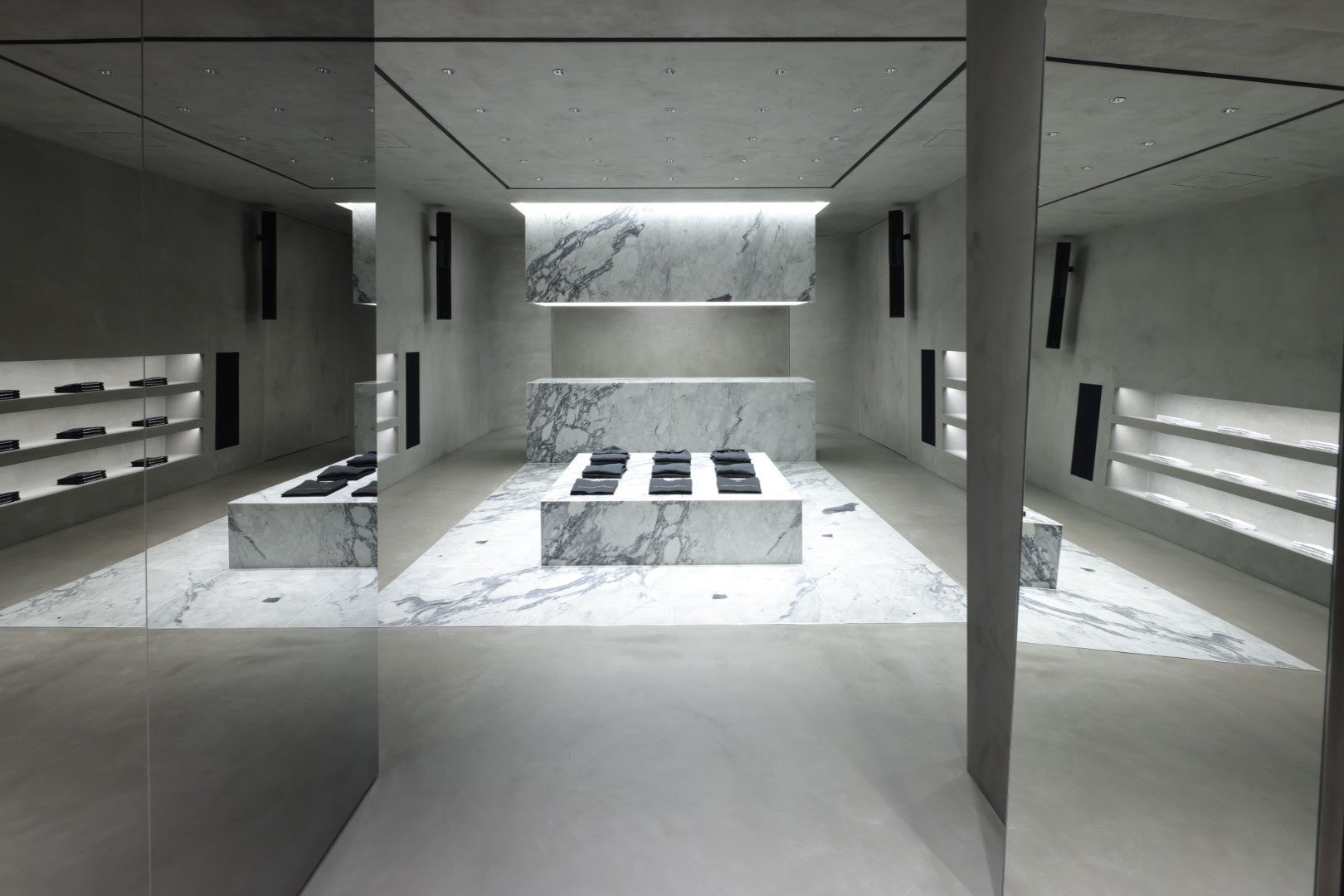
4.The ground floor is 25 m deep. Long horizontal slots cut into the walls serve as shelves, each holding only a few folded tees. The side walls are mirrors, so the slots and the clothes appear twice. The floor, the central plinth and the counter are slabs of white marble cut from the same block, so the grey veining climbs from floor to plinth without a break.
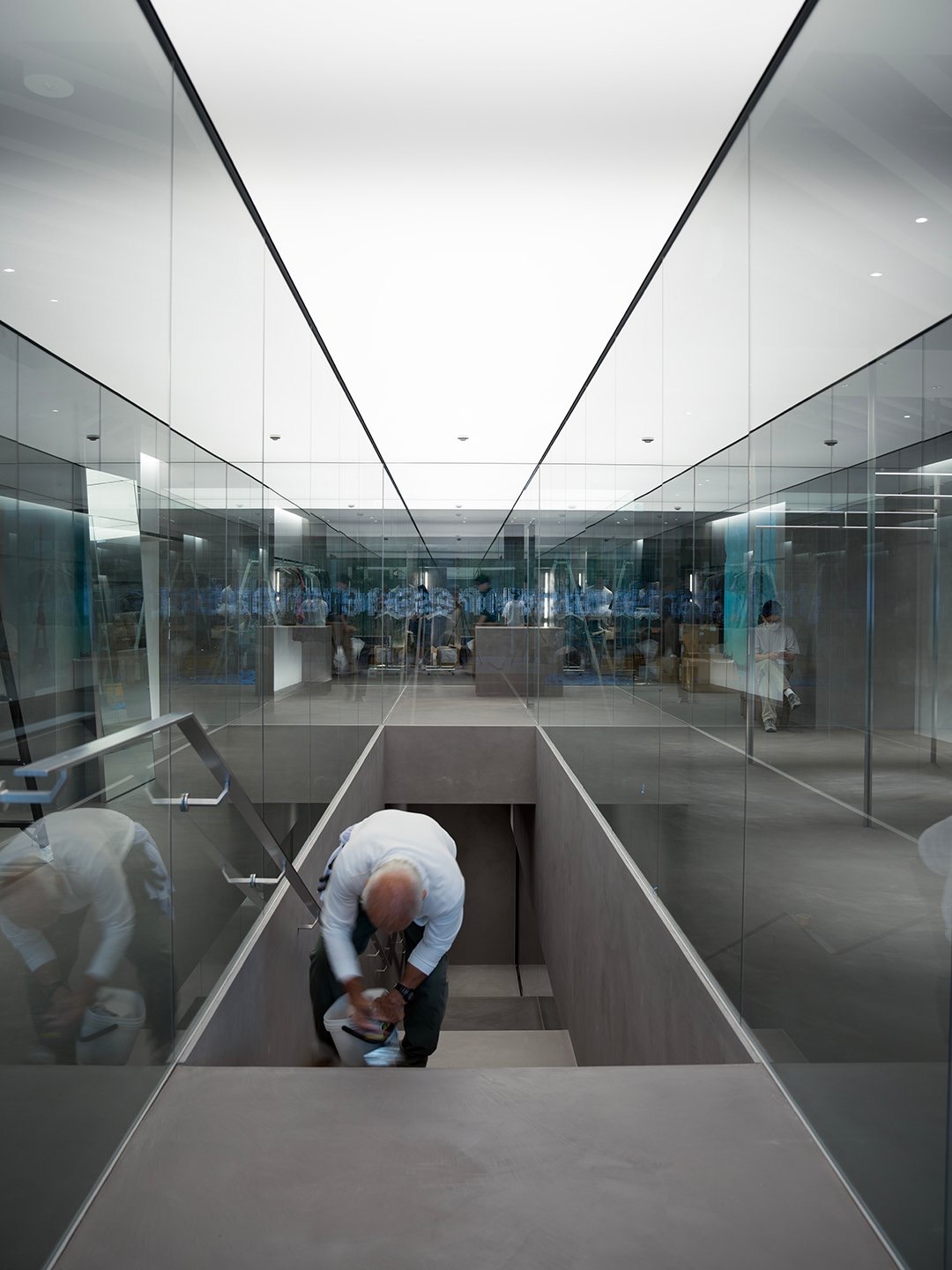
5.Upstairs, the street-facing wall of the second floor is all glass. Large logo letters studded with bulbs stand just inside it, a sign from the street and a mirror-reversed word from within. Further in: a DJ booth, a pop-up area and fitting rooms. Sound director ZAK handled the audio with L-Acoustics and ADAM Audio speakers, and the innermost fitting room is cast-in-place concrete.
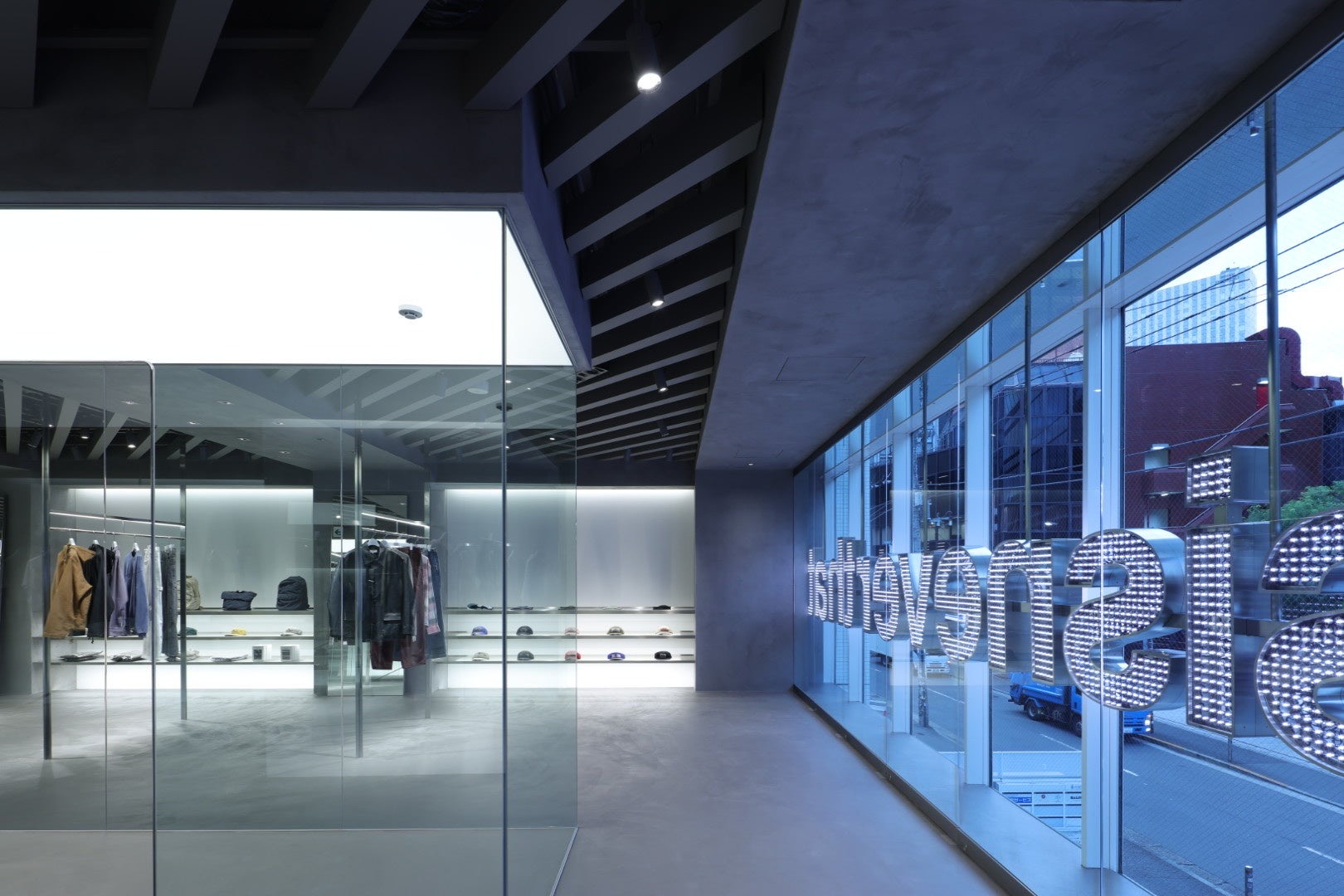
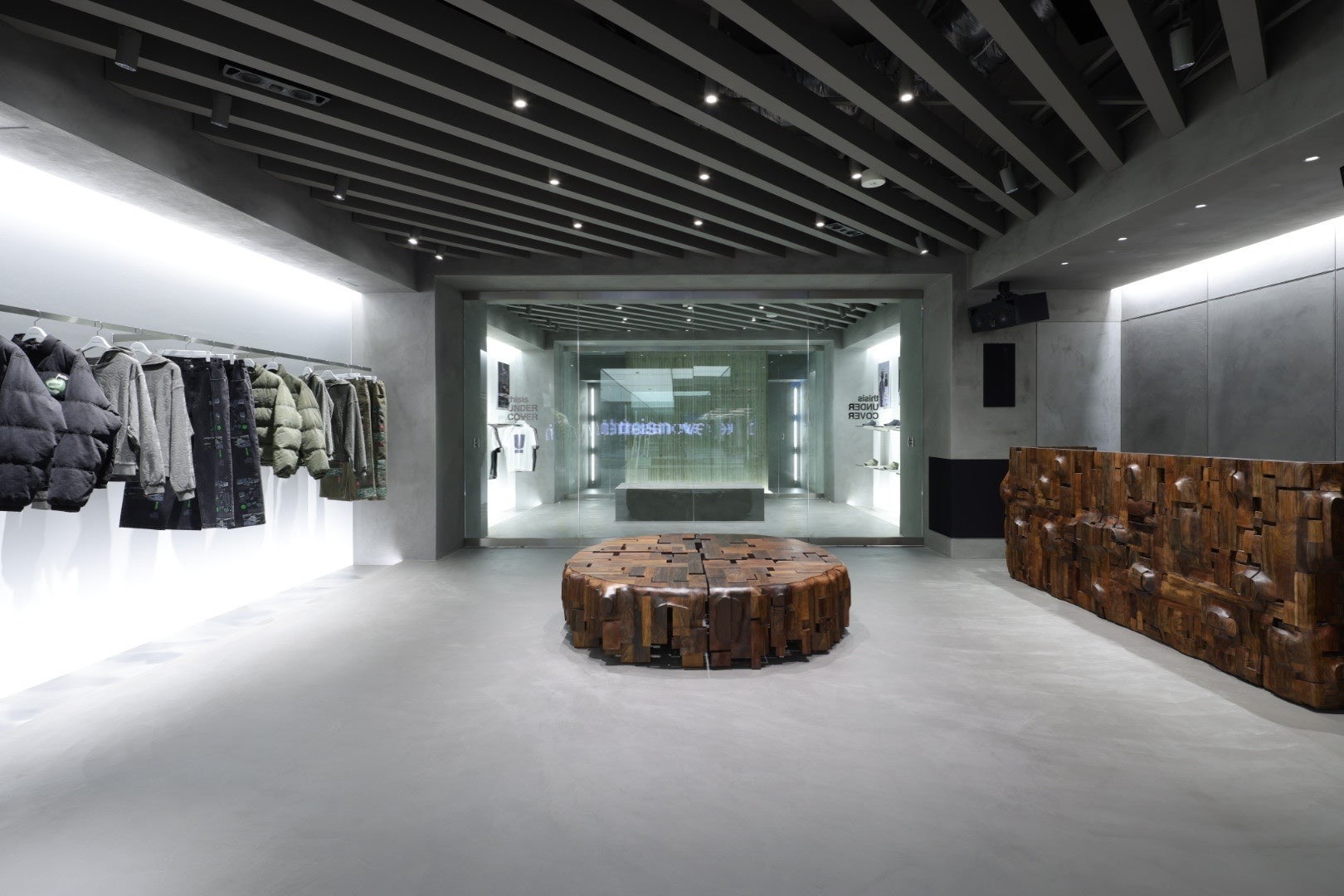
6.Katayama's theme is "emptiness." The brand's name comes from the idea that the picture you start with never matches what you end up with. So the store did not fill its walls with product. On a 25 m floor, there is one hanging rail per wall.
7.Japanese shoppers already know the name. In 2022 the brand joined Musinsa's global store and opened online sales to Japan, and the same year it opened its first overseas shop in Harajuku, spanning the basement to the second floor, on a street lined with Stüssy and Supreme. Collaborations with New Balance, New Era and G-SHOCK had carried its name to Japan first.
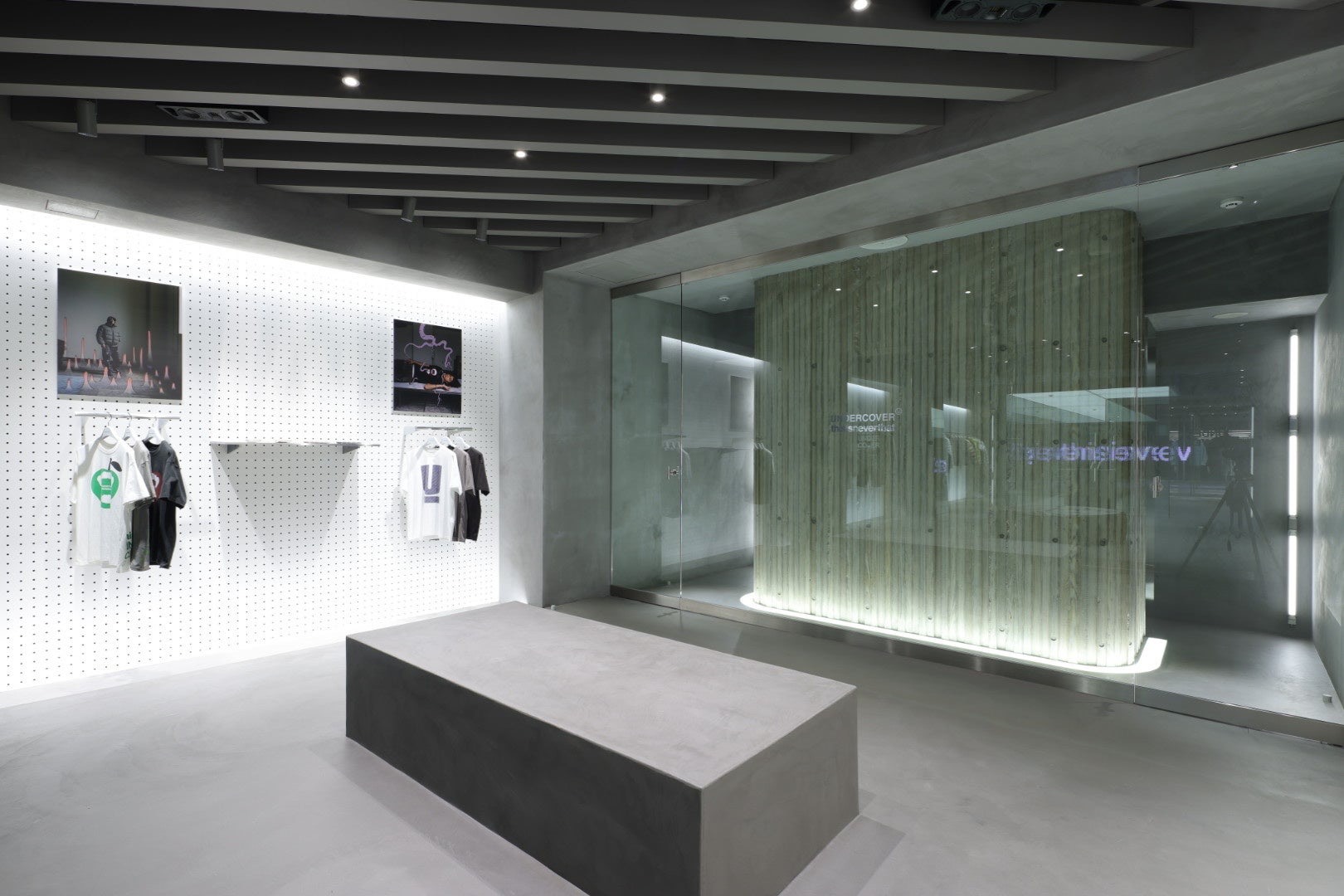
8.This time the collaborator is UNDERCOVER, the label Jun Takahashi started in Tokyo in 1990 that came to stand for the Harajuku backstreet scene. The line, with a redrawn apple motif, hit the racks in Shibuya before stores in Korea. The people who built the Harajuku backstreets lent their name to a store from Seoul.
9.Company revenue rose from KRW 56.7 billion in 2023 to KRW 72.7 billion in 2024 and KRW 85.6 billion in 2025. Growth slowed from 28.3% to 17.8%. As domestic online and multi-brand shops add less each year, the company has added another overseas store of its own.
10.In Shibuya, rent depends on the floor. Savills put the mid-2026 average ground-floor asking rent at ¥45,500 per tsubo per month, about KRW 420,000, and upper floors at ¥37,400. CBRE's guideline rent for prime Shibuya ground floors has reached ¥182,000 per tsubo per month, with zero vacancy.
11.Holding rent to 15% of sales, even at the average asking rent each tsubo on the ground floor has to sell about ¥300,000 a month. In ¥8,000 tees, pre-tax, that is 38. At prime rates it is 152 per tsubo, about five a day (estimate). A ground floor with a few tees resting in each wall slot, plus an LED corridor, adds almost nothing to that count.
12.So who fills that number? The second floor is what spares the ground floor from carrying it alone. The pop-up area and DJ booth draw crowds on collaboration drops and event days, and the queue comes down the stairs to the ground-floor counter. Limited items priced from ¥8,800 to ¥57,200 also push up what each person walks out with.
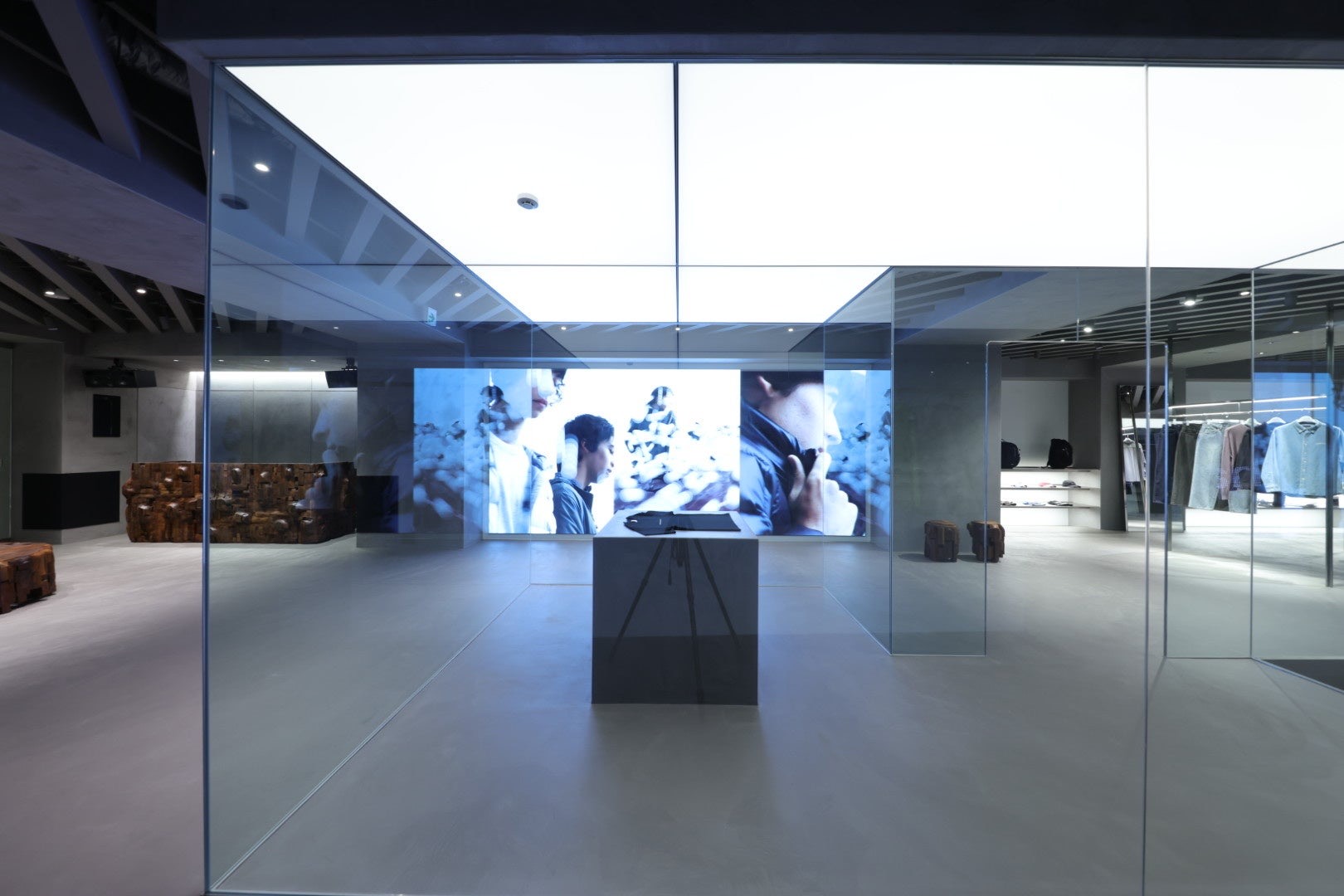
13.Katayama made his name designing A BATHING APE stores in Harajuku in the 1990s and later did UNIQLO's global flagships on Fifth Avenue and in Ginza. He is the face of an era when Tokyo streetwear spent freely on its stores. A Seoul brand has now handed him its Shibuya shop.
14.In the 2000s, Seoul streetwear brands learned by watching Harajuku's backstreets. Now the flow runs the other way. The Shibuya-only black tee is not sold in Seoul, so a Seoul shopper who wants one has to buy it in Tokyo. Whether an overseas store can pull in customers from home will show in the first few months of sales.
15.A Seoul brand with KRW 85.6 billion in revenue opened its third directly run store in Japan, gave the ground-floor entrance to an LED corridor and cleared the second floor for events. Even at average asking rent, each ground-floor tsubo on this street has to sell 38 tees a month to cover the rent. For a Korean brand heading the same way, the first hurdle is not design but cash timing. Japanese retail leases usually tie up several months of rent as a deposit up front, so the payback period on that cash has to be settled before floor area or design fees.