HUMAN MADE, the brand founded by designer NIGO, opened its first flagship, HUMAN MADE TOKYO, in Harajuku on September 26. It spans three floors and 595 sqm, four times the size of its existing stores. The company says it expects this one store to sell 2 to 3 billion yen a year. Last fiscal year, the whole company sold 14.2 billion yen.
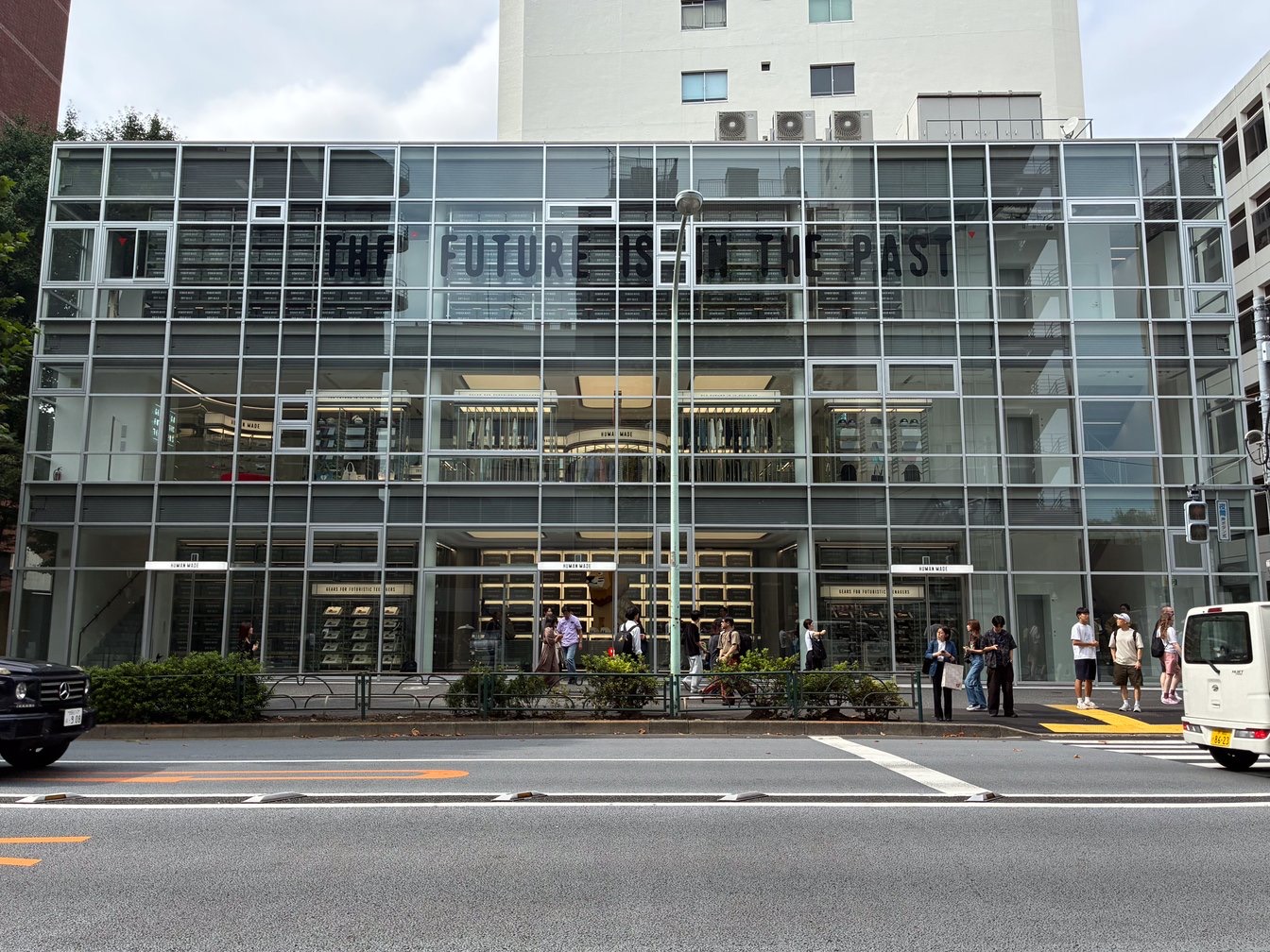
1.The address is 6-25-10 Jingumae, Shibuya. A long glass front runs along Meiji-dori, a short walk from Meiji-jingumae subway station. The ground floor holds the registers, the second floor is the sales floor, and the third is left open for events. For the first two days, the company says, only shoppers who won a lottery in its official app could get in.
2.NIGO founded HUMAN MADE in 2010, and the company listed on the Tokyo Stock Exchange Growth Market on November 27, 2025. It runs eight directly operated stores in Japan, and this is its fourth in the Shibuya and Harajuku area alone. The building used to house the TAKEO KIKUCHI flagship, which closed in January. This is the first store the brand has called a flagship.
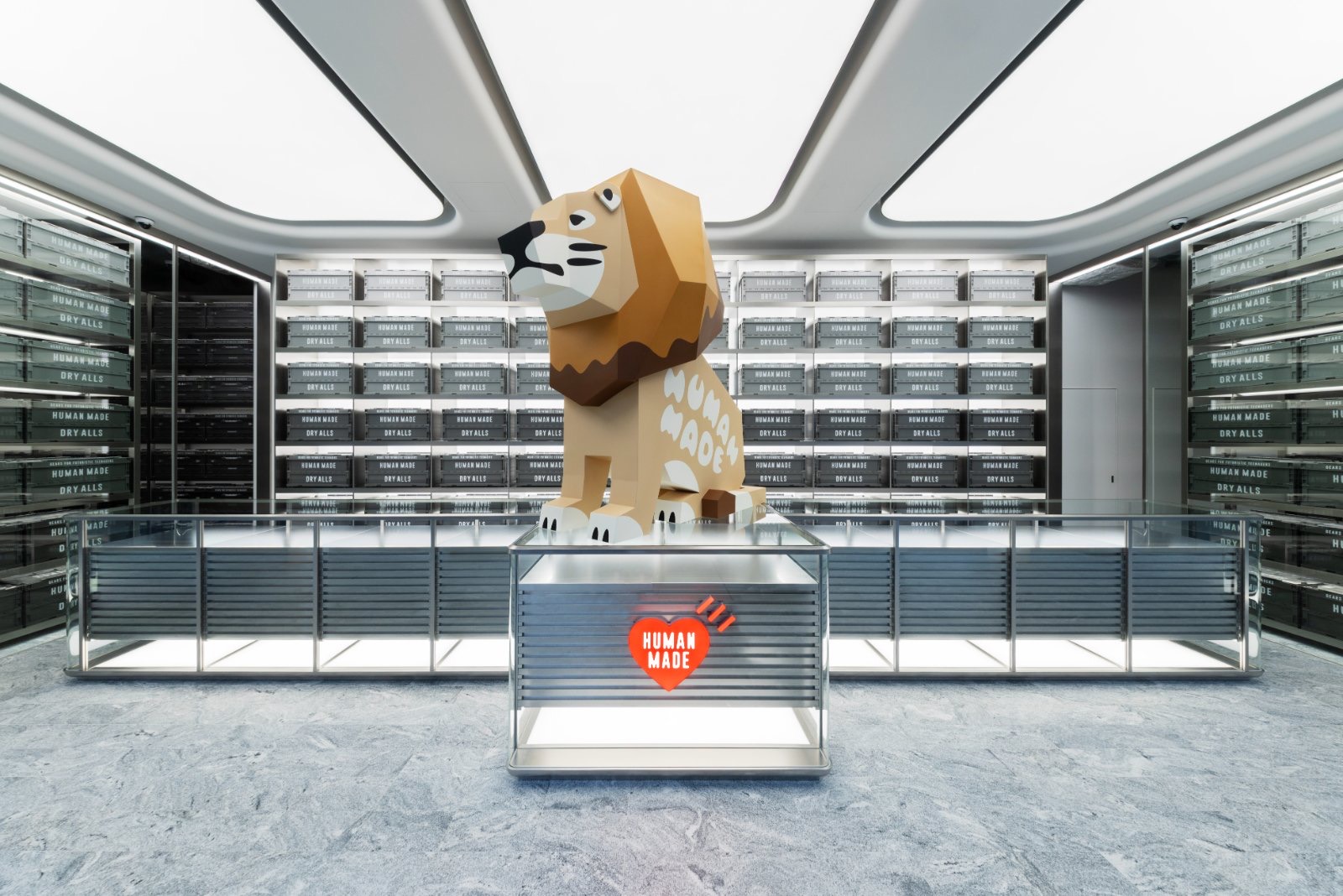
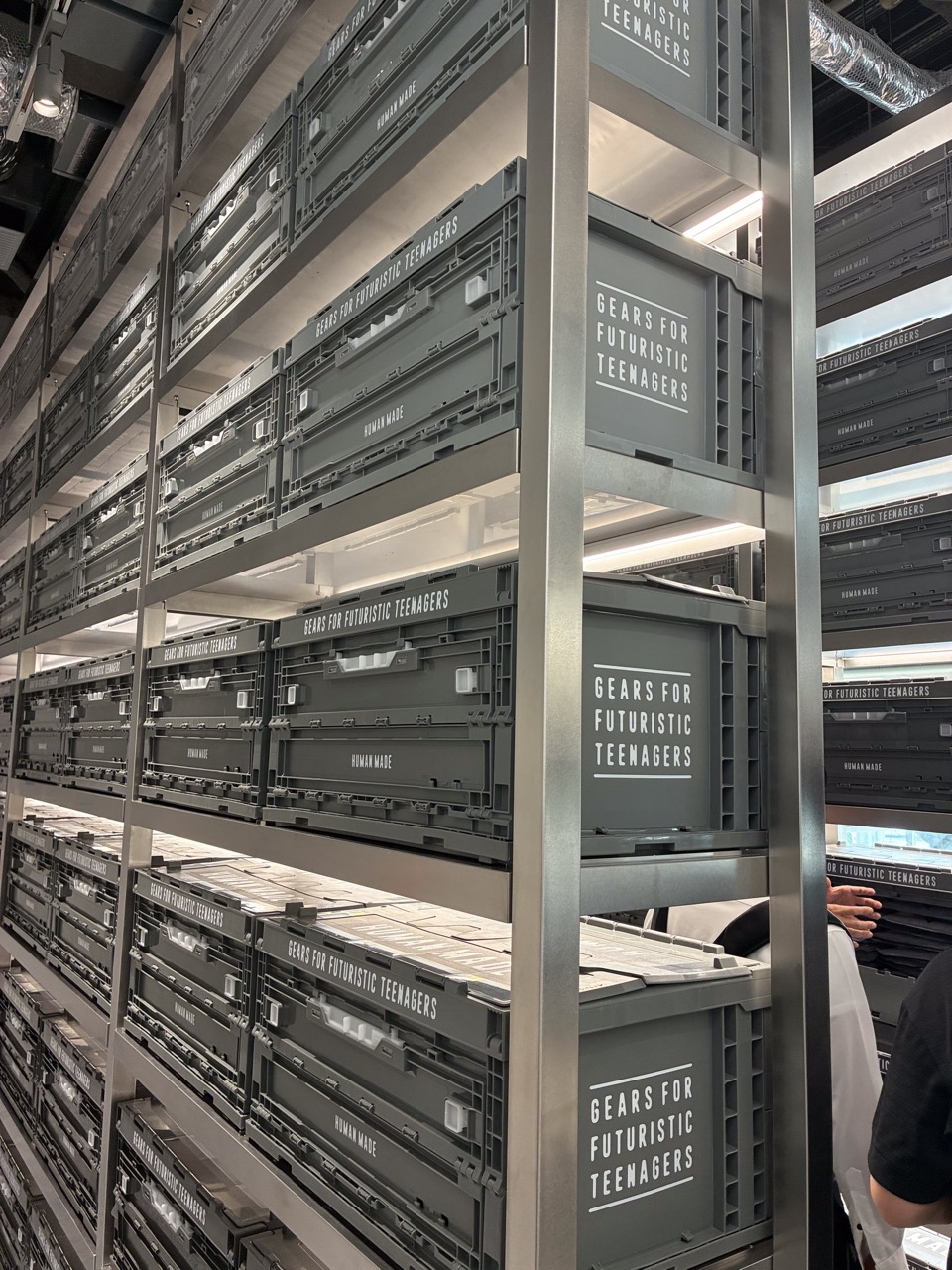
3.The first thing you see is boxes. Grey storage crates cover the ground-floor walls from floor to ceiling, dim at the bottom and lit brighter toward the top. Each carries the brand name, yet none of them is decoration: they are shelves that hold actual stock. In front of them sits a lion that looks carved from wooden blocks.
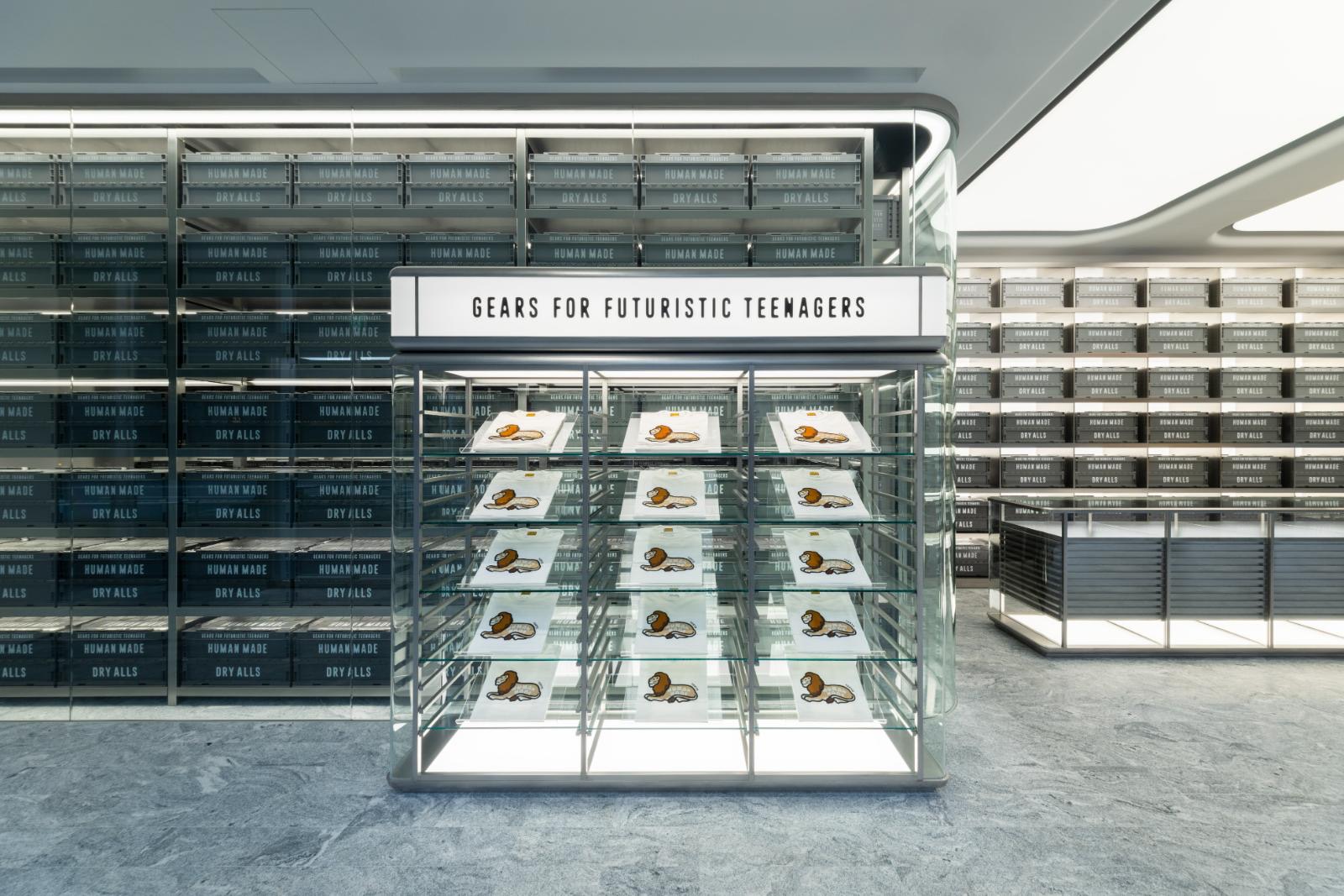
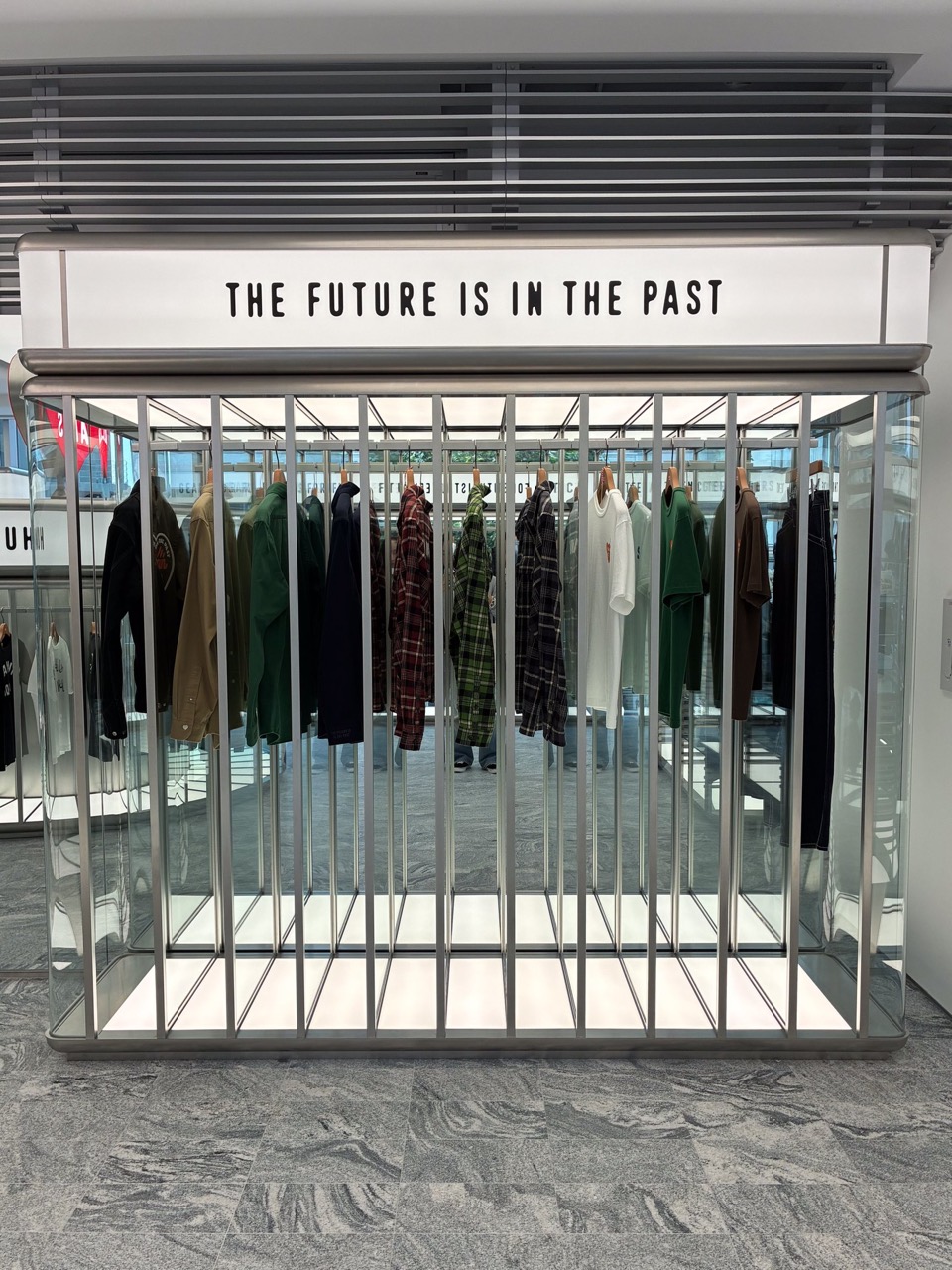
4.Upstairs, every garment hangs inside a frame ringed with metal bars. Some frames are round, some square, all built from tightly spaced matte aluminum rods, and the curved ceiling folds the lighting into itself. The sign above one frame reads "THE FUTURE IS IN THE PAST." The interior is by design studio I IN.
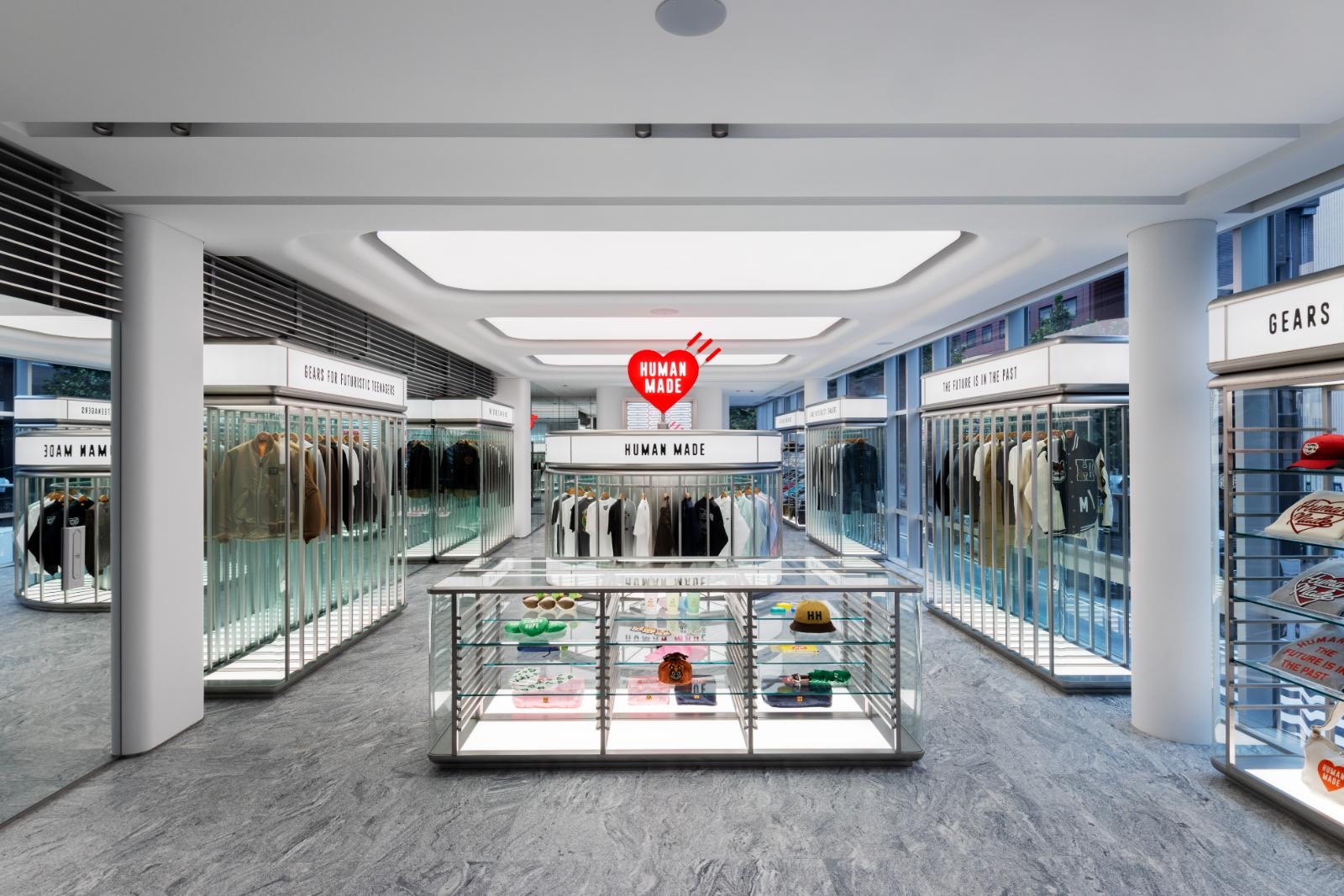
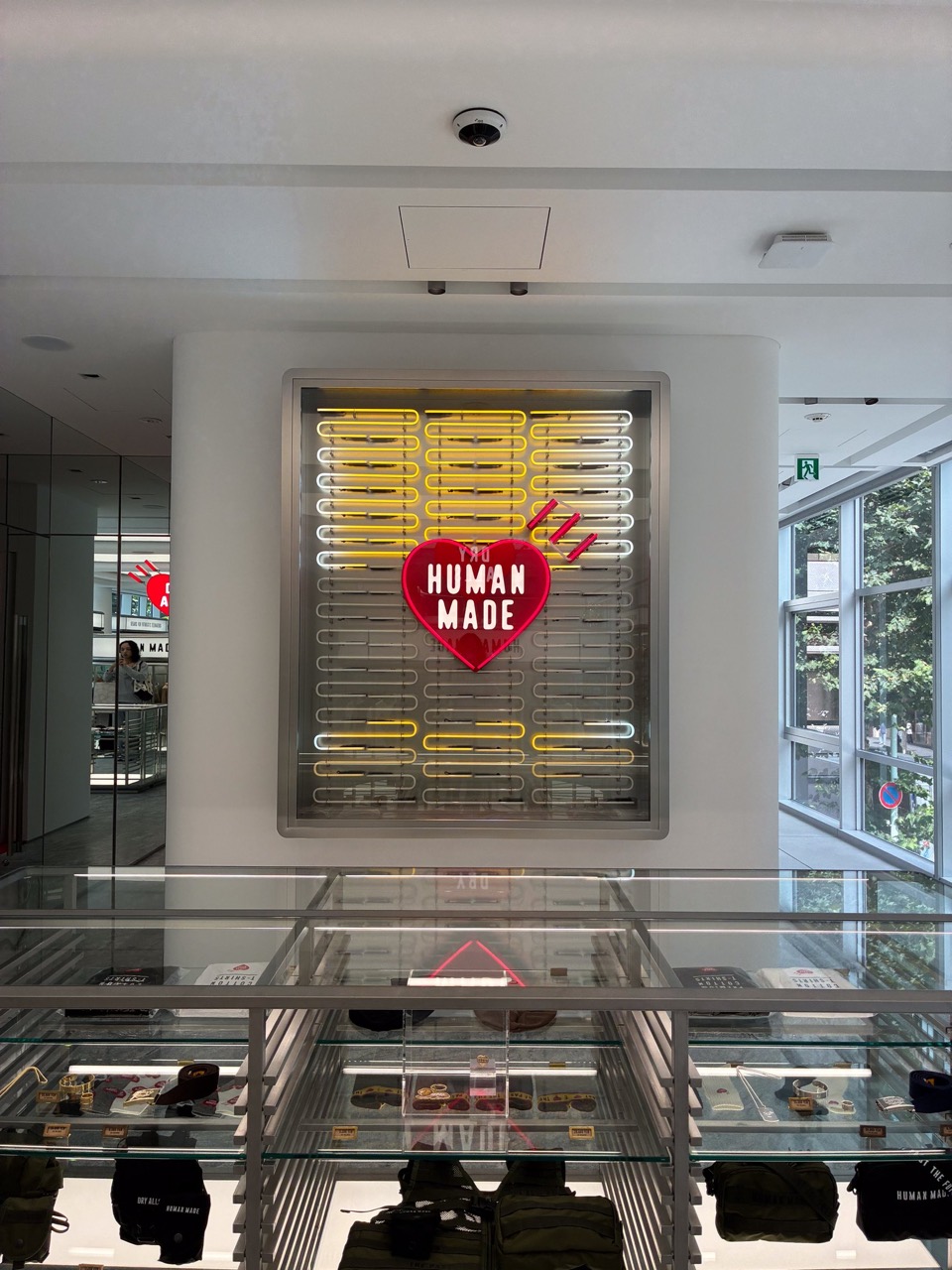
5.Buying works differently, too. Scan the QR code on a product with your phone and the order goes straight to the stock staff; you collect the item at the ground-floor register. The company says this is the first time its in-house system has been used in a store. With no need to pile size runs on the sales floor, the store carries 1.8 times as many products as the existing stores in the same kind of space.
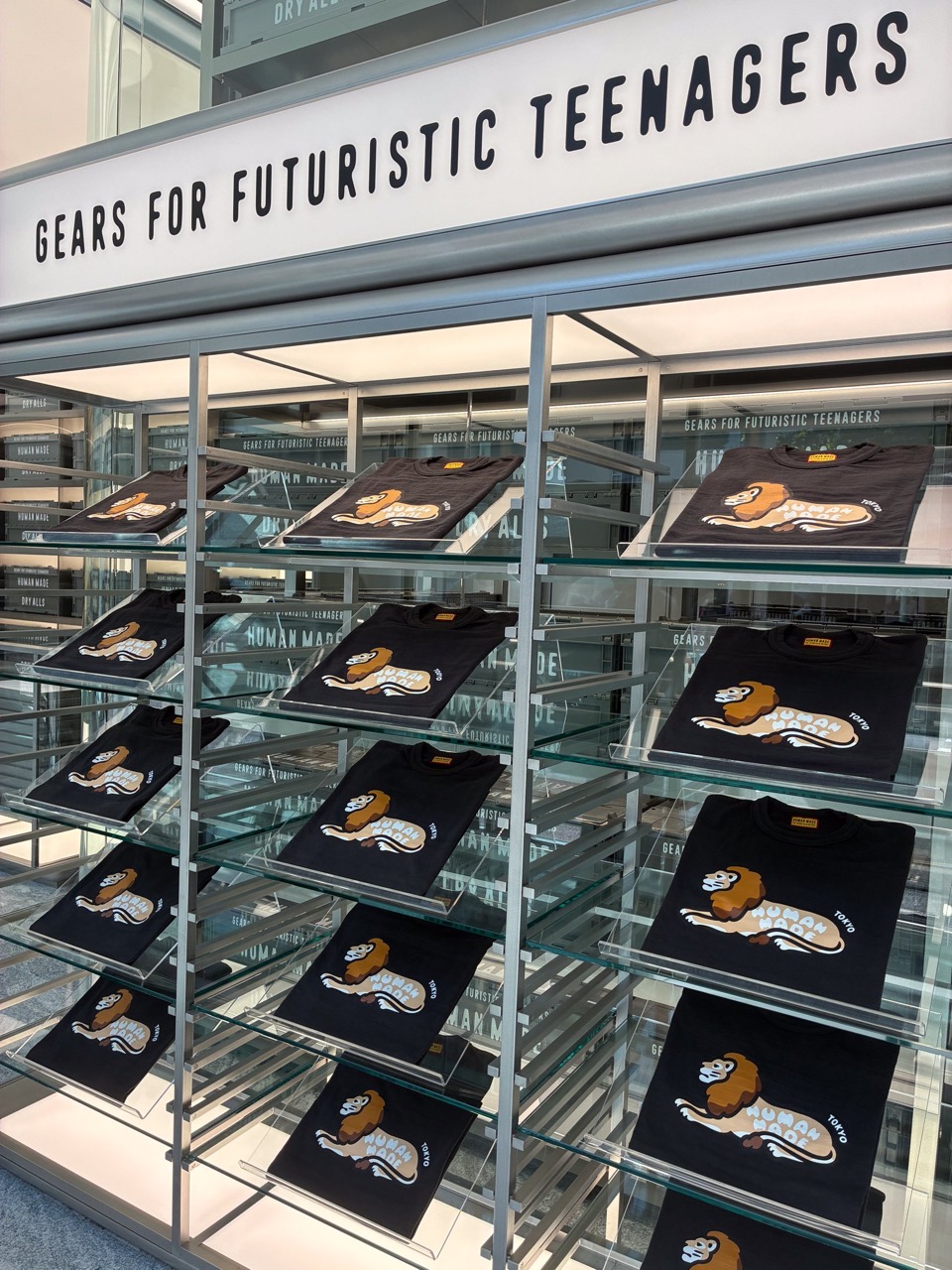
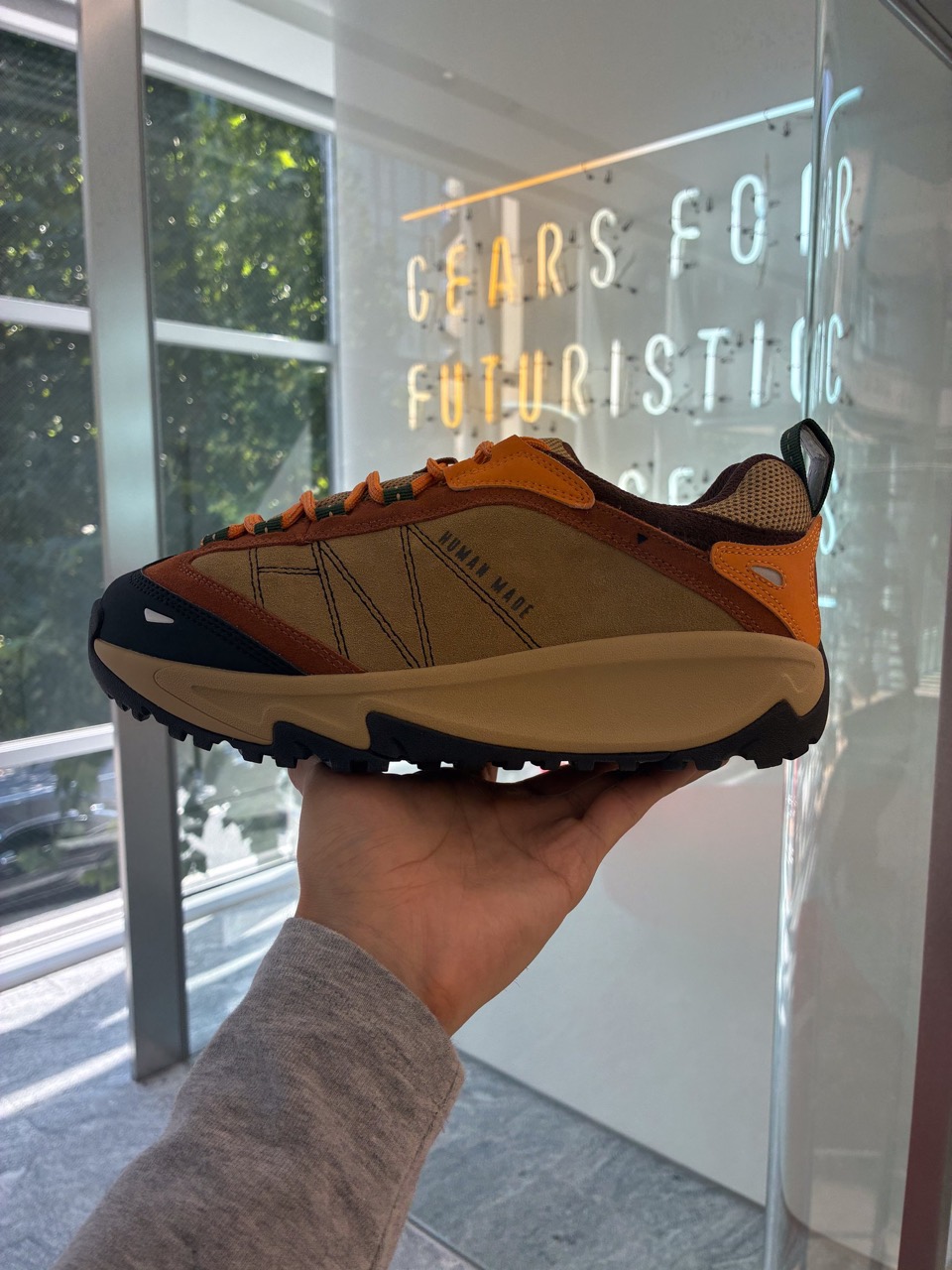
6.Why do people queue? Because the company makes little. It produces many items in small runs and sells collaborations by lottery. During the Pokemon collaboration last October, people waited one to two hours outside the store. DUCK KICK, its first in-house sneaker, retails at 28,600 yen; on opening day, asking prices on a resale app sat around 110,000 yen.
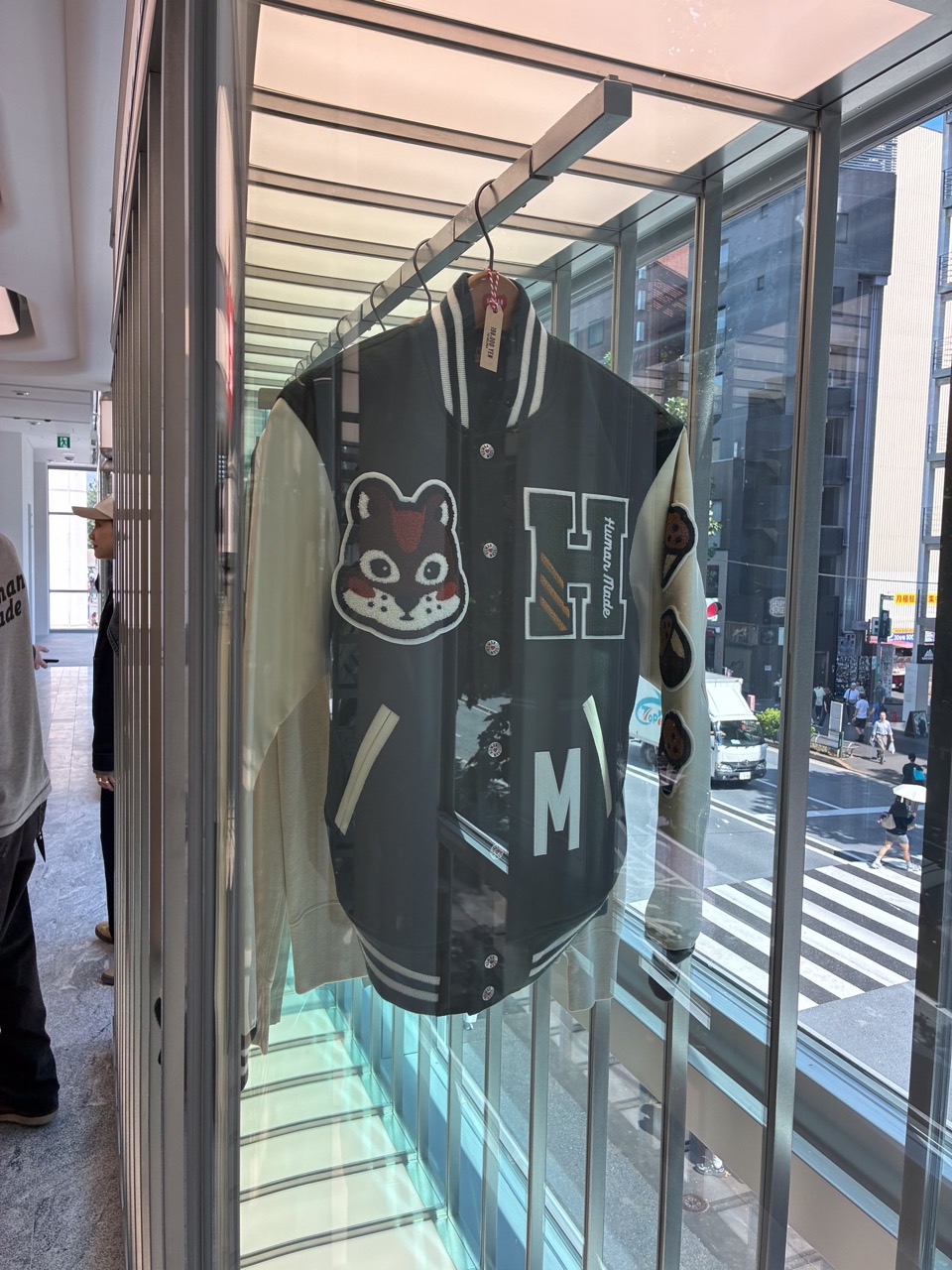
7.Two-thirds of buyers come from outside Japan. Overseas sales plus spending by visitors to Japan made up 65% of the total last fiscal year, a share Nikkei Business noted is similar to Uniqlo's. A logo built from hearts and animals needs no translation. The store is meant to move the brand from a shop tourists drop into while in Tokyo to a reason to come to Tokyo.
8.The company spends almost nothing on advertising: 2.9% of sales last fiscal year. Lottery notices and collaboration news spread through the app and social media, and the line outside the store carries that news further. The store does the job of a billboard.
9.Sales for the fiscal year ended January 2026 were 14.2 billion yen (about 132 billion won), up 26.8%. Operating profit was 4.5 billion yen. An operating margin of 31.7% is rare for a company that sells clothes, and gross margin tops 65%. That figure comes from planning volumes so everything sells at full price, without markdowns.
10.Where does the money come from? Online accounts for 29% and direct sales, online plus own stores, for 83%, which leaves stores with about 54%, or roughly 7.7 billion yen. Split across eight domestic stores, each sells 900 million to 1 billion yen a year (estimate). The new store's target of 2 to 3 billion yen equals two or three existing stores.
11.Divide by floor area and the math changes. The store is four times larger but aims to sell only two to three times more, so sales per square meter actually fall. With the ground floor given to registers and the box wall, and the third floor to events, clothes hang on effectively one floor. The company expects 600,000 visitors a year; divide the target by that and it comes to a little over 4,000 yen per person.
12.Rent has not been disclosed. Average ground-floor shop rent around Omotesando was 54,000 yen per tsubo a month in the second half of 2025. Apply that across three floors of roughly 180 tsubo and it comes to 9.72 million yen a month. That is about 120 million yen a year, or 4 to 6% of target sales (estimate). Would a ground floor on a main road really rent at the average?
13.The company calls this year "a year of preparation." For the current fiscal year it forecasts sales of 18.5 billion yen, up nearly 30%, but operating profit of only 4.8 billion yen, up 5.9%. About 1 billion yen goes at once into this store's opening costs and groundwork for China and the United States. In March it set up wholly owned subsidiaries in both countries, and it has signed for a store site in Shanghai's Jing'an District.
14.Yet its largest store went to Tokyo, not Shanghai or New York. Bangkok and Seoul opened as partner stores, and directly run overseas stores are planned for China and the US from the fiscal year ending January 2028. As long as overseas shoppers keep coming to Tokyo, one Tokyo store does the work of stores in several countries. CEO Rei Matsunuma said the lion was chosen because it suits the largest flagship in Tokyo.
15.A typical flagship hides the stockroom at the back and hangs clothes in front. This one does not follow that order. It stands the stock boxes against the ground-floor wall facing the street and puts the clothes a floor up, inside metal frames. For a company that makes only as much as will sell at full price, the stockroom is itself the reason people queue, and it seems to have judged that showing it is worth more than hanging one more garment.
16.HUMAN MADE, with two-thirds of its sales coming from abroad, took 595 sqm on a main Tokyo road and filled the ground floor with a stock wall and registers. It has pinned 2 to 3 billion yen on one store, the output of two or three existing ones, and the preparation holds this year's profit growth to 5.9%. For a Korean fashion brand opening a street store of the same size, the first obstacle is inventory. If the volume has to be cleared with end-of-season markdowns, size runs must pile up on the sales floor, and there is never room to show the ground-floor wall as a stockroom.