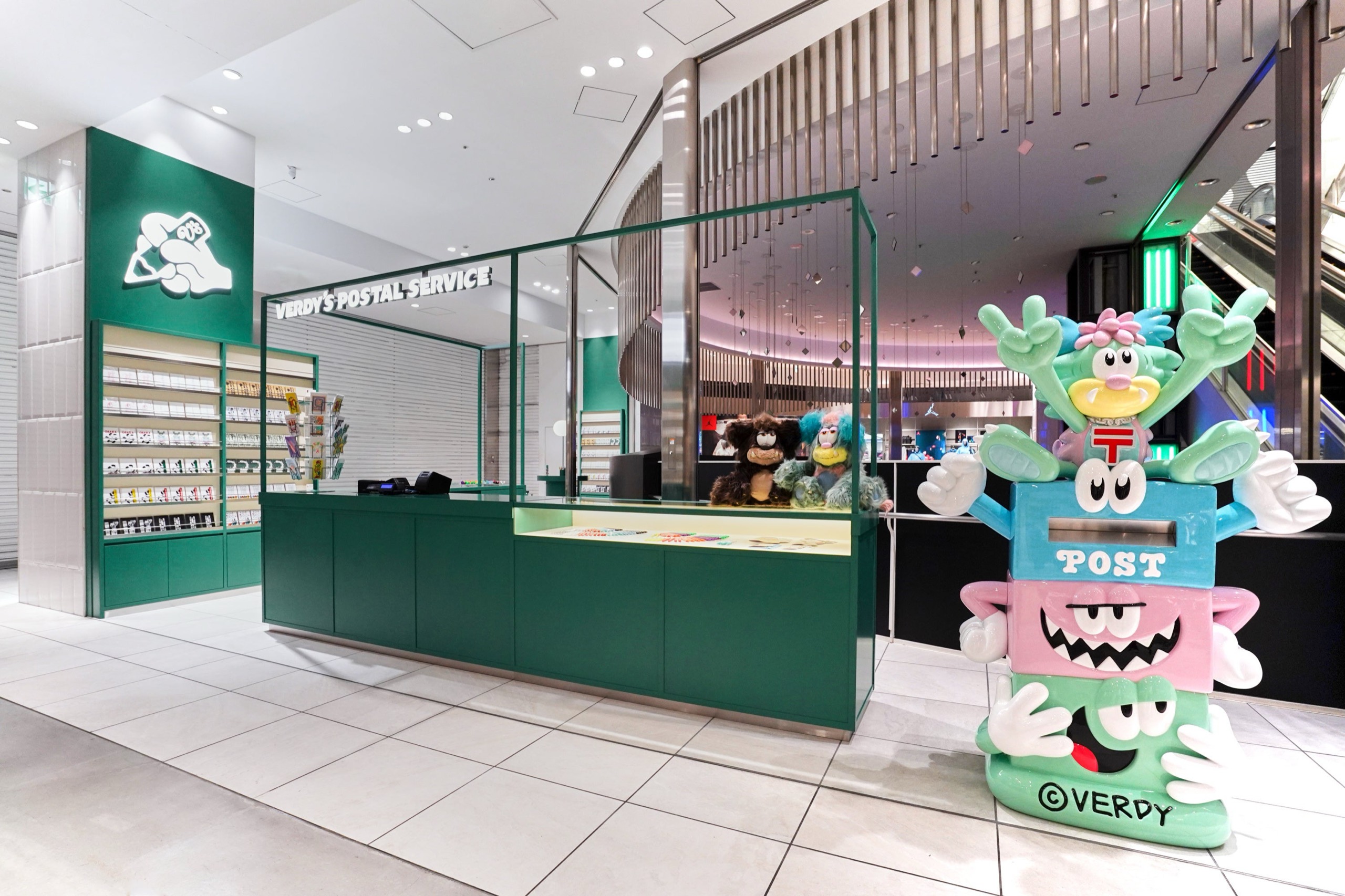
On September 18, Verdy's Postal Service opened on the first basement floor of Shinsaibashi PARCO in Osaka. It is the first permanent store from VERDY, the Osaka-born graphic artist, and he built it together with PARCO. In the middle of the shop stands a postbox he drew, and the shelves sell postcards and pens.
1.The address is 1-8-3 Shinsaibashi-suji, Chuo-ku, Osaka, B1F of Shinsaibashi PARCO. Hours run from 10 a.m. to 8 p.m. For the first three days only people who won an advance lottery could enter, and on the first two VERDY held signing sessions himself. The floor area has not been disclosed.
2.It is the last step of a renovation PARCO has been running since February. Around 50 units and 2,000 tsubo were redone over eight months, and the work ends when SEGA STORE OSAKA on 6F and STUDIO NICHOLSON OSAKA on 2F open on October 2. Of the final three slots, one went to a letter shop.
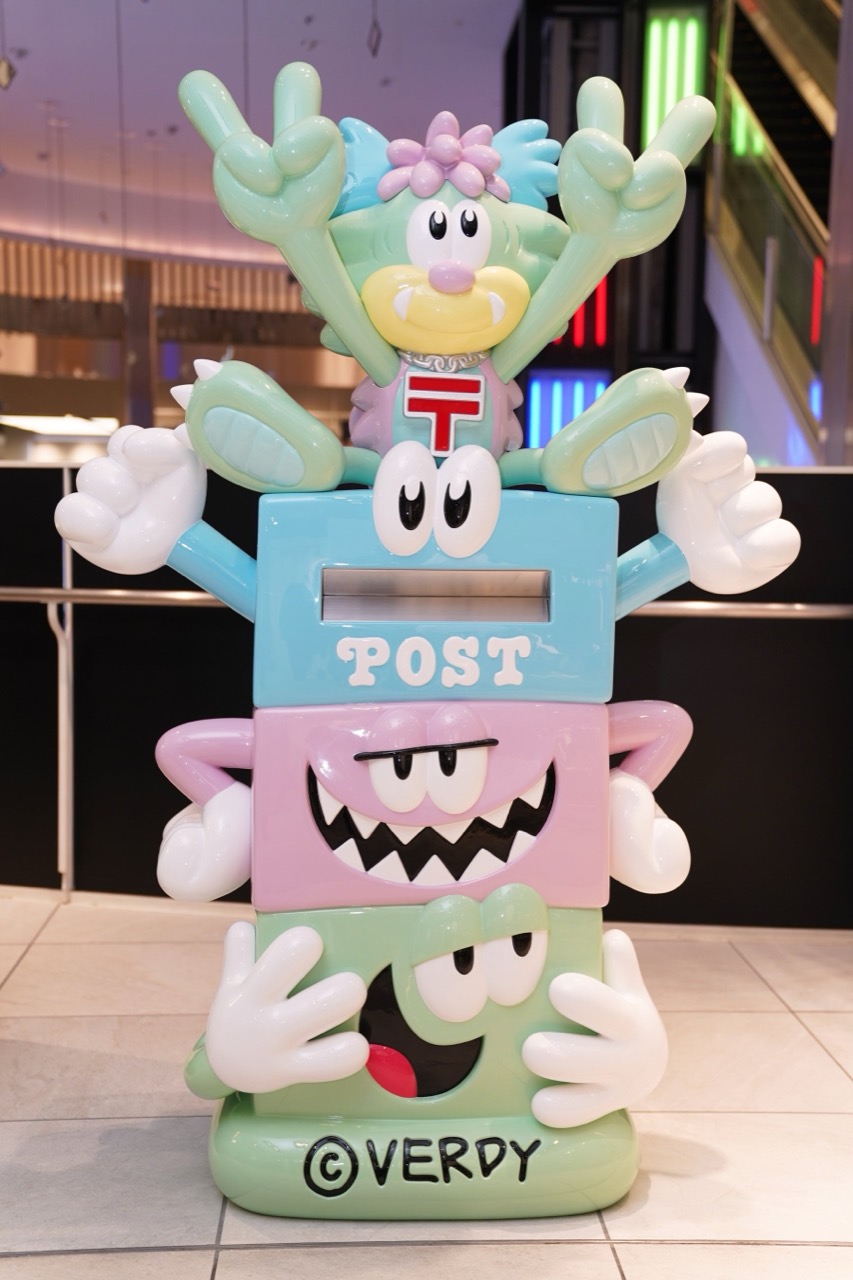
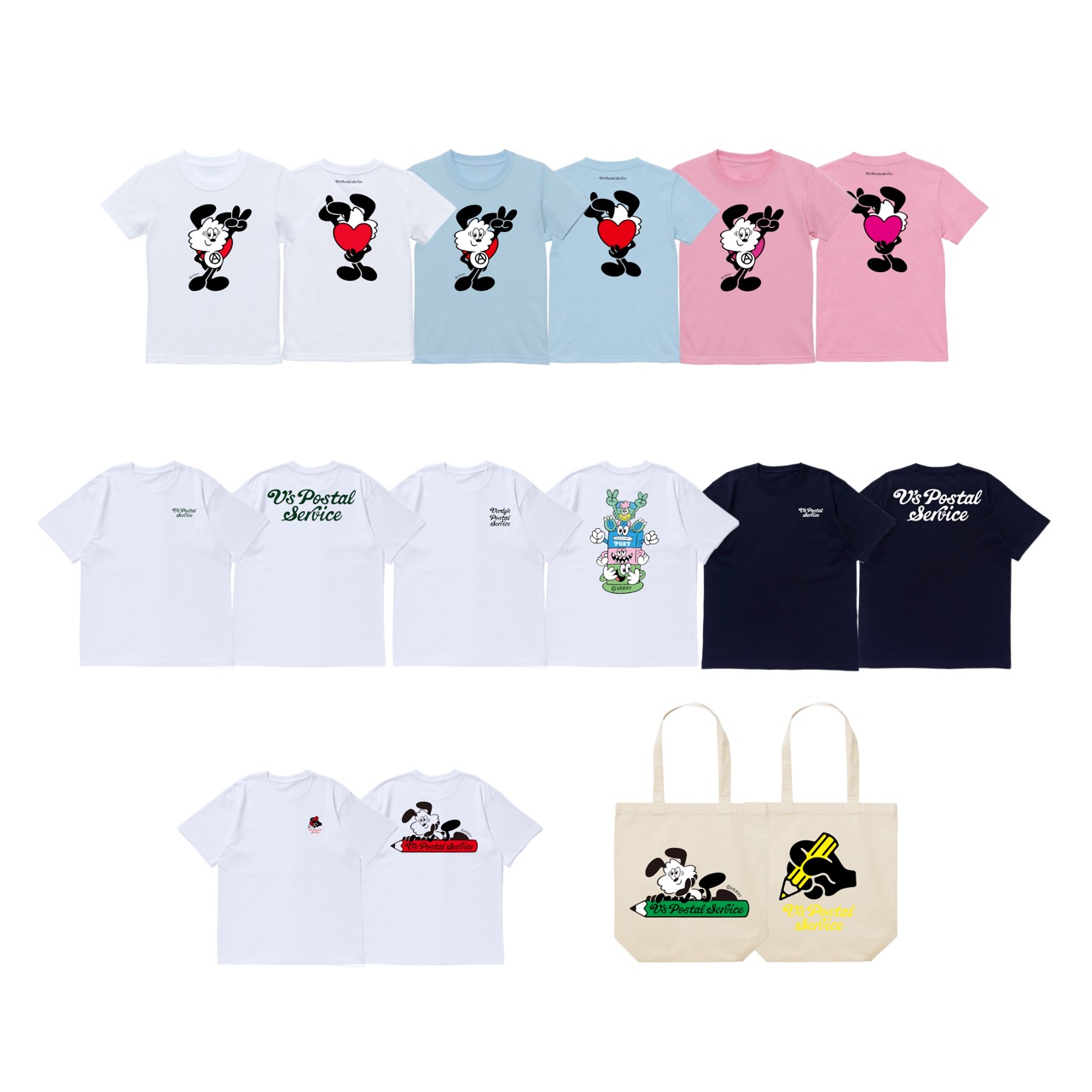
3.Walk in and the postbox catches the eye first. The body, about as tall as a person, is three monsters in green, pink and sky blue stacked on top of one another, and the belly of the middle one carries the word POST and a mail slot. The monster on top throws up peace signs with both hands. Beside it there is a separate spot where visitors can write a letter and drop it in on the spot. Who collects those letters, and how, has not been made public yet.
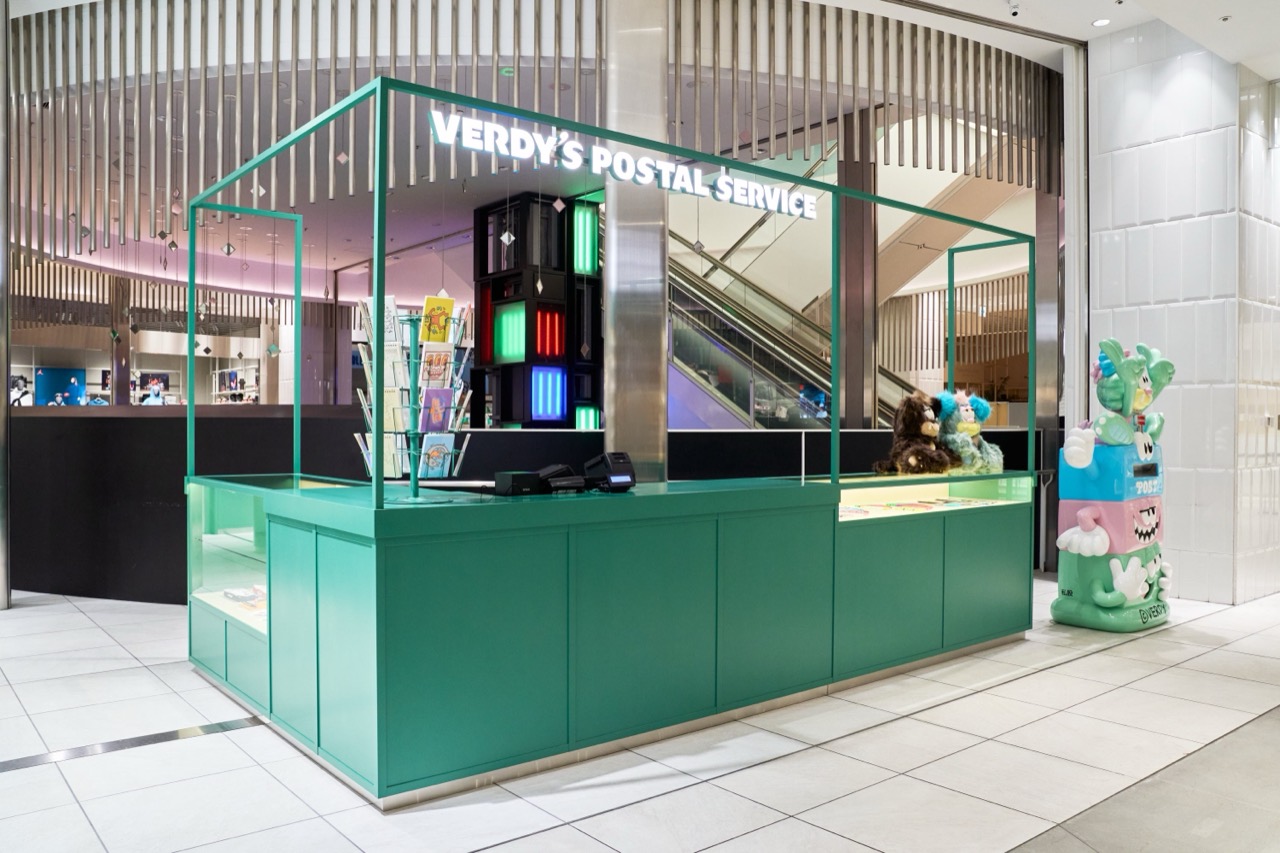
4.The shop is one counter island painted deep green plus wall shelving, and nothing more. Four green posts hold up a thin steel frame, and the VERDY'S POSTAL SERVICE sign sits on top of it. On the white tile floor the green mass looks even darker. Postboxes on Japanese streets are red, yet this shop chose green for both the walls and the counter.
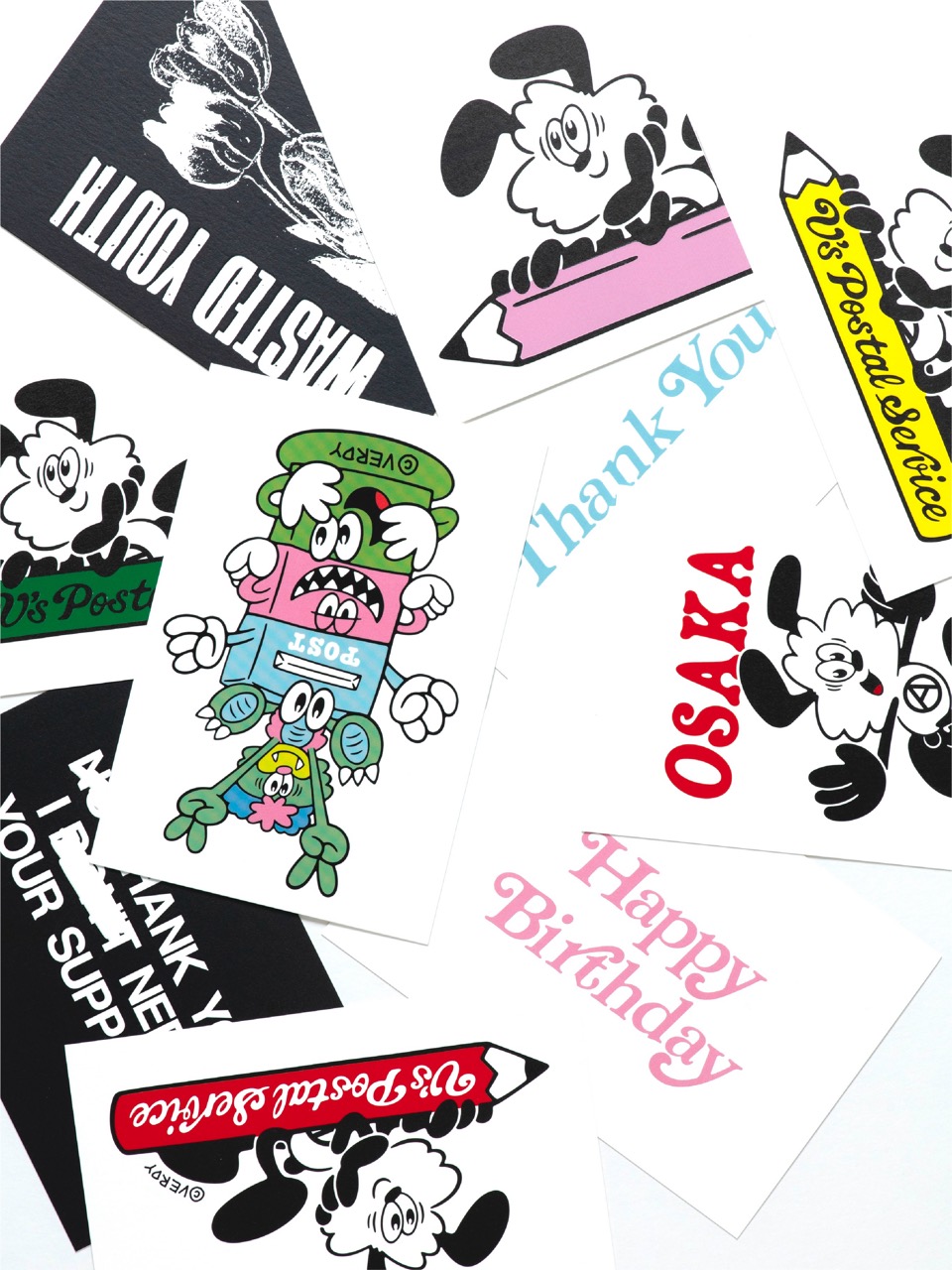
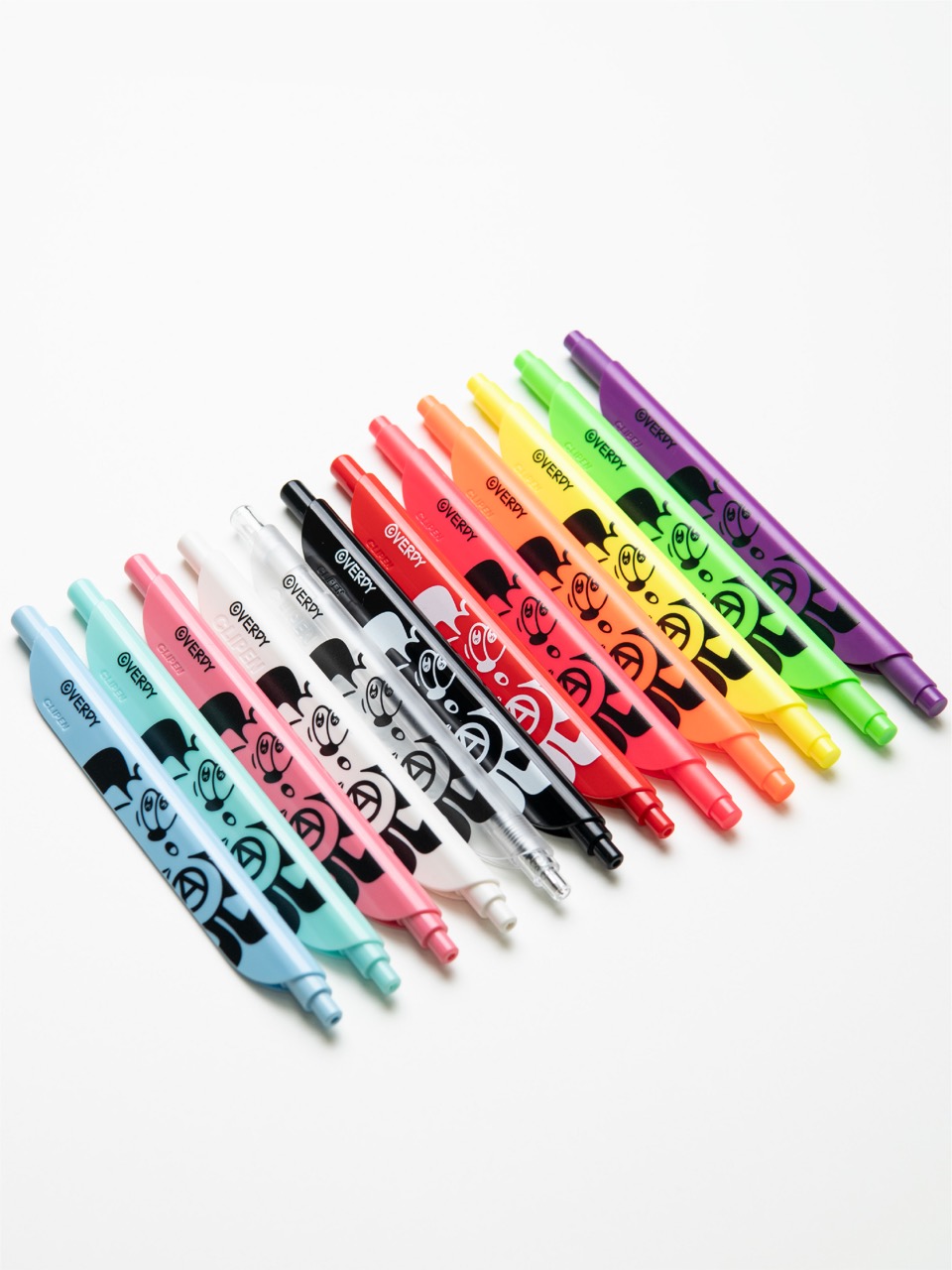
5.Prices run from 500 to 20,000 yen. A postcard costs 550 yen, a drawing pen 1,430 yen. The cards show VERDY's characters VICK and VISTY alongside words like Osaka, Thank You and Happy Birthday. V's COLLECTION, a postcard set of work by other artists picked by PARCO and VERDY, sits on the shelves too.
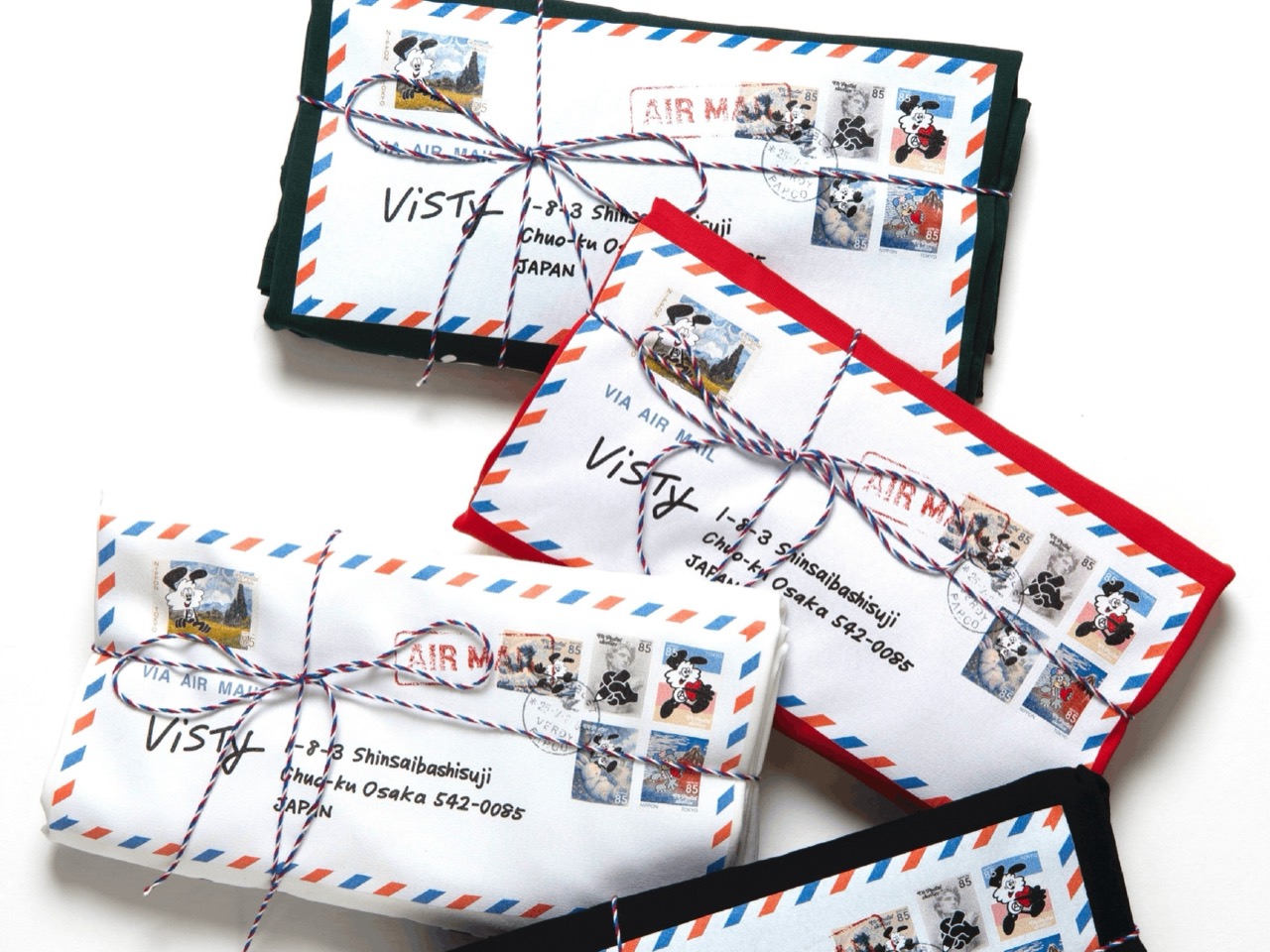
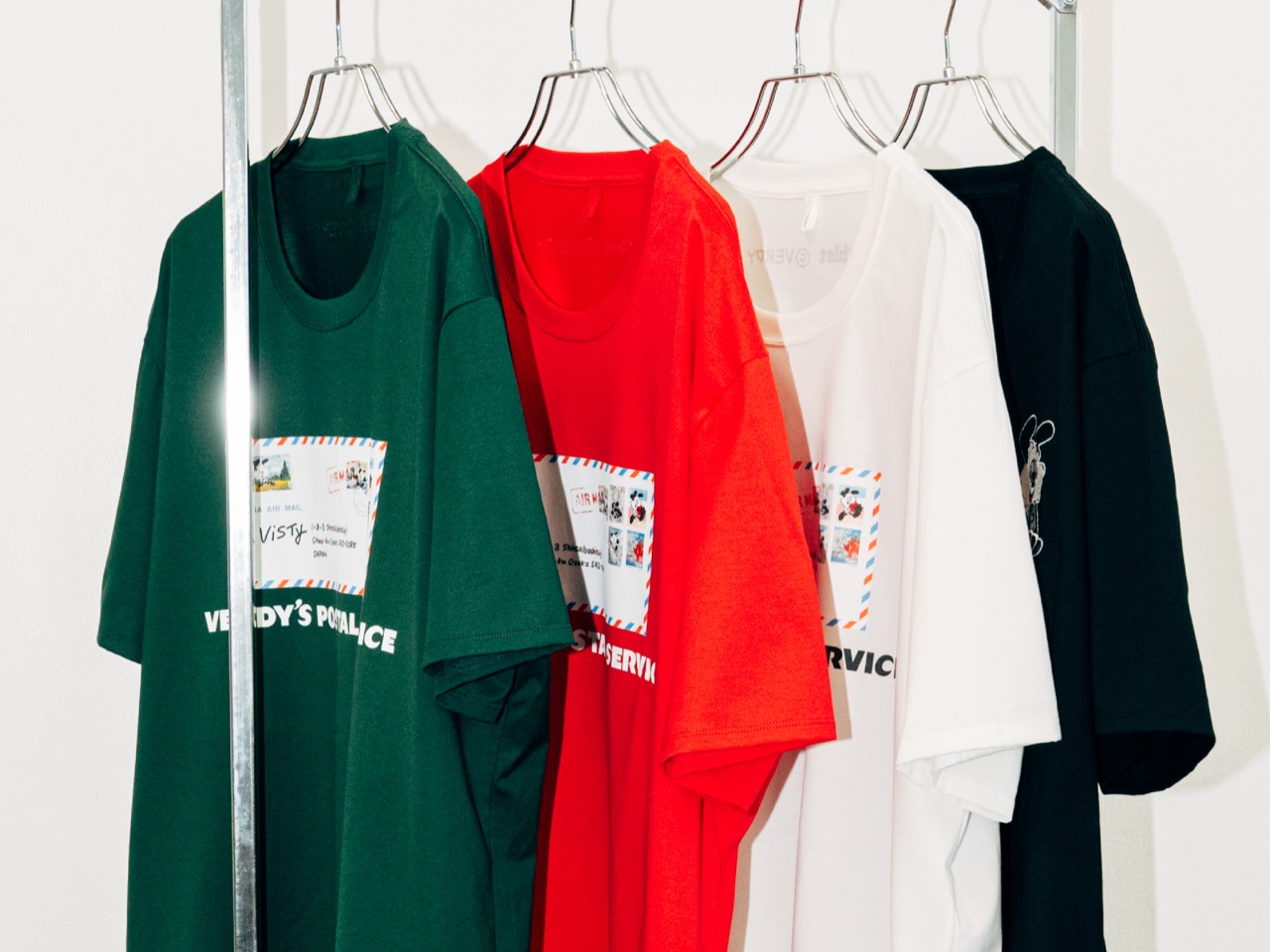
6.The clothing partner is the Tokyo brand doublet. The T-shirt designed by Masayuki Ino copies an airmail envelope: folded, it becomes an envelope, and the front carries an address, a postmark and a stamp with VICK on it. At 19,800 yen it is the most expensive garment in the shop. The staff uniforms were made by doublet as well.
7.VERDY was born in Osaka in 1987. He created Girls Don't Cry and Wasted Youth and has collaborated with Louis Vuitton, Nike, UNIQLO and HUMAN MADE. Products carrying his name have sold by lottery around the world, but he never had a shop of his own. For his first permanent store he picked his home city.

8.How far has letter writing fallen? Japan Post printed about 4.4 billion New Year postcards some twenty years ago, and 750 million for 2026. The number halved in the last two years alone, and the postcard rate went up during that stretch.
9.When fewer people write, a letter stops being ordinary and becomes rare. Rare things turn into keepsakes, and keepsakes sell. What this shop sells is not a way to get in touch but a sheet of paper printed with VERDY's drawing. A 550-yen postcard costs 6.5 times the 85-yen postage you would stick on it.
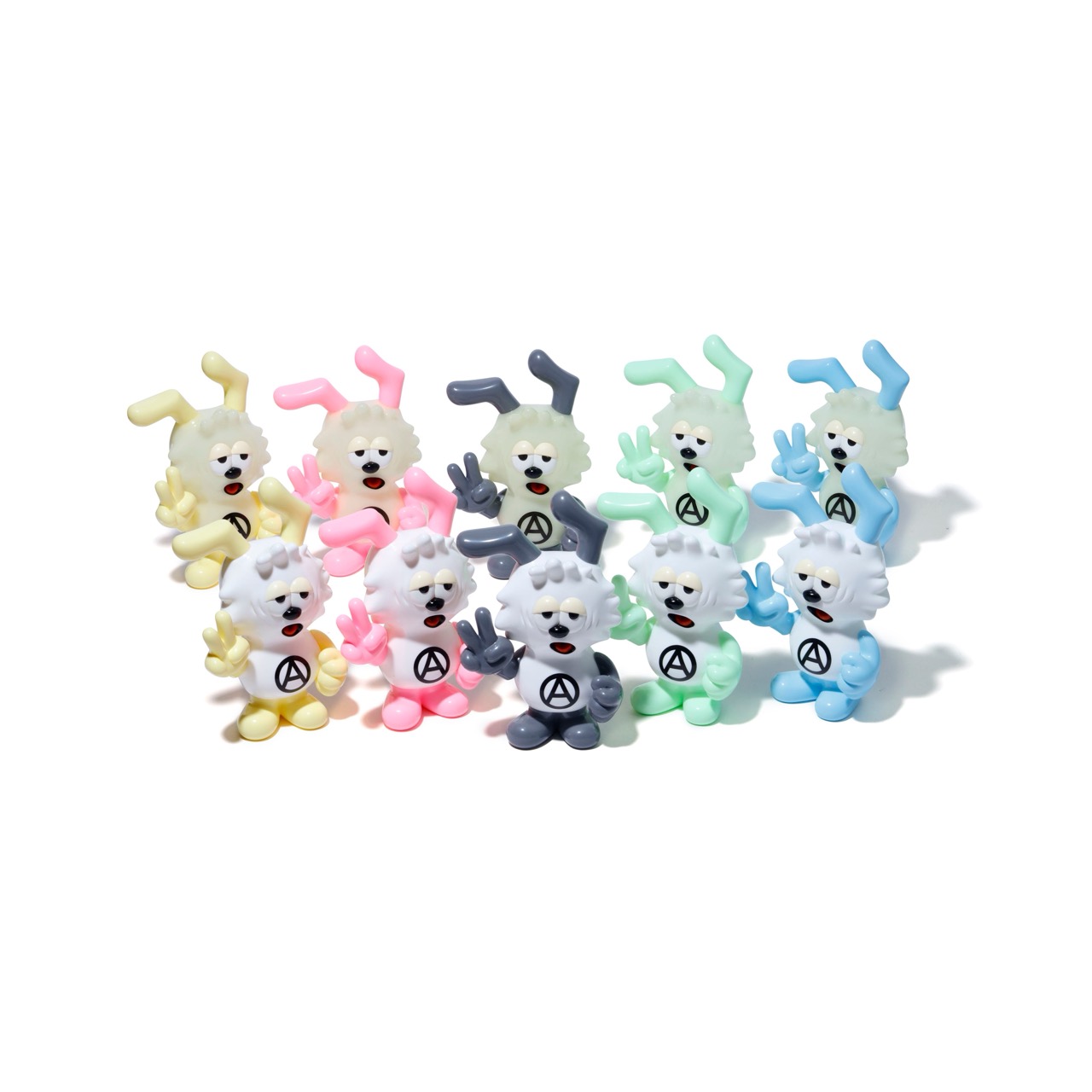
10.The postcards bring people in, and the clothes and figures raise the total at the register (estimate). One basic T-shirt at 8,250 yen equals 15 postcards. The VICK figure, limited to one per person, is 27,500 yen, and you only learn its color when you open the box.
11.What about the building's numbers? Shinsaibashi PARCO's gross sales for the year to February 2025 rose 46% to 37.9 billion yen, and Nikkei credited strong sales of character goods. That was the year this PARCO, a converted former Sogo department store building, began posting sales second only to Shibuya PARCO.
12.The following year the pace slowed. Gross sales for the year to February 2026 were 39.4 billion yen, up 3.7%. It was a year when fewer Chinese tourists came and tax-free sales fell sharply across the department store industry. PARCO filled the last slot of its renovation with character goods once again, this time with letters as the reason.
13.Divide gross sales by roughly 170 shops and each one sells about 230 million yen a year (estimate). To match that with postcards alone, this shop would need to sell more than 1,150 a day. Postcards alone do not add up, and the shop knows it.
14.The contact email and the website both sit under PARCO's domain. A mall usually leases out a unit and collects rent, but here PARCO stands on the side of running the business. The contract structure has not been disclosed. If the landlord shares the sales risk on this unit, pulling people down to B1 matters more than the unit's own sales.
15.A character shop usually sells stationery as one branch of its merchandise. This shop flips the order: it puts the act of writing and sending first and sets the characters on top. It looks more like a post office counter than a stationery aisle, and customers pay six times the price of a stamp to stand at that counter.
16.PARCO gave one of the last slots of its 2,000-tsubo renovation to a letter shop with a postbox in the middle, in the year the New Year postcard run shrank to 750 million. A 550-yen postcard cannot fill a floor's average sales, so the clothes and figures fill the total while the postbox brings people in. Korean department stores and malls usually charge a commission on sales, so a unit that draws people with postcards is the first to slide down the sales ranking. Keeping a unit like this for long takes a contract in which the landlord comes in as a business partner.