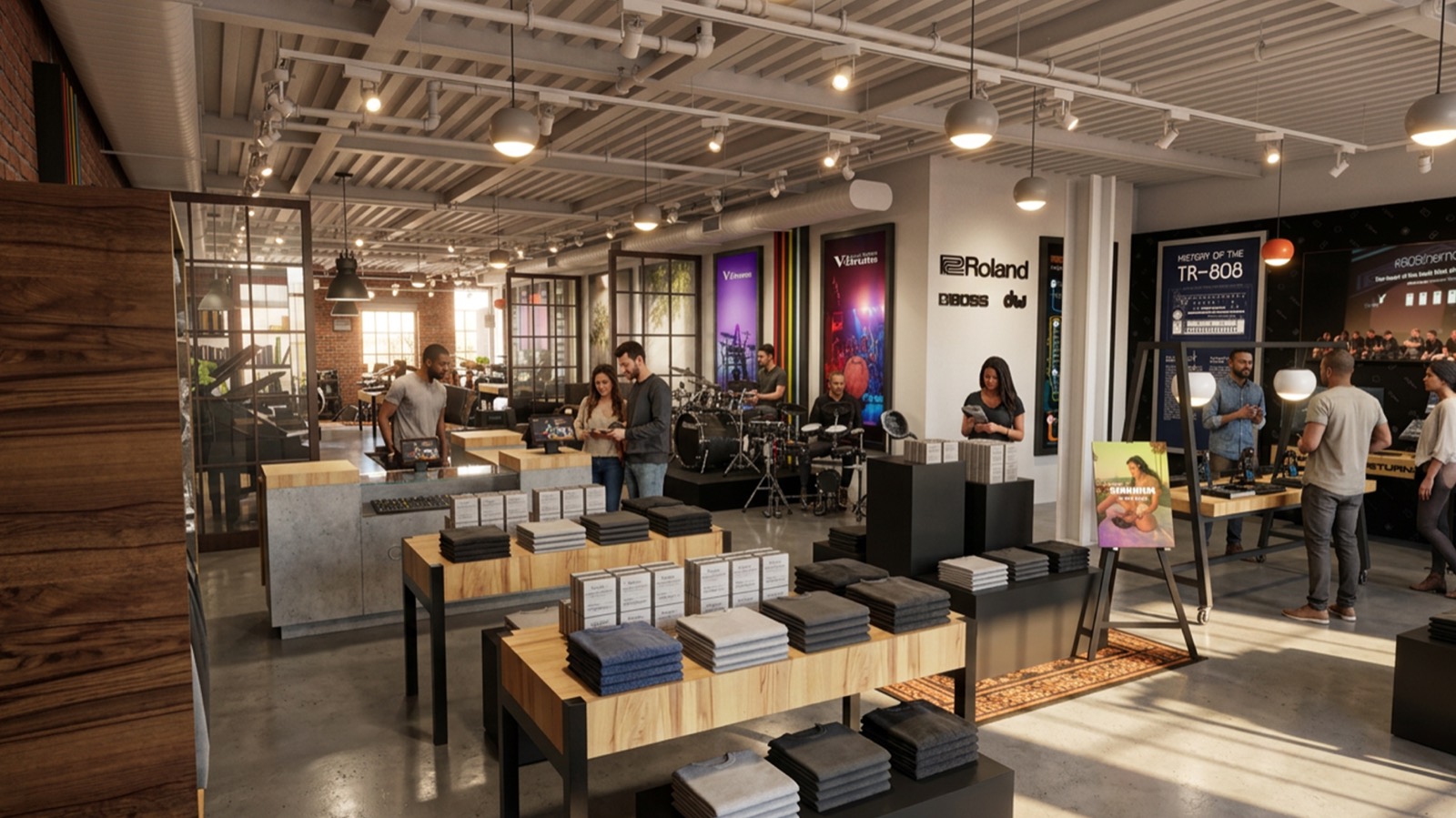
Japanese instrument maker Roland opens its first US company-run store in Manhattan's Meatpacking District on October 10. The ground floor and lower level add up to about 836 square meters, and the first room past the door belongs to the TR-808, a drum machine released in 1980. The landlord is the real estate arm of Inditex founder Amancio Ortega, the man behind Zara.
1.Roland opens Roland Store New York City, its first company-run store in the United States, in Manhattan's Meatpacking District on October 10. The address is 414 West 14th Street. Ground floor and lower level together come to 9,000 square feet (about 836 square meters). Opening day is invitation only; after that the doors are open every day from 11 a.m. to 7 p.m. It is the third store of its kind, after London in 2022 and Tokyo in 2023.
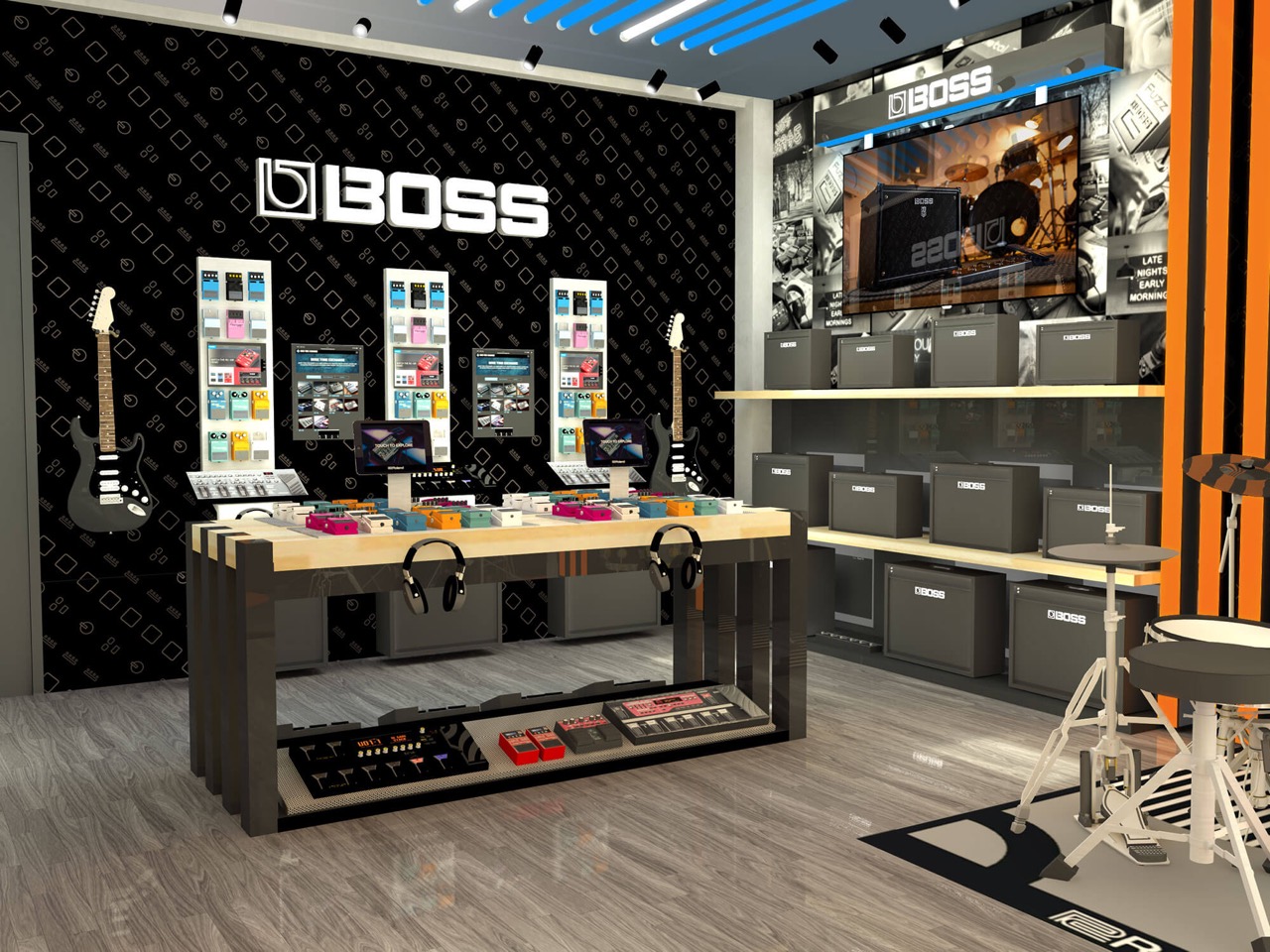
2.The first room you walk into is the TR-808's. The drum machine came out in 1980; the store rotates vintage units through the space and takes bookings for free 30-minute sessions on it. Further in come a grand piano showroom, the only dedicated DW (Drum Workshop) showroom in the US, and areas for synthesizers and DJ gear. BOSS, the guitar effects brand, gets a room of its own called the BOSS Cavern.
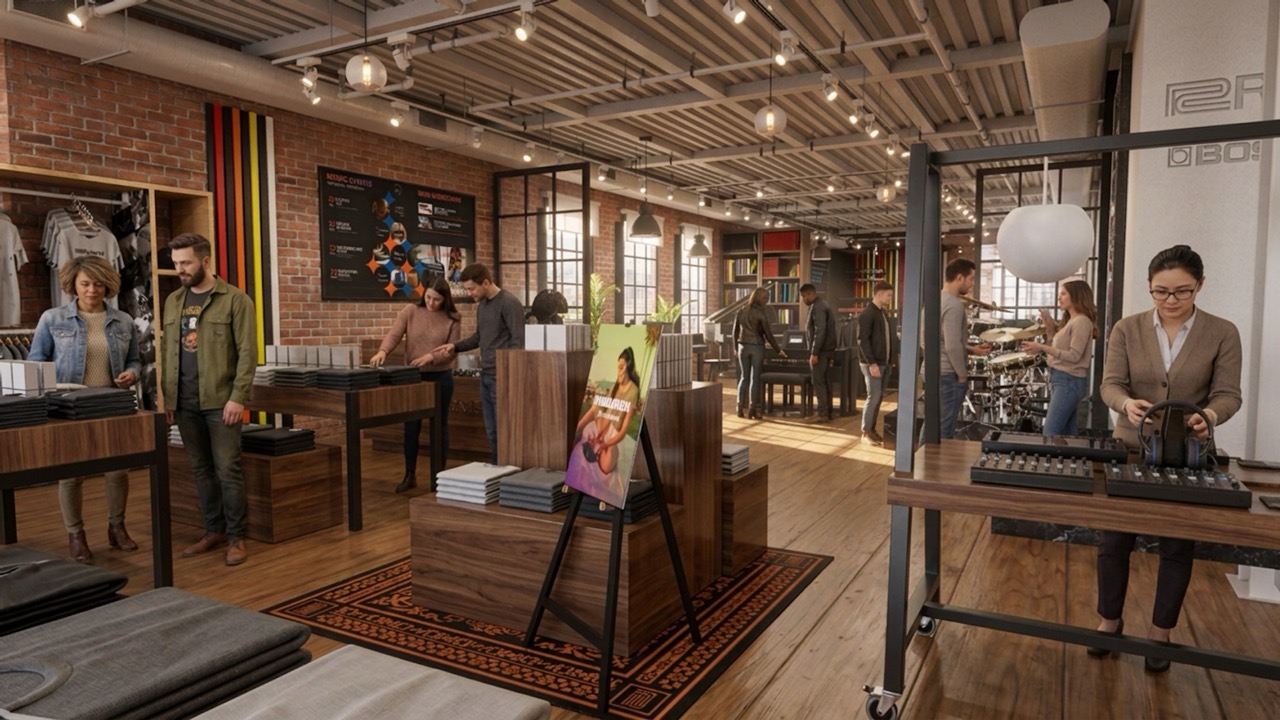
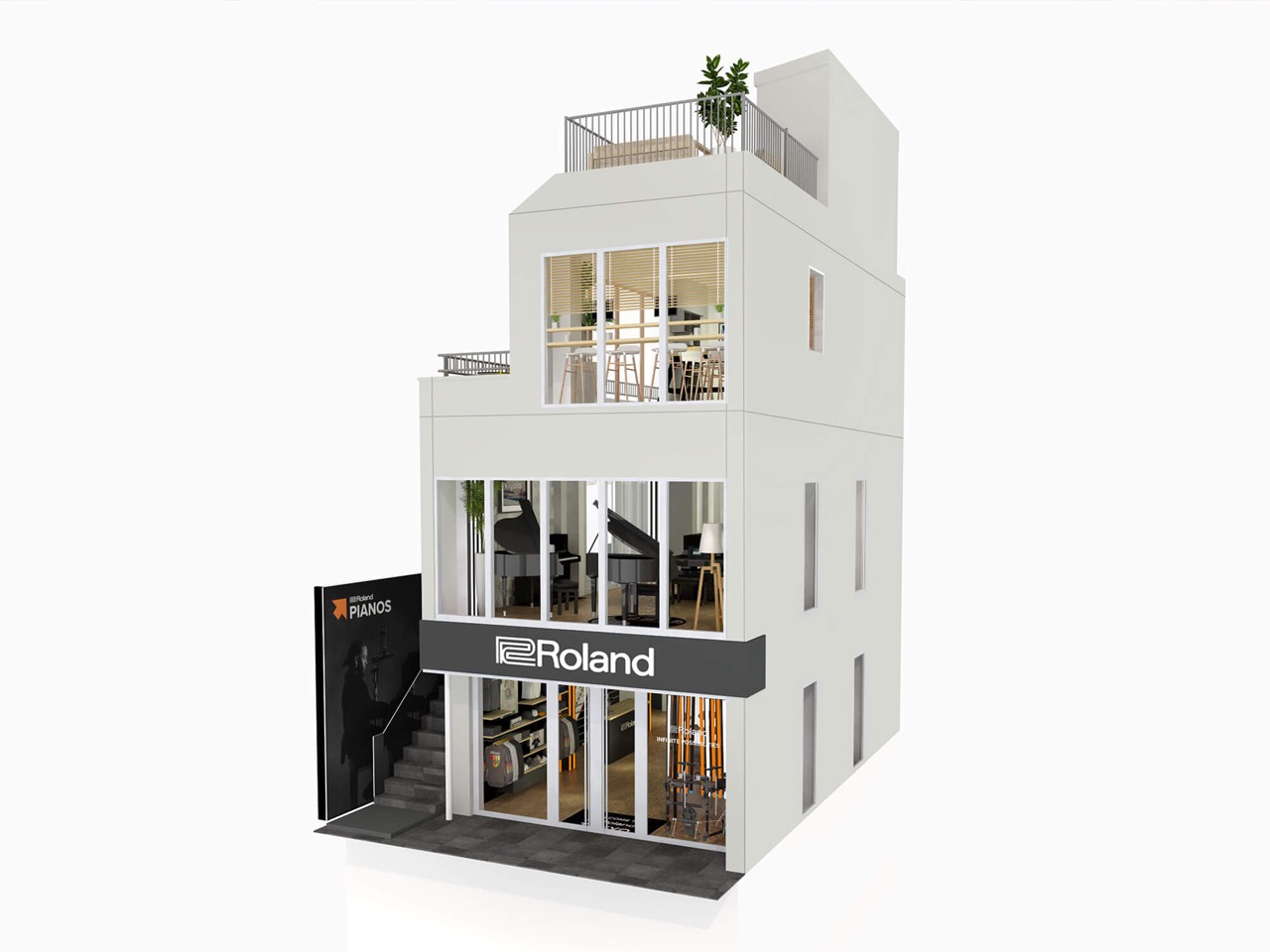
3.In the published renderings, the red brick walls and the pipework on the ceiling stay exposed. The display tables are wooden tops on black steel legs, and none of them rise above the waist. A typical music shop hangs guitars on every wall; here the walls stay bare and the stock goes to a separate warehouse space. The music playing in the store is generated on the spot by Roland's Soundscapes, which takes in visitor movement, keyboard input, time of day and weather.
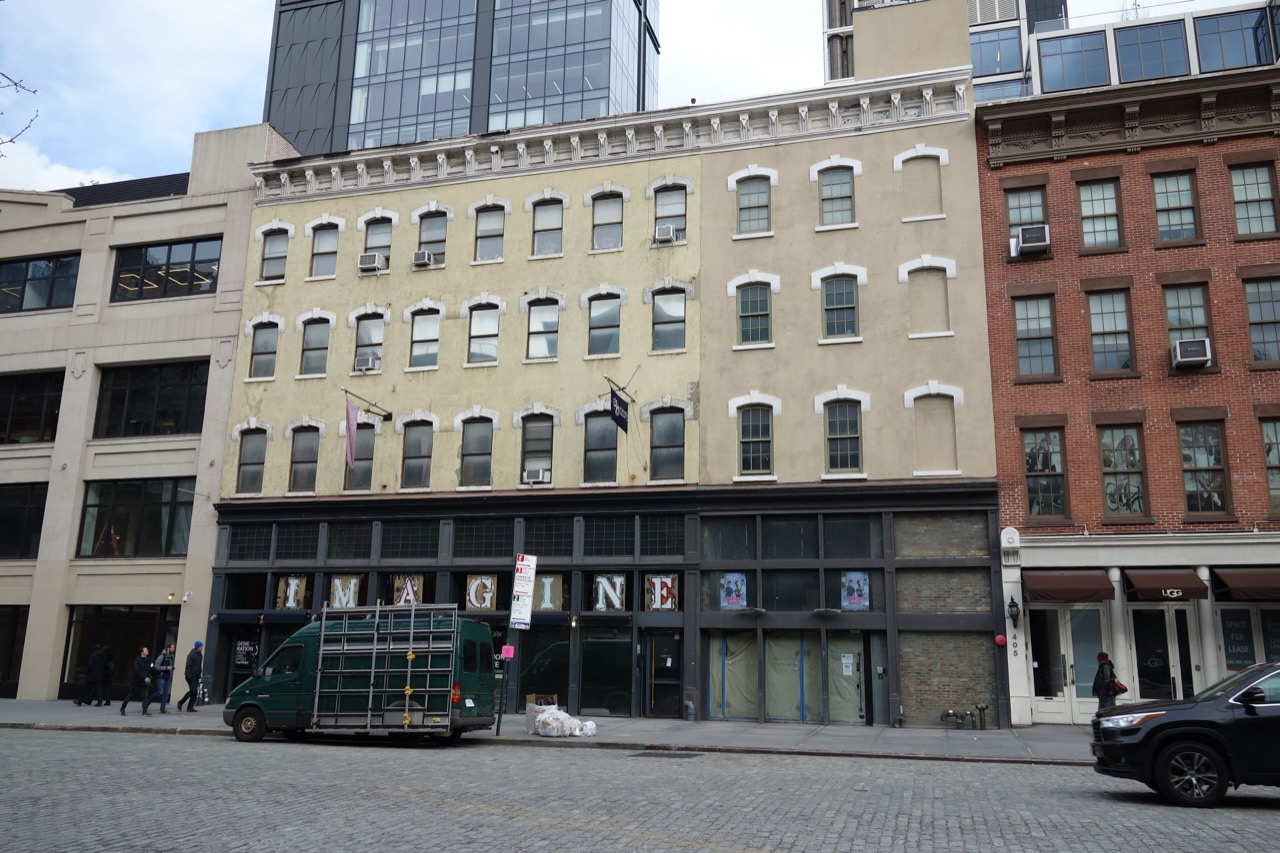
4.Number 414 is an office and retail building of 56,000 square feet (about 5,200 square meters). It belongs to Ponte Gadea, the real estate investment arm of Amancio Ortega, founder of Zara's parent Inditex. Ponte Gadea bought it in 2013 for $94 million. Roland's lease covers roughly 16% of the building.
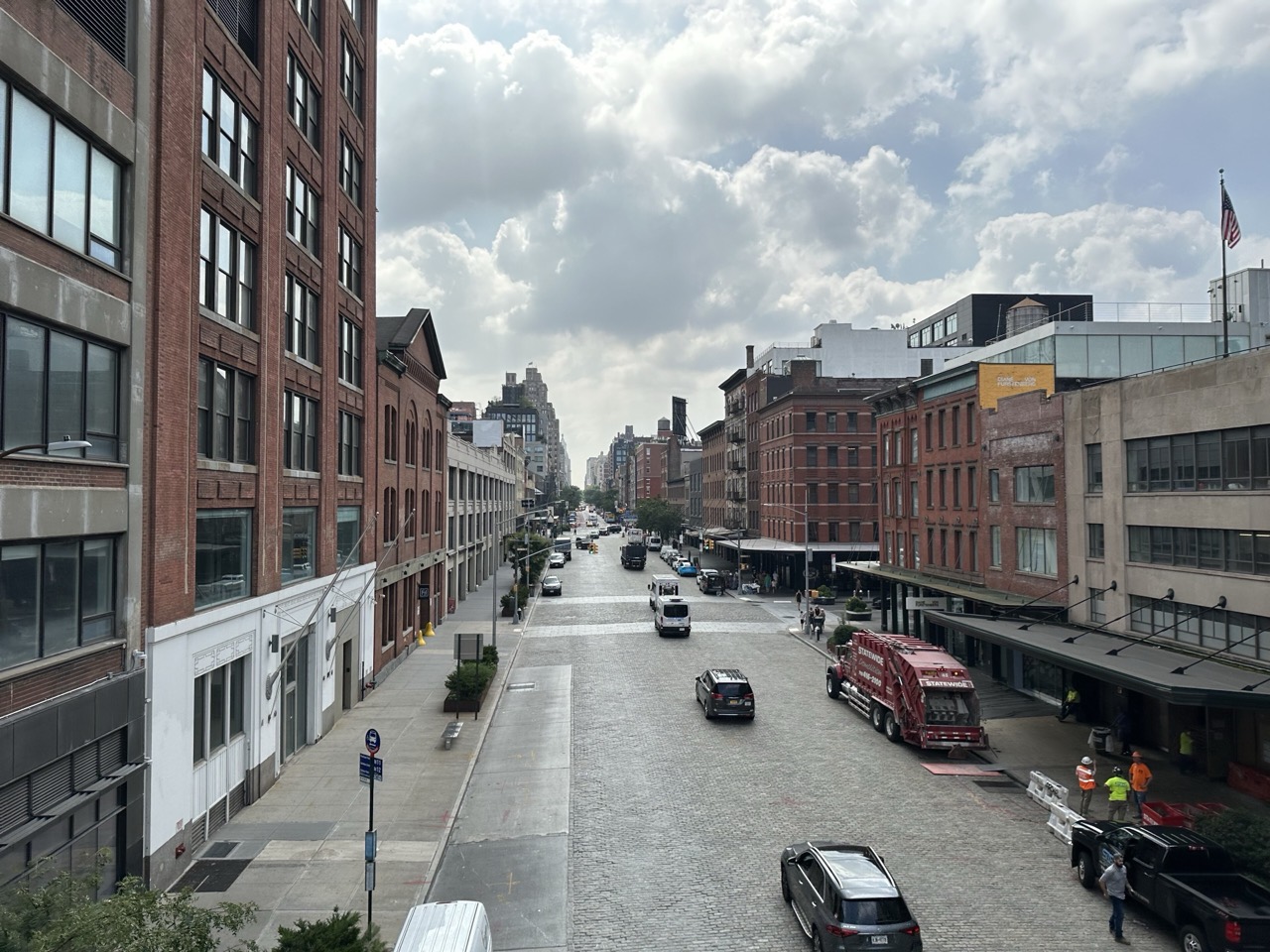
5.Meatpacking is exactly what the name says: a district of wholesale meat warehouses. Once the High Line turned an old elevated rail line into a park and the Whitney Museum of American Art moved in, luxury stores followed in a row. Cushman & Wakefield puts the area's average asking rent in the second quarter of this year at $321 per square foot per year. That is up 10.3% in a year, the steepest rise of any Manhattan corridor.
6.You buy an instrument after you have played it. In America, the place to play one is a big dealer like Guitar Center, where Roland gets one bay among many brands. As more people buy online, even that bay shrinks. In New York the maker has built that place itself. Free 30-minute workshops in piano, drums, synth, BOSS gear and DJing, along with one-on-one demos with specialists, are all by appointment.
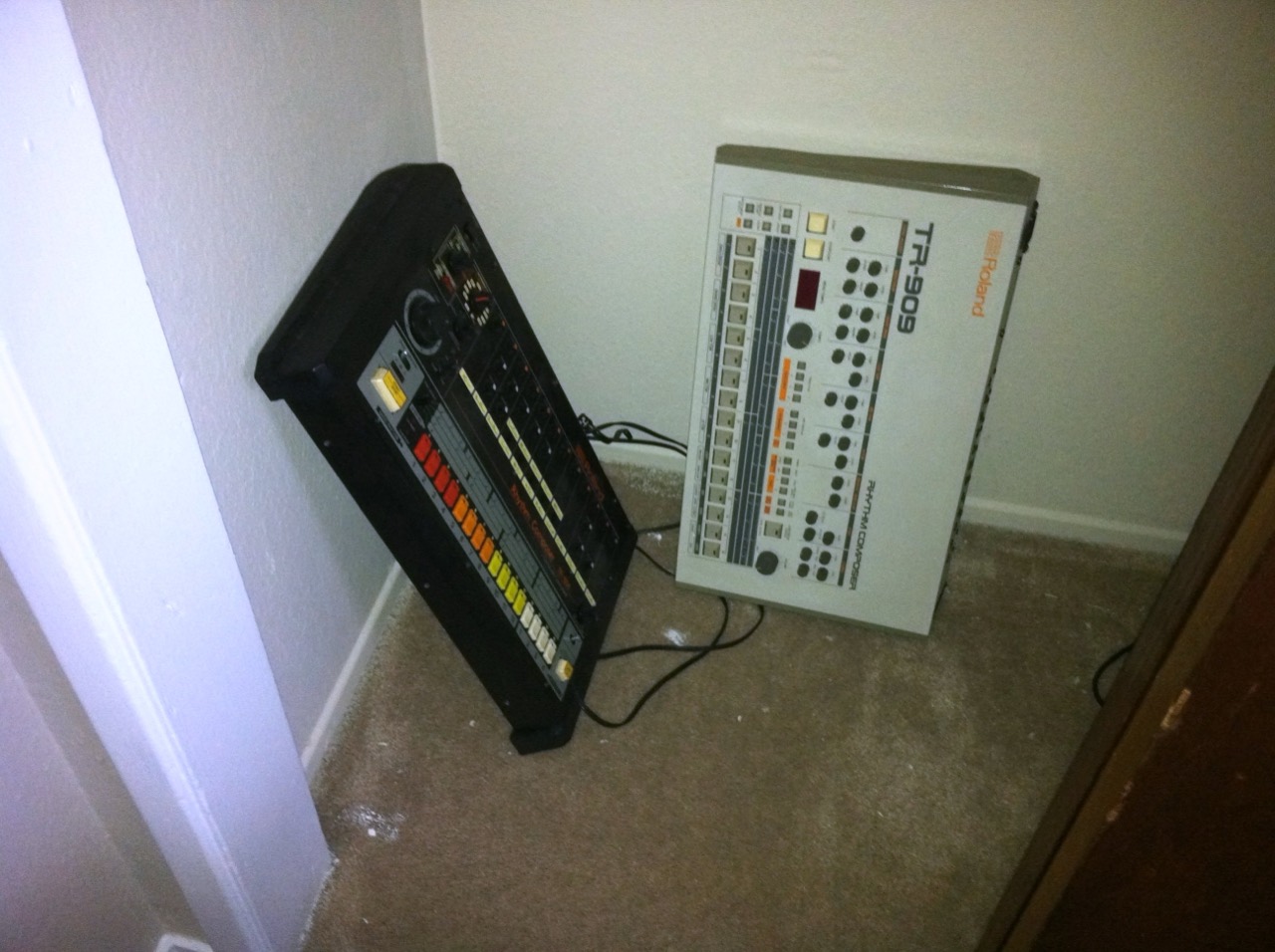
7.There is a reason the first room goes to a 46-year-old machine. The TR-808 launched in 1980 at $1,195 and sold a little over 12,000 units before it was discontinued in 1983. On release it was faulted for not sounding like real drums, but once it flooded the used market at low prices it became the basic sound of hip-hop and electronic music. Plenty of people who don't know the Roland name know that low kick. It is the best-known product of the company Ikutaro Kakehashi founded in Osaka in 1972.
8.From the exhibit room to the sales floor is a few steps. Last October Roland released the TR-1000, its first drum machine with analog voices in over 40 years, at $2,699.99. That is what a visitor who has just played the 808 meets on the next table. The company has also said it wants fewer one-off hardware sales and more customers who go on to sign up for Roland Cloud, its software instrument subscription.
9.Roland's 2025 report card: sales of ¥100.9 billion and operating profit of ¥9.4 billion. Sales grew 26% in four years, yet the operating margin shrank almost every year. The biggest market is the US, where a single subsidiary brings in 29% of group sales.
10.The first half of this year was better. Sales rose 12.9% and operating profit 16.0%, and the company kept its full-year operating profit target of ¥10 billion. Management did warn that memory chip prices in the second half are running well above expectations. In April Roland moved its US headquarters to El Segundo, California; the New York store is the next step.
11.The lease terms have not been disclosed. Assume the ground floor and lower level split the space evenly. At the corridor's average asking rent, 4,500 square feet on the ground floor comes to $1.44 million a year; price the lower level at a quarter of that rate and it adds $360,000. Together that is $1.8 million a year, about KRW 2.5 billion at 1,400 won to the dollar (estimate).
12.Add around 15 specialists to keep the store open every day, at $73,000 each per year, and annual fixed costs come to roughly $2.9 million (estimate). That is close to 5% of Roland's annual operating profit. Even if Roland pocketed the whole dealer share, commonly put at 30% of retail, it would need to sell $9.7 million a year to cover those costs. In TR-1000s, that is about 3,600 units.
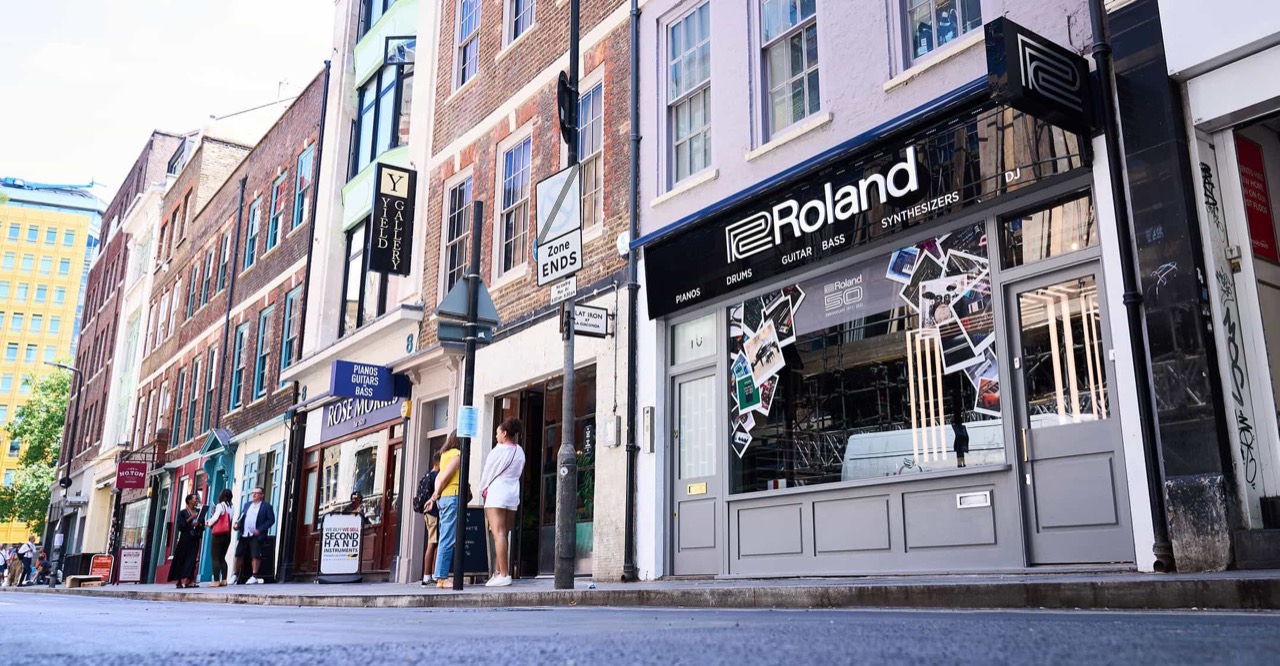
13.If that volume were the goal, wouldn't the sales floor come first? The two earlier stores also carry the word store on the sign while putting the demo space up front. The London store, opened in September 2022, sits on Denmark Street, the Tin Pan Alley where music shops have gathered since the 1960s, right in the middle of a row of dealers. The Tokyo store, opened in October 2023, takes three floors in Harajuku: synths and DJ gear on the ground floor, digital pianos on the second, electronic drums and BOSS in the basement.
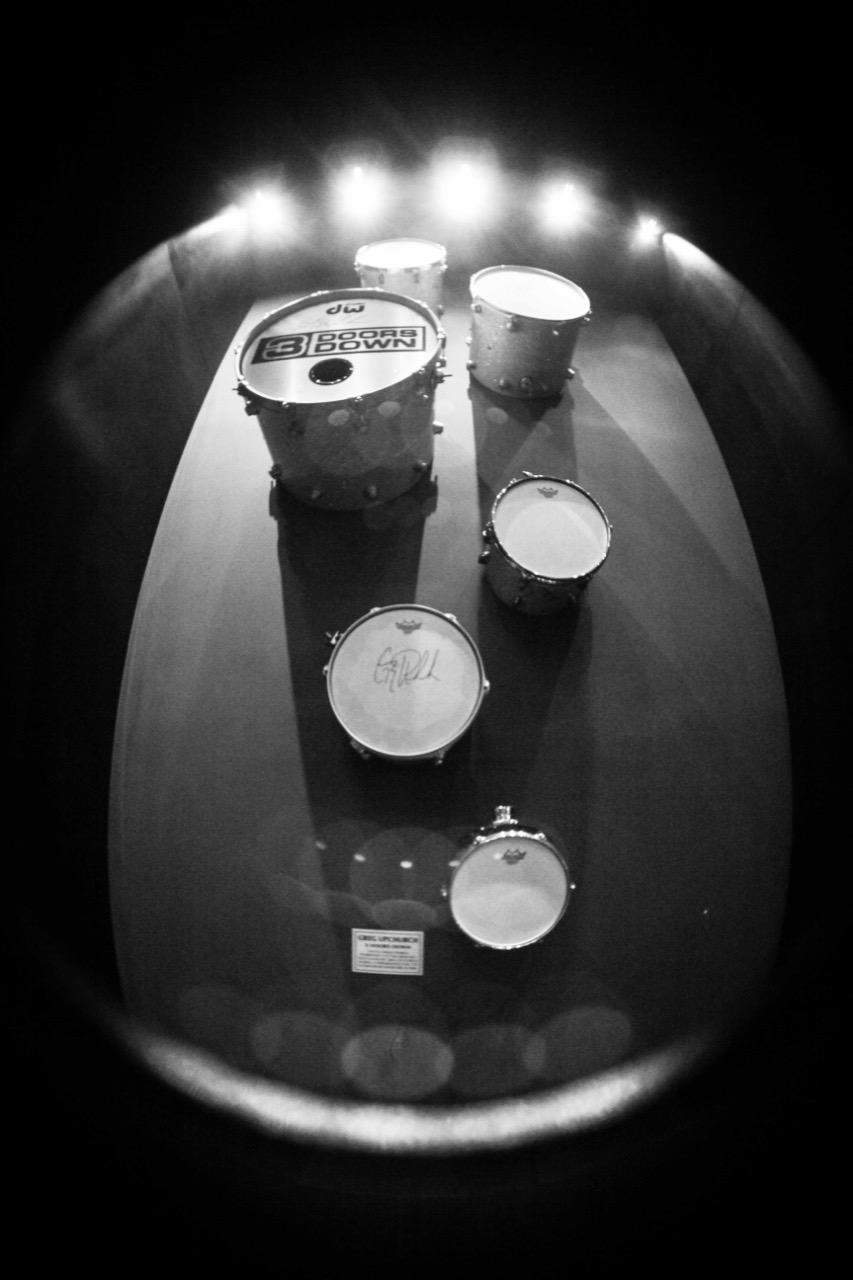
14.Where New York departs from the other two is DW. Roland bought the California acoustic drum maker in 2022 for $65 million, a company that grew on electronic drums buying one that makes wooden ones. The Tokyo basement had only electronic kits. In New York, a name American drummers already know gets a showroom of its own.
15.Workshops and demos cost nothing. Booking, though, goes only through the store's website. What you came to play, and which instrument got your 30 minutes, is recorded along with your name. A customer who buys a guitar at a dealer leaves Roland not so much as a receipt. The New York demo bookings carry over Demo-on-Demand, which the Tokyo store has run since 2023.
16.A Japanese maker that sold instruments through dealers has leased about 836 square meters in a building owned by the founder of Inditex, given the first room to a 46-year-old drum machine, and spends an estimated $2.9 million a year less on stacking product than on letting people play and leave their names. In Korea, the first thing an instrument brand would hit with the same store is sound. Running drums and amps in a commercial building means building floated floors and walls for soundproofing first, and if there are offices or officetels upstairs, the deal stalls at the lease negotiation.