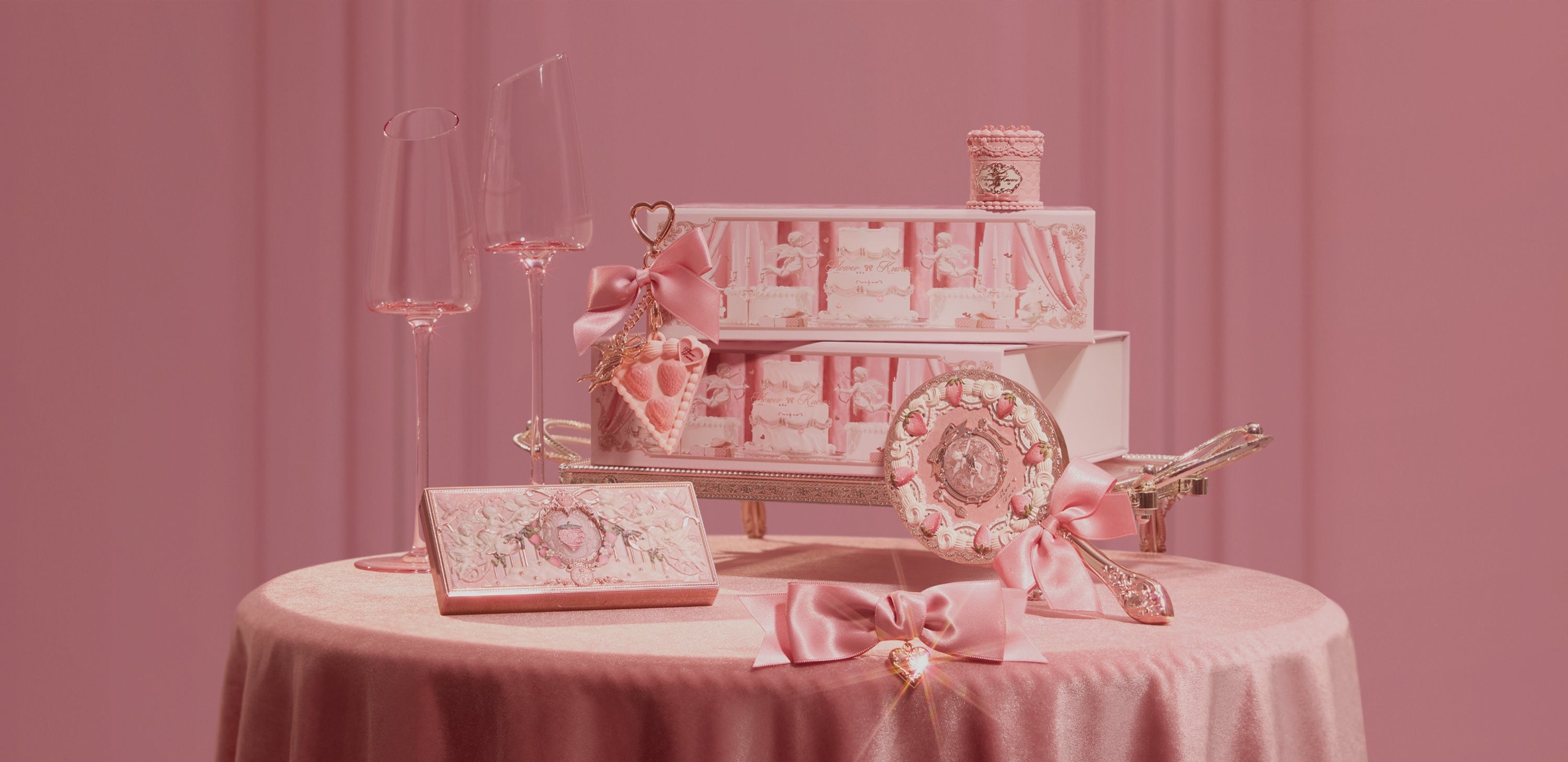
Chinese color cosmetics brand Flower Knows opened its first standalone store on October 1 at 520 Huaihai Middle Road in Shanghai. Last year it sold about KRW 337 billion of product without a single store of its own. Proya, which became its majority owner this year, paid 2.5 times the price per share it had paid a year earlier.
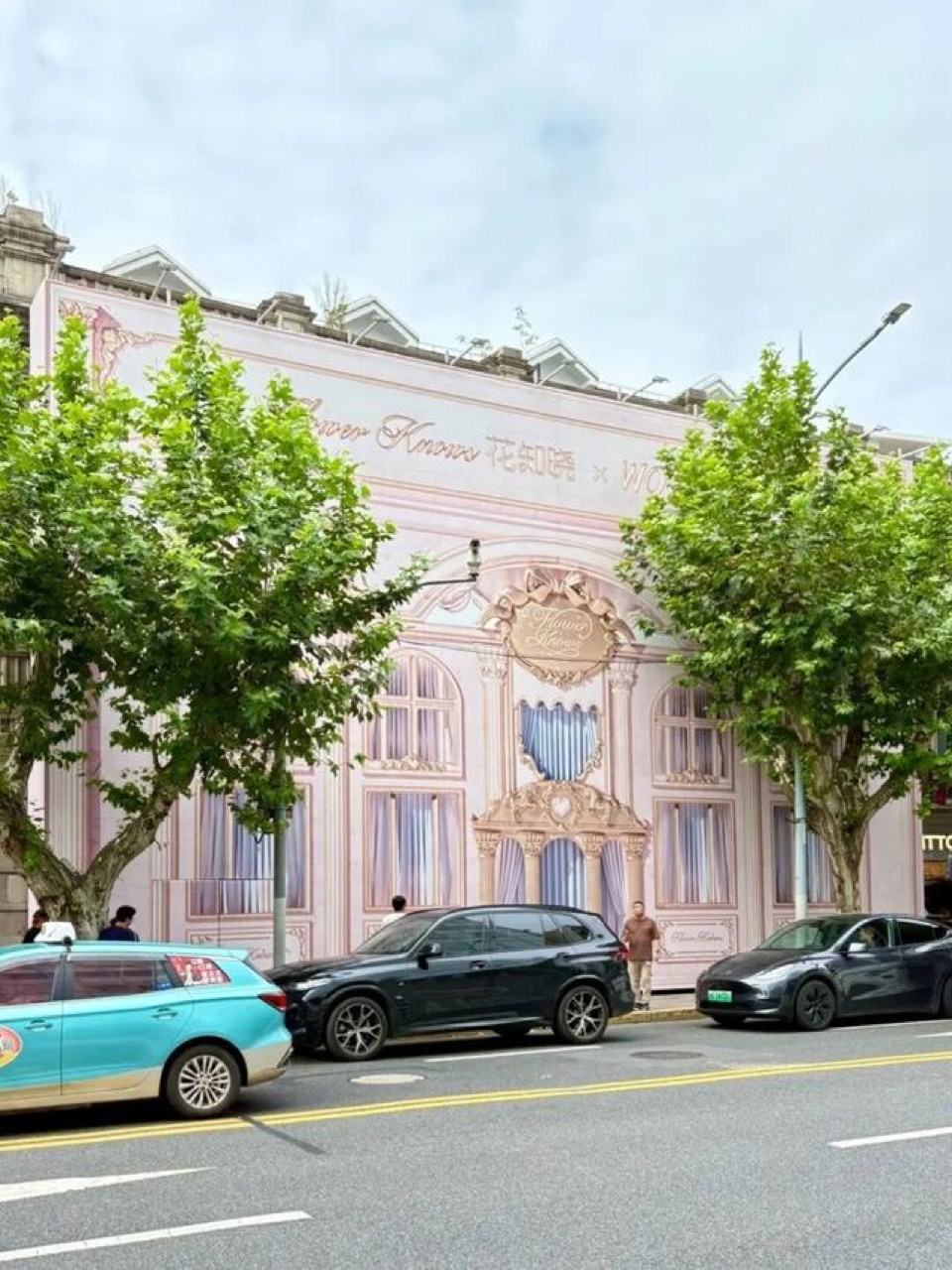
1.Flower Knows (花知晓) opened the doors of its first standalone store on October 1 at 520 Huaihai Middle Road, Shanghai. Until the 8th it runs as a trial, open 10 a.m. to 10 p.m. to visitors with timed reservations only, and regular trading is reported to start on the 9th. The store is called the Global Brand Flagship. It is run jointly with WOW BEAUTY, a cosmetics multi-brand retailer the company has worked with for eight years.
2.The company was founded in Hangzhou in 2016 by two men born in the 1990s, Yang Zifeng and Zhou Tiancheng, with RMB 1 million. Both were cosplay enthusiasts, and in the first three months they sold RMB 2 million online. For the next ten years, its only offline presence was other people's shelves. Its products now sit in more than 2,000 cosmetics multi-brand stores across China, but this is the first store that carries its own name.
3.People gathered before the doors opened. When the construction hoarding went up in mid-September, a whole roadside building turned into a pink castle. Every arched window got painted sky-blue curtains, gold ornaments crowned the top, and photos of it spread across Xiaohongshu. Why is the number 520 welcome? Read aloud in Chinese it sounds like "I love you," which is why couples celebrate May 20.
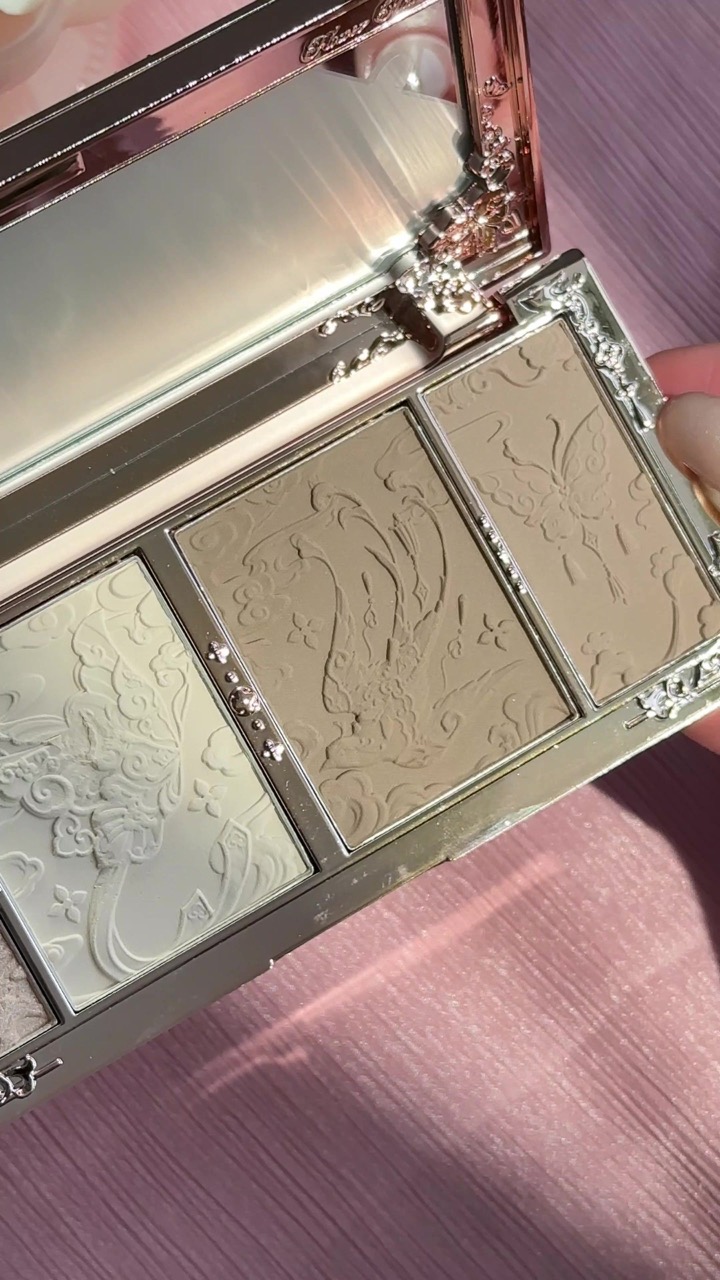
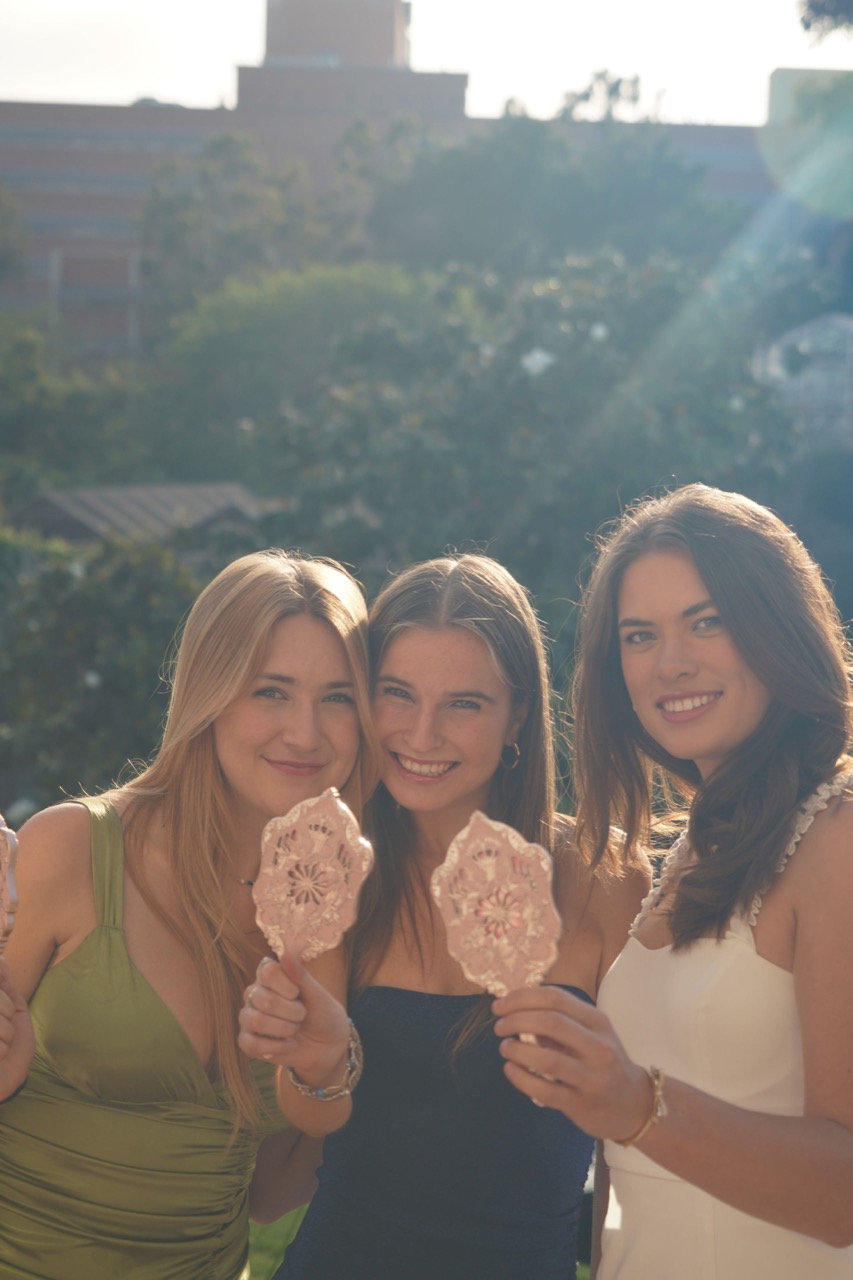
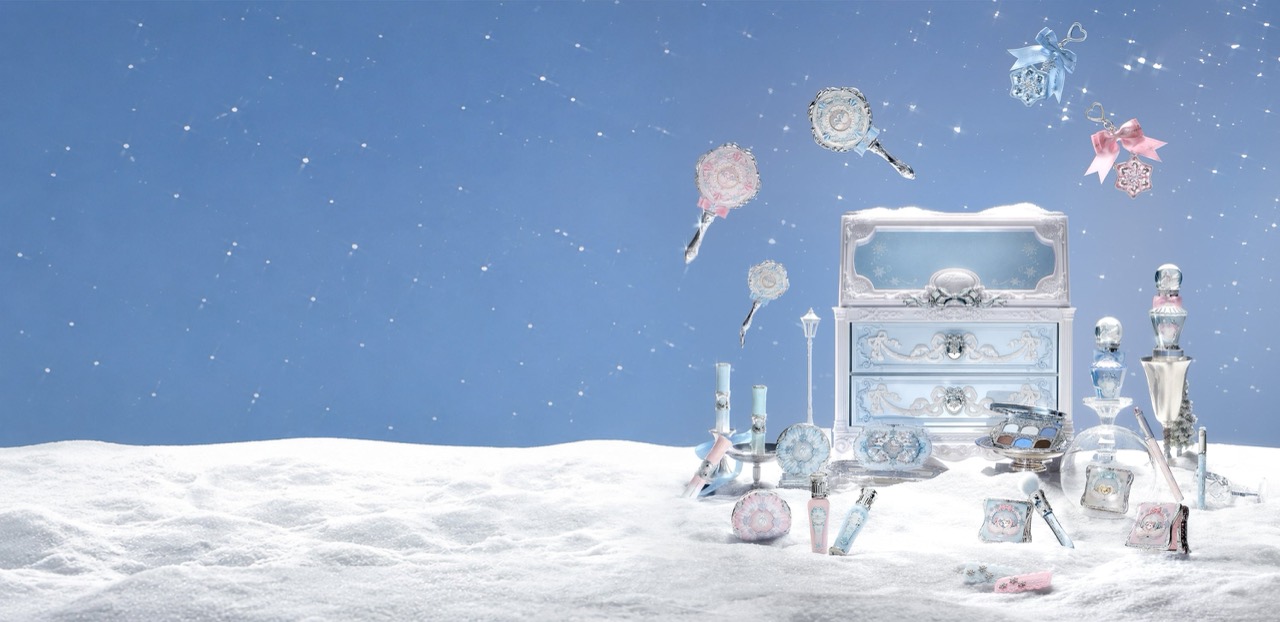
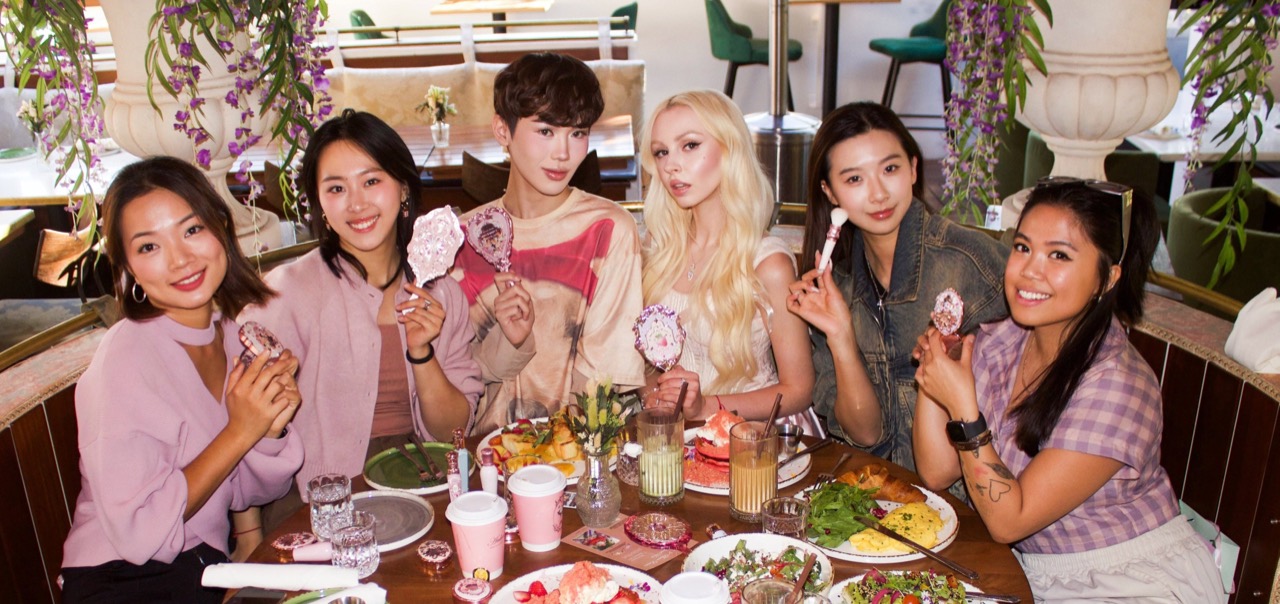
4.Shoppers who choose this brand look at the lid before the color. Angels, roses and swans stand out in relief on palette lids, and lace patterns are pressed into the powder itself, so a fingertip wipes away the pattern first. By June the company held 132 design patents. It makes things people keep after the makeup is gone: vanity-drawer boxes, hand mirrors, cake-shaped cases.
5.During the trial period one reservation code admits the holder plus one friend. Miss your slot and that day's booking is void, and a phone screenshot will not get you in. The in-store exclusive is a build-your-own palette, where shoppers fill an empty case with the colors they pick. Single items are 10% off, and three or more are 20% off. Floor area and number of floors have not been disclosed.
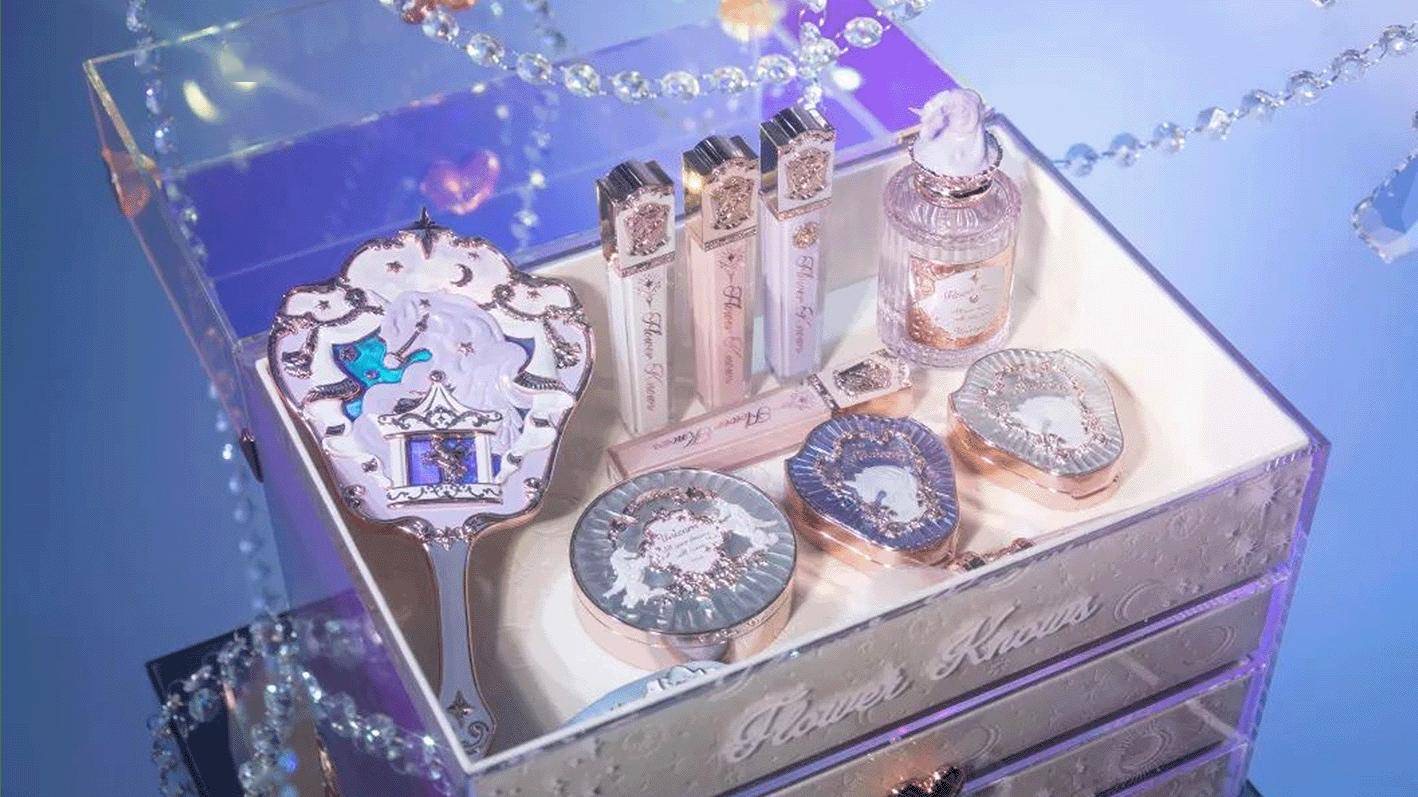
6.What shoppers buy is makeup and a collectible at once. With an average item price of RMB 60 to 70 (about KRW 13,000), the first purchase is easy, and 40% of buyers come back. The case shape changes with every series, so the same person buys again when a new one lands. The catch is that this ornament barely shows on a screen. To feel the pattern under a fingertip, you have to hold the real thing.
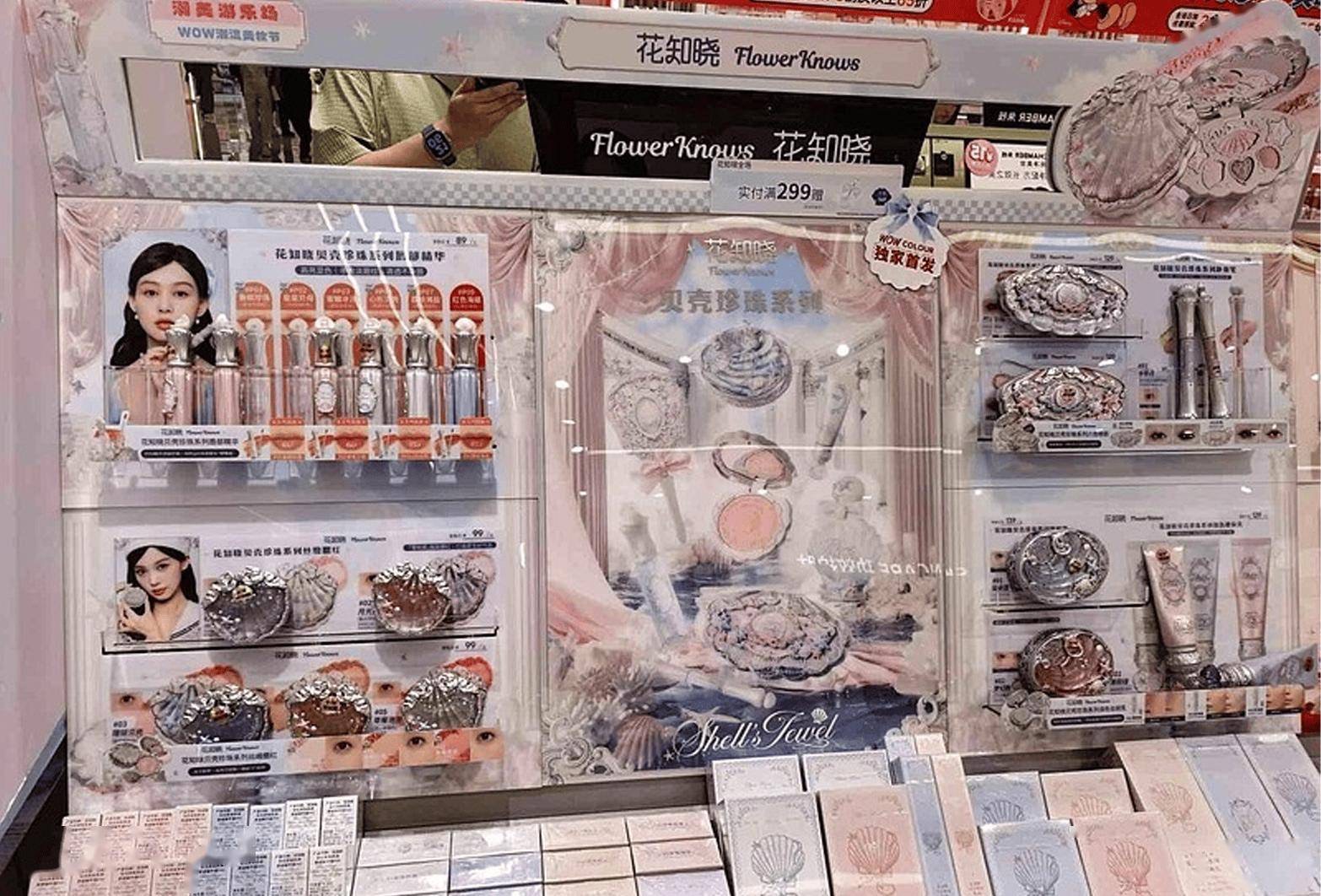
7.Until now, the real thing lived on someone else's shelf. One bay in a multi-brand store holds dozens of other brands. There, a castle-shaped box and a swan lid become one row on a shelf a little over a meter wide. Across 2,000 stores, there was not one place where shoppers could see the whole scene the brand had built.
8.Overseas buyers paid more first. The signature Strawberry Cupid palette lists at RMB 149 (about KRW 29,000) in China and $40 on the US official store, about 1.9 times the Chinese price. Overseas sales in 2025 were RMB 200 million, 11.6% of the total. The brand first took root in Japanese drugstores, and since 2024 the US has overtaken Japan as its largest overseas market. In America it now reaches Ulta Beauty and Urban Outfitters stores.
9.2025 revenue was RMB 1.726 billion (about KRW 337 billion), with net profit of RMB 280 million, a net margin above 16%. Revenue grew more than 50% a year for three straight years from 2023, and in the first quarter of this year the company booked RMB 675 million in revenue and RMB 155 million in net profit. Online sales came to RMB 1.474 billion, or 85.4%. Most of that was sold directly through its own web store and official stores on platforms.
10.The offline share was RMB 252 million. Spread across more than 2,000 multi-brand stores, each sold at most RMB 126,000 a year, a little over RMB 10,000 (about KRW 2 million) a month. Each store was small, but the brand paid neither the rent nor the staff. A standalone store flips that math. Rent, wages and fit-out costs all land on the brand.
11.JLL put the average ground-floor rent in Shanghai's core retail districts in the fourth quarter of last year at RMB 41.8 per square meter per day. Renting just 100㎡ on the ground floor costs RMB 1.52 million a year (about KRW 300 million), as much as twelve multi-brand stores sell in a year. Converted into online sales, the same money is nine hours' worth. This is not a store meant to pay for itself. Count the hoarding photos that spread before opening, and it is closer to advertising spend.
12.The owner who will pay for that advertising changed this year. Chinese cosmetics company Proya (珀莱雅) bought a 38.45% stake for RMB 428 million in 2025, and in May this year bought another 12.55% from founder Yang Zifeng for RMB 351 million, taking control with 51%. Divide each deal by its stake and the company's value jumps from RMB 1.11 billion to RMB 2.8 billion. The second figure is ten times last year's net profit. Proya booked RMB 445 million of its first-half net profit of RMB 1.168 billion as investment income related to the company.
13.After the deal, Proya general manager Hou Yameng became chairman of the company, and Yang Zifeng stepped back to manager and director. Product development, however, stays with the founders. Trade press noted that what Proya bought was less the brand name than its overseas distribution and its ability to operate in English. Sales of Proya's own core skincare line fell 10% last year. Rather than grow the next phase in-house, it bought it.
14.In China, the precedent for online-born beauty brands expanding stores is poor. A few years ago multi-brand cosmetics stores sprang up everywhere, and some, like WOW COLOUR, closed nearly half their stores despite raising more than $100 million. Flower Knows did not open alone. It shares store operations with a multi-brand retailer and caps visitor numbers with reservation slots. What it chose was not a store count but a line in front of one door.

15.A brand that sells KRW 337 billion a year without a store of its own opened its first one on Huaihai Middle Road after ten years, and the rent on just 100㎡ of that ground floor equals what twelve multi-brand stores sell in a year (estimate). In Korea, an online-grown color cosmetics brand opening the same kind of store runs into Olive Young first. Offline cosmetics sales are concentrated on that one chain's shelves, so the moment a standalone store gets exclusives or deeper discounts, listing terms have to be renegotiated.