A couple in Melbourne put a roaster in the middle of their cafe, and no gas runs into the machine. Australia's first all-electric roaster. That one line about the absence of gas is not a coffee story, it is a real estate story.
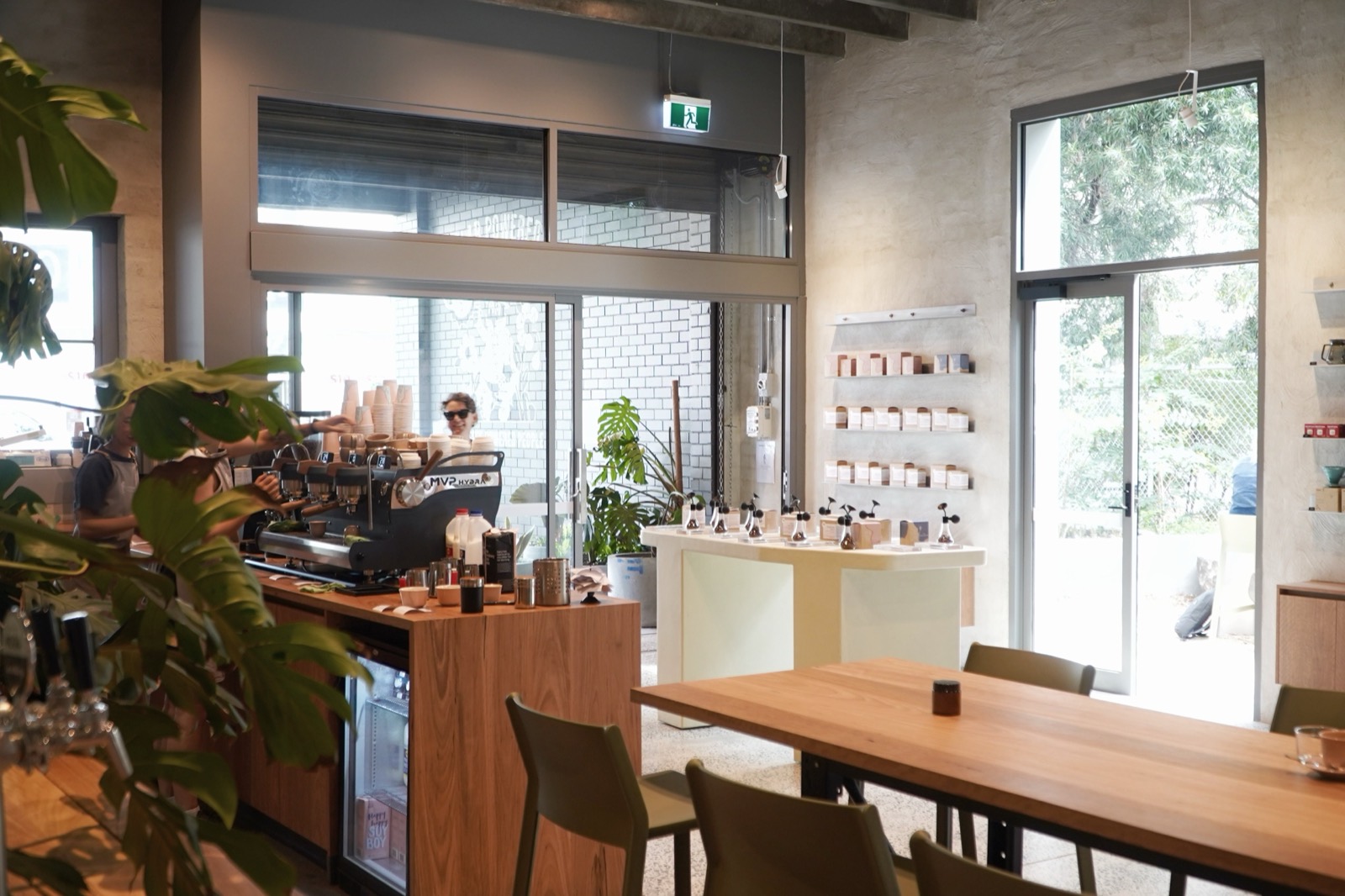
1.Earlier this year a cafe opened in Brunswick East, Melbourne. It is called Contraband, run by the married couple Jesse & Chris Legge. It is the second site for a roaster that started in 2018 as a small stall beside Preston Market.
2.What it sells is coffee. The weapon here is not the bean, though, it is the roaster itself. The roasting machine sits in the middle of the room so customers watch the whole process, and it burns no gas.
3.The machine is a P12E from Probat of Germany, the company's largest all-electric roaster, released in 2023. Up to 12kg per batch, 40kg an hour. Electric heating went where the gas burner would have sat.
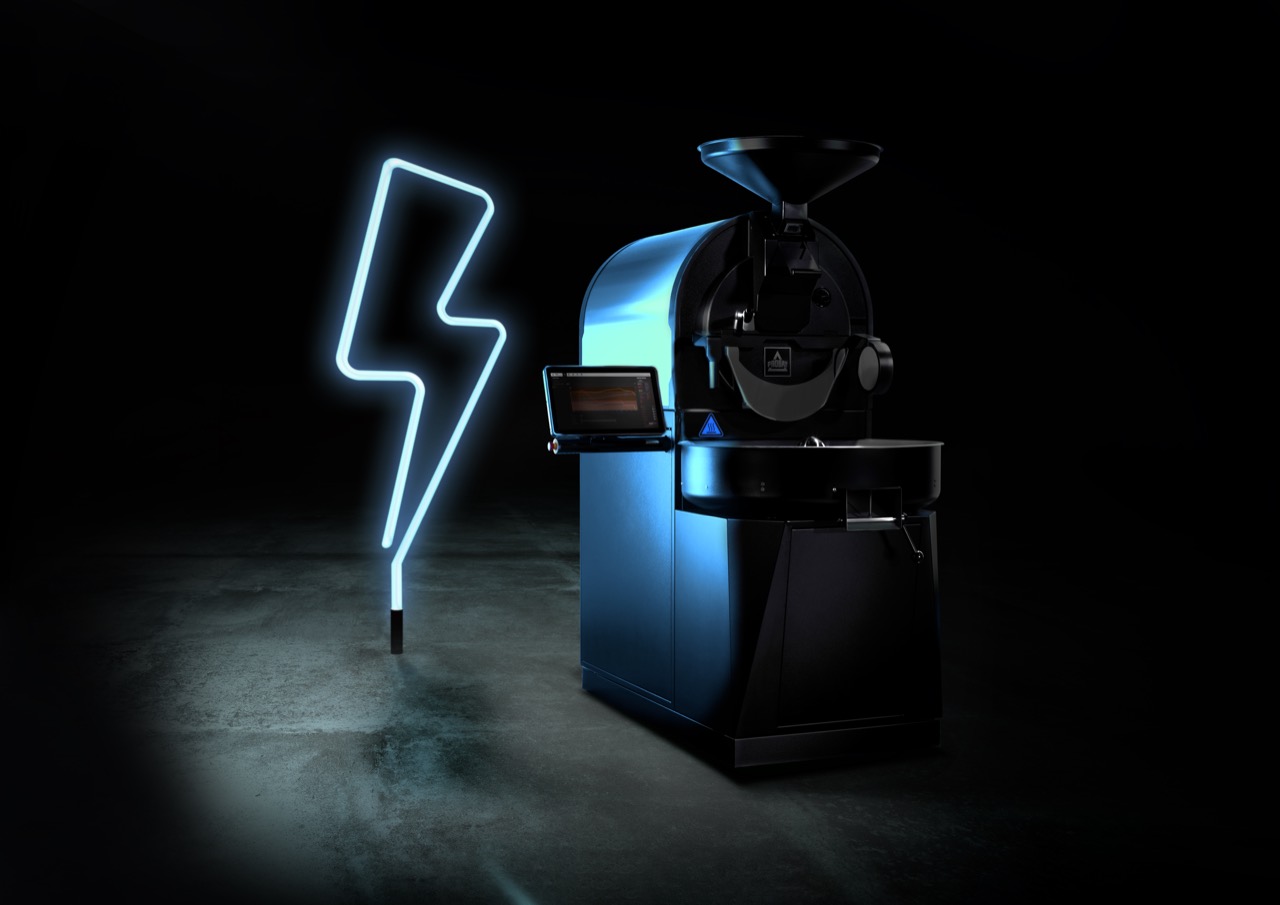
4.Chris Legge puts it plainly. We are the first to run an all-electric roaster in Australia. And that roasting runs in front of the customers rather than in a back room.
5.The menu is straightforward. Espresso, pour over, cold brew, plus a cascara spritz made from dried coffee cherry skins. Pastries come from the nearby Ocab bakery and Cake House Collective, and the beans run to two blends and five single origins.
6.Why has every roaster until now run on gas. Roasting pushes heat into the bean, and a gas flame raises that heat at once and pulls it back at once. That responsiveness is the life of a roast profile, and the long-held belief was that electric heaters are sluggish.
7.What Probat's electric line did was deliver the feel of handling a gas burner with electricity, which is to say it solved the responsiveness problem. What could not be done can now be done.
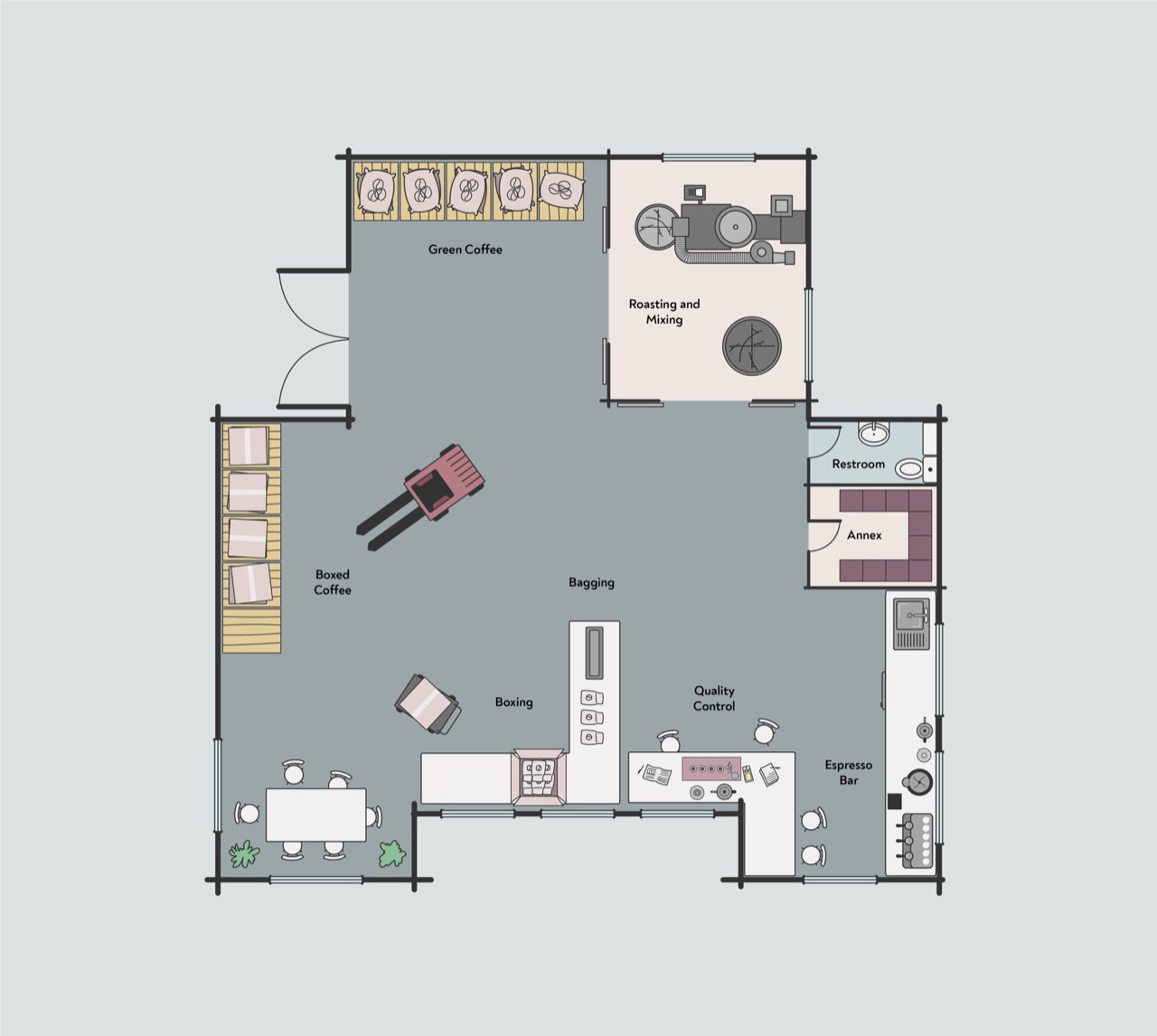
8.The real point is not flavor, it is plumbing. Putting a gas roaster into a shop drags a great deal in with it. A hood, ducting, an afterburner that burns off smoke and smell, a make-up air system, a gas line. The flame only lights once all that infrastructure is in.
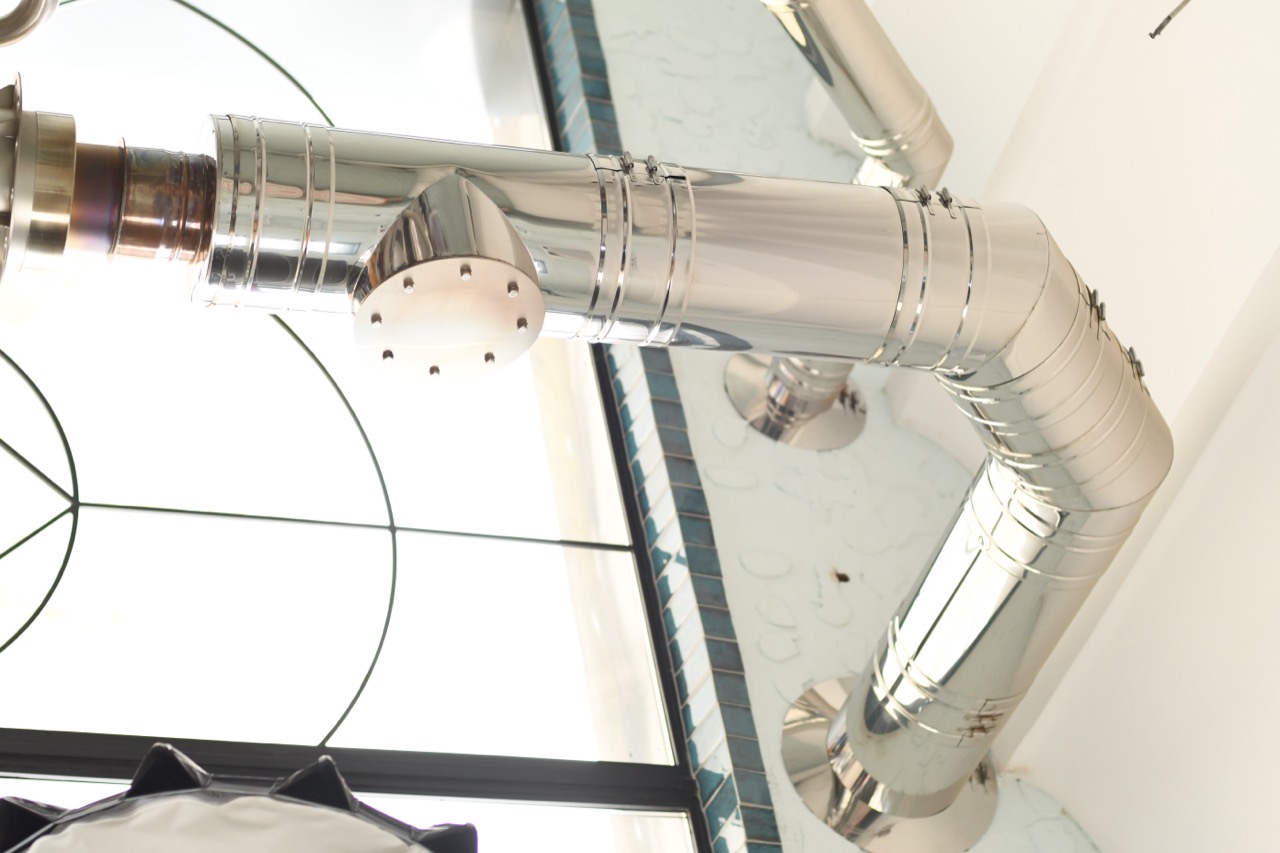
9.A ventless electric roaster erases all of it. What it needs is one 200 to 240V, 30A circuit. Smoke and volatile organic compounds are burned off and filtered inside the machine, so no flue is required.
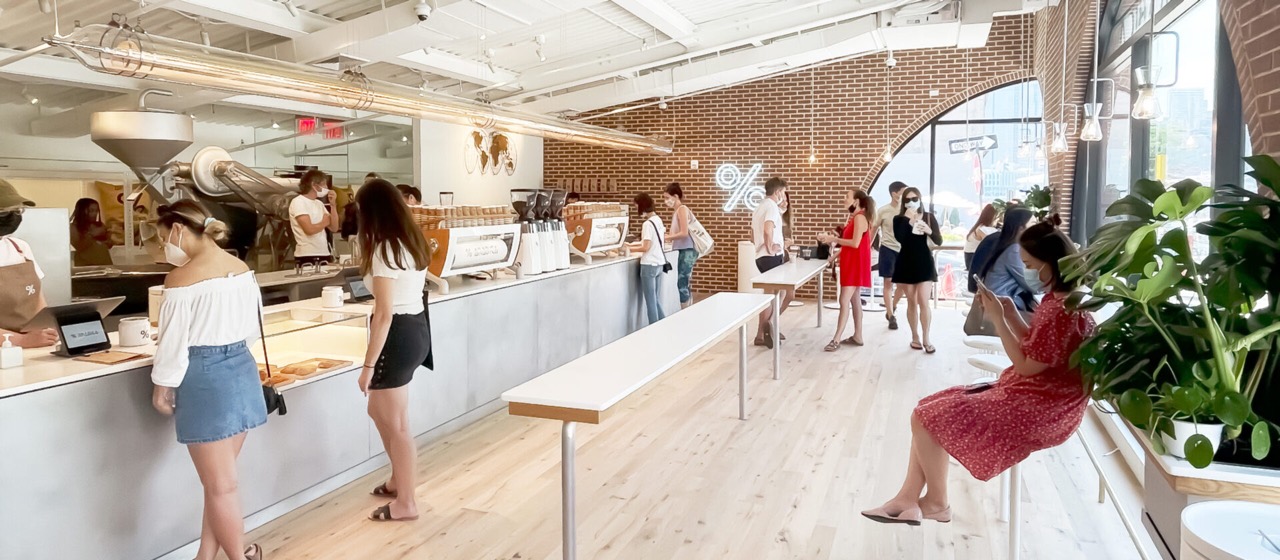
10.So the roaster comes out from behind the bar and stands right in front of the customer. Once the hood and ducting are gone there is no reason to hide the machine, and roasting walks out from a process done in the back to a stage at the front of the shop. No extra fit-out is needed either. The machine is the object.
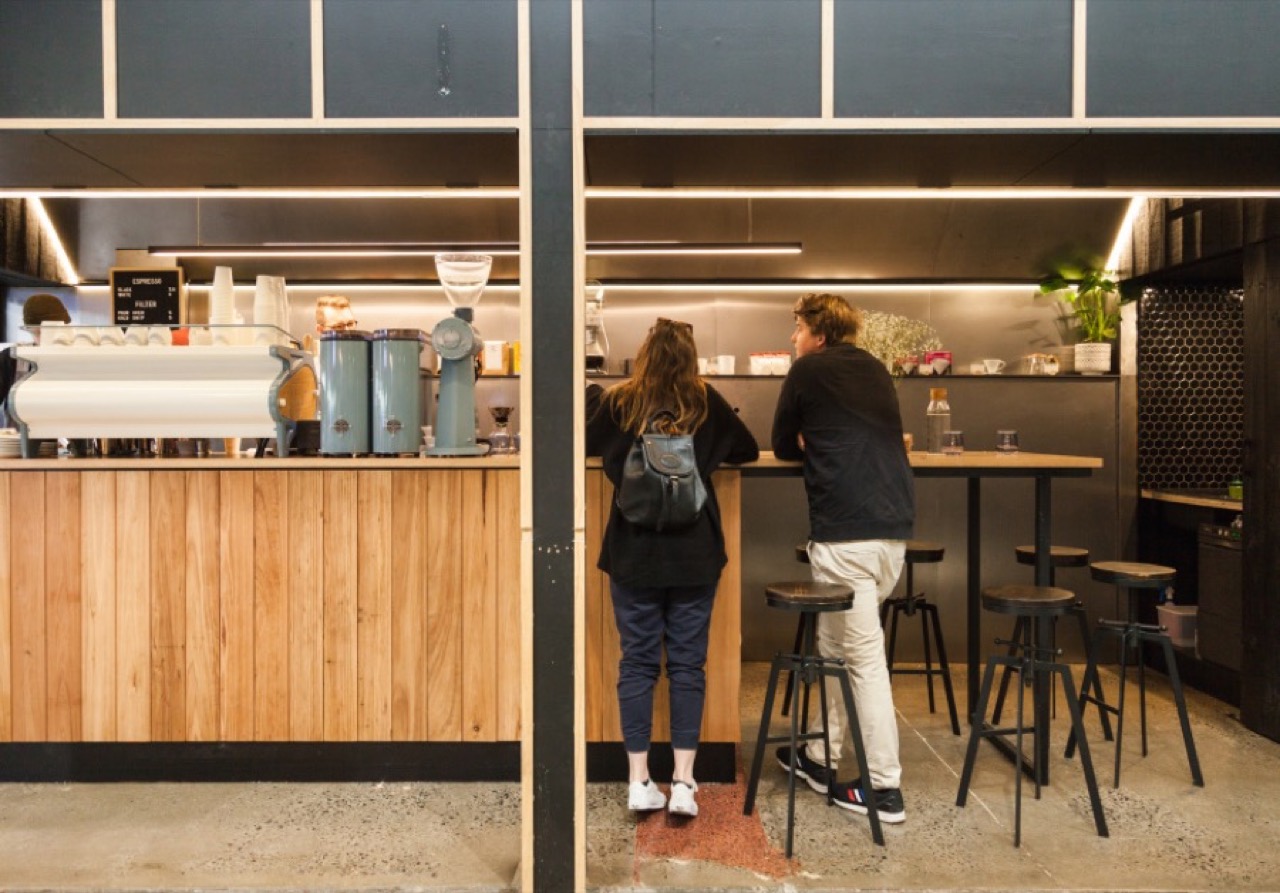
11.First, transparency. Customers watch the beans roast in front of them. It moves past where did this coffee come from to it is being roasted here, now. Freshness stops being a claim and becomes a scene.
12.Second, the story of burning less. With no combustion, CO₂ and soot drop. In an era when climate change genuinely threatens coffee-growing regions, we do not burn is a brand position rather than a nice noise.
13.Third, retail theater. Coffee is already a crowded market, and a turning drum with fresh beans pouring into the cooler is content on its own. Customers photograph it and post it. Marketing with no marketing budget runs inside the shop.
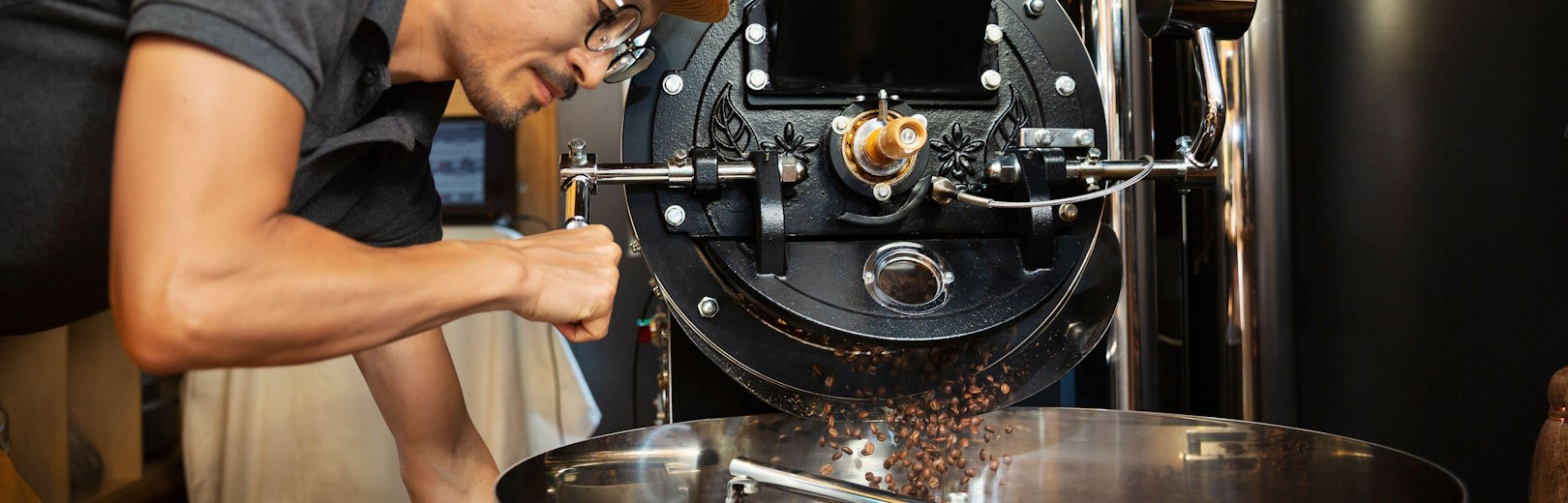
14.This is not the first. Bellwether in the United States commercialized a ventless, electric, automated cafe roaster earlier. Plug it into a 220V outlet, no construction, put it on the counter. Prices start at $22,000, and it won an SCA new product award.
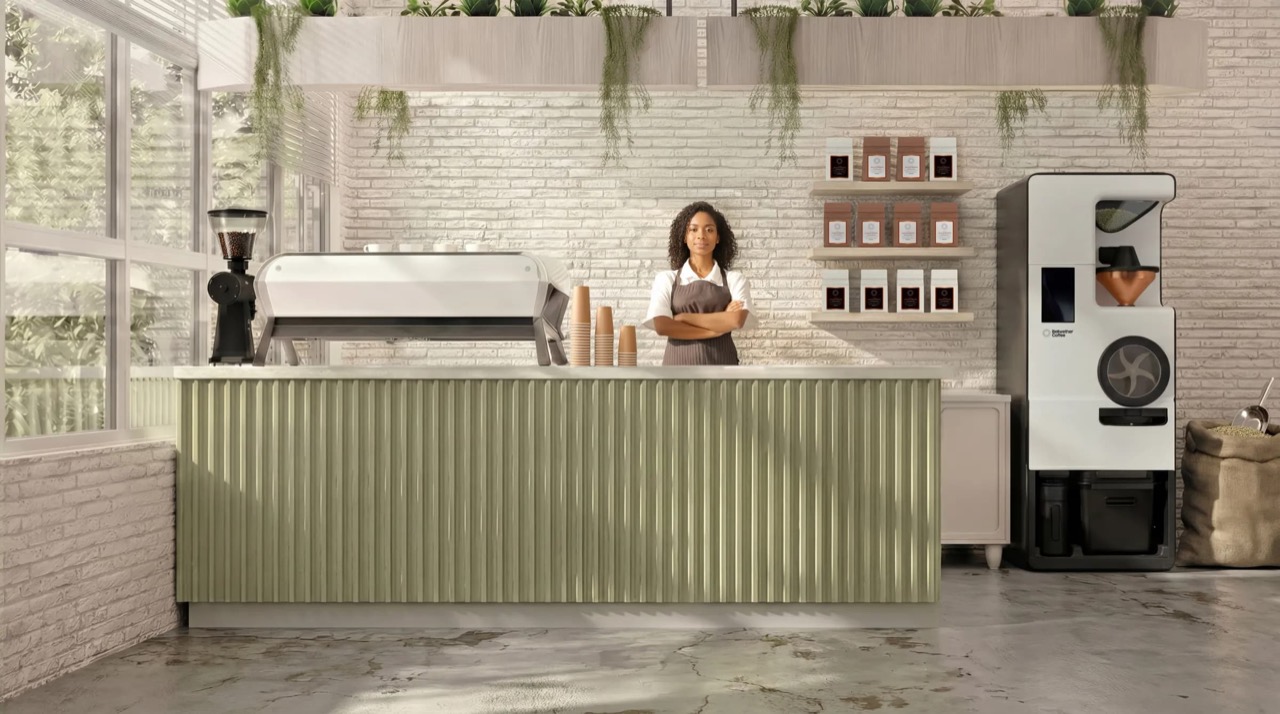
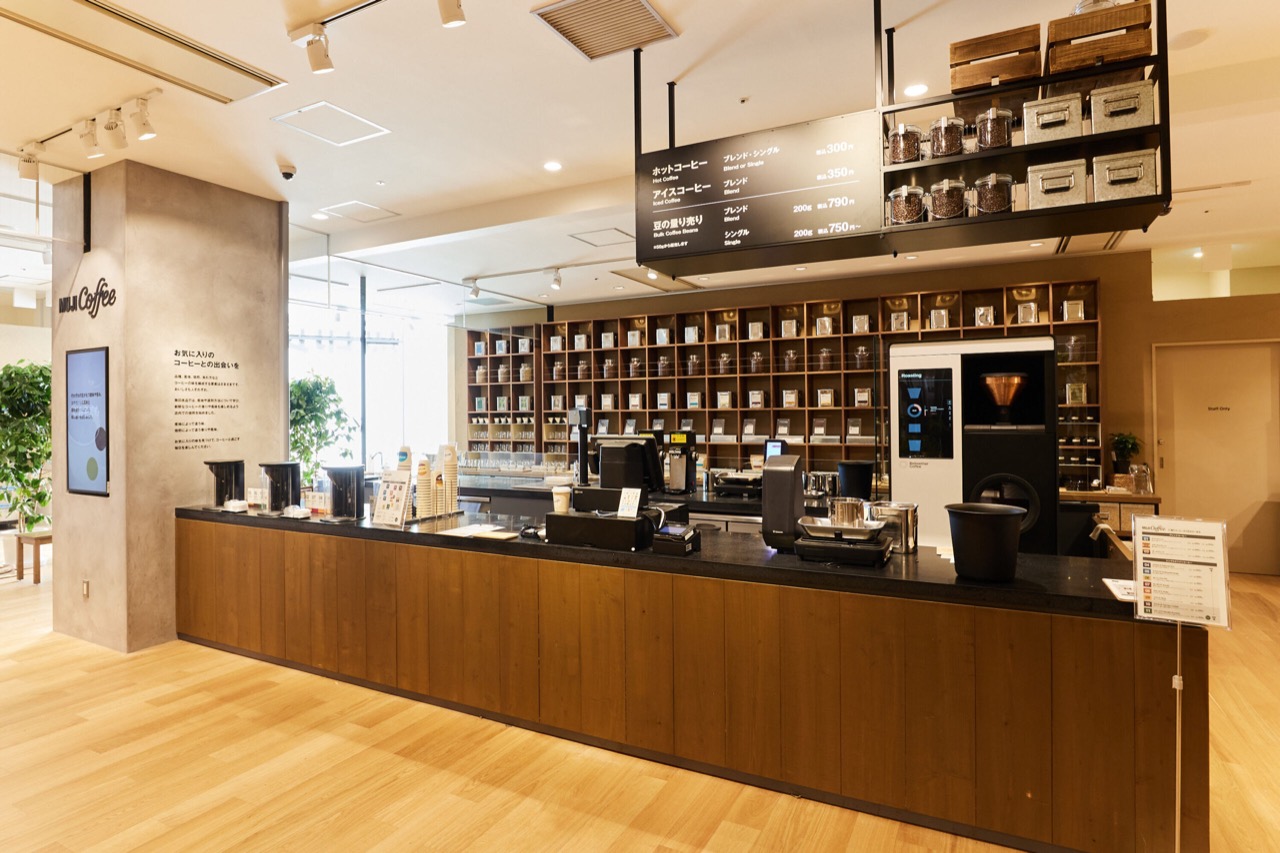
15.Bellwether moved into Japan and Europe in 2023 and joined hands with MUJI. The cafe as its own roastery is already a global current, and the premise underneath is cutting the gas.
16.Showing the roast is an old selling point in itself. Blue Bottle and % Arabica sold it through open roasteries in large flagships, which took the scale to carry gas infrastructure, so the device only worked in big rooms. Electric and ventless pulled that stage down to small shops.
17.Probat's electric line has its own line of descent. P01, then P05e, then P12e in 2023 at the top of the range. The center of gravity in this industry is moving quietly to electricity.
18.The real turn in this story is not being green, it is real estate. A full gas roaster infrastructure, hood, ducting, afterburner, make-up air and gas line, runs $22,000 to $63,000. An electric ventless machine needs one 200 to 240V circuit and nothing else.
19.The installation gap alone is $15,000 to $40,000. Industry analysis puts electric ahead on three-year total cost of ownership as well. For an owner, though, the bigger thing is that the number of leasable sites you can take grows.
20.A roastery now fits where gas and a hood are impossible, inside a shopping mall, on an upper floor, in a narrow ground-floor shell that cannot be pierced for a flue. The locational constraint that tied down the roastery cafe comes off in full. That is the true size of the idea.
21.Roasting accounts for about 15% of the carbon footprint of a cup of coffee, a figure sized nicely for a marketing line. Put coldly, what this shop bought is not carbon reduction, it is a roaster that does not care where it sits.
22.The lesson here is not a machine spec. A couple who started from a stall used one technology that erased the flue to put a roastery where others cannot go, and the change in the kinds of sites they can lease counts for more than the $15,000 to $40,000 in fixed installation cost. Move the idea to Korea, though, and electricity stops it once. A 12kg class machine draws a large instantaneous load, more than the contracted power of an existing retail unit, and raising the supply brings a KEPCO contribution charge with it. In a narrow ground floor the right move is to drop to a 1.5 to 3kg class and bring over the idea rather than the machine. What won was not the larger volume. It was the idea that erased a constraint.