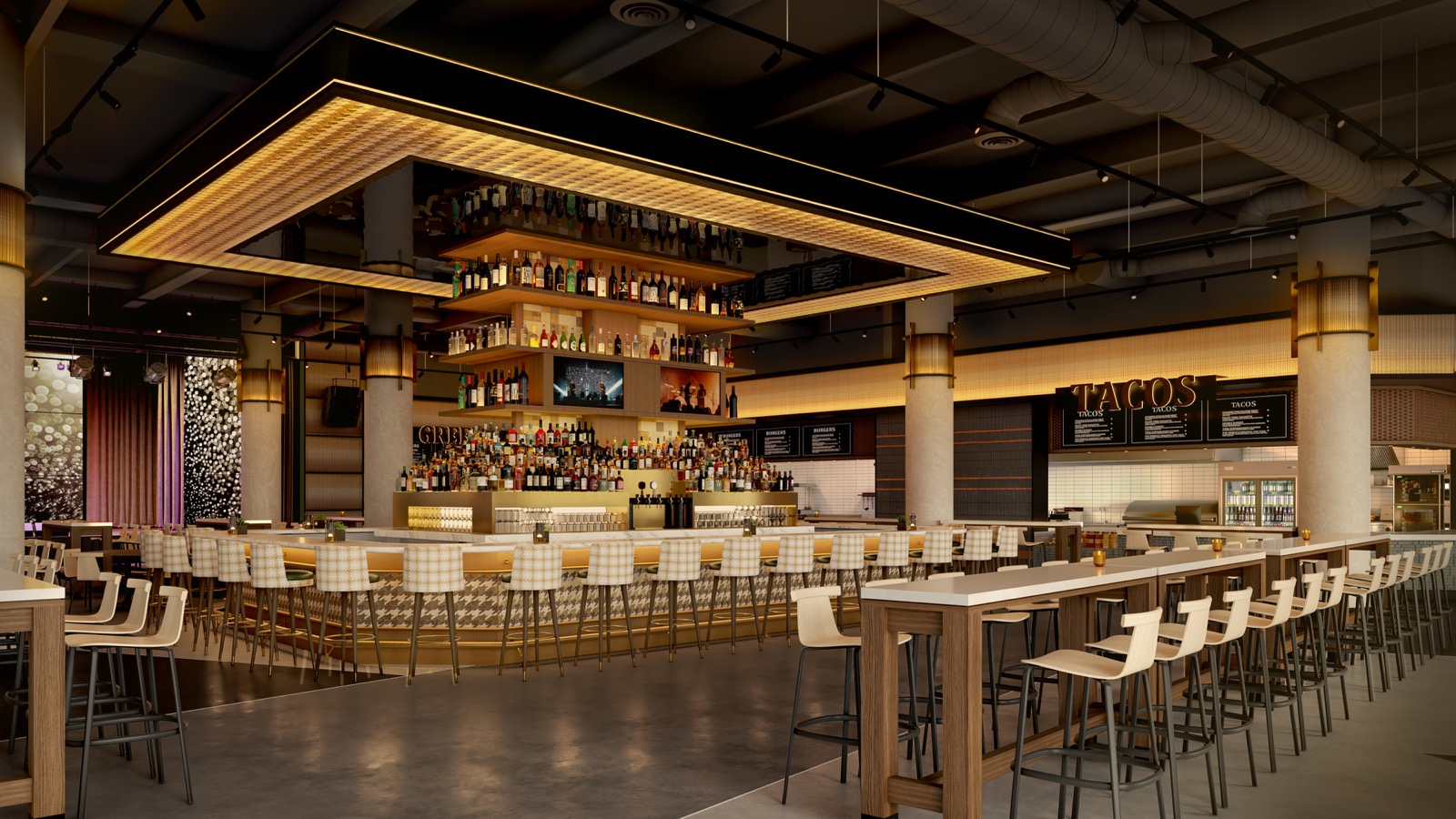
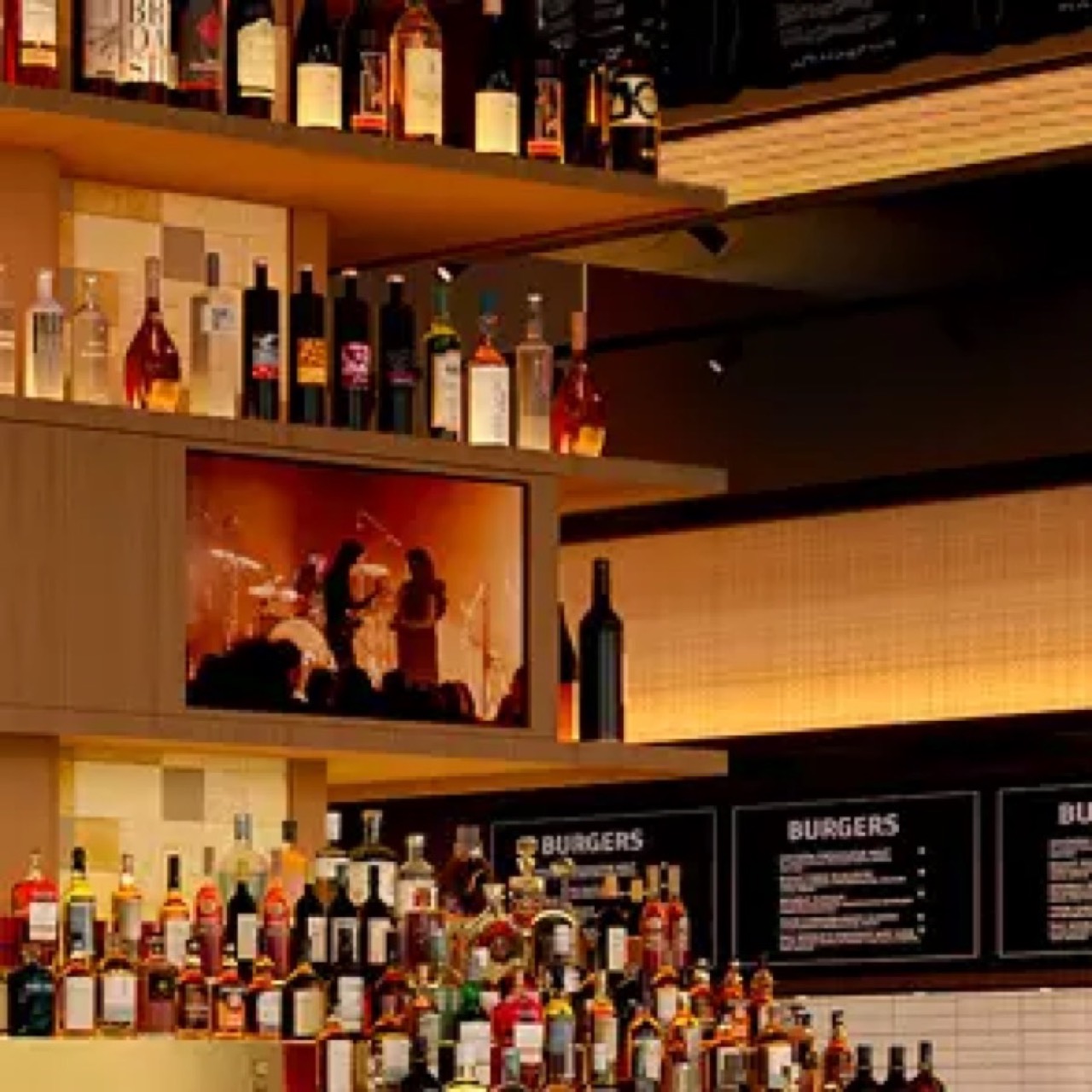
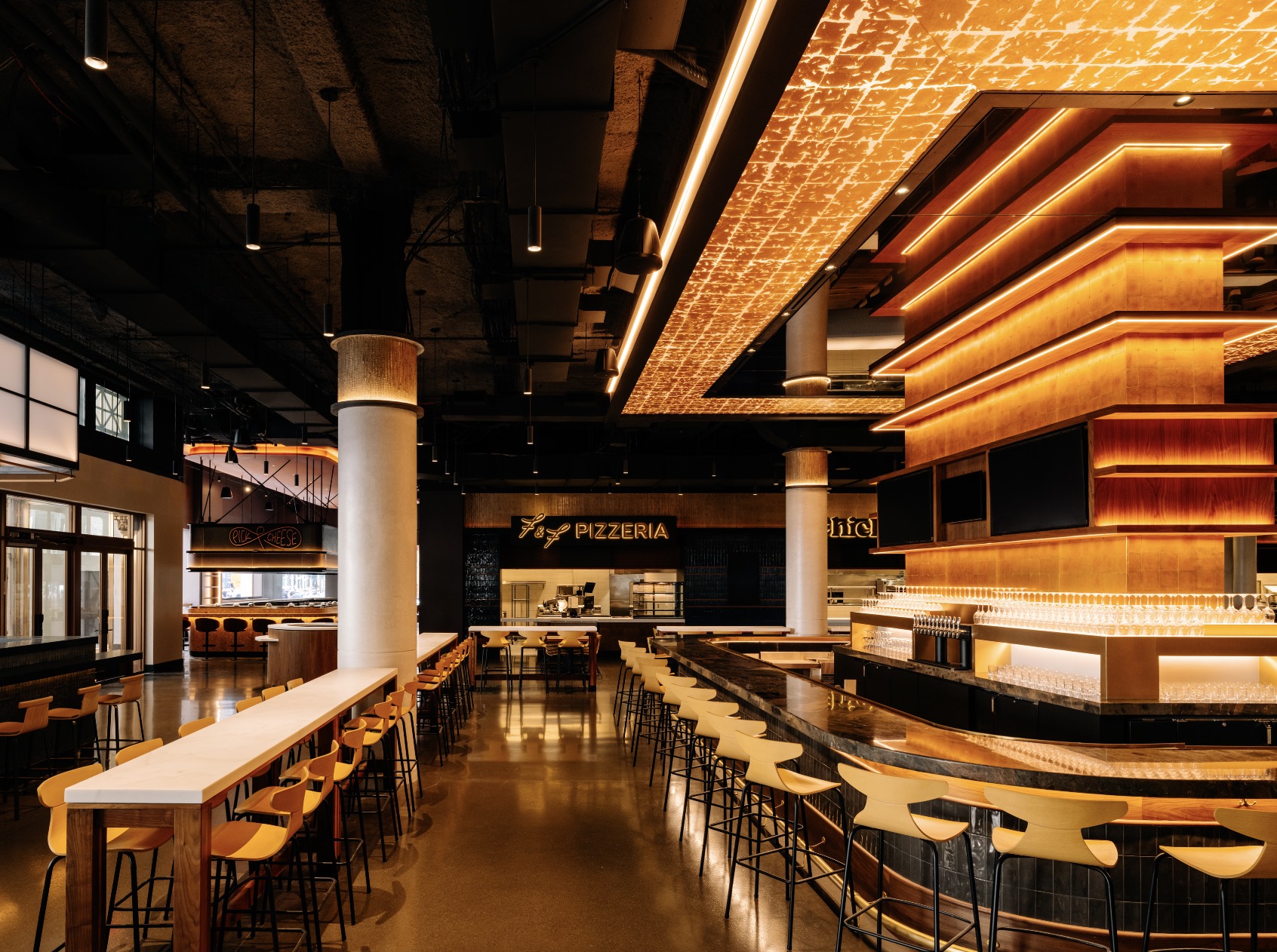
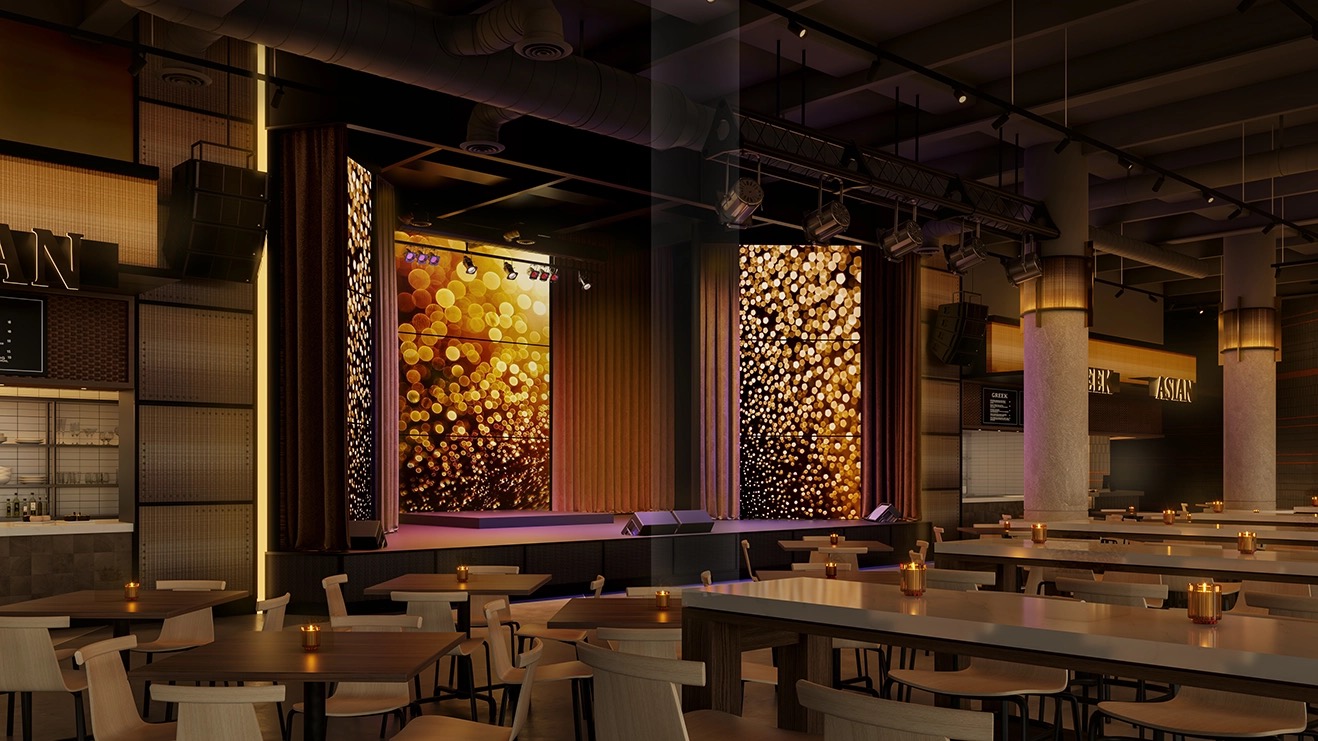
The main bar holding the center of the hallThe main bar rendering released before opening. ICRAVE designed it and Journey handled branding. ⓒICRAVE·Journey / WWD
Daily Space
Shaver Hall: Amazon Kept Only What It Cannot Deliver on the Ground Floor
2026.07.22
There is a 105-year-old department store building on Fifth Avenue in New York. It closed in 2019, WeWork bought it and coughed it back up, and Amazon took it over and made it an office. The ground floor is the one part Amazon does not use. It handed 35,000 square feet whole to an outside operator to open a food hall. This piece takes apart the 35,000 square feet that opened on the 26th of last month.
1.424 Fifth Avenue in Manhattan, New York, between West 38th and 39th. At 3pm on June 26, 2026, a food hall opened on the ground floor of the eleven-story building. It is called Shaver Hall.
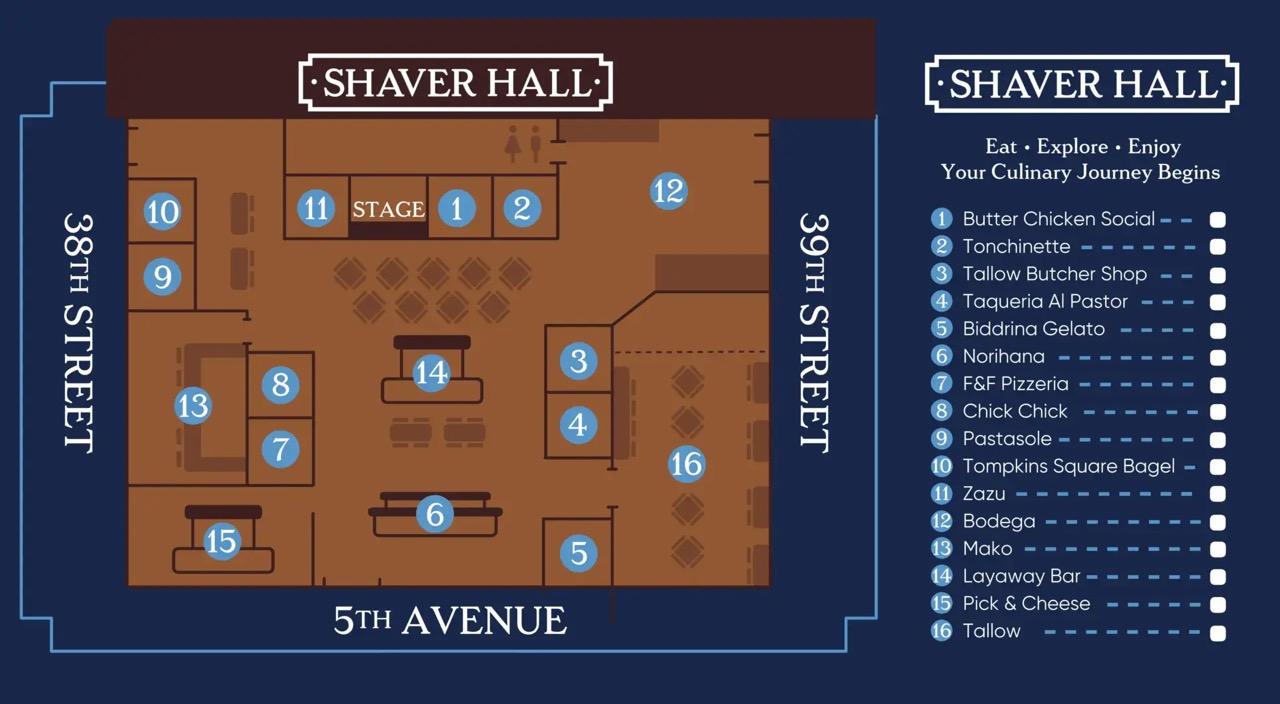
2.The area is 35,000 square feet, 3,252 square meters. Inside go 11 chef-run counters, 3 full-service restaurants, 2 bars and 1 bodega. Seventeen outlets in all.
3.The hours stand out. Sunday to Thursday from 7am to 11pm, Friday and Saturday to midnight, reported as 1am by some outlets, so 16 to 17 hours a day. There is one stage, and live musicians, DJs and sports broadcasts run from Wednesday to Sunday. Cash is not accepted.
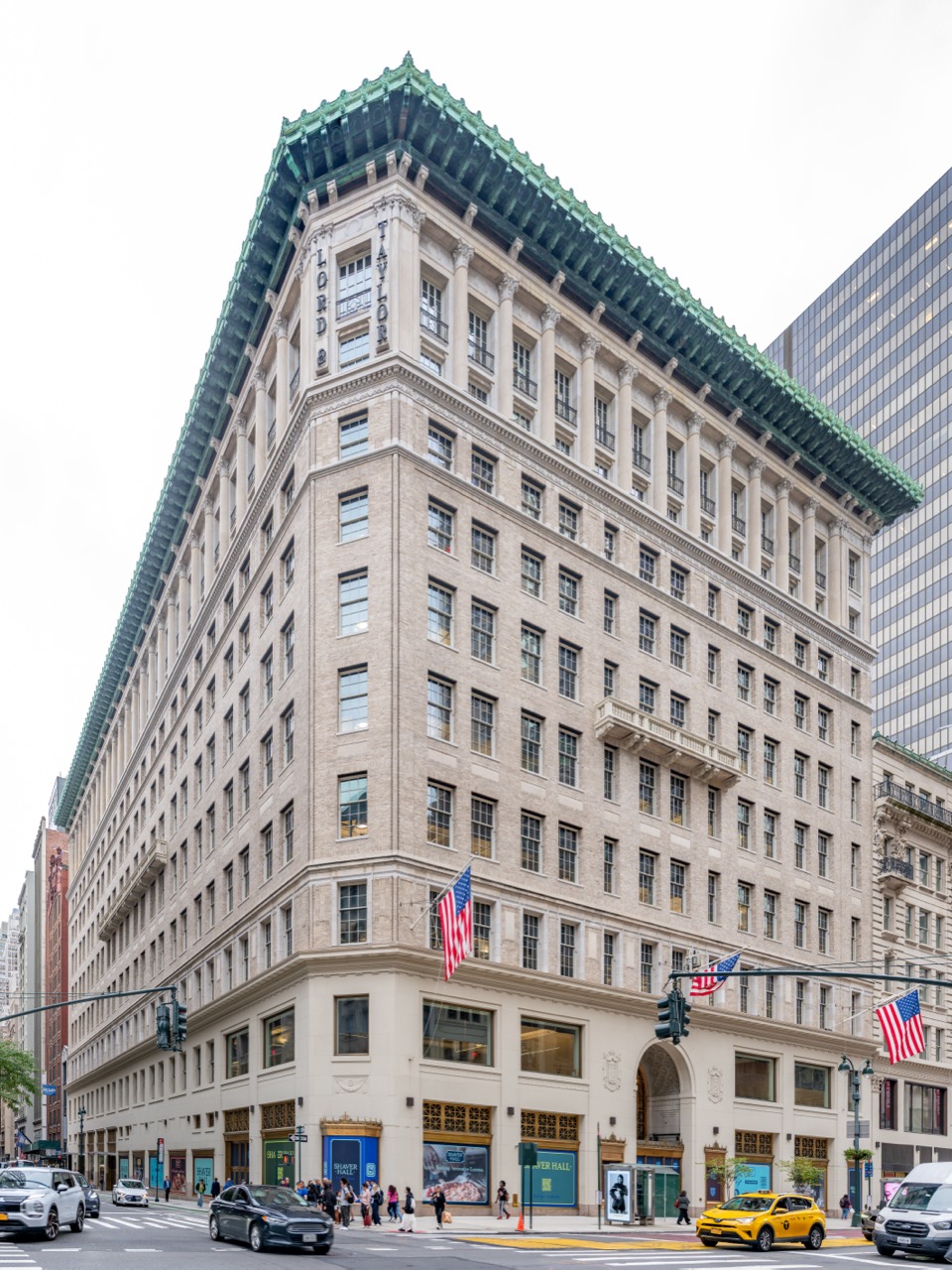
4.Half of this business is the building's record. It is the Lord & Taylor department store flagship completed in 1914, designed by Starrett & Van Vleck, eleven stories with 662,729 square feet of floor area. It was designated a New York City landmark on October 30, 2007.
5.That department store closed in January 2019. After 105 years. WeWork bought it almost immediately for about $850 million saying it would become headquarters, and the rest is familiar. When the listing collapsed, WeWork could not hold the building.
6.Amazon took it over in February and March 2020. The figure was $978 million, reported elsewhere at $1.1 to $1.15 billion. The deal closed just before Covid hit the United States, and the office only opened much later, in mid-2023, with about 2,000 staff. Roof planting and a dog run went in as well. Inside Amazon the building is nicknamed Hank.
Four owners in 105 years424 Fifth Avenue. Built as the Lord & Taylor department store in 1914, made a New York City landmark in 2007, closed in 2019, passed through WeWork and now an Amazon office. The ground floor is open to the outside again. ⓒAjay Suresh / Wikimedia Commons (CC BY 2.0)
7.The question of this piece comes from here. The largest ecommerce company in the world bought a department store building and gave away the whole of its most valuable floor rather than using it. Why.
8.Take it apart. The operator is The Food Hall Co., part of FB Society, which built Legacy Hall in Texas and Assembly Food Hall in Nashville. Amazon did not run it directly and handed the lower level to a company that does only this.
Seventeen outlets on one plateThe hall layout illustration released by the operator. It marks the position of every outlet, bar and the stage on one sheet. Source shaverhall.com
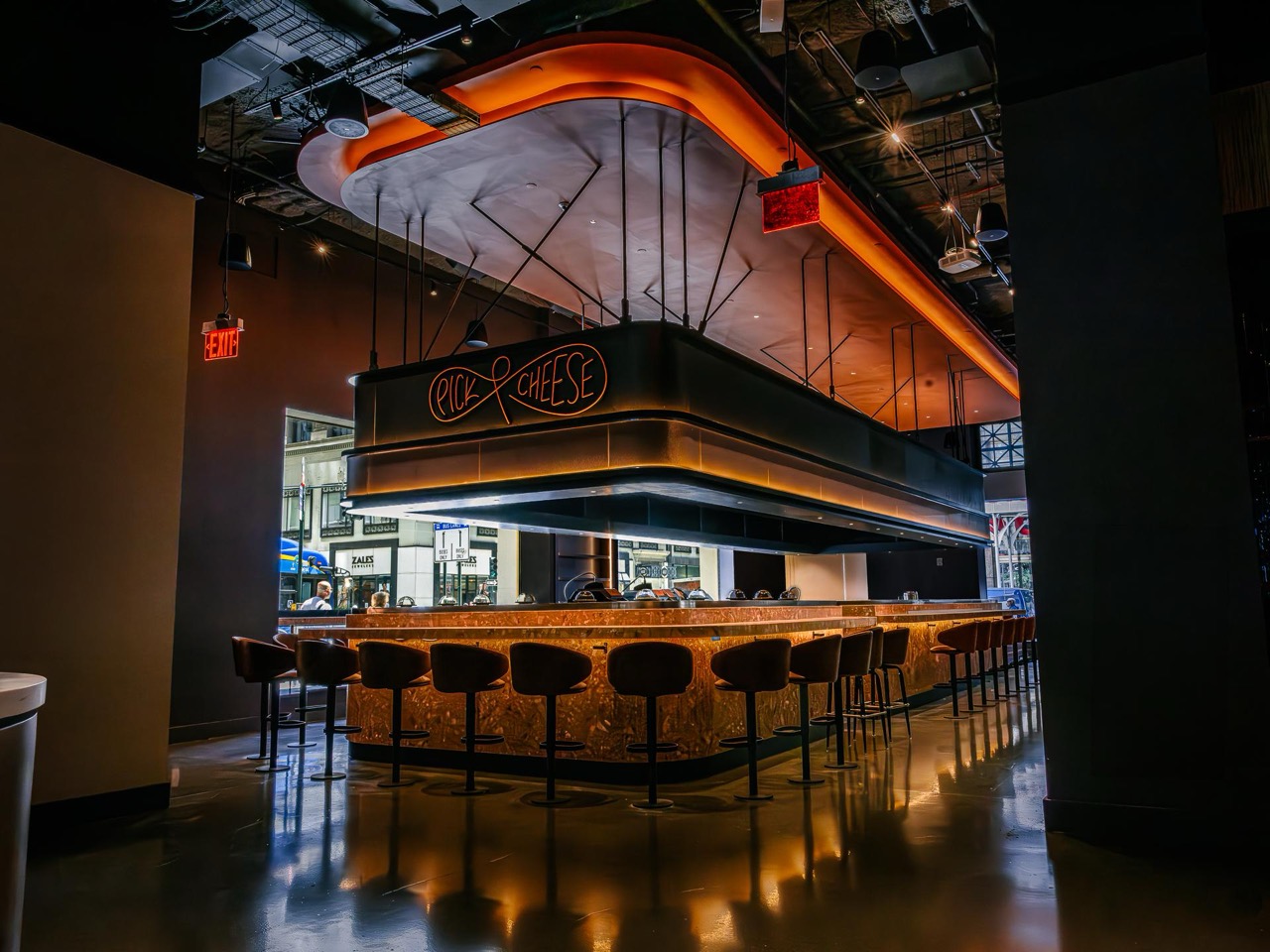
9.The tenant mix tells you what this project is. The headline act is Pick & Cheese. It is the first US site for a brand out of London, and a 200 foot, about 61 meter, cheese conveyor belt crosses the hall. Customers pick cheese off it as it flows past, like conveyor sushi.
Cheese travelling 61 metersThe Pick & Cheese conveyor belt. The first US site of this London brand landed at Shaver Hall. ⓒYoung Skeletons / Eater NY
10.Mako sits beside it. The first expansion from a Michelin-starred omakase in Chicago's West Loop, with 12 seats, a 12-seat omakase embedded inside a 35,000 square foot hall. Around them go the Tallow steakhouse with a prix fixe and USDA Prime, F&F Pizzeria, Chick Chick with Korean fried chicken, Taqueria Al Pastor, Tompkins Square Bagels, Butter Chicken Social and Bidrina Gelato.
11.At the end is Layaway. A bodega and bar with 20 beer taps on the wall. The name is not a joke. Layaway is the department store installment reservation system, where you pick an item, pay it off in pieces and collect it once it is paid. A term from this building's department store days went up as a shop name.
A bar named after a department store payment planThe Layaway bar image released on the official site. It works as bodega and bar, with 20 beer taps on the wall. Source shaverhall.com
12.The operator nailed down one curation rule. Tenant brands must not have more than five physical locations. That is from Jack Gibbons, head of FB Society. Instead of filling vacancy fast with proven large franchises, they wrote the intake of independents and emerging brands into a number.
The timeline is the diagnosisDepartment store, then vacancy, then coworking, then office, then food hall. This building's record compresses the exact path downtown large-format retail property has taken over the past decade.
13.First, Amazon put only what it cannot sell on the ground floor. This company sends books, clothes, appliances and daily goods to your door. Exactly two things it cannot send. Something eaten on the spot, and people gathering. Those two are what stayed on the ground floor. The most honest answer available to an age when the ground floor of a retail building cannot be filled with retail.
The hall after openingInside Shaver Hall, photographed just after the June 2026 opening. ⓒTime Out
14.Second, it was not run in house. The Amazon real estate executive's line was that the ground floor opens to the whole community. A staff cafeteria would have made this area a cost forever, and handing it to an outside operator turned it into revenue, with staff benefit and defense of building value attached. One floor area bought three things.
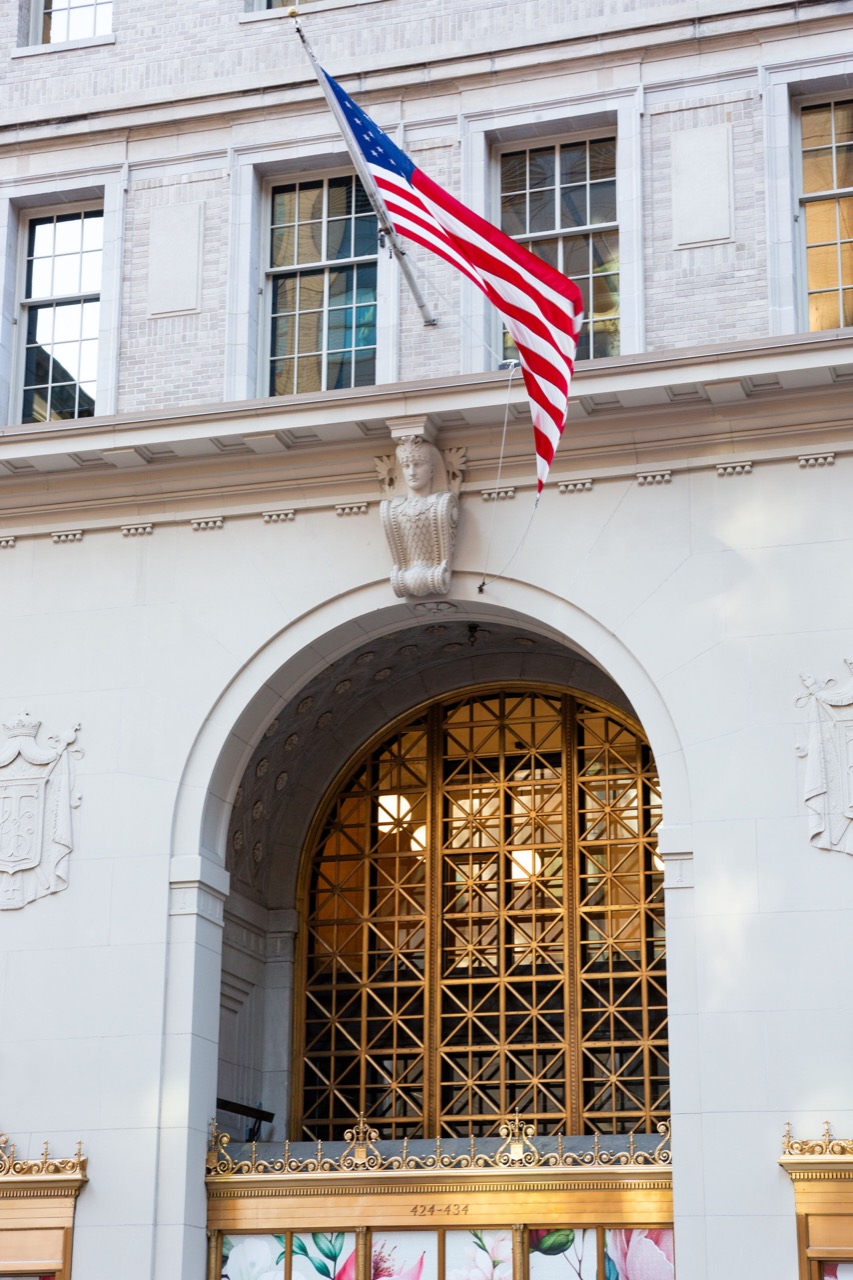
15.Third, the landmark designation became an asset instead. The 2007 designation means this building cannot be demolished. That is usually a shackle, and the ceiling height, column spacing and Fifth Avenue frontage of a 105-year-old department store ground floor are a spec no new build could produce today. What survived because it could not be knocked down is now the most expensive element.
What survived because it could not be demolishedThe main entrance at 424 Fifth Avenue. The bronze grille filling the arch, the woman's head above it and the ornamental panels on either side all remain, and the 2007 landmark designation means this facade cannot be touched. Source ZGF Architects
16.Fourth, one name carried a whole story with it. The Shaver in Shaver Hall is Dorothy Shaver (1893 to 1959). She became president of Lord & Taylor in 1945, the first woman to head a major American corporation, after starting as director of the comparison shopping bureau in 1924 and passing through director in 1927, vice president in 1931 and senior vice president in 1937.
17.Her salary was $110,000. The highest paid to an American woman at the time, above many Hollywood stars, though Life noted in the same period that it was a third of what male executives at her level received. She is also the person who pushed the American Look and stood unknown American designers beside Paris brands. One piece of brand naming inherited this building's century and a story of women's leadership at once. An asset that would have been worth nothing had they invented a new name.
A century inherited through one nameDorothy Shaver. She became president of Lord & Taylor in 1945, the first woman to head a major American corporation. Source Wikimedia Commons
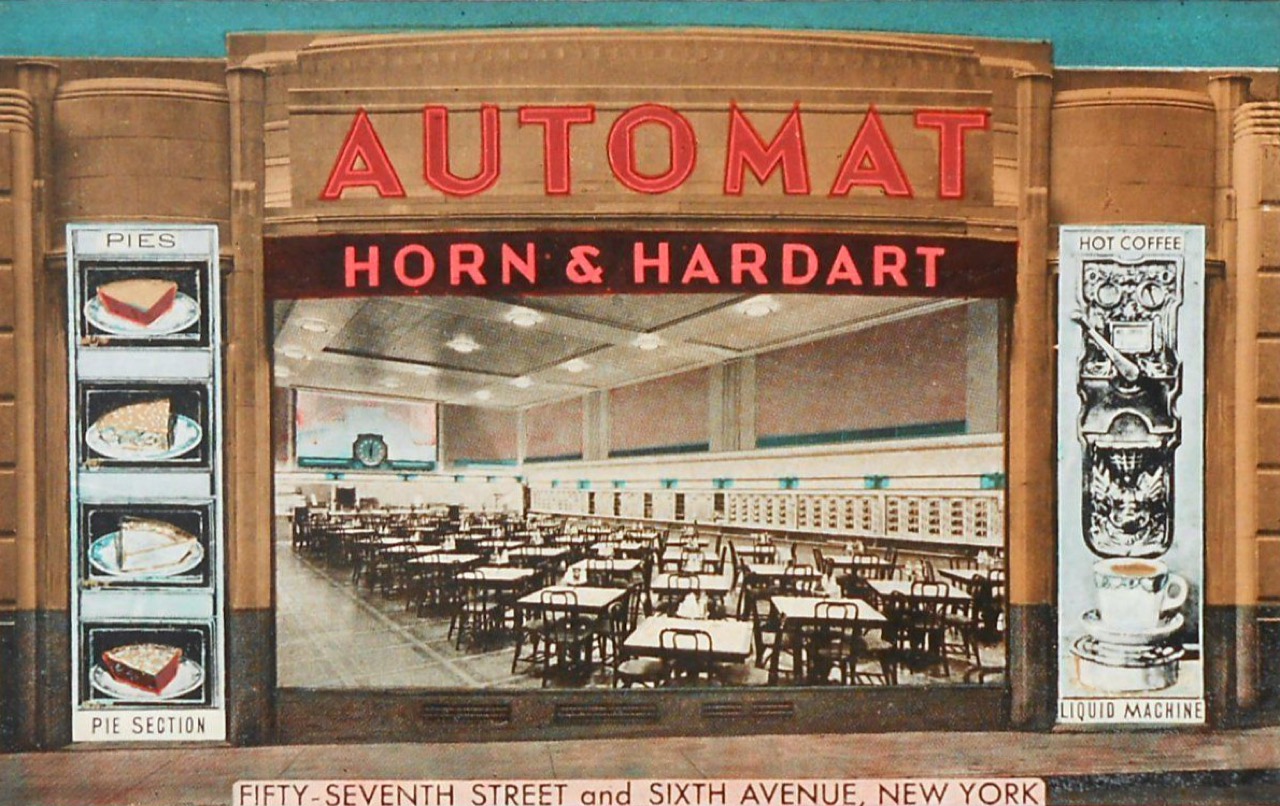
18.This is not the first. A hall selling food by machine already existed on Fifth Avenue a hundred years ago. That was the Horn & Hardart Automat. Pie, sandwiches and coffee sat in compartments behind glass, and a coin opened the window. The urban scene of early twentieth century New York and Philadelphia in itself.
19.Local press calling this food hall the return of the Automat to Fifth Avenue is not an exaggeration. The structure is the same. You choose from many kinds of food by eye and take it immediately, without a long exchange with staff. The nickel became a bar program, and the small glass window became a 61 meter cheese conveyor.
20.Go further back and the original food hall is the department store itself. The twentieth century department store did not only sell goods. Restaurants and grill rooms, hair salons, exhibitions and lectures sat in one building, and people came to spend a day rather than to buy. This ground floor is that department store model with only the selling-goods part deleted. A return to the original form rather than a new invention.
The same idea a century agoA postcard photograph from around 1930 showing how the Horn & Hardart Automat worked. You put in a coin, opened the glass window and took the food out. Choosing among many dishes by eye and taking them immediately is the same structure as today's food hall. What changed is the payment method and the spend per head. Source Wikimedia Commons
21.These 35,000 square feet can never turn on 2,000 Amazon employees.
22.Everything below is an estimate. If 70% of the 2,000 staff actually come in on a given day that is 1,400, and taking a generous 40% of them eating lunch here gives 560. At $25 a head that is $14,000 a day, and 22 weekdays gives about $310,000 a month.
23.Take the usual range of $700 to $1,000 in annual revenue per square foot for a downtown American food hall, and 35,000 square feet needs $24.5 to $35 million a year, $2 to $2.9 million a month. In-house lunch revenue is only 10 to 15% of that requirement.
24.So the hours have to be read again. The 7am opening is commuter coffee, midday is in-house lunch, and 6pm to midnight is where it is actually decided. The stage program clustering from Wednesday to Sunday follows the same arithmetic, with live music on the Friday, Saturday and Sunday when the office is empty. That is why the trade says a food hall with a strong beverage program lives longer. Food sells at lunch and profit comes from evening drinking.
The stage running Wednesday to SundayRendering of the stage area inside the hall. Live musicians, DJs and sports broadcasts run from this spot. ⓒICRAVE·Journey / Seneca Group
25.What this facility actually is, is not an office canteen. In-house demand is only the guaranteed minimum volume laying a floor, and the body of the business is outside customers in the evening and at weekends. The real job of an anchor tenant is not paying rent, it is laying down a minimum demand with no low season. The real trade goes on top of that.
The opening hours are the business planThe reason for opening at 7am and the reason for staying open to midnight are different. The first is anchor demand, the second is the real revenue. Build for only one of them and half of it dies.
26.One number to lower the temperature at the end. By trade count, about 460 food halls were operating in the United States in early 2026. More than 114 in preparation, and 23 projects halted or abandoned. Roughly one in six of those started never opened. A food hall is not a thing you can simply make.
27.So what to take from this case is not let us do a food hall. What goes into an area that can no longer be sold, whether to run it yourself or hand it over, and whether you can look at anchor demand and real revenue separately. Those three judgments come first and the trade type is only the result. Lower floors of downtown offices in Korea still get filled with either a staff canteen or a proven franchise cafe, and both contribute zero to the building brand. If you plan to hand it over, two lines have to go into the contract, a floor under opening hours and a restriction on changing the trade type. The moment the tenant closes the unprofitable hours on its own or the operator swaps in a safe franchise halfway through, the reason for handing it over disappears. The numeric rule cannot be carried across as it is either. Tenants here have thin balance sheets, so filling all 17 units with new brands would produce a first-year dropout rate nobody can absorb, and the realistic answer is a mix, two or three anchors from proven brands with the rest left to the rule.
Summary
A 1914 department store building on Fifth Avenue in New York passed through closure, WeWork and Amazon to become an office, and its 35,000 square foot ground floor opened as a food hall on June 26, 2026. Seventeen outlets, 16 to 17 hours a day. The key is that Amazon did not run this area itself, and kept only the two things it cannot deliver, food eaten on the spot and people gathering. The turn is in the demand structure. Lunch for 2,000 staff is only 10 to 15% of required revenue (estimated), so the anchor lays the floor while the body becomes outside customers in the evening and at weekends. What stops anyone moving this to Korea is the late night. In many locations, noise complaints in mixed residential districts and rules on proximity to apartment housing make live music after midnight effectively impossible, and in that case the substitute is not late night but weekend daytime. The same empty-office hours, without the complaints.