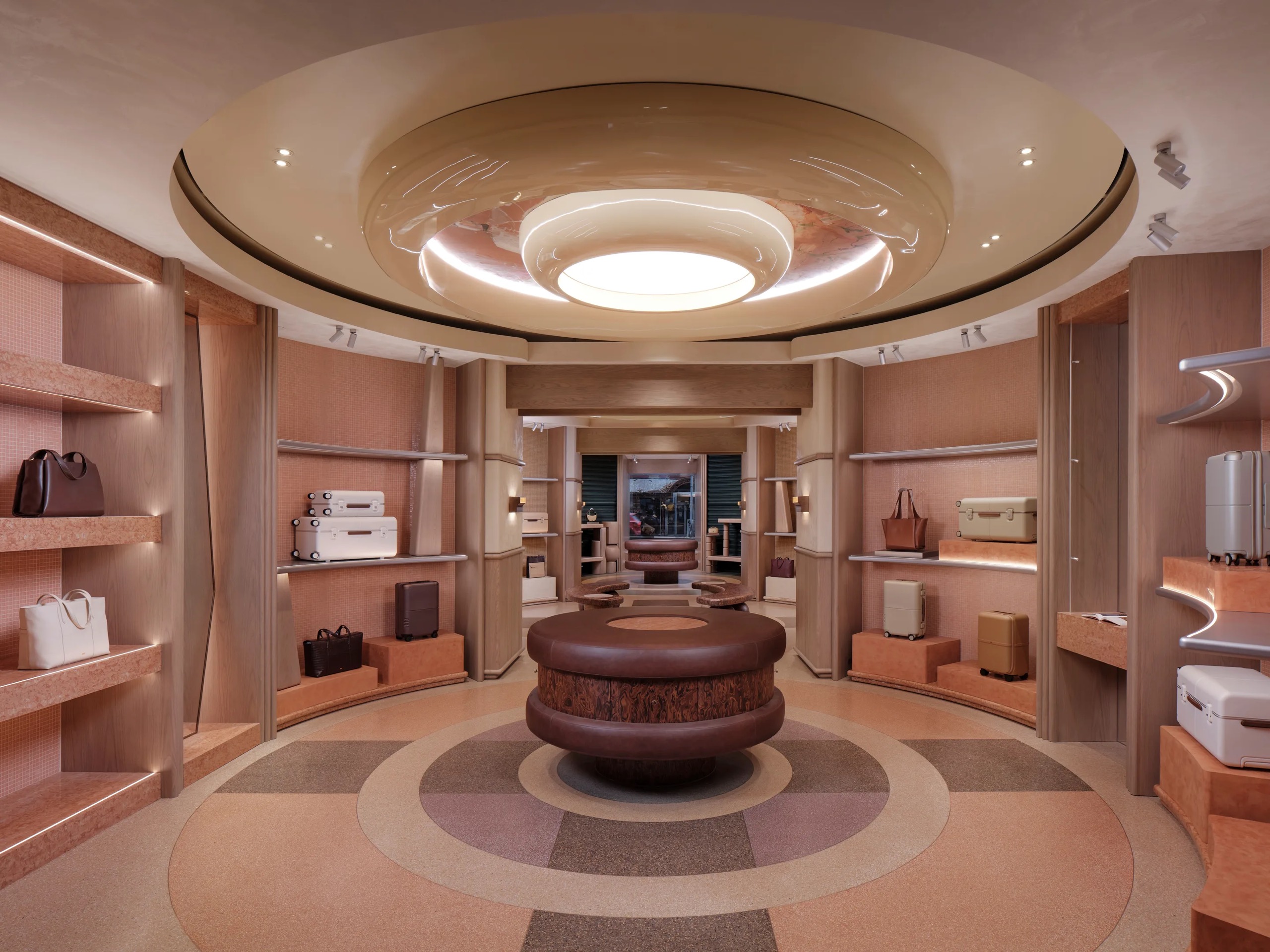
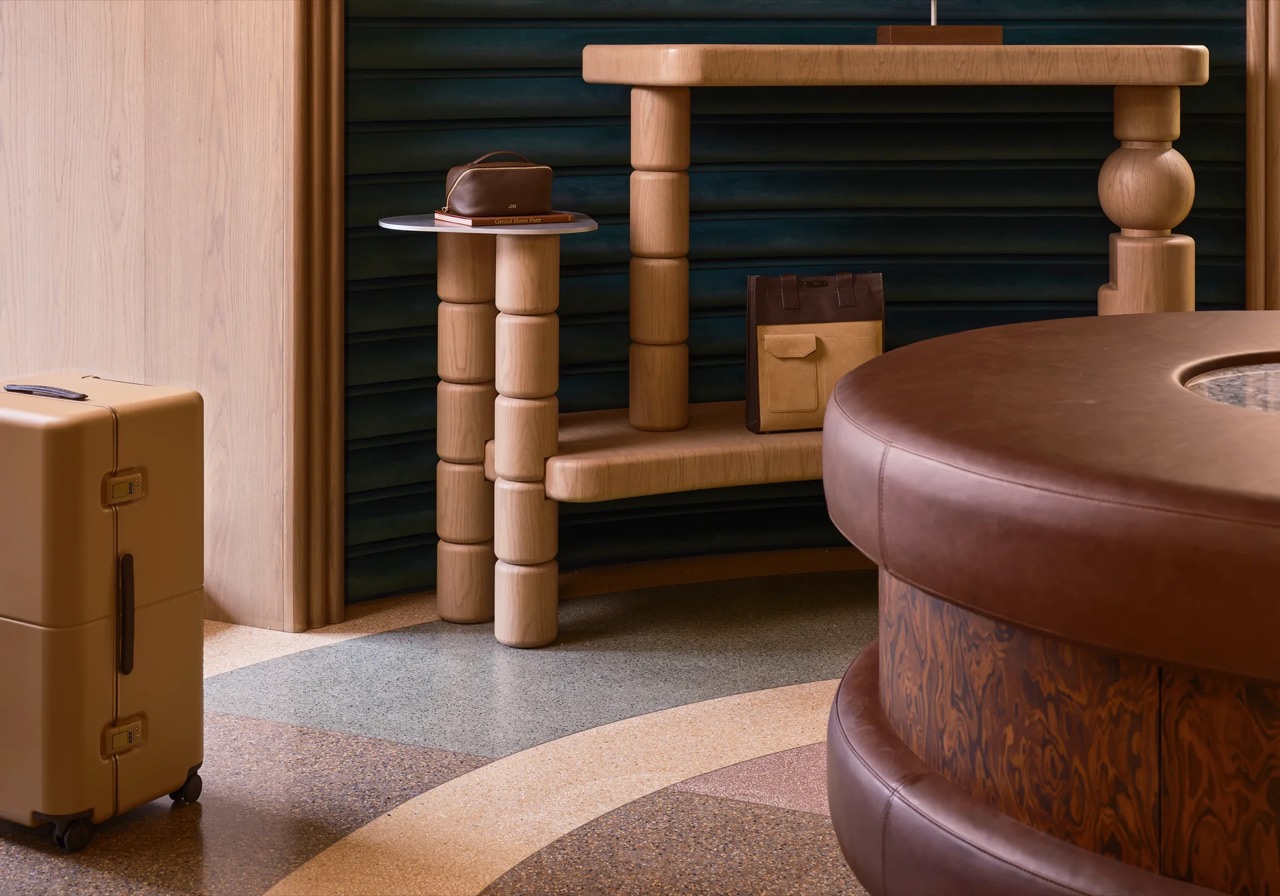
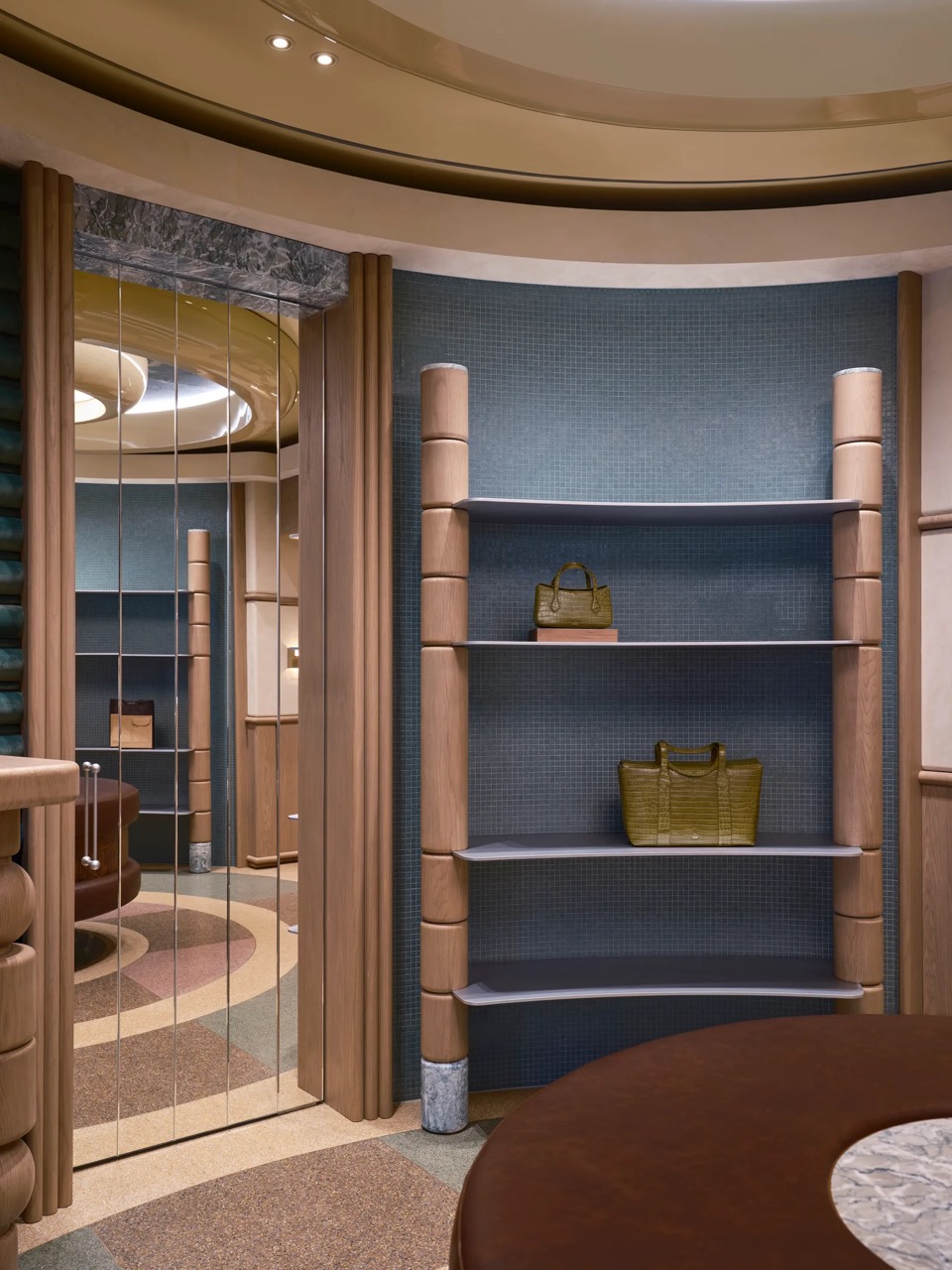
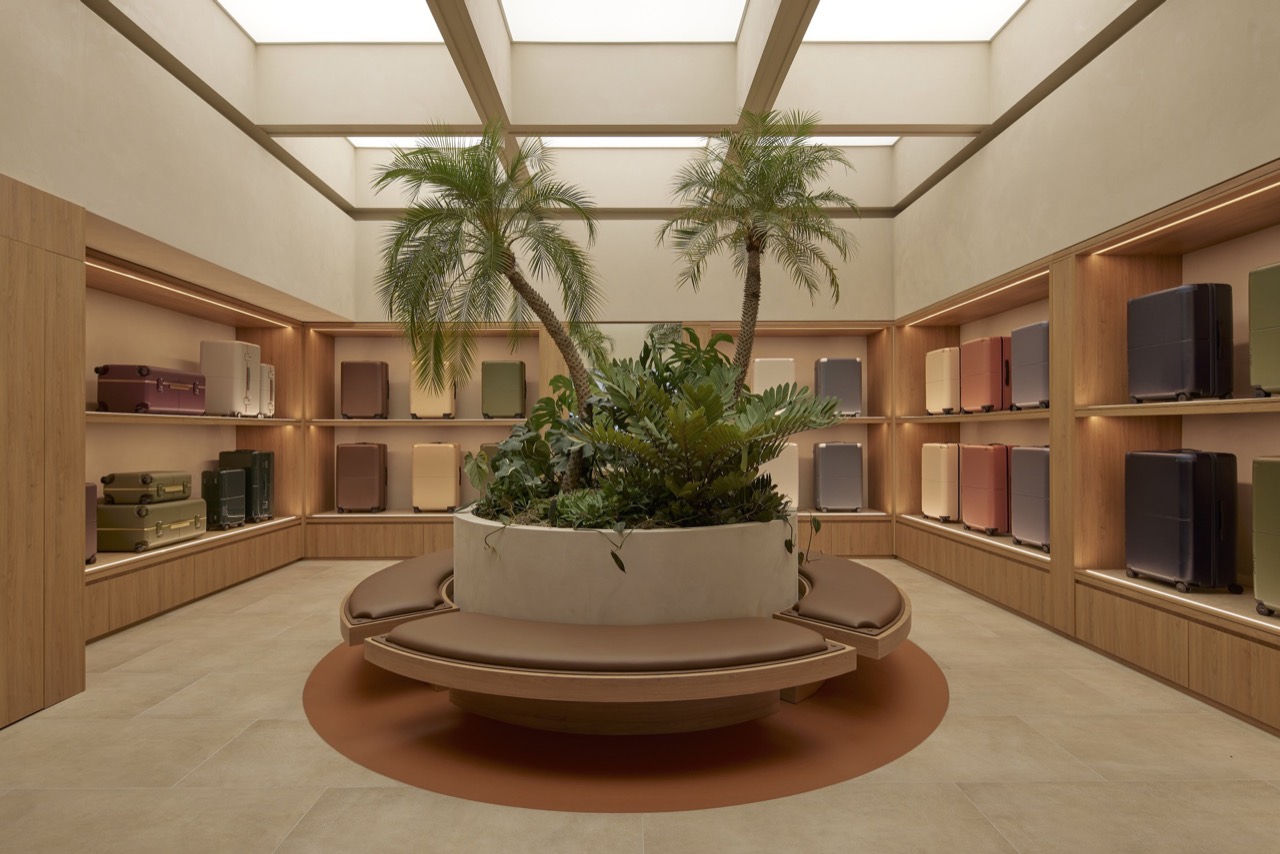
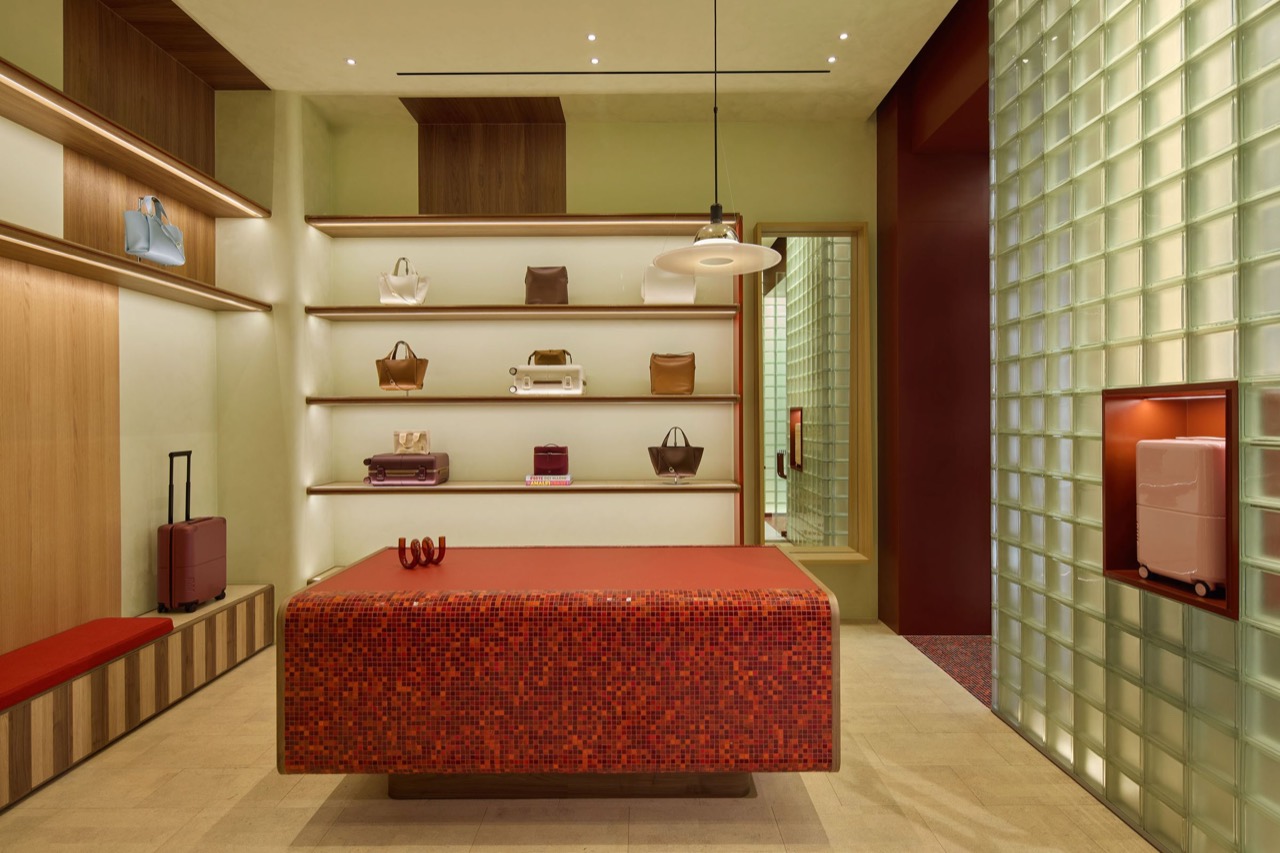
Selling suitcases, they built a hotel lobbyThe July Melbourne QV flagship, opened July 17, 2026. Arches and curves taken from the Italian piazza, with hand-poured terrazzo filling 250 square meters. What is sold is luggage and the space is closer to a lobby than to a shop. ⓒJuly
Daily Space
July Melbourne QV: An Online Brand's Last Store Is a Billboard, Not a Shop
2026.07.23
There is an Australian luggage brand born online. It started in 2019 with one website, and seven years later it opened its fifteenth and last Australian store in Melbourne. 250 square meters, an Italian piazza concept, hand-poured terrazzo and marble, nine hand-painted frescoes on the ceiling. What it actually sells is a few models of suitcase. Why would an online brand build its last store like this.
1.The brand is called July. An Australian luggage brand that started selling direct through a website in 2019, founded by Athan Didaskalou and Richard Li. A company that sold suitcases online only.
2.That company opened a new store in the QV shopping centre in central Melbourne on July 17, 2026. The address is 21 Albert Coates Lane. It is the fifteenth Australian site and, in the company's own words, the last store in Australia. From here it goes abroad only.
3.The area grew from 80 square meters at the old site to 250 square meters, more than three times. Not a large footprint for downtown retail, and the subject of this piece is the density that went into it.
4.The Melbourne studio In Addition designed it. It has built July stores differently at every branch, James Street, Bondi, Chadstone, and the architect on this one, Ana Ćalić McLean, described the concept as a contemporary reading of the piazza defined by geometry, ritual and rest.
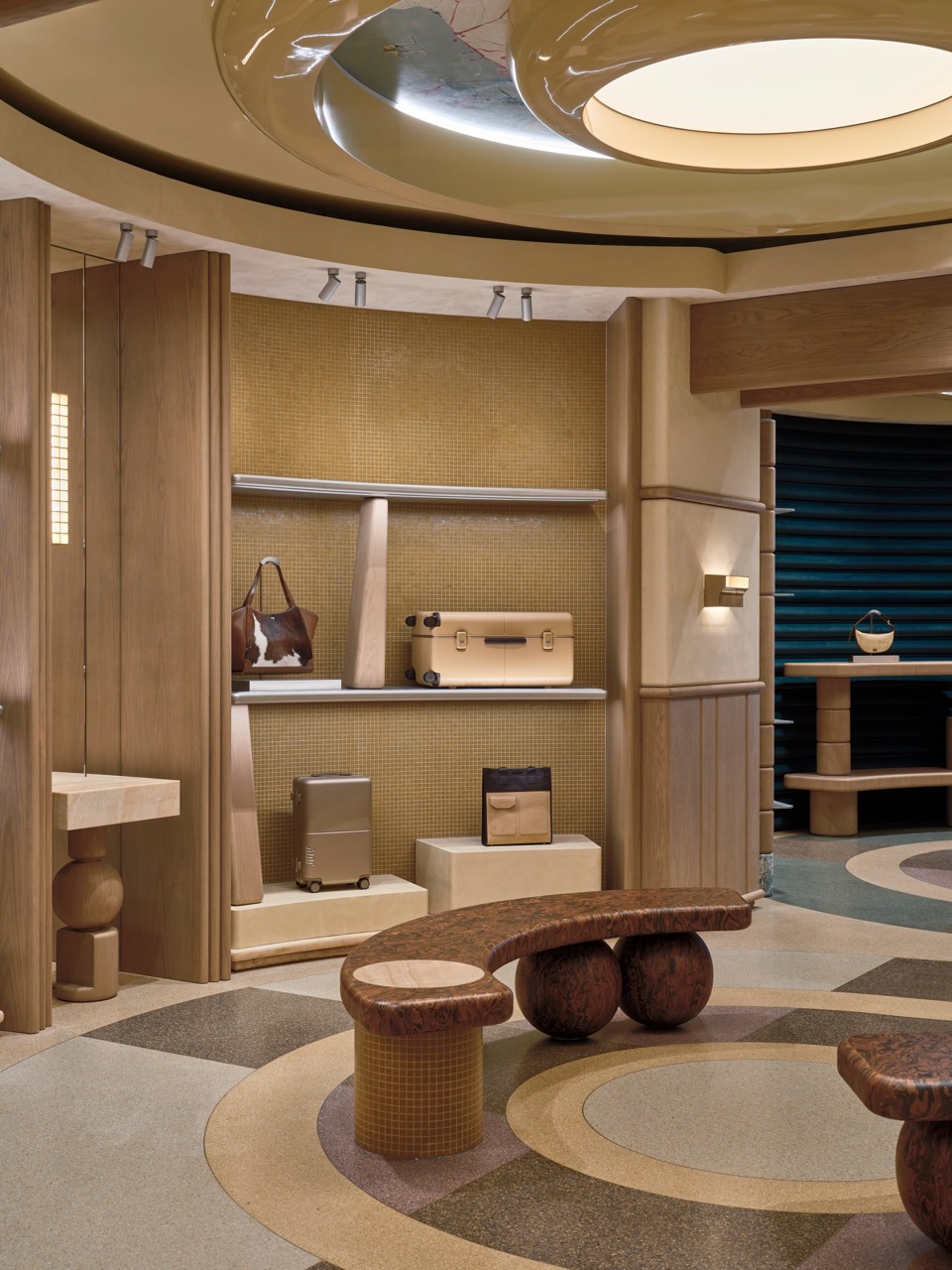
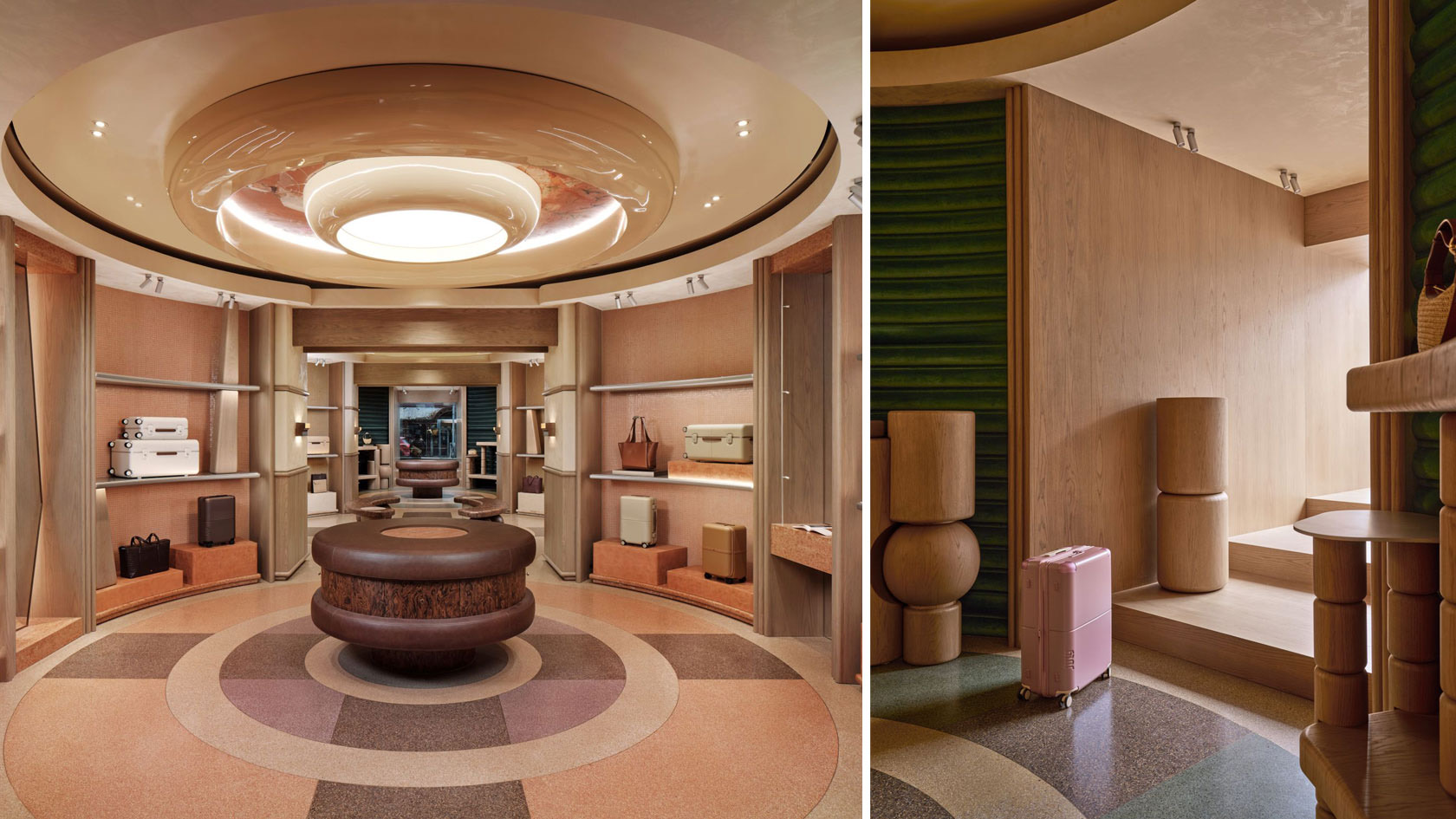
5.Take it apart. The store divides into three circular chambers of different color and character. It draws on the Italian piazza, and the route was built so you move from room to room like walking a square, rather than around one large display.
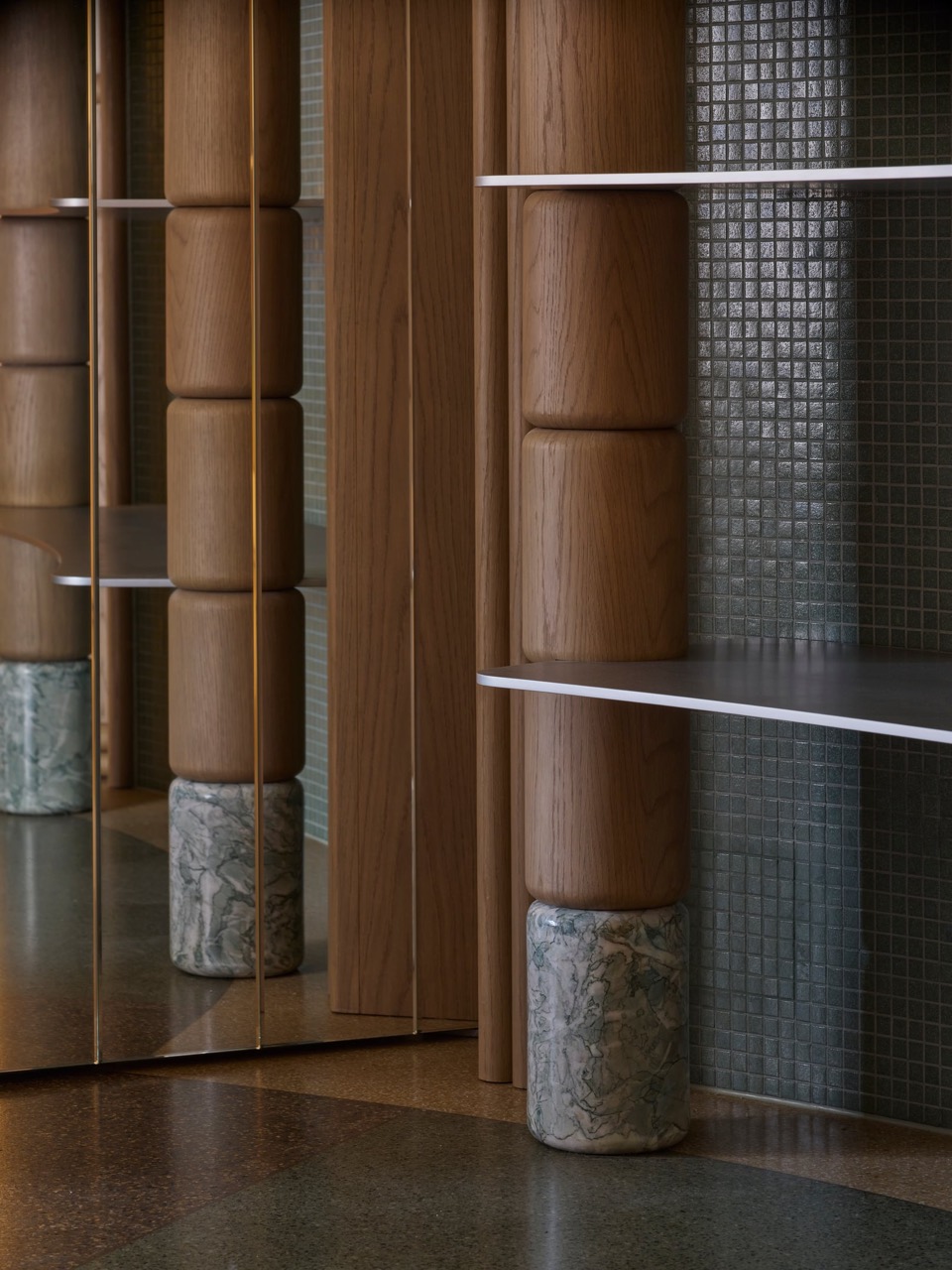
6.Look at the materials and you see where the budget went. Hand-poured terrazzo floors, marble finishes, brass wall detailing and lighting, handmade timber furniture. None of it is factory standard, all of it is a spec that takes a lot of hands on site, and not the sort of volume that goes into a 250 square meter suitcase shop.
The floor tells you where the budget wentJuly QV. Instead of cutting terrazzo into boards and gluing them down, it was poured, set and ground on site. Marble, brass and handmade timber too, all chosen on the side that keeps hands busy for a long time. ⓒJuly
7.The ceiling is the peak. Nine fresco canvases by the Sydney artist George Raftopoulos went up, three in each of the three rooms, on the theme of movement and travel. The grammar of a Renaissance church ceiling moved onto the ceiling of a room that sells luggage.
The ceiling borrowed from a churchJuly QV. Three per room, nine hand-painted frescoes went onto the ceiling. The theme is movement and travel. ⓒJuly
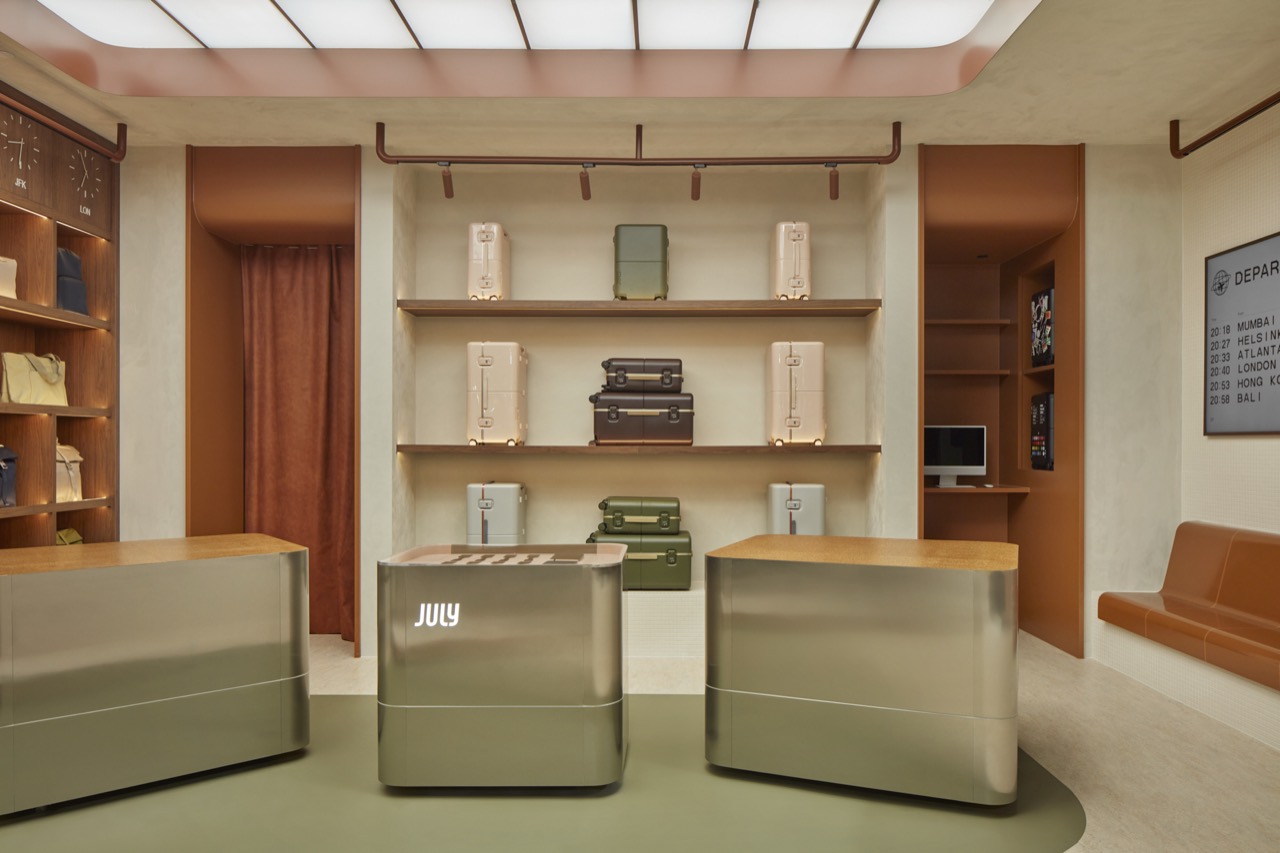
8.What the store actually sells is spare. Carry-ons and large cases, duffel bags, travel accessories. The terrazzo and frescoes are lavish and the product display stands back accordingly, so the center of gravity sits on the space rather than on the goods.
9.Didaskalou's comment at the opening says it outright. Melbourne is where we started, so we wanted a monumental homecoming. And, this is not an end but the start of the next chapter. Not the words for opening one store but words declaring the company's next stage.
10.The question of this piece comes from here. Why would a company born online build its last offline store as the most expensive one. A store is normally the channel with poorer sales efficiency for an online brand, and this company went the other way.
Three rooms, three colorsInstead of one large display floor, three circular rooms of different character were joined. Customers cross between rooms rather than standing in front of goods. ⓒJuly
11.First, for an online brand an offline store is not a sales point, it is a billboard. The cost of bringing in one customer online rises every year. In that case one store standing permanently exposed in a busy city center is an outdoor advertisement that never switches off and a brand booth that runs 24 hours.
12.Second, luggage is something you buy after touching it. How smoothly the wheels roll, whether the handle height fits, what it weighs, none of that crosses over in a photograph. The greatest weakness of an online luggage brand is not being able to touch the object, and the store fills exactly that gap. There is no need to buy and carry it out either. Touch it and buy it online from home.
250 square meters built to be touchedJuly QV. Suitcases sit between curved marble and terrazzo. The few seconds of checking wheels and handle by hand are what this store is buying. ⓒJuly
13.Third, this store is a content production plant. The terrazzo, marble and ceiling frescoes went in so that photographs come out well, and every frame a customer posts is an advertisement. That is also why In Addition builds every branch differently. Identical stores do not get photographed twice.
Designed to be photographedJuly QV. Arches and curves taken from the piazza tidy the background in advance. Making a wall where the photograph comes out by itself when a customer lifts a phone is the actual design brief for a store like this. ⓒJuly
14.Fourth, timing. This store opened just before the company goes abroad, where it will soon have to explain the brand to unfamiliar consumers in unfamiliar markets. Having a physical asset at home that proves this is the kind of company we are in one frame is different from not having one. This store is less domestic and closer to a showroom for overseas partners, investors and press.
15.These 250 square meters are not a store that recovers rent by selling suitcases. Sales are a side income and the body is advertising, trust, content and proof of brand. In accounting terms, the decision only resolves when the rent and construction cost are read as marketing expense rather than cost of sales.
What is actually on saleThe products are carry-ons, large cases, duffel bags and travel accessories. The display volume cannot fill 250 square meters, so materials and the ceiling fill the rest. ⓒJuly
16.This is not the first. Brands born online moving offline is a decade-old current, and Warby Parker with glasses, Casper with mattresses and Away with luggage all opened stores in the United States. The reason was the same. Once the cost of acquiring a customer online passes the price of opening a store, the store becomes the cheaper marketing.
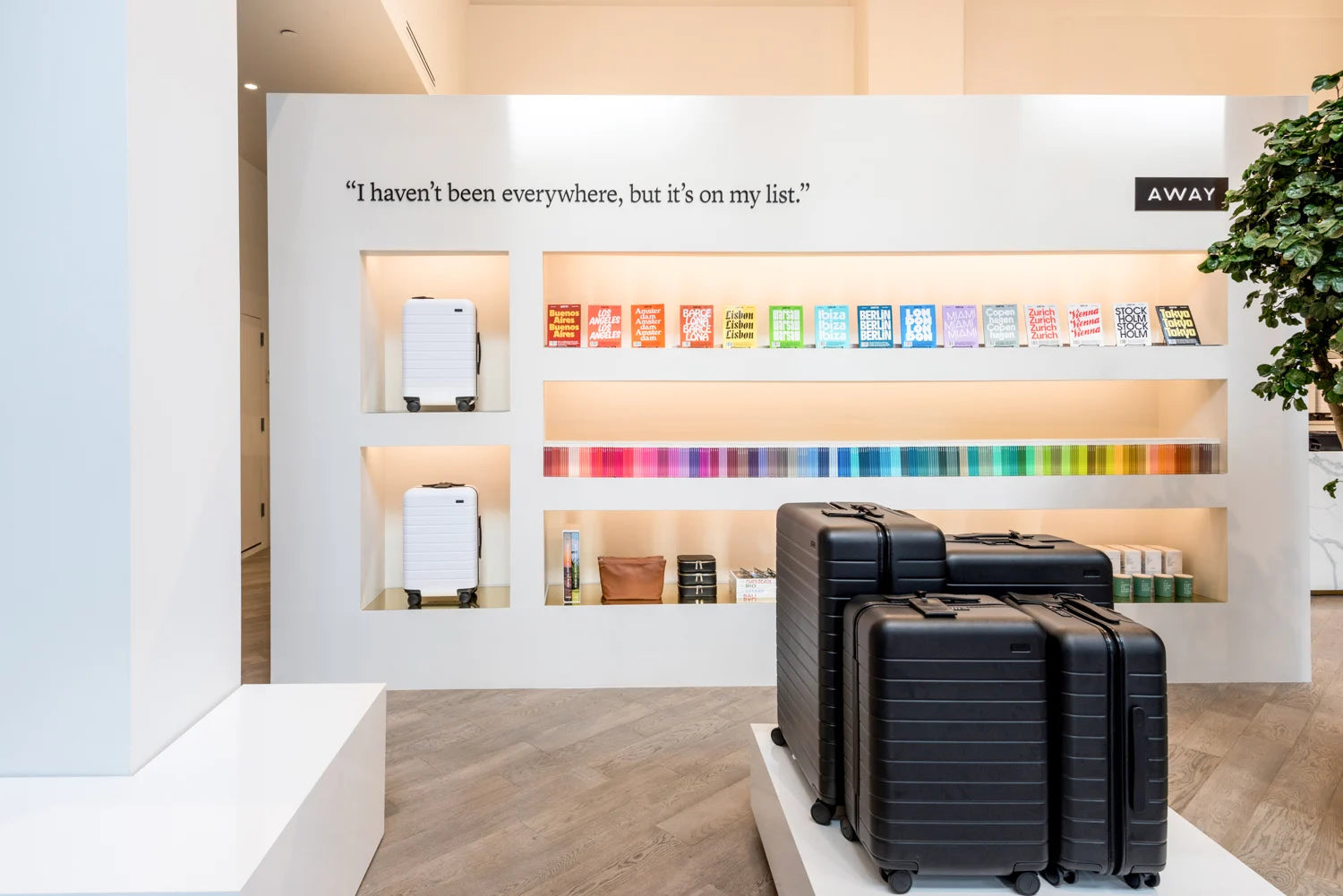
17.Away in particular is July's direct elder. It started in the United States in 2015 selling luggage direct online and opened flagships in New York and London that were closer to travel lounges than to shops, with books, coffee and travel events, and the suitcase in a supporting role. The side that first used the grammar of a space that makes you want to travel rather than a luggage shop.
An elder who reached the same answer ten years agoAway's NoHo store in New York. This brand, which also started with direct online sales in 2015, built its store as a place to stay rather than a place to hand goods over. The original of the grammar July used is here. ⓒAway
18.Building a space as a temple to the brand is older still. Aesop has insisted on completely different interiors at every store for more than twenty years, and the same cosmetics sell in a Tokyo store and a Paris store that belong to different worlds. Apple Store called its store a town square, and RH, Restoration Hardware, put a restaurant and a roof garden into a furniture shop and named it a gallery. July stands on that same line.
19.The real reference for this store is cosmetics and furniture flagships rather than other luggage brands. The current that redefined the store from a place that sells goods into a place where you experience the brand. July simply brought it into the luggage category, not a new invention but a transplant of proven grammar.
Built differently at every branchThe July James Street store, designed by the same studio, In Addition. Materials and composition are completely different from QV. This Brisbane branch pulled in an afternoon at an outdoor pool. ⓒArchDaily / In Addition
20.Not everyone can use this strategy. To be precise, it is a card only a brand with already thick online revenue can play. The trap sits here.
21.Reading a store as marketing expense requires that the marketing already has somewhere to land. July has seven years of customer base and logistics built online, and the customer who touched a case in the store goes home and buys on the website. If the store is the advertisement, an online engine that converts that advertisement into revenue has to be running behind it.
22.Building a lavish offline store first without that engine is the opposite gamble. Terrazzo and frescoes are money. With no online revenue, the only place to recover that construction cost is store sales, and pulling the price of marble out of selling suitcases in 250 square meters is close to impossible on turnover. The same interior is marketing expense for one party and simply a loss for another.
23.What to take from this case is not let us build a lavish store. First decide whether the store is a sales point or a billboard, and if it is a billboard, check first that there is an online revenue engine for the advertising to land on. Reverse that order and the same store becomes a liability rather than an asset.
24.One more thing. Do not miss that this store is 250 square meters. Instead of enlarging the floor plate they split it into three rooms to make walking interesting, and put the budget into one ceiling. A game that does not need a large footprint, and in exchange one arresting frame has to be there without fail.
Another branch, another faceThe July Bondi store built by the same studio. Different again from James Street and QV. Redesigning each branch is intent rather than inefficiency, and this one pulled in a Sydney beach summer. ⓒArchitectureAu / In AdditionWhich account you read the store under is everythingThe same 250 square meters and the same marble is a marketing asset with an online revenue engine behind it and an unrecoverable liability without one. What decides success is the accounting view rather than the trade type.
Summary
An Australian luggage brand that started with direct online sales opened its fifteenth and last Australian store in Melbourne on July 17, 2026. 250 square meters, an Italian piazza concept, hand-poured terrazzo, marble and brass, and nine ceiling frescoes. What this store buys is not suitcase revenue but advertising, trust, content and proof of brand, and the arithmetic only works once rent and construction cost move from cost of sales to marketing expense. Its line of descent runs through Aesop, Apple Store and RH rather than through luggage. Anyone moving this gets stopped at one place. This logic can only be used by a brand that already has an online revenue engine running for the advertising to land on. A plan has to split revenue sold in the store from revenue sold on other channels after experiencing the store into two separate lines, and the moment the second line cannot be measured, the same marble stops being an asset and becomes an expensive shop. For a Korean downtown store, mostly 60 to 130 square meters, do not imitate through volume. Break the space into two or three characters and put the construction budget into the one point that will always appear in a photograph, and when adding branches, unify only the brand code and give each branch a different face so the store keeps producing new content.