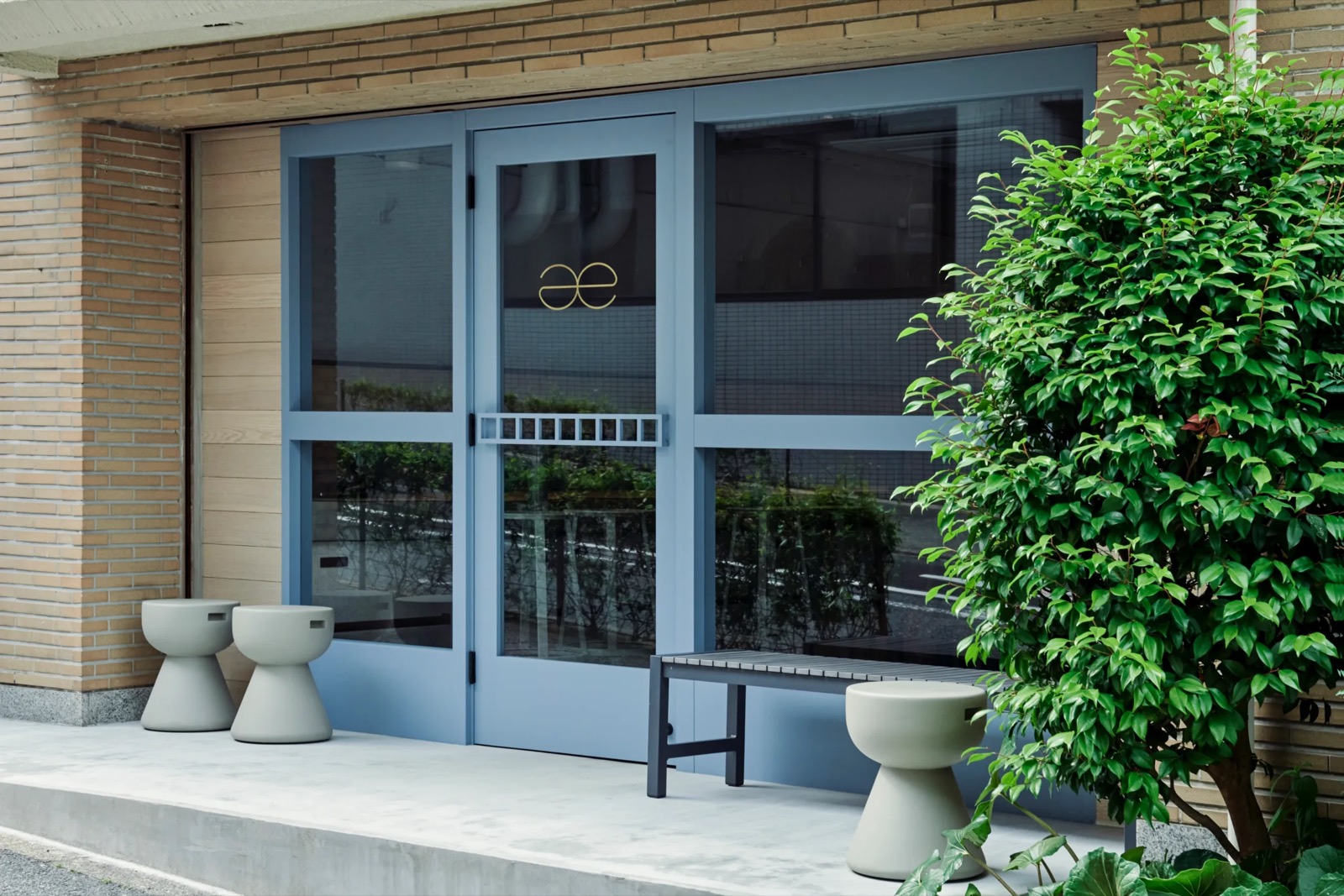
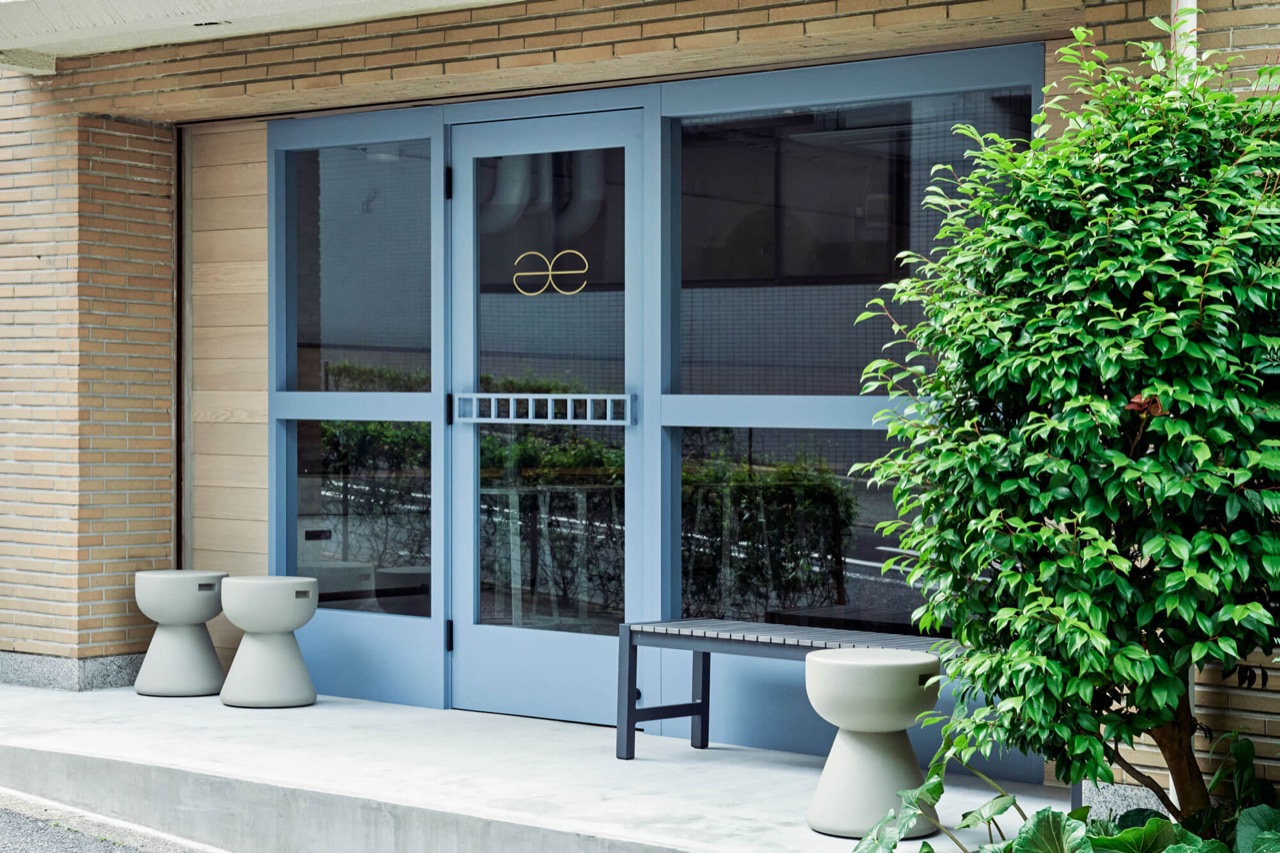
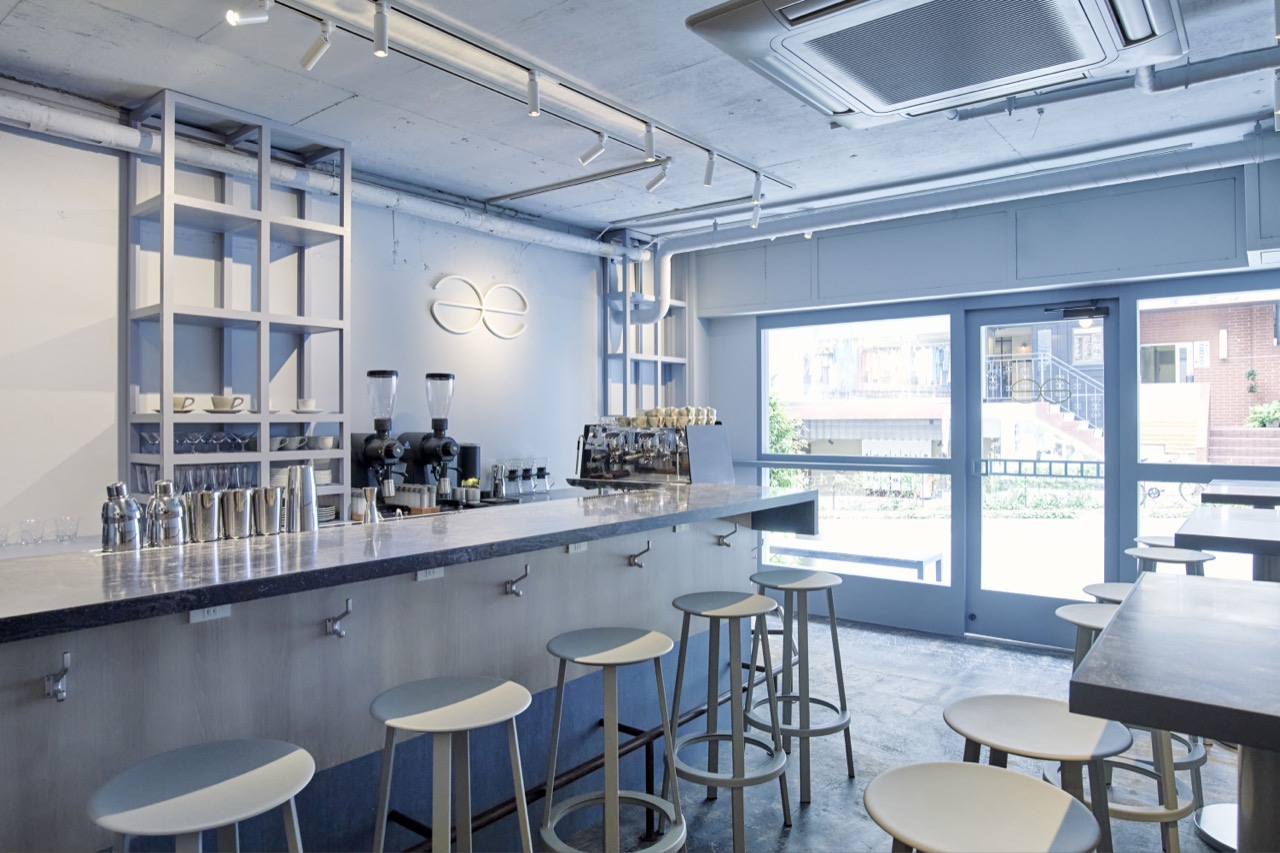
Coffee by day, cocktails by nightThe exterior of the original æ (ash), the zero-waste cafe bar that opened in Jinnan, Shibuya, Tokyo in 2022. In June 2026 the brand crossed over and took the ground floor of Sober Company in Shanghai. The circular concept, grounds to fertilizer and cups from coffee husk, moved with it. ⓒBarista Magazine
Daily Space
æ (ash) in Shanghai: the zero-waste cafe bar that sells the same seat twice a day
2026.07.26
In a back street of Shibuya, Tokyo, there is a cafe bar that sends its coffee grounds out as fertilizer, sews its uniforms from paper and makes its cups from coffee husk. The name is æ (ash). Coffee by day, cocktails by night. In June 2026 this shop crossed to Shanghai, and not into an empty unit, since it took over the ground floor of Sober Company, once counted among the best cocktail bars in Asia. So here is one question. How does this good story about throwing nothing away actually turn into money. The answer is not in the goodness. It is in cost and turnover.
1.Start with what happened. Beside Fuxing Park in Shanghai, Sober Company, a legend of the Asian bar scene, went through a '3.0' relaunch in June 2026. The face of that rework is the ground floor. The old cafe area guests walked into first was taken over whole by æ (ash), the zero-waste cafe bar from Tokyo.
2.Read the name first. The Latin ligature 'æ', the brand says, is a single coffee bean, and laid on its side it becomes the infinity sign. It is a declaration to sell a loop that keeps turning rather than a straight line of use and discard. The concept fits in one sentence. A coffee and cocktail bar that minimizes waste.
3.The original is in Tokyo. It opened on May 30, 2022, timed to Zero Waste Day, in Jinnan, Shibuya. It is run by SG Group, which operates cocktail bars that place in the world bar rankings. This is not zero waste built by an environmental organization, it is zero waste built by a bar operator that knows how to count money. That is the whole of today.
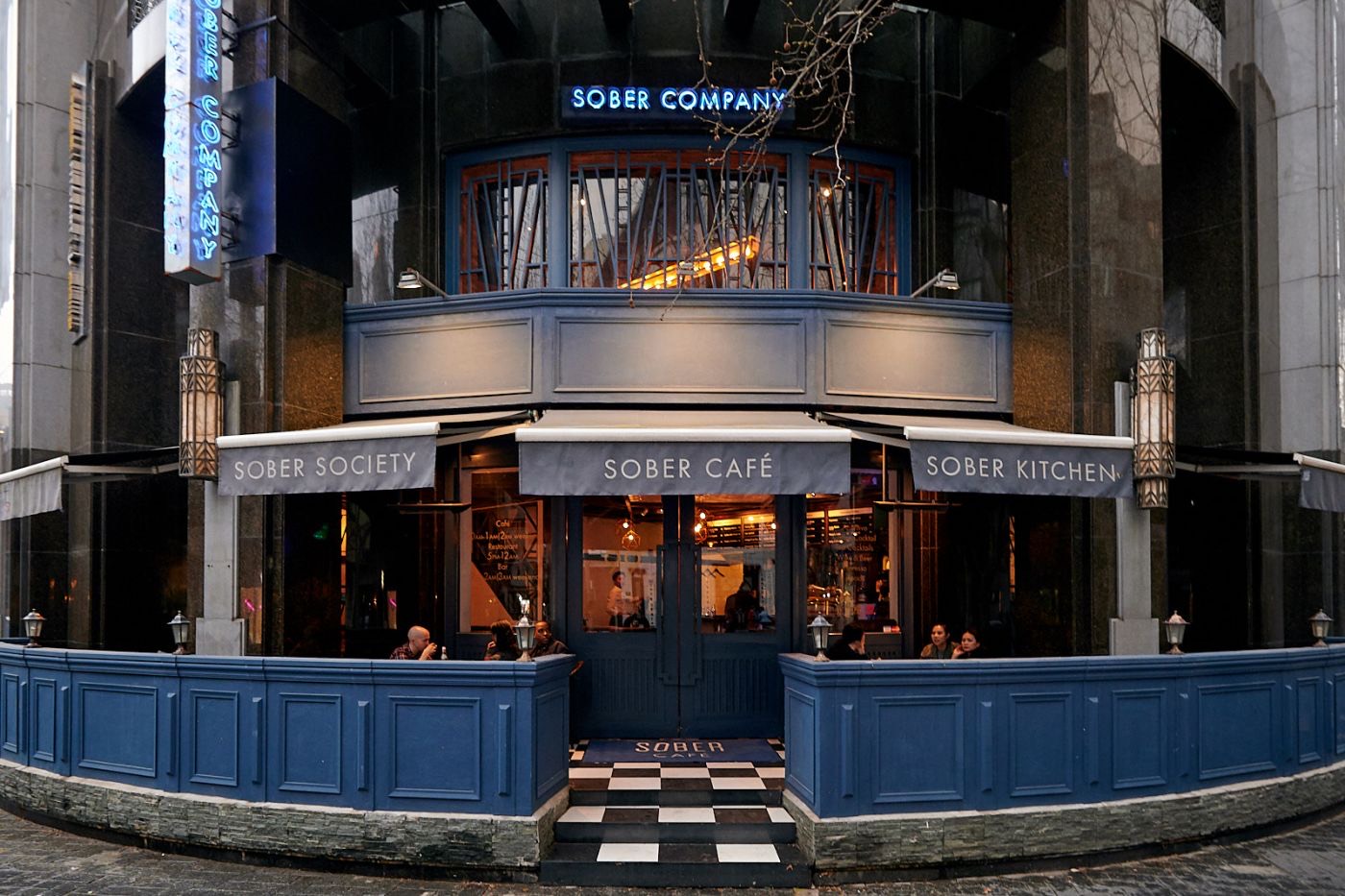
4.Look at the Shanghai structure too. Sober Company has always been a complex stacking several bars and restaurants floor by floor in one building. In this rework the ground floor went to æ (ash), the space behind its brick wall to the pairing course bar Sober Airways, and the second floor to Tipsy, an izakaya lounge and cocktail space led by a Michelin one-star chef from Toronto. Cafe, dining and cocktails run a relay by time of day under one roof.
5.Now take it apart. First, the journey of the coffee grounds. Spent grounds do not simply go to a bin. At the Tokyo original they are sent to Aoki Farm on the Miura Peninsula to become fertilizer, and the vegetables grown there come back onto the menu. A loop from field to cup and from cup back to field. Those grounds also work as a cocktail ingredient.
6.Second, everything you touch circulates. Takeaway cups are made from coffee husk and reused, and broken cups and plates go back to fertilizer through a partner called BONEEARTH. Paper menus and business cards are gone, replaced by QR, and payment is entirely cashless. Staff uniforms are sewn from biodegradable Japanese paper fiber (designed by the New York designer Marie), and one blue-grey wall was built by joining discarded denim.
7.Third, the coffee itself is anything but careless. The beans are an original blend from Ishiya Barista, with light roasting by Leaves Coffee Roasters and dark by Obscura, two roasters with real standing in the Tokyo specialty scene. The menu has exactly two sides. Coffee Cocktails and Zero-Waste Classics. This is not a shop asking you to overlook the taste because the concept is good.
8.Fourth, the most important piece of design is the timetable. The Tokyo original opens from 10 in the morning to 11 at night. By day it is a cafe selling specialty coffee, and once the sun goes down it turns into a cocktail bar mixing coffee and spirits. The same seats, the same beans and the same staff run two businesses in one day. Why that is decisive comes with numbers later.
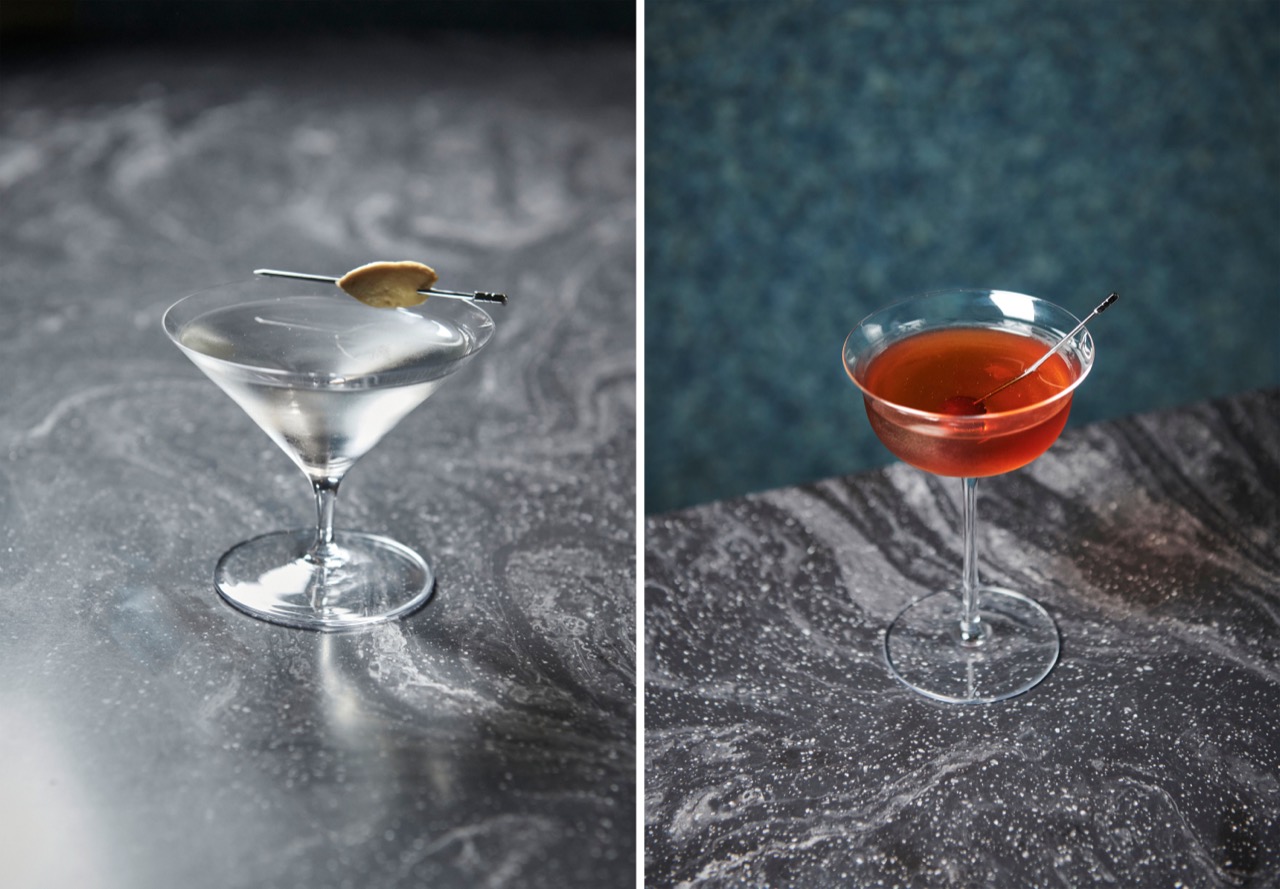
The same beans, coffee by day and drinks by nightTwo signature æ (ash) cocktails on a stone counter. The menu has two sides, Coffee Cocktails and Zero-Waste Classics. Coffee grounds do not only go to fertilizer, they come back as a cocktail ingredient. This is not a shop asking you to overlook the taste, it uses beans from two specialty roasters. ⓒTime Out Tokyo
9.First, consumption without guilt. City dwellers are a generation carrying a fine layer of guilt over a cup of coffee and a glass of wine alike, and æ handles that guilt for them. Disposable cups, food waste, carbon. Guests drink and enjoy exactly as before while buying the story that they at least made the better choice. What sells is not coffee, it is a lightened conscience.
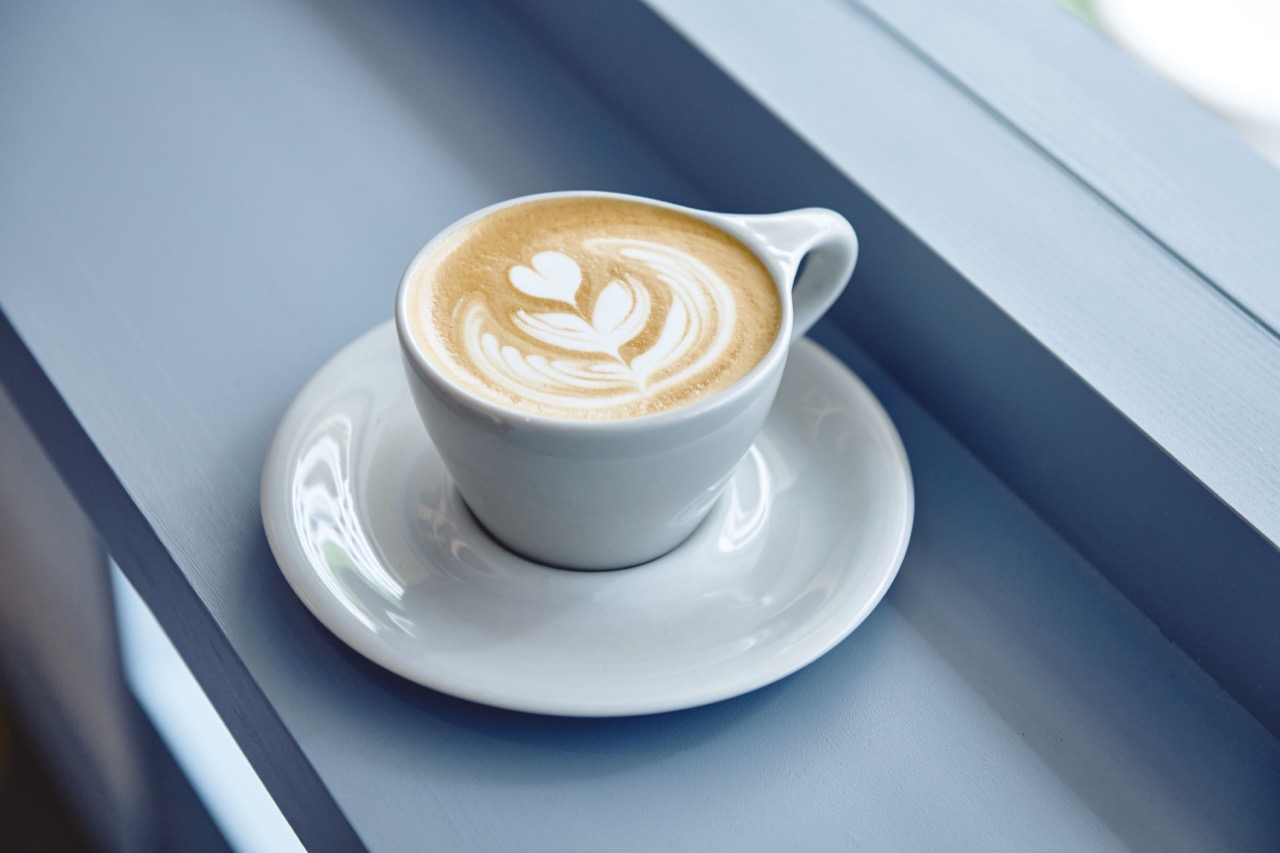
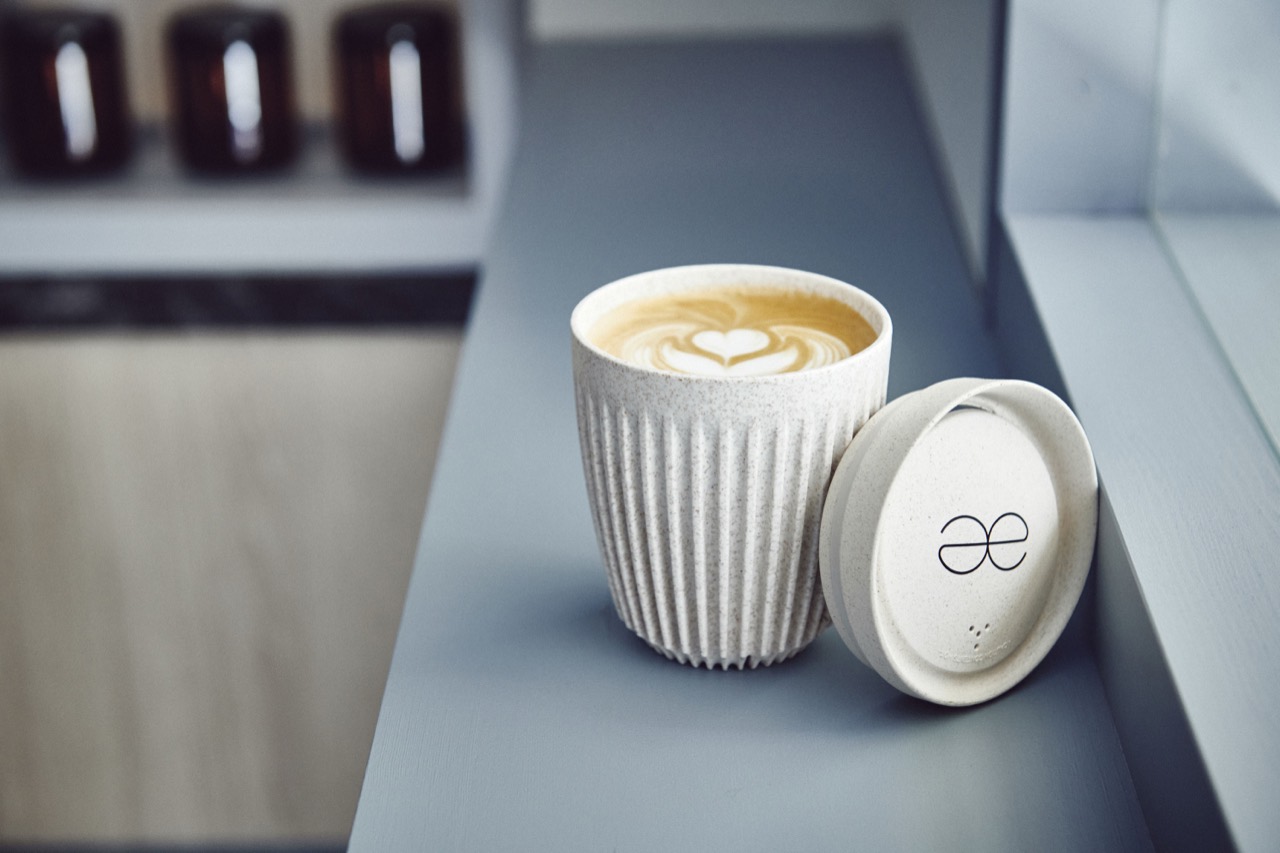
What sells is a lightened conscienceA latte on the window shelf. City dwellers are a generation carrying a fine layer of guilt over a single cup or glass. æ handles that guilt for them. Guests enjoy the same thing while buying the story that they at least made the better choice. ⓒTime Out Tokyo
10.Second, every detail is content. A wall built from discarded denim, uniforms woven from paper, cups shaped from coffee husk, cocktails made with spent grounds. Each one is something a guest wants to photograph and explain to someone else. The interior is the marketing, and the mouths and feeds of guests are the billboard. A structure that gets talked about without spending money, planted inside the space.
11.Third, it erased the border between coffee and drinks. A shop that does coffee well and a shop that does cocktails well are usually different places, while æ combined the trust of specialty coffee with the hands of a world-class bar in one glass. The daytime cafe guest becomes the evening bar guest, and the night's drinker becomes the next day's coffee guest. Two markets held by one brand.
A bar that sells conscienceIt handles the fine guilt of a city dweller and turns a denim wall, paper uniforms and coffee husk cups into a billboard on social feeds. The trust of coffee and the hands of a world-class bar meet in one glass, so day guests and night guests cross over into each other. ⓒTime Out Tokyo
12.It is not the first. Look at what came before. The origin of zero-waste dining is Silo in London. Douglas McMaster started it in Brighton in 2014 and was the first in the world to declare a restaurant with no bin. Amass in Copenhagen and Nolla in Helsinki belong to the same line. æ pulled that grammar, first sold by fine dining, down into a far lighter cafe and bar.
13.Coffee has its own version. Reviving bean husk, cascara, as tea and drinks rather than discarding it, and upcycling grounds into cups, furniture and ink, have been staple subjects in the specialty coffee scene for a decade. æ invented nothing new. The skill is in gathering scattered circular ideas into one shop and finishing them to the standard of a world-class bar.
The husk becomes the cupæ (ash) reusable cups and lids pressed from the husk that wrapped the bean, the lid stamped with the æ logo. Reviving grounds as cups, furniture and ink has been a staple subject in the specialty coffee scene for a decade. æ gathered those scattered ideas into one shop. ⓒTime Out Tokyo
14.The real engine of this shop is not goodness, it is the timetable. Talk about money head-on here. Spend per head on coffee at a premium specialty cafe in Shanghai runs roughly RMB 40 to 55 (about KRW 8,000 to 10,000, estimated). A signature cocktail at that level runs RMB 90 to 130 (about KRW 18,000 to 26,000, estimated). The gap between coffee and drinks is two to three times.
15.A normal cafe dies at night, and a normal bar sits empty in the daytime. Rent and labor run the same 24 hours while revenue arrives for half a day. What the æ timetable erases is that waste. The daytime cafe defends the rent with turnover and footfall, and the evening bar pulls margin from high spend per head. The same seat sells twice a day. Revenue per pyeong can structurally reach double that of a single-format business.
16.So where is the money in zero waste. Do not misread it. This is not a cost saving, it is two different gains. First, free media. A bar with no bin gets written up by newspapers, magazines and influencers on their own, and converted into advertising spend that is far from trivial. Second, price justification. Attach the circular story and RMB 55 coffee and RMB 130 cocktails stop looking expensive. Zero waste does not cut cost, it is a device that protects spend per head.
One building, several businessesThe Sober Company exterior with SOBER SOCIETY, SOBER CAFÉ and SOBER KITCHEN lined up on the awning (photographed in 2020). It is a complex stacking several bars and restaurants in one building. In the June 2026 rework the ground floor went to æ (ash), the space behind the brick wall to a pairing course bar, and the second floor to a Michelin chef's izakaya lounge. Cafe, dining and cocktails run a relay by time of day. ⓒSmartShanghai
17.That is why not everyone can copy this model. Doing daytime coffee and evening cocktails at a world-class level takes expensive people with both barista and bartender skills. The circular system is heavier still. The fertilizer farm, the cup recycling partner and the waste logistics are all contracts and management cost. Without scale or a brand behind it, zero waste raises cost rather than cutting it.
18.Which is why the key point is that æ went into Sober Company rather than an empty unit. It sits on the kitchen, staff, logistics and reputation of a bar already counted among the best in Asia, and the heavy circular infrastructure is shared by the existing complex. A system a standalone cafe could never carry works once it becomes a tenant inside a big house. The choice of location is itself the strategy.
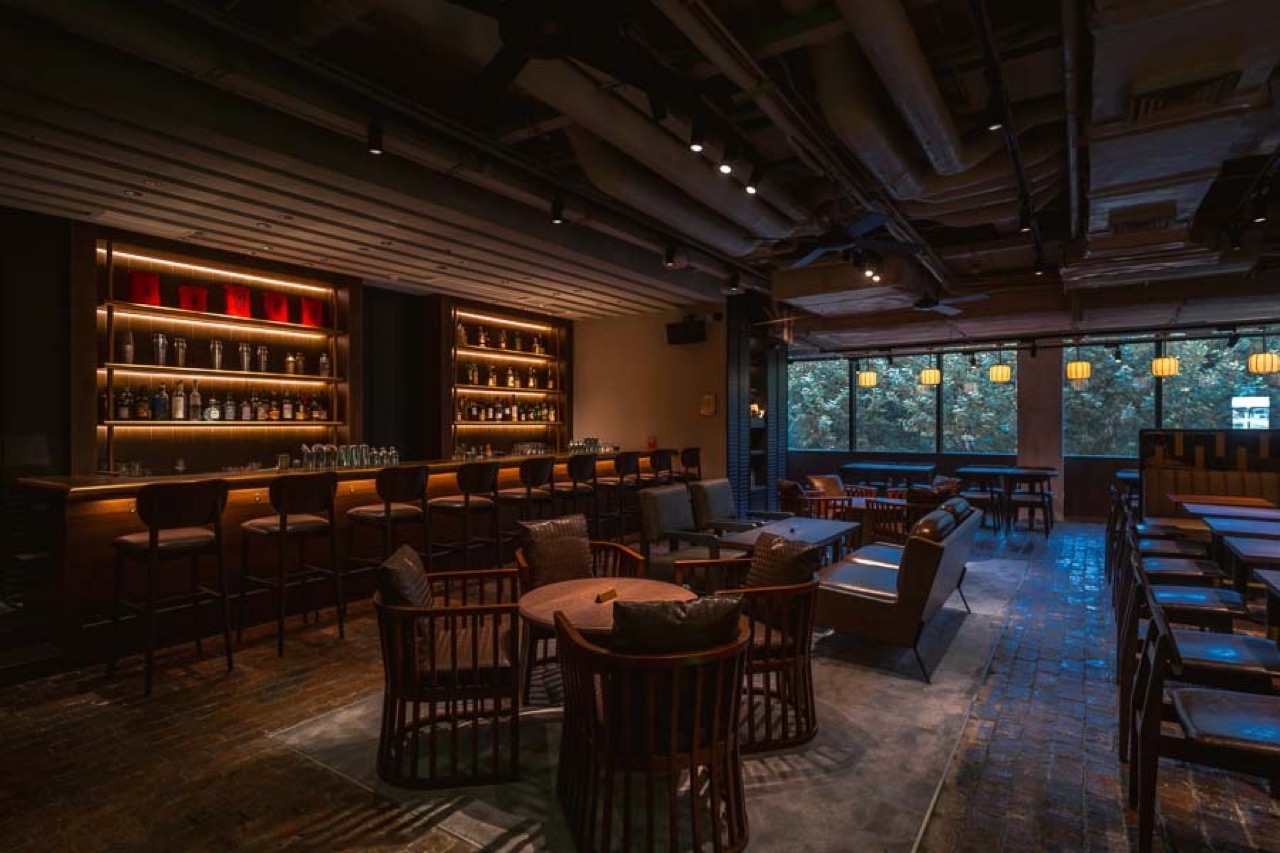
The night pulls the marginCoffee at RMB 40 to 55 (estimated) defends the daytime rent, and signature cocktails at RMB 90 to 130 (estimated) pull the margin at night. æ sits on the kitchen, staff, logistics and reputation of a bar already counted among the best in Asia, and shares the heavy circular infrastructure with the complex. ⓒRachel Gouk / NOMFLUENCE
19.A third angle. This is a case of a Tokyo brand landing in Shanghai. Instead of a proven overseas concept breaking new ground alone, it enters as a tenant on a strong local platform. It pays for Sober Company as well, since they swapped an aging ground floor cafe for an outside brand with talk value and made it the face of the relaunch. Brand acquisition and spatial rework, solved in one move.
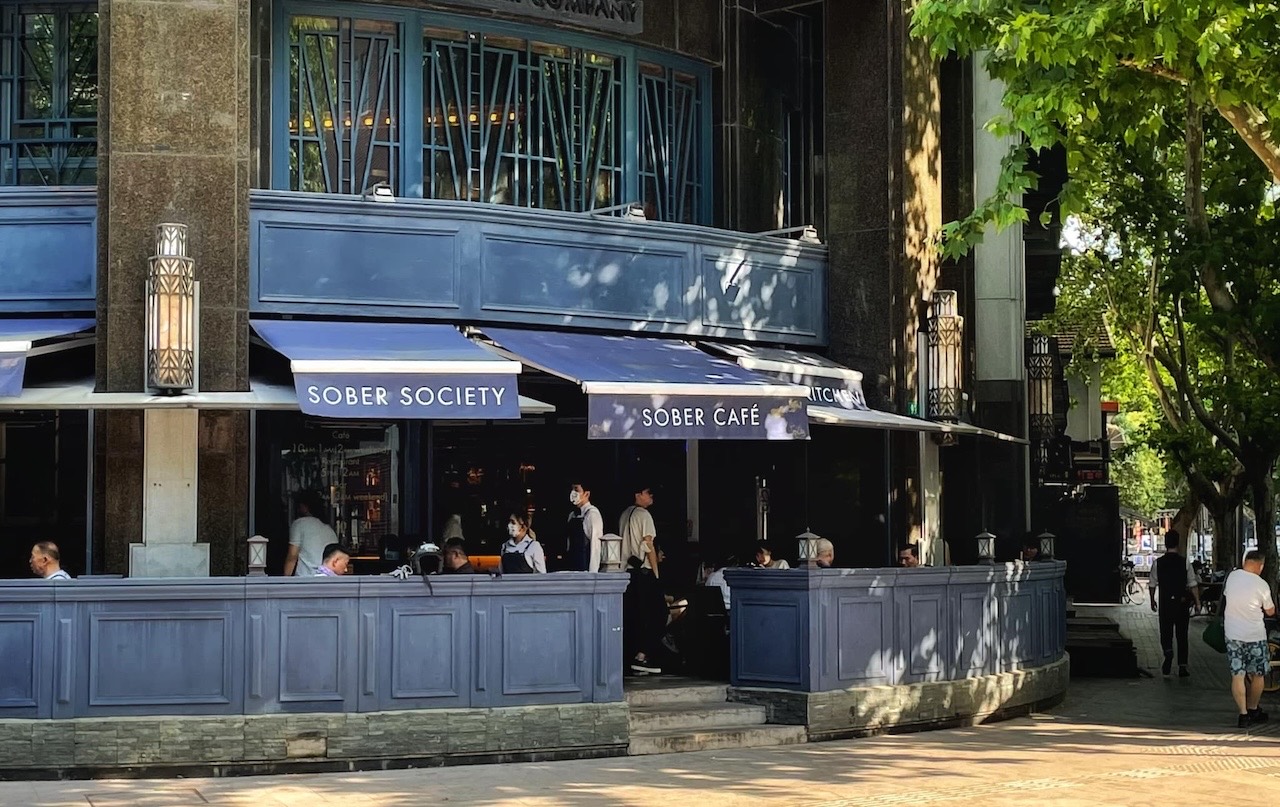
A tenant inside a big houseSober Company by day, seen from a street lined with plane trees. A Tokyo brand entered as a tenant on a strong local platform rather than breaking ground alone. For Sober Company, swapping an aging ground floor cafe for an outside brand with talk value solved brand acquisition and spatial rework at once. ⓒSilverKris
20.æ layered three proven grammars. First, zero-waste dining, the Silo line, made light enough for a cafe and bar. Second, daypart switching, cafe by day and bar by night, for revenue per pyeong. Third, tenancy inside a composite F&B operation to carry the infrastructure. It joined the three at a world-class standard. Not a new invention, a clever assembly.
The detail is the advertisingA wall joined from discarded denim, biodegradable paper fiber uniforms, QR in place of paper, entirely cashless. Things a guest wants to photograph and explain are planted throughout the space, building a structure that gets talked about without spending money. ⓒSG Group
21.The traps are just as clear. Daypart switching is easy to say, but day guests and night guests want different air. Lighting level, music, seat density and the tone of service have to change twice a day. Fail at that and you get a shop that is half-hearted in the day and half-hearted at night, and if both the coffee and the drinks are vague, you do not take two markets, you lose both.
22.The trap in the zero-waste story is greenwashing. Build the wall from denim with no real loop behind it and today's guests spot it instantly. If waste reduction does not carry through into actual operation, the paper uniform is just a costume, and the backlash travels faster than the free media. Goodness is an asset only when it is a system that can be proven.
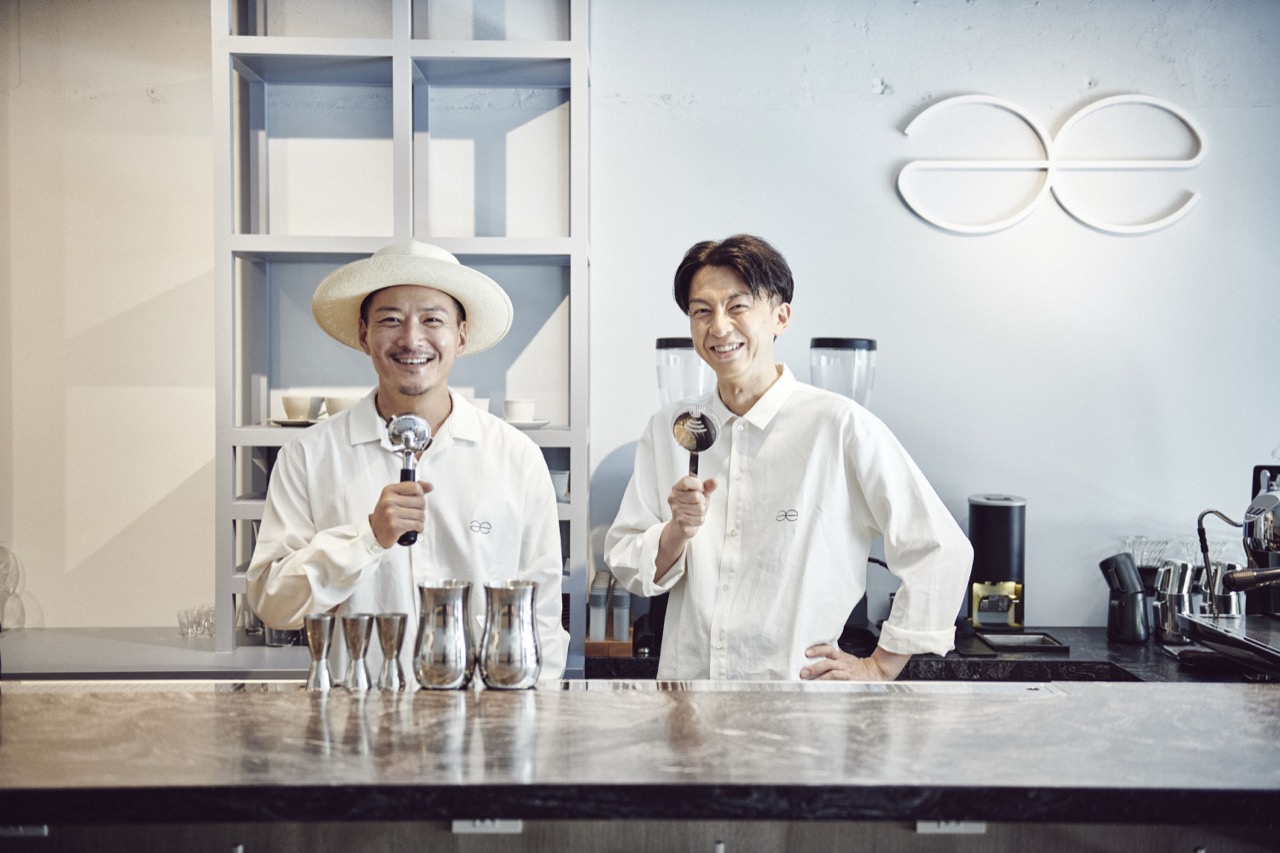
Goodness is an asset only when it can be provenThe bar counter at the original æ (ash), two grinders and an espresso machine in a row, the front panel wrapped in blue-grey denim. Build the wall from denim with no real loop and today's guests spot it instantly. If waste reduction does not carry through into operation, the paper uniform is a costume, and greenwashing backlash travels faster than free media. ⓒTime Out Tokyo
23.So the thing worth stealing is not send your coffee grounds to a farm. There are two real ones. First, sell the same real estate twice a day. Second, recover the good story through spend per head and media rather than through cost. Those two are how this shop actually makes money, and the circular part is a matter of the story laid on top and how well it is executed.
24.And the lesson about location. The heavier the concept, the less you should break ground alone. Whether it is circular infrastructure or late-night operation, a system too heavy to carry gets lighter the moment you become a tenant in a big house that already runs it. In exchange the tenant is bound to the platform's operating rules, fees and brand tone, and shakes when the big house shakes. The restraint of not scaling and not going alone is the last piece of this assembly.
How the money circulatesThe real engine is the daypart switch, with the day cafe defending rent and the night bar pulling margin. Zero waste is recovered not as a cost saving but through two gains, free media and price justification.
Summary
æ (ash), the zero-waste cafe bar in Shibuya, Tokyo, crossed to Shanghai in June 2026 and took the ground floor of the '3.0' relaunch at Sober Company, a bar counted among the best in Asia. Grounds to fertilizer, cups from coffee husk, uniforms from paper, with coffee by day and cocktails by night laid on top, and yet the real engine is not the goodness but the daypart switch. The day cafe (spend per head RMB 40 to 55, estimated) defends the rent while the night cocktails (RMB 90 to 130, estimated) pull the margin, selling the same seat twice a day, and zero waste is recovered through free media and price justification rather than through cost saving. What gets in the way of moving this are the liquor license, late-night noise, and a trade area holding both daytime and evening demand. Weak on either side and you get half a shop, and if the loop does not carry through into real operation, greenwashing backlash arrives faster than the free media did.