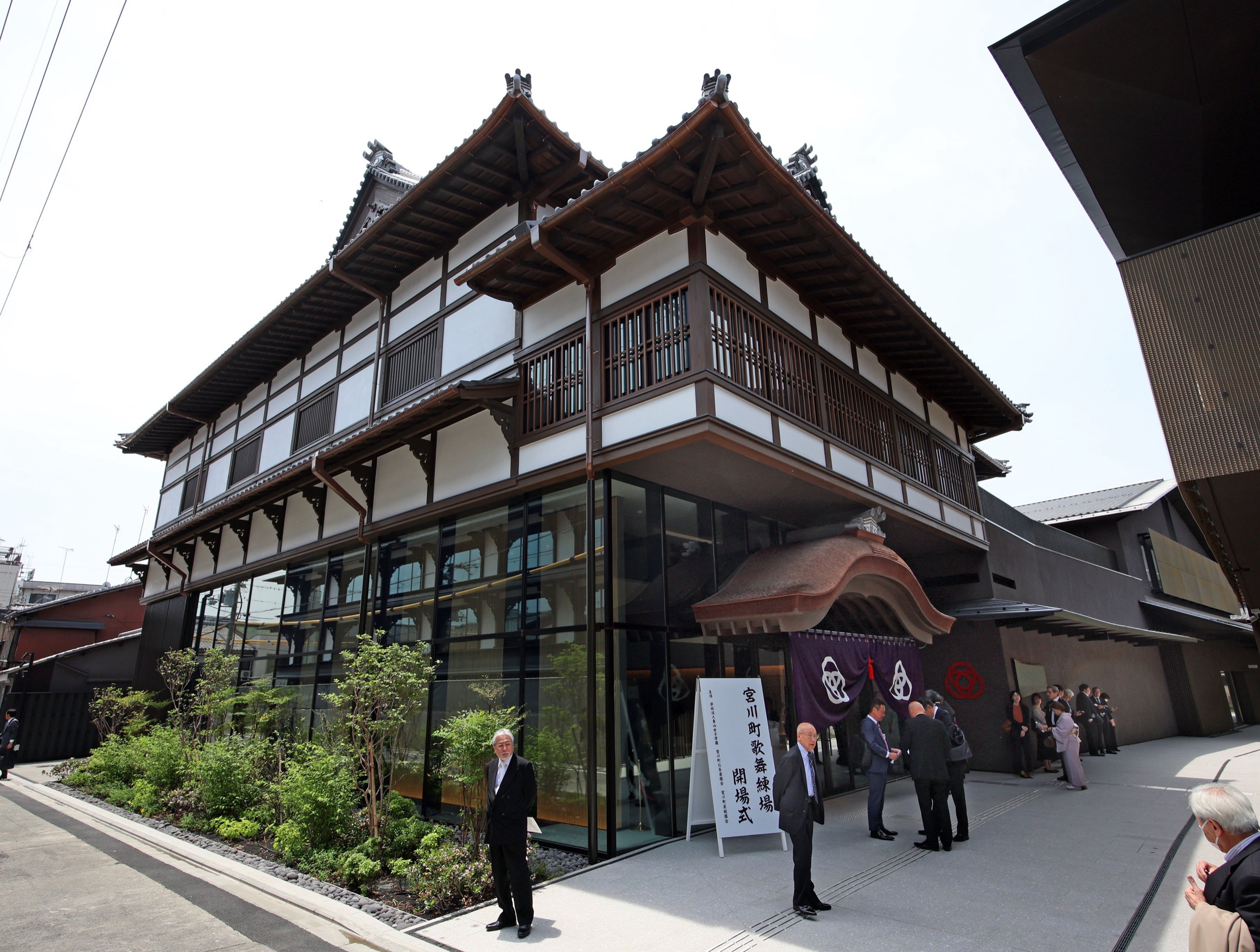
A hundred-year-old theatre in Kyoto's entertainment quarter has been rebuilt. What paid for it was not a culture budget but a luxury hotel one wall away. And the City of Kyoto, which owns the land, did not sell it.
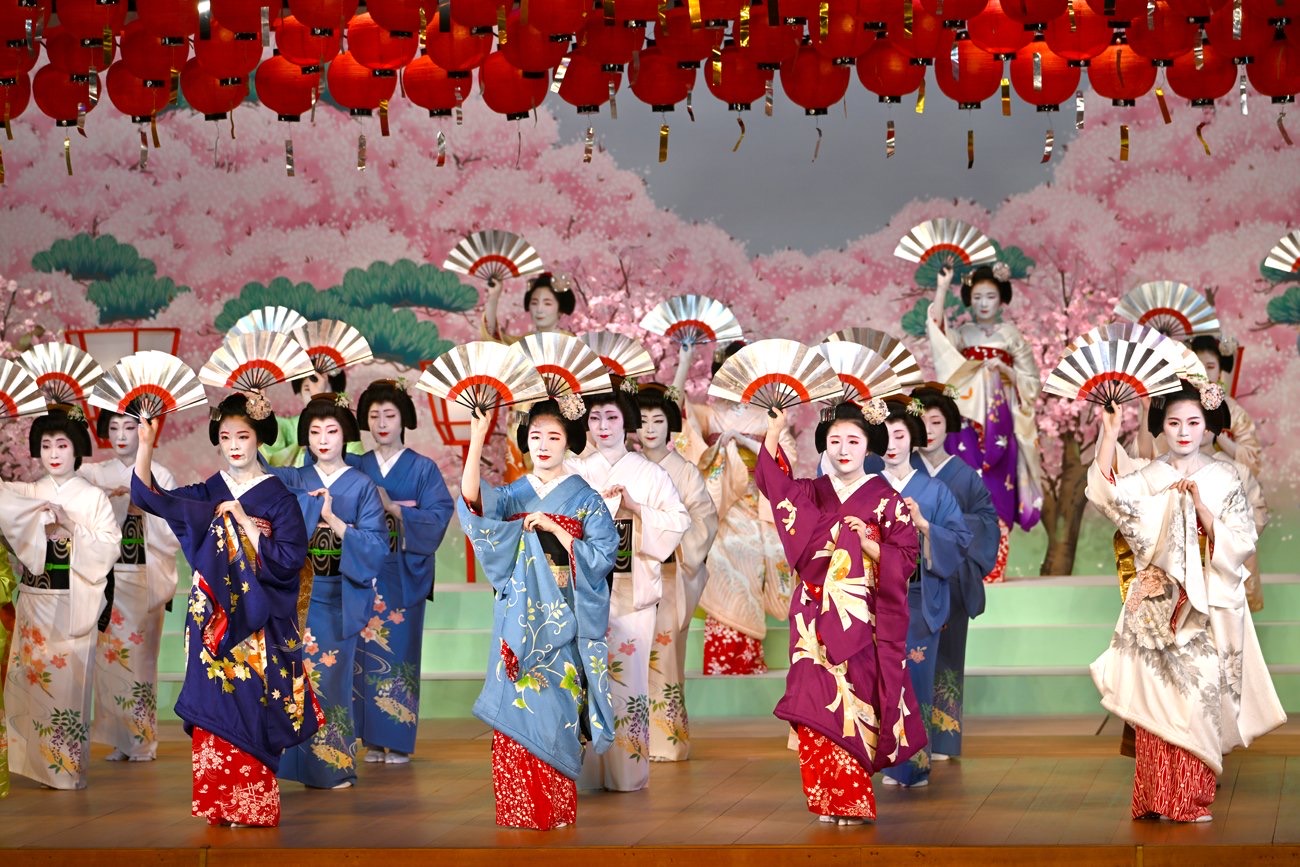
1.On 4 April 2026 the 75th Kyo Odori opened in Miyagawacho, Higashiyama-ku, Kyoto. The first Kyo Odori held in the newly built Kaburenjo. The house holds 483 seats, tickets are 7,000 yen on the first floor and 6,000 on the second, and it runs twice a day for fifteen days until 19 April.
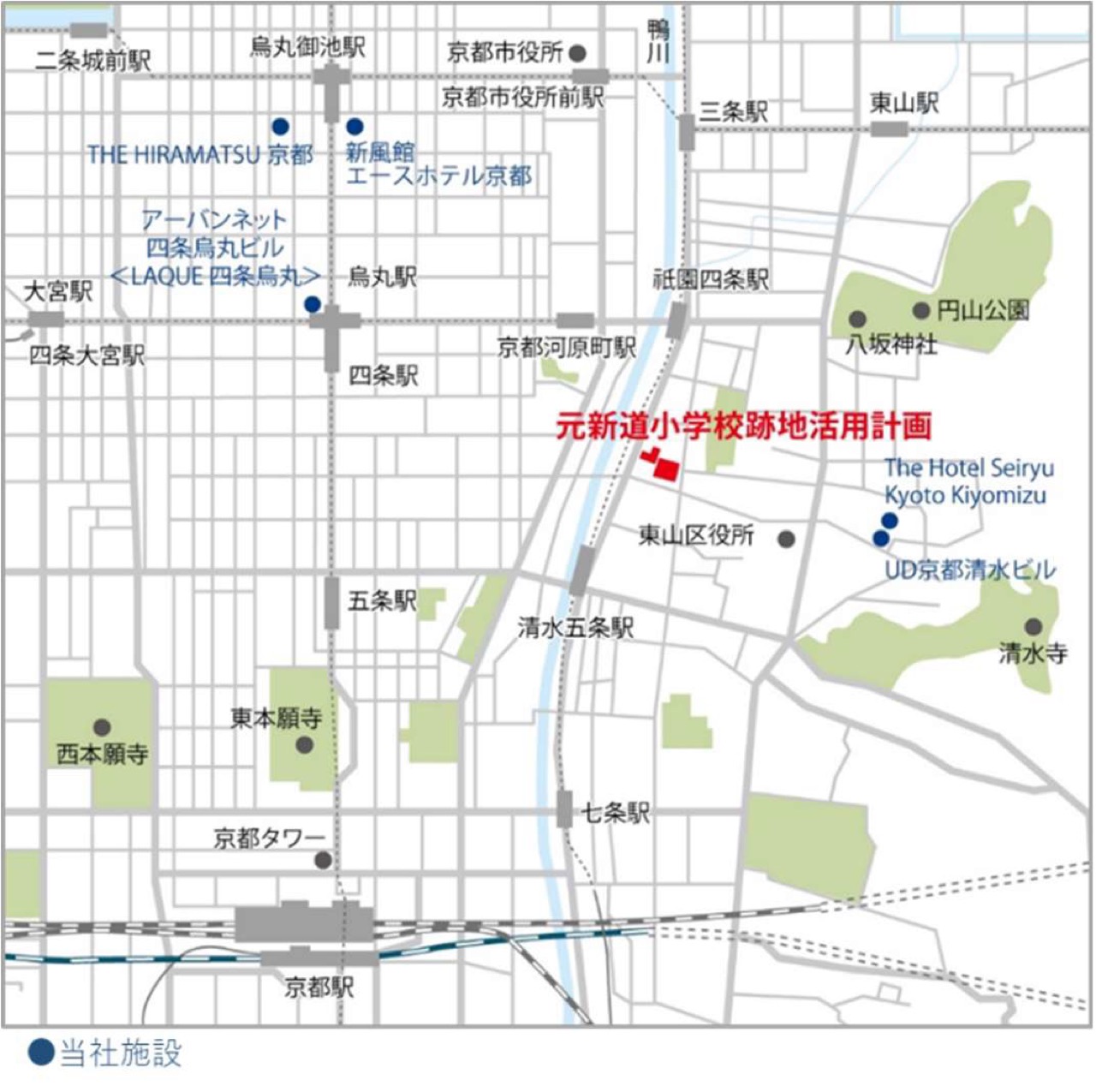
2.Three weeks earlier, on 22 March, Capella Kyoto opened one wall away. An 89-room luxury hotel, the first Japanese property for the Singaporean brand. The land is a closed school site, and the City of Kyoto leases the former municipal Shindo Elementary School site on a 60-year fixed-term land lease and takes a little over 100 million yen a year.
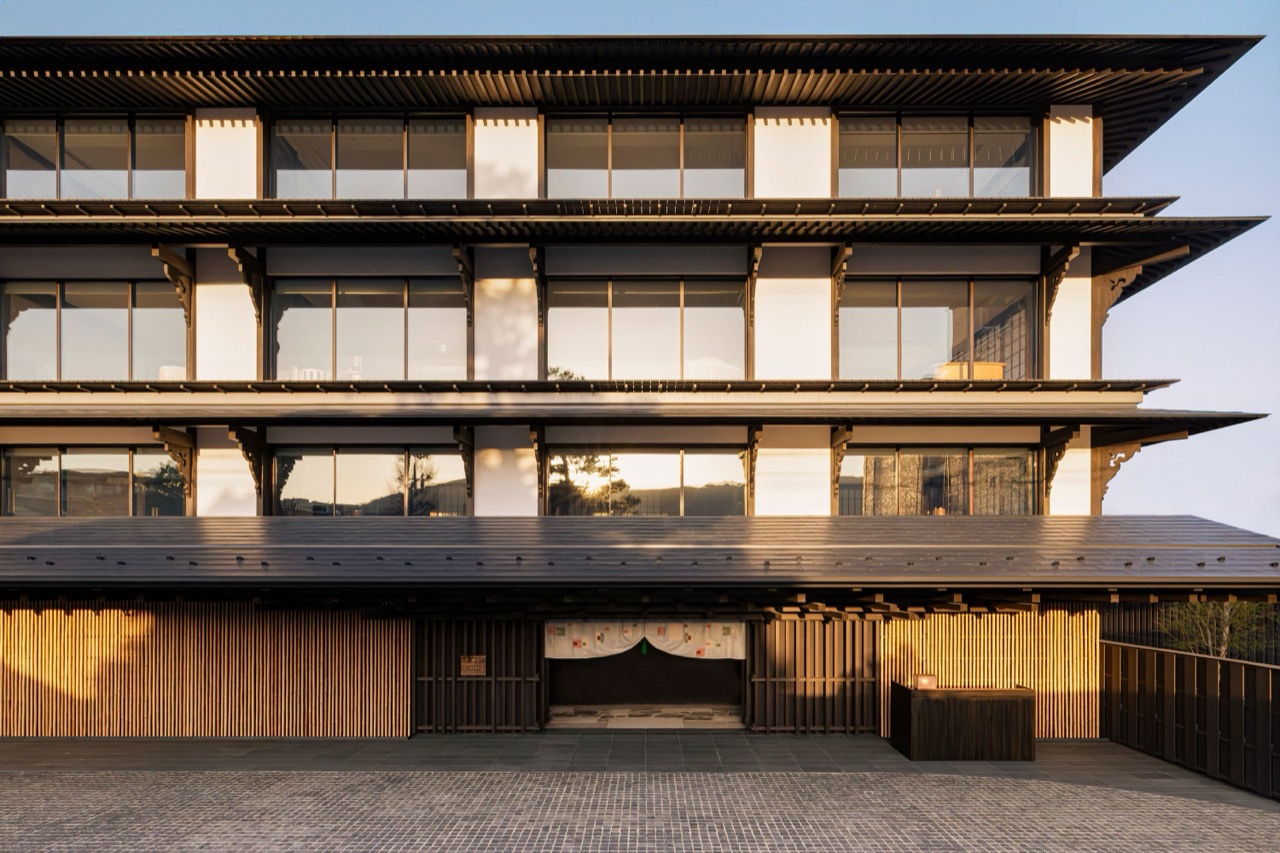
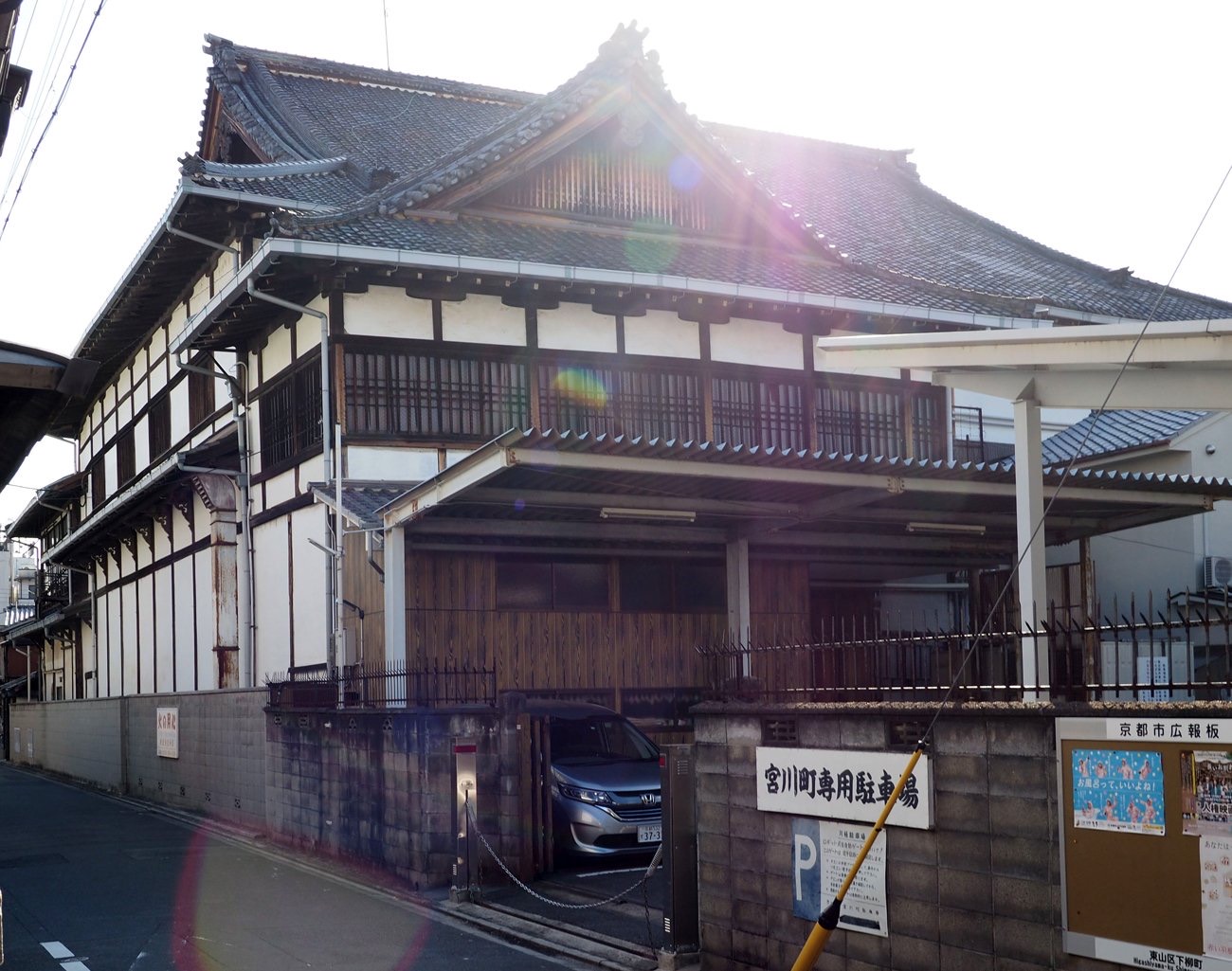
3.The old Kaburenjo that came down was a timber irimoya-zukuri raised in 1916. The published reasons were leaking rain, warped members and seismic performance below standard. Work started in July 2022, the Kaburenjo block was completed in January 2025, it opened on 23 May that year, and the opening performance went up in November.
4.The new Kaburenjo block holds 5,106.17㎡ of floor area on a 2,257.06㎡ site, 1,545 pyeong. Three storeys above ground and two below, mixing steel frame and reinforced concrete. The theatre inside it is named Mitsuwaza, and of the 483 seats the first floor has 345 plus three wheelchair spaces, with 135 on the second.
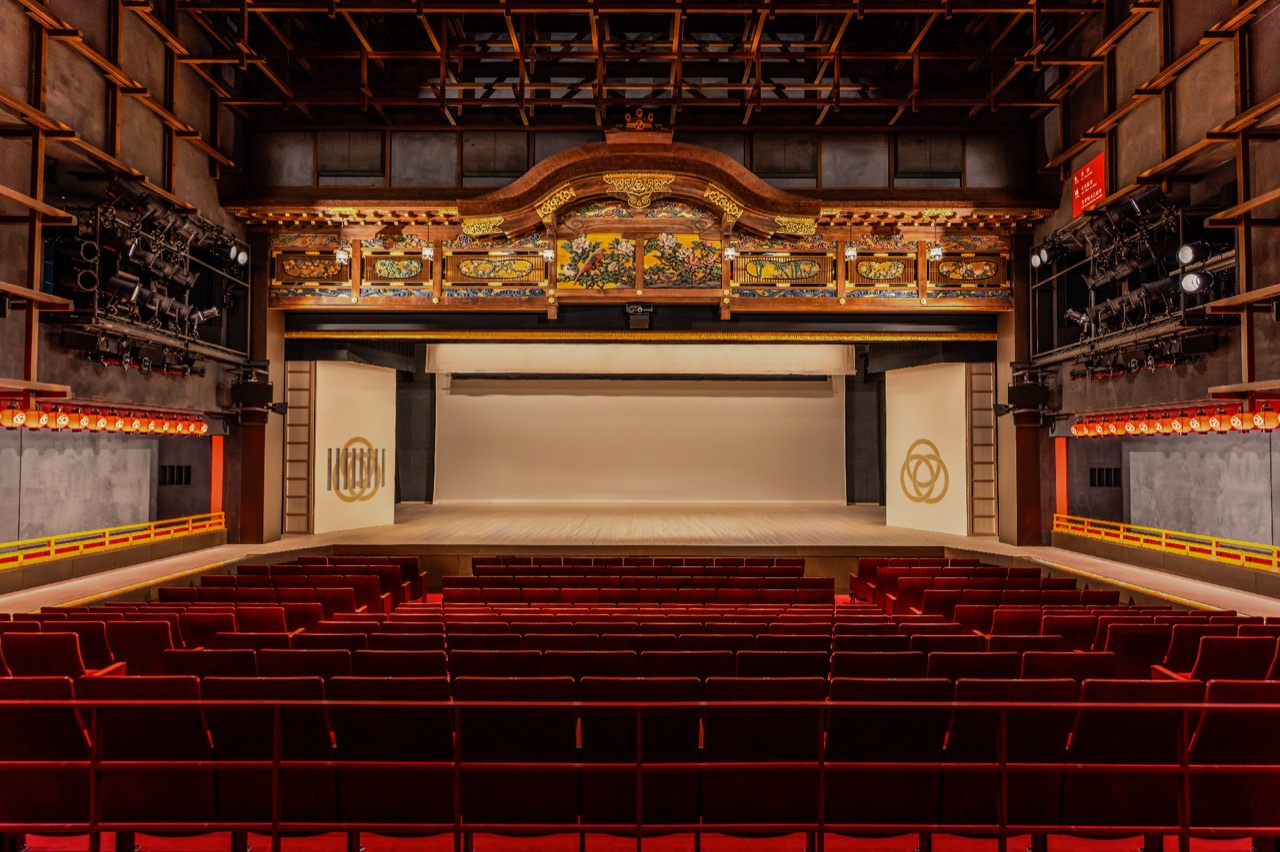
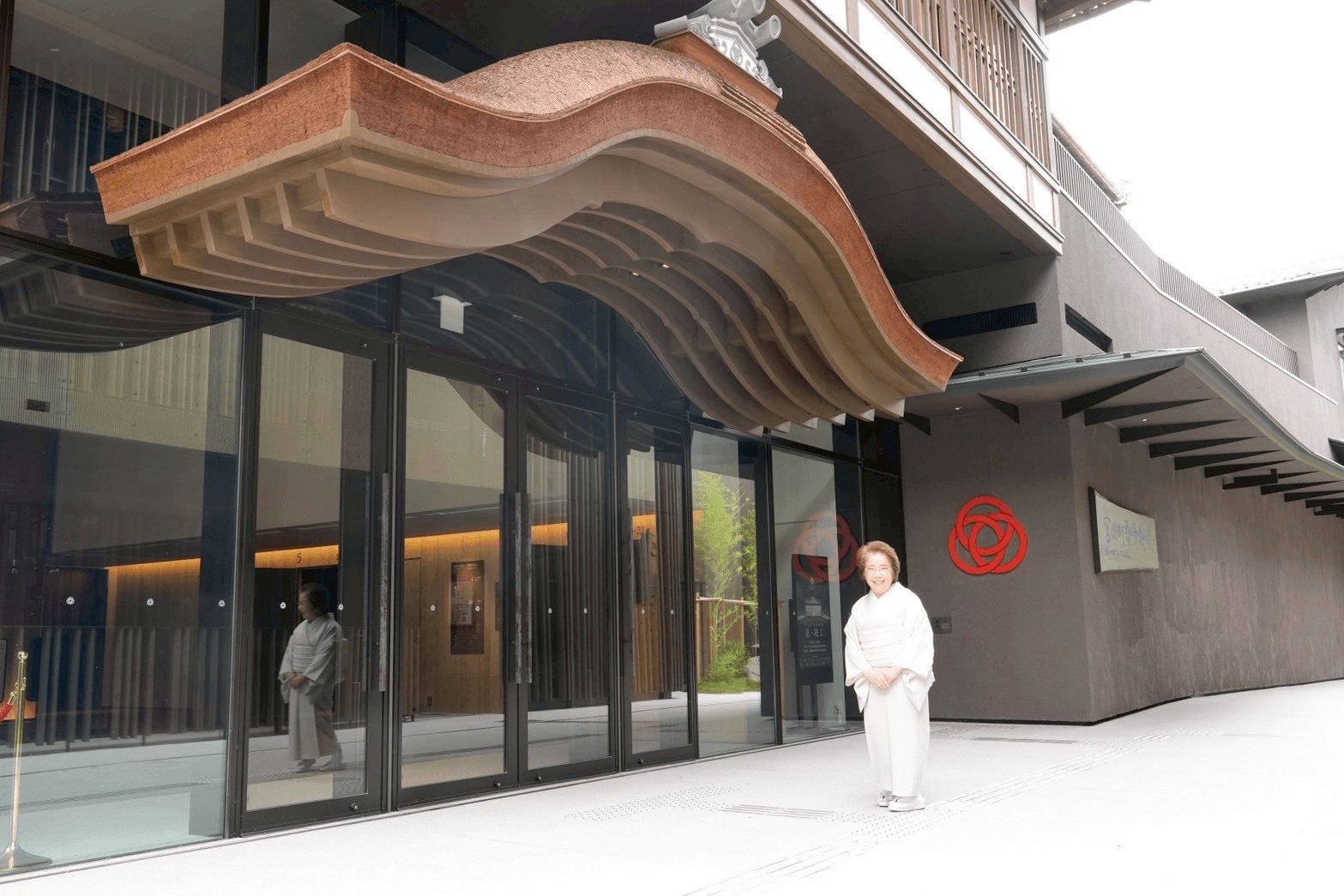
5.Design and supervision went to Daiken Sekkei with design oversight added by Kengo Kuma, and construction to a joint venture of Kumagai Gumi and Furuse Gumi. Tiles and members worth saving were picked from the old building and the great roof form carried over, and the karahafu roof that had hung over the Taisho-era stage was taken down and moved to the entrance of the new building. Material from the demolished school building also went back into the hotel side.
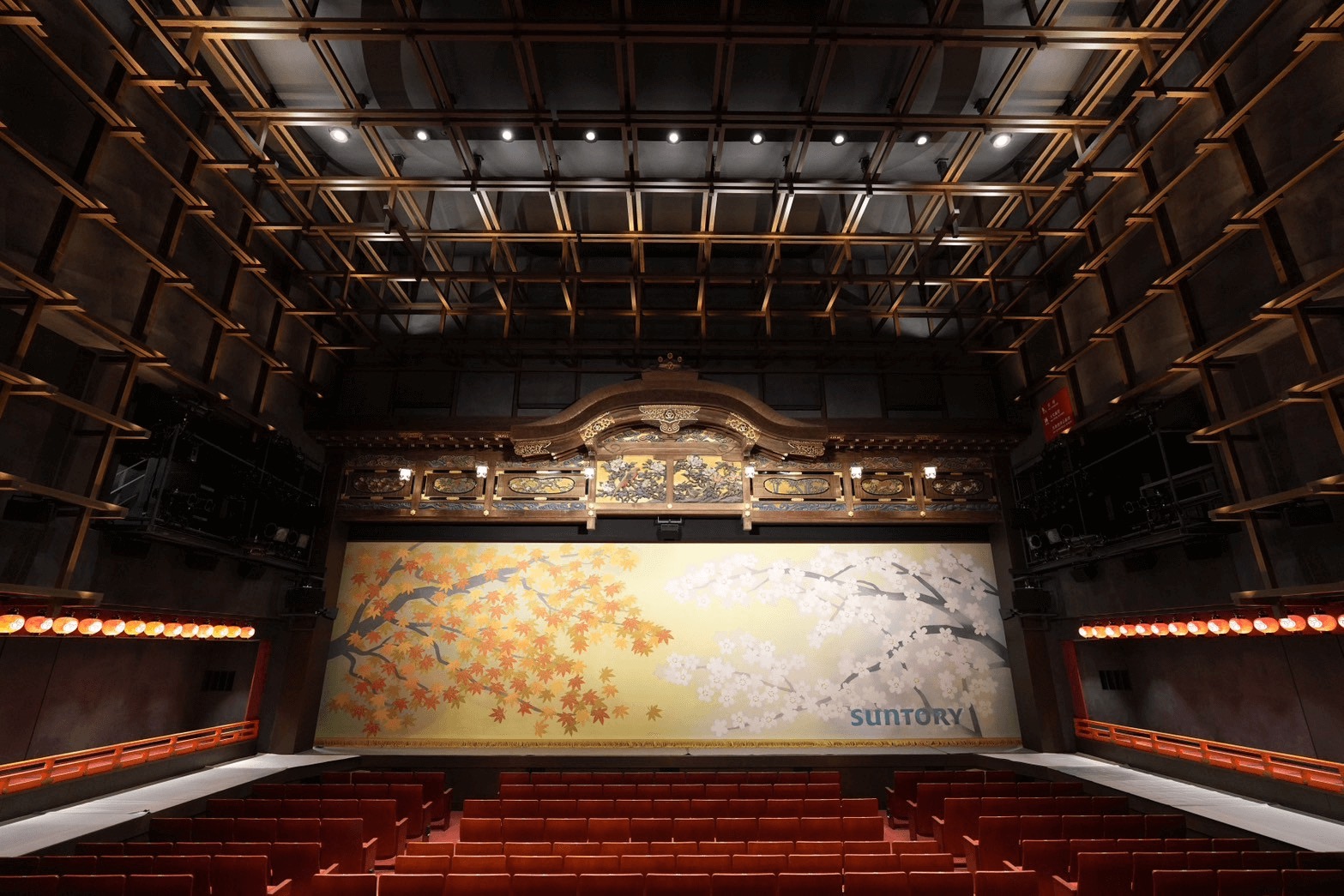
6.The stage is 14.16m wide at the proscenium, 4.5m high and 11.2m deep, with 23 scenery battens above it. Three tatami dressing rooms sit on basement level one with five to seven mirror positions each. The dedicated stage lift is 2.1m by 4m with a 2,500kg capacity, and what passes through it is usually prop boxes and costume trunks. Sit in the house and timber surfaces send sound back instead of absorbing it, and a plucked shamisen string reaches the rear wall still dry.
7.Now count the money. What does the Kyo Odori take if every performance sells out? 348 first floor seats at 7,000 yen and 135 second floor seats at 6,000 makes 3,246,000 yen a performance, and two a day for fifteen days gives 97.38 million yen. At 940 won to 100 yen that is about KRW 915 million.
8.Set that number next to the ground rent and the situation shows. What the City of Kyoto takes from this land is about 100 million yen a year. The quarter's flagship performance, prepared over a year, cannot reach one year of ground rent even selling every one of thirty performances across fifteen days without a single empty seat. A theatre failing to carry the price of land is not a Kyoto-only condition.
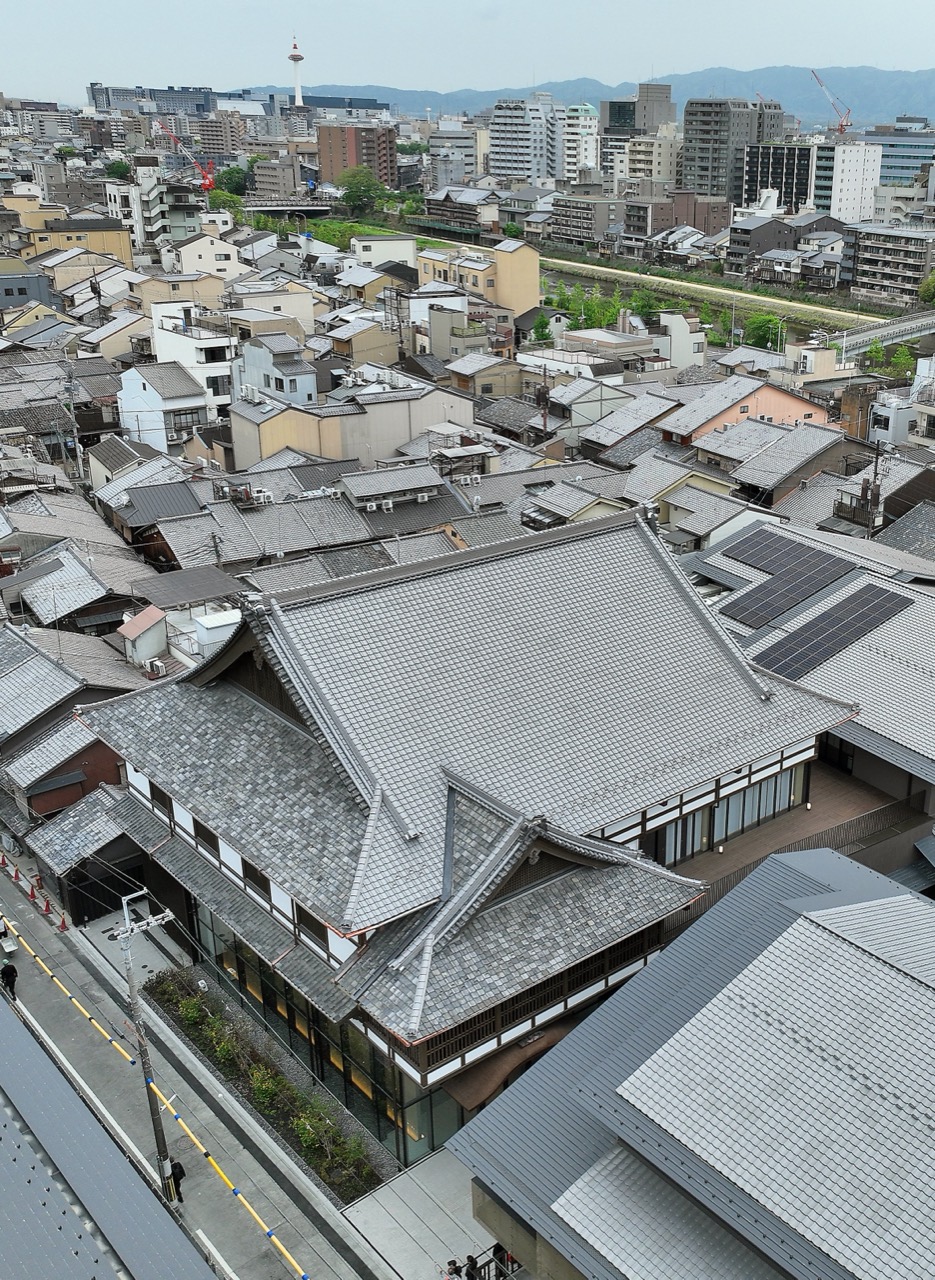
9.The hotel's numbers run in a different order of magnitude. Eighty-nine rooms across 15,467.39㎡ of hotel floor area gives 173.8㎡ per room, 52.6 pyeong. The smallest room is 50㎡, and natural hot spring water was drawn in for a spa and onsen rooms. Put a top-tier Kyoto hotel rate at 180,000 yen a night with 60 percent occupancy and room revenue alone comes to about 3.5 billion yen a year, and that is entirely the writer's estimate rather than a figure the developer has given. The direction is clear even so. More than thirty times the cash a sold-out flagship performance earns in a year turns on the other side of the wall.
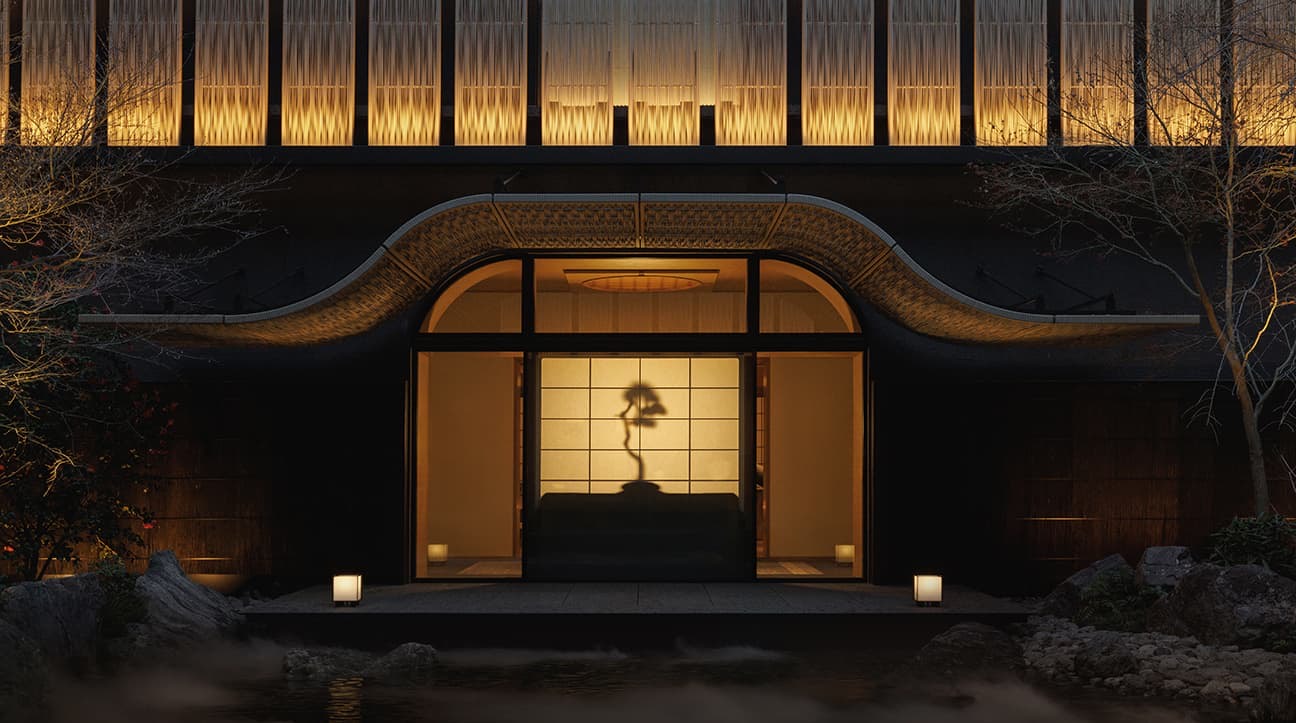
10.So the new theatre opened for hire as soon as it was built. Besides Mitsuwaza there is a multipurpose room, 80㎡ inside with another 80㎡ of terrace, holding 55 to 80 people with a kitchen available as an option. A permanent gallery sits on the first floor. Across the two blocks, 1,654㎡ counts as community facility, 500 pyeong, and 1,419.47㎡ of that is concentrated in the Kaburenjo block. A building used fifteen days a year cannot be bought, so something to sell on the other 350 days was built with it.
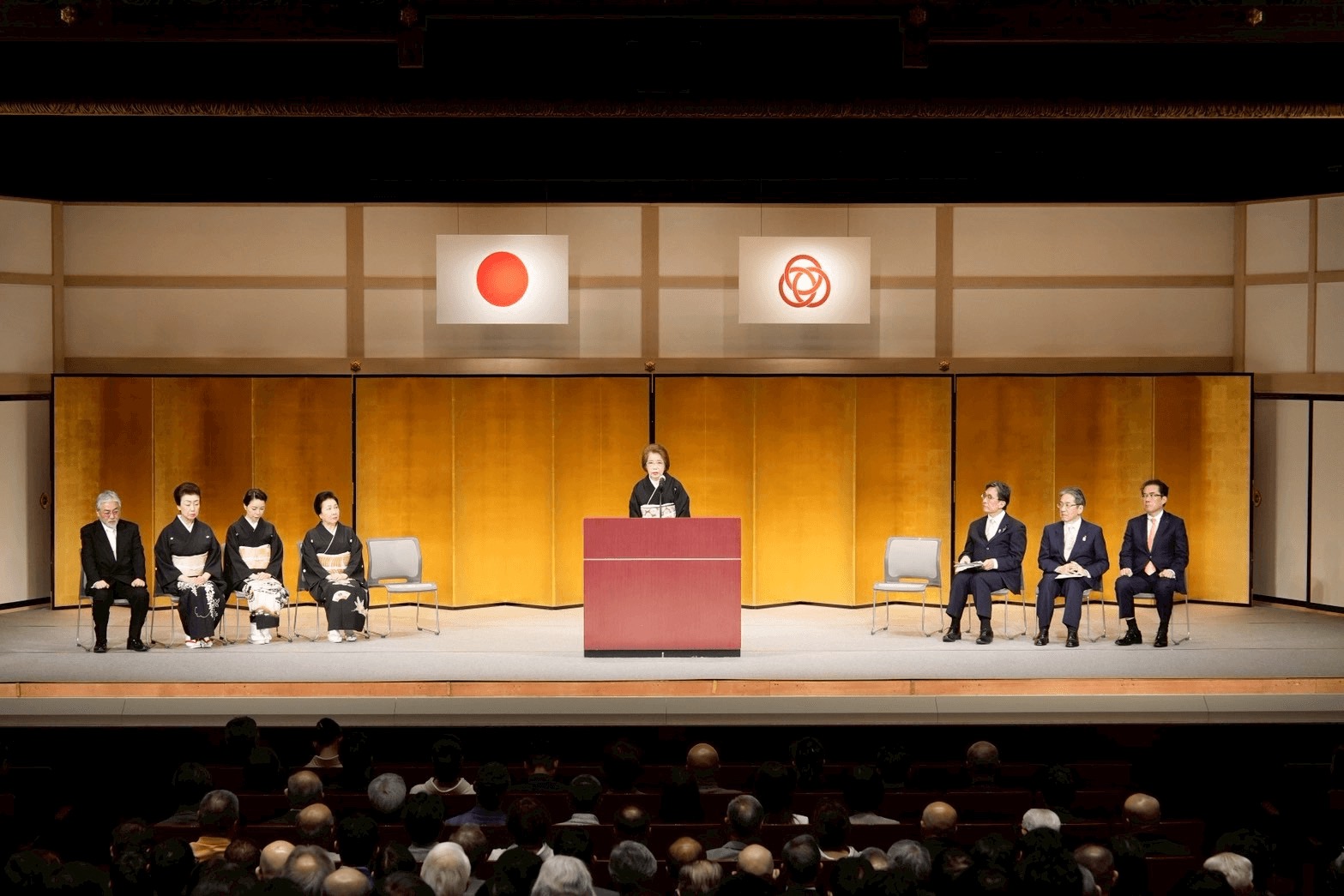
11.One more thing. What owns and operates this building is not a theatre company but the school corporation Higashiyama Joshi Gakuen. It was set up to train people who study the traditional arts, and the Kaburenjo is registered as that corporation's educational facility. It has a stage and a house, and on paper it is a school, and that one line makes tax treatment, subsidy and hire conditions all different.
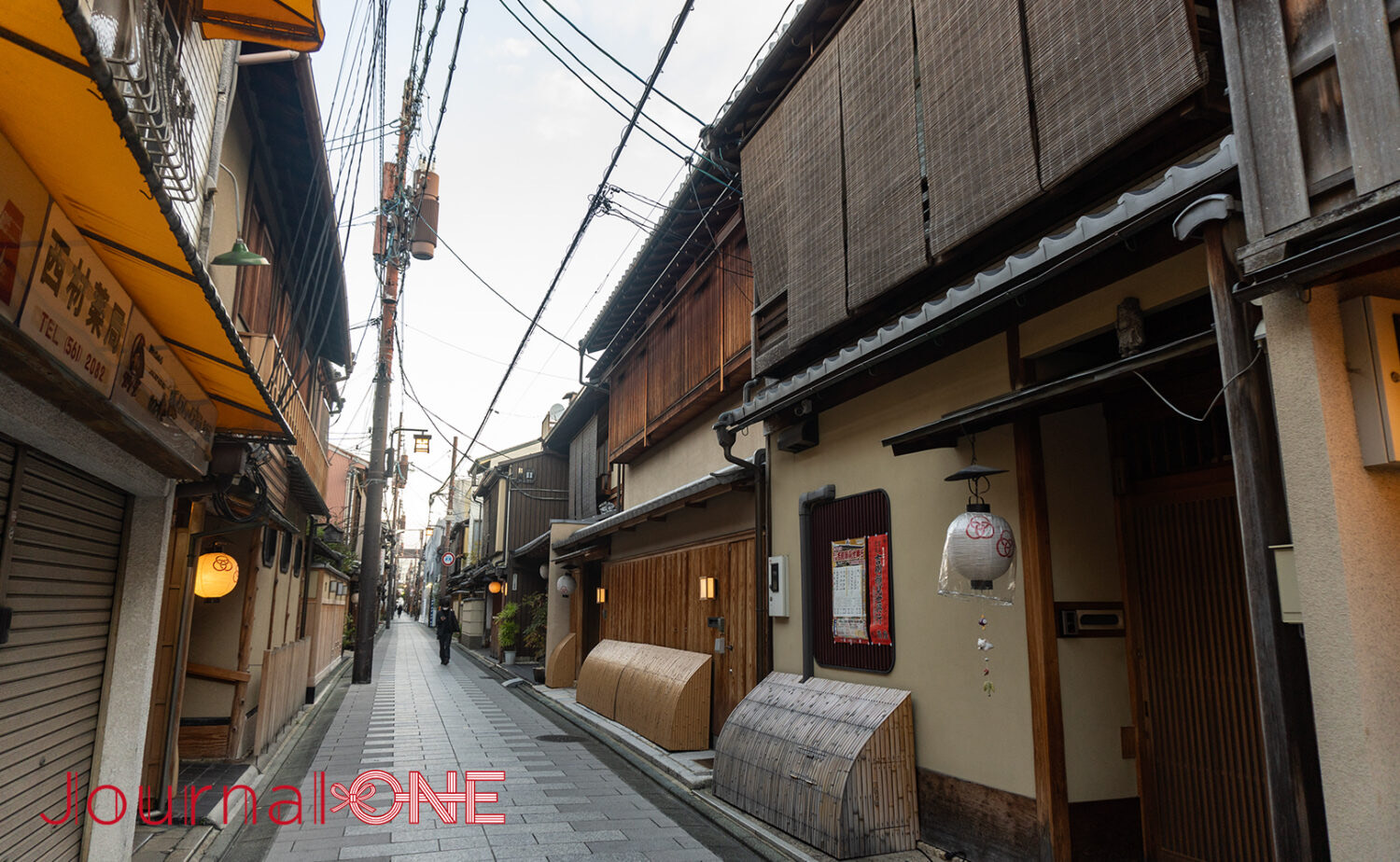
12.So what does a tourist actually open a wallet for? Miyagawacho keeps thirty to forty ochaya and around eighty geiko and maiko. An evening seat cannot be entered without an introduction, and the price is whatever is asked. What a 7,000 yen Kyo Odori ticket sells is not an hour of dance but the right to look inside that closed door legitimately. It is the same reason the hotel presents tea and dance with maiko as a guest programme.
13.Follow the lineage and this building type was born as a tourist product. It began with temporary stages built to put on the Miyako Odori and the Kamogawa Odori for the 1872 Kyoto Exposition, and the response was good enough that they became permanent theatres the following year. Temporary stages thrown up in a hurry to draw visitors. That is where the Kaburenjo starts. The Kyo Odori itself began in 1950 and then spent fifteen years from 1954 borrowing the Minamiza stage while railway works pushed it out, so this performance leaving its own house is not a first either.
14.Who defended this building is the answer. Not a heritage budget and not the quarter's own reserves. The land of an elementary school that closed as the population fell and the pupils vanished became a luxury hotel through a 60-year fixed-term land lease, and that development profit flowed into the construction cost of a hundred-year-old theatre. Where the City of Kyoto was shrewd divides here. It did not sell the land. It takes 100 million yen a year for 60 years and then gets the land and the building back together.
15.One contract leasing a closed school site for 60 years put up an 89-room hotel and a 483-seat theatre together, and the theatre's flagship performance takes 97.38 million yen with every seat sold, which cannot even repay one year of ground rent on that land. What stops anyone moving this method to Korea at the first meeting is not viability but the law. Article 13 of the Public Property and Commodity Management Act states flatly that nobody other than the head of a local authority may build a permanent structure on public property, and the exceptions run only three ways: donation on completion, voluntary removal when the lease ends, or later purchase of the property. A Japanese fixed-term land lease that runs 60 years and then hands everything back does not fit cleanly into any of those three boxes. So what anyone putting a cultural facility on a closed school or idle public site has to prepare before a rendering is a one-page table nailing down the donation date and who operates it afterwards.