A museum opens in Los Angeles on September 22. The site is 11 acres that used to be a parking lot, the building was paid for entirely with private money and no tax dollars, and adult admission is $25. Construction took eight years and six months, and before that the project circled two other cities and got nowhere.
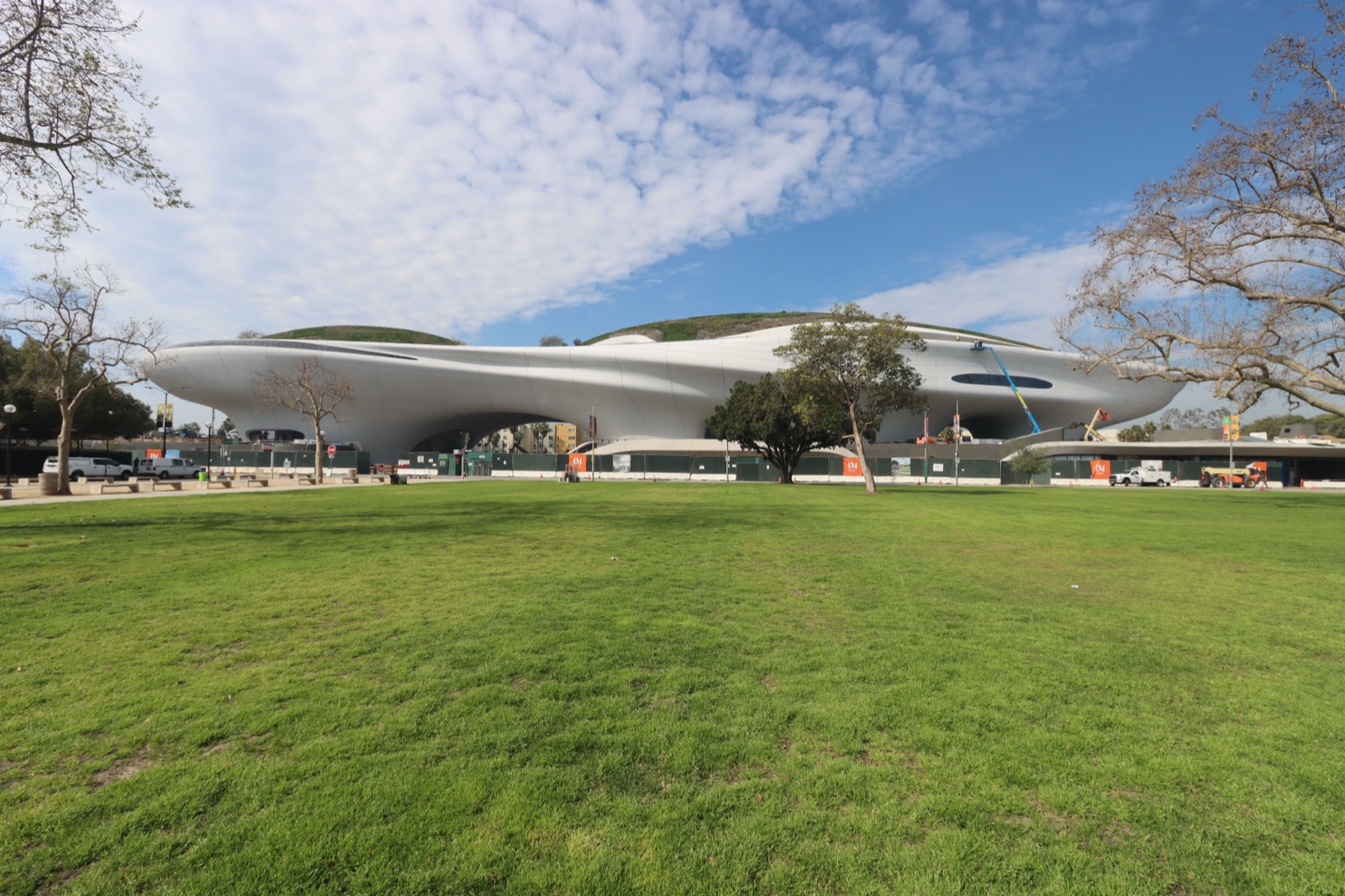
1.On September 22, 2026, the Lucas Museum of Narrative Art opens in Exposition Park, Los Angeles. The site runs to 11 acres, 4.5 hectares. Until 2018 it was surface parking. It was built by George Lucas and Mellody Hobson.
2.The building holds 27,870 square meters across five levels, of which the galleries take 9,290. Two theaters, a library, a cafe, a rooftop restaurant and a store fill the rest. Architecture by Ma Yansong of MAD, landscape by Mia Lehrer of Studio-MLA, executive architect Stantec.
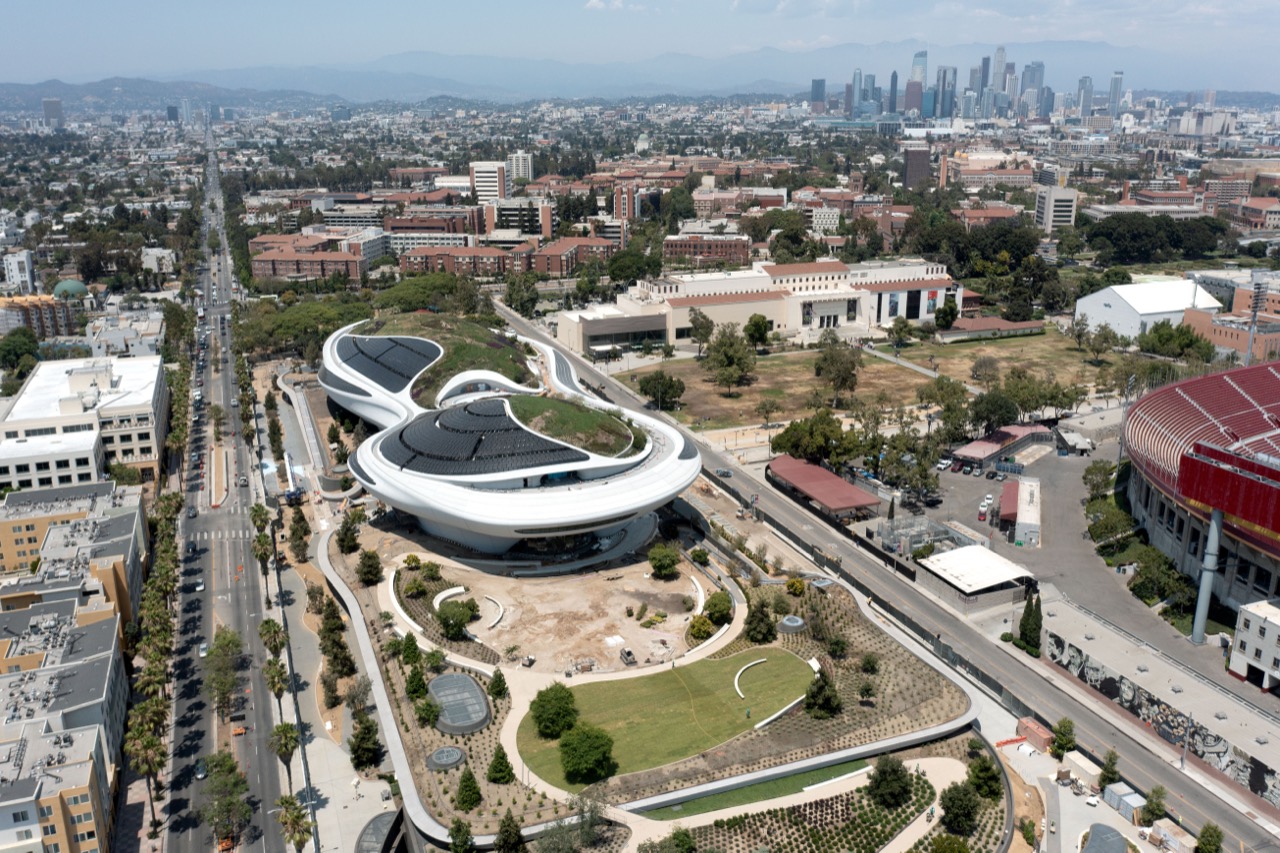
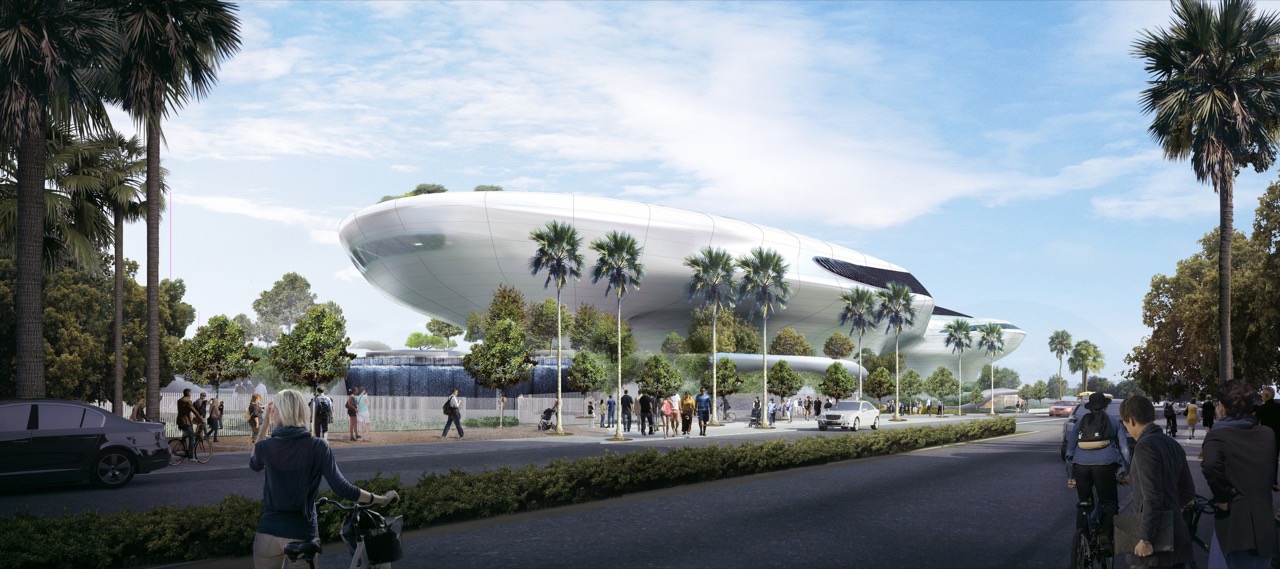
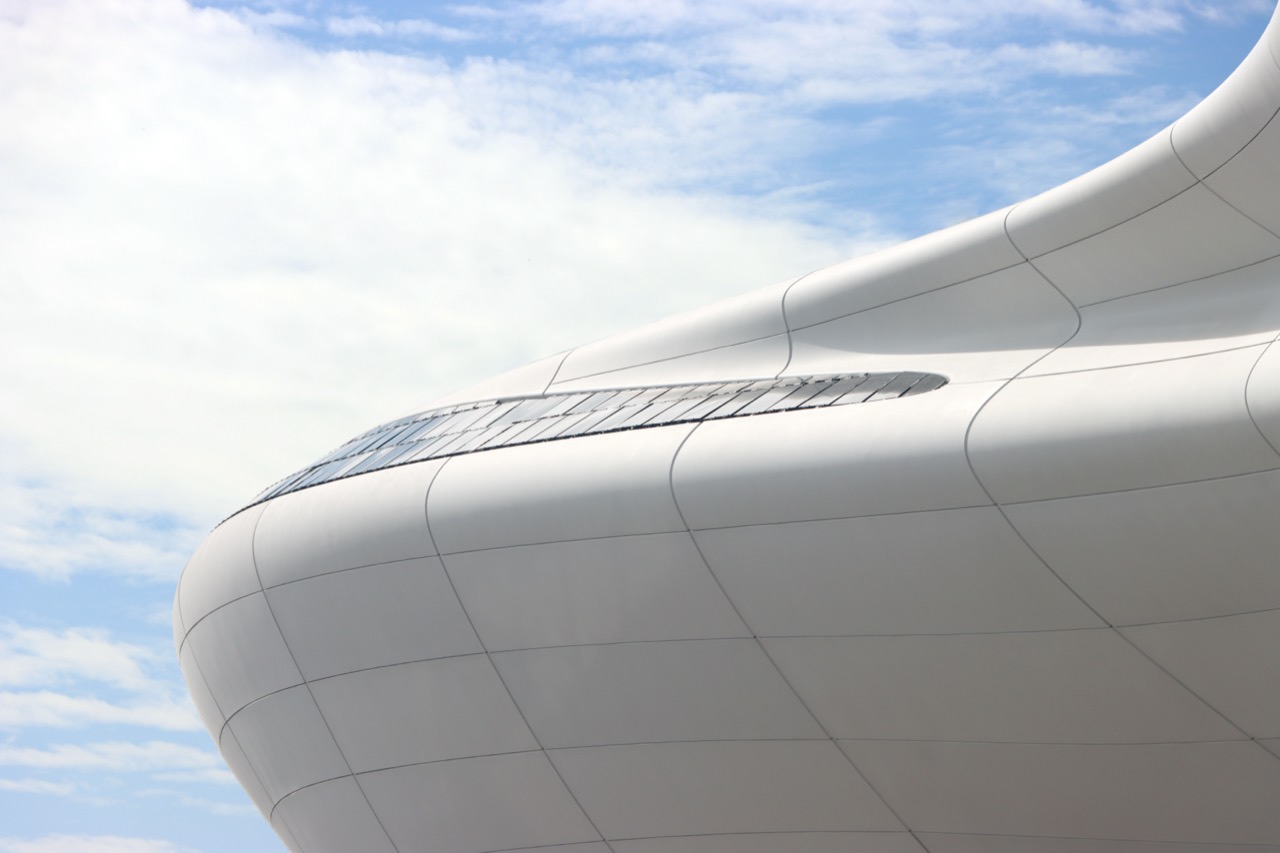
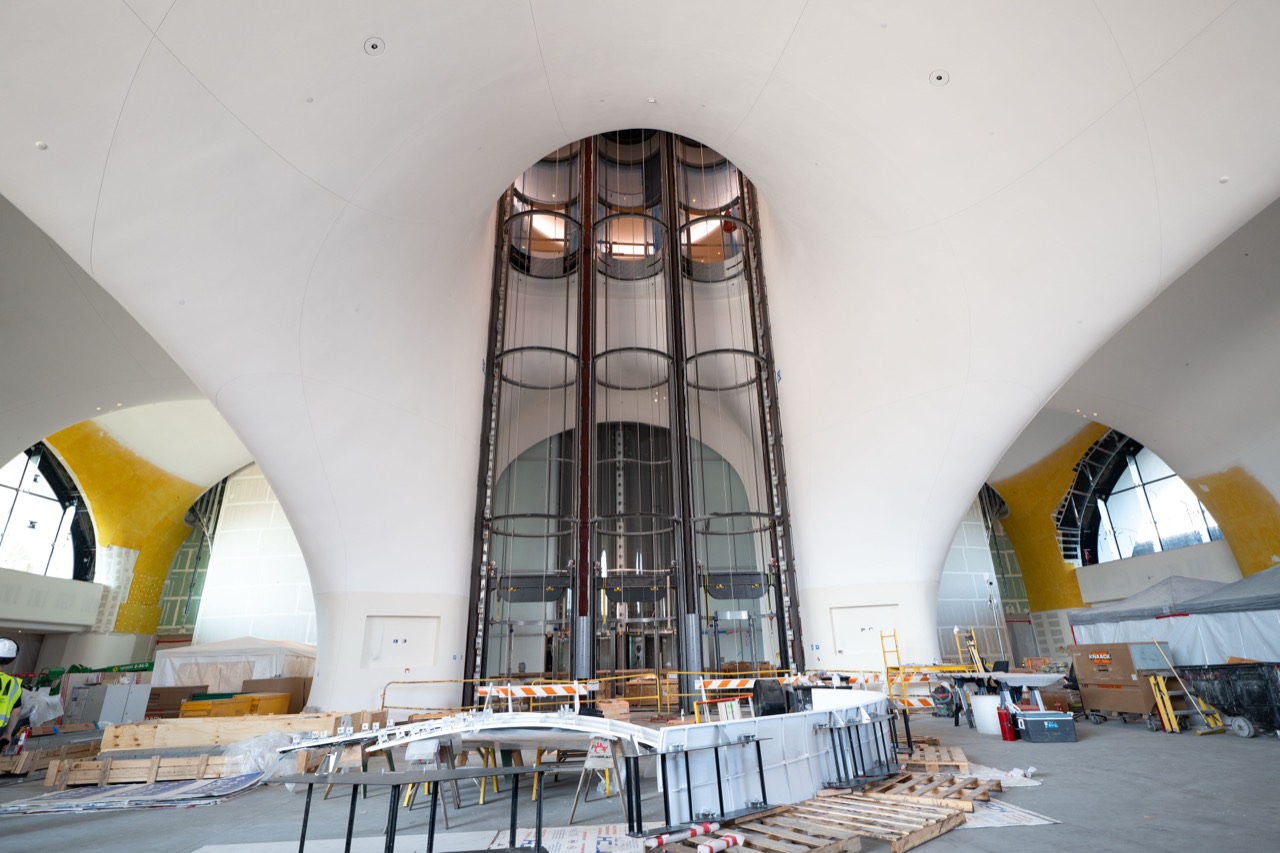
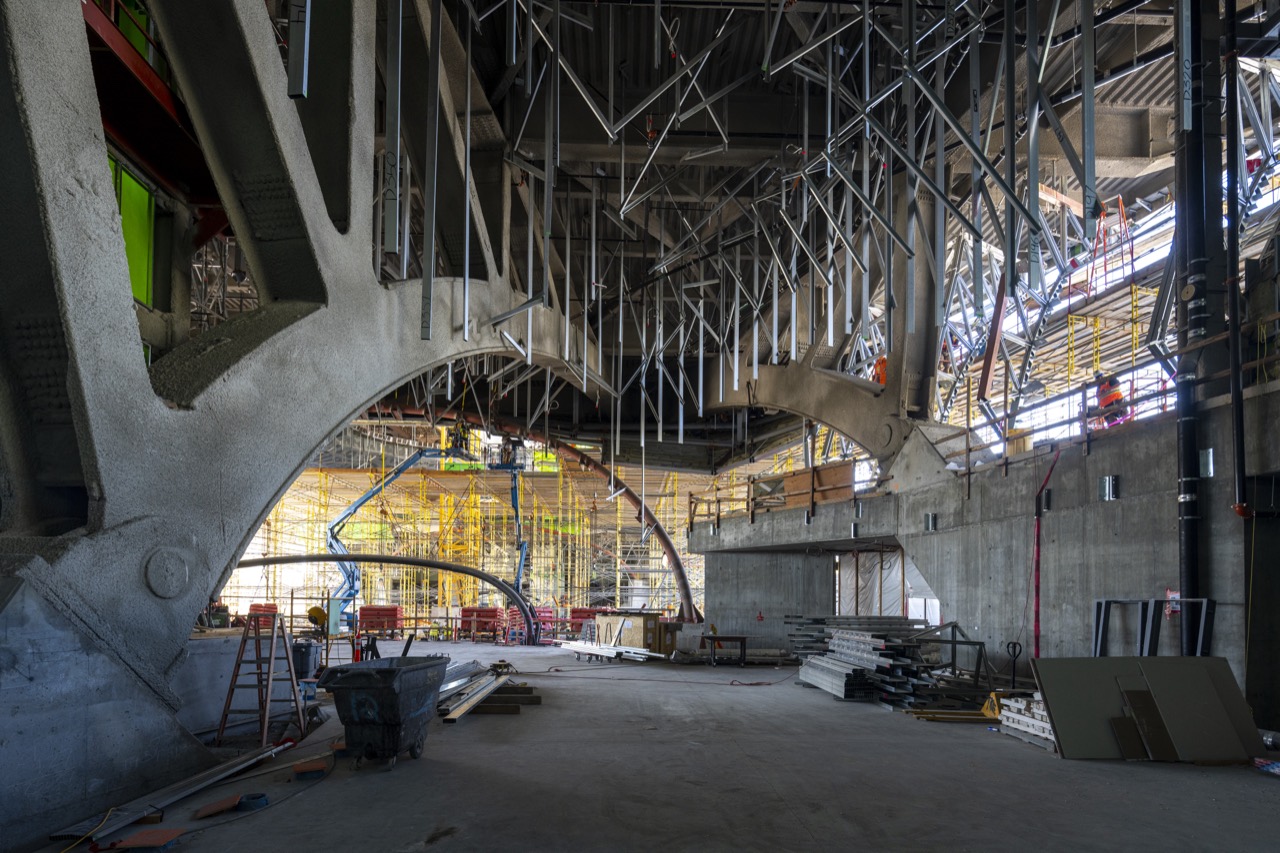
3.The building does not settle onto the ground. A white mass floats across the site and everything under it stays open. Columns flare as they rise and merge into the ceiling, and oval openings cut through the underside so the sky drops in. Shade in Los Angeles does not appear on its own. You have to build it, and shade is what this building put on its ground floor.
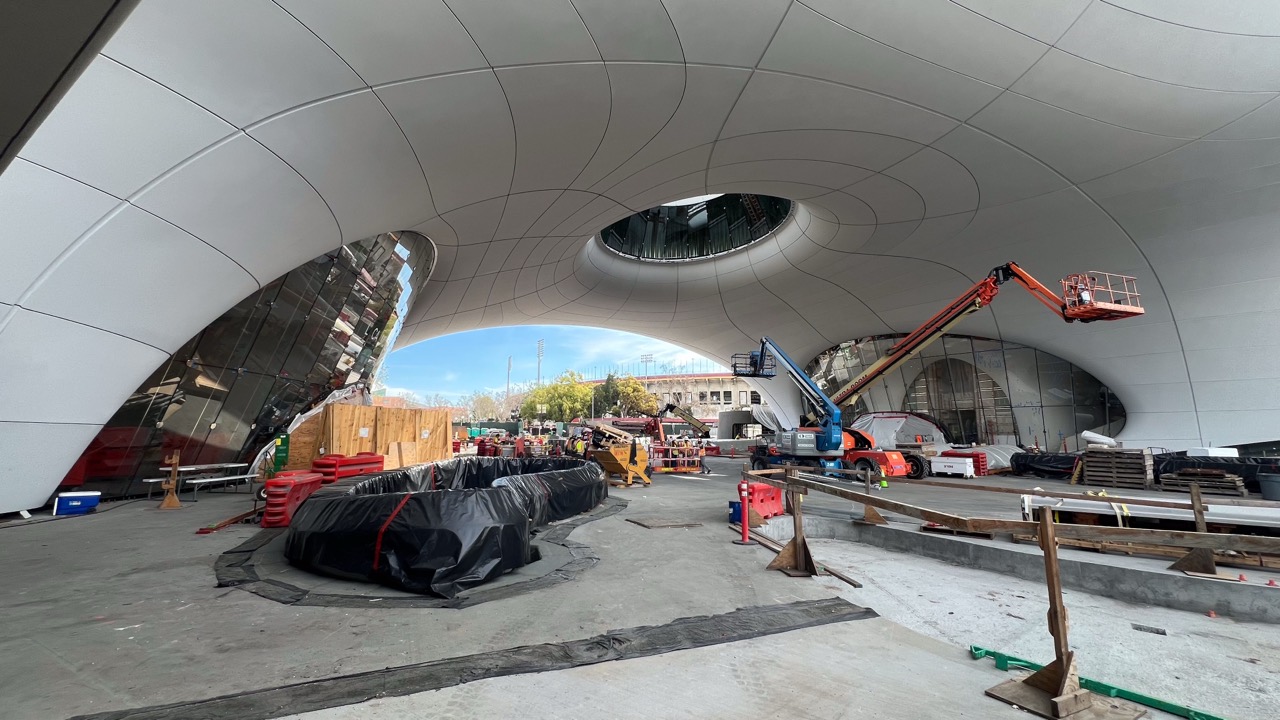
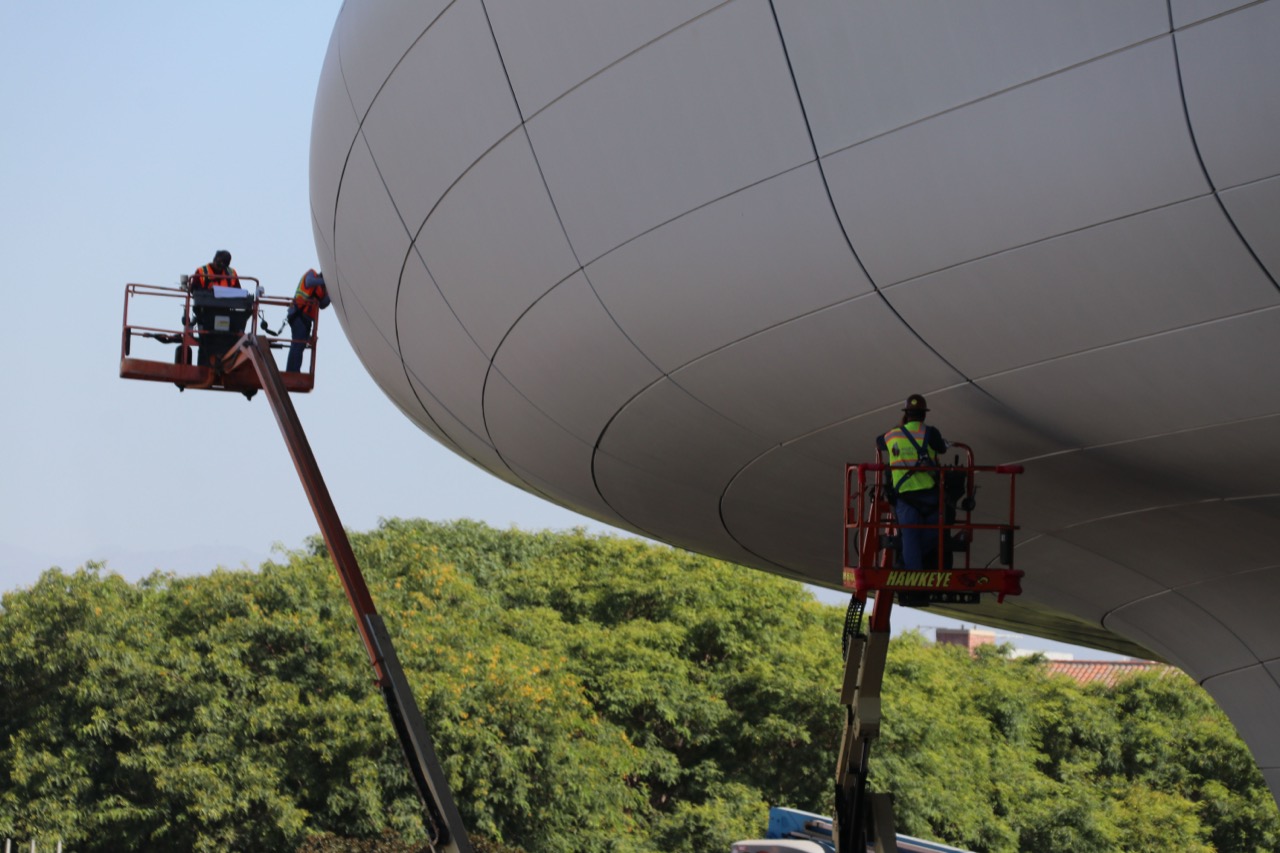
4.The skin runs to more than 1,500 glass fiber reinforced polymer (GFRP) panels. They average 2.4 by 9.8 meters, and no two share a shape. The surface is smooth enough that only the seams show, like thread, and on overcast days it takes the sky straight and sinks to a gray white. Kreysler & Associates pulled each panel from a CNC mold at their Mare Island plant in Northern California, checked the geometry with robotic scanning, then finished the last pass by hand.
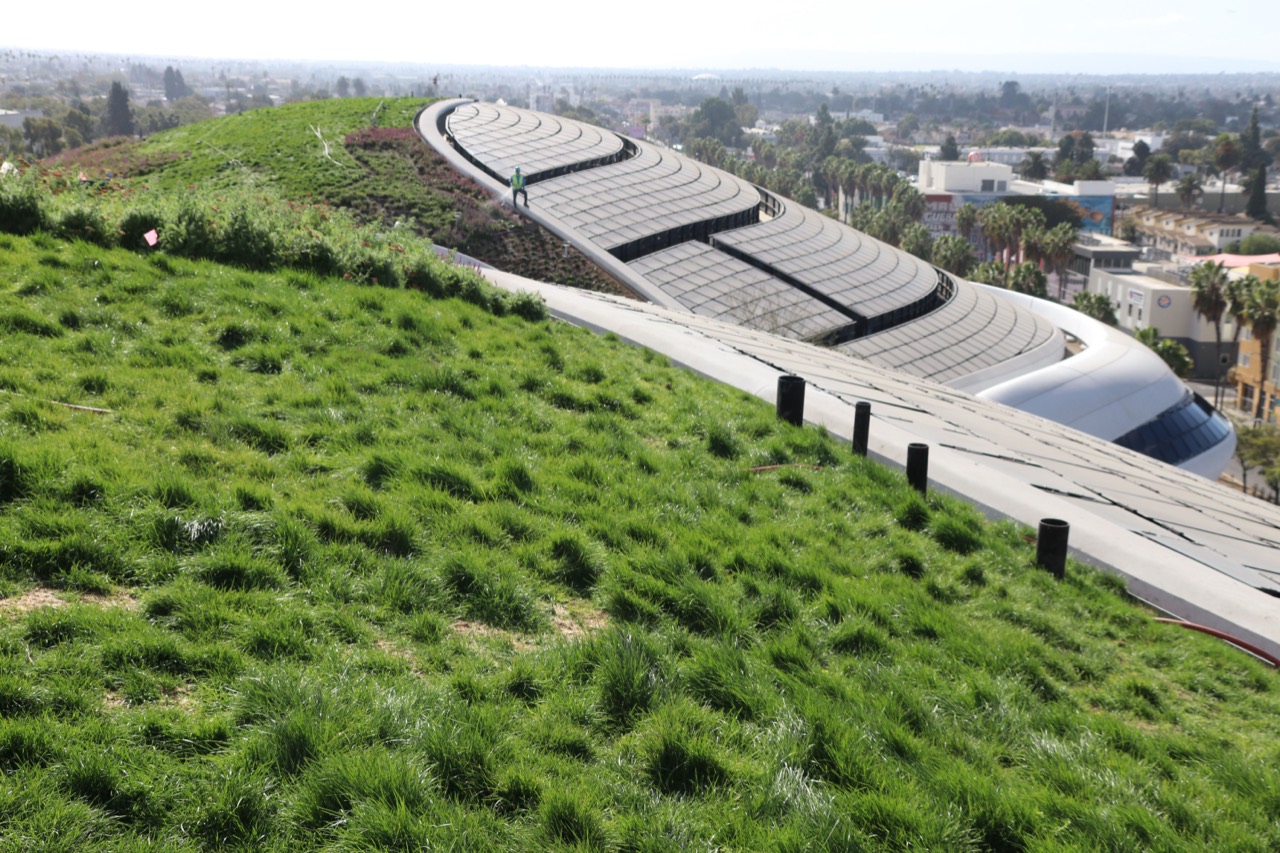
5.The roof carries soil planted with grass and shrubs, with bands of solar panels laid between them. More than 200 trees went in. Rainwater is captured for irrigation, and water falling from the fountain feeds the cooling system. Whatever the building does not cover is park.
6.The Lucas family paid for all of it. Not one tax dollar went in, and the reported total moves between $1 billion and $1.5 billion. That figure does not cover the building alone. It bundles the collection and the operating endowment, and the endowment by itself passes $400 million.
7.Assign $1 billion to the building and divide by floor area and you get 165 million won per pyeong, about $36,000 per square meter. Divide the full reported total the same way and it comes to 247 million won per pyeong, about $53,800. The Broad, which opened in the same city in 2015, cost $140 million across 11,148 square meters, which works out to 57.7 million won per pyeong, and it charges nothing at the door. The gap is the curved skin and the seismic structure.
8.Admission is $25 for adults and $21 for anyone 65 and over. Under 17 is free. Anyone living in 90037, the ZIP code the museum sits in, gets in free with one guest. Closed Tuesdays, open until 9 p.m. Friday and Saturday.
9.A museum this size usually spends north of $50 million a year. Put attendance at a million and count paid visitors generously and ticket revenue still falls short of a third of that. The rest comes from the $400 million endowment, and drawing only 4 to 5 percent a year matches what the tickets bring in. The ticket price is not a revenue source so much as a handle that sets the height of the doorstep.
10.Land cost is effectively zero here. The site is a state-owned park, and the lease terms reported when Los Angeles won the project were $20 a year. Chicago had offered 99 years at $1 a year. Both cities were ready to hand over the ground for nothing. Price was never the problem. The question was who had the authority to hand it over.
11.Of the 1,477 people who worked the site, 76 percent lived in Los Angeles County. Jobs tied to the construction period were counted at 6,000. What a city bidding for a project like this actually buys is not the building but that number.
12.Once open, the building carries 1,240 to 1,500 jobs. Annual economic output is put in the $140 million range. Free admission for 90037 residents is not generosity but a line item on the back of that calculation. The return to whoever gave up the park.
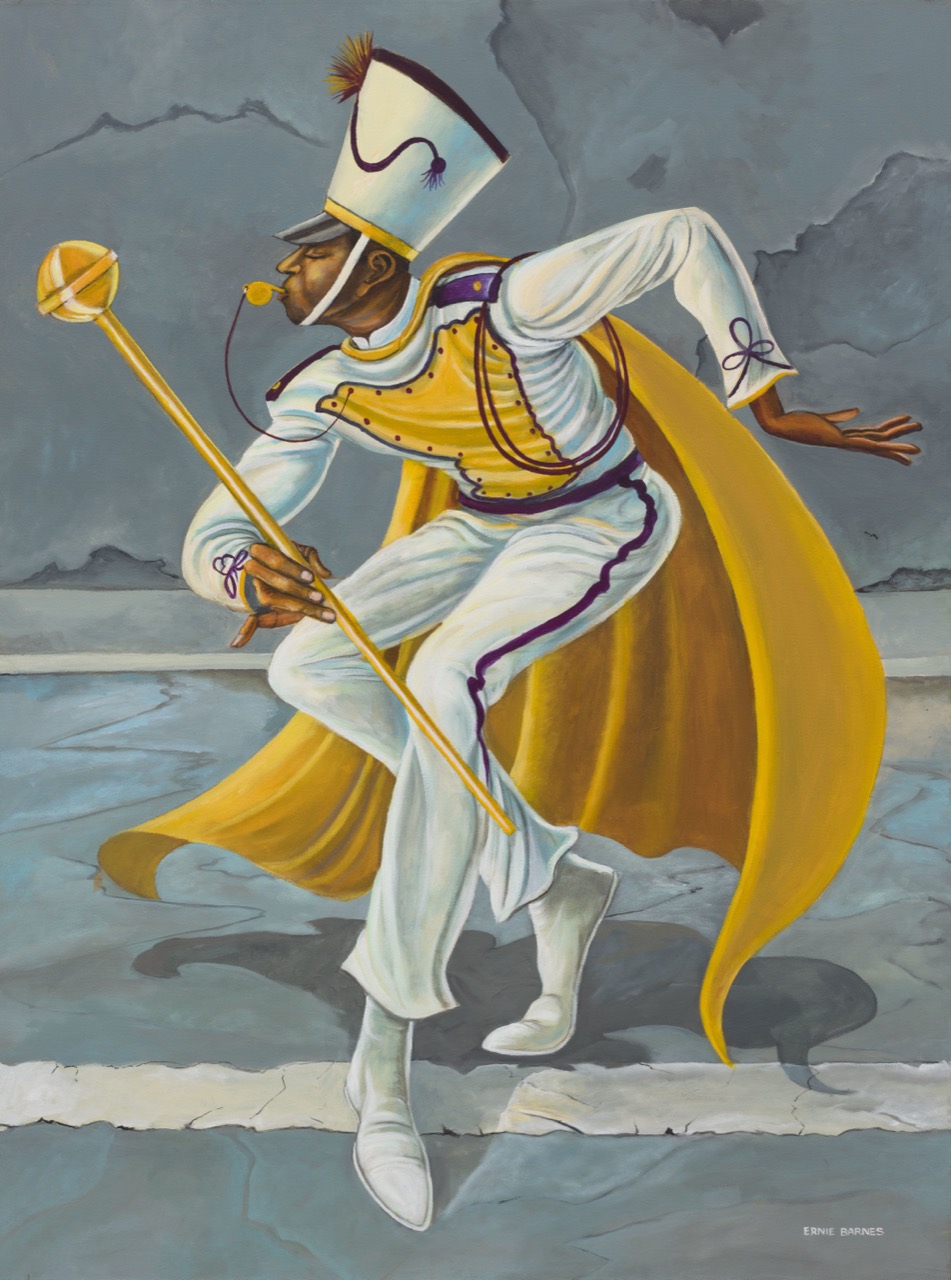
13.Why did it need to be this big. The collection list gives you an idea. From paintings by Norman Rockwell and Frida Kahlo to original comic pages by Jack Kirby and photographs by Gordon Parks and Dorothea Lange, it runs past 40,000 works. The 35 galleries are divided by theme, family and work and community and play and adventure, rather than by period or medium. Hanging illustration and comics on museum walls is still an argument, and the answer here is to walk straight through that argument on the strength of sheer size.
14.Read the curved skin as aesthetics alone and you have seen half of it. The material first considered was glass fiber reinforced concrete (GFRC), and the numbers said the base isolation system underneath could not carry that weight, so the team switched to polymer. There are 281 isolators below the building, and in an earthquake it slides up to 1.07 meters sideways. That sculptural surface is a shape that came out of a weight limit set by shaking.
15.Eleven acres of former parking lot, eight years and six months, north of a billion dollars, and ground leased at $20 a year. San Francisco dragged on for four years and ended, Chicago closed on a lawsuit, and only the third city held. Anyone attempting the same thing in Korea runs into the free-use period first. The State Property Act and the Public Property Act cap the period a donor may use donated property without charge at under 20 years, and the permit itself has to be renewed in short spans. Ninety-nine years at a dollar cannot come out of that statute at all, which is why plans to put a private-money cultural building on public land collapse over how many years they get, not over how the money comes back.