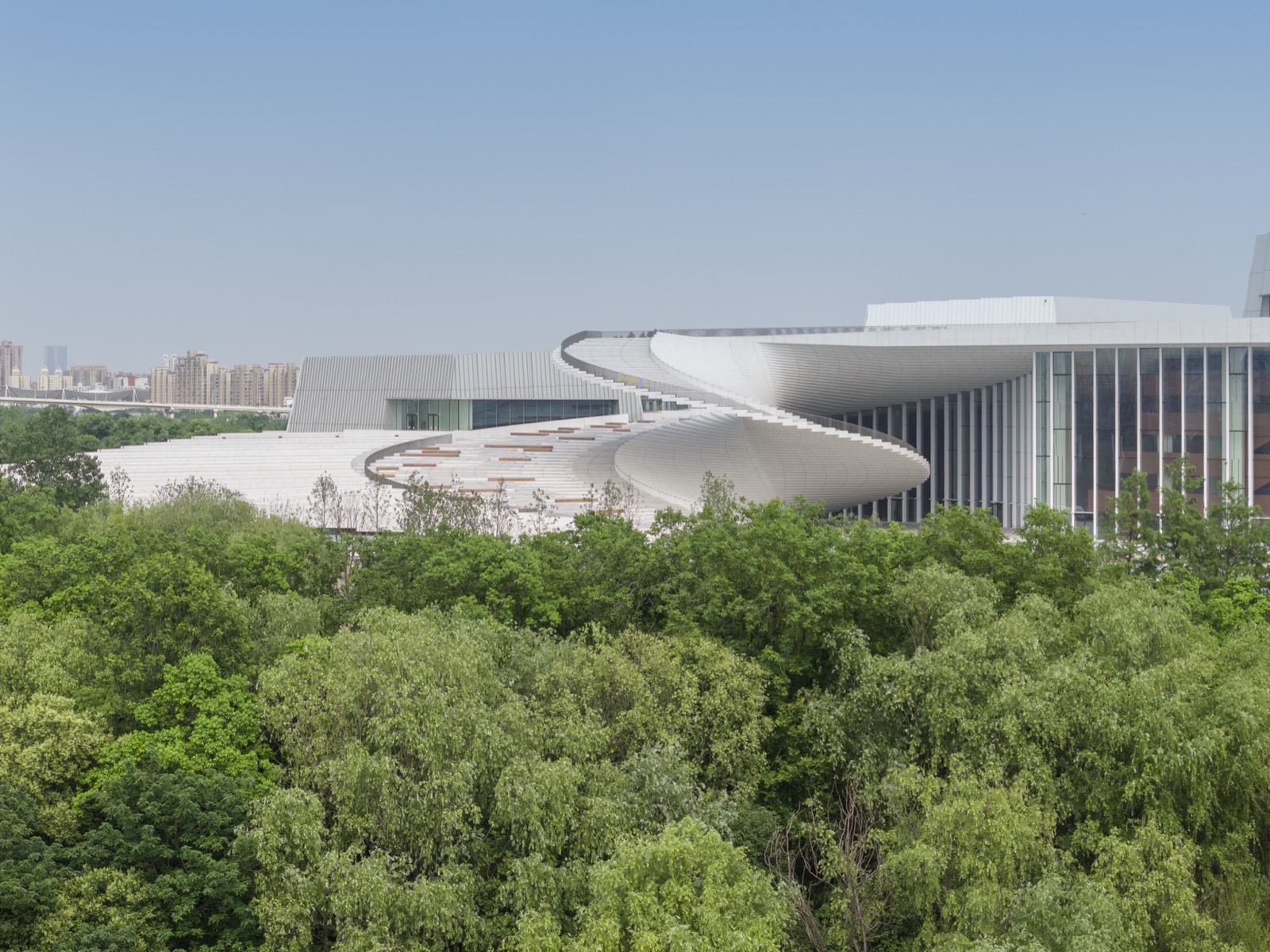
On October 17 a large opera house opens on the east bank of the Huangpu River in Shanghai. Total project cost, RMB 3.906 billion. Seats, 4,200. Yet the operator's stated target is 2 million visitors a year by 2030. Filling every seat every night would not get there, so the roof was built to carry the rest.
1.On October 17, 2026, the Shanghai Grand Opera House opens on the east bank of the Huangpu River in Pudong New Area. Ground was broken on December 18, 2019, and structural completion was certified on June 23 this year. Six and a half years of construction.
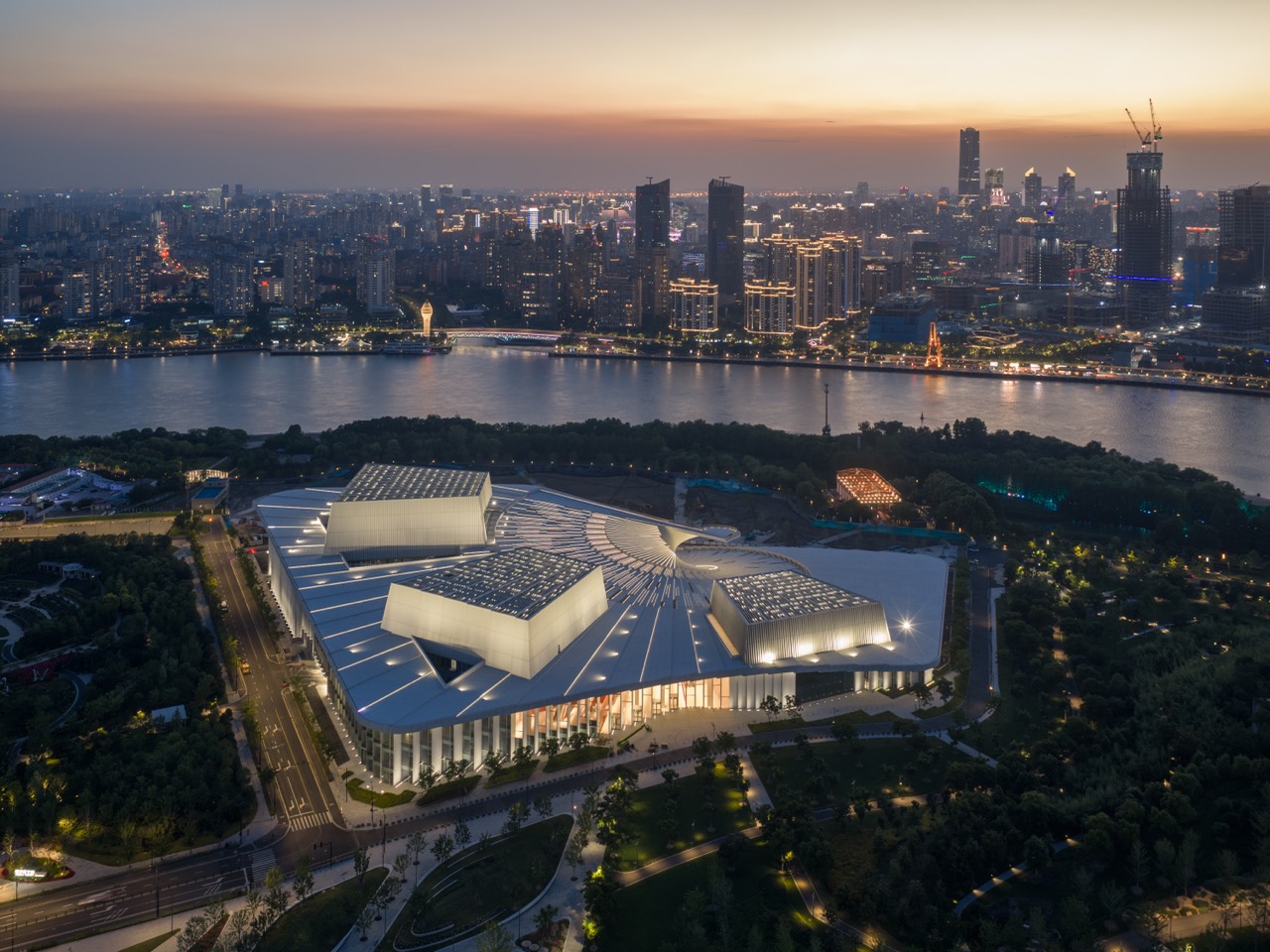
2.The site covers 5.3 hectares, the building 146,338 square meters. The approved budget came to RMB 3.906 billion, roughly KRW 760 billion, converted at recent rates.
3.There are three halls. Hong Hall, at 2,000 seats, takes major international opera. Shen Hall, 1,200 seats, is for Chinese work. Mirror Hall, 1,000 seats, handles pieces where the audience sits inside the staging. The main stage divides 3,500 square meters into six bays, which the theatre says lets it mount productions with heavy scene changes intact.
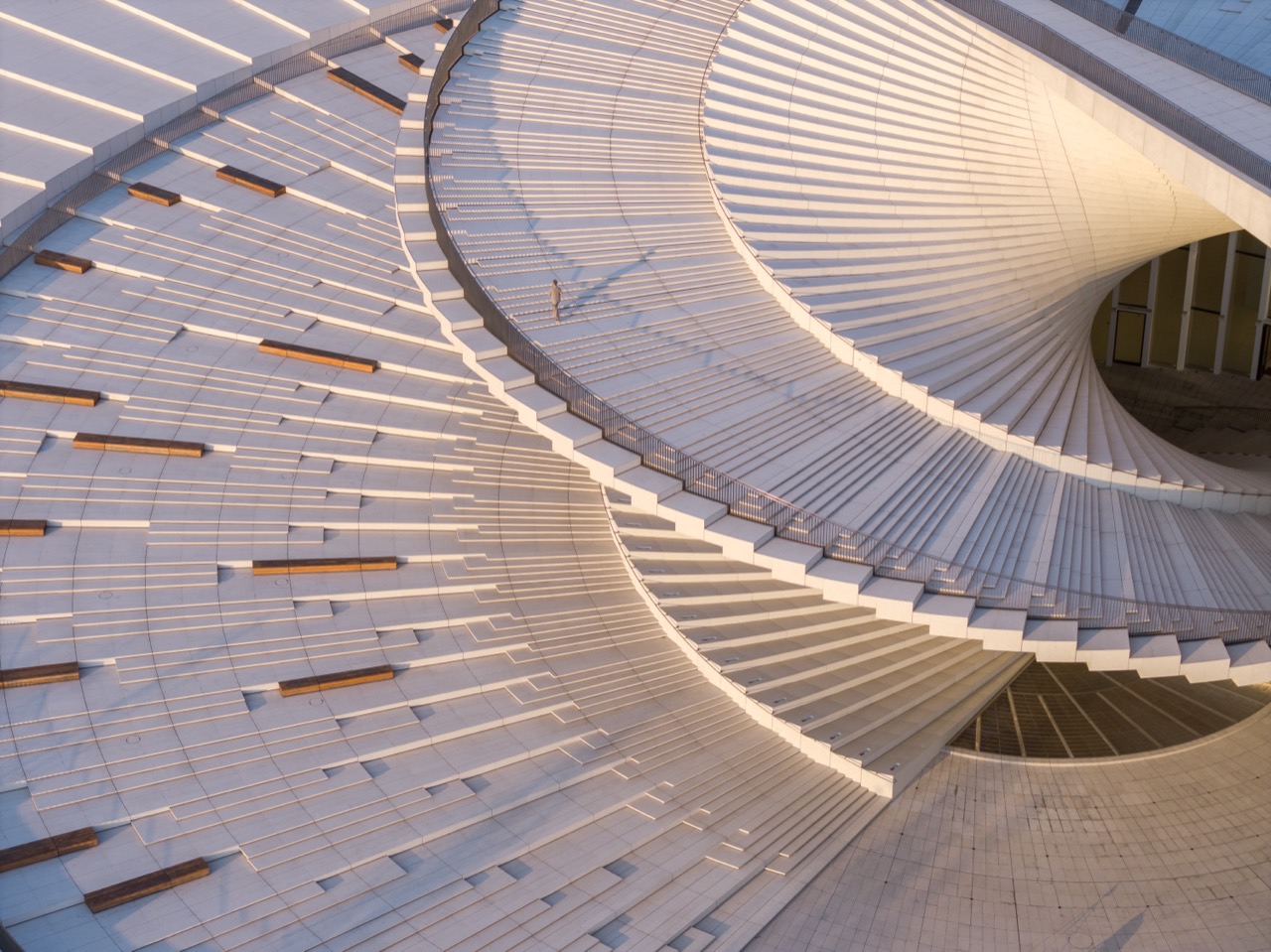
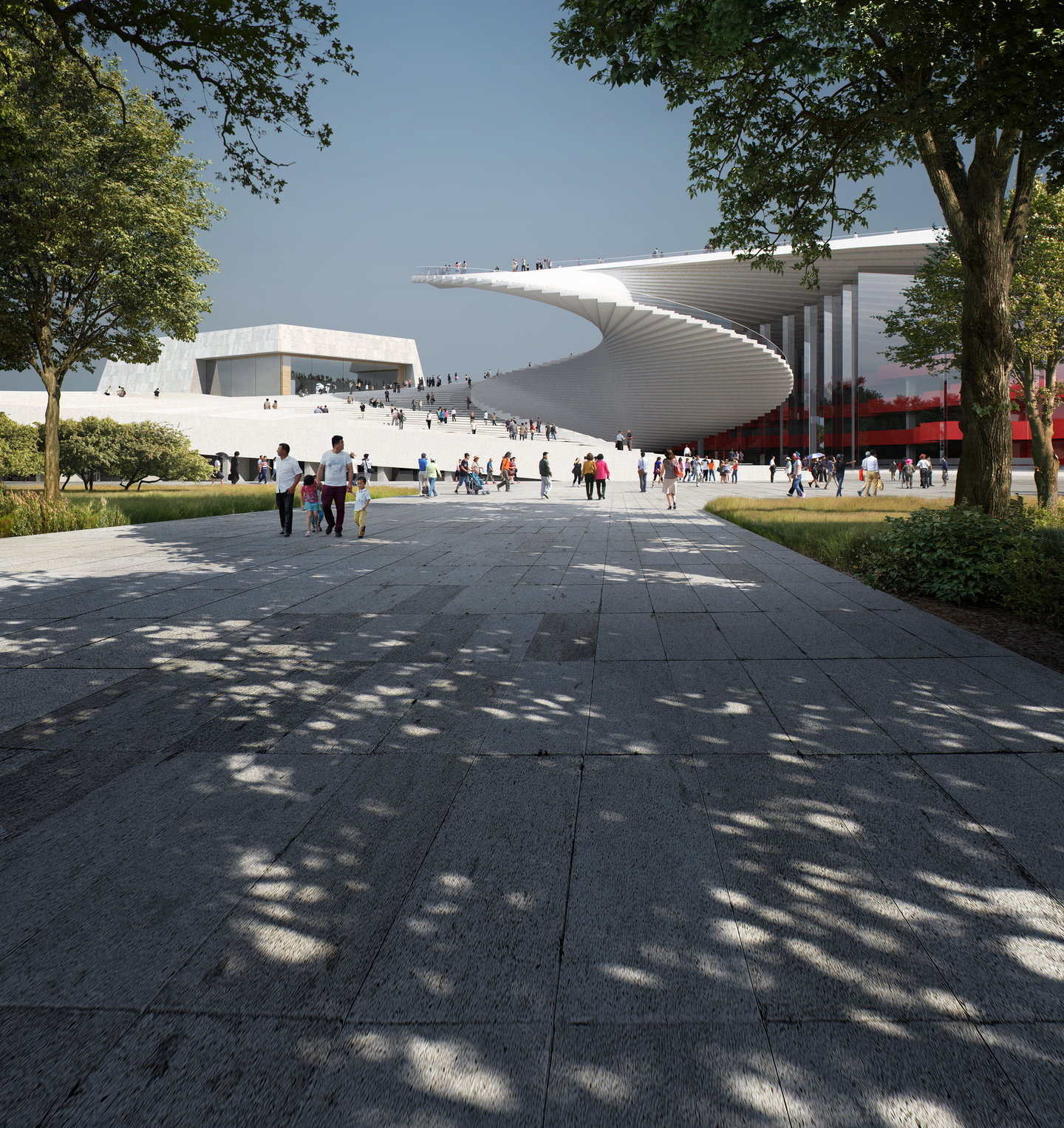
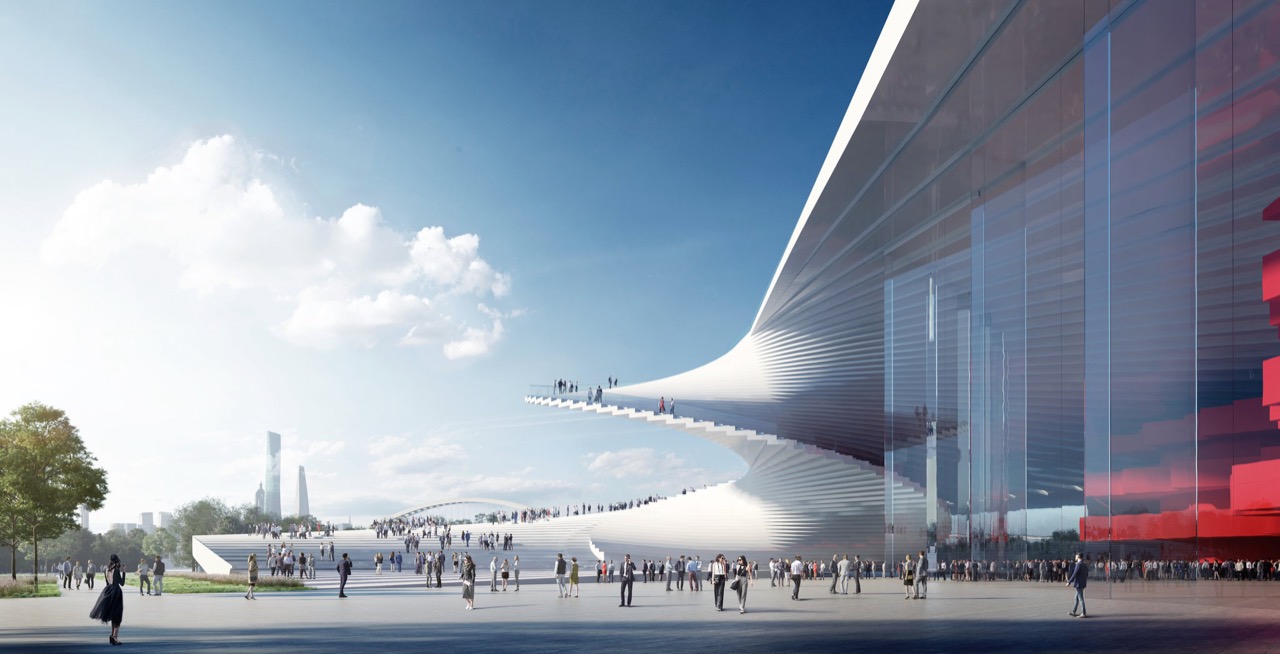
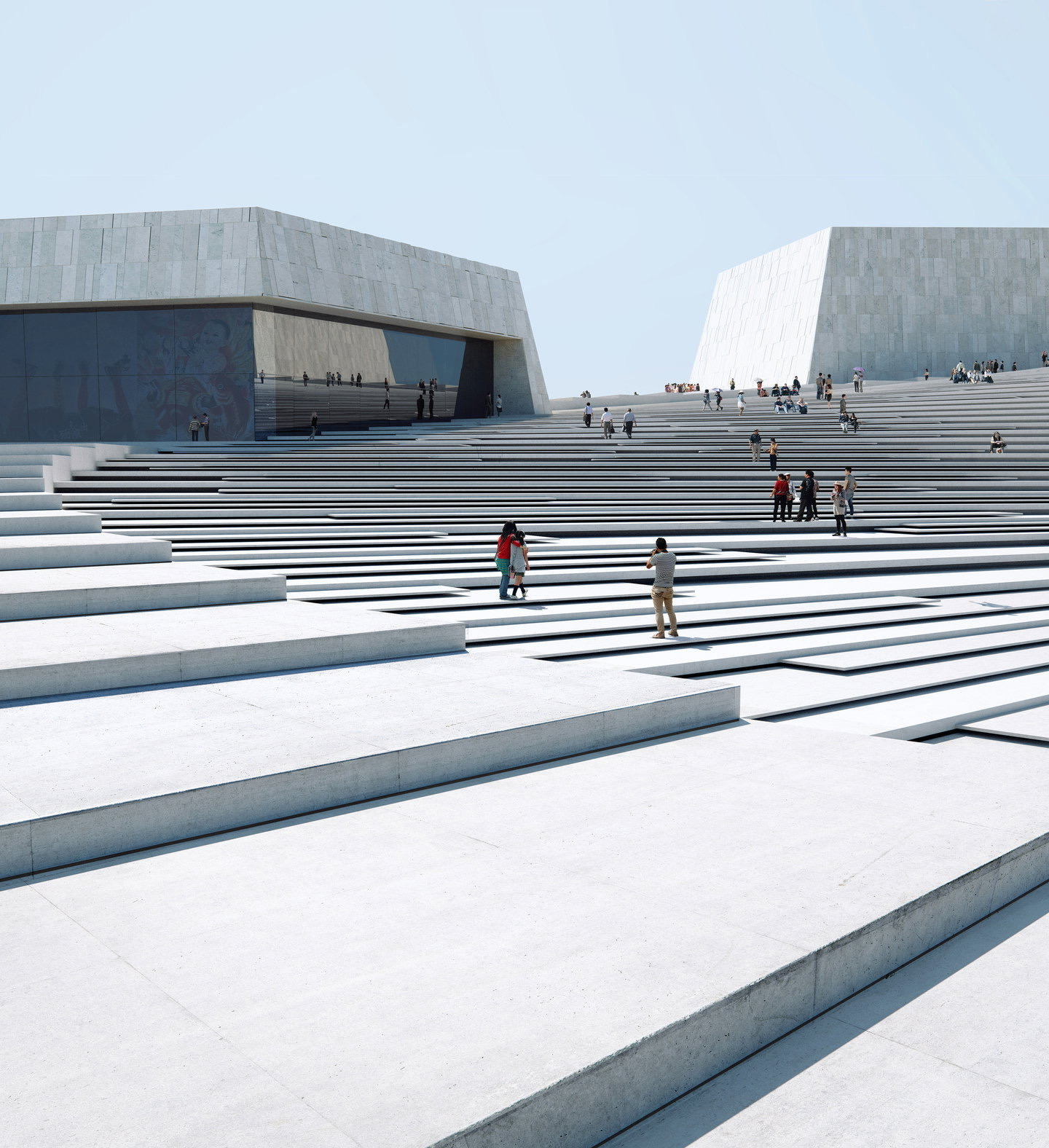
4.The roof is the building. It spreads wide in the shape of an opened fan, and a double spiral stair winds across it from the ground to the top. At the end of that climb sits a 10,000-square-meter rooftop plaza, which the architects say will stay open around the clock, every day of the year.
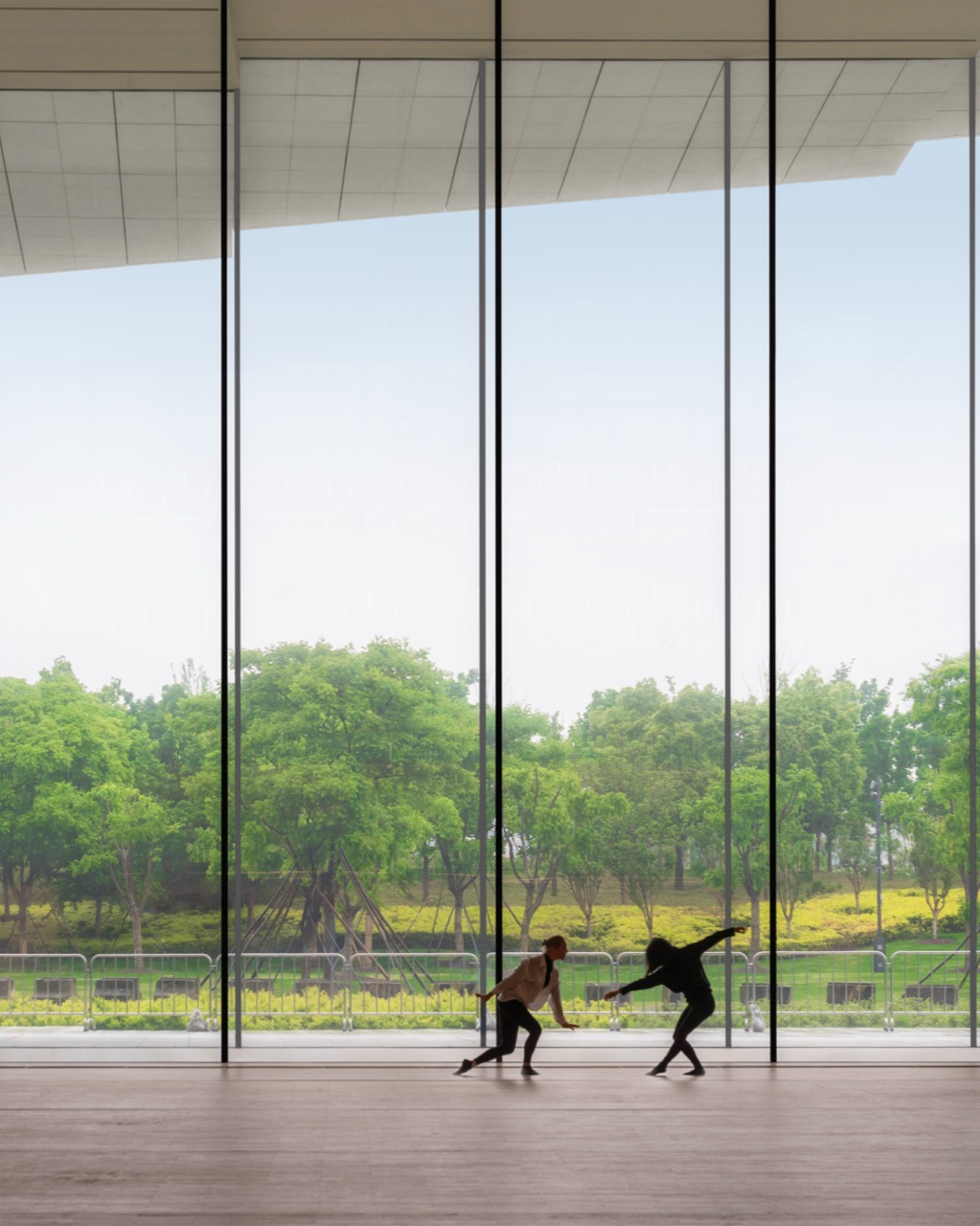
5.The eaves are thin. The edge reaches 15 meters into open air at a thickness of only 0.725 meters, with nothing propping it up. Loads travel through structure hidden inside the spiral stairs and down to the foundations. No project had used 165 MPa ultra-high-performance concrete as a standalone structural element at this scale, so the contractor developed its own construction and testing methods, according to the Shanghai municipal government.
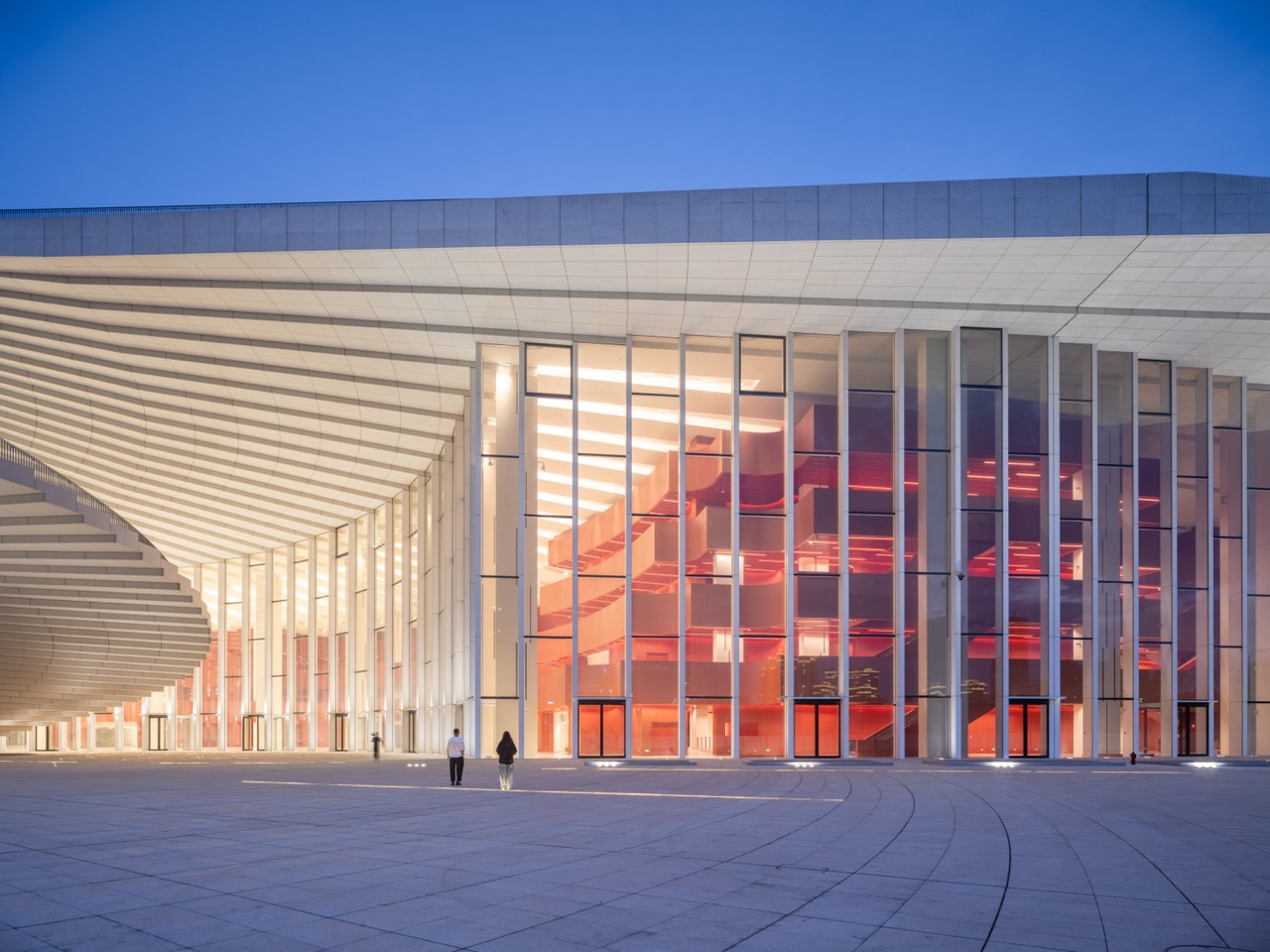
6.The operating model has a name too. Day and night are used differently, hence bai jia hei, white plus black. In daylight the building stays open as public cultural space, and only after dark does it become a theatre. Shanghai calls it the first full-day operation of its kind anywhere.
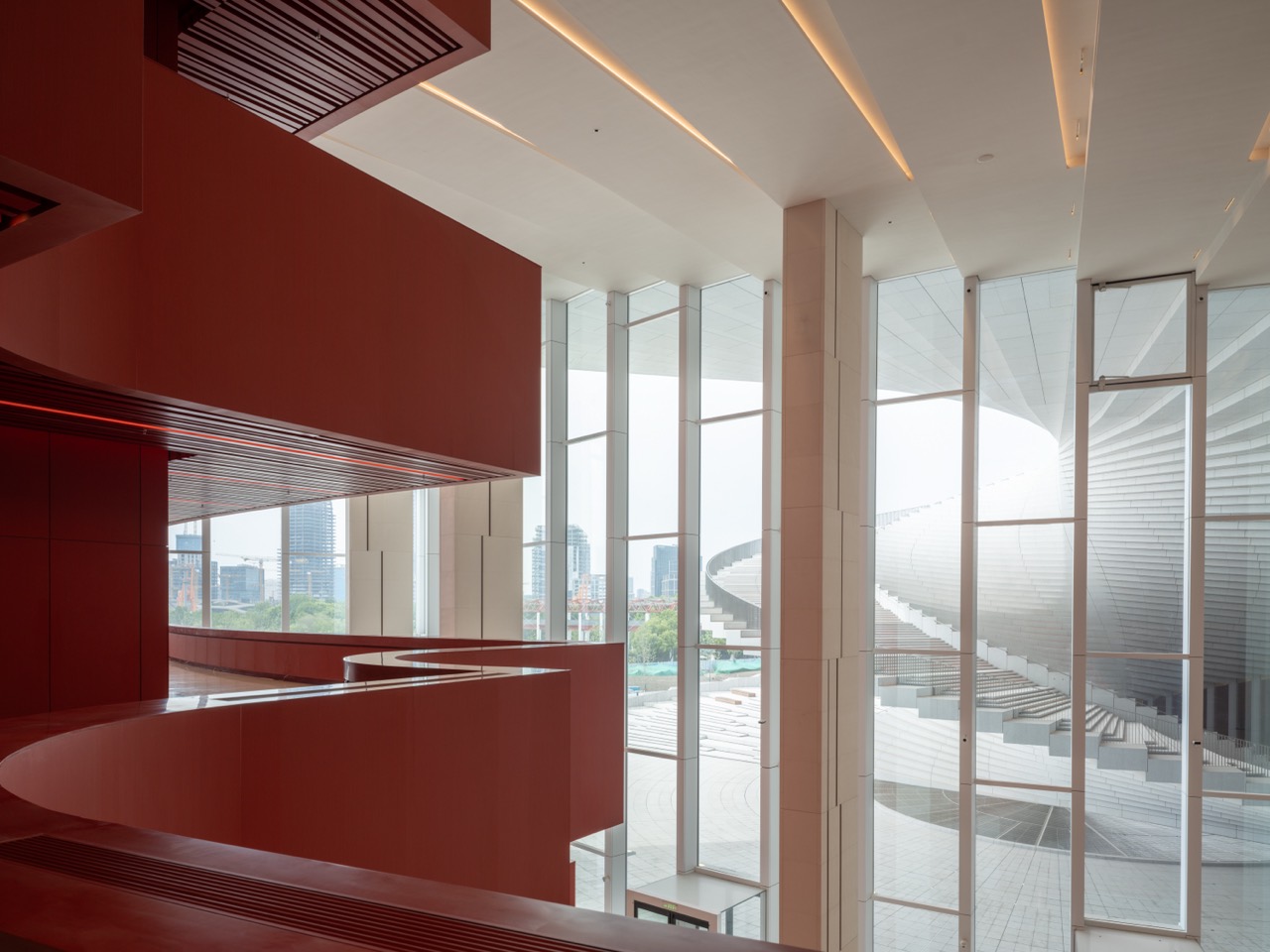
7.A theatre that is dead during the day is an old weakness of the business. Halls and stages are bulky and expensive to maintain, yet they get used three or four hours a day while the lobby and forecourt stay locked. Opening the daytime is close to a declaration that those locked hours will be turned into product.
8.It also happens to be somewhere people already come during the day. The opera house sits inside Expo Cultural Park, built on the grounds of the 2010 World Expo. The park runs to 200 hectares and opened fully on September 20, 2024. The theatre arrived as the last piece on land that was already drawing crowds.
9.Divide the numbers and the building's price shows. RMB 3.906 billion across 4,200 seats works out to RMB 930,000 per seat, about KRW 181 million. Divided by floor area it comes to RMB 26,700 per square meter.
10.The opening season runs to February 20, 2027, a little over four months. The plan is 47 productions across 82 performances, plus more than 100 arts education events. Tosca from Teatro La Fenice, Aida from the Mariinsky Theatre and Der Rosenkavalier from the Berlin State Opera are billed as Asian premieres.
11.Turn those 82 performances into people. Take an average of 1,400 seats across the three halls at 80 percent occupancy and the season's ticketed audience lands around 90,000. Keep that pace for a full year and you reach roughly 260,000. That falls nearly eight times short of the 2 million target set for 2030. This estimate simply divides published performance counts by seat counts, and actual operation may differ.
12.What closes the gap is people who do not buy tickets. The 10,000 square meters of rooftop plaza is where they go, and there is no admission charge. The floor the seats occupy comes to under 4,000 square meters even generously counted, so the area that charges nothing is more than twice the area that charges.
13.Shanghai did not build this because it lacked a theatre. The Shanghai Grand Theatre, which opened on People's Square in August 1998, was designed by the French office Arte Charpentier and holds three halls including a 1,631-seat main house. A building downtown that sells tickets at night. The new house differs by one character in its Chinese name, but it stands in the opposite place and opens at the opposite hours.
14.Hamburg proved this arithmetic first. The Elbphilharmonie, which opened in 2017, put a free viewing plaza 37 meters up. Over ten years the plaza drew 29.5 million visitors while concerts drew 7.4 million. Four people who never bought a ticket for every one who did. On busy days 17,000 came up to the plaza alone.
15.A building that cost KRW 760 billion, holds 4,200 seats and can fill only 13 percent of its own attendance target from those seats opens in October. The roof takes the rest. In Korea the first thing you run into is daylight. Venue utilization here was 51.5 percent in 2024, barely over half on evening programming alone, and opening the daytime immediately adds front-of-house staff, cleaning and night security. There is no line for that in a Korean venue's budget. The daytime has to be bought with money that is neither ticket revenue nor rental income, and finding where that money comes from is the first thing to solve before this model travels.