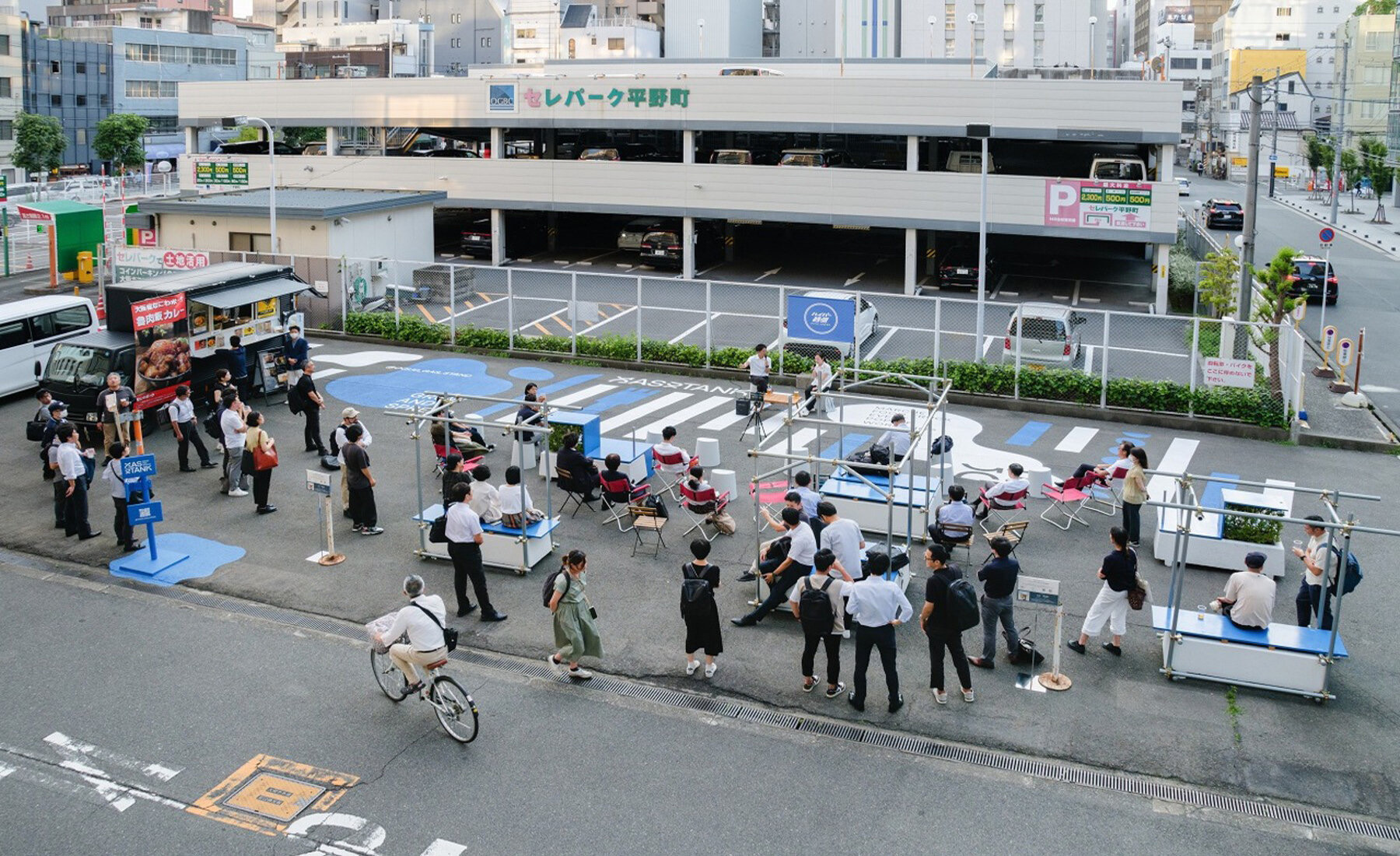
Next to Osaka Gas headquarters, 300㎡ of a tower site whose groundbreaking has been postponed indefinitely was dressed with scaffolding pipes and traffic mirrors and opened to the neighborhood. Left as a parking lot, the same ground would bring in roughly 5.5 million yen a year.
1.In Yodoyabashi, Osaka, one block in from Midosuji, there is an empty lot of about 300㎡ in Doshomachi 4-chome. Since May 2023, Osaka Gas Urban Development has called it GAS STAND and kept it open to anyone. At the end of this June, designboom published the version that the design team team raw row rebuilt with scaffolding pipes.
2.By now, steel should have been rising here. In February 2023 Osaka Gas announced a 33-story, roughly 150 m west annex on its own land west of the headquarters, the Gas Building, with construction to start around 2024. On March 6, 2025 the company said rising material prices had pushed the start back. A year and a half later there is still no new date. The rest of the west land is still a parking lot.
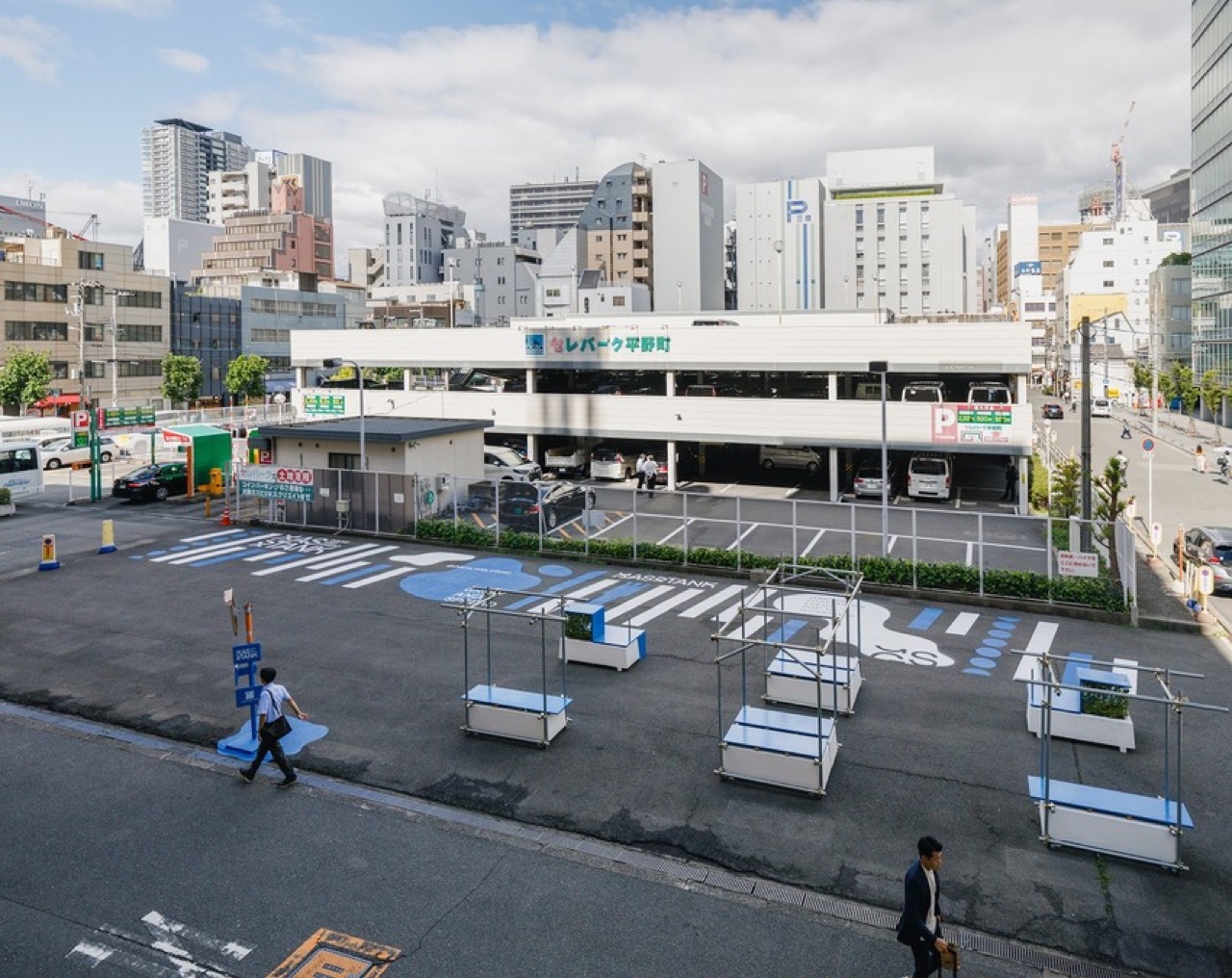
3.The materials are things you see on any street or building site. Single scaffolding tubes form the frames, and inside them sit white boxes with blue tops that work as benches. Standing counters, notice boards, planters and the convex mirrors normally hung at blind corners complete the kit. Everything is small enough to lift, so the layout changes with each event.
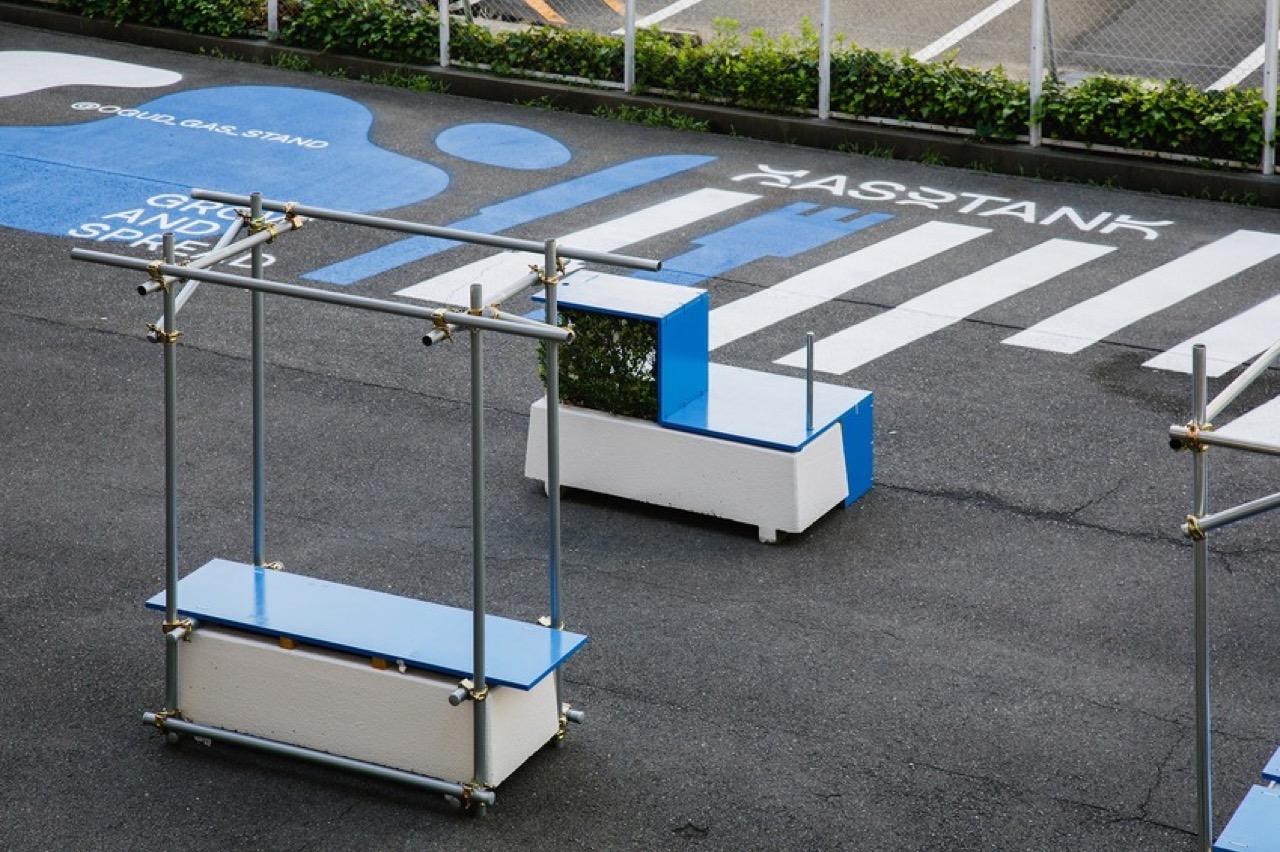
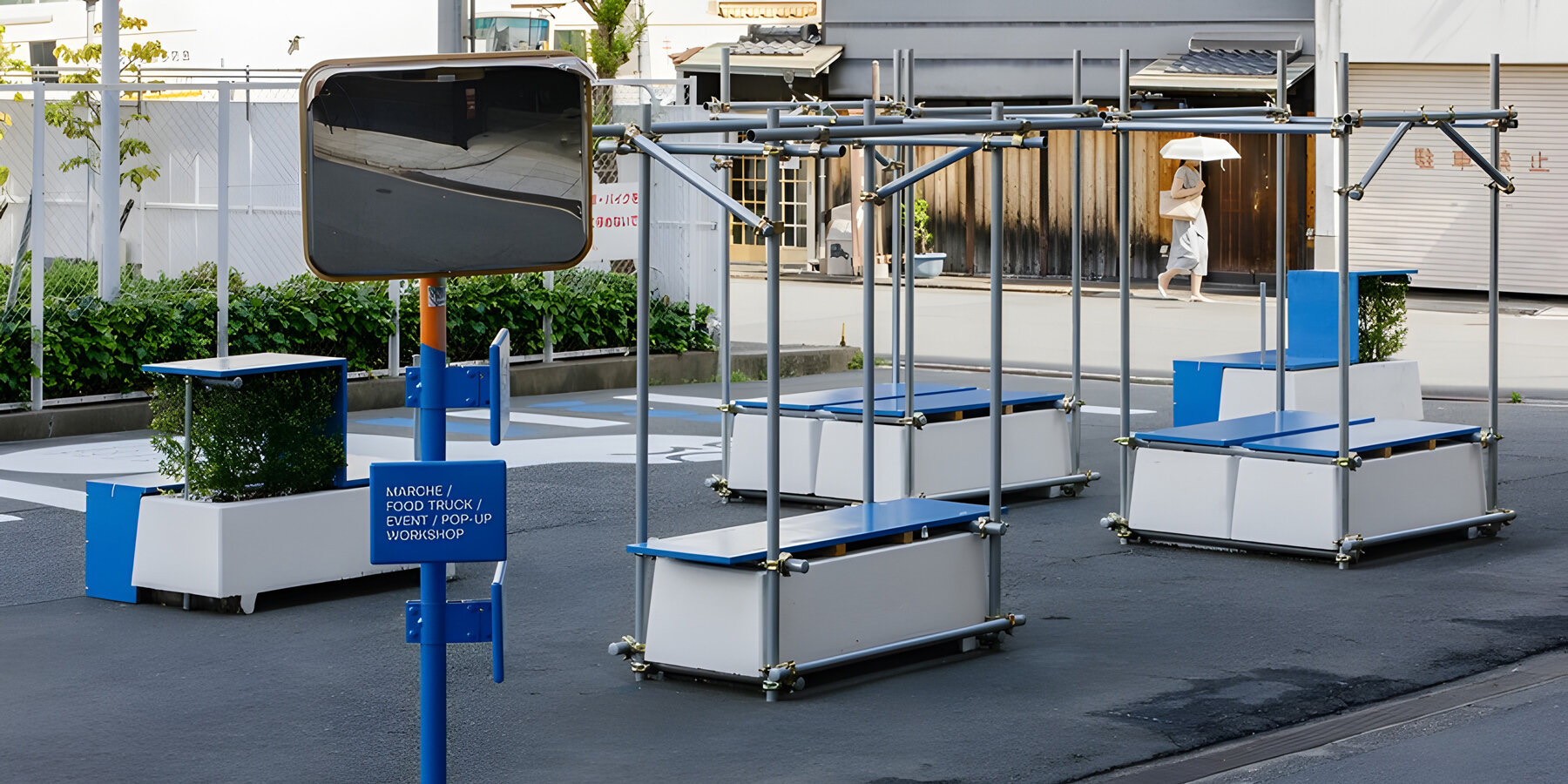
4.No new paving went down. White and blue paint on the old parking asphalt draws crosswalk stripes and puddle-shaped blots, with the words GROW AND SPREAD laid flat between them. Every pipe joint carries a clamp, and anyone who has seen site hoarding recognizes it at once. The team says the aim was for it to look like the street carrying on, not like a newly built plaza.
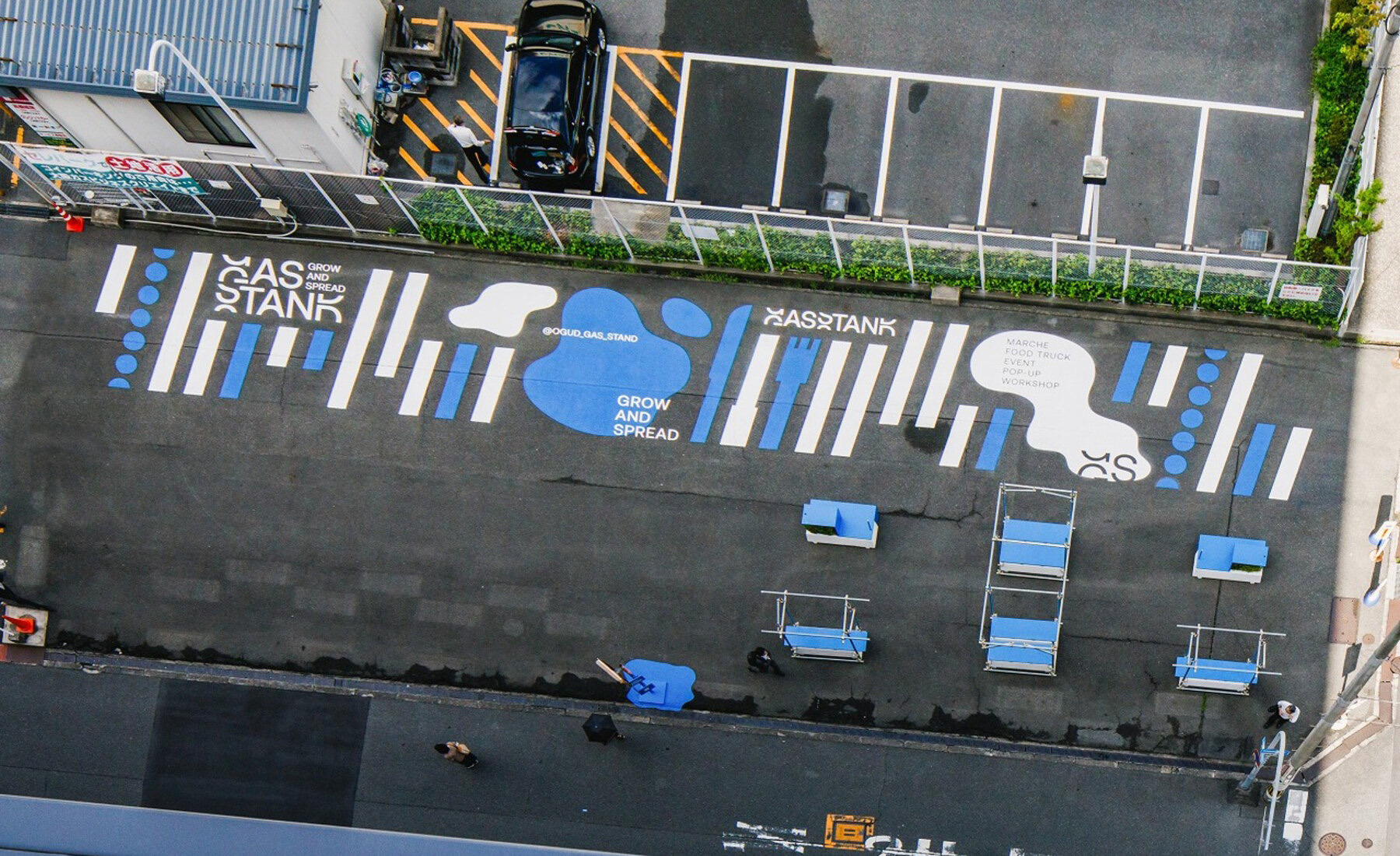
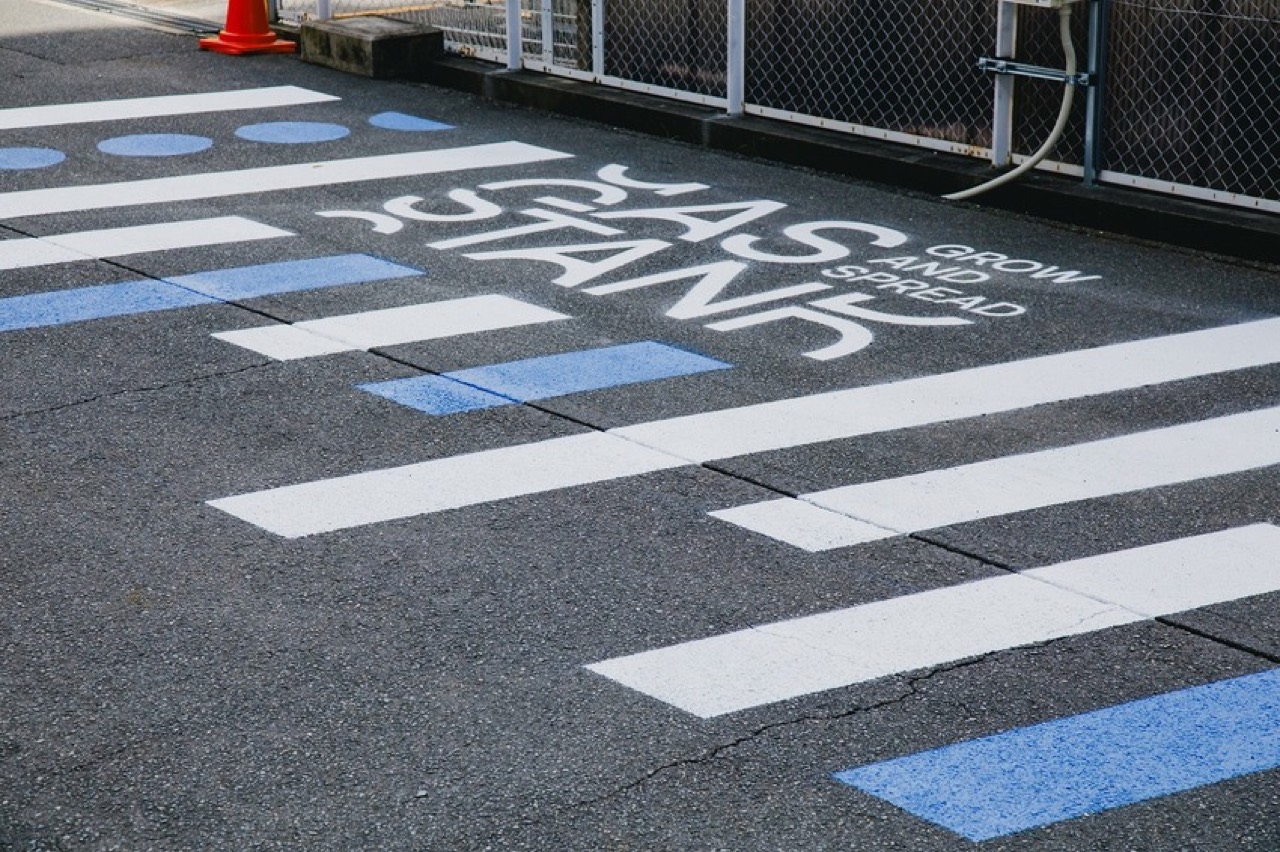
5.Yodoyabashi is an office district that floods with workers on weekday afternoons and goes quiet at weekends. It is hard to find even one bench to sit on after lunch. team raw row put no fence between sidewalk and site and pulled street signs and furniture onto the lot, so it reads not as a separate plaza but as the street continuing inside.
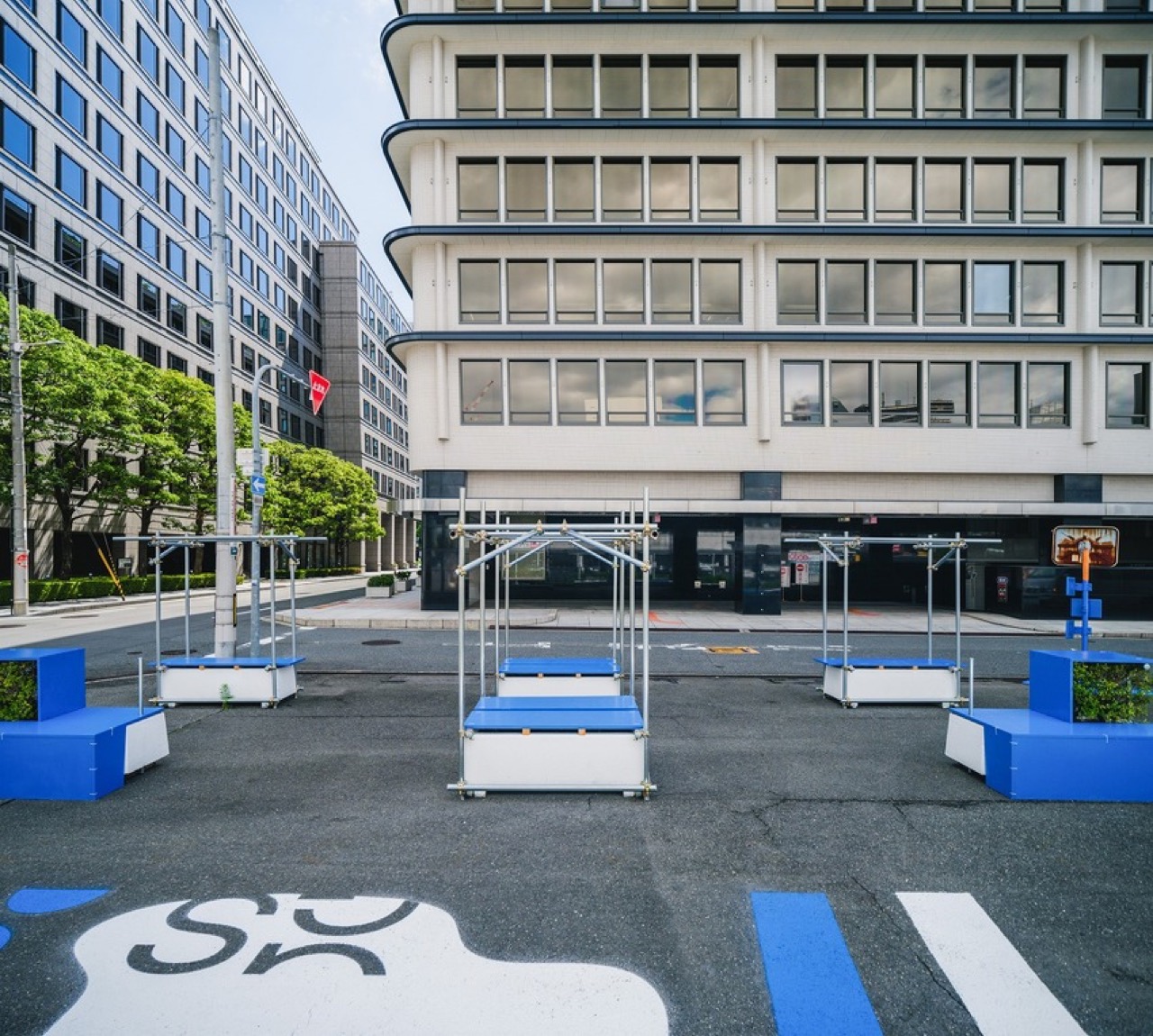
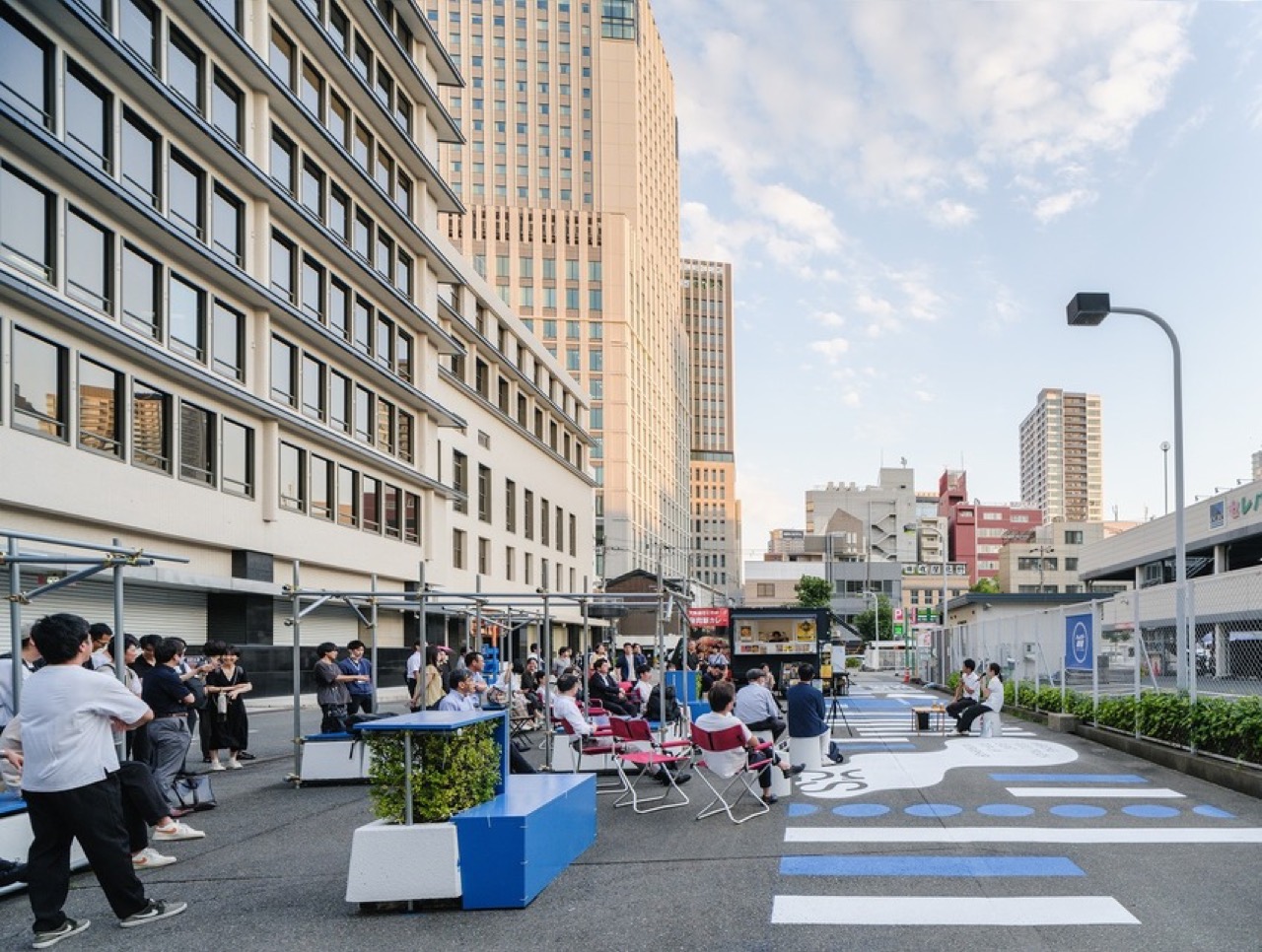
6.People come at lunch. On weekdays kitchen cars sell food to nearby office workers, and in the evenings there are talks. In November 2023 the WeST CYCLE MARKET brought Osaka restaurants with stalls and creators with pop-ups. Put a free place to sit in the middle of downtown, and the people with lunch boxes find it first.
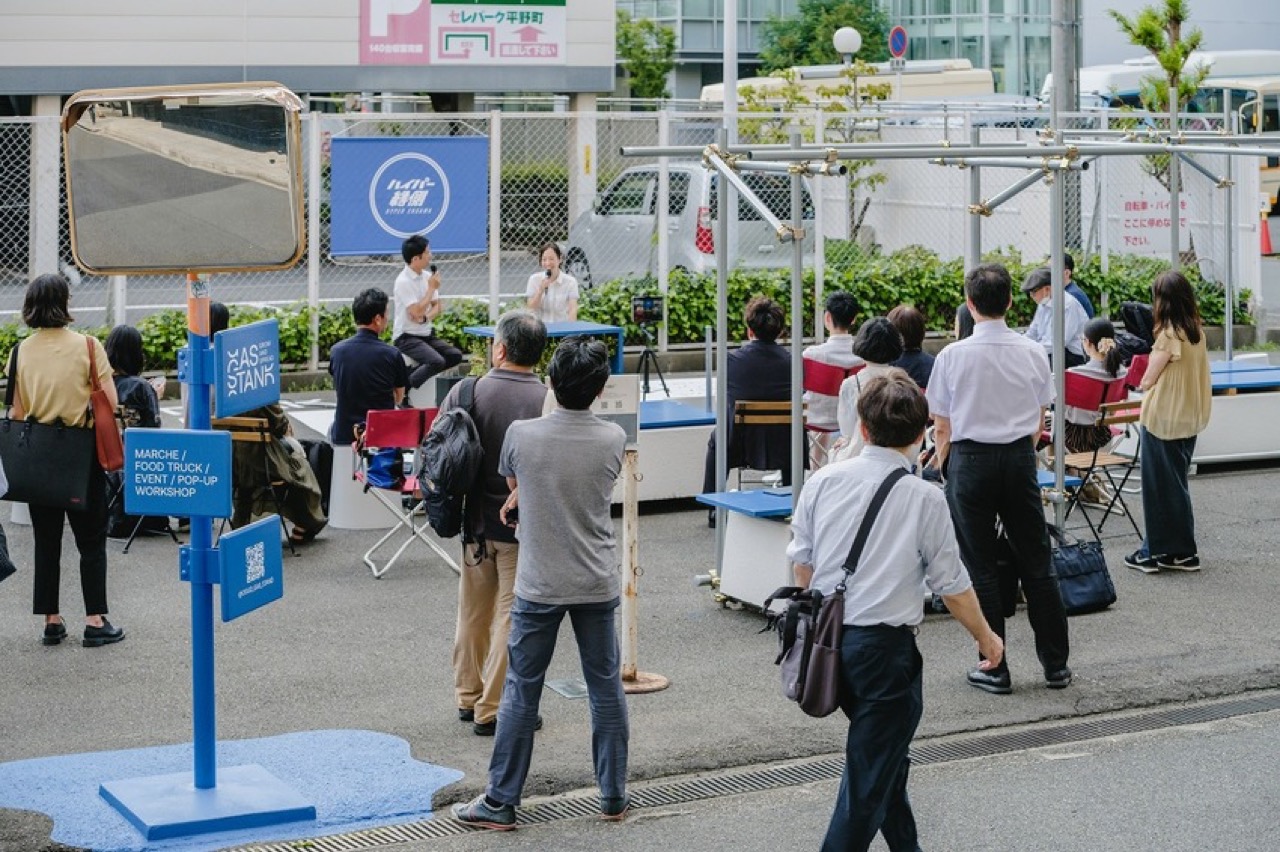
7.The first version was built by staff. In 2023, employees of Osaka Gas Urban Development reworked existing planters into benches and tables and cut a tent used at a trade show into sunshades. The fabric was SPACECOOL, a radiative cooling material developed by the Daigas Group. The developer's idle lot also served as an outdoor test bed for the group's new material.
8.The 2026 published land price around Yodoyabashi Station averages 3.63 million yen per ㎡. Multiply that by GAS STAND's 300㎡ and the land alone is worth about 1.1 billion yen (about KRW 10.3 billion, estimate). With no admission and no rent, the income from that ground today is zero yen.
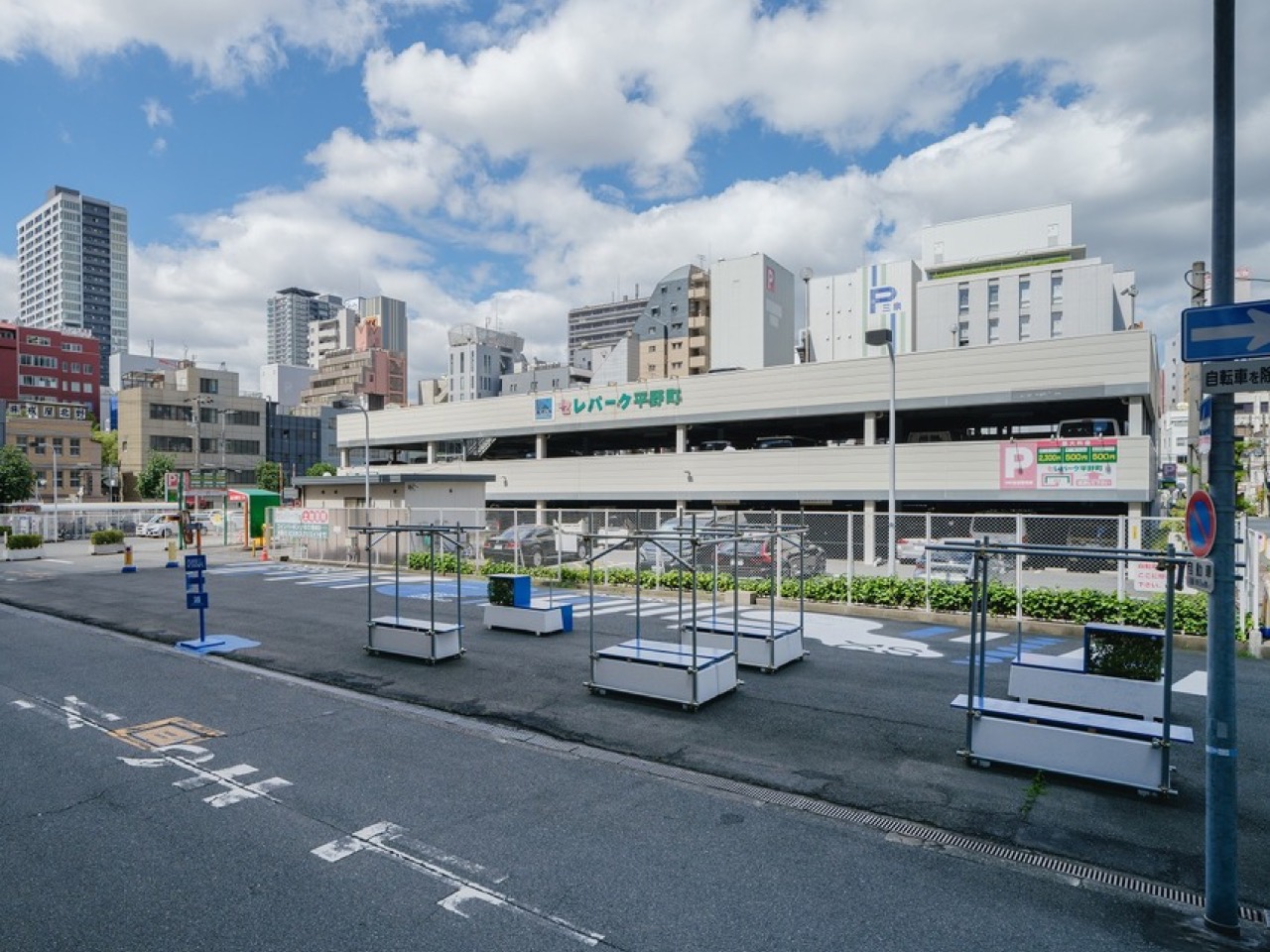
9.What would it earn as parking? Monthly parking around Doshomachi and Hiranomachi runs about 38,500 yen per car. Allowing for aisles, 300㎡ holds about 12 cars, or roughly 5.5 million yen a year (estimate). What GAS STAND costs Osaka Gas is that 5.5 million yen plus setup and running costs.
10.Set that cost beside land appreciation and the scale changes. The average published price rose 16.9% in a year, which on 300㎡ adds about 160 million yen off the books (estimate). Close to 30 times the parking income. While the company waits to build, the land gains value, and opening the lot costs about a thirtieth of that.
11.The project budget moved the other way. When it was announced in 2023, Osaka Gas put the total at over 50 billion yen (about KRW 470 billion). Since then the construction cost deflator of the Ministry of Land, Infrastructure, Transport and Tourism, with 2015 set at 100, climbed to 135.4 in March 2026, and in announcing the delay the company said it would re-examine some specifications and the total cost.
12.The scheme's bulk comes from the old building. It uses the air above Goryosuji, a city road running between the Gas Building plot and the west land, and earned a floor area bonus for preserving a historic building. The figures fixed under the Special Urban Renaissance District designation are 10,370㎡ of combined land, a floor area ratio of about 1,200% and about 136,000㎡ of floor space. Only the west annex can fill those numbers.
13.The Gas Building joins a south wing designed by Takeo Yasui in 1933 and a north wing added by Shoichi Sano in 1966 into a single eight-story block. Its horizontal bands of white tile and black granite became the face of Midosuji, and the south wing is a registered tangible cultural property. About 85% of the facade and floor area was to be kept, but with the annex stopped, that renovation schedule stopped as well.
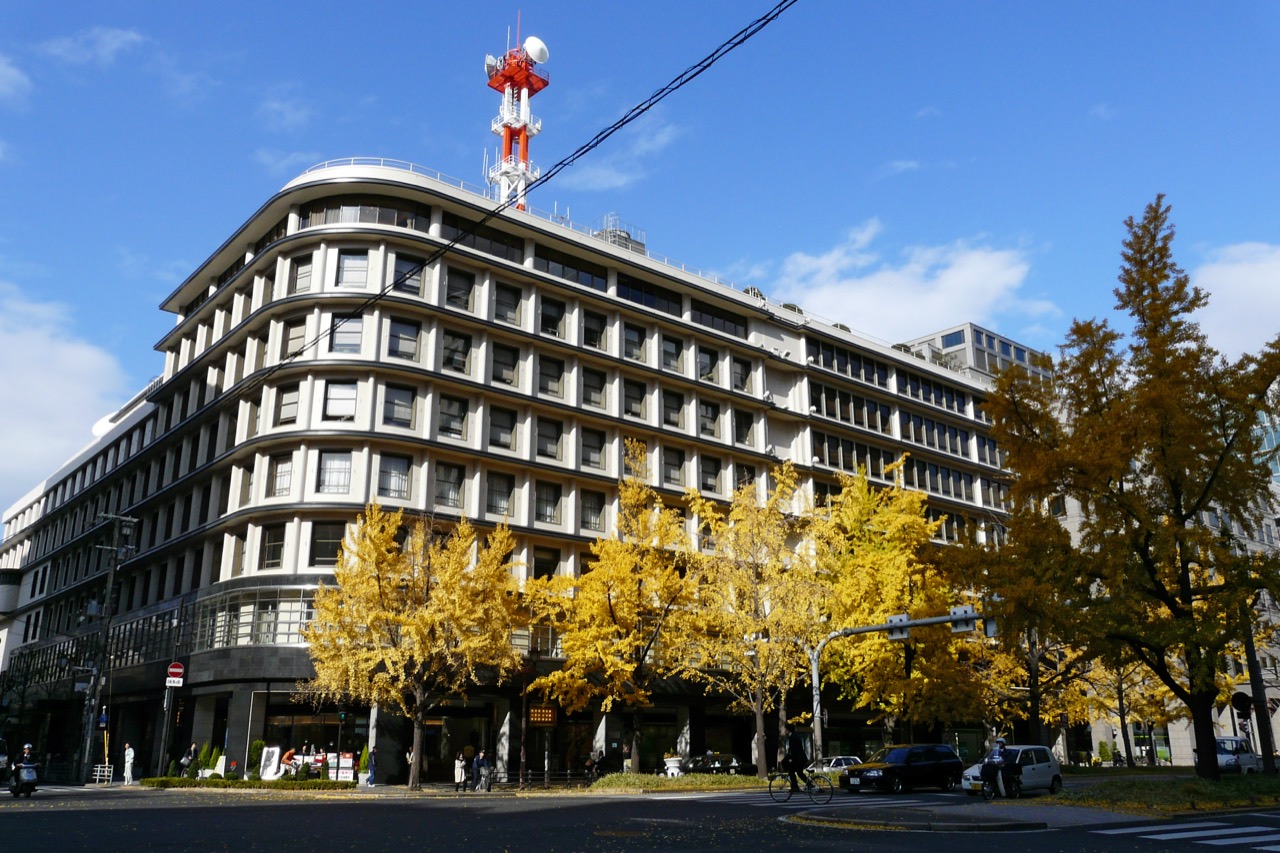
14.In 1933 the Gas Building was more than offices. It had a showroom for the latest gas appliances, cooking classrooms and a lecture hall, and it drew the public in. The Gas Building Restaurant on the eighth floor still serves today. That history is the first thing Osaka Gas brought up when it introduced GAS STAND. What the headquarters did 90 years ago, the empty lot does first.
15.Using land briefly before demolition or construction is nothing new. In Tokyo there has been a run of timber temporary buildings put up to trade for a few years on sites due for redevelopment. GAS STAND built nothing. Scaffolding tubes, mirrors and planters can be cleared away easily once work begins, and team raw row, a small practice with one person in Osaka and one in Tokyo, calls it the first stage of a longer change.
16.One corner of a 50-billion-yen site stuck before groundbreaking became a scaffolding-pipe plaza, and Osaka Gas gave up about 5.5 million yen a year in parking fees so the neighborhood could use the land first. It also offers an early look at who the retail on the annex's first two floors might serve. What would need checking first in Korea? Tax. Opening a former paid parking lot to the public for free can change how the land is classified for property tax. With more and more sites waiting on delayed starts, opening an empty lot costs less than one might think. What slows it down is not the build but the tax calculation.