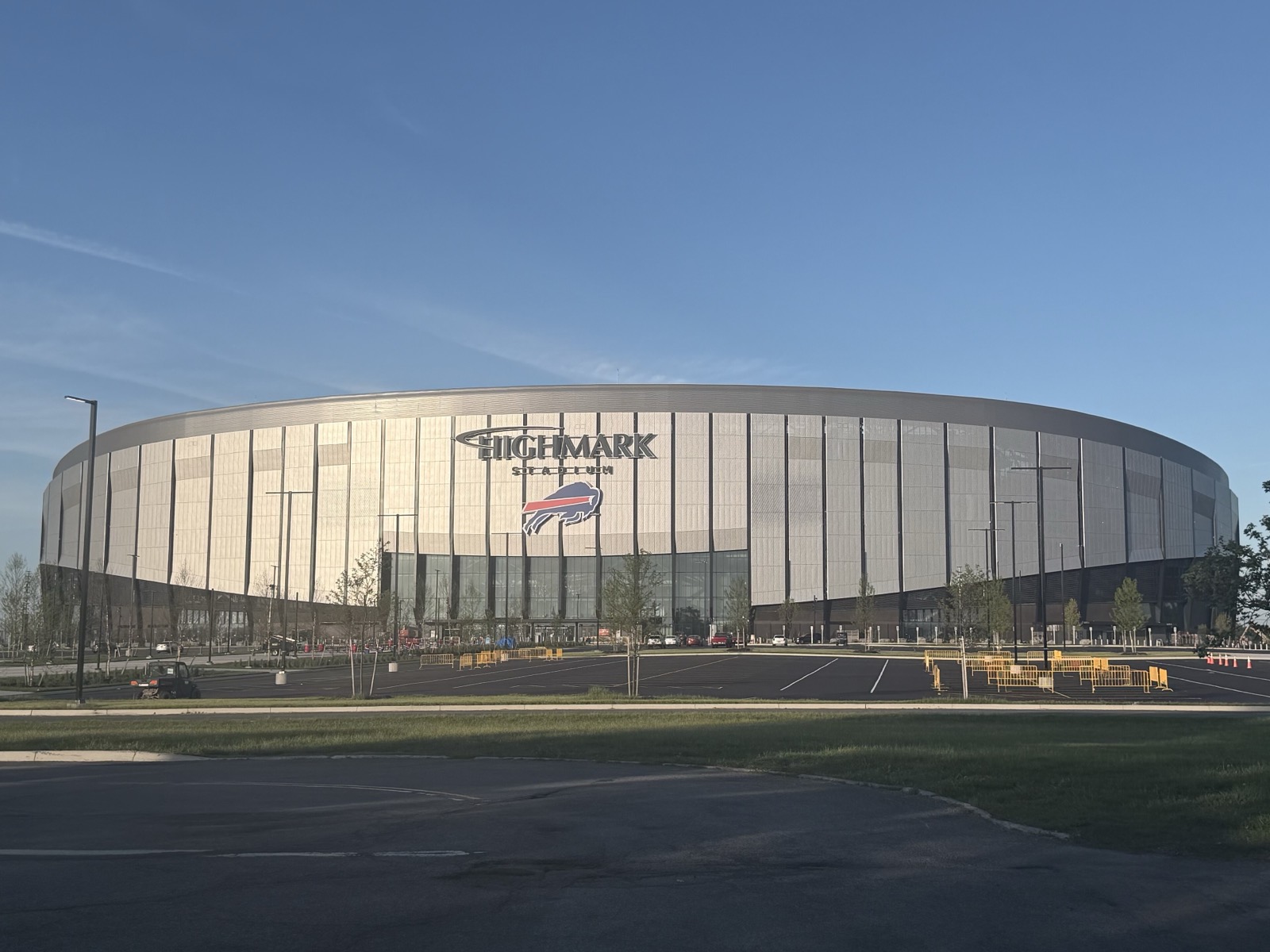
A $2.1 billion football stadium has opened in the suburbs of Buffalo. It holds fewer seats than the one it replaces, yet every right to buy a seat sold out before opening day. The public subsidy was the largest ever, but the owners paid for the cost overruns.
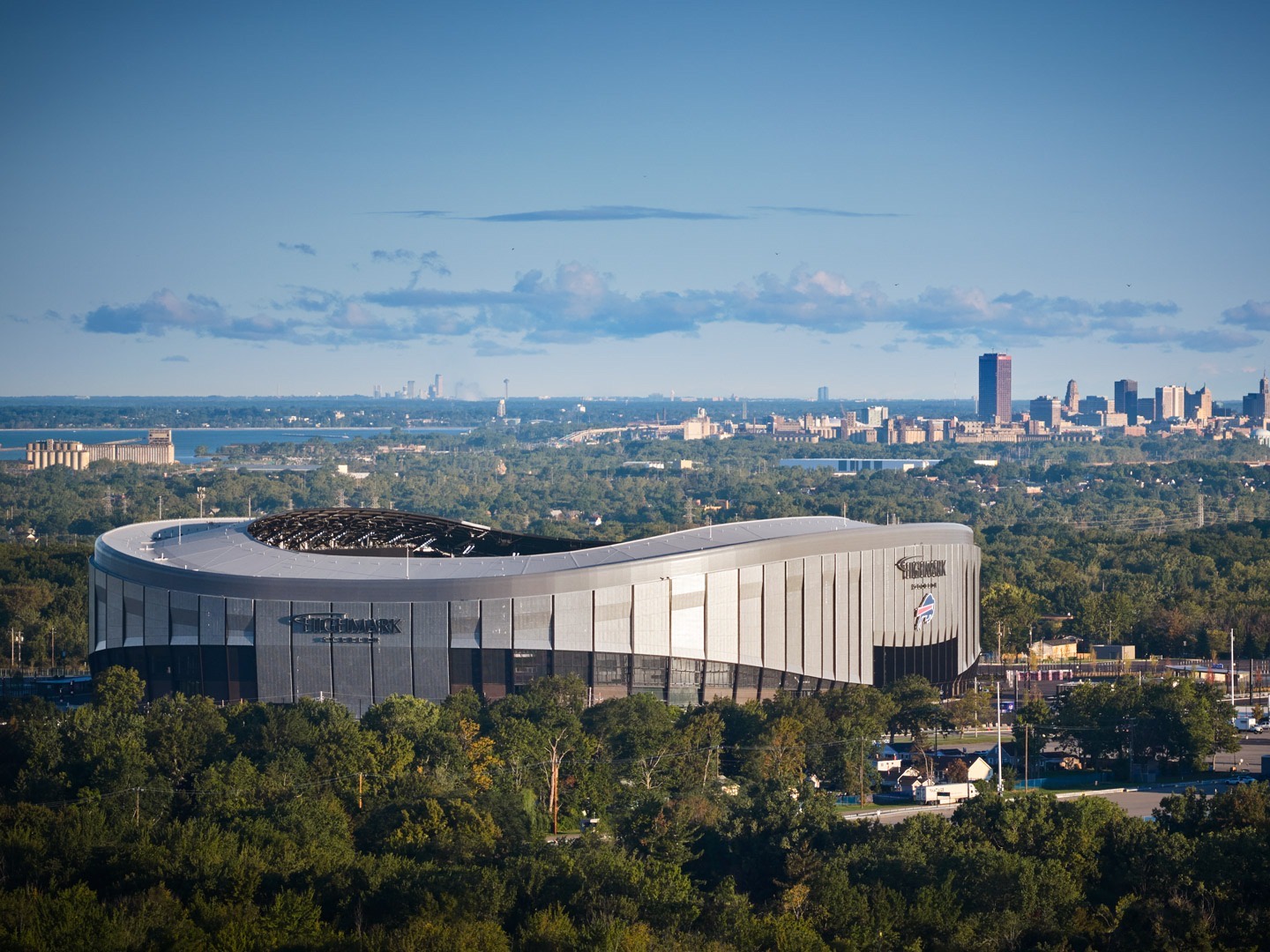
1.On the night of Thursday, September 17, the Buffalo Bills beat the Detroit Lions 41-31 at the new Highmark Stadium in Orchard Park, New York. It was the first regular-season game in the new building. Populous designed it, and a Gilbane and Turner joint venture built it. The project cost $2.1 billion (about KRW 2.94 trillion), and some tallies put it at $2.2 billion.
2.The site was a parking lot across the street from the old stadium. The old one, opened in 1973, had 71,608 seats. The new one has 60,108 fixed seats and holds 63,000 with standing room. Rebuilding after 50 years, the team took out 11,500 seats. It is now the smallest stadium in the NFL.
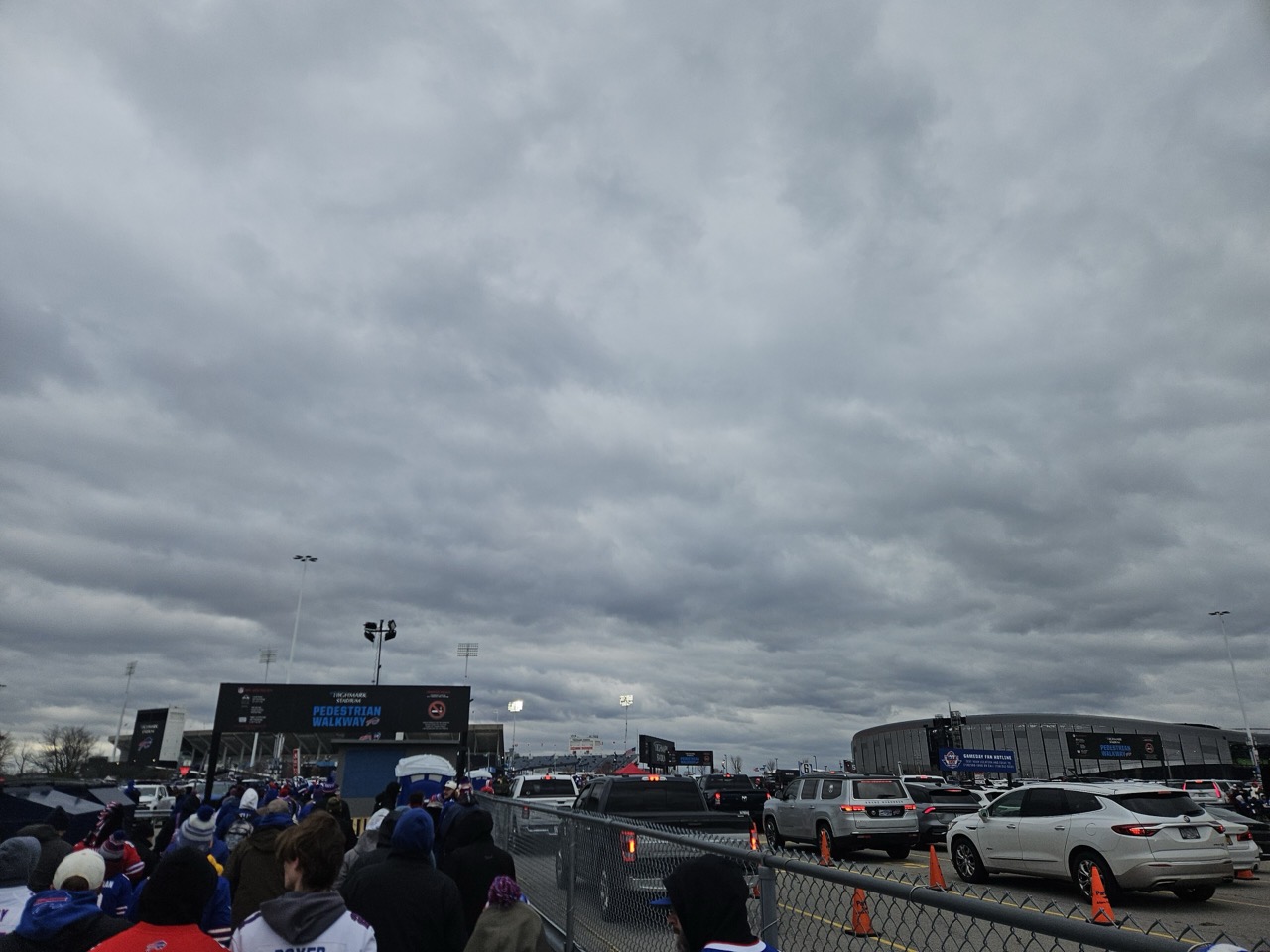
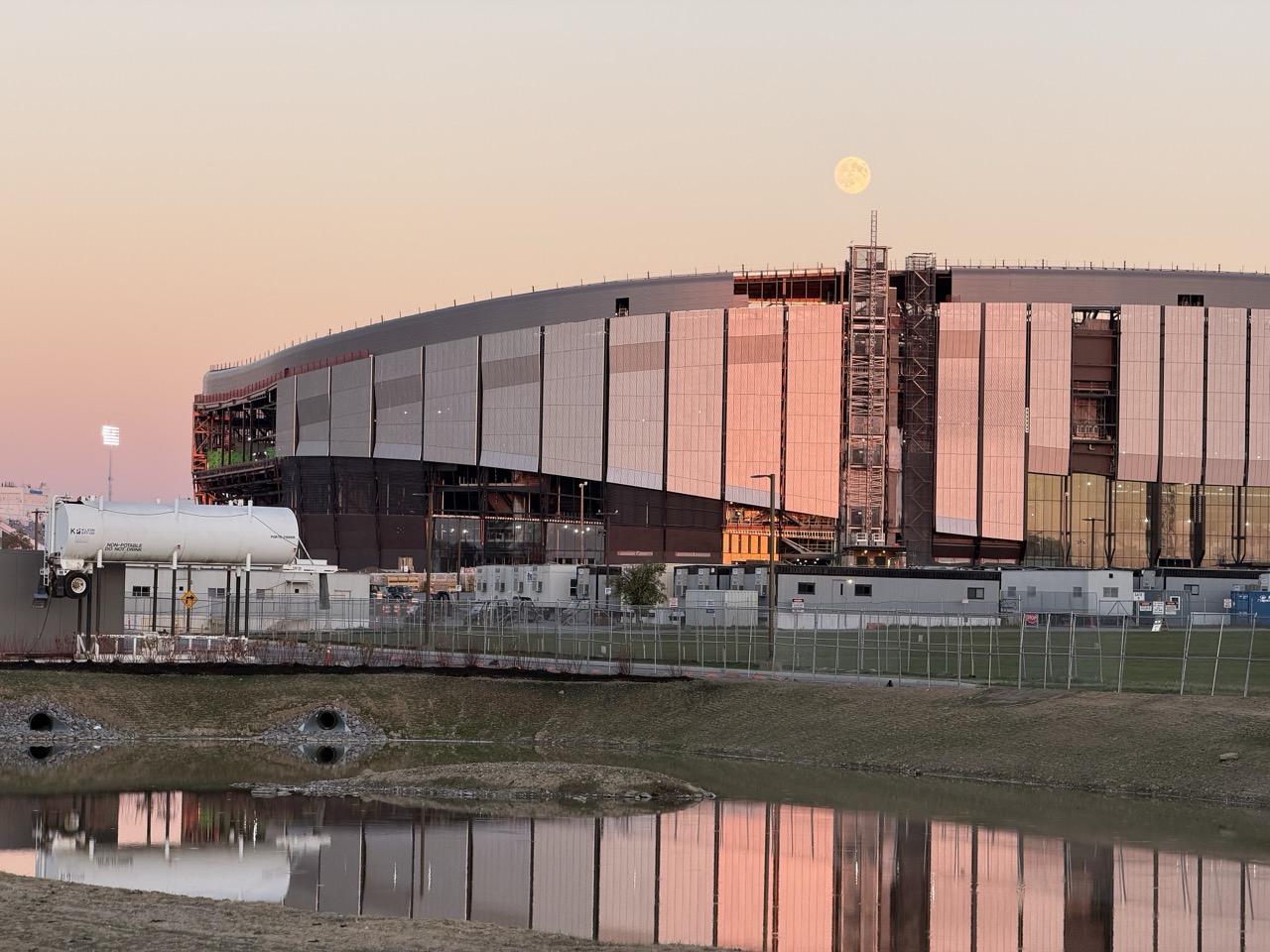
3.From outside it reads as a single round volume. Vertical fins run like a colonnade from the ground to the underside of the canopy along one continuous curve with rounded corners, and perforated metal panels fill the gaps. At the base is a band of iron-spot brick that recalls the buildings of Buffalo's industrial era. The floor area is about 148,600 square meters, and the site, parking included, covers about 980,000 square meters. Populous says it carried the solid presence of Buffalo's historic buildings into new materials.
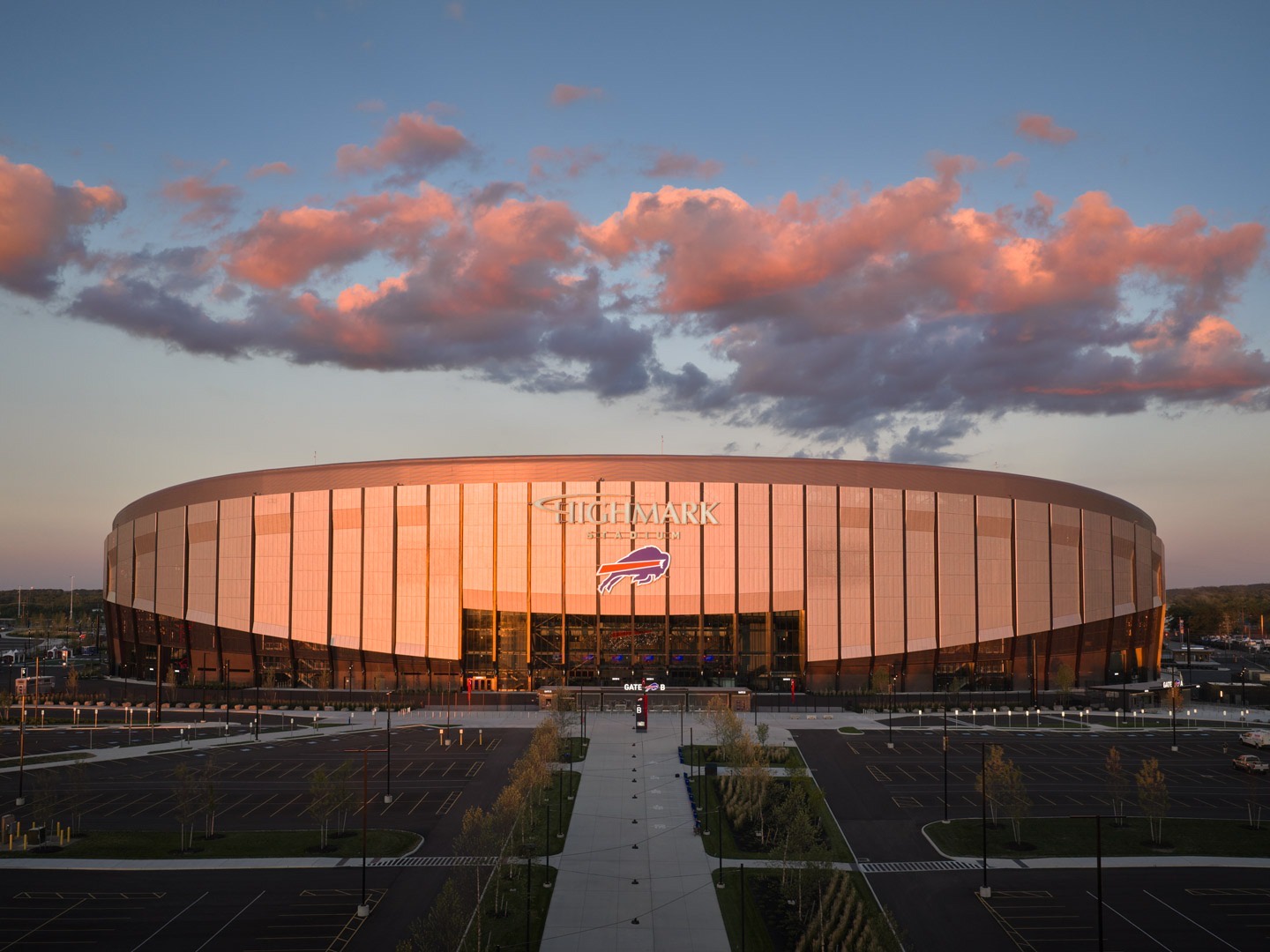
4.Inside, the stands rise rather than recline. The seating is stacked steeply, so the upper deck above the north end zone hangs about 3.7 meters (12 feet) vertically from the field. Populous calls it the closest upper deck in the NFL. A canopy running all the way around covers about 64 percent of the seats, dipping toward the end zones and rising toward midfield. Only the field itself stays open to the sky.
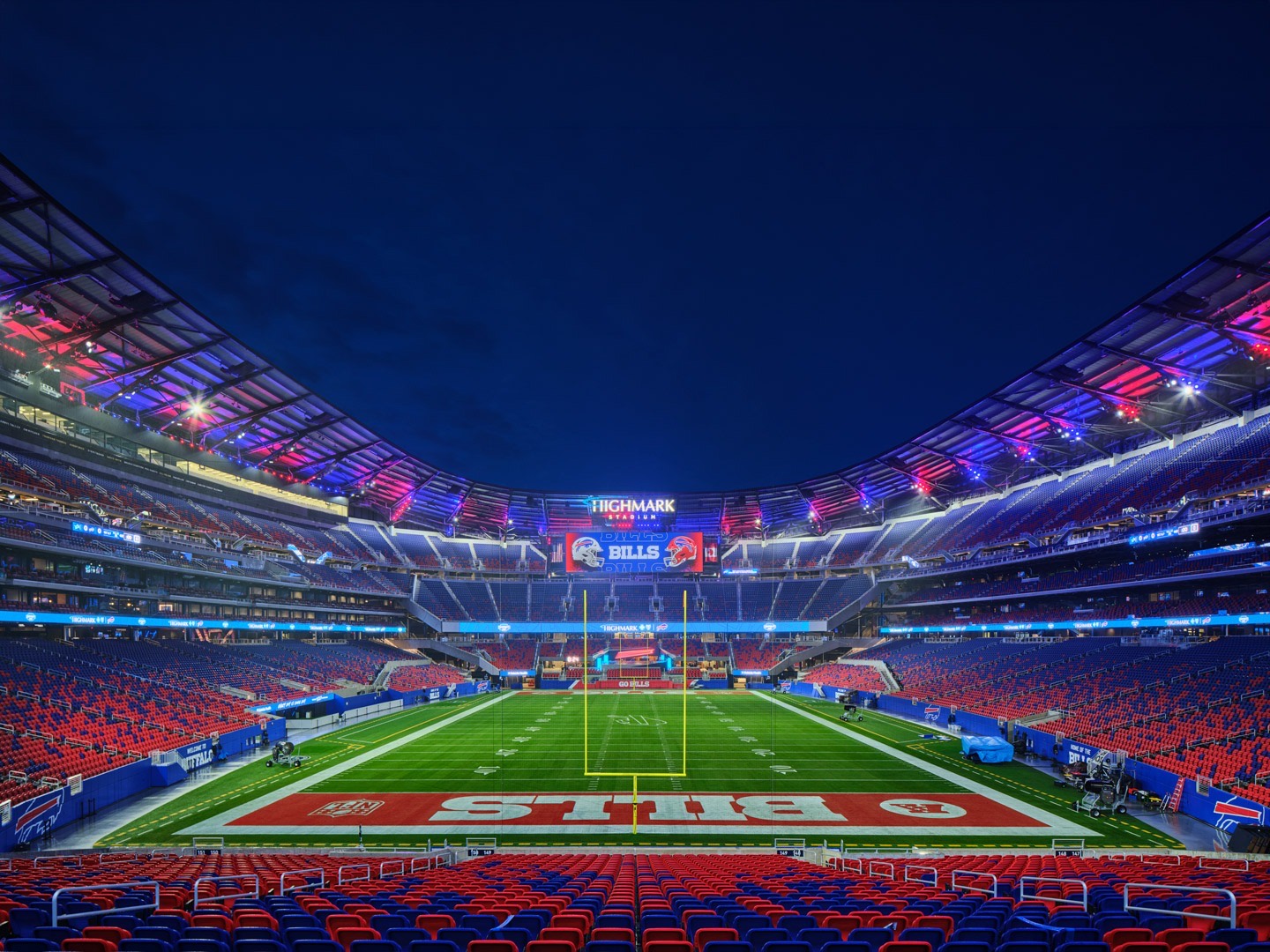
5.Winter football in Buffalo is played in the snow. In the new stadium, snow piles up on the field but not on the roof. When sensors inside the canopy detect snow, hot water circulates through pipes to melt it on contact, and the heat radiates down to the seats. The owner and builders call it the world's largest roof snow-melt system. The concourses are heated, and radiant heaters hang above some seats. Fans' shoulders stay dry while the turf turns white. Snowy games are this team's face on television, so the roof was never closed.
6.Why cut seats? Victor Matheson of the College of the Holy Cross has said no new stadium has ever opened with cheaper tickets. He added that the money is in premium seating, not in filling seats. The Kansas City Chiefs' planned new stadium is also reported to have roughly 15 percent fewer seats than today. Fewer seats push up the price of the ones left.
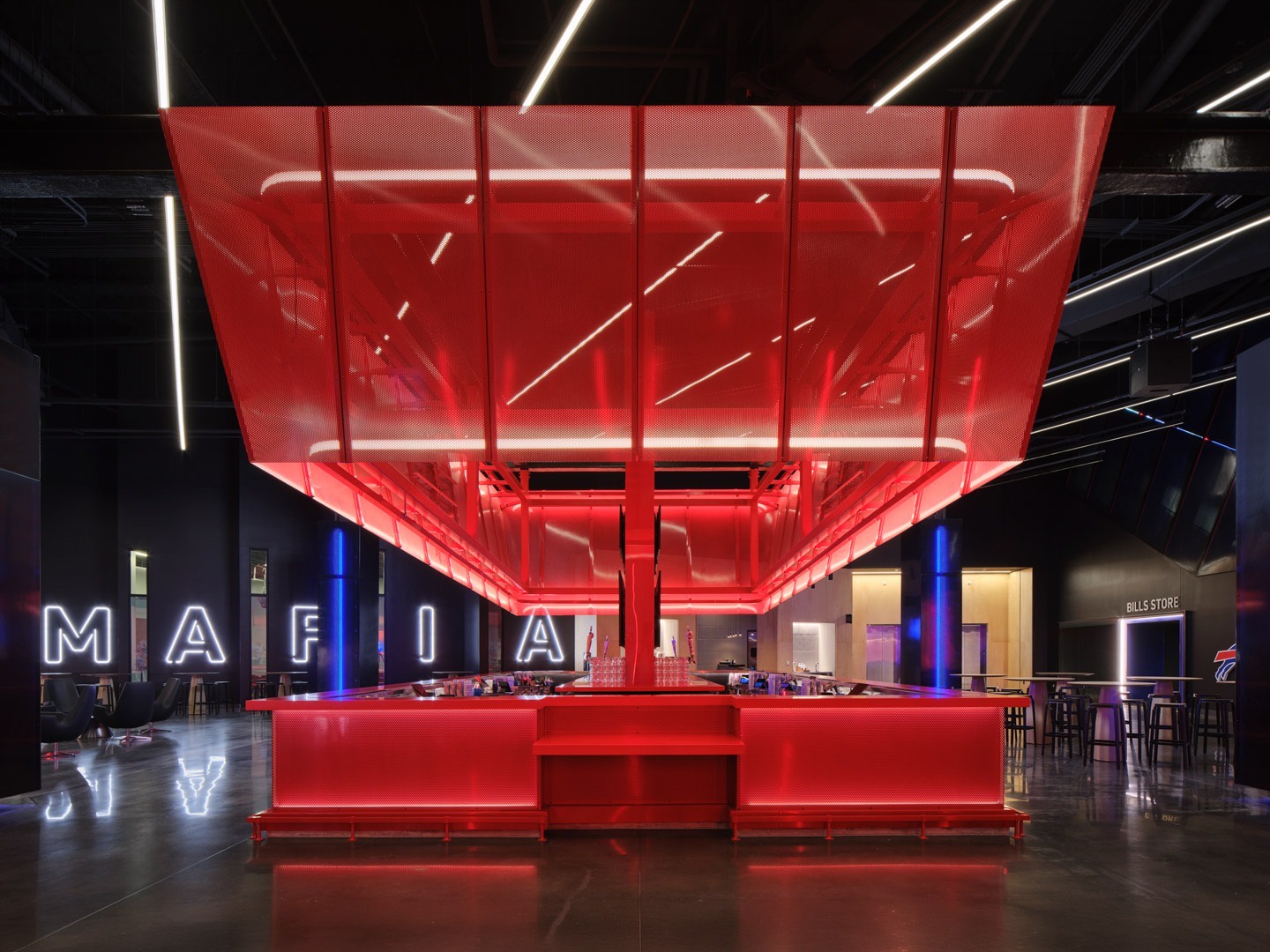
7.Buffalo is a place that can command that price. Where fans call themselves Bills Mafia, all 54,628 personal seat licenses (PSLs) sold out. A PSL is not a ticket. It is a one-time purchase of the right to buy season tickets for that seat every year. It is non-refundable, and it lapses if the holder stops buying season tickets. Prices ran from $750 to $50,000, and still not one was left.
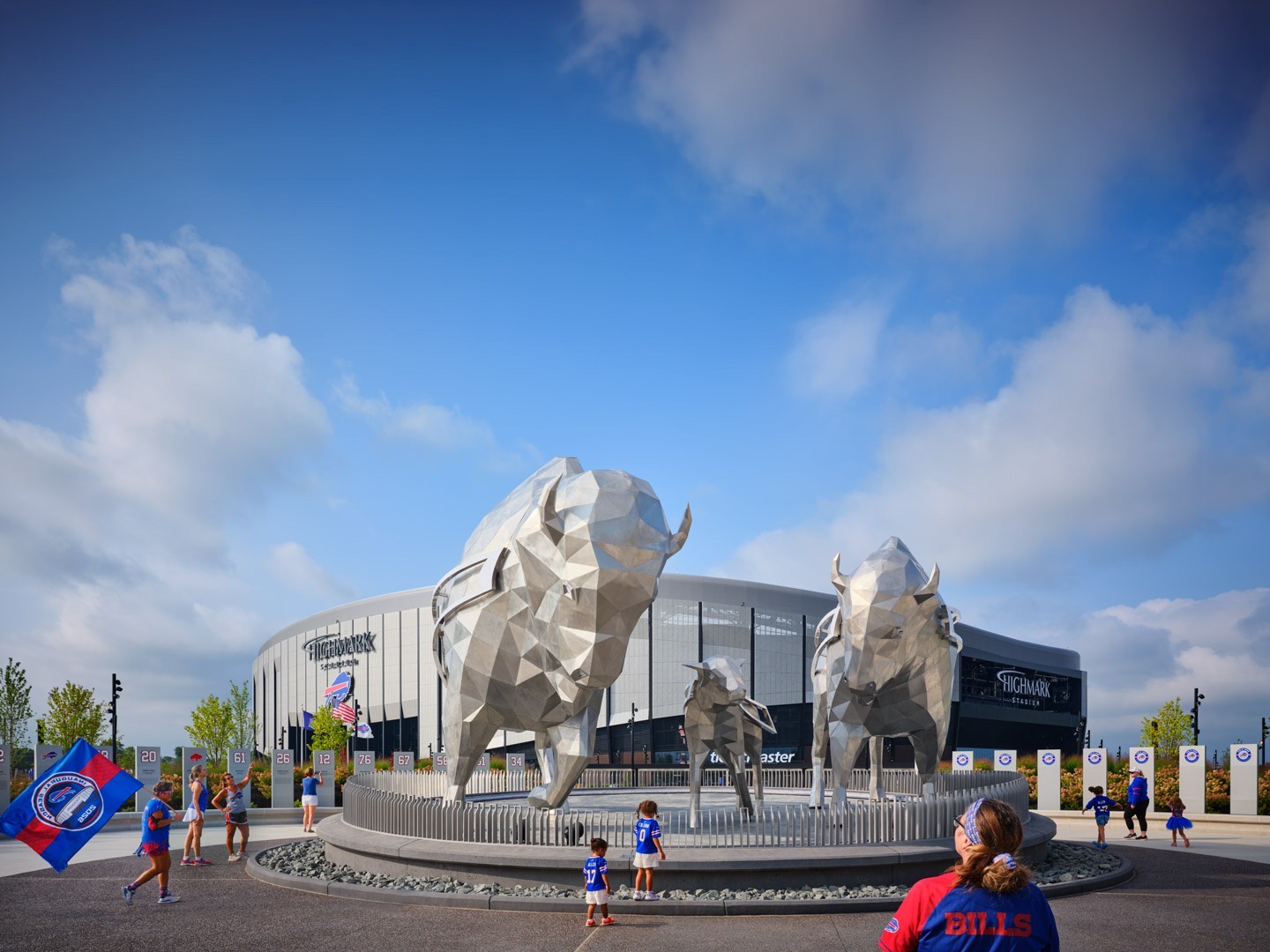
8.Follow how the budget grew and the contract comes into view. When New York State, Erie County and the team agreed in March 2022, the project cost $1.4 billion, and the state and county together committed $850 million. It was the largest taxpayer contribution ever made to an NFL facility. Labor and material costs then pushed the budget past $2.1 billion, but the public share did not move.
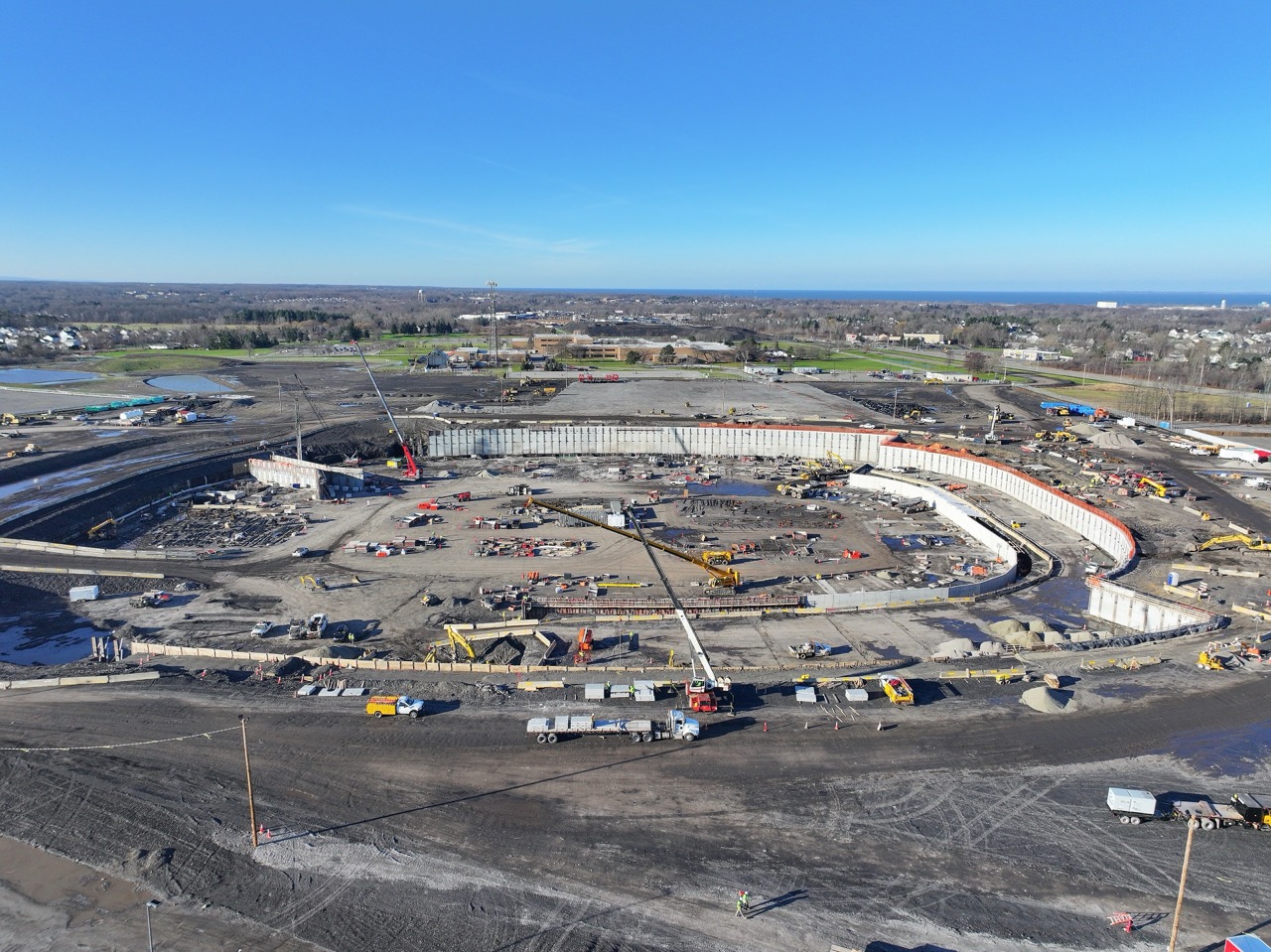
9.The agreement said the owners would pay any construction cost above $1.4 billion. The overrun absorbed by Terry and Kim Pegula exceeds $560 million (about KRW 780 billion). The public share, 61 percent at the planning stage, fell to about 40 percent at completion. Behind the headline of a record subsidy, the risk of rising costs sat with the team from the start.
10.Fans paid part of the team's $1.25 billion in advance. PSL sales came to $259.1 million (about KRW 360 billion), an average of about $4,700 per license. That money does not enter the revenue the NFL shares among clubs. It goes straight into stadium financing. About a fifth of the team's share arrived as cash before opening.
11.Divide by seats and the numbers sharpen. $2.1 billion over 60,108 seats comes to about $34,900 per seat (about KRW 49 million), of which about $14,100 is tax money. What if the same money had seated as many as the old stadium? The cost per seat would have been about 16 percent lower (estimate). Fewer seats mean each seat carries more.
12.That cost has passed to fans. One fan who paid $4,300 a year per seat in the old stadium was reportedly quoted $8,610 for a club seat in the new one. Parking is $132 a game, the highest in the NFL. Right after opening, complaints followed about seats with views blocked by railings, glass partitions and stairways. During the preseason the turf tore up, and before the regular season the entire field was re-sodded.
13.The owner is New York State. The Bills signed a 30-year lease with an option to exit on set terms after 15 years. Legends Hospitality runs operations, and the naming rights belong to regional insurer Highmark Blue Cross Blue Shield. According to Wikipedia, the state will put another $280 million into maintenance over 30 years. What the public pays to keep the team in Buffalo for 30 years does not end with construction.
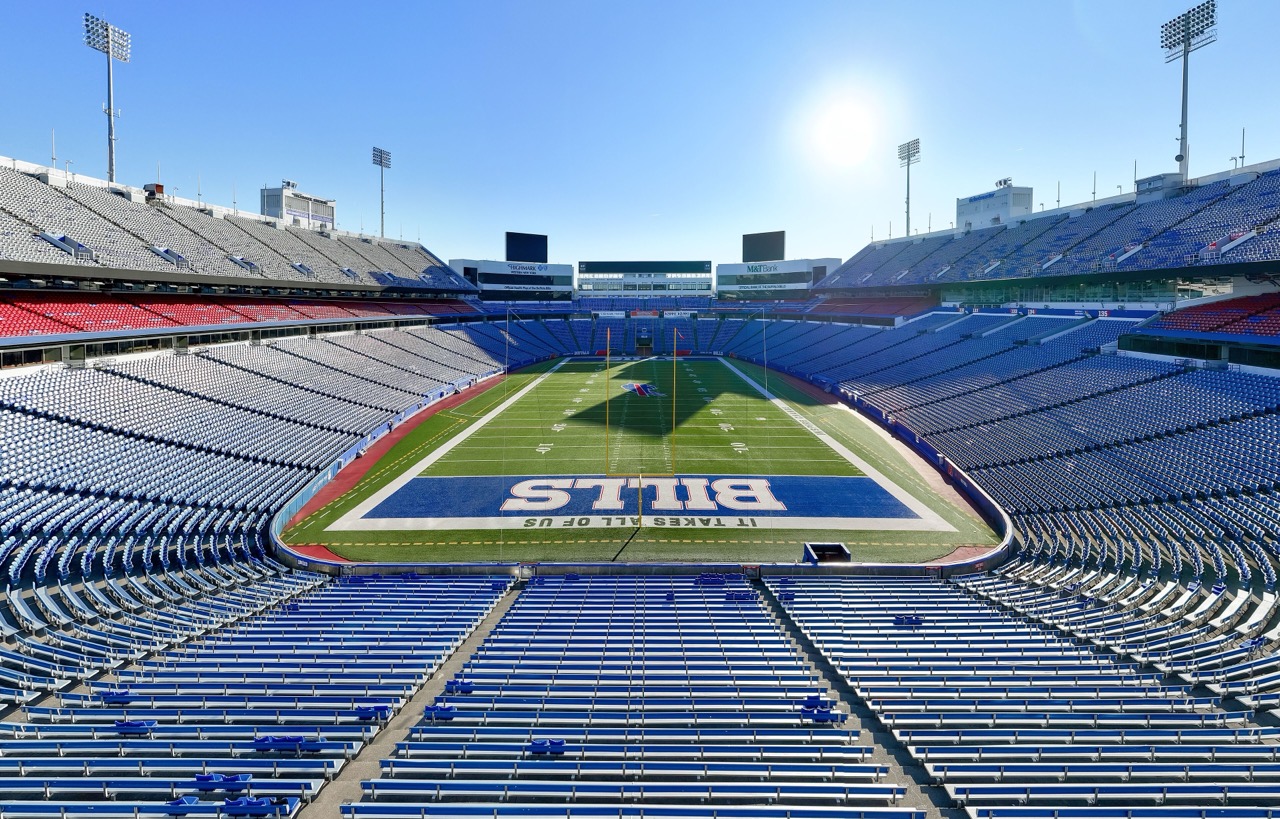
14.The 1973 stadium was built to seat as many people as possible. Backless benches ringed the field, with nothing but sky overhead. Fifty years later, the new building across the street goes the other way. It removes seats, gives every one a backrest, and sets a heated roof above. The right to buy the front rows is sold separately. The old stadium went into demolition as the new one was being finished.
15.Across the street from a stadium used for 50 years, a $2.1 billion replacement has risen with 11,500 fewer seats. Fans paid $259.1 million for seat licenses before it opened. The $850 million in public money was a record, but it was fixed, and the owners paid the overrun. New ballparks in Korean pro baseball run the other way. Daejeon Hanwha Life Ballpark, opened in 2025, cost KRW 207.4 billion, of which the club paid KRW 48.6 billion (23 percent), and a 25-year use permit lets it keep ticket, advertising and concession revenue. In any contract for a stadium like this, the first line to check is who pays when construction runs over. In Buffalo, that one line made the difference between 61 and 40 percent.