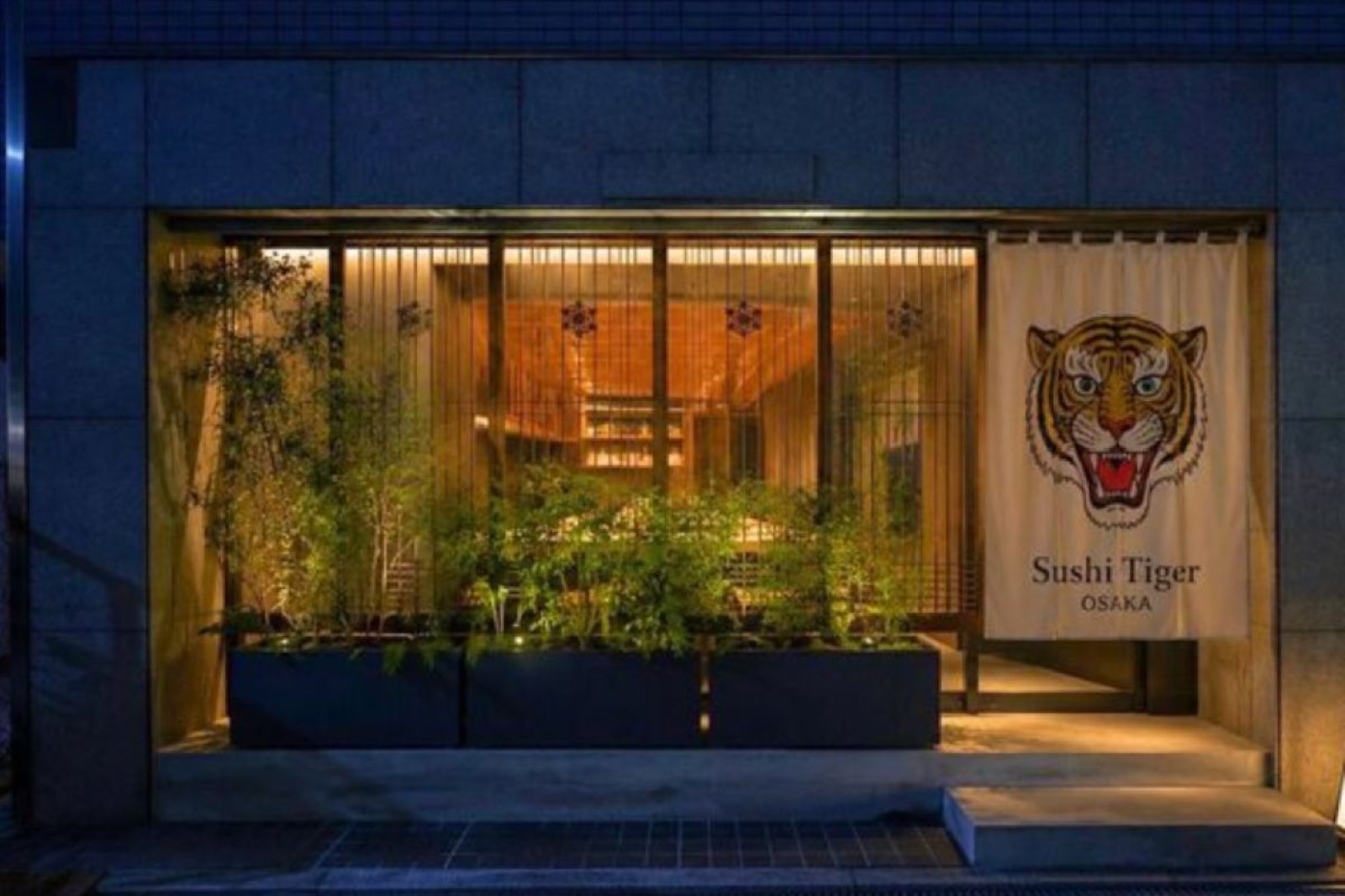
A sushi brand that started in Ho Chi Minh City at about 50 yen a piece has opened its first shop in Japan, in Osaka's Kitashinchi. It did not bring the standing bar or the conveyor belt. It brought a single 13-item course at 5,500 yen.
1.On September 21, Sushi Tiger OSAKA opened on the ground floor of a building in Kitashinchi, Osaka, two minutes on foot from Nishi-Umeda Station. There are 10 counter seats and two private rooms, and dinner is one menu only: 13 items for 5,500 yen.
2.The tiger on the noren came from Vietnam. The brand began in 2021 as a 4-tsubo standing sushi bar in Ho Chi Minh City, and Osaka is its first shop in Japan. The Vietnam side has two Japanese founders. One is a businessman who runs several restaurants there and has also headed Torikizoku's Vietnam entity since 2025. The other is Shozo Tsuruhara, owner-chef of FUME, a Japanese restaurant in Ho Chi Minh City. In Japan the shop is run by WHU, a subsidiary of double, which operates more than 120 restaurants from its Osaka base. Ramen reportedly brought the two sides together. A double director teamed up with Tsuruhara when he took Kirimen, a ramen shop on Tabelog's Hyakumeiten list, to Vietnam this May.
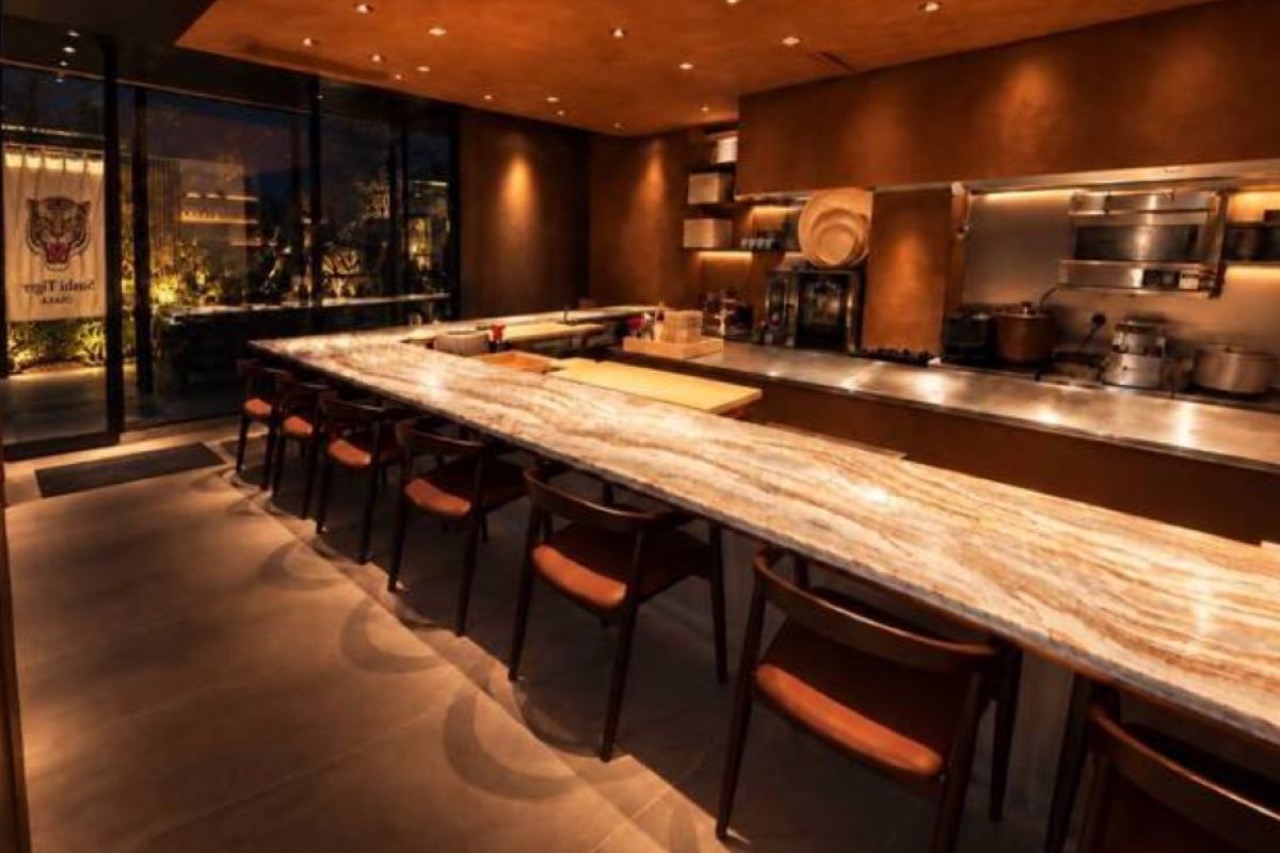
3.Inside, a stone-topped counter with a flowing grain runs from the entrance to the back wall. Wooden chairs with orange cushions stand in a single row in front of it, and the prep station sits right behind the counter, so every seat looks straight at the cutting board and the fire. The ceiling is covered low in wood panels. The press release calls it a grown-up space where you watch a craftsman's hands up close.
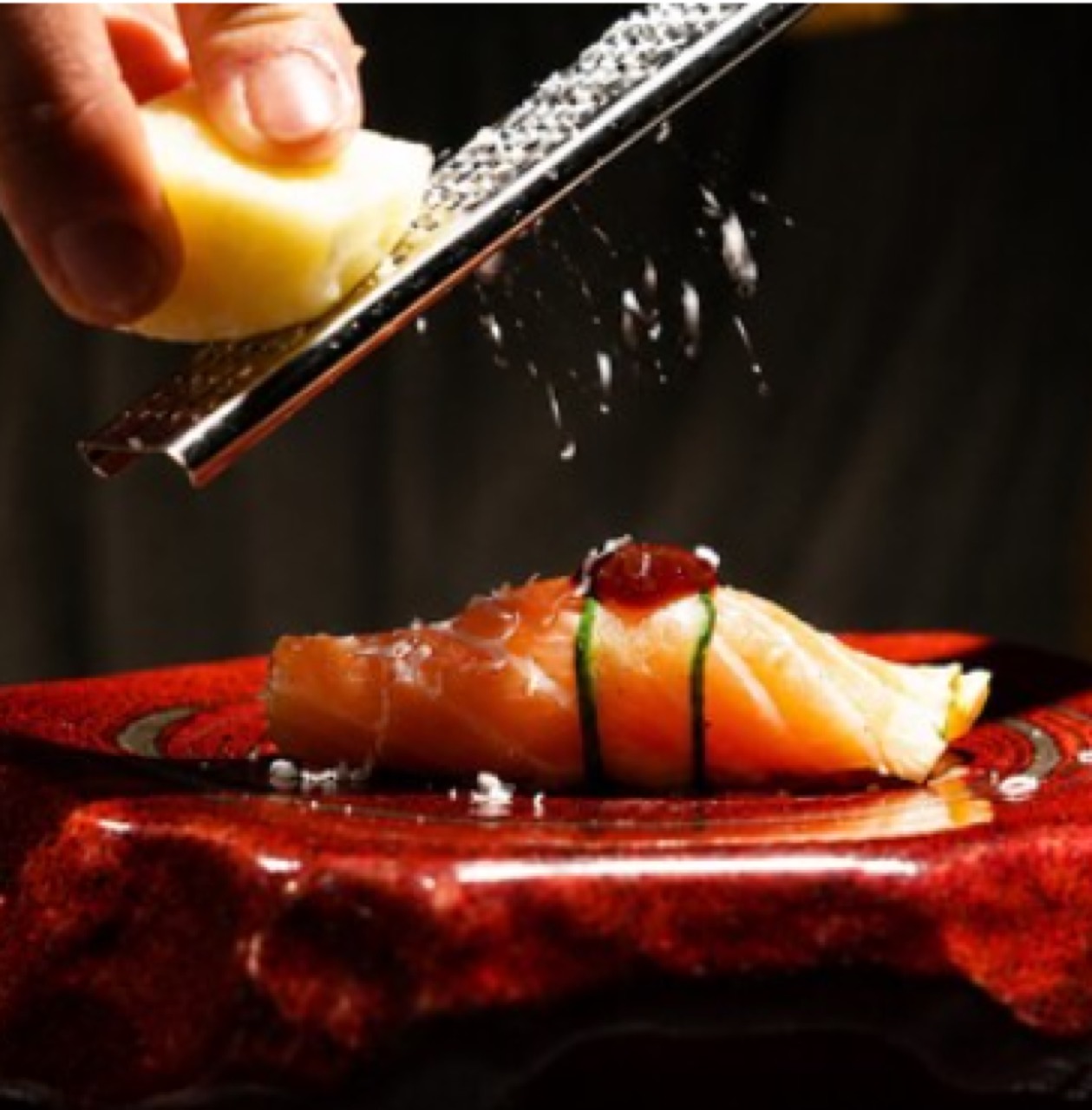
4.The shop's stated approach is to keep the basics of Edomae sushi while refusing to be boxed in by them, and to season every neta separately. One press photo shows how that works. A hand holds a yellow citrus to a grater over a piece of salmon nigiri on a red lacquered stand. The scrape of zest comes first, the scent follows, and only then the fish. Since the seasoning is finished before the piece arrives, guests rarely reach for the soy dish.
5.Dinner starts all at once, twice a night, at 6:00 and 8:30. With ten people sitting down together, the chef shapes the same piece ten times in a row and all ten guests get it at almost the same moment. Counter sushi depends on rice still warm from the palm meeting cold fish before either changes temperature. Two fixed seatings let the shop hit those few seconds for ten people at once.
6.The starting point was Le Thanh Ton Street in District 1 of Ho Chi Minh City, on December 13, 2021. On a street packed with Japanese restaurants and bars, about 30 people could stand and eat in a 4-tsubo shop, counting the counter, three tables and the seats outside. Vietnam Real Guide, a local Japanese-language lifestyle site, introduced it as a place selling pieces from about 50 yen. Local prices ran from 10,000 to 30,000 dong a piece.
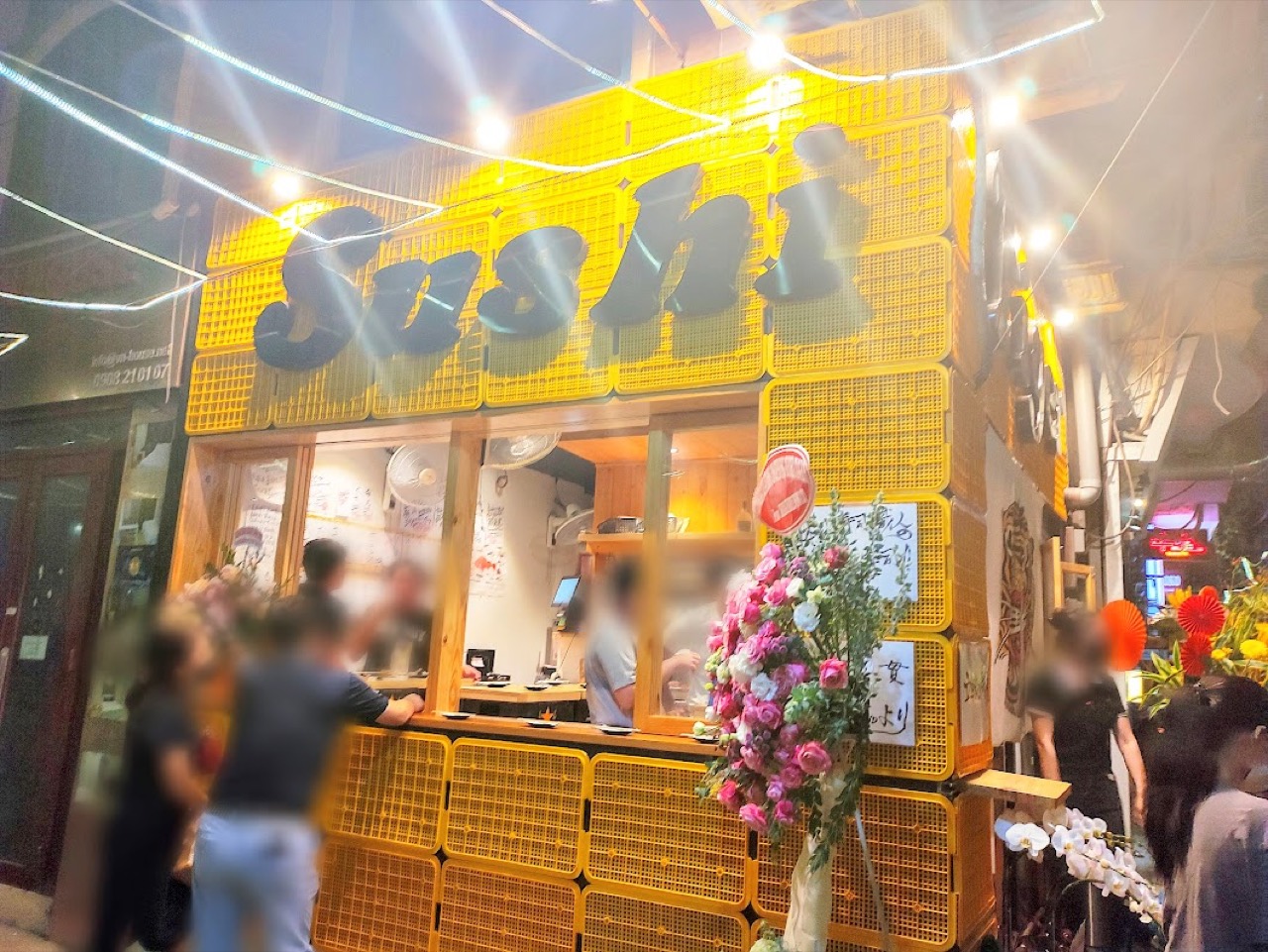
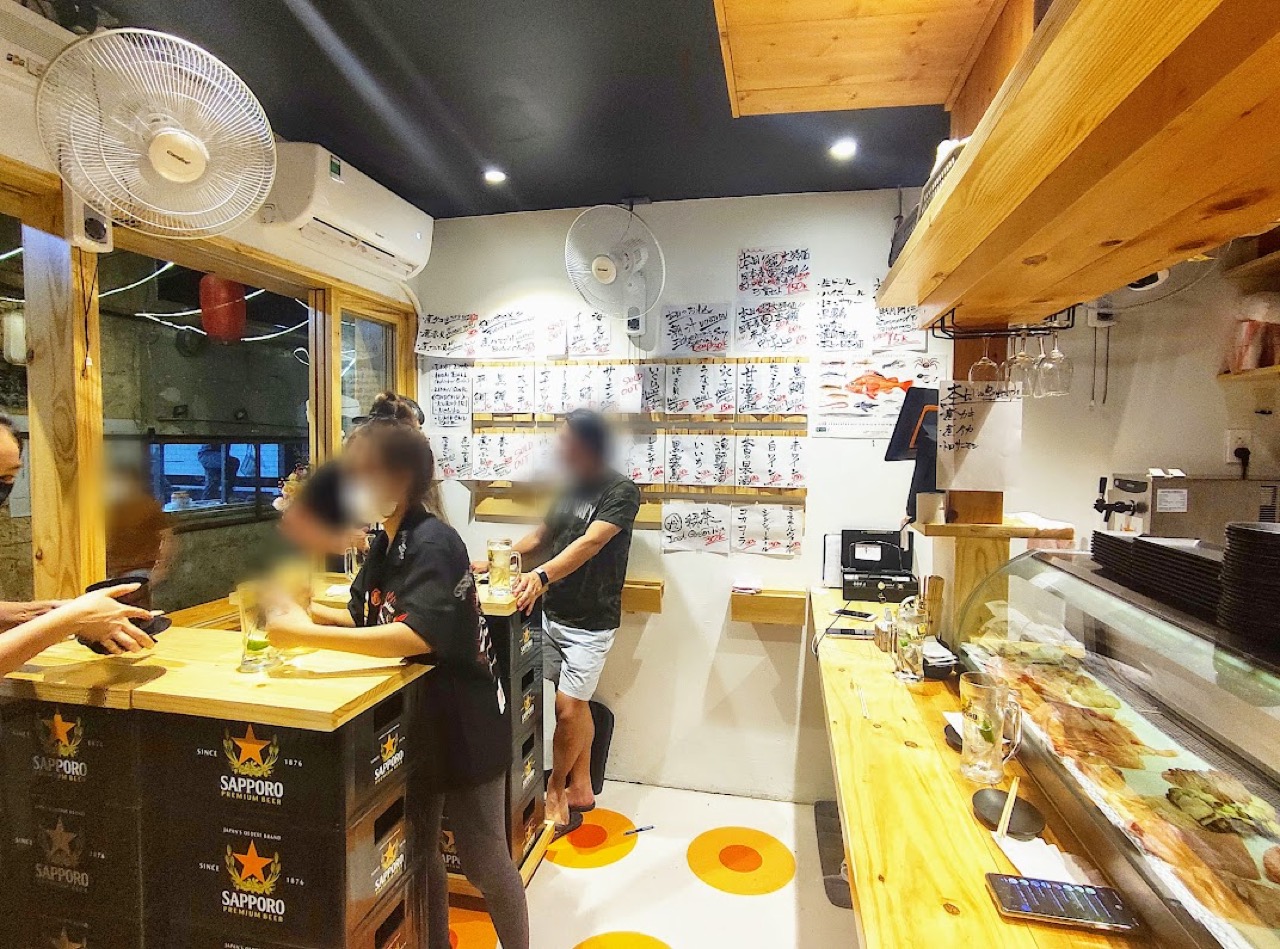
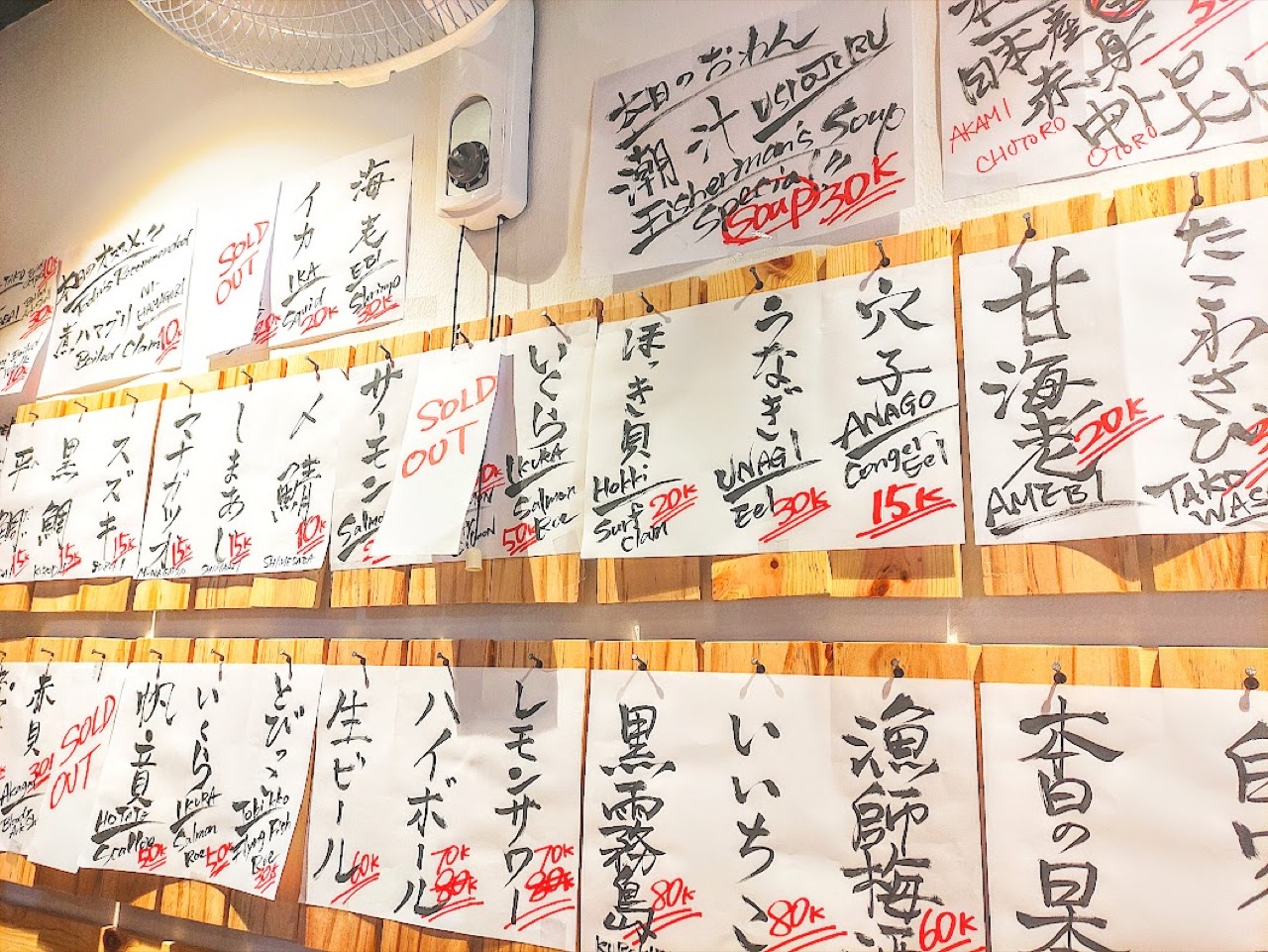
7.Handwritten menu sheets hung in two rows on the wall. Sweet shrimp 20K, conger eel 15K: English and a price under each Japanese name, with K meaning a thousand dong. In a shop where stacked beer crates held up the tables, customers stood, ate a few pieces and left. It looked almost exactly like the standing sushi bars you find by train stations in Japan.
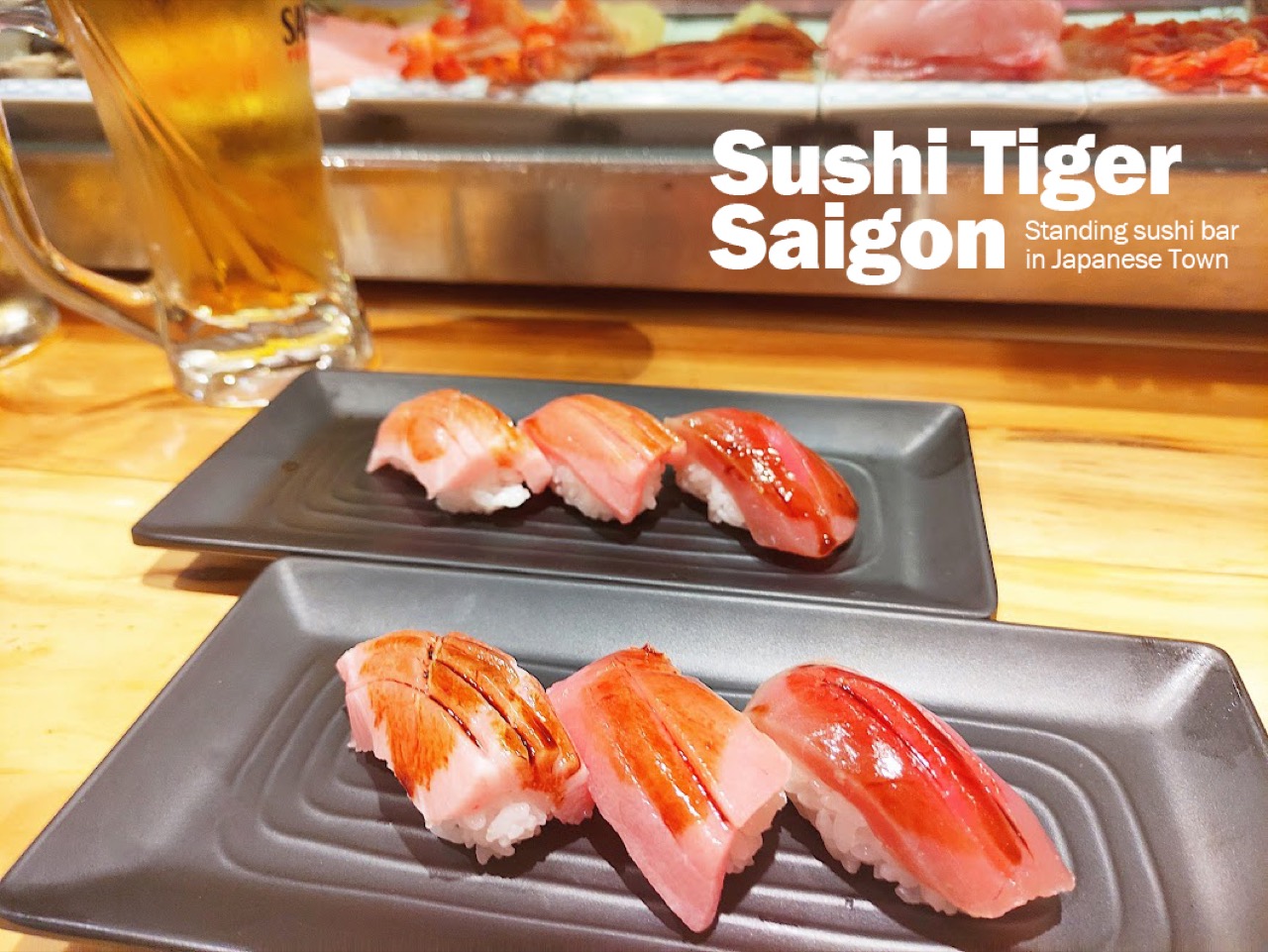
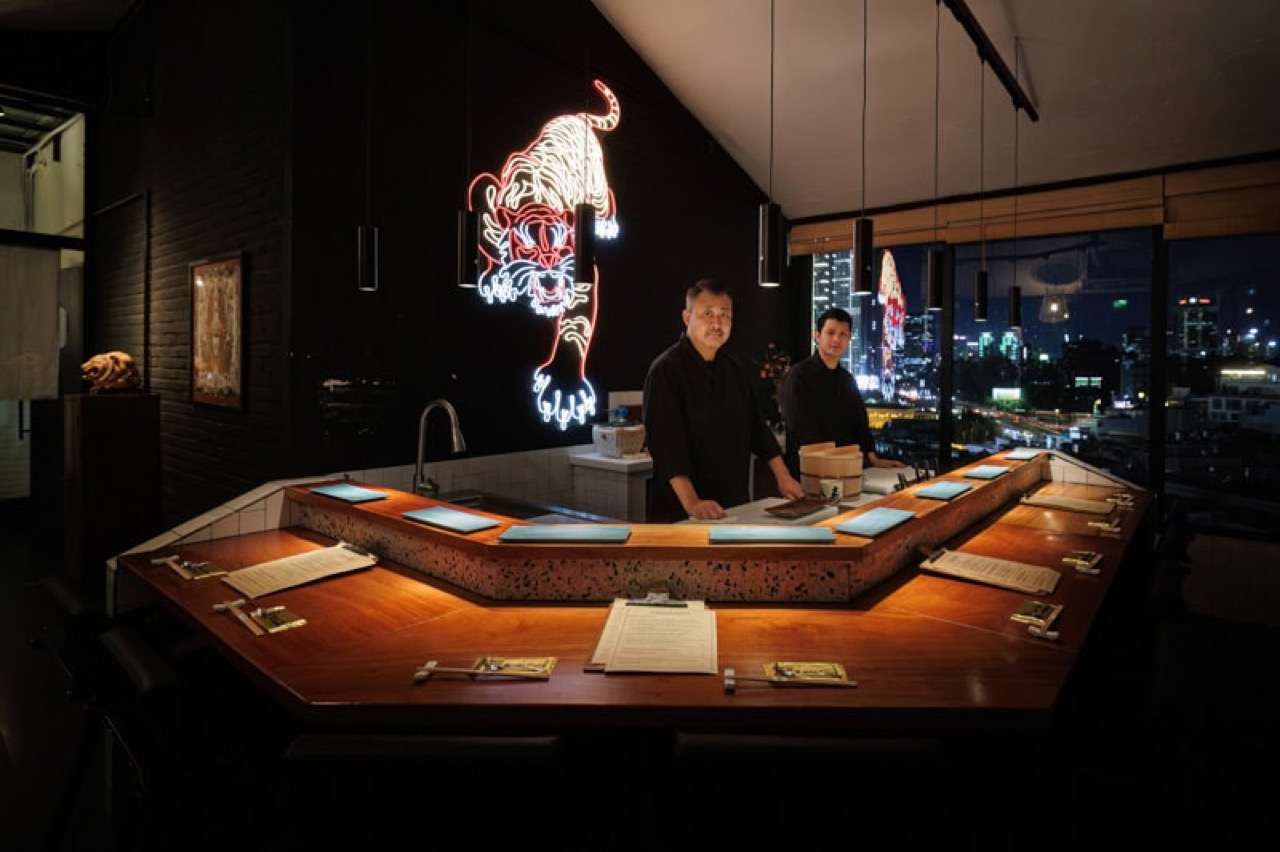
8.Over the next three years the price range moved up. In 2023 the group opened the eight-seat Omakase Tiger on the eighth floor of a building in Binh Thanh, Ho Chi Minh City, and in the same year added another omakase in Thao Dien, where many foreigners live. In 2025 it opened a conveyor-belt shop on Kim Ma Street in Hanoi, sending plates around at 10,000 to 35,000 dong, and this year a roll shop and an omakase on Hanoi's West Lake joined. The press release puts the Vietnamese omakase at about 5,000 yen.
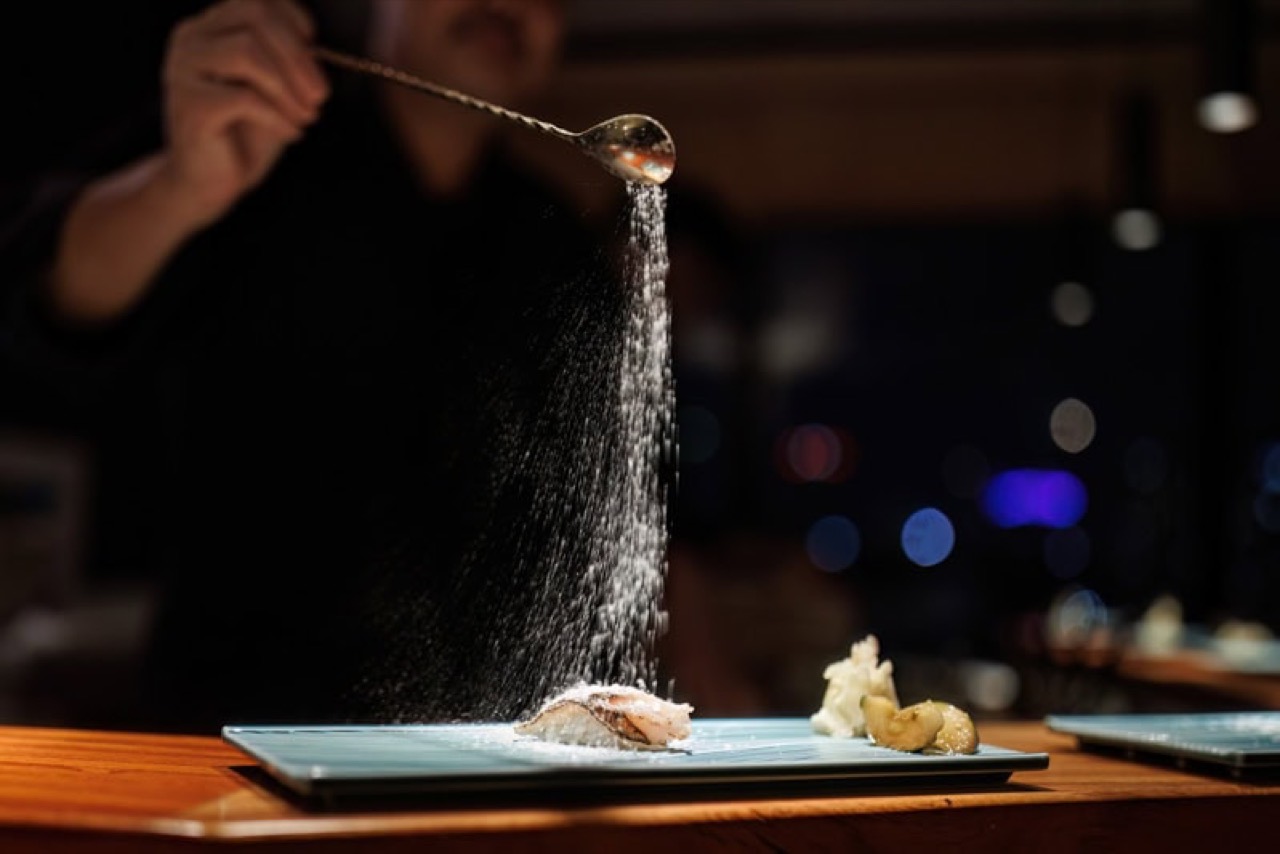
9.Kitashinchi is where Osaka spends the most at night. Sushi counters line up between clubs and ryotei, and dinner courses over 20,000 yen are common. A 5,500-yen course has now arrived in those alleys, and the price is almost the same as the roughly 5,000 yen charged at the Vietnamese omakase. The brand brought its Ho Chi Minh City price list to Kitashinchi, and barely changed it.
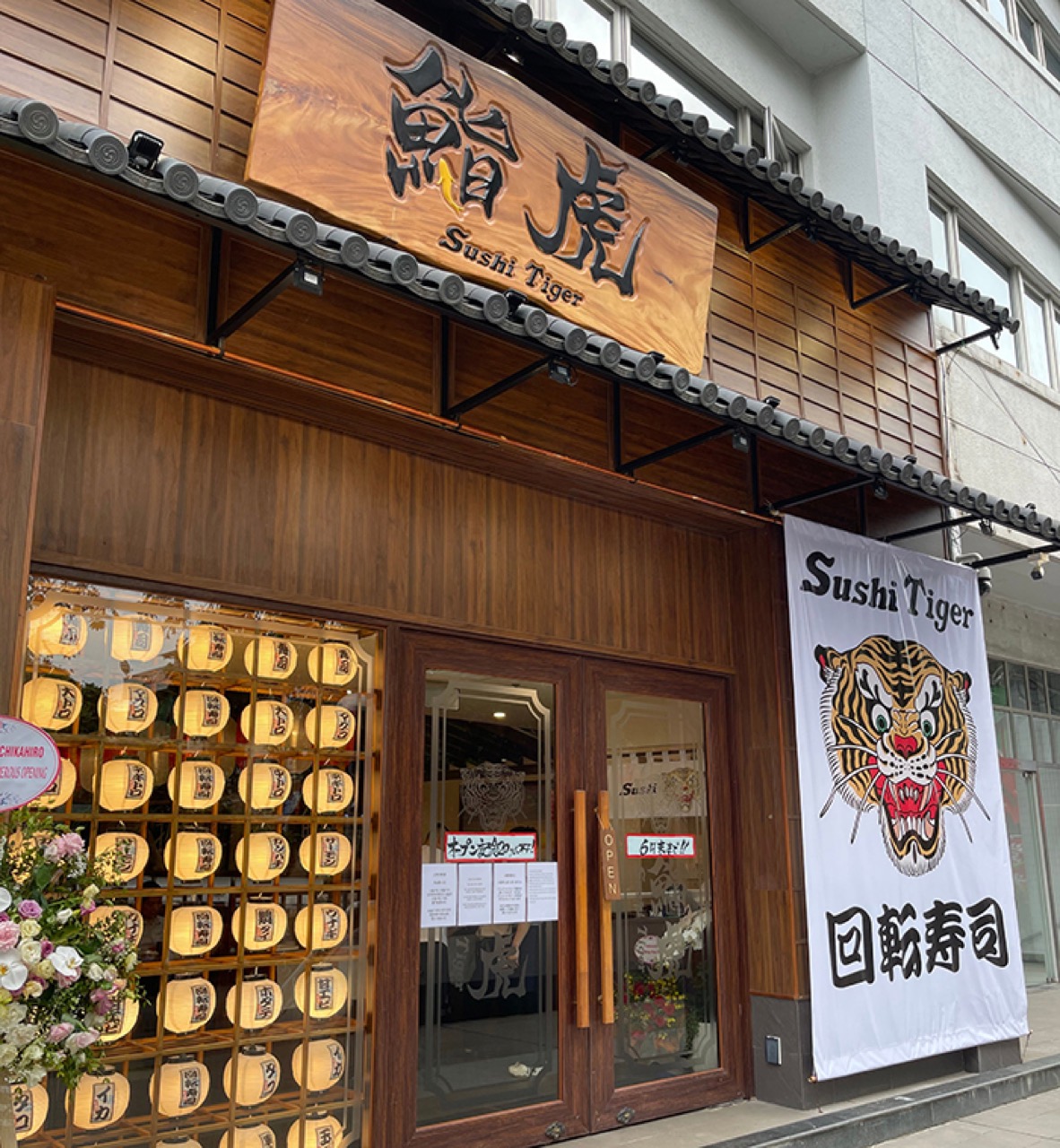
10.The Vietnam story explains the shop's creative sushi. Japanese diners usually meet rule-breaking sushi with suspicion first, but a piece refined for nearly five years in front of foreign customers gives the broken rules a reason. The press release opens the same way, with three Japanese men who grew the brand in Vietnam and brought it home. The tiger on the noren is decoration, and it also works as the explanation that makes a 5,500-yen creative course make sense.
11.The seat math is simple. If all 10 counter seats fill at both seatings, that is 20 people a night and 110,000 yen from courses alone. Lunch runs from 11:30 to 2:30, so at one and a half turns that is about 15 people. The full daily estimate with drinks and lunch is in the chart below.
12.Divide the dinner course by its items and each one comes to about 423 yen. At the 40% food cost that the industry commonly cites for sushi shops, that leaves roughly 170 yen of ingredients per item. That is not enough to serve fatty tuna or sea urchin at full price, so many of the 13 items have to be modest fish that earn their price through prep and seasoning. Seasoning every neta separately is a choice about flavor and a choice about the cost sheet. The cost ratio and item mix are estimates.
13.Fixing two start times comes from the same arithmetic. With ten people eating in the same order, one chef can handle the whole counter, and the fish can be cut in advance for 20 covers an evening. Less goes to waste and ordering is easier. The flip side: if one guest is late the whole seating waits, and an empty seat is simply 5,500 yen that never comes in.
14.In Vietnam the brand climbed from a 4-tsubo standing bar to conveyor belts and omakase. In Japan it stepped onto the middle rung of the ladder rather than the bottom. Coming in as a standing bar or conveyor shop would mean fighting Japan's big chains on price, and taking on Kitashinchi's 20,000-yen counters would mean losing on name. A 5,500-yen, 10-seat counter sidesteps both fights. So which rung comes next? double says it will open more shops in Japan, but has not said whether the next one will be a standing bar or a course counter.
15.A 4-tsubo standing sushi bar on Le Thanh Ton Street in Ho Chi Minh City opened a 10-seat counter in Osaka's Kitashinchi in under five years, and set the course at 5,500 yen, close to its Vietnamese omakase. In Korea, running a 13-item course that changes with the day's fish would first add work on origin labeling. Sushi staples such as red sea bream, flatfish, tuna and yellowtail are on the list of seafood whose origin restaurants must display, so the menu labels have to change every time the course does. If the fish is cut once to fit two fixed seatings, those labels only need changing once a day.