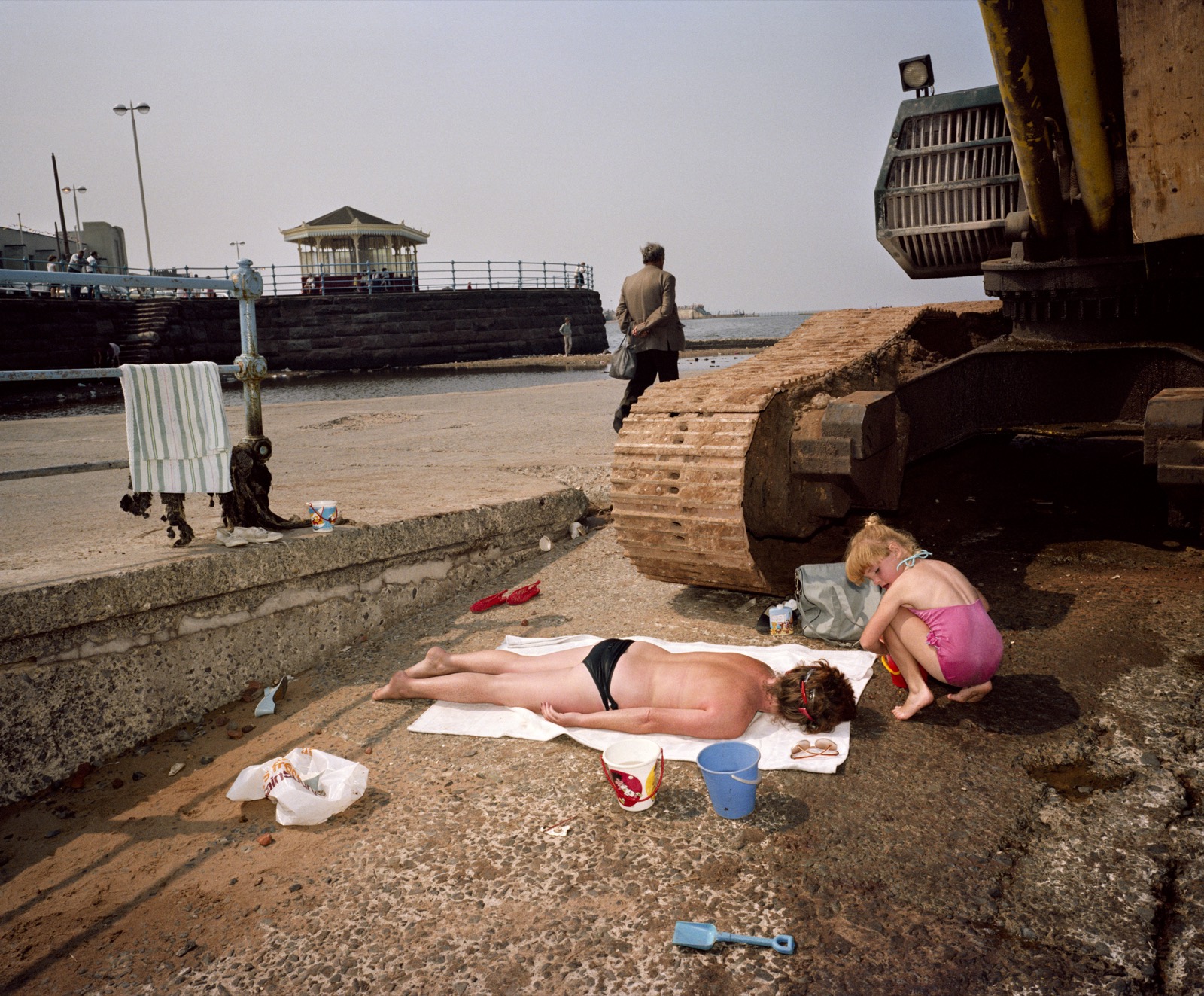
Martin Parr, The Last Resort (1983-85). Working-class holiday resorts rendered as specimens in saturated color (ⓒMagnum Photos)
Daily Culture
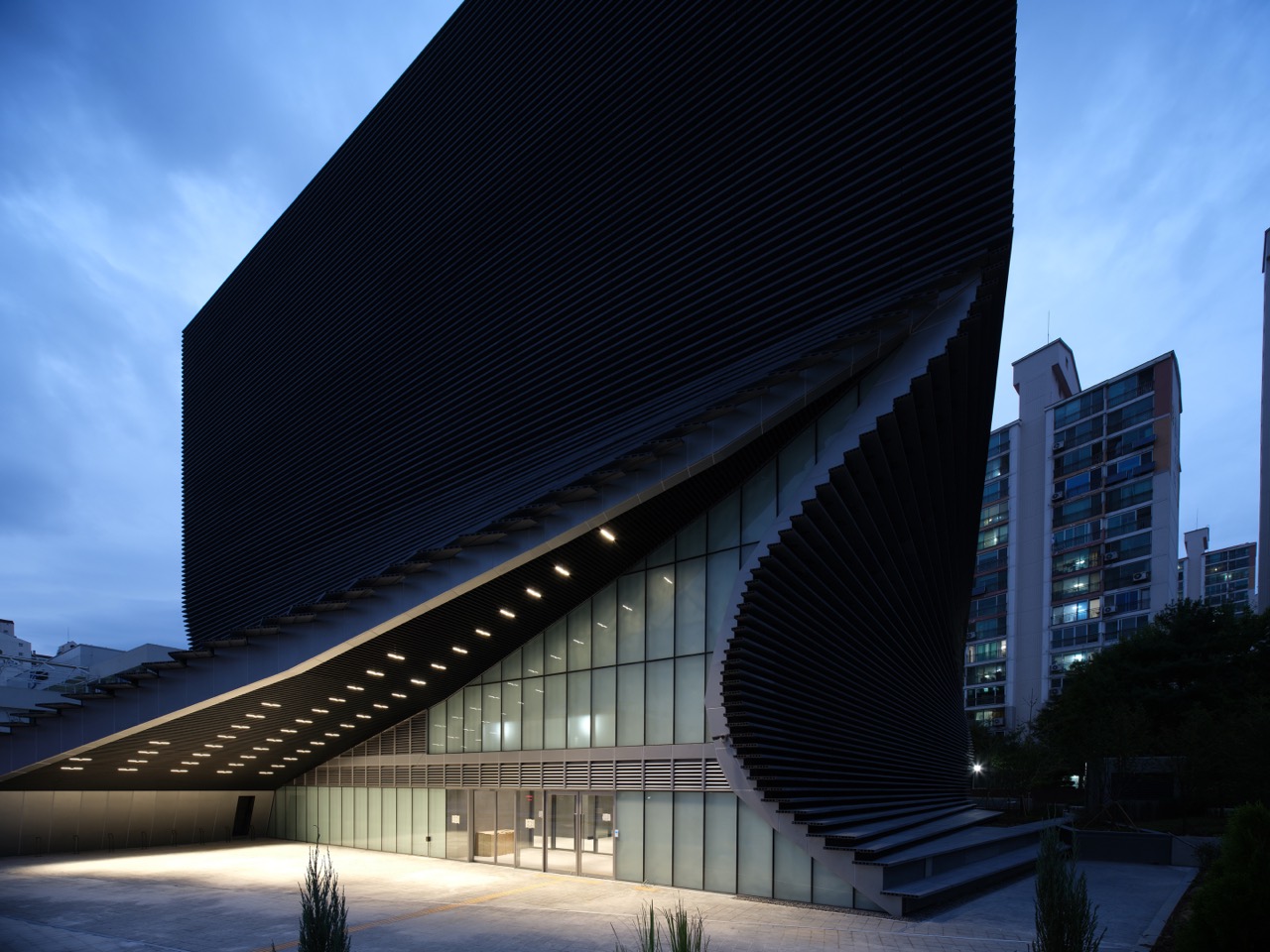
We Are Martin Parr: 500 Photographs, Free, in Changdong
2026.07.17
A retrospective of 500 photographs opened yesterday in Changdong, and its subject died last December. He spent a lifetime photographing people dripping ice cream on holiday and became the most famous photographer in the world doing it. Admission is free.
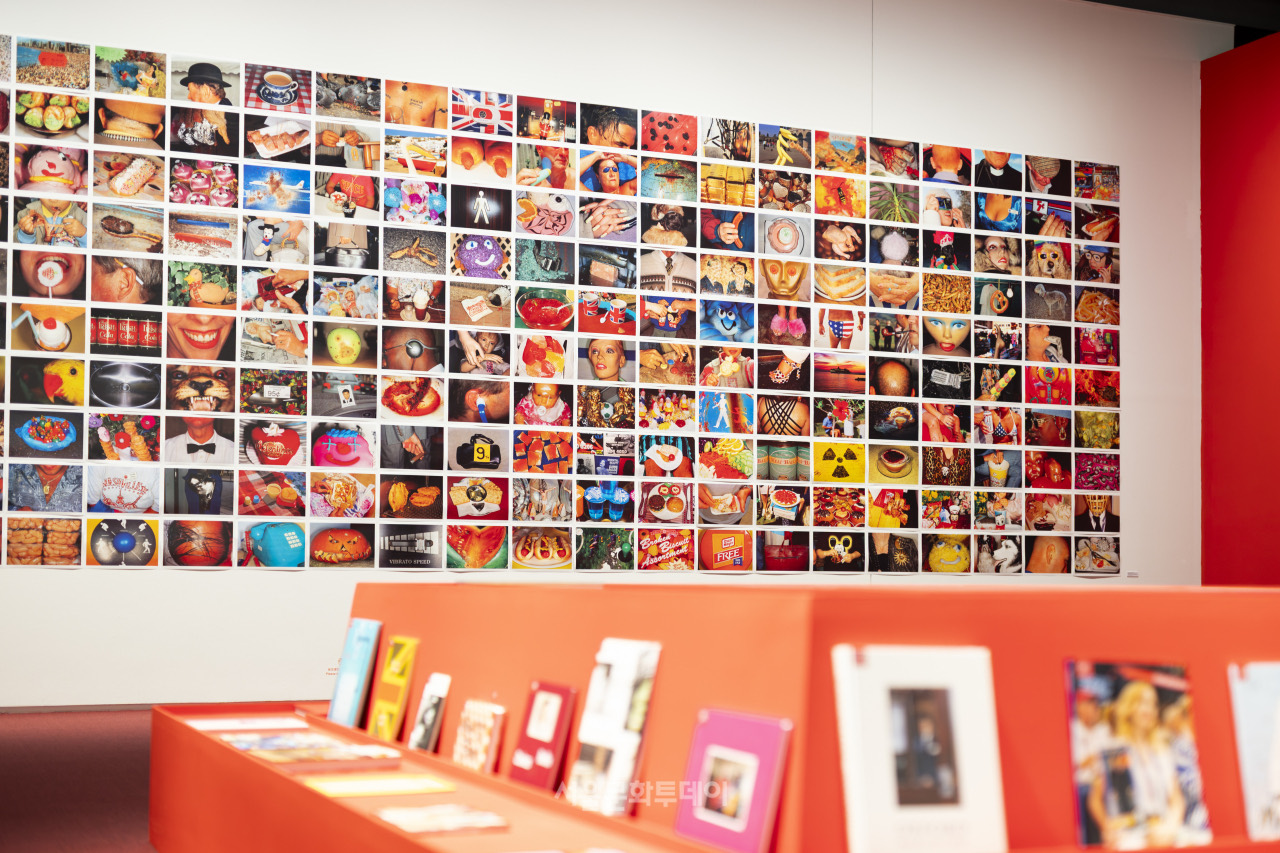
1.Yesterday, July 16, Martin Parr: We Are Martin Parr opened at the Photography Seoul Museum of Art. It runs through October 18 across the entire building, covering more than fifty years of work in fourteen series, with some 500 photographs and 90 photobooks.
2.One more number matters. Admission costs nothing. No booking is needed, so you simply walk in, and docent tours run daily at 11am, 1pm and 5pm. Tuesday to Friday 10am to 8pm, weekends 10am to 7pm, closed Monday. Three minutes on foot from Exit 1 of Changdong Station on Lines 1 and 4.
Photography Seoul Museum of Art. Korea's first public museum devoted to photography, opened in 2025 in front of the Changdong apartment blocks, admission free (ⓒ월간 디자인)
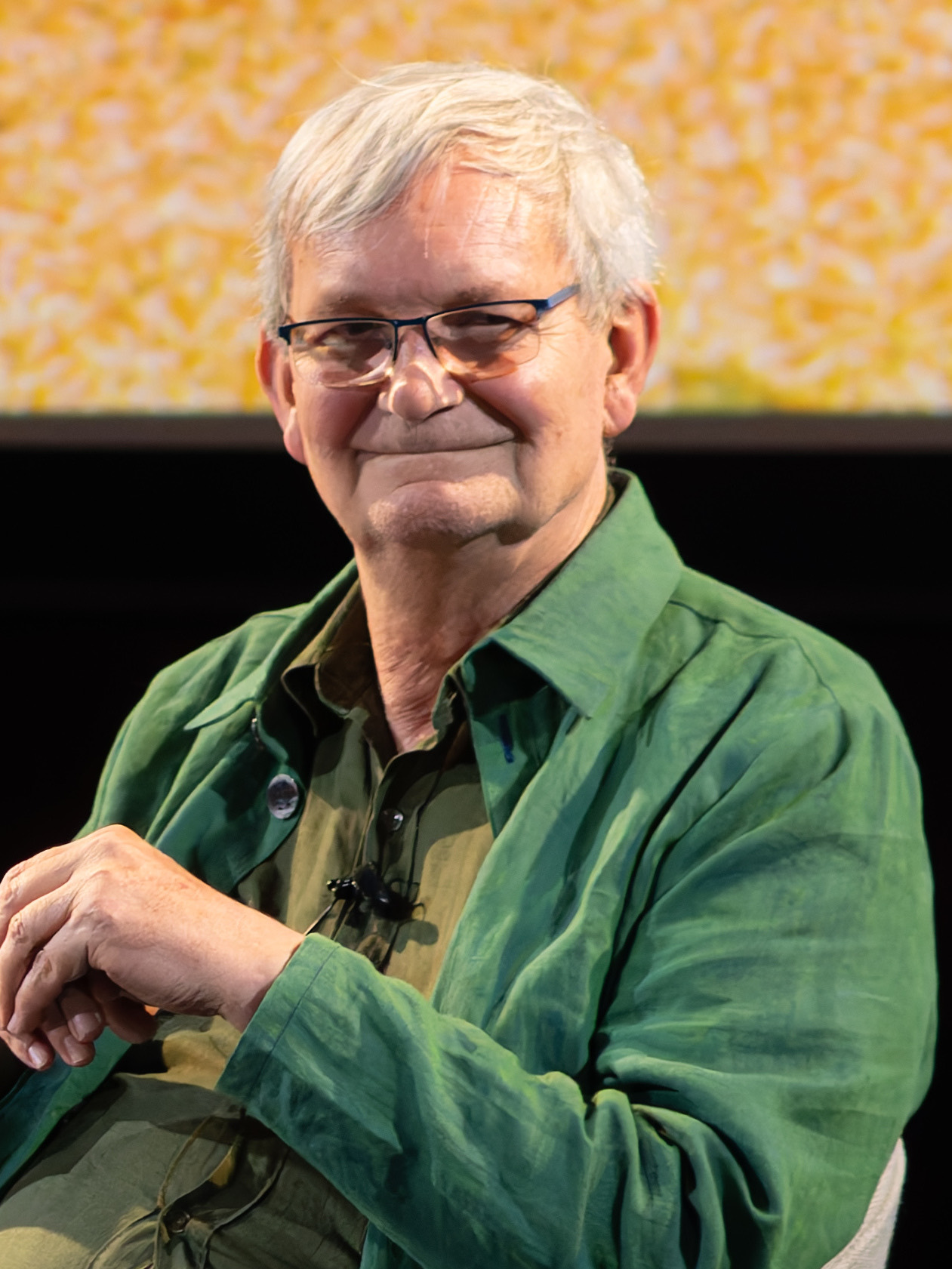
3.One more fact shapes this exhibition. Martin Parr died on December 6 last year, at 73. Diagnosed with myeloma in May 2021, he died at his home in Bristol, and this is the first large retrospective in Asia since his death. Magnum Photos and the Martin Parr Foundation put the selection together.
Martin Parr (1952-2025). The photographer who turned everyday crowds into specimens (ⓒWikimedia Commons)
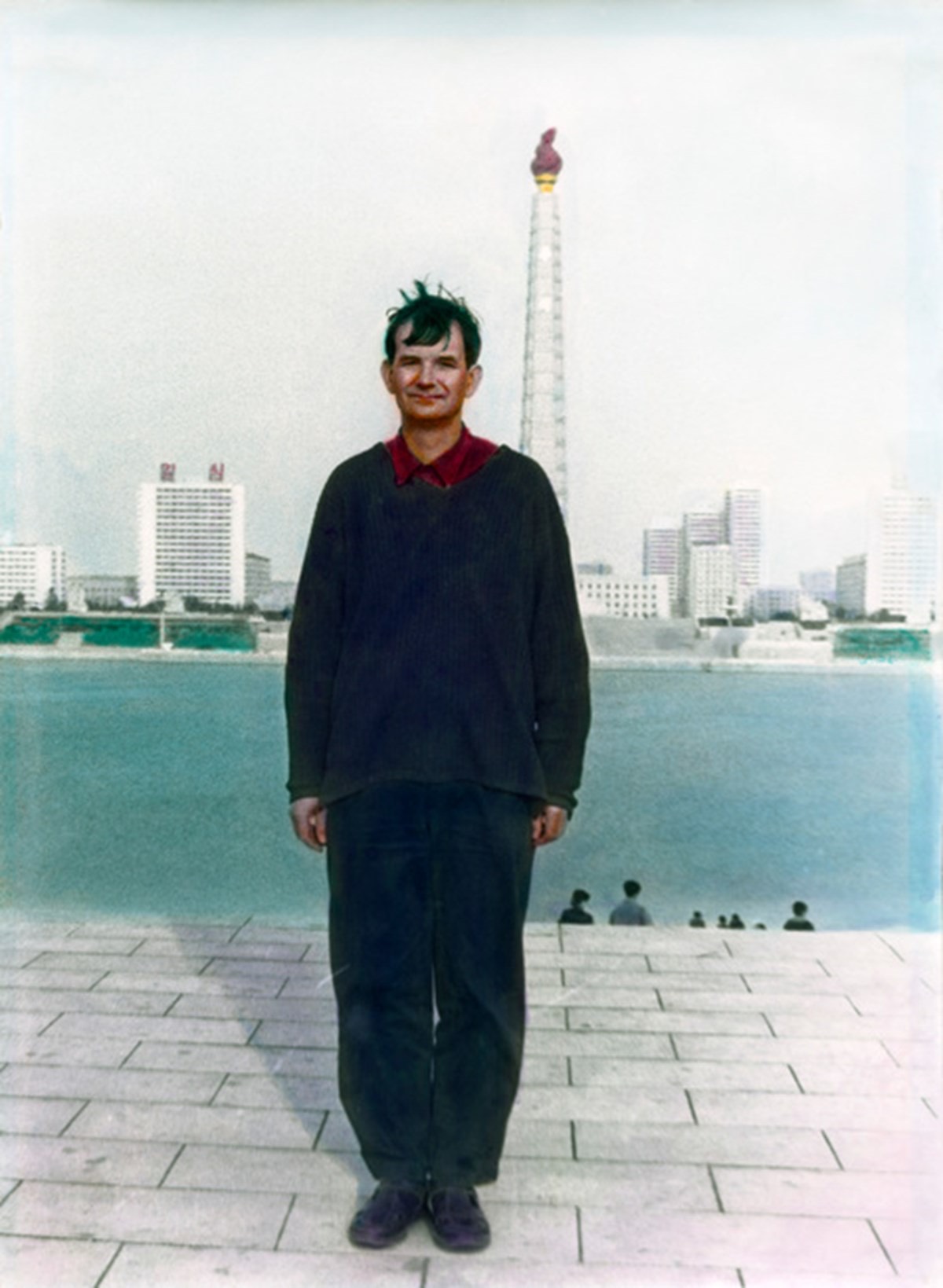
4.There is a part that lands differently for a Korean audience. From the late 1990s into the early 2000s he came here and photographed both South and North Korea, and that work hangs in this show. What he made of us is now what we go to see.
Martin Parr, Pyongyang, North Korea (1997). A self-portrait made at a Pyongyang photo studio against a painted backdrop of the Juche Tower (ⓒMartin Parr/Magnum Photos)
5.How he shot comes first, because with him the technique is the content.
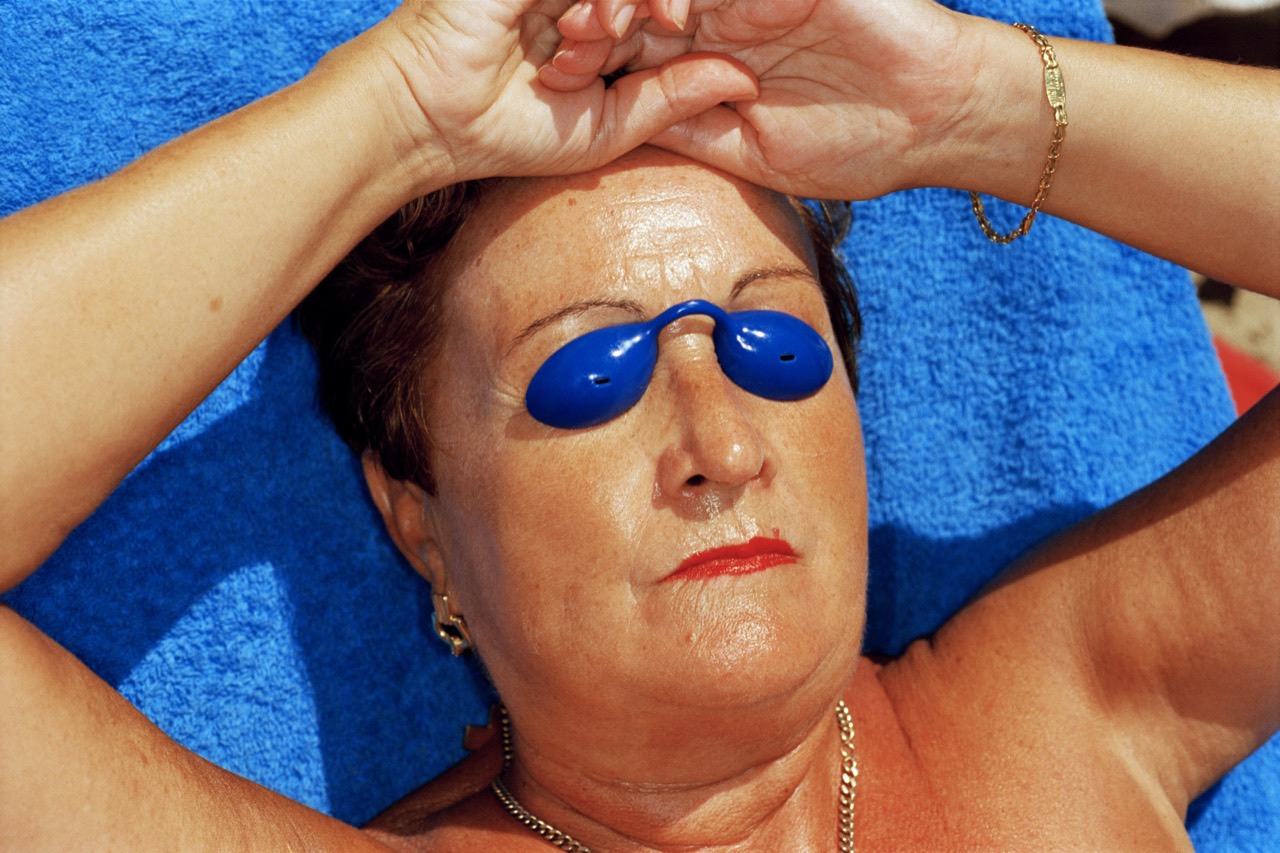
A single pair of blue tanning goggles filling the whole face. Parr's signature, a ring flash that erases shadow (ⓒMartin Parr/Magnum Photos)
6.The kit is unusual. A macro lens right up close, high-saturation color film, and a ring flash fired straight on. The thing was built for dental and insect photography. Because the light rings the lens like a doughnut, no shadow falls.
7.What happens without shadow. The subject lifts off the background as if cut out, ketchup turns redder, skin turns glossier, ice cream turns stickier. Standing there it is nothing at all, and in the photograph it becomes an insect pinned in a specimen case.
8.He put it this way himself: I make serious photography disguised as entertainment. That sentence is the whole thing. You laugh first, and once you have laughed you realize it was you. That is why people stand in front of his pictures unsure whether to laugh or wince.
9.Calling it a humorous eye for the everyday is too loose. Nobody travels to a posthumous retrospective for 500 prints on that basis.
10.For most of photography's history the camera pointed over there. War, famine, poverty, distant countries. The photographer went somewhere dangerous and brought back what the rest of us could not see. The pictures were black and white, and black and white was the uniform of seriousness.
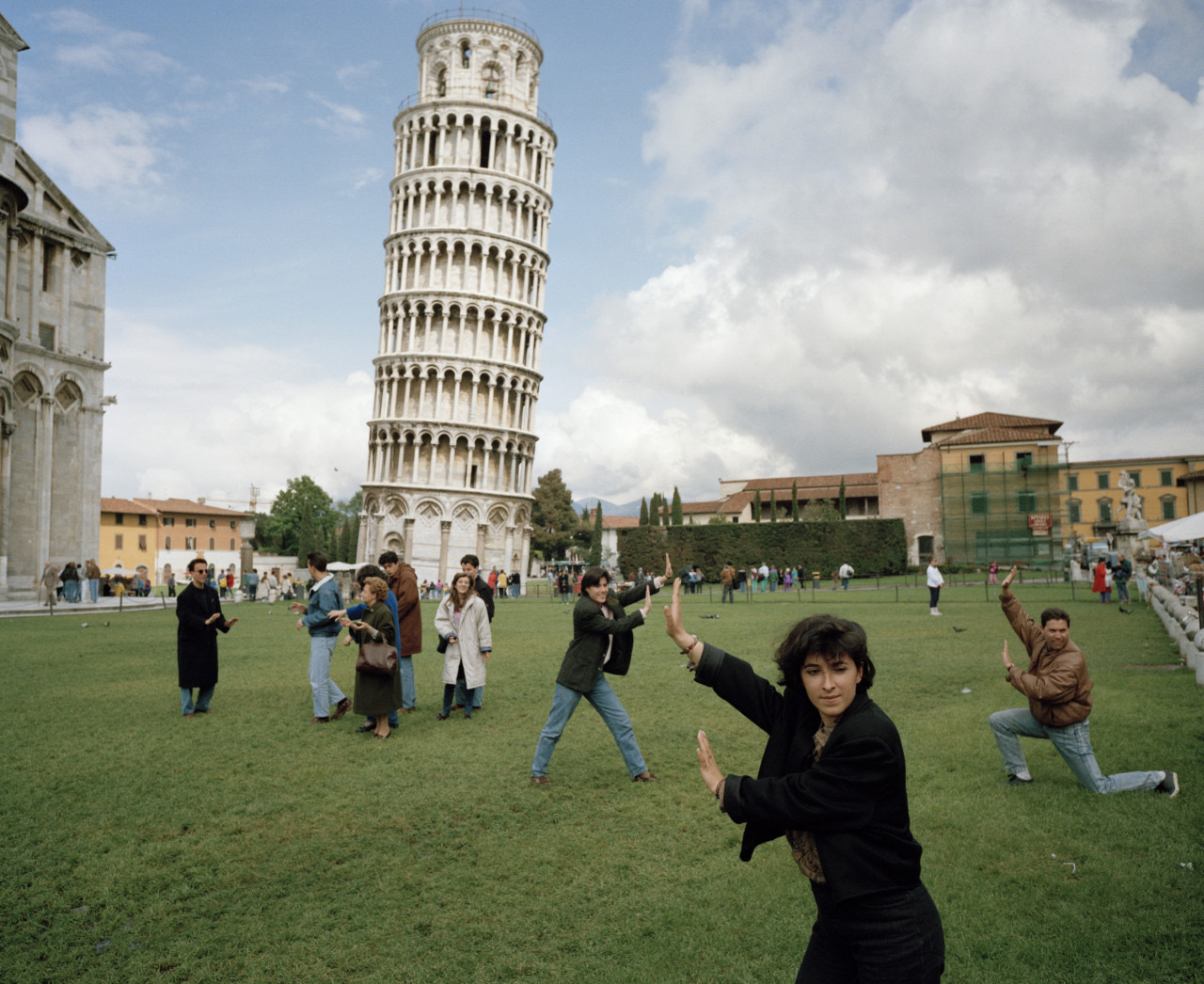
11.Parr turned the camera around and aimed it here. A family eating chips on the beach, a queue of tourists striking the same pose in front of a monument, shopping trolleys, parties, dogs, cake. Scenes where nobody dies and nothing happens.
Martin Parr, Small World (1987-94). In front of the Leaning Tower of Pisa, the pose of tourism that repeats everywhere (ⓒMartin Parr/Magnum Photos)
12.It hurts more. You can look at a war photograph and be sad, because you were not there. Parr's pictures leave nowhere to go. That ridiculous person is you last summer, and you queued the same way and shot the same angle. What he touched is that we had never seen ourselves.
13.Hence the title, We Are Martin Parr. Not that he is Martin Parr, but that we, the ones he photographed, are. An indictment handed to the audience and an invitation at the same time.
14.It lands precisely in 2026. A whole country stages itself and posts it, and people no longer photograph their travels so much as travel in order to photograph. Parr fixed this habit on film forty years ago. Instagram, shot twenty years before the smartphone arrived.
15.None of this was welcomed at first. Follow the record and the resistance shows.
16.He studied photography at Manchester Polytechnic from 1970 to 1973, then moved to Hebden Bridge in 1975 and photographed rural Methodist chapels in black and white. The Non-Conformists series. Up to here it reads as the CV of an orthodox documentary photographer.
17.In 1982 he switched to color, prompted by American photographers such as Joel Meyerowitz and William Eggleston. In the European documentary camp of the time, color was the language of advertising and holiday postcards while serious work stayed black and white, so going color meant betraying your own side.
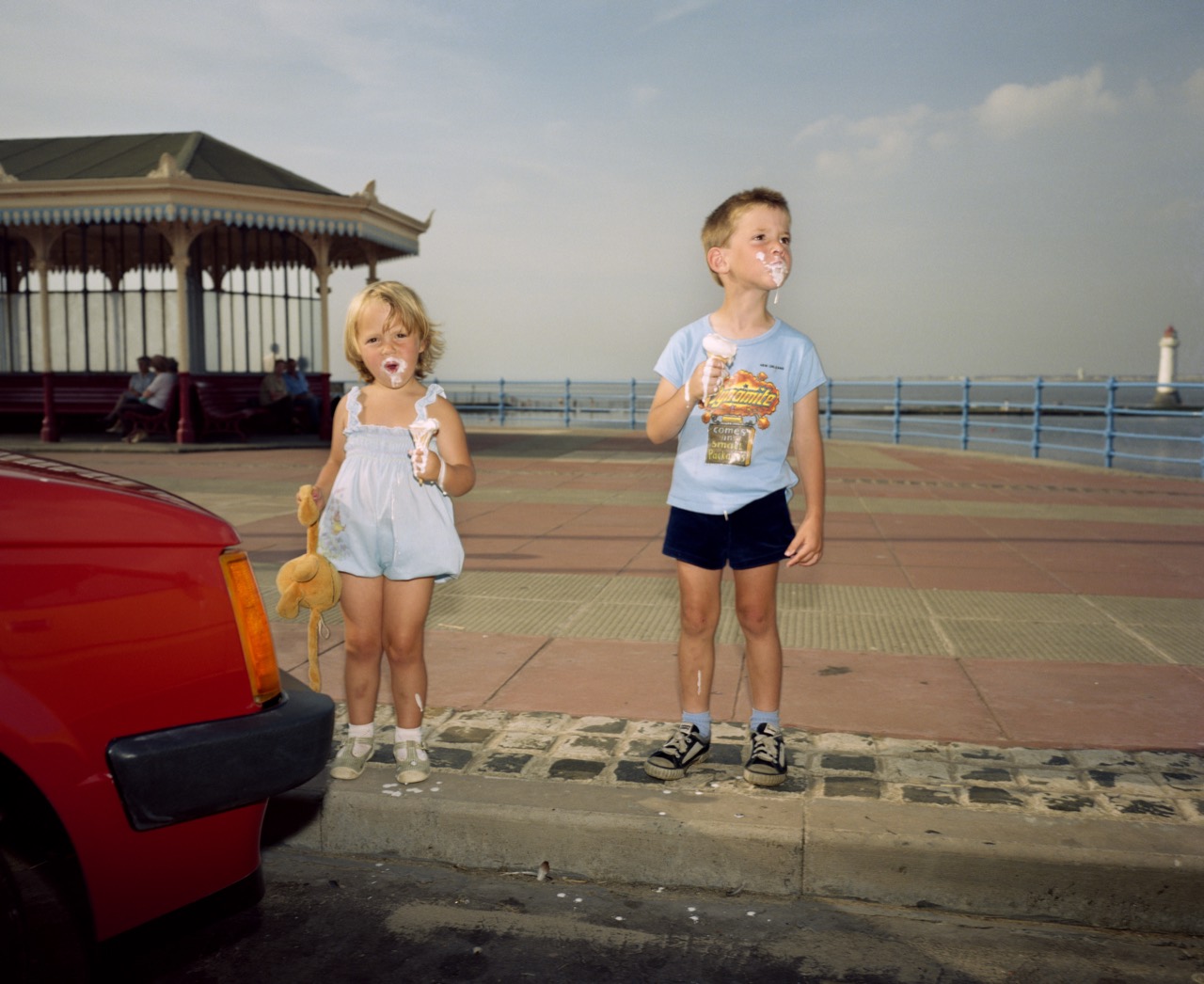
18.The first result of that betrayal was The Last Resort (1983-85). He photographed working-class holidaymakers at New Brighton, the faded seaside resort across the water from Liverpool, eating beside rubbish, tanning on concrete, children crying, ice cream melting. The critic Gerry Badger called the work a seismic shift in the basic mode of photographic expression.
Martin Parr, The Last Resort (1983-85). New Brighton, melting ice cream and a child (ⓒMartin Parr/Magnum Photos)
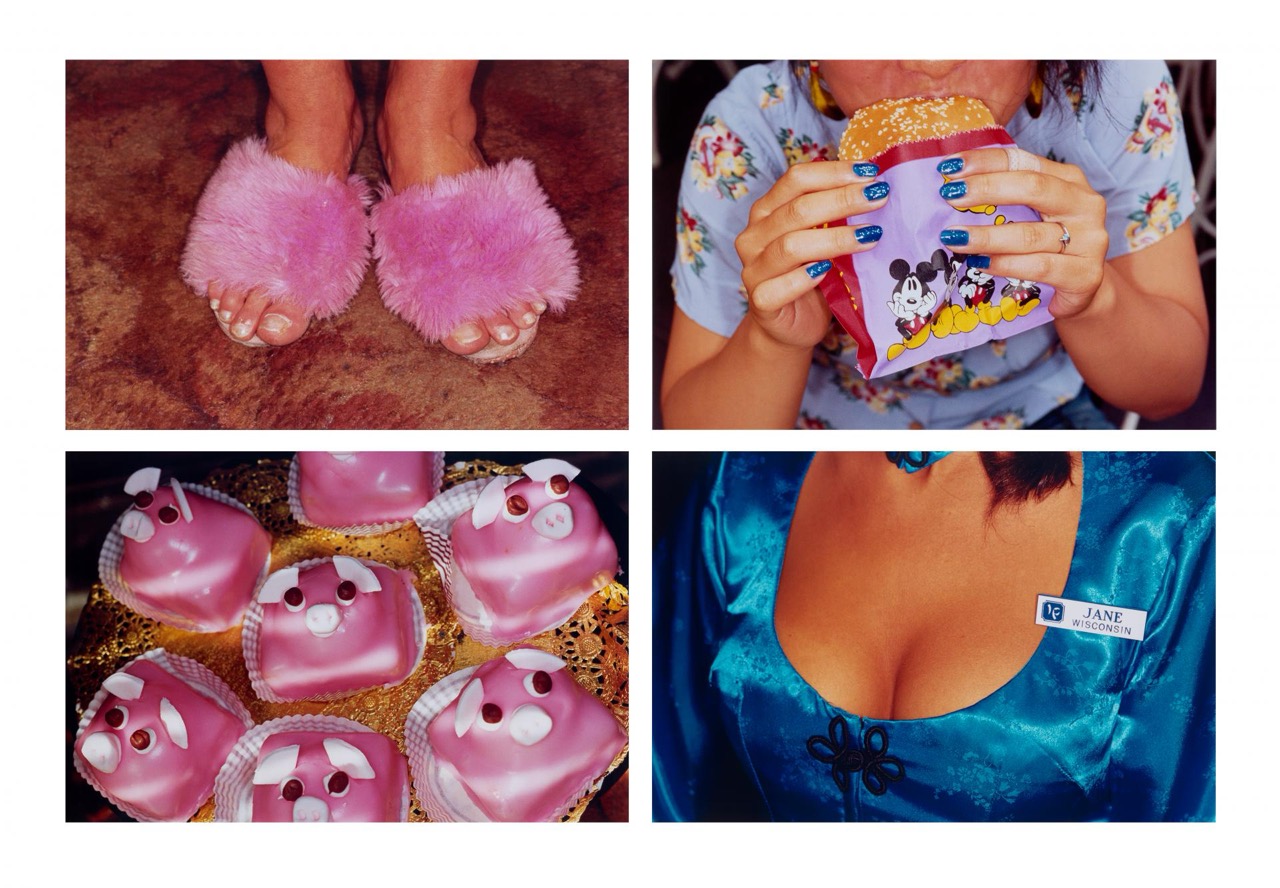
19.The work that followed kept raising the camera. The Cost of Living (1987-89) took on the middle class grown comfortable under Thatcher, and Small World (1987-94) took on package tourism worldwide. Common Sense (1995-99) took on global consumption, and the way he released it is better still. It opened simultaneously at 41 venues in 17 countries.
Martin Parr, Common Sense (1995-99). Macro close-ups that turned global consumption into specimens (ⓒMartin Parr/Magnum Photos)
20.Then Magnum. He became a nominee in 1988 and a full member in 1994, by a single vote. Philip Jones Griffiths, known for the Vietnam War book Vietnam Inc., opposed his entry in public. Why let a man who photographs chips on the beach into an organization that photographs war and justice.
21.That heretic, admitted by one vote, served as president of Magnum from 2013 to 2017. The most authoritative press photography cooperative in the world handed the whole organization to the man it had nearly refused. The definition of seriousness had moved. War is not the only grave subject, and how we spend our holidays is grave too.
22.His legacy is not only photographs. He collected more than a thousand photobooks and wrote The Photobook: A History with Gerry Badger. He collected more than books, too: John Hinde's gaudy British holiday postcards from the 1950s to the 1970s, wallpaper, Saddam Hussein wristwatches, cards stuck inside phone boxes. The things other people call rubbish. An archaeologist of popular taste. The turn is that collecting what others threw away has itself become an asset, with first editions of The Last Resort now trading in the hundreds of pounds and original prints through Magnum selling in the low thousands per piece, by estimate. The Martin Parr Foundation, established in 2014 and opened in Bristol in 2017, keeps this archive, which is why 90 photobooks hang alongside the pictures here. The books are not a footnote. They are the main body.
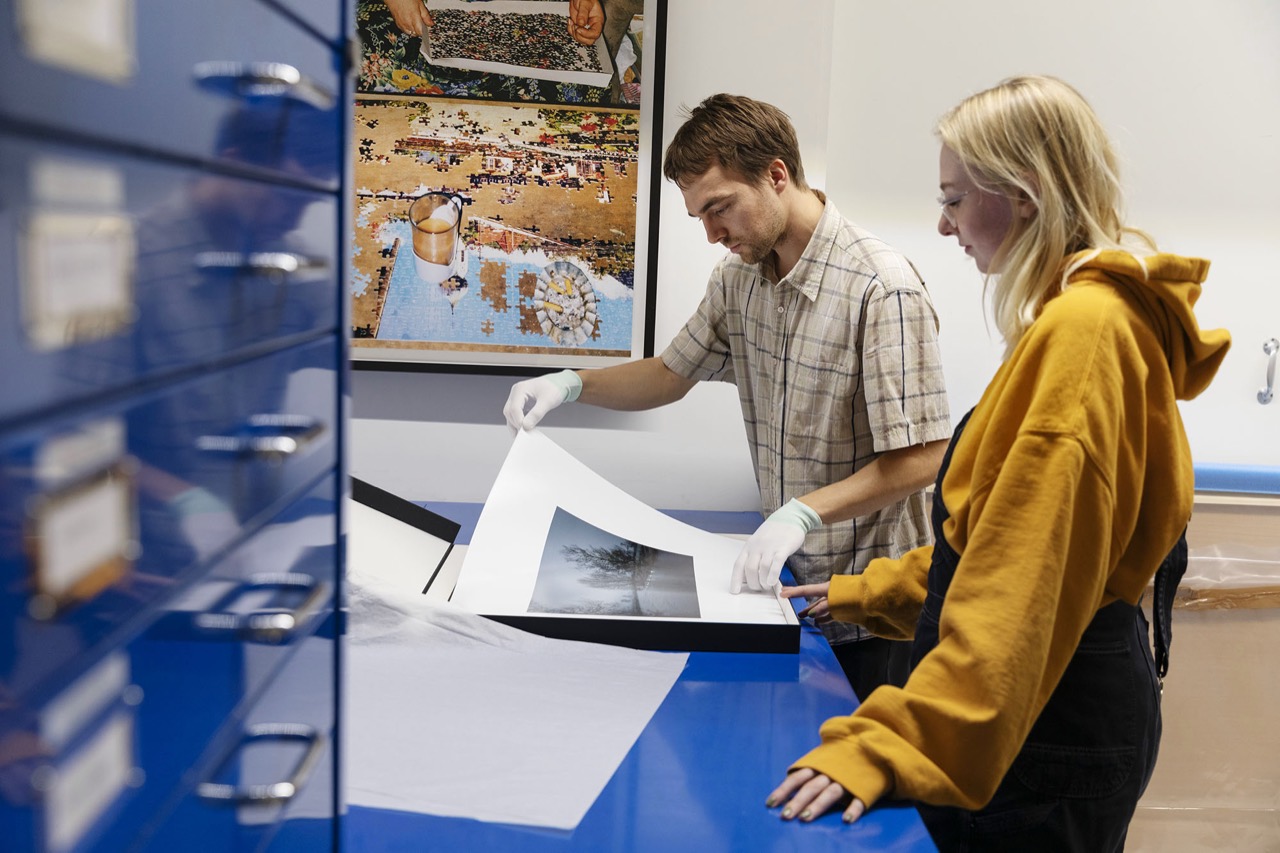
The Martin Parr Foundation archive in Bristol. A print coming out of a drawer in white gloves, with more than a thousand photobooks, holiday postcards and wallpaper held in the same rooms (ⓒMartin Parr Foundation)
23.There is no need to make a saint of him. In 2020 he was drawn into a controversy over his involvement in the 2018 reissue of Gian Butturini's photobook London. Critics said a particular sequence of images was racist, and he stepped down as artistic director of the Bristol Photo Festival. One thing a man who watched other people's taste all his life never managed to see. The blind spot in his own gaze.
24.Last, the structure of the exhibition. Free, and no booking. Parr spent his life pulling photography out of museums, printing his pictures on cheap photobooks, postcards and tea towels to sell. Opening the retrospective of such a man at zero price and zero friction is not a budget decision, it is a reading. As a branch of the Seoul Museum of Art it runs on city funds, and planning, operating and shipping a retrospective of this size usually runs into the hundreds of millions of won, by estimate. Taking that cost from taxes rather than admission is the arithmetic of a public museum. The price is the location, Changdong. Far from the downtown museum belt, this show charges in distance rather than money.
Installation view of Martin Parr: We Are Martin Parr. Some 500 photographs and 90 photobooks across the whole building (ⓒ서울문화투데이)
The Photography Seoul Museum of Art has hung some 500 Martin Parr photographs and 90 photobooks across its whole building through October 18, and the South and North Korea work from the late 1990s is in there. The number that stays is zero, the price of admission. What it charges instead is the distance to Changdong. Anyone trying to borrow his method gets stopped at the order of operations. He neither cast nor staged his subjects and only fitted a doughnut of light around the lens, and the same people came out as specimens. Few places, when sales sag, check color temperature and spot angle before tearing out the menu and the furniture. Putting the laugh at the entrance and pushing the weight further inside, and refusing to throw away postcards and wallpaper until they turned into an archive, are the same lesson. Exhaust the cheap variables before touching the expensive ones.