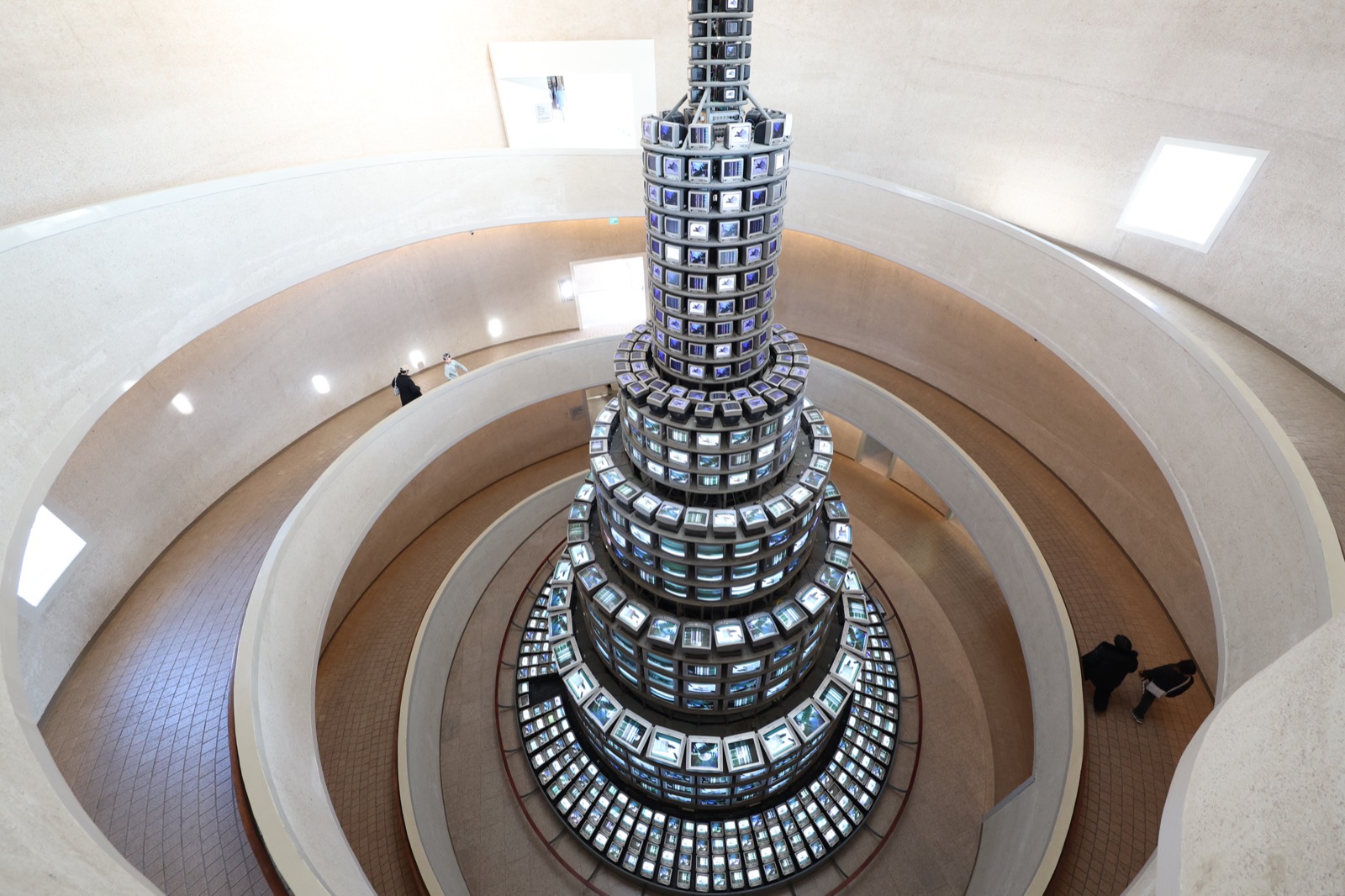
Last Thursday a museum in Yongin opened an exhibition. The run is odd. 214 days. A seven-month festival launched under the name first edition, and admission costs nothing. The artist, twenty years dead this year, asked the same question forty years ago. Do you bring people in, or do you send the work out.
1.The first Nam June Paik Media Art Festival, Nam June Paik's Planet, opened on Thursday July 16. It closes on February 14, 2027. The run is 214 days. The opening week alone takes five days from the 16th to the 20th, and the main stage is the Nam June Paik Art Center at 10 Nam June Paik-ro, Giheung-gu, Yongin, Gyeonggi, though it does not stop there. It ties in outside venues too, the NJP Lounge at the PSK Holdings Pangyo Campus, the Korean Film Archive and Ewha Womans University. This is not an exhibition inside one building.
2.There are two exhibitions. Stars, Gwae runs from opening day to February 14, 2027, and Moons through October 4. They take both the first and second galleries in full, with new commissions from contemporary artists. The Gyeonggi Cultural Foundation is the host and the Nam June Paik Art Center the organizer. On top of that come three days of performances by Korean and French musicians, screenings with the Korean Film Archive, a technology lab and an academic program. The performers include Lim Yongju Future Sound Lab, Chaeul (Jeon Injeong), and Kim Paul & Kyna.
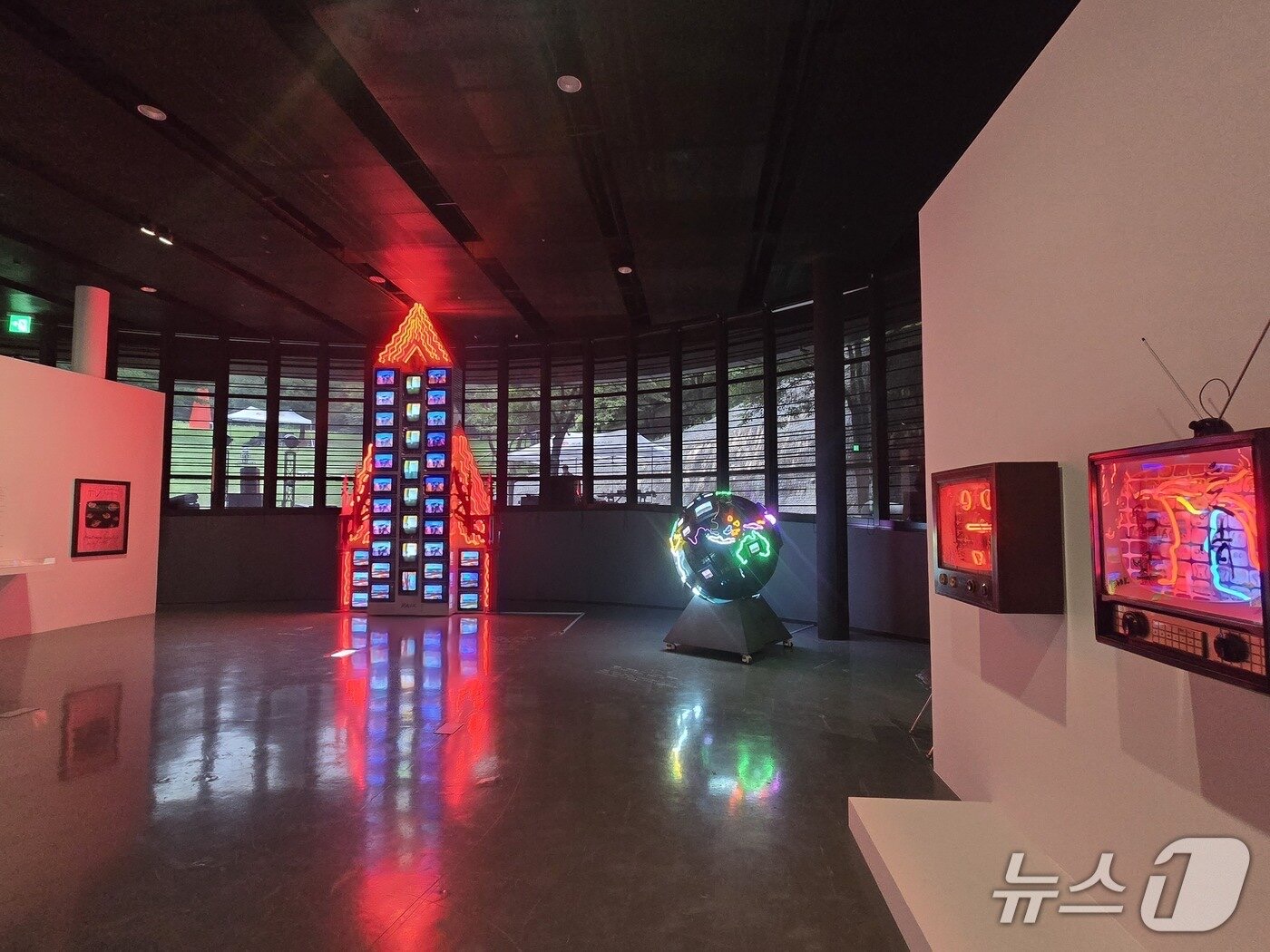
3.The most startling number is the price. Permanent admission is free, with a note that special exhibitions may differ. Tuesday to Sunday, 10am to 6pm, last entry 5pm, closed Monday. The only window taking money on site is the car park, 1,000 won an hour up to 8,000 won a day, with room for 170 cars. A public museum can give up admission income entirely because most of its operating budget comes from local government funding, and self-generated revenue from a museum shop, a cafe or venue hire typically stays in single-digit percentages in this sector, by estimate.
4.What deserves attention in this program is the format, not the works. A museum has started calling itself a festival rather than an exhibition. A festival usually runs three days to ten, bursts and ends. This one runs 214 days. It uses the language of a festival with the run of an exhibition.
5.Look at the structure and the reason for the mix appears. The exhibitions stay fixed for seven months while performances, screenings and academic programs land on top intermittently. The floor is permanent, the events are occasional. Reasons to visit arrive several times rather than once. The spatial layout follows the same logic. Ending at the main building would only meet the people willing to come to Yongin, while scattering nodes to a corporate campus in Pangyo, the film archive in Seoul and a university campus meets the people who will not. Instead of calling people in, it sent the program out.
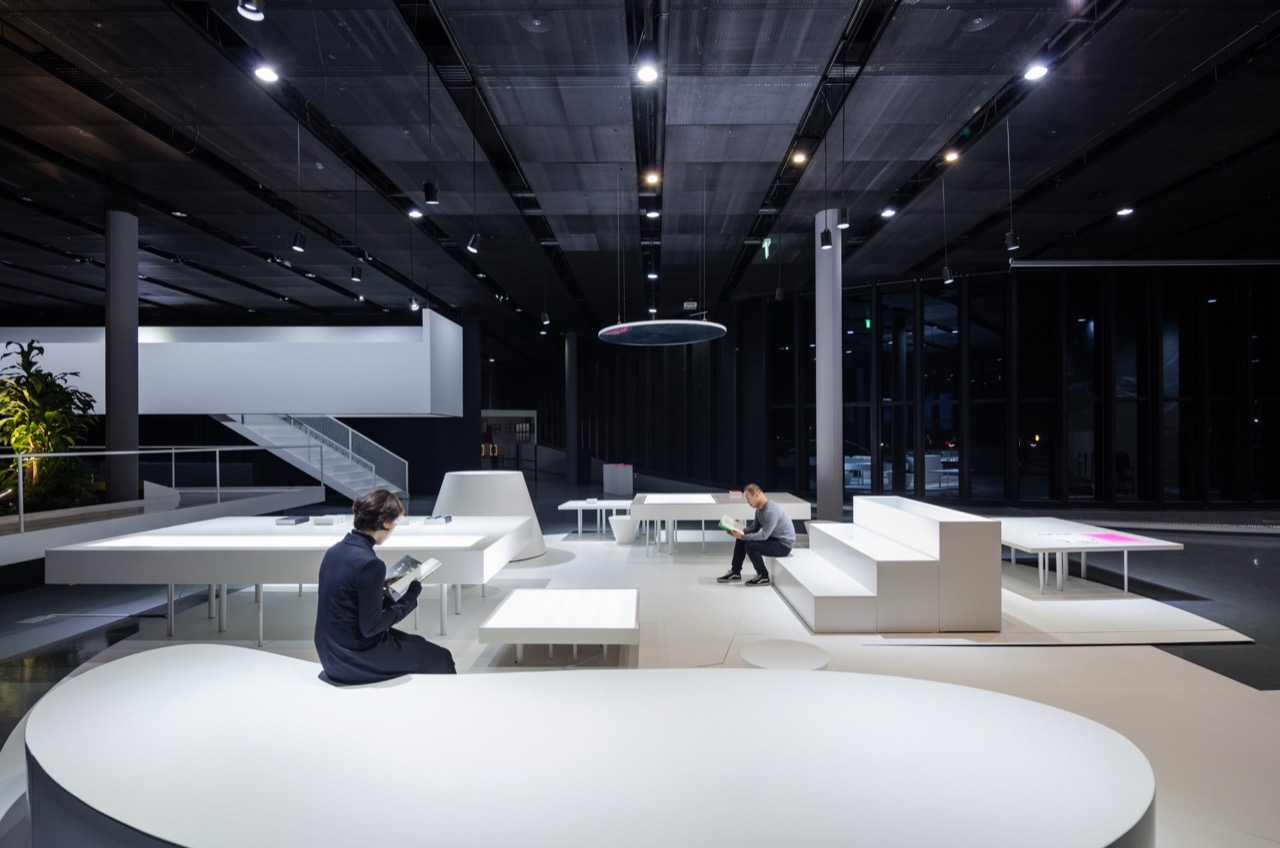
6.The building is worth reading too. It was designed by the German architects Kirsten Schemel and Marina Stankovic, chosen over some 430 entrants in a 2003 international competition. It opened on April 30, 2008, with 5,600㎡ of floor area over three floors above ground and two below. The form takes after a grand piano, and that piano is not one to play. It is the piano Paik destroyed in Homage to John Cage in 1959. The instrument he smashed was later raised as the shape of a building.
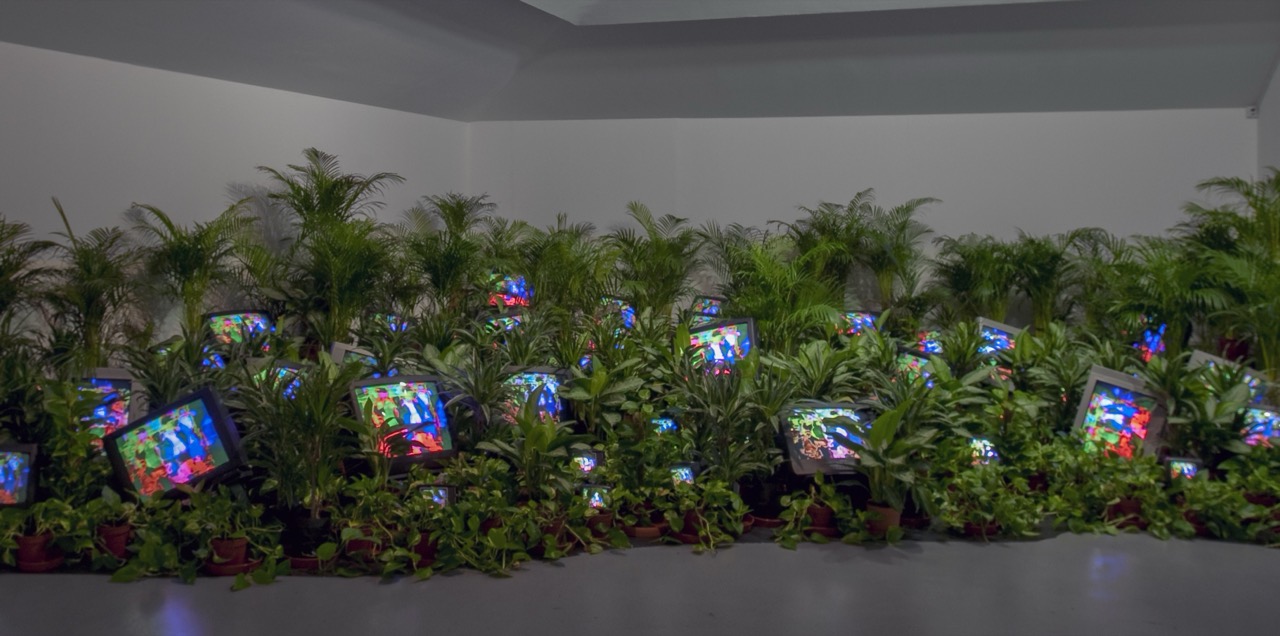
1959 smashes the piano · 1984 Good Morning, Mr. Orwell, 25 million viewers
2006 dies on January 29 · 2008 the art center opens
2026 twenty years on · a 214-day festival
The run keeps renewing after he left. Through February 14, 2027, admission zero.
7.What justifies hanging 214 days on the name of an artist who died twenty years ago.
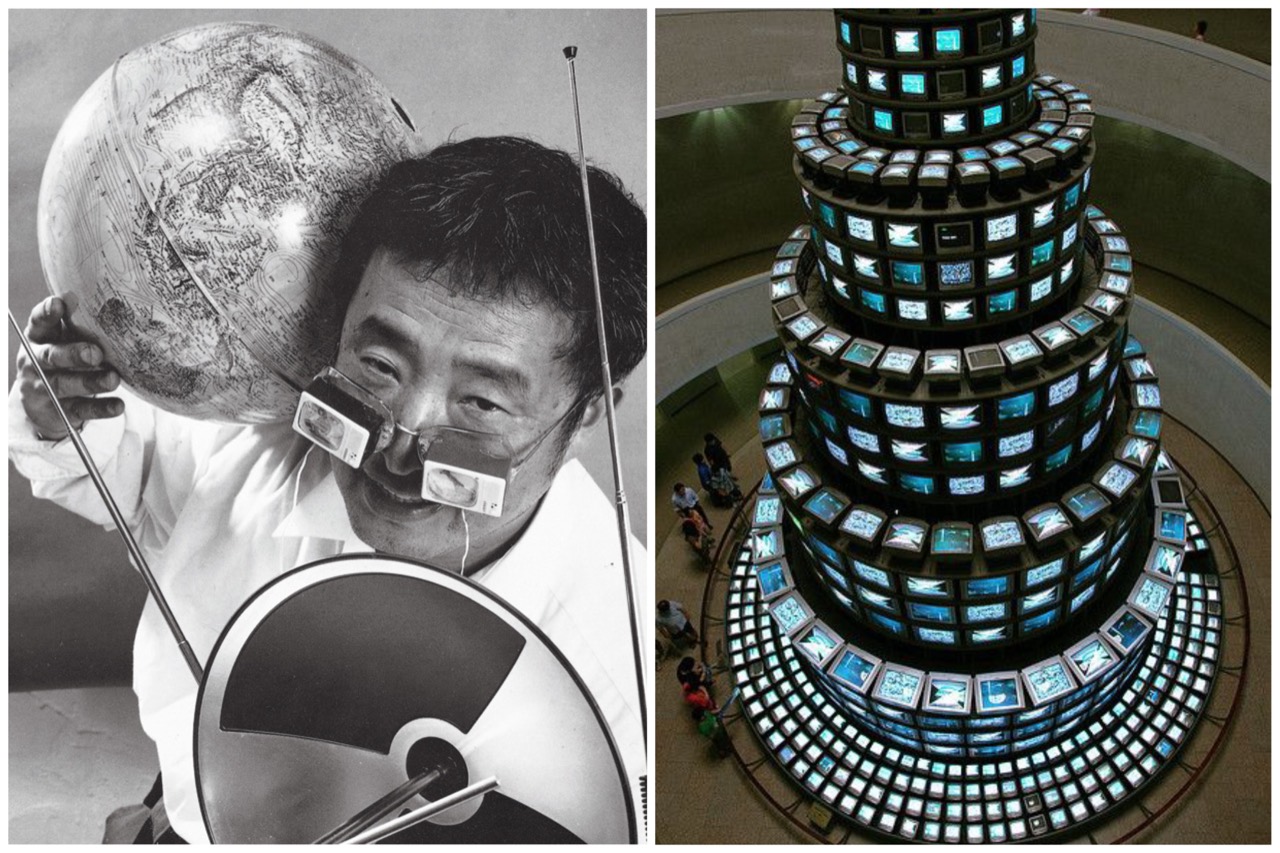
8.The answer sits entirely in one of his major works. At noon US time on January 1, 1984, he staged the world's first live satellite broadcast as art. The title was Good Morning, Mr. Orwell. New York and the Centre Pompidou in Paris were linked in real time, and while Joseph Beuys performed in Paris, John Cage played in New York. Twenty-five million people watched worldwide. There is no need to work out how many museum gardens that comes to, because it skipped the vessel of the museum altogether. The broadcast went out live on KBS as well, which is how his name reached his home country, and on June 22, 1984 he returned after thirty-four years away.
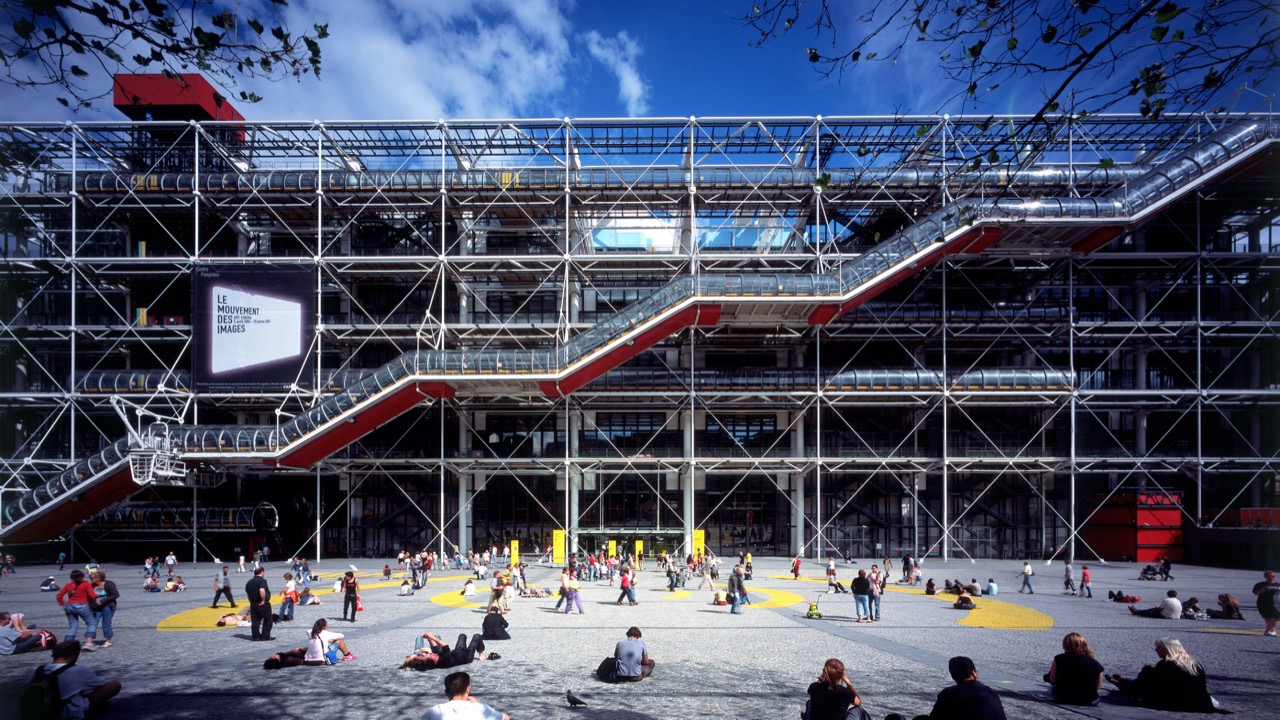
9.The meaning of the title is decisive. George Orwell wrote in 1984 that media like television would rule people, and on the first day of that very year Paik used that television to make people on opposite sides of the earth play together. He answered with the medium itself: you were wrong. That is also why it works now. The structure he tested forty years ago is the structure we use every day. Streaming, live transmission, simultaneous access across time zones. He used the platform as art before platforms existed, so his work today reads as familiar rather than dated. That familiarity brings the audience in.
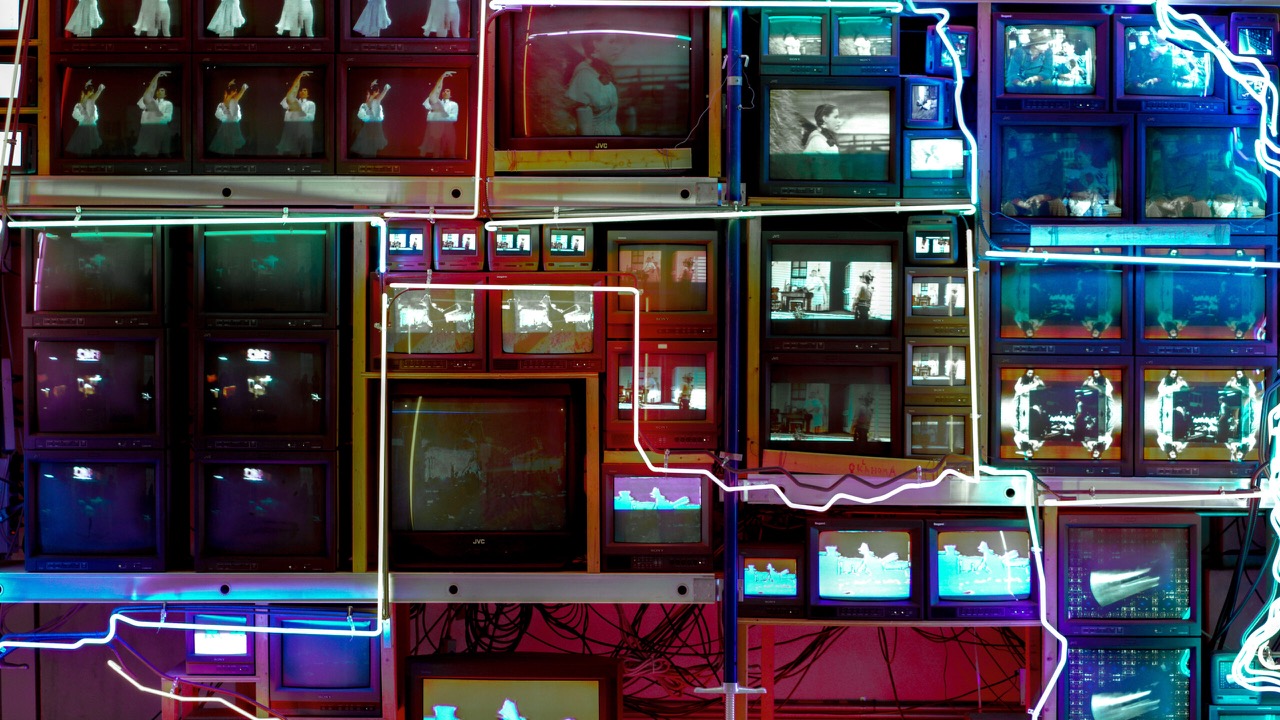
10.Hanging a city on one artist is not new either. Europe has long had the model of running a city's whole summer under one name, Bayreuth for Wagner, and that model runs on expensive tickets. This program goes the other way, free and long, and it does not stay inside the country. For the twentieth anniversary, international collaborations continue at the Museum of Contemporary Art Zagreb in Croatia, opening March 19, and the Pinacoteca de São Paulo in November. On April 23 an international symposium gathered around ten researchers from Korea and abroad, Hannah Higgins among them.
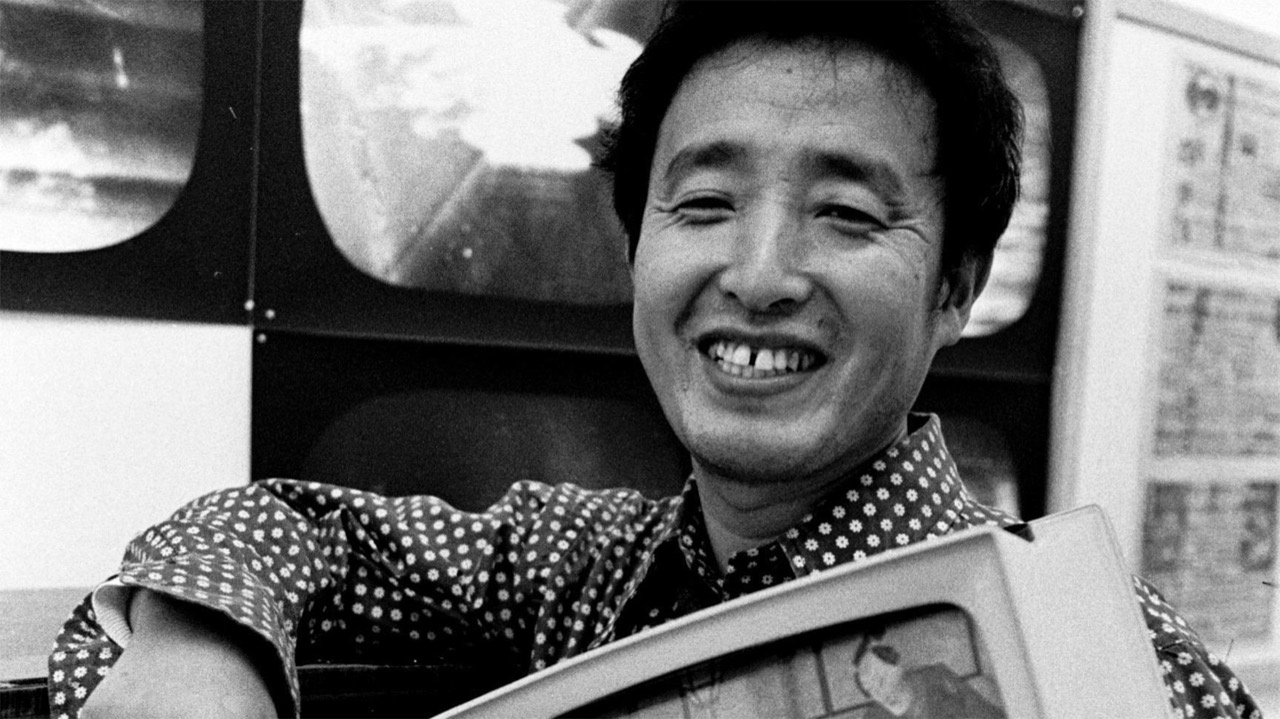
11.This festival is one chapter of a year-long campaign. Scholarship and Europe in spring, the main exhibition opening in summer, South America in autumn, the closing in winter. The year was built like an annual broadcast schedule. It is how a television station builds a season, which is a fairly precise way to honor a man who made art out of broadcasting.
12.Paik's prophecy was half right. He said television would connect people rather than rule them, and the first half held. We did get connected. The second half missed. The surveillance Orwell imagined was going to be imposed, and the surveillance that arrived was voluntary. Nobody was ordered to install a camera, and people switched them on themselves and posted their locations themselves. Paik did not win. Orwell was right in a different way.
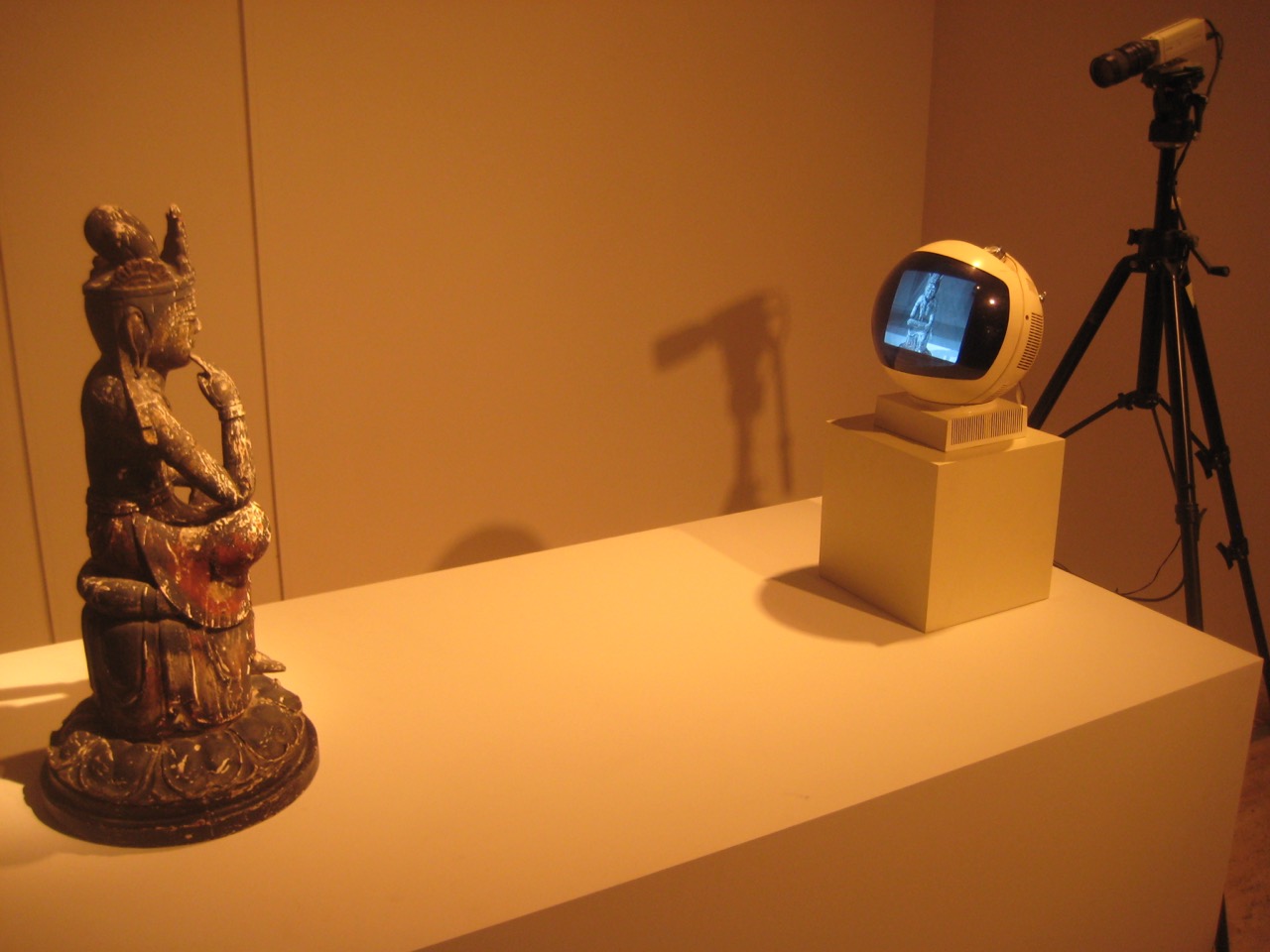
13.The second turn is far more practical. The main stage of this festival is not Seoul. It is Sanggal-dong in Yongin. About an hour by car from central Seoul, longer by public transport. A site where nobody drops in on the way past. Choosing 214 days and zero won in a place like that is arithmetic. Somewhere with no passing footfall cannot sell the impulse visit, and the only thing on sale is the deliberate one. So the run stretches long enough to mean you can go any time, and the price falls to zero to remove the threshold of trying it and shrugging if it disappoints. The worse the location, the longer the run and the lower the price.
14.The real product here is not the exhibition, it is the number of reasons to go. One exhibition means one visit, and stacking performances, screenings, scholarship and outside nodes brings the same person back several times. Instead of selling several products, it attached several reasons to visit the same one.
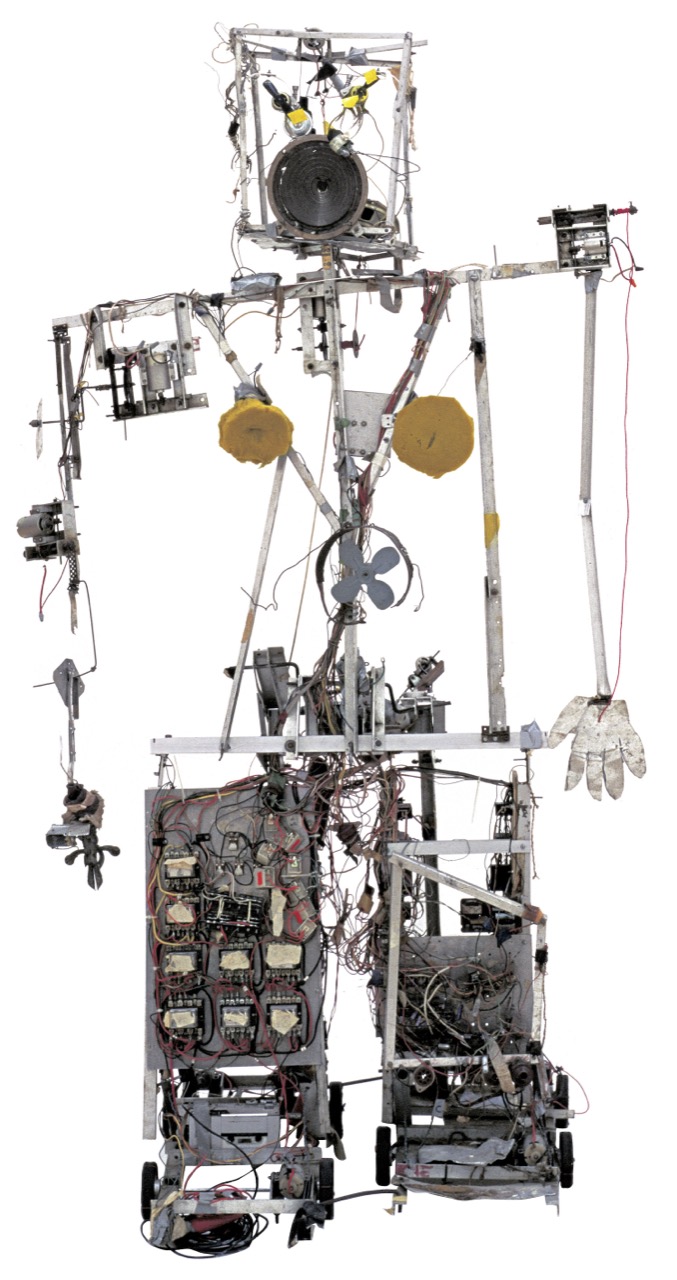
15.This arithmetic travels. The most common mistake in a back-street, outer-ring or provincial location is using downtown grammar as it is, opening for two to four weeks, charging a lot and pushing with publicity. A site like that never had the impulse visit as a product in the first place. What it can sell is the deliberate visit, and that demands room to change the date and a price low enough that failure does not sting. Lay the run down at three months minimum, half a year if possible, drop the entry price close to zero, and take the money inside, from goods, drinks and paid programs. On a prime downtown corner the opposite is right, short and expensive. What sets the run and the price is not the concept. It is the location.
16.The first Nam June Paik Media Art Festival, Nam June Paik's Planet, runs 214 days through February 14, 2027, and permanent admission is zero. Laying a floor fixed for seven months and swapping performances, screenings and lectures on top of it produced five or six reasons to visit at zero construction cost, and sending scaled-down versions to three places outside the main building put the program where the people who will not come already are. In Korea what catches is not the floor, it is the layer above. The permanent setup needs no touching, and packing two-hour and three-hour programs into a seven-month calendar once or twice a month is a booking problem rather than a construction one. Return visits come not because the room changed but because something happened there only on that day. The same logic as the satellite broadcast forty years ago. Going out first instead of waiting for the audience to come.