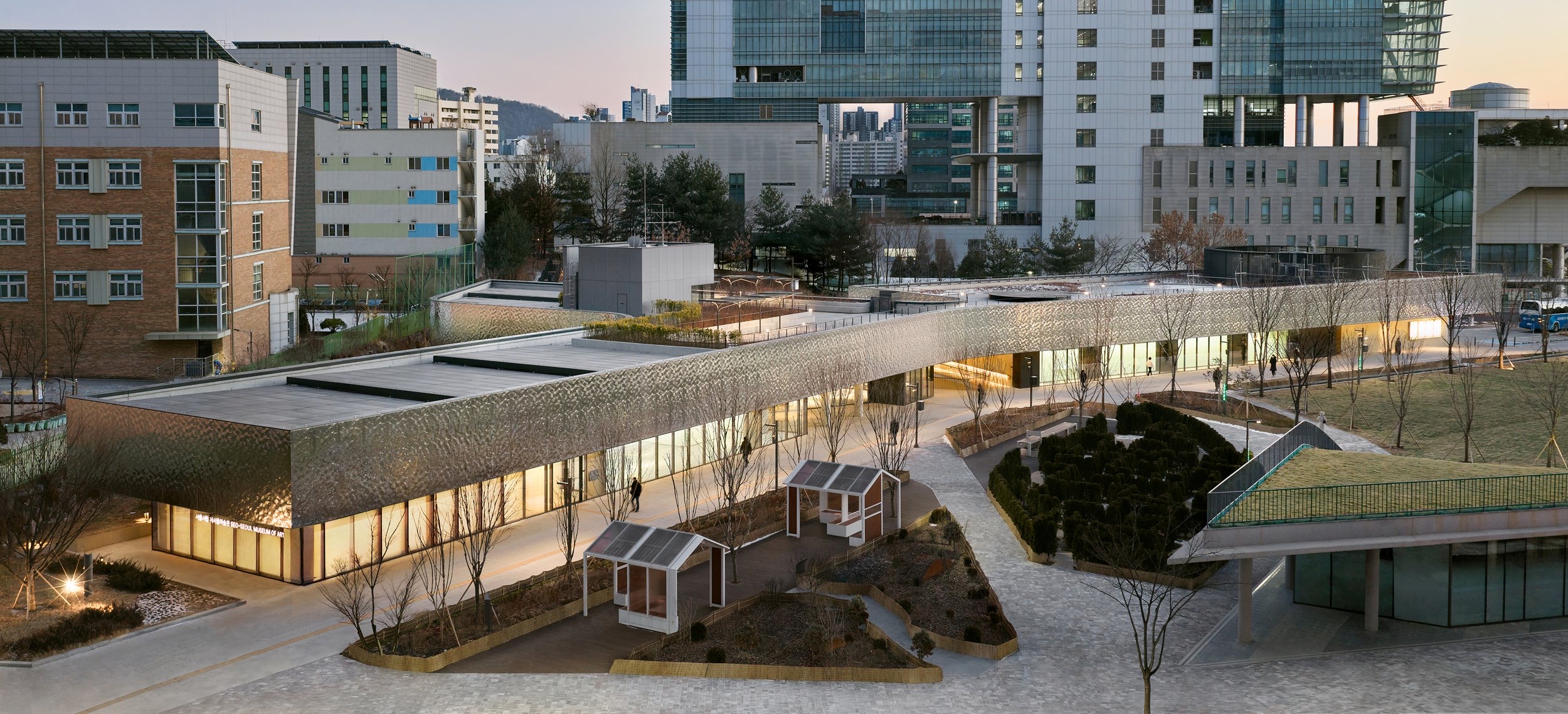
It is free. You walk in without buying a ticket. Yet building this museum is reported to have cost around KRW 50 billion. Stranger still is how the money was spent. Only one storey sits above ground, and everything else was sent down under the park. This is the Seoseoul Museum of Art, Seoul's first public new media museum, which opened on 12 March.
1.It stands inside Geumnarae Central Park in Geumcheon-gu, Seoul. It is the last knot in the net the Seoul Museum of Art has been spreading across eight venues, from the Seosomun main building to Buk-Seoul, Nam-Seoul and the Museum of Photography. Floor area is 7,186 sqm, about 2,173 pyeong. The design came from THE_SYSTEM LAB and Kim Chan-joong, who drew the Paul Smith flagship and the Hangang pedestrian tunnel. There is no admission charge.
2.The location speaks first. The southwest, running through Geumcheon, Guro and Yeongdeungpo, has been Seoul's factory belt since the Guro Industrial Complex of the 1960s, and this is the first time a municipal museum has set foot there. While cultural infrastructure piled up in the northern city centre and in Gangnam, this part of the map stayed empty for a long time. Seoul putting its eighth venue here looks like a decision aimed at that gap rather than at any one exhibition.
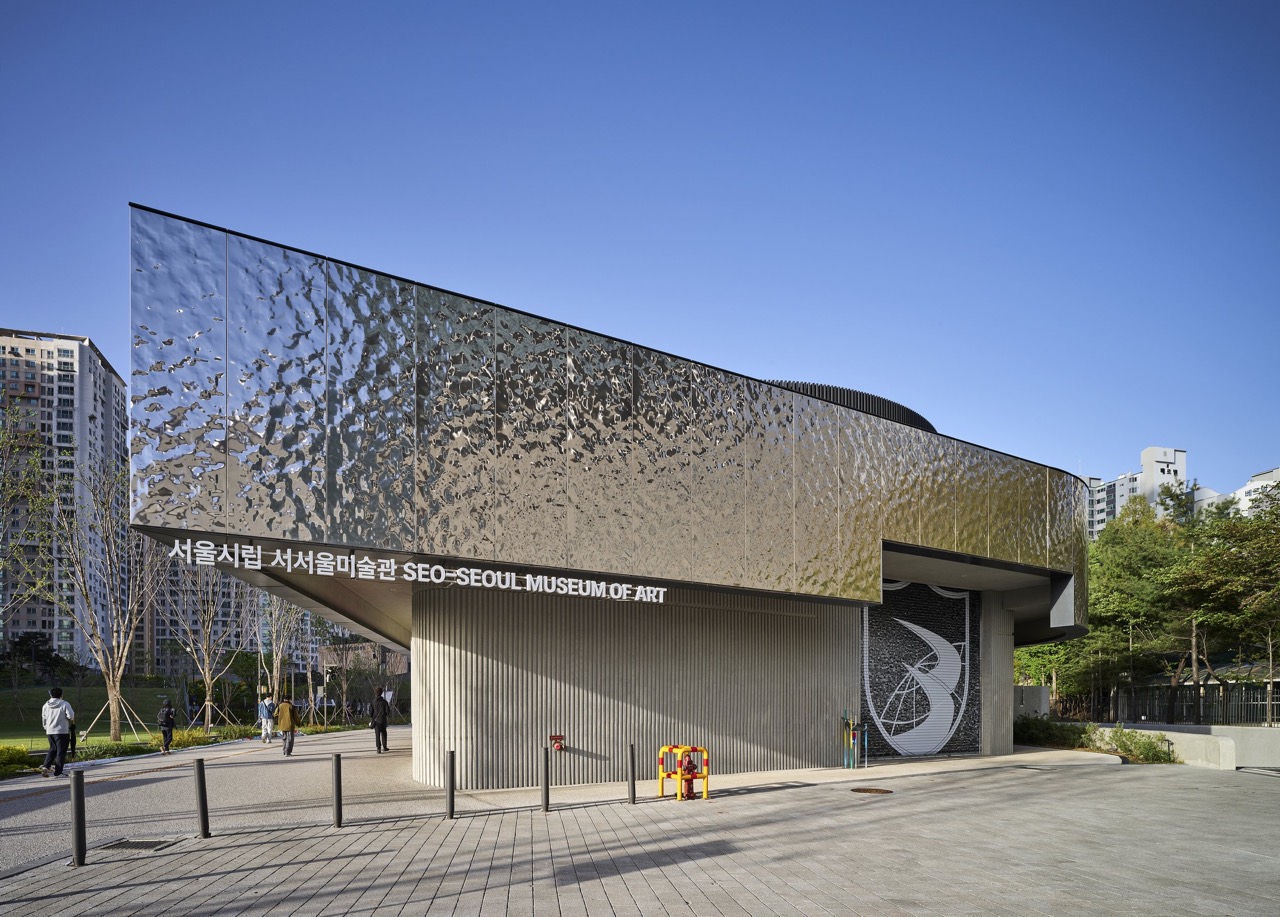
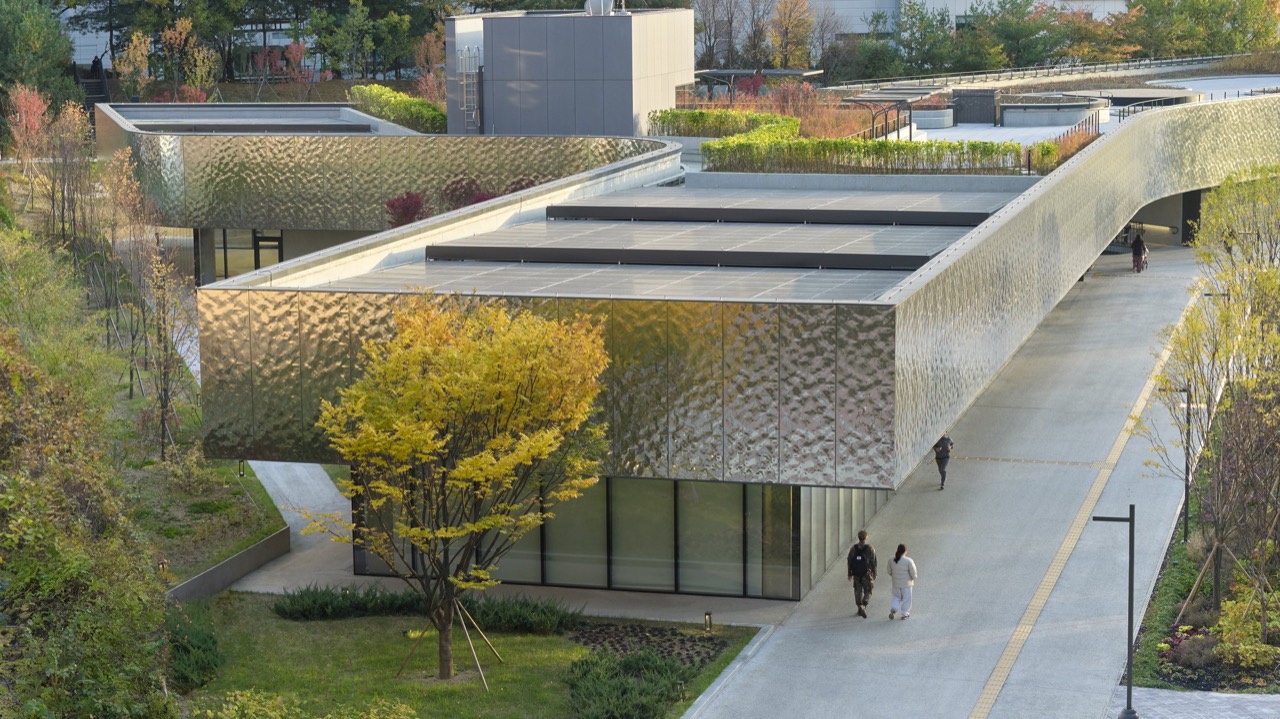
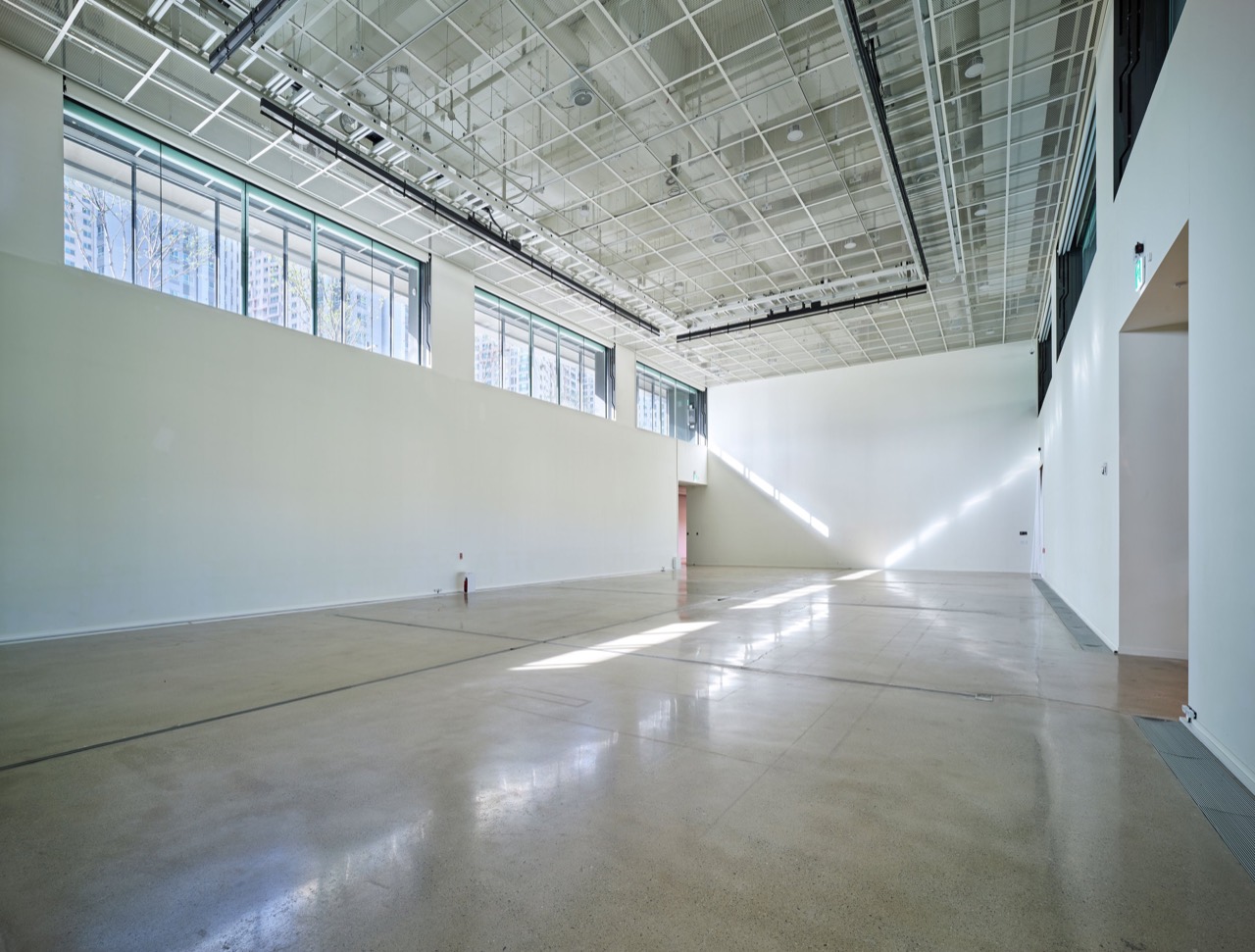
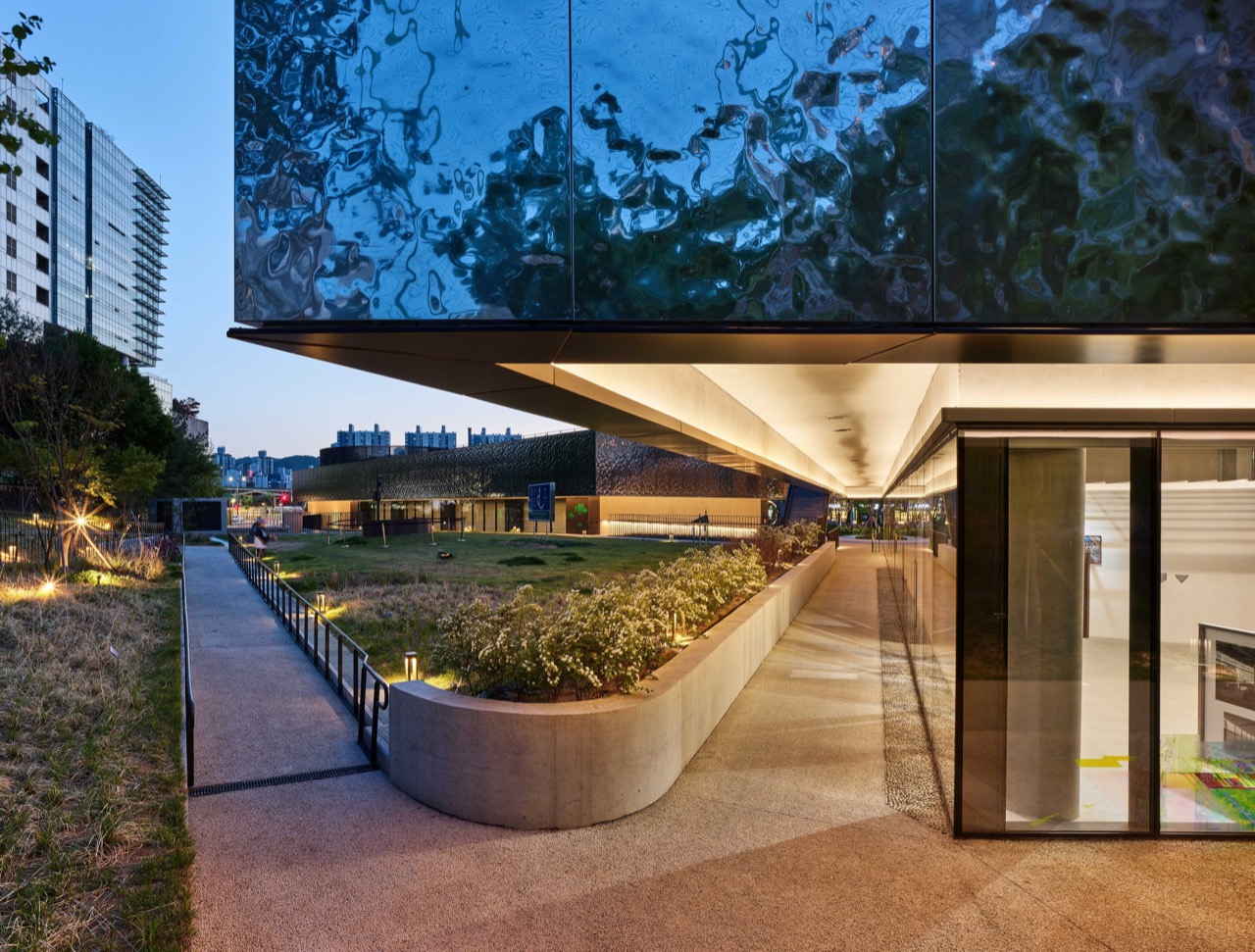
3.The building is hidden in the ground. Two basement levels, one above ground. Galleries, storage and amenities have almost all gone down beneath the park, and what remains on top is a single low layer. It reverses the grammar of commercial development, which squeezes out the maximum floor area ratio and pushes it skyward. The building stepped back on its own so the park would not be erased.
묻은 건물 · 서서울미술관 단면 개념도
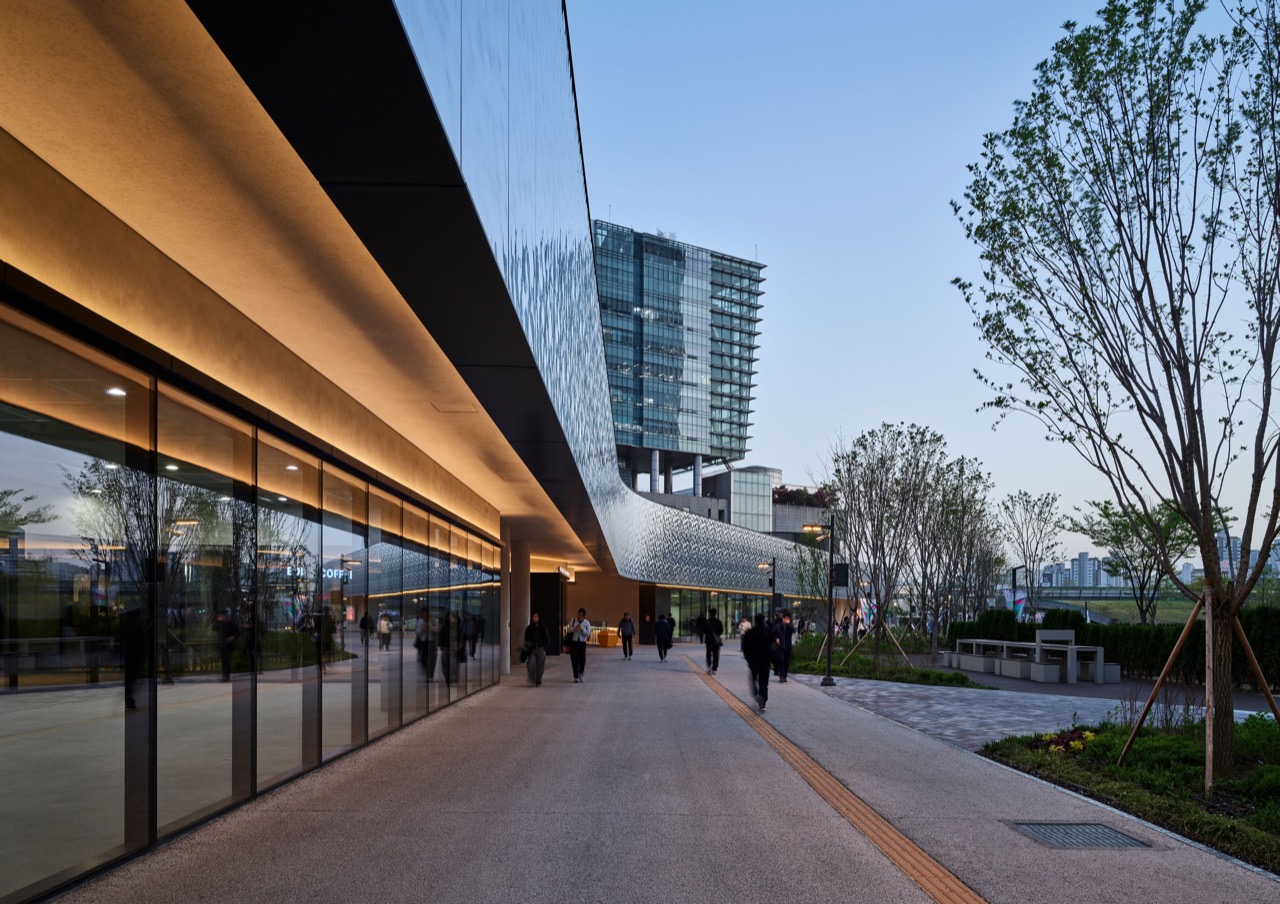
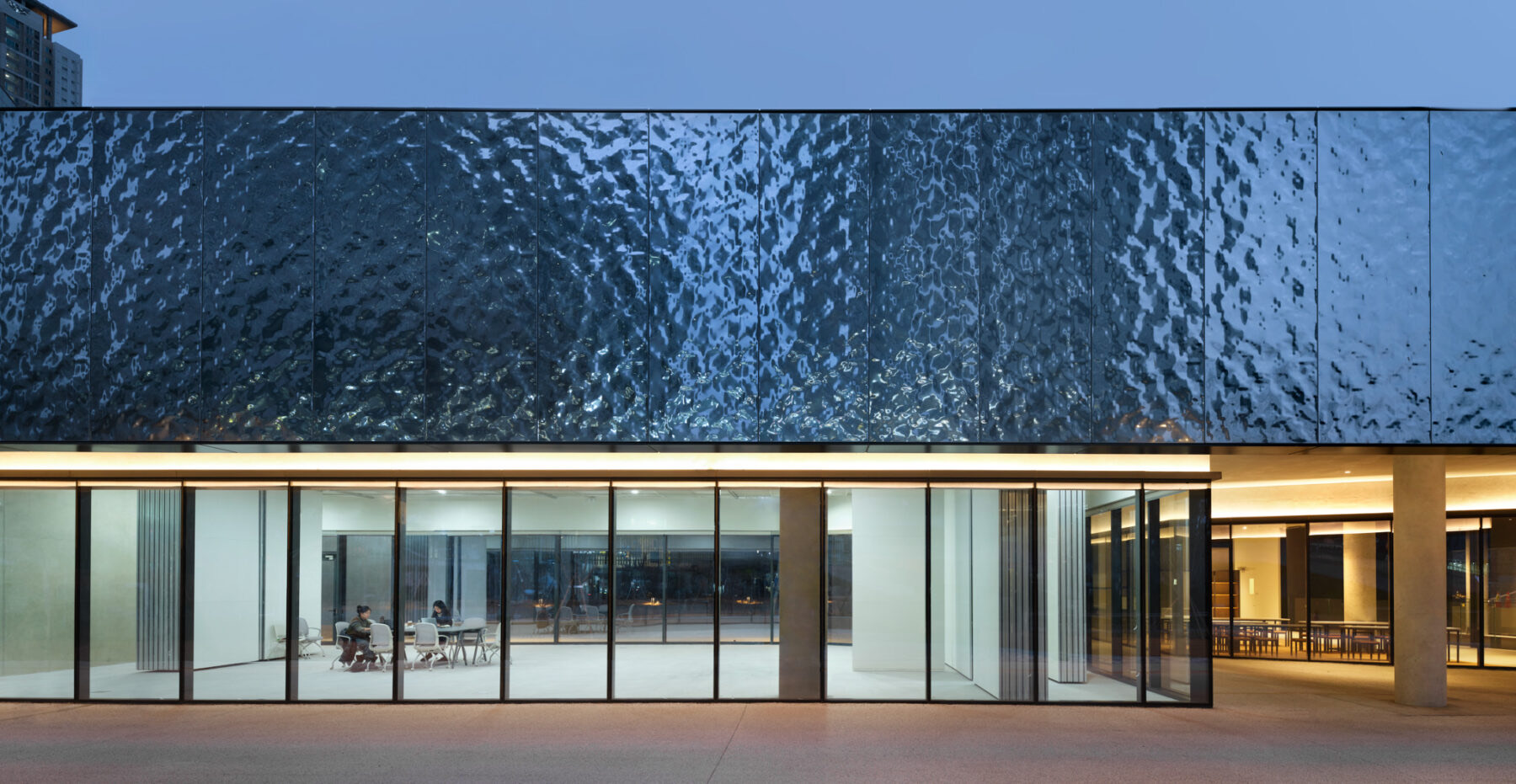
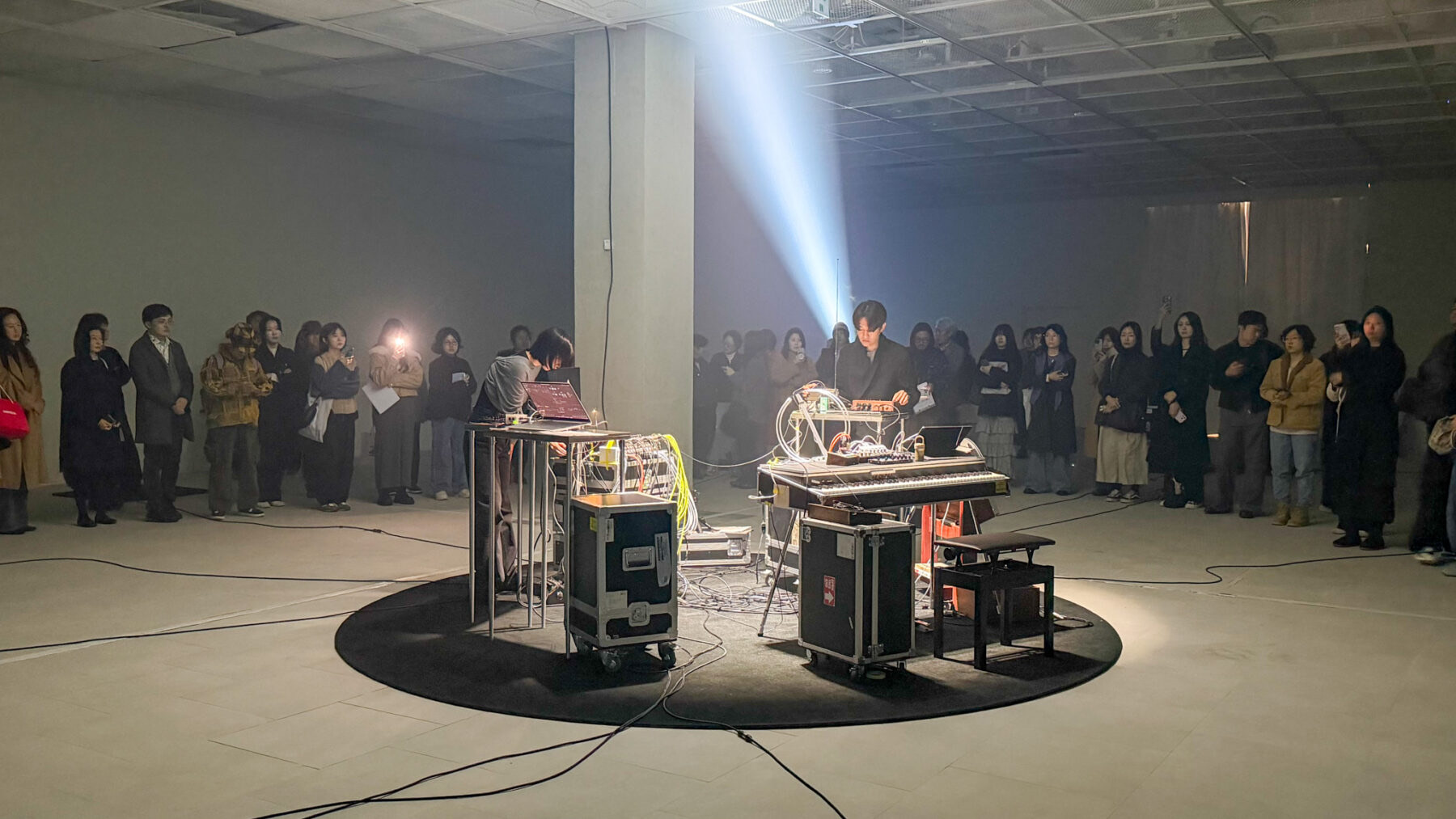
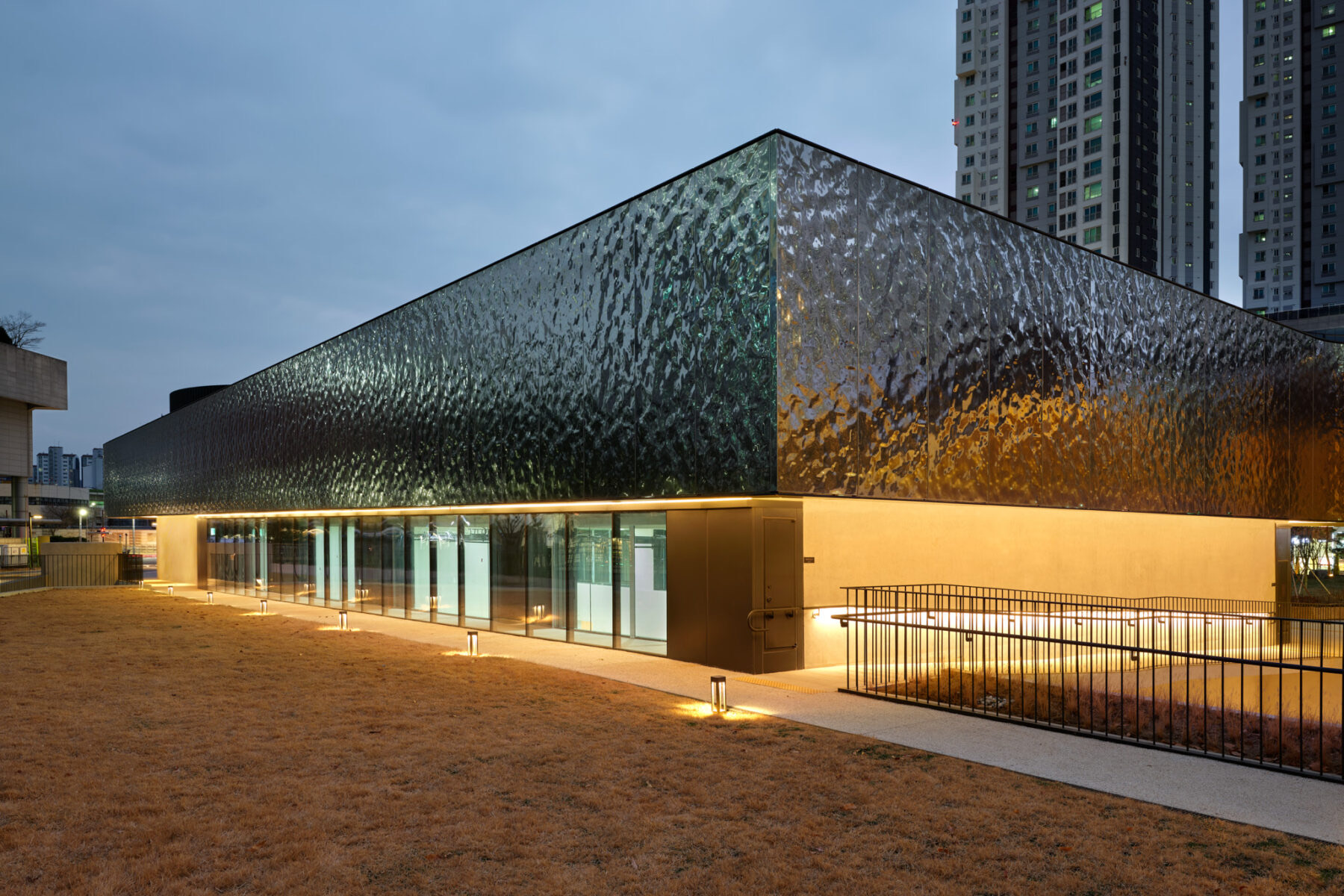
4.The layer left above ground has two skins. The upper wall is hammered stainless steel. The beaten metal breaks daylight into small pieces so the surface swells like water, and it reflects a different sky each season. The level that touches the ground is a full glass curtain wall, so the lobby, the cafe and the route through to the galleries can be read from outside. Rather than closing the perimeter and cutting one door, the face is left open so that the inside shows from whichever direction you walk in.
5.A new media specialisation demands a completely different specification from a white wall gallery. Working with moving image and light calls for rooms that go fully dark, generous power, servers and cooling, and partitions that hold sound. Next to a museum that hangs paintings and only has to sort out wall surface and lux levels, here the services dig all the way into the frame of the building. That is also why the decision to go underground made construction harder.
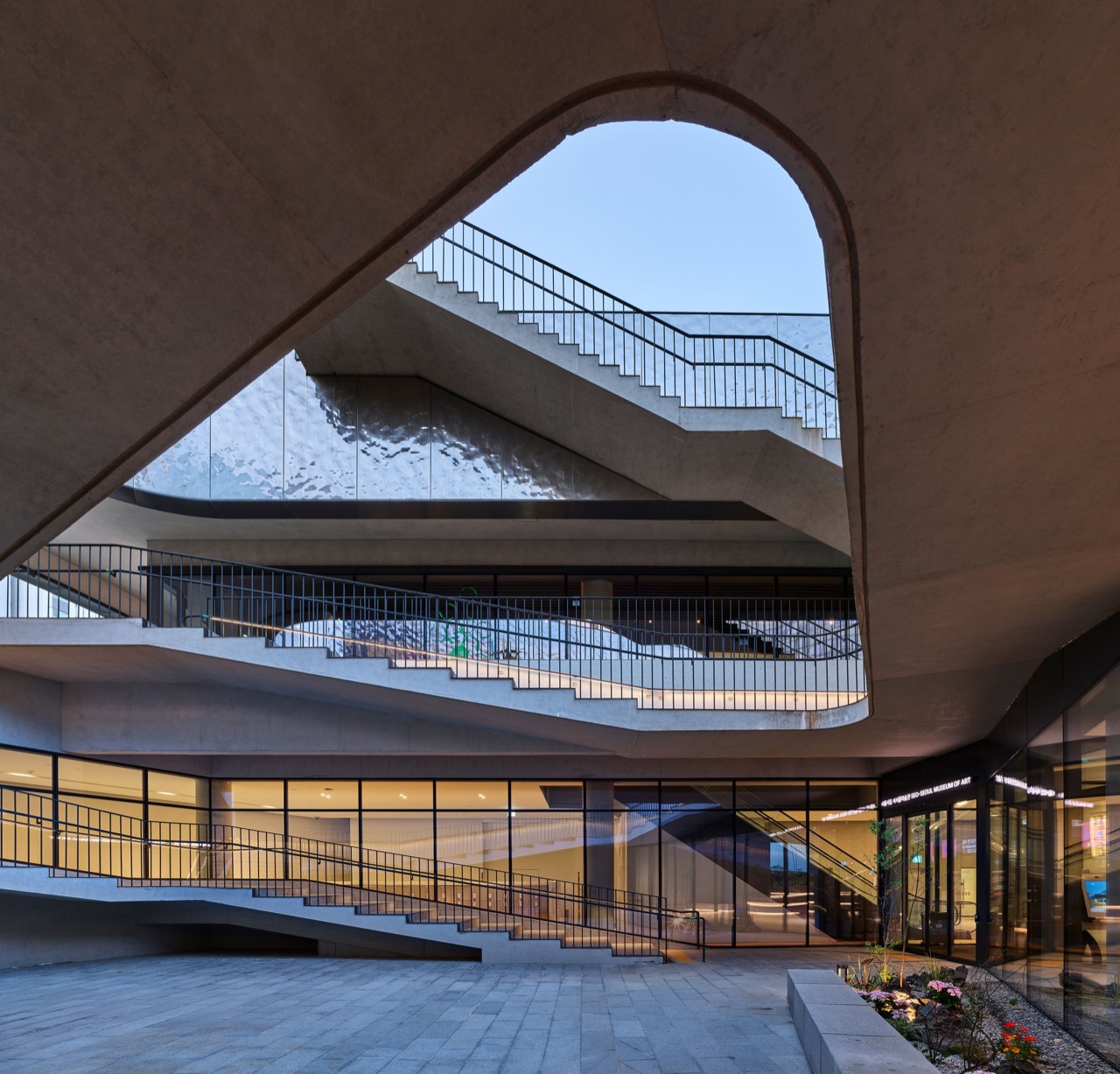
6.Why does this approach move people. A museum is usually a destination. Somewhere you set out for, buy a ticket, and enter. Seoseoul erased that threshold. Someone cutting across the park glances through the glass and simply walks in. The name the competition jury gave this building was "an everyday museum inside a park".
7.The choice of genre is a calculation too. Blue chip painting and classical collections were locked up decades ago by Leeum and the National Museum of Modern and Contemporary Art, backed by decades of capital. A public museum starting late will struggle to win in that ring. Turning toward new media, where nobody had planted a flag, is a positioning move aimed at younger audiences and local teenagers. The stake is a generation rather than a collection.
8.Now to the money. Admission is zero, so ticket revenue was never there. Foreign press put construction cost at around KRW 50 billion. Converted per pyeong, that lands near KRW 23 million (estimate). Three or four times the construction cost per pyeong of an apartment, and an order of magnitude away from an ordinary neighbourhood facility.
티켓 0원의 미술관 · 숫자로 본 서서울미술관
9.Two things stack up behind a figure that high. One is the basement. Digging deep, holding back water and moving air costs twice what building above ground does. The other is new media. Blackout, power, servers and acoustic treatment sit on top of the cost of the structure. The two decisions, hiding the building and setting the genre in the future, are printed straight onto the construction invoice.
10.So what brings the KRW 50 billion back. The answer is land, not tickets. Put one cultural facility in place and foot traffic rises, retail follows, land values and tax revenue climb behind them. That is why Bilbao in Spain, which revived a whole city by setting a museum into a decayed port, has been quoted as a textbook case for over twenty years. Opening for free is not a loss; it widens the point of return from the entrance to the whole neighbourhood.
11.There is money that keeps going out of this arrangement, though. A museum that owns paintings buys once and hangs them for a century. New media holdings are equipment and code, so depreciation starts the moment a projector ages and the software falls a version behind. A museum where the cost of keeping it running arrives every year, close behind the cost of building it. Free access is bought, and the public keeps paying the electricity that leaves that access switched on.
12.The lineage makes the character of this building clearer. Kim Chan-joong and THE_SYSTEM LAB are a practice that has planted conspicuous objects in the city out of curved surfaces and industrial materials, the Paul Smith flagship among them. They won the international competition in 2020, and several more years passed between breaking ground and opening. The turn is that hands used to making objects that stand out in the city went to work here on making a building disappear.
13.Two places turn over. First, stake everything on the future and that future ages quickly. New media staging that counts as current now risks looking common in five years and dated in ten. Second, access was the stated case, but whether Geumcheon can pull audiences from north of the river and from Gangnam out to this park has not been proven in numbers yet. A design that removes the threshold and people actually turning up are two different questions.
14.Seoul opened its eighth municipal museum for free in the southwestern factory belt, buried the building under a park and left a single layer of glass above ground. Around KRW 50 billion, an estimated KRW 23 million per pyeong, and the return on this piece of public architecture comes from land values and footsteps in the neighbourhood rather than from admission. Move the same idea to a smaller scale and one thing catches. The more a design lowers a building and hands value back to its surroundings, the less anything at completion says when or how that value returns. What you can see is the cost, and the land testifies to the return some years later.