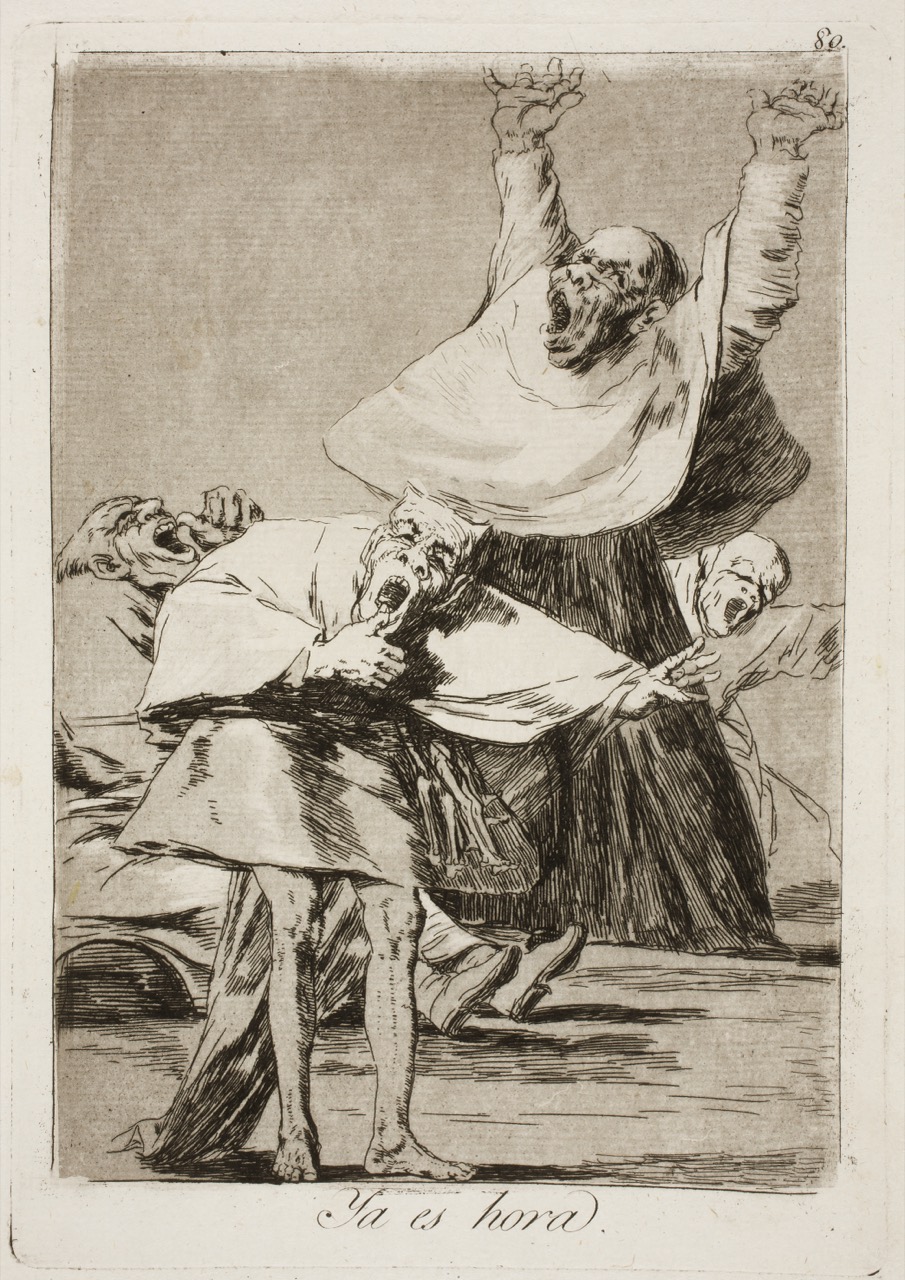
Goya's first solo exhibition in Korea, Goya, Master of Spain: When Reason Sleeps, Monsters Awake, runs at the Hangaram Art Museum in Seoul Arts Center until September 30. All 80 plates of the print series Los Caprichos have crossed to Korea for the first time. Adult admission is KRW 20,000. And there is not one original oil painting on the walls.
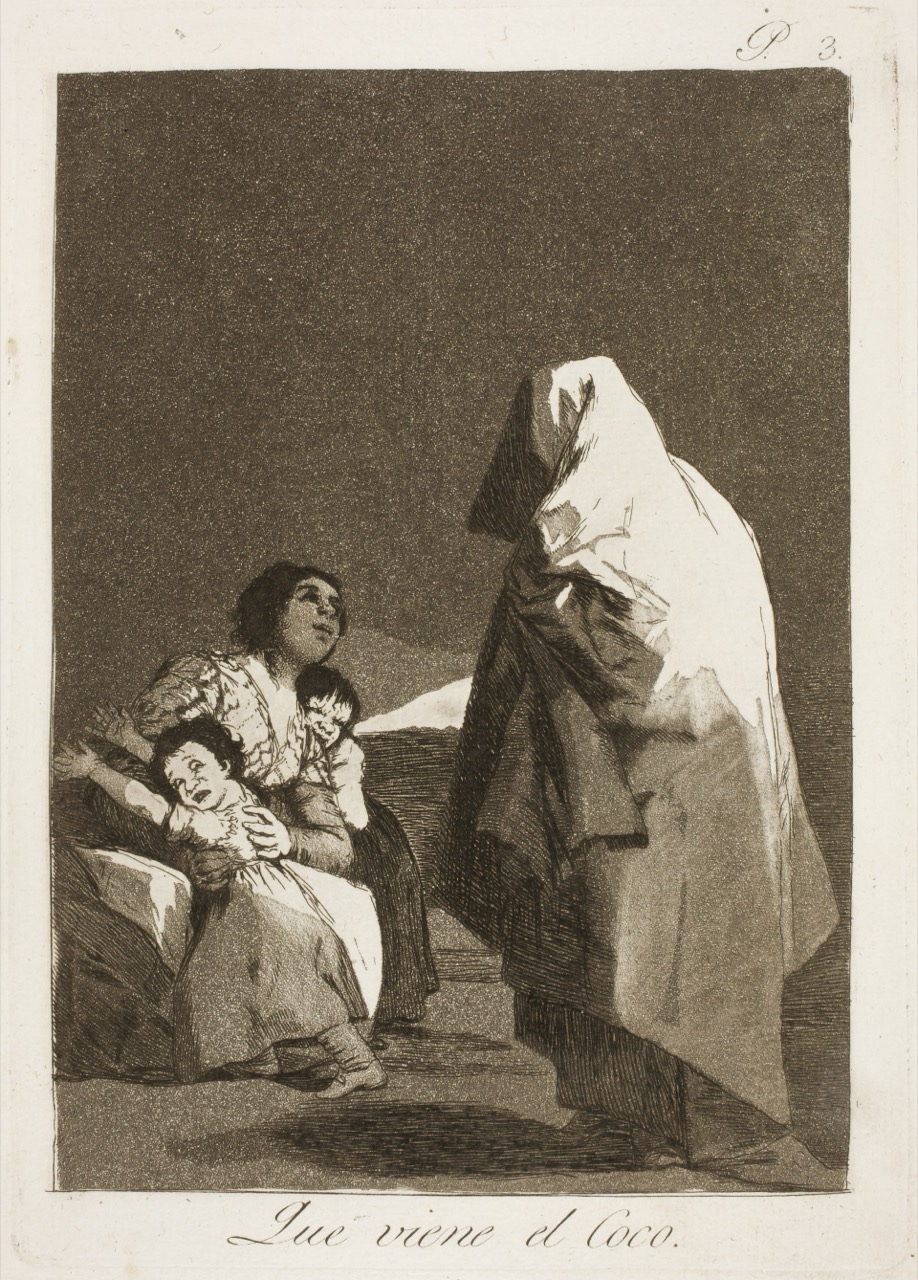
1.A book of prints came. What this exhibition actually holds is the 80 prints of Los Caprichos, which Goya etched in 1799. An authorized edition pulled from Goya's own plates by the Real Academia de Bellas Artes de San Fernando. This is the first time the series, unavoidable in the history of Western art, has crossed to Korea whole.
2.It opened on June 26 and runs to September 30. Gallery 7 of the Hangaram Art Museum at Seoul Arts Center, closed Mondays, open until 9 p.m. on Wednesdays only. Adults 20,000 won, youth and children 16,000. The show is built in six parts, running from his court painter years to his last.
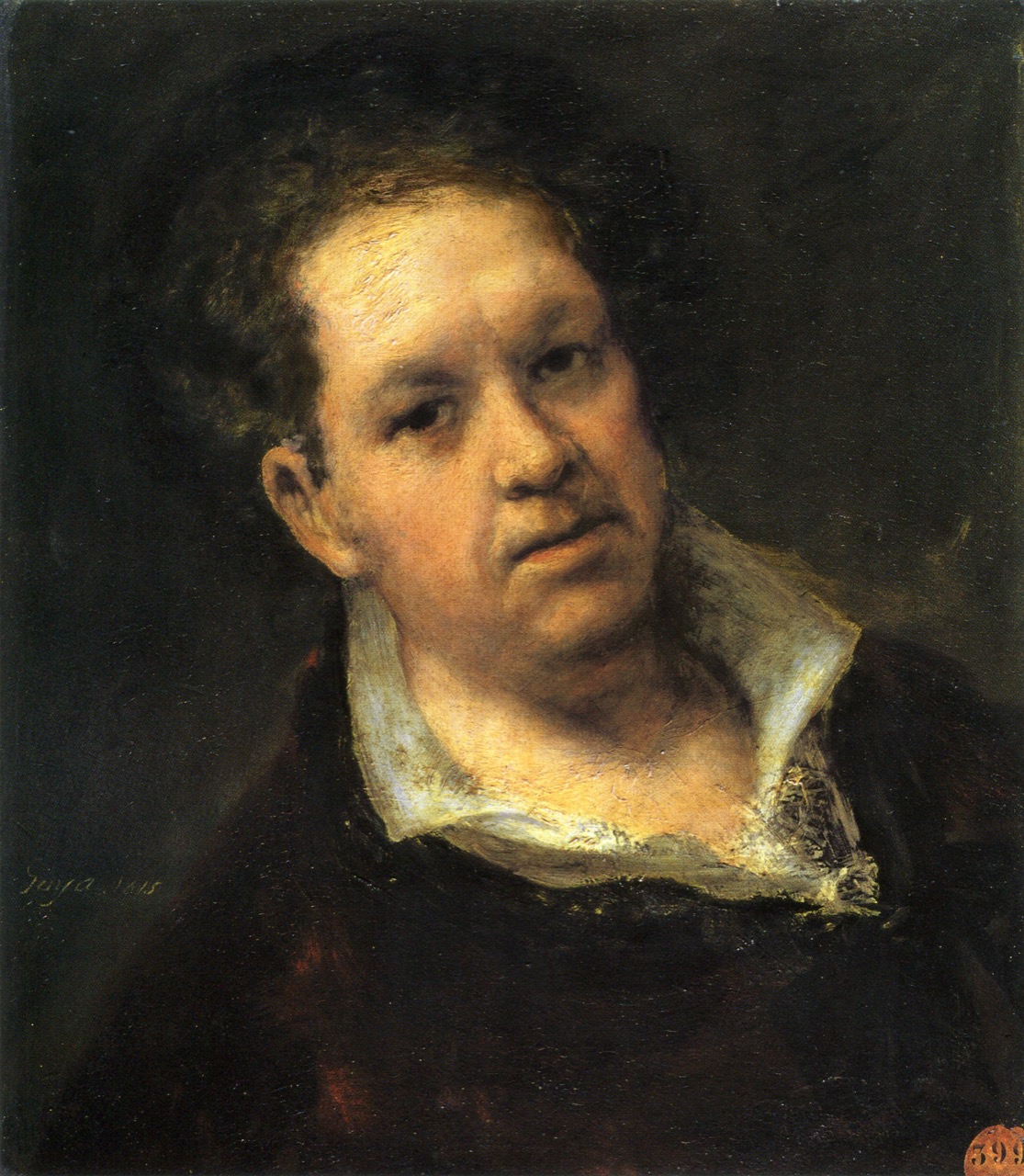
3.The route follows Goya's life. It starts with the court painter who made portraits of the king, moves through the illness that took his hearing and the war he witnessed, and ends in the old age where he filled the walls of his own house with darkness. Caprichos sits at the middle of that. A hinge between the bright court and the dark last years.
4.One space is reproduced whole. The Quinta del Sordo, the house of the deaf man. The house outside Madrid where Goya lived walled off from the world after losing his hearing entirely. He put paint on the walls of this house himself and left fourteen black paintings, the Pinturas negras. Not pictures made to draw an audience. On walls nobody would see, he painted the monsters he had seen.
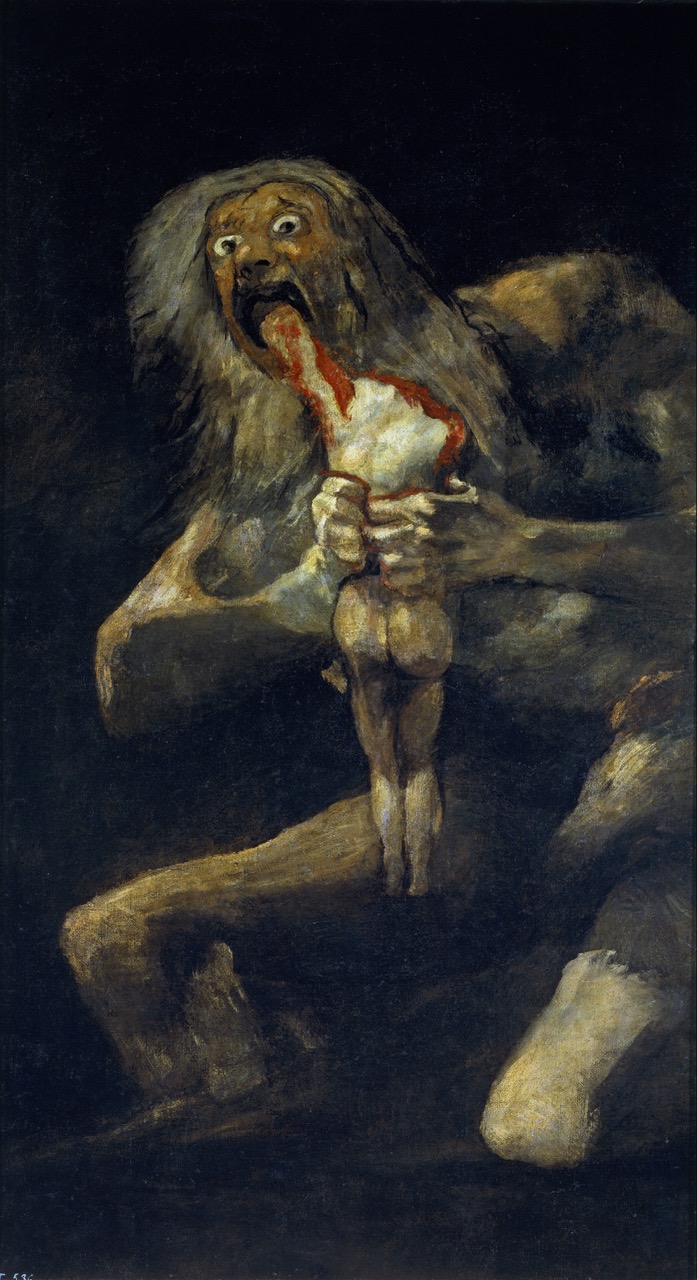
5.Here is where it catches. Neither those black paintings nor any other original oil is physically present in this show. The only real works on the walls are the 80 Caprichos prints, and the rest is filled with media art and reproductions. One art magazine reported complaints from visitors who bought tickets believing it was a painting exhibition and found a print show. The distance between the promise of experiencing Goya's whole life and what is actually there.
전시장에 실제로 걸린 것 · 실물과 재현
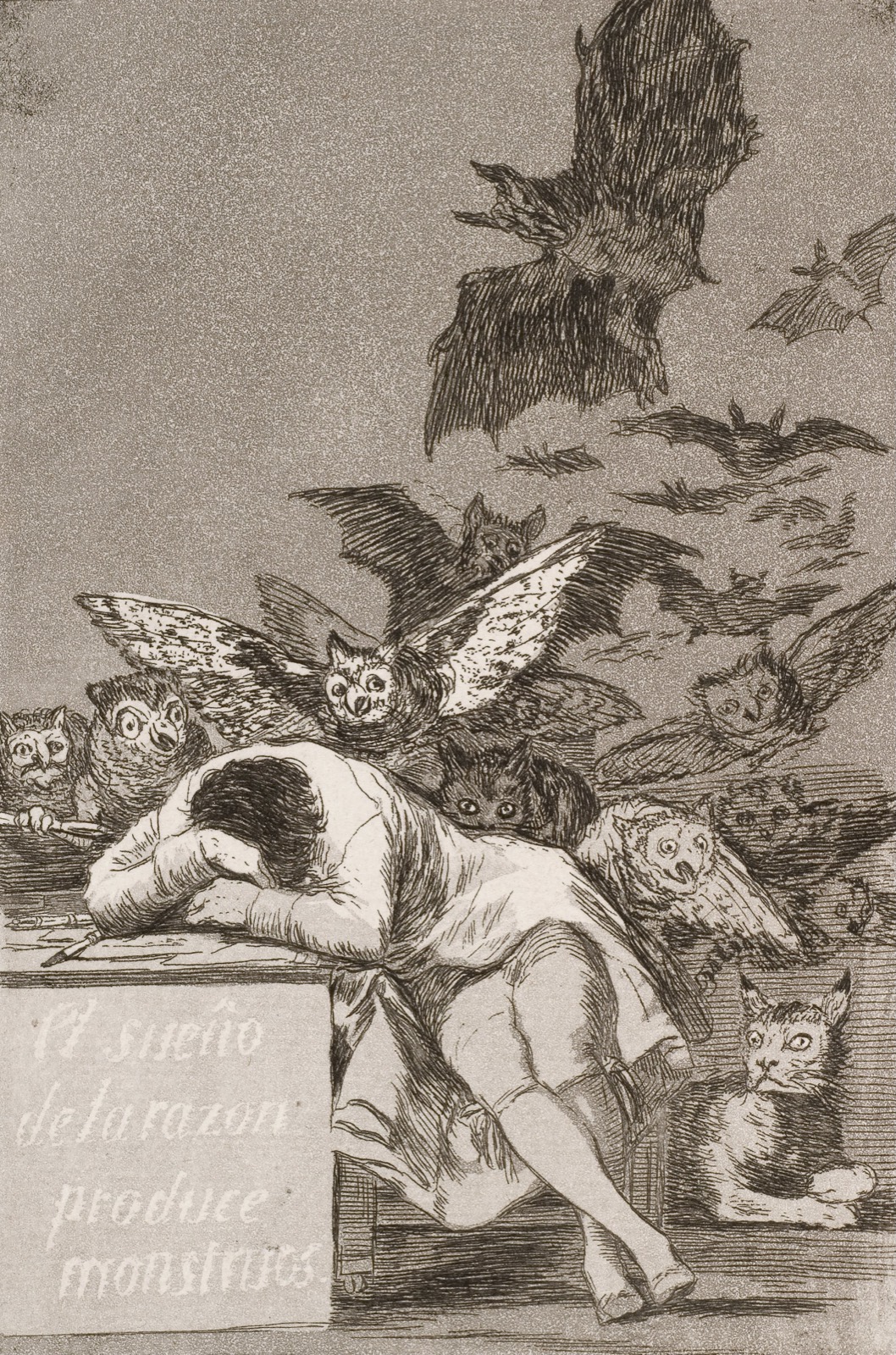
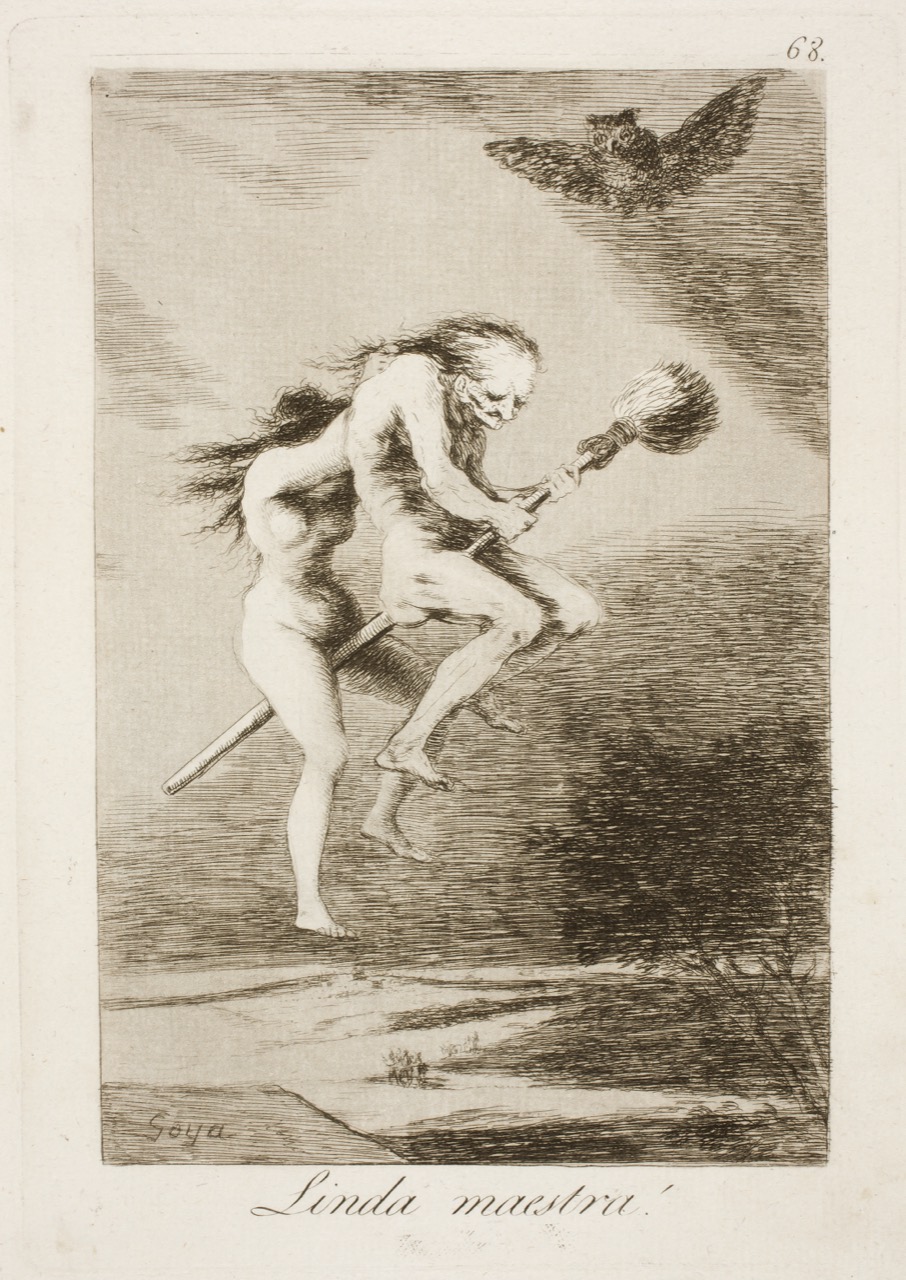
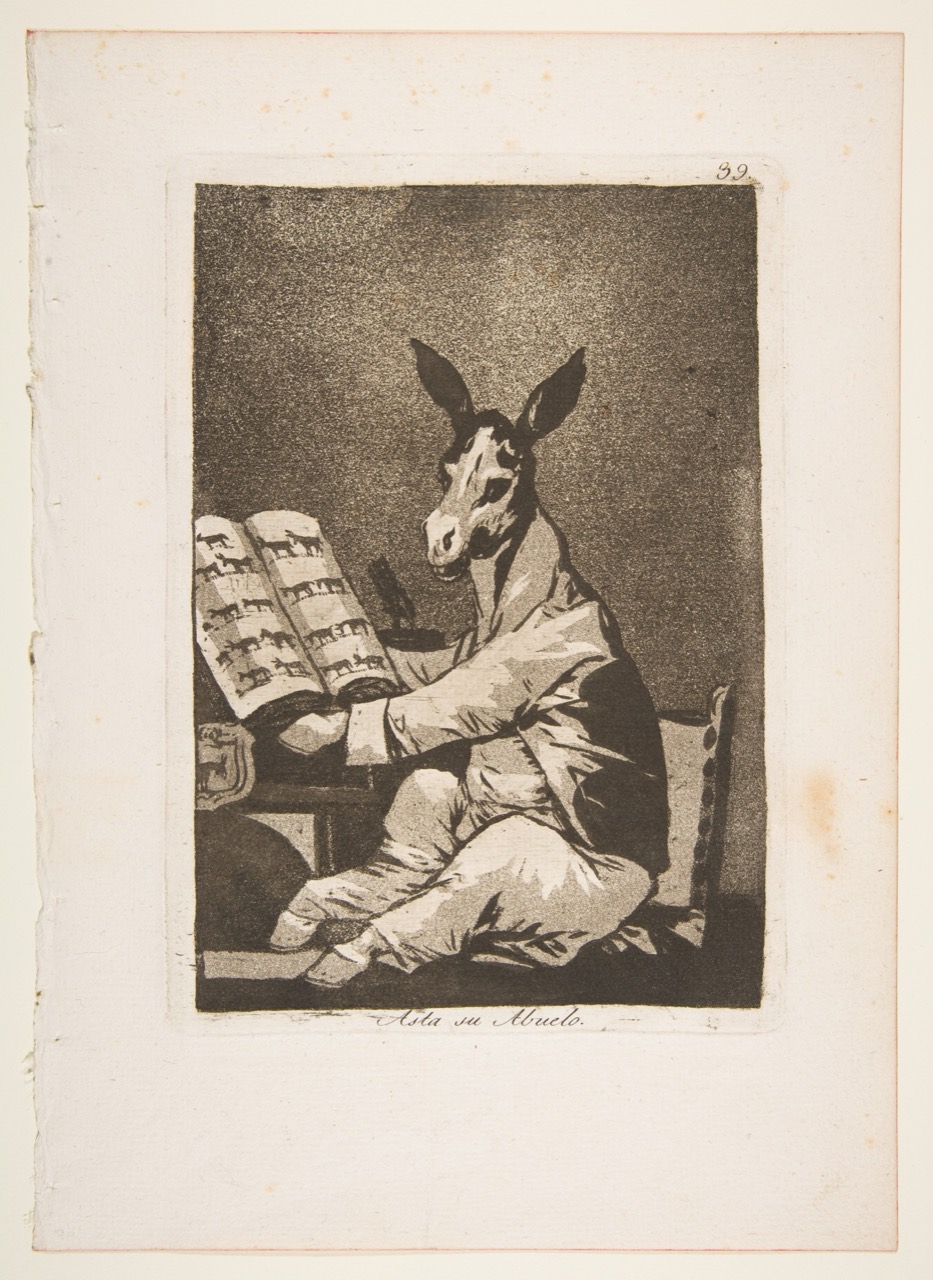
6.Even so, the pull of this exhibition is in its title. The name of Caprichos 43 became the exhibition title outright. When reason sleeps, monsters awake. The print where owls and bats crowd above a man slumped asleep at his desk. A sentence 250 years old that would not look out of place on any timeline today.
7.The Spain of 1799, where Goya etched this series, was a tangle of inquisition, superstition and corruption. Across 80 plates he drew what crawls out of the place where reason falls asleep. Witches, donkey aristocrats, power without a face. Dressed as fable, aimed at the society of his day. A sense of unease and division survives a change of era.
8.That Goya chose printmaking rather than oil was no accident either. A print is not one sheet but many. It spreads as far as it is pulled, and the further it spreads the more the risk is shared. To mock that society with the hand that painted the king at court, a print passing hand to hand suited better than an oil hung on a wall. Being able to pull as many as you like is the power of this medium.
9.Now look at where the money moves. Adult admission at 20,000 won sits high among Korean museum prices. A permanent show at a public museum usually runs a few thousand won and free entry is common, while a special exhibition like this takes three or four times that. So where is the price justified. The ticket already holds the answer. A commercial exhibition aimed at drawing a crowd.
판화라서 성립하는 블록버스터 · 대여 부담 비교
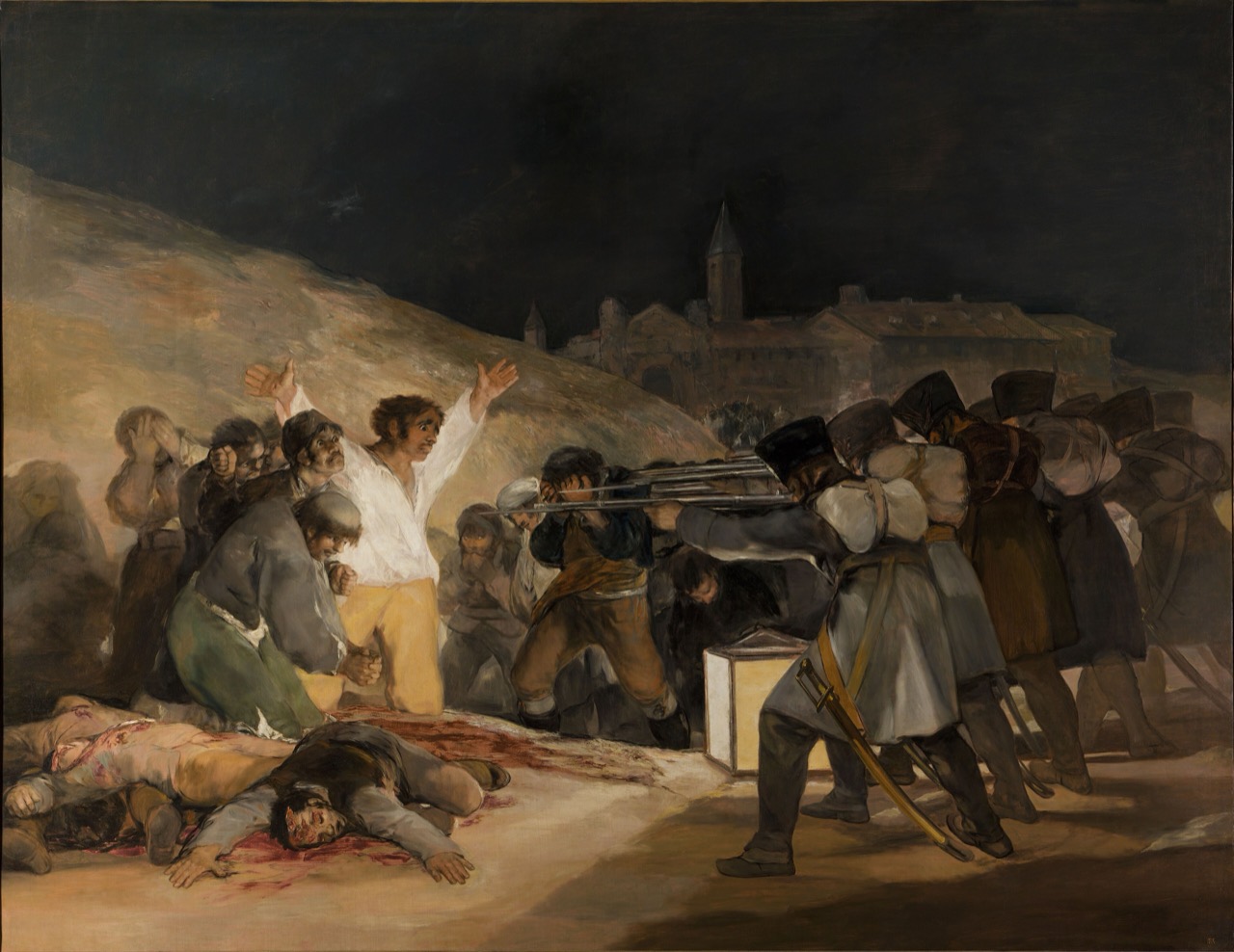
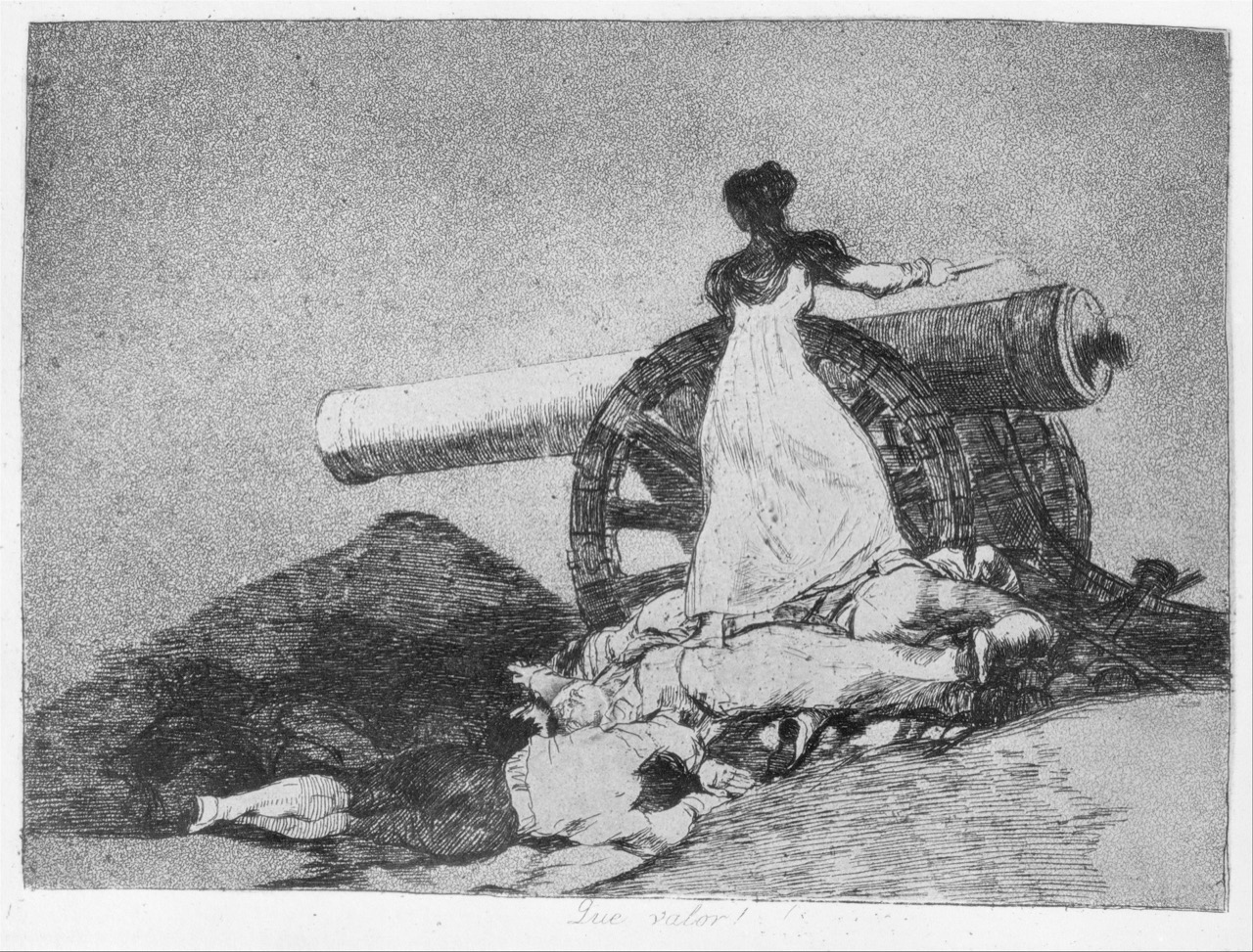
10.That prints are the core catches again here. A blockbuster borrowing original oils costs money differently. One work brings insurance in the billions of won, climate-controlled transport and a dedicated escort. The Caprichos, by contrast, is an edition the Royal Academy pulled in several sets, so loan and insurance sit at a different order of magnitude from original oils, an estimate. Publicity sells a master's whole life while the physical content is filled with prints that are light to borrow. That is the structure that lets a 20,000 won ticket hang 80 works by a master. Prints in the room, oils in the name.
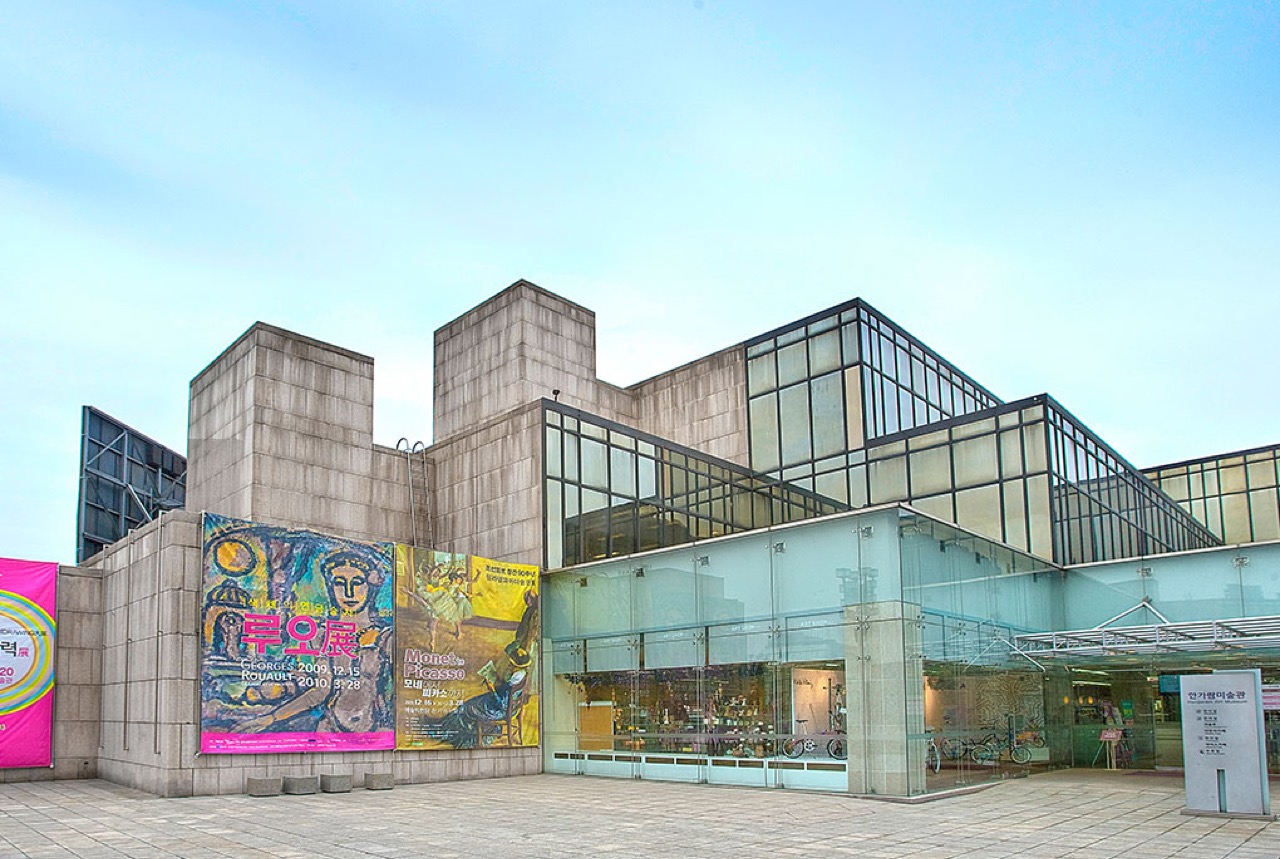
11.Nor is admission the only line. Recovery on a show like this turns on tickets, merchandise and the catalogue together. Postcards, magnets and catalogues sell in the shop at the exit, and that spend can match the ticket, an estimate. Prints with images as strong as the Caprichos also move easily onto merchandise. One dark owl gets sold again on a t-shirt.
12.The method of this exhibition is familiar. The Hangaram Art Museum has steadily run ticketed shows under the names of masters like Van Gogh and Munch. Fill in with media art and recreated spaces when originals are few, and draw an audience on the weight of the name. The Goya show sits on that line.
13.This time that method met a headwind. Visitors came expecting original oils, and the walls held prints and video. Voices in the art world said a print show should have been announced as a print show up front. Nobody doubts the worth of the 80 Caprichos that actually came. The problem was not the work but the way it was sold.
14.Eighty prints 250 years old hang at the Hangaram Art Museum behind a 20,000 won ticket. Publicity slipped in the space between visitors expecting paintings and the worth of those prints. Borrowing a master's name to fill a space snags on the scale of the promise rather than on the content. The name sells tickets. But when what is said at the door and what is shown inside come apart, that distance is how many tickets go unsold for the next show.