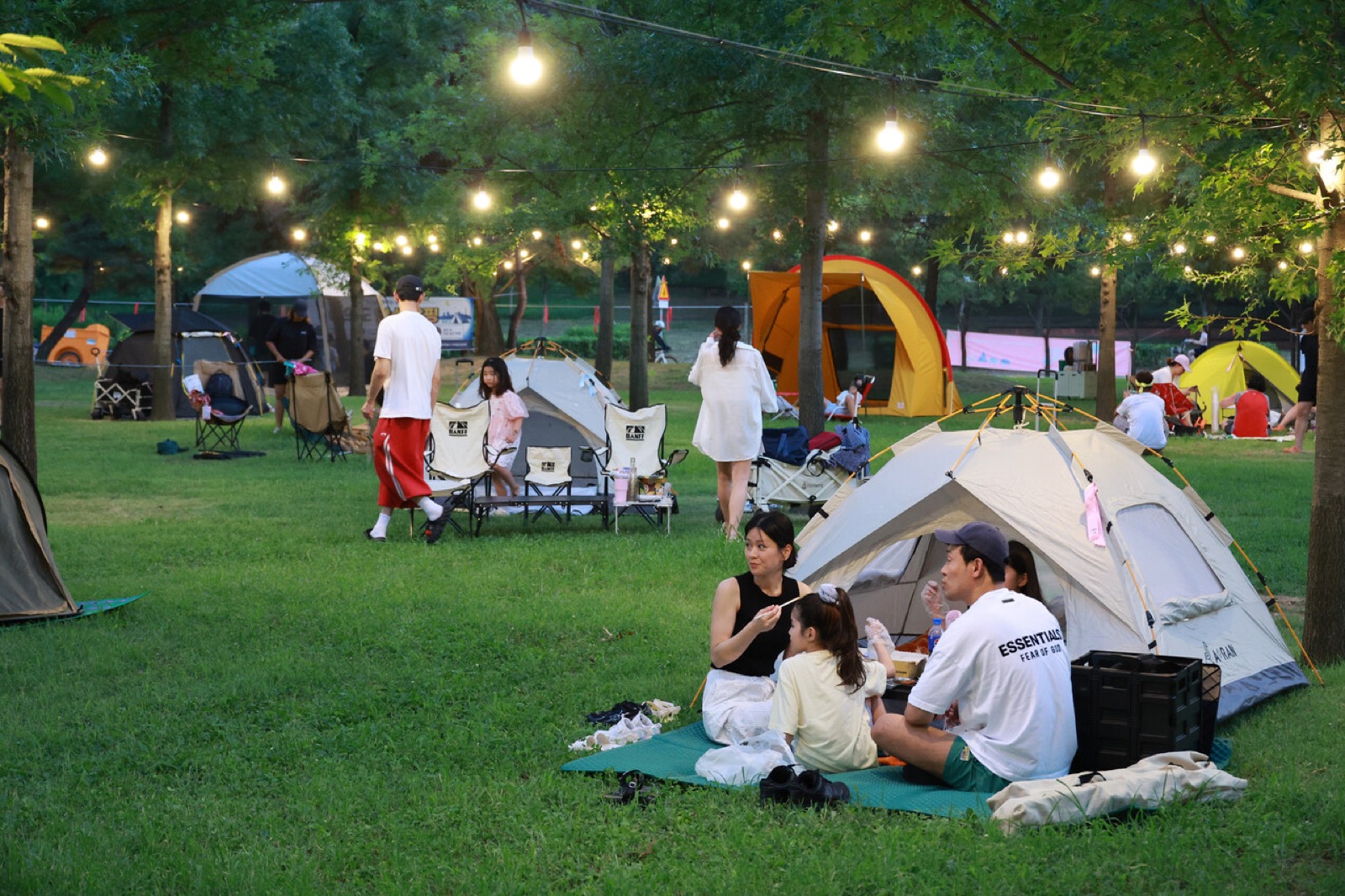
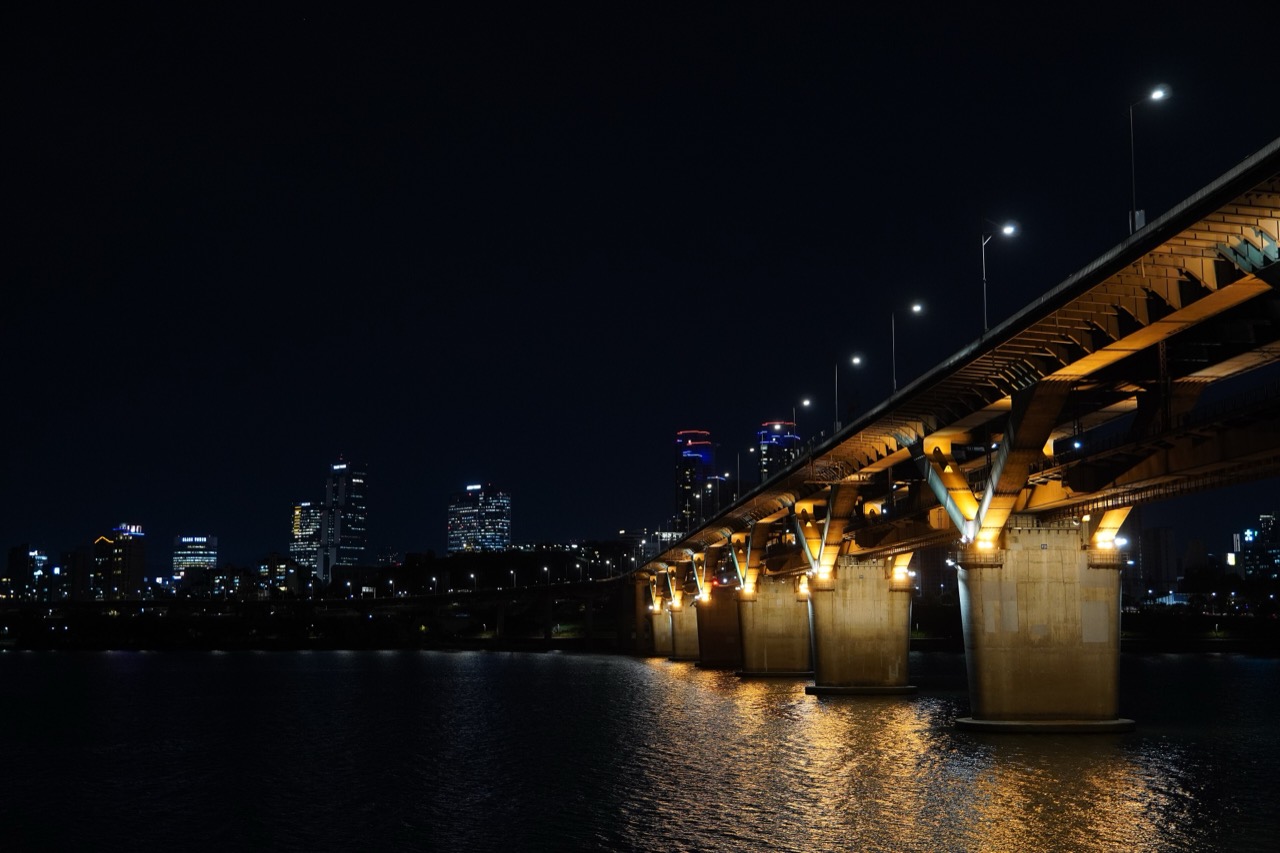
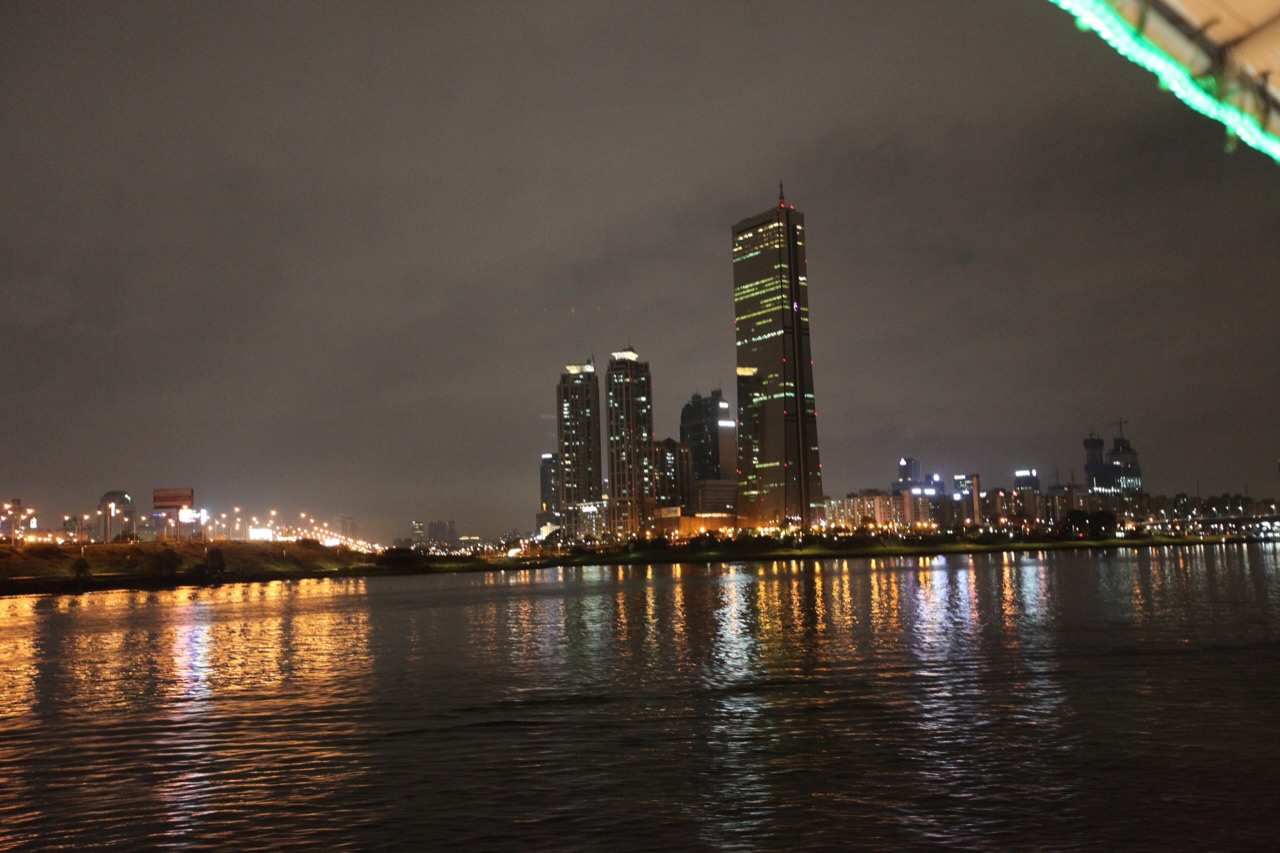
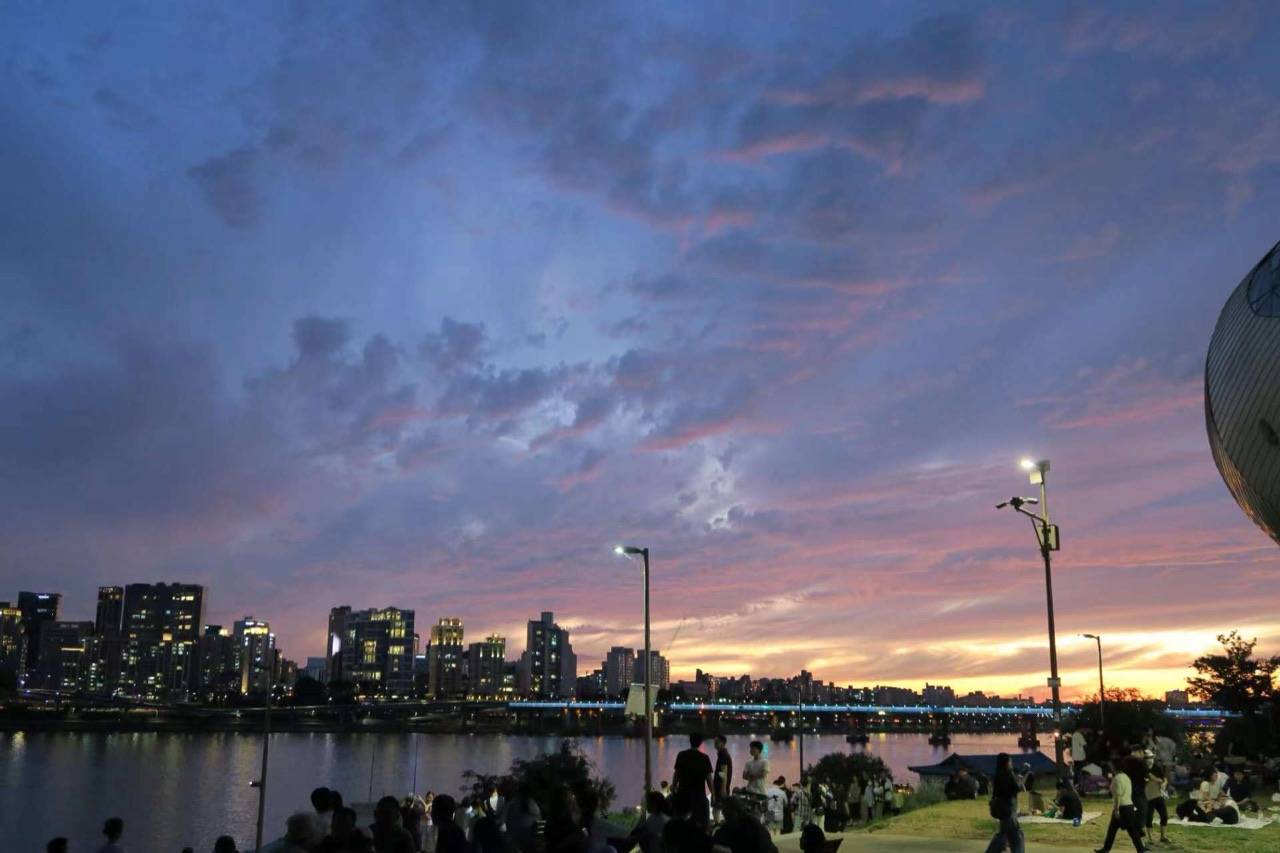
For one month this August, Seoul opened 200 free tent sites across Yeouido and Ttukseom Hangang Parks. It is the first time in eight years that overnight camping has been permitted on these riverbanks. Weekend slots filled within three hours of booking opening, yet at seven in the evening on August 7 the Yeouido campground sat nearly empty. In the same heat wave, the Hangang swimming pool charging adults 5,000 won ran out of its 120 sun loungers before noon.
1.At five in the afternoon on August 1, one hundred four-person tents went up on the lawn in front of the Mulbich Stage at Yeouido Hangang Park. Another hundred on the Hangang Floor lawn at Ttukseom. The run lasts until August 30, daily from 5 p.m. to 9 a.m. the next morning, and the site itself costs nothing.
2.The name is Hangang Bamping, from the Korean word for night. Seoul labels it the first project of its night economy push. Bookings are taken only through a dedicated site, with no walk-ins. One hundred slots per location per day, first come first served, and weekend dates closed within three hours of the first release.
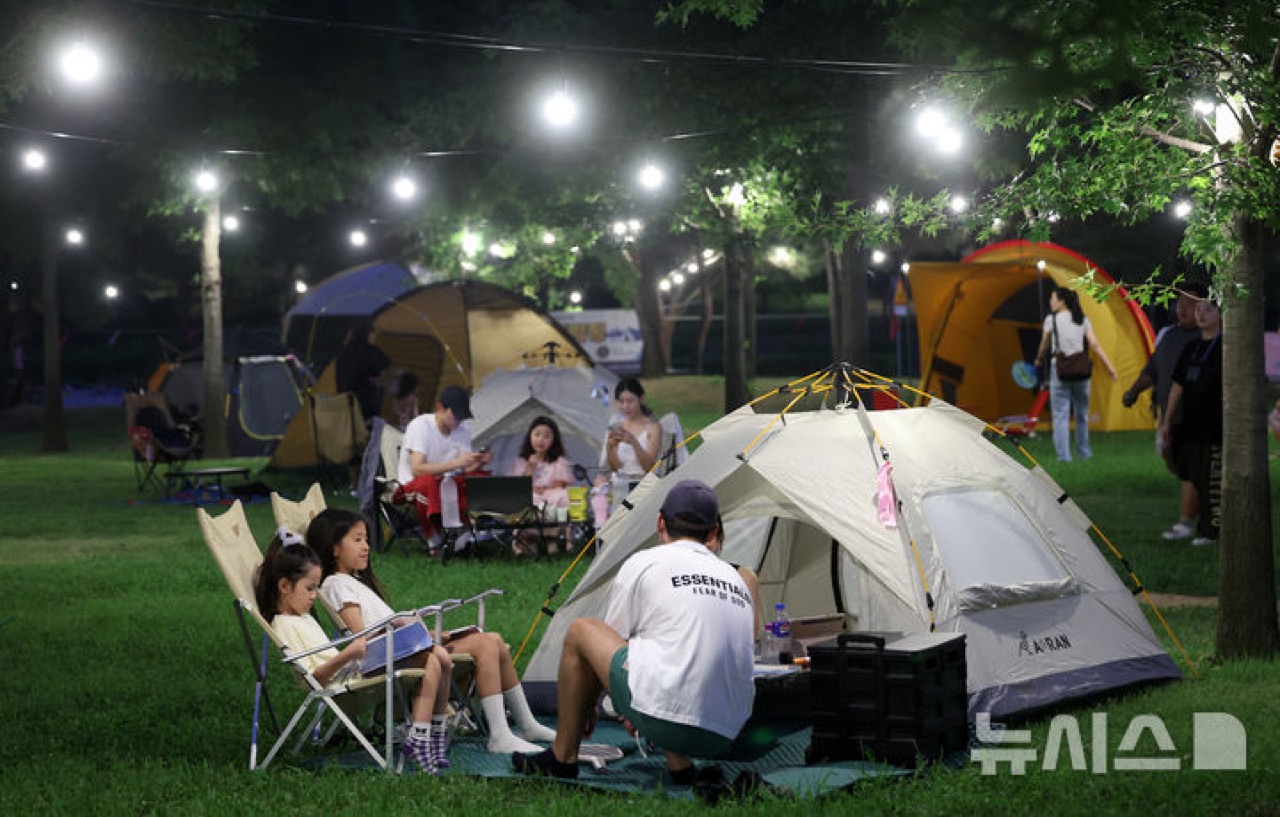
3.Read the rules and the design shows. No consecutive nights, no cooking. Burners and grills stay home. In exchange, Seoul expanded its delivery zones to eight locations for the month and knocked 3,000 won off orders over 25,000 won on the Ttaenggyeoyo delivery app. Pay with a Seoul Love Gift Certificate and 3,000 won comes back on orders over 15,000 won, 5,000 won on orders over 25,000.
4.Banning fire is the smartest move here. Take away the flame and you also take away smoke, grease, fire risk, and dishwashing all at once. Dinner moves to kitchens outside the park, and what stays behind is grass and garbage. A night venue with no kitchen built, two hundred units of it.
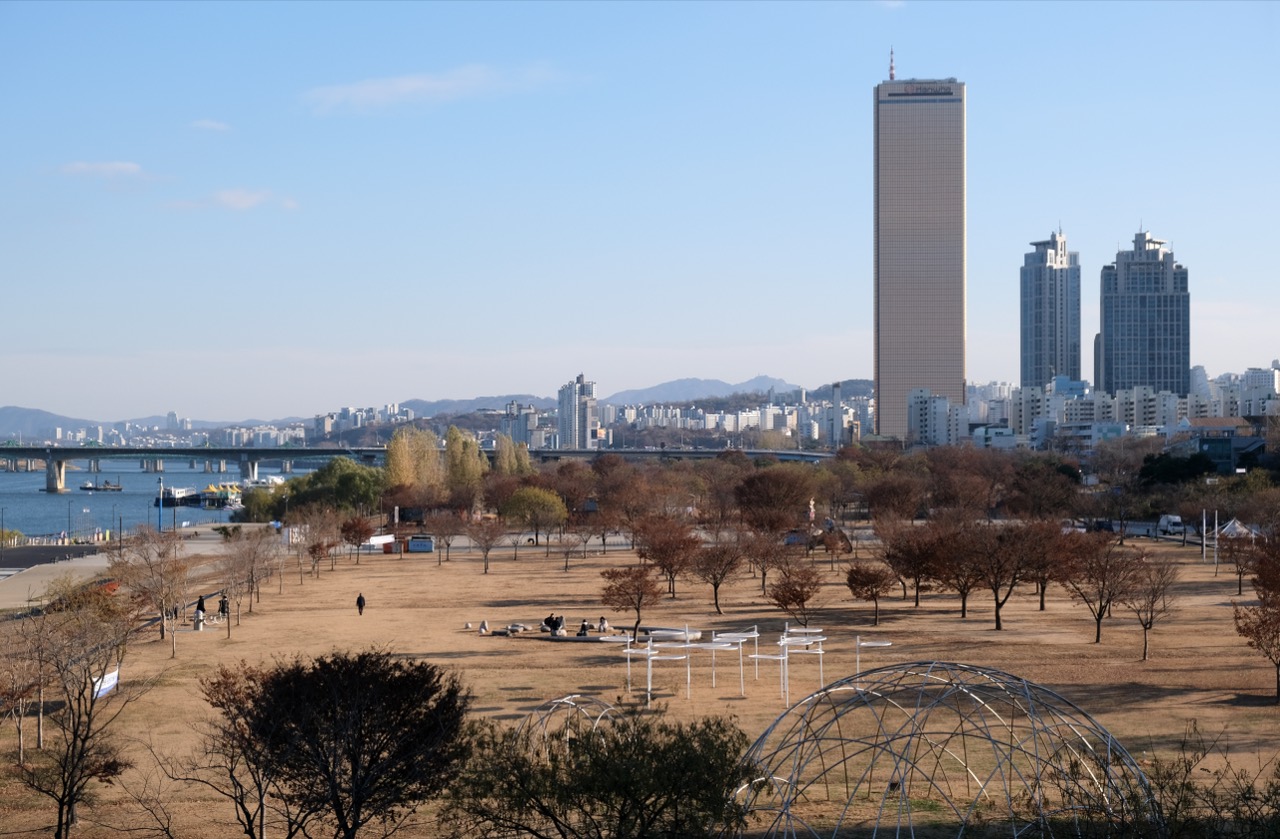
5.Normally the clock on this lawn stops at eight in the evening. From June through August, sun shelters may stand only between 9 a.m. and 8 p.m., and after that they come down. Two of the four walls must stay open at all times. What Bamping does is stretch that same clock by thirteen hours.
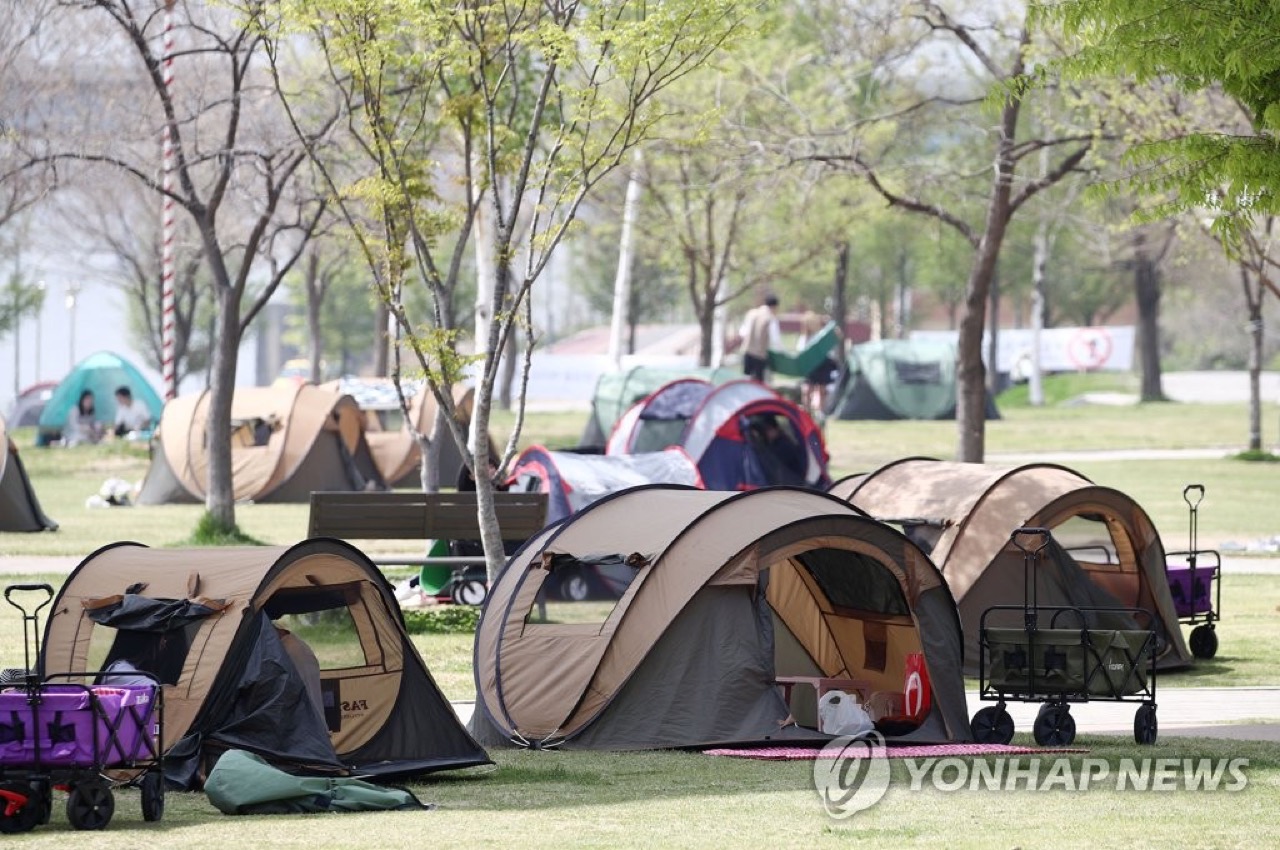
6.So how much does Seoul make on this. Nothing. The site is free, and a visitor who arrives without a tent rents a four-person one on site for around 20,000 won, revenue that belongs to the rental operator. The only money the city collects is a 10,000 won deposit against no-shows, refunded once attendance is confirmed on site.
7.Recovery is designed to happen outside the park. If all 200 sites fill and each party spends 40,000 won on delivery, that is 8 million won a day and 240 million won over thirty days flowing to nearby businesses. Seoul has also tied 21 traditional markets into the program. No sales figures have been published, so this is an estimate, but the direction is clear. The park gives away the ground and collects through the shops around it.
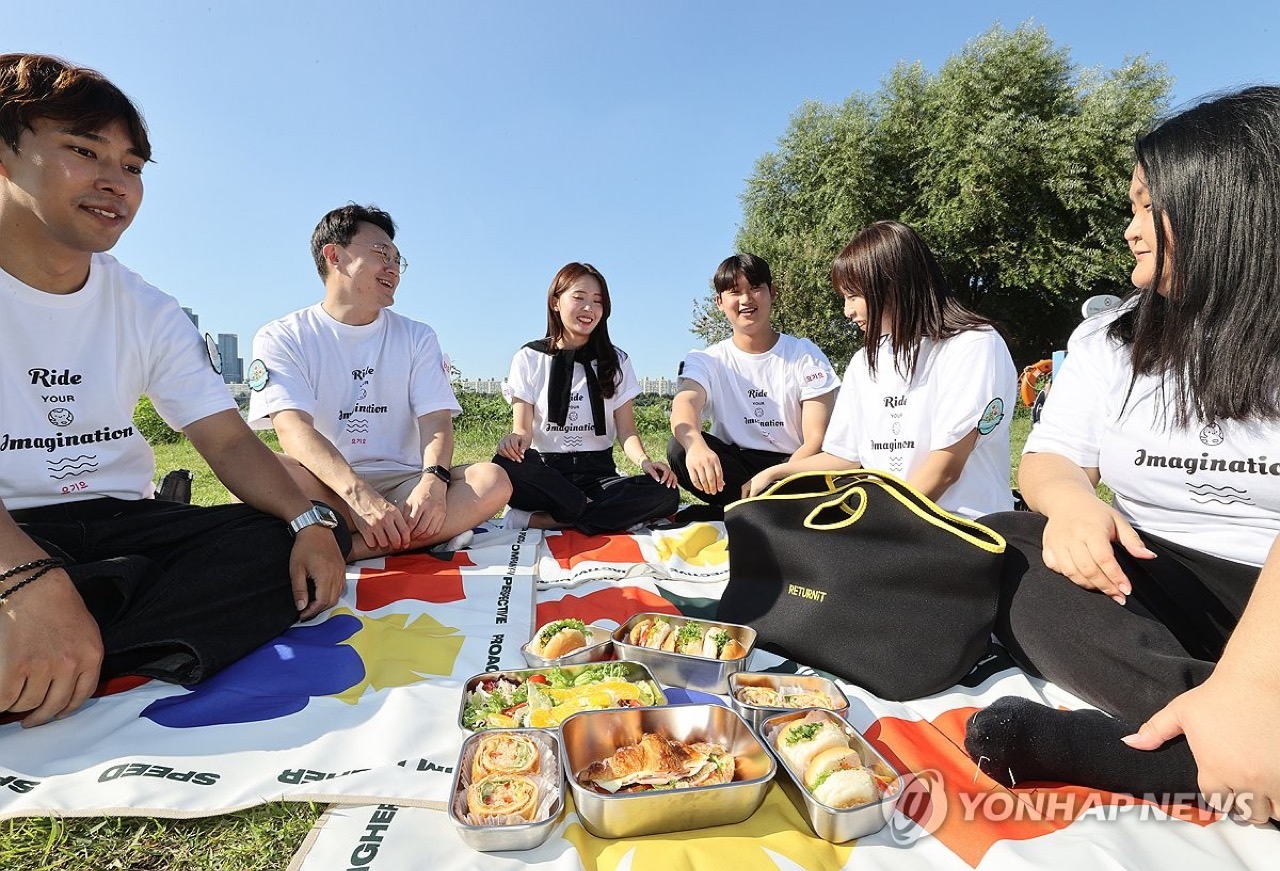
8.Scale is the problem. Four people per tent across 200 sites is 800 a day, and with repeat nights barred, at most 24,000 people pass through all August. Hangang parks drew 87.75 million visitors in the year from March 2024, an average of 240,000 a day. Bamping accounts for roughly 0.3 percent of a single day.
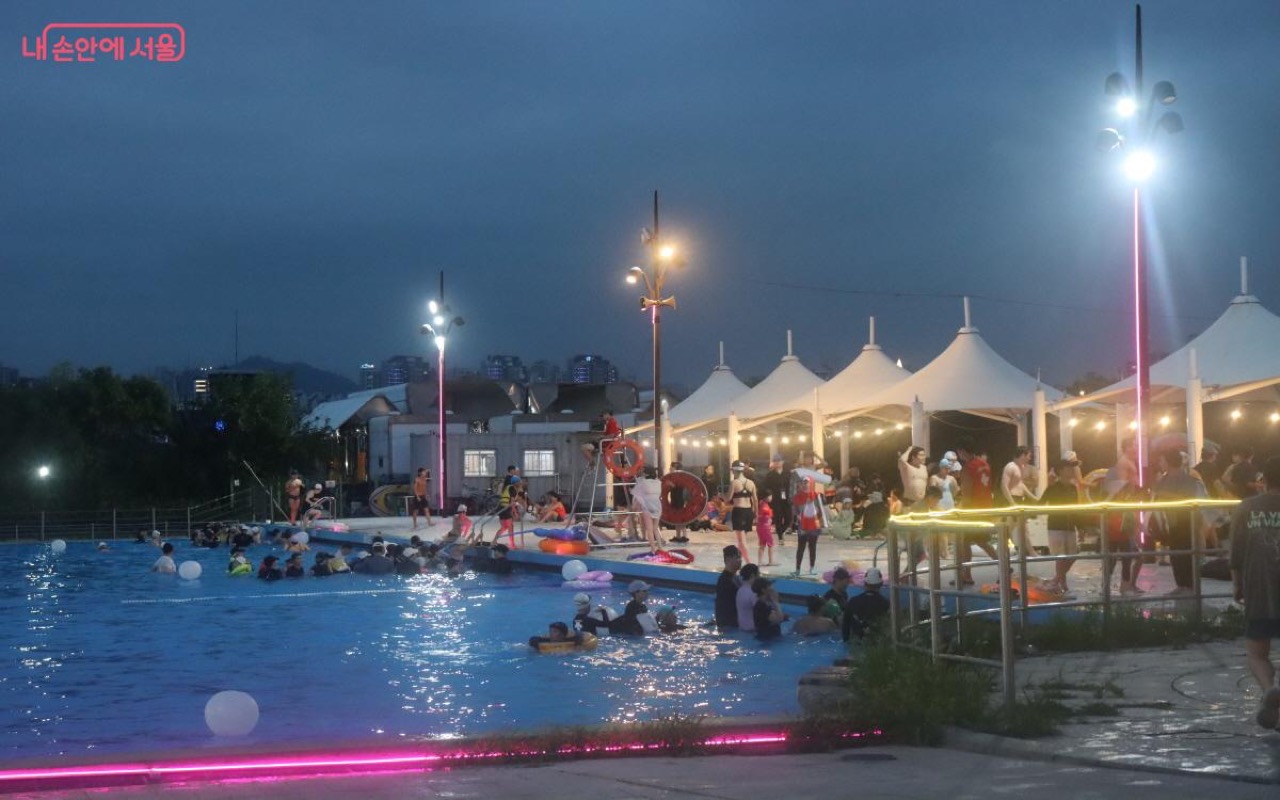
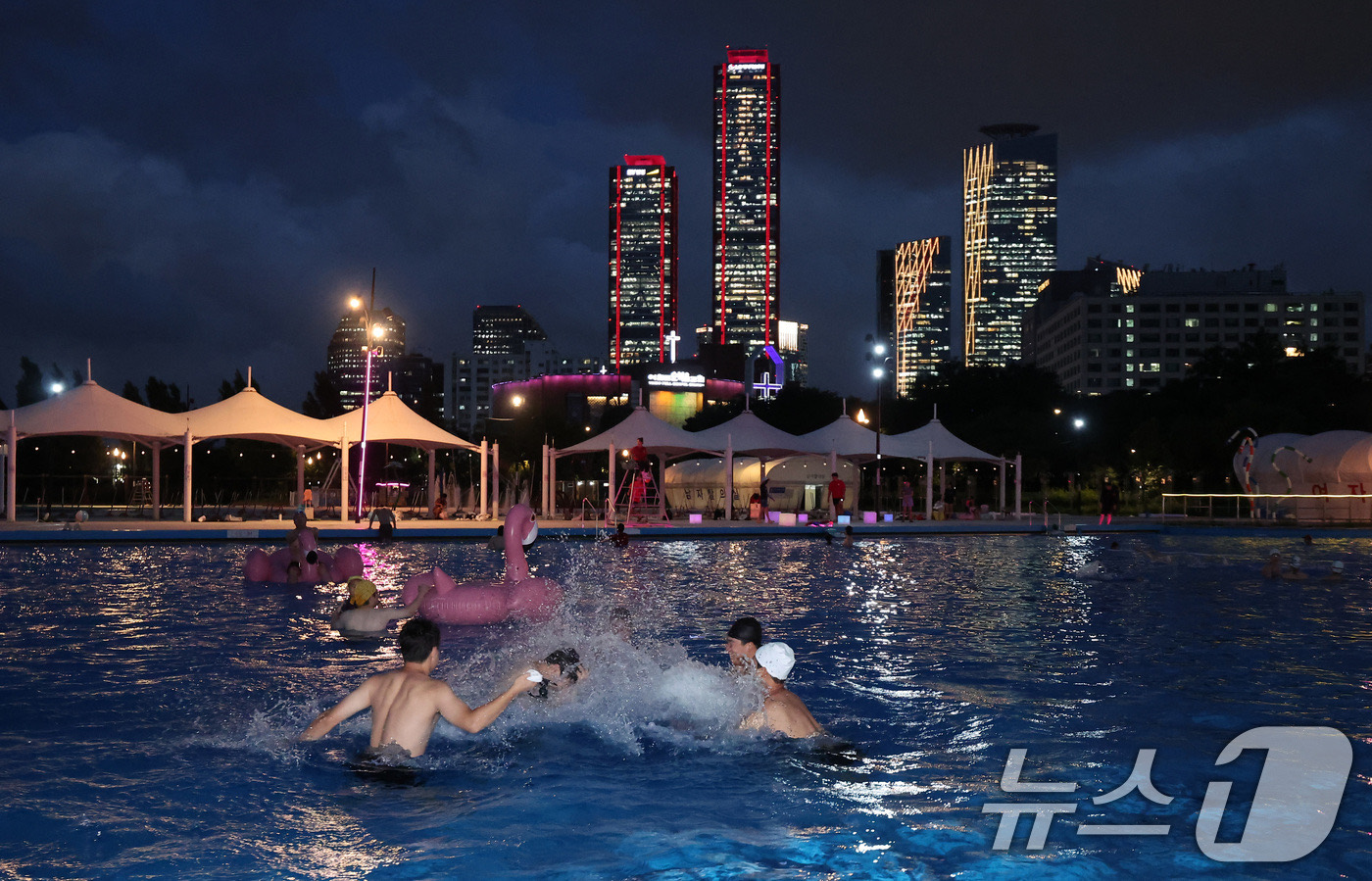
9.The same summer, in the same parks, the facility that charges money performed differently. Hangang pools cost 5,000 won for adults, 4,000 for teenagers, 3,000 for children. Between June 19 and July 26, the six pools and water play areas took in 262,433 visitors, of which Yeouido alone accounted for 93,850. That is roughly 65 percent more than the same period last year.
10.Multiply Yeouido alone by 5,000 won and 37 days yields 469 million won. Night opening runs from July 3 to August 30 until 10 p.m., and on Friday, Saturday and Sunday a DJ plays for two hours from seven. Social media gave it a nickname: the budget Waterbomb. The side selling tickets drew more people than the side giving space away.
공짜 잔디와 5천 원 물
11.One daily paper described the Yeouido campground at seven in the evening on August 7. The sun had gone down but the day's heat still sat in the grass, and someone who had just pitched a tent was wiping sweat in front of an electric fan. Seoul topped 33 degrees that afternoon. Bookings were closed and the sites were empty.
12.Why the split. Because 5,000 won buys entry into water and zero buys a seat on grass. For someone who came out to escape the heat, grass does not solve the heat. Free draws reservations but not necessarily arrivals. People who paid show up; a free slot loses to that evening's weather. That is why the 10,000 won no-show deposit was there from the start.
13.The memory of shutting camping down here is still recent. A 2000 revision to the River Act made all Hangang parks a no-camping, no-cooking zone, and camping outside designated areas still carries a 1 million won fine on first offense, 3 million on the third. Temporary campgrounds ran each summer from 2013 until 2018, when 150 sites at Yeouido and 130 at Ttukseom operated for 45 days and then stopped. Seoul cited garbage, damaged turf, blocked walkways, and the safety risk of tents sealed on all sides.
280동에서 200동으로
14.Cities that treat the night as a matter of administration are no longer rare. Amsterdam created a Night Mayor post in 2014 and gave it to Mirik Milan, a former club promoter, running it as a nonprofit funded jointly by city hall and the private sector. London keeps a Night Czar, and the city's night time economy is worth 26.3 billion pounds a year, 40 percent of the UK total, employing one worker in eight. Seoul's version pours money into designated commercial districts instead. By 2028, one Dalbit Yajang per borough for 25 in total, with up to 2 billion won for each selected district.
15.A lawn closed for eight years opened for one month, the ground was free, and dinner had to arrive by delivery. Capacity tops out at 800 a day, some 0.3 percent of the park's daily traffic, while the 5,000 won pool cleared 90,000 at Yeouido alone in the same summer. Anyone starting a night business runs into that contrast first. People spend money at night not because the space is cheap but because something only works at that hour, and opening for free removes the very chance to prove what that something is.