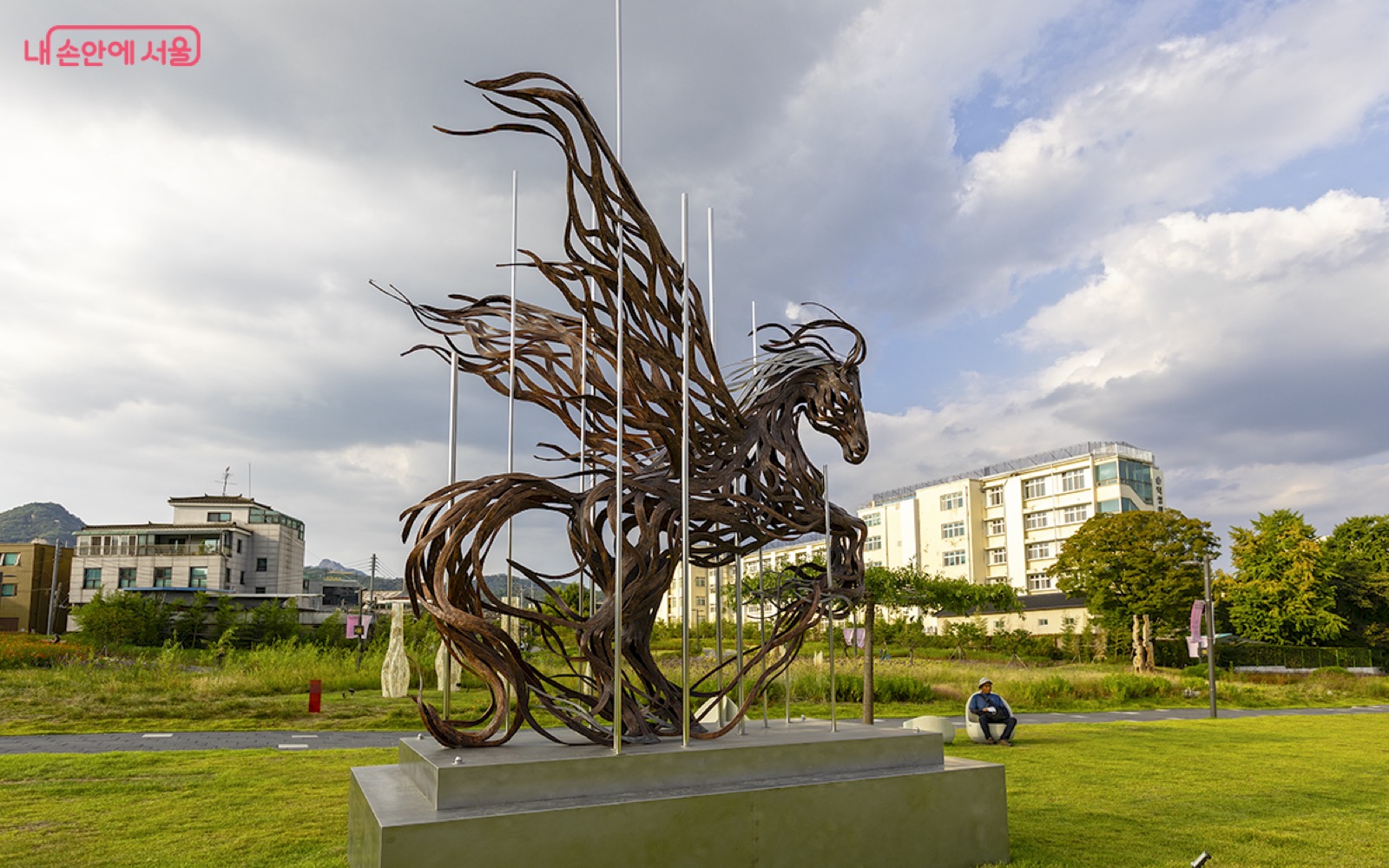
On August 29, sculpture lands on a lawn in the middle of Jongno. Yeollin Songhyeon Green Plaza is the main venue, joined by Ttukseom Hangang Park, Seoul Forest, Seoul Children's Grand Park and Pungnaptoseong Fortress, five sites in all. No tickets are sold. This land was once slated for a hotel; a school stood too close, the permit never came, and the site sat empty for 13 years before it was sold. Sculpture is the art market's worst seller, yet Korea has a law that buys it.
1.The third Seoul Sculpture Festival opens on August 29. The main venue is Yeollin Songhyeon Green Plaza in Jongno-gu. Festival programs run through September 4, and the outdoor works stay up for three more months after that. 92 pieces in all, admission free.
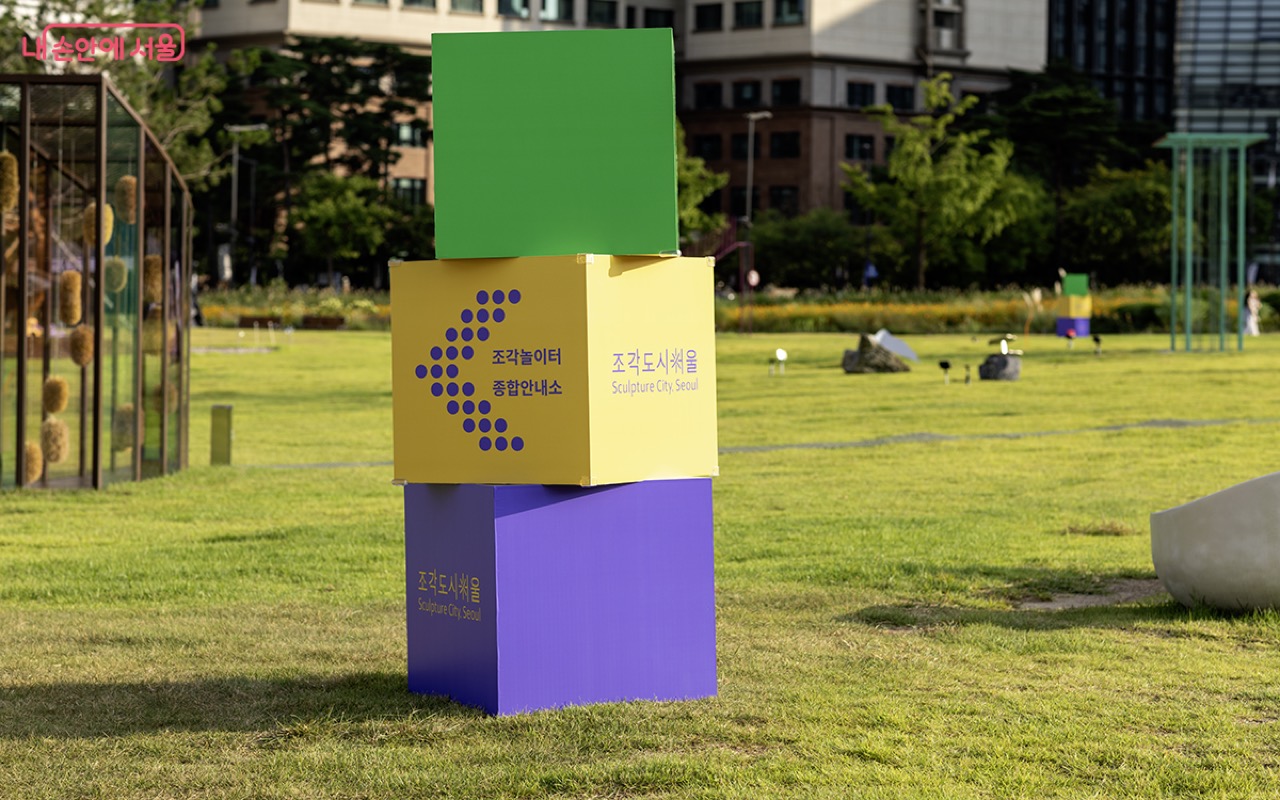
2.Yeollin Songhyeon sits just beyond the east wall of Gyeongbokgung. A few minutes on foot from Anguk Station, 37,141 square meters. Where else in Seoul does an empty field this size sit between a subway station and a palace? It survived because it stayed closed for so long.
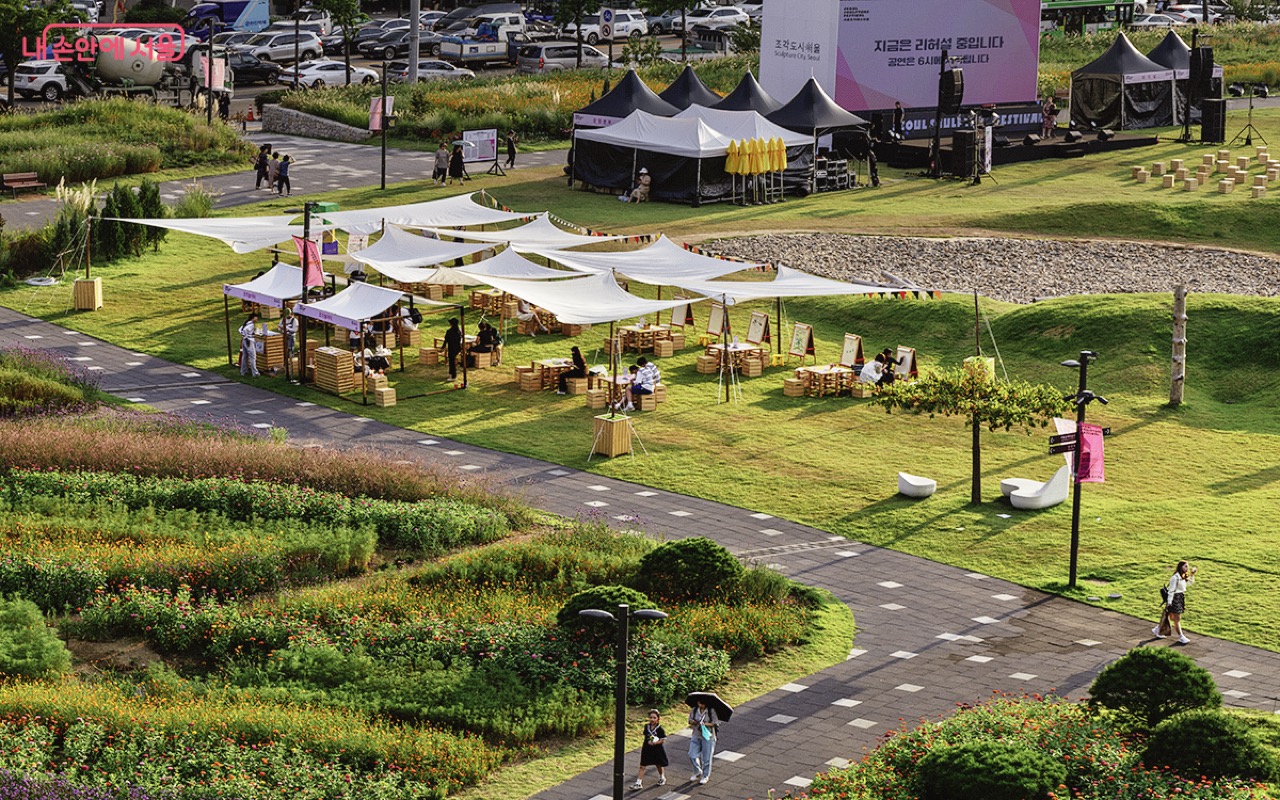
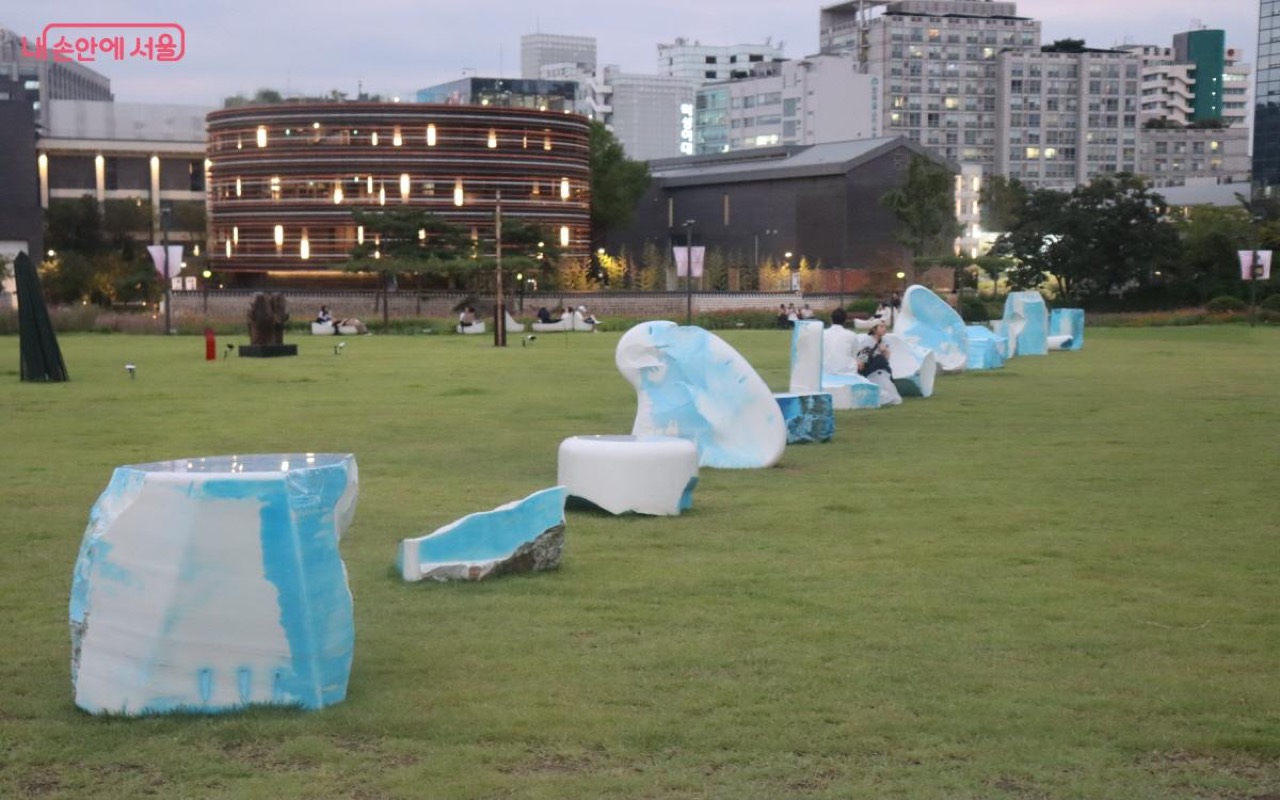
3.The exhibition scatters across five sites. Yeollin Songhyeon holds the Seoul Sculpture Award finalists and the art director's invited works, a sculpture village moves into Ttukseom Hangang Park, and pieces go out to Seoul Forest, Seoul Children's Grand Park and the east wall of Pungnaptoseong Fortress. Closing dates differ from site to site.
다섯 곳의 회기가 서로 다르다
4.The operating hours catch the eye. Weekdays open at 5 p.m. and close at 9; weekends start earlier. It simply does not open at midday. In late August the lawn has no shade at noon, and shade is almost always where a summer outdoor event breaks down.
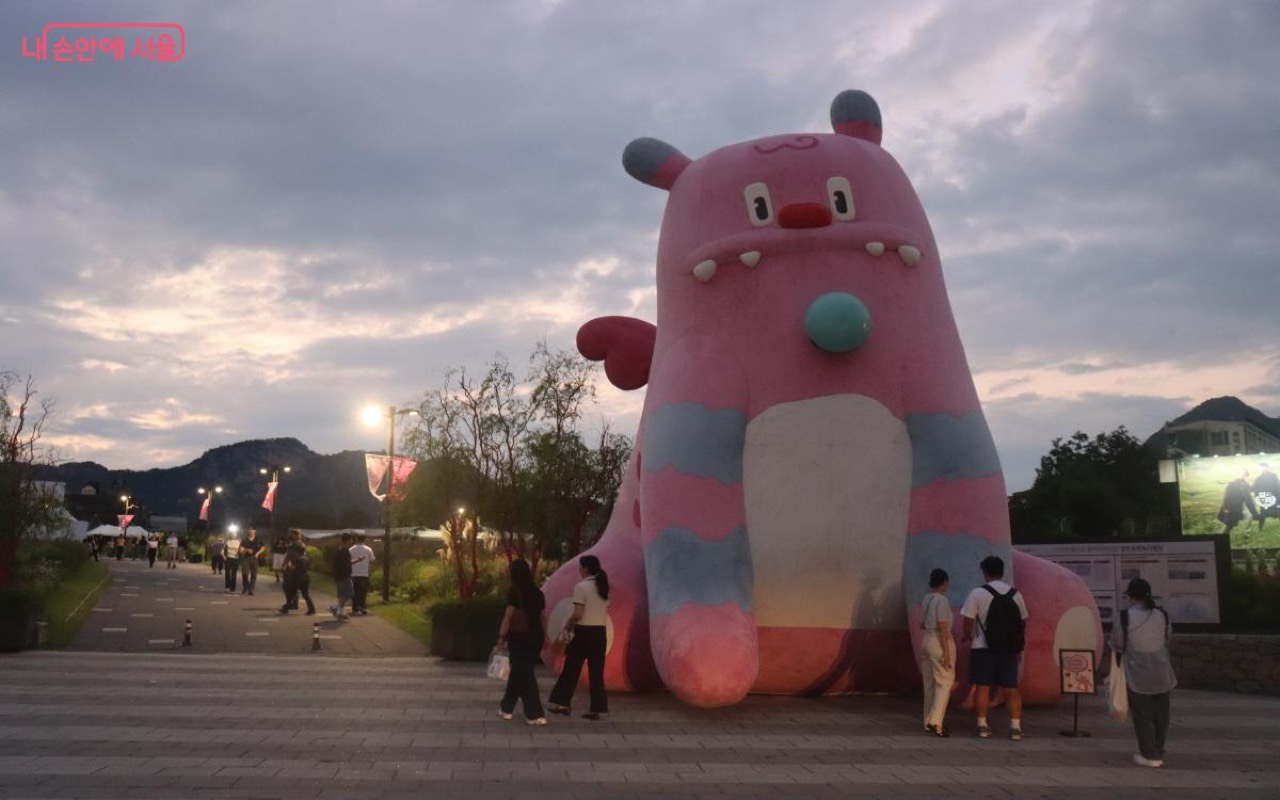
5.The Seoul Sculpture Award drew 111 entries and picked 15 finalists. Instead of prize money, each finalist receives 25 million won in production costs. Painting competitions do not work this way. A painting arrives already painted; a sculpture needs the money first before the object exists.
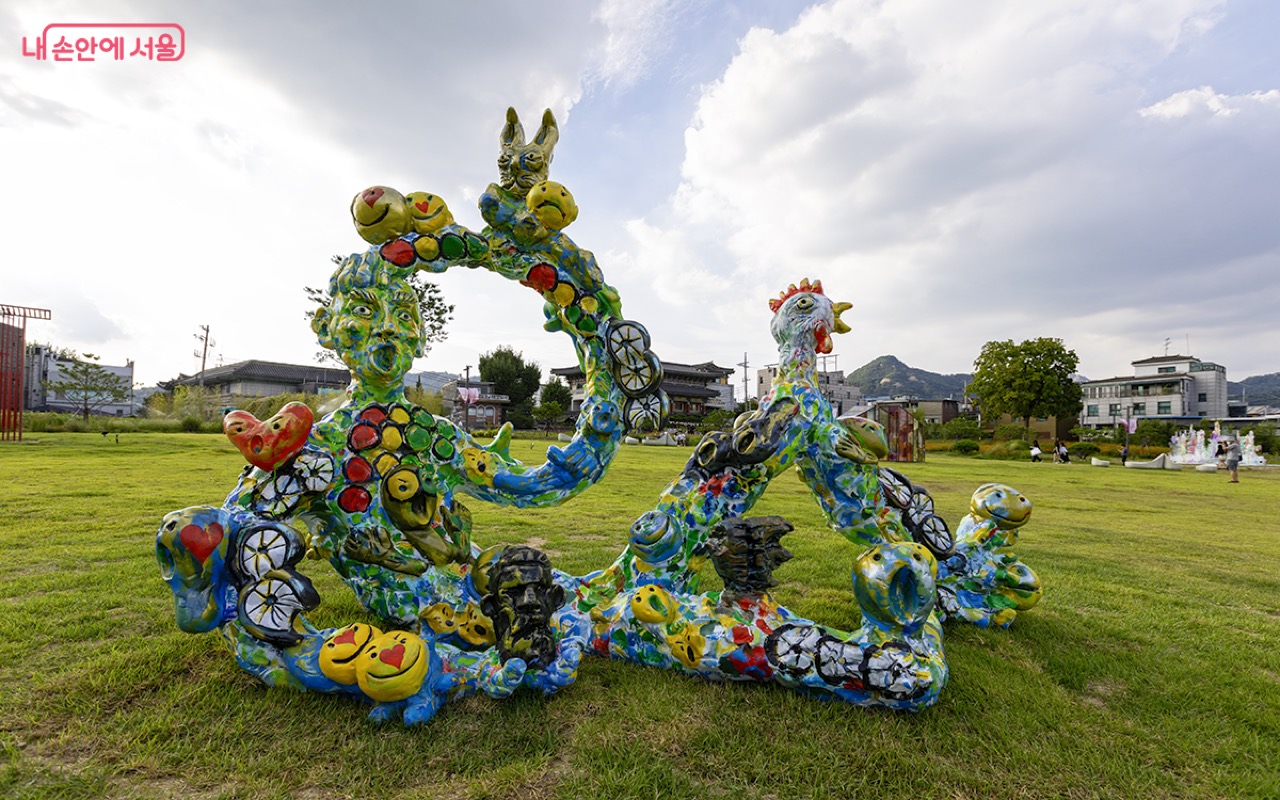
6.Starting this year, the city buys the grand prize work. The piece that tops the citizens' vote receives a citizens' prize, the city says. Not stopping at an award but actually buying the work: for a sculptor, that carries more weight than any trophy.
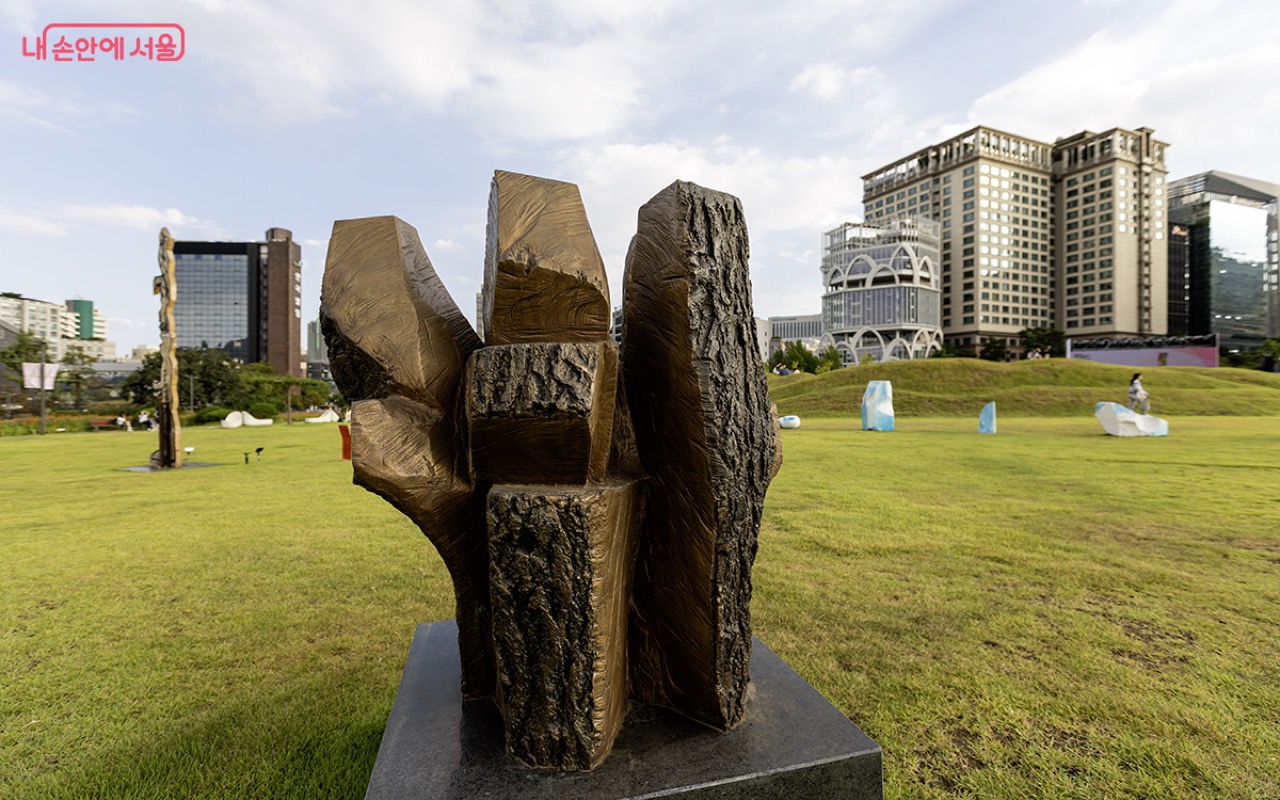
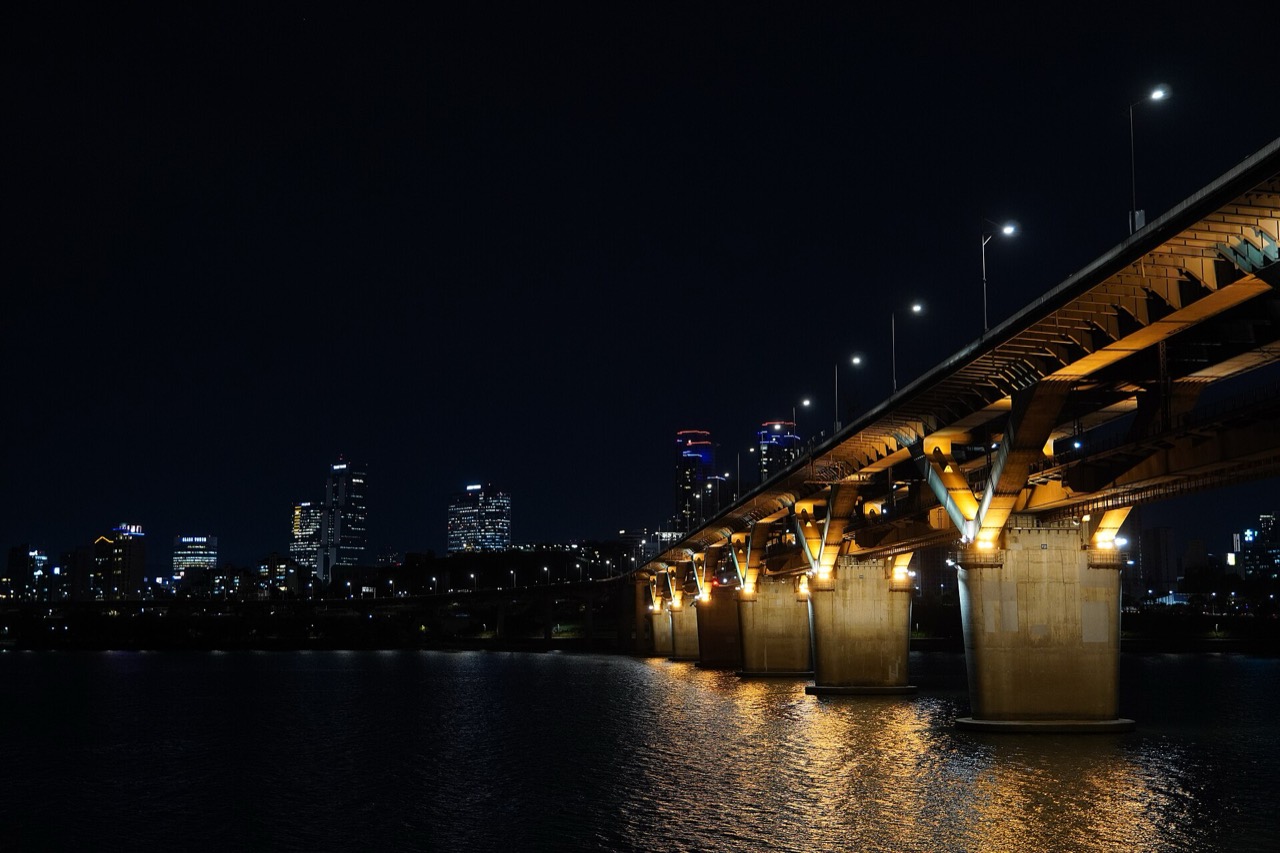
7.The Ttukseom section is called 'A Village Where the Wind Settles.' Works scatter across the riverside so people walk through them as they would a village. River wind draws crowds on summer evenings all on its own, and the organizers plant sculptures among those crowds.
8.There are physical reasons sculpture cannot sell tickets inside a museum. A painting needs only a wall; a sculpture needs floor underfoot and height overhead, and that floor has to carry the weight. One piece takes several times the footprint of a painting, and since viewers walk around it, it eats circulation space too. Where 100 paintings would hang, would 20 sculptures even fit? The hall rent is the same, but the cost per piece jumps fivefold.
9.So instead of selling tickets, sculpture goes out to where people already pass. Parks and plazas charge no rent, and with no ceiling there is no height limit, and on bare ground nobody has to count the weight. Opening only in the evening follows the same math: rather than building a new audience, you set the works on flows that already exist, the commute home and the evening walk.
10.Then where does the money come from? The audience pays nothing at this festival. Production costs for the finalists alone run 375 million won, with installation, operations and removal on top. All of it comes from the city budget.
11.The market that actually feeds sculptors sits elsewhere. Build or expand a building of 10,000 square meters or more and a set share of the construction cost must go to artwork. The Culture and Arts Promotion Act makes it mandatory, and apartments, offices, retail and lodging are all covered. Building owners do not buy because they want to. They buy because the completion paperwork requires it.
12.The amounts are not small. The government's standard construction cost is 2.38 million won per square meter, multiplied by a 0.7 percent rate. A single 10,000-square-meter building spends 166.6 million won on art. In Seoul, that scale means a mid-size office block or one hotel.
연면적이 정하는 미술작품 금액
13.The owner does have a way out. Pay 70 percent of that amount into the Culture and Arts Promotion Fund and the obligation ends. For the building above that comes to 116.62 million won, nearly 30 percent cheaper. Most owners do not take that road. Money paid into the fund survives only as a receipt; the object standing in the lobby keeps appearing in completion photos and leasing brochures. What sells sculpture here is not appreciation but asset value.
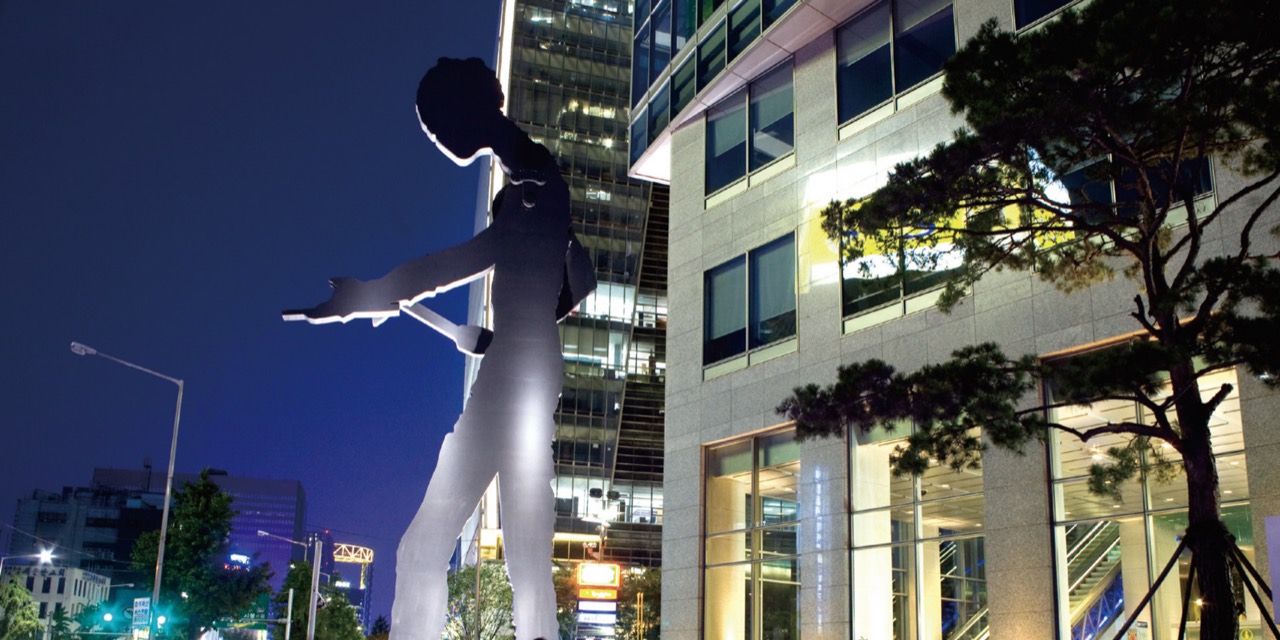
14.Korean Air bought this land from Samsung Life in 2008. It planned a hotel and ran into the School Health Act: schools stood along the fence line, and within 200 meters of one, no tourist hotel gets licensed. For the next 13 years, this plot in the middle of Seoul sat empty behind its walls.
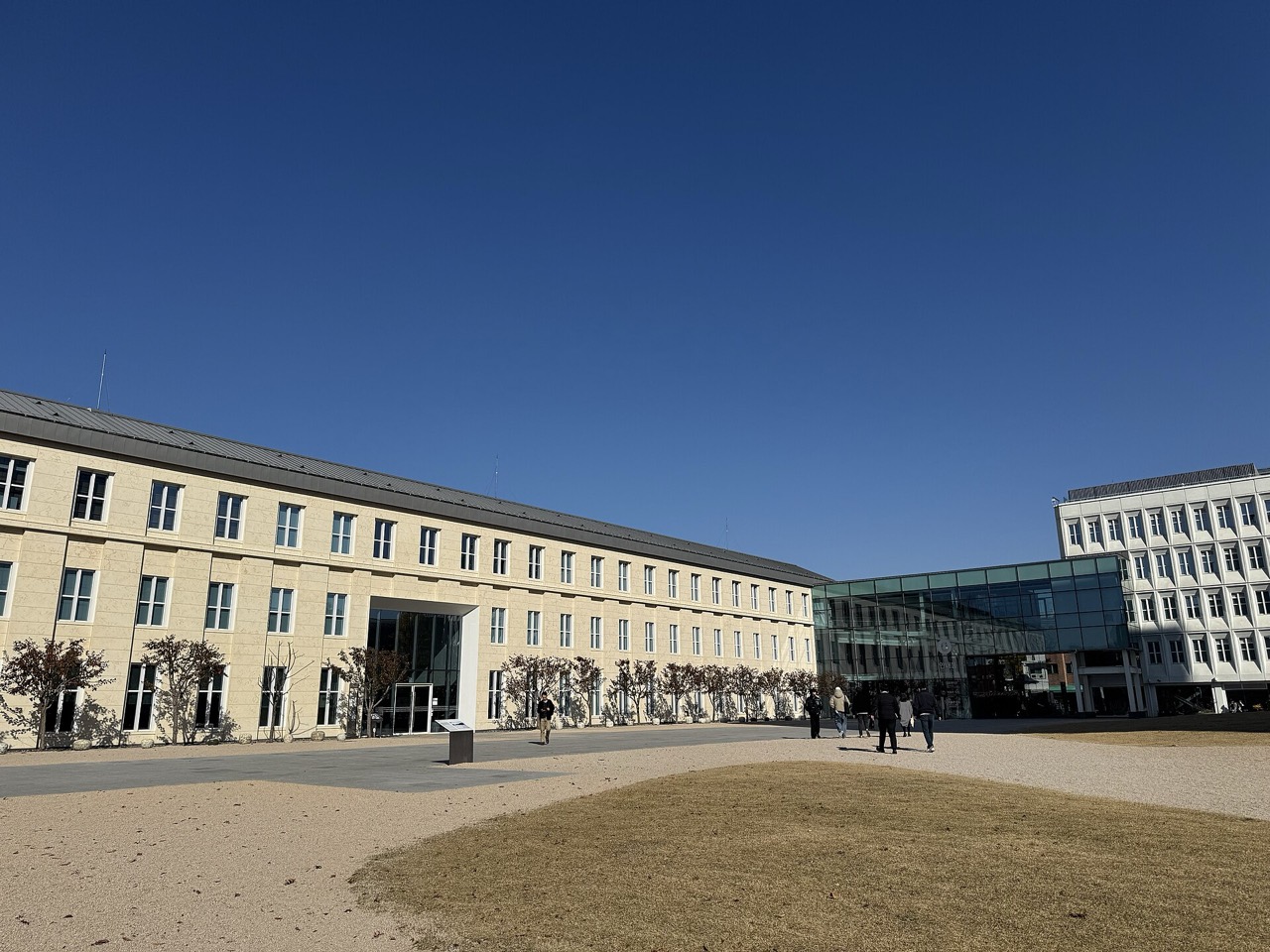
15.The sale price was 557.8 billion won. LH bought the site and swapped it for city land south of the old Seoul Medical Center, and the city tore down the walls and laid grass. Pungmoon Girls' High School, the school that blocked the hotel, has since moved to Gangnam, and its old building is now the Seoul Museum of Craft Art. On one side of this lawn, a site is reserved for the Lee Kun-hee donation museum. The target opening is 2027.
16.From August 29, for three months, the city stands 92 sculptures in five parks and plazas and sells no tickets. The money that reaches artists is production cost, not prize money, and beyond the festival waits a market where any building over 10,000 square meters must buy art by law, in the hundreds of millions of won. Run an outdoor show in Korea and the money leaks not on the way up but on the way down. Anything set on a buried foundation must be dug back out, and park sites come with restoration clauses. If the installation quote leaves out removal and restoration, the event goes into the red in its final week. This lawn will not stay a lawn forever either.