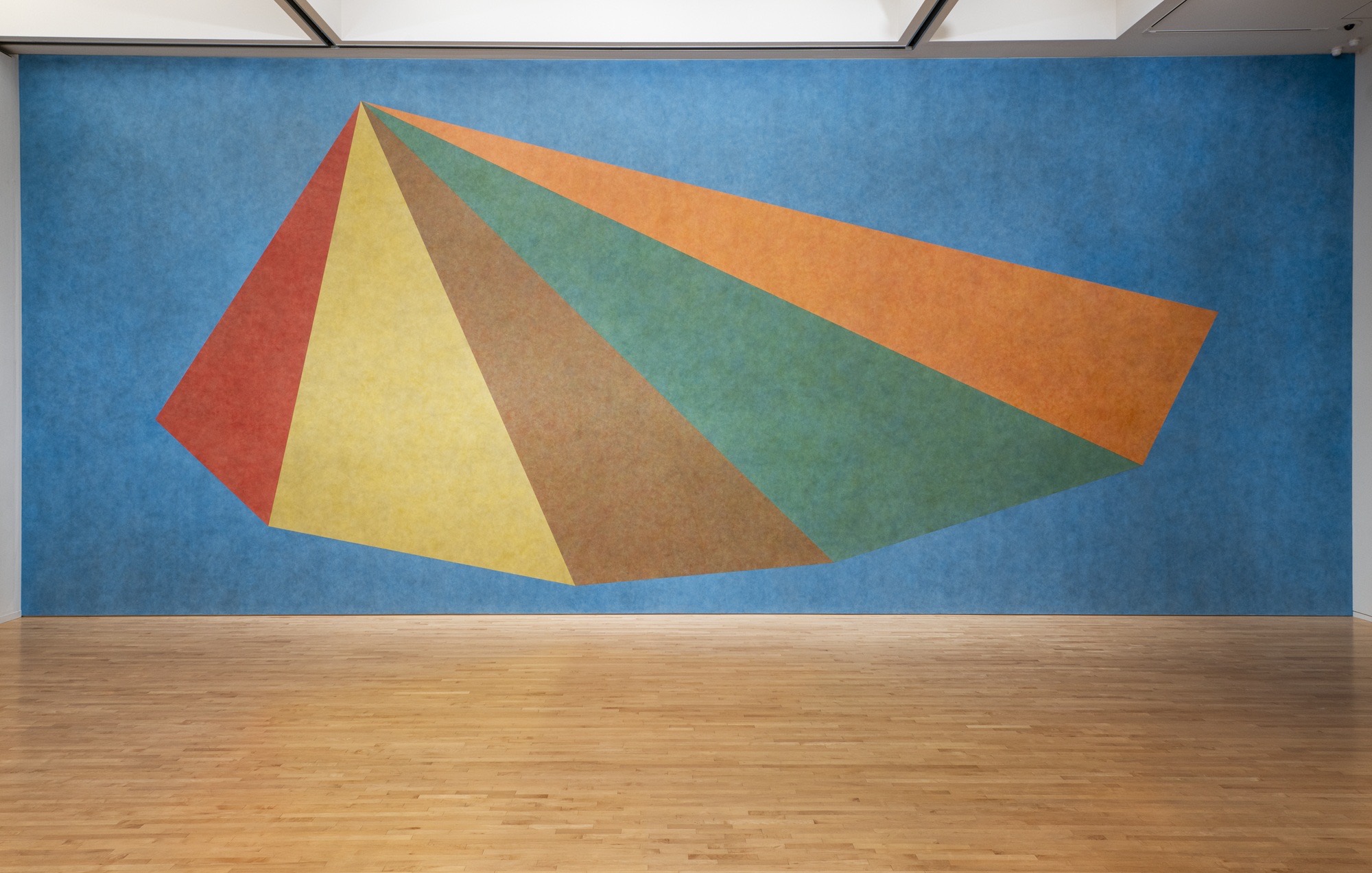
Thirteen wall paintings arrived last Tuesday at an exhibition that opened in Yongsan, Seoul. Arrived is not quite the right word. What came in a crate was a set of papers. The paintings came into existence on this museum's walls, and when the run ends they will disappear under white paint. The people who painted them were not the artist either.
1.The Amorepacific Museum of Art opened Sol LeWitt: Open Structure last Tuesday. It runs six months, through February 28, 2027. The venue is the basement gallery of the Amorepacific headquarters in Yongsan, and this is the first large solo show of Sol LeWitt (1928-2007) in Korea.
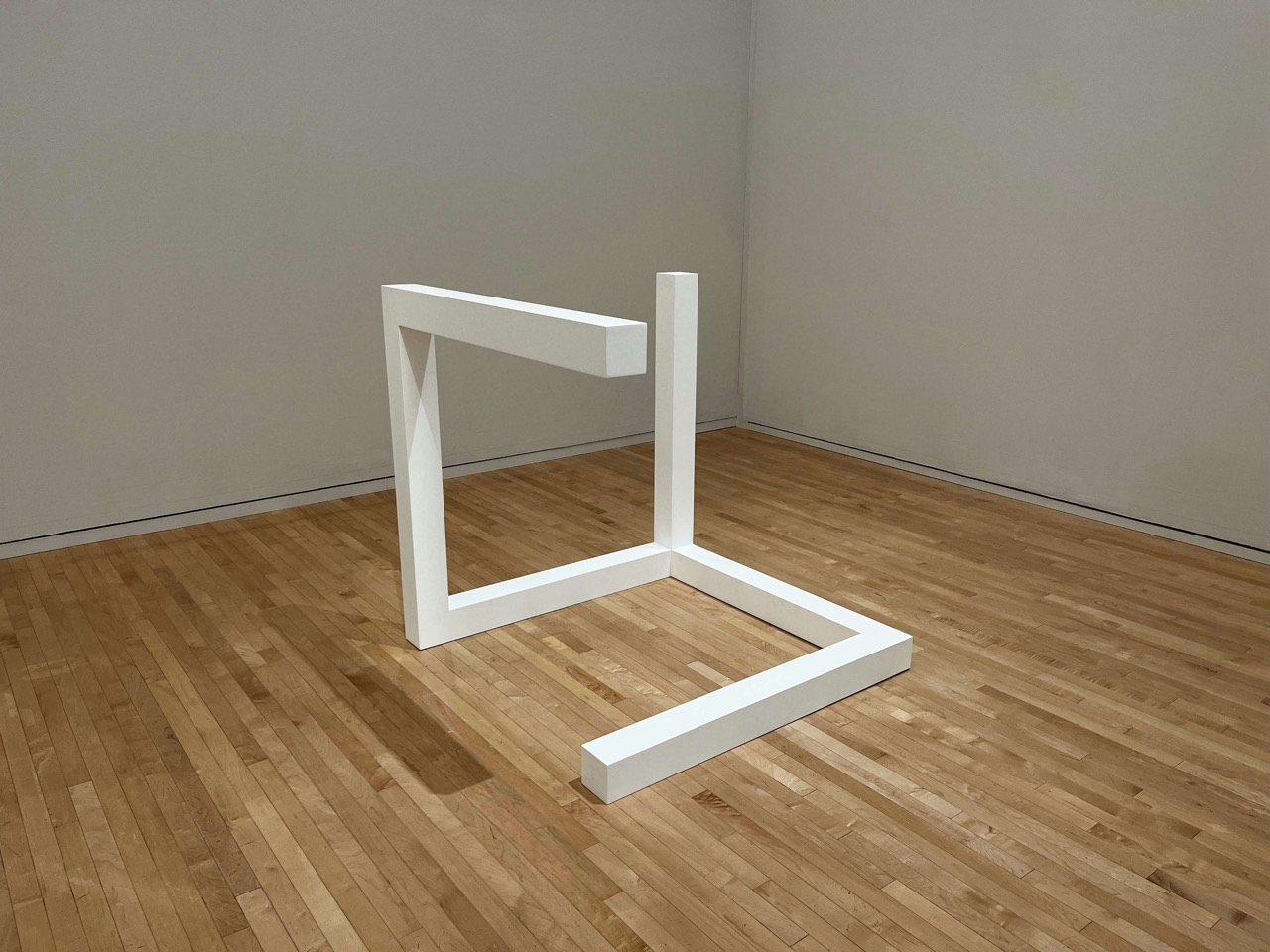
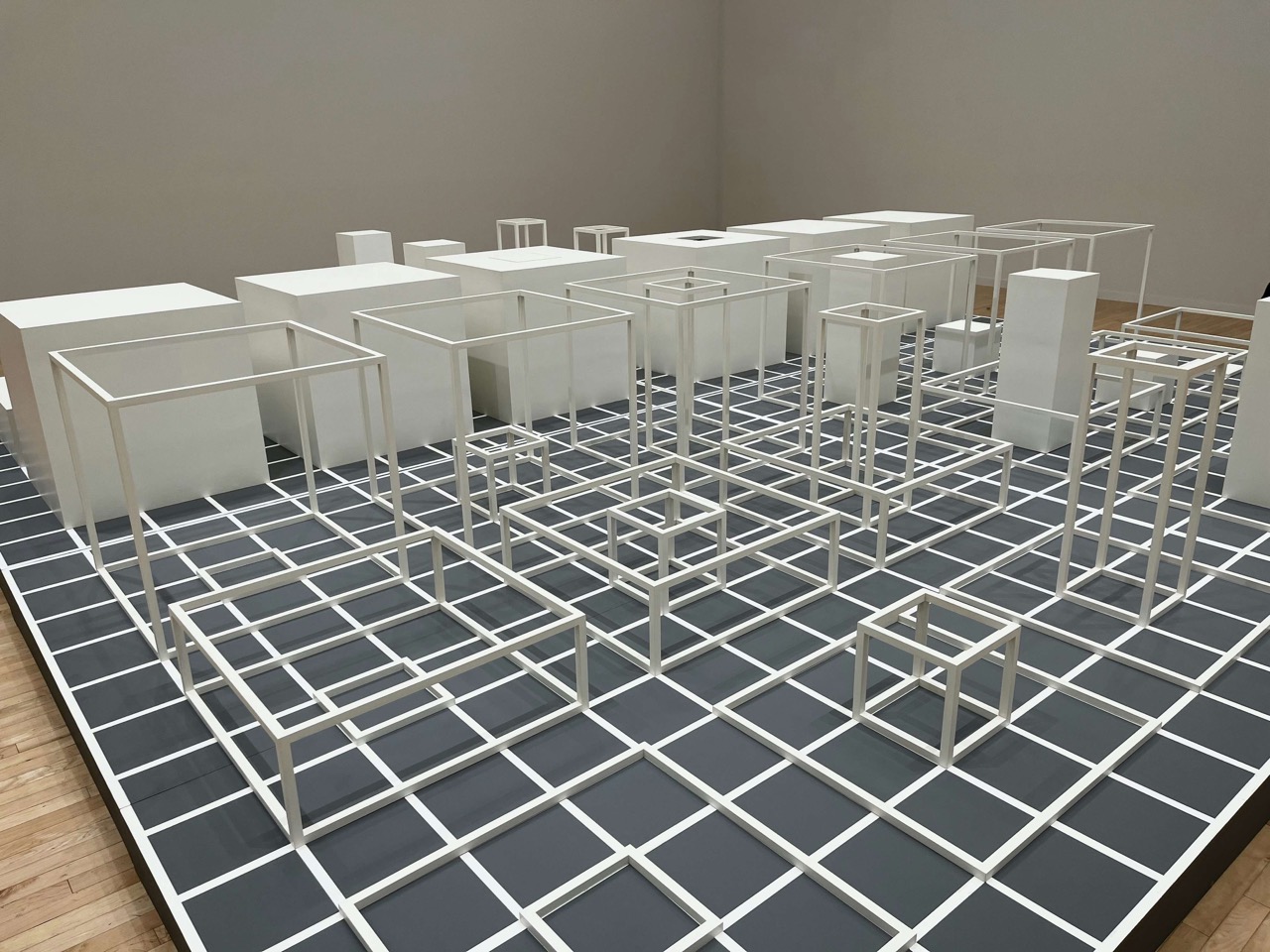
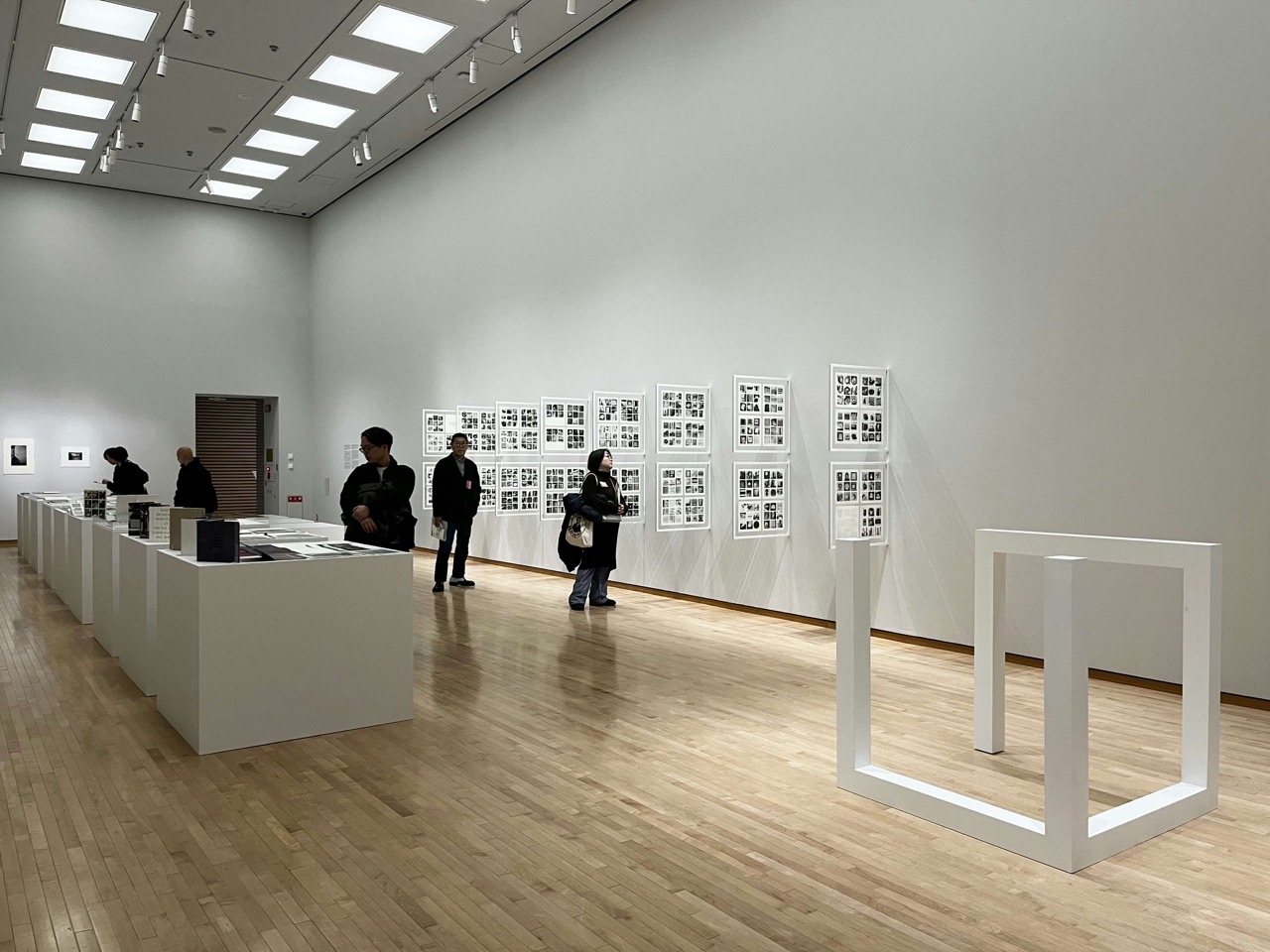
2.Forty-five works are on view, thirteen of them wall drawings. The rest are structures, paintings, photographs, prints, and books and records the artist made himself. Adult admission is 18,000 won, and the museum closes on Mondays. Audio commentary comes free through the museum app.
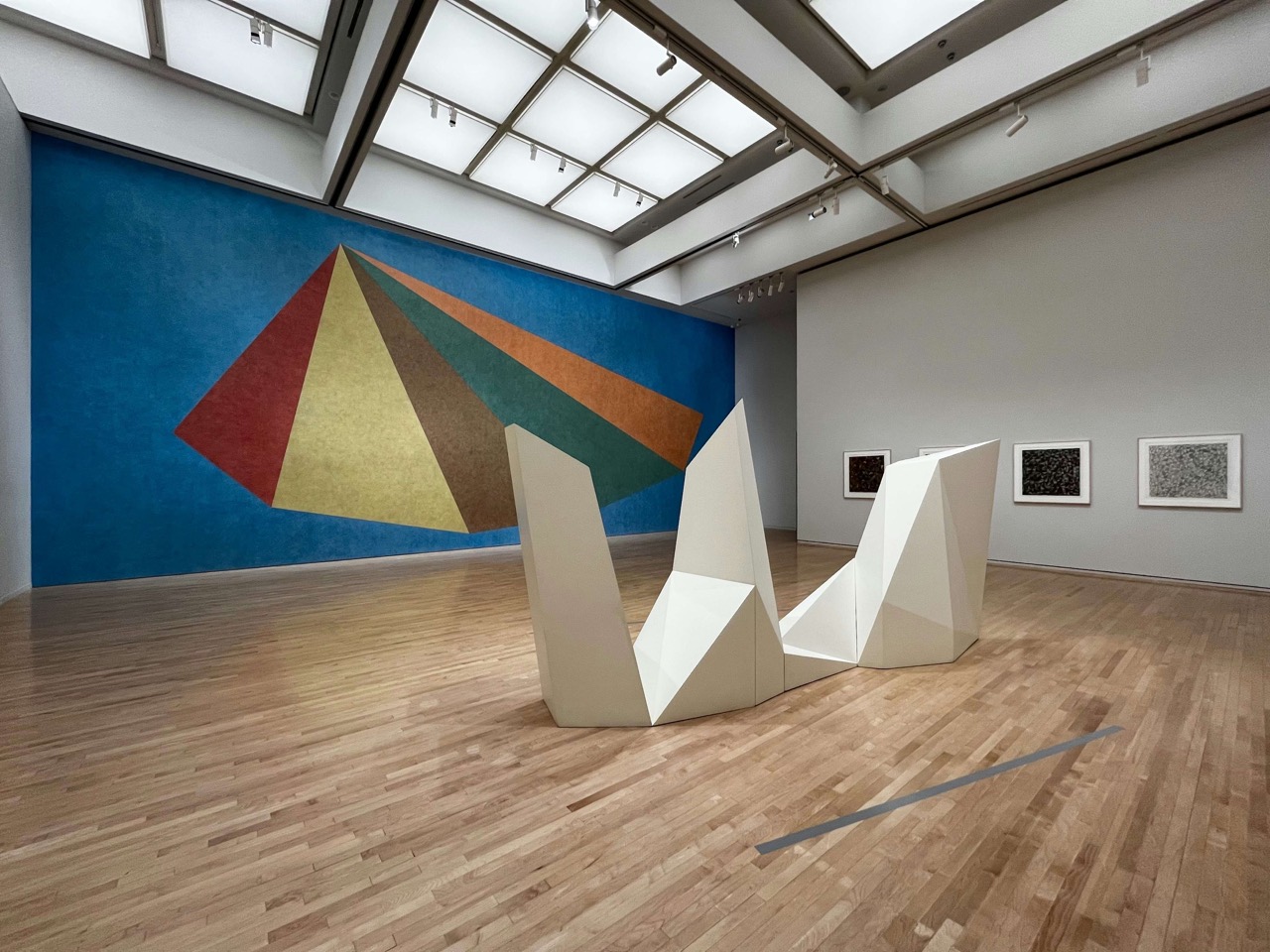
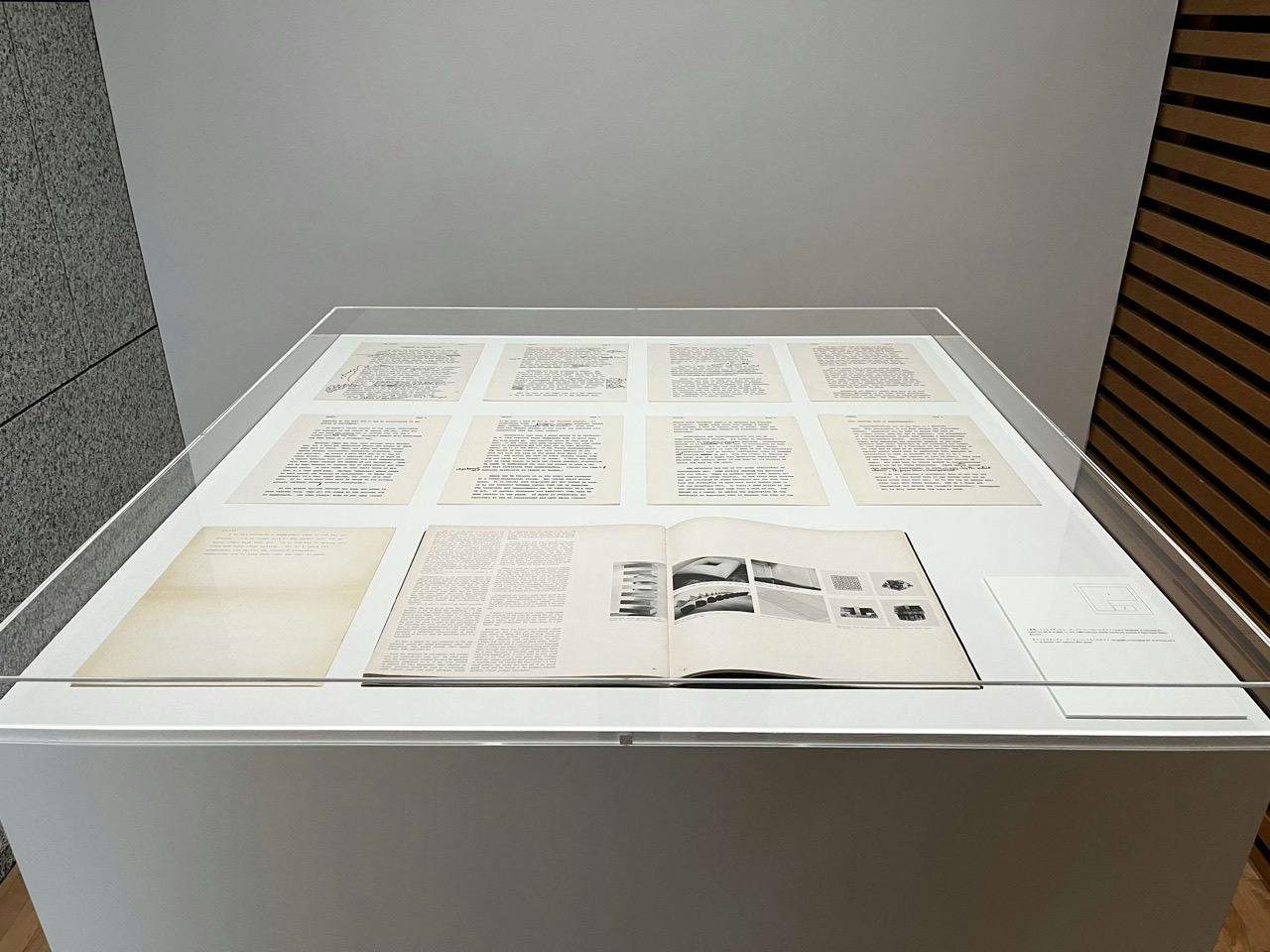
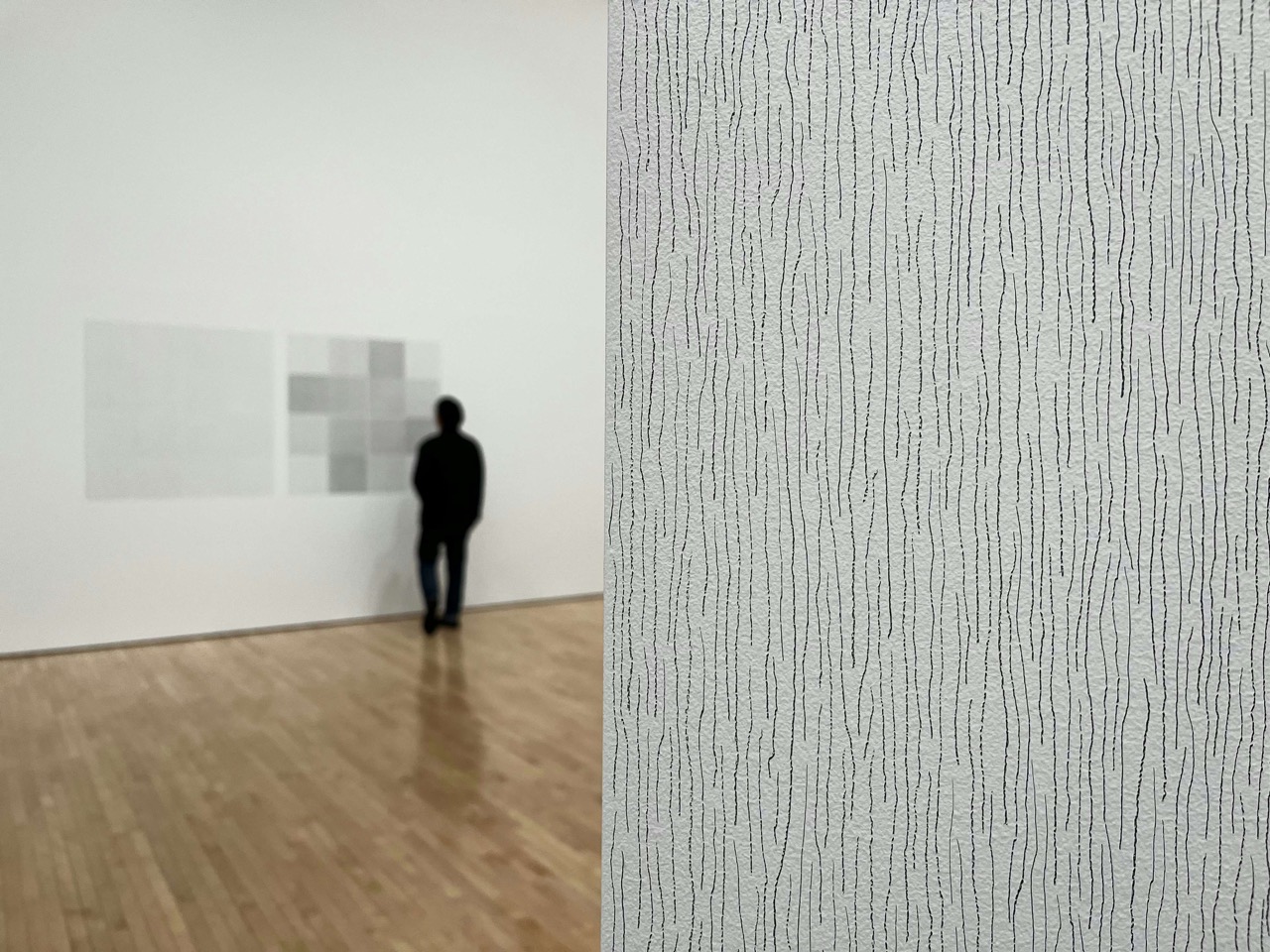
3.How the wall drawings got here is the whole exhibition. They did not cross the ocean in art crates. What came was a set of written instructions and diagrams by the artist, and the physical works first existed on these walls. LeWitt worked this way from 1968 onward, and the Tokyo wall text puts the number of wall drawings executed under his name at more than 1,300.
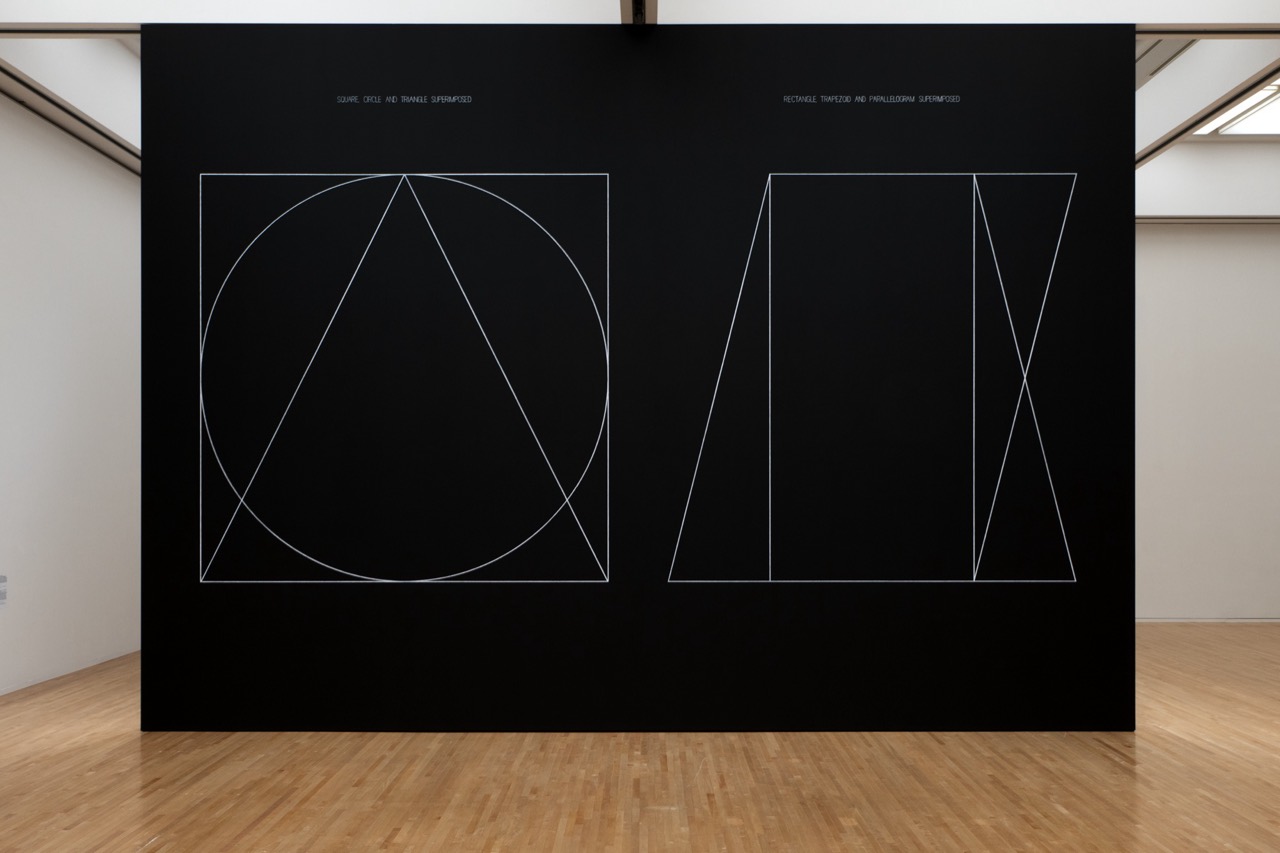
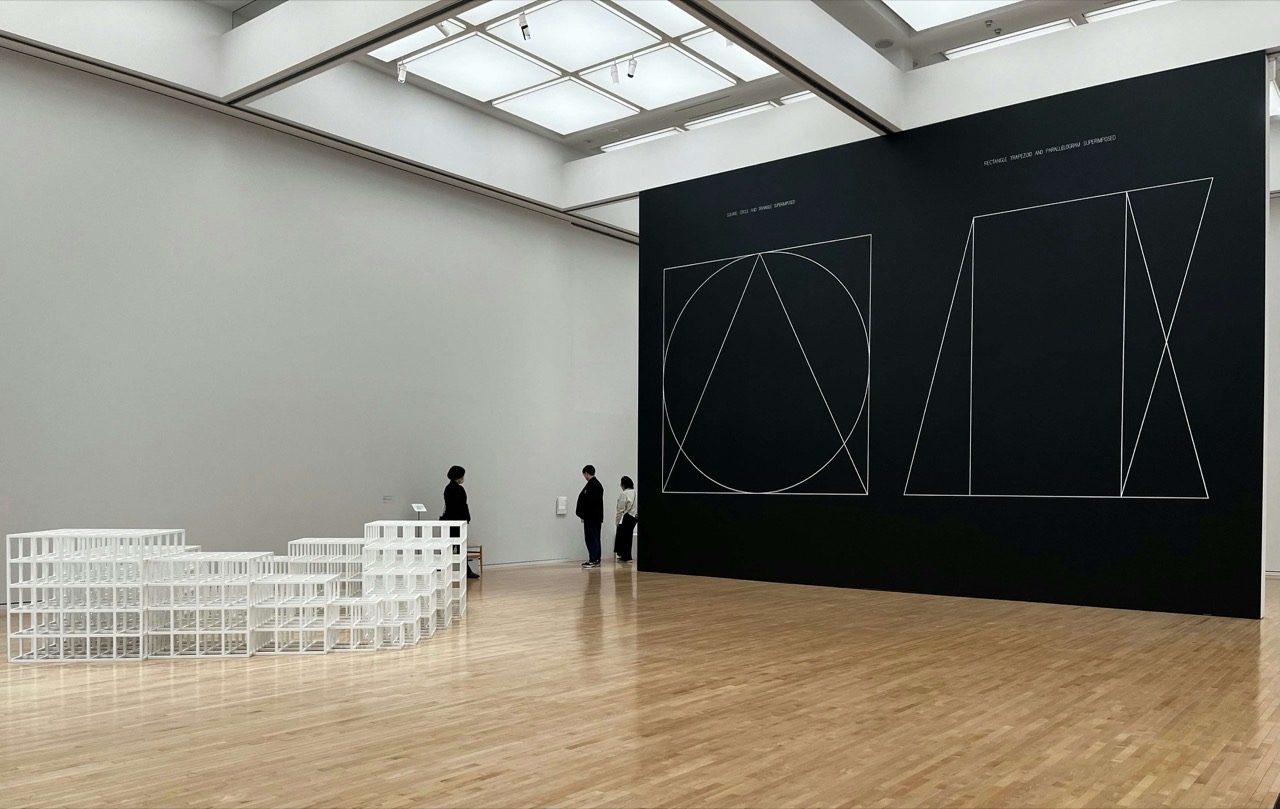
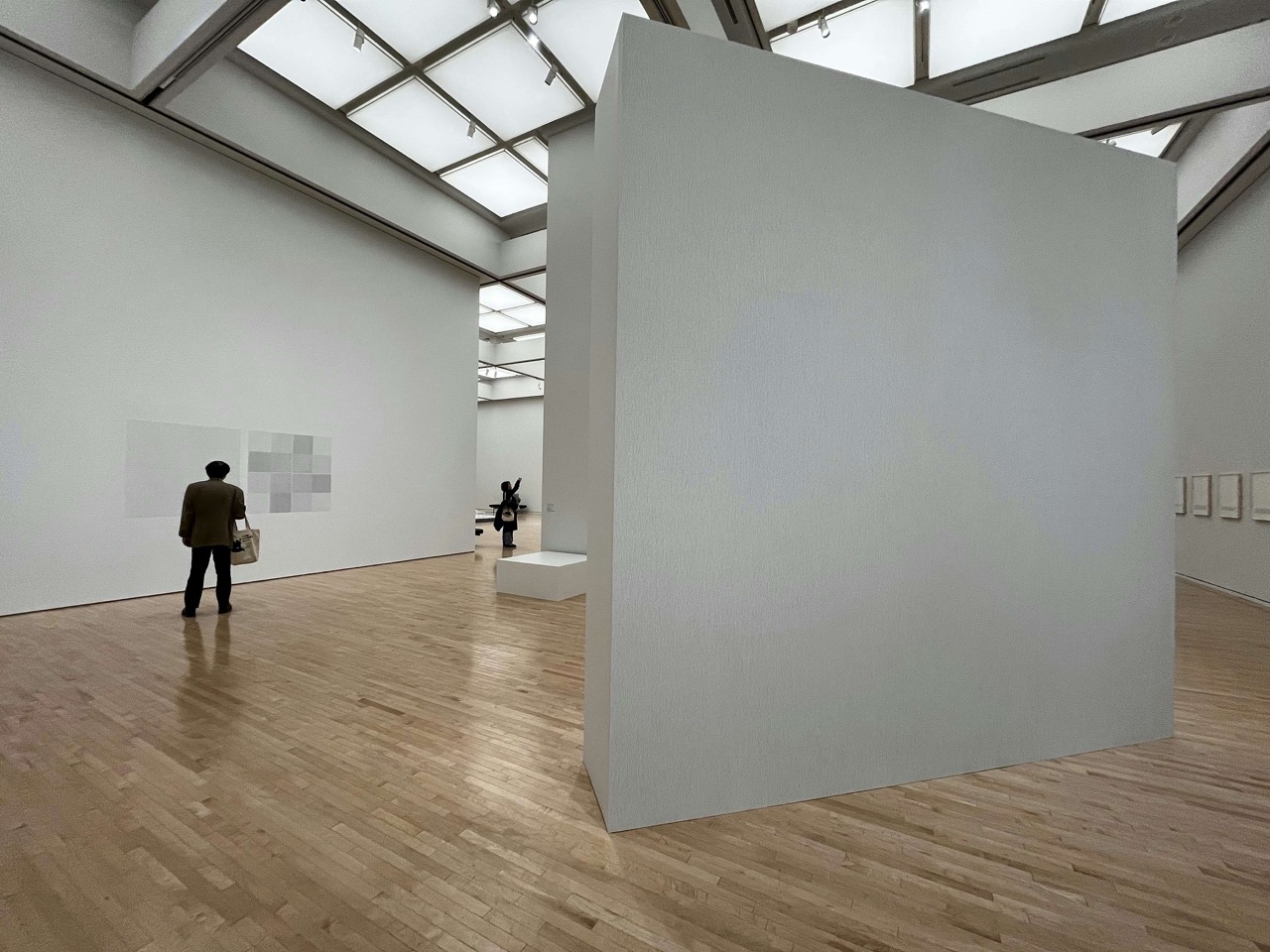
4.The wall paintings have no frames. A blue field runs to the edge of the wall, and over it triangles in red, yellow, green and orange open like the ribs of a fan. In another room, white lines lay a circle, a square and a triangle over one another on a black wall. There is no gap between painting and wall, so a visitor stands not in front of the work but inside a room that has been painted.
5.The painters were twenty-three studio art students from Korean universities and graduate programs, gathered under the name APMA MAKERS. Working alongside people from the foundation, they read the instructions, drew the lines, and layered the colors. Days per drawing.
6.So what does a buyer actually own here. Buy a wall drawing and what reaches your hands is a certificate and an instruction. The physical drawing gets painted over when the run ends, and the next owner unfolds the same paper and draws it again. The work lives on the paper, not on the wall.
7.Which is why new paintings by the artist keep appearing though he died in 2007. The thirteen painted last month in a Yongsan basement were all made this year and are all authentic at the same time. There is no room for a forgery dispute. The only condition is whether you hold the instruction.
8.The market priced this structure in long ago. Wall Drawing #767 sold for 35,250 dollars at Christie's New York in 2001, and Wall Drawing #41 went for 254,500 dollars at Phillips New York in 2009. Nobody pried a wall loose. What changed hands was the certificate.
9.Set it beside Tokyo and the arithmetic shows. The same touring exhibition opened last December at the Museum of Contemporary Art Tokyo and closes early next month. Six wall drawings were painted there. Here there are thirteen.
같은 전시, 두 도시
10.Admission runs 1,600 yen in Tokyo and 18,000 won in Seoul. Converted, Seoul costs a couple of thousand won more. Tokyo's is a public museum funded by the metropolitan government while this one was built by a company, so different hands set the price list to begin with.
11.The run splits them further. Tokyo gets 99 days, Seoul 181. Subtract closures and Seoul actually opens its doors about 150 days. More than twice the painted walls, and about that much run to match.
12.At 500 visitors a day, 75,000 people pass through in six months. Counted at the adult rate alone, that is over 1.3 billion won in tickets. Everything from here is an estimate, since the museum runs on reservations and publishes neither daily capacity nor attendance.
회기를 늘리면 표값이 어떻게 되나
13.The reason six months can be handed to one exhibition sits in the building. This museum occupies the basement of its parent company's headquarters and pays no rent outward. An exhibition operator renting someone else's building never gets to consider a half-year run in the first place.
14.Labor cost moved too. Rather than importing a full crew of foundation-certified installers, the museum bound art students into a program and painted with them, and participants gain a credit while the museum gains hands. This is not a scheme invented to shave costs but the way the work has always operated, though the result is that the hands to paint the walls were found in an education program.
15.For six months a Yongsan basement holds 45 works, and thirteen of them are said to vanish under white paint by March 2027. At 500 visitors a day the tickets pass 1.3 billion won, and that money comes from a long run rather than from crowds. What catches first in Korea is not money but time. Handing half a year to one piece of content requires owning the space, and in a rented one three months is the ceiling.