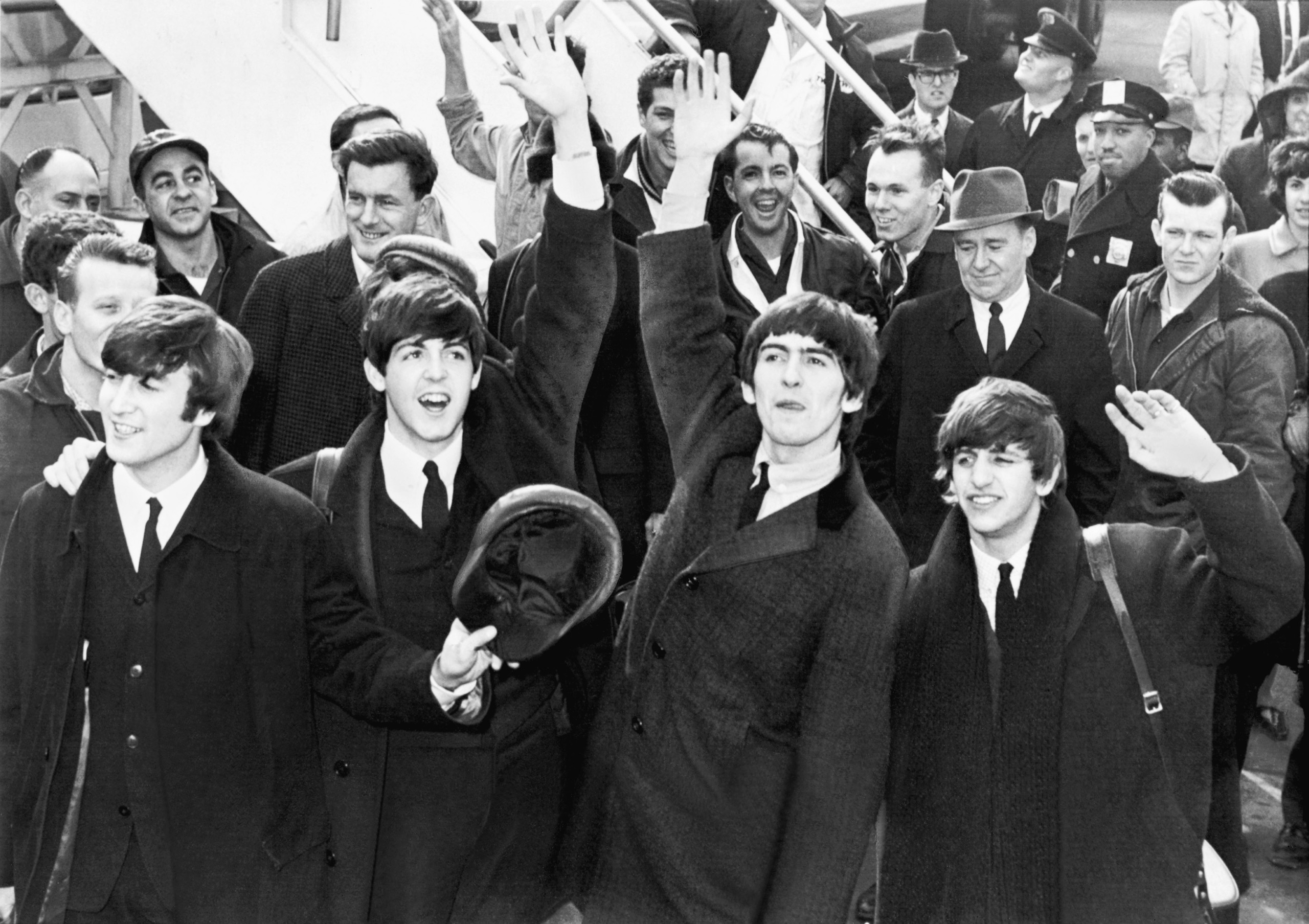
The Beatles quit touring in 1966 and never set foot on a Korean stage. Their T-shirts and LPs are now making the rounds of three Hyundai department stores, one after another. There is no ticket, only a checkout counter.
1.The Beatles Seoul Edition pop-up runs until September 13 at Epic Seoul, on the fifth floor of The Hyundai Seoul in Yeouido. It opened first for a week in late August in the basement event hall of Hyundai Department Store's Trade Center branch in Samseong-dong, so Yeouido is the second stop. Next up is Hyundai Department Store Kintex. The organizer is Universal Music Korea, with entertainment-tech startup BIGC as operating partner. No tickets are sold, and the doors open with the store's business hours.
2.The press release went out on August 20. A day earlier, Britain's Apple Corps and Universal Music Group (hereafter Universal) announced a long-term exclusive deal. Universal will make Beatles merchandise, grant the licenses and run online sales, worldwide. Until then, Universal's Bravado had handled Beatles merchandise in a single region, North America, and only since September 2022. Neither side disclosed what the deal is worth.
3.June 25 is Global Beatles Day. On that date in 1967 the Beatles sang “All You Need Is Love” on Our World, the first live global satellite broadcast, and in 2009 a fan's proposal turned it into an annual observance. This year a one-day Beatles event was held at a space in Dosan, Gangnam, set up with archive photos, a message wall and an LP stand. Two months later, what went up was no longer a one-day event but a tour of three department stores.
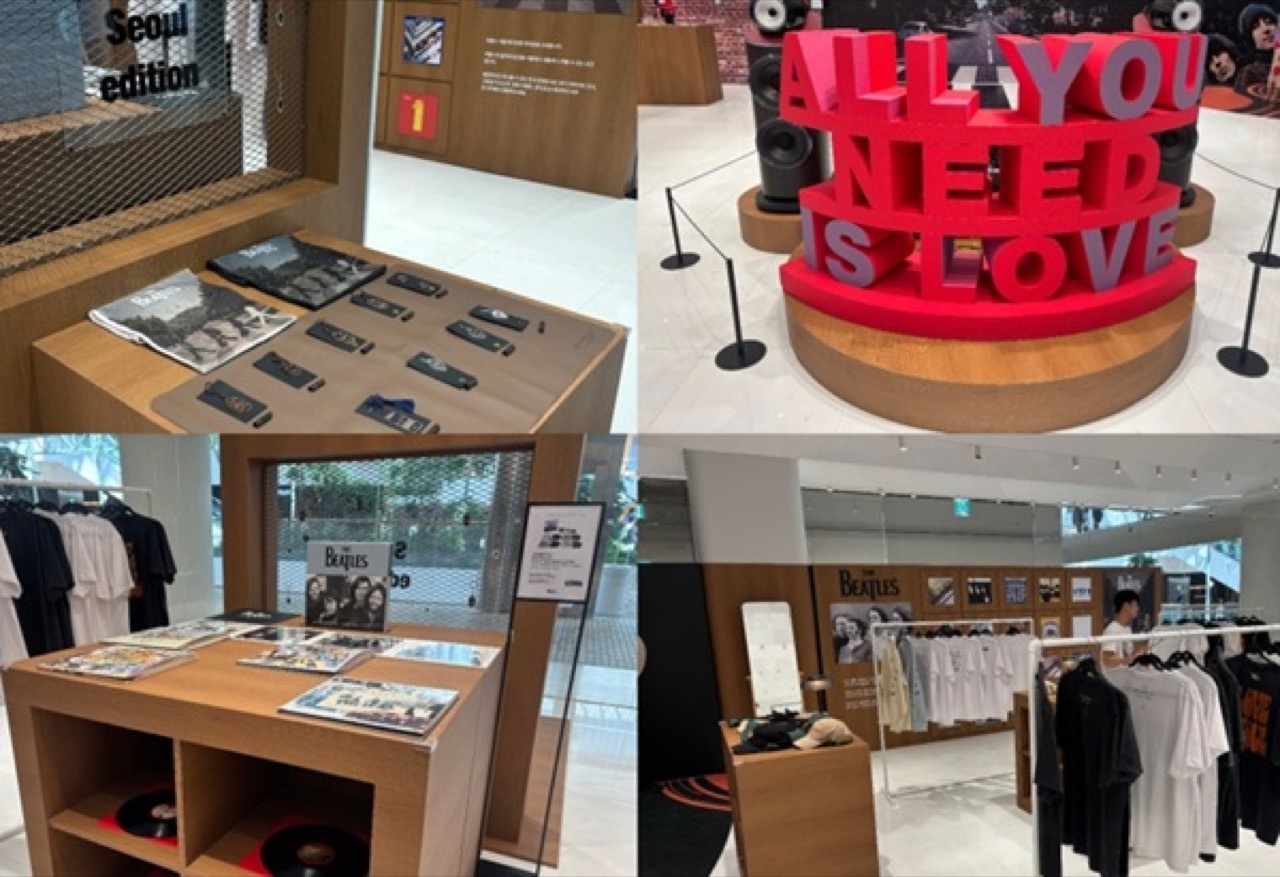
4.Epic Seoul is a 730-square-meter space that The Hyundai Seoul opened in March 2024. Of that, 360 square meters is a lounge that sells nothing, and time-limited pop-ups take turns with the rest. The route runs by album and by year. Keyrings and badges lie in rows on wooden tables, LPs stand in the next display, and white and black T-shirts hang from rails along the wall. In the middle, on a round plinth, red three-dimensional letters are stacked into ALL YOU NEED IS LOVE. The very song the anniversary celebrates.
5.At the Trade Center branch's listening zone, Bowers & Wilkins set out speakers and headphones bearing the Abbey Road Studios name. The company's speakers sat in Abbey Road's control rooms for years. Put on noise-cancelling headphones and the event-hall announcements and the beeps from the till fall back a layer, leaving only recordings made 60 years ago. A few minutes of rare quiet in the middle of a department store. Why did the organizers work so hard on those minutes? Because people who linger also reach for the next rail.
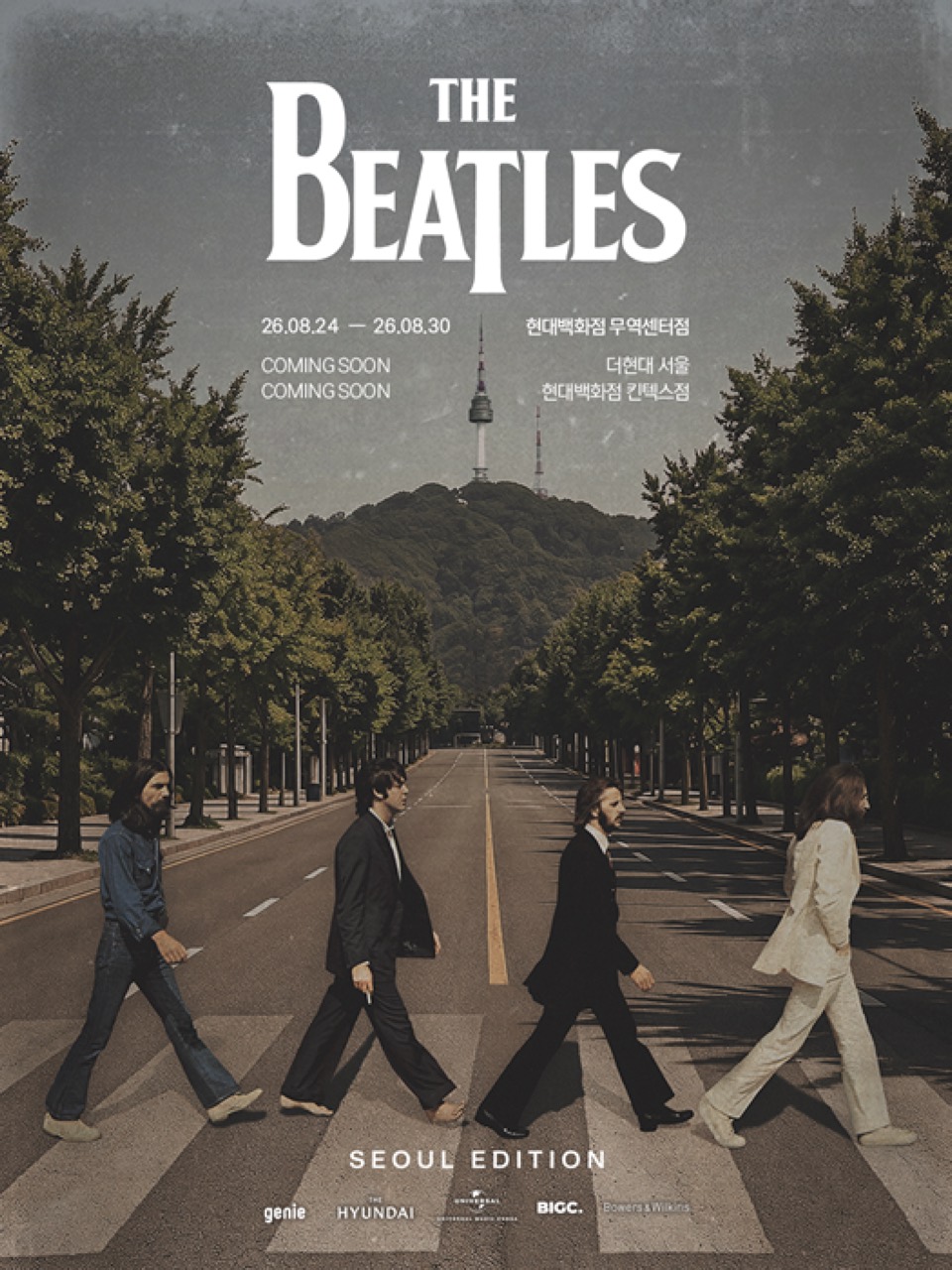
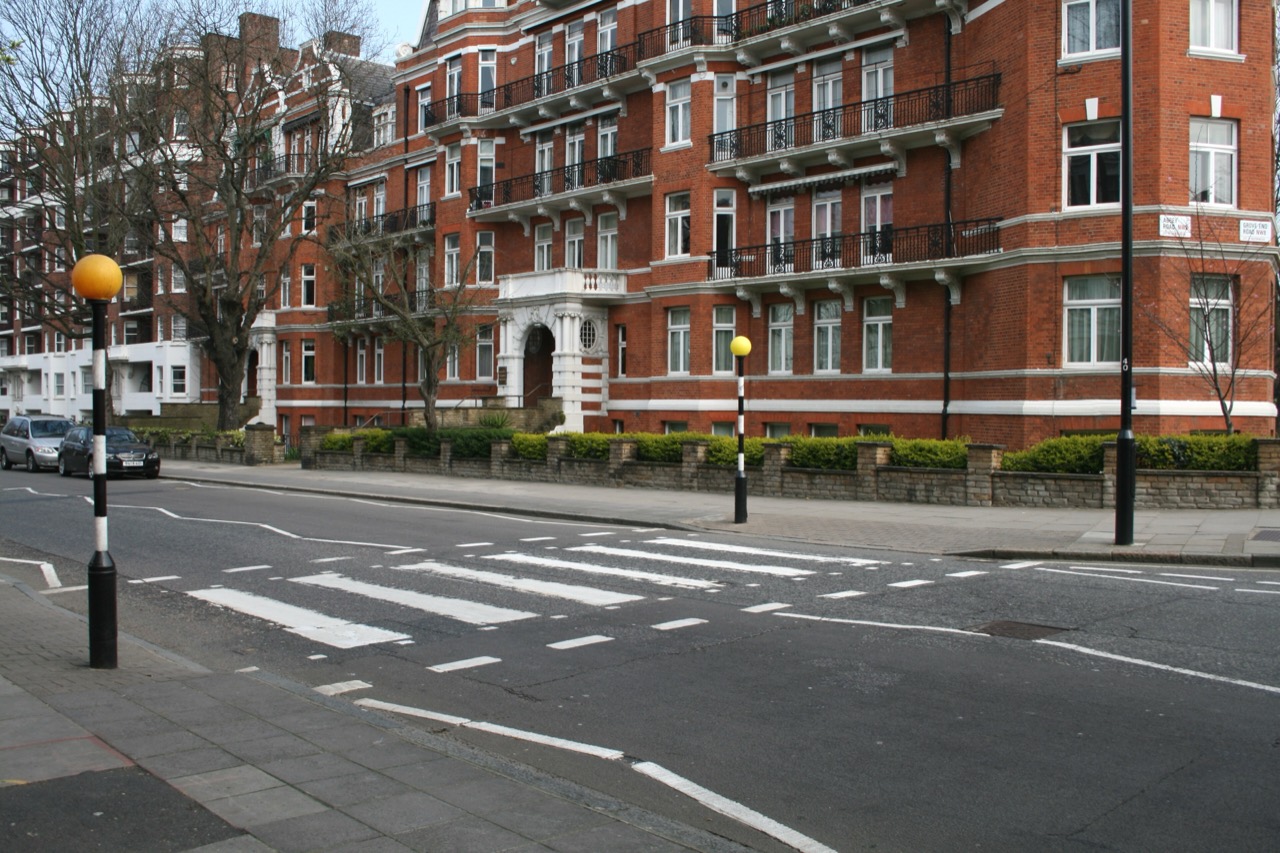
6.The face of the Seoul Edition is a single poster. Behind the four crossing the Abbey Road zebra crossing, a tree-lined road runs off, and at its end stand Namsan and N Seoul Tower. It is the London street from the 1969 album cover with a Seoul mountain set into it. The racks carry Seoul-only T-shirts drawn against a Namsan backdrop, next to Japanese-edition merchandise brought in from next door. Anything with Seoul's name on it can only be bought in Seoul.
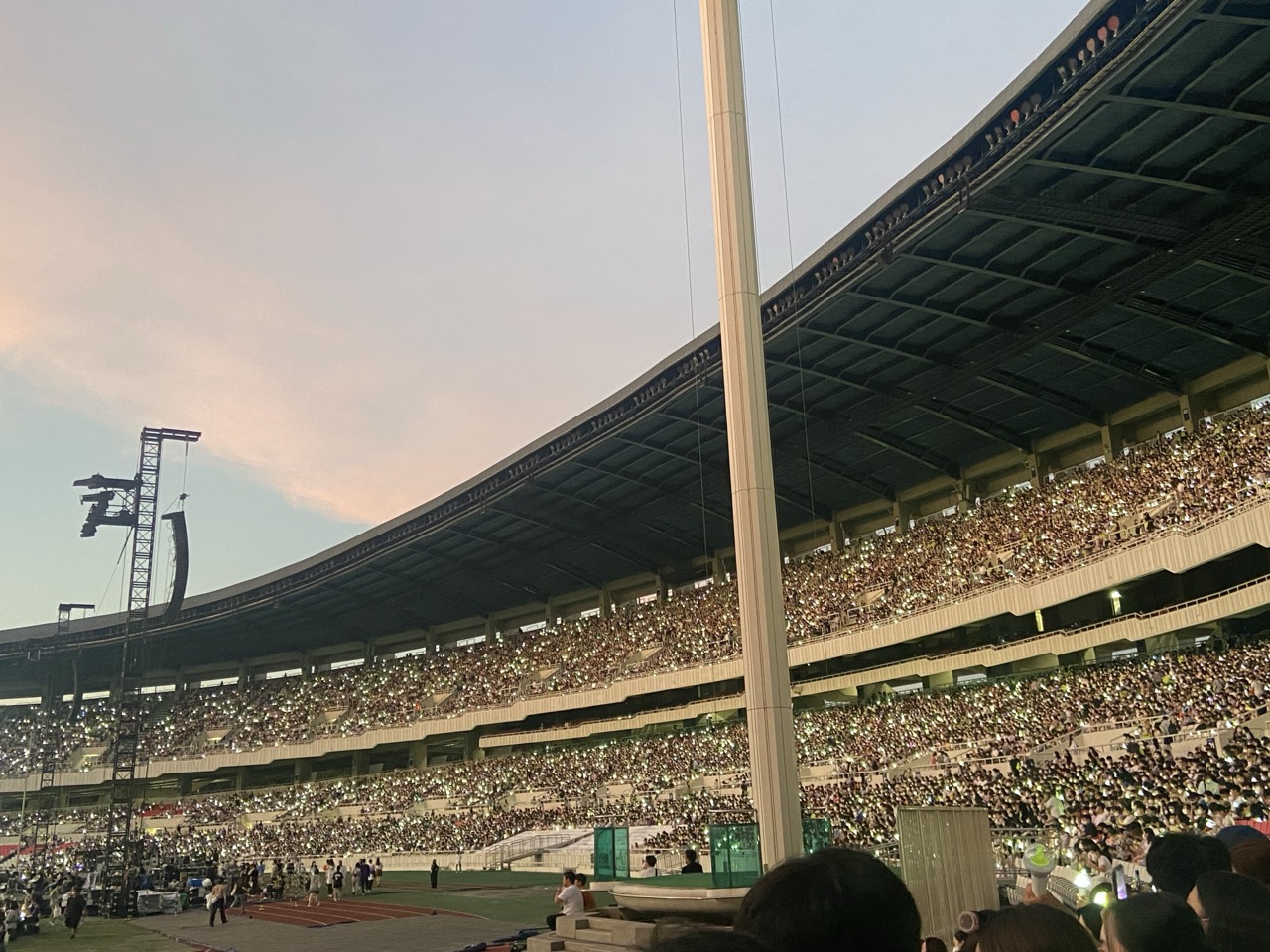
7.The Beatles stopped playing paid concerts after their 1966 show at Candlestick Park in San Francisco, and they never came to Korea. The first time anyone here heard a member's voice live was May 2015, when Paul McCartney took the stage at Jamsil Olympic Stadium. The crowd that night topped 45,000. People had been waiting for close to half a century, but the country had no place for them to go. What this pop-up sells first is not a T-shirt but somewhere to go.
8.The business that turned a T-shirt with a city's name on it into a travel souvenir was a restaurant, not a concert hall. Hard Rock Cafe sold T-shirts printed with the city of each location, and the shirts travelled further than the restaurants ever did. The Seoul Edition runs that formula in reverse. Instead of travellers buying another city's name, people in Seoul buy the Beatles with their own city's name on it. A city the Beatles never visited gets to sit beside London, at least on a T-shirt.
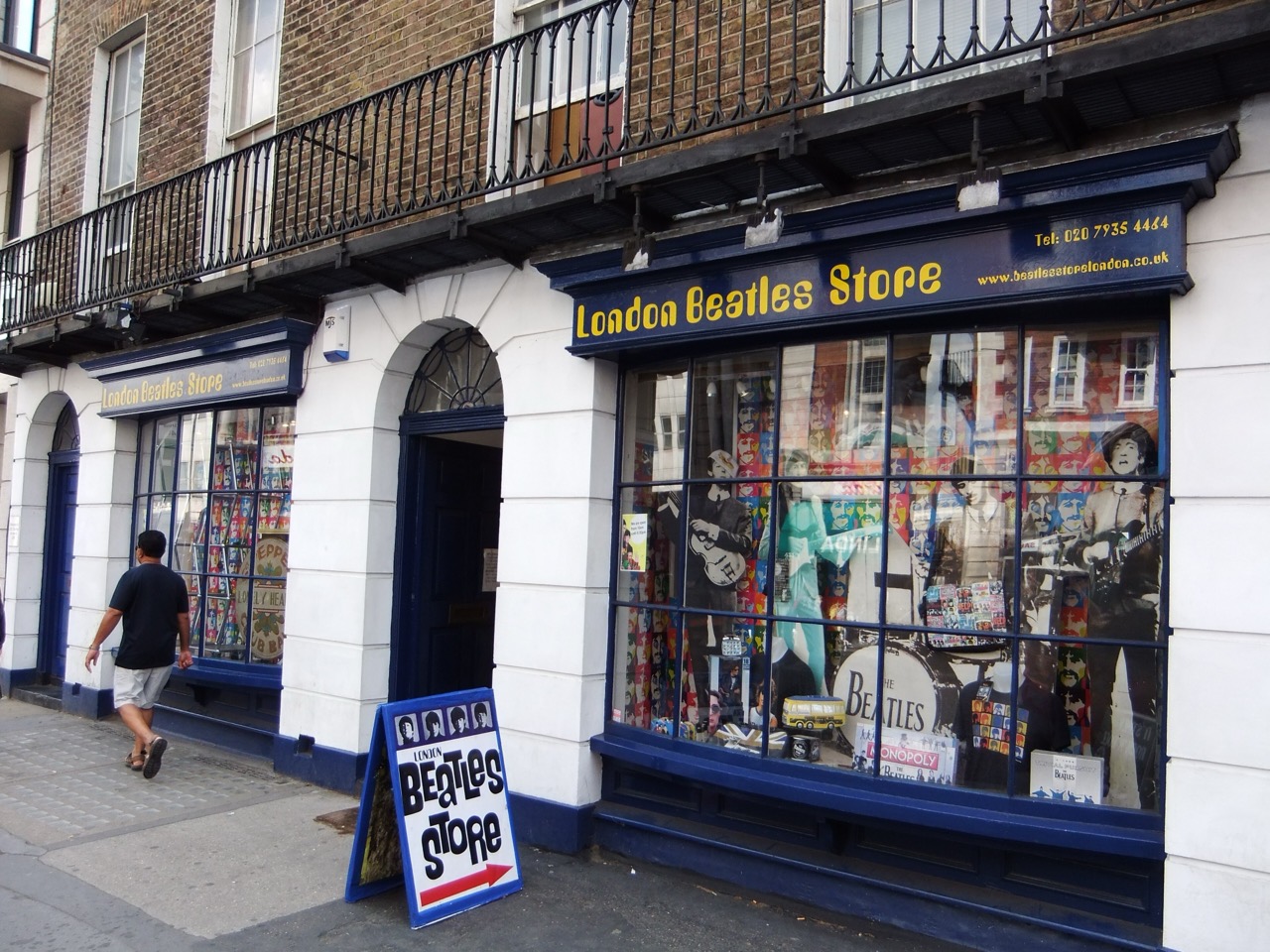
9.The Beatles make money for three owners. The copyrights to the songs written by John Lennon and McCartney left the band's hands in 1969 and, after several sales, are now administered by Sony Music Publishing, while the master recordings passed from EMI to Universal. The third is the name, the faces and the logo. Apple Corps, founded by the members in 1968, never let go of that one. The T-shirts on the counter belong to the third owner. The LPs in the next section belong to the second.
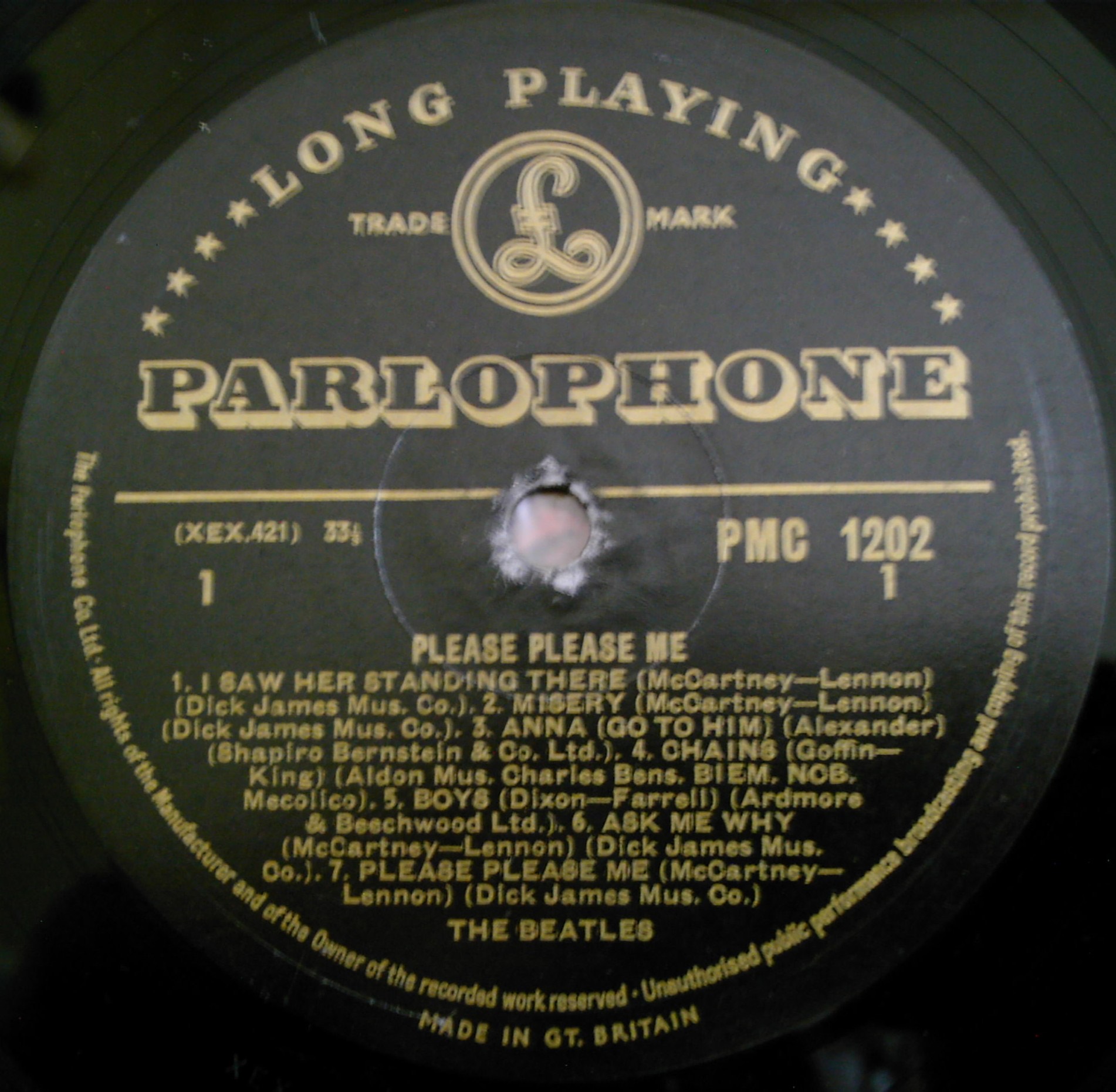
10.What the August 19 deal changed is who handles the third share. Apple Corps keeps the name and the faces, but has handed Universal the whole job of making, selling and licensing products with them. Masters and merchandise now come out of one company. The Universal division that includes merchandising posted 2025 revenue of about 915 million dollars, as converted by foreign media. It is no accident that the LP display and the T-shirt rails share one route at the Seoul pop-up.
비틀스의 세 주인
11.When one T-shirt sells at the event hall, how is the money split? The pop-up price has not been published, but licensed Beatles T-shirts sold online in Korea list at around 49,000 won. Once on a department store counter, the 19.1% average effective commission rate for department stores, as tallied by the Korea Fair Trade Commission, comes off first, and after VAT the supplier keeps a little over 35,000 won. Production, logistics, the operators and the rights holder then split that again. The split is not public.
4만9천 원짜리 티셔츠 한 장이 갈리는 길
12.From the department store's side, it is a shop that opens without rent. Event-hall pop-ups usually run on commission contracts, so the store takes a cut of what sells and the supplier carries the unsold stock. The bigger calculation is getting people up to the fifth floor, and the draw for Hyundai Department Store gift cards, open to anyone who posts a photo with the hashtag, is part of it. BIGC raised an 18 billion won Series A last year and has 3.8 million members. What stays with this company longer than the T-shirts is the fan response gathered through the lucky draw and social media events.
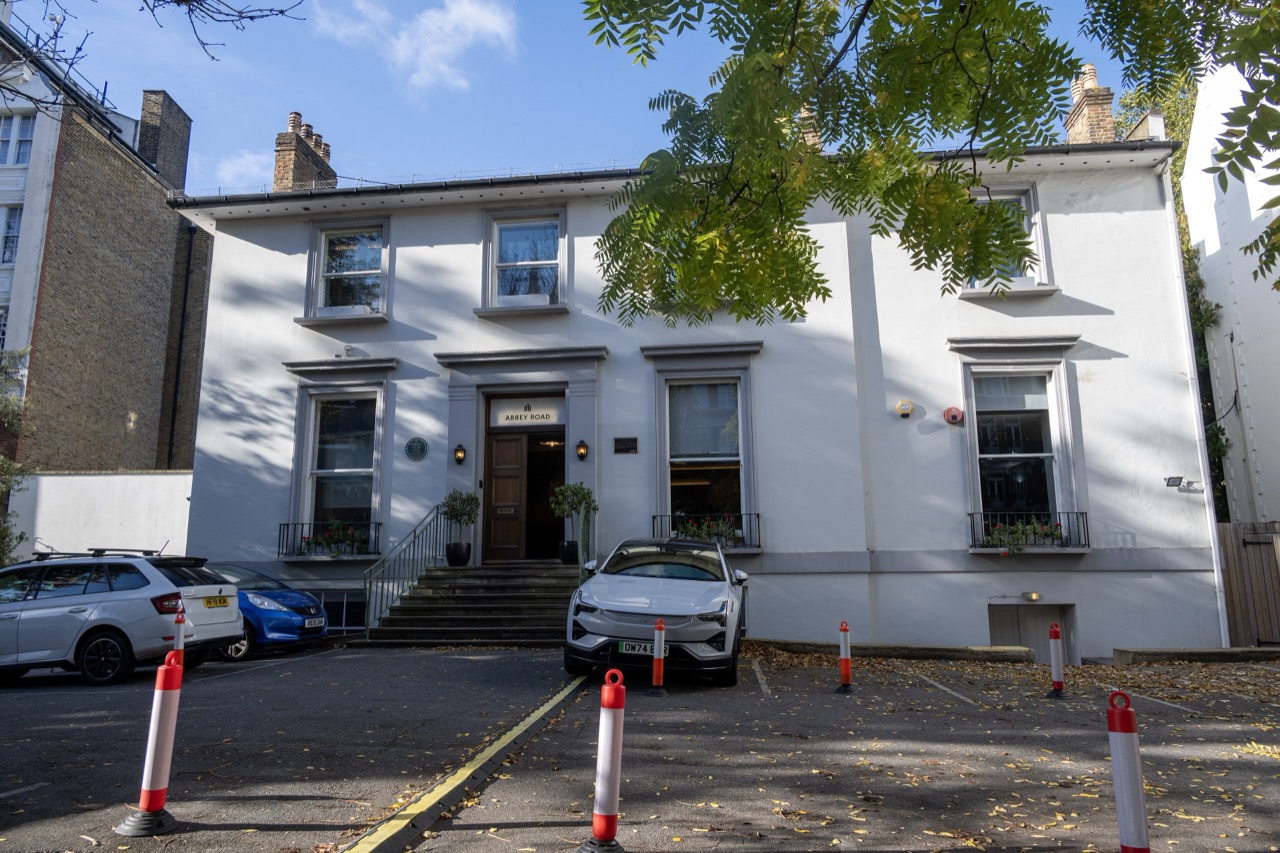
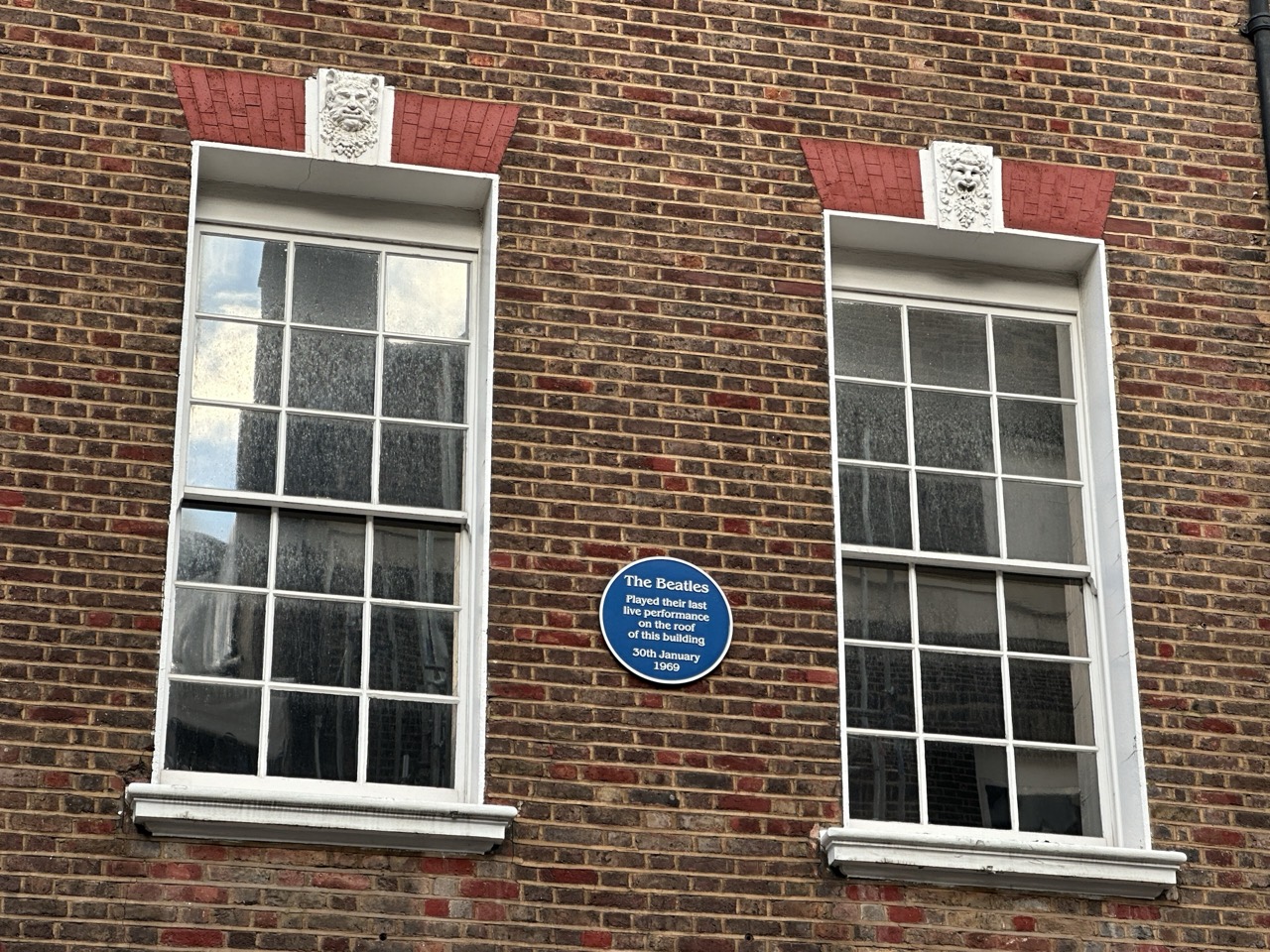
13.After they quit touring, the last place the Beatles played in front of people was not a concert hall but an office roof. January 1969, on top of the Apple Corps building on Savile Row, London. In 2027 that building reopens as The Beatles at 3 Savile Row, a seven-floor attraction. It will hold archive material, rotating exhibitions and a recreation of the Let It Be studio, plus a fan store. A checkout counter goes in beneath the last stage.
14.All of these dates point to April 2028. That month, four films Sam Mendes is making, each told from one member's point of view, open at once. It is the first time Apple Corps has granted full life story and music rights for a scripted film, and Sony Pictures is distributing. The songs are administered within the same Sony group, so the fees the films pay to use them stay inside the group. In the meantime, a special edition of Rubber Soul with a new mix comes out on October 2. The Seoul pop-up is a way to gauge, ahead of time, the interest that will pour into cinemas a year and a half from now.
15.A band that quit touring 60 years ago is making the rounds of three department stores, with clothing rails where the stage used to be. Commissions change hands instead of tickets, and hashtags pile up instead of headcounts. Anyone in Korea who wants to try the same thing needs a rights map before a concept. You can only start designing the venue once you have written on one page who holds the name and faces, the recordings and the songs, and the older the catalog, the longer that page takes to fill. Even the Beatles side only brought two of the three under one roof this summer.