A living brand started by a singer and a photographer opened an entire three-story building below Namsan on September 12. Coffee on the first floor, goods on the second, furniture and art on the third. The bottom and top of this brand's price list sit more than 900 times apart.
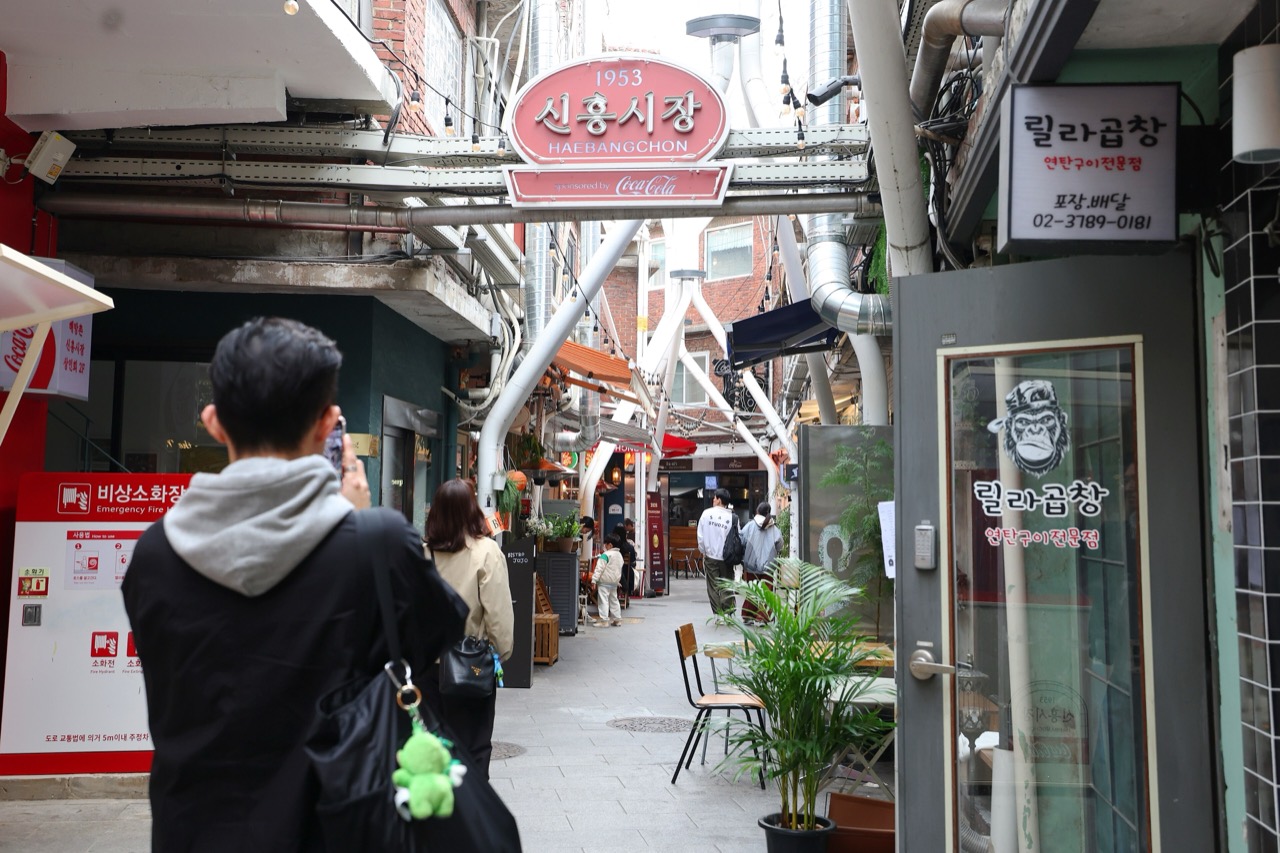
1.September 12, 1 Sinheung-ro 12-gil, Yongsan-gu, Seoul. Living brand SAY TOUCHÉ took over a whole three-story building on the Haebangchon slope. The first floor is Café Touché, the second a shop with some 200 items of clothing, accessories and homeware, the third a room for furniture and artworks the brand has collected. Eating, browsing, buying and looking each get a floor of their own.
2.Two people made it. Lee Chan-hyuk of AKMU and photographer Lim Jae-rin. The two are the same age, were introduced by the singer Lee Hi, and put their first collection online in 2021. The name comes from touché, the word a fencer calls out to concede a hit, and they said they hoped people would say it in front of the things they made. The first collection had three pieces: a mandrill-shaped accessory holder, a Persian rug and a doormat printed with footprints.
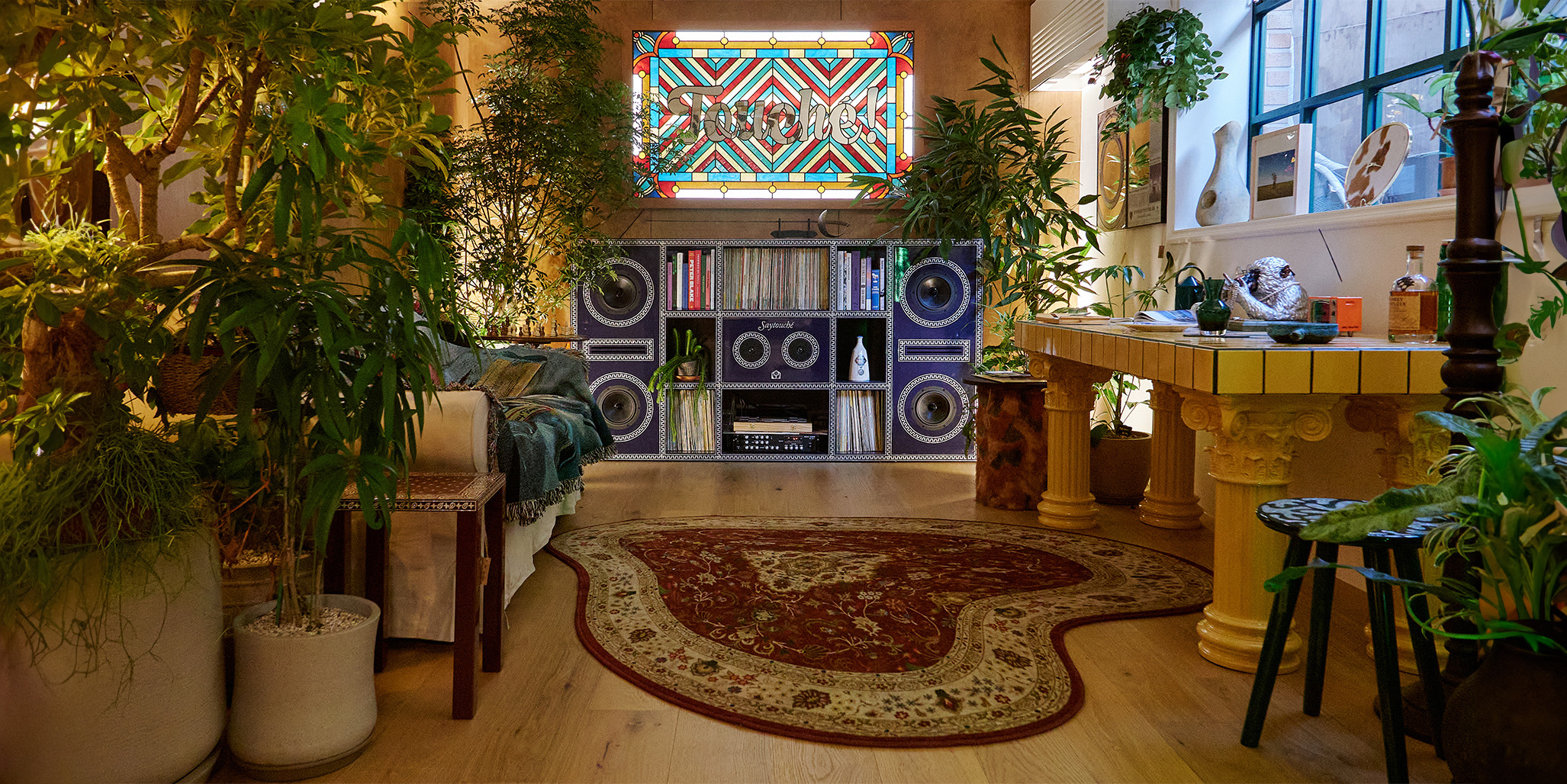
3.The café sign on the first floor is stained glass, and the shelves have speakers built into them. You get a coffee in your hand first, then you climb the stairs. The second floor holds things you can carry home, and the third is less a shop than a place to look. It does what photos could never do for the brand's 117,000 Instagram followers: show the objects sitting in an actual room.
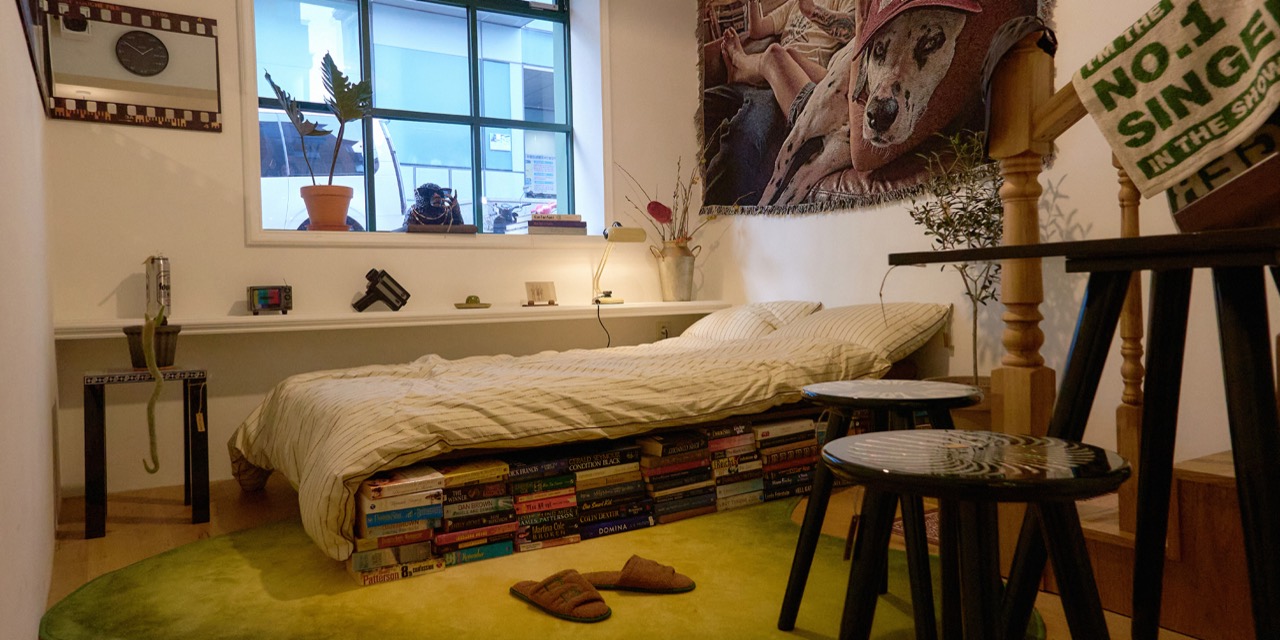
4.The half-basement showroom that opened on Noksapyeong-daero in Itaewon in February 2024 made you take your shoes off at the door. In velvet slippers you step onto a Persian carpet that melts away at one edge, while mirrors shaped like film strips and FaceTime screens catch your face from every wall. Table legs are wrapped in shaggy fur. One reporter wrote that it felt like dropping by a friend's place. Customers who take off their shoes do not leave quickly. The ones who linger take pictures in the mirrors, and those pictures bring in the next customers.
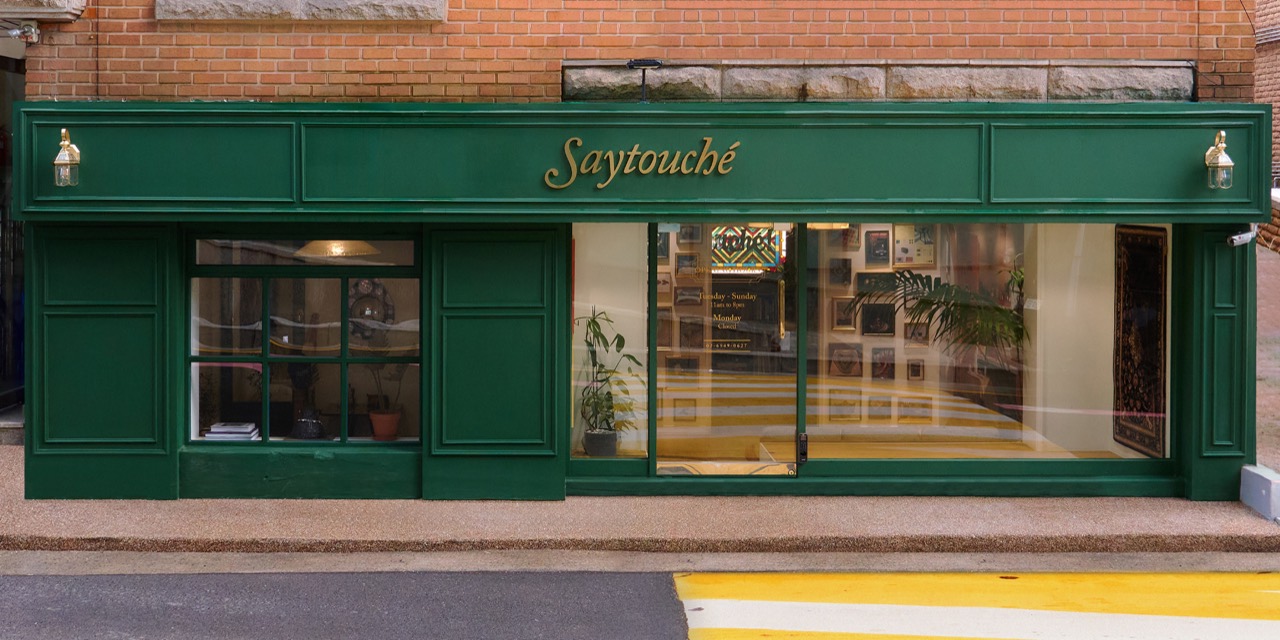
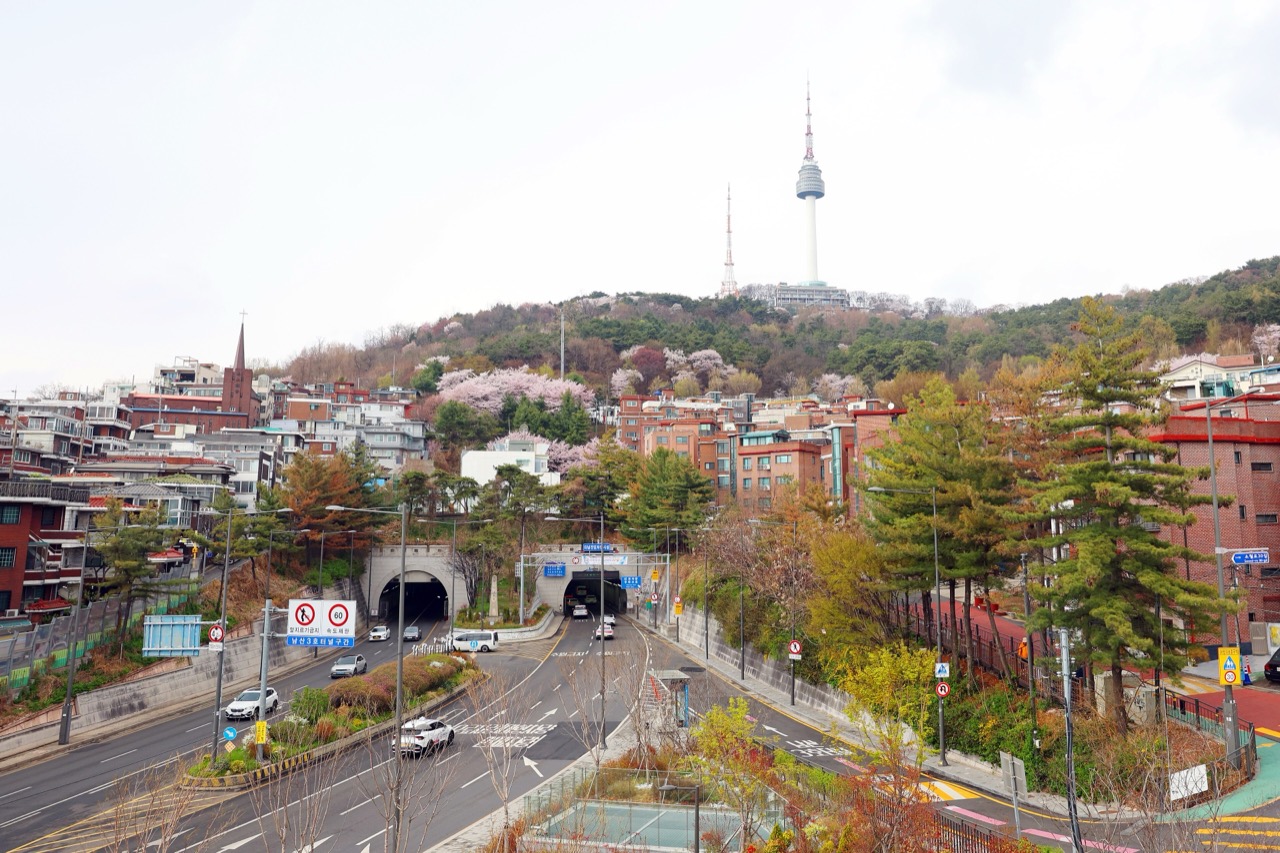
5.The new store sits further up the hill toward Namsan from that showroom. Haebangchon grew after liberation in 1945, when people who came down from the North and people who returned to find their homes gone built shacks on the slope below Namsan. Sinheung Market, once crowded, declined for years before a Seoul city regeneration project arrived in 2018, and in 2022 its old roof came off and an open canopy went up. This is a sloping side street, not a main road, so the store gets people who come on purpose rather than people who happen to pass.
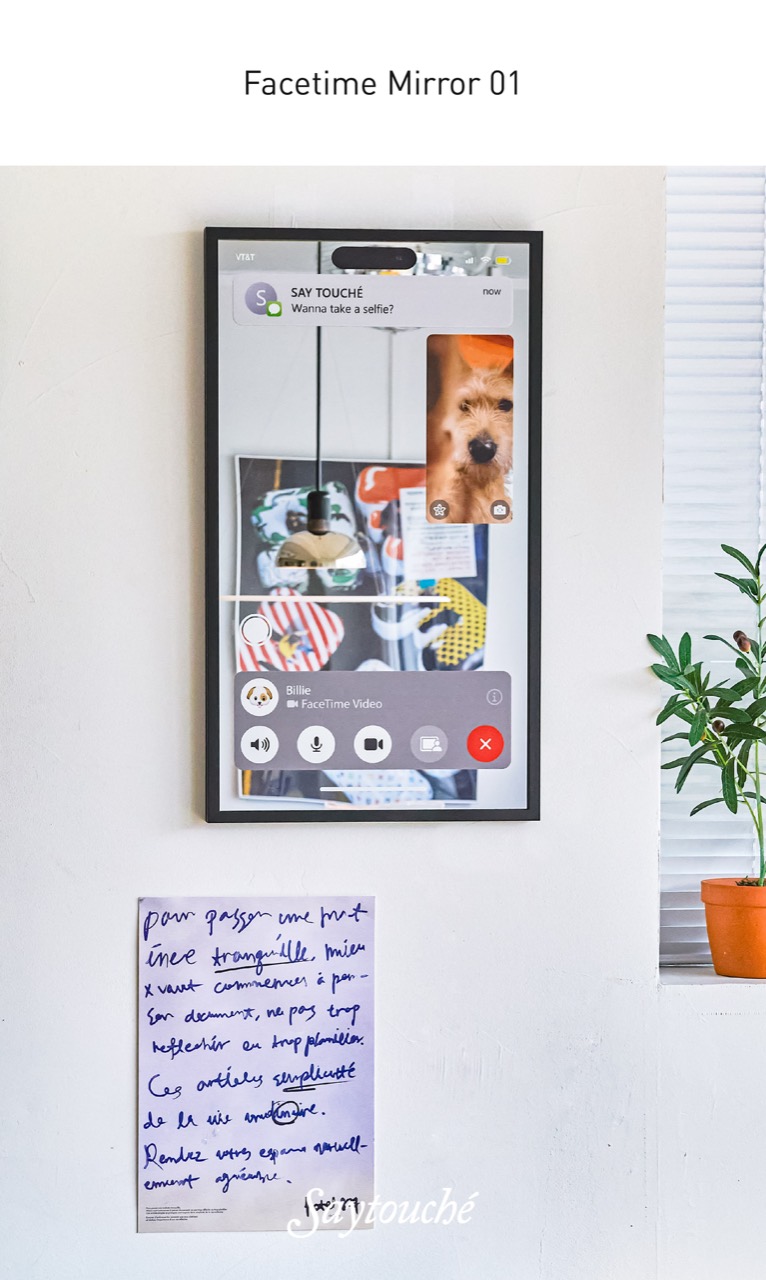
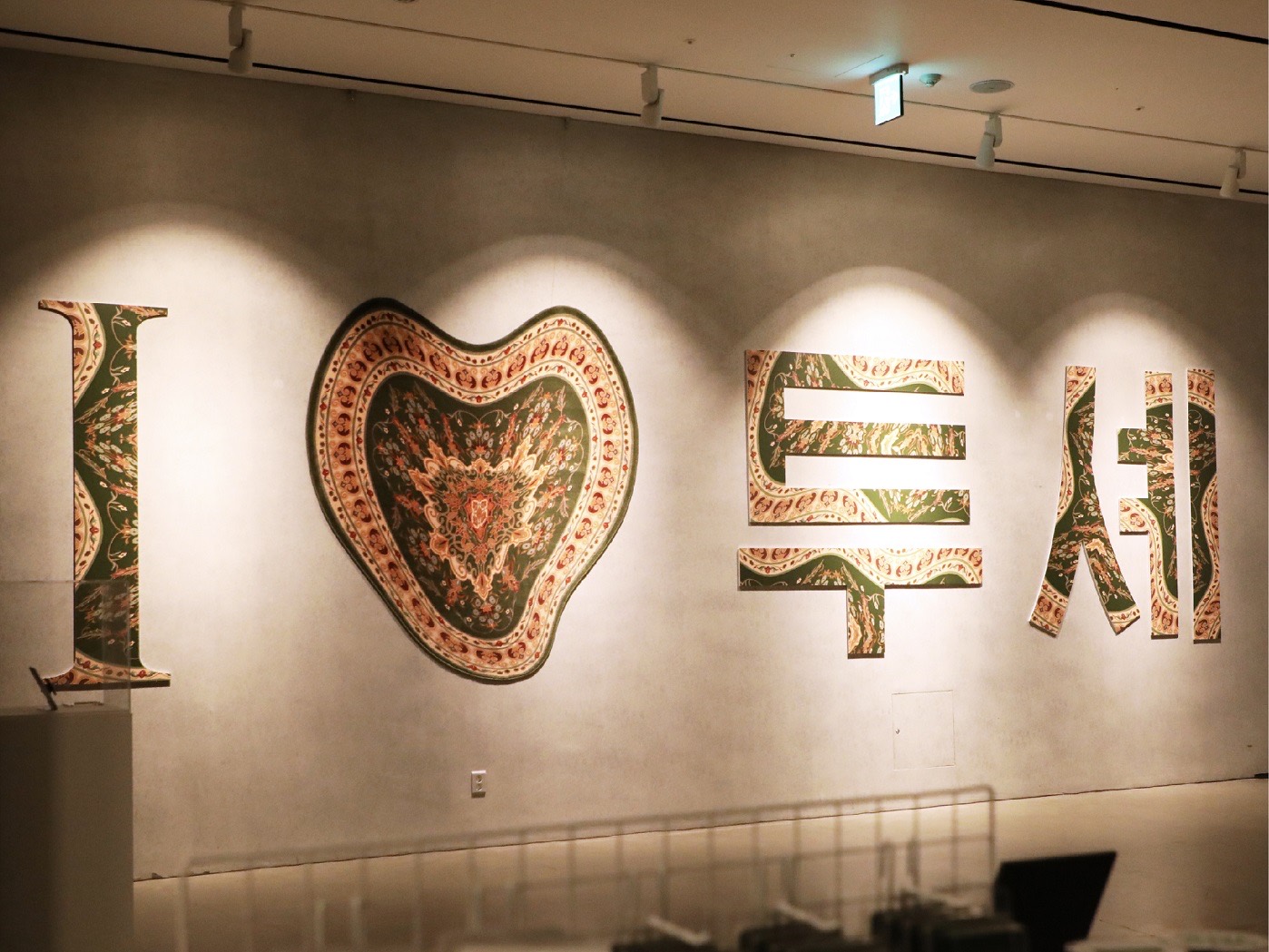
6.Stand in front of a Say Touché object and you get the joke first. They took a neat, square Persian rug and twisted it with a liquify tool until it looked like it was melting, a shape they only found on the last day before the pattern went to the factory. The Gallery Mirror is a museum scene in which the framed painting everyone is staring at has been left blank as a mirror. Step up to it and the masterpiece on the wall is your own face. It sold well, and mirrors modeled on newspapers, LED signboards and FaceTime screens followed one after another. A mirror is an object whose buyer shoots the ad for you, with their own face in it.
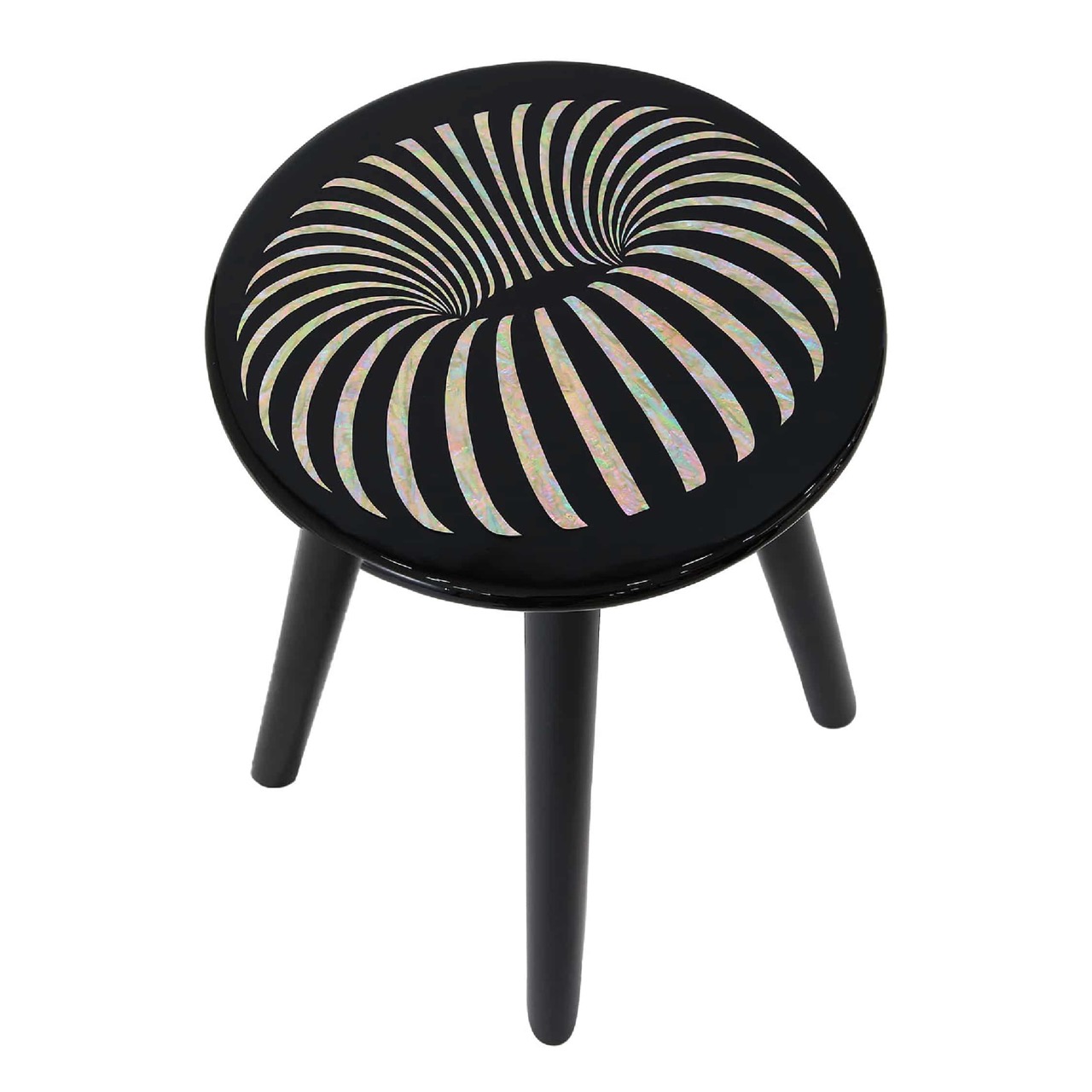
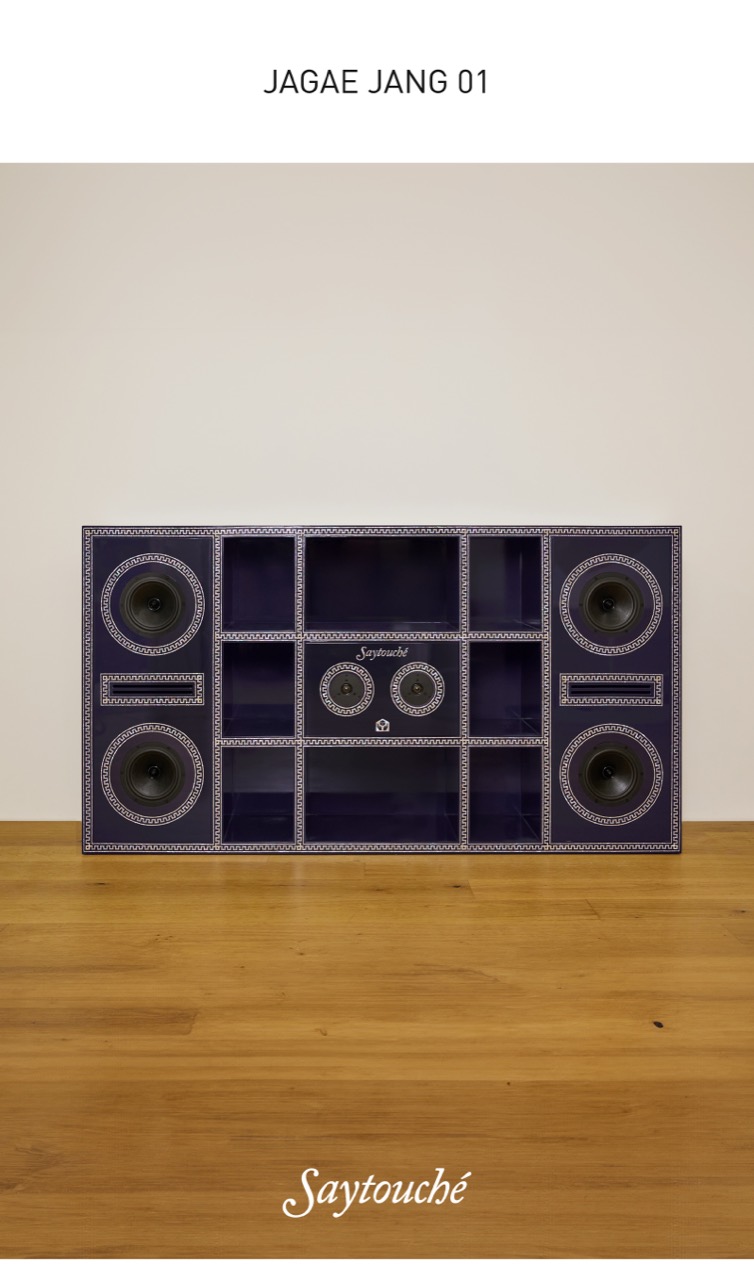
7.Behind the joke stands craft. The mother-of-pearl stool is made by hand by an artisan in Namyangju. It carries a line telling you not to sit on it, yet it is engineered to hold 180kg. You buy it as a toy and end up using it as furniture. The laugh lowers the threshold, and if the thing turns out to work, people come back and buy again.
8.The brand's motto is "design on the border between artwork and product." People who could never afford a painting still leave this place carrying something. A museum shop sells postcards to people who have seen the show. Here the objects themselves are the show, so a coaster that shrinks the melting carpet to palm size does the postcard's job.
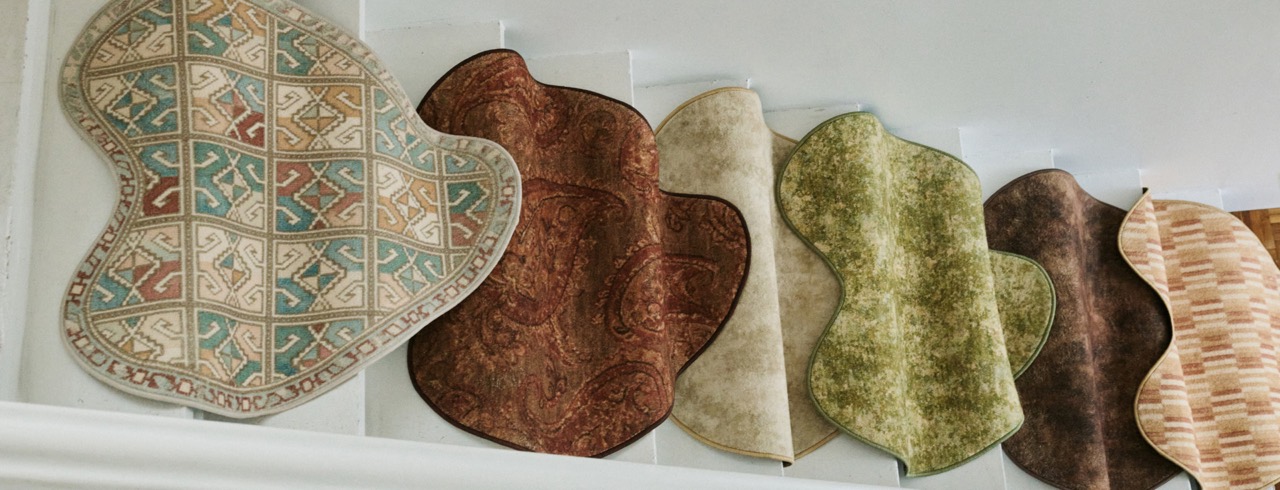
9.Line up the price list and the bottom is a Liquified Coaster at KRW 12,000, the top a mother-of-pearl cabinet at KRW 11 million. A spread of more than 900 times. What stands out is how the same design is hung on several rungs by changing only its size. The melting Persian pattern shrinks into a coaster and a rug, the Gallery Mirror into a table mirror, and the price comes down with it.
코스터부터 자개장까지 900배
10.Suppose it costs KRW 20 million a month in fixed costs to run a three-story building (an assumption). Covering that with coasters alone means selling 56 a day, while two cabinets would do it for the month. The bottom rungs bring in more customers, and the top rungs carry a month on a single sale. But how many people will pay for the cabinet at the top of the list from one photo on a screen? It has to be seen in a room before it sells. That is one reason a store needs a whole building.
월 2,000만 원을 채우려면(가정)
11.List prices have gone up in the meantime. The mother-of-pearl stool that was KRW 250,000 at the 2021 Cheongdam pop-up is now KRW 320,000 on the official store. The Gallery Mirror went from KRW 140,000 to KRW 160,000.
12."Touché Family Week," which started two days after the opening and runs through September 27, piles its discounts onto the bottom rungs. Coasters and rugs drop 20-25% and discontinued items go up to half off, while the mother-of-pearl cabinet and the Roman Table get only 5%. A price list that widens the entrance and guards the top.
13.Others have walked the road of selling jokes as homeware. Italy's Seletti printed photos from Toiletpaper, the magazine Maurizio Cattelan makes with a photographer, onto plates and cushions. An artist's joke sold at the price of tableware. Brands started by musicians usually begin with tour merch or clothes, but the first screen of Say Touché's online store shows rugs and lamps, wallets and slippers.
14.Brands that grow their stores usually come down to the busy main streets. Say Touché went the other way, up the hill. An online first collection in 2021, a Cheongdam pop-up that autumn, a half-basement showroom on Noksapyeong-daero in 2024, and now a whole building on the Haebangchon slope. It gives up on passers-by and hands three rooms to the people who make the trip.
15.In one building on the Haebangchon slope, Say Touché has put everything from a cup of coffee to a KRW 11 million mother-of-pearl cabinet along a single route. Anyone in Korea trying to turn a house into a store like this hits building-use rules first. Selling coffee on the ground floor requires that floor to be classified as a neighborhood commercial facility, and the moment the use changes, parking requirements are reassessed. On a sloping side street it is hard to find room for even one parking space, let alone a spot for a truck to load and unload furniture costing tens of millions of won.