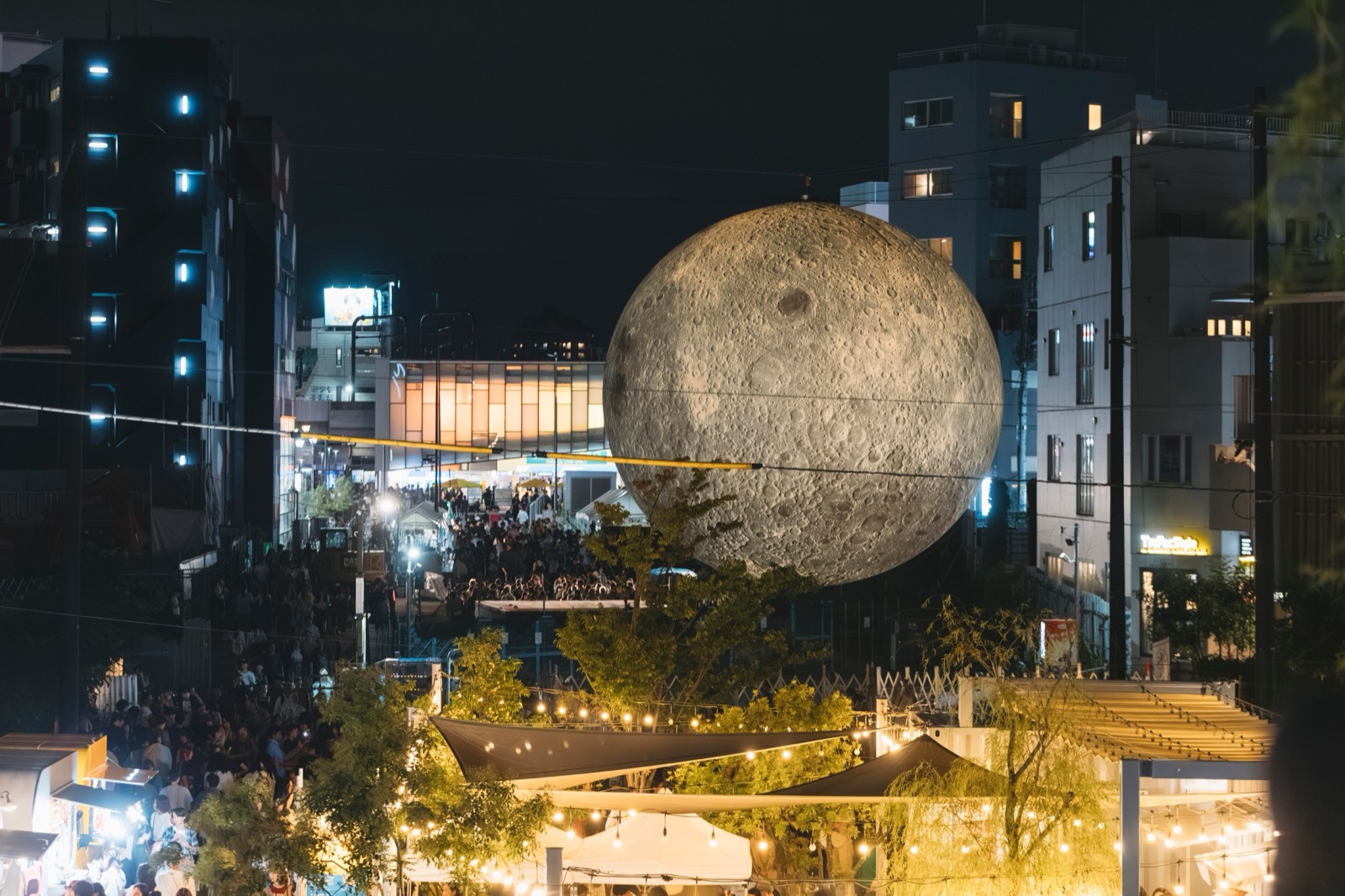
For the fifth year running, a moon seven metres across has risen over the old railway land in Tokyo's Shimokitazawa. The street works are free for anyone, and money changes hands only on the vacant lot directly under the moon, for 90 minutes a night. Why does a railway company keep staging an event that ticket sales cannot pay for?
1.It runs from September 18 to October 4. Moon Art Night Shimokitazawa, in Setagaya ward, is now in its fifth edition. From 3pm to 9pm, about 100 programs of art, music, theatre and food are scattered around the station. In the middle, on a vacant lot, hangs a moon seven metres in diameter.
2.Three organisers. The railway operator Odakyu Electric Railway, the local traders' body Shimokitazawa Shotengai Rengokai, and Startbahn, a company that records the provenance of artworks on a blockchain. The organisers say about 500,000 people came last year. The street works cost nothing. Money is taken only on the lot under the moon, from 8pm to 9:30pm.
3.The stage is land that used to carry tracks. Odakyu moved this stretch of line underground in 2013, and shaped the long, narrow strip left on top into Shimokita Senrogai, fully opened in May 2022. It runs 1.7km linking three stations, Higashi-Kitazawa, Shimokitazawa and Setagaya-Daita, split into 13 zones, at a cost of about 9 billion yen. Terraced houses, a hot-spring ryokan, a childcare centre, a hotel and a lane of small shops line up in a single file.
선로를 걷어 낸 1.7km
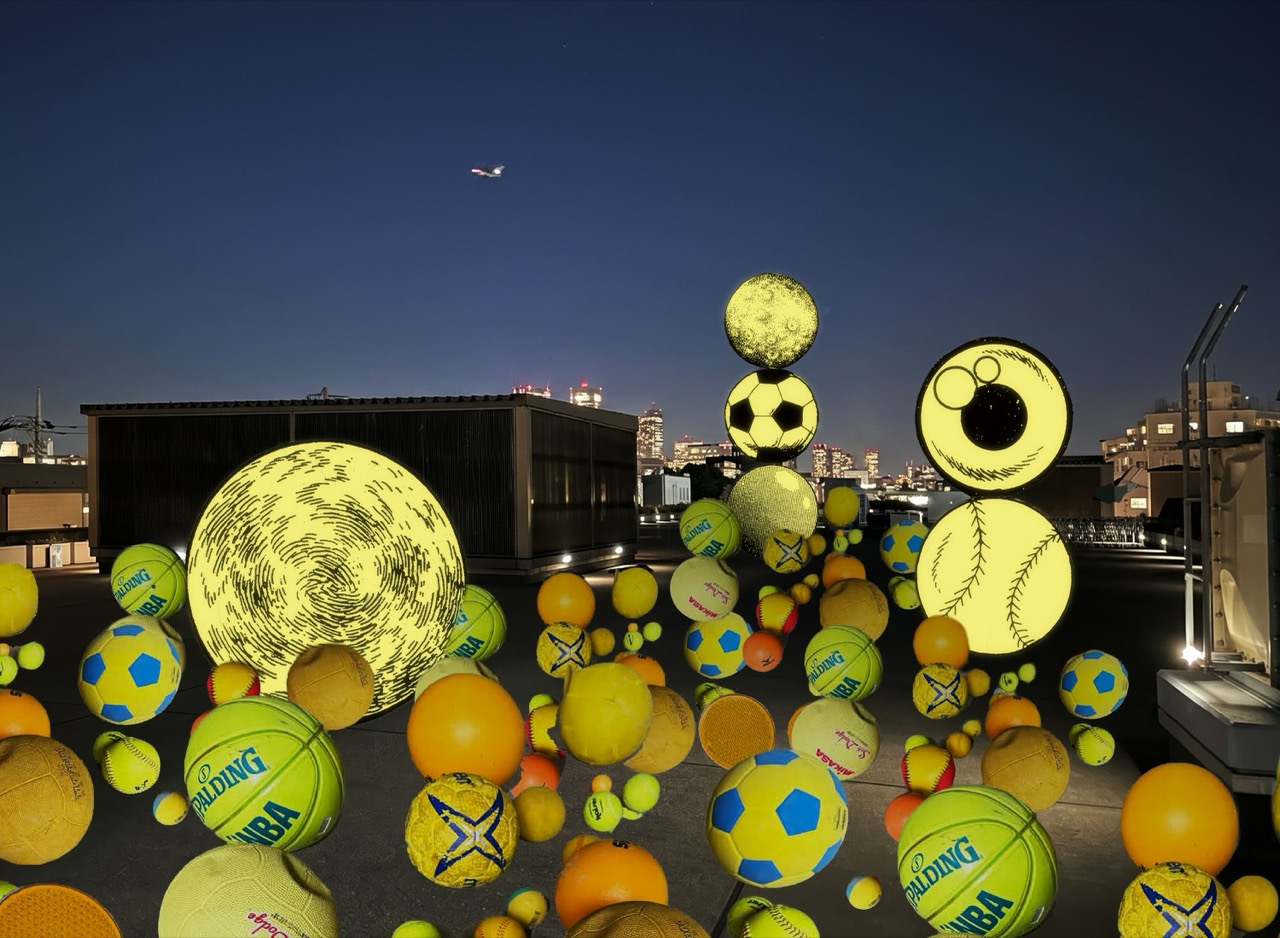
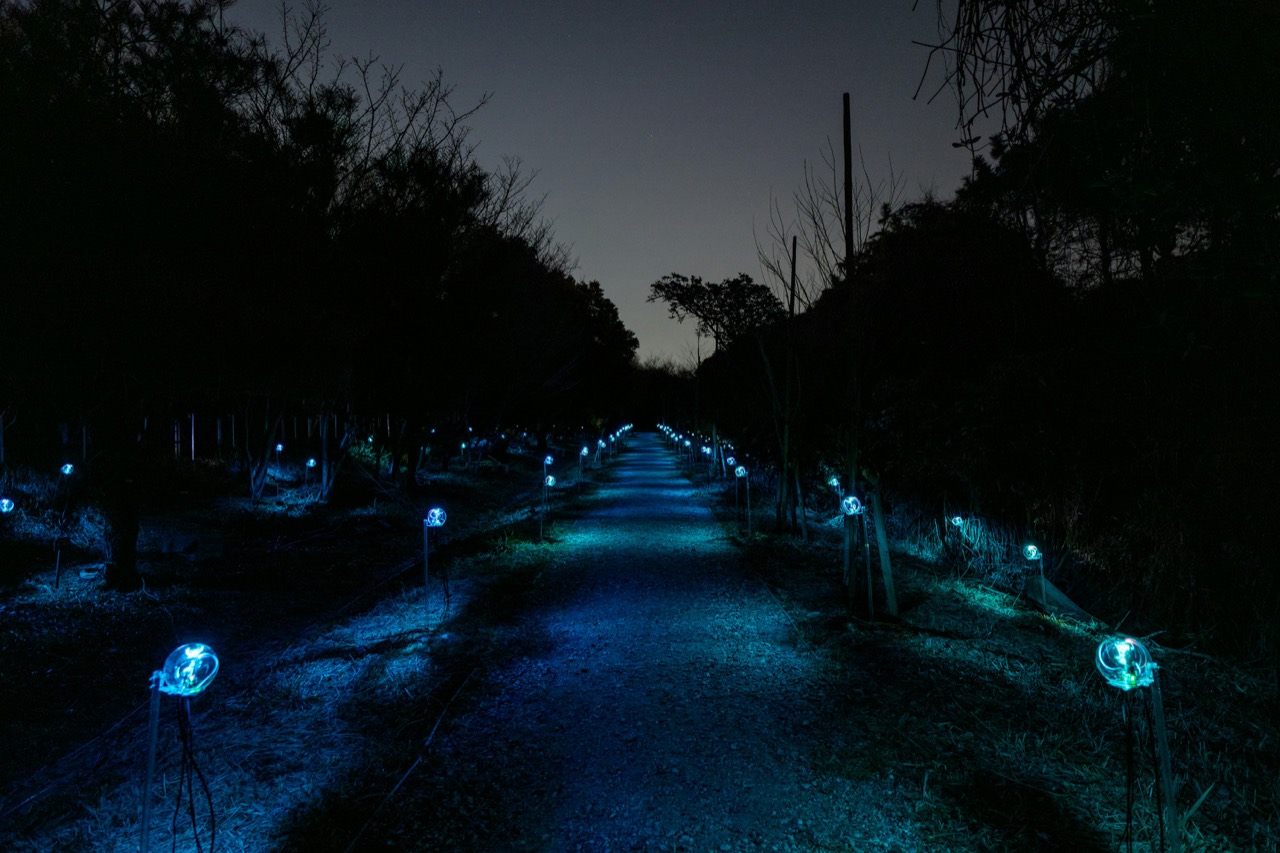
4.The works are spread along this strip. The moon on the lot is Museum of the Moon by British artist Luke Jerram: NASA imagery of the lunar surface, reduced to 1:500,000 and printed on a round balloon. One centimetre of balloon equals five kilometres of moon. The rooftop of Higashi-Kitazawa station went to Teppei Kaneuji, and at NANSEI PLUS between the stations, Yuma Kishi and Tatsuya Takemori set up an installation that turns plant biosignals into sound. This year the festival stopped borrowing existing moon-themed works and commissioned new pieces from five teams.
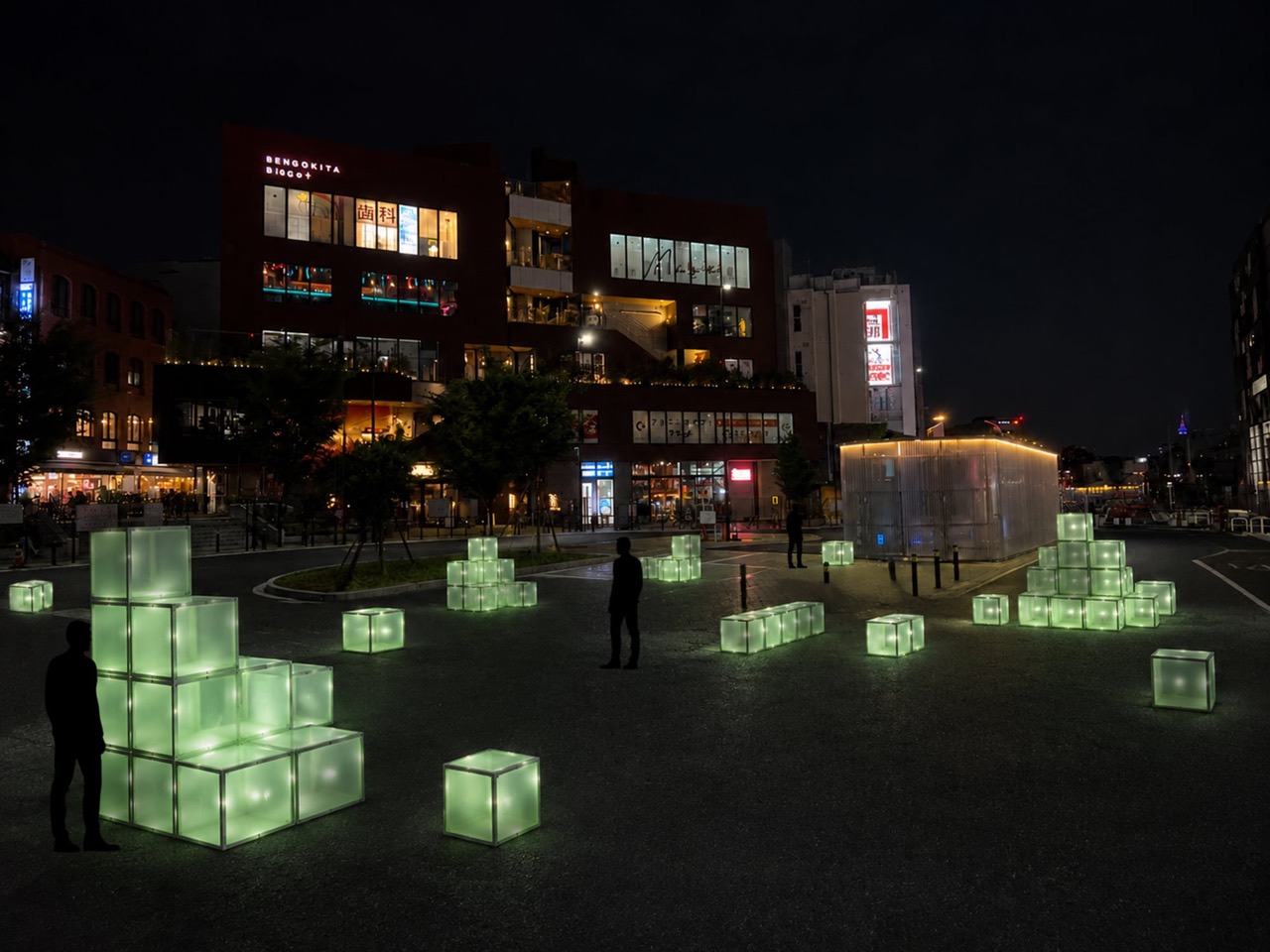
5.After 8pm, people sit down in rows on the ground of the lot. The moon is lit from inside, so the shadows of its craters stand out, with the windows of the houses glowing behind it. From 9pm, for ten minutes, sparklers called senko hanabi are handed out, and people bend over the small falling sparks beneath the moon. The moon itself is fully visible from the street outside the fence. The 1,200 yen buys a seat under it for those ten minutes, not a view of it.
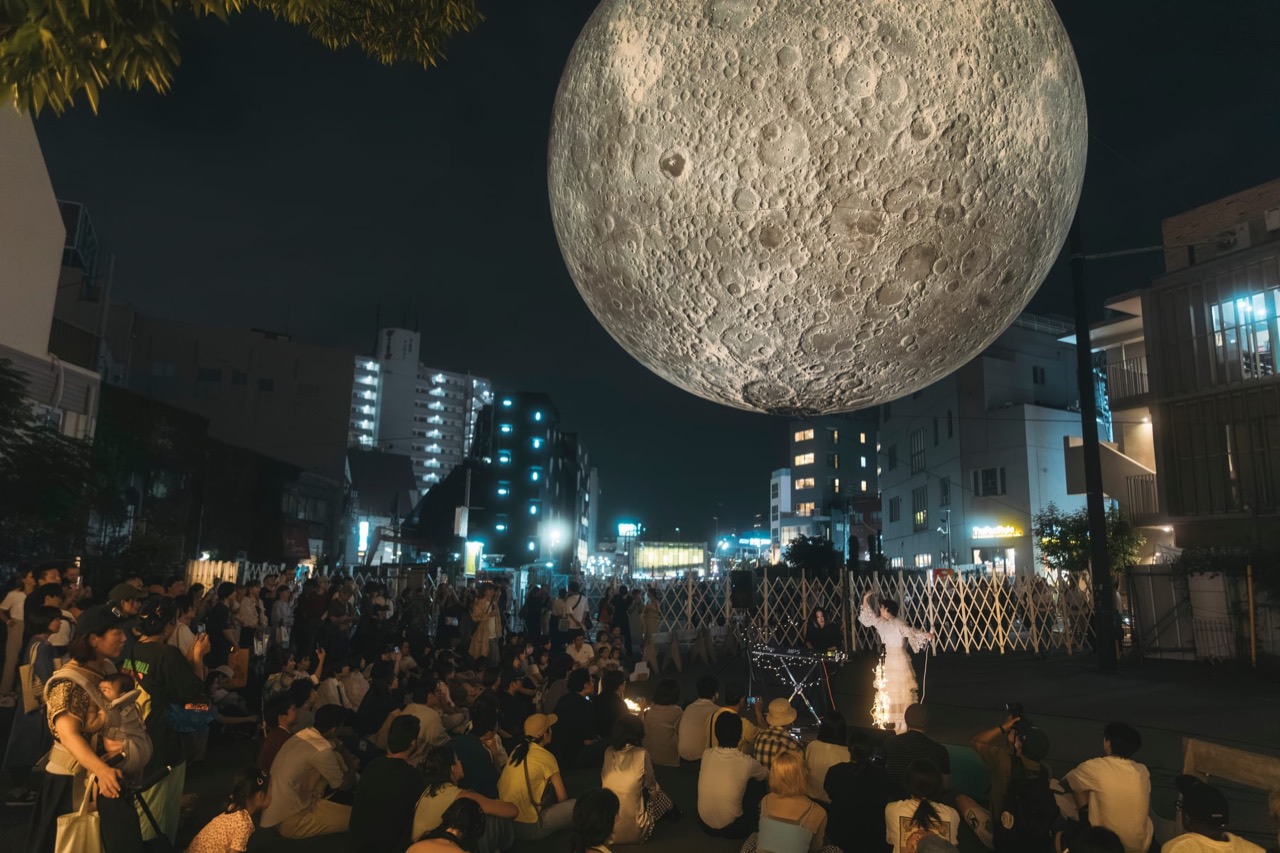
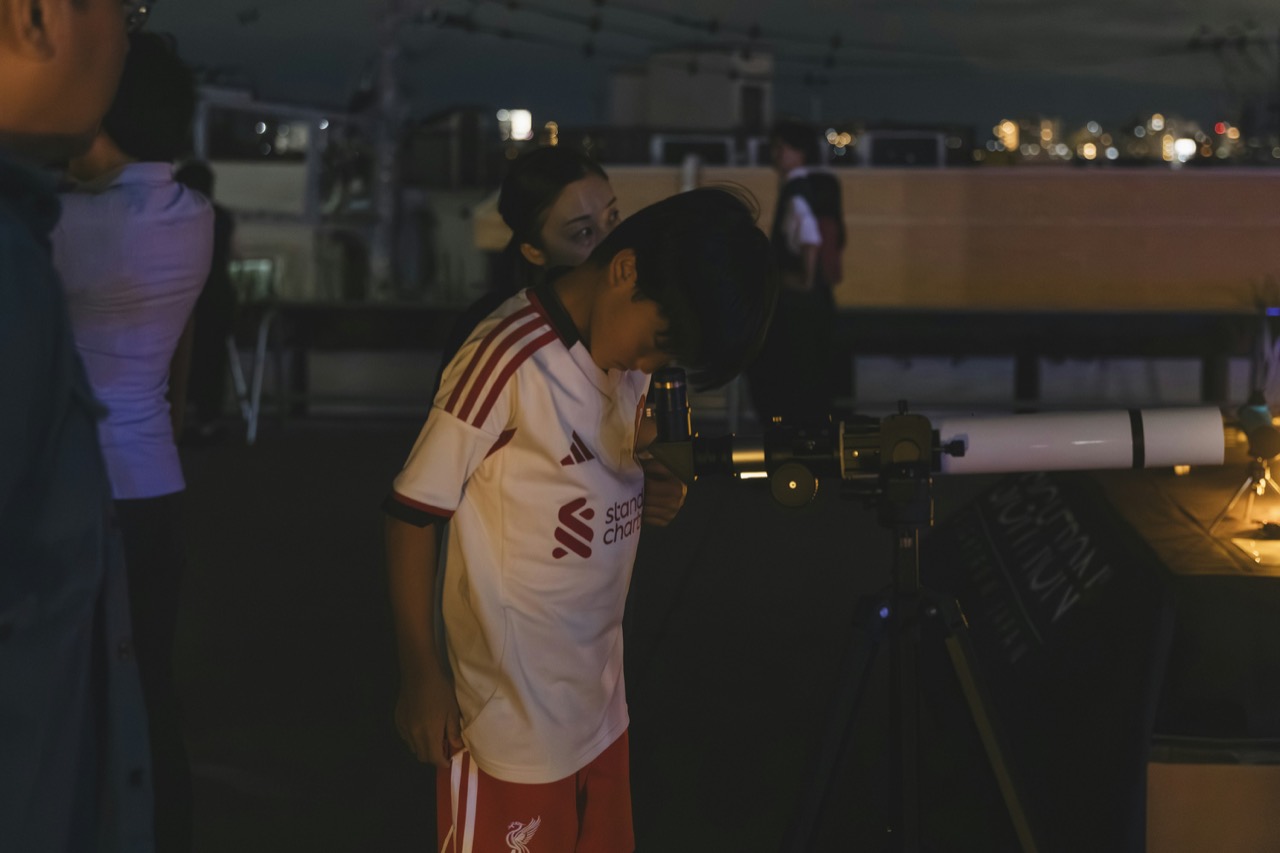
6.Four kinds of ticket. Standard entry is 1,200 yen in advance or 1,500 yen on the day, and 2,000 yen with a souvenir. The most expensive is Nekomachi, an immersive play staged in the streets, at 4,500 yen in advance, or 5,600 yen with a moon-shaped pastry and stickers. A ticket also opens the rooftop at Higashi-Kitazawa station and the stargazing sessions.
7.Ticket income is small. If 5% of last year's 500,000 visitors bought a standard ticket at an average of 1,350 yen, that comes to about 34 million yen (estimate).
기본 입장권 수입 (추정)
8.Nekomachi runs 13 times a day over eight days. Last year it drew about 1,800 people, so at this year's prices it would bring in around 8 million yen (estimate). Set against new commissions for five teams, 17 days of staff and night security, tickets cannot turn a profit. So why hold it for a fifth year?
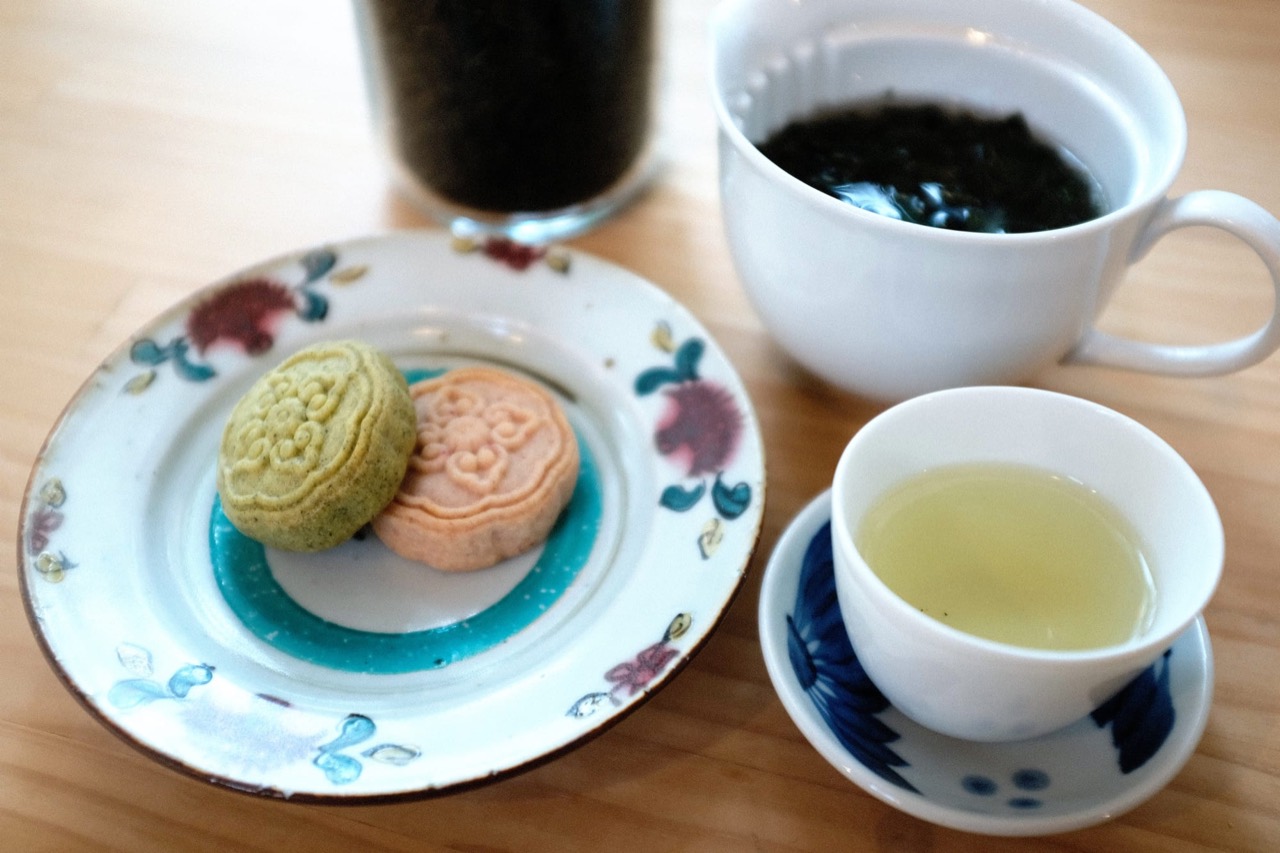
9.The money lands first in local shops. During the festival, shops along Senrogai and the surrounding streets put out moon-themed limited menus, and a digital stamp tour walks visitors right to their doors. Scanning the QR code at a shop adds a moon image to your collection as an NFT, and the record sits on Startrail, Startbahn's blockchain service. For Startbahn, the festival is a stage to show its technology to 500,000 people.

10.The biggest share goes to the railway. In April 2022, when Senrogai fully opened, Shimokitazawa station's ridership was up 17% on a year earlier, against 11% for the Odakyu line as a whole. Even with post-pandemic recovery mixed in, that is six points above the line average. What Odakyu earns from land it spent 9 billion yen on is fares, rent, and the neighbourhood's reputation, which props up demand for its terraced houses and hotel.
11.People come for the neighbourhood more than the moon. Shimokitazawa packs second-hand clothing shops, small theatres and live houses into narrow lanes, and runs on small shops with no big mall. The head of the traders' association described it as a place that welcomes people who lose themselves in whatever they love. Putting one moon at the centre and scattering 100 programs across the shops follows that character exactly. After the moon, people head into the lanes.
12.Showing a lot for free and charging in one small spot also suits the area. Most of the 500,000 pay nothing and take a photo of the moon. Those photos become next year's advertising, and the only paid space is one lot under the moon, for 90 minutes. An entry fee at the gate would have cut visitors to a fraction, and the foot traffic past the shops with them.
13.Jerram's moon has been shown more than 350 times in over 40 countries, and more than 2 million people saw it at the Natural History Museum in London. It is a touring work made in several copies that circulate at once, so any city can rent one and hang it. The usual pattern is a single rental and done. Hanging the same moon over the same lot five years in a row, until it becomes the neighbourhood's autumn event, is rare.
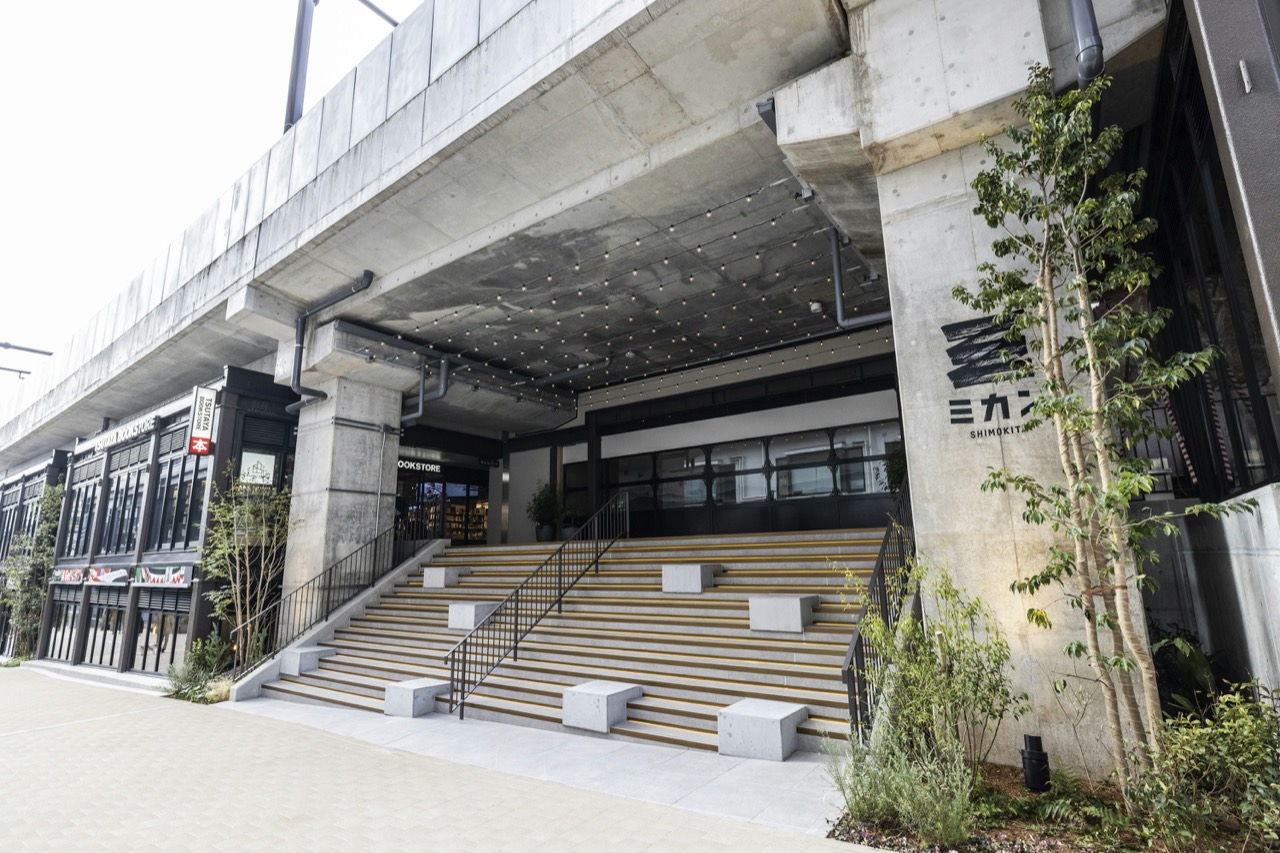
14.And the moon's visitors do not ride Odakyu alone. The Keio Inokashira line also stops at Shimokitazawa, and in 2022 Keio opened a commercial complex, Mikan Shimokita, beneath its viaduct. The neighbourhood reputation Odakyu built with 9 billion yen is shared with a rival's station and the shops under its tracks. Odakyu knows this and has paid for five years anyway. The bet is that as more people come to the area, its own share grows even when split.
15.At an event drawing about 500,000 people over 17 days, ticket money runs to tens of millions of yen, and the real return comes back as station ridership and rent on the land above the tracks. In Korea, a special act on putting railways underground took effect in 2025, opening the way to develop land above the lines. But to set up the same game, someone has to be named in advance who pays for the free event and collects the extra visitors. If the station, the land and the shops all have different owners, no one steps up to pay for the moon.