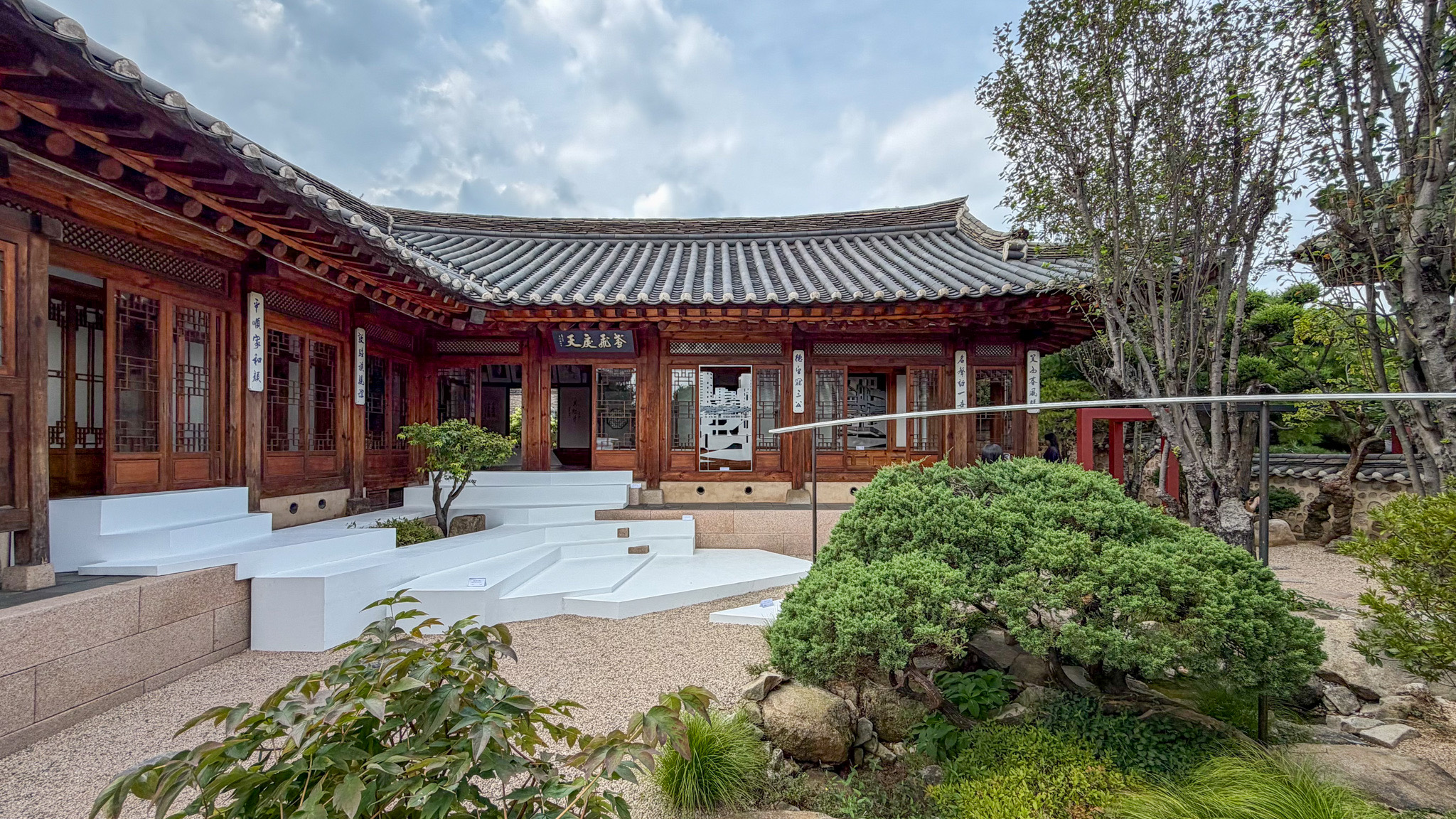
A hanok in Sajik-dong, home to one politician from 1953, has opened its gate again after two years. The artist Kim Donghee brought almost nothing new into the house. The work moves what was already there: the attic, the pond, the soil of the yard. The KRW 15,000 ticket covers a smaller share of this old house's upkeep than you might think.
1.Beside the wall of Sajikdan in Jongno-gu, Seoul, the gate at 7 Inwangsan-ro has opened again after two years. This is Woonkyung Gotaek. The spatial designer and artist Kim Donghee is using the entire house for a solo show 《A House Arrived Again》, on until October 31. To get in, you book a time slot on Naver and pay KRW 15,000.
2.Each session runs 80 minutes, and the house is closed on Mondays. Turn up at the gate without a booking and there is no way in. Two side programs are scheduled. On September 29 the architect Hwang Doo-jin talks about years of designing hanok, and on October 7 the architect Jo Jung-gu leads a night walk through Seochon.
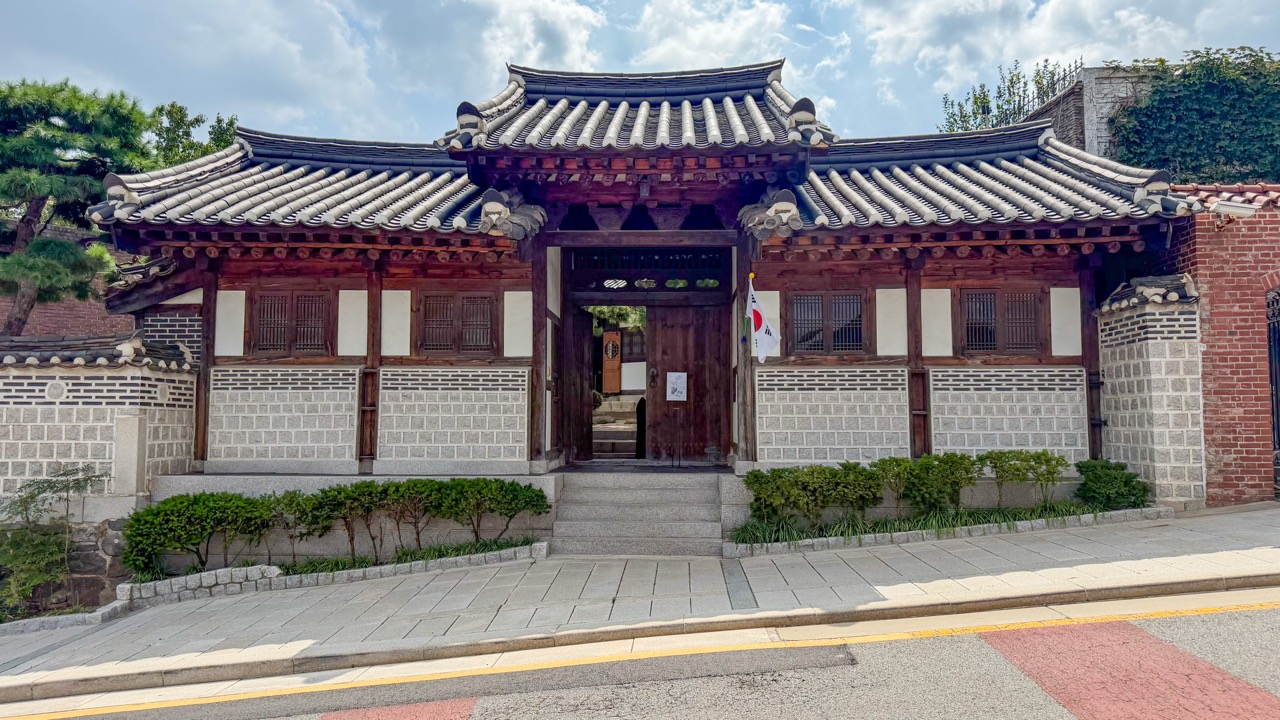
3.The site goes back a long way. Dojeonggung, the residence of Grand Prince Deokheung, father of the Joseon king Seonjo, is said to have stood here. Under Japanese rule the palace grounds were cut into some 200 lots and sold off, and the building standing today is a Seoul-style hanok from the 1930s.
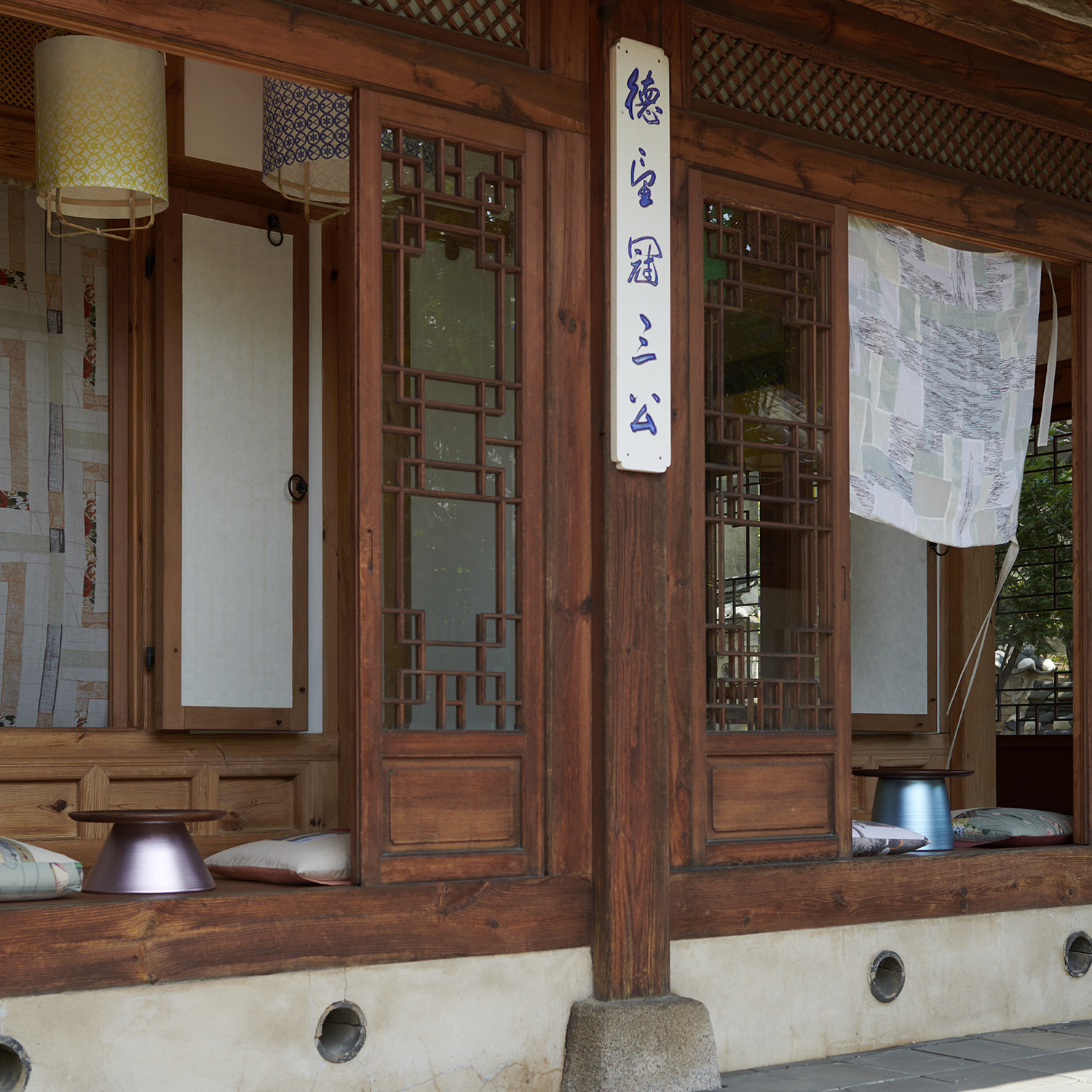
4.The man who bought the house in 1953 was Woonkyung Lee Jae-hyung, later Speaker of the National Assembly, and he lived here until his death in 1992. That is why the sarangchae, the men's quarters, was known as a parlor for politicians. The plot covers about 300 pyeong, roughly 1,000 square meters. Because the house sits on the slope of Inwangsan, the gatehouse, the sarangchae and the anchae each stand at a different height, and past the gate you keep climbing one level at a time.
비탈 위 세 채와 작가가 옮긴 것
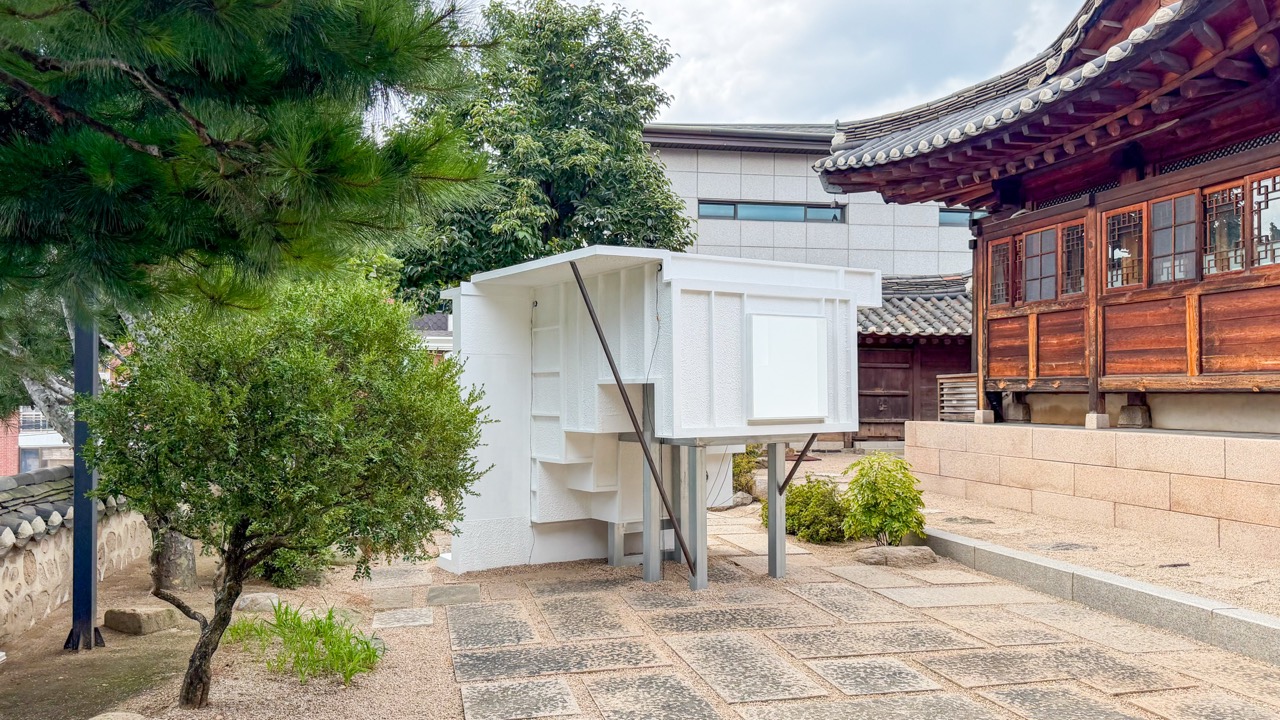
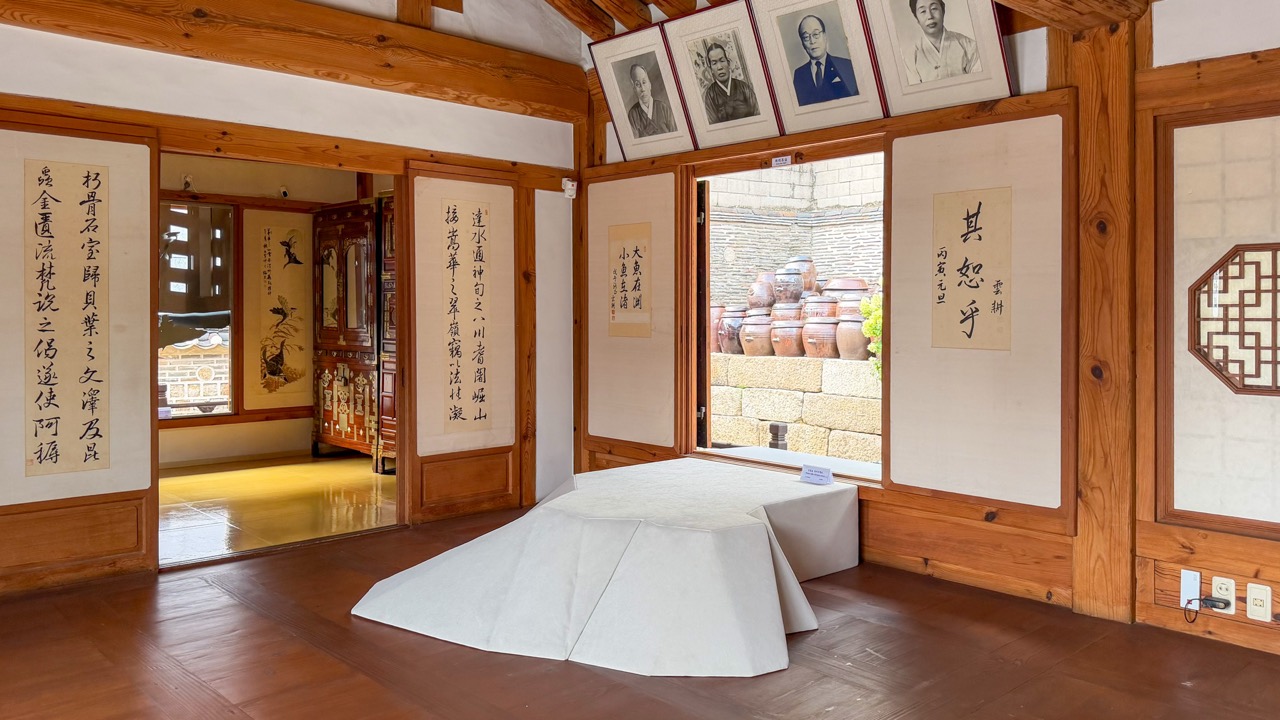
5.Under the roof of the sarangchae was an attic you could not see from outside. Kim took a cast of its shape, turned it upside down and brought it out into the yard. The white, box-like mass now stands on thin legs, and visitors can step inside, where a sound piece by Kim Young-sun plays. A space hidden under the roof for close to 90 years has come out into the middle of the yard.
6.In the main hall of the anchae, the small pond from the yard has been flipped and brought up indoors. The concave shape that once held water is now a white convex mass lying on the red floorboards, with four black-and-white portrait frames hanging above it. Through the open window, the jar terrace. In front of the anchae, about six tons of soil were dug out. Instead of standing in the yard to look at the main house, you sit in the hollow and look up, and the tips of the eaves move one level further overhead.
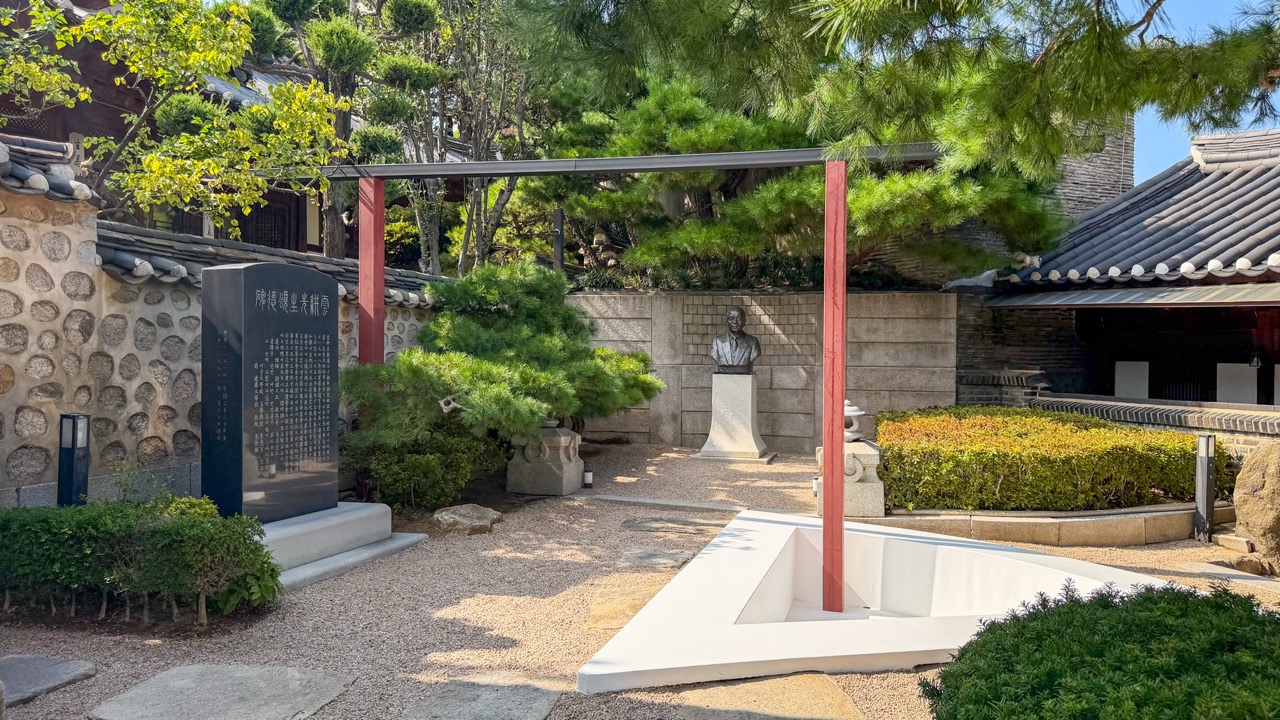
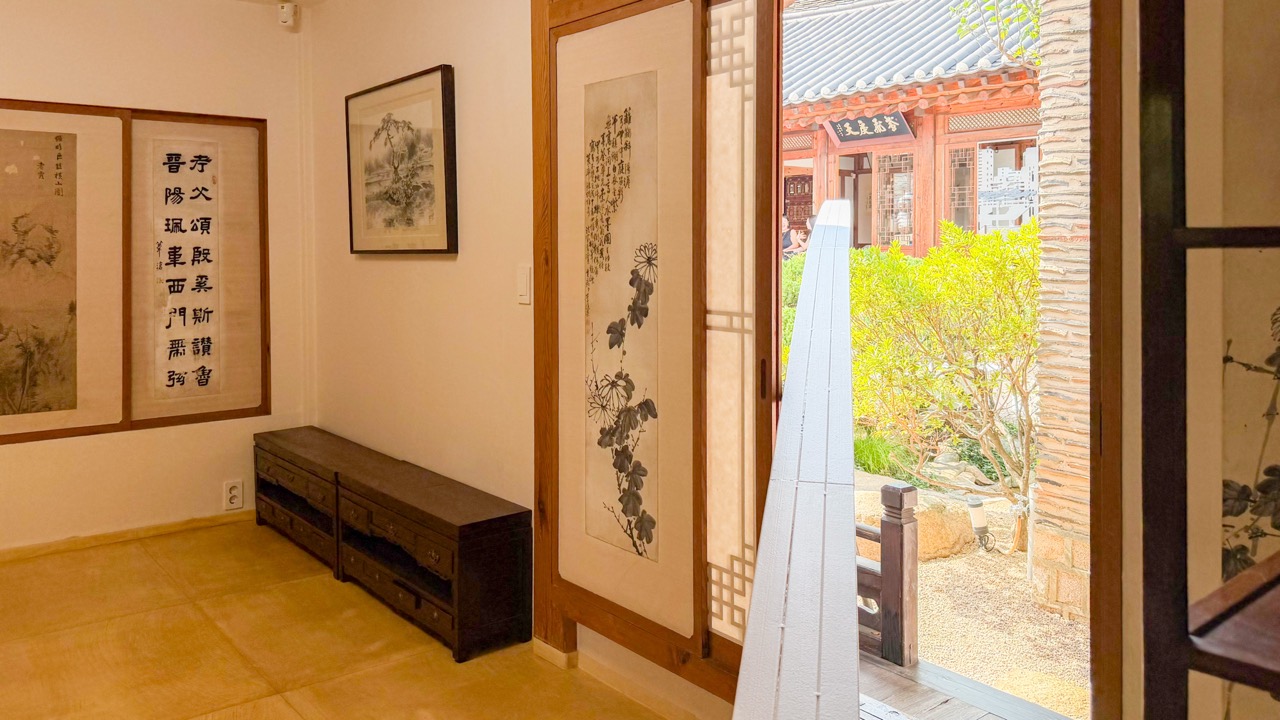
7.A single white line starts inside a room of the sarangchae, crosses the threshold and runs toward the anchae. Kim, who trained in printmaking, has long worked by bending existing structures to change the paths people take through them. Here too, almost nothing new was brought in. The work only moves what the house already had: the attic, the pond, the height of the ground.
8.Chances to step inside an old Seoul house where people actually lived are rare. Bukchon, where hanok are most concentrated, has gone the other way and closed up. Jongno-gu designated the area around Bukchon-ro 11-gil a special management zone, has barred tourists after 5 p.m. since March last year, and fines violators KRW 100,000. A house with residents usually lets you go no further than the alley outside the gate.
9.Woonkyung Gotaek goes the opposite way. Nobody lives here, so instead it limits how many people come in. During Choi Jeong-hwa's solo show in spring 2022, it took five sessions a day with at most 16 people each, which gives every visitor about 19 pyeong of the plot. Numbers are kept down by closing the booking window, not by forming a queue.
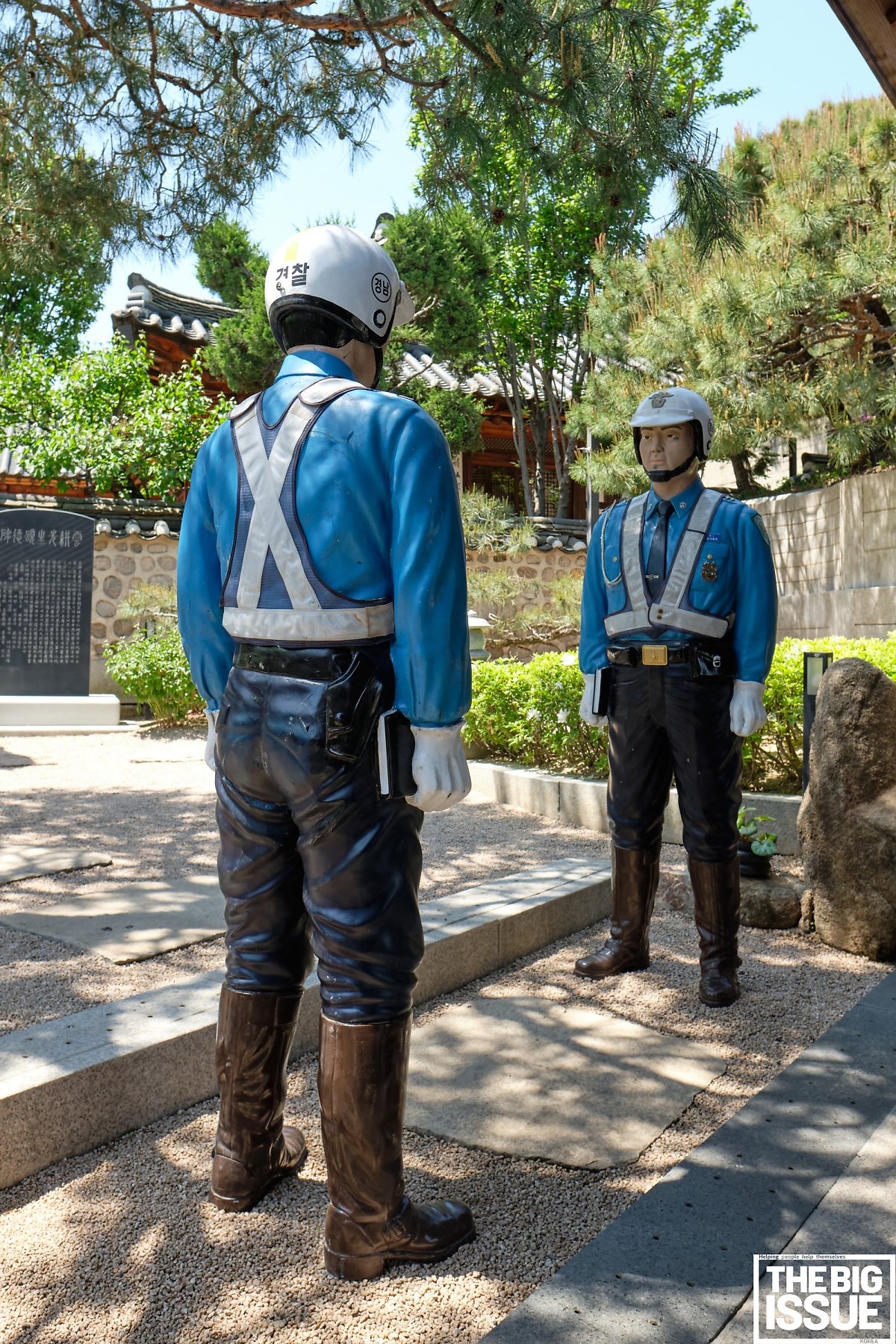
10.What visitors look at for 80 minutes is the house, not the artwork. Because the works have relocated parts of the house, finding where the attic used to be means looking up at the sarangchae roof, and seeing the pond means climbing into the main hall. In a museum the white wall recedes behind the art. Here the floorboards and eaves step forward. That is why the same house, opened every few years with a different artist, looks like a different house each time.
11.Divide KRW 15,000 by 80 minutes and you pay a little over KRW 11,000 an hour, about what a weekend film at a multiplex costs. When the house first opened for an exhibition in 2019, entry was KRW 10,000 for one hour, so the stay has grown along with the price.
12.This year's capacity per session has not been published. Assume 16 people, as in 2022, and six 80-minute sessions a day: that is 96 visitors and KRW 1.44 million in ticket revenue per day. Excluding Mondays, the show runs 52 days, so even if every session sells out, ticket revenue comes in just under KRW 75 million (estimate). At half capacity, it is around KRW 37 million.
입장료로 들어올 수 있는 최대치 (추정)
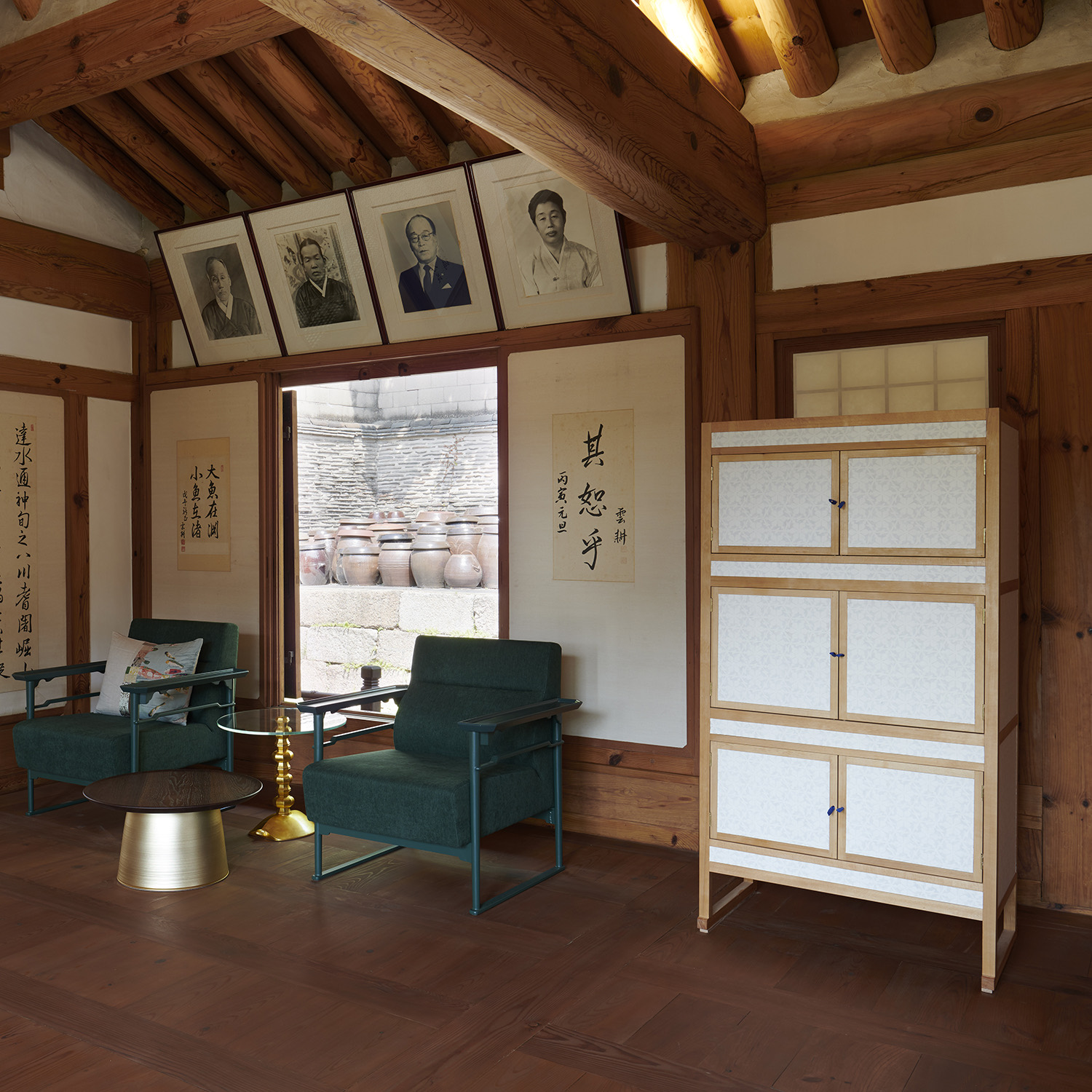
13.Could that money pay for the whole exhibition? The show is supported by the Arts Council Korea, and the Woonkyung Foundation, which owns the house, exists mainly for scholarships and commemoration. Money to maintain the house also comes from rentals. The foundation accepts bookings "within limits that do not harm the dignity of the house," and its website lists shoots done here for Amorepacific's Ryo, the TV show 「Seoul Mate」, magazine editorials and an outdoor brand's YouTube channel. We could not confirm the rental fee.
14.The precedent that comes to mind for turning a lived-in house into an artwork is Gordon Matta-Clark's 「Splitting」 from 1974. He sawed a wooden house in New Jersey, already slated for demolition, in half, and the house was torn down soon after. Kim worked under the opposite condition. This is a house that must be kept, so instead of cutting, Kim cast, flipped and moved.
15.Every artist who has worked in this house has been different. In 2019 the textile designer Chang Eungbok and the furniture designer Ha Jihoon placed fabric and furniture in each room, and in 2022 Choi Jeong-hwa filled the house with discarded objects. The same main hall held two green armchairs in 2019 and holds the flipped pond this year. With gaps of several years between openings, people start waiting for the next one, and KRW 15,000 is a price that includes that wait.
16.A 300-pyeong hanok in Sajik-dong is open for two months in pre-booked 80-minute sessions, at KRW 15,000 a ticket. Even with 16 people in every session, ticket revenue stays under KRW 75 million (estimate), so the cost of keeping the old house is covered by rentals and grants together. When an individual or a foundation opens an old house like this, the first problem is the neighbors. This house can open while Bukchon uses fines to keep tourists out because nobody lives here and each session has a headcount limit. Raise capacity to earn more at the door, and the alley changes first.