A period thriller that revisits the gunshots of Liberation Day 1974 has taken the Chuseok box office. The company that made the film also distributed it. It keeps the fee it would have handed a major distributor, and in exchange carries the advertising bill and the screen negotiations on its own.
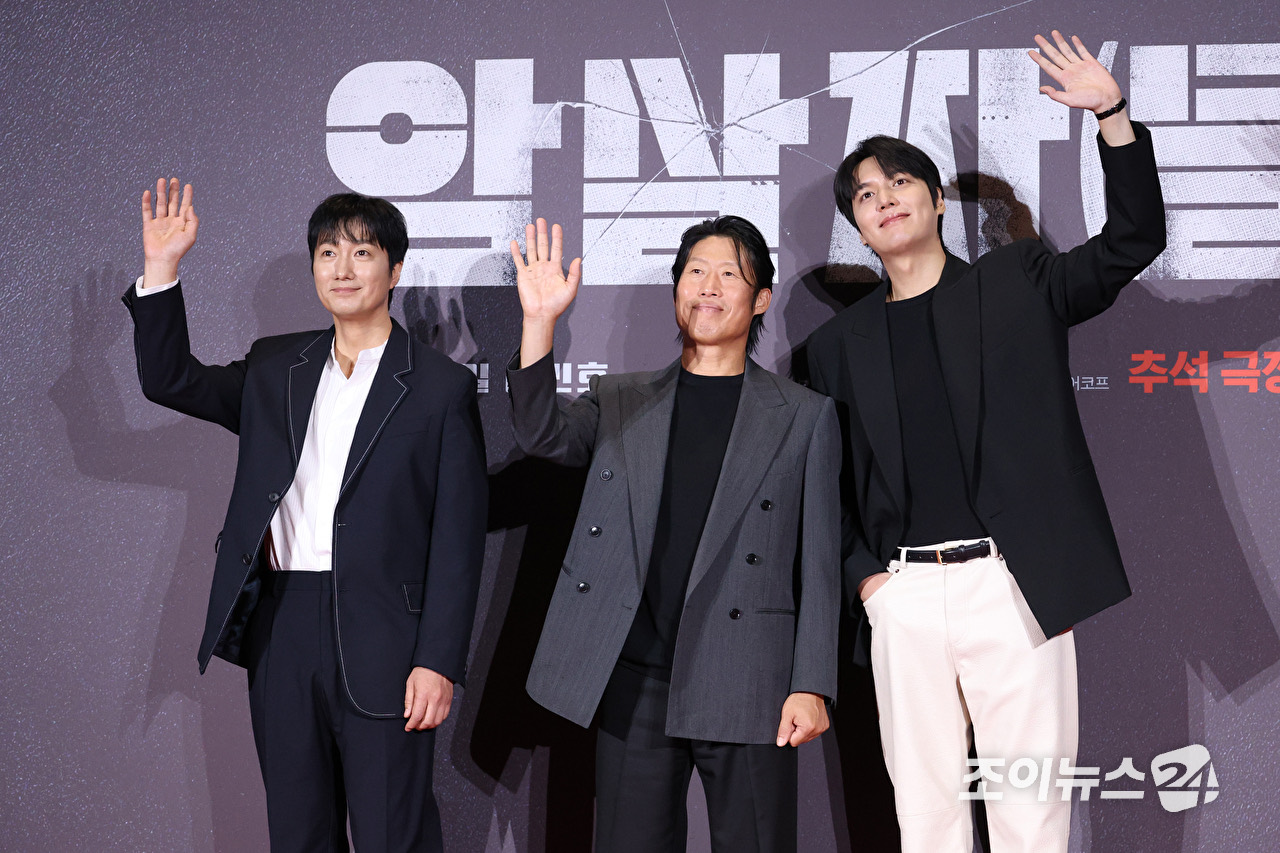
1.On Wednesday, September 23, the day before the Chuseok holiday began, Hur Jin-ho's The Assassins opened. On day four, the 26th, it passed one million admissions, and through the 27th it held the top spot at the box office five days running. Cumulative admissions as of the 27th: 1,566,176. Close to double the second-place film that day, Tazza: Beelzebub's Song.
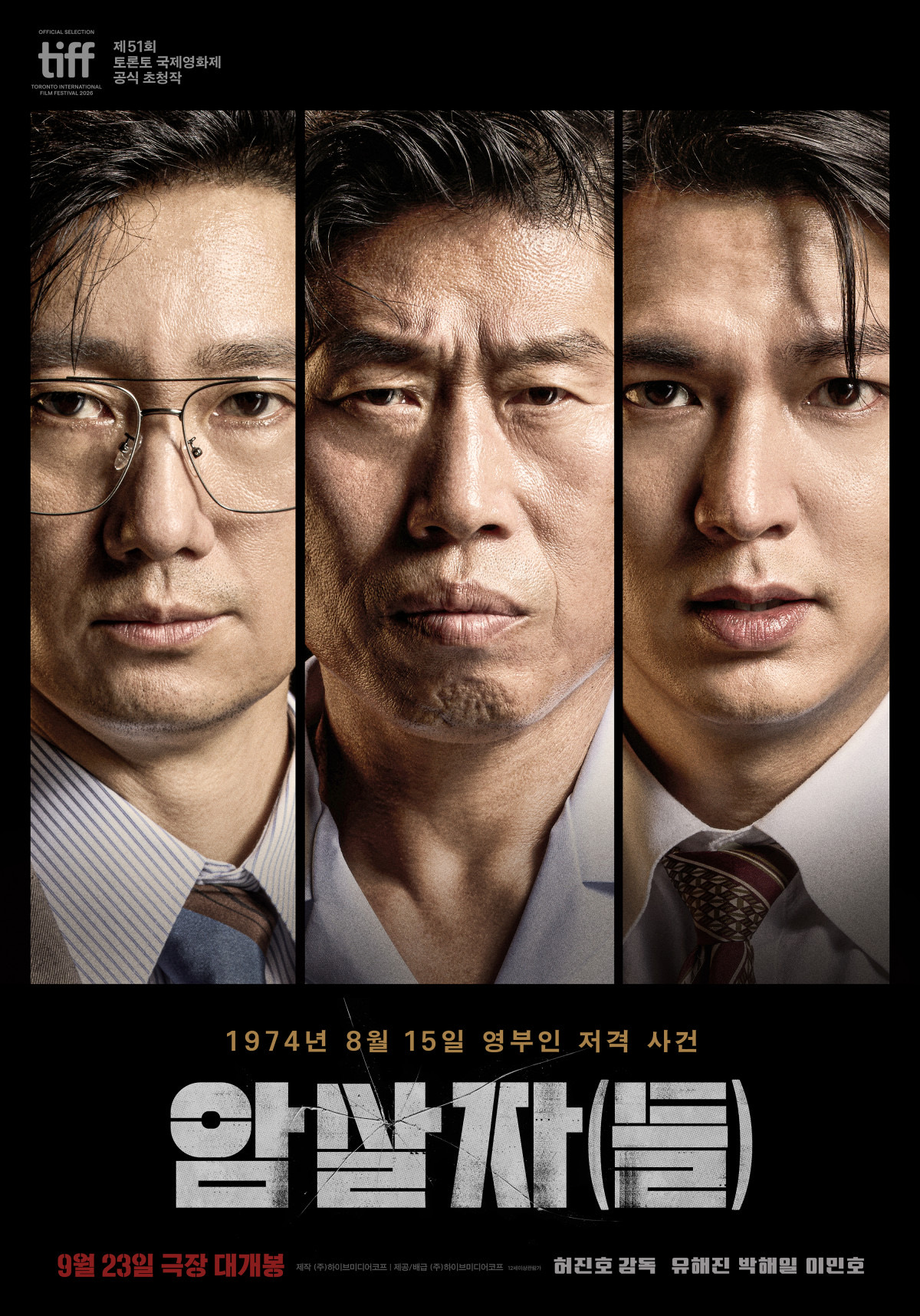
2.The subject is the shooting at the Liberation Day ceremony on August 15, 1974, in which First Lady Yuk Young-soo was killed. The film renames the gunman Moon Tae-gwang (Park Jeong-min) and puts three people who dig into what lay behind the attack at the front: detective Cheol-gu (Yoo Hai-jin), newspaper city editor Jae-hwan (Park Hae-il) and rookie reporter Young-il (Lee Min-ho). A single company, Hive Media Corp, handled both production and distribution. The film runs 131 minutes, is rated 12 and over, and screened first at the Toronto International Film Festival a week before its Korean release.
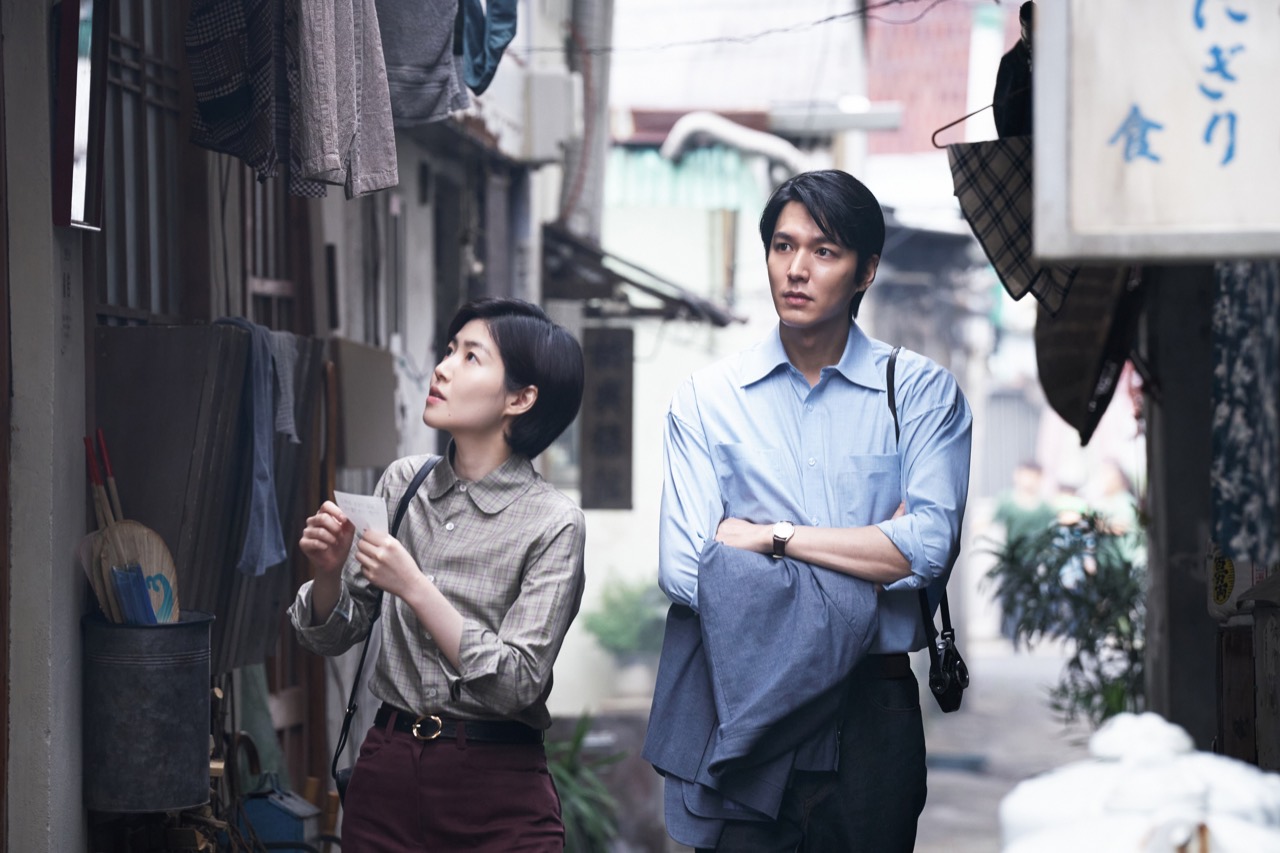
3.The Seoul of 1974 was shot in Daejeon. The crew chose a redevelopment zone where modern-era buildings and old alleys still stood, and turned whole streets back to the seventies. Behind the camera was cinematographer Lee Mo-gae, who shot 12.12: The Day and Exhuma. Hur has said he added the reporters, who were not in the first draft of the script, and that decision made the newspaper city desk one of the film's main stages.
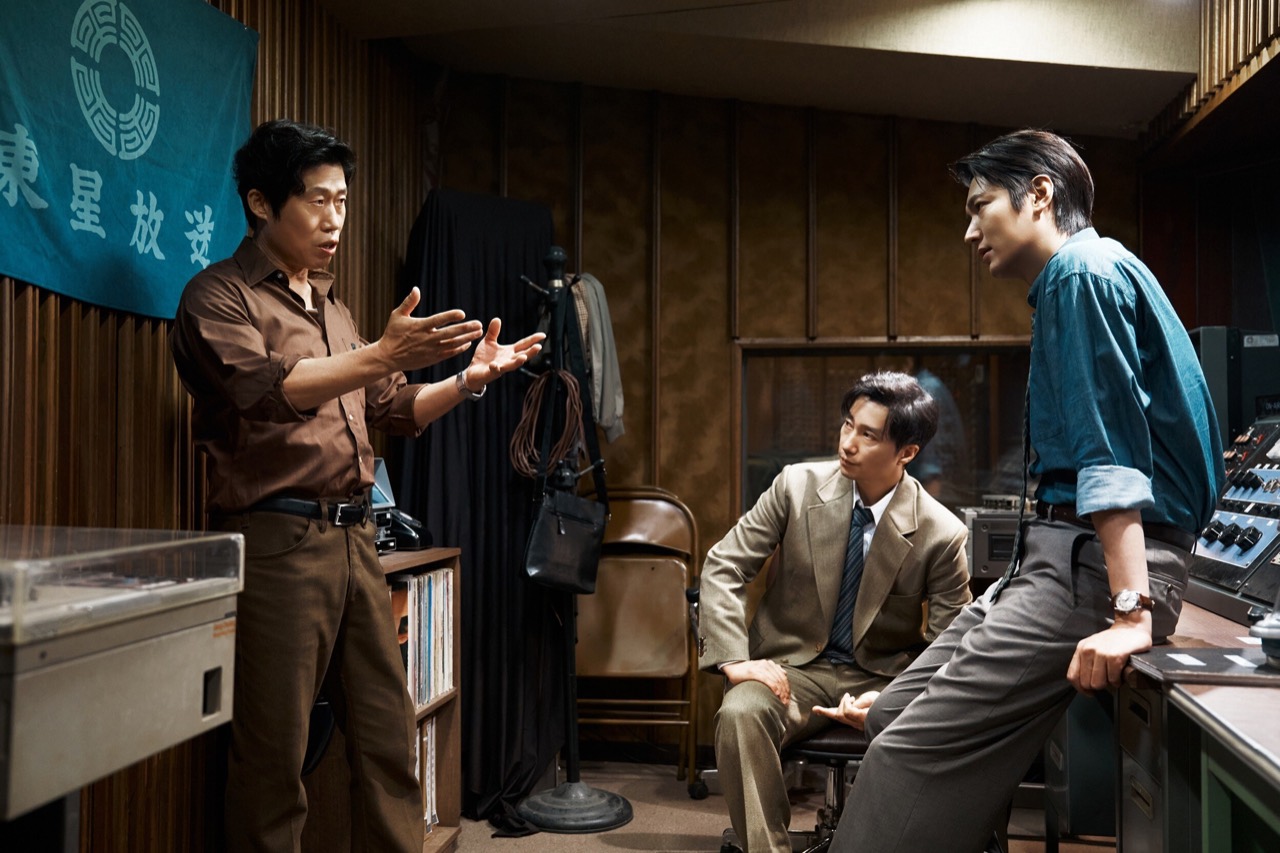
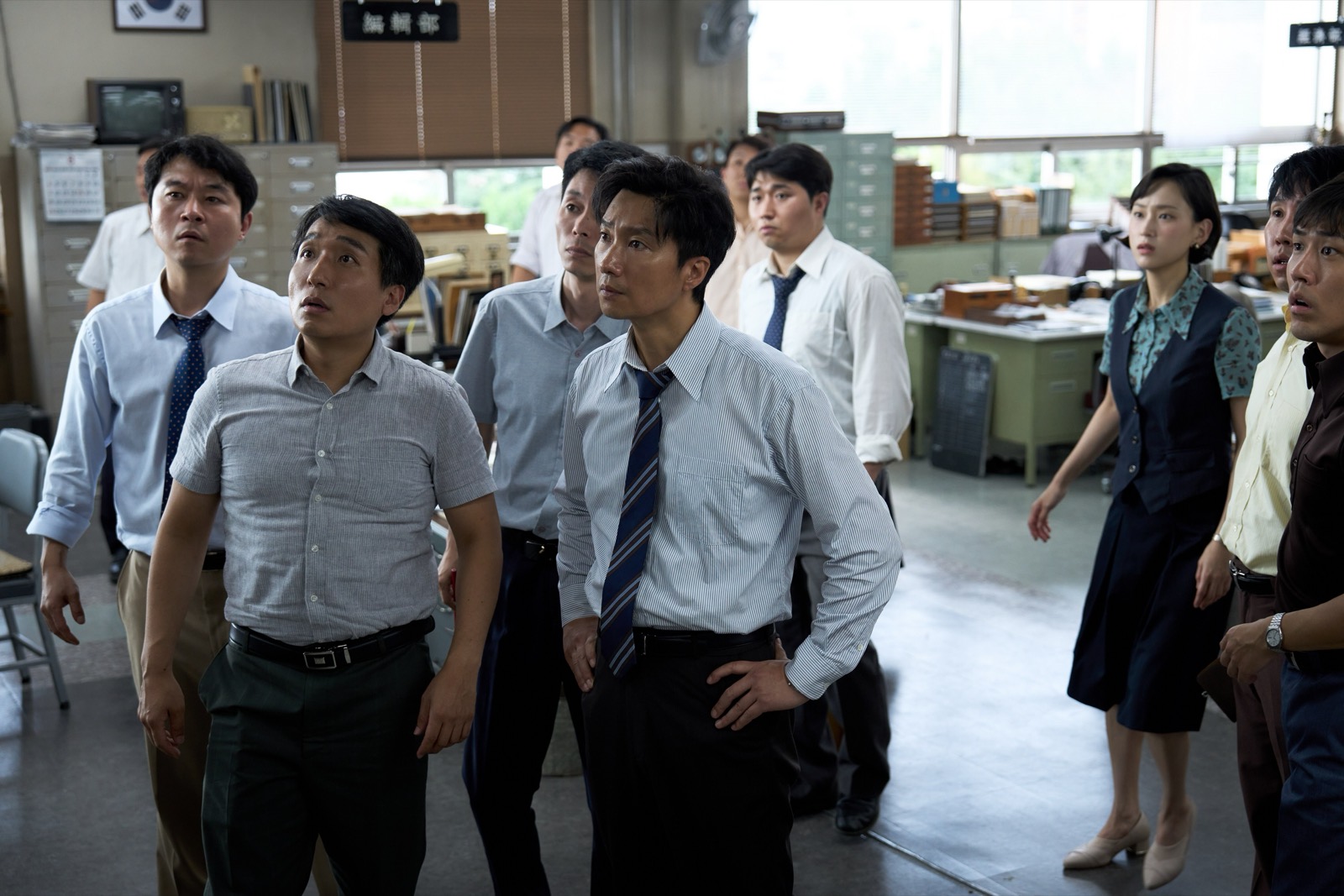
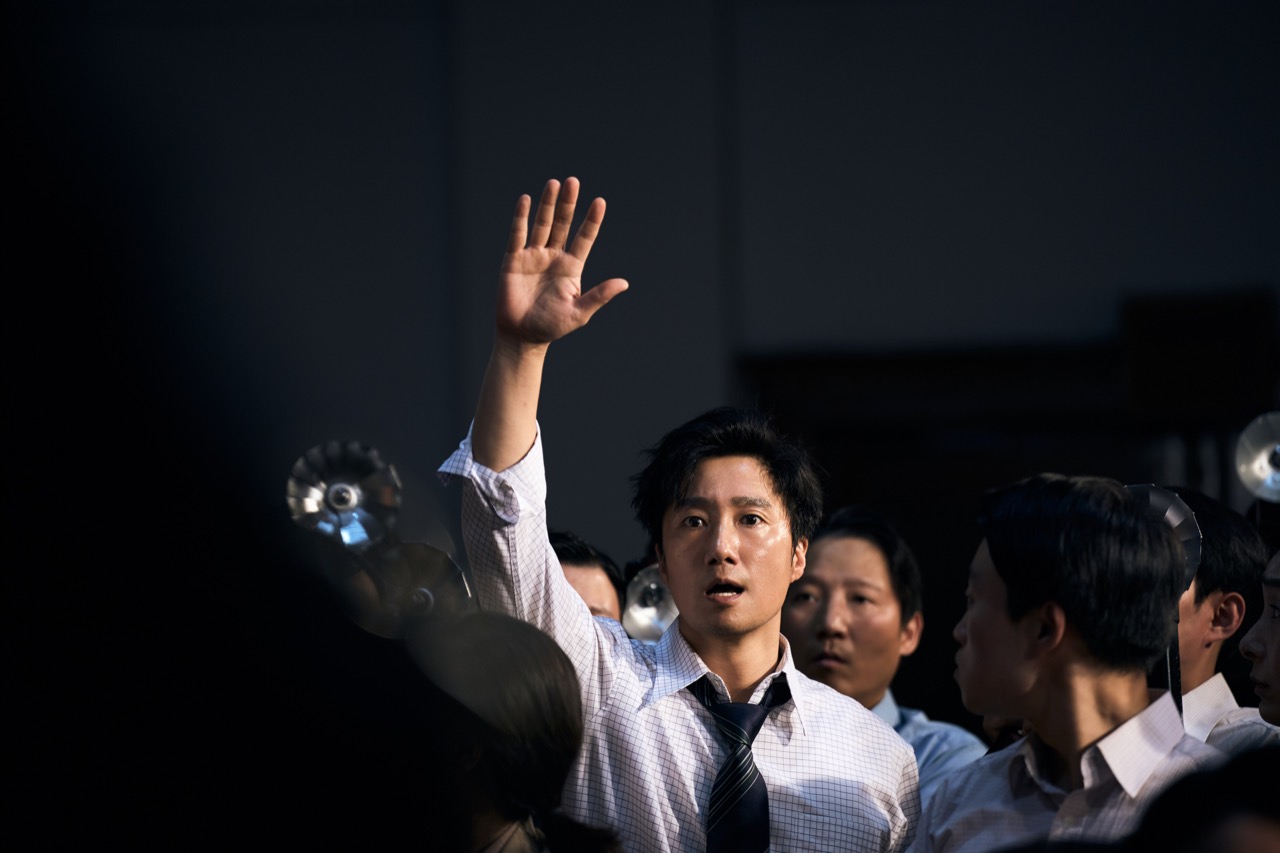
4.Of the stills released so far, one from the city desk carries the film's air best. Reporters in short-sleeved shirts and ties crowd between steel filing cabinets and look up in one direction, while outside the window it is a midsummer afternoon. News was gathered by telephone and on foot in those days, so the pursuit moves by footsteps more than by guns. In a period film the most expensive shots are the ones that clear an entire street and fill it with a crowd. This film puts its weight on offices, alleys and cramped drinking spots.
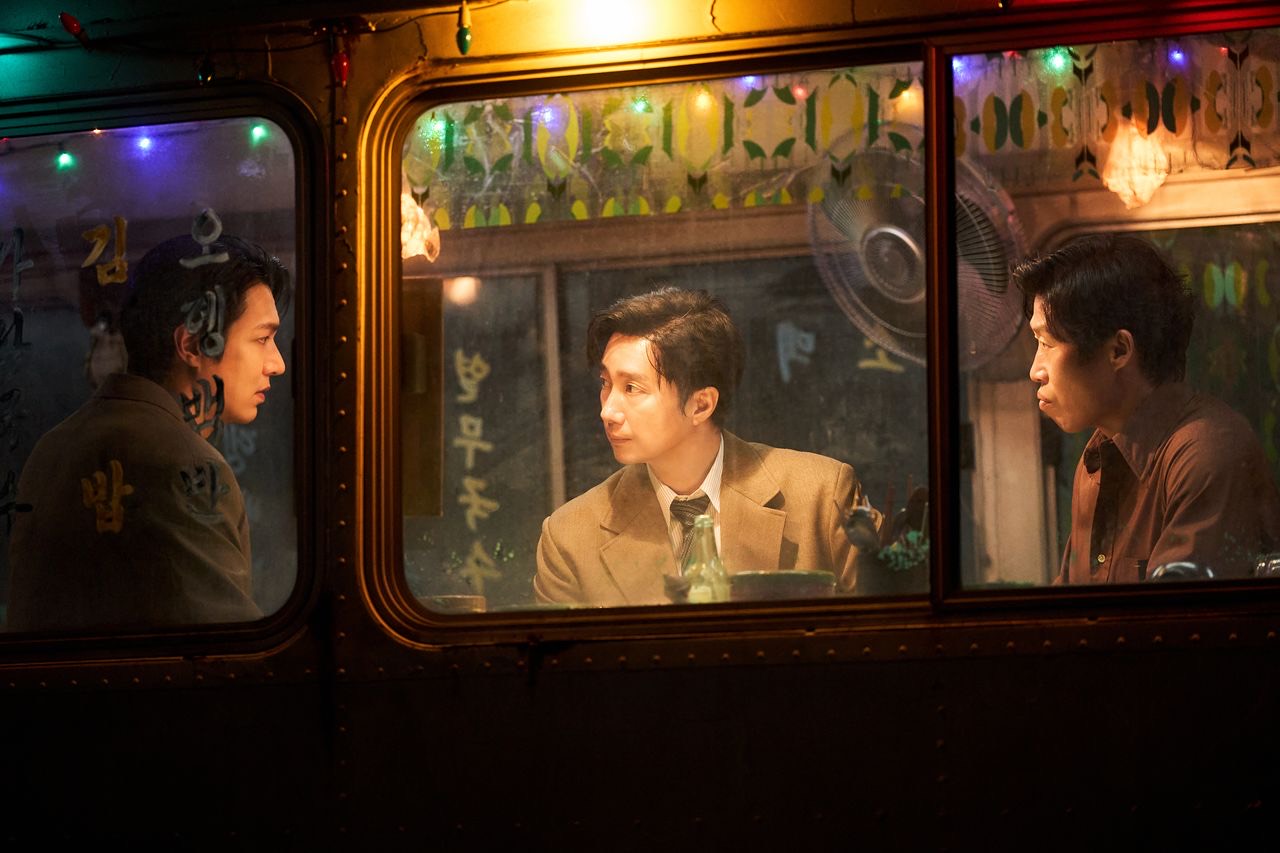
5.The shooting comes right at the start. Moon Tae-gwang, who got into the venue without a pass, fires during the president's speech. The rest of the 131 minutes follows what came after. Who let him in, and who knew? Hur does not nail down an answer, and more than ten cameo actors, among them Jung Woo-sung, Oh Jung-se and Park Hae-joon, pass through briefly and fill in the blanks one by one.
6.Chuseok is about the only week of the year when parents and children walk into the same cinema. Someone who was ten in 1974 is 62 this year, and for that generation the event is memory, not a textbook entry. A film about something the parents remember and the children are seeing for the first time, rated 12 and over at that. The runner-up, Tazza, is adults-only, so it was never a film the whole family could pick together.
7.An event whose ending everyone knows and whose path nobody does. The same company's The Man Standing Next and 12.12: The Day already made money on this formula, and 12.12: The Day drew 13.12 million viewers in 2023. Audiences pay for the route to the ending, not the ending itself. This time the route is walked at the eye level of reporters and a detective, not from the centre of power.
8.The marketing sells the pursuit too. A clue-tracking screening at CGV on October 1 gives every attendee a "profiling folder" of clues gathered from the film. You watch with the folder in hand, then use those clues to join a social media event afterwards. It turns a film you sit through into a case you carry out with you, and gives someone who has already seen it a reason to buy a second ticket.
9.In 2025 the average moviegoer paid 9,869 won per ticket. Take out VAT and the film development levy and about 8,700 won is left, and at Seoul multiplexes the cinema keeps 45% of that while the distribution side gets 55%. From the distribution side's share, another 10% goes out as the distribution fee. What remains first pays back advertising and marketing, and then investors and the producer split the rest.
표 한 장 9,870원이 나뉘는 길
10.Run 1,566,176 admissions through that calculation and box office revenue comes to an estimated 15.5 billion won, with about 7.5 billion won on the distribution side. Normally a major investor-distributor would take 10% of that off the top, around 750 million won, as its fee. Hive Media Corp keeps that money in-house. In return it took on the pre-release advertising and the screen negotiations with cinemas across the country by itself.
11.The budget of The Assassins has not been disclosed. The same company's 12.12: The Day cost 23.3 billion won in total and set its break-even point at 4.6 million theatrical admissions. That figure already counted expected ancillary revenue, so on theatres alone it needed more than 5.3 million. Plus M Entertainment distributed that film. Judging by the cast and the scale of the period recreation, the new film is estimated to sit at a similar level, which puts 1.56 million at about a third of the way.
12.Four of the top five films this Chuseok are Korean. On the 27th, The Assassins took 36% of the day's revenue and Tazza, distributed by CJ ENM, took 24.4%. The Assassins played 5,933 shows on 1,515 screens that day. The Odyssey, a foreign film released in August, is still third with 11.78 million cumulative admissions.
추석 극장, 한국 영화 네 편의 누적 관객
13.A 131-minute running time is a weak point in negotiations with cinemas. Add ads and cleaning time and a screen can run it roughly one show fewer per day than a two-hour film, and cinemas, whose revenue is the number of shows, tend to give long films fewer screens. A major distributor negotiates with its next releases bundled in, but a producer arriving with a single film has only that film's opening week to lean on. Miss first place in week one, and who holds the screens for week two?
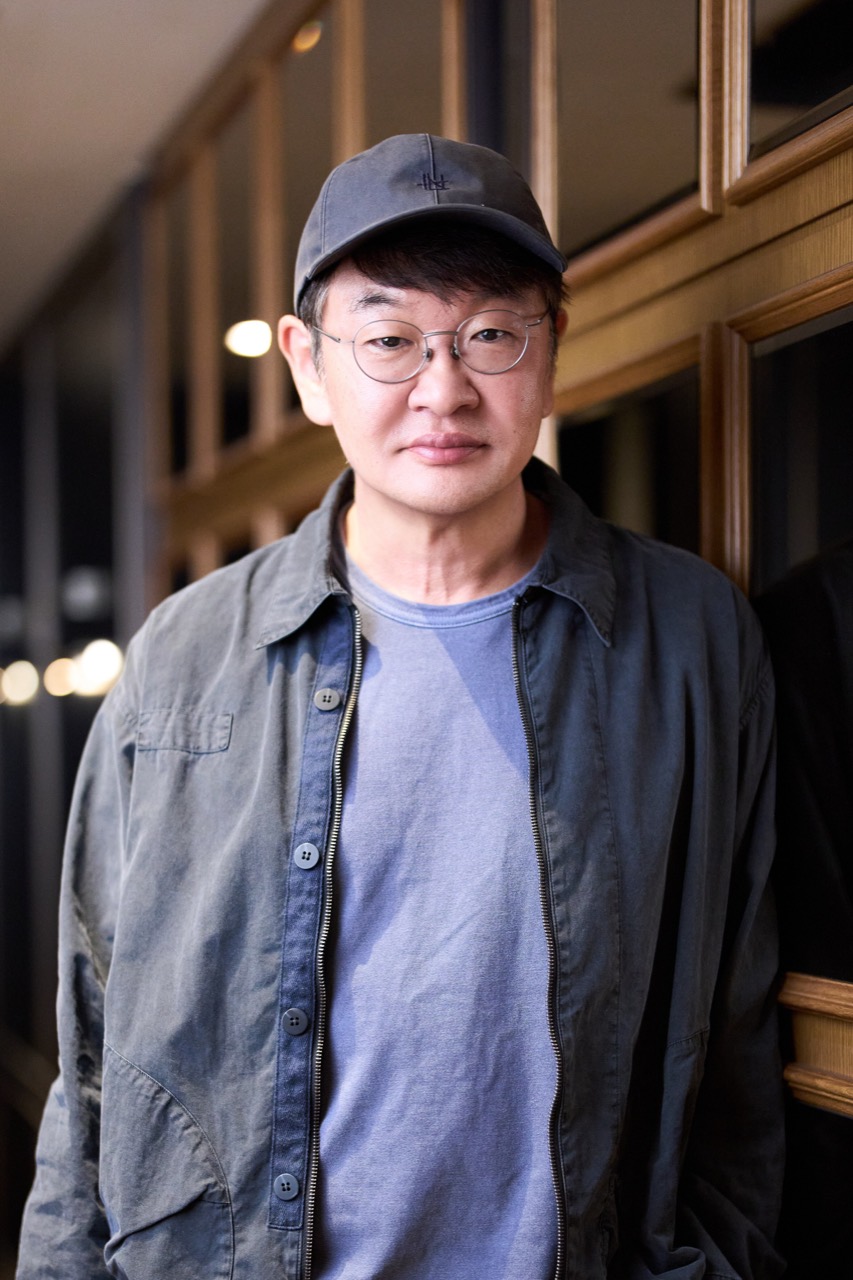
14.Hive Media Corp is a production company founded in 2014. It turned out one hit after another about modern Korean history with Inside Men, The Man Standing Next and 12.12: The Day, and made The Last Princess, Forbidden Dream and A Normal Family with Hur. The film that first made Hur's name was Christmas in August in 1998. The director who once filmed the quiet summer of a photo studio owner has now made a film that opens with a gunshot.
15.For a long time the money in Korean film flowed through a handful of major investor-distributors, and the industry repeated a calculation that the producer got around 1,200 won from each ticket. The producer took over distribution in the year right after 2025, when cinema admissions fell below half of pre-pandemic levels. As the pie shrinks, the 10% that used to be handed over feels heavier. It is also a choice open only to a producer whose hits have been proven more than once.
16.A period film distributed by its own producer held first place for five days over Chuseok and has reached 1.56 million admissions. The distribution fee it kept from going outside comes to about 750 million won. In exchange, the producer alone carries the pre-release advertising and the losses if the opening week disappoints. Whether it is film, theatre or a space business, anyone who wants to cut out the middleman and sell directly runs into cash first. Unless a title can be counted on to open at number one, this math runs backwards.