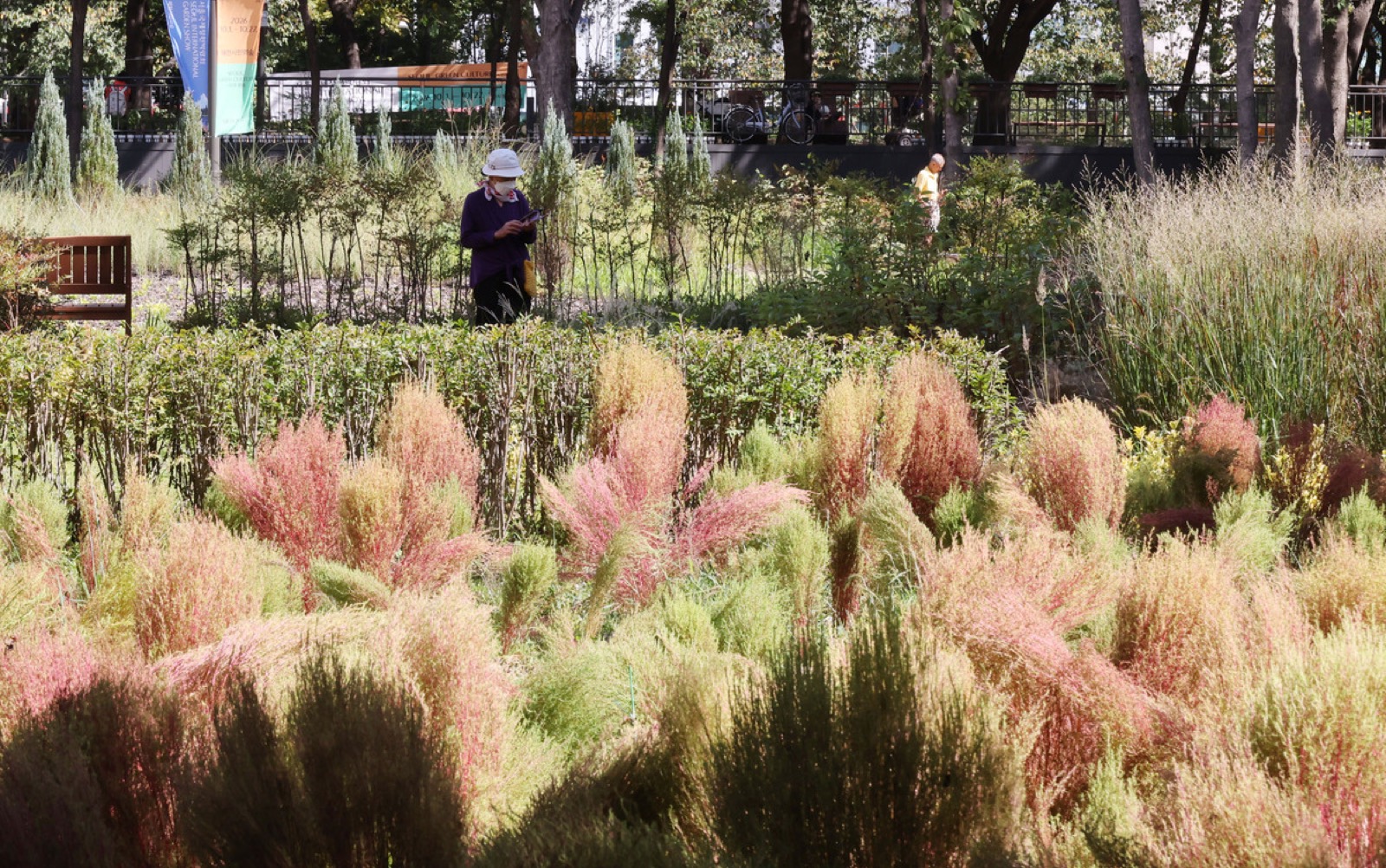
A garden expo that drew 8 million people to Seoul Forest in four and a half months has spread to Maeheon Citizens' Forest in Seocho-gu for October. Admission is free, and companies pay for a large share of the gardens.
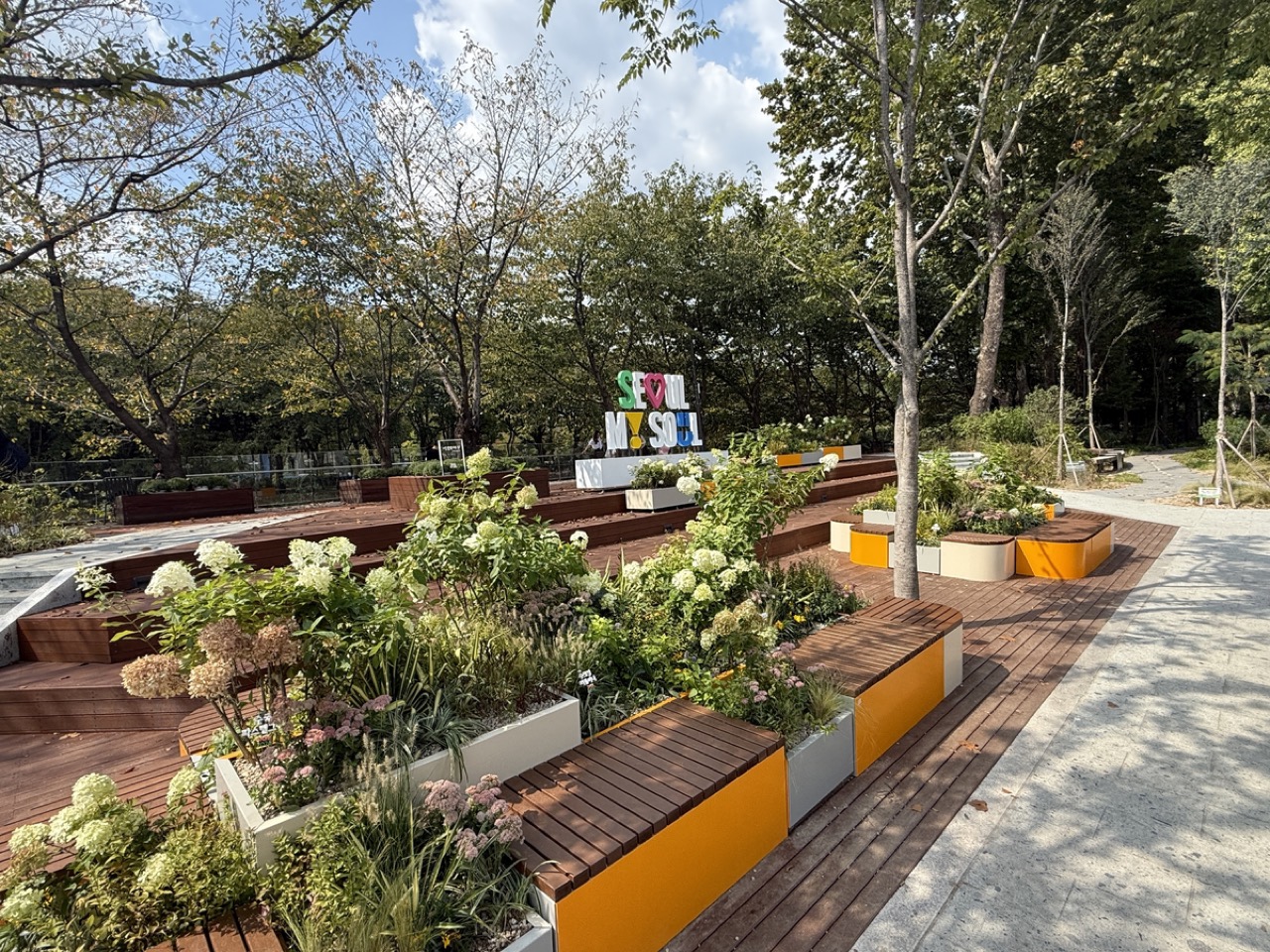
1.The Seoul Metropolitan Government and Seocho-gu are holding the autumn edition of the 2026 Seoul International Garden Expo at Maeheon Citizens' Forest from October 1 to 27. It is the second venue of an expo that opened at Seoul Forest on May 1, and the Seoul Forest site stays open until the same date. There is no admission fee. Get off at Yangjae Citizen's Forest Station on the Sinbundang Line and walk straight in.
2.There are 51 gardens inside the forest. Fourteen artist, citizen and student gardens were chosen by open call, 31 were made by neighborhood citizen gardeners, and 6 were built by companies and institutions. The park, known for most of its life as Yangjae Citizens' Forest, turns 40 this year.
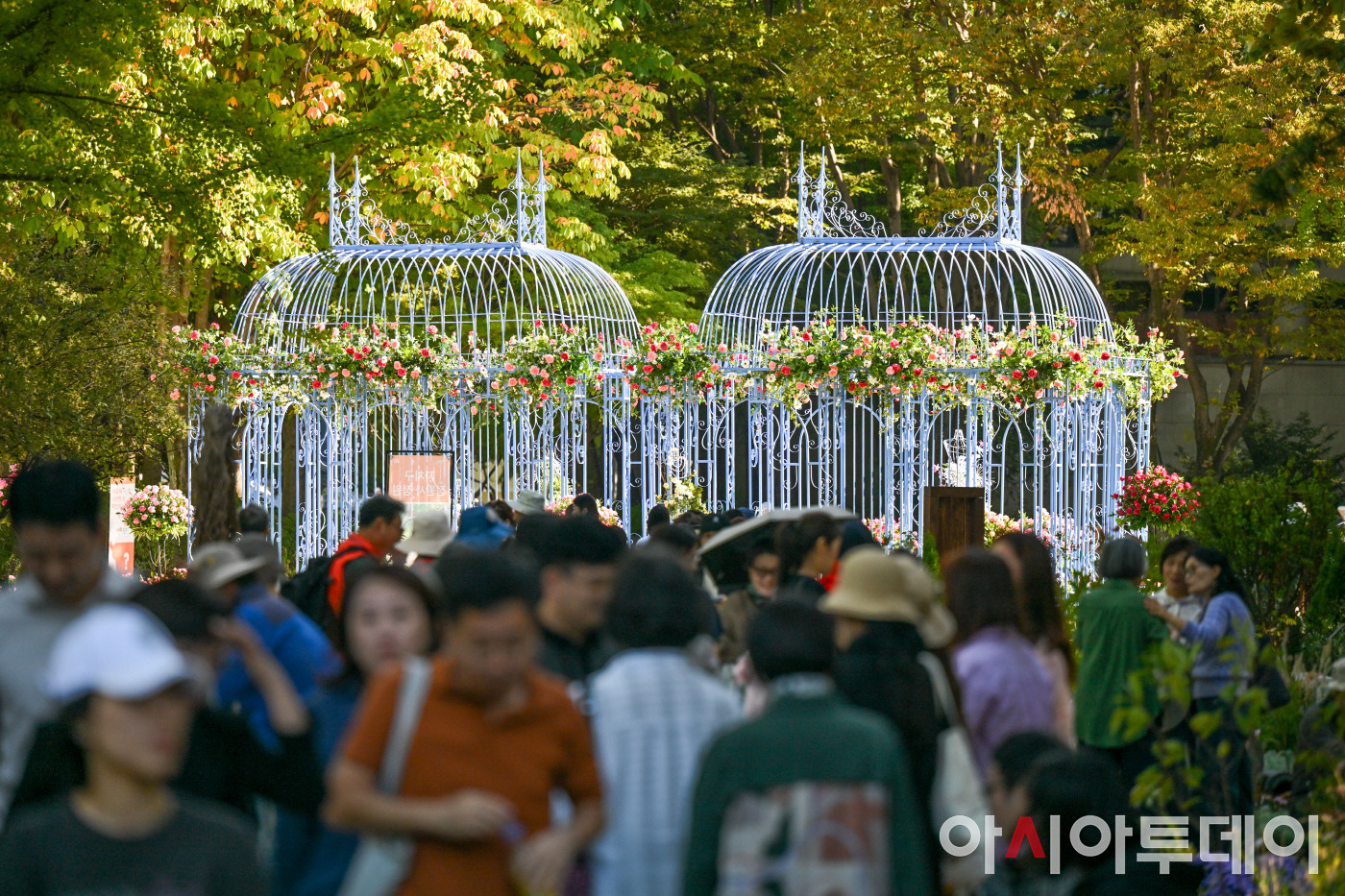
3.This expo does not build gardens on empty land. It slots small gardens into the gaps between trees that have been growing for 40 years. All 51 gardens inside the grounds add up to 3,823㎡, an average of about 75㎡ each. The citizen gardeners' plots are much smaller, most about the size of an apartment living room.
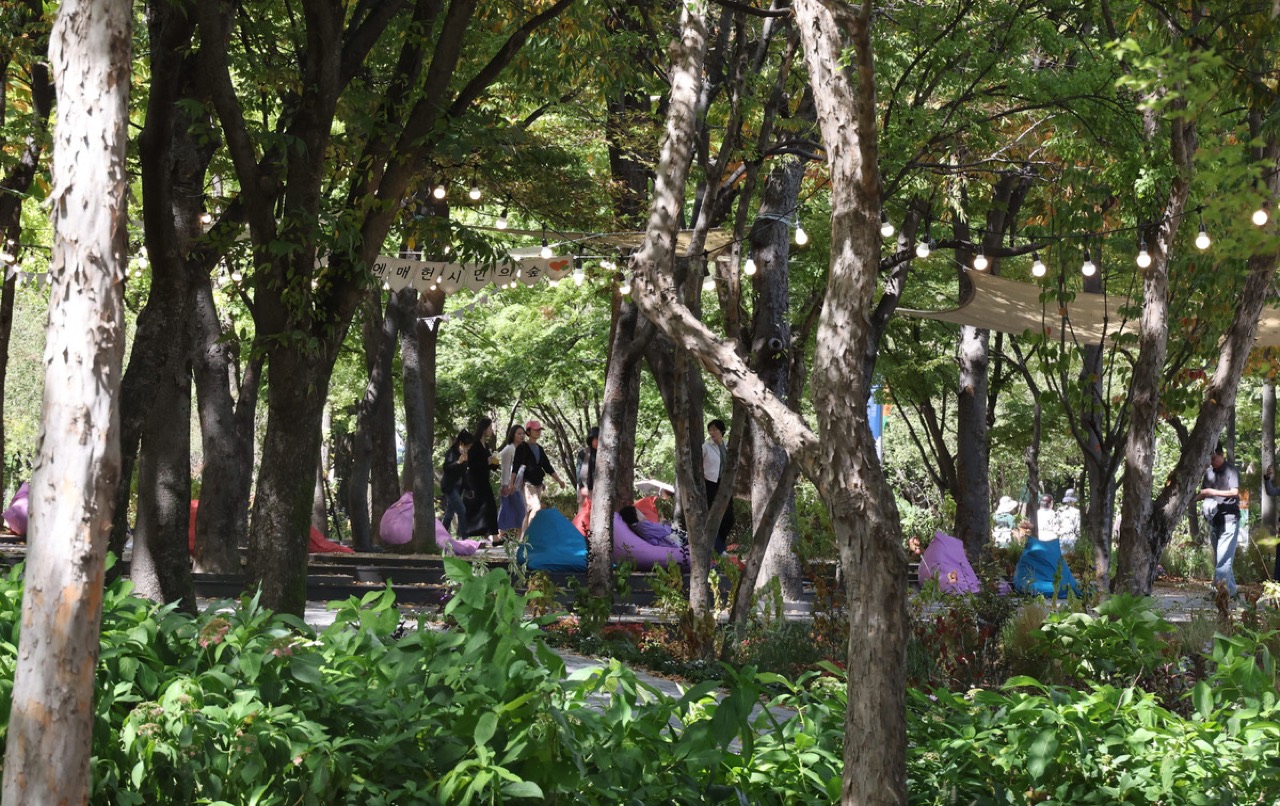
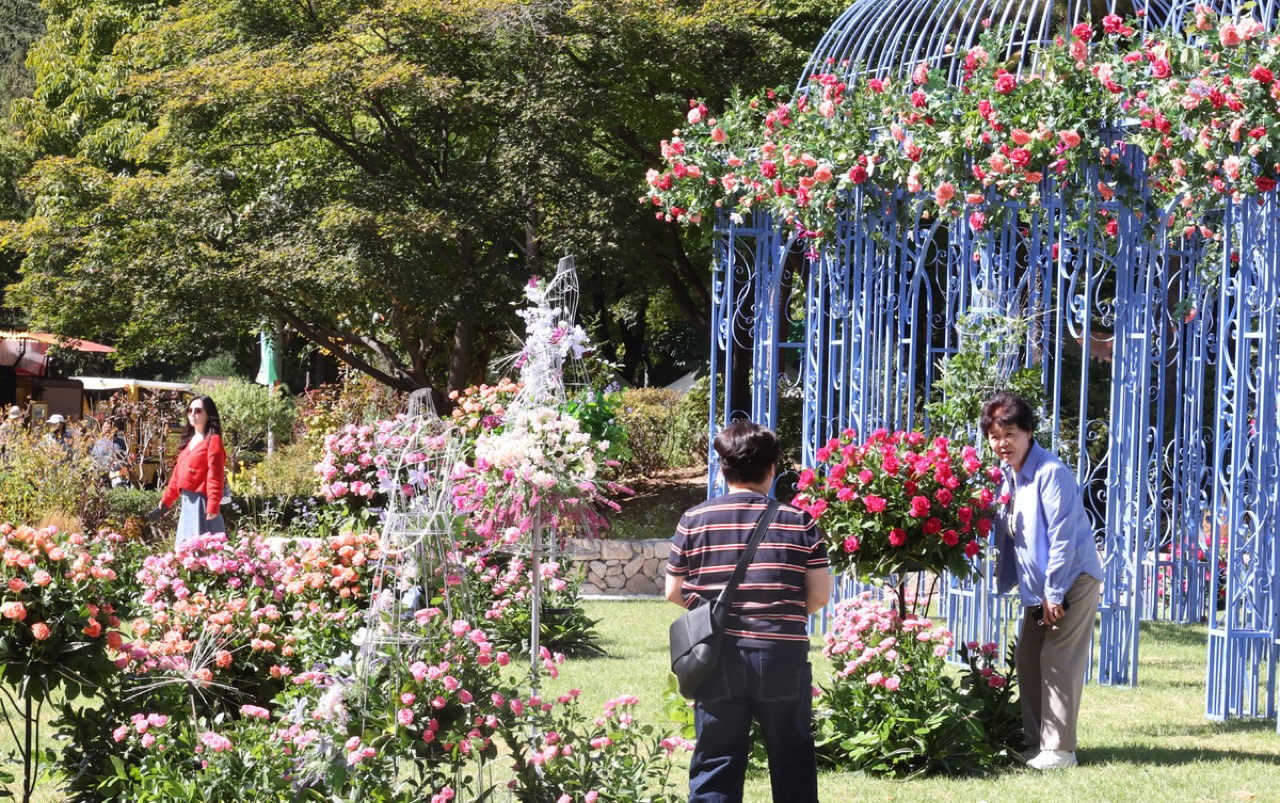
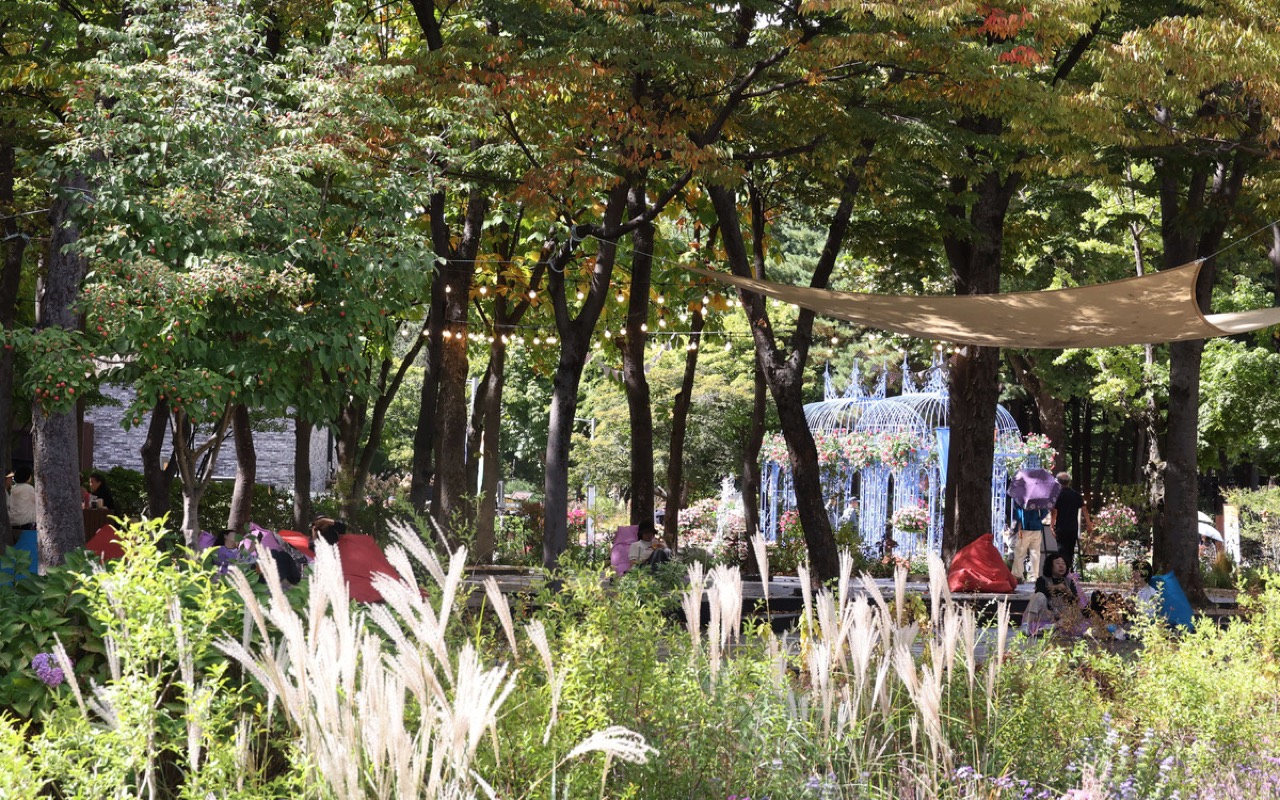
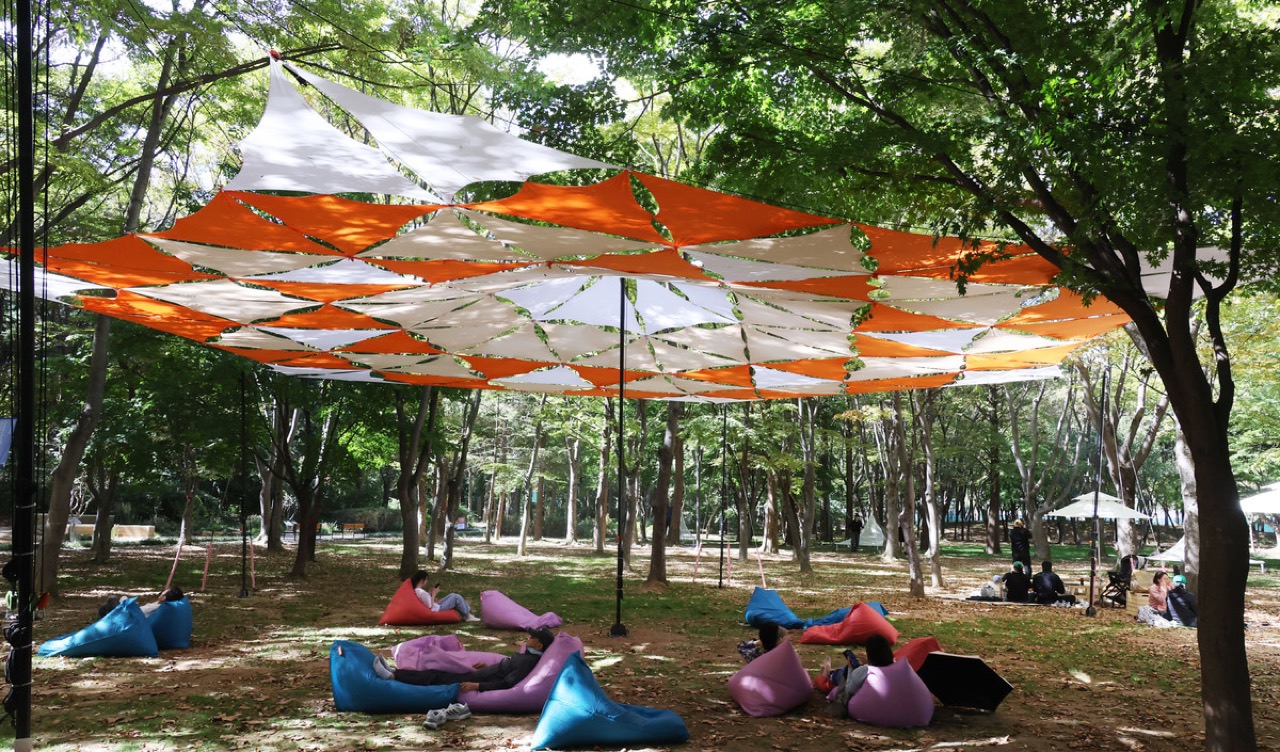
4.In the shade of tall trees, pink muhly grass spreads knee-high, and silver grass plumes screen it from the front. Pots of roses hang from blue iron dome pavilions, and beanbags lie scattered under strings of bulbs slung between the trunks. On those beanbags, people who came to see gardens. The layout shows you a place to stay before it shows you anything to look at.
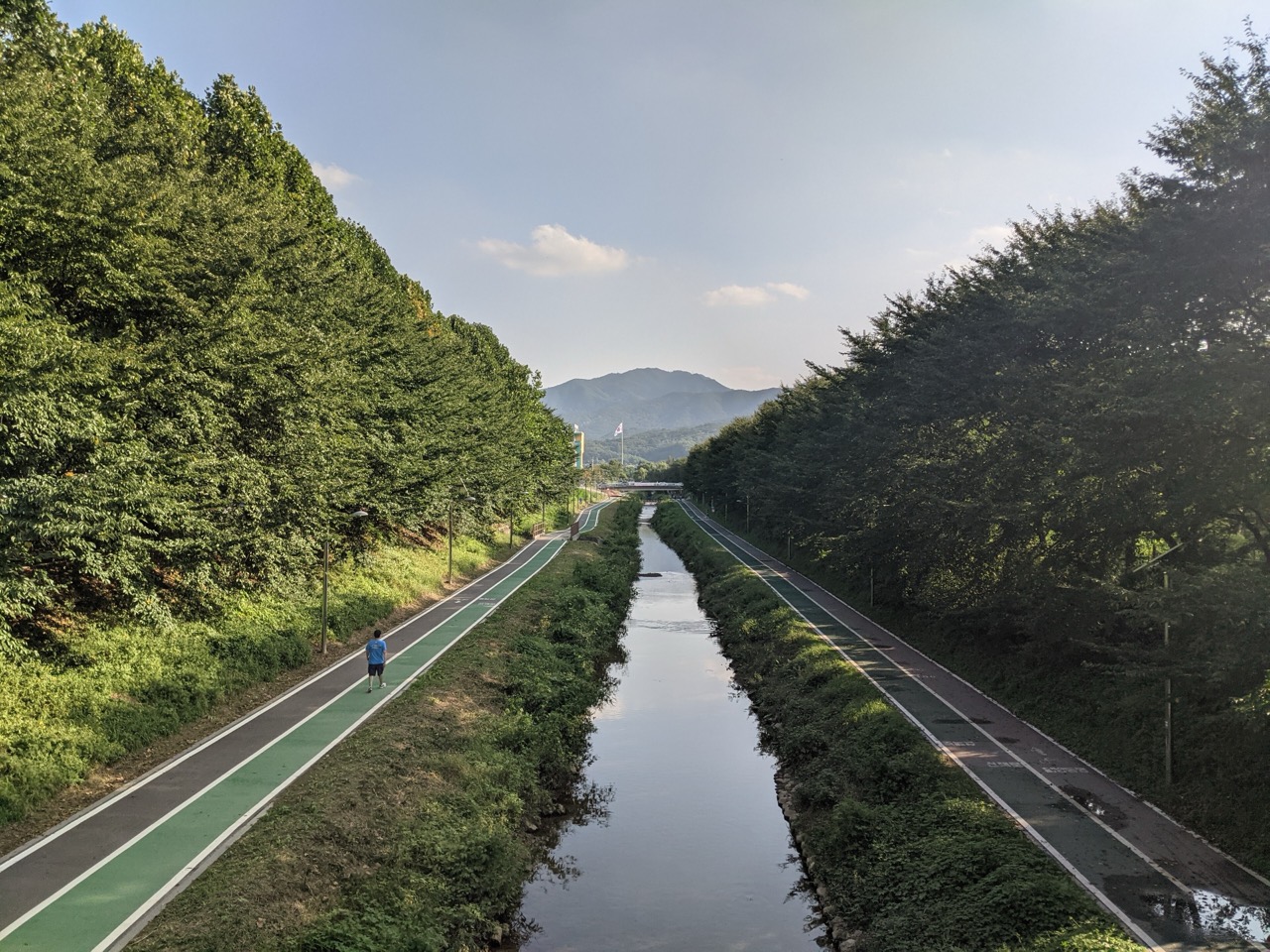
5.The gardens continue outside the grounds. Five hub gardens sit at the entrances to Yeouicheon and Yangjaecheon streams, and two street gardens line Gangnam-daero and Maeheon-ro, 3,580㎡ in total. Nearly as much garden area as inside the expo has been laid along the walk from the station to the forest. The design counts the walk itself as part of the venue.
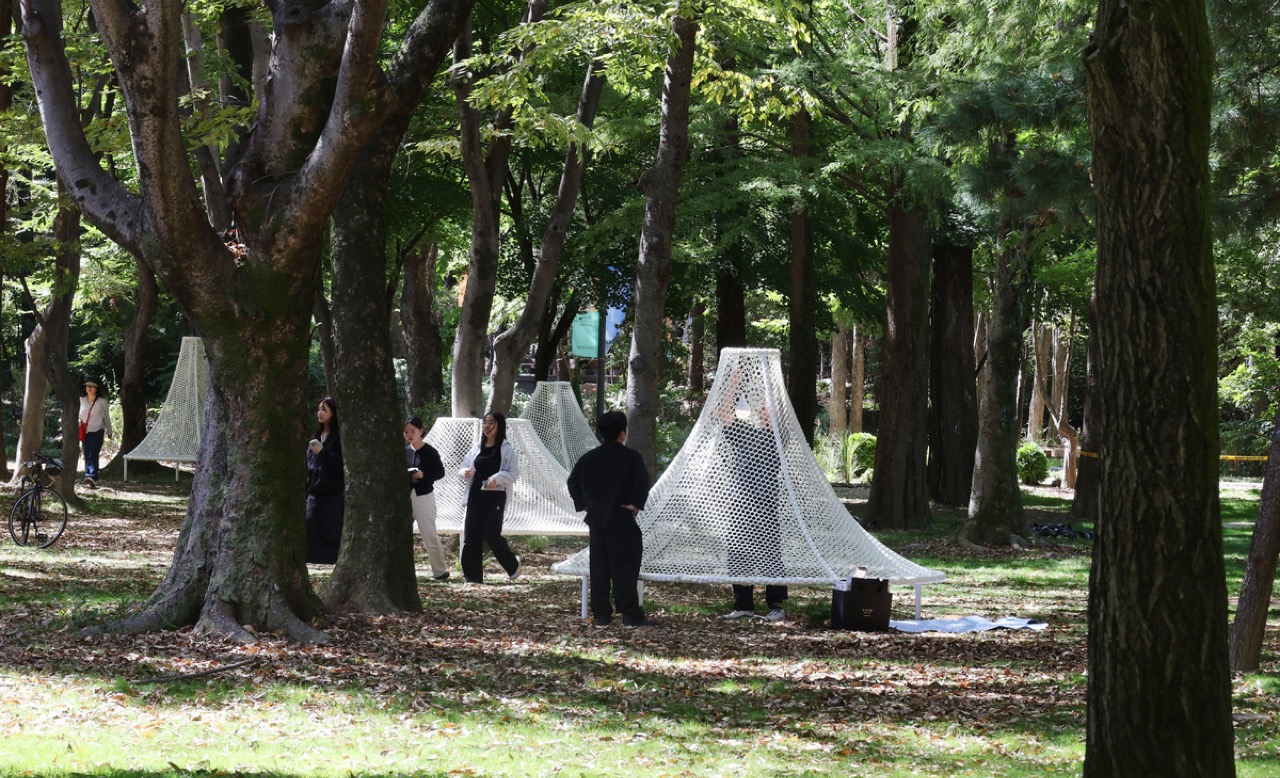
6.The crowds are not only about the missing ticket. Gardens are among the few exhibits that get less boring the longer you look, and a park charges nothing for staying long. The expo fills that time with programs. Garden docents lead tours three times a day, and "Garden Prescriptions," sessions bundling forest interpretation and herb activities, run 128 times over the period. On Friday and Saturday evenings, an open-air theater in the woods shows films.
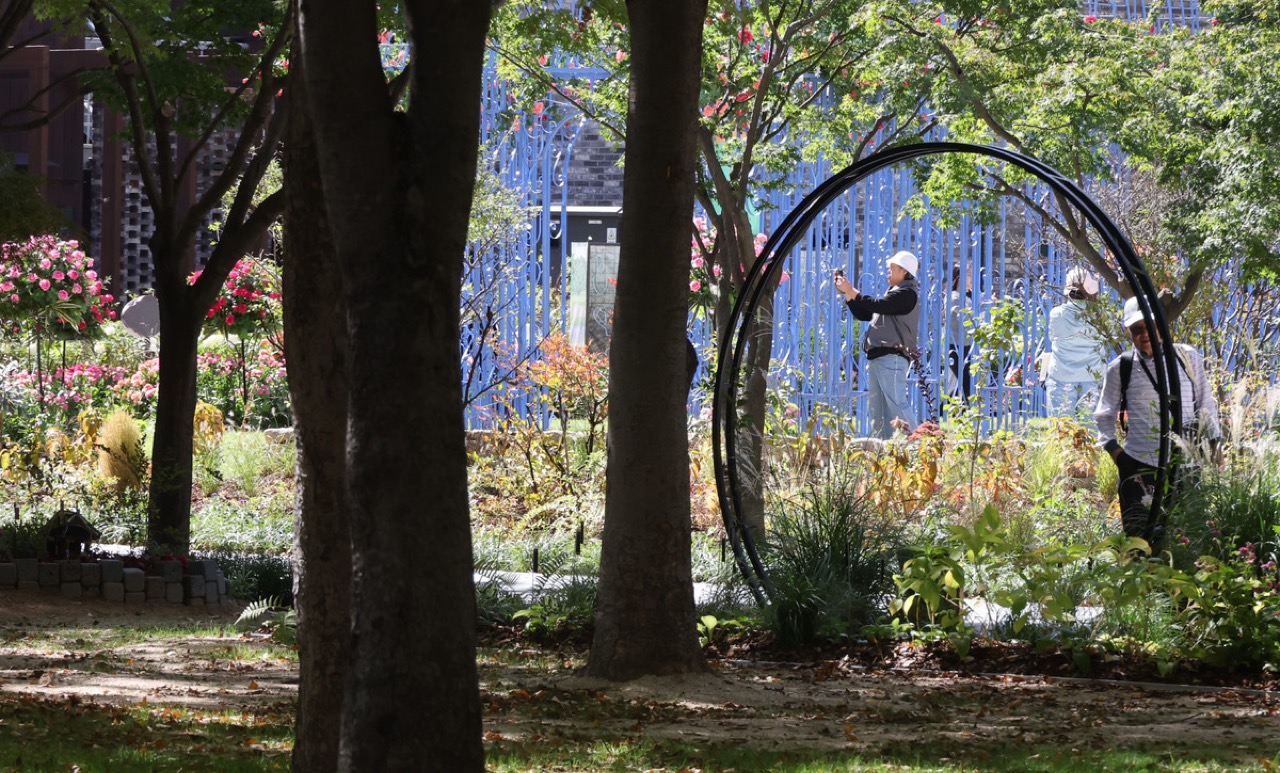
7.The size of the gardens helps too. A garden the size of a living room is something a visitor can picture moving to their own yard or balcony. Big flower shows sold awe. This expo sells the thought, "maybe I could do this at home." That is also why 20 vendors lay out plants and gardening goods at the Garden Market on site.
8.The hands that build the gardens belong to citizens as well. This year 367 citizen gardeners built, tended and explained the gardens, a record. When a garden you made yourself goes into the expo, your family and neighbors come to see it. Adding participants becomes a way of adding visitors.
9.Seoul budgeted KRW 6.6 billion for the two expos this year. That is more than double the KRW 2.8 billion spent on last year's expo at Boramae Park.
10.How much is that per visitor? Last year 10.44 million people came, about KRW 270 each. This year, even dividing only by the 8 million counted by mid-August, it comes to KRW 825 per person, less than a twentieth of a movie ticket.
11.So who builds the gardens? Not this budget alone. Seoul raised the number of donated gardens, paid for by companies and institutions, from 9 in 2024 to 50 at Seoul Forest this year. The donated gardens at Seoul Forest alone cover about 33,000㎡. Builders such as Daewoo E&C, GS E&C and HDC Hyundai Development signed on, along with Samsung, Kakao, Nongshim and Musinsa.
기업·기관 기부정원 수와 매헌시민의숲 정원 면적
12.At Maeheon Citizens' Forest the structure is even clearer. Six gardens, from Hyundai Motor, Mars Korea, Seoul Guarantee Insurance, KB Kookmin Bank and the Life Insurance Philanthropy Foundation, plus L'OCCITANE, which built the ecological restoration garden "Rokrok Garden" in this forest last spring, cover 2,463㎡, 64.4% of the garden area on the grounds. All the citizen gardeners' plots together come to less than a quarter of that. What the companies paid has not been disclosed.
13.For a company, it is spending that outlasts an ad. Hyundai WIA, which built the Dodam Garden at Seoul Forest, said it will leave the garden in place as a permanent garden after the expo, and the city takes over maintenance once it is handed over. The company pays construction once and leaves its name in a public park. The city gets a garden without paying to build it, and in exchange picks up the upkeep every year.
14.Garden expos in Korea used to charge. The 2023 Suncheon Bay International Garden Expo charged adults KRW 15,000 and still drew 9.8 million visitors. Ulsan, preparing the next international garden expo, has set a target of KRW 35 billion in its own revenue from tickets and sponsorship, and the local paper flagged the upkeep of facilities left behind after the event as the unsolved problem.
15.Seoul uses parks instead of tickets. The land is an existing park, the trees were planted 40 years ago, and companies build a good share of the gardens. It gives up ticket revenue and in return spends almost nothing on construction. The city's announcement that card spending around Boramae Park rose 20% a day in last year's opening week is cited as evidence for this model. Critics noted at the time that a one-week figure says little about lasting effects.
16.Seoul turned two parks into garden expo grounds without charging admission, and at Maeheon Citizens' Forest six companies filled 64% of the garden area on the grounds. Visitors lie down in the woods for free, and companies leave their names in the park. Another city copying this would first hit trouble in the year after the expo. Donated gardens went from 9 to 50 in three years, and the money to water and weed them comes not from the companies but from the city budget.