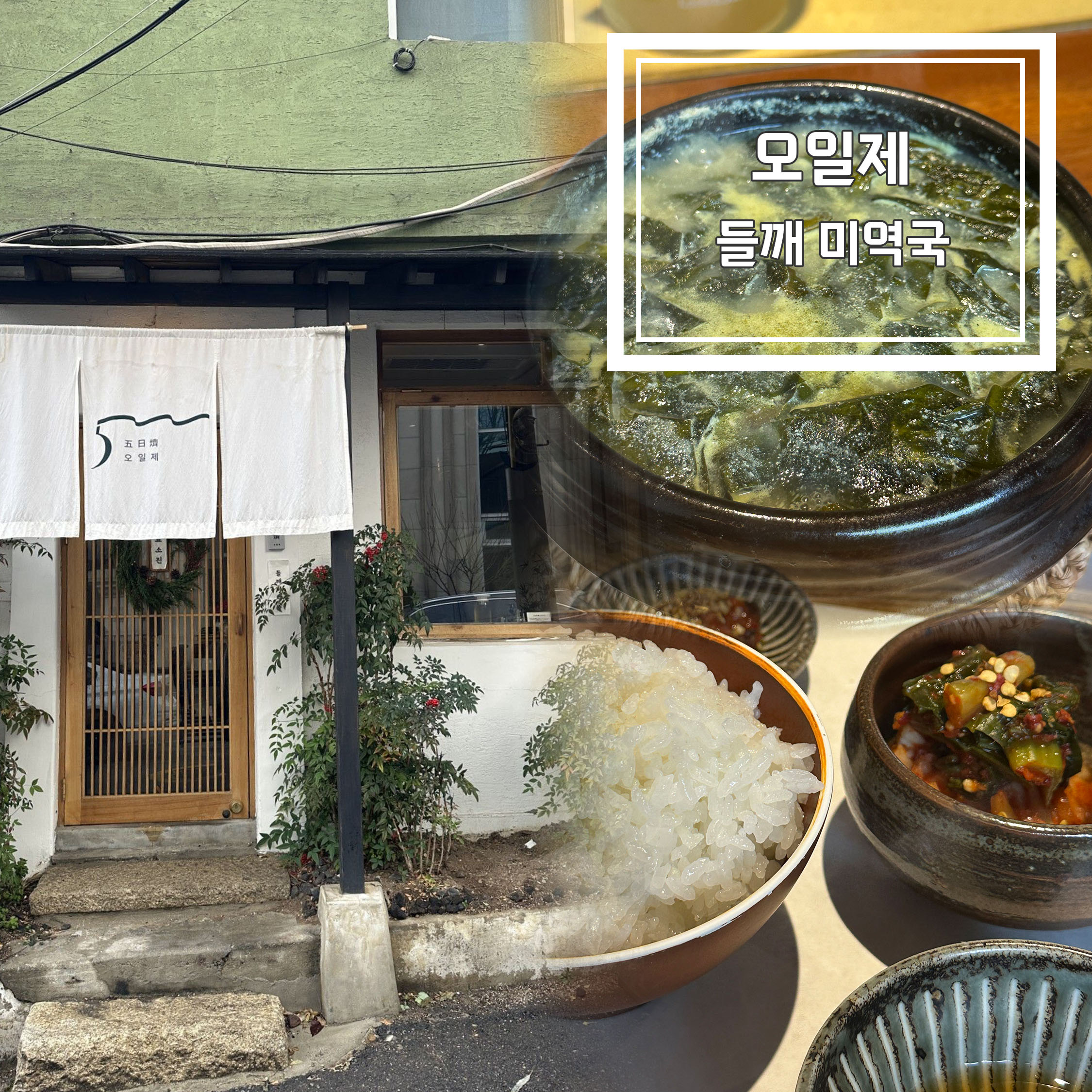
On 26 February 2026 the Michelin Guide published 71 Bib Gourmand addresses across Seoul and Busan. One of the five new Seoul entries is Oilje, a seaweed soup house in a back lane of Samgakji, Yongsan. It sells one thing, perilla seaweed soup, at KRW 15,000. It stops at 50 bowls a day, opens for five hours on weekday afternoons, and has one person in the kitchen. What is worth looking at here is not the soup but the arithmetic of a shop that drew its revenue ceiling before it opened.
1.The address first. Ground floor, 29 Hangang-daero 62da-gil, Yongsan-gu, Seoul, five minutes on foot from exit 1 of Samgakji station. The menu is perilla seaweed soup, a single dish at KRW 15,000. Seating runs to 18, twelve in the main room and six in an inner private room, and hours are Monday to Friday, 10:00 to 15:00, with last orders at 13:30. Closed Saturday and Sunday.
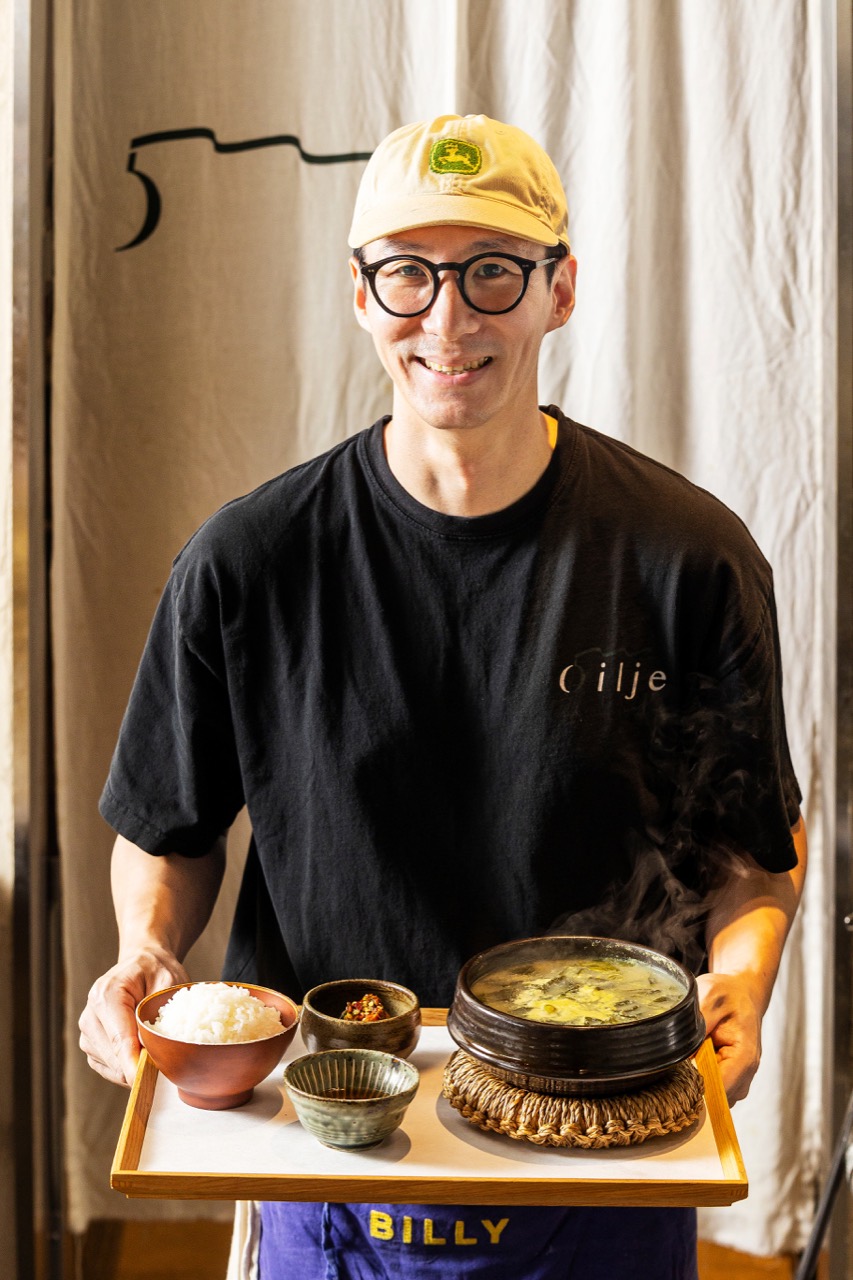
2.It opened in March 2023. Chef Shin Dong-hoon roasts, simmers and serves alone in a one-person operation, and daily sales stop at 50 bowls. Reservations account for seven tenths and walk-ins three tenths, and when the ingredients run out the day ends there. Michelin's write-up calls it a place that draws regulars back with a single dish of perilla seaweed soup.
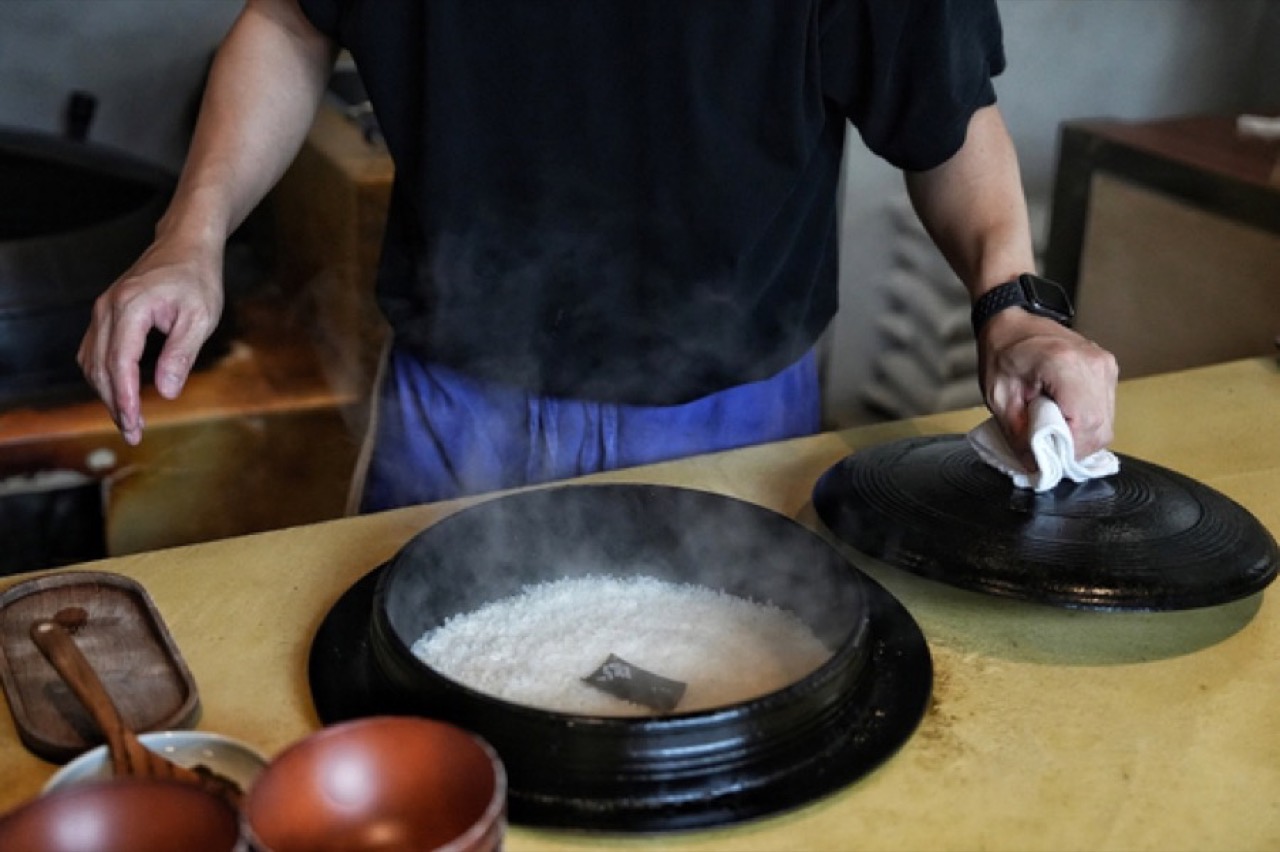
3.The plan for this shop is drawn on a clock rather than a menu. Rice is cooked in the cauldron four times, at 10:00, 11:30, 12:30 and 13:30. Guests come in on the sitting they booked, and the kitchen is open, so they watch the rice rise in the pot. Instead of drawing up a seating chart, the shop divides people by the times the rice goes on.
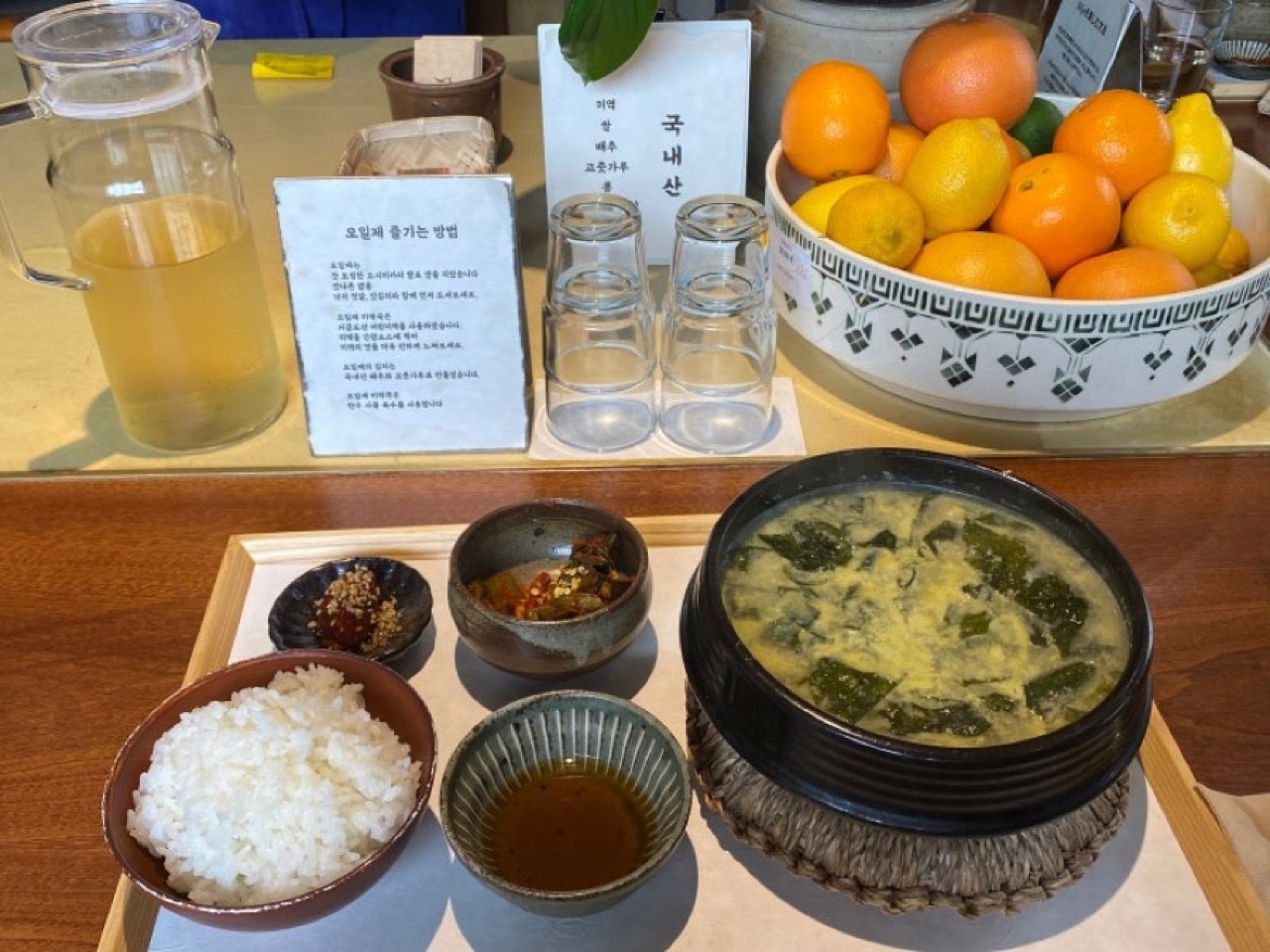
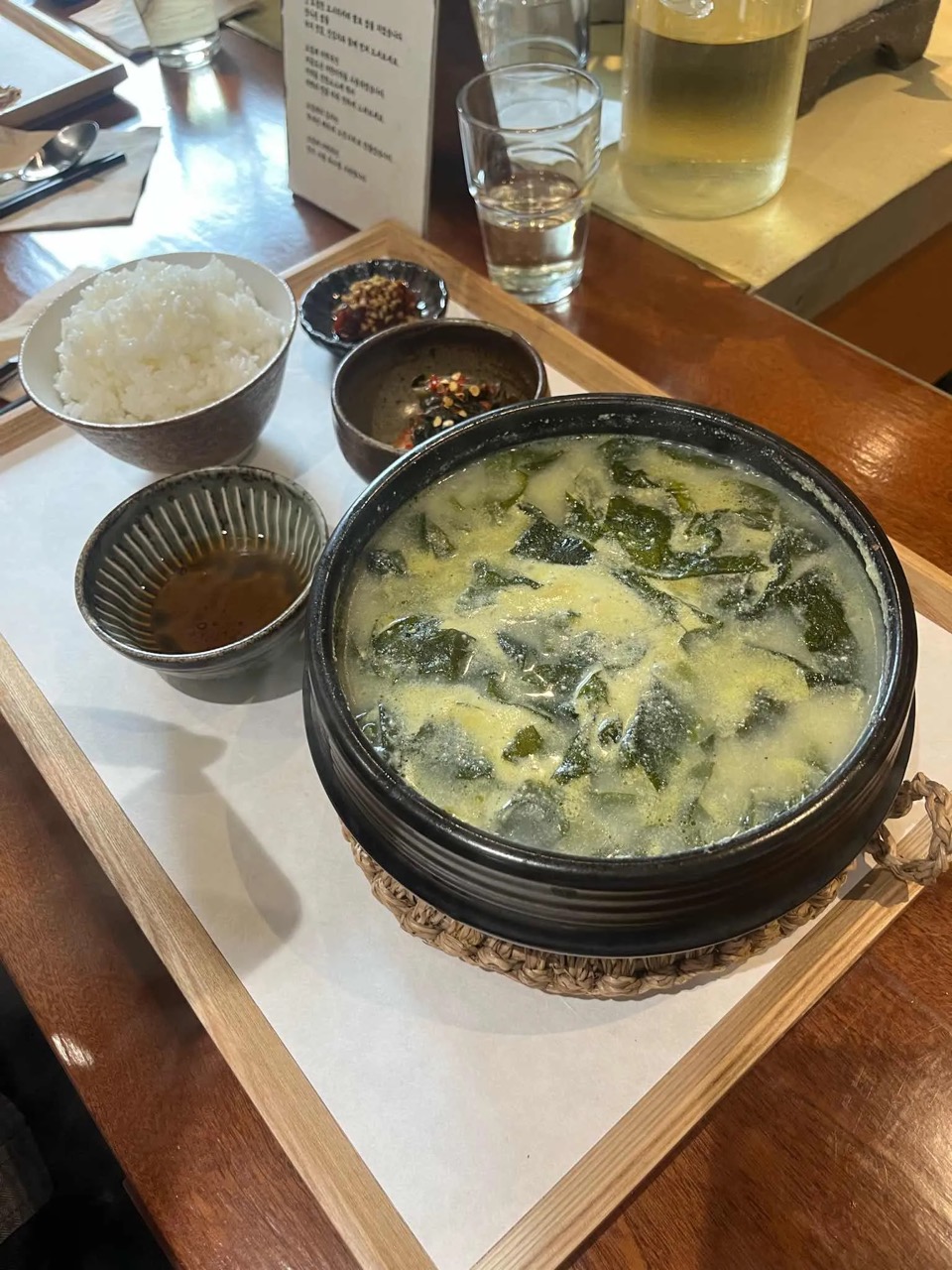
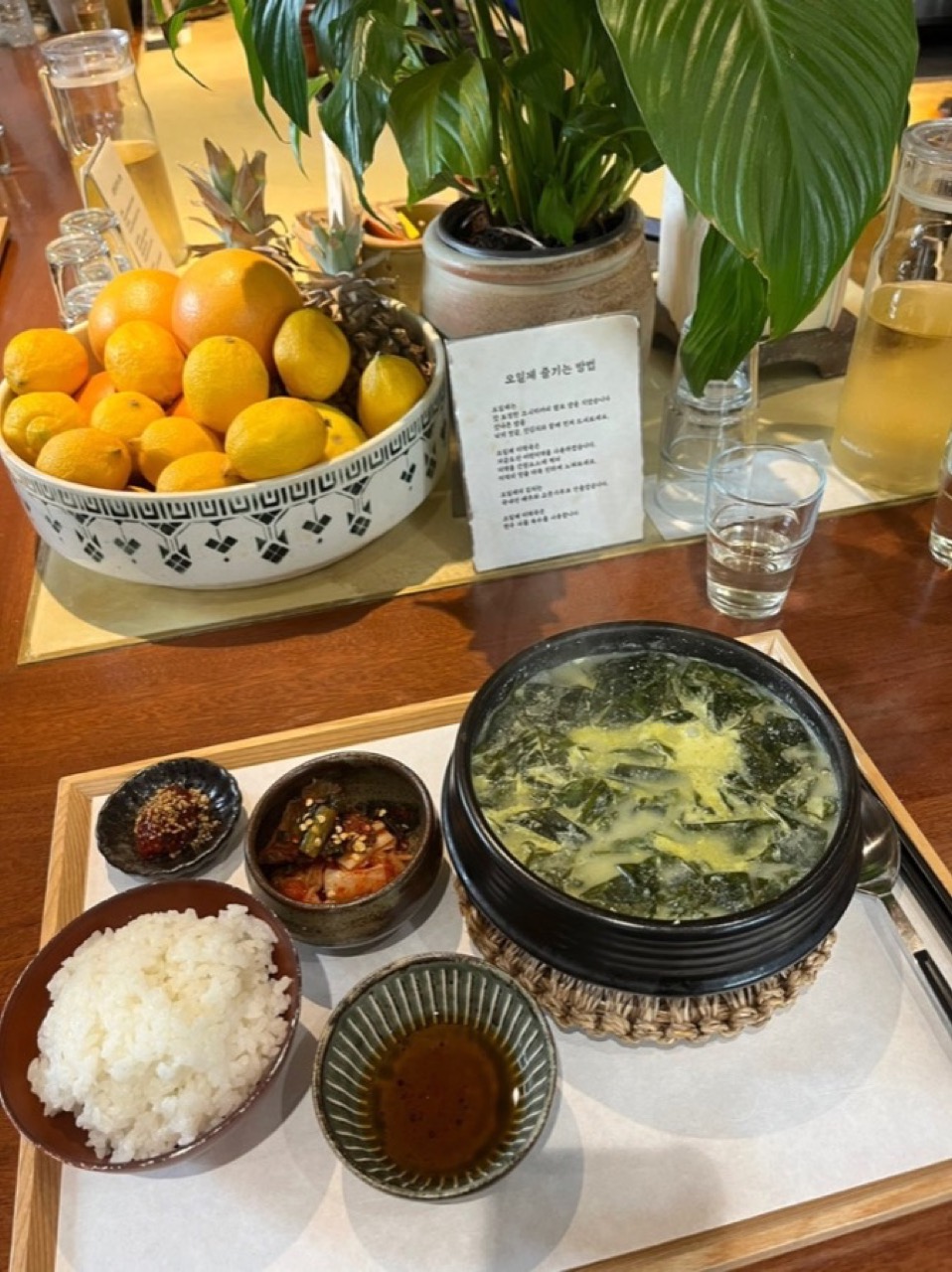
4.Every ingredient carries its origin. Chosari seaweed from Geogeumdo in Goheung, South Jeolla; Korean beef leg bones from a farm in Gyeonggi; perilla from Gangjin, South Jeolla; freshly milled Koshihikari; salted seafood from Gomso. Neither meat nor shellfish goes into the soup, so the flavour stands on seaweed, perilla and bone broth alone, and the chef has said he spent half a year settling on one way of preparing the seaweed.
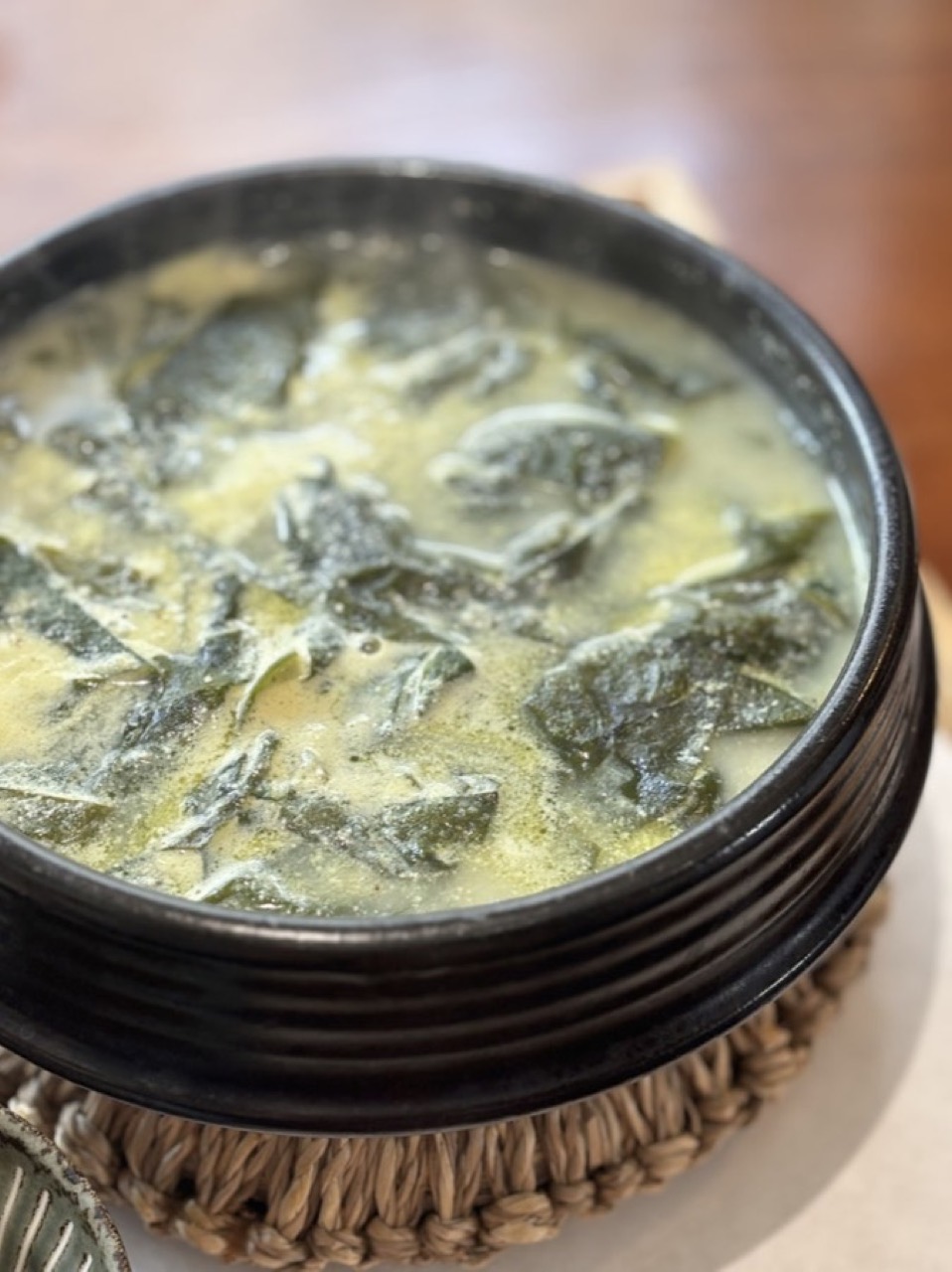
5.Seaweed fried in perilla oil reaches you before the broth does. Not the sea end of the scale but the nutty end, and the bone broth then lays its weight on top. Once finely ground perilla goes in the broth starts to catch on the spoon, and that thickness sets how long people stay. A soup this hot and this thick cannot be tipped back in a hurry, and it does not drag on like a tasting menu either.
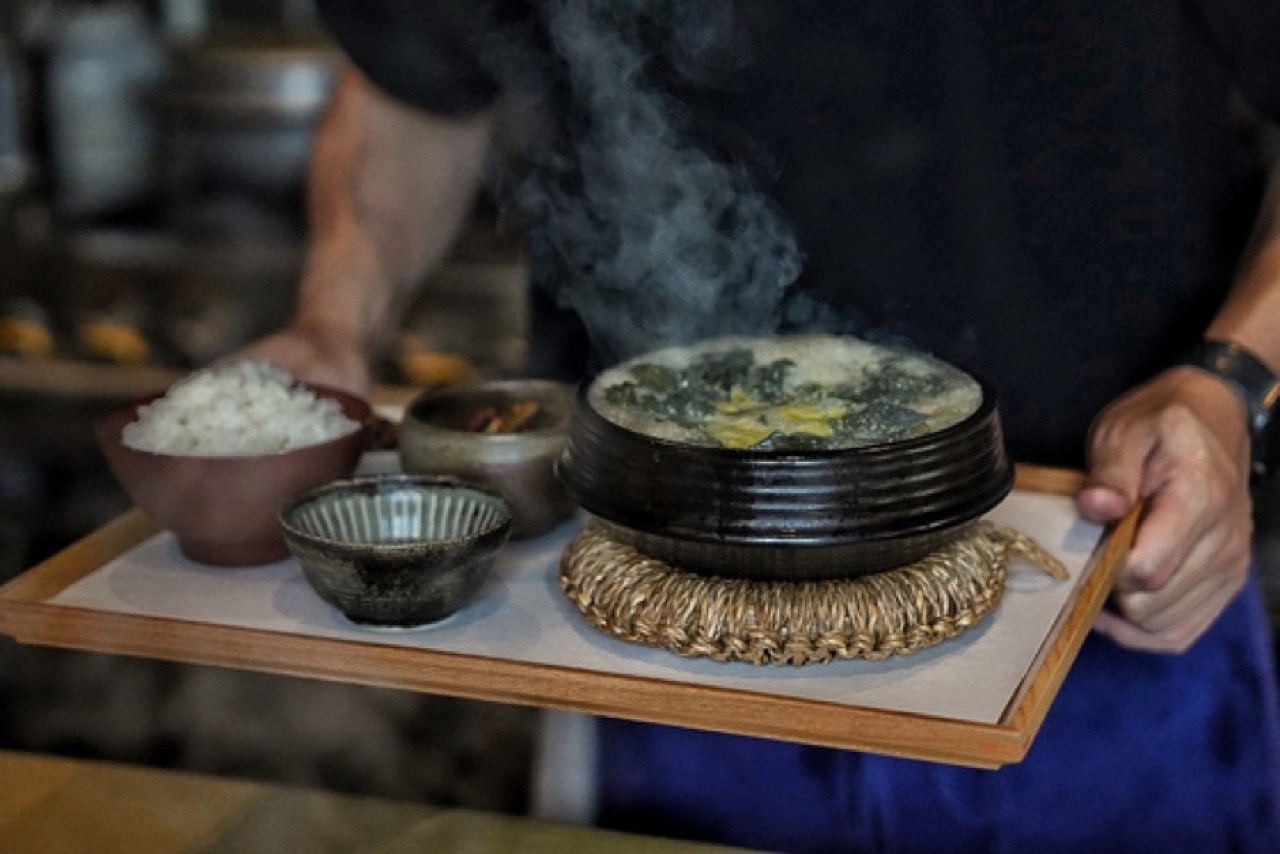
6.So what are people coming to buy. Seaweed soup was not something Koreans bought. It belongs to birthdays and to the weeks after childbirth, a soup where the person who makes it is already decided. Paying for it is less about buying cooking than about buying the fact that somebody set a pot on the fire for you first thing in the morning. The Friday evening birthday table, one party only, is aimed at exactly that spot.
7.Second, the cap of 50 bowls. From outside it reads like a device for manufacturing scarcity, but it is really the physical limit of one person cleaning seaweed, drawing broth and setting the cauldron four times. That is where a structure that sells out daily without a won of advertising comes from. Scarcity as the result rather than the cause.
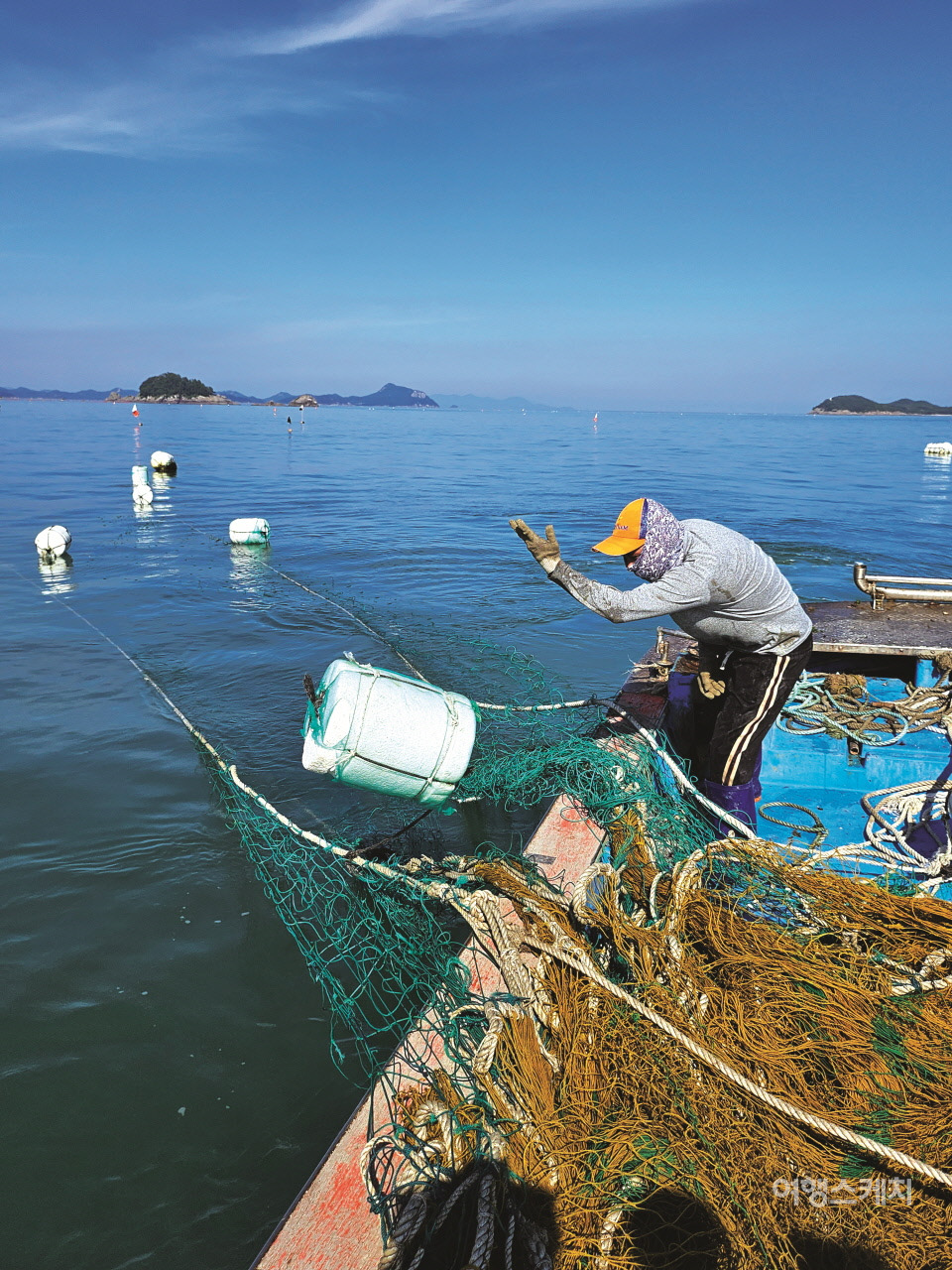
8.The third point is the unexpected one. According to an October 2025 report, Japanese customers take 30 of the 50 bowls. A queue forms before opening, and by then Japanese media had covered the place fifteen times. Over the same period seaweed exports to Japan rose 53.2 percent, from USD 15.8 million in 2022 to USD 24.2 million in 2024, running the opposite way to a 5.9 percent fall in overall agrifood exports to Japan.
9.Now the arithmetic. KRW 15,000 by 50 bowls is KRW 750,000 a day, and at five days a week, with 21.7 trading days a month, that comes to KRW 16.28 million a month. Roughly KRW 195 million a year. What matters is that this figure is a ceiling, not a target. A full house is not enough; even a total sellout adds not one won above it.
10.Turn it into turns and the picture changes. 50 bowls over 18 seats is 2.8 turns per seat, and real trading up to last orders at 13:30 runs three and a half hours. Put the floor at 15 pyeong (estimate) and monthly revenue per pyeong is about KRW 1.08 million. For a shop selling one KRW 15,000 bowl of soup that is not a low figure, and the reason sits in the table below.
11.On the cost side two forces push against each other. Korean beef bone, Geogeumdo chosari seaweed and freshly milled Koshihikari make for ingredient grades that sit high for a KRW 15,000 bowl, while a single dish leaves almost no stock unsold and almost nothing trimmed away. The three or four percent a Korean restaurant leaks through ingredient loss while running many dishes is wiped out here entirely.
12.Break one bowl down and it goes like this (all of the following are estimates). Ingredients KRW 5,700, rent KRW 2,300, utilities, consumables and depreciation KRW 1,900, card fees and other KRW 600, leaving KRW 4,500. What catches the eye in this table is not the money left over but the empty line. Labour cost is zero.
13.That zero is not a cost that vanished but a cost moved onto one owner. At KRW 4,500 a bowl, 1,085 bowls a month gives about KRW 4.88 million, which becomes one chef's income. On top come the Friday evening birthday table at KRW 89,000 a head for a single party, and a takeaway for two at KRW 35,000 booked a day ahead, where the per-head price beats the dining room. Revenue that uses no seat and eats into no turn.
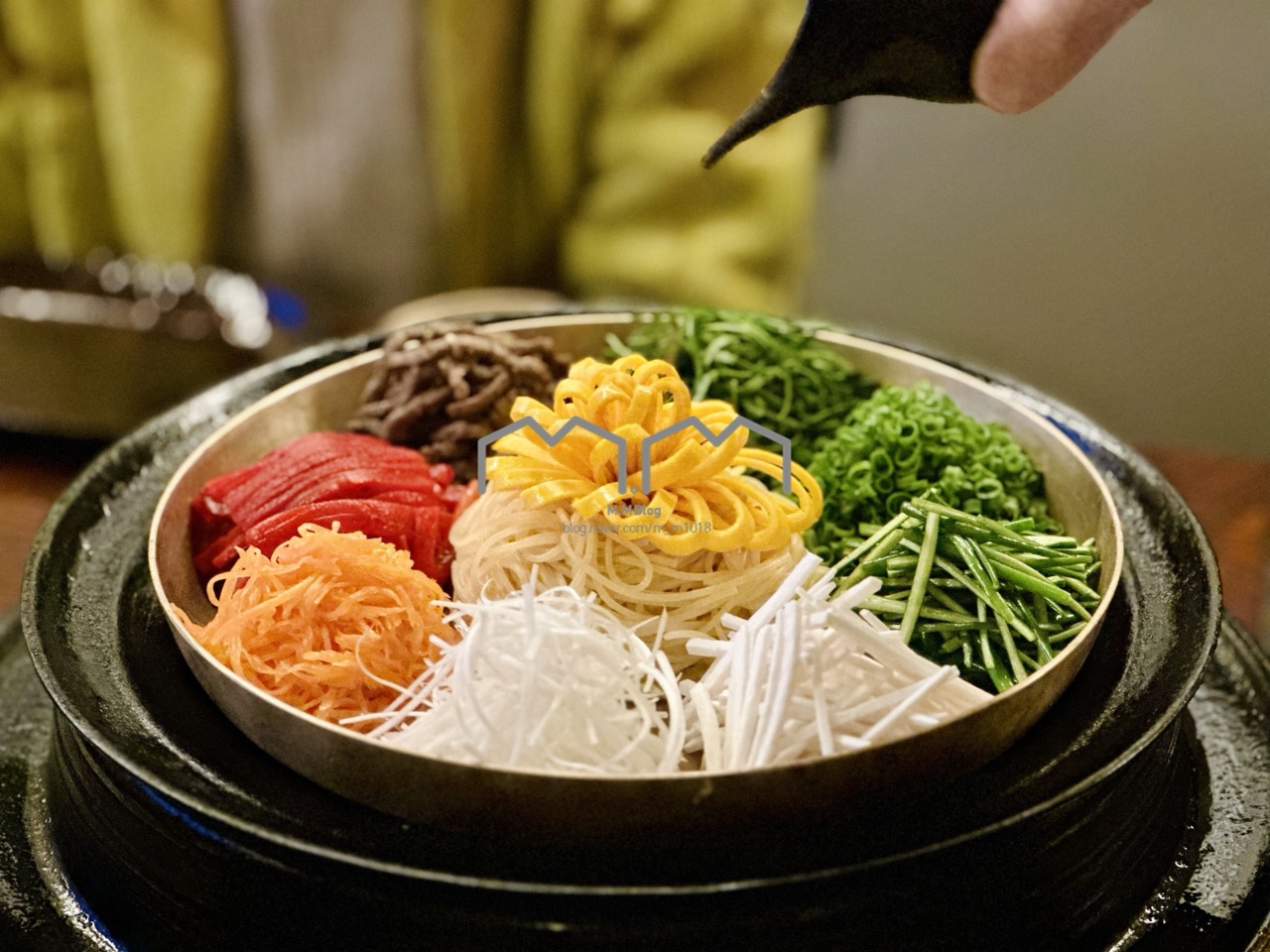
14.Trace the line back and the single dish specialist is nothing new. Seolleongtang houses, Pyongyang naengmyeon houses and haejangguk houses have always run this way, and ramen, soba and unagi in Japan stand on the same grammar. What Oilje did that is new is not the old shop grammar but putting the grammar of fine dining onto a bowl of soup. Reservation only, timed sittings, an open kitchen, stated origins, and the name of the one person standing in the kitchen.
15.This model was never built to grow. The chef, who cooked Italian for twenty years, has said he started it to get out of the working conditions of the restaurant trade and spend time with his family, and the weekend closure, the five-hour day and the one-person operation are the conditions rather than the result. Where most food businesses open while working out how to raise the ceiling, this shop drew the ceiling low and fills what sits under it every day.
16.An 18-seat shop with one dish at KRW 15,000, 50 bowls a day and one person in the kitchen made the five new Seoul Bib Gourmand entries on 26 February 2026, and the revenue ceiling of that structure closes somewhere around KRW 16.28 million a month. The first thing to hold on to when moving this over is the zero on the labour line. The 2026 minimum wage is KRW 10,320 an hour, KRW 2,156,880 a month at 40 hours a week, so a single full-time hire with weekly holiday pay and the four insurances lands in the KRW 2.3 million range a month. The KRW 4.88 million left in the calculation above drops by half, which is why attempts to copy this format usually go toward raising the average spend or raising the bowl count, and both erase the reason the model worked. The moment an owner's working hours stay off the cost sheet, this 30 percent stops being a calculation and turns into an illusion.