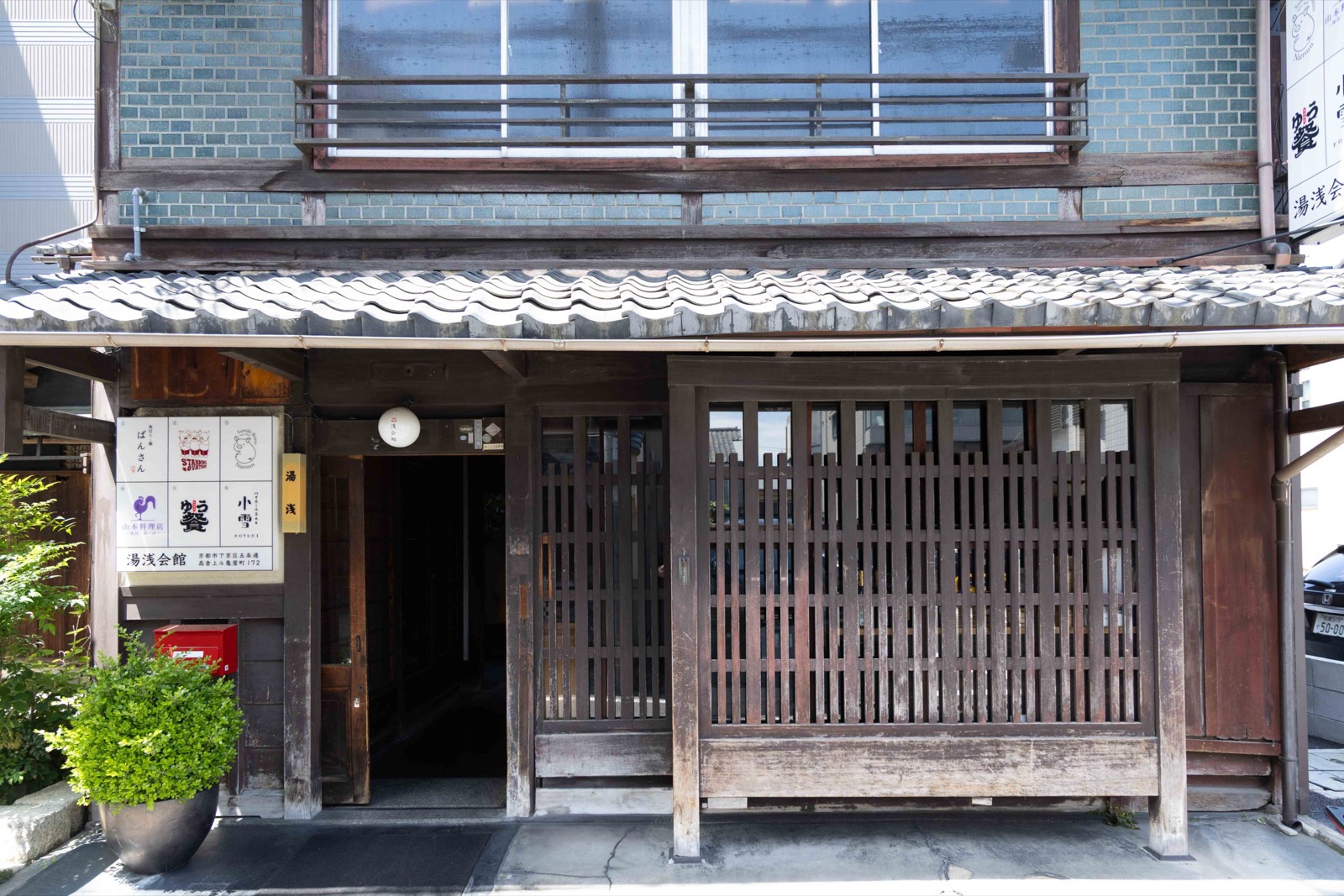
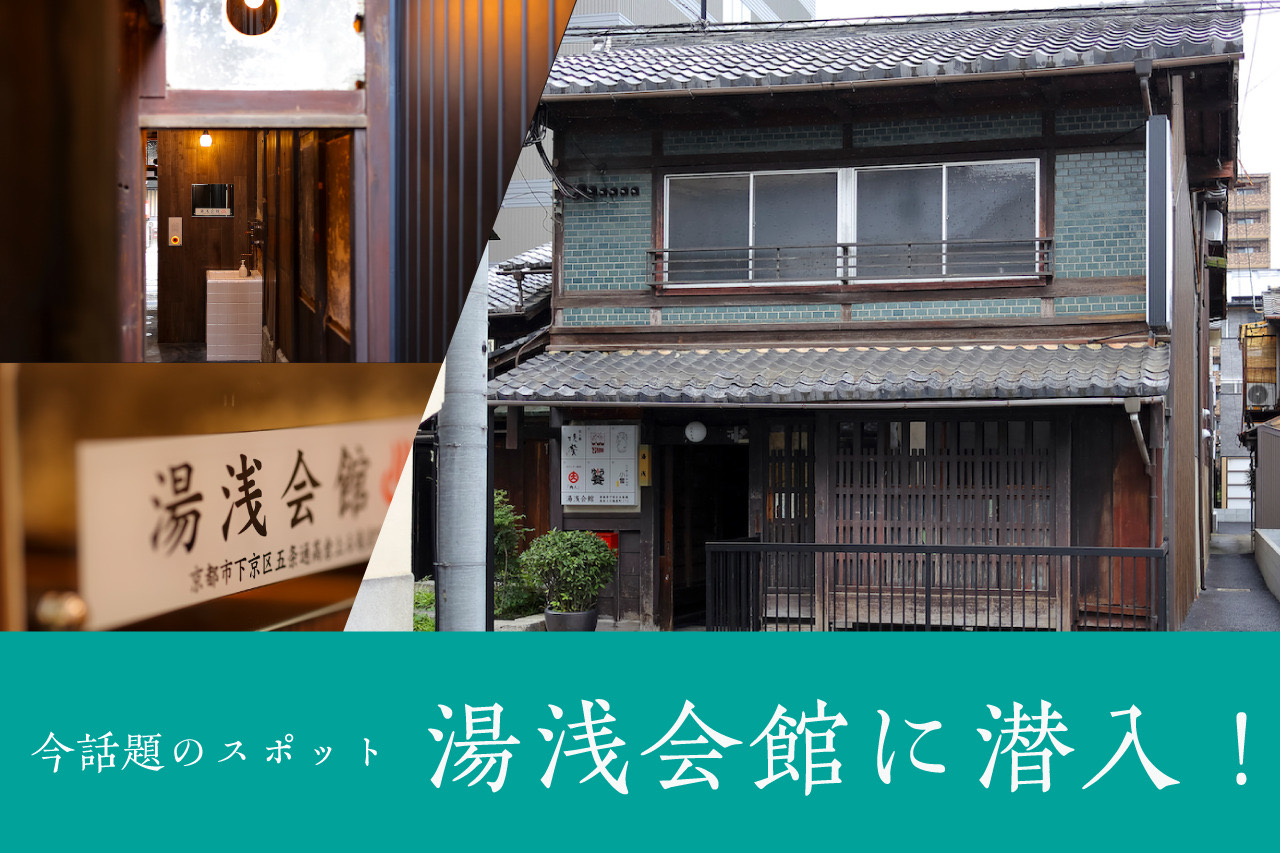
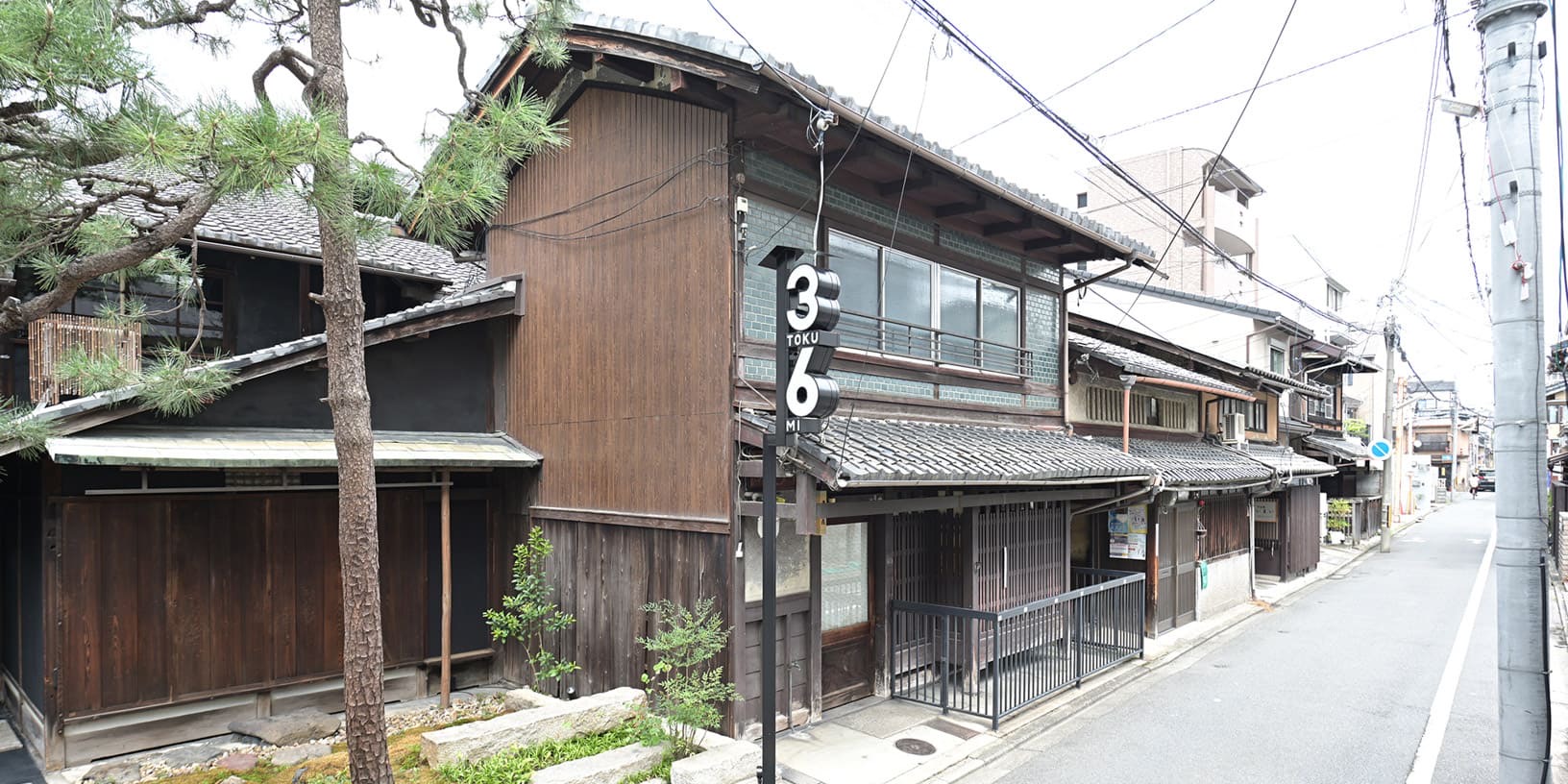
On March 3, 2026, an eight-seat yakitori counter opened on the second floor of a machiya in Kyoto. Four months on, people say you cannot get a reservation. What matters here is not the eight seats but the building they sit inside. A kyo-machiya built in 1913, cut into six units in 2024, called Yuasa Kaikan. The reason a craftsman with twenty years at the grill could open his own place is written into the floor plan.
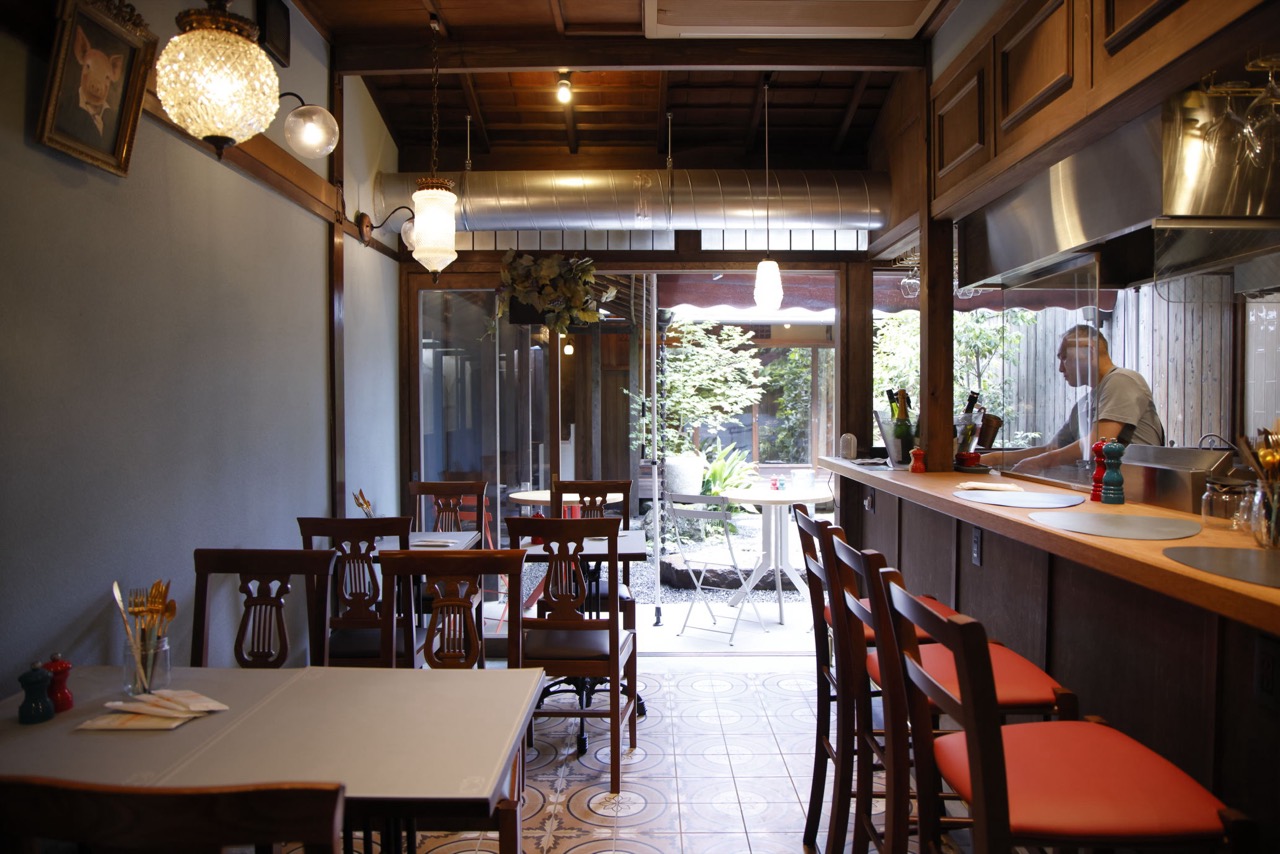
1.Start with the address. 172 Kameyacho, Gojo-agaru, Takakura-dori, Shimogyo-ku, Kyoto, five minutes on foot from Gojo subway station. The yakitori shop Yamamoto Ryoriten opened on the second floor of this building on March 3, 2026, with eight counter seats, nine once you pull in the spare stool. It runs 5 p.m. to 11 p.m. only, closed Sundays and two Mondays a month. Tabelog puts the dinner budget at 6,000 to 7,999 yen.
2.The man at the grill is Yamamoto Hiromi. He held skewers for more than twenty years at an upper brand launched by Wabiya Korekidou, the yakitori house in Gion, and he carries a sommelier qualification. The chicken comes from Kyoto, Kyo-akadori among others, and the fire is binchotan. A skewer runs 380 to 480 yen, and zhaji, marinated chicken fried and then returned to the charcoal, is 1,380 yen. This building holds six shops like his.
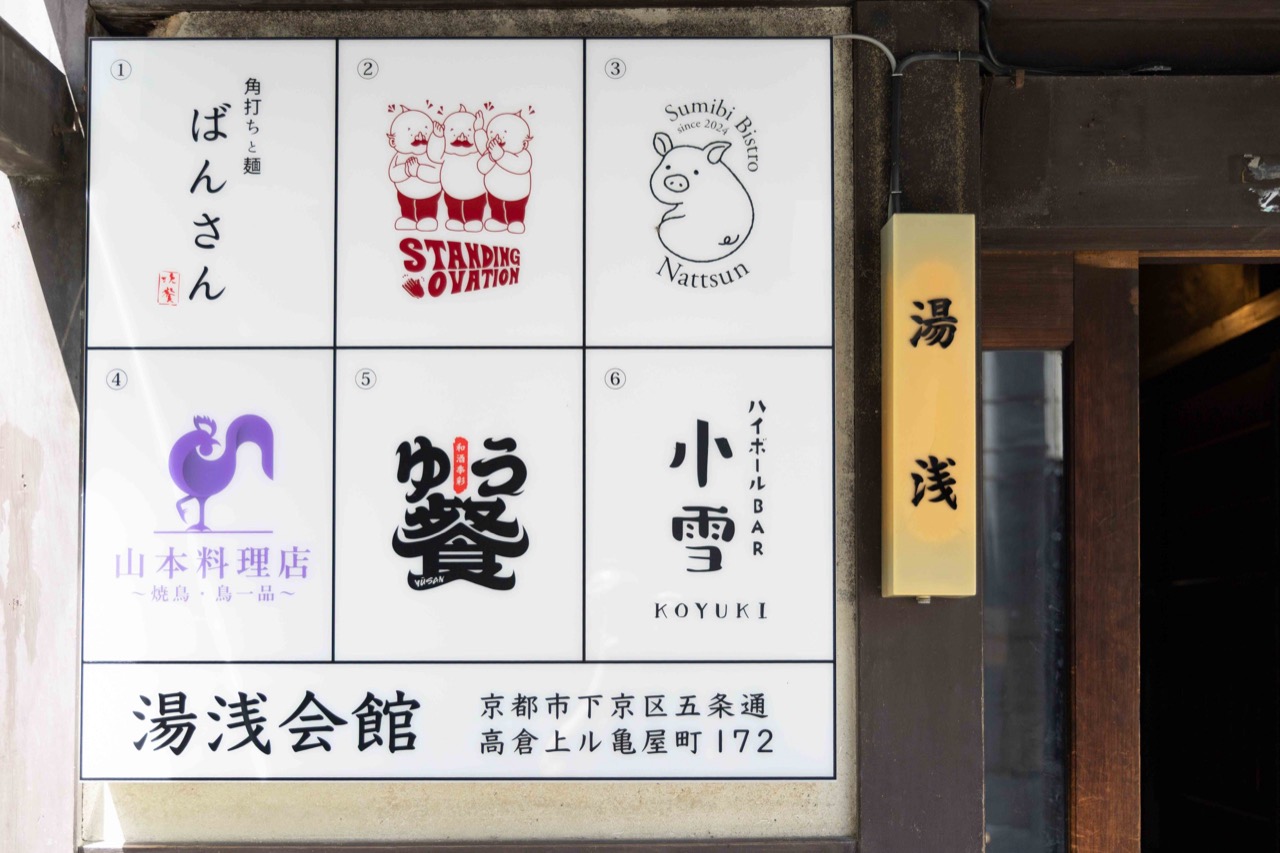
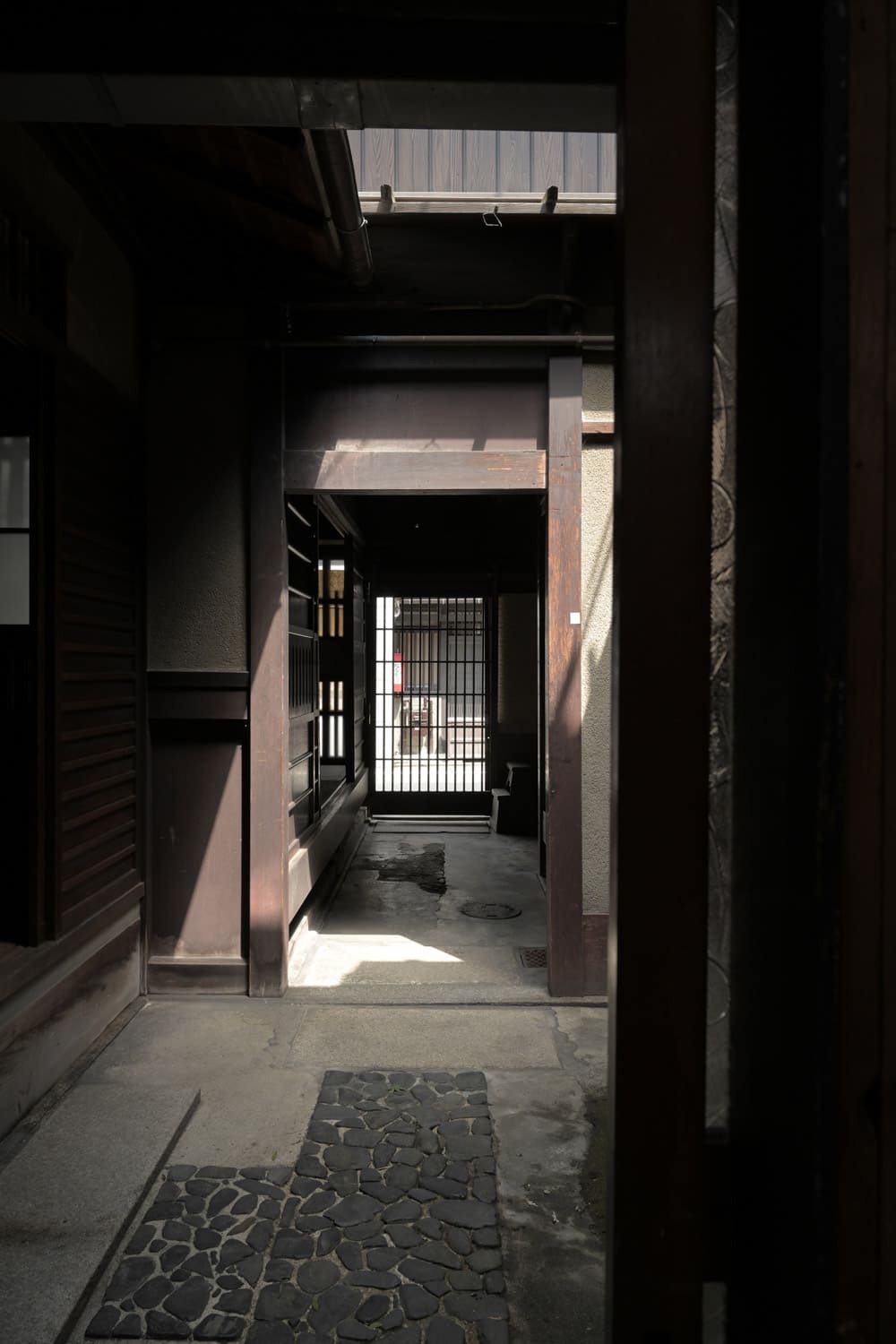
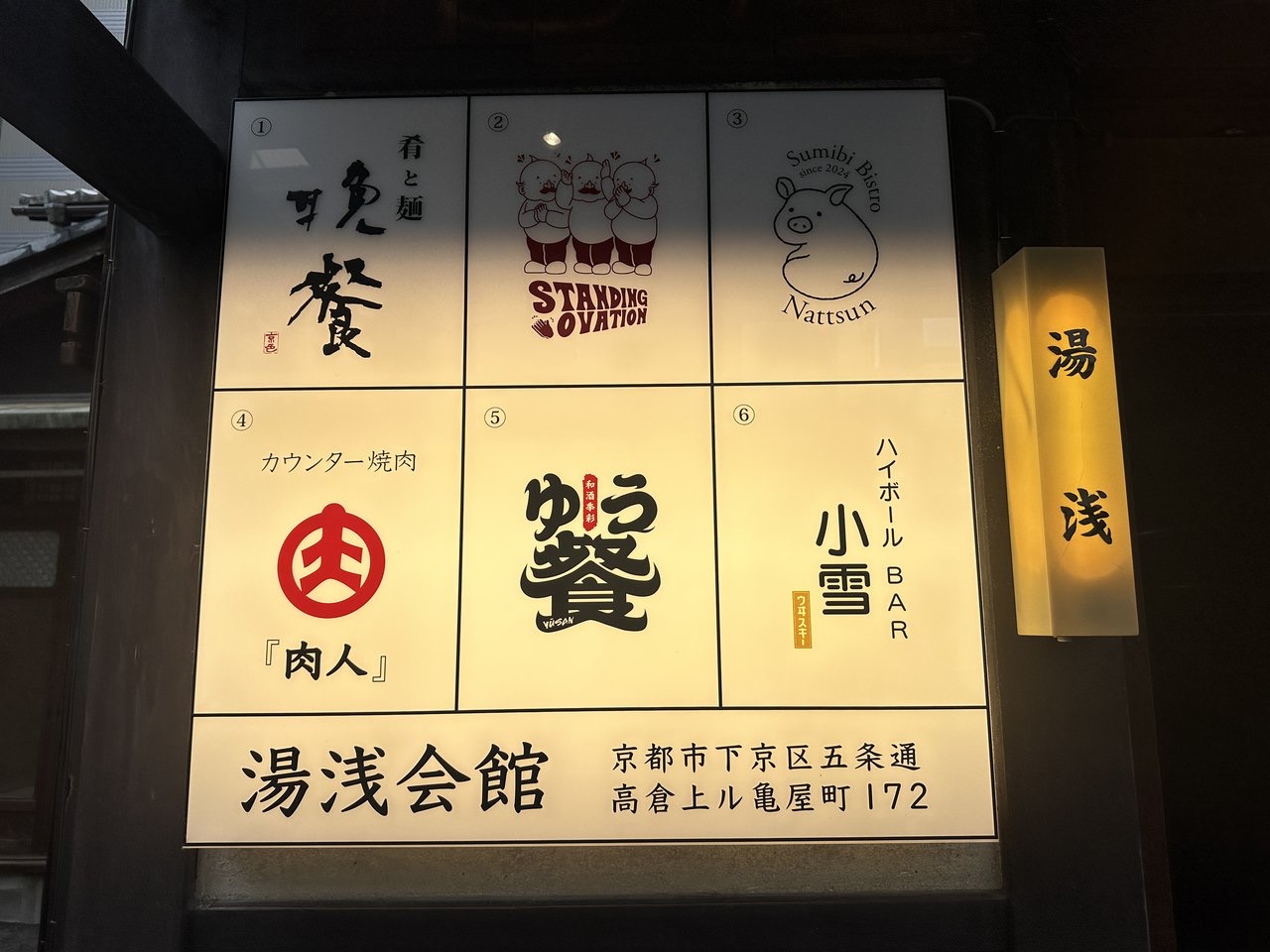
3.A kyo-machiya is narrow at the street and deep inside. The plan they nicknamed an eel's bed. Yuasa Kaikan has two floors, runs far deeper than its frontage suggests, and a courtyard punches through the middle of the site. In 2024 this single house was divided into six units and let out. The six on the board are Bansan, which pours kakuuchi drinks and serves noodles, the standing bar STANDING OVATION, the charcoal bistro Nattsun, Yamamoto Ryoriten, the sake house Yu-san, and the highball bar Koyuki. Nikunchu, the counter yakiniku that opened with the building, is not on that board.
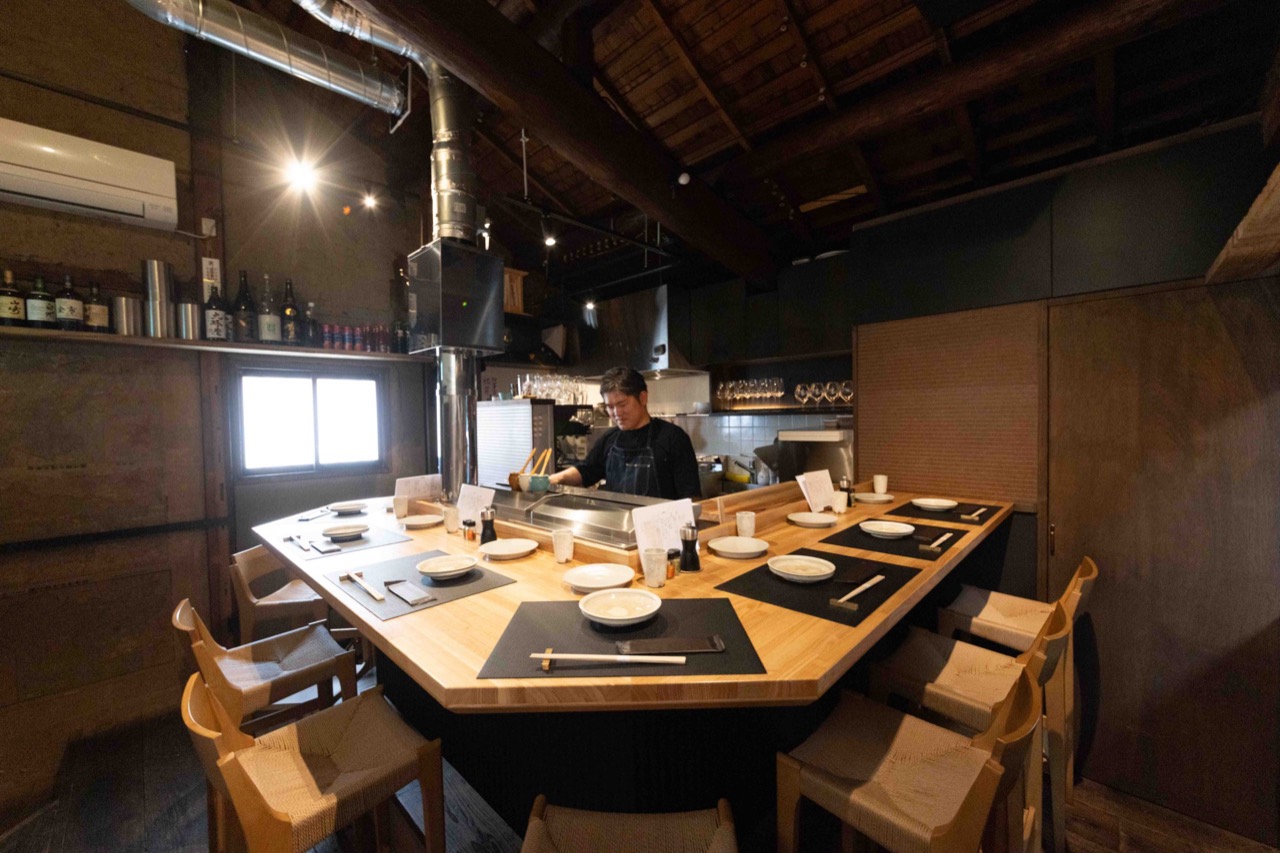
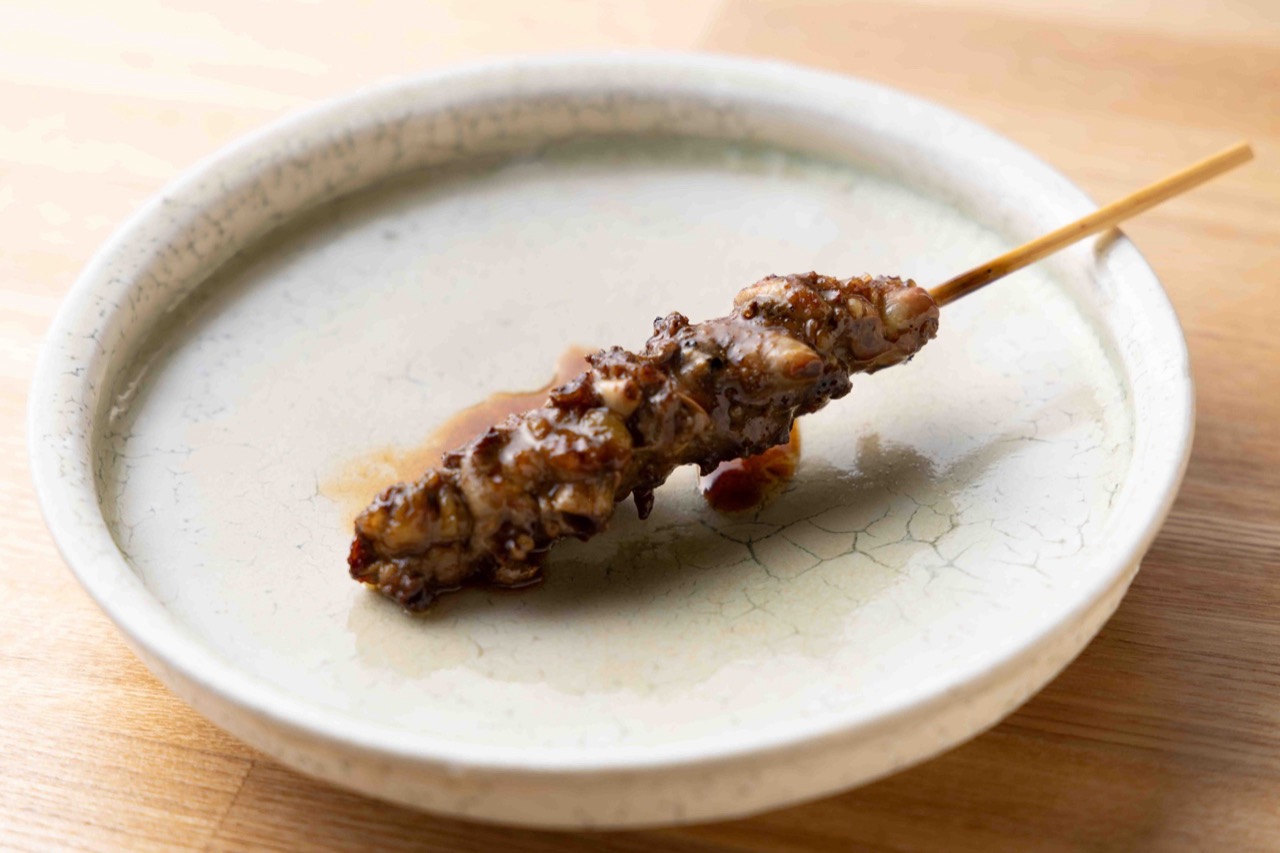
4.Binchotan raises no flame. The charcoal settles red and throws heat alone, so the skin shrinks first and the fat drops, and the moment that fat hits the coals the smoke lifts once. Eight seats put nothing between that smoke and the guest. The hand turning the skewer is an arm's length away, and you leave with the grill in your clothes.
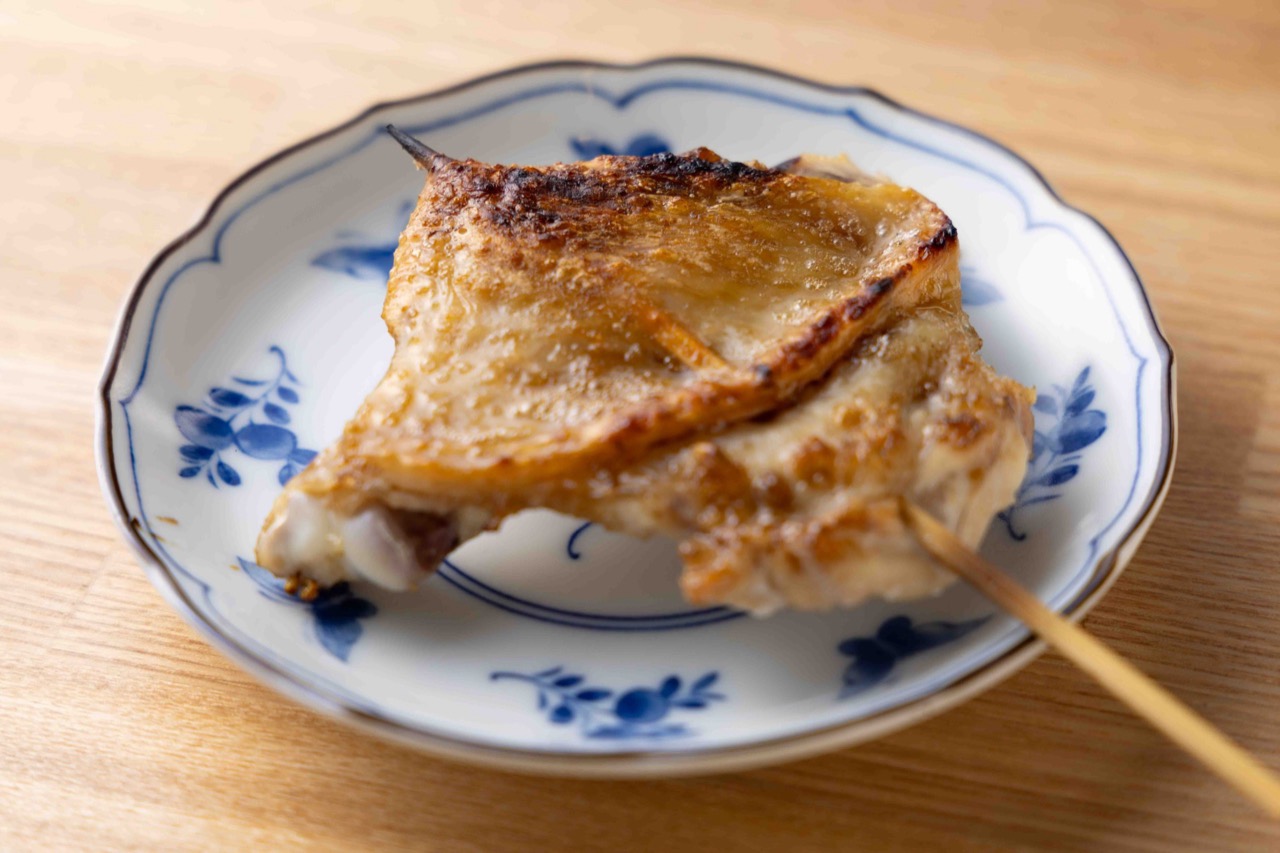
5.Zhaji takes marinated chicken, fries it, then puts it back over the charcoal. The batter dries once coming out of the oil and again on the coals, so the bite splits into two layers of sound, and a miso-loosened sauce covers it and kills that sound. The closing dish, tori nikomi soba, is 900 yen. Three courses: a light one at 3,800 yen, a chef's omakase at 10,000 yen available only on a full buyout, and one at 12,000 yen with drinks unlimited.
6.Why did a man twenty years at the grill open his own place only now. In Kyoto, taking a whole machiya and reworking it down to the structure runs past 700,000 yen per tsubo, roughly 3.3 square meters, and reaches a million on a small building. A site split into six units cuts that arithmetic to a sixth. A craftsman trained twenty years at a famous house sitting down because he cannot beat the opening capital is nothing rare in this trade, and the moment the building cut itself into small units, that bottleneck opened.
7.From the guest's side this building is not one shop but an alley. Drink at midday in the bistro that opens at 10 a.m., move to the standing bar from 4 p.m., climb to the second floor at 5 for skewers. Three separate checks under one roof. The six shops do not take customers from each other, they divide the hours, and so the building trades from 10 in the morning to midnight.
8.Now the money. Work Yamamoto Ryoriten backwards, estimates from here. Put the check at 7,000 yen, eight seats across six evening hours, seat turnover at 1.5 because courses are in the mix. Twelve people a day makes 84,000 yen, and with Sundays and two Mondays out the month runs 24 trading days, so monthly sales come to about 2 million yen, 24 million a year.
9.Add area and rent. Eight counter seats plus a kitchen and the charcoal grill puts the space between 8 and 10 tsubo. Shop rent in central Kyoto runs 15,000 to 50,000 yen per tsubo a month, and Gojo sits below Shijo, so 15,000 yen across 9 tsubo is 135,000 yen a month. Rent against sales lands under 7%. Anyone who has taken a well-placed lease in Seoul knows what that number means.
10.Lay out the rest. Food cost at 33% for yakitori is 660,000 yen, utilities near 8% because of charcoal and refrigeration is 160,000, consumables and card fees 140,000. Labor is zero. The owner grills alone and pours alone. Strip all of that from 2 million and about 900,000 yen is left, and inside that sit his income, his taxes and his depreciation.
11.The initial outlay decides it. An interior-only fit-out at 250,000 to 400,000 yen per tsubo makes 2.25 to 3.6 million across 9 tsubo, the yakitori grill, refrigeration and hood run 3 to 5 million, and on top comes a deposit of six to ten months. Call it 7 to 10 million yen. If the owner takes 600,000 of the remaining 900,000 to live on, 300,000 a month goes to paying it back, which puts recovery at two to three years.
12.The ceiling sits in the same arithmetic. Fill every seat and double the turnover and the top is around 2.7 million yen a month, with nothing left to sell above it. What breaks that ceiling is the buyout. Take up to twenty people, attach the 10,000 yen omakase or the 12,000 yen unlimited-drink course, and a day brings 200,000 to 240,000 yen. Close to three times an ordinary day. The yearly result of an eight-seat shop turns on how many buyouts land in a month, not on weekday turnover.
13.The word kaikan, meeting hall, catches the eye first. In Japan a kaikan was the assembly building a guild or a village kept, and the grammar of putting many small shops under one roof reaches back to the yokocho and the nagaya. Nothing new in the form. What changed over the past decade is that the form gets put back into old buildings instead of newly built. Kyoto took 12.68 million foreign visitors in 2025, the most on record, and plenty of machiya went over to lodging on whole-building leases in the same wave.
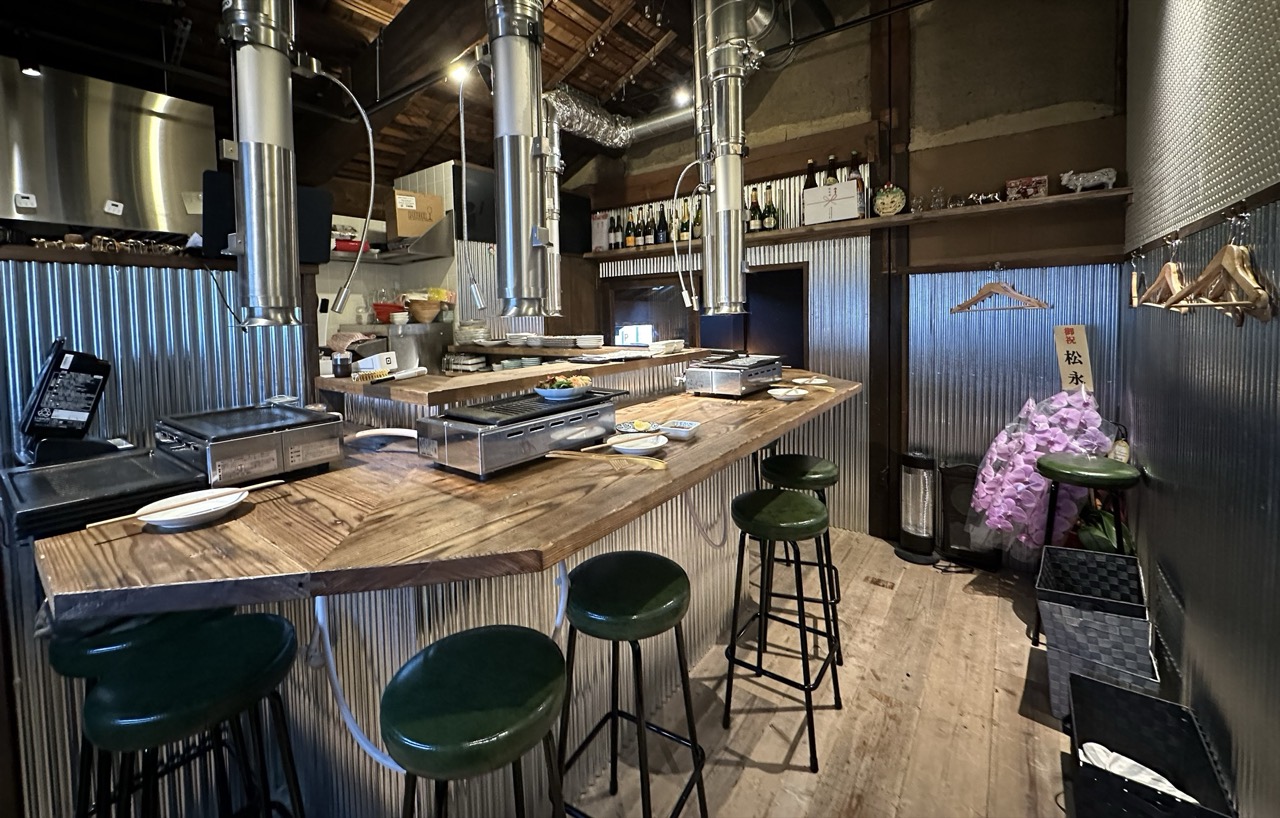
14.What splits is where the asset piles up. The landlord keeps going, swapping tenants through six units. The counter yakiniku that came in at opening has already closed, the building carried on, and only a sixth of the rent went empty. The customer flow the other five built stays. The tenant's side runs differently. The worth of an eight-seat shop is tied whole to the hands of the man grilling, so it cannot be sold, handed down, or grown by hiring. Twenty years of training built a business worth 24 million yen a year, and that business disappears the day he puts the skewers down.
15.On the second floor of a kyo-machiya built in 1913 and cut into six units in 2024, a craftsman of twenty years filled his book in four months with eight counter seats, and rent on those eight seats falls under 7% of sales. Put this structure in Korea and it snags at the equipment, not at the plan. Split one building into six restaurants and each needs its own business filing, and each filing attaches kitchen, water supply, drainage and ventilation requirements unit by unit. What actually catches you in an old building is septic tank capacity and where the grease trap goes, and checking that before the drawings start is what keeps the unit count from shrinking later.