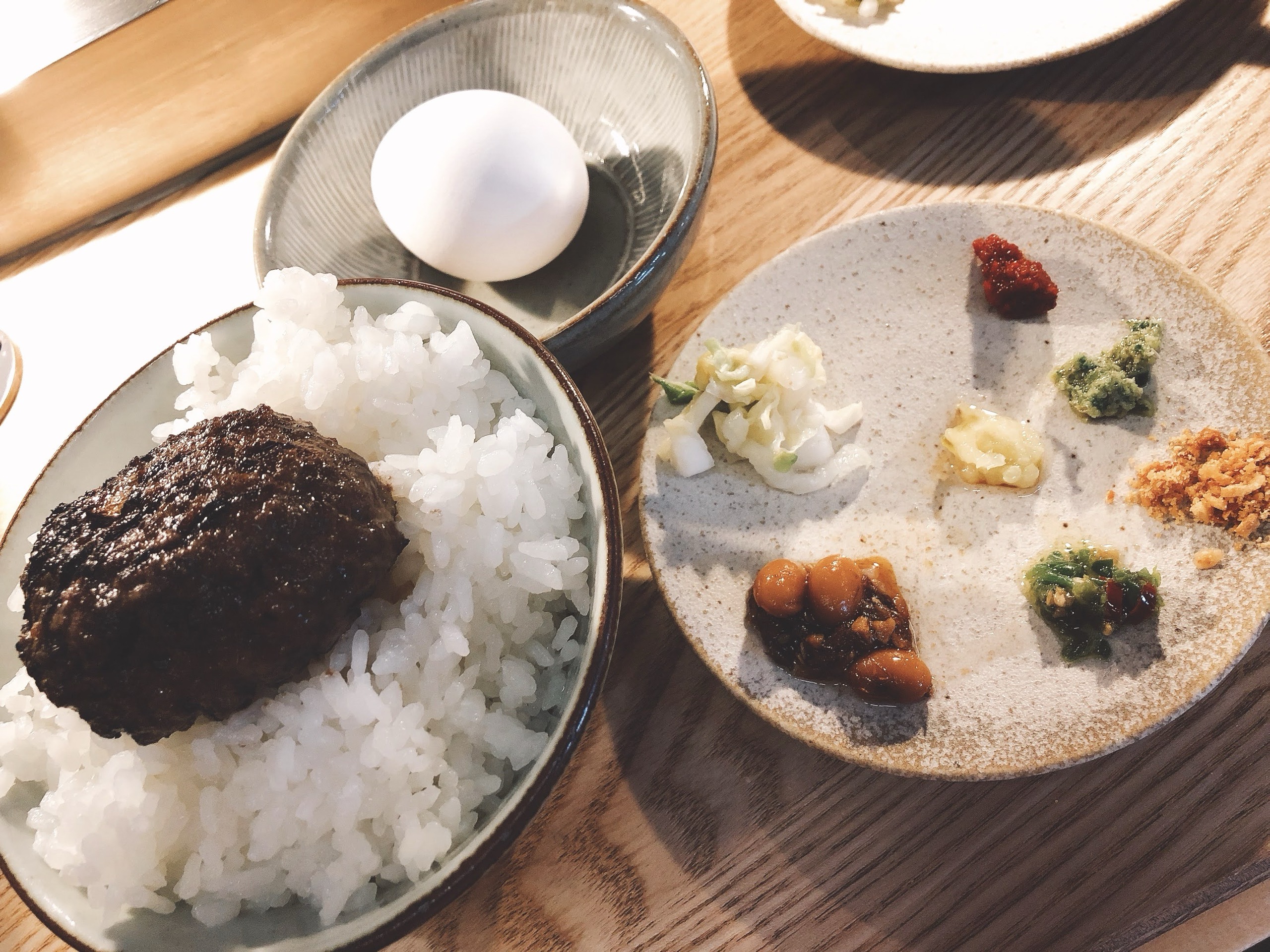
Everything this shop sellsThree 90g patties, rice cooked in a hagama, miso soup, a raw egg. Six years and the menu is this alone. ⓒ吉グル
Daily dining
One set meal, twenty seats, fifteen locations abroad
2026.08.04
Twenty seats made out of an old house in Kichijoji, Tokyo, opened on June 1, 2020. There is only one thing to buy. Three 90g charcoal-grilled hamburg patties, freshly cooked rice refilled without limit, miso soup, one raw egg. The price is 1,820 yen. Over the six years since, it has added four locations inside Japan and fifteen across the sea. This year alone, Shanghai in January and Singapore in June.
1.The shop is called Hikiniku to Come, ground meat and rice, exactly as the name says. The first location reworked a house in a Kichijoji residential street, with two round counters seating ten each for twenty places in all. Every seat faces the grill. There is one set menu, and the price, in the 1,500 yen range at opening, became 1,820 yen in November 2024. It takes no reservations. A queue forms every morning instead.
2.Guests write their name or take a numbered ticket from 9 a.m. and are assigned a time to enter. Inside Japan there are four locations, Kichijoji, Dogenzaka in Shibuya, Gion in Kyoto and Imaizumi in Fukuoka. Overseas there are fifteen as of April 2026, the company says. It entered the FUFU courtyard on Donghu Road in Shanghai on January 9 this year, and opened twenty-eight seats at VivoCity in Singapore on June 5.
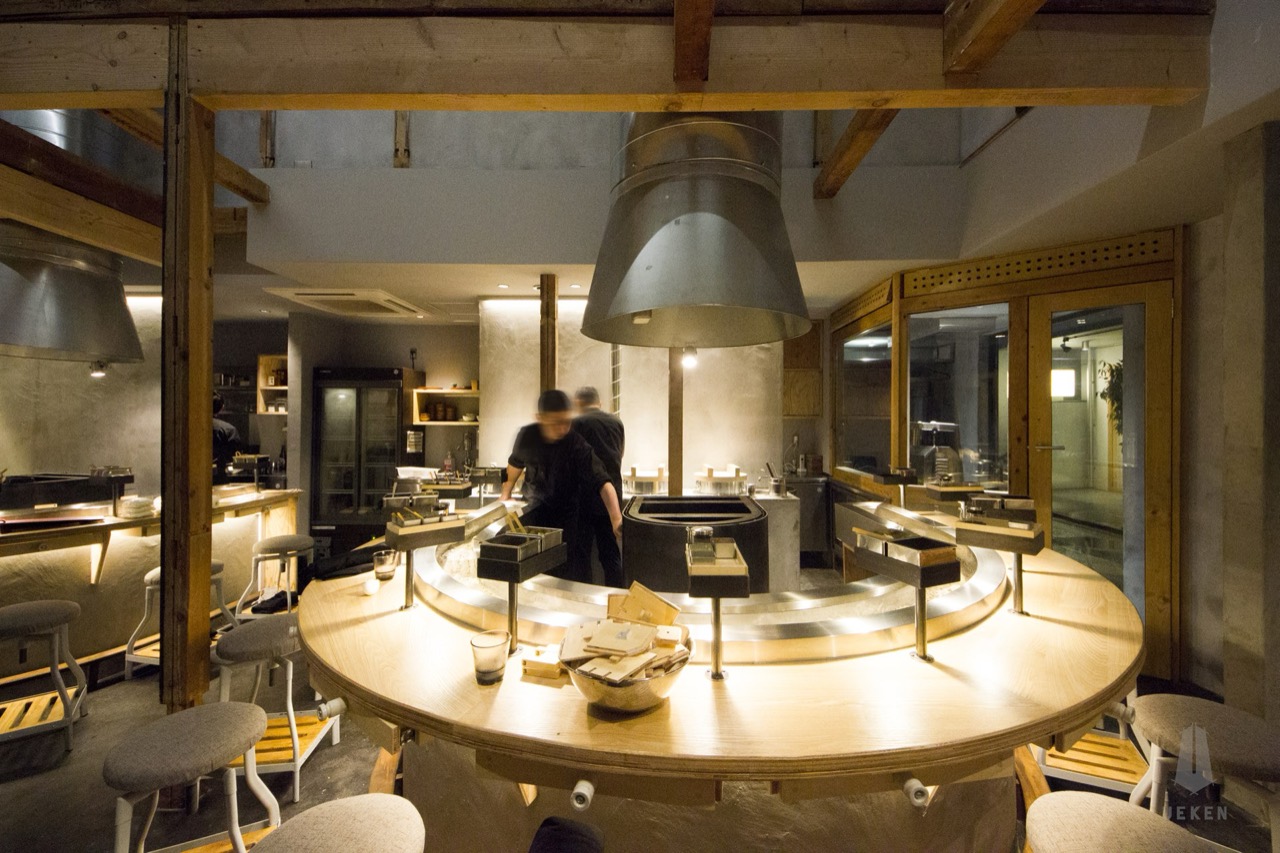
One plan, copied nineteen timesThe first location in Kichijoji. A round counter wraps the cooking station and the hood comes down whole above it. ⓒ上野建築研究所
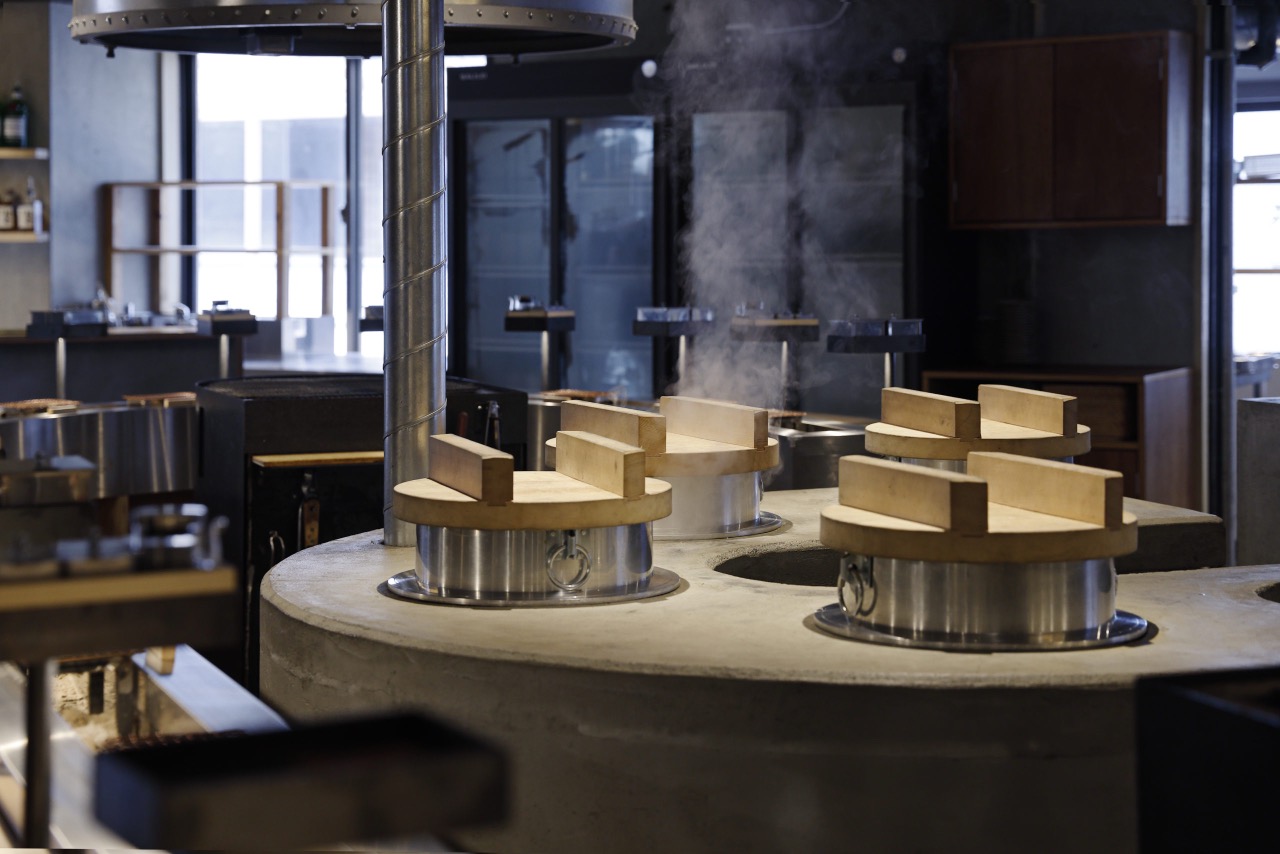
3.The plan is simple. A charcoal grill station sits in the middle and the counter wraps it. There is no dining floor, so there is no server route, and the person grilling is the person serving. Rice is cooked fresh every 15 minutes in four hagama pots, and the meat is ground each morning in the shop's own chill room. The founder set out three words. Just ground, just grilled, just cooked.
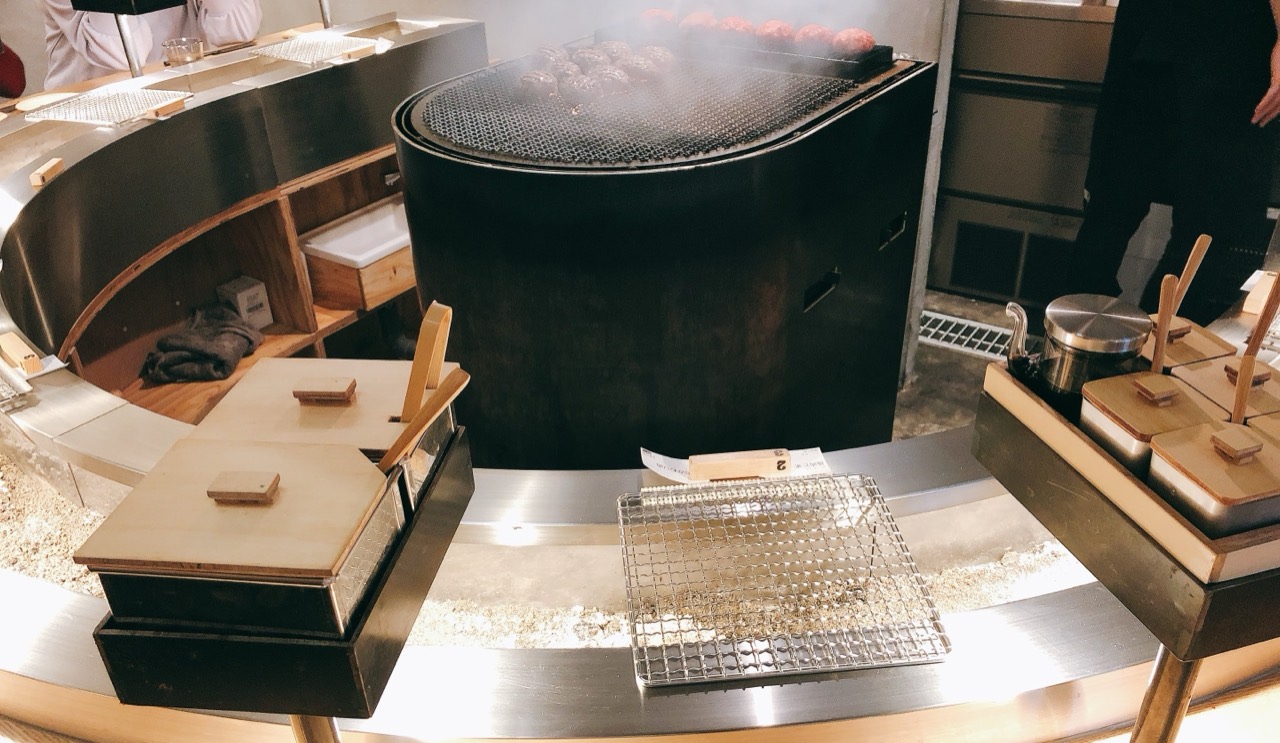
The grill is the dining roomThe grill station up close. The counter top wraps the grill, and seasoning boxes and a place for the rice bowl sit in front of the guest. ⓒ吉グル
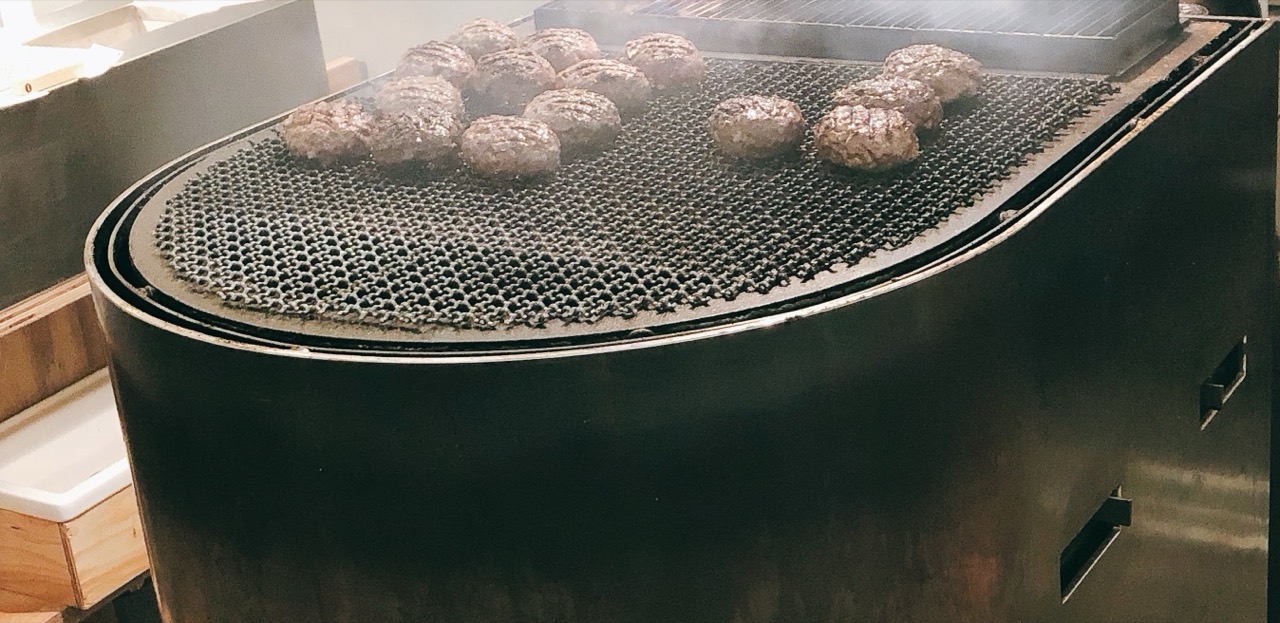
4.Sit at the counter and your eye level is the grill. The moment a 90g patty lands on the charcoal, fat drops down, and that fat hits the coals and comes back up as smoke. Smoke settling once more on the surface of the meat is the principle of charcoal cooking, and the counter guest eats that round trip through the nose first. Lifting the hagama lid makes a dull sound of wood against wood.
Fat to the coals, smoke back to the meatPatties line up on an oval charcoal grill. The counter guest eats this round trip through the nose first. ⓒ吉グル
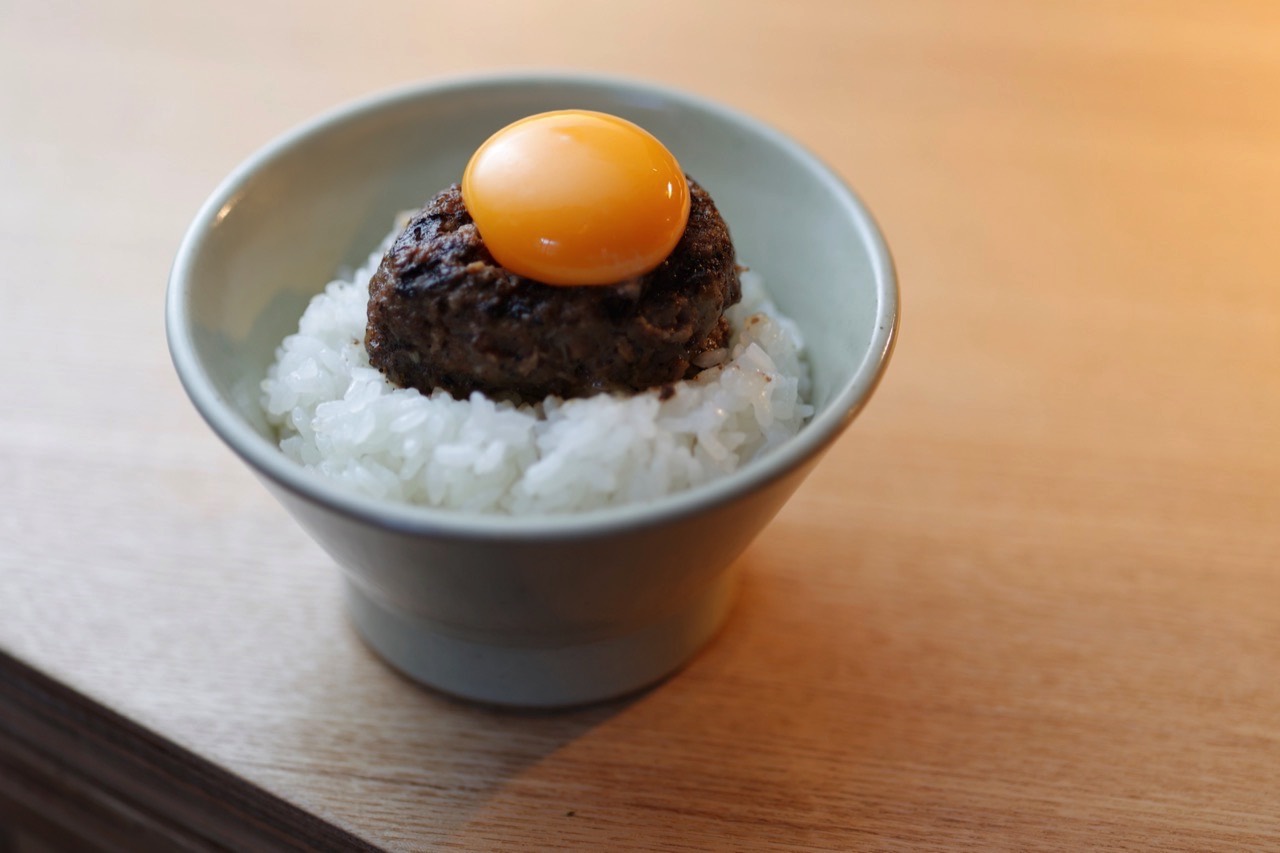
5.Not serving all three at once is this shop's design. Around the time you finish one, the next arrives off the grill, so the guest never meets cold meat. The first with salt and wasabi, the second with oni-oroshi and ponzu, the third laid over rice with a raw egg cracked in and mixed. Even the order of eating is part of what is sold.
Rice cooked fresh every 15 minutesSteam rises from hagama pots set into a concrete counter top. Where the server route disappeared, only the cooking station and stools remain. ⓒPOOL inc.
6.What this place sells is not a finished plate but a plate being finished. The grammar of pulling cooking out in front of the guest is one sushi counters and teppanyaki have used for a long time, and that grammar was always a device to justify a high price. Here the same device is attached to a 1,820 yen set meal, that is all.
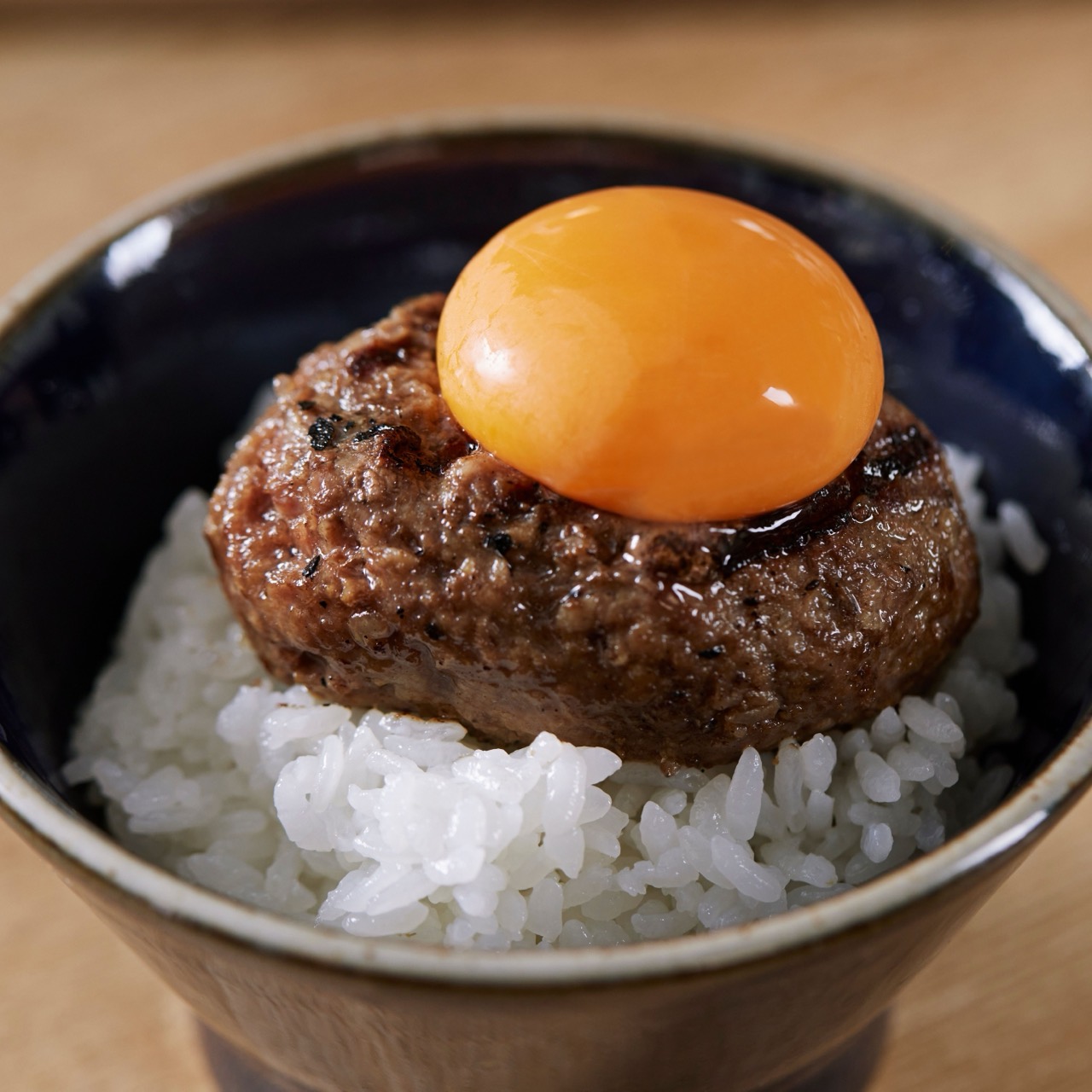
How to eat the third pattyLay the meat over rice and break the yolk. Fix the order and what the guest waits for is not the next plate but the next scene. ⓒLeaf KYOTO
7.Cutting the menu to one pays well. The guest has nothing to choose, so cooking starts the moment they sit, and with a single process in the kitchen a new hire is grilling within weeks. Stock ends at meat, rice and eggs, so waste barely arises. The same holds for the queue, which is less tedious when everyone already knows what they are eating.
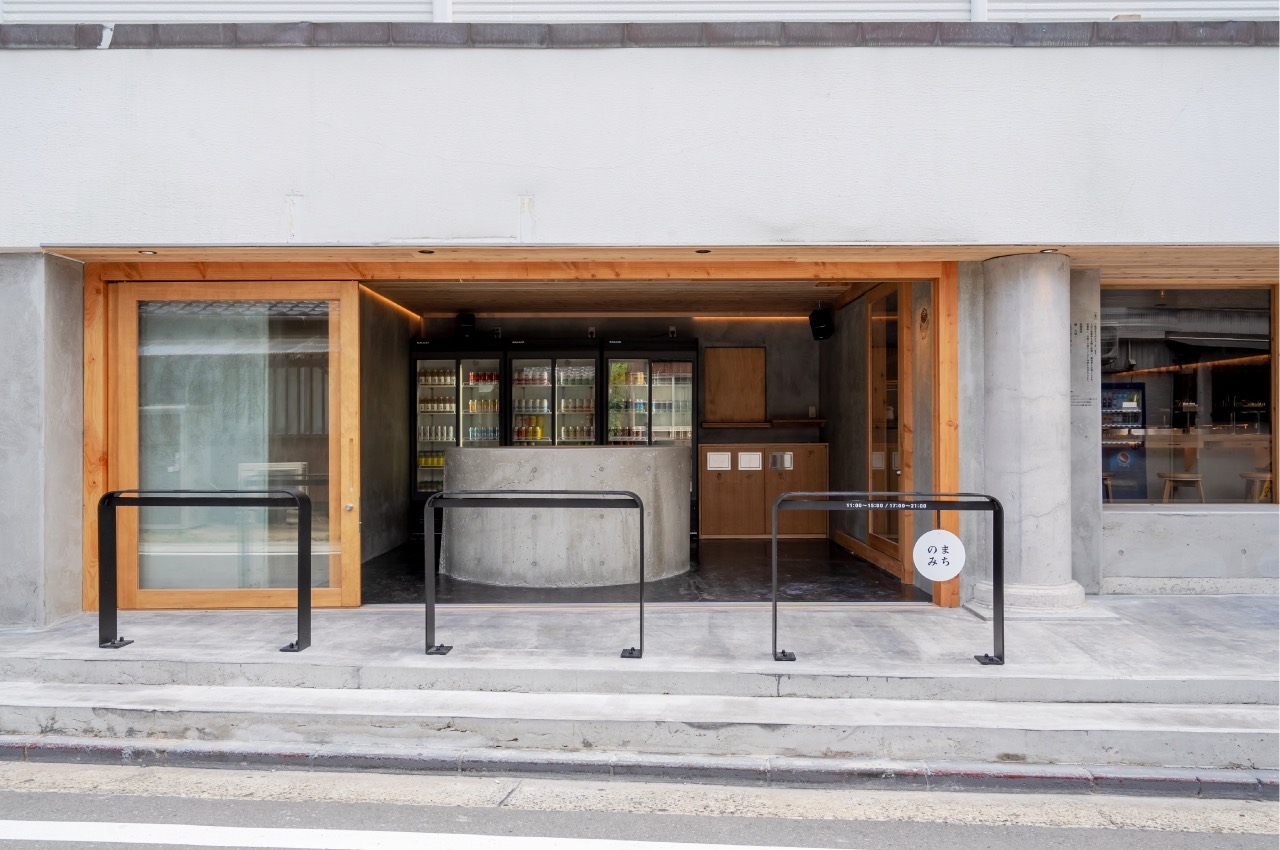
The fourth, in KyushuThe elevation of the Imaizumi location in Fukuoka. The round cooking station shows straight through the opening onto the street. ⓒPOOL inc.
8.The split between what is unlimited and what is fixed is precise too. Rice, egg and seasonings can be taken freely, while the meat carrying the cost stops dead at 270g. What the guest feels is abundance and what the shop holds is raw meat weight. On the day the Hong Kong IFC location opened, three hundred people queued and numbered tickets were reported trading at 400 Hong Kong dollars. If a longer queue raises the ticket rather than the price, who takes that premium.
9.Now the money, estimates from here. Twenty seats run four hours at midday and four at night. With one set menu, the gap from order to first plate is short, and at a stay of about 30 minutes seat turnover comes to around twelve a day. That is 240 guests a day, and at 1,820 yen a head, 440,000 yen a day. Open 26 days and the month lands near 11.4 million yen.
A cost ratio repaid by turnoverThe material cost share reads higher than ordinary food service, and in exchange a site off the prime pitch pushes rent down to the 4% range of sales. Turnover and cost ratios are estimates.
10.The problem is that cost ratio. At 270g of all-beef patty plus rice, egg and miso soup for 1,820 yen, material cost reads between 700 and 900 yen a setting. In the 40% range. Set against the 30% or so ordinary food service manages, that is high, and free-flowing rice makes it easy to leak further upward.
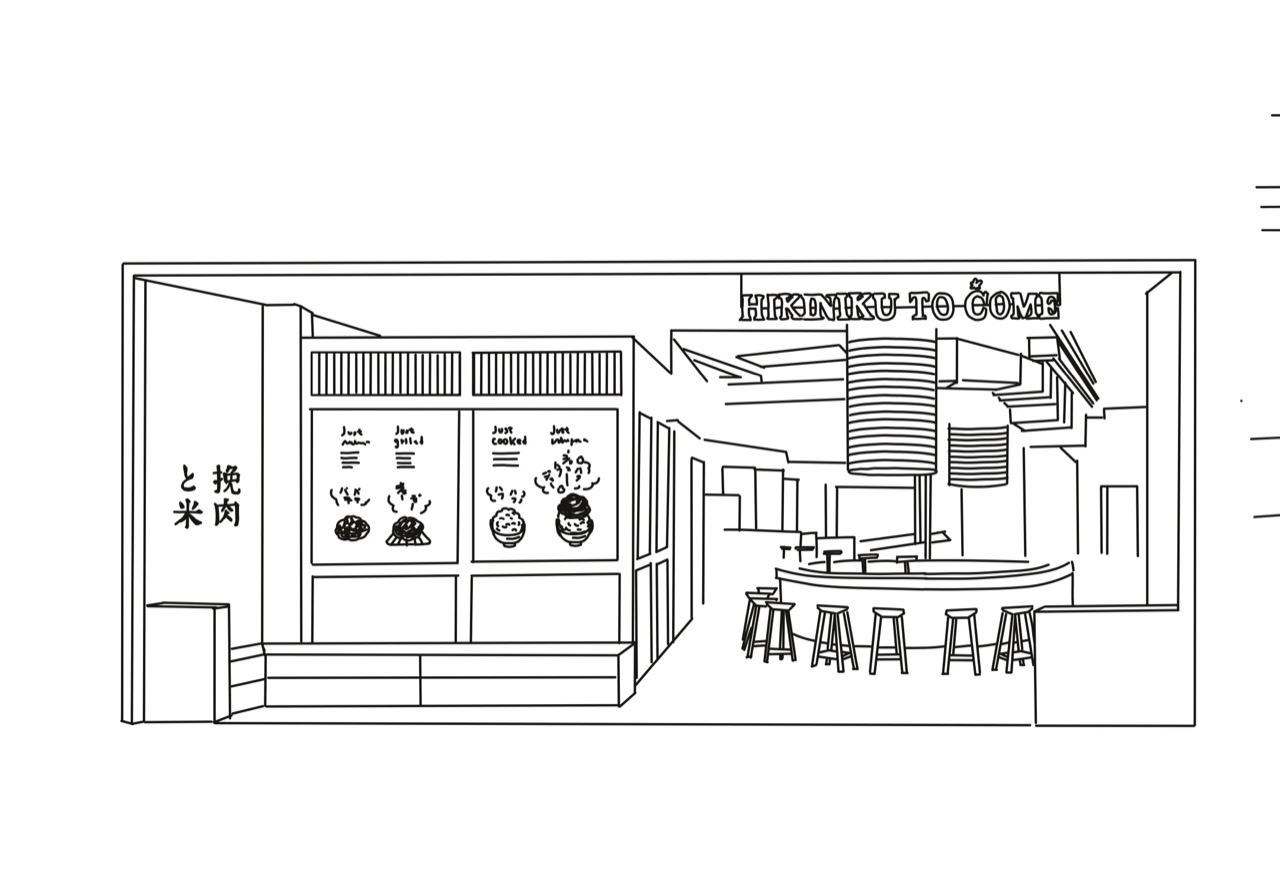
The equipment comes as one setElevation drawing of the Singapore VivoCity location, opened June 5. With the kitchen as one set, there is little to redraw on arriving in a new country. ⓒHIKINIKU TO COME
11.Rent is light in exchange. The first location is not a ground floor by a station but a house in a residential street, and the second took a third-floor space with no elevator in a Dogenzaka building, handed over from the owner's own home and reworked. A shop that can hold a queue does not buy the pitch. Assume 25 pyeong at 20,000 yen a pyeong and rent lands in the 4% range of sales.
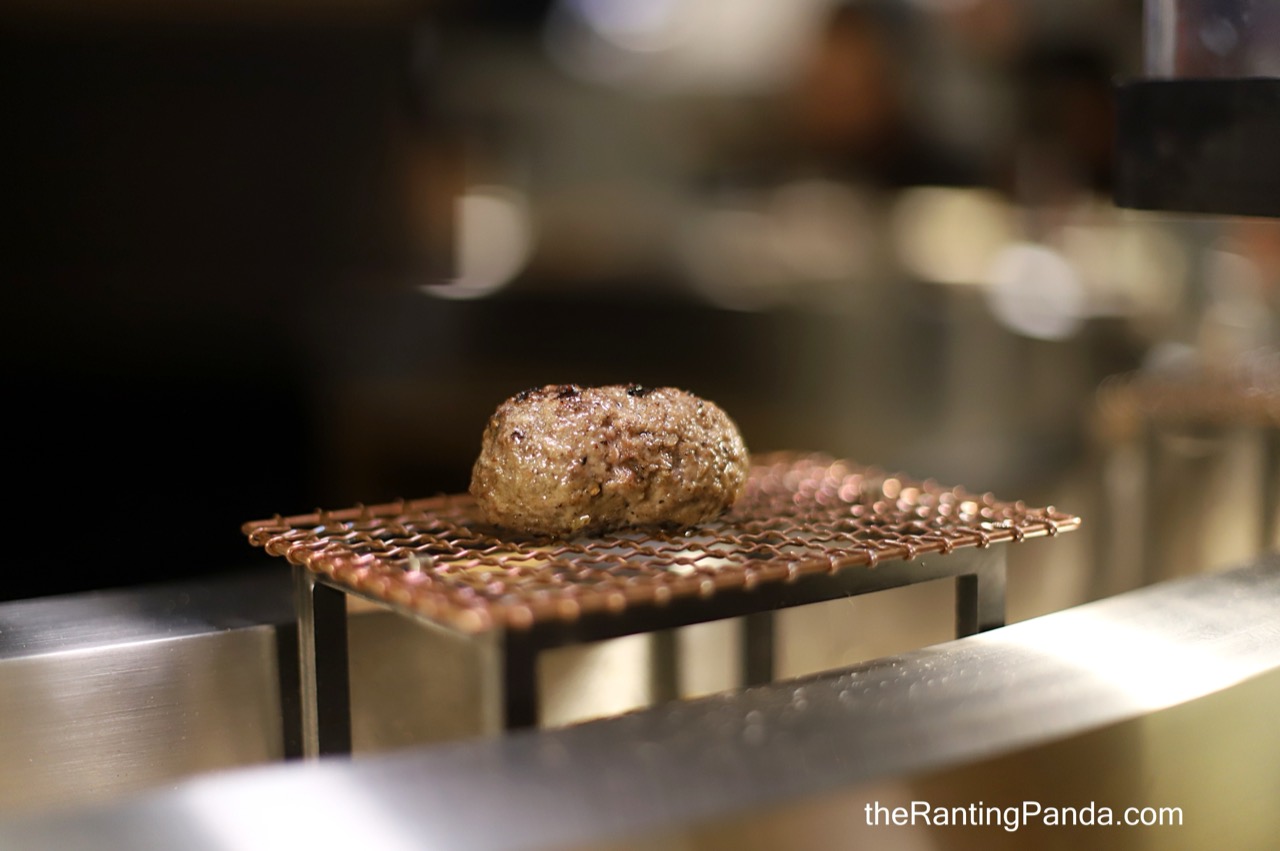
One at a timeThe counter at the Singapore location. Patties come across one at a time on the grill rack. Instead of buying a prime site, this scene does the advertising. ⓒThe Ranting Panda
12.The same set changes price across a border. 128 yuan in Shanghai, 138 Hong Kong dollars in Hong Kong, 650 New Taiwan dollars in Taipei, 27.90 Singapore dollars in Singapore. Converted to won, 1.4 to 1.7 times Japan. Rent, labor and the cost attached to imported meat are loaded in, and it is also the stretch where a brand takes one more layer of premium for crossing a border.
A premium at every borderA setting that is 1,820 yen inside Japan sells at 1.4 to 1.7 times outside it. Exchange rates are approximate.
13.The man who made it is Yamamoto Shohei. He opened Ore no Hamburg Yamamoto in 2005 at twenty-three, and when unrelated shops using the same opening words multiplied around 2010 and confused customers, he changed every location's name to Yamamoto no Hamburg in June 2016. A man who spent 15 years on the single item of hamburg opened what stands today in 2020.
Cross a border and the plate stays the sameThe product photograph used for the launch at the Huashan location in Taipei. Overseas expansion picked up speed in Taiwan first and has now reached Taichung. ⓒGQ Taiwan
14.The turn is that the owner of the expansion is not the original. Rou Rou Da Mi, created by the Japanese food service group Monogatari Corporation, started first in Shanghai in November 2022, spread to Shenzhen and Hangzhou, and reached Hong Kong in 2024. Prices come in three tiers at 68, 78 and 88 yuan, seat turnover runs twenty-two a day, and local outlets report that strong locations pass a million yuan a month. When the original arrived on Donghu Road this January, the market was already made.
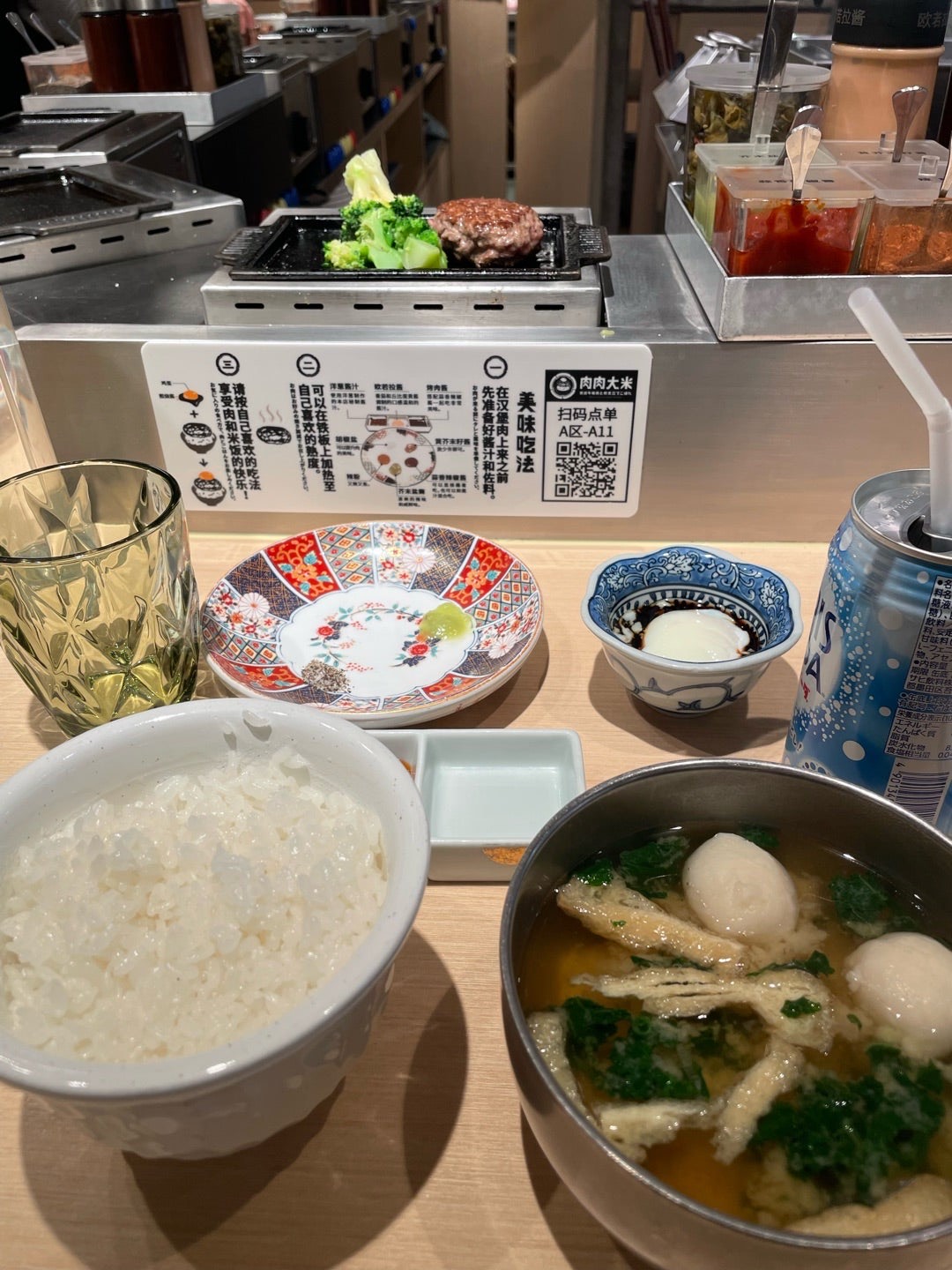
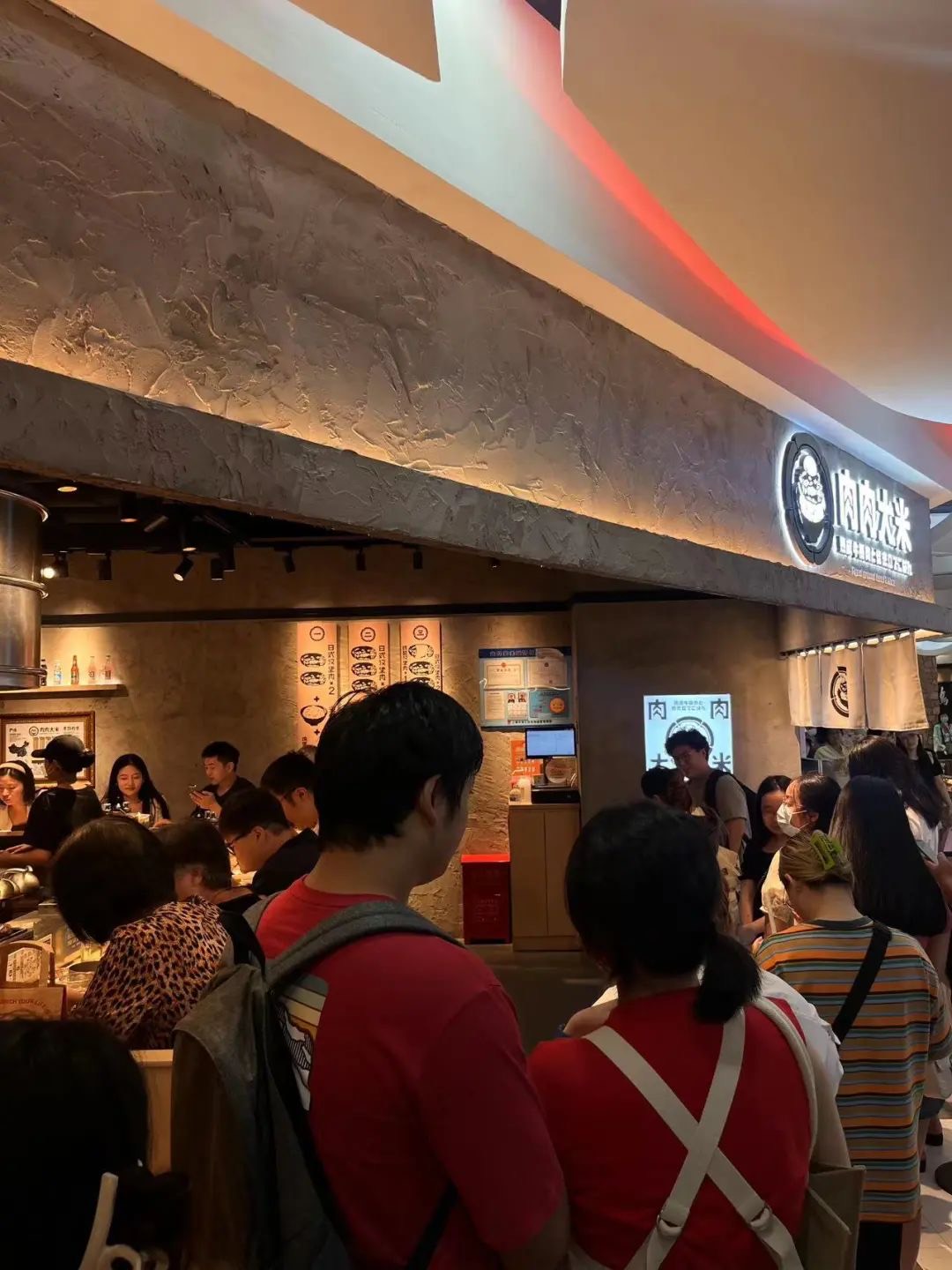
The side that arrived three years earlierRou Rou Da Mi in Shanghai. Rice, miso soup, raw egg and seasonings, the same setting, from 68 yuan. ⓒみるたんの上海生活奮闘日記The queue is the advertising budgetPeople crowd in front of a mall unit. Coverage reported a three-hour wait when the first South China location opened. ⓒ赢商网
15.The answer the original chose was not store count. The founder says he looks at profit rate before revenue and profit per person before headcount. Domestic expansion is capped at four or five through partner franchising, and in January 2022 he built a research facility with a production kitchen in Oyamadai and moved into frozen goods. What cannot grow through seats comes out of a factory.
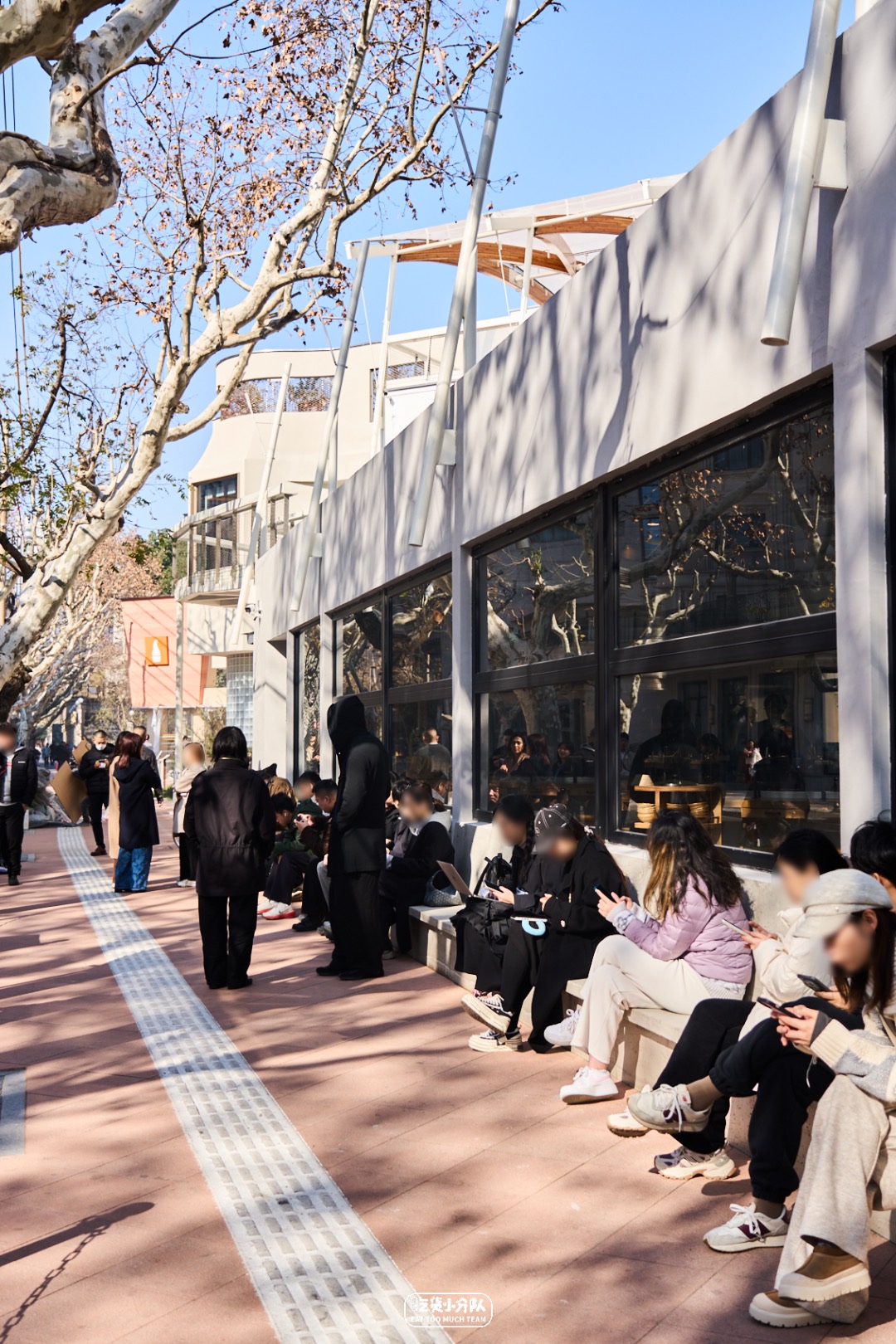
January 9, Donghu Road, ShanghaiFUFU, on an old street in Xuhui district. The queue sitting along the wall has become part of this district's scenery. ⓒ澎湃新闻
16.One setting that started in a twenty-seat house has spread to five countries in six years, with four locations left at home and fifteen standing abroad. The number that stays is a structure repaying a cost ratio in the 40% range with twelve turns a day. In Korea what snags first is not rent but the raw egg. Putting a raw egg on a set meal as standard requires eggs meeting the standard for raw consumption, with summer storage temperature and labeling attached. The decision to pour rice freely carries the same weight, and the moment turnover falls from twelve to eight, what was sold as abundance comes straight back as a loss.