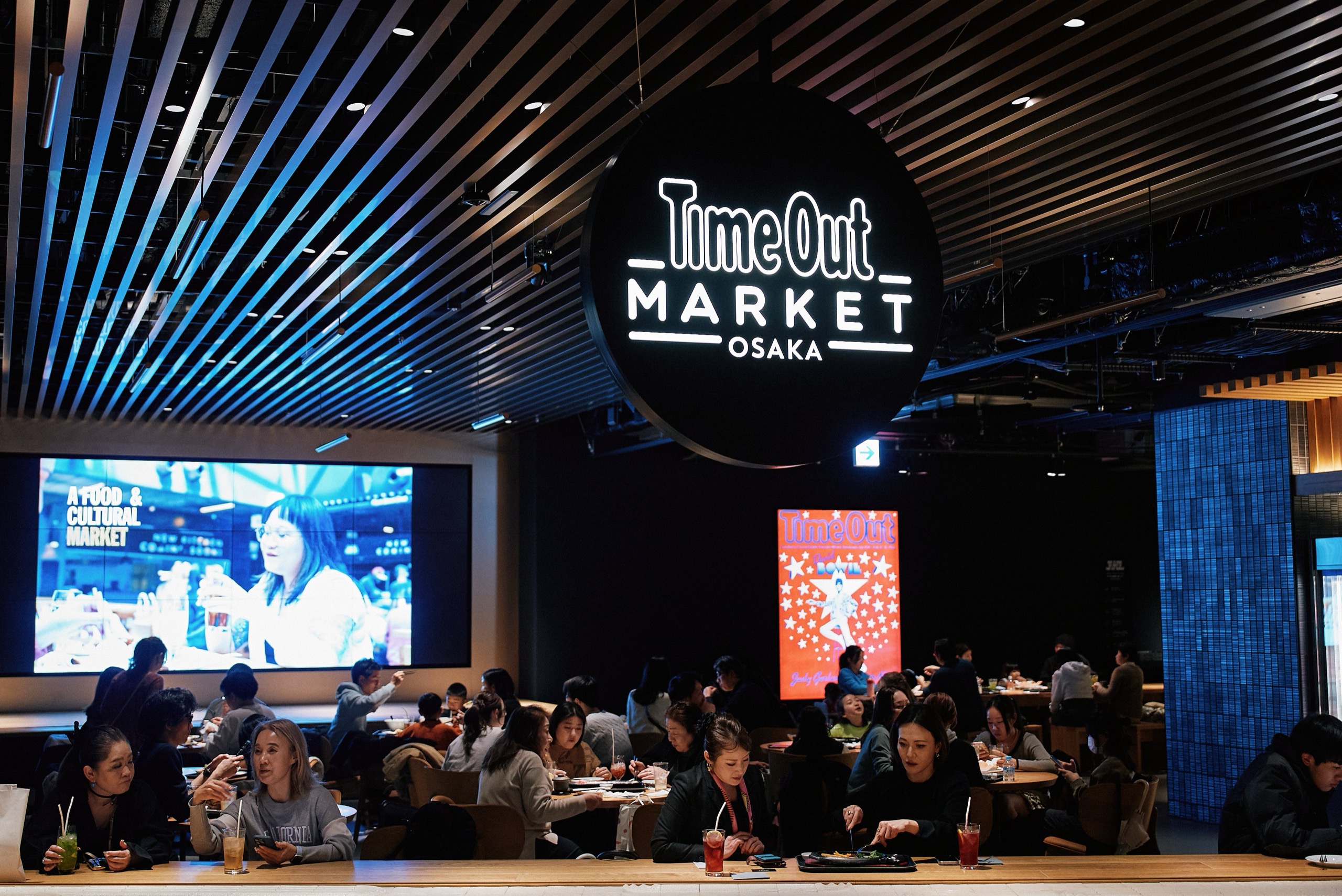
One floor below ground just north of Osaka Station: 3,300 sqm, seventeen kitchens, 800 seats. A year after Asia's first Time Out Market opened, seven of its tenants were gone, and on some days nine out of ten seats sat empty even at lunch. Refilling those counters meant cutting the prices.
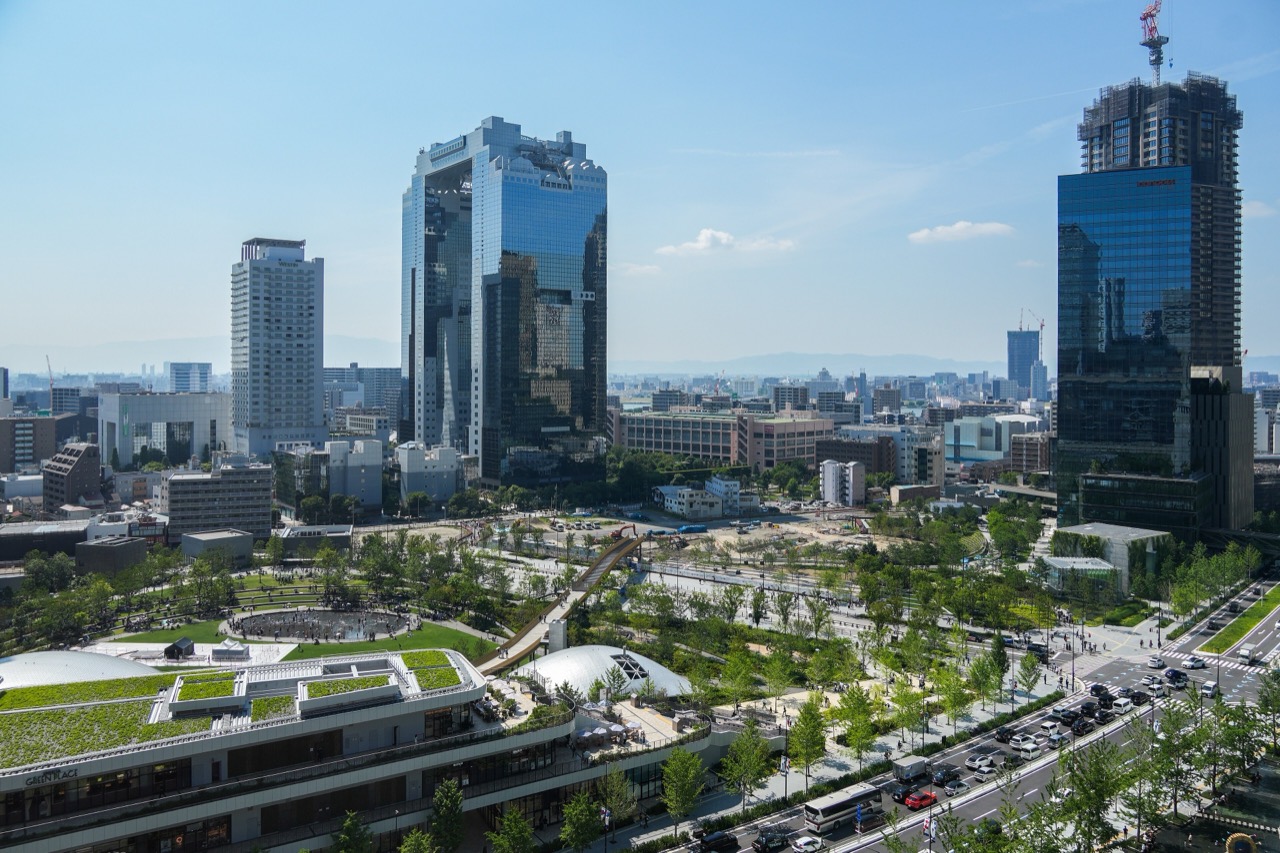
1.On 21 March 2025, a 3,300 sqm dining floor opened one level below ground in the south building of GRAND GREEN OSAKA, the Umekita redevelopment site north of Osaka Station. Seventeen kitchens, two bars, 800 seats. It is the first Asian outpost and the eleventh worldwide for Time Out Market, the food hall brand built by a city magazine founded in London in 1968.
2.The money came from Hankyu Hanshin Properties, the developer of the site. Umekita Phase 2 covers 9.1 hectares, 170,000 sqm of floor area, and a total project cost of 600 billion yen. The developer did not buy the brand. It brought Time Out in under a management contract, and a separate company, Time Out Market Osaka Inc., runs the floor. Tenants were chosen by the brand's head office and by curators the head office appointed.
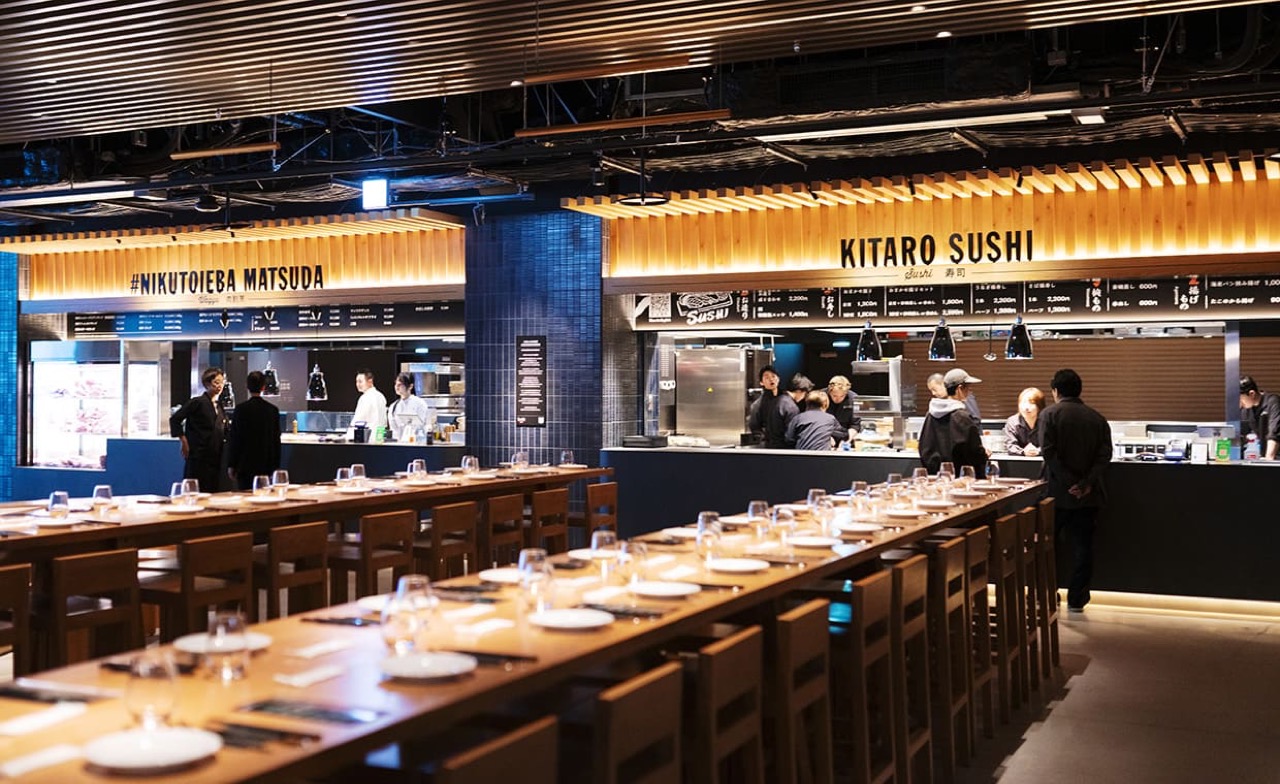
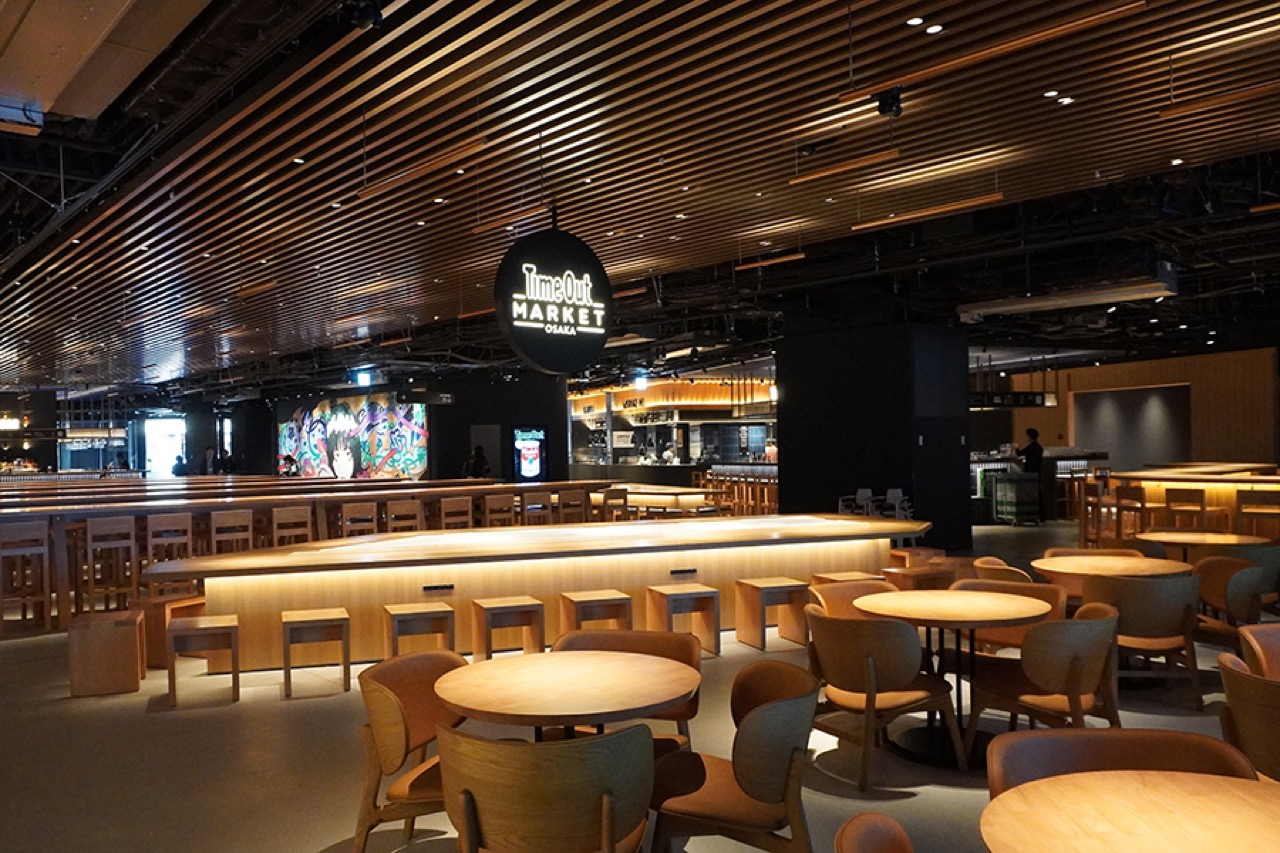
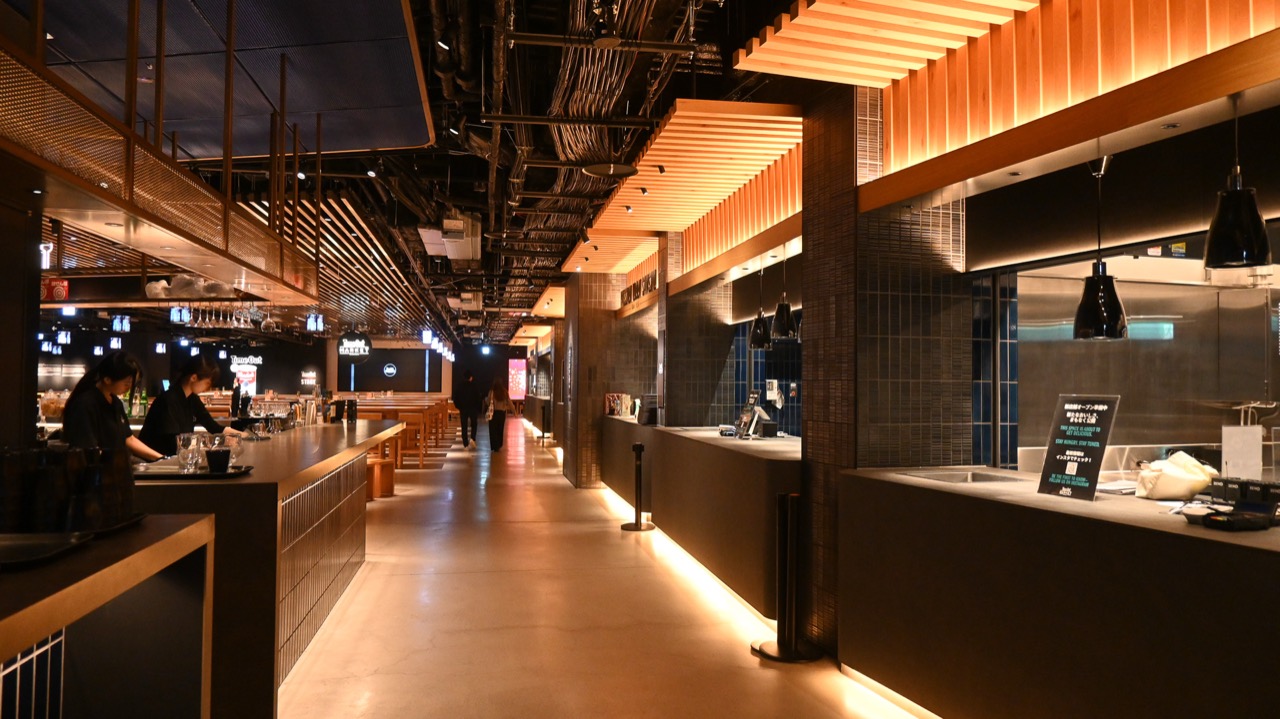
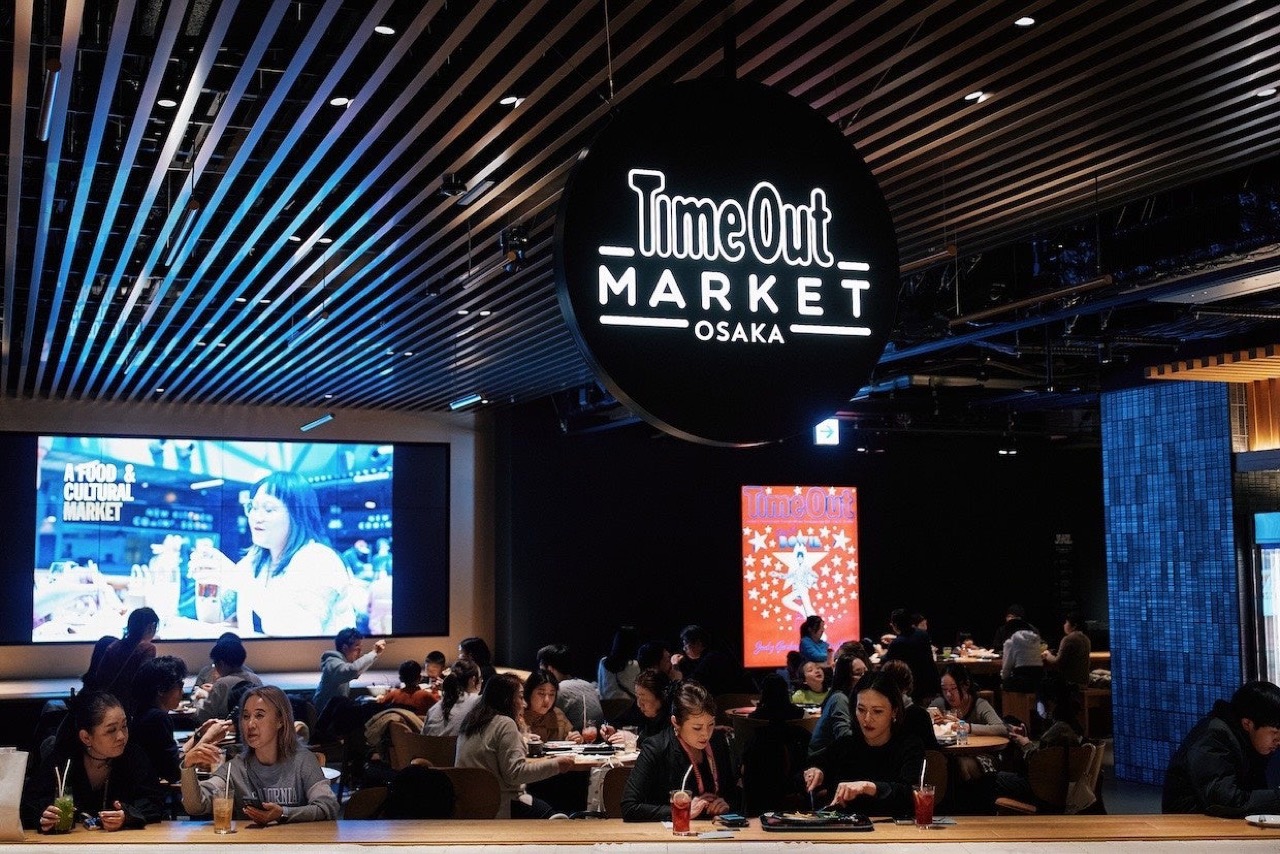
3.The floor connects to Osaka Station underground. Its plan is plain. A 7.5 meter communal table sits at the center with kitchens ringing both sides, so a visitor walking in any direction passes all seventeen counters. The base color comes from the blue that lingers in the sky after sunset. More than 200 of the 800 seats are backless high stools, and the brand put a work-friendly dining zone here for the first time in any of its markets.
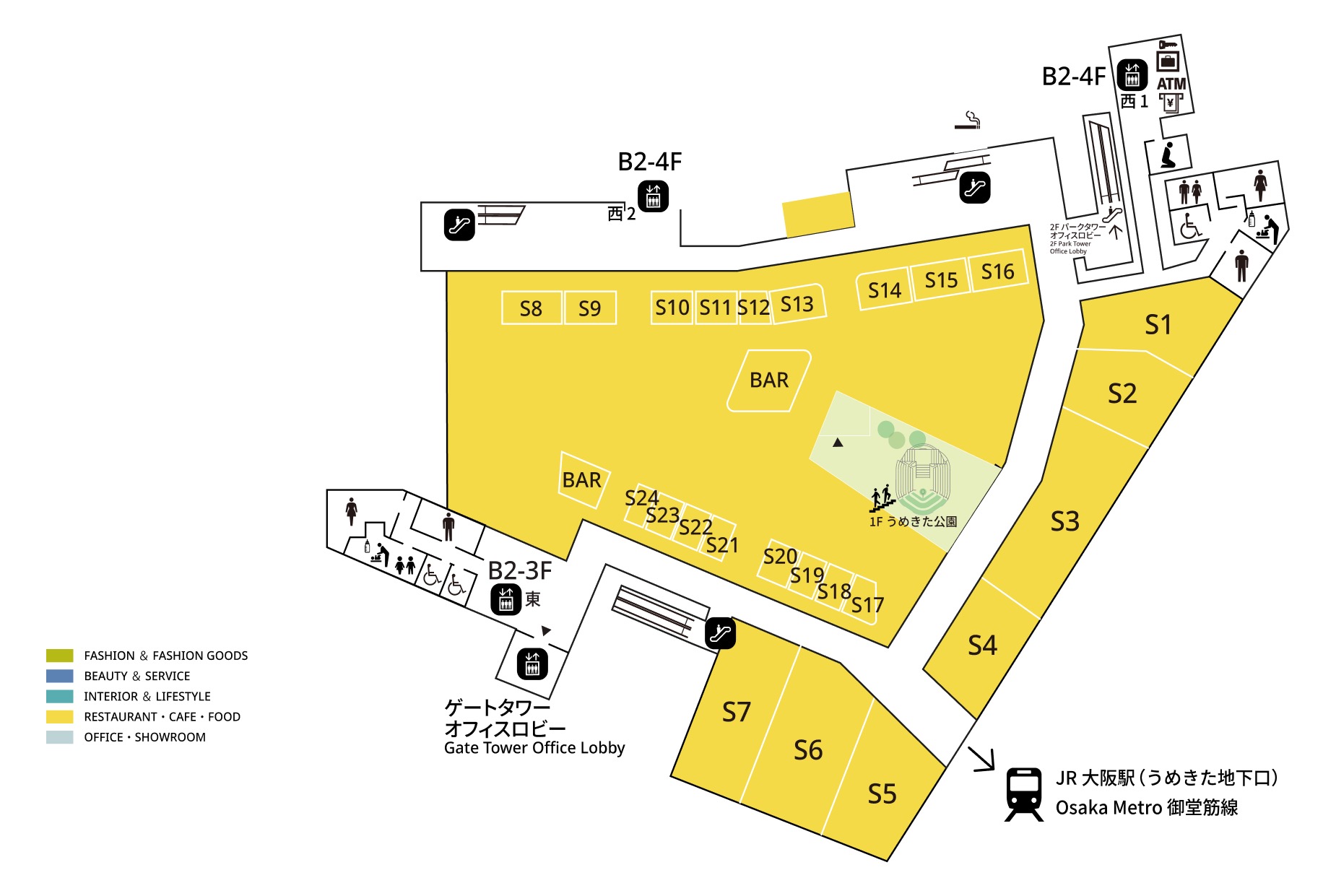
4.With 800 seats across 3,300 sqm, each seat gets 4.1 sqm. That figure includes kitchens, bars and back of house, so it does not line up with Korean food court numbers that count seating alone, but it is generous by any reading. Generous space lets the smells mix. Dry flour from the pizza oven, yakitori charcoal, frying oil and roasting coffee meet under one ceiling and settle into air where nothing is distinct.
5.The lighting is dim. Black finishes and low lamps photograph well, but sitting on a backless stool waiting for an electronic pager to buzz is not a posture anyone holds for long. Each counter takes its own order and no counter takes cash. After opening, the complaint visitors posted online second most often, after price, was that the seating was uncomfortable.
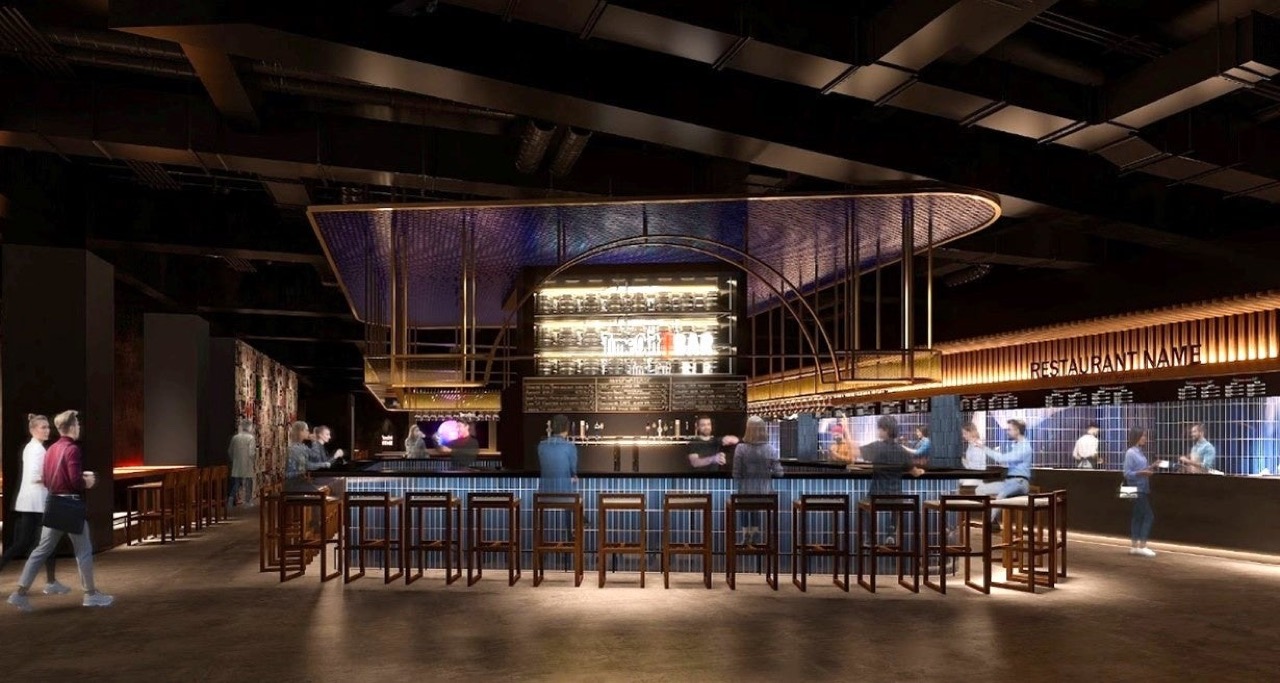
6.The market runs both bars itself. That is how the brand operates everywhere: hand the food to well-known kitchens from each city and keep the drinks. The operator holds the item with the lowest cost ratio and almost no cooking time, and the customers the chefs draw in spend at that bar.
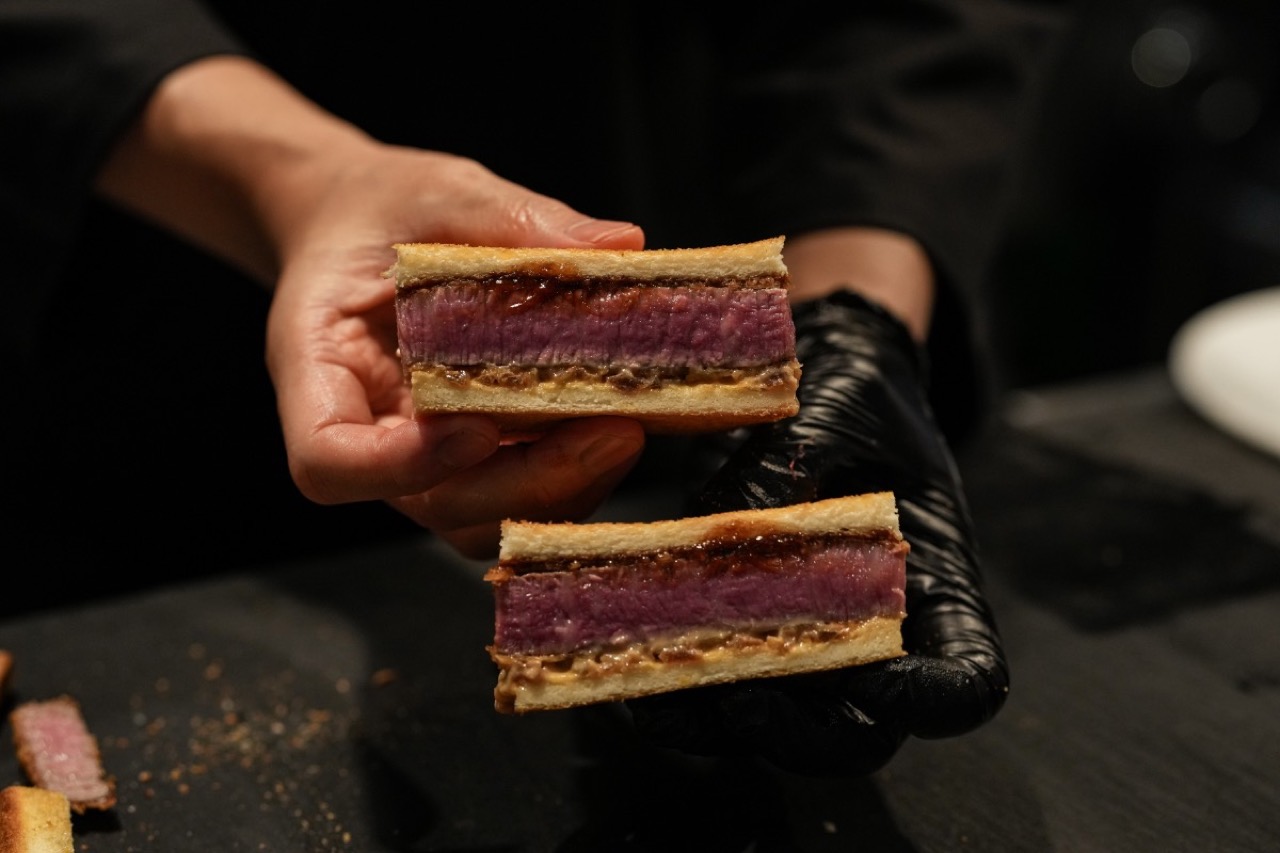
7.What people talked about at opening was the price. The wagyu chateaubriand sandwich from Nikutoieba Matsuda, a meat kappo house from Nara, ran 10,000 yen, and the premium beef cutlet curry 3,800 yen. Even plain udon, the cheapest thing on the floor, was 850 yen, an unfamiliar price list for a city whose diners are used to finishing lunch under 800 yen.
8.In March 2026, a year on, seven of the seventeen closed. Six of them faced the central aisle, and the emptied counters still held payment terminals and electronic pagers with the power on. Nihon Keizai Shimbun reported days when nine out of ten seats stayed empty through lunch and dinner. A reporter who watched a weekday afternoon in April wrote that more than an hour after the 11:00 opening, nobody had sat down in the 200-seat table area.
9.It is not a lease. The contract Time Out Market uses worldwide takes roughly 30 percent of each tenant's sales, and in return the market supplies the kitchen equipment, the seating, the tableware, the payment system, the floor staff and the dishwashing. A chef walks in with a cooking crew and recipes.
10.What this contract does for a chef shows up when customers thin out. No results have been published, so the figures below are assumptions. A tenant selling 6 million yen a month, spending 35 percent on ingredients and 20 percent on kitchen labor, pays 1.8 million yen in fees and keeps 900,000 yen. If customers halve and sales fall to 3 million yen, the fee falls with them to 900,000 yen and 150,000 yen remains. Under a flat lease of 1.8 million yen a month, the same tenant loses 750,000 yen.
11.Contracts renew every year. General manager Takuya Nishina says a neighborhood's tastes shift within a year for certain, and that the policy is to serve the best plate available now to the customer in front of you now. The seven that left in March did not fail. Their terms expired.
12.So how many people do 800 seats need. Open at 11:00 and close at 23:00 gives twelve hours, and two turns per seat puts 1,600 people through the floor. Take 1,540 yen, the middle of the lunch band, add a drink for a 2,000 yen average check, and the day comes to 3.2 million yen, the month to 96 million yen, which works out to 96,000 yen per tsubo per month across 3,300 sqm. At 940 won to 100 yen, that is a little over 900,000 won. If there really were days at nine tenths empty, the first year did not reach half of it.
13.On 1 May this year a ramen shop moved into one of the empty bays. Tenmei, built together by the founder of Jinrui Mina Menrui in Nishinakajima, Osaka, and sake sommelier Keita Akahoshi. It uses no dashi at all, drawing a clear broth from water and soy sauce alone and pairing it with sake, and it starts at 790 yen. This was the first time the market carried anything in the 700 yen range.
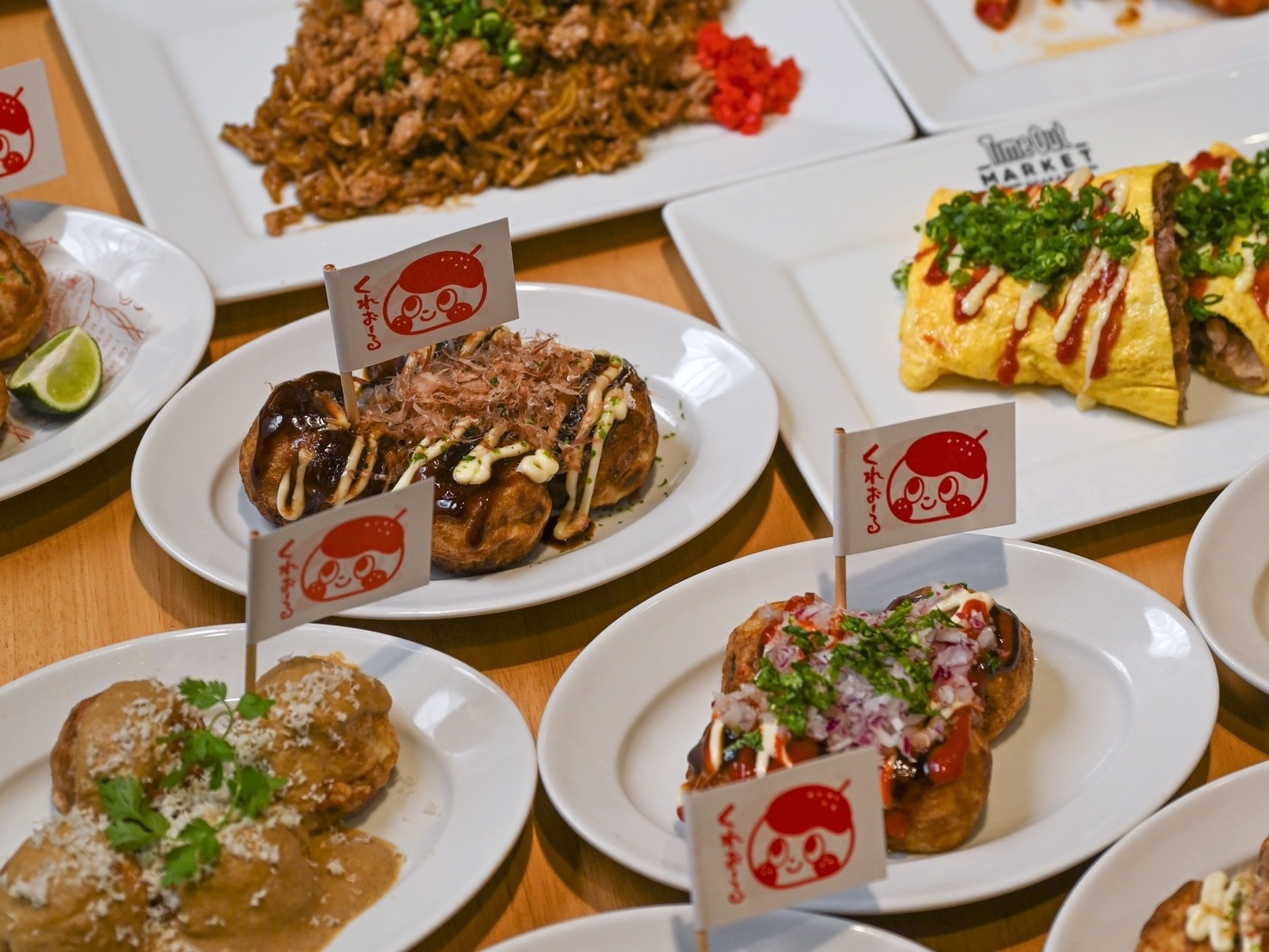
14.Furai Guys, British, followed on 8 May, then the French Le Chef du Mois and the Korean Manipopo on 11 June, the takoyaki shop Creo-ru on the 14th, the Thai restaurant Khun Thep on the 18th, and a Westin Hotel pastry counter in July, filling all seven bays. The lunch band was redrawn at 1,210 to 1,870 yen. The operator's stated reason is that the customer is changing. GRAND GREEN OSAKA expects more than 10,000 people working on the site this autumn.
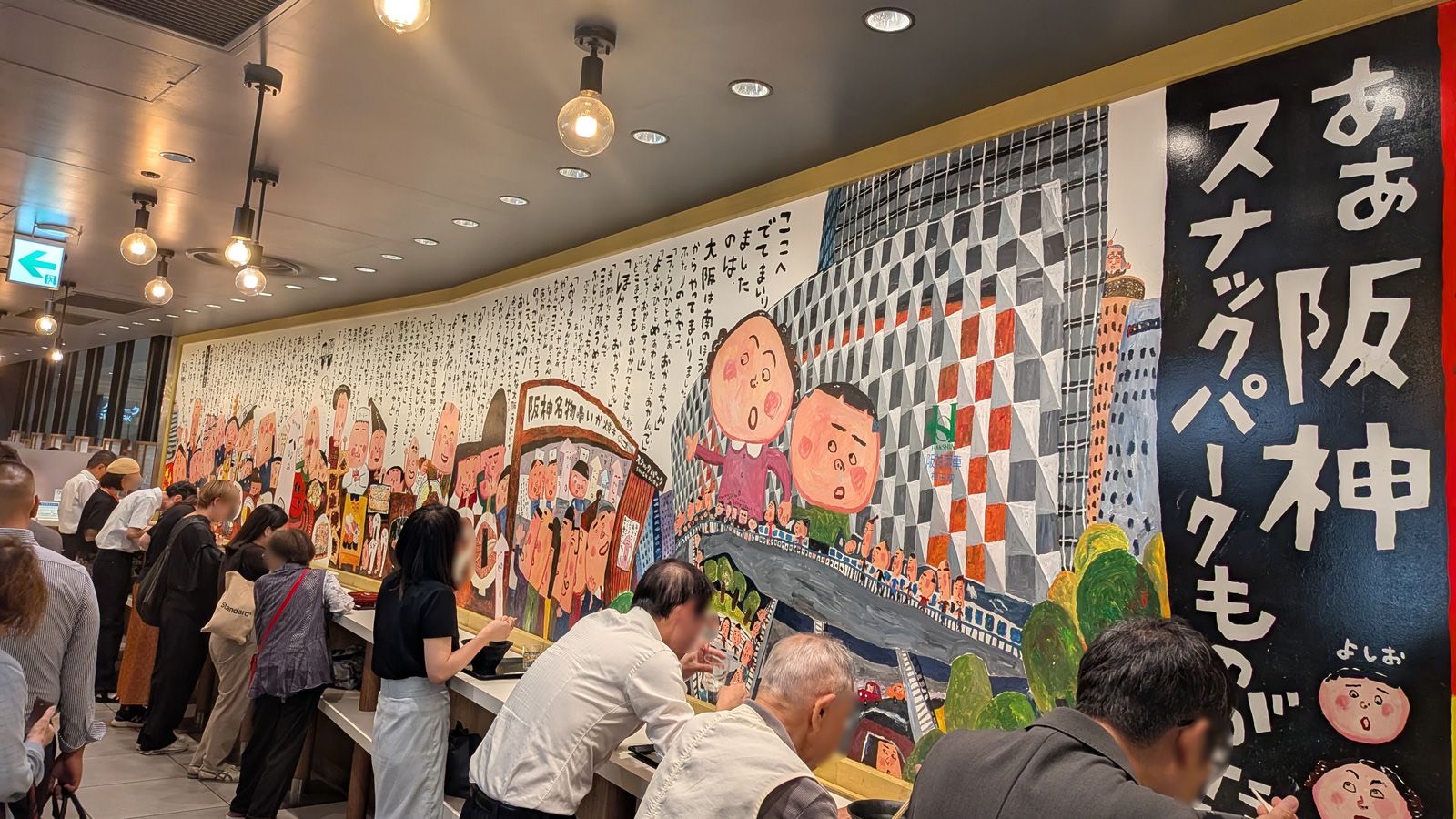
15.There is another dining floor under Osaka Station that works the opposite way. Snack Park, in the basement of Hanshin Umeda Main Store. It began in 1957 as the Oyatsu Center, returned to its present spot in 2018, and every customer eats standing up. Ikayaki costs 187 yen, ramen 390 yen. The company running that floor, which removed the seats to buy turnover and drove prices down, is Hankyu Hanshin Department Stores, and the company that built the 800-seat basement is Hankyu Hanshin Properties. One group holds opposite answers on either side of the same station.
16.A year after opening the eleventh Time Out Market with 800 seats on 3,300 sqm, seven of seventeen had left and 790 yen ramen took one of the spots. Without a contract that takes 30 percent of sales, those seven would have closed rather than reached the end of a term, and refilling the bays would have taken far longer than four months. In Korea the 30 percent is what stops you first. Department stores charged an effective sales commission of 19.1 percent on 2024 transactions and outlets and complex malls 12.6 percent, so asking 30 percent in that market means the operator has to supply the equipment, the floor staff and the dishwashing. Korean food halls usually push those costs onto the tenant and collect the commission alone, which keeps the number low and leaves every risk in the kitchen.