In June a Korean grill house opened in the middle of downtown Shanghai. A short-rib set runs RMB 666, nine plates of banchan land before you order, and there is a RMB 15 cover charge per person. Beer was pushed aside for champagne, and the beef is dried for 28 days before it reaches the grill.
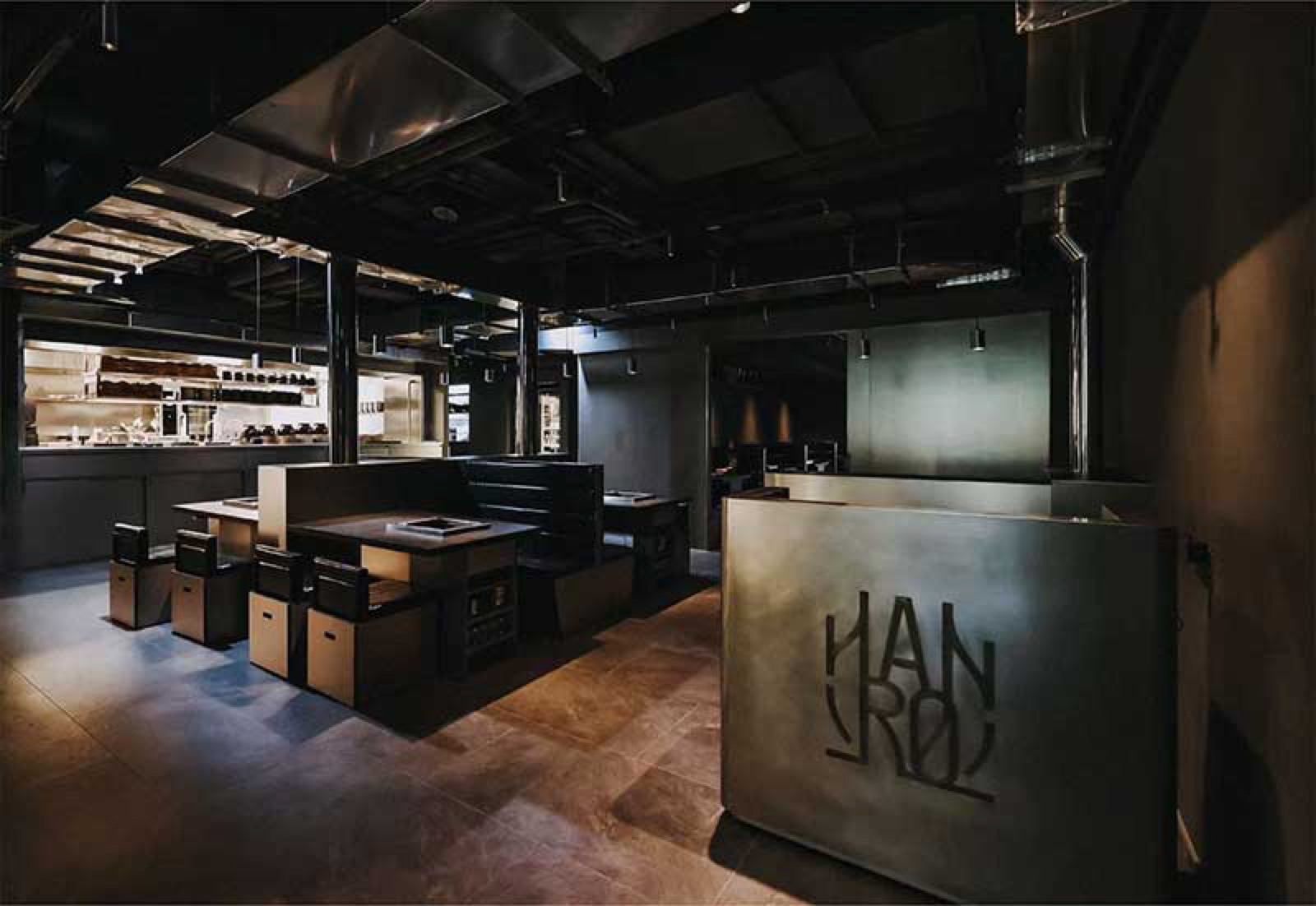
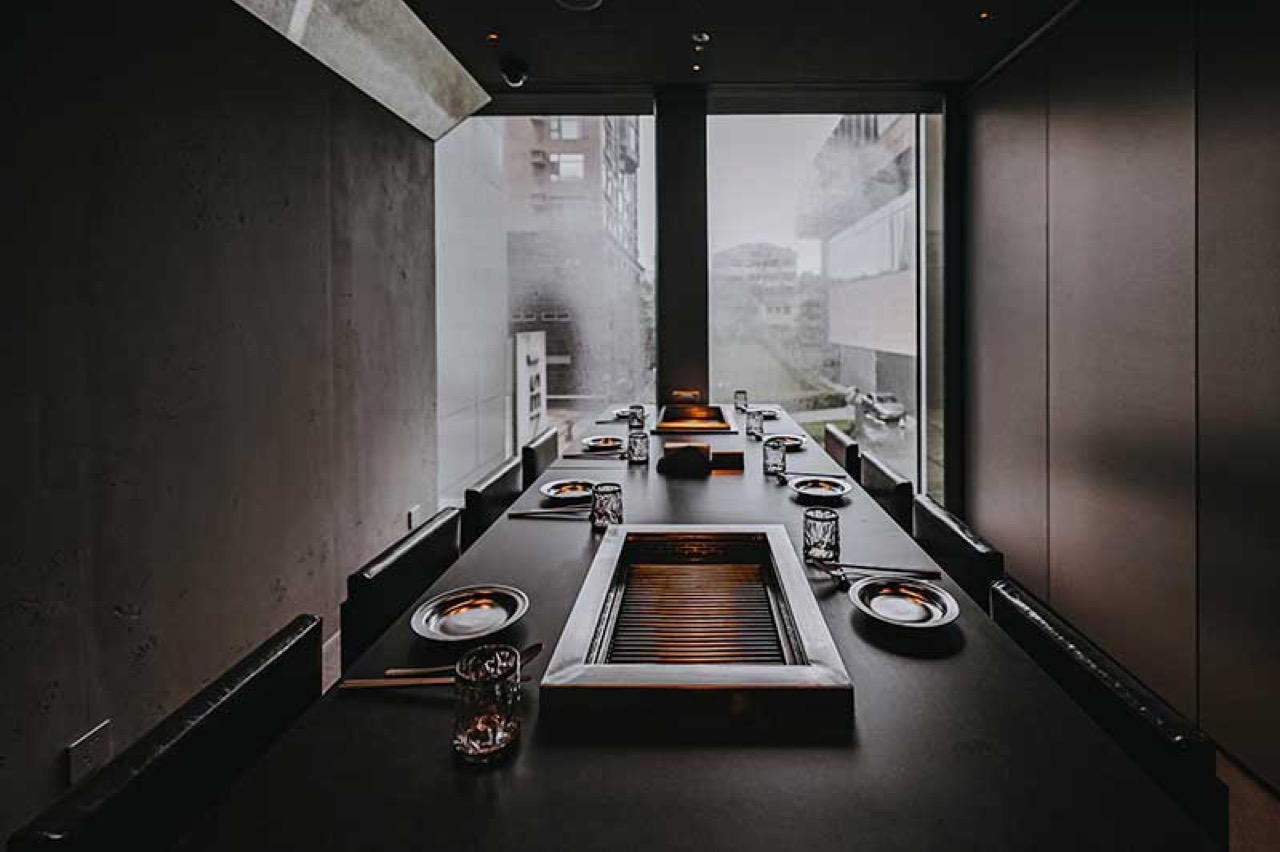
1.HANRO opened in June on the second floor of the KWAH building, on the corner where Huaihai Middle Road meets Donghu Road in Shanghai. The ground floor was left to a bar and a waiting area, and every seat was lifted upstairs. Each table has a charcoal grill set into it, and two private rooms at the back seat eight apiece.
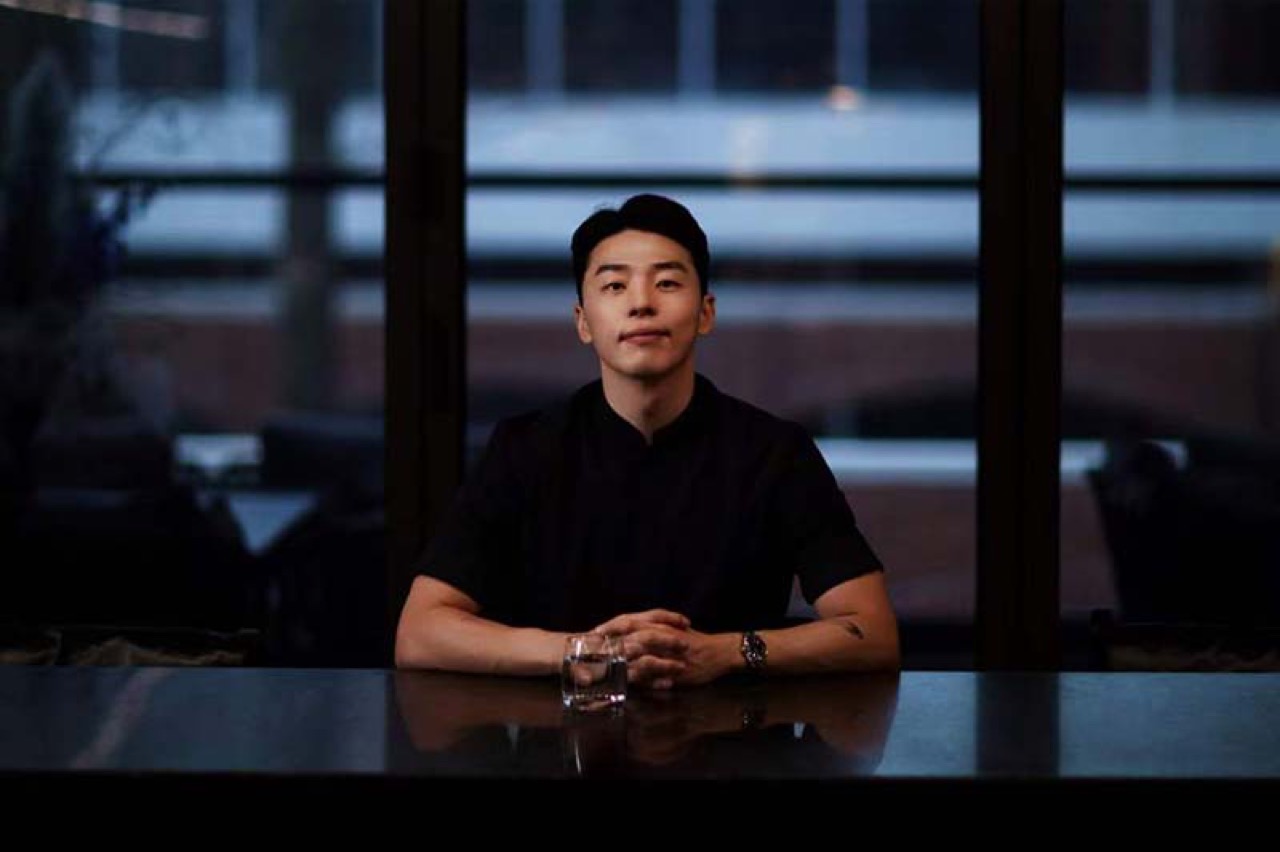
2.Reservations are taken for two seatings only, 5pm and 8:30pm. Miss both and you wait until after nine, and two months in the rule has not moved. The founder is Tom Ryu, who opened his first restaurant at 24 in Cheongju, then crossed to Shanghai for NABI and WULI. NABI made the MICHELIN Guide Shanghai this year. Master Choi, who handles the aging of the meat, joined him for this one.
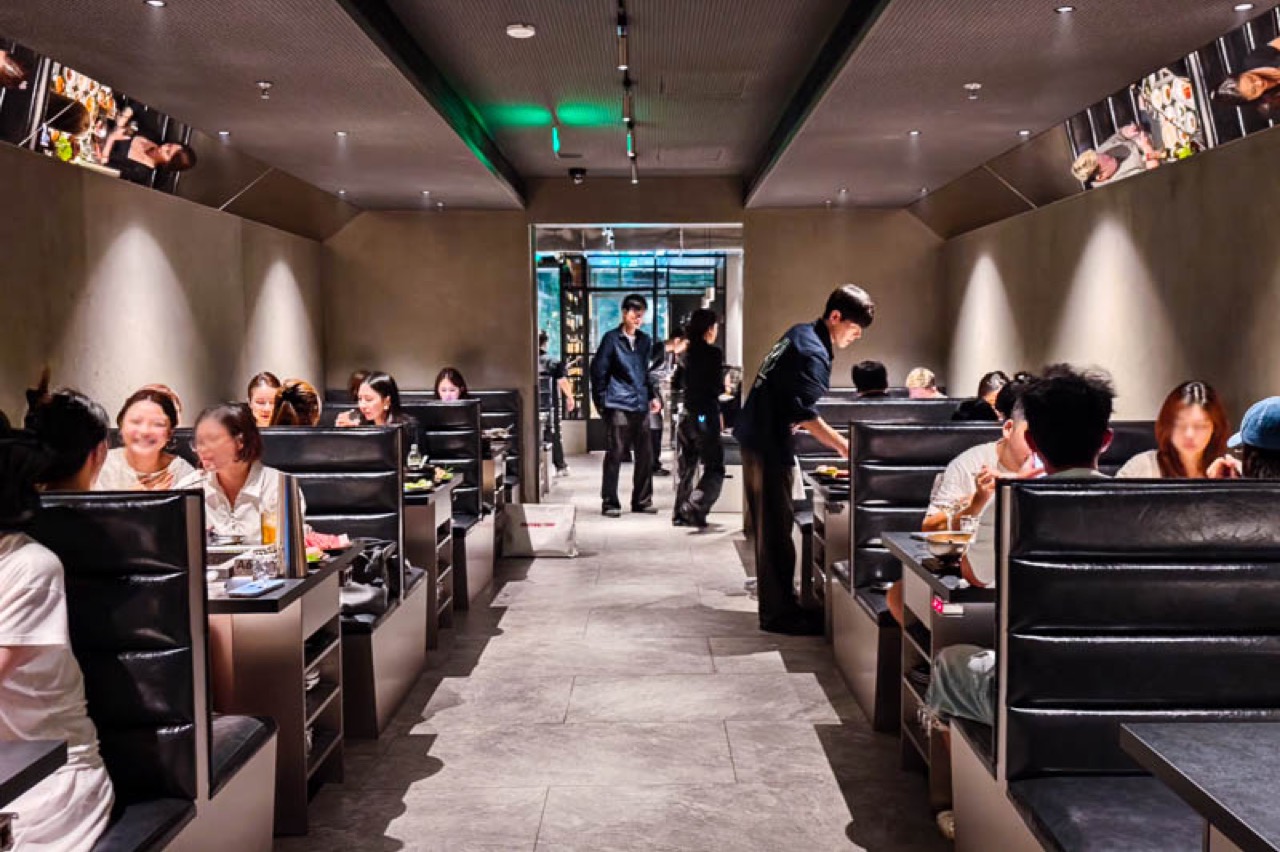
3.Inside there is only black and grey. The ceiling was stripped back to its ducting, a silver hood drops over every table, and leather booths face each other underneath. The palette came straight from NABI, but in a grill house the hoods are what you see first. With the long narrow room split by a central aisle, one server walking it can watch both rows of grills.
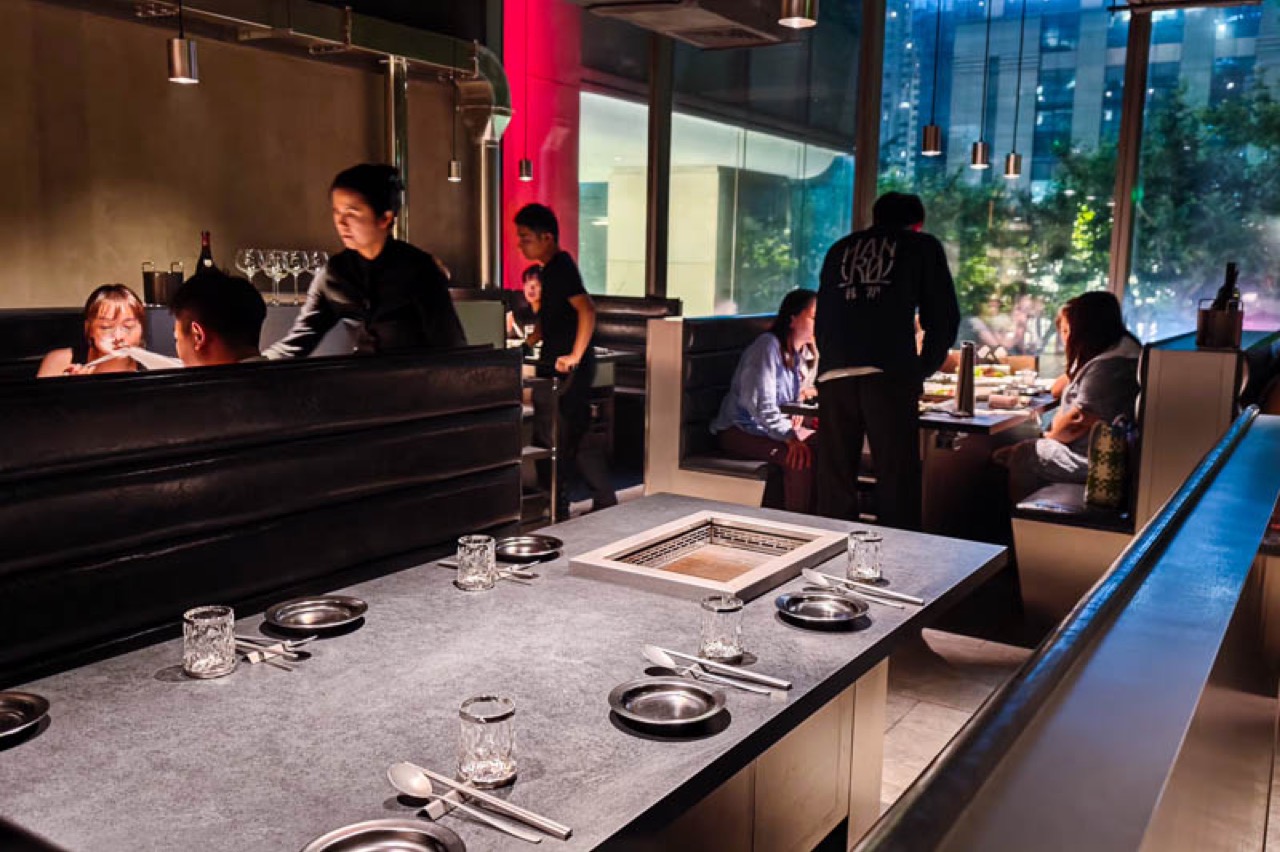
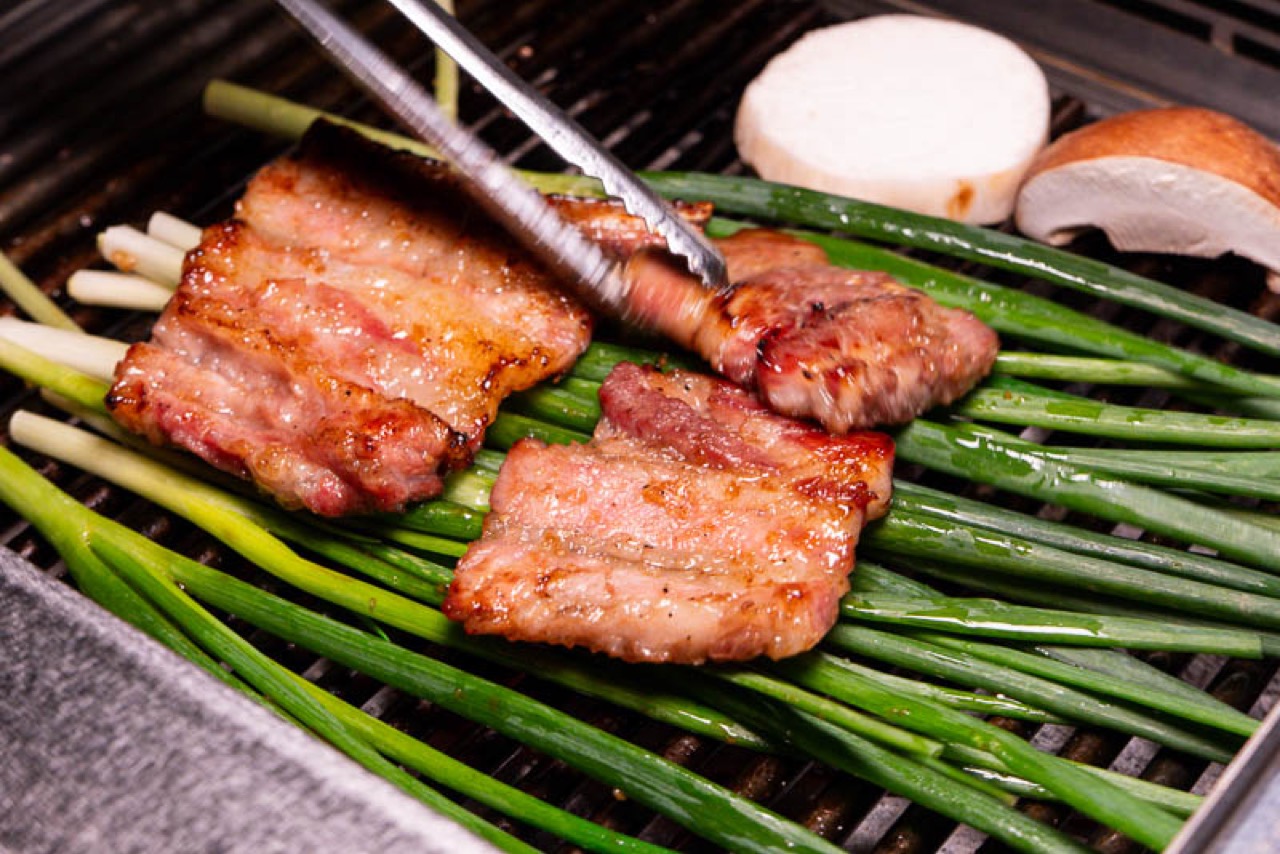
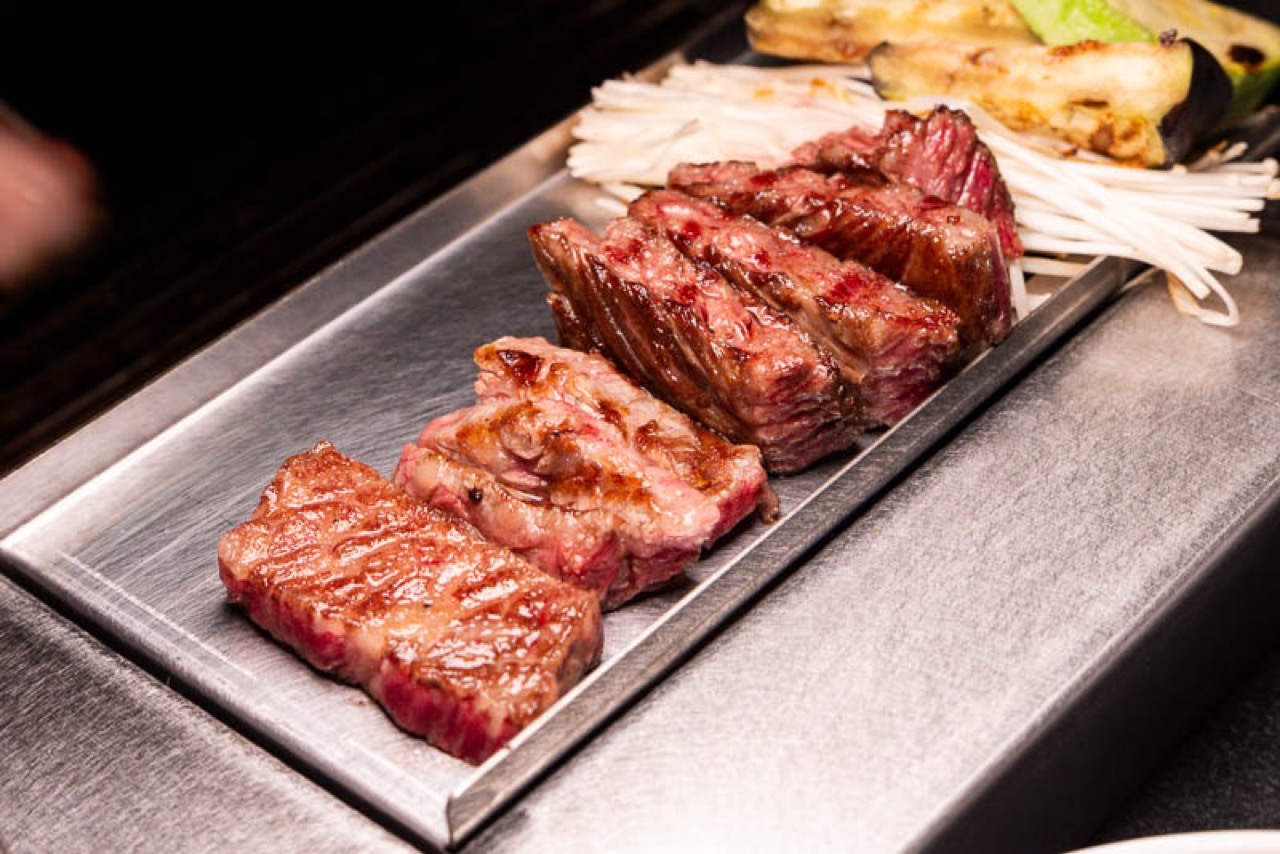
4.The fuel is binchotan. It burns longer and smokes less than ordinary charcoal, and it costs roughly twice as much. Spring onions go down on the grill bed first and the meat sits on top of them, so the fat drips through the onions onto the coals in short broken hisses while the pressed greens throw off a sweet smell. It is a layout that keeps a guest from ruining the meat with too little attention.
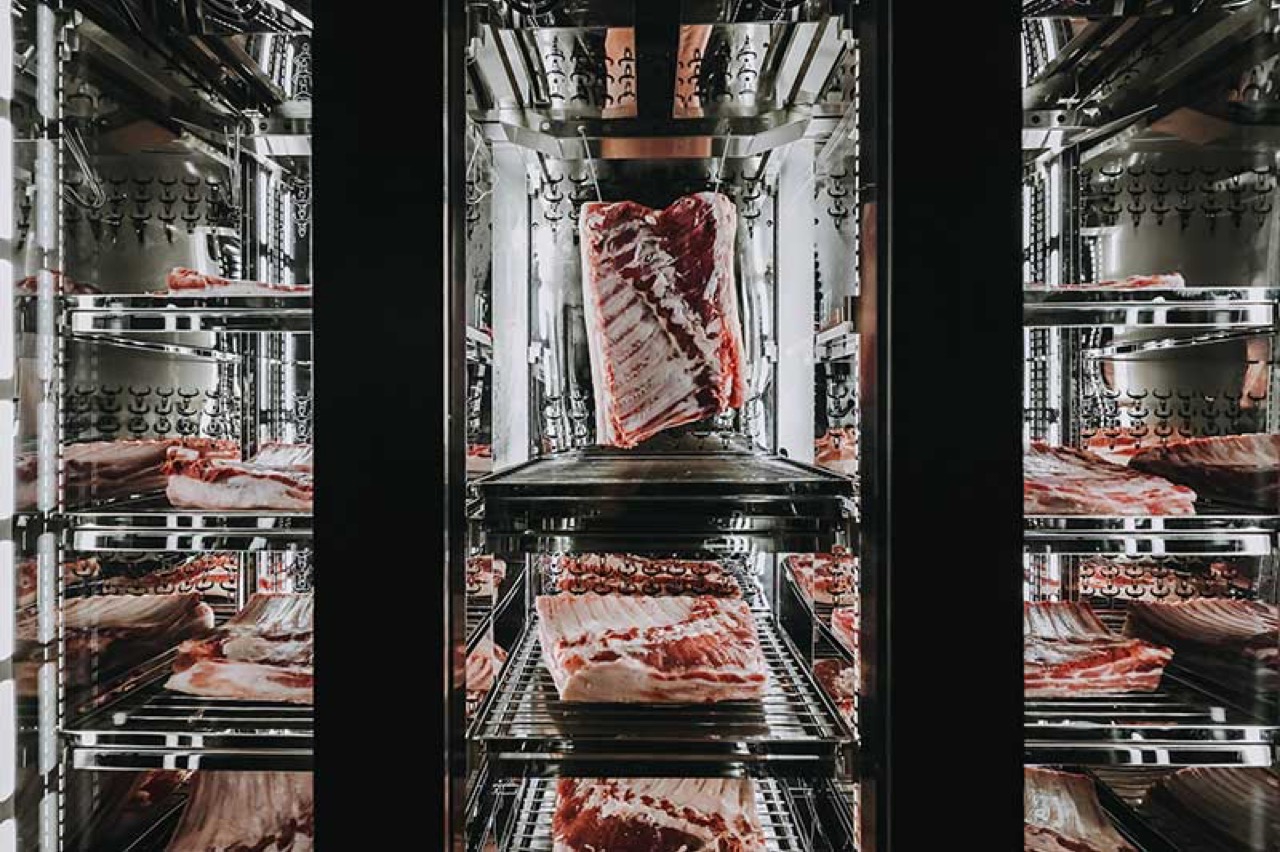
5.The aging cabinet sits behind glass with rib racks hung inside. The surface dries and darkens, and past 21 days a crust forms that concentrates what is underneath. That crust never reaches a plate. It gets trimmed off and thrown away.
6.China passed 68,000 Korean restaurants by the end of 2023. In Shanghai alone the grill houses cluster on Hongquan Road in Minhang, the Korean street, where half of them sit inside a single mall. That is a market that competes on lower prices and bigger portions. HANRO picked a site thirty minutes away by metro, and priced itself in the opposite direction.
7.The beef is wagyu raised in Shandong, the pork is Zhejiang black pig. Japanese beef has been shut out of China since the BSE outbreak of 2001, and although the ban was formally lifted in 2019, actual exports have still not resumed. Korean beef is in the same position. With origin closed off as a way to justify a price, aging was what remained.
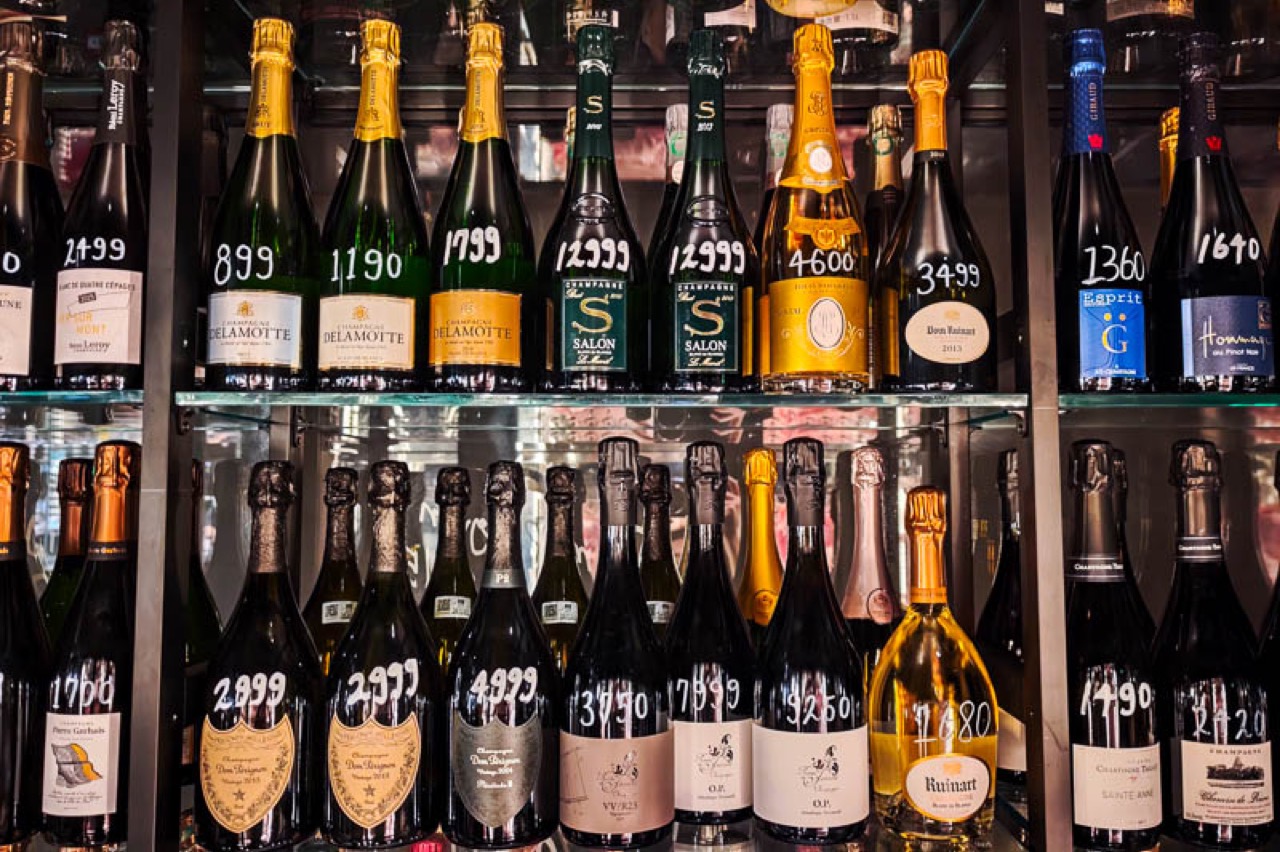
8.The drinks list was swapped out even more openly. Beer, the default of any grill house, was moved to the back and a champagne fridge put up front, while the soju is imported from Korea for this restaurant alone. Cheongju and makgeolli come the same way. The operator says it holds the largest selection of Korean sool and champagne in the city.
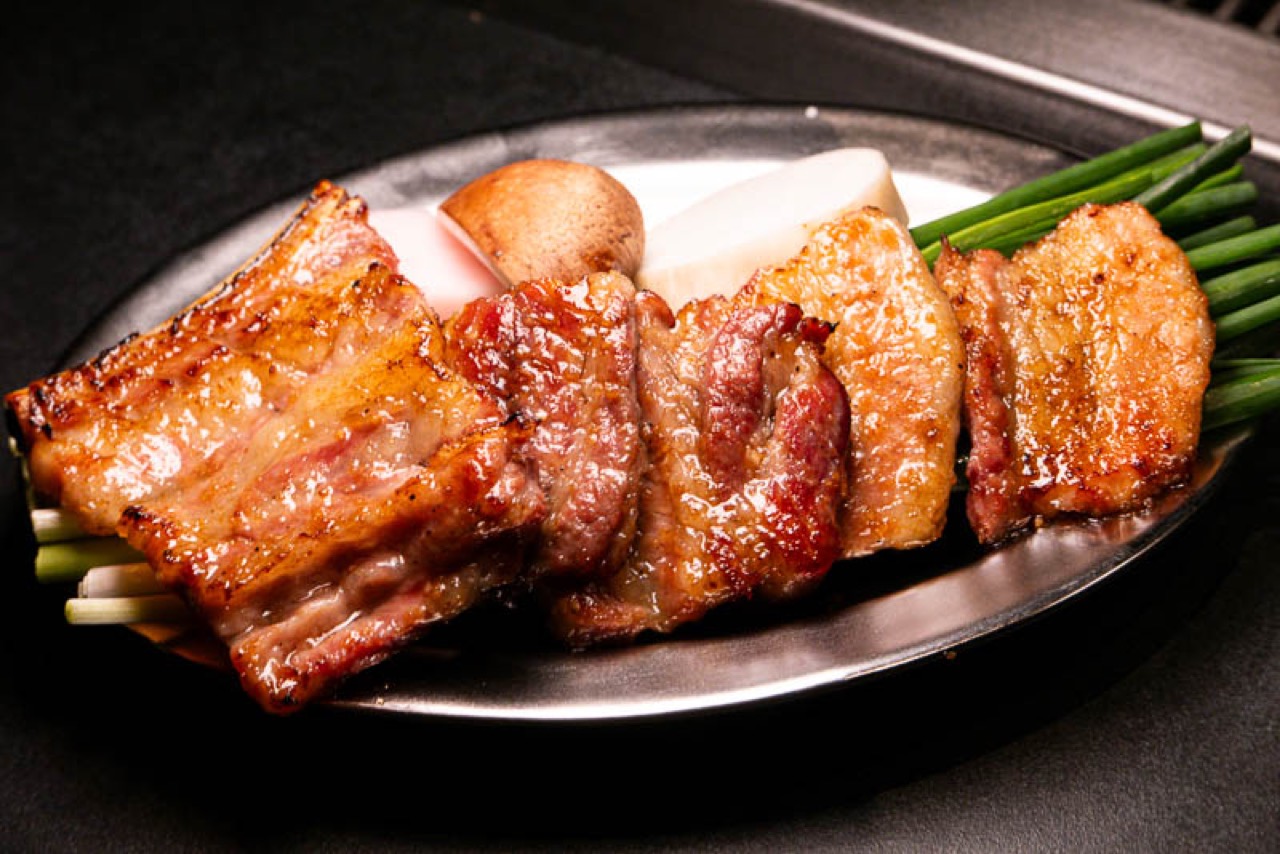
9.Now the prices. The beef galbi set, three cuts of differing marbling plus a bone-in rib, is RMB 666, about KRW 155,000 at August rates. Black pork galbi is RMB 148. Rice, noodles and stew all sit under RMB 100.
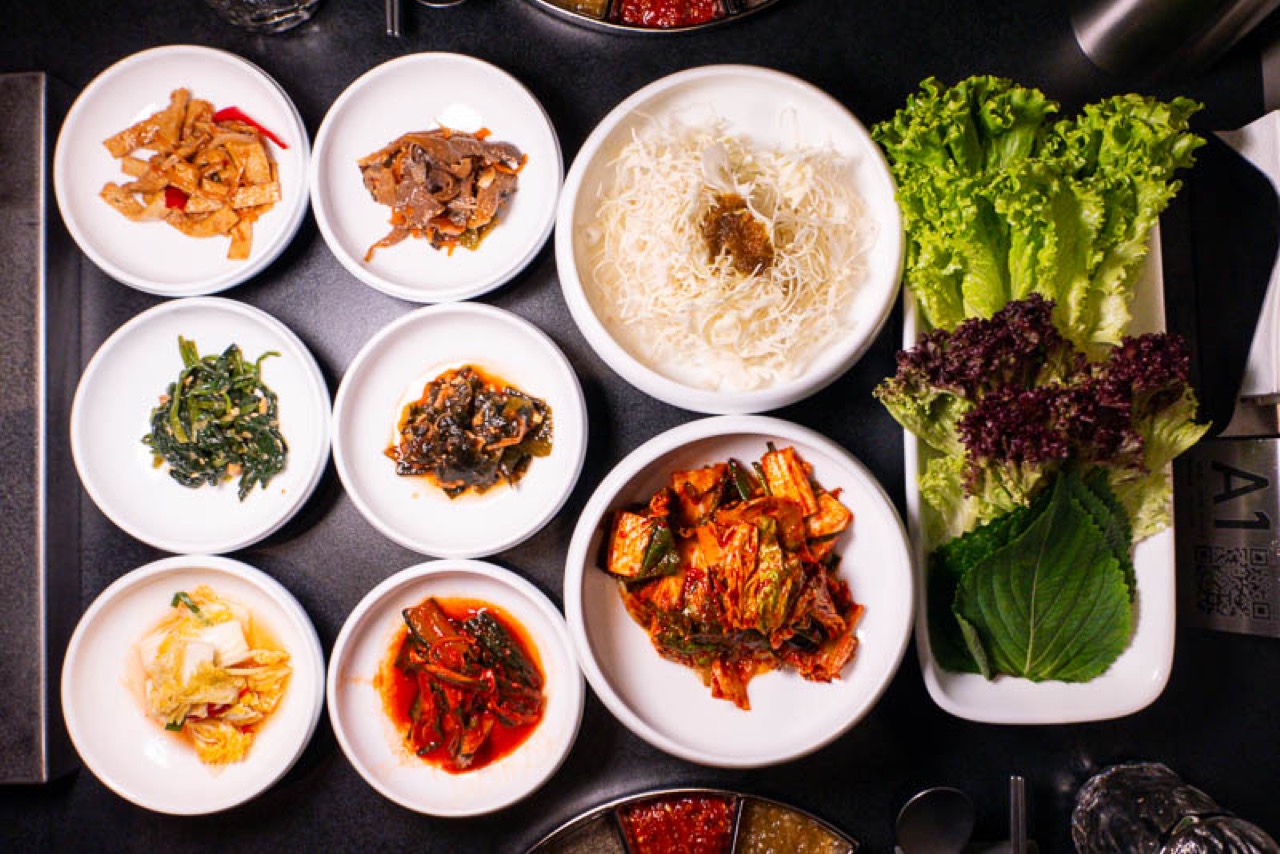
10.The banchan arrives before anything else. Two kimchi, seasoned greens and namul, fish cake and kelp, nine plates down before you have ordered, with lettuce and perilla on a separate plate. For that there is RMB 15 a head. About KRW 3,500, and unlimited. It writes down as a price the fact that side dishes are not free.
11.Two people ordering the beef galbi set, adding the black pork jjajang pot rice and the bibim noodles, and picking two of the premium sauces, run a bill of RMB 898. That is RMB 449 a head, about KRW 105,000. Without a drop of alcohol.
12.The champagne fridge has prices written on the bottles in white marker. Delamotte at RMB 899, Dom Pérignon at RMB 2,899, Salon at RMB 12,999. Open the cheapest bottle and that same bill becomes RMB 1,797, or RMB 899 a head, roughly KRW 210,000. One bottle doubles the spend per head.
13.The cost of the meat moves the other way. Dry aging over 28 days loses 20 to 30 percent of the original weight once moisture loss and the trimming of the hardened crust are both counted. You buy a kilo and sell seven hundred grams, and what is gone is carried by what remains. Wet aging barely loses anything. The operator says the two methods are split by cut and fat content.
14.Which is what makes those two seatings, 5pm and 8:30pm, matter. A grill house ties up a table for a long stretch because guests cook their own meat, so turnover is poor by nature. Cutting reservations into two blocks sells the same seat twice a day. Walk-ins after nine fill whatever is left, and the two private rooms sell eight covers in a single booking.
15.This is the third one. NABI, the first, is fine dining; WULI, the second, was traditional Korean comfort food between RMB 38 and RMB 168. Yet WULI is the one that moved, giving up its Changning address for Pudong. Of the two poles he had opened, the middle went first, and the third card was placed at the top rather than the centre.
16.In a country with 68,000 Korean grill houses, one has planted itself downtown that dries its beef for 28 days, trades beer for champagne and charges RMB 899 a head instead of cutting prices. Anyone trying the same thing in Korea hits the banchan first. Korean diners do not read side dishes as a priced item, so the moment a cover charge appears on the bill, unlimited or not, the reviews react before anything else. If the banchan cannot be taken out of food cost, drinks are the only lever left, and Korean grill houses are pinned to a KRW 6,000 bottle of soju, where no single bottle will ever double the spend per head.