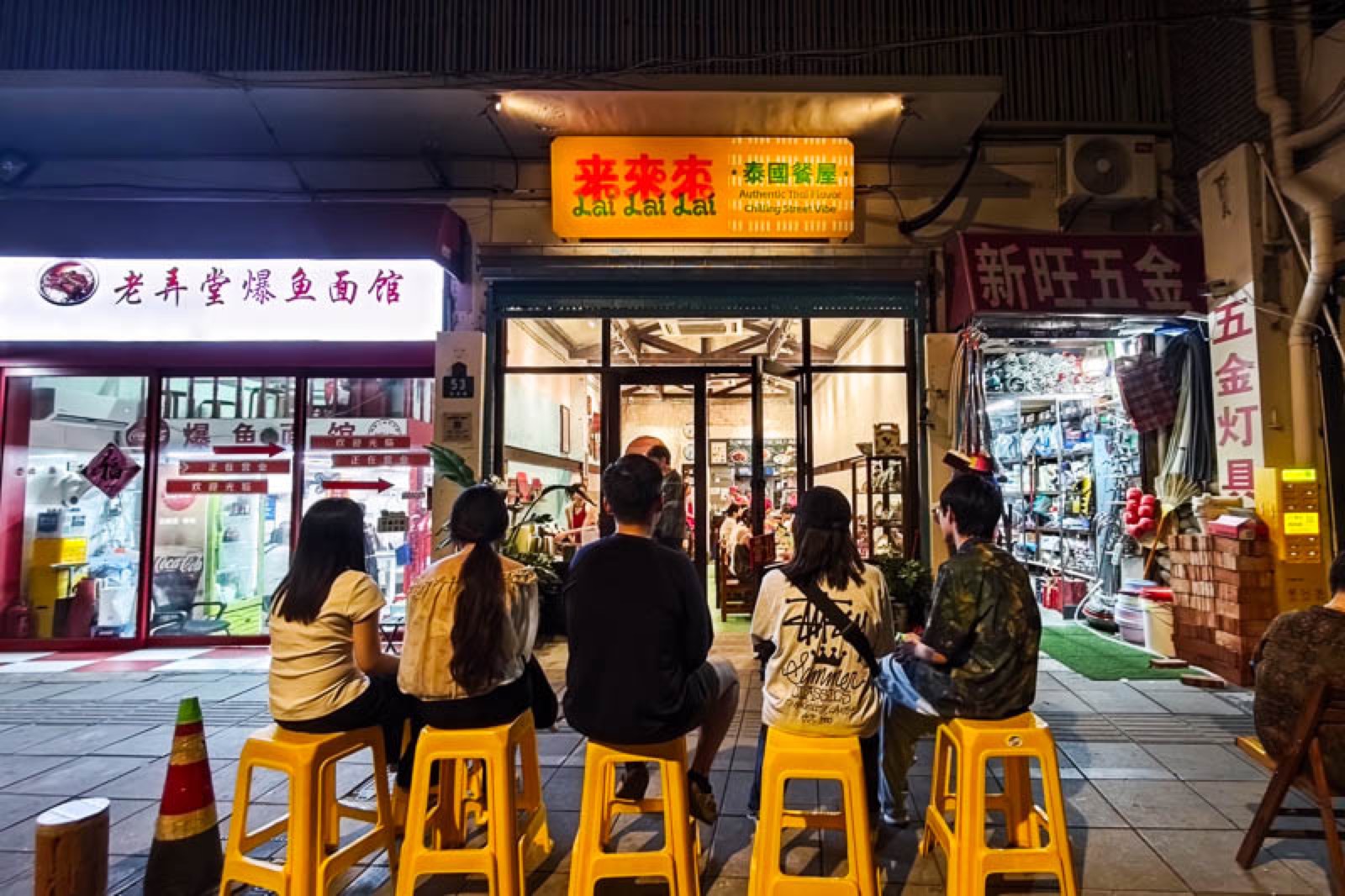
A Thai restaurant in Shanghai has opened a second room down a side street, three times the size of the first. The original charged about RMB 79 a head and looked like a Bangkok street stall. At the top of the new menu sits a rack of pork ribs at RMB 350. Tripling the floor area cut sales per pyeong to less than half. The reason that trade still adds up is sitting on one platter.
1.Lai Lai Lai (来来来), a Thai restaurant, has opened its second location on Jiashan Road in Shanghai's Xuhui district. The first sits on Changle Road in Huangpu, a street-level shop of roughly 35 square metres. Blue steel tables, metal stools, a shelf of Thai sauce bottles along the wall. A Bangkok stall, copied.
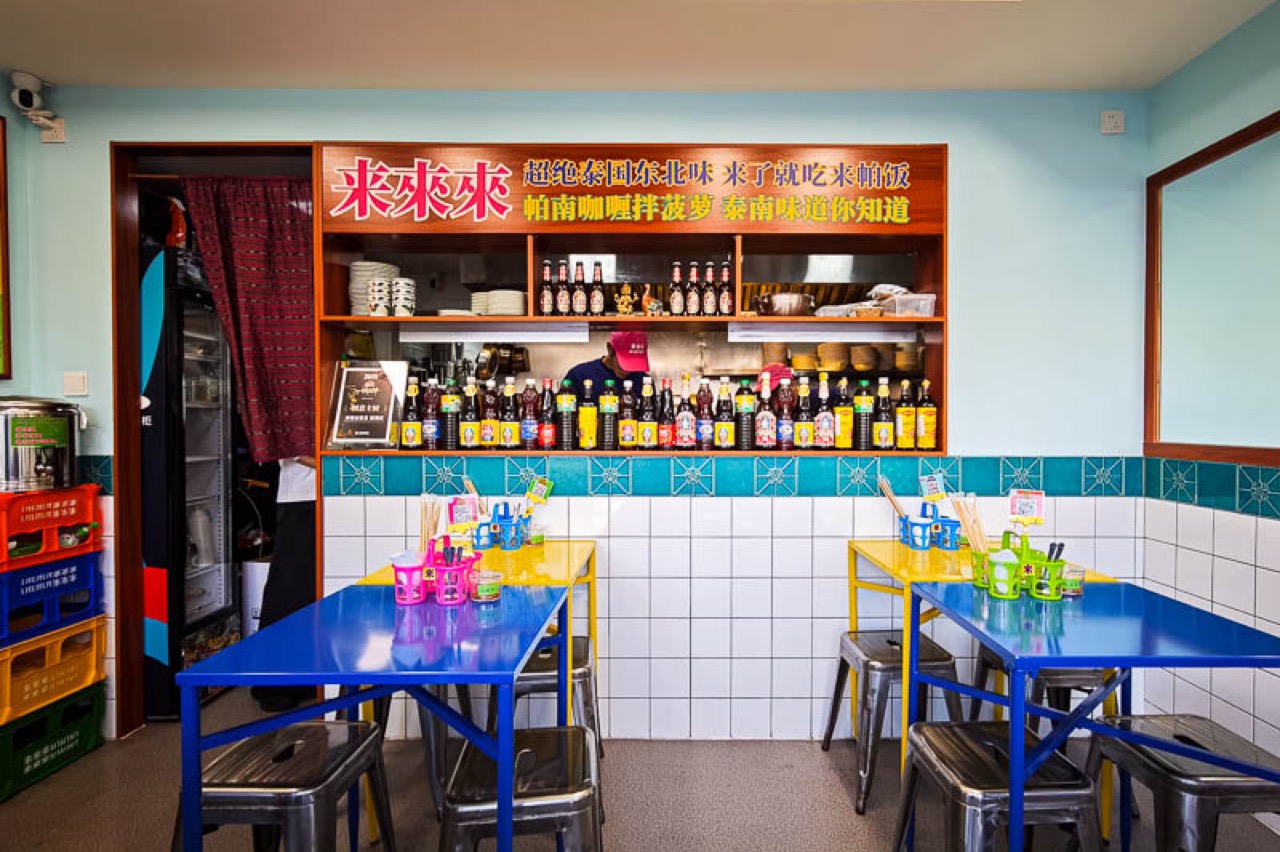
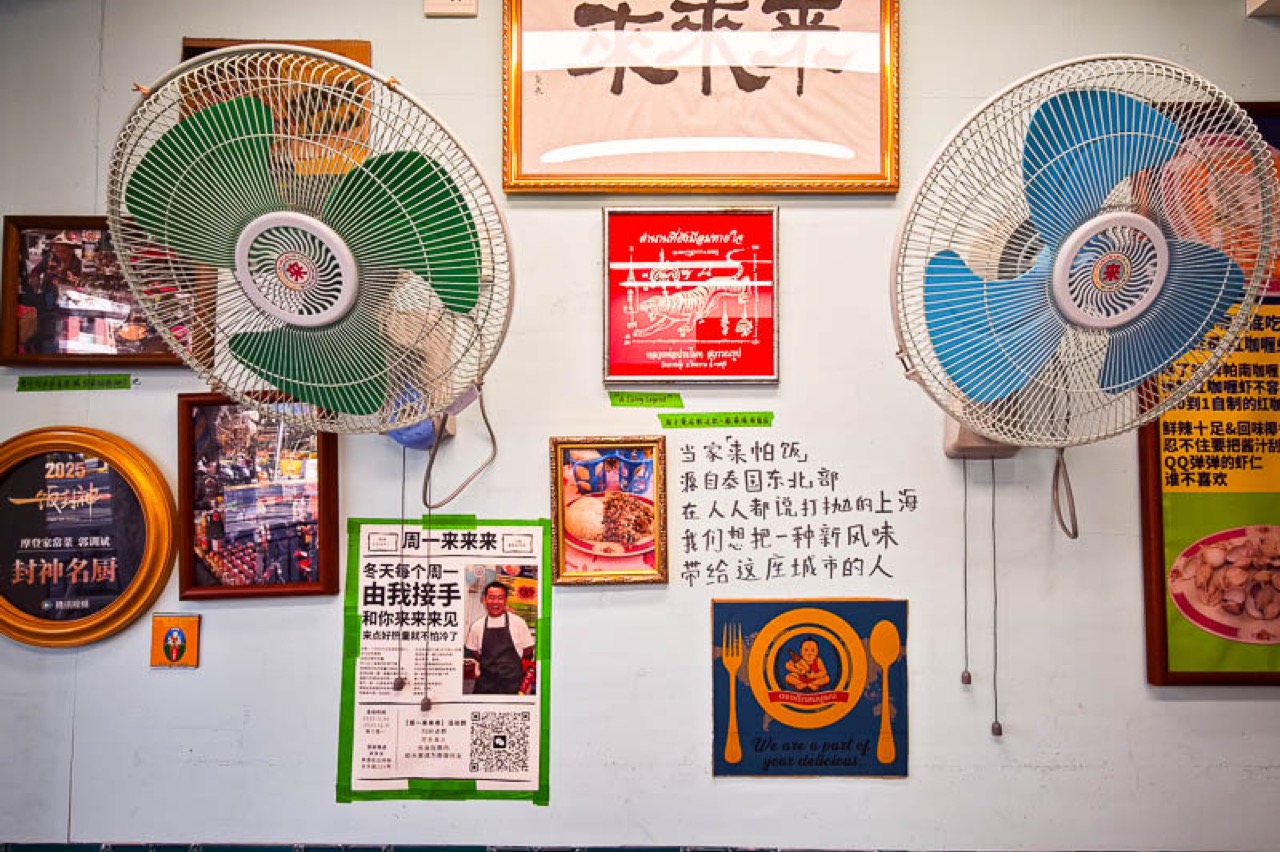
2.The kitchen belongs to Guo Xunbin, from Jiangxi, who competed on the Chinese cooking show The Divine Dish (一饭封神). The plaque he won hangs on the first shop's wall between two electric fans. Local press reports that he keeps travelling back to Thailand to build the menu. Isan food from Thailand's northeast is the backbone here.
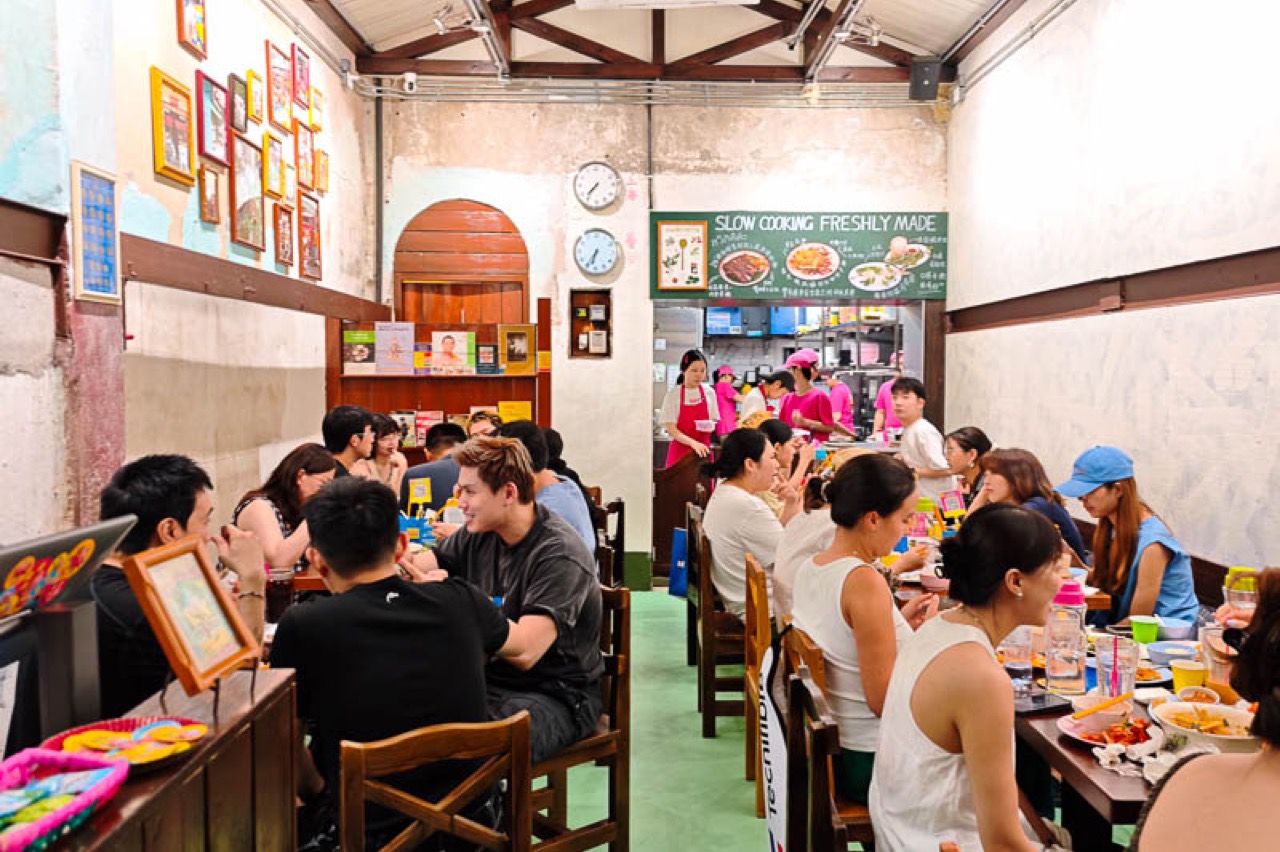
3.The second location takes the entire ground floor of an old house. High ceilings, plaster walls left with the paint flaking off, a dining floor that sits one step below the street. A wooden shelf of worn Thai cookbooks along one wall, two clocks beside it. One for Shanghai, one for Bangkok. The open kitchen stands exposed at the back of the room, cooks in pink aprons working in the same air as the guests.
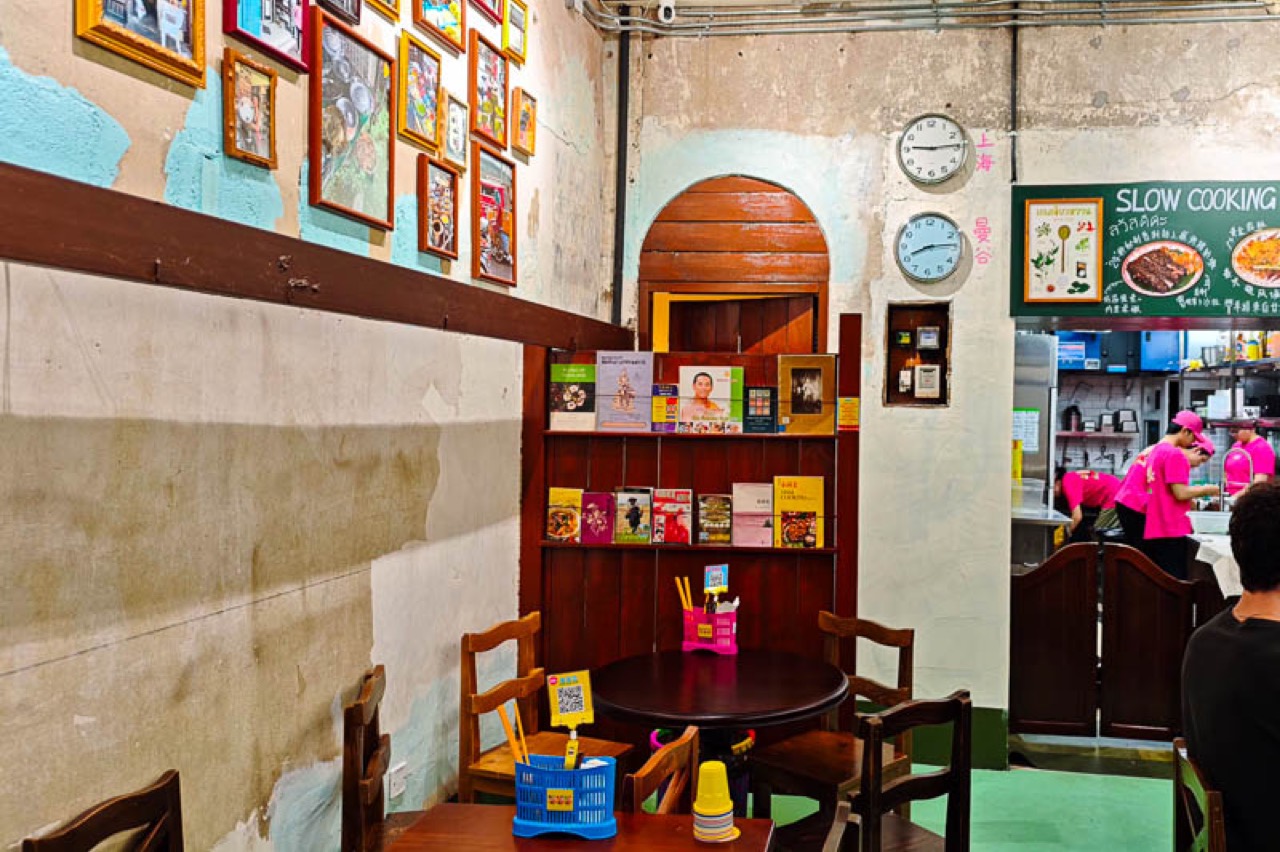
4.Lunch opens at 11:30 and runs two and a half hours, dinner takes guests from 5:30 to 9:30, and Mondays are closed. Weekends run straight through from midday. Seating is wooden chairs and round tables, and the metal stools from the first shop are gone. Change how a guest sits and you change how long they stay, and that changes what they can order.
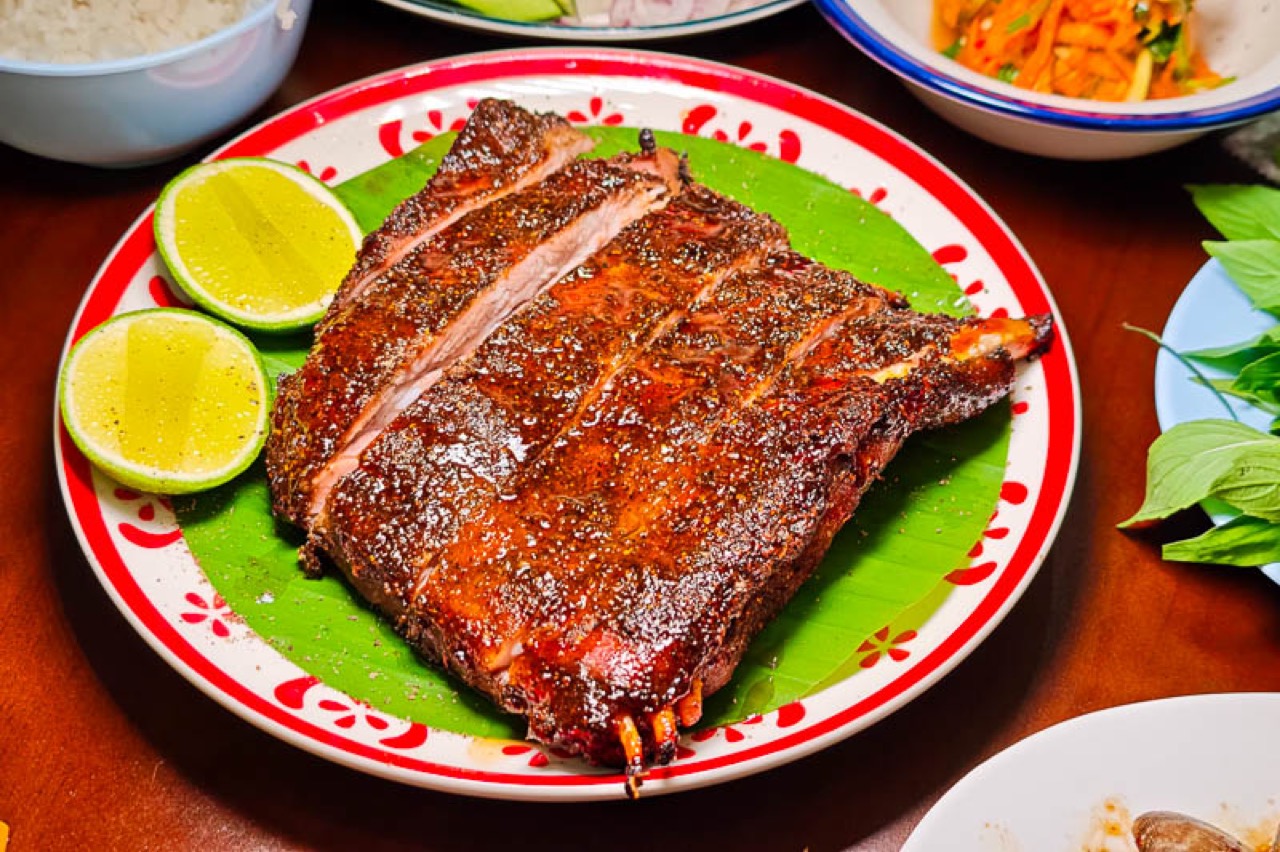
5.At the top of the menu is a rack of pork ribs cured in 24 spices. RMB 350, about KRW 68,000. It comes roasted whole on a banana leaf, the skin splitting as it dries, spice powder caked into the cracks. A platter that only works when several people share it.
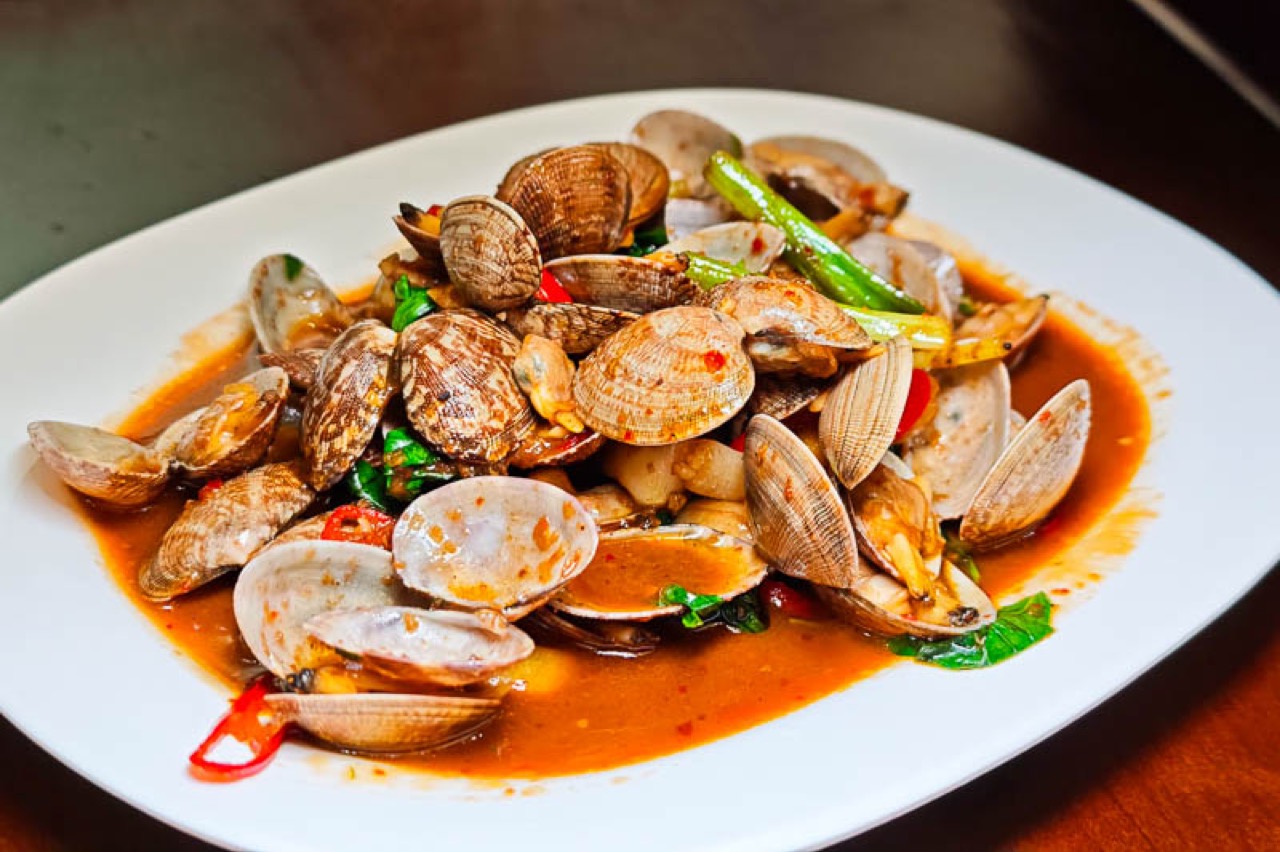
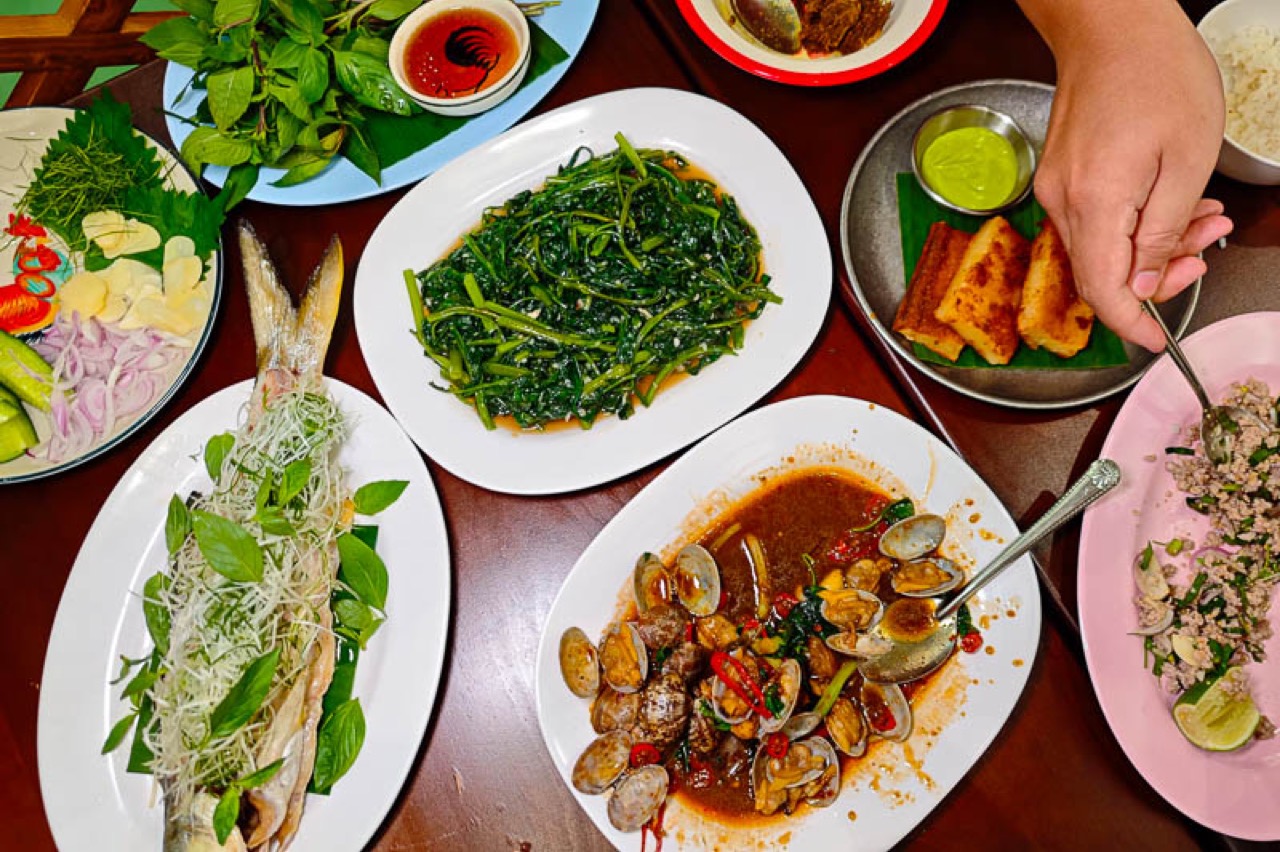
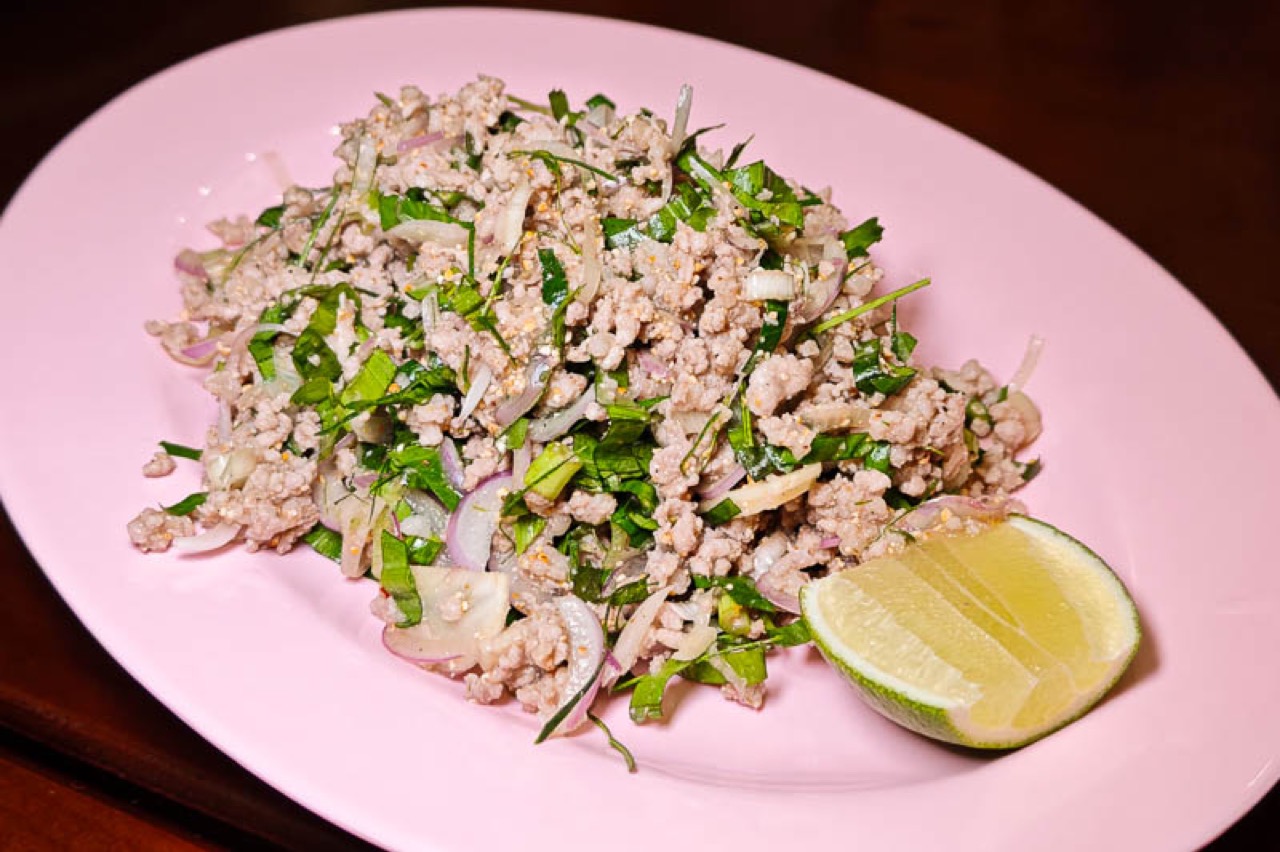
6.Stir-fried clams run RMB 88. The sauce is built on marsala and brown butter with preserved mustard greens, a combination Thai kitchens rarely reach for. Liquid pools at the base of the plate with basil leaves floating on it. The pork larb leads with sourness and heat, minced pork tossed with shallots, toasted rice powder and lime. Eaten without rice it reads as salty. Pinch some of the sticky rice that arrives in a bamboo basket and the balance returns.
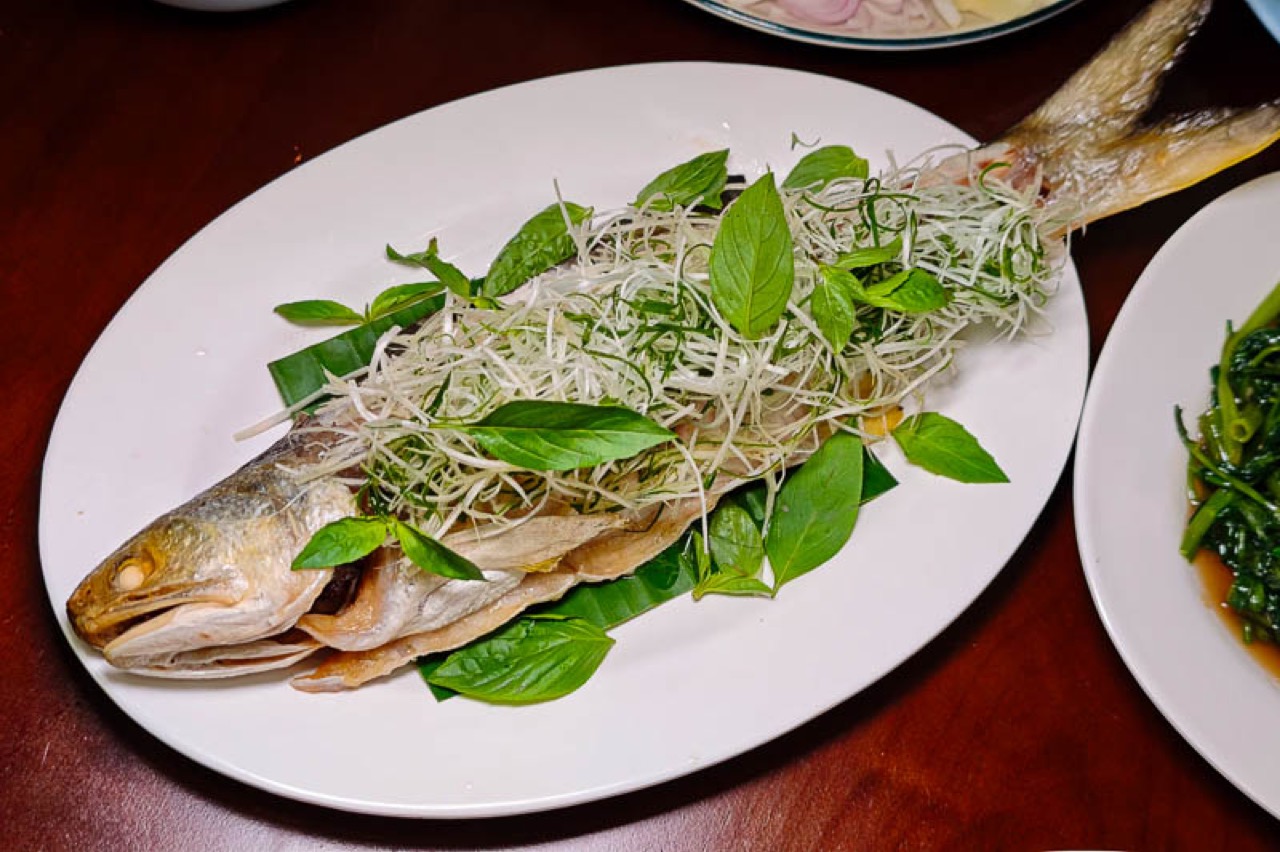
7.Bigger plates are the largest change at the second location. Whole fish at RMB 228 and the ribs at RMB 350 are things nobody orders alone, and they now sit at the top of the menu, while stir-fried morning glory at RMB 38 stays at the bottom. Two price bands sell at the same table.
8.Shanghai's Thai dining market has been pushed downward these past few years. Simply Thai (天泰), which opened in 1999 and once ran 22 branches, is down to about five, and reports say it closed shops with wages unpaid. The middle band that charged RMB 100 to 150 a head emptied out.
9.That ground was taken by low-price brands charging RMB 34 to 72 a head. Instead of flying in Thai chefs and air-freighting ingredients, they built standardised supply chains and cut the price. Lai Lai Lai's first shop stood in that line too. RMB 79 a head.
10.So where did that price come from. The rent schedule. Small street-level units around Changle Road go for roughly RMB 33 per square metre per day, and Jiashan Road, one block deeper into the lanes, prices lower. Triple the floor area and the rent does not triple with it.
11.Spend per head moves the other way. Two people at the second shop ordering larb, clams, one vegetable, sticky rice and iced tea land around RMB 260, roughly RMB 130 each (estimate). A table of four with the ribs pushes it to RMB 170 a head.
12.Sales per pyeong run the opposite direction. The first shop pulled about RMB 200,000 a month out of ten pyeong, and the second, on triple the area, does not clear that by much (estimate). Divide it out and the figure drops to less than half.
13.So why take the space. Because a street stall cannot sell a RMB 350 platter. A guest perched on a metal stool with their back to the pavement does not order a rack of ribs, and if they did there is nobody beside them to share it. Selling big plates needs big tables, and big tables need floor area you have to buy. Efficiency per pyeong traded for spend per head.
14.What decides this trade is labour, not rent. Thai cooking carries a long list of spices and herbs, so food cost runs around 35%, and bigger plates stretch prep and cooking time with them (estimate). Rent gets pressed below 15% of sales while kitchen headcount goes up. Which is why the money left over looks much like the first shop's.
15.This shop is now climbing into the ground Simply Thai used to hold. Is it walking the same road, though. Simply Thai started in the RMB 100-plus band, held that band and fell, while Lai Lai Lai gathered its guests at RMB 79 and is taking them upward. The one that held its band closed. The one that moved its band is still here.
16.The risk arrives next. Street-level retail in central Shanghai turns over fast. A municipal survey found a stretch with seven coffee shops inside 300 metres, and noted rents that are high alongside tenancies that keep changing. If the stall crowd does not follow into the lanes, tripled floor area simply becomes fixed cost.
17.A shop charging RMB 79 a head, dressed as a street stall, took three times the floor area down a side street and hung a RMB 350 rack of ribs on the menu, giving up half its sales per pyeong to nearly double its spend per head. Anyone running this play in Korea hits labour before floor area. Big plates mean long prep, long prep means more kitchen hands, and the moment that headcount rises, the 15-hour weekly threshold and holiday allowance both detonate on the same roster. A shop that starts as a stall and wants to grow needs this arithmetic finished before it expands. Do it afterwards and the lease is already signed.