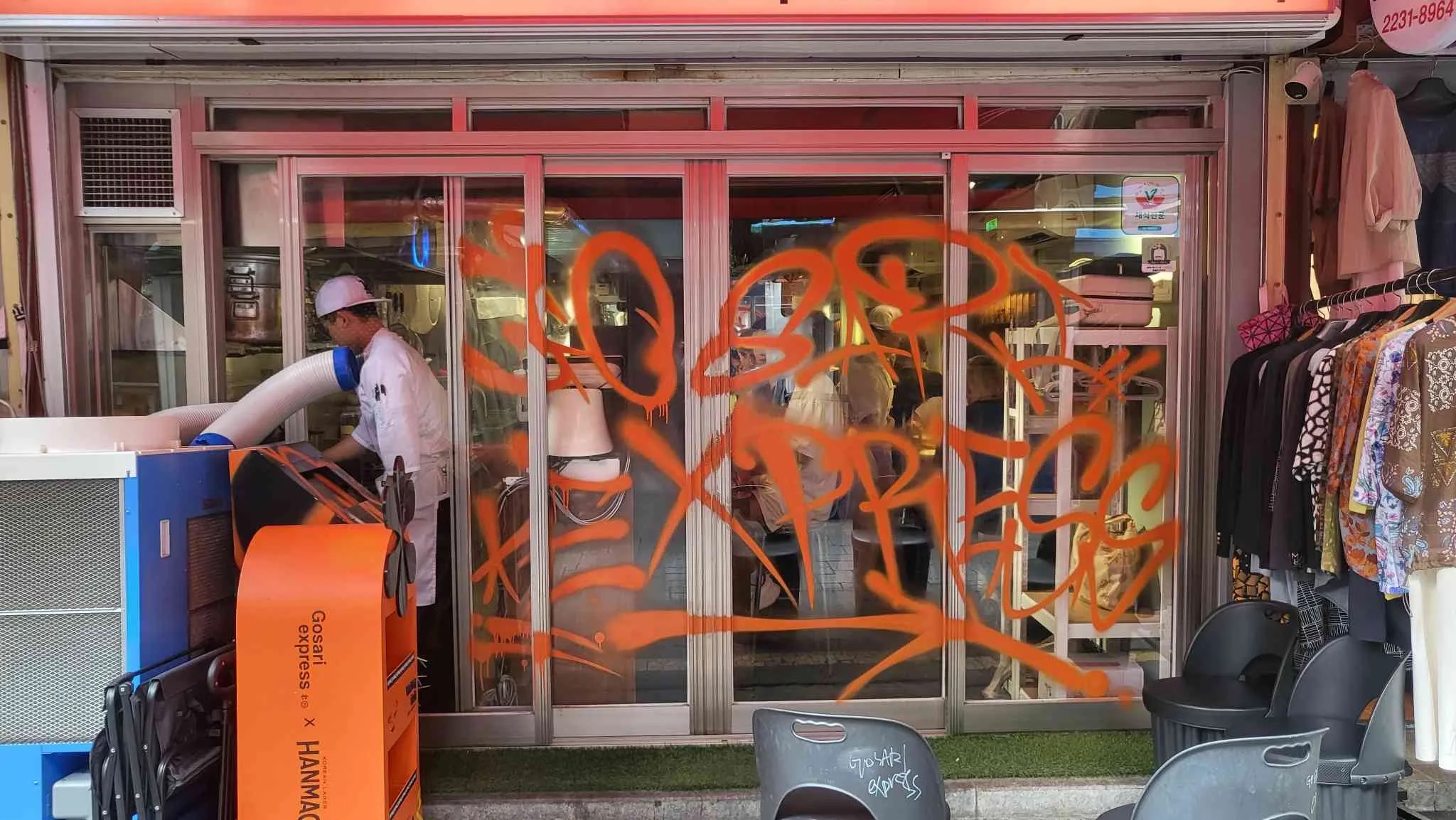
Gosari Express sits on the ground floor of an alley beside Seoul Jungang Market, on Toegye-ro 85-gil in Seoul's Jung-gu. It opened in June 2024 and occupies 9.5 pyeong, about 31 square metres. In the MICHELIN Guide Seoul & Busan 2026, it entered the Bib Gourmand list for the first time and picked up a MICHELIN Green Star in the same edition. It is one of only two Seoul restaurants awarded a new Green Star this year; the other is a two-star fine-dining room.
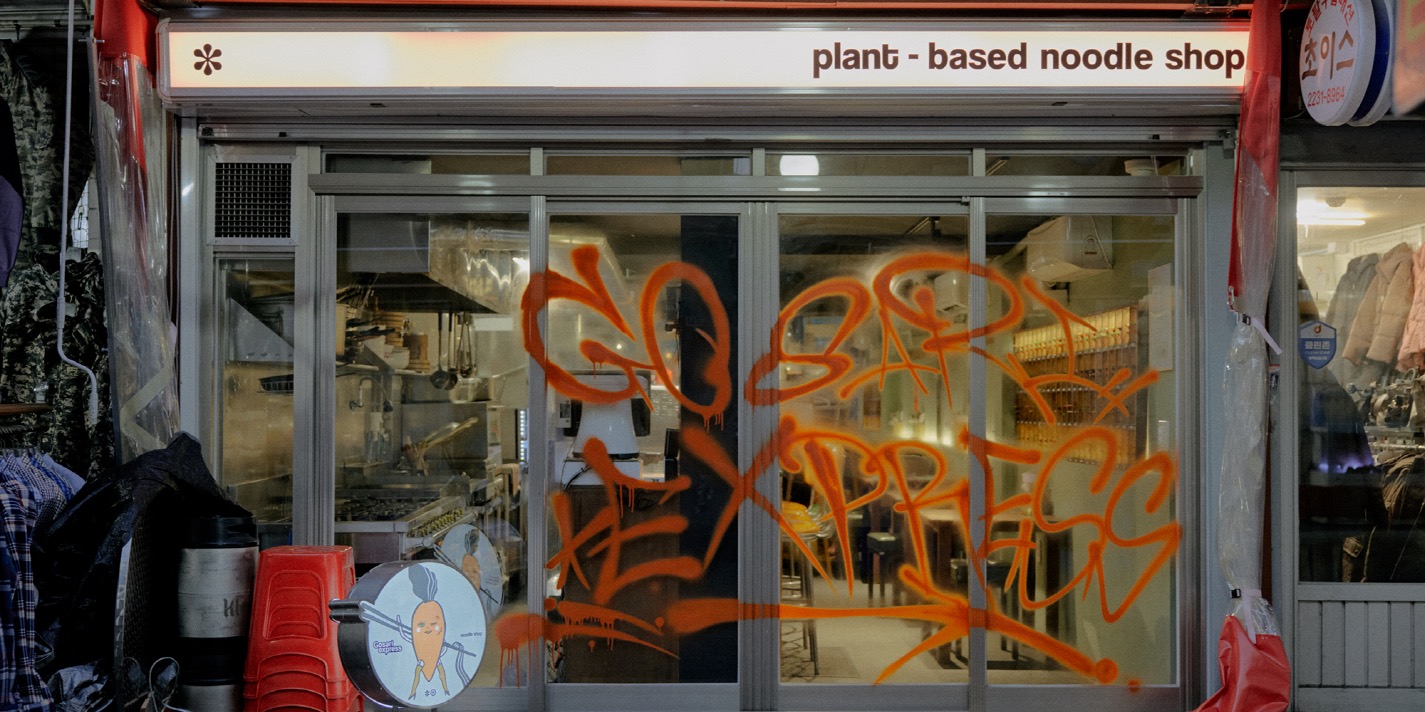
1.The operator is BADCARROT, a food startup that built its business on vegan sauces and meal kits made from Korean produce. Its founder, Kim Je-eun, was born in 1993, and Gosari Express is the company's first restaurant. The sign carries a single line: plant-based noodle shop.
2.It began with a delivery error. Kim had ordered chwinamul greens and received 5kg of bracken instead. Rather than throw it out, she cooked through it, and along the way noticed how few vegetable-based sauces existed on the market. She founded the company in 2021 to make a bracken oil sauce, ran an eight-month pop-up in Mangwon-dong from February 2023, then moved into the market the following summer.
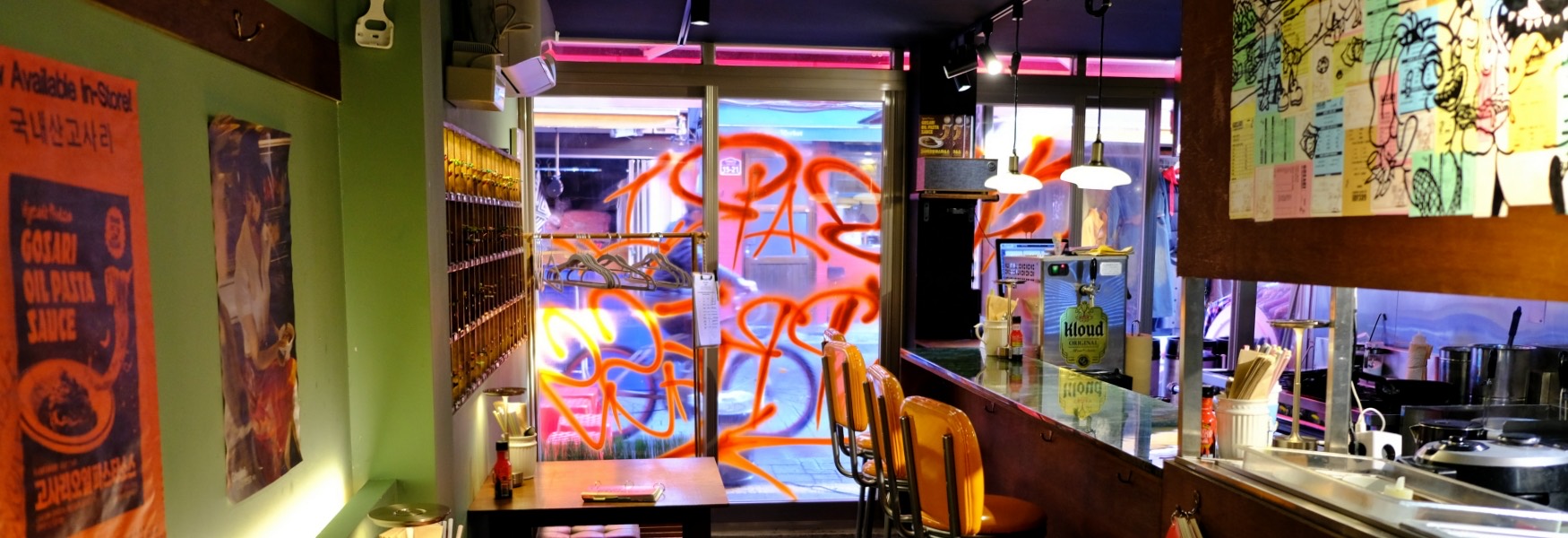
3.Inside there is one room. No mezzanine, no partitions. The left wall is painted green and carries a poster for the gosari oil pasta sauce reading Now Available In-Store. The right side is a counter facing the cooking line, with bottled sauces lined up on the wall above it. Two tables for two by the window, orange stools for the rest.
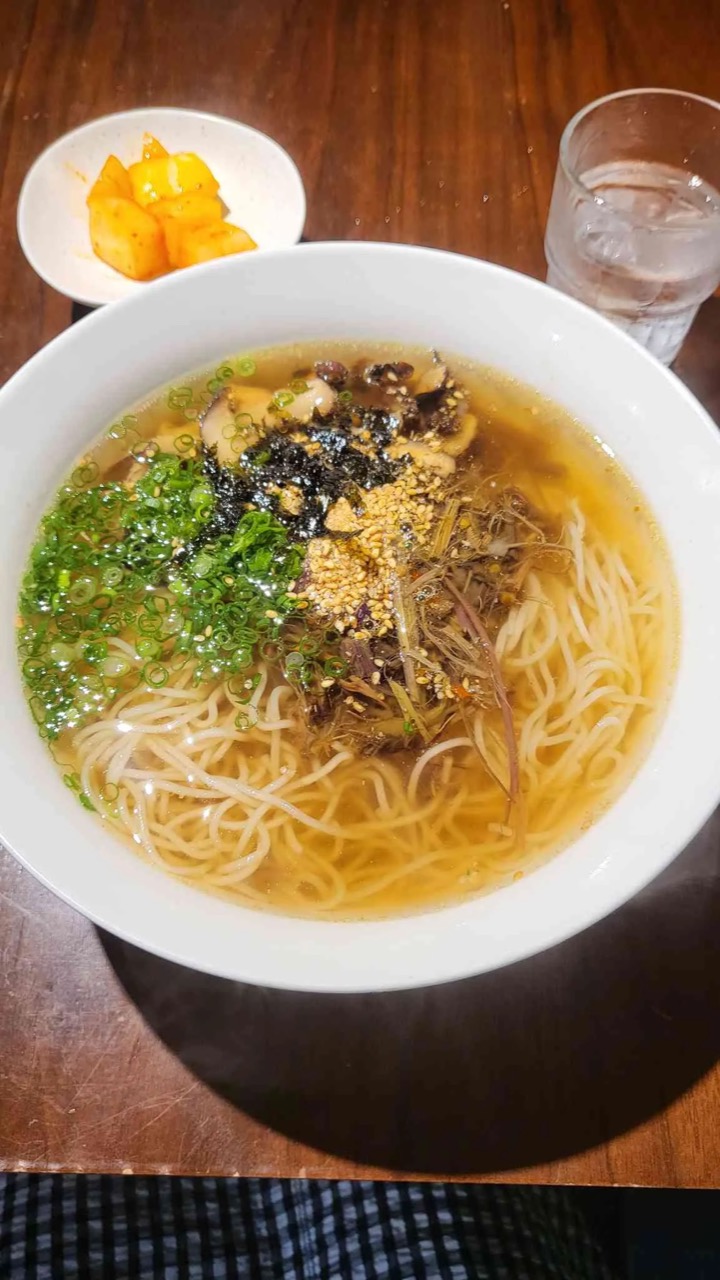
4.Four noodle dishes on the menu. The cheapest is Gosari Classic, a hot bowl of clear broth topped with boiled bracken and shiitake, at 11,000 won; the most expensive is the noodle tteokbokki with rice cakes, at 25,000 won. The chrysanthemum-green bibim noodles and the perilla bibim noodles sit in between. Add carrot momo, a Taiwanese-style pancake and grilled cabbage, plus soju, beer, makgeolli cocktails and highballs. There is no tasting menu. Everything is sold à la carte.
5.The chrysanthemum-green bibim noodles bury thick udon strands under a pesto of ground crown daisy, then scatter fried onion and nuts on top. Crown daisy is a pungent green that leaves a bitter edge at the finish, and the sweetness and fat of the fried onion catch it. The perilla version works the other way round. Ground perilla coats the mouth and the nuttiness lingers, so the heat arrives late.
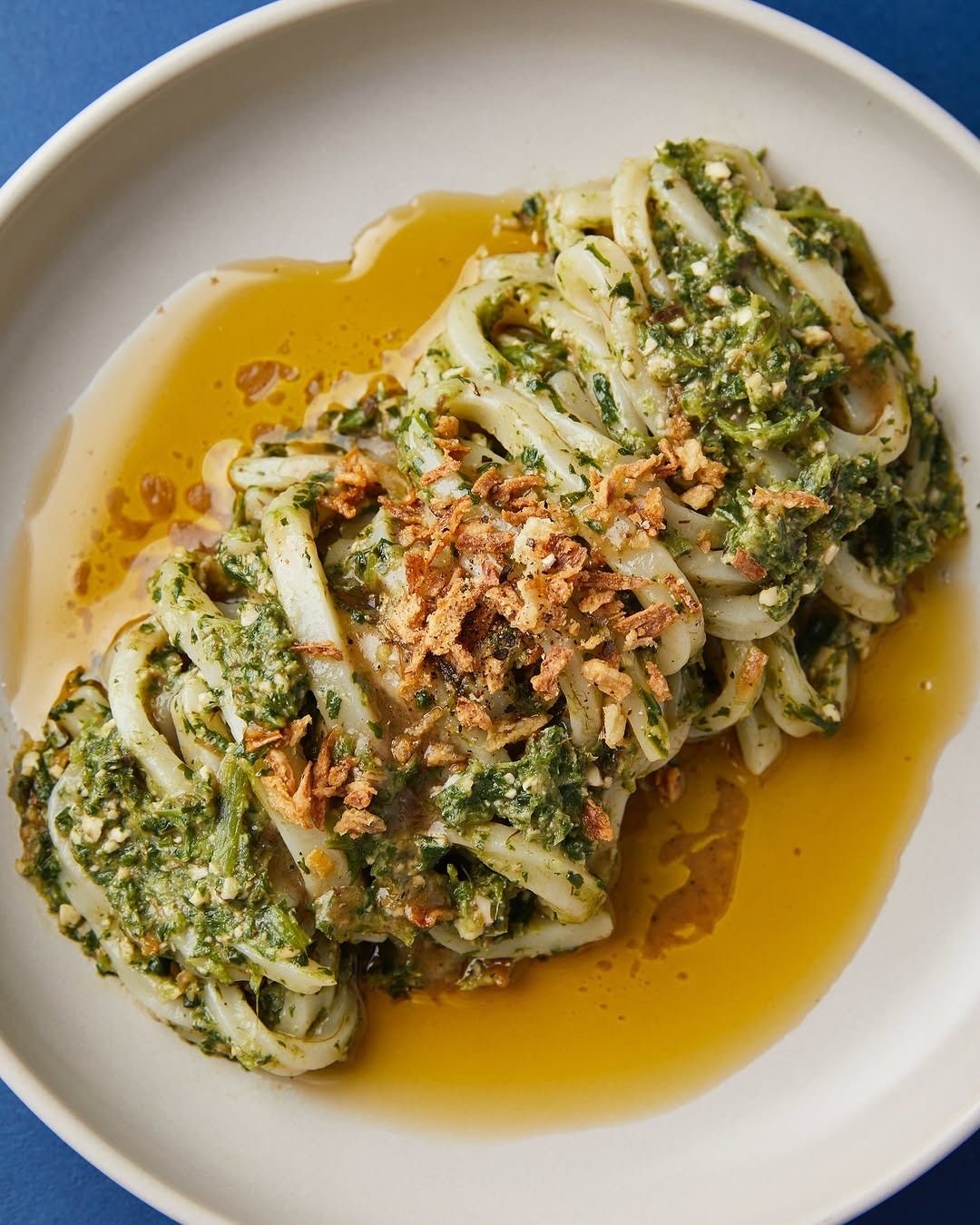
6.Take out meat and fish and the broth goes flat. This kitchen fills that gap with oil and seeds. Bracken-infused oil, perilla, nuts, fried onion. Put ingredients that cling to the tongue up front and the missing savouriness stops registering. The place covered the spot where vegan restaurants usually collapse, and the MICHELIN inspectors wrote much the same thing: vegetables handled with range.

7.The shop describes itself as a banju noodle shop, drinks with a meal, crossing vegan cooking with the feel of an old market eatery. The premise is a granddaughter who inherited her grandmother's noodle stall and started pouring drinks from lunchtime, and that premise lets people who do not eat plant-based walk in without friction. Korea's vegetarian population was put at roughly 1.5 million in a 2019 count, with about 500 vegetarian restaurants nationwide. This shop was not built for those 1.5 million.
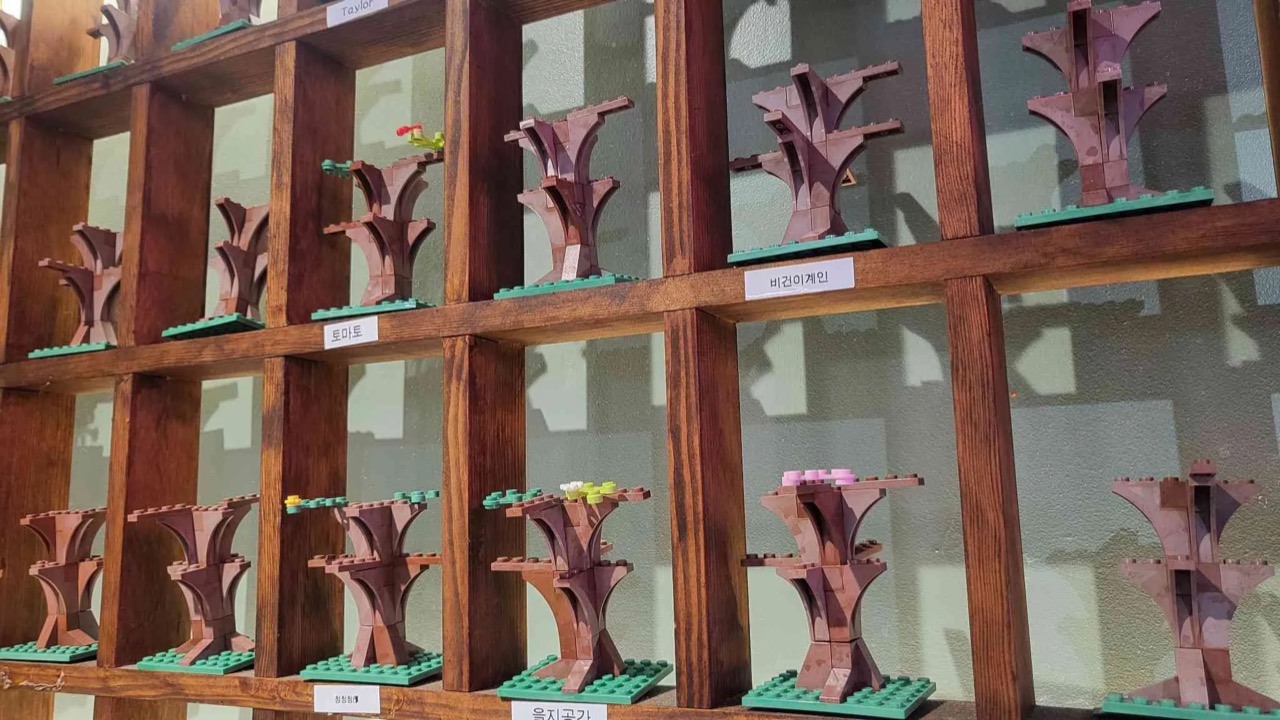
8.One wall is the loyalty programme. A timber grid divides it into cells, and customers build a tree out of Lego, stand it in a cell and label it with their name. The wall stands on a promise: part of the revenue from every bowl goes to forest protection in Gangwon and Danyang, and the Instagram bio opens with you eat noodles, we plant trees. Instead of stamping a paper card, you leave your own tree on the wall.
9.Kitchen and dining room share 9.5 pyeong. Seat numbers are not published; counting from photographs and visitor accounts, the counter and the window together come to roughly 14 (estimate). No reservations, first come first served. When queues grew long the shop built its own waiting system and a mini-game to go with it, and now runs the list on its own domain.
10.Reported volume runs to about 1,500 bowls a month. Tuesday to Saturday it opens at 11:30 and closes at 21:30, with a two-hour break in the afternoon. Sunday is lunch only and Monday is closed, so it trades about 26 days a month. That works out to 58 bowls a day, or a little over four turns on 14 seats.
11.Noodles average around 14,000 won, and because so many customers add a drink, spend per head comes out at 19,000 won (estimate). That puts monthly revenue at 28.5 million won, and the year at 340 million. Divided by 9.5 pyeong, it is 3 million won per pyeong per month. That is roughly double the band a strong small restaurant in Seoul occupies.
12.Two lines decide the cost side. Food cost stays at 30% because meat and fish are out, and rent stays in the 6% range because the address is a market alley. Korean bracken is not a cheap ingredient, and the founder has said she worked through wild-greens symposiums and visited growers to learn preparation and grading. Since each bowl uses only a small amount, the price does not move food cost much.

13.The restaurant is not the whole of this company's revenue. BADCARROT sells sauces and meal kits separately, and in November 2025 it shipped a vegan tteokbokki kit made with Korean bracken to the United States for the first time. The opening order came to 5,000 dollars, about 7 million won. A small number, but it explains why that sauce poster hangs on the wall. The room is where a customer picks up a jar on the way out, and where a new sauce meets real diners first.
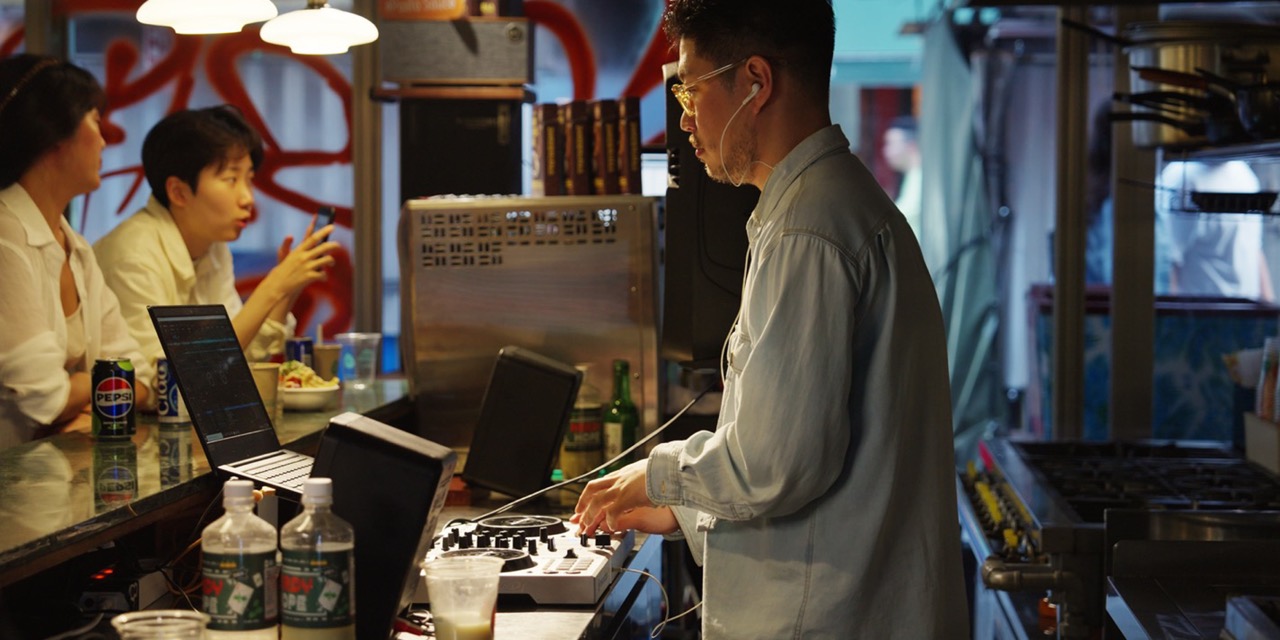
14.The name came from Panda Express, the American fast-casual chain. A deliberately ordinary American name was meant to lower the barrier the phrase vegan restaurant puts up, while the room itself reads closer to a Hong Kong back alley. Dim light, green walls, orange chairs, spray paint across the glass. It is neither a market institution nor a fine-dining room, and late in the evening a DJ plays from the end of the counter. What is on sale is less the plant-based part than somewhere to hang out.
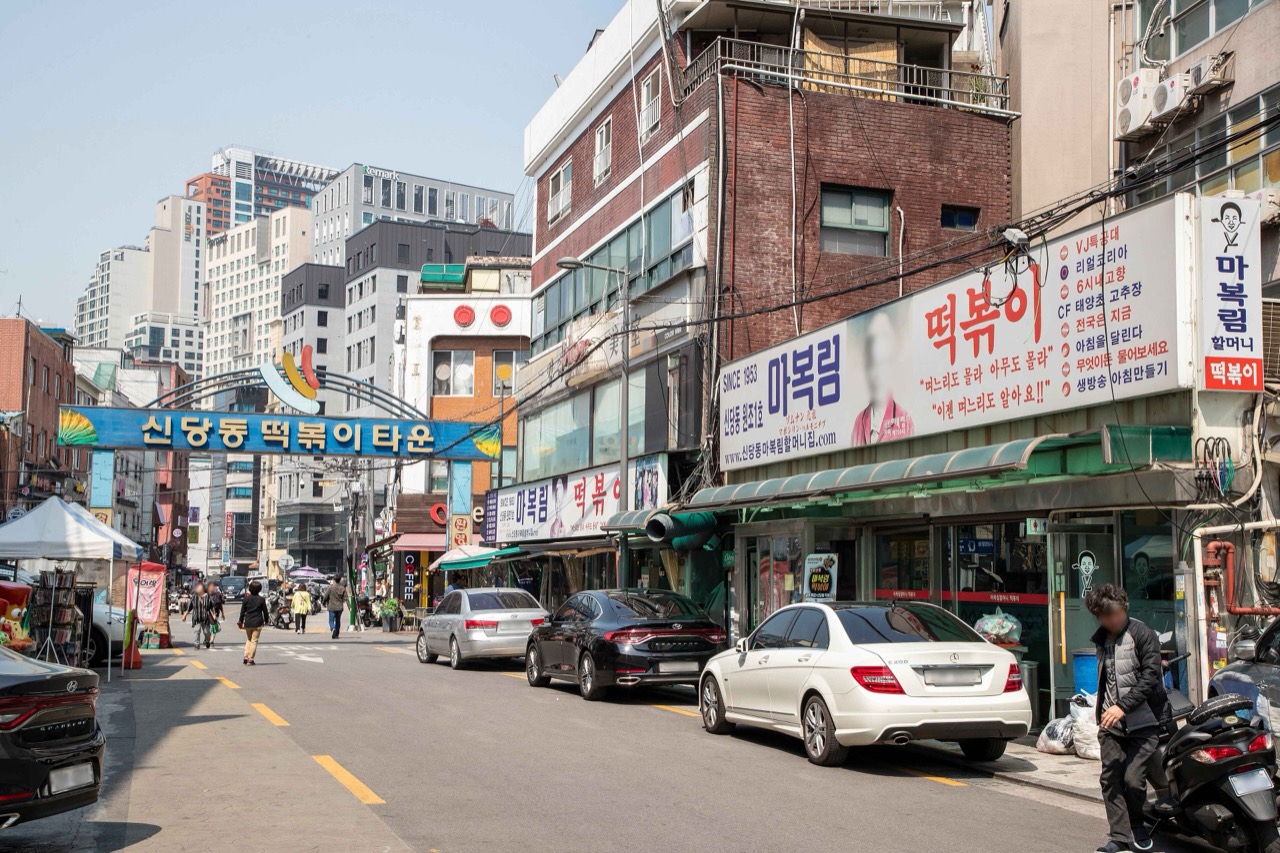
15.Nine and a half pyeong, 1,500 bowls a month, 7.45 million won left over (estimate). What holds that up is neither the cooking nor the concept but an address where rent runs in the 6% range. Move the same shop to a ground floor on a main road in Gangnam or Hannam and that ratio triples, taking the profit with it. Staying in a market alley carries its own price. Putting waiting chairs and a portable air conditioner out in the passage takes the agreement of the merchants' association and the neighbouring shops, and with a clothing store next door, smells and smoke have to be solved with ventilation first. Cheap addresses are cheap for a reason, and carrying that reason is the first cost in this business.