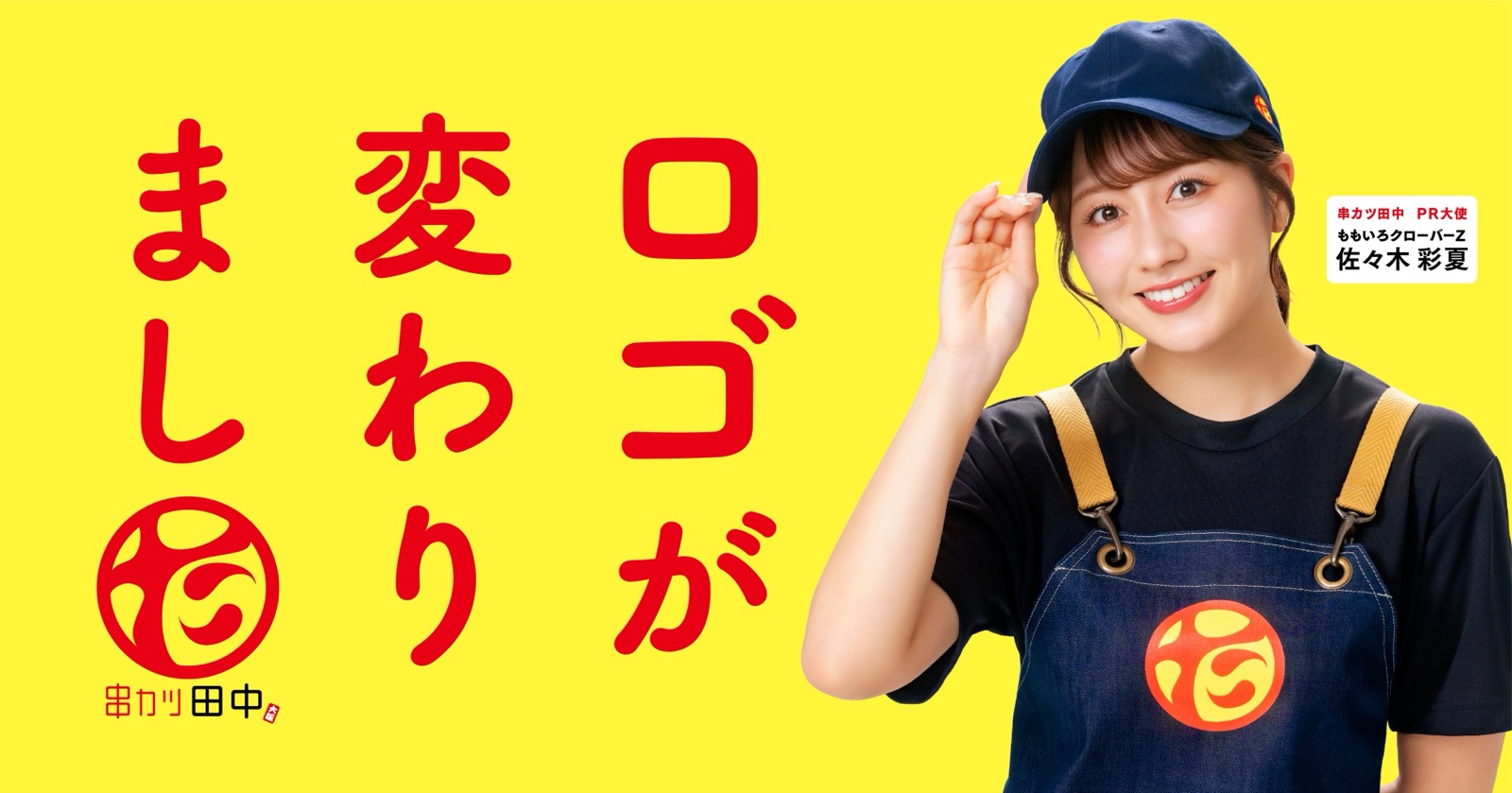
Today, new drink prices go up at all 351 Kushikatsu Tanaka restaurants across Japan. A whisky highball is 100 yen, or 110 yen with tax. This is not a limited-time promotion but the standing price. On the same day a new 72-seat restaurant opens in Yamashina-ku, Kyoto, and six days earlier, on September 4, the company announced its first rebranding since it started in 2008.
1.The operator is Unisia Holdings. Until March 1, 2026 it was called Kushikatsu Tanaka Holdings, and it changed its name that day. It is listed on the Standard market of the Tokyo Stock Exchange, and the first restaurant opened in December 2008 in Setagaya, Tokyo. As of early last month there were 351 restaurants in Japan, 105 of them clustered in Tokyo, with Wakayama the only prefecture left without one.
2.What the company announced on September 4 was a simultaneous change of logo, signage, exterior and interior. The new tagline is 「今日も、田中で。」, which reads as Tanaka again today. Every restaurant opened after the announcement uses the new design, and the roughly 350 existing ones will be renovated over about ten years, the company says.
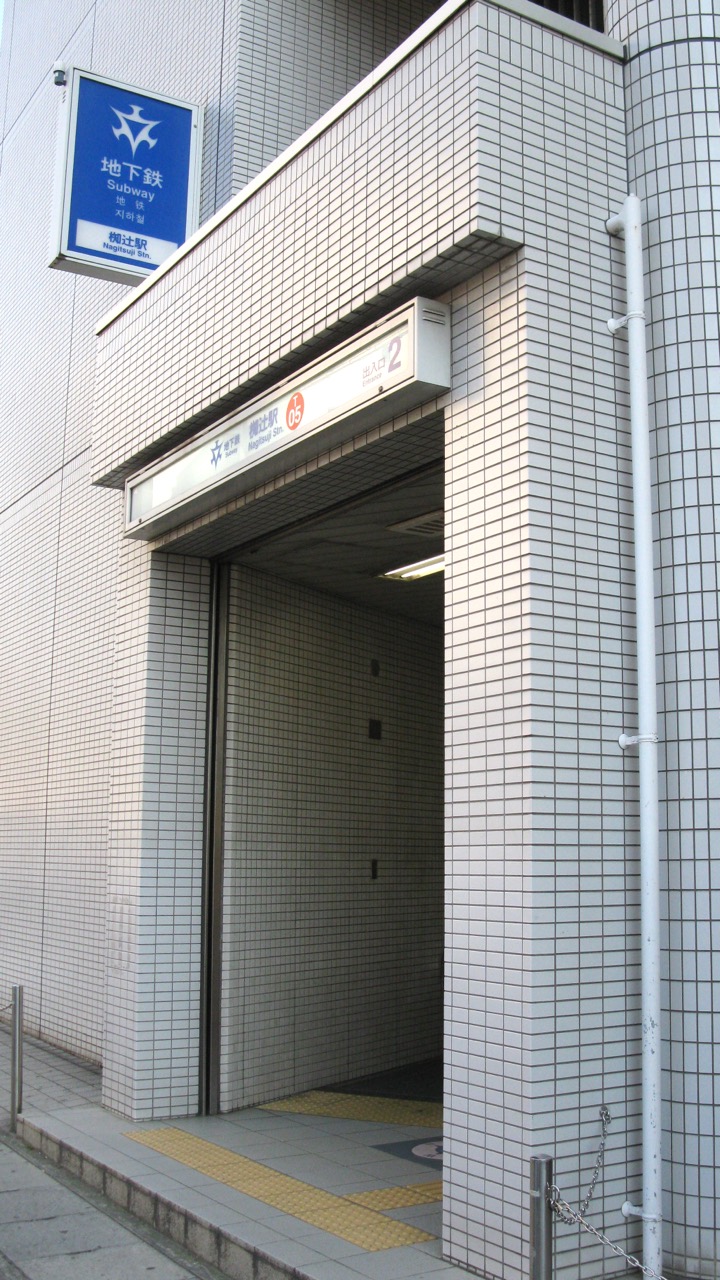
3.The one opening today is the Nagitsuji branch in Nakazaike-cho, Yamashina-ku, Kyoto. Three minutes on foot from Exit 2 of Nagitsuji station on the subway Tozai line, with 72 seats. It opens at 4 p.m. on weekdays and at noon on weekends and holidays, closing at midnight either way. The neighbourhood is thick with the ward office and other public buildings, a site chosen to catch families and commuters on the way home.
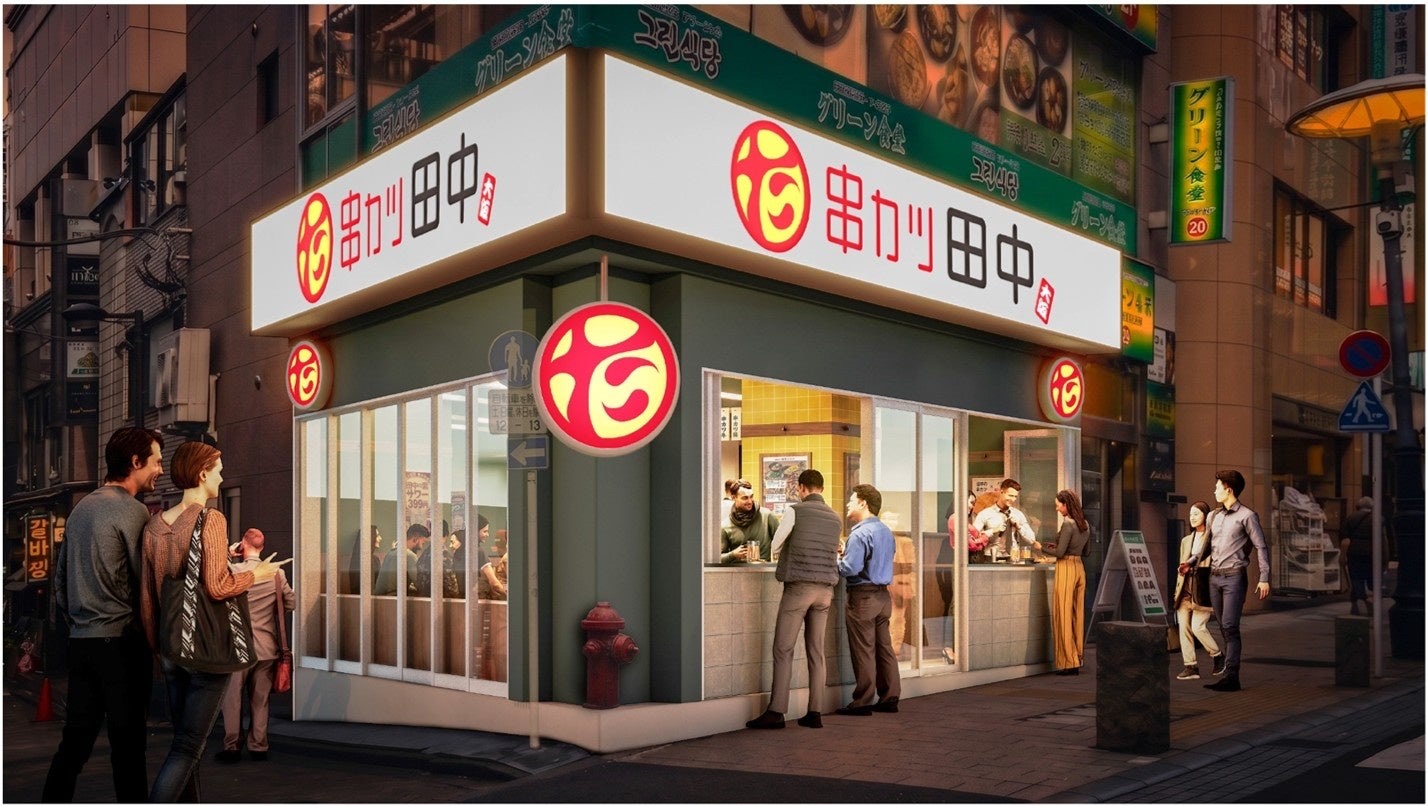
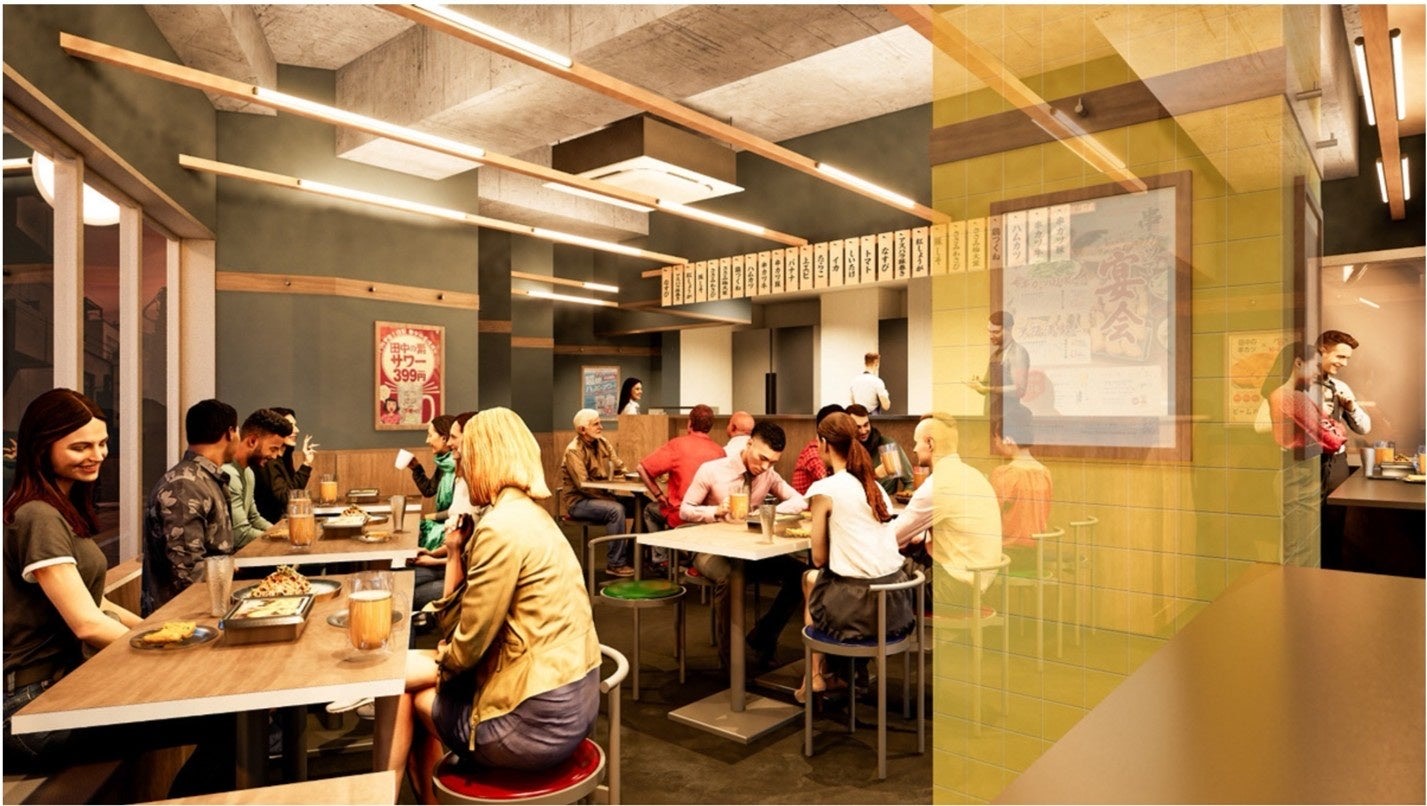
4.The new exterior is a dark green wall carrying a white sign box with the red logo on it. Round lantern-shaped signs sit at each corner and glow at night, and the glass facing the street runs full height so the people inside are in plain view. Where the old restaurants shouted from a distance in yellow letters on red, the new one lowers its voice and enlarges the window.
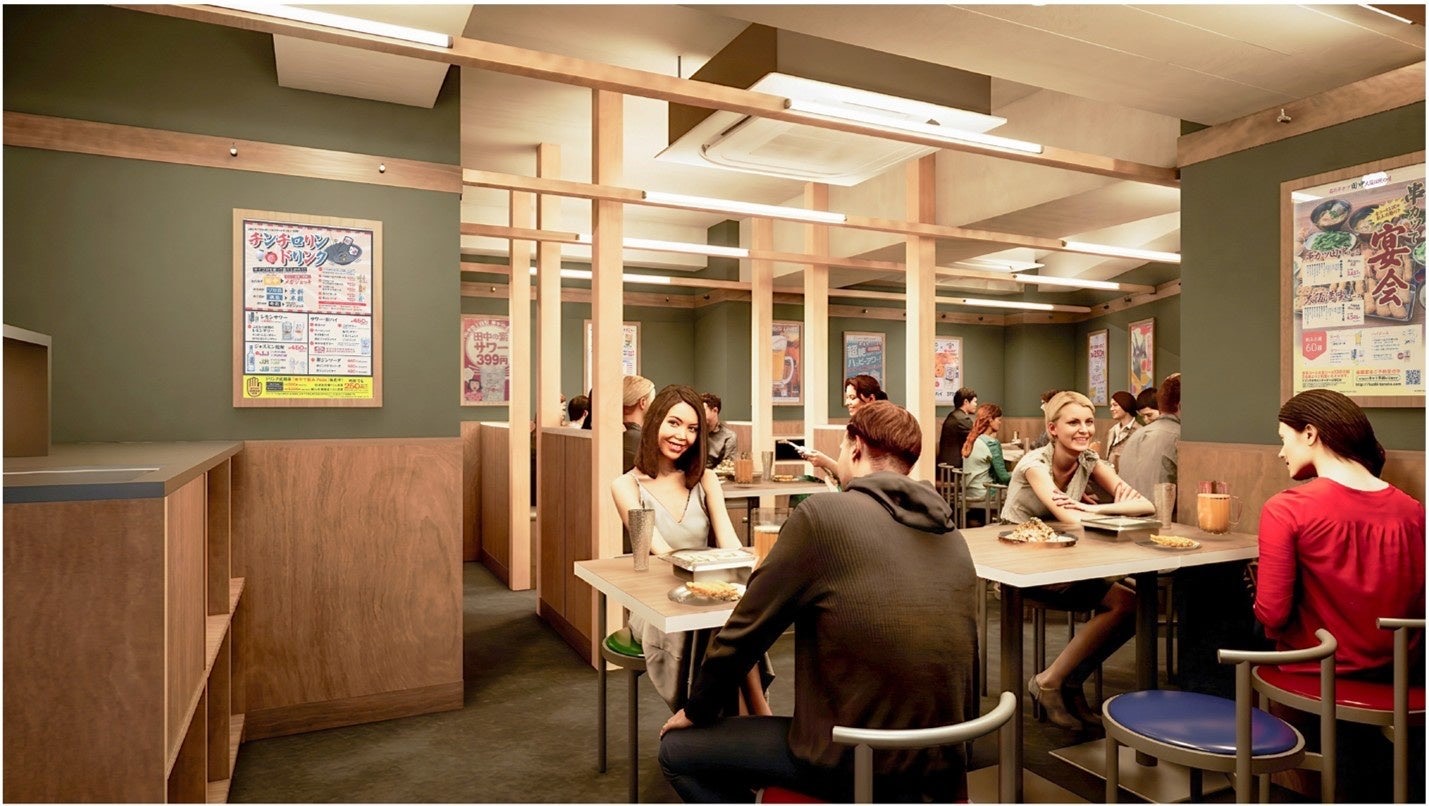
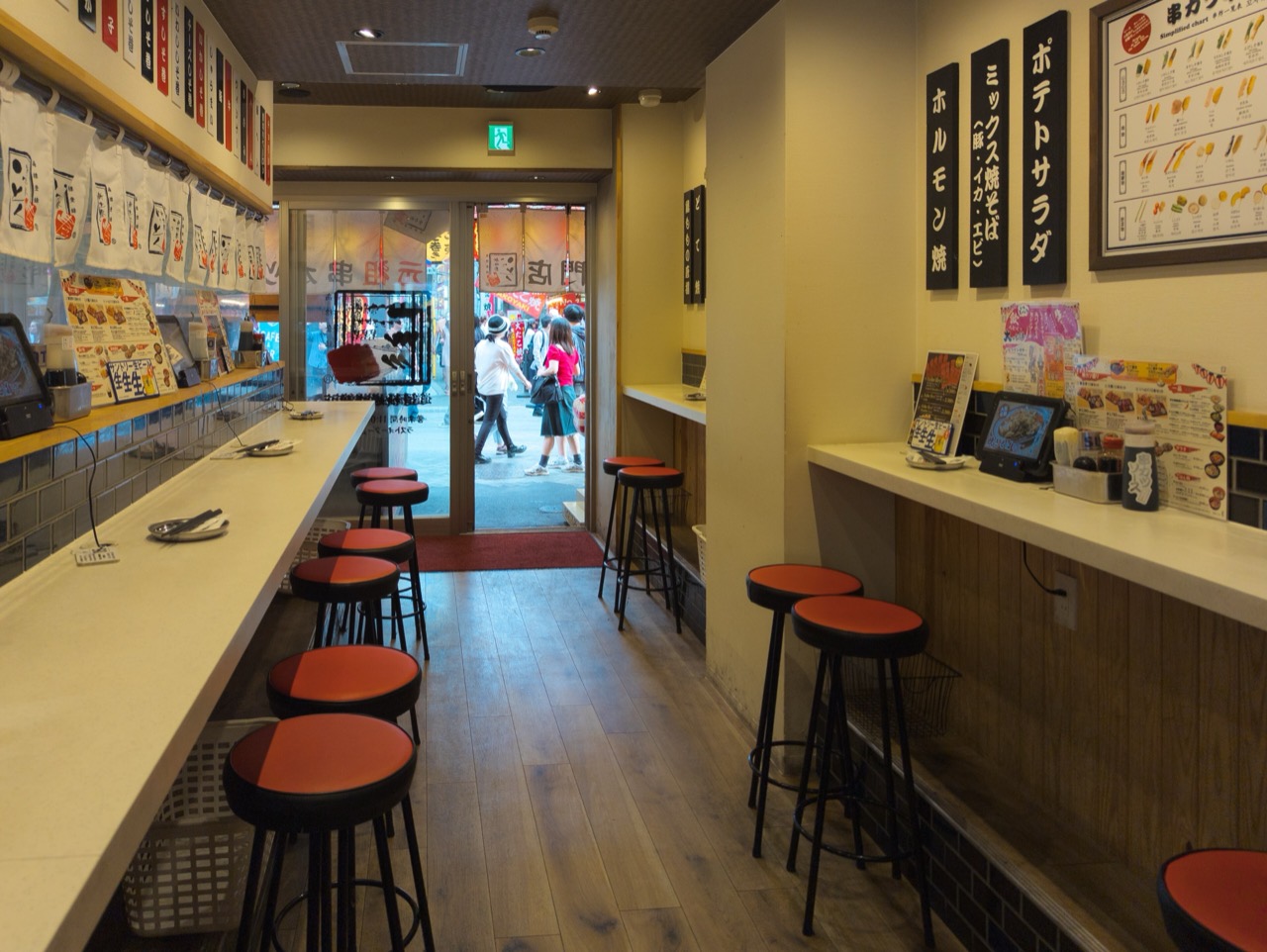
5.Inside, the seating splits three ways. A long counter along the window, four-tops half screened by timber partitions, and stools facing the kitchen. The ceiling is left as bare concrete with timber battens laid in a grid to hide the lighting, and rows of wooden menu tags run along the upper wall. It is a layout where a solo diner can sit at the counter and order by reading the wall.
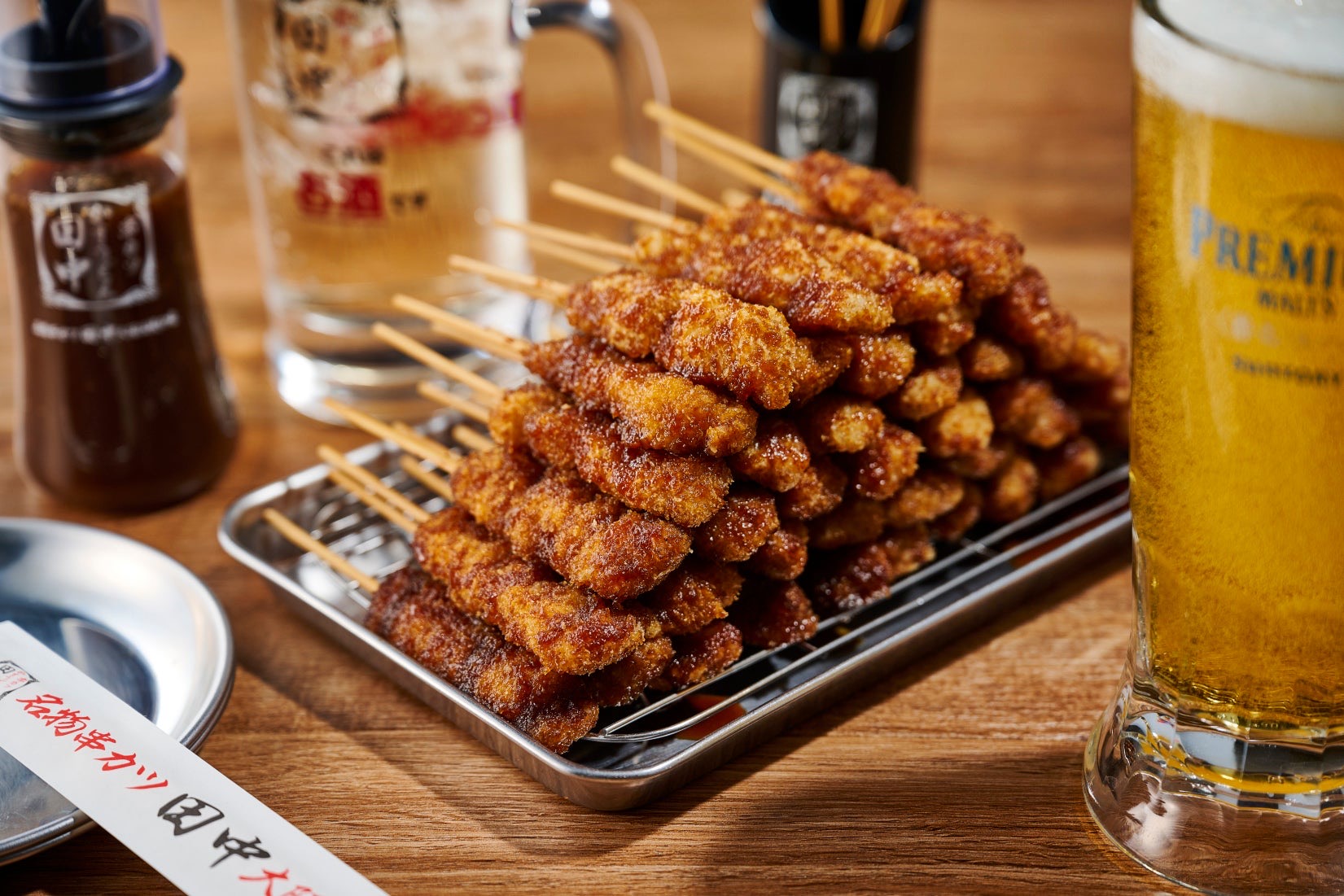
6.The frying happens in the middle of the room. A skewer in fine breadcrumbs hits the oil, the sound rises for a moment and settles, and what comes out is stacked on a wire rack in a stainless tray. Each table holds a pot of thin Worcestershire sauce, and the line attached to it is no double dipping. That a skewer once dipped never goes back in is an old promise among Osaka kushikatsu restaurants, and this chain stamps the same line on its own sauce tins.
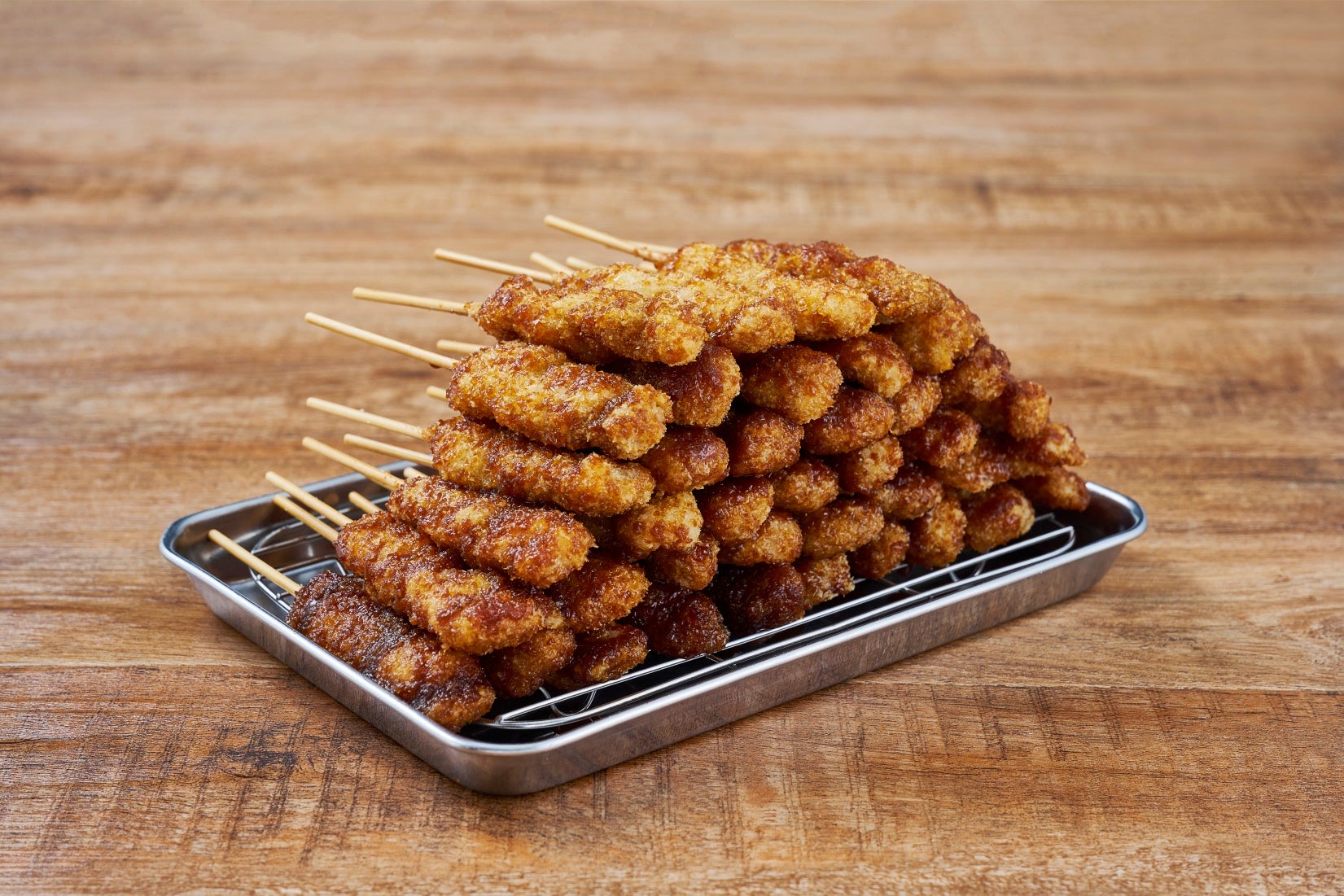
7.The item that made the brand is a skewer at 50 yen, 55 yen with tax. Beef intestine fried and dipped in garlic soy, it launched on April 24, 2025, passed 10 million pieces in six months and 20 million in a year. It is made smaller and lighter than an ordinary skewer, so a handful of them still weighs nothing. The word infinite is in the name, but nothing is unlimited. The name points at how you keep ordering.
8.Spend per head here is reported at around 2,400 yen. In August same-store sales came in at 105.6% of the year before, with guest count at 103.3% and spend per head at 102.2%, all three up. The company is not cutting prices because business turned down. The month after a good month, what it touched was the drink price.
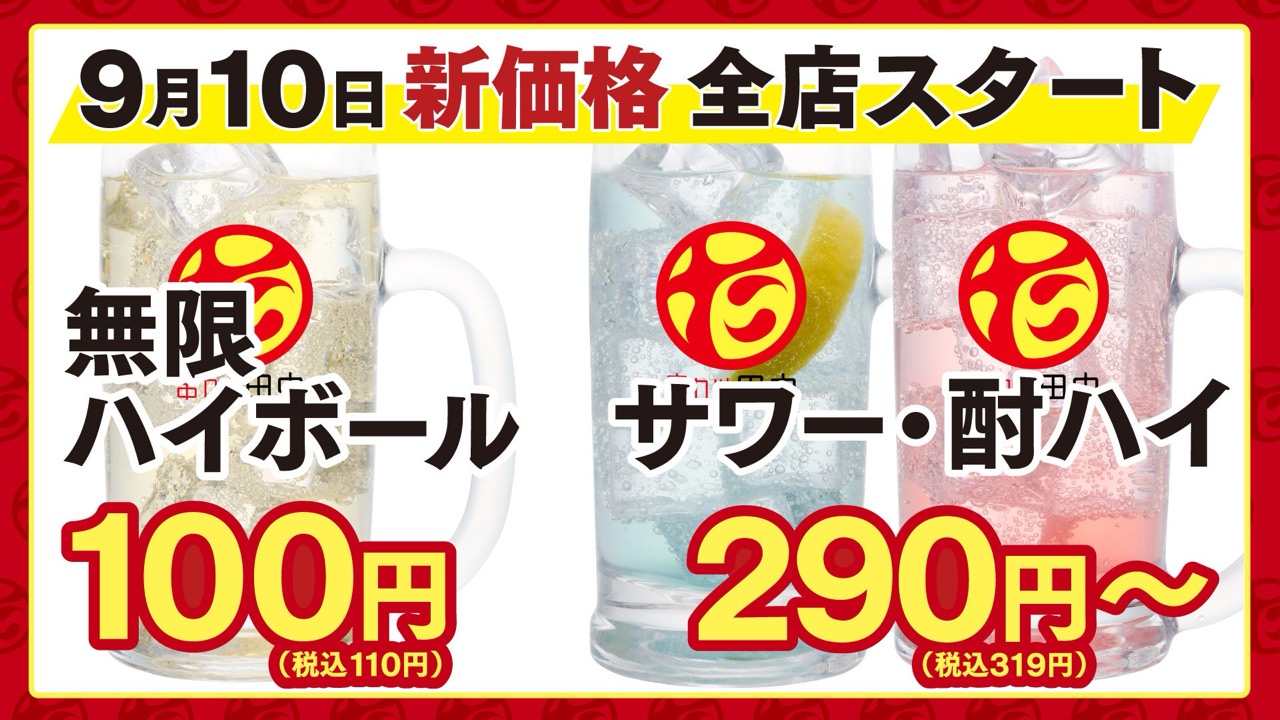
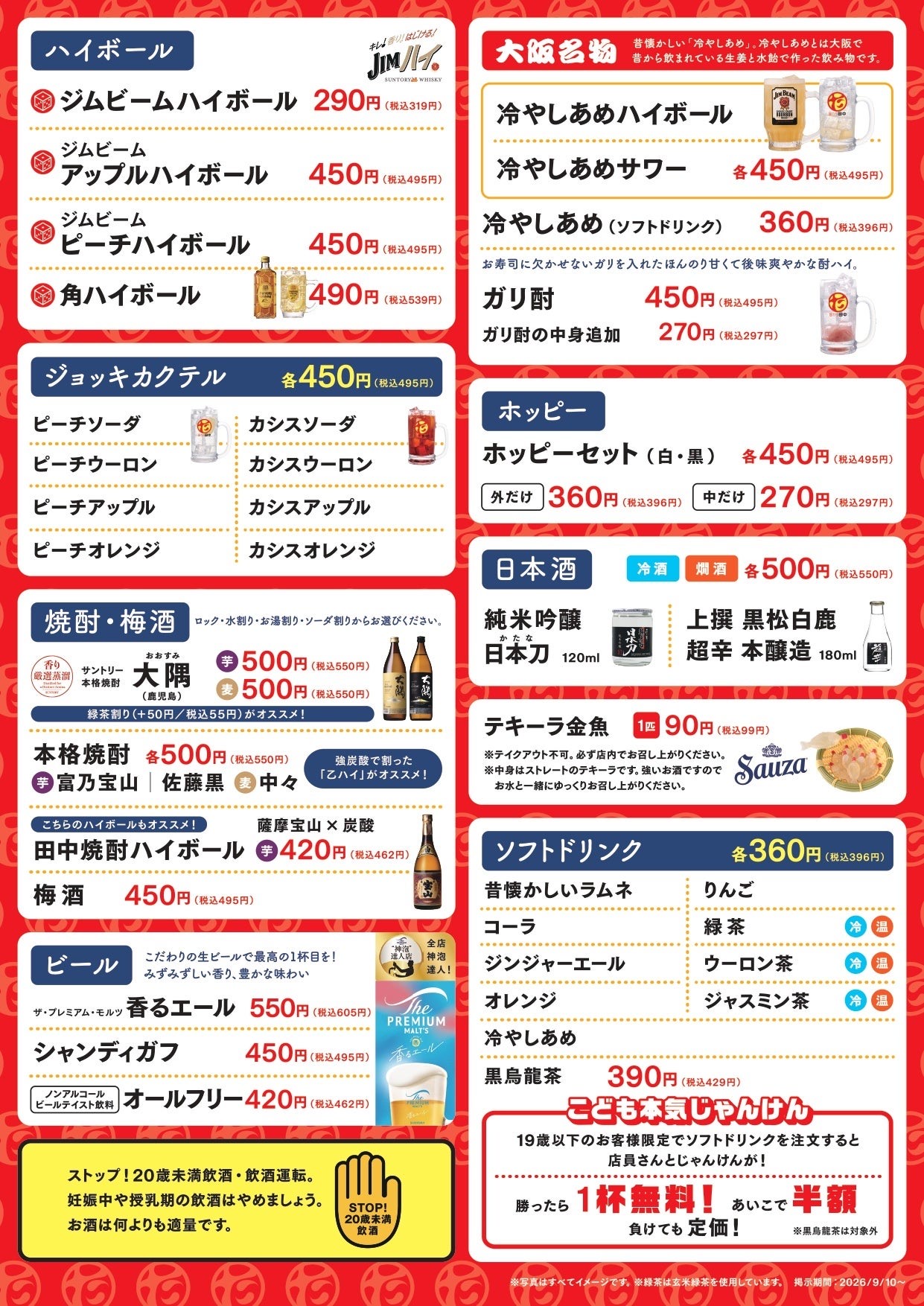
9.Open the new price list and the layers are clear. The infinite highball, made with Suntory's cheap Torys whisky, is 110 yen; the drinks in the dice game are 319 yen; soft drinks are 396 yen; draft beer is 605 yen. Only one item is genuinely new, the 110-yen highball, while the sours and chuhai simply had their weekday-only price made permanent. A list where the cheapest alcohol costs less than a third of the cheapest soft drink.
10.A game is attached to the 319-yen drinks. Roll two dice: matching pips and the drink is free, an even total halves it, an odd total doubles both the volume and the price. Two ones bring a mega mug at no charge. You get one roll for every skewer or every other item ordered with a drink, so rolling the dice means ordering something else first.
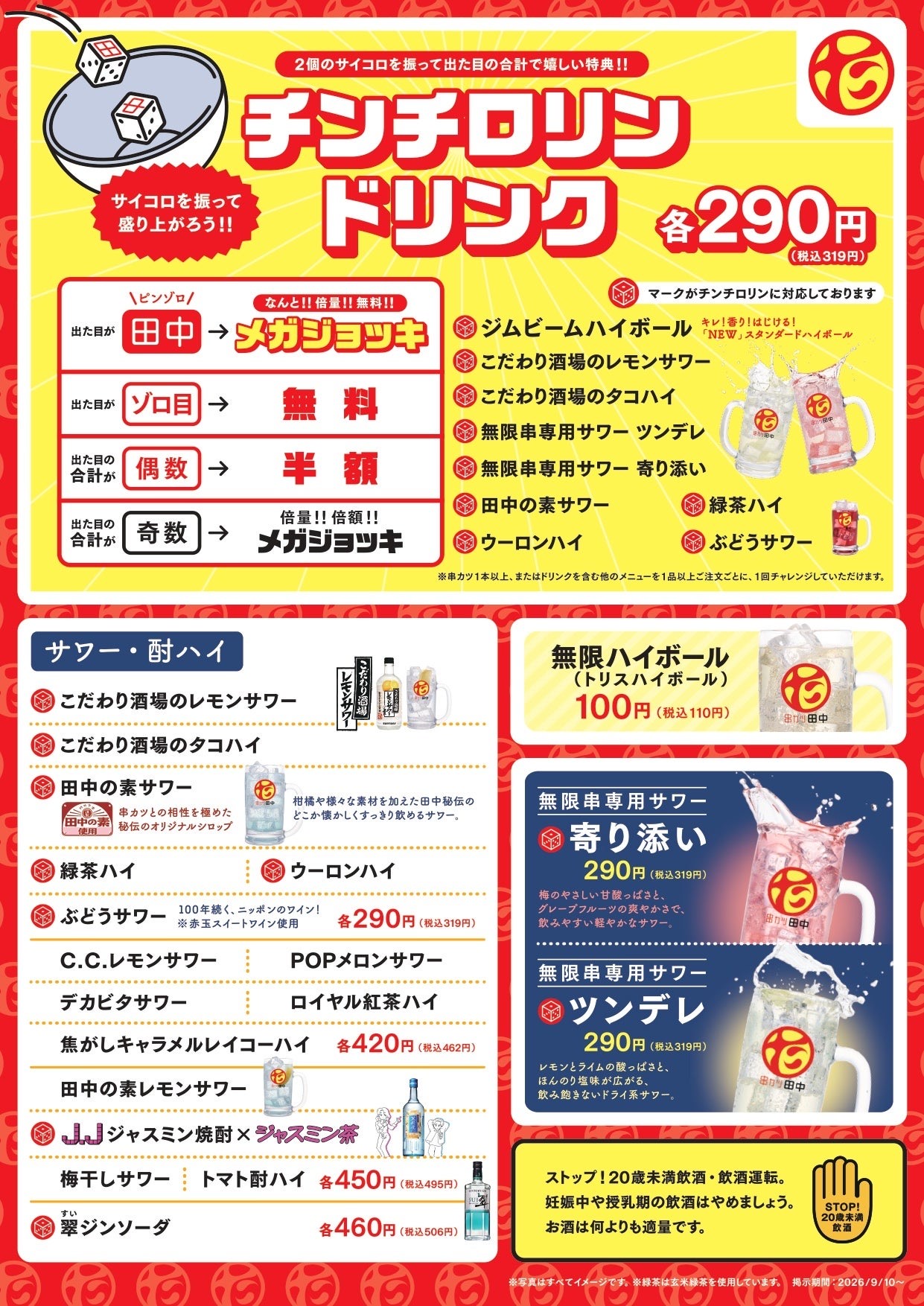
11.If one guest drinks two 319-yen sours, that is 638 yen of alcohol sales. Swap those two glasses for 110-yen highballs and it drops to 220 yen. Putting cost per glass at 55 yen for whisky and 60 yen for sour, what the restaurant keeps falls from 518 yen to 110 yen (estimate). So where does the missing 400-odd yen come from? Even at a 35% cost ratio on the 55-yen skewer, one person has to pick up eleven more of them to fill the gap. That is why ten to start with follows this chain around.
12.The company numbers make the arithmetic tighter. In the year to November 2025 revenue was 21.09 billion yen and operating profit 1.185 billion yen, an operating margin of 5.6%. The company's own forecast for the year to November 2026 is revenue of 36.14 billion yen with operating profit of 1.0 billion yen, a margin of 2.8%. Taking the Italian chain PISOLA as a wholly owned subsidiary lifts revenue by 71% while profit falls. On top of that sits the cost of reworking the interiors of some 350 restaurants. Put a 72-seat restaurant at 132 square metres and allow only 400,000 yen per 3.3 square metres and one restaurant costs 16 million yen, the whole estate 5.6 billion yen (estimate). Spread over ten years that is still 500-odd million yen a year, half of the operating profit the company says it will earn this year.
13.This company has already made the trade of giving up spend per head to gain guests. When it went fully non-smoking across all restaurants in June 2018, guest count in the first month was 102.2% of the year before while spend per head fell to 95.0%, so sales came in at 97.1%. Over six months, guests rose 5.8%, spend per head fell 3.2% and sales rose 2.4%. More guests who drank less, and the company never called it a failure. The menu now carries a blunter device: a guest aged 19 or under who orders a soft drink plays rock-paper-scissors with the staff, and a win means one free glass, a draw half price, a loss the list price. Add a 110-yen highball to that and the adults who drink and the family who does not each find their own reason on the same page.
14.The Tanaka in the name is not the founder's surname. It comes from the late Tanaka Yukichi, father of vice president Tanaka Hiroe, whose kushikatsu restaurant in Nishinari-ku, Osaka left behind the sauce recipe the chain inherited. Founder Nuki Keiji started in the trade with a bar in 1998, closed several places, and in 2008 found his footing in Tokyo with that sauce. It began by carrying a working-class district's cheap drinking food to Tokyo, and the target the company now carries is 1,000 restaurants.
15.The 55-yen skewer that sold 20 million pieces in a year was pulled from the menu on December 31, 2025. Judging the garlic soy too strong for a wider audience, the company put two successors up the following January, and the 110-yen highball is now set to pair with them. Taking down what sells and cutting prices in a good year run in the same direction, and behind them is the calculation that one kushikatsu format will not reach 1,000. Buying the Italian chain PISOLA, setting up the katsu sandwich brand TANAKA separately and striking kushikatsu from the holding company's name all sit in that same line. Turn the signature format into the bait and earn the money on the other brands.
16.A brand that is doing well has cut its drink prices and committed to rebuilding 350 restaurants over ten years. To fill the hole a 110-yen highball leaves, one guest has to pick up eleven more 55-yen skewers (estimate). Anyone trying the same bait pricing in Korea runs first into how the alcohol is bought. A Korean restaurant may buy only from a licensed wholesaler and has no route to deal with the producer directly, so even a large chain has little leverage on purchase cost. The 110 yen a glass is a number that comes out of the supply structure, not out of the kitchen.