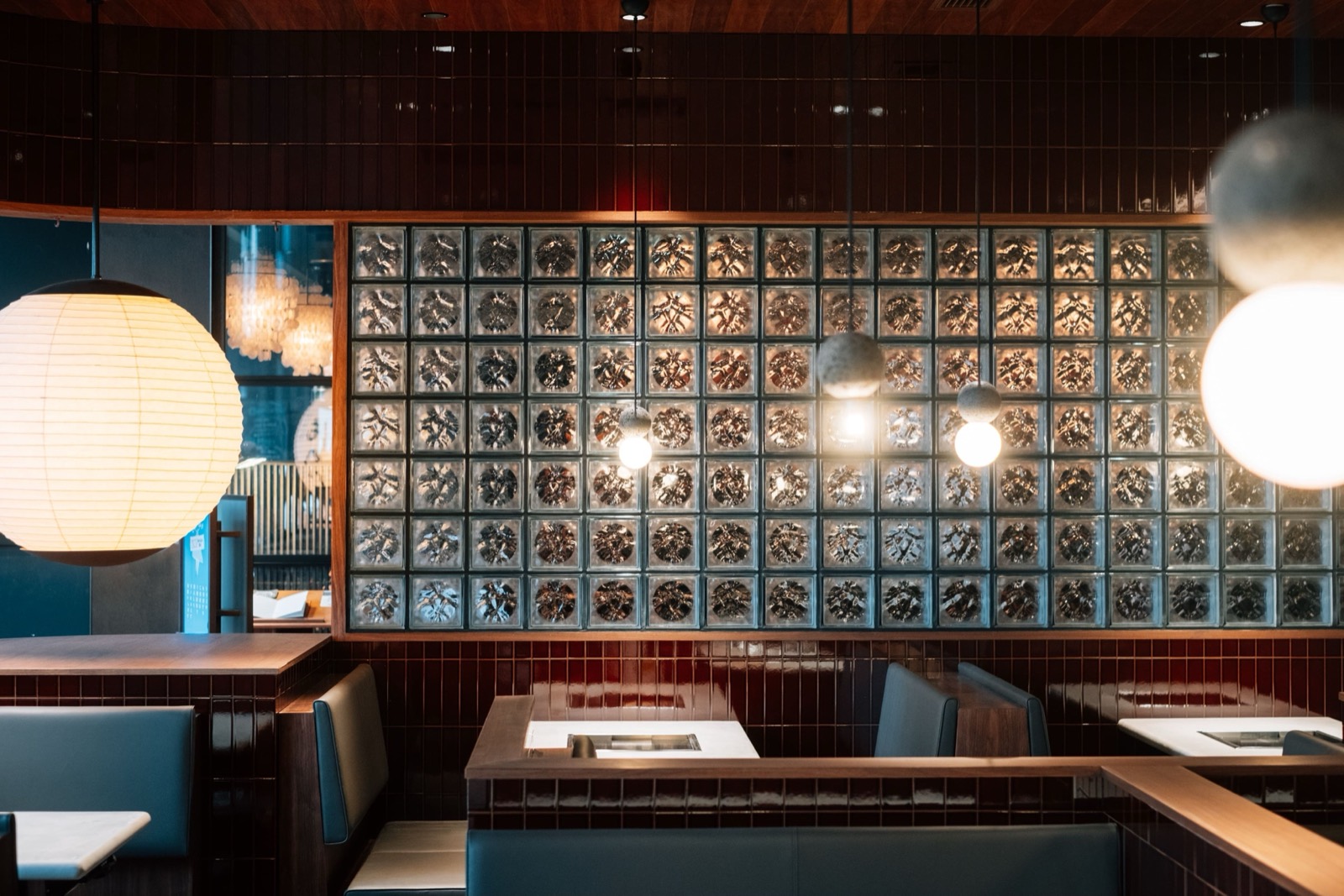
On Donhwamun-ro 11-gil in Seoul's Jongno district, a few steps into an alley from Jongno 3-ga Station, a Tokyo monjayaki specialist has opened its first Korean branch across the ground and second floors of a small building. A month after opening, in September, people still queue an hour before service. The mentaiko mochi monja that reportedly costs 2,000 yen including tax at the Shibuya branch sells here for 22,000 won.
1.The restaurant is Tsukishima Monja Moheji. First service: the evening of August 7. An on-site report Newsis published a month later describes customers gathering an hour before the morning opening, with CatchTable's remote queue and a bench line outside running side by side. Customers put the wait at 40 minutes to an hour. As in Tokyo, staff cook the monja themselves on the griddle at each table.
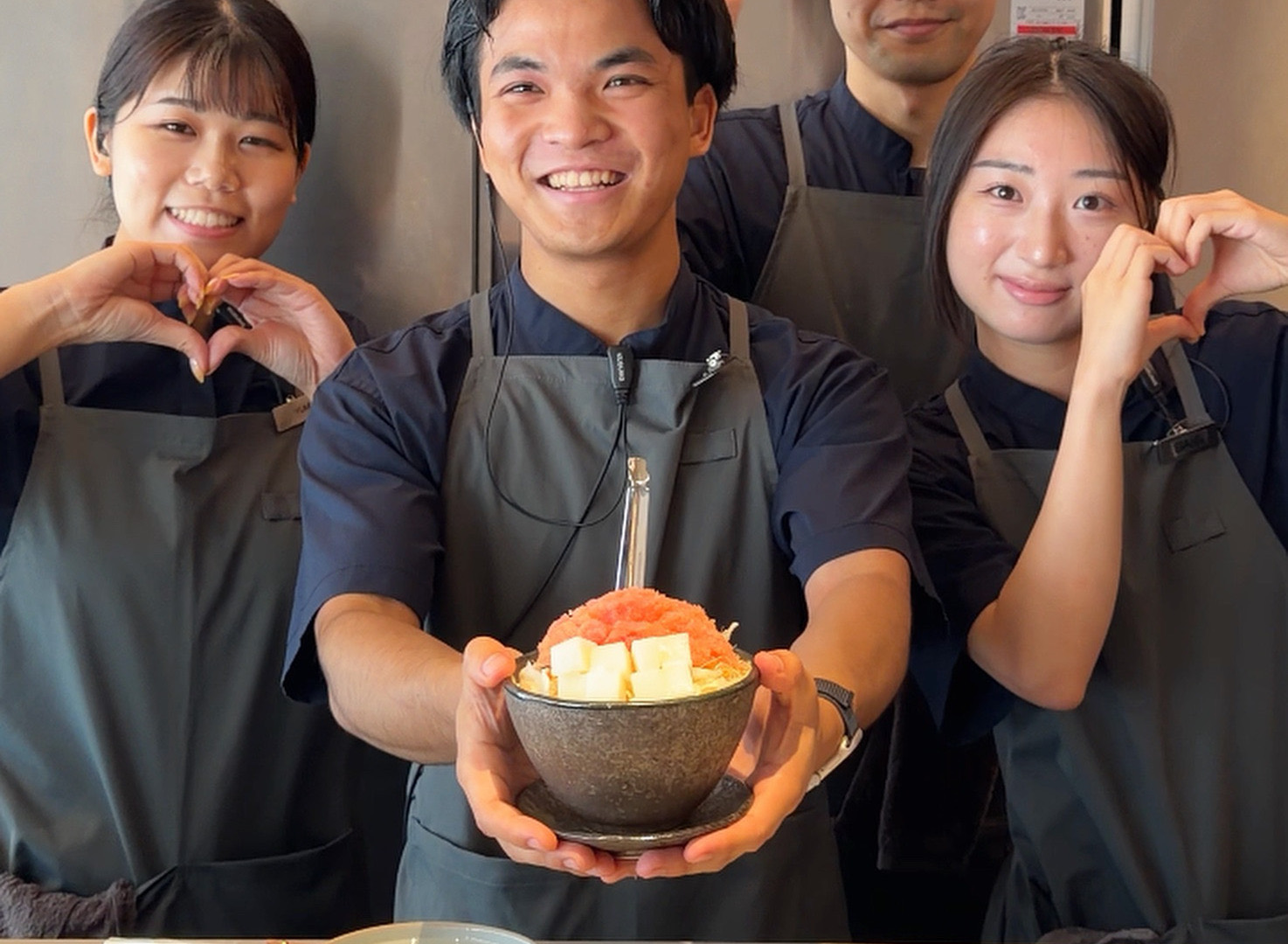
2.The operator is Kano Corporation, and its roots lie with Okume, an intermediate seafood wholesaler at Toyosu Market. A family of salted and dried fish wholesalers dating to 1871 opened a shop on Tsukishima's monja street and put seafood bought at the market each morning onto the griddle. By 2024 more than 15 shops already carried the Moheji sign. The Tsukishima flagship seats 250; the Kichijoji branch fits 156 seats over three floors.
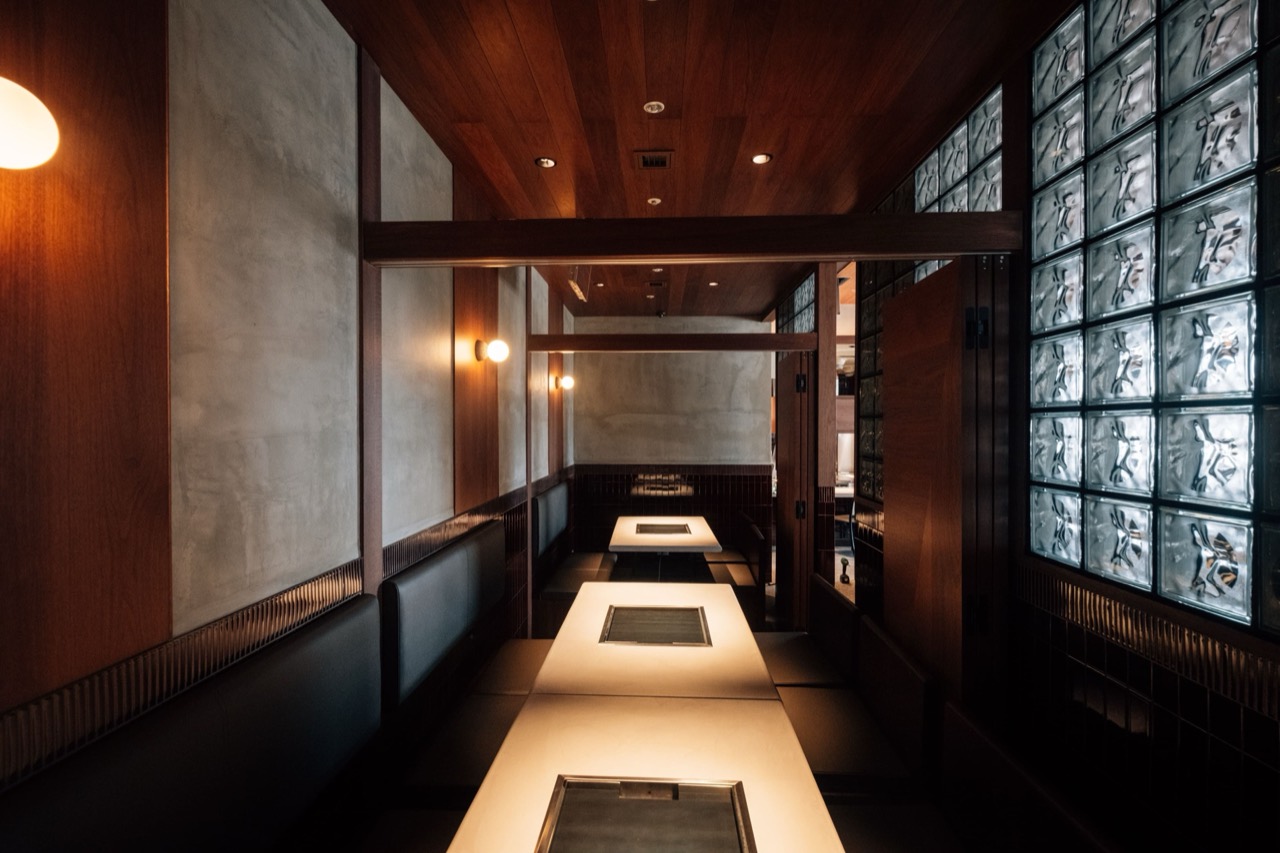
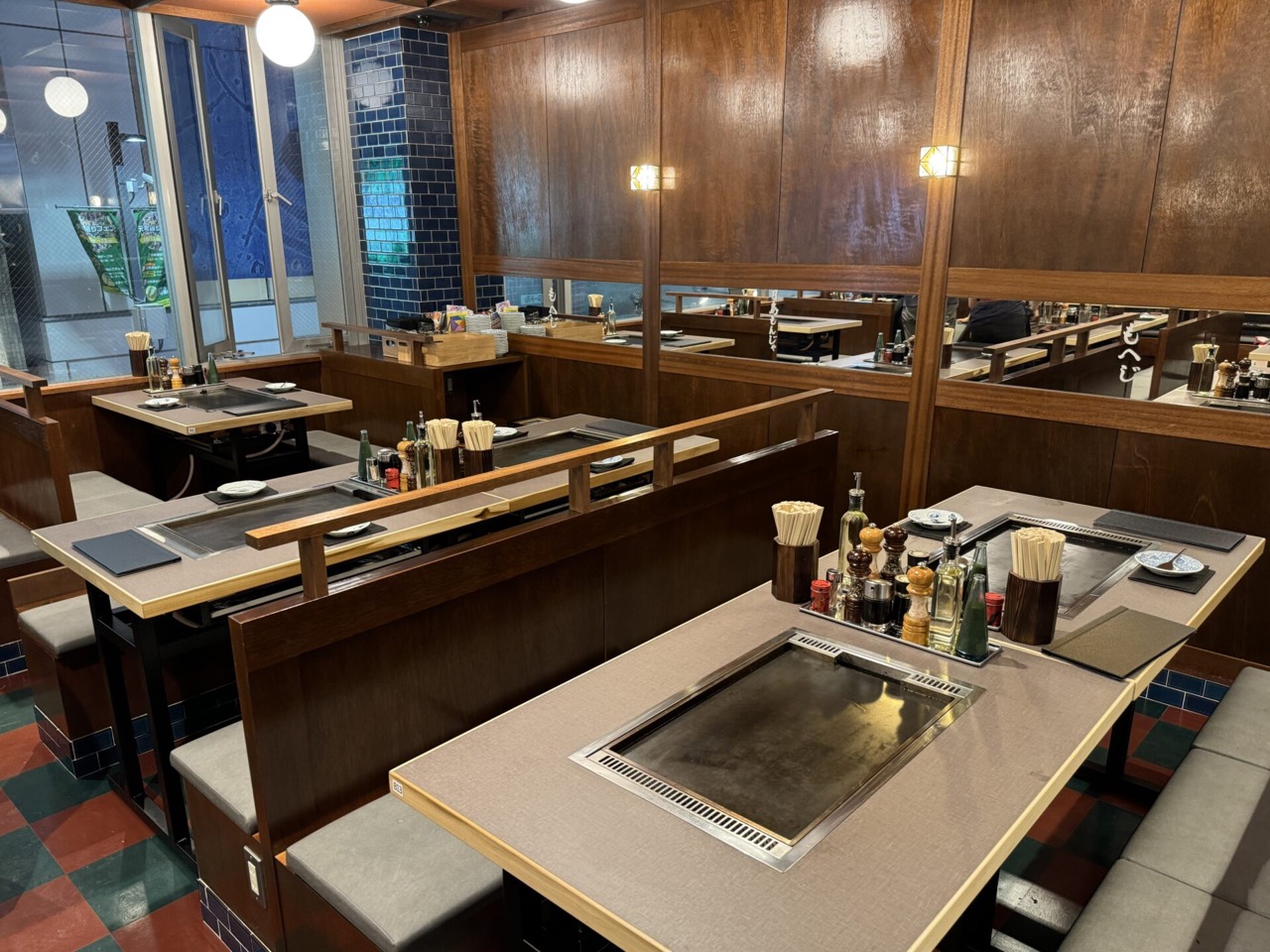
3.The Seoul room has a different feel. In Newsis's photos of the hall, cone-shaded lamps hang low over the tables, and long white-topped tables stretch between dark wooden partitions. A square griddle takes the center of every table, with sauce bottles and cutlery tins lined up along one side. Where the Shin-Marunouchi Building branch in Tokyo evokes an old neighborhood with glass blocks and paper lanterns, Seoul keeps to pale walls and wood. Either way, it is a restaurant where the table is the stove.
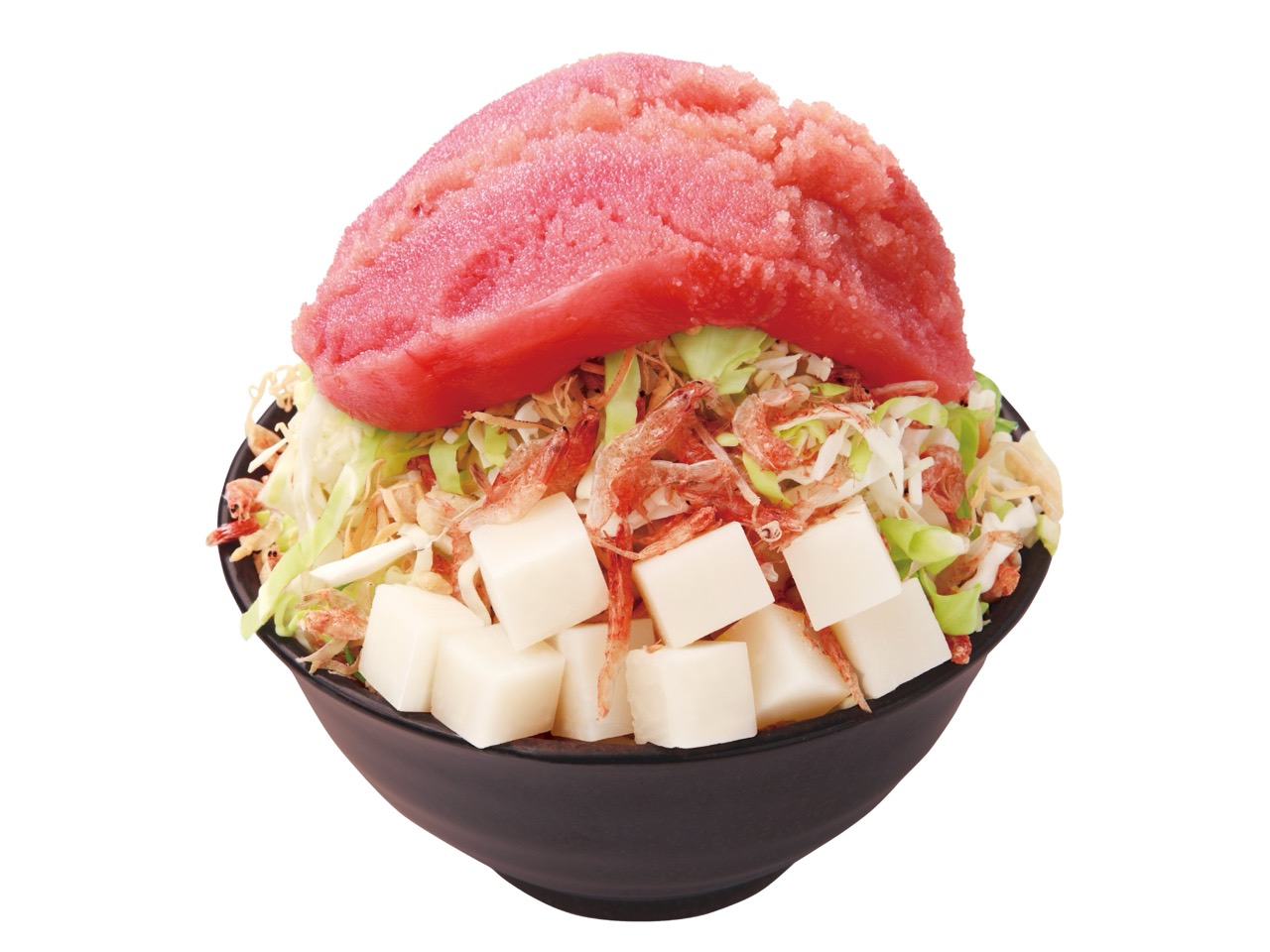
4.The menu leads with mentaiko mochi monja, followed by seafood monja, squid ink monja, okonomiyaki and yakisoba. Cheese, butter or tomato can be added on top. Order the mentaiko mochi monja and the ingredients arrive in the bowl: a heap of shredded cabbage scattered with cubes of rice cake and small shrimp, crowned with a whole lobe of mentaiko. The thin batter sits underneath.
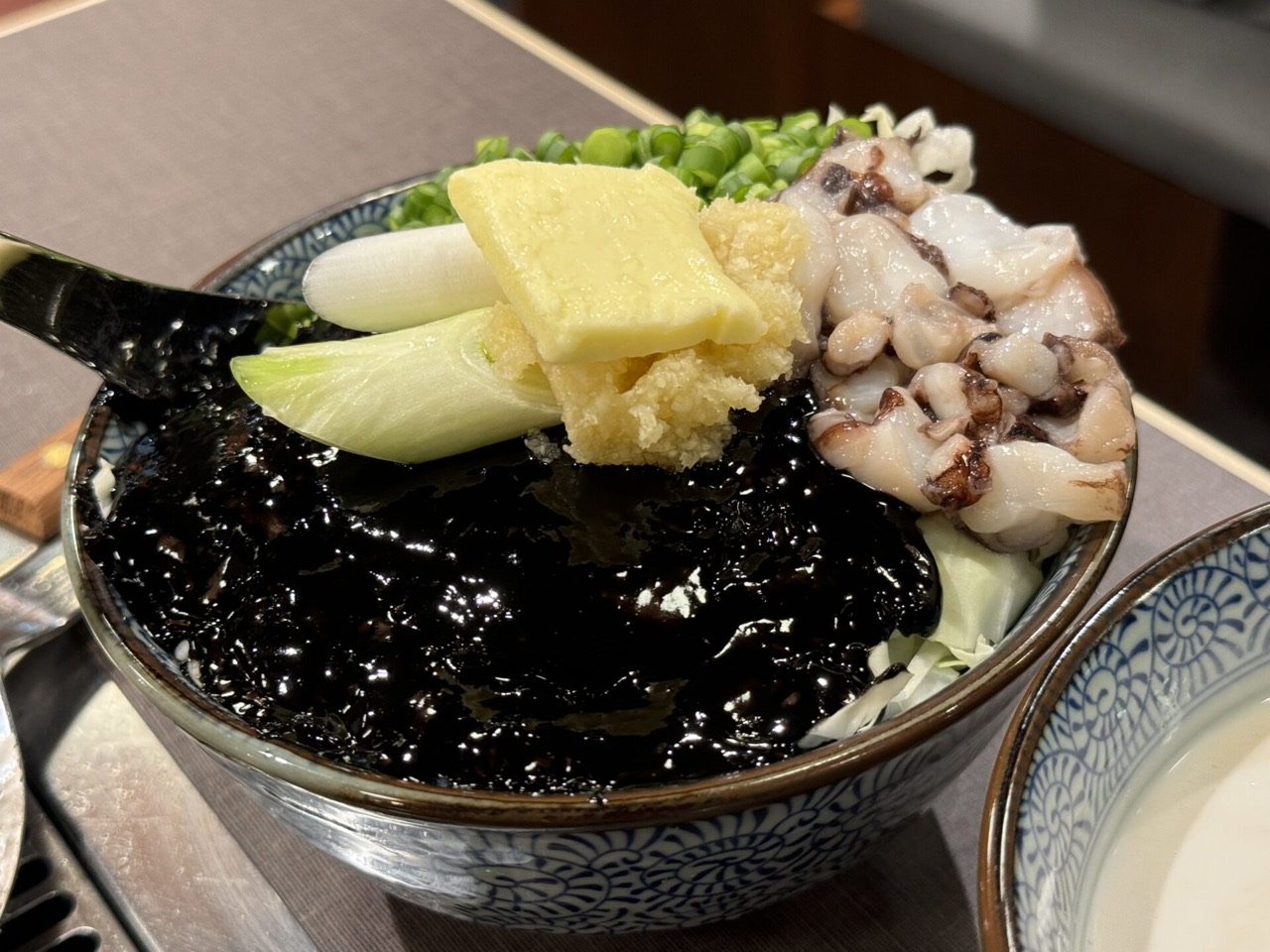
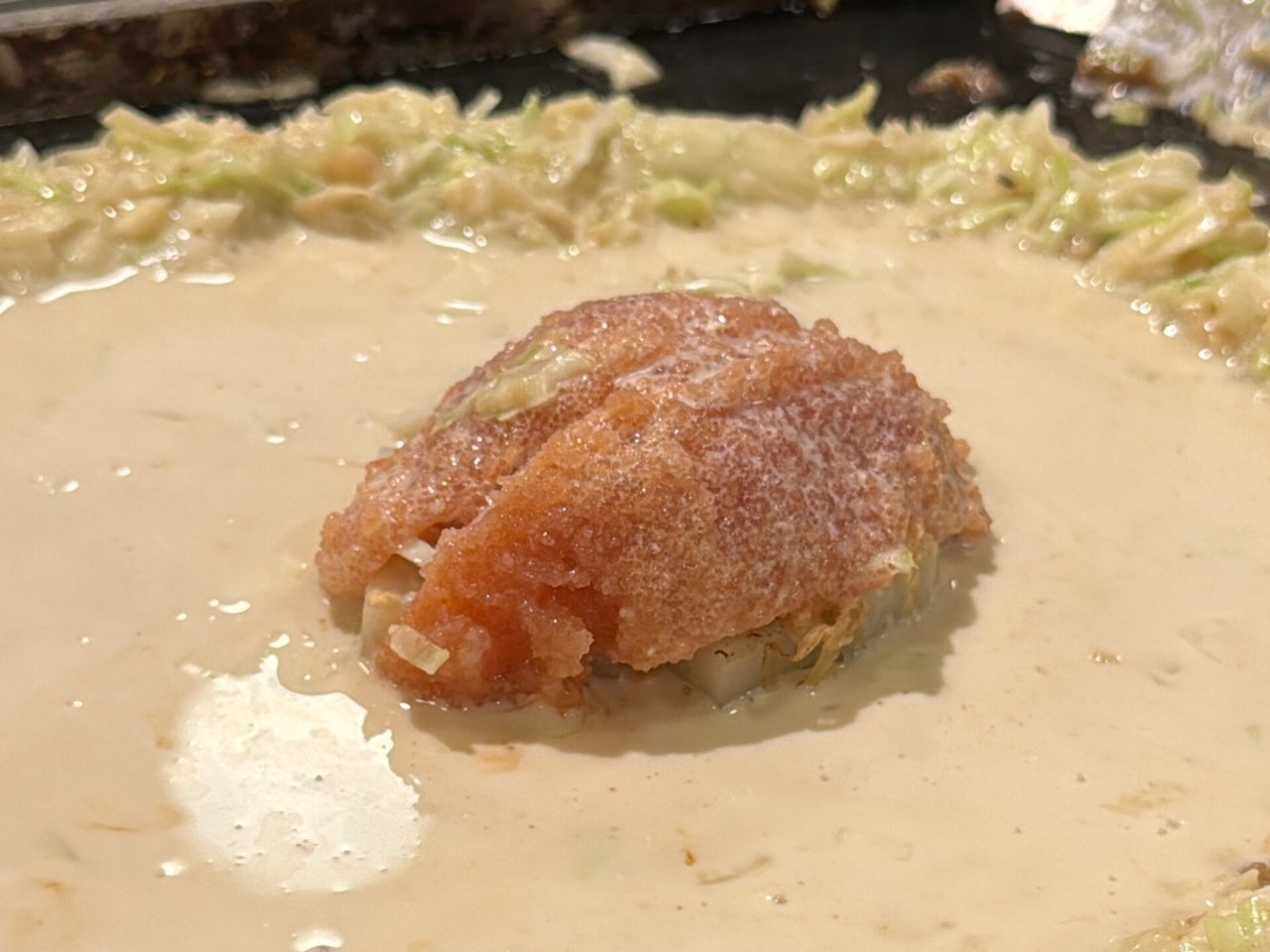
5.The server first tips only the solid ingredients onto the griddle and chops them fine with two spatulas as they fry. The wilted cabbage is pushed into a ring, a bank that Tsukishima calls dote. Batter goes into the hollow in the middle, bubbles rise and it starts to boil, and once it thickens the bank is broken down, everything is folded together and spread thin across the whole griddle. All that is left for the customer is to press off bites from the edge with a palm-sized little spatula.
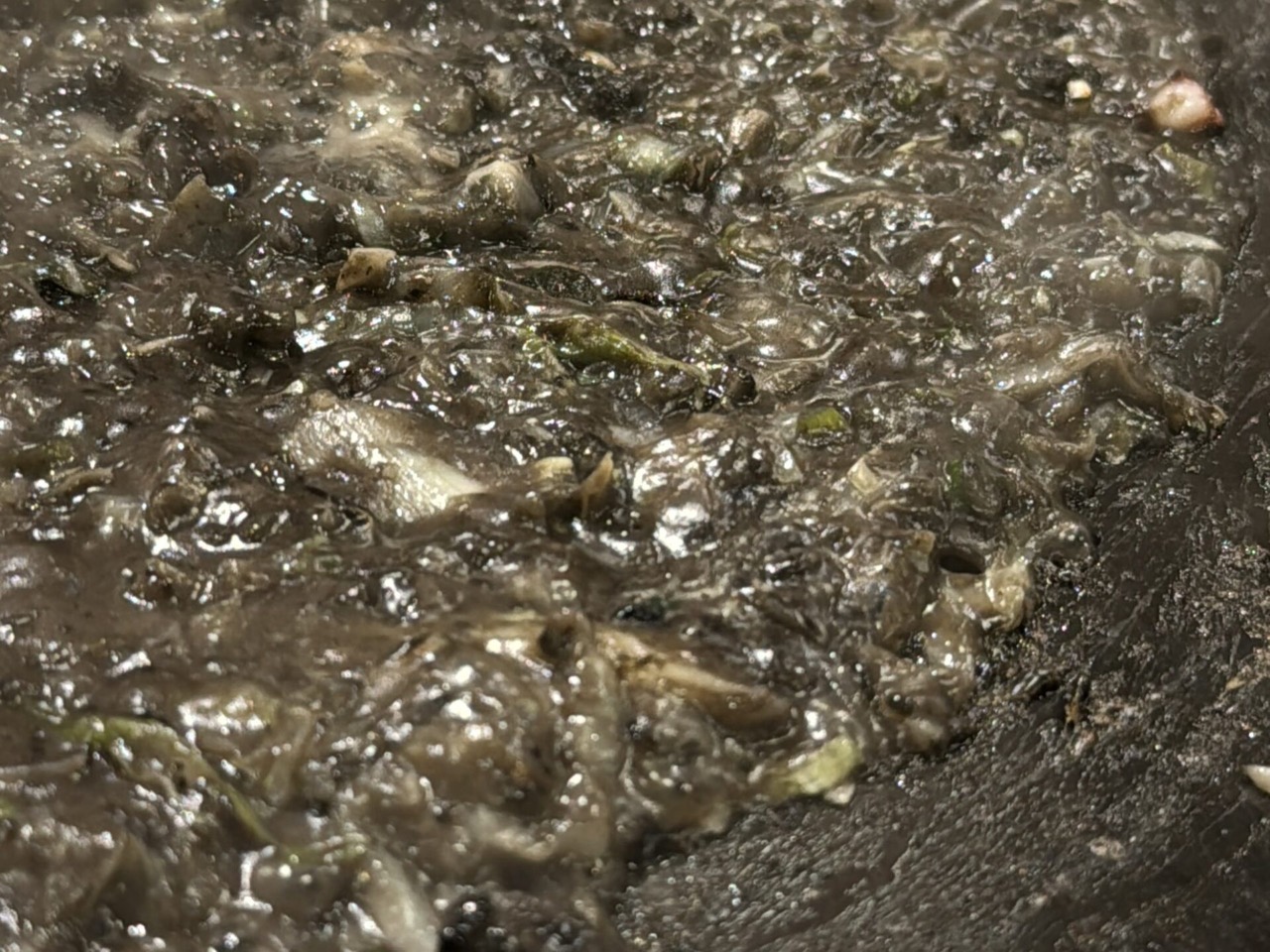
6.This food reaches the ears and nose before the mouth. The sound of batter hitting hot iron, the smell of soy and sauce catching at the edges. The Newsis reporters wrote of a salty, nutty flavor mixed with crisp vegetables and chewy rice cake, and of the bits stuck to the griddle turning crunchy like scorched rice. Each scoop is small, so finishing one batch takes time. What empties in the meantime are the beer and highball glasses.
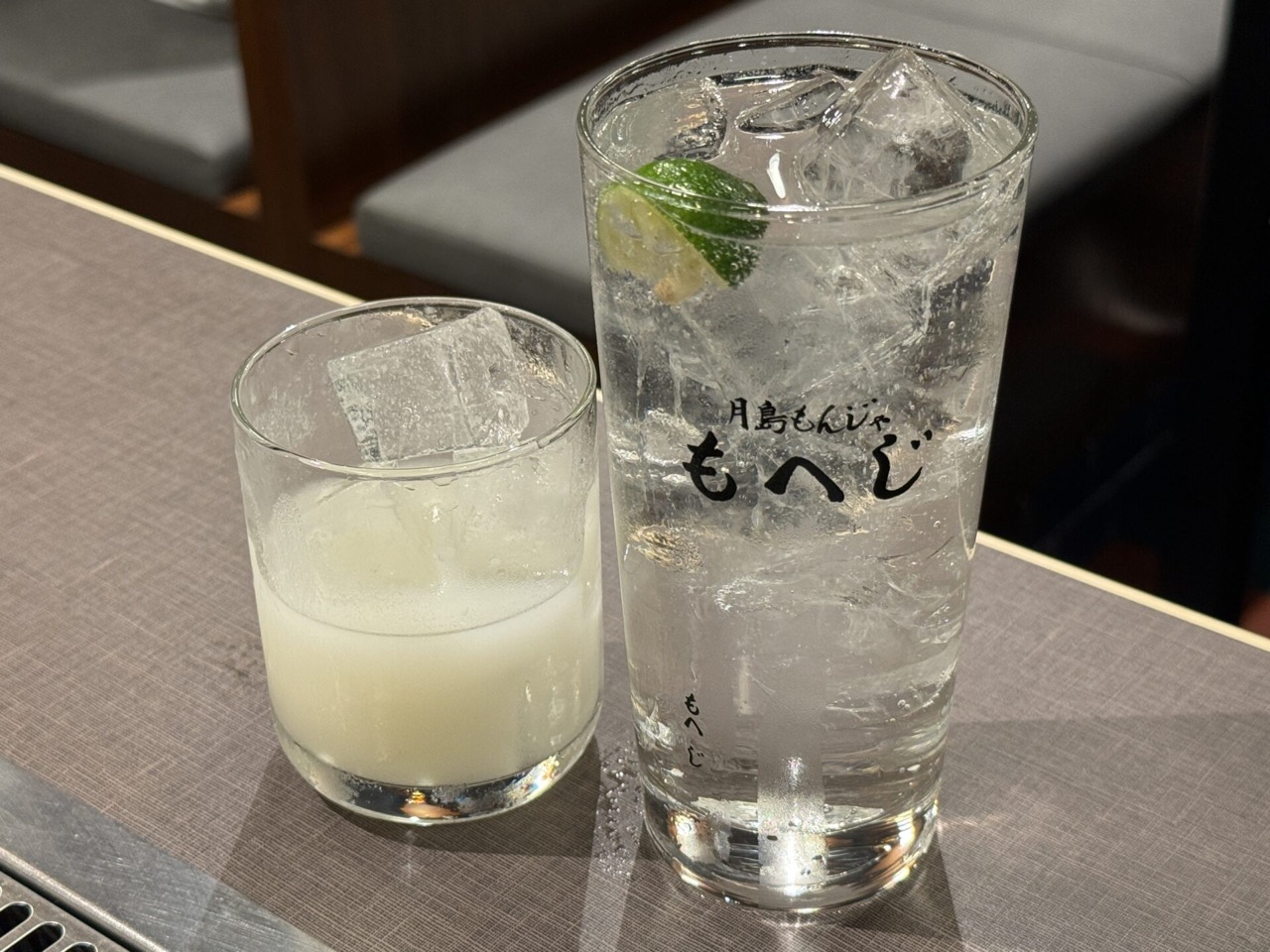
7.The line in Jongno started in Tokyo. Last year 9,459,600 Koreans visited Japan, the largest group by nationality and a record high. One visitor's account of the Shibuya Scramble Square branch recorded a wait of 1 hour 45 minutes and a crowd in which nine customers in ten were foreigners. Customers in the Jongno line told Newsis they had learned about the dish while planning trips to Japan.
8.This is not the only Japanese restaurant heading to Seoul. In a July article, Herald Economy reported that Tsujihan, a Tokyo seafood rice bowl shop, was preparing a first branch near Dosan Park, and that Itamae Sushi had opened four locations in Korea. The demand is for eating in Seoul at places people once queued for in Tokyo. Among them, monja sits on the side that is hard to copy at home. It needs a wide griddle, and hands that can hold batter inside the bank. And an unfamiliar-looking food becomes a show when someone cooks it in front of you.
9.Put the price list beside Tokyo's and the gap shows. On the Kichijoji branch menu in October 2024, mentaiko mochi monja was 1,848 yen, and the Shibuya price one customer reported is 2,000 yen including tax. At 900 won to 100 yen, the Jongno branch is 22 to 32% more expensive than either. Soon after opening, social media reviews added that it was not cheap, either.
10.Monja is built on cabbage, flour batter and stock. The weight of a batch's cost lies in the mentaiko and seafood on top, and in a mentaiko mochi monja the single lobe of roe accounts for more than half of the ingredient cost (estimate). Assume a plain monja without roe runs a food cost ratio in the 20% range, rising into the 30% range once mentaiko and seafood go on (estimate). The pricier the topping, the stronger the case for raising the price tag.
11.The heavier cost is people. Kitchen work ends with shredding cabbage, mixing batter and filling bowls, while the cooking falls to floor staff circling the tables. Fewer hands in the kitchen, but one server has to stay at a table for as long as a batch takes to cook. Assuming around 70 seats (estimate), six to eight people need to be on the floor in the evening to cook the orders coming in at once (estimate).
12.Two people ordering one monja, a yakisoba or okonomiyaki and two or three drinks come to 25,000 to 30,000 won each (estimate). At an average spend of 28,000 won and 2.5 turns a day, a month comes to about 147 million won (estimate). Monja is eaten slowly, one batch over a long sitting, so turns are hard to raise. However long the line, sales are set by the number of tables and the time people stay seated.
13.On equipment alone, Korea already knows this trade well. Fitting a burner into every table and dropping exhaust ducts from the ceiling is work Korean barbecue restaurants have done for decades, and vacant units with that equipment still in place are common. A monja griddle differs from a barbecue grill only in shape; the way gas lines and exhaust are laid is much the same. What equipment the Seoul branch installed has not been disclosed.
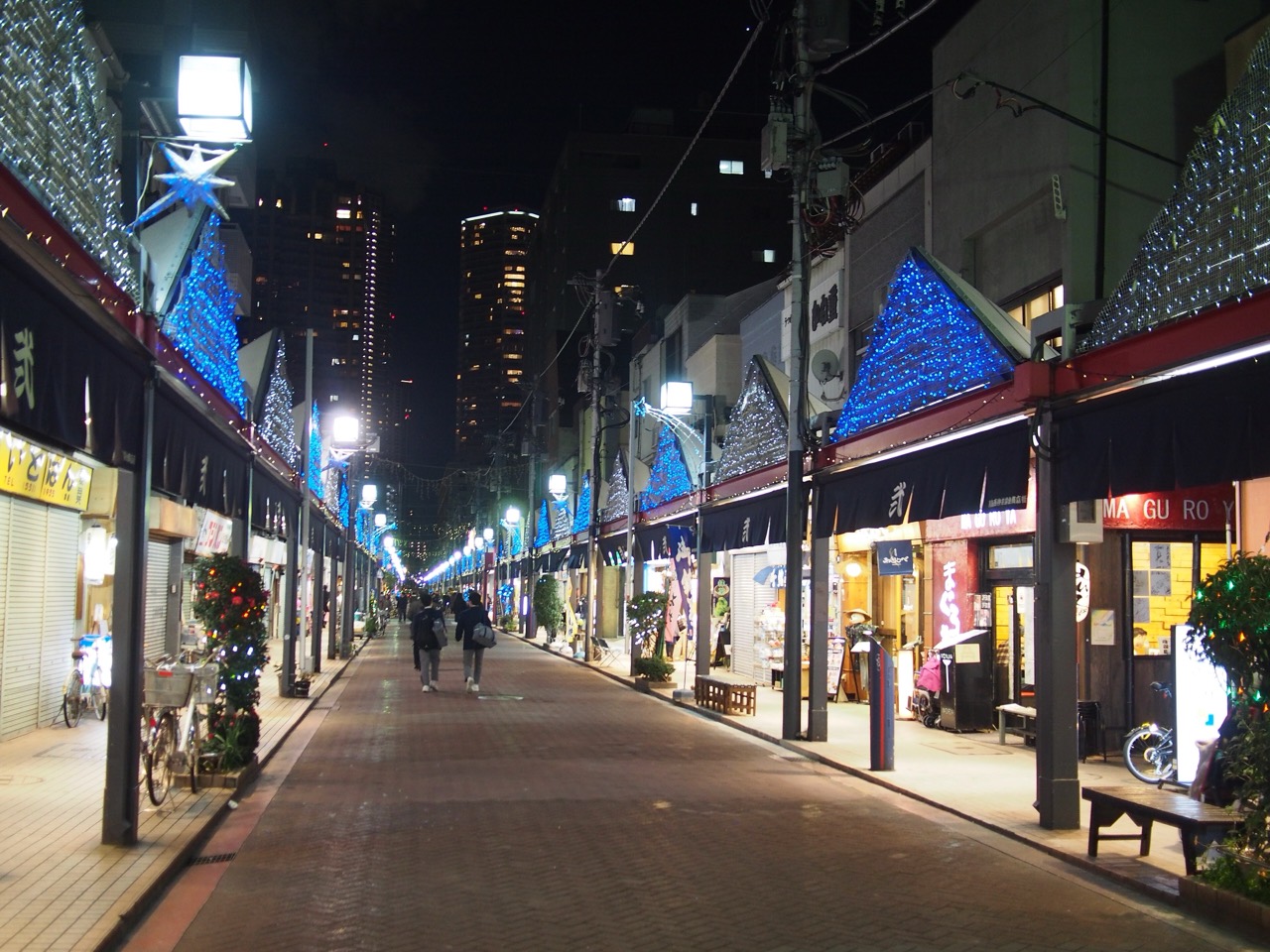
14.The name monja comes from monji-yaki. It was a snack from the griddles of sweet shops in Tokyo's working-class neighborhoods in the mid-Meiji era, where children ate thin batter after writing letters with it. Tsukishima had only four monja shops until the late 1950s; numbers climbed steeply in the 1990s, and by 1997 they were packed into a shopping street within a 500m radius. Today the street has 70 to 80 monja shops.
15.Mentaiko crossed the sea in the other direction. Toshio Kawahara, who spent his childhood in Busan, could not forget the salted pollock roe he ate there, and in January 1949 he first put Aji no Mentaiko on sale at his own shop, Fukuya, in Fukuoka. It was too spicy and did not sell at first, the story goes. That roe went onto Tokyo's monja and has now come back to Seoul with a 22,000 won price tag. An ingredient that was a wholesaler family's advantage in Tokyo is, in Seoul, a side dish sold in any market. Where the Seoul branch sources its mentaiko has not been disclosed.
16.A monja shop from Tsukishima in Tokyo opened its first branch in Jongno in August and charges 22,000 won for a mentaiko mochi monja. The people who filled the line had eaten this dish on trips to Japan, and they remember the Tokyo price too. What catches first in Korea is labor. The 2026 minimum wage is 10,320 won an hour, and the hands that build a bank of batter at the griddle must match the number of tables cooking at once. Once the opening line thins, can a 22,000 won batch keep all those hands paid?