On August 25, an udon kappo restaurant opened on the second floor of a retail building in Azabu-Juban, Tokyo. Its operator is a subsidiary of a publisher that has made school textbooks in Osaka for 80 years. Before 10 p.m. it sells only courses priced from 10,000 yen, and after 10 it serves 1,300-yen bowls of udon at the same counter.
1.The restaurant is called Bokekasu. Its operator, HiRAKU, was set up and wholly funded by Shinko Shuppansha Keirinkan, a textbook publisher in Osaka. Keirinkan was founded in 1946 and publishes math and science textbooks and study guides from elementary through high school, with sales of 14.8 billion yen for the year to September 2024. The opening press release explains its move into food by calling a meal "a cultural experience where people gather and share time."
2.Seating: six at the counter and five in a fully private room. The press release said 14 seats, but the restaurant's own site lists it this way, and the private room can squeeze in one more. It opens Monday, Tuesday, Thursday and Friday from 5 p.m. to 3 a.m., closes at 10 p.m. on Saturday, and rests on Wednesday and Sunday.
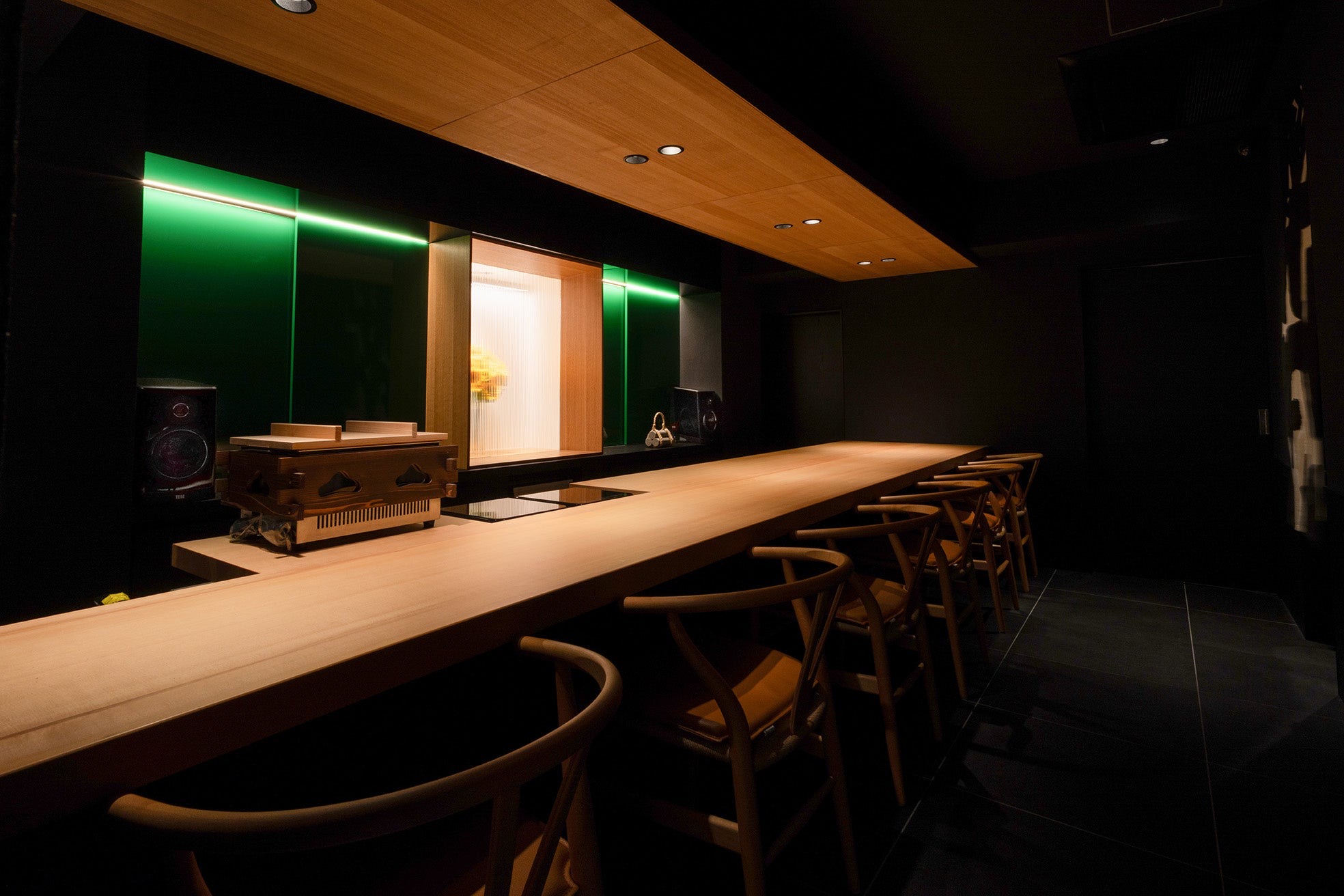
3.In the published photos the room is black. Dark grey tile on the floor, walls painted black, and through the middle a single long counter of pale timber. Just above it hangs a low ceiling panel of the same wood that lights only the space over the diners' heads. The back wall is taken up by two glass panels lit green, and in the white niche between them stands a bunch of yellow flowers.
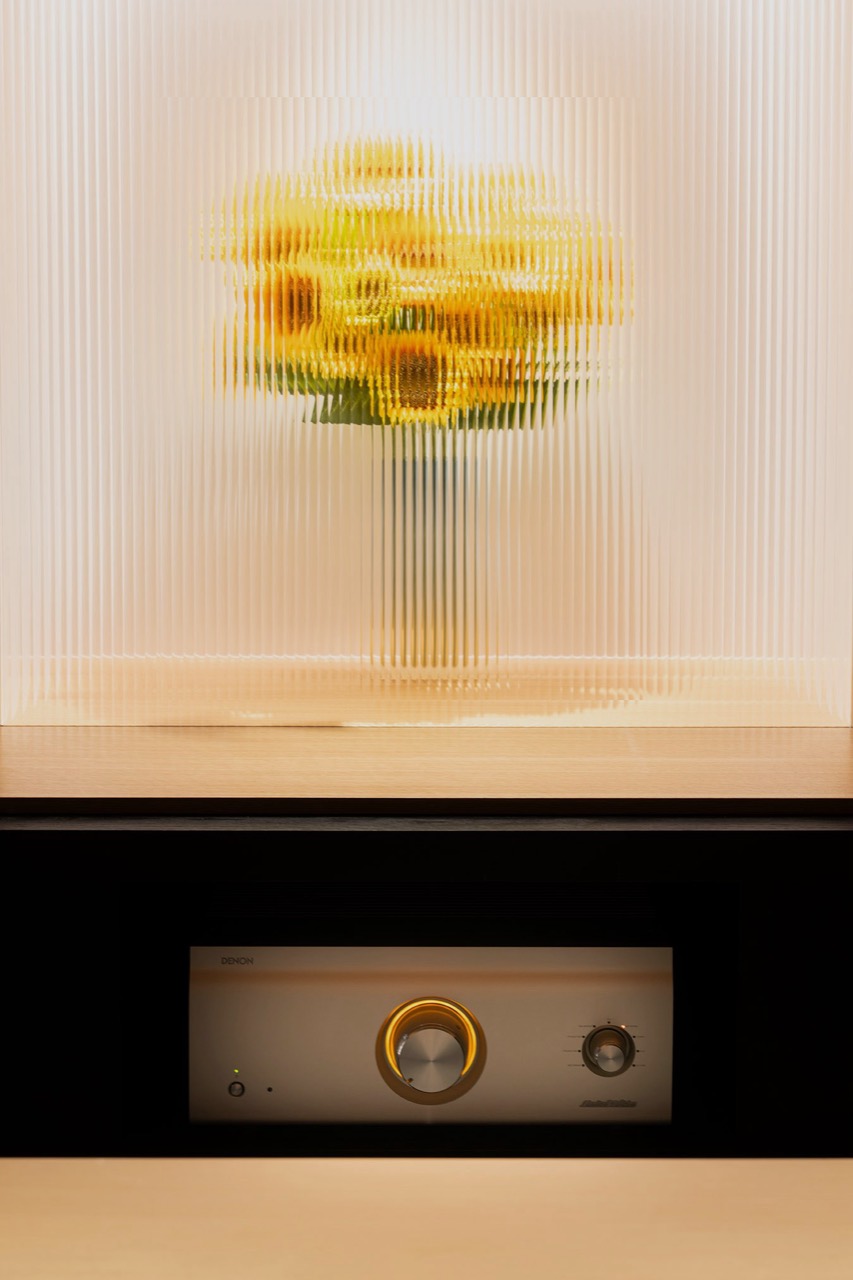
4.The phrase the restaurant puts forward is ichikyaku ittei, a tea ceremony term for a host preparing tea for a single guest. With an 11-seat counter, one head chef can see every guest's bowl at a glance. One of the photos rotating on the site's front page shows flowers blurred behind ribbed glass and, on a black shelf below, an audio amplifier. Of the three photos on that front page, only one shows food.
5.There are four courses, priced from 10,000 to 16,500 yen including tax. The longest, the Yoin course, runs to eight dishes: starters in a nine-compartment box, three kinds of sashimi, oden, and a main of fish or beef, in that order. A course of Matsusaka beef and Satsuma black pork swished through broth is served only in the private room. Last course orders at 8:30 p.m.
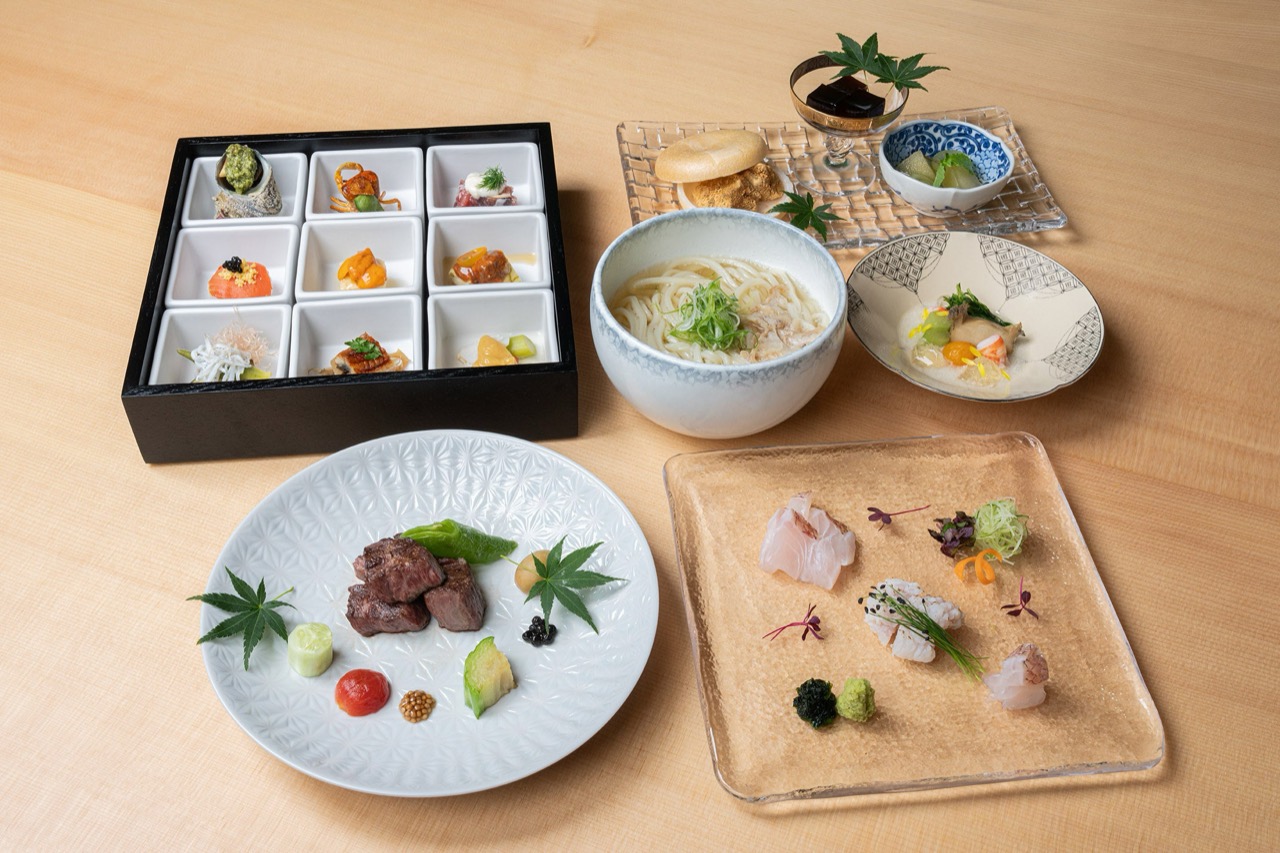
6.All four courses open and close with the same bowls. First comes hodoki dashi, a broth served before the meal, which the restaurant calls the essence of Bokekasu and leads with its aroma. Last comes Osaka's kasu udon: udon topped with aburakasu, beef small intestine fried slowly until its fat renders out. Crisp outside and soft within, the intestine gives up its fat and savor to the broth a little at a time as it soaks. A meal that opens with clear broth and closes with broth slicked in fat.
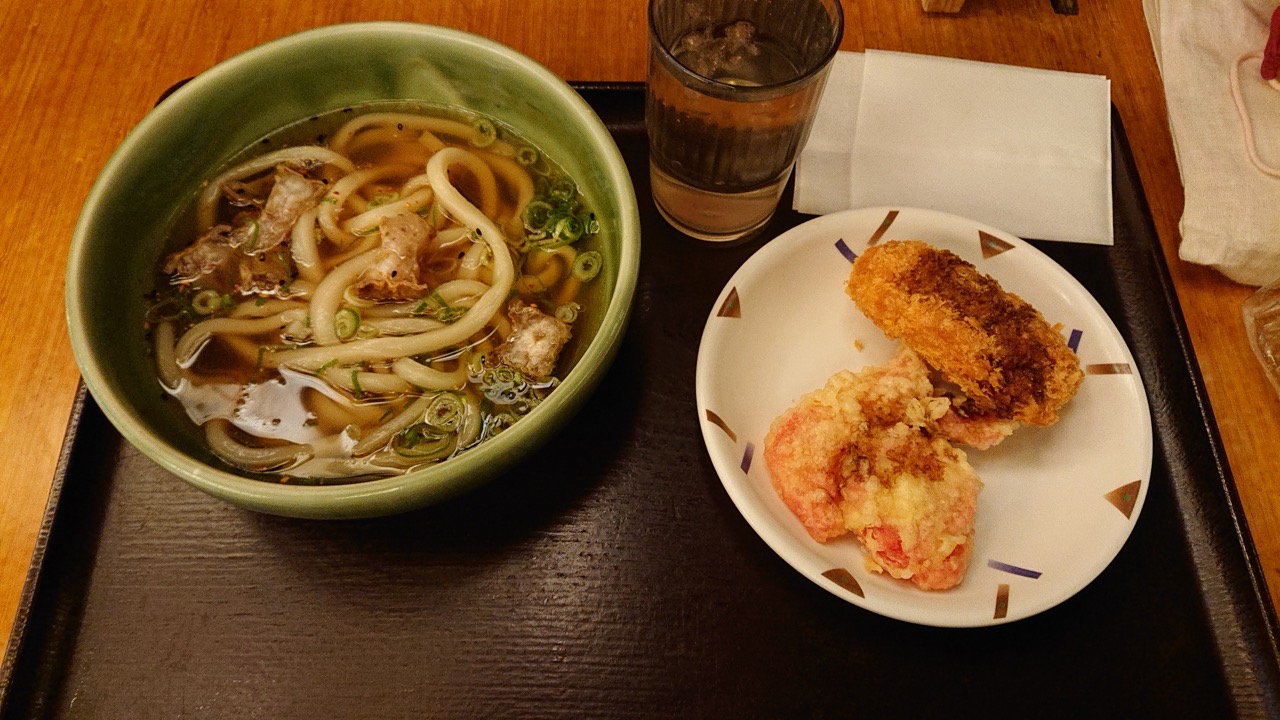
7.The name joins two words. By the restaurant's account, boke means blurring your tension to leave room in the mind, and kasu is the savor of that fried intestine. To a Kansai ear, bokekasu also sounds like a harsh insult. A textbook publisher's subsidiary has hung that hard-to-forget name over its door.
8.At 10 p.m. the menu changes. Oden starts at 380 yen a piece; snacks include udon chips with truffle salt, kasu kimchi and kasu yakisoba; and the udon list has kasu udon at 1,300 yen, plus a curry and a green curry version. The last bowl of the course moves to the center of the menu at this hour. While steam rises from the oden pot and curry broth scents the counter, the drinks list offers sake poured by the go alongside Yamazaki and Hibiki.
9.Azabu-Juban is a neighborhood where embassies and upscale homes sit behind an old shopping street. Roppongi, full of places that stay open late, is within walking distance. For someone who ate dinner elsewhere and is looking for a second or third stop, what they want at 1 a.m. is not a course but a bowl of hot broth. The site's first line reads "putting the night in order," and the restaurant introduces itself as a place to close out the day.
10.The restaurant bills kasu udon as an Osaka specialty. It is unfamiliar to Tokyo diners, so the course feeds them a bowl first, and the late menu brings them back for just that bowl. The course lifts spending on the first visit; the 1,300-yen udon drives the return visits. HiRAKU has also said it plans to open kasu udon specialty shops in Japan and abroad.
11.The service charge depends on the hour: 10 percent of the bill before 10 p.m., 15 percent after 10 and all day Saturday, with a separate 1,000 yen per person for the private room. The 16,500-yen course eaten in the private room comes to 19,150 yen before drinks. Come later and the udon is cheaper, but the service charge rate goes up.
12.Sales are not disclosed, so here is a rough estimate from menu prices. During course hours, an average course of 13,000 yen plus 5,000 yen in drinks and the service charge comes to about 20,000 yen per person (estimate). With course orders closing at 8:30, the 11 seats turn once a night, and at 70 percent occupancy this block brings in about 150,000 yen (estimate). After 10 p.m., udon, snacks and a couple of drinks come to around 5,000 yen per person, and 12 guests over five hours make 60,000 yen (estimate).
13.Counting Monday, Tuesday, Thursday and Friday as 17 days a month and adding four Saturdays, monthly sales land around 3.8 million yen (estimate). That is about 46 million yen a year, just 0.3 percent of the parent's sales, so this one restaurant will not move the publisher's bottom line. Labor, however, is heavy. Japan's Labor Standards Act requires at least a 25 percent premium for hours worked between 10 p.m. and 5 a.m., and 10 p.m. is also when the restaurant raises its service charge to 15 percent. Closing at 3 a.m. and cleaning up, staff work more than five hours a night at premium pay (estimate).
14.The ingredient that stands out is the fried intestine on the udon. In a 2020 article, Nikkei reported that frying 10 kg of intestine leaves only 1 kg of aburakasu, and that it now tops 500 yen per 100 g, more than beef. At 30 g a bowl, the aburakasu alone costs over 150 yen (estimate). Add noodles and broth, and the food cost ratio of a 1,300-yen udon climbs into the high 20 percent range (estimate).
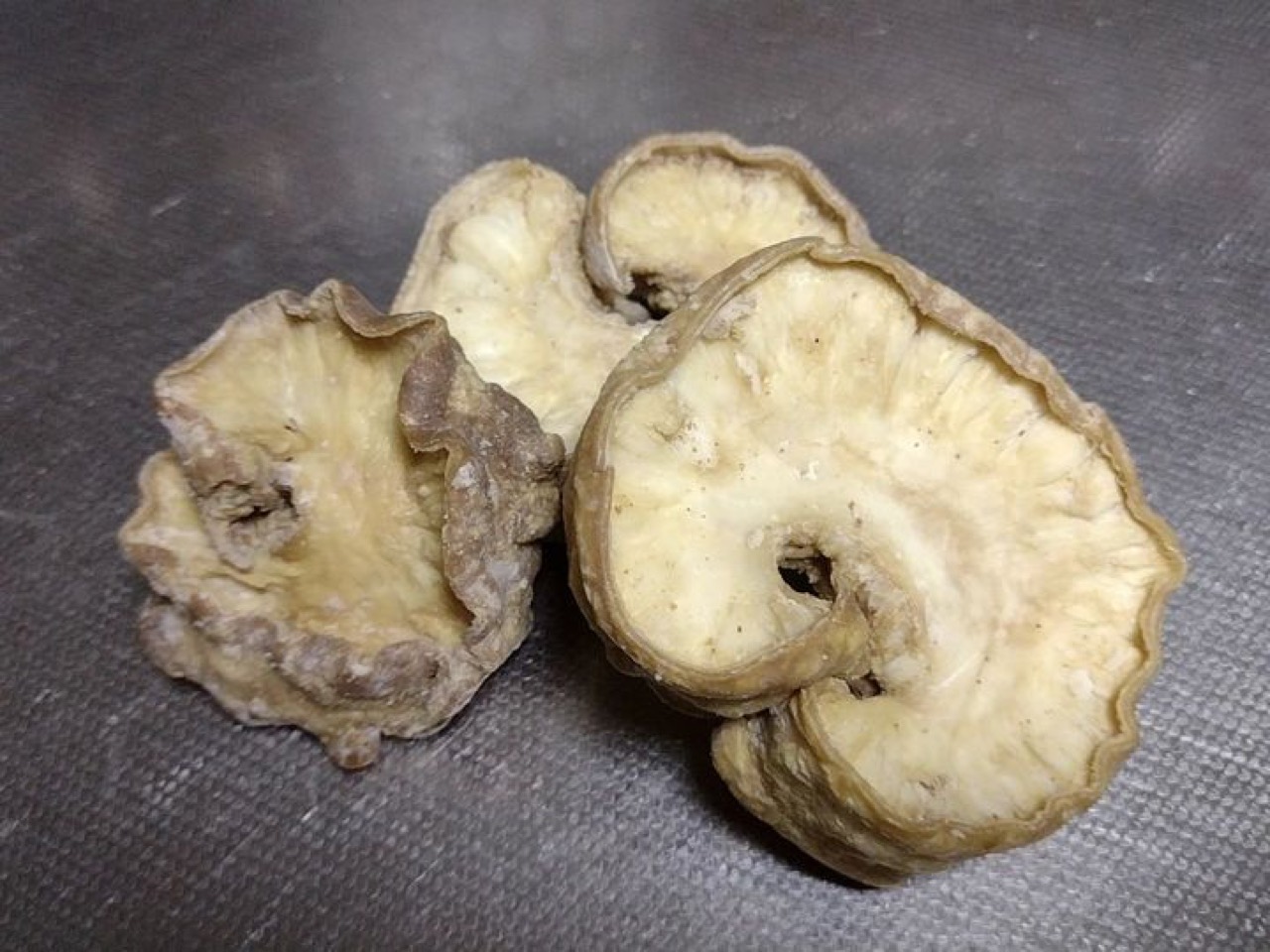
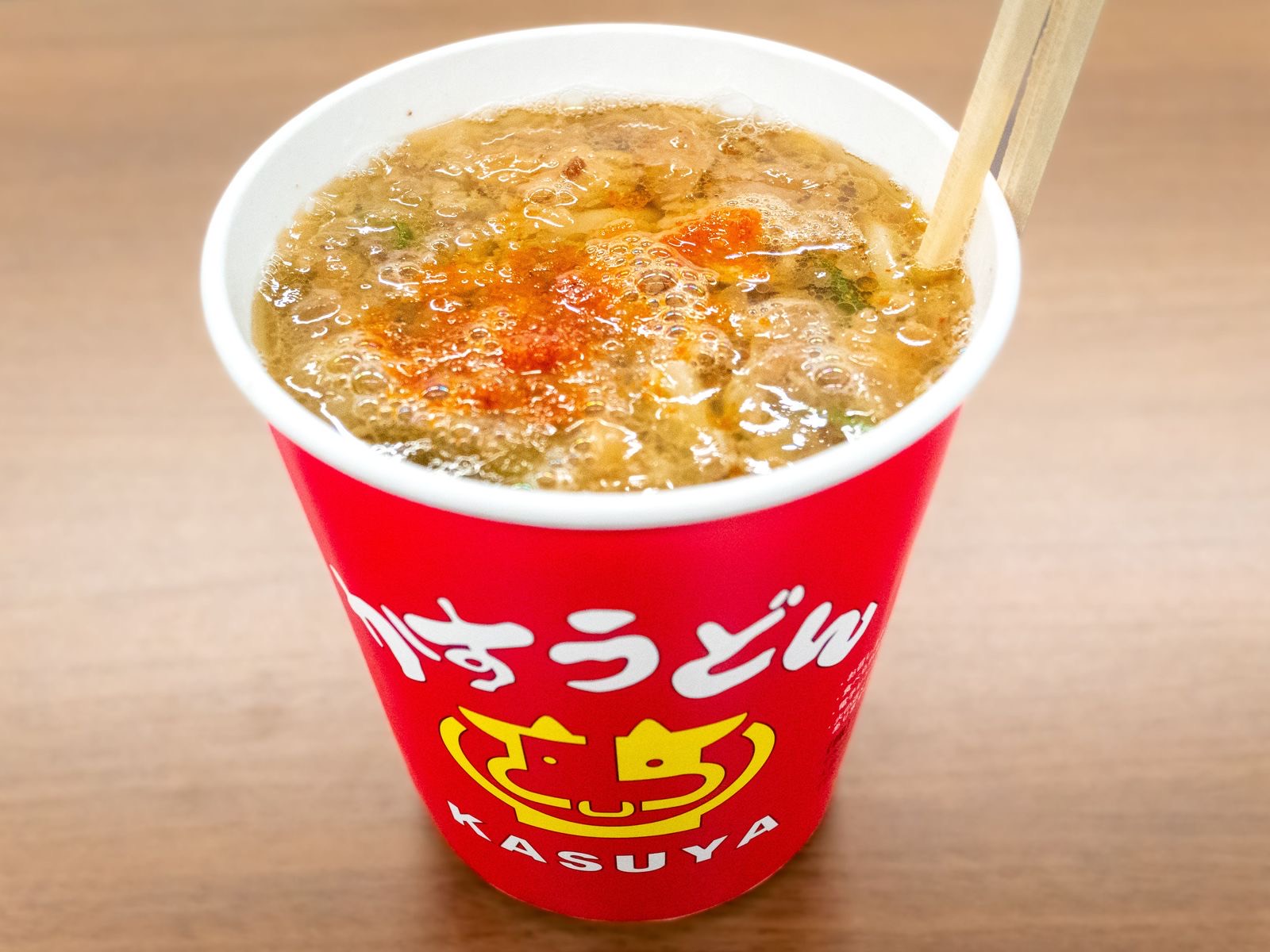
15.Aburakasu first appeared in the mid-Meiji era, when one of Osaka Prefecture's major slaughterhouses opened in Hanyu village, now Habikino. Locals kept and ate what was left after the fat, used for soap, was pressed from the cattle intestines. The first shop to put udon topped with it on its sign was KASUYA, which opened in Fujiidera in 1995. In 30 years a discarded byproduct became neighborhood udon, and now it is the final bowl of a 16,500-yen course in Azabu-Juban.
16.A subsidiary of an Osaka textbook publisher sells courses in the evening and 1,300-yen udon from 10 p.m. at an 11-seat restaurant in Azabu-Juban, Tokyo. It sells the same seats twice a night, but the second guest spends about a quarter of what the first does (estimate). Run the same way in Korea until dawn, and labor costs rise first. The Labor Standards Act requires a 50 percent premium for work between 10 p.m. and 6 a.m., and only workplaces with fewer than five regular employees are exempt. The moment staff reaches five, the hourly pay of whoever serves that late bowl of udon goes up 1.5 times.