A chef who became famous on television has opened his first restaurant of his own, on a second floor in Apgujeong Rodeo. It is a bistro where you order à la carte, yet everyone who sits down must first take five small bites. The money to open it came from a KRW 600 million loan.
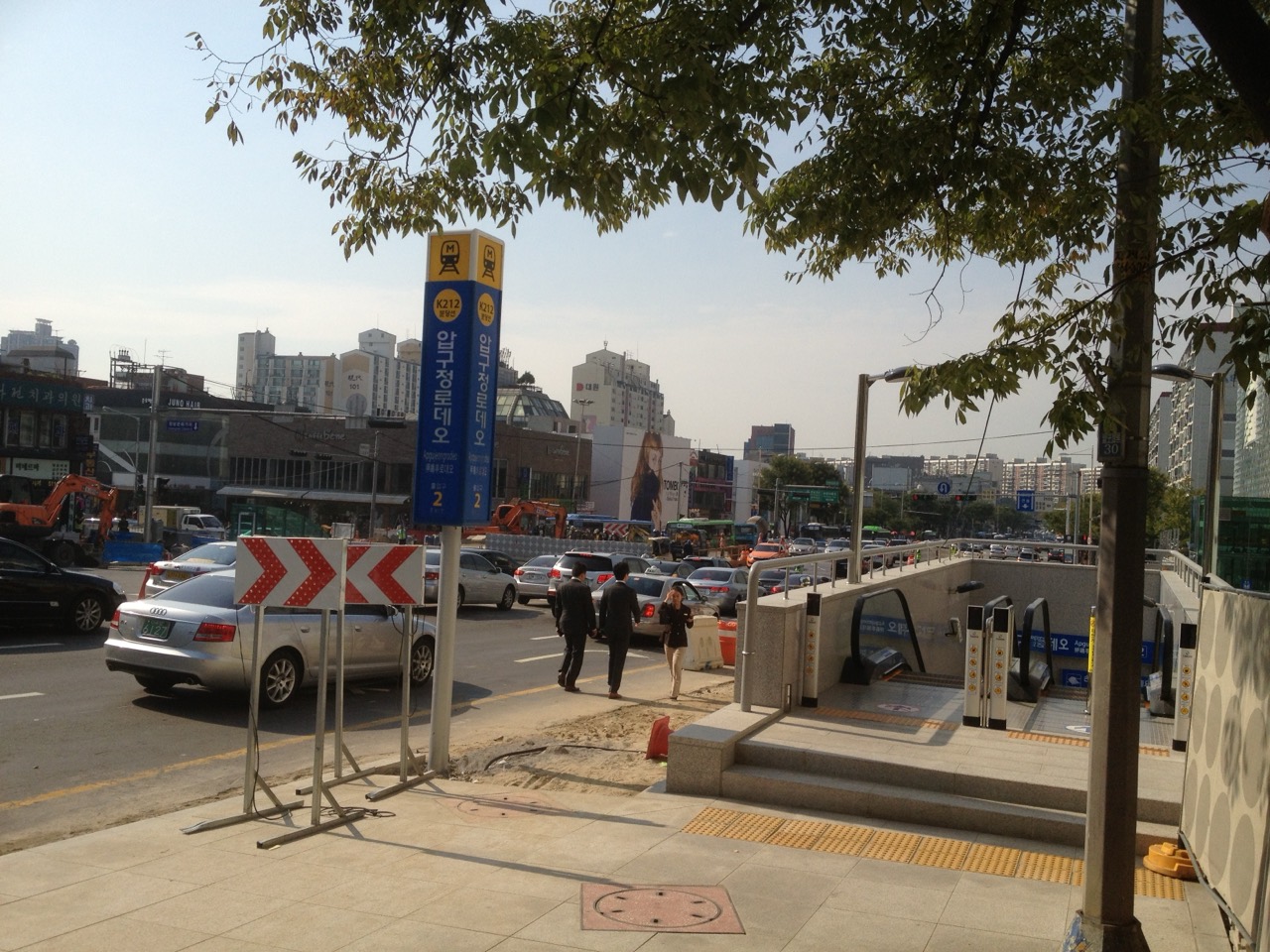
1.NOTRE opened at the end of April on the second floor of a building at 13 Seolleung-ro 155-gil, Gangnam-gu, Seoul, 281 m from Exit 5 of Apgujeong Rodeo Station. It is the first place chef Yoon Nam-no has put his own name on. Viewers know him as the "crazy cook" from Netflix's Culinary Class Wars, and before that he spent four and a half years as head chef at another Seoul restaurant. It opens Wednesday to Sunday, dinner only, from 6 p.m., with last orders at 9:30.
2.The way you order is what defines the place. Every guest must take a set of five amuse-bouches at KRW 39,000, and after that picks à la carte, from entrées at KRW 19,000 to meat dishes at KRW 65,000. Seating has not been published, but visitor reports add up to four or five four-top tables plus a bar table and one private room. The official page says groups of up to 30 can be seated. A restaurant of about 30 seats is the fair reading (estimate).
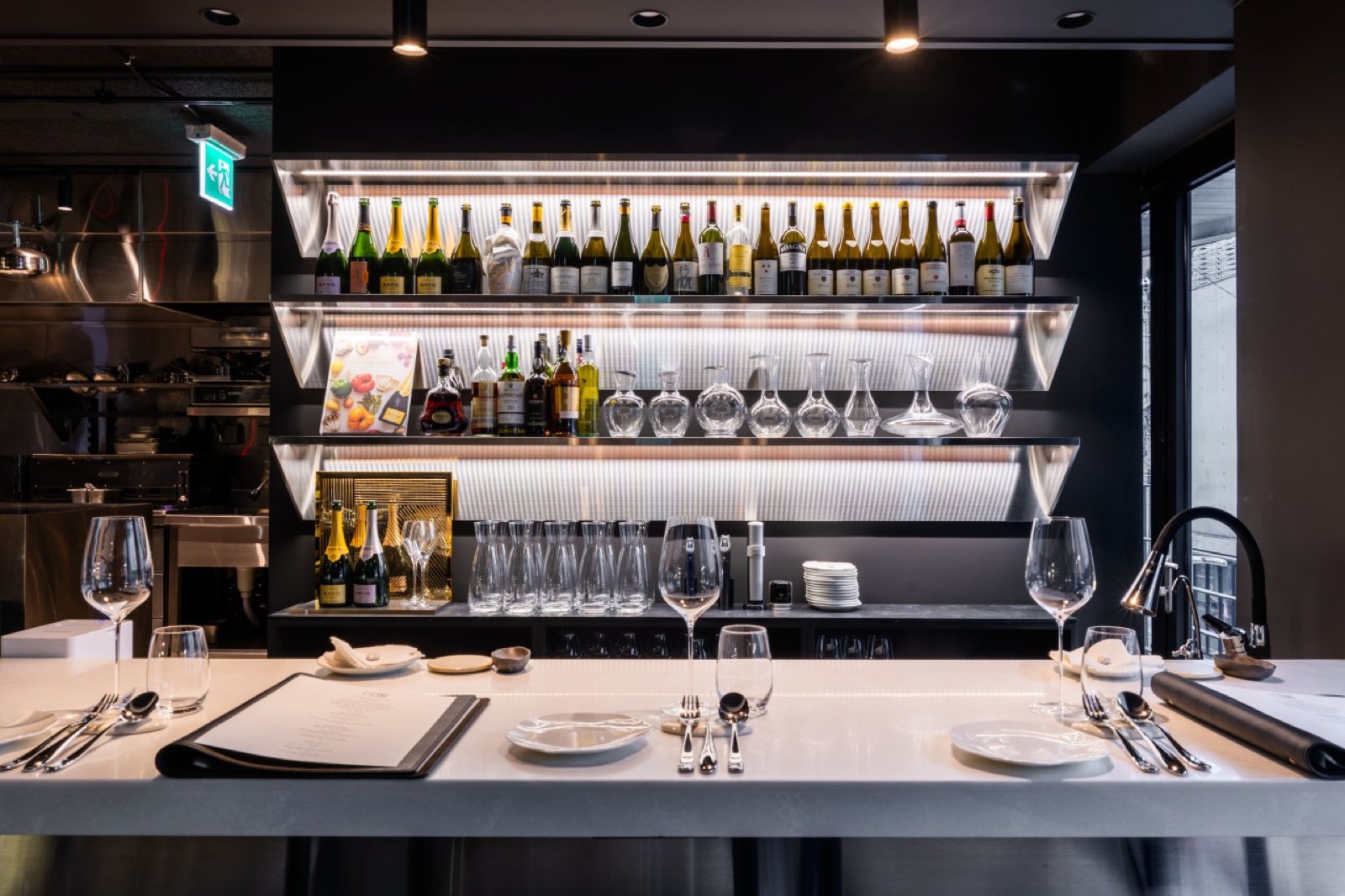
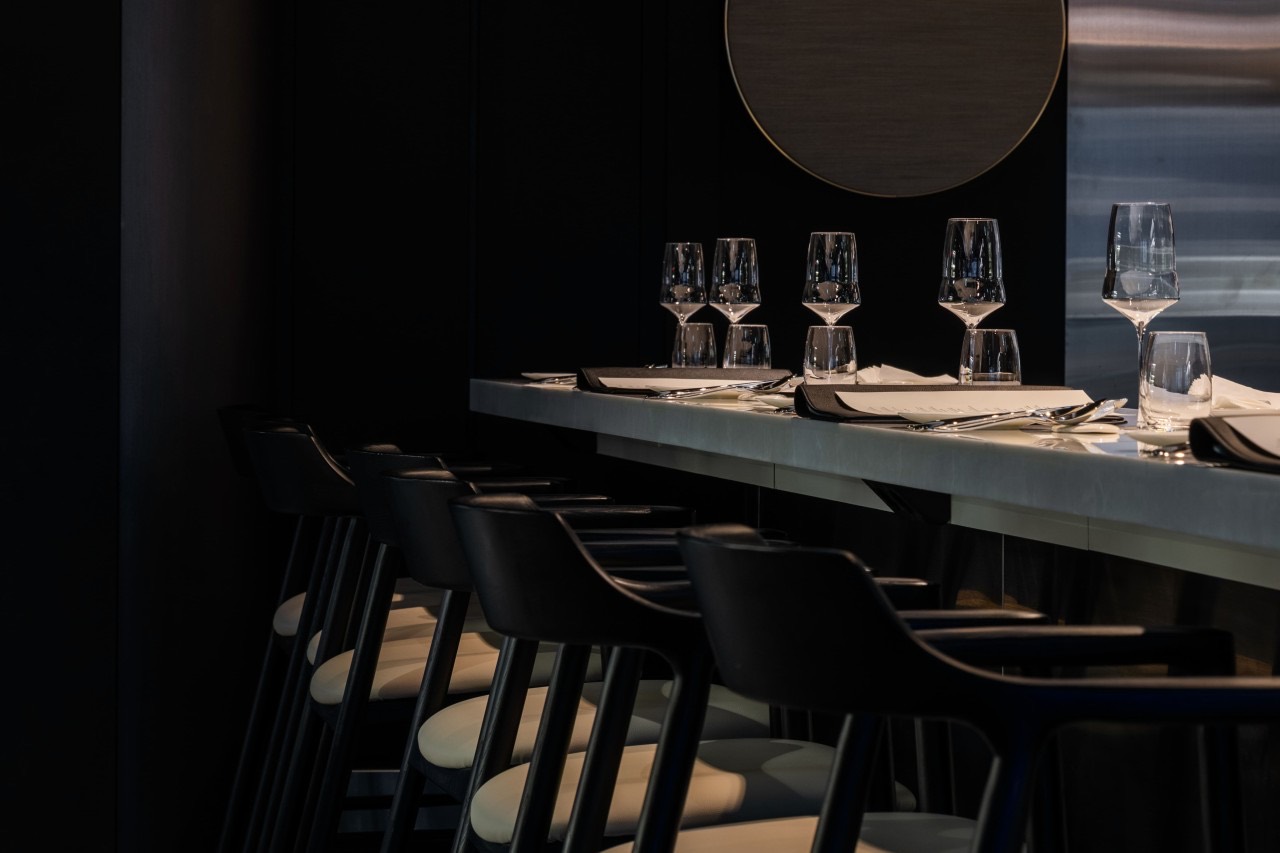
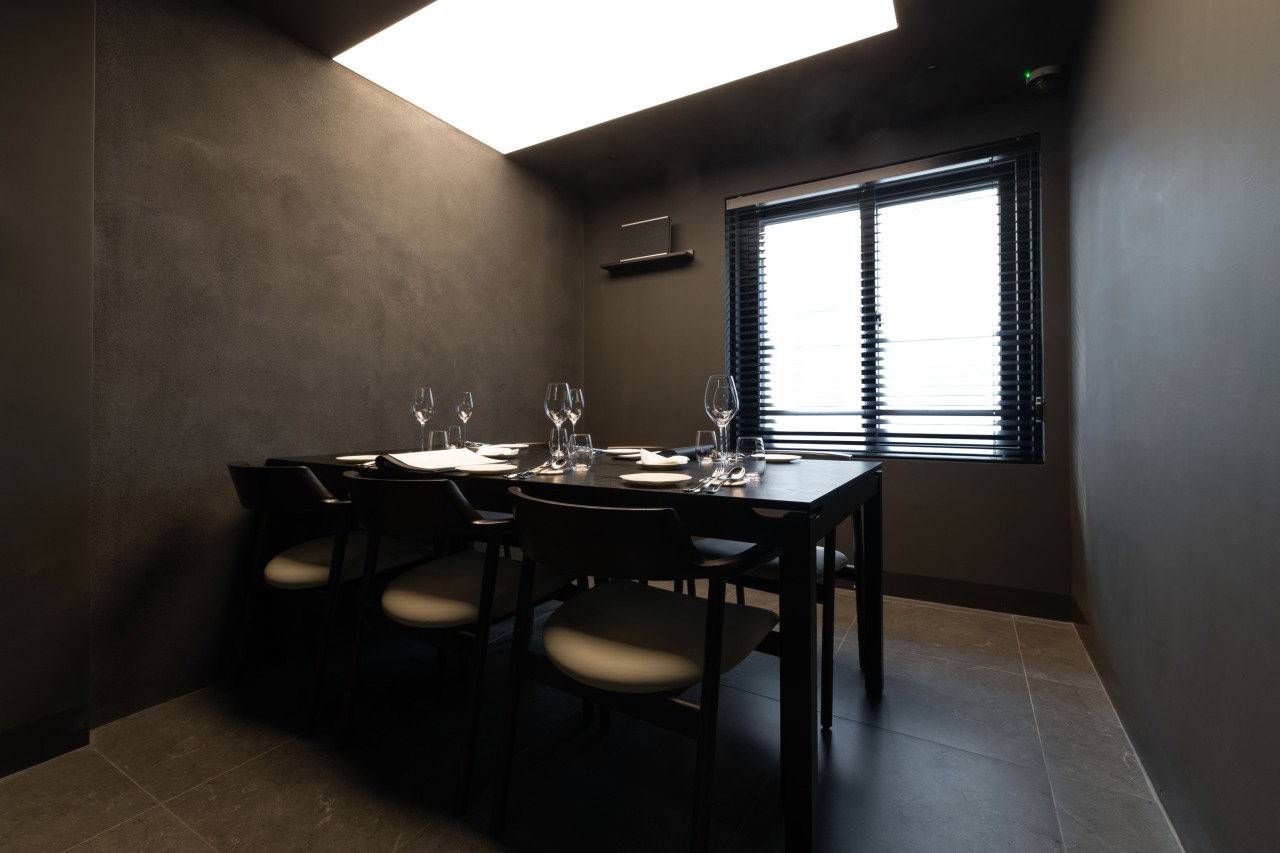
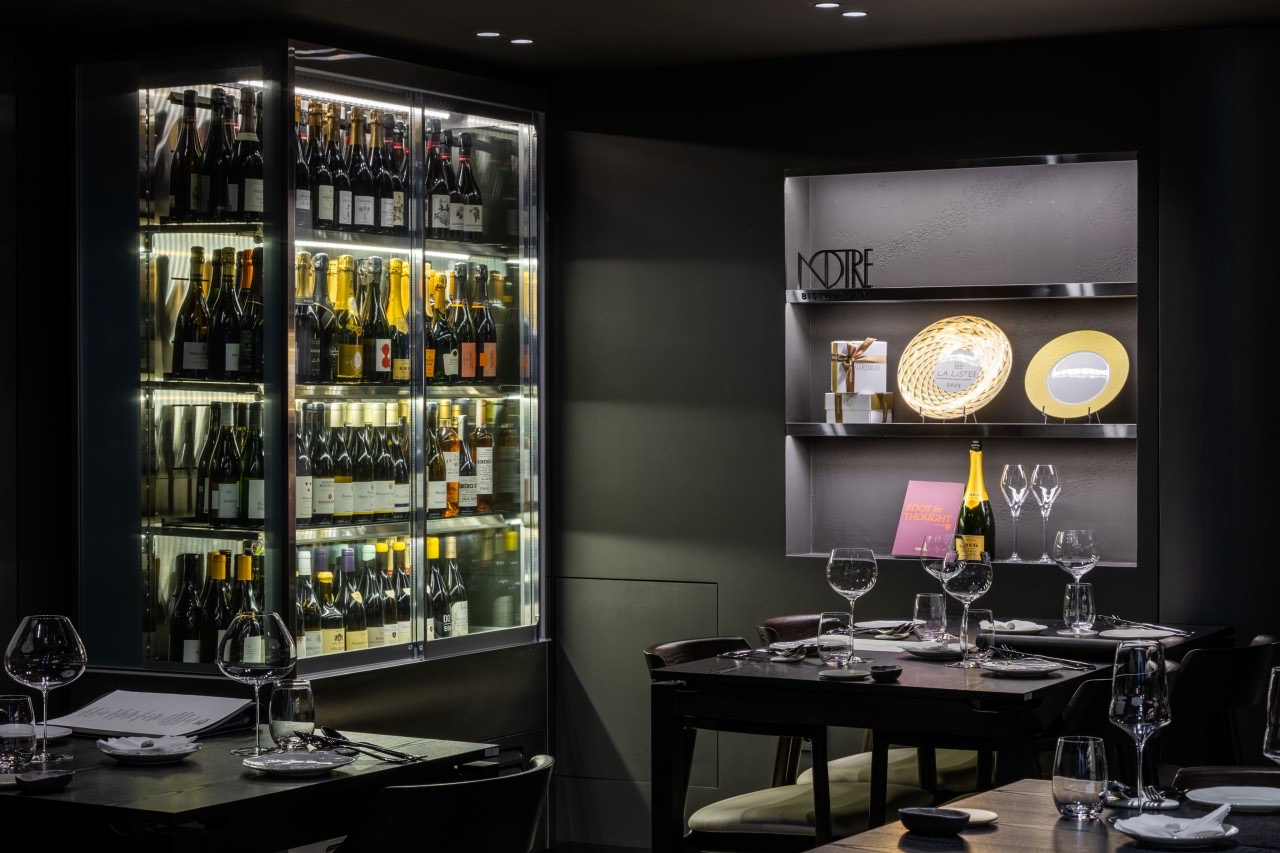
3.The restaurant describes its own space as "restraint on black." Walls, tables and chairs are all black, and what shines inside is the lit bottles and glasses and the white counter tops. The bar table faces an open kitchen finished in stainless steel, and a refrigerated wine cabinet on one wall is lit from within so the labels glow. The private room is one window and four black walls. Guests see the plates and the cooks' hands, and the dark swallows the rest.
4.The à la carte menu is short: three entrées, one fish, two meats, three desserts. On top of that, the five amuse-bouches land on every table first. From the kitchen's side, those five are prepared in advance and sent out in turn as guests sit down. Orders come in during that stretch, which buys the cooks at the stove time to start on the mains.
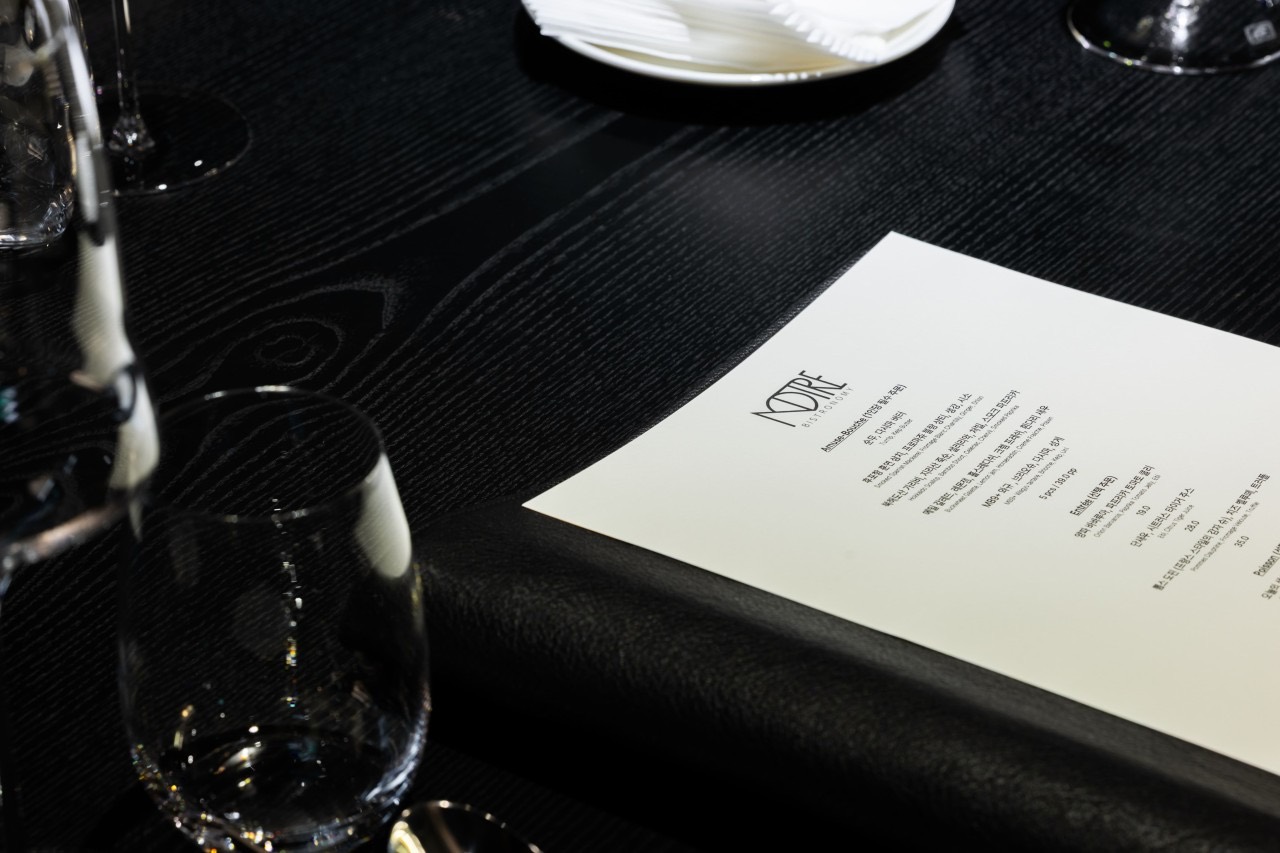
5.The five bites are listed on the official menu. Turnip with kelp butter. Smoked Hupo Port Spanish mackerel with fromage blanc chantilly, ginger and shiso. Hokkaido scallop with Jirisan bamboo shoot and celeriac. A buckwheat galette topped with lemon jam, horseradish and prawn, and finally brioche with chopped MB9+ wagyu, sea urchin and kelp. It starts with smoke-scented fish and ends with butter and fatty beef. Cold and warm, crisp and soft trade places bite by bite, and within ten minutes of sitting down the guest has tasted everything this kitchen is about.
6.The seats filled before the doors opened. In mid-March, posting photos of the construction site, the chef announced that April and May were fully booked, and the restaurant's account said it could not answer the flood of messages. After MBC's Omniscient Interfering View aired the opening in early June, the scramble for tables started again. People who had only watched his cooking on screen could now sit in his restaurant.
7.Eating this chef's food costs less than you might expect. Visitors report spending around KRW 100,000 per person. In a market where a modern Korean tasting menu in the same Sinsa-dong neighborhood charges KRW 380,000 for dinner, you get a TV chef's plates for under a third of that. For the chef, it means holding on to guests who can come twice a month rather than those who stake several hundred thousand won on one booking.
8.What keeps a bistro going on the nights guests order little? If two people share one entrée and two glasses of wine, two seats spend a whole dinner sitting that way. NOTRE set that floor at KRW 39,000 per person. Everyone eats the five plates before moving on to à la carte, and since every table starts with the dishes the chef is most confident in, those five are also what shows up in photos online.
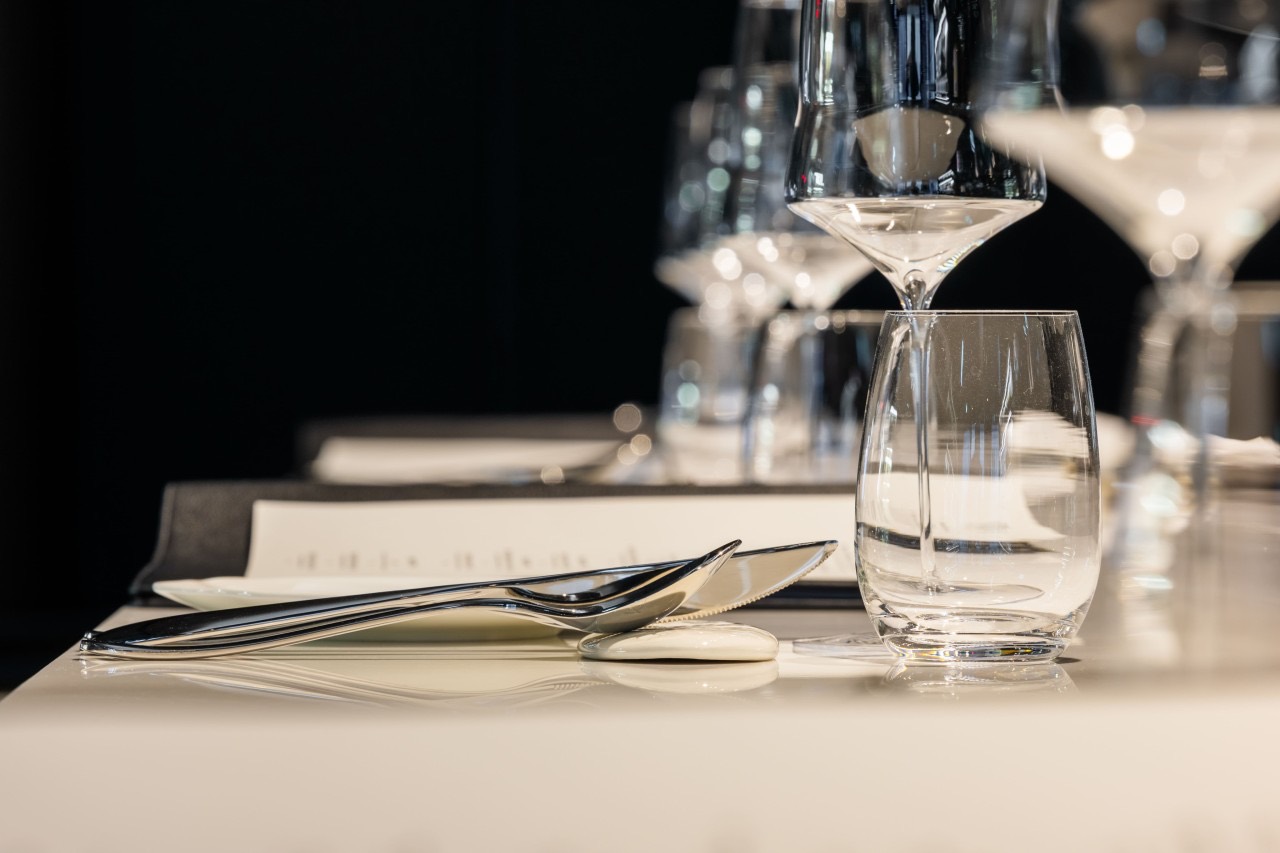
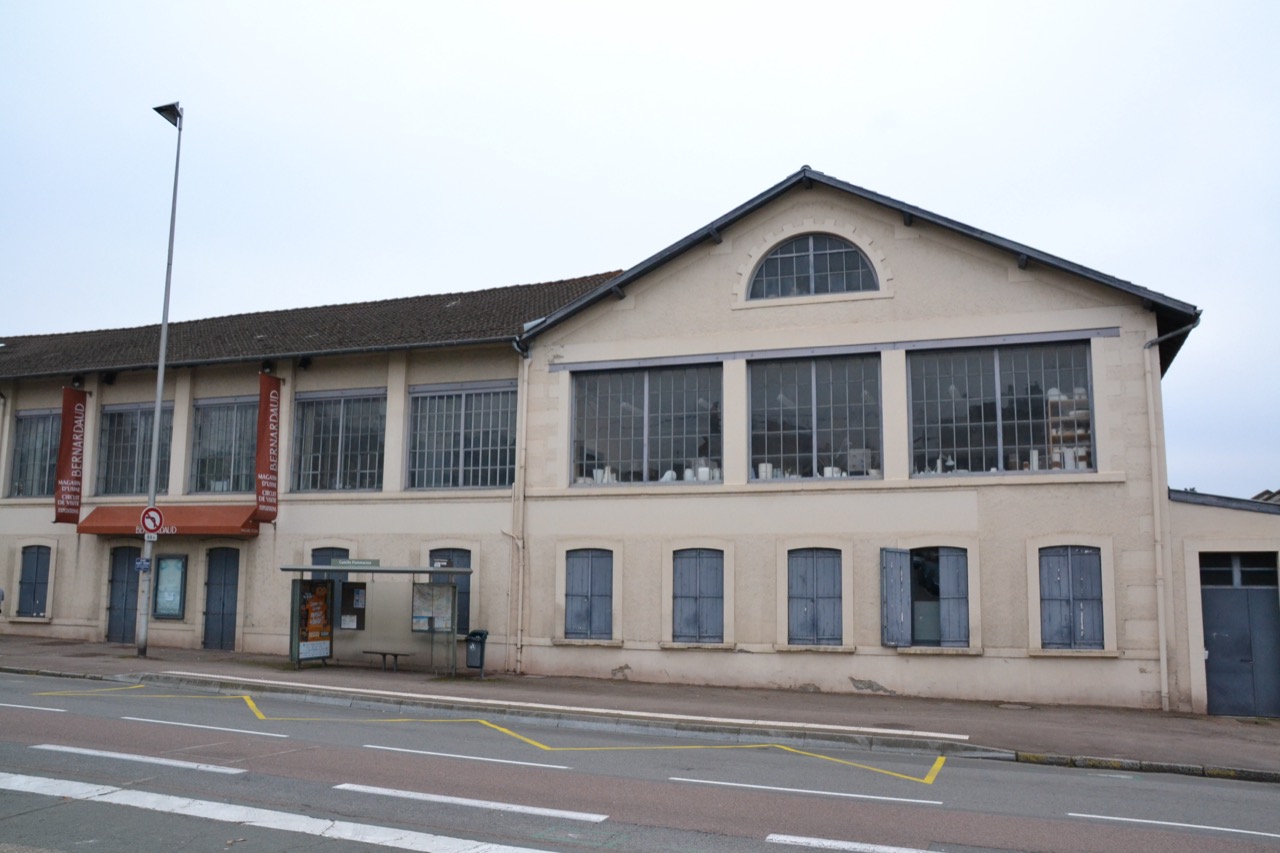
9.How much it took to open came out on television. The chef said he borrowed KRW 600 million. His quote sheet showed KRW 46 million for a single oven and KRW 50 million for wine, and he spent KRW 30 million on plates from Bernardaud, the porcelain maker in Limoges. Those three items alone come to KRW 126 million.
10.Here is one way to estimate revenue (estimate). If 30 seats turn 1.1 times over one dinner service at 85% occupancy, that is about 28 guests a day. Put spending per head, wine included, at KRW 120,000 and the month at 21.5 trading days, and you get KRW 72 million a month. A 30-seat restaurant usually needs around 45 pyeong (about 150 m²) of net floor area, which works out to roughly KRW 1.6 million per pyeong per month.
11.For the outgoings, use industry norms (estimate). With food and wine cost at 33%, labor at 30%, rent for a second floor in Apgujeong Rodeo at KRW 7 million a month and utilities and other costs at 7%, 20% of revenue, or KRW 14.5 million, is left. Repaying the KRW 600 million loan over five years at 5% a year takes KRW 11.3 million a month. After principal and interest, a little over KRW 3.2 million remains.
12.The KRW 50 million of wine is not money that disappears. It is stock sitting in the cellar. Restaurants usually sell wine at 2.5 to 3 times the purchase price, so if all of it sells, it becomes KRW 125-150 million in revenue (estimate). The rule allowing corkage on one bottle only for tables that buy one from the list points the same way. It does not let guests get through dinner on their own bottles, and makes sure one bottle opened is the restaurant's.
13.You can also calculate what the amuse-bouches hold up. If 28 guests a day each pay KRW 39,000, that is KRW 23.5 million a month, close to a third of estimated revenue. However few dishes a guest orders, this much comes in from every seat first, and because the five plates are prepared ahead, ingredient orders can be matched to the number of bookings. The other two thirds still depend on what each night's guests order.
14.Bistronomy, the word under the logo, comes from Paris. Yves Camdeborde, who had worked under Christian Constant in the kitchen of the Hôtel de Crillon, opened La Régalade in the 14th arrondissement in 1992. He cooked with the technique of hotel fine dining but charged a neighborhood bistro's cheap set-menu price, and cut costs by dropping tablecloths and packing tables close together. In the 2000s French food writers began calling places like this bistronomie. Camdeborde later opened Le Comptoir du Relais at the Carrefour de l'Odéon.
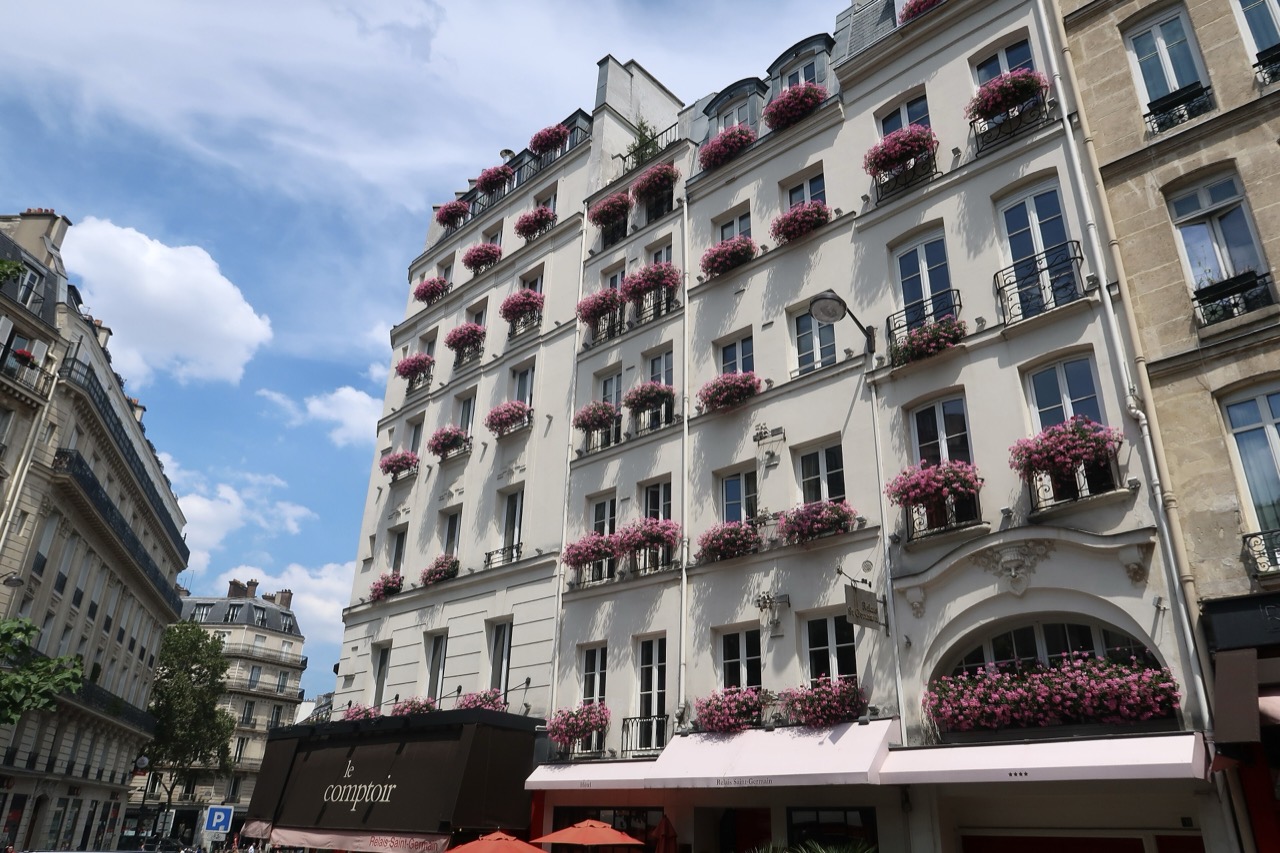
15.NOTRE walks the route in reverse. Where the Paris original cut costs to lower prices, this restaurant put money first into the oven, the plates and the wine. What it borrowed from the bistro is not the price but the way you order. No forced tasting menu, free choice à la carte, except that everyone gets the same first five plates. In 1990s Paris, a cheap bistro format was used to sell fine dining. In 2026 Apgujeong Rodeo, fine-dining equipment is installed to sell a bistro's low threshold.
16.A chef who got famous on television borrowed KRW 600 million to open a bistro of about 30 seats, and set a revenue floor by selling every guest five small bites for KRW 39,000 before anything else. On these estimates it takes in KRW 72 million a month and keeps KRW 3.2 million after loan repayments. In Korea, the first thing this setup runs into is the hours. With last orders at 9:30 p.m., washing up and closing run past 10, and under the Labor Standards Act a business with five or more regular employees must pay 50% extra for work after 10 p.m. The more a restaurant relies on dinner alone, the more its labor lands in the most expensive hours.