A group that has run bars and izakayas in Shanghai for more than a decade is cooking Chinese food for the first time. The site is the top floor of the same building that houses its bar. A Cantonese restaurant and a cocktail bar split one floor, and the doors open at 11:30 a.m. and close at 1:30 a.m.
1.In September, the Cantonese restaurant Atelier Kaulou (玖樓) opened on the ninth floor of A Mansion, the building on the corner of Fumin Lu and Changle Lu in Shanghai. The other half of the floor belongs to the cocktail bar Opia. Guests ride up in the office elevators on the Changle Lu side. It is open daily from 11:30 a.m. to 1:30 a.m.
2.The operator is the Atelier group, which has run restaurants and bars in Shanghai for over ten years. It is led by Daniel An, a former bartender, and the group also runs the cocktail bars Atelier No. 3 and Laizhou Bar and the Mexican restaurant Cantina Agave on the ground floor of the same building. After two izakayas, this is its first Chinese kitchen. Seat count and exact opening date have not been disclosed.
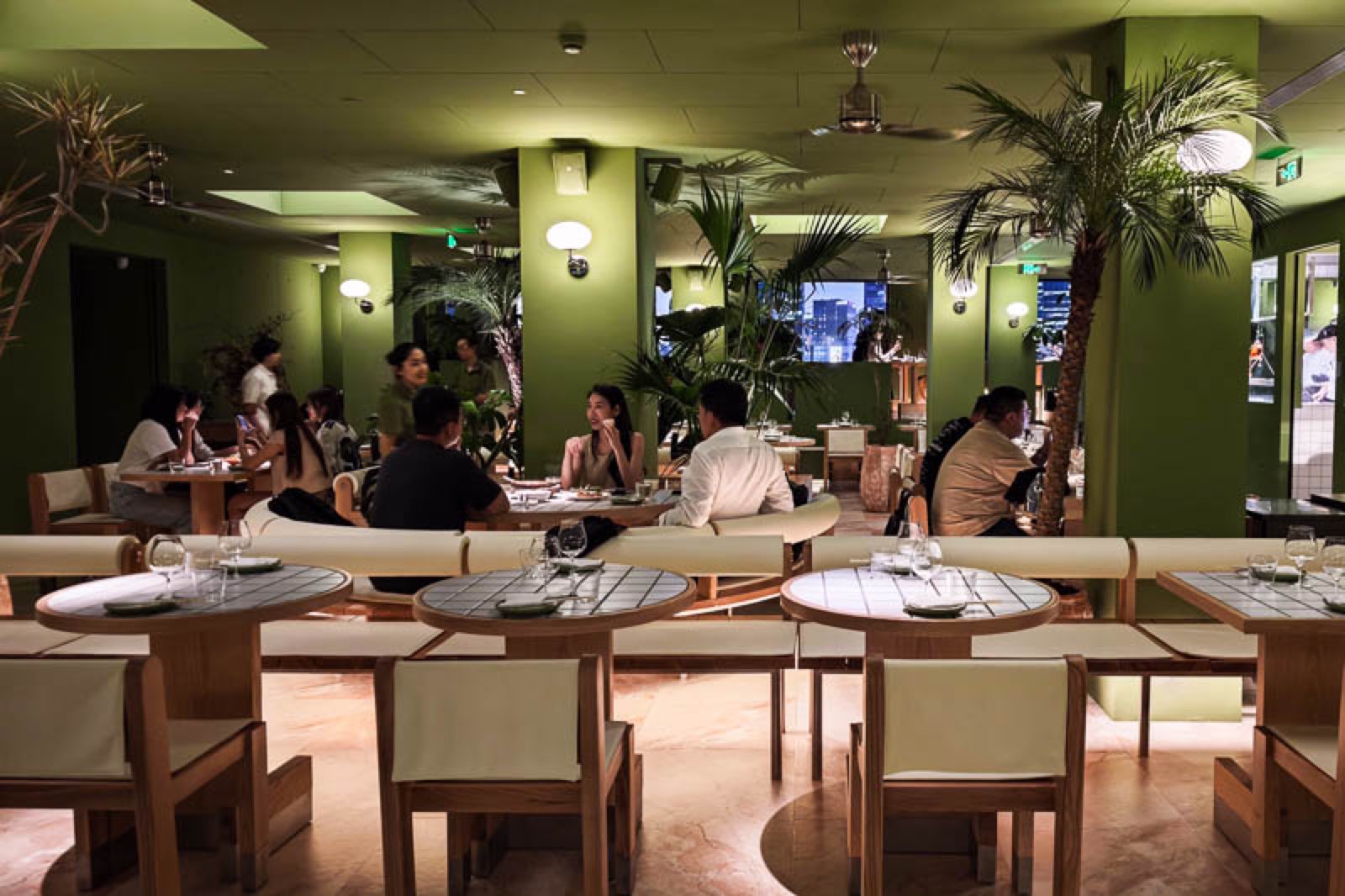
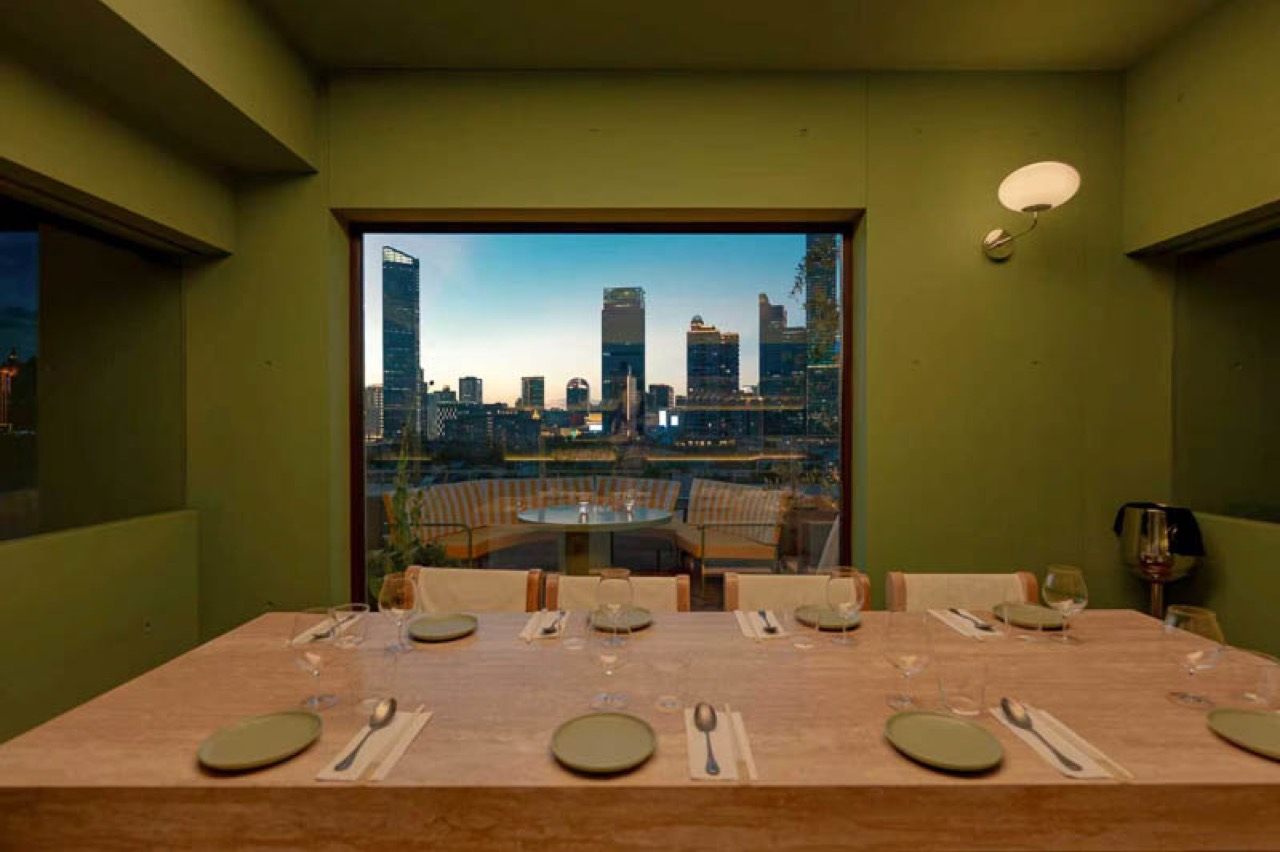
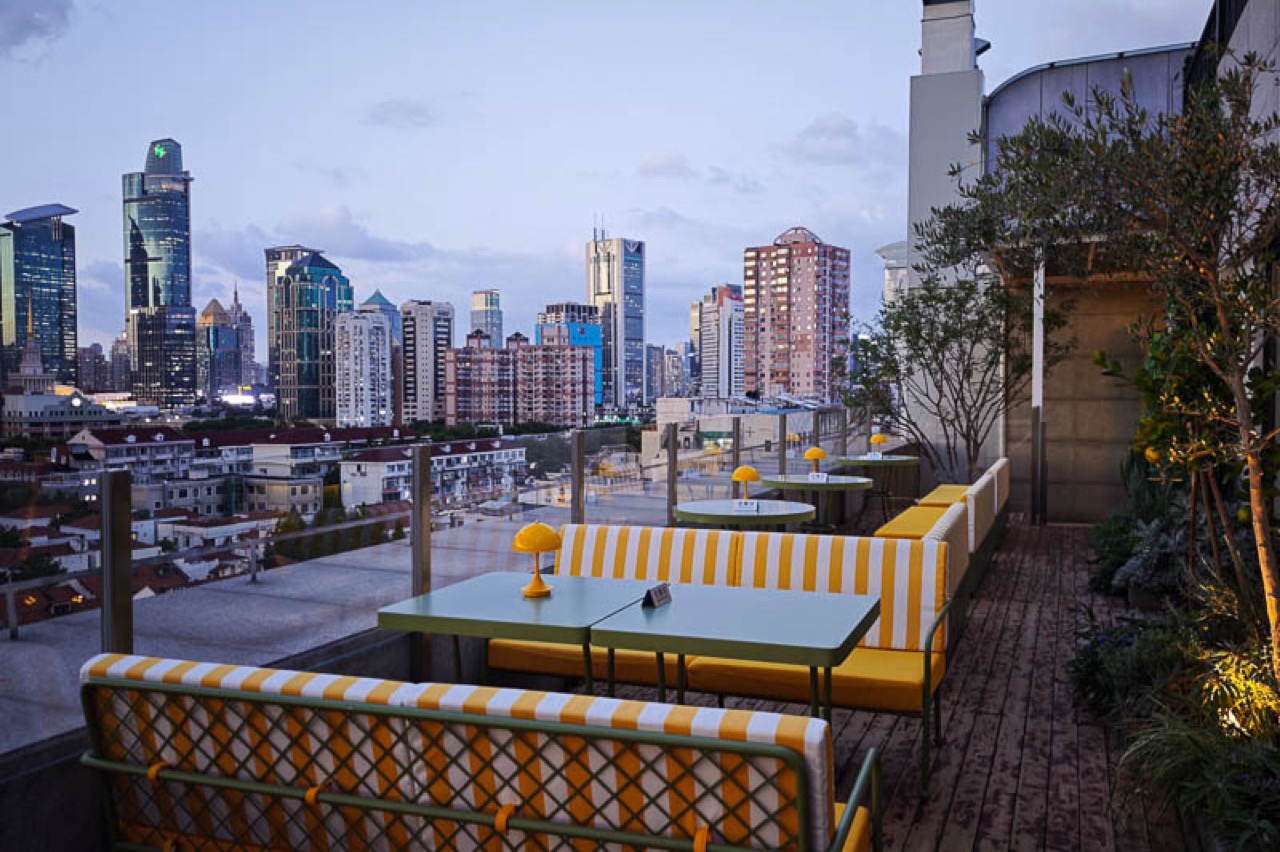
3.When the elevator doors open, the whole floor is olive green. A large communal dining room sits in the middle, and two long terraces run along one face of the building. There are several private rooms, each with its own outdoor space. Wherever you sit, the downtown towers hang in the window.
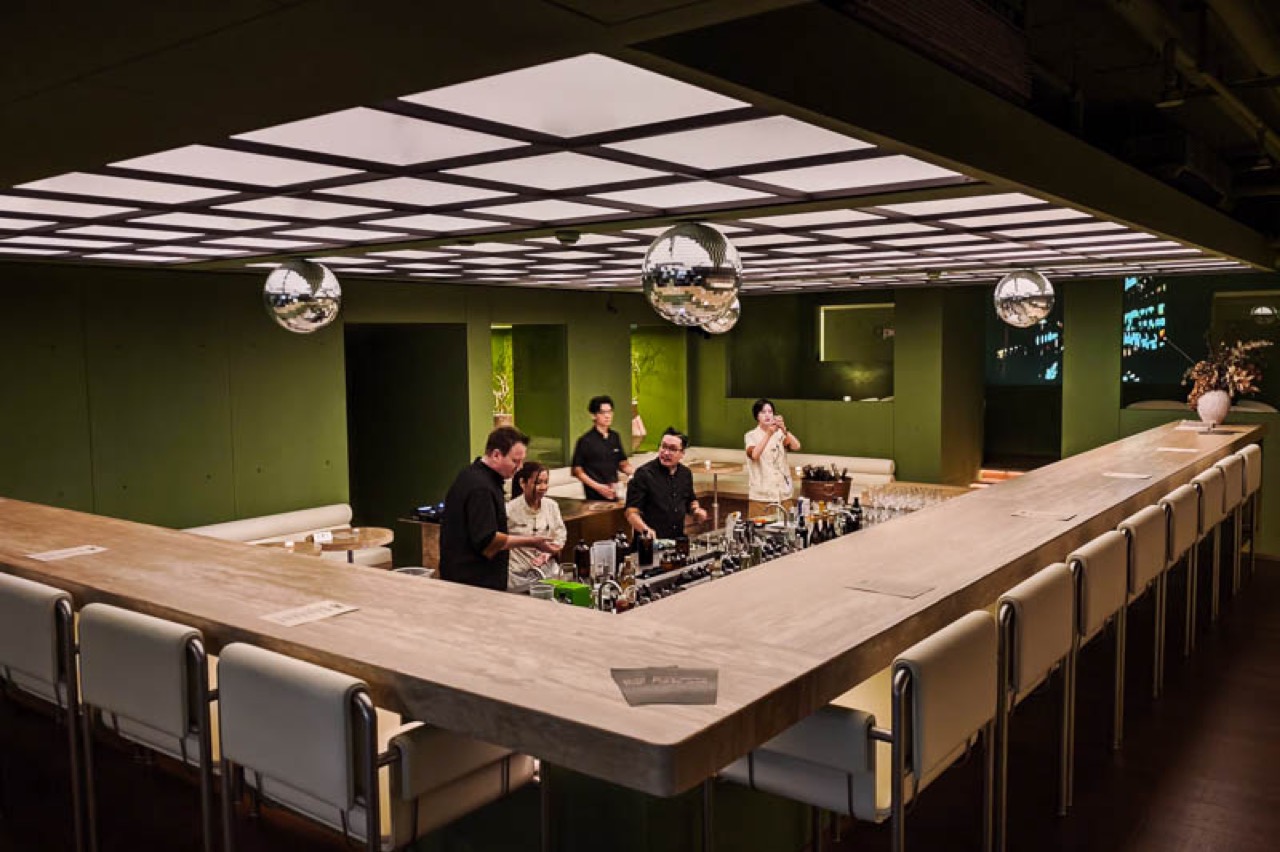
4.Opia is a bar sunk into a square cut in the floor. Guests sit around it one step up, and the bartenders work below them. The ceiling is a grid of glowing square panels. The bar is run by Matthew Hall, who worked at The Upper House Shanghai and Hakkasan.
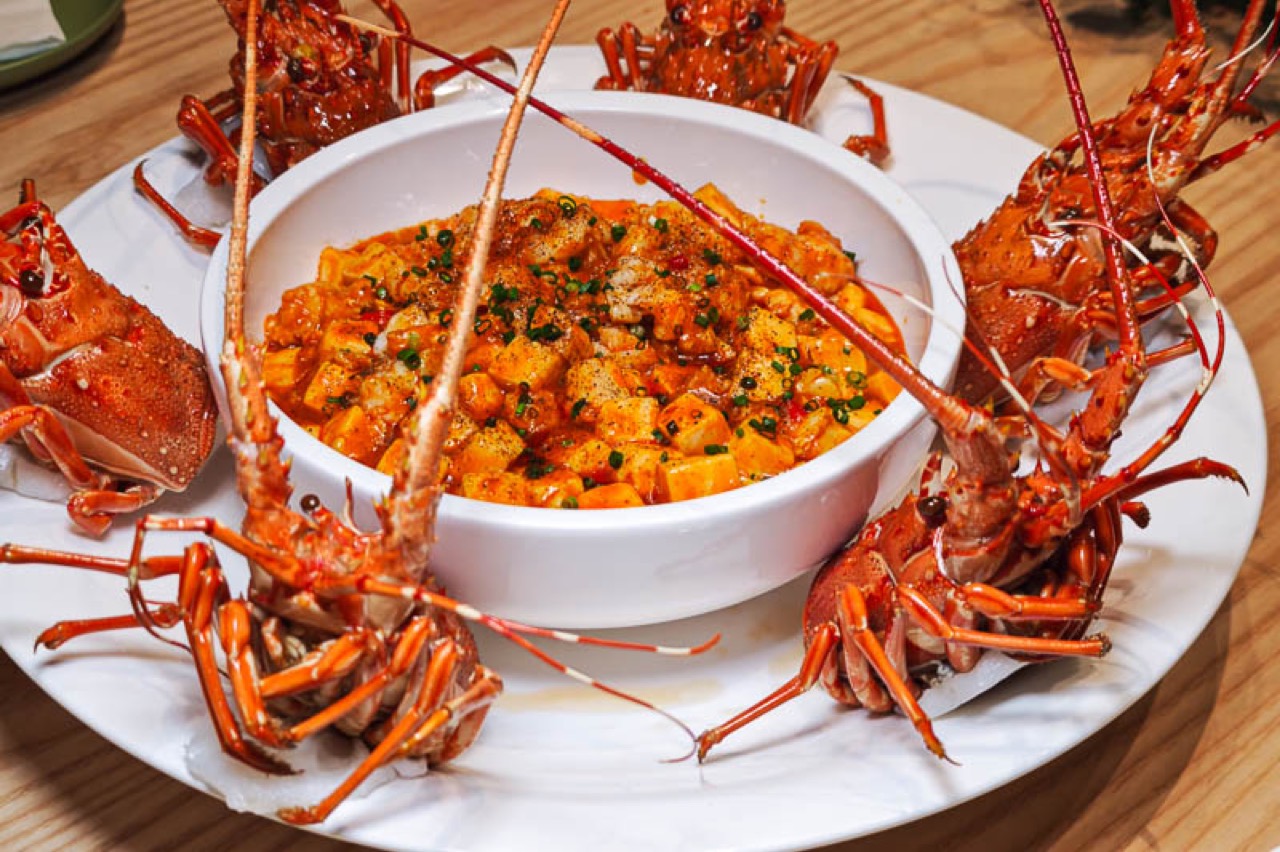
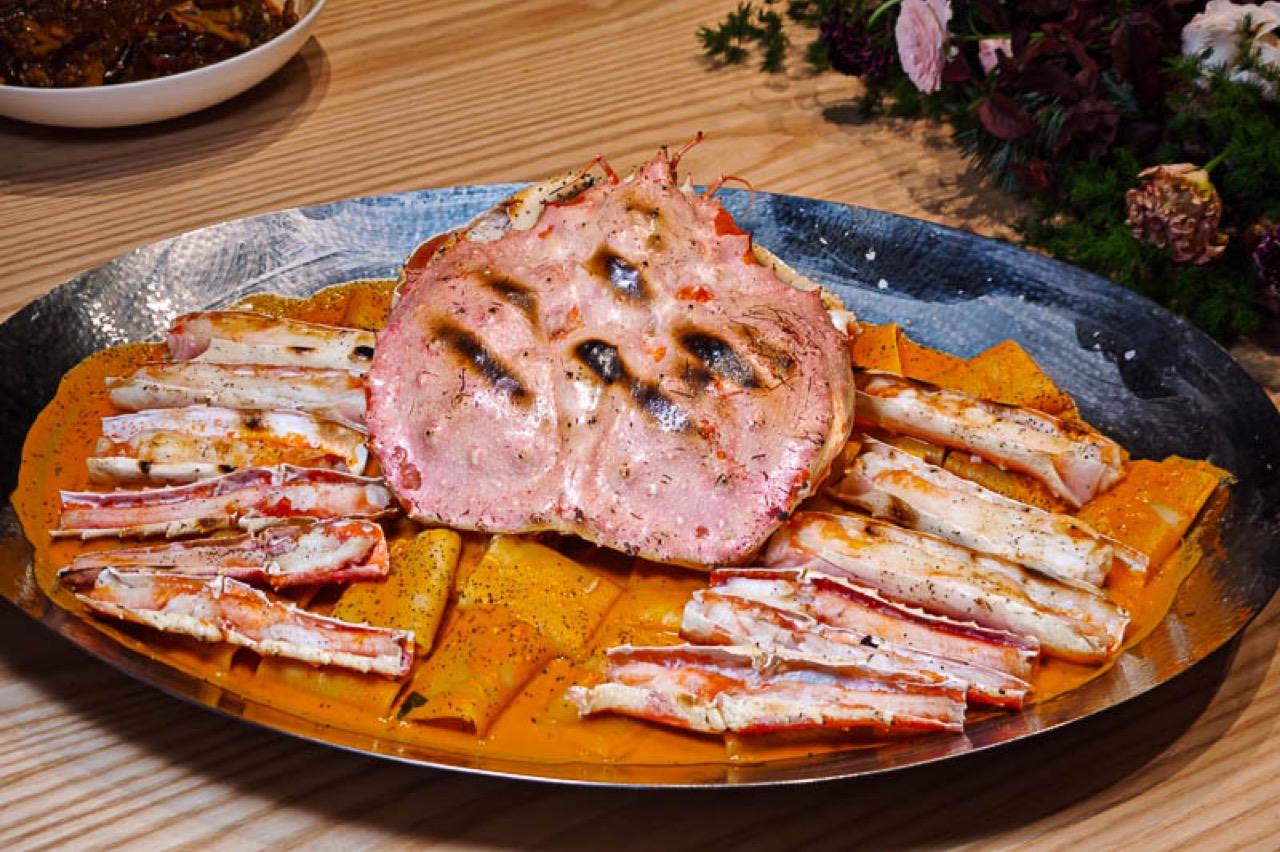
5.The menu is straight Cantonese: roast meats, soups, claypots, live seafood from the tanks, stir-fries, dim sum. A light Western touch is laid on top. The most expensive plate is charcoal-grilled crab over paccheri pasta at RMB 688 (about KRW 130,000). The Boston lobster mapo tofu rings a white bowl with whole red lobsters, so the smell of roasted shell reaches you before the tofu sitting in doubanjiang oil.
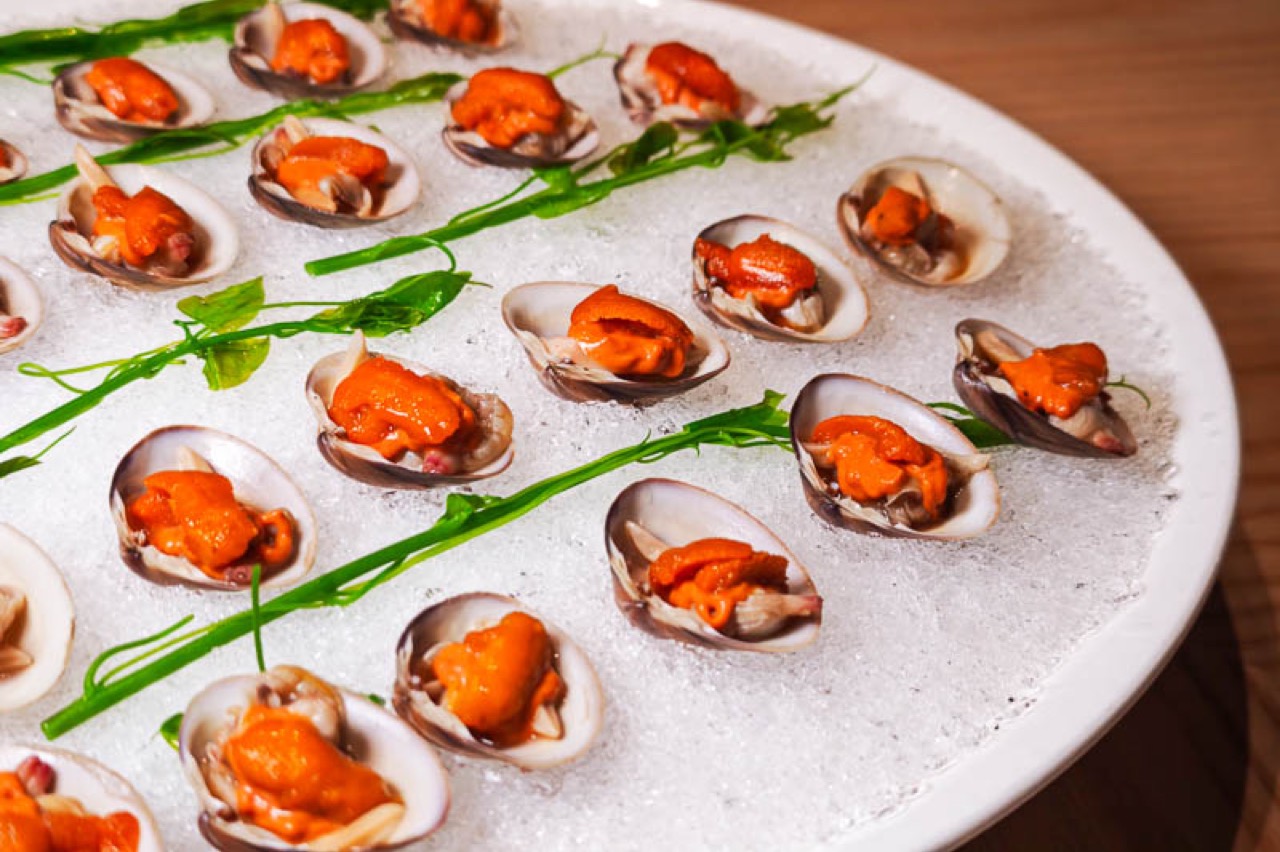
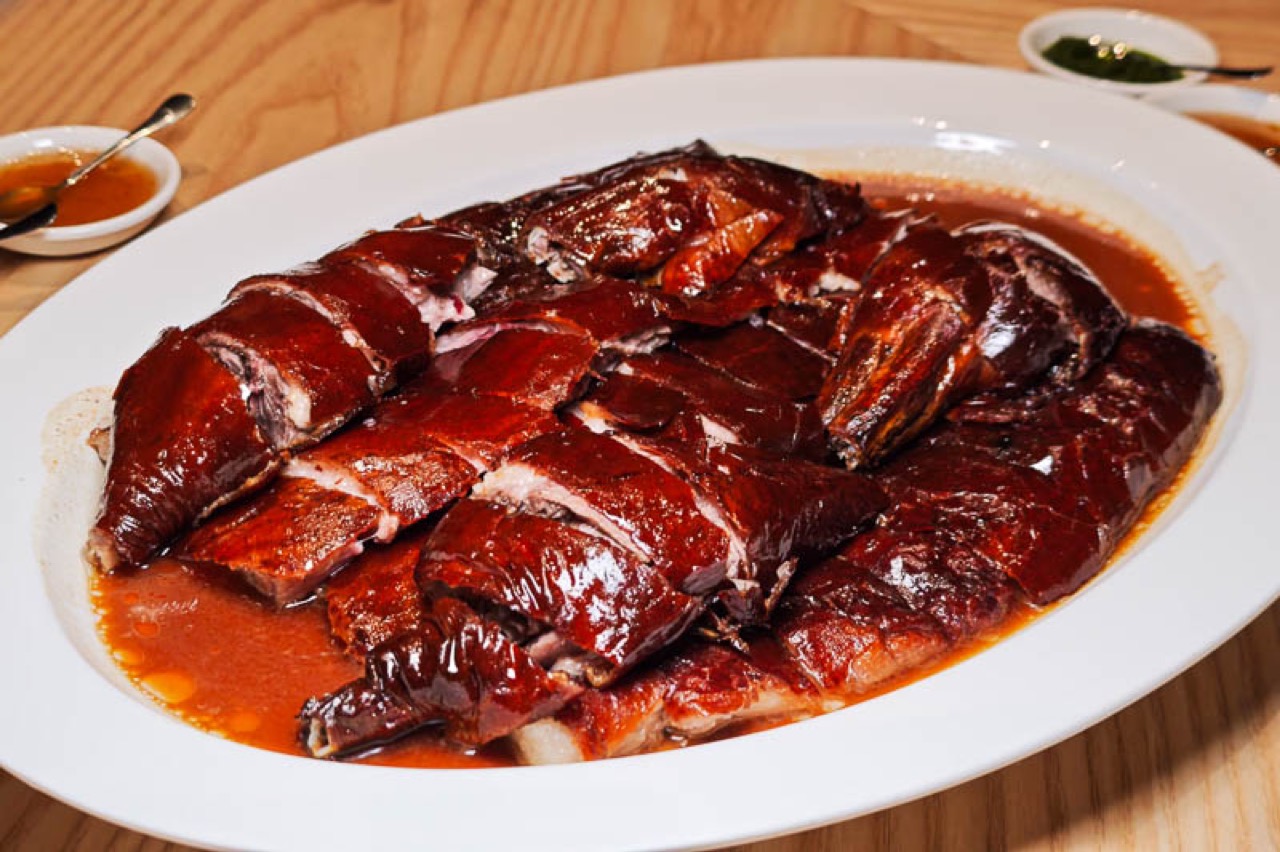
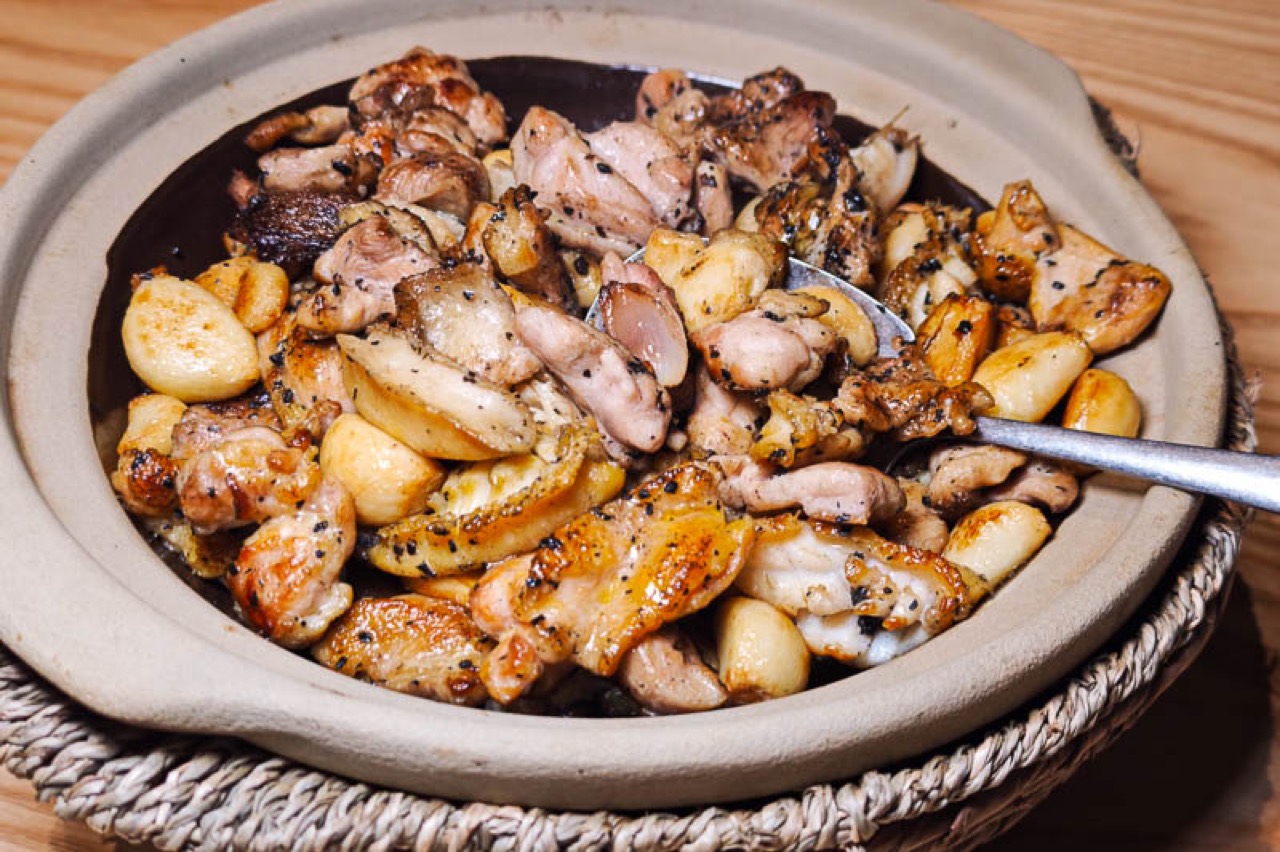
6.The rest are plates familiar from any Cantonese restaurant. Qingyuan goose comes as a half bird, roasted to a glossy red-brown, for RMB 168. Nine clams, each topped with sea urchin and dressed in sesame chili oil, cost RMB 158, and a chicken claypot with truffle and abalone is RMB 98. The claypot arrives at the table still bubbling, and the garlic reaches you before the lid comes off.
7.This corner is one of the densest bar streets in Shanghai. A group that has poured drinks on the ground floor for years knows who walks past at 8 p.m. It takes the guest who came for a drink up to the ninth floor for dinner, then seats the diner at Opia on the same floor. The whole evening stays inside one building.
8.Cantonese food is eaten around a round table and shared. The private rooms and terraces turn that meal into a gathering or a business dinner. In Shanghai, high-end Cantonese usually lives in hotel Chinese restaurants, while neighborhood Cantonese places are brightly lit and loud. This place sets down an evening in between: not as expensive as a hotel, quieter than the neighborhood spot.
9.Four people ordering the half goose, sea urchin clams, lobster mapo tofu, chicken claypot, oysters and moringa sprouts spend RMB 908 on food. Add rice, tea and a cocktail each, and it comes to around RMB 350 per person. Put the crab on the table and each share jumps. The food total adds up the published prices; drinks and sides are estimates.
10.Counting from the photos, the communal room, private rooms and terraces add up to roughly 100 seats. If 70% of them fill once at dinner, one night brings in about RMB 24,500, and a full month comes to a little over KRW 140 million. That excludes lunch dim sum and Opia's bar sales. Seat count and fill rate are both estimates; the restaurant has published no figures.
11.Rent on the ninth floor is far cheaper than on the street-level ground floor. In Shanghai too, walk-in traffic disappears as you go up, and rent falls with it. So why would anyone bother with the elevator? This place answers with two terraces, the skyline in the window, and regulars who already know the group from downstairs.
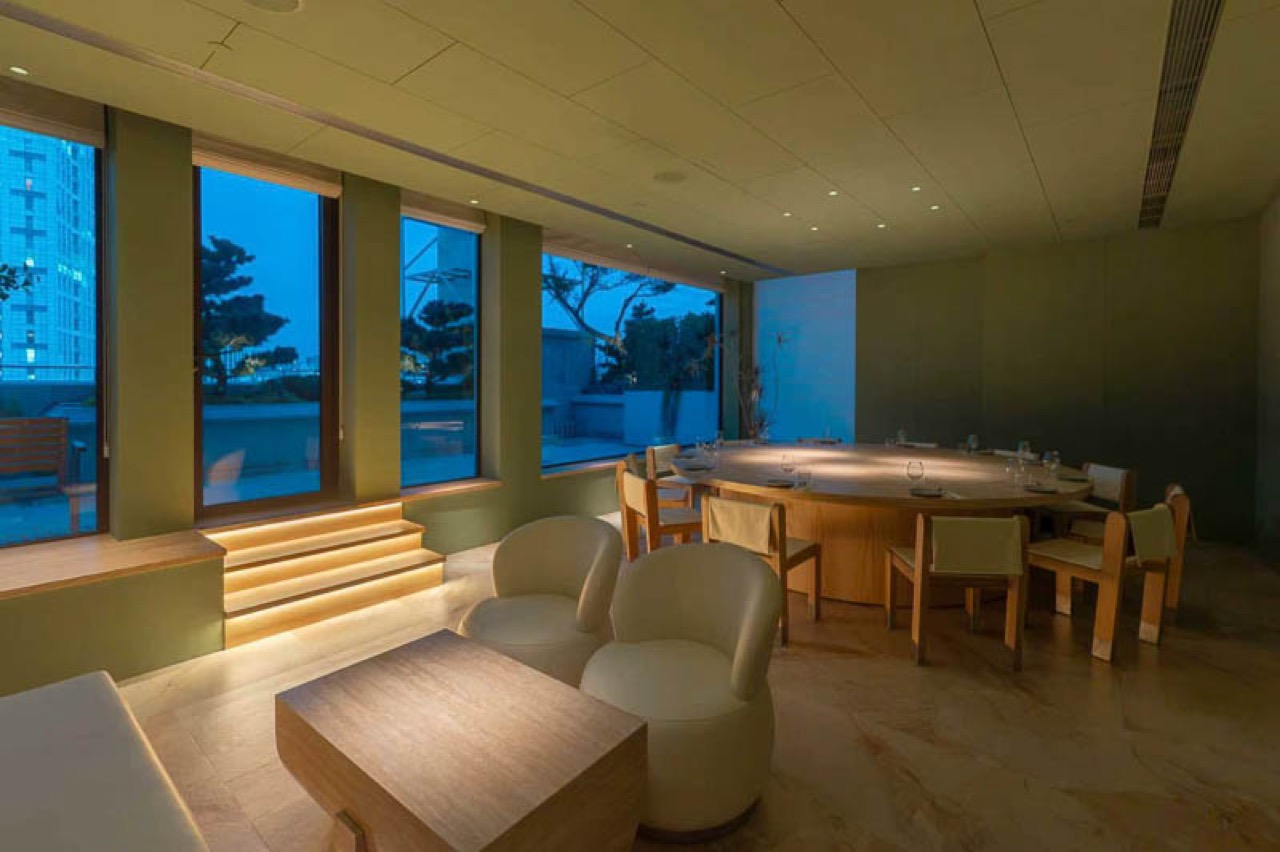
12.A private room trades repeat turns for one large bill. Private rooms in Chinese restaurants usually carry a minimum spend, though this one has not published its terms. The live seafood tanks are where costs swing, and market-price plates like geoduck pass that swing on to the guest. Food cost at a Cantonese seafood restaurant runs around 35-40%, while drinks cost far less, so the glasses at Opia on the same floor prop up the margin. Cost ratios are estimates.
13.That is also why the doors stay open 14 hours a day. Dim sum at lunch, round-table dinners in the evening, and after 10 p.m. Opia takes over the floor. Instead of one restaurant earning a floor's rent in four dinner hours, two names split most of the day.
14.Selling Cantonese food the way you sell a bar was first shown by Hakkasan in London in 2001. Matthew Hall, who now runs this bar, worked at that dim, subterranean room serving cocktails alongside dim sum. Atelier Kaulou flips the direction: the top floor instead of a basement, olive walls and a sunset terrace instead of darkness. Hakkasan brought Cantonese food to a city where it was unfamiliar. Here, in a city full of Cantonese restaurants, a group that made its name with Western-style bars is betting on that same cuisine.
15.A group that sold drinks on the ground floor of one building took over its entire ninth floor, opened a Cantonese restaurant and a bar together, and keeps the doors open 14 hours a day. Try the same setup in a Korean office building and the elevator is the first thing that stops you. Many buildings lock their lifts behind access cards after 10 p.m. Bringing guests up until 1:30 a.m. starts with writing late-night elevator operation, and who pays its maintenance costs, into the lease.